Dazzling Wildlife Portraits at COP29: A Conversation with Photographer Brad Wilson

Arts, Biodiversity, Civil Society, Climate Action, Climate Change, COP29, COP29 Blog, Editors’ Choice, Environment, Featured, Global, Headlines, Sustainable Development Goals, TerraViva United Nations

COP29 Blog

Brad Wilson is an American photographer specializing in classical portraits of animals. Credit: Umar Manzoor Shah/IPS

Brad Wilson is an American photographer specializing in classical portraits of animals. Credit: Umar Manzoor Shah/IPS

As delegates at COP29 stroll through the venue in Baku, Azerbaijan, many pause to marvel at the stunning portraits of animals and birds adorning the pavilion walls. These 16 captivating images, showcasing Azerbaijan’s rich biodiversity, are more than just art—they’re a call to action.

Visitors, from diplomats to environmental activists, can often be seen snapping selfies with these majestic portraits, drawn to their lifelike intensity. Behind this collection is Brad Wilson, an American photographer whose mission is to “bridge the gap between humans and the natural world.” 

Wilson spoke to the IPS on his artistic journey and the philosophy underpinning his work.

“My name is Brad Wilson,” he begins. “I’m an American photographer specializing in classical portraits of animals.”

Classical portraits—usually a domain of human subjects—take on a unique depth when applied to animals.

“I aim to elevate animals to a higher level, presenting them as equals to humans—different but equal. Looking into their eyes through these photographs should invoke a sense of responsibility for their lives because we all share the same planet.”

For Wilson, animals represent a poignant connection to the natural world. “They are our closest relatives living in the wild,” he says. “They serve as a bridge, reminding us of our roots in nature.”

Brad Wilson photographic portraits were commissioned for the Haydar Aliyev Centre in Baku and are on display at the COP29 venue. Credit: Umar Manzoor Shah/IPS

Brad Wilson photographic portraits were commissioned for the Haydar Aliyev Centre in Baku and are on display at the COP29 venue. Credit: Umar Manzoor Shah/IPS

Process: A Dance of Patience and Precision

Creating these portraits is no simple task. Wilson describes the meticulous setup required for his work.

“All the portraits are done in a studio. I set up the studio close to where the animals live—often in sanctuaries or ranches. Then we bring them in for two or three hours,” he says. But those hours yield just fleeting moments of magic.

“I’m lucky if I get two or three good seconds with each animal. But that’s all I need—a single moment of connection that resonates.”

“My photo shoots are like meditations amidst organized chaos,” he says. Amid bustling activity, Wilson remains quiet and still, waiting for the animal to relax. “What I aim to capture is something uncommon—a glimpse of the animal’s soul, if you will. That’s what I hope viewers experience—a moment of connection.”

“I want people to understand that we are part of this planet’s biodiversity. We’re not separate from these creatures. It’s only been about 12,000 years—since the advent of farming and permanent settlements—that we began seeing ourselves as separate from the natural world. That’s a mistake. These animals remind us of our place in the web of life.”

“When we talk about climate action, it’s not just about saving the earth—it’s about saving humanity and the animals that share this planet with us. The earth will endure, but we might not.”

Behind the Scenes at COP29

Wilson’s collection at COP29 was commissioned by the Haydar Aliyev Centre in Baku.

“They brought me here in August to photograph animals in Baku and Shamaki,” he says. The project celebrates Azerbaijan’s biodiversity, showcasing species native to the region while promoting conservation awareness.

The portraits have been a hit among COP29 attendees, sparking conversations about the intersection of art, biodiversity, and climate action. Wilson hopes the images inspire policymakers and the public alike to take meaningful action.

“Climate change is already a massive problem, and it’s only going to worsen. We need to get serious about tackling it.”

Advice for Aspiring Photographers

For those inspired to follow in Wilson’s footsteps, he offers this advice: “Start with humans. I spent 15 years photographing people in New York City before transitioning to animals. That experience taught me about connection and emotion—skills that translate well to wildlife photography.”

IPS UN Bureau Report

  Source

Pakistan’s Climate Minister Pitches for ‘Climate Diplomacy’ at COP29

Asia-Pacific, Civil Society, Climate Change Finance, Climate Change Justice, COP29, Development & Aid, Editors’ Choice, Environment, Featured, Global, Headlines, Human Rights, Humanitarian Emergencies, Sustainable Development Goals, TerraViva United Nations, Women in Politics

COP29

Romina Khurshid Alam, the Coordinator to the Prime Minister of Pakistan on Climate Change at the Pakistan Pavilion at the COP29 Venue in Baku. Credit: Umar Manzoor Shah/IPS

Romina Khurshid Alam, the Coordinator to the Prime Minister of Pakistan on Climate Change at the Pakistan Pavilion at the COP29 Venue in Baku. Credit: Umar Manzoor Shah/IPS

BAKU, Nov 19 2024 (IPS) – Romina Khurshid Alam, the Coordinator to the Prime Minister of Pakistan on Climate Change, praised the resilience of the people of her country in the face of climate disasters and has put her faith into diplomacy to achieve climate justice.


Speaking to IPS against the backdrop of a rising environmental crisis and unfulfilled promises by developed nations, Alam outlined the necessity of climate diplomacy as a tool to bridge global disparities and address the collective challenges posed by climate change. 

Climate Diplomacy: A Global Imperative

Alam said that climate diplomacy is of utmost importance in a world where disasters transcend borders.

“Climate diplomacy is crucial because the challenges we face today are not confined to one nation,” she said. “Smog, floods, and melting glaciers do not ask for permission to cross boundaries. Even the largest wars have been resolved through dialogue, and we must adopt the same approach for climate issues.”

Recalling the devastating floods in Pakistan in 2022, Alam said the human and economic toll the country has faced was massive. Vulnerable nations like Pakistan, she argued, are bearing the brunt of a crisis they did little to create.

“We are paying the price for a problem caused by others. Despite our minimal contributions to global emissions, we are expected to ‘do more’ while developed countries delay fulfilling their commitments.”

A flooded village in Matiari, in the Sindh province of Pakistan. Credit: UNICEF/Asad Zaidi

A flooded village in Matiari, in the Sindh province of Pakistan. Credit: UNICEF/Asad Zaidi

Unkept Promises and the Loss and Damage Fund

Alam expressed frustration with the slow progress of the Loss and Damage Fund, a financial mechanism agreed to in previous COPs to support vulnerable nations.

“What happened to those pledges? Where is the funding? Promises are made at every COP, but they rarely materialize into action,” she said, while urging developed nations to stop making new commitments until they have fulfilled their existing ones and also stressing that accountability and transparency are essential.

Alam also criticized the lack of accessibility to promised funds for developing nations.

“It’s not just about pledging money—it’s about ensuring those funds reach the countries that need them. Mechanisms must be simplified so that nations like Pakistan can access what is rightfully theirs.”

Education and Climate Justice

During the interview, Alam drew attention to the intersection of climate change and education.

Children in Pakistan are losing their right to education because of environmental crises like smog and floods,” she said. “How can we expect to provide green education when children can’t even make it to school safely?”

Alam called for climate justice that includes the protection of basic human rights, such as education, for the next generation.

She also pointed to the reluctance of neighboring countries to engage in meaningful discussions on shared challenges. “Regional solutions are imperative. Disasters don’t respect political or geographical boundaries, and neither should our response to them.”

International Climate Justice Court

Alam also shared her vision of an International Climate Justice Court, where vulnerable nations can hold major polluters accountable.

“I have requested the establishment of an International Climate Justice Court to protect the rights of those most affected by climate change,” she said. “Pakistan has already taken the lead by engaging national and international judges in this effort. Justice Mansoor Ali Shah has been instrumental in highlighting the need for such a court.”

According to Alam, this court could empower vulnerable nations to seek redress and enforce accountability, especially for unfulfilled commitments by developed countries.

“Why should children in Pakistan or other vulnerable nations suffer because of decisions made elsewhere? It’s time we demand answers.”

Human Rights and Climate Change

For Alam, the climate crisis is not just an environmental issue but also a severe human rights violation.

“Developed nations often champion human rights, but they fail to recognize the rights being violated in vulnerable countries due to climate change,” she said. “The loss of lives, homes, and livelihoods in countries like Pakistan is a direct result of inaction by wealthier nations.”

She called on the international community to view the climate crisis through a humanitarian lens. “This is about humanity. The sun shines on all, and disasters strike indiscriminately. We must come together, regardless of our differences, to address this shared challenge.”

Pakistan’s Role as a Climate Advocate

Alam praised the resilience of the Pakistani people, particularly in the aftermath of the 2022 floods.

“Our people have shown incredible strength,” she said. “Even the poorest woman who loses her roof to a flood will rebuild her life with courage. This resilience is what keeps us moving forward.”

She also highlighted Pakistan’s leadership in raising the voices of vulnerable nations. “Pakistan doesn’t just speak for itself; we speak for all developing countries that are facing the consequences of climate change. Peace and cooperation are essential, and Pakistan will continue to advocate for both.”

IPS UN Bureau Report

  Source

Qatar Committed to Achieving Nationally Determined Contributions by 2030

Climate Change, Climate Change Finance, Conferences, COP29, COP29 Blog, Environment, Featured, Global, Headlines, Middle East & North Africa, Sustainable Development Goals, TerraViva United Nations

COP29 Blog

Saad Abdulla Al-Hitmi, Director of the Climate Change Department at the Government of Qatar. Credit: Umar Manzoor Shah/IPS

Saad Abdulla Al-Hitmi, Director of the Climate Change Department at the Government of Qatar. Credit: Umar Manzoor Shah/IPS

BAKU, Nov 19 2024 (IPS) – As global leaders gather at COP29 to address the urgent challenges posed by climate change, Saad Abdulla Al-Hitmi, Director of the Climate Change Department at the Government of Qatar, highlighted the nation’s ambitious goals in an interview with IPS, stressing its commitment to balancing environmental stewardship with economic growth.


Qatar’s Vision for Climate Action

Qatar’s participation at COP29, Al-Hitmi says, aligns with its National Vision 2030 and the National Environment and Climate Change Strategy 2021.

“Our message is clear: we aim to contribute to meaningful changes that reduce the impact of climate change while preserving the environment and its resources,” Al-Hitmi stated. This, according to him, is Qatar’s commitment to sustainability, focusing on achieving its nationally determined contributions (NDCs) by 2030 to protect and enhance environmental quality.

Key among Qatar’s goals, he says, is a 25 percent reduction in greenhouse gas emissions by 2030 compared to 2019 levels.

“We are implementing practical solutions and proven technological applications across all sectors to achieve this target,” Al-Hitmi said.

Adapting and Financing for the Future

According to Al-Hitmi, adaptation financing must complement mitigation efforts to ensure vulnerable countries can effectively address the impacts of climate change.

“We are working to balance adaptation and mitigation financing during climate negotiations,” he said. “Adaptation is vital for developing countries, and we are negotiating to secure gains that will fund critical adaptation projects.”

‘A Leading Voice in Climate Diplomacy’

Al-Hitmi said that by leveraging cutting-edge technology and championing equitable financing mechanisms, the nation seeks to inspire collective action on the global stage.

“Our participation at COP29 is about collaboration,” Al-Hitmi said. “It’s about ensuring that our shared planet is preserved for future generations.”

IPS UN Bureau Report


Mercury Pollution: A Global Threat to Oceans and Communities

Climate Change, Conferences, COP29, Editors’ Choice, Environment, Featured, Global, Headlines, Sustainable Development Goals, TerraViva United Nations, Women & Climate Change

COP29

Dr. Amina Schartup, Marine Chemist, sharing insights on mercury pollution and its global impact at COP29, Ocean Pavilion, Baku, Azerbaijan. Credit: Aishwarya Bajpai/IPS

Dr. Amina Schartup, Marine Chemist, sharing insights on mercury pollution and its global impact at COP29, Ocean Pavilion, Baku, Azerbaijan. Credit: Aishwarya Bajpai/IPS

BAKU, Nov 19 2024 (IPS) – Mercury pollution from burning coal is contaminating our oceans and seafood, threatening global health.


Dr. Amina Schartup, a marine chemist at the Scripps Institution of Oceanography, has spent nearly 20 years studying the mercury cycle. Her research sheds light on how this heavy metal, released through industrial activities like coal burning, affects ecosystems and people worldwide.

“Mercury is released into the environment through various industries, with coal burning being a major source,” she explains. The problem goes beyond carbon dioxide (CO2) emissions, as mercury travels globally, settling in places as remote as the Arctic and high mountains.

When mercury reaches the oceans, it is transformed by microbes into methylmercury, a highly toxic form. “This form accumulates in seafood, especially in larger predatory fish like tuna and swordfish, which many humans consume,” Schartup says. This poses serious health risks, including developmental issues in children and cardiovascular problems in adults.

How Widespread Is Mercury Exposure?

Fish consumption is the primary way mercury enters the human body. According to Schartup, “If 3 billion people rely on seafood, then 3 billion people are exposed to mercury through fish.”

The health impacts, however, are complex.

“Fish consumption is generally healthy, supporting brain development, but consuming too much fish with high mercury levels can offset those benefits,” she notes. This makes balancing seafood consumption tricky, especially for communities heavily dependent on it.

Mercury exposure is a chronic issue, with small amounts accumulating in the body over time. The toxic effects, especially on fetal development, can result in reduced IQ and other developmental problems.

Mercury and Climate Change: A Dangerous Mix

Climate change intensifies mercury’s impact on oceans and seafood. Schartup explains, “The mercury cycle is connected to the environment, so any changes—like rising temperatures or melting sea ice—will affect it.”

For instance, warming oceans change the behavior of fish and microbes. “Warmer waters can cause fish to eat more, which increases their mercury levels,” she says. Melting sea ice, which acts as a cap on the ocean, alters mercury exchange between the air and water. Freshwater inputs from melting glaciers or rivers also bring more mercury into the oceans.

These factors combine to make mercury levels in seafood even more unpredictable, creating additional challenges for public health.

Global Pollution, Local Consequences

One of the most alarming aspects of mercury pollution is its global reach. Once released into the atmosphere, mercury can travel thousands of miles before settling. “It can deposit in pristine areas like the Arctic, far from the emission sources,” Schartup explains.

Microbial activity in different environments determines where mercury is transformed into its toxic form. “It happens everywhere,” she says, emphasizing that no region is immune to this problem.

What Needs to Change?

At COP29, Schartup is advocating for a broader understanding of how emissions impact the environment and human health. “Climate change isn’t just about CO2. Burning coal also releases mercury, which contaminates fish and affects the health of millions,” she says.

Reducing coal usage could address both carbon and mercury pollution.

“By solving the CO2 crisis, we can tackle mercury contamination as well. This isn’t just about climate; it’s about health too,” she stresses.

Schartup believes this issue should resonate with everyone, especially those who eat fish regularly. “Turning on the light switch is linked to mercury in the fish we eat. It’s all connected,” she explains.

Protecting Vulnerable Communities

Some populations are more affected than others, particularly those relying heavily on seafood. These communities face a double burden: the health risks from mercury and the challenges of adapting to climate change.

Schartup emphasizes the need for policies to protect these vulnerable groups. Reducing coal emissions and investing in cleaner energy sources could lessen mercury pollution and its far-reaching effects.

A Call to Action

Mercury pollution is a hidden crisis, but its effects on human health and the environment are profound. Schartup’s research underscores the urgency of addressing this issue as part of global climate action.

“We have a chance to solve multiple problems at once,” she says. Reducing coal emissions won’t just cut CO2; it will also protect our oceans, seafood, and health.

This interconnected approach, she believes, is key to creating a sustainable future for all.

IPS UN Bureau Report


Methane Mitigation at COP-29—Pathways to Climate Action

Climate Action, Climate Change, Conferences, COP29, Editors’ Choice, Environment, Featured, Global, Headlines, Sustainable Development Goals, TerraViva United Nations

COP29

Roland Kupers, a lead architect at the United Nations Environment Programme’s (UNEP) International Methane Emissions Observatory

Roland Kupers, a lead architect at the United Nations Environment Programme’s (UNEP) International Methane Emissions Observatory

BAKU, Nov 18 2024 (IPS) – Methane emissions have emerged as a focal point of discussion as global leaders congregate at COP29 in Baku to tackle the escalating climate crisis.


In an exclusive interview with IPS, Roland Kupers, a lead architect at the United Nations Environment Programme’s (UNEP) International Methane Emissions Observatory, outlined actionable strategies to curb methane emissions by 2030, the challenges ahead, and the crucial role of international cooperation.

The Methane Problem: Sectoral Challenges and Opportunities

“Methane emissions are not a singular issue but rather a collection of problems spanning five key sectors: oil and gas, coal, waste, rice, and livestock,” Kupers said.  He adds that each sector requires tailored solutions.

“UNEP has prioritized the oil and gas industry due to its substantial potential for reduction.”

“The oil and gas industry could achieve a 75 percent reduction in methane emissions by 2030. It’s not only affordable but also feasible, given the industry’s access to technology, capital, and expertise,” Kupers said, adding that the waste sector also presents significant opportunities, although organizing mitigation measures in this sector poses logistical challenges.

UNEP’s approach includes creating detailed programs to address emissions in high-impact industries like oil, gas, and steel.

“Methane emissions account for a third of the climate footprint of steel production, yet they can be eliminated at a cost of less than 1% of steel’s production price.”

Data: A Cornerstone for Action

Kupers also underlined the critical role of accurate data in driving methane mitigation efforts.

“Data is essential for human agency. Without precise, measurement-based data, it’s impossible to identify and address the specific sources of emissions effectively.”

According to him, many existing datasets rely on emission factors derived from outdated studies. UNEP advocates transitioning to real-time, site-specific measurements to better target interventions.

“When you gather accurate data, you often find emissions in unexpected places, stressing the need for precise monitoring.”

Systemic Shifts in the Energy Sector

To align with the 2030 climate goals, Kupers argues for a fundamental transformation of the global energy system.

“While mitigating methane emissions is crucial, it’s not a substitute for decarbonization. The ultimate objective must be to eliminate fossil fuels entirely.”

He also highlighted the health benefits of reducing methane emissions.

“Methane, both directly and through incomplete combustion, contributes to significant local health hazards.”

The Financial Perspective

While climate discussions often center around the financial challenges of adaptation and mitigation, Kupers believes that addressing methane emissions, particularly in the oil and gas sector, is not a financial burden.

“The oil and gas industry is highly profitable and well-resourced. It has no excuse for not addressing its methane emissions,” Kupers said, adding that even oil and gas operations in developing countries operate in highly sophisticated, well-funded environments.

Responsibilities of Developed Nations

The methane issue differs from broader climate equity debates, Kupers explained.

“For methane emissions in oil and gas, the responsibility to act is universal. Whether in Nigeria, Argentina, or Indonesia, the industry operates with the same high standards and capabilities as in developed countries.”

This universality makes methane mitigation a “climate good news story,” as it bypasses some of the equity challenges seen in broader decarbonization debates.

Barriers to Progress

Despite decades of climate discussions, significant hurdles remain in addressing global warming. He attributes the slow progress to a lack of prioritization and awareness about methane’s role.

“Methane has only recently gained prominence on the global agenda. The science highlighting its importance has emerged in the past decade,” Kupers said. Policymakers are often unaware of methane’s substantial climate footprint or the cost-effective solutions available.

Key COP-29 Objectives

“UNEP has established ambitious goals for methane mitigation. The Oil and Gas Methane Partnership (OGMP 2.0), a UNEP-led initiative, currently includes companies responsible for 42 percent of global oil and gas production. Kupers urged more companies to join, with the aim of achieving 80 percent participation,” Kupers said.

Another critical initiative is the Methane Alert and Response System (MARS), which integrates data from a dozen satellites to identify significant emission sources. UNEP then notifies governments and companies of these emissions.

“Over the past year, we’ve sent 1,200 notifications to governments, but the response rate has been dismal—just 1 percent,” Kupers said, a disappointing lack of engagement that points to the need for stronger accountability measures at COP29.

The Stakes: Why Methane Matters

Human-induced methane emissions are responsible for a third of the current warming. Unlike CO2, which is often a byproduct of energy use, methane emissions are largely waste streams. This makes them easier to address and a critical opportunity for climate action.

“Methane mitigation is not just an environmental necessity but a low-hanging fruit. It’s a solvable problem, and we must seize this opportunity,” Kupers said.

IPS UN Bureau Report


Climate Change Threatens Our Existence, Says Indian Spiritual leader Sadhguru

Civil Society, Climate Change, COP29, COP29 Blog, Environment, Featured, Headlines, Sustainable Development Goals

COP29

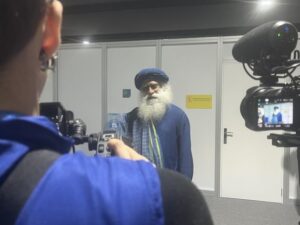
Jagadish Vasudev, known widely as Sadhguru, at COP29. Credit: IPS

Jagadish Vasudev, known widely as Sadhguru, at COP29. Credit: IPS

BAKU, Nov 16 2024 (IPS) – A sudden flurry of activity as Jagadish Vasudev, known widely as Sadhguru, emerges from an interview room in the COP29 media centre. It’s early days of the conference and there is energy and excitement at the venue in Baku.


With his long flowing beard and blue turban, it’s clear that many journalists are keen to interview the influential spiritual leader from India and the founder of the Isha Foundation, which has been dedicated to humanitarian projects since 1992. His initiative, Cauvery Calling, aims to support Indian farmers by encouraging the planting of 2.4 billion trees through agroforestry to restore the Cauvery River basin.

Now in Baku for COP29, Sadhguru shares his insights in an exclusive interview with IPS.

Inter Press Service: Sadhguru, climate change has been a known crisis for over four decades. Yet despite numerous conferences and terms like “loss and mitigation” and “climate finance,” we’re still facing rising temperatures, floods, and droughts. Why are we not succeeding? Are we missing the right approach?

Sadhguru: “Succeeding in what, exactly? The problem is that there’s no clear, actionable goal. We talk about economic development, which many nations pursue without pausing to consider its impact on the planet. At the same time, those who have already achieved a certain quality of life tell others not to follow the same path. It’s a paradox. We tell people to give up hydrocarbons—coal, oil—yet offer no viable alternatives. If we shut off hydrocarbons today, this very conference wouldn’t last ten minutes!

We’re all focused on what to give up but lack sustainable, scalable alternatives. Solar, wind, and similar sources only cover a tiny fraction of our energy needs—less than 3 percent. For real change, we need technology that provides clean, non-polluting energy, but we’re far from that. Nuclear energy is a powerful option, yet there’s too much activism and fear surrounding it. Meanwhile, electric cars, often touted as solutions, don’t really address ecological well-being; they just reduce urban air pollution.”

IPS: So, what would be a more pragmatic approach?

Sadhguru: It’s simple. We need to focus on soil restoration. Changing the soil composition can mitigate up to 37 percent of climate issues, according to studies. The emphasis has shifted a bit from ‘oil’ to ‘soil,’ and that’s a good sign. But beyond that, our entire mindset needs to shift from activism to pragmatic, science-based solutions. Over the past 70 years, we’ve lost 84 percent of wildlife, 92% of freshwater aquatic life, and 84 percent of insect life. The soil lacks organic content, and without it, trillions of microorganisms essential to life are perishing. Most scientists warn that if we continue at this pace, we may only have 40–50 harvests left—about 25–30 years of viable farming.

IPS: Climate change is often seen as a distant, scientific issue. Many people don’t connect with it. Why is that?

Sadhguru: An idea must have legs to walk. If it can’t, it won’t go anywhere. Rather than lofty ideals, we need simple, actionable goals. Soil is foundational to life: we eat from it, and when we die, we go back to it. Ninety-five percent of life forms depend on it, and over half the human population interacts with it daily. We must invest in soil regeneration, not just technologies to replace oil.”

IPS: How do we make this understandable for the common person?

Sadhguru: The common person doesn’t need to grasp all the details. It’s the responsibility of governments to act—to create laws and policies that enforce soil conservation. Blaming consumerism misses the point. People aspire to improve their lives, and those who criticize ‘consumerism’ often hold to a double standard. You can’t stop human aspirations. If anything, we need to reduce our population’s environmental impact over time, but even mentioning that sparks controversy. The truth is, over the past century, life expectancy has increased dramatically—from an average of 28 years in 1947 to over 70 years today. As people live longer, reproduction should be adjusted to balance the population. But people resist even these pragmatic realities.

IPS: You have been advocating for a long time to make living in a village a lucrative affair. How can we make village life sustainable and attractive?

Sadhguru: Yes, but it’s about making rural life viable, not romanticizing it. If the soil is rich, rural life can be economically rewarding. Today, people pay more for organic produce. Imagine if we branded food by the soil’s organic content—consumers would pay more for nutrient-dense produce, and this would incentivize soil conservation. Our agriculture needs to move beyond rice and wheat dependency, which was a temporary solution during the Green Revolution. Now we must transition from that ‘bridge’ to sustainable practices.

IPS: This needs government policies but there are few.  Why don’t we see climate change as a political agenda?

Sadhguru: In a democracy, politicians focus on what their voters demand, which often isn’t long-term environmental policies. To enact meaningful change, citizens need to express this desire. For example, our Save Soil movement reached 3.91 billion people in a hundred days. This kind of widespread support influences policy. We’re already seeing action in countries like China, India, and parts of Europe, though it’s gradual. Unfortunately, sometimes governments wait for a disaster before they act. Then only I understand there is a flood. It entered your house somewhere. I think, after all, it’s in the flooding region, you know.

IPS: And you’ve also mentioned that thirty percent of the human diet should come from trees. Could you elaborate on that?

Sadhguru: In Kashmir, for example, over thirty percent of people’s diet used to come from trees. They eat a lot of local fruits. When Hyun Tsang visited India, he observed that the intellect of Indian people was sharper because of the high fruit intake. Today, unfortunately, most fruit is bought in supermarkets, often imported from far-off places. The local connection is being lost, and this has implications for health. Eating local fruit is more than just cultural. The microorganisms in our body and in the soil where we live are continuously in contact. This link between diet and our microbiome is often ignored, yet it affects us deeply. The biome in your body has “cousins” in the land where you live. In yoga, we advise eating foods from within a radius that you can walk in a day. This keeps your body strong and in sync with the environment.

IPS: One critical issue back in India is farmer suicide. What can be done to address this?

Sadhguru: They’re not dying out of choice but out of desperation. When they take loans and cannot repay, life becomes unbearable. Many have inherited farming skills but lack alternatives. If someone with an MBA or MSc in agriculture were given land, they would struggle to match the knowledge and skill of a farmer, yet society undervalues this knowledge. Due to small land holdings—less than a hectare on average—they can neither sustain their families nor avoid debt.

In the past, villagers worked together as a community. Today, small farmers fence their tiny plots and install their own bore wells. The costs are immense and lead to further debt. We need to restore community support, enlarge land holdings, or provide viable alternatives to prevent this tragic cycle.

IPS: And what about faith? Can it play a role in addressing the climate crisis?

Sadhguru: Let’s not focus on faith in the context of climate change. It’s our responsibility to act. When things go wrong due to human error, people often call it fate or God’s will. But this crisis is of our making. And the crisis we talk about isn’t the planet’s—it’s a crisis for human survival. Life on Earth relies on delicate interconnections, from insects to microbes. If these were wiped out, life on the planet would soon collapse. Ironically, if humans disappeared, the planet would thrive. This is the perspective we need: climate change threatens our existence, not the Earth’s.

IPS UN Bureau Report

  Source