An Ominous Reckoning for the Gulf States

Armed Conflicts, Civil Society, Crime & Justice, Democracy, Headlines, Human Rights, IPS UN: Inside the Glasshouse, Middle East & North Africa, TerraViva United Nations
Opinion

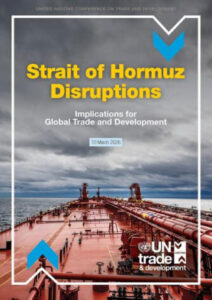
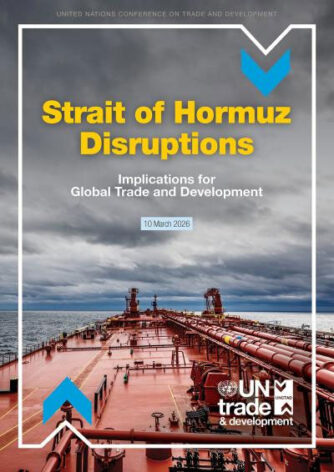
The Strait of Hormuz is one of the world’s most critical maritime chokepoints, carrying around a quarter of global seaborne oil trade and significant volumes of liquefied natural gas and fertilizers.

NEW YORK, Mar 31 2026 (IPS) – Trump’s Iran war has left the Gulf shattered: US bases turned into targets, economies battered, and the “oasis” myth destroyed. Gulf rulers now confront a harsh reckoning over their reliance on Washington and the uncertain search for a new, fragile security order.


As Trump assembled major US naval and air assets in the eastern Mediterranean and the Gulf, Saudi Arabia, the UAE, Qatar, and others quietly urged Washington to avoid a full-scale assault on Iran, fearing a direct blowback on their territory and energy infrastructure.

Nevertheless, the US–Israeli air campaign began on February 28, 2026, without a clearly defined and publicly articulated political endgame beyond “crippling” Iran’s capabilities. This disconnect between military escalation and strategic purpose now lies at the core of Gulf leaders’ anger and sense of betrayal toward Washington.

Trump’s Strategic Miscalculation

Trump’s decision to launch joint US–Israeli strikes on Iran has produced far higher strategic costs than his administration appears to have anticipated, from energy shock and disrupted shipping to heightened regional fragmentation and anti-American sentiment.

Even if Iranian capabilities are significantly degraded, the war has exposed vulnerabilities in US power projection, unsettled allies, and invited greater Russian and Chinese diplomatic activism in the Gulf. The long-term “price” for Washington will be measured less in battlefield metrics than in diminished trust and leverage among its traditional Arab partners.

US Bases Turned to Liabilities

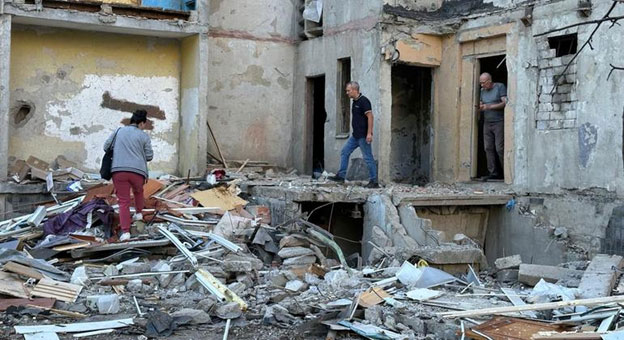
From a Gulf perspective, US bases in Qatar, Bahrain, Kuwait, and the UAE were meant to deter Iran and guarantee regime security; instead, they became priority targets once the war began. Iran explicitly framed its strikes on these facilities as retaliation against Washington, but their location in densely populated and economically vital areas meant that nearby civilian infrastructure also suffered severe damage.

This experience is reinforcing a view in Gulf capitals that foreign basing arrangements draw fire without delivering the reliable protection they assumed for decades.

A Nightmare Realized

Gulf leaders long warned that a war with Iran would shatter their security and economies, a nightmare that has now materialized as Iranian missiles and drones hit oil facilities, ports, power plants, and cities across the region. They blame Washington for launching the campaign and Israel for pressing to “neutralize” Iran regardless of collateral damage in neighboring Arab states.

The sense in Gulf capitals is that their caution was dismissed, while they have paid a disproportionate price in physical destruction, economic setback, disrupted exports, and heightened domestic anxiety.

Shattered Oasis Narrative

The image of Gulf hubs like Dubai, Doha, and Riyadh as insulated “oases” open to business, tourism, and investment has been badly damaged by missile alerts, strikes on ports and airports, and the closure of key sea lanes.

Restoring confidence will require visible reconstruction, enhanced civil defense, improved air and missile defenses, and credible diplomacy that lowers the perceived risk of another sudden war. Investors and tourists will demand proof that the region can manage Iran-related tensions, not just high-end events and mega-projects.

Trump’s Misreading of Iranian Escalation

Trump publicly argued that overwhelming force would quickly coerce Iran and usher in regime change while keeping fighting “over there,” yet he appears not to have anticipated the breadth of Iranian retaliation against neighboring Gulf states or a prolonged closure of the Strait of Hormuz.

The IRGC’s effective shutdown of the strait, including attacks and threats against commercial shipping, has produced global energy shocks and exposed the fragility of US planning assumptions. For Gulf leaders, this underscores how inadequate Washington’s war planning was in accounting for second- and third-order consequences.

Calculated Decision Not to Retaliate

Despite heavy damage, Gulf rulers have so far avoided direct retaliation against Iran, calculating that further escalation would expose their cities and infrastructure to even more punishing strikes. Publicly, they stress restraint and international law, but privately, officials acknowledge their enduring geographic reality: they must coexist with a powerful and proximate Iran long after this US-led campaign ends.

By holding their fire, they hope to preserve space for postwar de-escalation and avoid being locked into a permanent state of open conflict.

Recasting Security Arrangements with Washington

Given their limited strategic alternatives, Gulf monarchies are unlikely to sever ties with Washington but will seek more conditional, transactional security arrangements. They are pressing for clearer US commitments on defense of their territory, better integration of regional missile defenses, and greater say over decisions that could trigger Iranian retaliation.

At the same time, they will hedge by deepening ties with China, Russia, Europe, and Asian energy importers, thereby reducing exclusive reliance on the US while keeping the American security umbrella in place.

Gulf Options to Prevent Future Conflagration

To prevent a repeat, Gulf states are also exploring limited de-escalation channels with Tehran, tighter regional crisis hotlines, and revived maritime security arrangements that include non-Western actors such as China and India. They may push for new rules of engagement around energy infrastructure and shipping lanes, seeking informal understandings that keep these off-limits even in crises.

Internally, they are reassessing missile defense, hardening critical facilities, and considering more diversified export routes that reduce dependence on Hormuz. None of these options are fully reassuring, but together they offer partial risk reduction.

Prospects for Normalization with Iran

Speculation about full normalization, including a non-belligerency pact between Iran and Gulf states, builds on prewar trends of cautious dialogue and economic engagement. Whether this is truly “in the cards” depends on war outcomes, Iran’s internal politics, and Gulf threat perceptions: if Tehran’s regime survives but remains hostile, Gulf states will likely revert to hedging—combining deterrence, limited engagement, and outreach to outside powers.

A more pragmatic Iranian leadership could make structured security arrangements and phased confidence-building measures more plausible over time.

No Return to Status Quo Ante

The Gulf States will not return to the prewar status quo; instead, they are likely to pursue a more diversified security architecture, combining a thinner US shield with expanded ties to China, Russia, and Asian importers. This shift will gradually dilute Washington’s centrality in Gulf security, complicating US force posture and Israel’s assumption of automatic Arab backing against Iran.

For Israel, a more cautious, risk-averse Gulf may limit overt strategic alignment, while for the US, enduring mistrust will make coalition-building for future crises far more difficult.

Trump’s Iran adventure is not an isolated blunder but the latest, and perhaps most explosive, expression of his assault on an already fragile global order. By discarding restraint, sidelining allies, and weaponizing American power for short-term political gain, he has accelerated the erosion of US credibility, fractured Western alliances, and opened new strategic space for Russia and China. The Gulf States are simply the newest casualties of this disorder: their cities struck, economies shaken, and security assumptions shattered.

Whatever emerges from this war, it will not be a restored status quo, but a more fragmented, volatile Middle East in which Israel and the United States confront a diminished margin for error and a far narrower circle of willing, trusting partners.

Dr. Alon Ben-Meir is a retired professor of international relations, most recently at the Center for Global Affairs at New York University (NYU). He taught courses on international negotiation and Middle Eastern studies.

alon@alonben-meir.com

IPS UN Bureau

  Source

The United Nations Needs a Secretary-General of Courage, Not Convenience

Civil Society, Featured, Global, Global Governance, Headlines, IPS UN: Inside the Glasshouse, TerraViva United Nations

Opinion

GENEVA, Mar 30 2026 (IPS) – The United Nations was not founded to be comfortable; it was founded to be necessary. Created in the aftermath of catastrophe, its purpose was clear: to maintain international peace and security, to uphold international law, to defend human rights and to promote human dignity and development.


The United Nations Needs a Secretary-General of Courage, Not Convenience

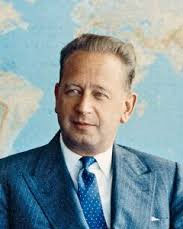
Dag Hammarskjöld, who understood that the Secretary-General was not merely a secretary to governments, but a servant of the Charter and, ultimately, of the peoples of the world.

The office of the Secretary-General was never intended to be merely administrative. It was intended to be moral, political and, when necessary, courageous.

As member states consider the appointment of the next Secretary-General, they face a decision that will shape not only the future of the United Nations, but also its credibility. The world today does not suffer from a surplus of institutions; it suffers from a shortage of trust in them.

The next Secretary-General must therefore be more than a careful manager of bureaucracy. The world needs a leader with vision, independence and integrity — a leader willing to uphold the Charter even when doing so is inconvenient to powerful member states.

Too often, the selection process produces a candidate who is acceptable to everyone precisely because they are unlikely to seriously challenge anyone. This may be politically expedient, but it is strategically short-sighted. An overly cautious Secretary-General may preserve short-term diplomatic comfort while presiding over long-term institutional decline.

The United Nations does not need a figure who simply reflects the balance of power within the Security Council; it needs a figure who reflects the principles of the Charter.

The next Secretary-General must be bold enough to articulate a clear vision for what the United Nations is for in the twenty-first century. That vision must be rooted in the organization’s founding objectives: preventing conflict, strengthening respect for international law, protecting human rights and promoting conditions under which peace is possible. These goals require not only administrative competence, but political courage and moral clarity.

Equally important, the next Secretary-General must be strong enough to maintain independence from the influence of any single member state or group of states. The United Nations does not exist to legitimize the actions of the powerful; it exists to ensure that power operates within rules.

The Secretary-General cannot fulfill this role if the office is perceived as operating at the beck and call of a few influential capitals. Independence is not a luxury in this role; it is the source of its authority.

With independence must come integrity. The United Nations possesses little in the way of traditional power: it does not command armies, it does not control vast financial resources and it cannot compel states to act. Its greatest asset is legitimacy — the belief that it stands for something larger than the interests of individual nations.

That legitimacy depends heavily on the personal credibility of the Secretary-General. Ethical leadership, transparency, accountability and consistency must once again become the defining characteristics of the office.

In this regard, the world would do well to remember Dag Hammarskjöld, who understood that the Secretary-General was not merely a secretary to governments, but a servant of the Charter and, ultimately, of the peoples of the world. He demonstrated that quiet diplomacy and moral courage are not opposites; they are partners.

He showed that the authority of the Secretary-General does not come from military or economic power, but from independence, integrity and a willingness to act when action is required.

Much attention is often given to the identity of the next Secretary-General — nationality, region, and increasingly gender. These questions are politically understandable, but they are not the most important questions. The defining question is not where the Secretary-General comes from, but what the Secretary-General stands for.

The United Nations is often described as an organization of states. But states exist to serve people, not the other way around. If that principle is true at the national level, it must also be true at the international level. The United Nations, therefore, does not ultimately belong to governments. It belongs to the peoples in whose name its Charter was written. Member states do not own the United Nations; they are trustees of it. And trustees are not meant to serve themselves, but those on whose behalf they hold responsibility.

This understanding should guide the selection of the next Secretary-General. The position requires someone who understands that the office is not merely administrative, but custodial — custodial of the Charter, of international law and of the trust that the world’s peoples place, however imperfectly, in the United Nations.

The selection process itself, however, raises a final and somewhat uncomfortable question. The Secretary-General is often described as the world’s top diplomat, and yet the world’s people have no direct voice in choosing this person.

The decision rests, as everyone knows, with a small number of states possessing veto power. This may be politically realistic, but it is increasingly difficult to explain to a global public that is more educated, more connected and more aware than at any time in history.

Perhaps, then, one day the world might experiment with something new — global consultations, or even worldwide elections — allowing the peoples of the world to express their preference for who should occupy this uniquely global office.

It is a slightly amusing idea, perhaps even an unrealistic one for now, but it contains a serious point: if the United Nations truly begins with “We the Peoples,” then their voice should be heard more clearly in choosing its leader.

Until that day comes, the responsibility rests with member states. They must choose not the safest candidate, not the most convenient candidate and not the candidate least likely to upset powerful governments. They must choose the candidate most likely to uphold the Charter, speak with independence, act with courage and restore integrity to the office.

The world does not need a careful manager.
The world needs a courageous Secretary-General.

Naïma Abdellaoui, UNOG – UNison Staff Representative, International Civil Servant since 2004.

IPS UN Bureau

  Source

EXCLUSIVE: Water Laureate Kaveh Madani on Arrest, Exile and Fight for Science

Aid, Civil Society, Climate Change, Combating Desertification and Drought, Conservation, Development & Aid, Economy & Trade, Editors’ Choice, Environment, Featured, Food and Agriculture, Global, Headlines, Human Rights, IPS UN: Inside the Glasshouse, Sustainable Development Goals, TerraViva United Nations, Water & Sanitation

Environment

It was hope that kept me going. – Professor Kaveh Madani 

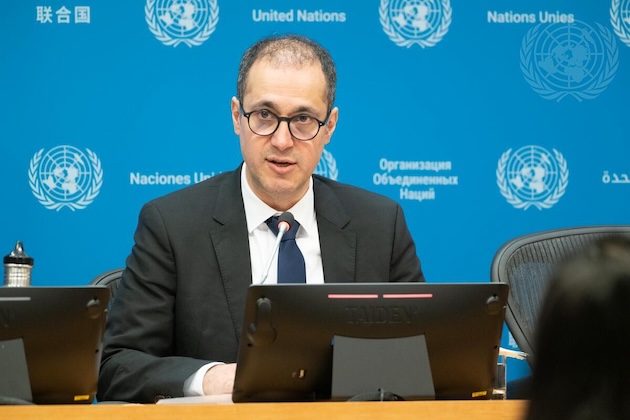
Kaveh Madani, Director of the UN University’s Institute for Water, Environment and Health and lead author of the report entitled “Global Water Bankruptcy: Living Beyond Our Hydrological Means in the Post-Crisis Era” briefs reporters at UN Headquarters. Credit: UN Photo/Evan Schneider

Kaveh Madani, Director of the UN University’s Institute for Water,
Environment and Health and lead author of the report entitled “Global Water
Bankruptcy: Living Beyond Our Hydrological Means in the Post-Crisis Era” briefs reporters at UN
Headquarters.
Credit: UN Photo/Evan Schneider

UNITED NATIONS, Mar 25 2026 (IPS) – Professor Kaveh Madani of Iran has been named the 2026 Stockholm Water Prize laureate. The award will be formally presented by King Carl XVI Gustaf of Sweden in August during World Water Week in Stockholm.


The Stockholm Water Prize is widely regarded as the highest global honour in water science and policy. Often called the Nobel Prize for water, it recognises individuals and institutions for exceptional contributions to the sustainable use and protection of water resources. This year’s selection stands out for both scientific impact and the extraordinary personal journey of the laureate.

At 44, Madani is the first Muslim and the youngest recipient in the prize’s 35 year history. He is also the first United Nations official and the first former politician to receive the award.

Madani currently serves as Director of the United Nations University Institute for Water, Environment and Health. Once a senior official in Iran’s government, he later faced arrest, interrogation, and a sustained smear campaign that forced him to leave his country.

Born in Tehran in 1981, Madani grew up in a family deeply connected to Iran’s water sector. His early exposure to the country’s mounting water challenges shaped his academic direction. He studied civil engineering at the University of Tabriz before moving to Sweden to pursue a master’s degree in water resources at Lund University. He later earned a PhD from the University of California, Davis, followed by postdoctoral research at the University of California, Riverside.

By his early 30s, Madani had established himself as a leading systems analyst. He joined Imperial College, London, where his work focused on the mathematical modelling of complex human water systems. His research combined hydrology, economics, and decision sciences to improve policymaking in water management.

In 2017, he made a decisive move. Leaving a prestigious academic career in London, he returned to Iran to serve as Deputy Vice President and Deputy Head of the Department of Environment. Many viewed his appointment as a signal of reform and a bridge between Iran and its scientific diaspora.

During his tenure, Madani pushed for transparency and structural reforms in water governance. He used innovative public campaigns to raise awareness about environmental degradation. However, his efforts challenged entrenched interests.

State-aligned media accused him of espionage and labelled him a “water terrorist” and “bioterrorist”. Conspiracy theories circulated, linking him to foreign intelligence agencies and even to alleged weather manipulation schemes. His advocacy for international environmental agreements further intensified opposition.

In early 2018, a broader crackdown on environmental experts began. Madani was detained and interrogated multiple times. Several of his colleagues were arrested. One of them, Kavous Seyed Emami, died in custody under contested circumstances.

Facing mounting pressure, Madani left Iran and entered a period of exile. He joined Yale University, where he continued his research and advocacy. He began to focus more on bridging science and policy at the global level.

Madani’s academic contributions have been widely recognised. He is known for integrating game theory into water resource management. His work challenged traditional models that assumed cooperation among stakeholders. He demonstrated that individual incentives often lead to uncooperative behaviour, which makes many engineering solutions ineffective in practice.

This approach provided new tools to understand conflicts over shared water resources. It has been applied to transboundary water disputes and to policy design in regions with limited trust among stakeholders.

One of his most influential contributions is “water bankruptcy.” He introduced the term to describe a condition where water systems can no longer recover to their historical levels. Unlike a crisis, which implies a temporary disruption, water bankruptcy signals a long-term structural failure.

In a recent United Nations report, Madani argued that the world entered an era of global water bankruptcy in January 2026. The report highlighted that many river basins and aquifers have lost their capacity to regenerate. This framing has sparked debate among policymakers and researchers.

Madani uses simple financial language to explain complex ecological realities. He argues that humanity is no longer living off renewable water flows but is depleting long-term reserves. This framing has made the concept widely accessible and influential.

Beyond academia, Madani has built a strong public presence. With a large following on social media, he has used digital platforms to communicate scientific findings in accessible ways. His work includes documentaries and public campaigns aimed at increasing awareness and accountability.

He has also played key roles in international diplomacy. As Iran’s lead environmental diplomat, he participated in global negotiations and served as Vice President of the UN Environment Assembly Bureau in 2017. At the COP23 climate conference in Bonn, he called for greater attention to water in global climate agreements.

Today, as head of the United Nations water think tank, he continues to advocate for integrating water into climate and development policies. He has particularly focused on the Global South, where water stress closely links with food insecurity, migration, and conflict.

The Stockholm Water Prize Committee cited his “unique combination of groundbreaking research, policy engagement, diplomacy, and global outreach, often under personal risk” in awarding him the 2026 prize.

In an exclusive interview with Inter Press Service, Madani recalled the intense pressure and fear that defined his final days in Iran. He described repeated interrogations, surveillance, and a growing sense that his work had placed him in direct confrontation with powerful institutions.

Here are edited excerpts from the interview: 

IPS: You introduced the idea of “water bankruptcy.” How does this change how governments must act today?

Madani: Water bankruptcy is defined as a post-crisis state of failure in which the system is suffering from insolvency, meaning that water use has been more than the available water for an extended period, and also irreversibility, meaning that there are some damages to the ecosystem and the machinery of water production that are irreversible and cannot be fixed.

What that means is that some of the things that used to be just anomalies and abnormal conditions are now the new normal, and we’re no longer experiencing only a temporary deviation from what we are used to, but we have a situation that we have to get used to. Crisis management is about mitigation.

Bankruptcy management is about mitigating what can still be mitigated and adapting to new realities with more restrictions. Bankruptcy management calls for an honest confession, the admission of a confession that a mistake has been made, and the current business model is not working, so it calls for honestly admitting to the mistakes made and transforming the business model, that calls for a fresh new start and a change of course.

It is bitter. Bankruptcy is not a pleasant condition but admitting to it helps us prevent further irreversible damages and enables a future that is less catastrophic.

IPS: You faced arrest, exile, and serious accusations in Iran. What kept you going during that period?

Professor Madani: Hope. Hope is what kept me going because I had gone back there to help and at least at the start, I was trying to take what was happening to me as part of the job and as part of the adventure because I was there to make a positive impact, and if I had given up too quickly, then that would not have matched my essential motivation to help.

I knew that it would not be a very smooth path, but it turned out to be much more bumpy than what I had anticipated, and I think many also, you know, those who made that situation bumpy for me, also regret that today, but by the time they realised mistakes were made, it was too late to do anything about it.

Can you recall your arrest and interrogation? What do you remember most from that experience, and how did it affect you personally?

I think arrests and interrogations are very frustrating, especially when you haven’t done anything wrong.

What kills you is constantly worrying about what others think of you and coming up with different scenarios and conspiracy theories. Dealing with conspiracy theories and proving them wrong is not easy. Those were very hard times for me, but as you know, my background is in behaviour analysis. I was trying to put myself in the shoes of those who were suspicious of me, understand their concerns, and address them so I could help my homeland.

IPS: Many countries still treat water stress as a temporary crisis. What are the biggest policy mistakes they continue to make?

Madani: Yes, crisis management is all about mitigation. Those who deny the crisis and enter the bankruptcy state continue to borrow more from nature, build more infrastructure, dig deeper wells, add additional reservoirs and storage capacity, implement more water transfer projects and build more, and construct more desalination plants. Continuing to add to their supply, on the other hand, they think things would be temporary, and through some sort of rationing, things would be solved, but the continuation of that behaviour and the denial of that reality makes the problem worse.

They get drained into a deepening problem, and again, like the financial world, if your business model is not working and you’re in denial, you continue taking more loans and your expenses and your debt become higher and higher. By the time that people realise that there is no way out of that chaos and that failure, the cost is much, much higher. Remaining in denial would result in major significant irreversible damages that generations would have to pay for.

IPS: You combined science with diplomacy and public outreach. Which of these has had the most real impact on decision-making?

Professor Madani: It’s very hard to really say which one has the most impact, because they’re very complementary. The science is very good, but it’s not enough for decision-making. You still have to understand what the real world looks like and how incentives shape behaviour and actions and how interests promote conflicts and cooperation to be able to act.

Science, of course, opens doors and puts more solutions on the table, but still, without understanding the politics or navigating through politics, it would not work. Diplomacy is another one when it comes to the international scale; even when it comes to negotiating with stakeholders, that’s a skill that would be extremely helpful. So, in a way, these are the things that you need.

And on top of these, public outreach educates you about perceptions, how people and societies understand problems, how they judge different situations, and how their emotions and their perceptions shape their beliefs, and that tells you what you need to do when it comes to communicating your science better, changing their opinion, impacting their opinion, and even negotiating with them or convincing them that things might be different or a different pathway is required. I think they all help you create a recipe for something that might work.

IPS: Your work focuses on human behaviour in water management. Why do technical solutions alone often fail?

Madani: A lot of times, technical solutions developed by our computer models or in our labs don’t take into account the full elements of reality. When humans are involved, we deal with different motives, incentives, emotions, and psychologies, and that makes – that creates – some essentially unexpected realities that might tweak things. Simply put, a lot of times when it comes to developing a solution for a water problem or an environmental solution or a sustainability solution, we think that everyone agrees to making short-term sacrifices for the sake of long-term resilience, but that is not the case in reality because different stakeholders, different groups, farmers, urban users, and industrial users also have short-term goals.

They maximise profit, make sure that the quality of life is not impacted, and so on, which makes them non-cooperative to an extent. And if you miss this reality, then you think that the solution, the optimal solution, is very practical and everyone would cooperate, but then you get very disappointed.

Yet, you can take that into account to the extent possible, try to understand the behavioural element and incorporate those into your assessment and projections to be able to align those incentives and motives with the long-term interest to offer a solution that is more attractive and win-win.

IPS: You now advise governments globally. What is the one urgent action every water-stressed country must take in the next five years?

Madani: I think that by now, countries must understand the importance of water as an essential resource for establishing peace, national security, justice, prosperity, and development. I mean, it supports human development, health, and long-term resilience in society. So, countries must not take it for granted and understand that technological solutions would not be sufficient to address shortages.

They must revisit their practices. They must do a proper accounting to understand what, what’s, and how water is currently being spent and if it’s strategic – strategically speaking, that is the right way of doing things when it comes to matters of national security and long-term resilience. Bankruptcy management starts with accounting and transparency.

That’s something that is missing in many water-stressed and non-water-stressed countries, and I think that’s something that we can focus on, put the lens of science on, and not be afraid of accounting and measuring and monitoring what is happening in the system because that knowledge is required if you want to make improvements.

IPS: Thank you very much for taking the time and speaking to IPS  and congratulations again for the well-deserved award.

IPS UN Bureau Report

  Source

Is WWIII here?

Armed Conflicts, Civil Society, Crime & Justice, Democracy, Europe, Global, Headlines, Human Rights, IPS UN: Inside the Glasshouse, TerraViva United Nations

Opinion

Is WWIII here?

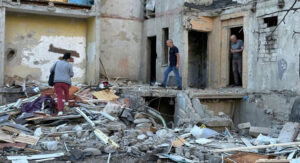
The Russo-Ukrainian war, which began in February 2014, shows no signs of ending. Credit: UNOCHA/Dmytro Filipskyy

KYIV, Ukraine, Mar 19 2026 (IPS) – It is becoming increasingly difficult to ignore the tension, violence and uncertainty in the world in recent years. The number of wars is growing, more and more money is being spent on weapons, and the rhetoric of major powers is becoming increasingly decisive.


The latest escalation in the Middle East has reignited the debate about the start of World War III. The consequences of the Israeli and US strikes on Iran are being felt to varying degrees far beyond the region, at least by those who follow oil prices.

The interests of numerous great powers are at stake, and third parties are considering their next moves and making political statements. Opinions range widely, from the belief that there can be no Third World War because of the existence of nuclear weapons, to the conviction that it has already begun. So, what is really going on?

A journalistic and academic concept

When historians talk about world wars, they mean two unique events in the past. Their scale, the involvement of a wide range of states, the level of violence and the nature of the consequences put them in a league of their own.

To understand how these wars differed from any others, one need only glance at the diagram of human casualties, defence spending, or destruction in various armed conflicts of the 20th century.

However, historians also have different opinions. One of them, better known in his political capacity, Winston Churchill, once described the Seven Years’ War as a world war. This protracted 18th-century conflict drew most of the major powers of the time into direct combat; it spanned numerous battlefields in Europe, North America, the Atlantic and the Indian Ocean; and it had serious geopolitical consequences. How was this not a world war?

By the fact that it was not a total war between industrialised states, the scale of the clashes was rather limited, as were the number of armies; and the consequences, although serious, were not systemic — this may be the response of more conservative historians than the British Prime Minister.

The number of armed conflicts in the world has been growing over the past few years: 2024 has been a record year since World War II.

‘World War’ is both a journalistic and academic concept. To enhance the effect, attract attention or draw conditional analogies, it can be used to describe more events than just the First and Second World Wars. For example, the Thirty Years’ War of the 17th century, the Napoleonic Wars of the 19th century or even the Cold War are sometimes referred to as world wars.

Within this logic, individual elements of a world war can be seen even today. The number of armed conflicts in the world has been growing over the past few years: 2024 has been a record year since World War II. According to some estimates, 61 armed conflicts in 36 countries were recorded this year, which is significantly higher than the average for the previous three decades.

Global military spending is also on the rise: today it has reached 2.5 per cent of the global economy, the highest figure since 2011 and an upward trend since 2021. This is still significantly less than during the Cold War, when a range of 3 to 6 per cent was the norm. Analysing these figures, it is clear that global security has deteriorated in recent years, but how critically?

A more academic approach would be to define a world war as one in which most of the major powers are involved; which has global reach and is total in nature; leads to enormous loss and destruction; and significantly changes the world upon its conclusion. Direct and large-scale armed conflict between major powers is a mandatory criterion.

And this is the main argument against the idea that World War III has already begun. No matter how high the level of destabilisation in the modern world, no matter how far large-scale regional conflicts have escalated, and no matter how much money states spend on armaments, this is not enough for a world war. Large-scale military operations involving major powers are needed.

All just fears?

This has not happened in the world for a long time. The interval between the Second and Third World Wars turned out to be much longer than between the First and Second. Nuclear weapons played a central role in this, raising the price of war so high that major powers began to avoid it by any means possible. This safeguard has been in place for over 80 years and looks set to continue.

Peace, or rather the absence of war between major powers, remains one of the central elements of the current international order. International institutions and regimes may collapse or weaken, regional wars may break out, but the likelihood of war between major powers remains extremely low.

Proponents of the Third World War theory sometimes point out that even in the absence of full-scale war between major powers, other manifestations occur: hybrid wars, cyberattacks, or proxy wars. This is true, but all these outbreaks of conflict are several levels below a world war in terms of their destructive potential and are not total in nature.

Throughout history, states have fought through proxies or resorted to information, trade or religious wars, but we do not consider these wars to be world wars — except in a symbolic sense.

A systemic war does not necessarily have to be a world war

Unlike the 2003 war in Iraq, the strikes on Iran are taking place in a world where, instead of US hegemony, there is complex competition between at least two centres of power. This adds nuances and forces other states to respond, directly or indirectly, for example, by supplying weapons or intelligence data, supporting one side or the other.

But this does not make the war global. Arms supplies, for example, are a common practice found in most regional conflicts, as is diplomatic or financial support from allies or partners. Even if American troops use the technology or expertise of partners – such as Ukrainian drones – this does not mean that Ukraine is being drawn into the war. Just as American arms supplies to Ukraine during the Russian-Ukrainian war did not mean US involvement in the war.

For a world war, the key ingredient is still missing: direct confrontation between major powers. In addition to world wars, there are also systemic wars. In these conflicts, it is not so much the scale that is important as the change in the international order to which they lead.

The Thirty Years’ War, the Napoleonic Wars, and the First and Second World Wars mentioned above were systemic wars: after their completion, the rules of international politics were rewritten and new ones were adopted at peace conferences and congresses. A systemic war does not necessarily have to be a world war.

Moments of hegemonic crisis and the beginning of the struggle for hegemony always carry with them the danger of new wars, arms races and escalations.

The current destabilisation and growth of various risks are largely linked to the struggle for the future of the international order. The United States and China have almost fallen into the ‘Thucydides trap’ — a strategic logic similar to that which led to the Peloponnesian War in the 5th century BC. At that time, the narrowing of the power gap between the hegemon and the challenger forced the Spartans to start a preventive war.

Today, there are well-founded fears that the decline of American hegemony, the rise of China and the approach of a bipolar world will sharply increase the likelihood of direct armed conflict between the superpowers.

The decisive, to put it mildly, steps taken by the US administration can also be considered preventive actions aimed at strategically weakening China’s position while Washington still has the upper hand. Such moments of hegemonic crisis and the beginning of the struggle for hegemony always carry with them the danger of new wars, arms races and escalations.

We are in the midst of such a crisis. It is systemic in the sense that it is not just a collection of regional conflicts in different parts of the world, which have become more numerous, but a manifestation of a large-scale redistribution of influence and power on a global scale. This redistribution will entail changes in the international order, because the rules of the game are linked to the balance of power.

If, at some point, the leaders of major states decide that it is worth taking the risk of war and paying the price, the systemic crisis will turn into a world war. But this, as the Spartans themselves said, is ‘if’.

Nickolay Kapitonenko is an associate professor at the Institute of International Relations at Taras Shevchenko National University of Kyiv and director of the Centre for International Relations Studies.

Source: International Politics and Society, Brussels

IPS UN Bureau

  Source

Beyond Stereotypes: Reclaiming Muslim Histories during Ramadan

Civil Society, Global, Global Governance, Headlines, Human Rights, International Justice, IPS UN: Inside the Glasshouse, Religion, TerraViva United Nations

Opinion

Muslim History Month poster- artist Siddhesh Gautam

DELHI, India, Mar 18 2026 (IPS) – In public discourse today, Muslims often appear as subjects of debate rather than authors of their own histories. Discussions about Muslim societies tend to revolve around geopolitics, security or conflict, leaving little space for the cultural, artistic and intellectual traditions that have shaped Muslim communities across centuries.


Reclaiming these narratives is therefore about reclaiming narrative authority. As a Muslim woman, I have often seen how Muslim voices are sidelined even when conversations centre on our own communities and pasts. It was within this context that I started Muslim History Month, together with my friend and colleague Ashwini KP, currently UN Special Rapporteur on Racism, in 2020, choosing to mark it during the month of Ramadan. Hosted on www.zariya.online, the initiative emerged from a simple conviction: communities must have the space to document and narrate their own histories.

Mariya Salim

Muslim History Month also draws inspiration from earlier community-led initiatives such as Black History Month and Dalit History Month. These movements have long shown how marginalized communities can reclaim pasts and their present, that have been ignored or distorted.

They remind us that history is not only about remembering the past but also about challenging exclusion and reshaping how societies understand themselves. Muslim History Month builds on this legacy by creating a platform where Muslims, and others who are allies, themselves reflect on the diversity, complexity and richness of their historical and cultural experiences.

What began as a modest collaborative project has since developed into a global platform bringing together writers, scholars, artists and activists to explore overlooked dimensions of Muslim histories. Contributors have written from Egypt, the United States, Palestine, Nepal and Russia, among others, representing a range of communities including Pasmanda, Tsakhurs, Roma and Uyghur Muslims. This year alone there are contributors from over 6 countries, from Lebanon and Palestine to India, Egypt and Indonesia.

The urgency of documenting these histories is reflected in the commitment of the contributors themselves. Rima Barakat, an academic in Islamic Art History from the Lebanese American University (LAU), wrote her contribution this year from Beirut. Explaining why she chose to participate in our endeavour despite living amid ongoing conflict, she observed:

“War always incites me to act culturally and to contribute amidst political turmoil. Historically, during World War I and World War II, artists and writers produced prolifically and contributed to sustaining a cultural economy. That is what I do today and how survival is measured by cultural and artistic endurance.”

Mihrab at the Jami Masjid, 17th century, Bijapur, India. Photo- Author Rajarshi Sengupta

Her words capture something fundamental about the role of culture in difficult times. Artistic expression is often treated as secondary to more immediate political realities. Yet history repeatedly shows that culture can become one of the most powerful ways communities endure, remember and rebuild.

The first edition of Muslim History Month brought together writers from different parts of the world to document overlooked aspects of Muslim communities. Contributors wrote about subjects ranging from Sheedi Muslims in Pakistan to what Ramadan/Ramzaan means. The second edition shifted the focus toward Muslim women from across the world who are no longer with us, many of whose contributions have faded from historical memory, from architect Zaha Hadid to Indian Spy Noor Inayat Khan. By revisiting their lives and work, the edition sought to address the erasures that often shape how Muslim women’s life and experiences are recorded.

The third edition, launched this year, turns its attention to Muslim art and architecture. Rather than limiting the discussion to monumental structures or gallery-based art alone, the edition explores a wider spectrum of creative practices. Art and architecture here include performance traditions, Calligraphy and mosque architecture, craft practices like Rogan Art, cultural rituals like wearing Amulets and everyday acts of creativity through which communities’ express faith, identity and belonging.

One of the contributions by Kawther Alkholy Ramadan in Canada for instance reflects on the aftermath of the Afzaal family murders in London, Ontario. In 2021, the Afzaal family was deliberately targeted and killed in an act of anti-Muslim violence that deeply affected the local community. Rather than focusing solely on the violence of the attack, Ramadan’s piece examines how Muslim women responded through creative and cultural expression.

Stories such as these challenge conventional assumptions about what counts as art. They show how creativity often emerges most powerfully in moments of crisis, when communities search for ways to process trauma and reaffirm their presence.

Another contribution from Indonesia by Adzka Haniina Albarri, for instance explores the performative art known as Shalawat Musawa. Shalawat refers to devotional invocations offered by Muslims in honour of the Prophet Muhammad (PBUH) The article examines how Shalawat Musawa has become a space where discussions around gender equality can be articulated. By encouraging women’s participation in a devotional practice historically dominated by men, performers are using art to engage with evolving debates about gender and social justice.

Across the edition, similar stories emerge from different parts of the world. Some pieces engage with contemporary artists, including an interview with world renowned Tunisian calligrapher Karim Jabbari, articles by Palestinian jewellery designer Mai Zarkawi and Egyptian academic Balsam Abdul Rahman Saleh. Others explore artistic traditions shaped by migration, diaspora and local cultural histories.

Muslim History Month III highlights how artistic expression remains embedded in everyday life. From neighbourhood cultural initiatives, architectural marvels, discussions on the Bihari Script Quran in Dallas Museum, to devotional performances, these practices reveal how creativity continues to shape the social and spiritual landscapes of Muslim communities.

They also illustrate the diversity within Muslim cultural production. Muslim societies are far from monolithic, and neither are their artistic traditions.

At a time when public discourse frequently reduces Muslims to political headlines or security narratives, these stories offer an important counterpoint. They remind us that Muslim histories are also histories of creativity, scholarship, craftsperson-ship and cultural exchange.

Documenting these histories is itself an act of preservation. History, and for that matter the present that remains unwritten, are easily forgotten or misrepresented. When communities claim authority to narrate their own pasts and present, they challenge the structures that have historically excluded them from broader cultural narratives. Therefore, Muslim History Month, then, is not only about looking back. It is also about shaping how Muslim histories will be understood in the future.

As Rima Barakat’s reflection from Beirut reminds us, even in times marked by war and uncertainty, cultural production persists. For many communities, it is precisely through artistic endurance that survival itself is measured.

Beyond the stereotypes and headlines that dominate public discourse lies a far richer narrative, one shaped by art, architecture, memory and the collective imagination of communities determined to tell their own stories.

Mariya Salim is co-founder of Zariya. She is a Human Rights activist and an international SGBV expert based in Delhi India.
https://zariya.online/category/muslim-history-month-iii/

IPS UN Bureau

  Source

A Remotely-Piloted Weapon That Targets Civilians in War Zones

Armed Conflicts, Civil Society, Crime & Justice, Democracy, Featured, Global, Headlines, Human Rights, IPS UN: Inside the Glasshouse, TerraViva United Nations

A Remotely-Piloted Weapon That Targets Civilians in War Zones

A sign outside the UN Secretariat building last year.

UNITED NATIONS, Mar 18 2026 (IPS) – As the world continues to be weighed down in political and military turmoil, drones are being increasingly used as weapons of war in a rash of ongoing conflicts—including Ukraine vs Russia, Israel vs Palestine, US vs Iran and Israel vs Lebanon, plus in civil wars in the Democratic Republic of the Congo (DRC), Sudan and Haiti.


Described as Unmanned Aerial Vehicles (UAV), drones have fundamentally transformed modern warfare, “offering a low-cost, high-impact form of air power, challenging traditional military doctrines and giving rise to new tactics and ethical debates”.

Once limited to major military powers like the U.S. and Israel, drones are now being used by numerous state and non-state actors, including militant groups and even organized crime cartels.

The use of drones, particularly in targeted killings and with increasing autonomy, has raised significant international debate regarding accountability, civilian casualties, and compliance with international humanitarian law

UN High Commissioner for Human Rights Volker Türk said last week he was “appalled by the devastating impact on civilians of increasing drone attacks”, amid reports that more than 200 civilians have been killed by drones since 4 March alone in the Kordofan region, and in White Nile state.

“It is deeply troubling that despite multiple reminders, warnings and appeals, parties to the conflict in Sudan continue to use increasingly powerful drones to deploy explosive weapons with wide-area impacts in populated areas,” said Türk.

“I renew my call on them to abide fully with international humanitarian law in their use of these weapons, particularly the clear prohibition on directing attacks against civilians and civilian objects and infrastructure, and against any form of indiscriminate attacks.”

Many homes, schools, markets and health facilities were damaged or destroyed in the attacks, compounding the impacts on civilians and local communities, he said.

Meanwhile drones are also being used in the politically-troubled Haiti and also in the conflict between the Democratic Republic of Congo (DRC) and Rwanda despite a peace agreement brokered by the US last year.

According to a report in Cable News Network (CNN) March 17, the war in Iran is continuing to disrupt travel across the Gulf after Iranian drone strikes triggered two major air incidents in recent days. Flights at Dubai International Airport were briefly suspended on Monday after a drone struck a nearby fuel tank, igniting a large fire.

The shutdown forced cancellations and diversions as aviation authorities closed the airport. Part of the UAE’s airspace was also closed for a few hours overnight after the country said it was responding to incoming missiles and drone strikes from Iran.

Meanwhile, the prices of many global airfares that bypass the Middle East are rising, as the conflict drives up oil prices and airlines warn of higher fuel costs ahead, said CNN.

Focusing on a military perspective, Siemon Wezeman, Senior Researcher, Arms Transfers Programme, Stockholm International Peace Research Institute (SIPRI), told IPS more and more states, (and also non-state armed- rebel – groups) acquire drones of all sizes.

“Some of the numbers are quite amazing – Ukraine getting not a few 1,000, but far over 10,000 drones from various suppliers, and Russia, Ukraine and Iran each use drones by the 100s almost every day in the current conflicts.”

And different from some 10 years ago, when most of the drones where for reconnaissance roles, he pointed out, today many drones are armed and many more are ‘one-way attack drones’ (also called suicide or kamikaze drones). The latter are becoming a cheap alternative for long-range missiles against ground targets.

In the SIPRI arms transfers database (https://armstransfers.sipri.org), he said, “we record transfers of all armed drones, and reconnaissance drones with a weight of at least 150kg (we had to put a weight limit to be able to keep monitoring drone transfers with the resources and sources we have)”.

“And we clearly see in recent years that a) the total numbers of drones transferred between states has grown, b) several non-state actors (e.g. Houthis and Hezbollah) have also been supplied with drones, c) the number of states and non-state actors that have acquired drone has grown – most states in the world have now acquired drones, many of them from foreign suppliers, d) the number of producers and suppliers has grown – the simpler drones are offered by dozens if not 100s of large and very small companies and that number is growing, and e) drones, and especially armed drones.”

That is the picture for flying drones, Wezeman said.

But also, sea drones (surface or submarine) are starting to become popular – even if not yet transferred in any significant number. And land drones are also starting to become popular, he declared.

At a press conference March 10, UN Under-Secretary-General for Humanitarian Affairs Tom Fletcher said: “I’m really worried about drones in particular. I think the world has decided that it’s far more interested in spending enormous amounts of money developing these increasingly deadly weapons than it is on saving lives, and it seems to have decided that it hasn’t got time to work on ensuring that the rules that govern these weapons, these lethal autonomous weapons, keep up with the pace of technology.”

So you’ve got this dangerous alliance between very innovative technology and huge amounts of money and people’s desire to kill more people – and that’s a toxic combination, he said.

“And last year, 90 per cent of all deaths caused by drones were civilians, many of them humanitarians. And we’re seeing that across the crises on which we work – whether it’s Gaza, Sudan or in Ukraine, we’re seeing these bad practices move between crises”.

In the DRC last week, a senior official of the UN children’s agency UNICEF and two civilians were killed in drone strikes.

Amplifying further Wezeman said all these drones and one-way attack drones have become more capable, especially in range (the simple Shahed, one-way attack drones used by Iran and sold to Russia have a range of up to 1500 to 2000km), changing them from tactical battlefield weapons to more strategic weapons.

Development is very rapidly continuing for all type of drones, including making them more autonomous and intelligent to be capable of independent targeting and other decision-making. AI plays a growing role in this process. This process leads to questions about control, but right now it seems the process is moving faster than the discussion on controlling the autonomous aspects (see also our programme on emerging technologies.

https://www.sipri.org/research/armament-and-disarmament/emerging-military-and-security-technologies.

Will they replace systems with a human on board or in the loop? The development goes certainly that way and for missiles and one-way attack drones that has already started. For the larger, more capable and more complex systems such as combat aircraft, warships and larger combat vehicles that is still a future – but not a distant dream as development of for example drone combat aircraft is already moving into prototypes in the USA, China, Australia and Europe.

There still is an element of doubt however – drones need navigation that now is largely based on GPS-type systems, something that is not free from the risks of being jammed or stopped.

The simpler drones, with their simple technology, cheap and easy to produce are also not as effective as hoped. Most of them are rather easy prey for air-defence systems (or jamming) – while Russia, Iran and Ukraine send every day dozens or 100s to attack their opponents, most do no reach their target but are shot down or lost due to jamming or other causes, declared Wezeman.

Meanwhile Human Rights Watch said last week its latest research on “how Haitian security forces and private contractors working with them have conducted extensive and apparently unlawful lethal drone strikes in densely populated areas killing and injuring residents who were not members of criminal groups, including children”.

“We call on Haitian authorities to urgently rein in the security forces and private contractors working for them before more children die”, said HRW.

According to data from multiple sources reviewed by Human Rights Watch, at least 1,243 people were killed by drone strikes in 141 operations between March 1, 2025, and January 21, 2026, including at least 43 adults who were reportedly not members of criminal groups, and 17 children. The data also shows that the drone strikes injured 738 people, at least 49 of whom were reportedly not members of criminal groups.

“Dozens of ordinary people, including many children, have been killed and injured in these lethal drone operations,” said Juanita Goebertus, Americas director at Human Rights Watch. “Haitian authorities should urgently rein in the security forces and private contractors working for them before more children die.”

The United Nations Integrated Office in Haiti has attributed the drone attacks in Haiti to a specialized “Task Force” established by Prime Minister Alix Didier Fils-Aimé that is operated with support from the private military company Vectus Global.

The US ambassador to Haiti has confirmed that the US State Department issued a license to Vectus Global to export defense services to Haiti.

Thalif Deen, Senior Editor, Inter Press Service (IPS) news agency, was a former Director, Foreign Military Markets at Defense Marketing Services; Senior Defense Analyst at Forecast International; military editor Middle East/Africa at Jane’s Information Group and UN correspondent for Jane’s Defence Weekly, London.

IPS UN Bureau Report

  Source