

Africa, Biodiversity, Conferences, Conservation, Development & Aid, Economy & Trade, Editors’ Choice, Environment, Featured, Green Economy, Headlines, Natural Resources, Sustainable Development Goals, TerraViva United Nations
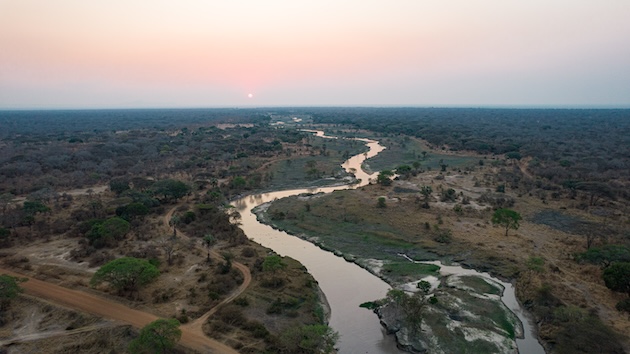
The Ruvuma River winds through wetlands and forests in southern Tanzania, forming part of the natural border with Mozambique. The river sustains farming, fishing and wildlife across the vast Ruvuma River Basin, supporting millions of people who depend on its waters for their livelihoods. Credit: Kizito Makoye/IPS
– At dawn, the Ruvuma River moves quietly through a vast wetland along the border between Tanzania and Mozambique. Its muddy waters appear calm, disturbed only by drifting logs and the occasional ripple.
But the fishermen paddling wooden canoes across the river know the danger that lurks under the surface.
“Always keep away from the edge,” says Hamisi Mkude, a fisherman from Michenjele village. “Never trust this river.”
For generations, communities living along the Ruvuma Basin have learned to coexist with crocodiles, whose presence defines life on one of East Africa’s most dangerous rivers. Fishermen follow unwritten rules passed down through families: stay away from the water’s edge, avoid muddy banks marked by crocodile tracks, and never wade into the river.
“That distance saves lives,” Mkude tells IPS by phone. “Crocodiles attack from the bank.”
Inside the small fishing boats, discipline is strict. Arms and legs must never dangle over the side, and no one stands on the canoe’s edge while pulling in nets.
Yet despite the dangers, the Ruvuma River remains the lifeline of millions of people who live within its vast basin.
Stretching across about 155,000 square kilometres, the Ruvuma Basin connects southern Tanzania’s highlands with eastern Malawi and northern Mozambique before snaking into the Indian Ocean. Along its long journey, the river nourishes forests, wetlands and fertile floodplains that support farming, fishing and transport.
But the ecosystem that sustains these communities is increasingly under pressure from deforestation, unsustainable land use and climate change.
Now, Tanzania, Mozambique and Malawi have launched a new regional initiative aimed at protecting the fragile ecosystems of the basin.
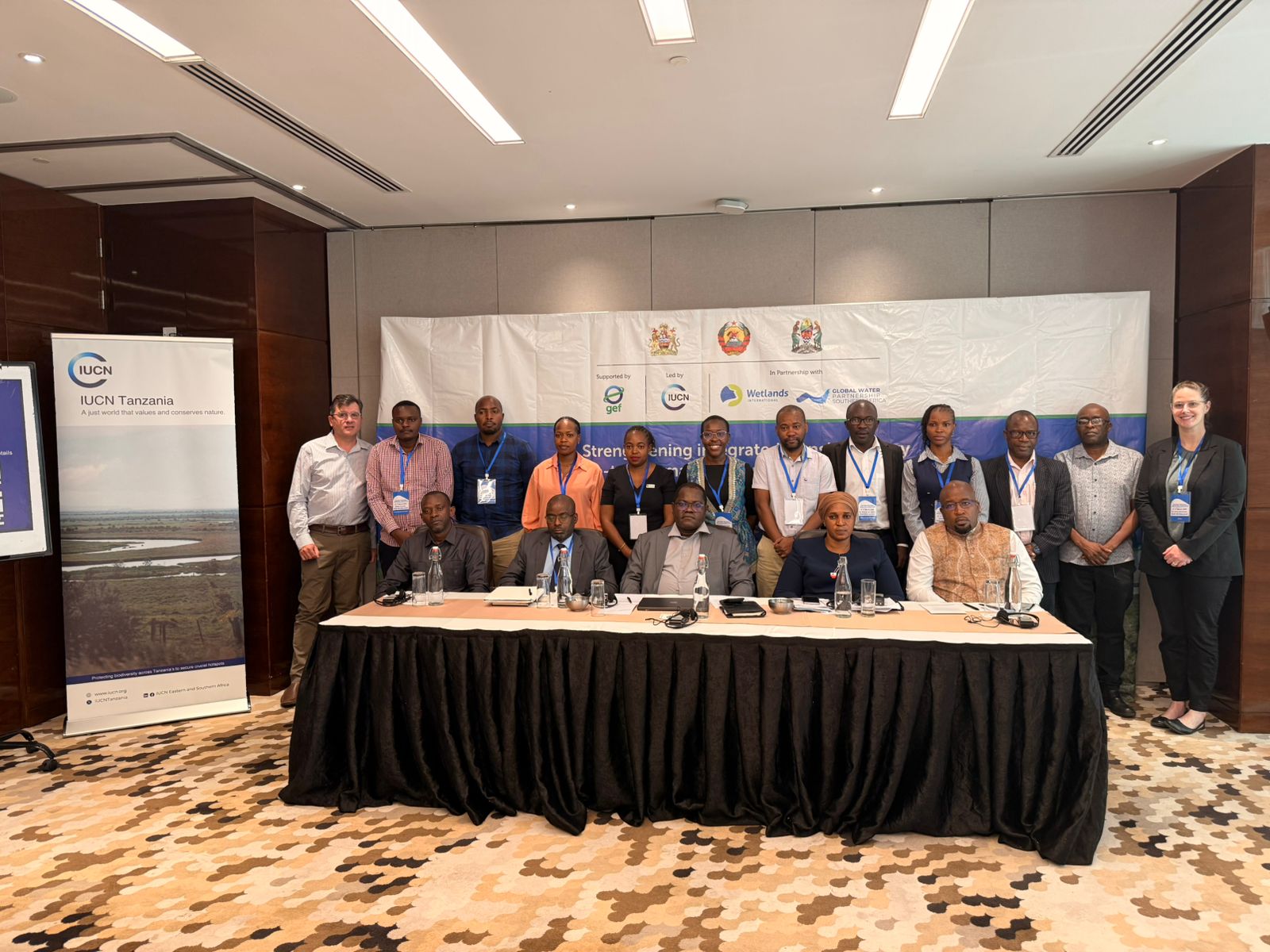
Delegates from Tanzania, Mozambique and Malawi pose for a group photo during the inception workshop launching the “Strengthening Integrated Transboundary Source-to-Sea Management of the Ruvuma River Basin and Its Coastal Zones” project at Johari Rotana on March 4, 2026. The five-year, $7.12 million initiative funded by the Global Environment Facility aims to improve cross-border management of the Ruvuma River Basin, protecting ecosystems while strengthening livelihoods for communities across Tanzania, Mozambique and Malawi. Credit: Kizito Makoye/IPS
A Transboundary Effort
The three countries have unveiled a project to strengthen environmental management across the Ruvuma Basin.
Officials announced the initiative during a workshop in Dar es Salaam, bringing together policymakers, scientists and conservationists concerned about the basin’s future.
The programme will be implemented with USD 7.12 million in funding from the Global Environment Facility (GEF) and led by the International Union for Conservation of Nature (IUCN) with Global Water Partnership Southern Africa and Wetlands International.
About 65 percent of the basin lies in Mozambique, 34 percent in Tanzania, and a small portion in Malawi, making cooperation between the three countries essential.
“This inception workshop marks an important milestone,” said Julie Mulonga, director of Wetlands International Eastern Africa. “It represents the transition from planning to implementation, when our shared vision begins to translate into coordinated action.”
The initiative aims to improve management of forests, wetlands and water resources from the upper catchments of the basin to its coastal ecosystems.
A River That Sustains Millions
The Ruvuma River begins in the highlands of southern Tanzania and flows more than 800 kilometres to the Indian Ocean.
Along the way, it supports a wide range of ecosystems, including wetlands, forests, floodplains and estuaries that are among the most biologically diverse landscapes in southeastern Africa.
For communities scattered along its banks, the river is central to daily life.
Farmers depend on its waters to irrigate crops such as maize, rice and cassava. Fishermen rely on the river for their daily catch. Women collect water for cooking and washing, while pastoralists bring livestock to drink.
Seasonal rhythms shape life across the basin.
During the rainy season, the river swells and floods surrounding wetlands that serve as breeding grounds for fish and wildlife. In the dry months, shrinking channels concentrate fish stocks that sustain local economies.
But these natural cycles are becoming increasingly unpredictable.
“The Ruvuma landscape is both ecologically important and socially vital,” Mulonga told participants at the meeting. “Its wetlands, forests and agricultural lands support millions of people across Tanzania, Malawi and Mozambique.”
“These ecosystems regulate water resources, sustain biodiversity and underpin livelihoods and food security,” she added.
Growing Environmental Pressures
Environmental experts warn that the basin’s ecosystems are under mounting strain.
Across the region, forests are being cleared for farmland and charcoal production. Hillsides once covered with woodland are now exposed to erosion, sending sediment into rivers and damaging aquatic habitats.
Population growth is increasing demand for land, while climate change is altering rainfall patterns.
“Land degradation, unsustainable farming and deforestation are placing increasing pressure on these ecosystems,” Mulonga said.
Scientists warn that without coordinated action, the basin could lose ecological functions that are vital for both biodiversity and human livelihoods.
A “Source-to-Sea” Approach
The new initiative adopts what experts call a “source-to-sea” approach, recognising that environmental activities upstream can affect ecosystems downstream.
For example, deforestation in the upper catchments can increase soil erosion and sediment in rivers, affecting fisheries and coastal habitats further along the basin.
Project planners say the programme will focus on improving land management in agricultural areas, restoring degraded landscapes and protecting wetlands.
“The Ruvuma River Basin serves as a vital lifeline for millions across Malawi, Mozambique, and Tanzania,” said Andrew Hume, International Waters Focal Area Coordinator at the Global Environment Facility.
“This project demonstrates how safeguarding the basin depends on a shared vision and collaborative transboundary efforts. By supporting this initiative, the GEF is helping to connect land, freshwater, and marine management in a model that transcends national borders. This comprehensive, source-to-sea approach reflects our commitment to protecting international waters and will guide our future investments in shared ecosystems as we move toward GEF-9.”
The project aims to restore about 88,620 hectares of degraded ecosystems while improving landscape management across nearly 280,000 hectares. More than 50,000 people are expected to benefit directly from the initiative.
Representatives from conservation organisations say the project could demonstrate how integrated environmental management can work across national borders.
“The project embodies an integrated vision of land, freshwater and marine resources,” said a representative from the IUCN. “It positions the Ruvuma Basin as a model for transboundary resource management and sustainable development.”
Cooperation Across Borders
Because the river crosses national boundaries, cooperation among the three countries is critical.
Decisions made upstream can have consequences downstream.
For instance, changes in land use in Tanzania may affect water flows in Mozambique, while environmental degradation in Malawi could influence sediment levels in the lower basin.
For years, limited coordination between countries made it difficult to manage the basin effectively.
But officials say that is beginning to change.
The three countries have signed agreements to strengthen collaboration through the Joint Development and Management of the Ruvuma Basin.
James Chitete, head of the Malawian delegation, said the project represents an opportunity for shared responsibility.
“The project is not only about water management,” he said. “It is about safeguarding ecosystems, improving livelihoods and ensuring our natural resources benefit present and future generations.”
Improving Knowledge and Governance
Beyond environmental restoration, the initiative will also focus on strengthening governance and scientific research.
Experts say that data on water flows and environmental changes in the basin remain limited.
The project aims to improve hydrological monitoring and data sharing between the three countries to help policymakers make informed decisions.
“The source-to-sea approach recognises that land management affects river health and coastal ecosystems,” said the chairperson of the Joint Development and Management of the Ruvuma Basin.
“Decisions made in one part of the basin can have consequences across borders.”
Communities at the Centre
Experts stress that local communities must play a central role in protecting the basin.
Farmers, fishermen and pastoralists interact with the landscape every day, making them key partners in conservation efforts.
The project therefore emphasises community participation and aims to involve women and youth in environmental decision-making.
“The Ruvuma River Basin is a shared resource and opportunity,” said Shamiso Kumbirai of Global Water Partnership Southern Africa.
“Through cooperation and inclusive governance, this project can strengthen ecosystem health and regional collaboration.”
Protecting Wetlands
Wetlands – often overlooked in development planning – are receiving particular attention under the initiative.
These ecosystems act as natural filters, trapping sediment and pollutants before they reach rivers.
They also store water during rainy seasons and release it gradually during dry periods, helping regulate river flows and reduce flood risks.
“Wetlands are often undervalued,” Mulonga said.
“Yet they regulate water flows, reduce flood risks and support biodiversity. They are natural infrastructure that enhances climate resilience.”
Climate Change Challenges
Climate variability is already affecting communities along the Ruvuma River.
Farmers report shifting rainfall patterns that disrupt planting seasons, while fishermen say fish populations are changing as water temperatures fluctuate.
Floods have also become more intense in recent years, damaging homes and crops.
To address these challenges, the project will promote nature-based solutions such as forest restoration, sustainable agriculture and wetland conservation.
Experts say strengthening ecosystems can help communities adapt to climate change while protecting biodiversity.
Life Along the River
Back on the Ruvuma River, fishermen like Abdallah Hassan say they understand the delicate balance between humans and nature.
Declining fish stocks or polluted water would threaten their livelihoods.
“You must respect the river,” Hassan says. “If you respect it, it will feed you.”
As the meeting in Dar es Salaam concludes, officials express cautious optimism that the new initiative could improve cooperation and restore degraded ecosystems across the basin.
Conservation groups say the project could also become a model for transboundary environmental management in Africa.
For communities living along the river, the stakes are high.
At sunset, fishermen pull in their nets as lanterns flicker on the darkening waters of the Ruvuma.
Beneath the surface, crocodiles slither silently.
For generations, survival here has depended on knowledge, discipline and cooperation — principles that the three nations now hope will guide the protection of the river they share.
For fishermen like Mkude, the hope is simple: That the Ruvuma River will endure for generations to come.
Note: This feature is published with the support of the GEF. IPS is solely responsible for the editorial content, and it does not necessarily reflect the views of the GEF
IPS UN Bureau Report






