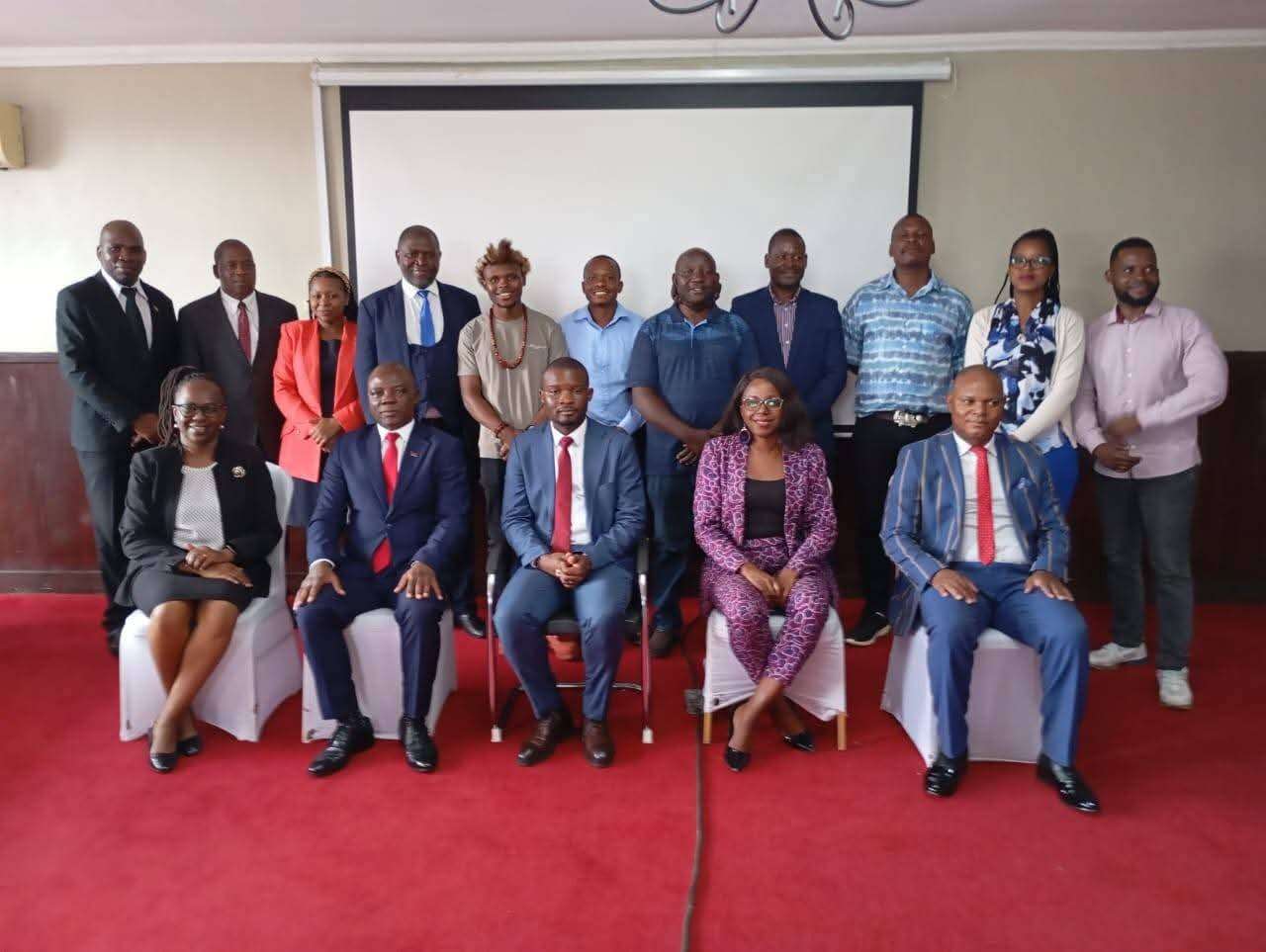
BLANTYRE-(MaraviPost)-Minister of Youth, Sports and Culture Alfred Gangata has reaffirmed the Government’s commitment in recognizing the important role of arts and culture in national development.
He made the remarks on Wednesday, February 11th, 2026 in Blantyre during the opening of the Southern Region consultation meeting for the development of the National Arts and Heritage Council (NAHEC) strategic plan.
He indicated that promotion of culture is included in Malawi 2063 agenda and the strategic plan aligns well with the high level vision.
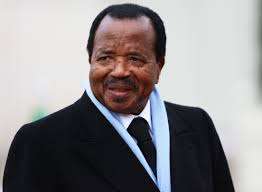
Cameroon’s President Paul Biya announced on Tuesday evening a “slight readjustment” of the timing of legislative and municipal elections that were expected at the start of February.
Originally scheduled for 2025, the elections had already been postponed once until early 2026. No new date was set.
In his televised address on the occasion of the 60th Youth Day, a rare public appearance by the nearly 93-year-old head of state, Biya justified the postponement by citing “certain compelling constraints”, while assuring that “the relevant provisions of the laws, and particularly the Constitution, would be respected”.
He also promised to form a new government, having announced its dissolution in his annual speech on New Year’s Eve.
In his speech, he acknowledged the difficulty many young Cameroonians have in finding work, but also called on them to avoid “delinquency, alcohol abuse drug use, and excessive use of social media”.
Cameroon’s Youth Day is traditionally one of the few times the president addresses the nation directly.
Biya, the world’s oldest head of state, has been in power since 1982 and was re-elected in October to an eighth term, leading to protests that were violently suppressed.
Feb 9 2026 (IPS) – CIVICUS discusses the genocide case against Myanmar at the International Court of Justice (ICJ) with Mohammed Nowkhim of the Arakan Rohingya Society for Peace & Human Rights (ARSPHR), a civil society organisation led by Rohingya people born out of refugee camps in Bangladesh to document atrocities, preserve survivor testimony and advocate for accountability and justice.
Mohammed Nowkhim
On 12 January, the ICJ began hearings in the genocide case brought by The Gambia against Myanmar over the military’s treatment of the Rohingya Muslim minority. The Gambia, representing the Organisation of Islamic Cooperation’s 57 members, accuses Myanmar of breaching the Genocide Convention. The Gambia’s justice minister presented evidence of mass killings, sexual violence and village destruction during a government crackdown in 2017 that forced over 700,000 Rohingya people to flee to Bangladesh. Rohingya survivors testified in closed sessions. Myanmar denies genocidal intent, characterising its actions as counterterrorism. A final judgment is expected before the end of the year.
What atrocities were committed against Rohingya people and what is being examined in court?
During what were called ‘clearance operations’ in 2017, Myanmar security forces burned entire villages, raped women, killed children and threw them into fires and wells. According to documented reports, over 10,000 people were killed and around 700,000, including me, were forced to flee Myanmar. These were not random acts of violence; they were systematic and targeted attacks aimed at erasing our community.
In 2019, The Gambia, supported by 11 other states, filed a case against Myanmar at the ICJ, accusing it of genocide. Judges are now examining evidence of mass killings, sexual violence, village destruction and forced displacement. They are also reviewing official policies and actions that show intent to destroy Rohingya people as a group, including patterns of violence, coordination by state forces and the systematic denial of basic rights.
This case shows that genocide claims can be examined through law rather than dismissed for political convenience. But for the Rohingya, this is not just a legal process. It represents acknowledgment and a source of hope for present and future generations. After decades of denial and silence, our suffering is being heard at the world’s highest court and recognised in a legal space where truth matters. The hearings can’t erase our wounds, but they can offer some solace and a path towards justice.
Civil society played a key role when states failed to act. Even when the world looked away, organisations continued to document the truth and refused to let these crimes be erased or rewritten. Long before any court agreed to listen, groups including the ARSPHR were collecting survivor testimonies, documenting violations and carefully preserving evidence, knowing it might one day be used in court. Without that work, much of what happened would have been lost and perpetrators couldn’t have been challenged.
In a way, civil society became the memory of the Rohingya people. Today, this evidence forms part of the case before the ICJ.
Why is accountability so difficult?
Politics often protects perpetrators. Those with power choose stability over justice and shield those responsible for crimes. Myanmar’s authorities continue to deny wrongdoing and refuse to cooperate, which delays justice.
International law also has its limits. Justice moves slowly because ICJ rulings do not automatically lead to consequences. International courts can establish the truth, but they can’t force states to act. Enforcement depends on political will, often through the UN Security Council, where countries such as China and Russia can block action, even when crimes are clear and well documented.
What must happen to ensure justice?
There must be real action. Perpetrators must be held accountable, Rohingya citizenship must be restored and discriminatory laws that enabled genocide must be removed. Any return of refugees must be voluntary, safe and dignified. It can’t happen without international monitoring and guarantees of protection. People can’t be sent back to the same conditions that forced them to flee.
Ultimately, justice is not only about the past, but also about ensuring that future generations of Rohingya can live with rights, safety and dignity. This case is only the beginning. What happens after the judgment will decide whether justice is real or only symbolic.
CIVICUS interviews a wide range of civil society activists, experts and leaders to gather diverse perspectives on civil society action and current issues for publication on its CIVICUS Lens platform. The views expressed in interviews are the interviewees’ and do not necessarily reflect those of CIVICUS. Publication does not imply endorsement of interviewees or the organisations they represent.
A recent report reveals that Asia faces about 100 natural disasters every year, affecting 80 million people. Beyond the statistics are the disrupted lives, damaged homes, and a cycle of repair that drains communities.
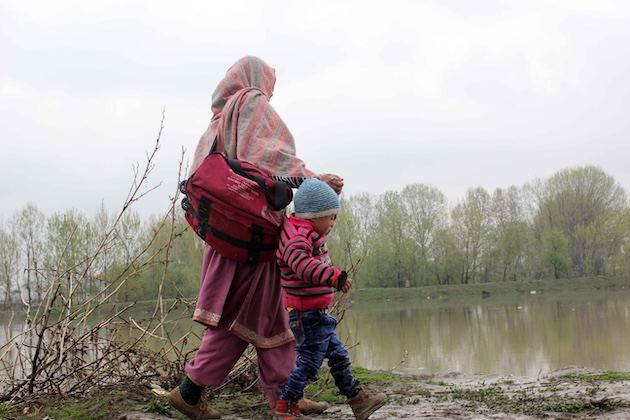
A woman in a remote hamlet in Kashmir, India, migrates to a safer location with her child as floodwater inundates her hometown. Credit: Umar Manzoor Shah/IPS
SRINAGAR & NEW DELHI, Feb 9 2026 (IPS) – When the rain begins in Kashmir’s capital Srinagar, Ghulam Nabi Bhat does not watch the clouds with relief anymore. He watches them with calculation. How much can the gutters take? How fast will the river rise? Which corner of the house will leak first? Where should the children sleep if the floor turns damp?
“Earlier, rain meant comfort,” said Bhat, a resident of a low-lying neighbourhood close to the city’s waterways. “Now it feels like a warning.”
On many days, the rain does not need to become a flood to change life. Streets fill up within hours. Shops shut early. The school van turns back. A phone call spreads across families, asking the same question, “How is your area?”
For millions across India and the wider region of emerging Asia (a group of rapidly developing countries in the region, including China, India, Indonesia, Malaysia, the Philippines, Thailand, and Vietnam), this is the new normal. Disasters no longer arrive as rare, once-in-a-generation ruptures. They come as repeated shocks, each one leaving behind repair bills, lost wages, and a deeper sense that recovery has become a permanent routine.
A recent analysis from the OECD Development Centre shows that emerging Asia has been facing an average of around 100 disasters a year over the past decade, affecting roughly 80 million people annually. The rising trend is powered by floods, storms, and droughts. The report estimates that natural disasters have cost India an average of 0.4 percent of GDP every year between 1990 and 2024.
Behind the national figure lies a quieter, more poignant story. It is the story of how repeated climate and weather shocks get absorbed by households and not just spreadsheets. By the savings a family built for a daughter’s education. By a shopkeeper’s stock bought on credit. By a farmer’s seed money saved from the last season.
In the north Indian state of Bihar’s flood-prone belt, Sunita Devi, a mother of three, says she has stopped storing anything valuable on the floor. Clothes sit on higher shelves. The grain container has moved to a safer corner. The family’s documents stay wrapped in plastic.
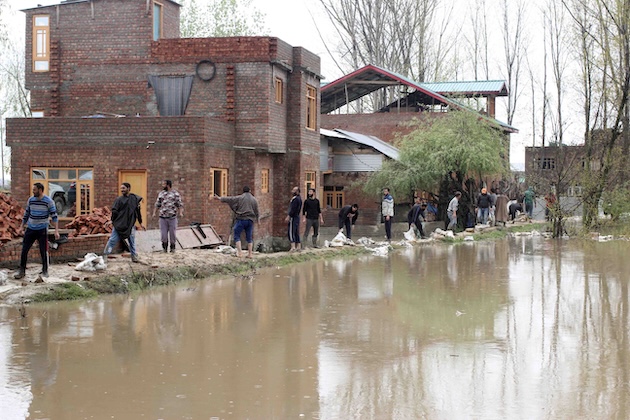
Local residents in Kashmir’s capital, Srinagar, stack sandbags to safeguard their homes from floods in 2025. Credit: Umar Manzoor Shah/IPS
“When water comes, you run with children,” she said. “The rest is left to fate. You can rebuild a wall. You cannot bring back the days you lost.”
Her village has lived with floods for decades, but she says what has changed is frequency, uncertainty, and cost. It is not only about big river floods that make headlines. It is also about sudden waterlogging, damaged roads, broken embankments, and illnesses that rise after the water recedes.
“Earlier we could predict. Now we cannot. Sometimes the water comes fast. Sometimes it stays. Sometimes it leaves and then comes again,” Devi told IPS.
Professor Kaveh Madani, director of the United Nations University’s Institute for Water, Environment, and Health, told IPS that water bankruptcy in Asia should be treated as a national security issue, not a sector issue.
“The priority is shifting from crisis response to bankruptcy management: honest accounting, enforceable limits, protection of natural capital, and a just transition that protects farmers and vulnerable communities,” said Madani.
Across emerging Asia, floods have emerged as one of the strongest rising trends since the early 2000s, the OECD Development Centre report notes. The reasons vary from place to place, but the result looks familiar: disrupted lives, damaged homes, and a cycle of repair that drains communities.
In Kashmir’s capital Srinagar, small shop owner Bashir Ahmad keeps an old wooden rack near the entrance. It is not for display. It is for emergencies. When rain intensifies, he quickly moves cartons of goods off the floor.
“My shop is small; my margin is smaller. One day of water is enough to destroy many things. Customers do not come. Deliveries stop. You just wait and watch,” Ahmad said.
He says the biggest loss is not always the damaged stock. It is the days without work. For families that live week to week, even a short shutdown becomes a long crisis. Rent does not pause. School fees do not pause. Loans do not pause.
The OECD analysis, while regional in scope, points to a hard truth that communities already know. It claims that disasters have economic aftershocks that last long after television cameras leave. When repeated losses occur every year, they reduce growth and reshape choices. Families postpone building stronger houses. They avoid investing in small businesses. They spend more time recovering than progressing.
“Disasters are no longer exceptional events. They have become recurring economic shocks. The problem is not only the immediate damage. It is the repetition. Repetition breaks household resilience,” Dr Ritu Sharma, a climate risk researcher based in Delhi, said.
Sharma says India’s disaster losses should not be viewed as a headline percentage alone.
They should be viewed as accumulated pressure on ordinary life.
“A flood does not only damage a bridge. It delays healthcare visits. It interrupts immunisation drives. It breaks supply chains for food and medicines. It can push vulnerable families into debt traps. What looks like a climate event becomes a social event. It becomes a health event. It becomes an education event.”
In the report’s regional comparisons, the burden is uneven. Some countries face higher average annual losses as a share of GDP, especially those exposed to cyclones and floods. India’s size allows it to absorb shocks on paper, but that size also means more people remain exposed. From Himalayan slopes vulnerable to landslides to coastal districts bracing for cyclones to plains dealing with floods and heat, risk is spread across geography and across livelihoods.
Prof. Nasar Ali, an economist who studies climate impacts, says the real damage is often hidden in the informal economy.
“A formal sector company can claim insurance, borrow on better terms, and restart faster. A vegetable vendor cannot. A small grocery shop cannot. A family with a single daily wage earner cannot. Their loss is immediate and personal. They also take the longest to recover,” Ali said.
He believes disaster impacts also deepen inequality because the poorest households lose what they cannot replace.
“A damaged roof for a rich family is a renovation problem. A damaged roof for a poor family can mean sleeping in damp rooms for weeks, infections, missed work and children dropping out temporarily.”
The report also turns attention toward a policy question that has become urgent across Asia: how should governments pay for disasters in a way that does not repeatedly divert development funds?
The analysis highlights disaster risk finance, tools that help governments prepare money in advance rather than relying mainly on post-disaster relief. This includes dedicated disaster funds, insurance mechanisms, and rapid financing that can be triggered quickly after a shock.
For communities, the debate may sound distant. But the outcomes are visible in the speed of recovery and the dignity of response.
“When a disaster happens, help should come fast,” said Meena Devi, who runs a small grocery shop in Jammu’s RS Pura area and has seen repeated waterlogging during intense rains. “We close our shop. Milk spoils. People cannot buy things. Then we borrow money to restart. If support is slow, we fall behind.”
She said her biggest fear is not a single disaster but the feeling that another one is always near.
“If it happens once, you survive. If it happens again and again, you get tired from inside,” she said.
For Sharma, preparedness must be more than emergency drills. It must include planning that reduces exposure in the first place.
“Some risks are unavoidable, but many are amplified by where and how we build,” she said. “If cities expand without drainage capacity, or if construction spreads into floodplains, then disasters become predictable. That is not nature alone. That is policy.”
In Srinagar, Bhat says residents often feel they fight the same battle every year. Cleaning drains. Stacking sandbags. Moving belongings. Calling relatives. Watching the river level updates. The work looks small, but it is exhausting because it never ends.
“We always think, maybe this year it will be better,” he said. “Then rain comes, and your heart starts beating faster.”
Asked what would make him feel safe, he did not talk about big promises. He spoke about basics. A drain that works. A road that does not collapse. A warning that comes early. Help that comes on time.
For Sunita Devi in Bihar, the dream is even simpler: a season where the family can plan without fear.
“We want to live like normal people. We want to save money, not spend it on repairing what the water broke,” she said.