Mar 11 2026 (IPS) – CIVICUS discusses the situation in Venezuela following US intervention and the ousting of President Nicolás Maduro with Verónica Zubillaga, a Venezuelan sociologist who specialises in urban violence, state repression and community responses to armed violence.
Verónica Zubillaga
In late January, the interim government led by Delcy Rodríguez announced an amnesty for political prisoners, coinciding with a rapprochement with the USA driven by oil interests. It is unclear whether this represents the beginning of a genuine opening or is an attempt by the government to gain international legitimacy without relinquishing power. In a country with millions of migrants and exiles, a historically fragmented opposition and a civil society that has faced brutal repression for years, it remains to be seen whether recent changes will create space for democracy or lead to the consolidation of economically stable authoritarianism.
Is the recently announced amnesty a real opening or a strategic manoeuvre?
We are at an unprecedented crossroads. Venezuela and its Chavista regime, under US tutelage and despite two decades of anti-imperialist rhetoric, are reconfiguring themselves in such a way that some opening could result. However, there is still a risk that an authoritarian model will be consolidated, with economic and humanitarian concessions, but without real democratisation.
The release of political prisoners — a constant demand in all negotiations with international support, and a low-cost form of early opening for the interim government that has taken over from Maduro — could function as a stepping stone towards democratisation. The restoration of civil, political and social rights will be a difficult and lengthy struggle in this context of such deprivation, in which our rights have been violated for so long.
In the first half of February, there were partial and gradual releases, but hundreds of people remained in detention. The enactment of the Amnesty Law on 19 February has accelerated the releases.
The announcement was presented as a political concession, not as a recognition of the extensive human rights violations committed by Maduro’s government. There has been no mention yet of initiating processes to seek the truth, hold those responsible accountable, provide reparations or dismantle the repressive apparatus, which are urgent.
We therefore need to react with caution. The release of people deprived of their liberty for political reasons is essential, but it cannot replace a broader agenda of justice, reparation and institutional transformation.
How has civil society worked to keep this issue at the centre of the debate?
The cause of political prisoners is cross-cutting. There are detained people of different ages, social classes and political backgrounds. In a society as polarised as ours, this is one of the few causes around which there is broad consensus.
After the results of the presidential election of 28 July 2024, which the opposition clearly won, were disregarded, it was mainly people from the working classes who took to the streets to protest. Many young people, including teenagers, were arrested and imprisoned. This situation significantly deepened the social dimension of the problem, highlighted the break between the ruling party and its traditional base and consolidated the brutally authoritarian nature and illegitimacy of Maduro’s government.
There is also an important gender dimension. While many young men are in prison, it is women – mothers, sisters and other relatives – who have organised committees, vigils and public actions demanding their release. Symbolically, the figure of the grieving mother demanding the release of her children is particularly powerful. It is a symbol that appeals to the Latin American imagination about women and their cries for democratisation, justice and reparation in the context of crumbling authoritarian regimes.
Recently, the demand for the release of political prisoners has also been raised by the student movement in its call for a rally at the Central University of Venezuela. After a year and a half of brutal repression following the 2024 election, which emptied the streets and created a climate of widespread fear, any public demonstration is a significant sign that could trigger a chain of progressive demands and the vindication of civil, political and social rights.
What has been the impact of the USA’s renewed interest in Venezuelan oil?
It is clear that the Trump administration is fixated on oil and investment opportunities and completely disregards democracy and human rights. The part of the opposition represented by María Corina Machado has been stunned by its exclusion from key decision-making despite its efforts to gain Donald Trump’s attention. This exclusion has altered the internal political balance.
Historically, there has been tension within the Venezuelan opposition between those who favour resorting to external pressure and those who prioritise internal negotiation strategies. Since 2014, two main strategies have coexisted: one that is more confrontational, demanding the immediate end of the government, and another favouring negotiation or elections. Civil society mirrors these same divisions. One of the difficulties of the Venezuelan process is this constant fragmentation and internal disagreements within the opposition. As the government has become more authoritarian, these divisions have prevented more powerful coordinated political action. It is important for the opposition to coordinate strategies and, instead of wearing itself down in these disagreements, coordinate efforts to move strategically between confrontation and negotiation.
Whenever the opposition has managed to coordinate, as in the 2015 legislative and 2024 presidential elections, it made significant gains. During the 2024 campaign led by Machado, the opposition achieved an unprecedented level of coordination, generating enormous collective hope, particularly with regard to the prospect of family reunification in a country with over eight million migrants. This situation affects people of all social classes and political ideologies. But in response, the government redoubled its repression and consolidated the dictatorship. This led to frustration, demobilisation and further fragmentation. The opposition lacked a long-term strategy to sustain its gains and withstand setbacks. This is still one of the biggest challenges today.
What should the international community do to contribute to real democratisation?
The international community, and Latin American states in particular, could have taken a firmer stance after the 2024 electoral fraud. Silence and a lukewarm approach weakened the defence of democracy. Now it should not repeat that mistake. Beyond Maduro’s profound delegitimisation, the US military operation in Venezuela is a sign of what could happen to any Latin American country under the US government’s new national security strategy.
With the USA as an imperial power primarily concerned with its geostrategic interests and oil resources, demands for democratisation may take a back seat. An authoritarian model that is economically stable but without real democratisation could become entrenched.
In this context, the USA’s prioritisation of energy interests is worrying. It is an unprecedented scenario in which external intervention and the permanence of the ruling party in power coexist. The situation is highly volatile, and this has only just begun. A period of instability and political violence could follow if the civil-military coalition in power breaks down, which may happen given the tradition of anti-imperialist discourse rooted in the armed forces during the two and a half decades of Chavista rule.
Ironically, the USA’s focus on energy interests could result in the defence of sovereignty becoming a new unifying cause for the Venezuelan opposition, potentially leading to basic agreements between the ruling party post-Maduro and the opposition to defend Venezuelan oil interests. What’s at stake is recovering politics as an exercise involving conflict and struggle, as well as recognition and exchange for democratic coexistence — something we have lost, particularly over the past decade.
CIVICUS interviews a wide range of civil society activists, experts and leaders to gather diverse perspectives on civil society action and current issues for publication on its CIVICUS Lens platform. The views expressed in interviews are the interviewees’ and do not necessarily reflect those of CIVICUS. Publication does not imply endorsement of interviewees or the organisations they represent
NEW YORK, Mar 11 2026 (IPS) – I have often been asked a simple but important question: How can we make it sustainable if we are not being compensated for it?
That question sits at the heart of a conversation we do not address enough. Somewhere between exposure and exploitation lies a line we still have not learned to draw clearly. And perhaps that is exactly where the real conversation on “inclusion” begins.
The cost of being seen, is probably the heaviest cost youth have to bear in pursuit of carrying the passion and aspirations they strive for when trying to make an impact.
As conversations around the 2030 Agenda and the SDGs continue to grow, one question remains: how far have we really come in shaping perspectives, and not just numbers?
Too often, inclusion is measured by attendance, representation, and diversity metrics. But inclusion is not just about presence. It is about value. It is about whether people are acknowledged, respected, and taken seriously for their contribution. Inclusion does not live in the excel sheets we fill or the rooms we temporarily occupy during events.
It begins where age, gender, ethnicity, and job titles are not weighed before credibility is given. This matters even more for young people.
A single voice, a single appearance, or a single statement is often framed as an opportunity. And sometimes, it is. But when visibility becomes a substitute for fair compensation, authorship, decision-making power, or real support, exposure stops being empowered and starts becoming exploitative.
Exposure on its own is not empowerment. Visibility can open doors, but it cannot replace fair structures. Being seen is meaningful only when it is followed by trust, ownership, opportunity, and value.
Too often, young people are handed advice when what they really need is access. They are mentored, encouraged, and told to keep going, yet rarely sponsored in the spaces that shape outcomes. If we want inclusion to move beyond symbolism, we must build cultures where support does not end at guidance.
It must extend into advocacy. Because for many underrepresented voices, the issue is not a lack of talent or preparation. It is the absence of someone willing to open the right door and say, this person belongs here.
The goal is not to reject exposure. Exposure can be powerful. But it cannot be the only thing being offered. Real inclusion begins when participation is respected, contribution is valued, and visibility leads to something more lasting. Being seen may open the door, but being valued is what makes inclusion real.
Bisma Qamar is Pakistan’s Youth Representative to the UN & USA chapter under the Prime Minister’s Youth Programme (PMYP). Her work is centered towards learning and development and capability building initiatives, with a strong emphasis on creating inclusive and sustainable opportunities through “Bridging talent with opportunities” by upskilling individuals focusing on SDG 4 ( Education ) and SDG 5 ( Gender Equality )
Through Nkrumah’s story, Howard French charts the history of African decolonization and the American civil rights movement.
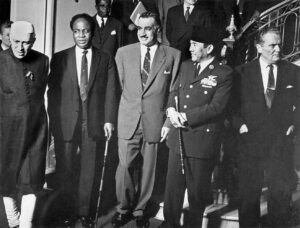
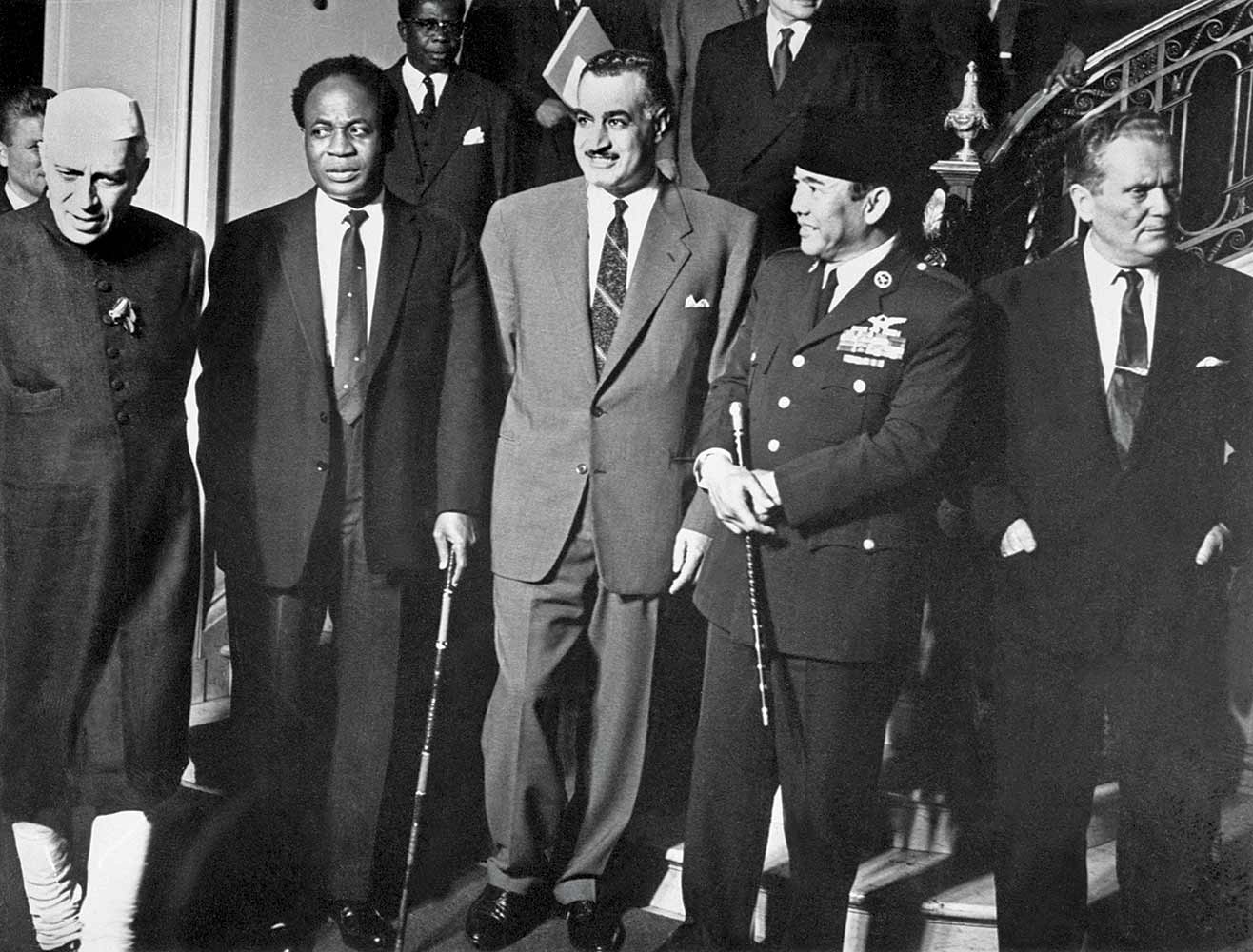
Kwame Nkrumah (second from left) and other leaders of nonaligned countries, 1960.(Getty)
Accra’s Kwame Nkrumah Memorial Park, built on the site of the former colonial polo grounds, is home to two radically different monuments to Ghana’s first prime minister. In the park’s center is an eye-catching bronze statue of a larger-than-life Nkrumah, clad in royal kente cloth, with an outstretched hand pointing ahead and one foot in front of the other as if he were advancing forward. Erected on top of a pedestal at the spot where Nkrumah stood to declare Ghana’s independence from Britain, it channels the slogan of Nkrumah’s political party: “Forward ever, backward never.” Though the monument was erected in 1992, the statue itself likely dates to the 1970s, when, after Nkrumah’s death in exile, discussions began for returning his body to Ghana and a mausoleum.
Books in review
The Second Emancipation: Nkrumah, Pan-Africanism, and Global Blackness at High Tide
The second statue rests in two pieces a short distance from this gleaming icon. Cast and designed by the Italian sculptor Nicola Cataudella, it is considerably older. Originally erected in 1958 at the Old Parliament House, it depicts Nkrumah in a fugu, a smock from the northern region of the country associated with the working class. Here, too, Nkrumah’s right hand is extended, but instead of directing forward movement, it waves in greeting. To some, this might seem like a friendly gesture, but from the moment the statue was proposed, critics lambasted it as an indication of the growing personality cult around Nkrumah. In 1961, the statue was badly damaged in a bomb attack, and Cataudella was commissioned to replace it. Then, during the 1966 coup that unseated Nkrumah’s government, it was toppled and beheaded. The severed and damaged pieces—Nkrumah’s body, minus a right hand and a left arm, and his head—stand on two pedestals next to each other.
These two Nkrumahs are illustrative of the long-standing conflict over the African leader’s legacy. In much of the world, Nkrumah is today a forgotten figure from a lost age of decolonization. Across the continent, however, he is widely celebrated as a champion of African independence and unity. In a 1999 poll conducted by the BBC World Service, African listeners voted for Nkrumah as Africa’s “Man of the Millennium.” And yet closer to home, his memory remains as contested as ever. On the radio and TV, in print, and in everyday conversations, Ghanaians fiercely debate whether Nkrumah was a liberator or a dictator. His own children, Samia Yaba and Sekou, took opposite sides on this question in an impromptu televised interview in 2023.
In his latest book, The Second Emancipation: Nkrumah, Pan-Africanism, and Global Blackness at High Tide, the veteran New York Times correspondent, Columbia journalism professor, and author Howard French deftly navigates the global amnesia and national memory wars that surround Nkrumah’s legacy, while also offering a dazzling portrait of the man himself. Following Nkrumah’s unlikely ascent from his birthplace in the western region of Ghana to his success as a national leader and global statesman, French offers us much more than a biography. In Nkrumah’s story, he charts the history of African decolonization and the American civil-rights movement “as linked and intertwined like a double helix.” His effort to narrate the global struggle for Black emancipation extends the ambitions of his previous book, Born in Blackness, to place African and African-descended people at the center of world history. In doing so, he presents Ghana’s anti-colonial struggle and independence as world-historical events with global reverberations.
In Born in Blackness, French suggested that the roots of Pan-Africanism, a constellation of movements that advocated global Black solidarity, could be found in the earliest slave revolts. Moving his readers from the 1574 revolt on the earliest modern plantations in São Tomé to the Haitian Revolution that abolished slavery and created an independent Black state, French examined how rebel slaves recast Blackness as a shared political identity and universalized the principles of liberty and equality. These early efforts generated inspiration and precedent for the later articulation of Pan-Africanism beginning in the late 19th century.
Now, with The Second Emancipation, French allows this Pan-Africanism to take center stage. Here he reprises some of the pioneering figures of Pan-African history, including the Sierra Leonean historian James Africanus Beale Horton, who wrote on the political conditions of the Gold Coast, and Edward Blyden, the advocate of African American and West Indian emigration to Liberia. Writing between the 1850s and 1890s, these figures insisted on the unity and solidarity of African and African-descended people and challenged depictions of Africa as a place without a history. French details how this broad commitment to solidarity and shared struggled expanded its reach and gained momentum in the 20th century. As he shows, the transformations of Pan-Africanism from an elite to a more popular politics took place against a backdrop of increased globalization, growing labor migration and urbanization, and two world wars, which facilitated encounters and exchanges among people of African descent, making the idea of solidarity more concrete and realizable by the mid-20th century. Nkrumah and his brand of Pan-Africanism, French argues, were products of this wider context.
Current Issue
Even if Nkrumah emerged from this high point of Pan-African politics, French is also careful to capture his singular personality and determination. A very private workaholic with a force of will that surprised his supporters and critics alike, Nkrumah took up the cause of Ghanaian and African independence with an intensity that was unmatched. No other figure of African anti-colonialism made achieving a federation of African states the crux of their political vision. Yet if these traits made him uniquely skilled as a visionary and a campaigner, they also fed his impatience and paranoia, which in turn fueled his authoritarian turn.
French carefully brings these two sides together to provide a rich and complex account of Nkrumah’s rise and fall. Along the way, he also inserts himself and his family into the story. In recounting the excitement with which he first traveled to Africa as a college student in the late 1970s, or recollecting the Friends of Ghana Association in which his parents participated, French makes concrete the great hope and enthusiasm that the project of African independence carried for African Americans and for many others, too.
Francis Nwia Kofi Nkrumah was born in the British colony then known as the Gold Coast, in the tiny village of Nkroful, sometime in either 1909 (the year normally given in accounts of his life) or 1912 (the year his mother remembered giving birth to her son). This discrepancy is a testament to the obscurity in which Nkrumah’s earliest years remain shrouded. No one could have predicted then that in less than 50 years, Nkrumah—who hailed from the small, marginal ethnic community of the Nzima—would lead the struggle to liberate the Gold Coast from colonial rule. His emergence as an anti-colonial activist and a national leader were far from foreordained. In fact, each step in his meteoric rise was marked by sheer contingency and chance. “Temporal accidents, being in the right place at the right time when the hinge of history swing loudly, are probably commonplace in the lives of major figures on the global stage,” French writes. “But their recurrence in Nkrumah’s story is nonetheless remarkable.”
In Nkrumah’s autobiography, published in 1957 to coincide with the independence of the country he now led, such moments were occasions for mythmaking. Each chance opening or encounter was rendered a matter of fate, reinforcing the idea that he was destined to emerge as the standard-bearer for his nation’s and Africa’s liberation. For instance, Nkrumah tells his readers that during his brief pit stop in the United Kingdom en route to study at Lincoln University, the historically Black school in rural Pennsylvania, he learned from a newspaper boy that Mussolini had invaded Ethiopia. The invasion unleashed in Nkrumah an emotional awakening in which he prayed “the day might come when I could play my part in bring[ing] about the downfall of [colonialism].” The image of an isolated Nkrumah staring at the “impassive” faces of British citizens and vowing his commitment to Africa’s liberation has all the narrative trappings of a heroic epic. Yet in truth, as French notes, by the time Nkrumah arrived in the colonial metropole, he had already been exposed to emergent forms of nationalism and Pan-Africanism in which Ethiopia loomed large.
Throughout his account, French deconstructs this self-mythologizing by filling in the gaps in Nkrumah’s autobiography with a sustained attention to the important influences that shaped Nkrumah before he went abroad. It was due to the insistence and determination of his mother, Nyaniba, we are told, that Nkrumah enrolled in a one-room Roman Catholic mission school. In 1926, during a routine inspection of that school, he was recruited to study in the capital of the colony and soon found himself at the newly opened Achimota College, an elite high school. While there, Nkrumah was mentored by James Aggrey, the first African teacher at Achimota whose African nationalism and eloquent oratory would become sources of inspiration.
In Accra, Nkrumah was also exposed to Ghana’s nascent anti-colonial movement. He saw how, in 1930, cocoa farmers responded to the collapse of prices by refusing to sell their beans to British trading firms and boycotting British imports. He also observed the rising career of the Nigerian journalist (and later president of Nigeria) Nnamdi Azikiwe, whose speeches and articles enthralled young intellectuals like Nkrumah. Azikiwe also served as the founding editor of the African Morning Post, where he promoted nationalist politics and found himself facing charges under new sedition laws. Another important figure of the interwar Gold Coast political scene who inspired Nkrumah was Samuel R. Wood. Wood was a member of the Gold Coast Aborigines’ Rights Protection Society, a nascent nationalist organization founded in 1897, and participated in the activities of the African Friends of Abyssinia, which opposed Italy’s imperial ambitions in Ethiopia.
In 1935, following the examples of Aggrey and Azi- kiwe, who had departed from the traditional path of studying in the colonial metropole to pursue an education in the United States, Nkrumah headed off to Lincoln University. He arrived in the United States with little interest in or knowledge of African American history and politics. French notes that in his autobiography, “Nkrumah conveys nothing but the most passing sense of the difficulties of life during the Great Depression, no hint of the politics roiling Harlem [where he had a stopover], or indeed any discussion of Black life in America overall.” But this gradually changed as he studied at Lincoln’s rural campus and took up odd jobs, including at a shipyard in Philadelphia and aboard a shipping line. During these years, Nkrumah honed his oratorical skills, following the examples of Black preachers and practicing at the regular bull sessions on campus. More than his formal education and the degrees he secured at Lincoln and the University of Pennsylvania, his years in America provided Nkrumah with a lesson about the global color line. His time in the cosmopolitan, polyglot maritime scene contributed to an increasingly broad view of race in the world order. In these years, he developed an expansive conception of Blackness and came to view the diaspora as central to the project of decolonization. This growing realization was facilitated by his connections to key African American intellectuals like the political scientist Ralph Bunche, who had studied the League of Nations mandates in Africa, and William Leo Hansberry, a historian of Africa and an uncle of the playwright Lorraine Hansberry.
But in these years, Nkrumah’s most important mentor was C.L.R. James, who tutored him in political organizing and radical politics. A polymath who had written The Black Jacobins, the classic history of the Haitian revolution, James emphasized to Nkrumah the importance of building mass organizations and tutored him on the various Marxist tendencies. James also made the consequential decision to introduce Nkrumah to George Padmore, a fellow Trinidadian who had broken with the Communist Party and was at the center of Pan-African politics in London. It was likely that Nkrumah had already encountered the prolific Padmore on the page: His anti-colonial reportage had appeared in African American and African newspapers like the Chicago Defender and the African Morning Post. But his introduction to Padmore proved to be an important connection for Nkrumah when he moved to London to participate in the burgeoning anti-colonial politics there. Padmore and Joe Appiah, a fellow Gold Coaster, immediately brought Nkrumah into the various organizations in which African and West Indian students, activists, and intellectuals were organizing to end imperial rule. It was in this context that Nkrumah dropped the anglicized first name Francis and adopted Kwame, more befitting the role of nationalist leader that he increasingly envisioned for himself.
While in Britain, Nkrumah helped to organize the historic Fifth Pan-African Congress in Manchester, which brought leading figures of Pan-Africanism like W.E.B. Du Bois and Amy Ashwood Garvey together with emerging African nationalist leaders like Jomo Kenyatta (from Kenya) and Hastings Banda (from Malawi). In a preview of the political campaigns to come, the congress’s “Manifesto to the Colonial Workers, Farmers, and Intellectuals of Africa” declared that “Colonial workers must be in the front of the battle against Imperialism” and argued that “your weapons—the Strike and the Boycott—are invincible.”
During these years, Nkrumah also served as vice president of the West African Students’ Union and helped to found a group called the West African National Secretariat, which sought to forge a “front for a United West African National Independence.” In an early prelude to the secrecy and individualized rule that would become a tragic hallmark of his leadership, Nkrumah also founded a clandestine cell called “the Circle,” which aimed to bring together the most radical nationalists of the region under his authority for the purpose of founding a “Union of African Socialist Republics.”
French warns that the wording did not reflect “anything like a firm allegiance with the similarly named Soviet Union.” Rejecting the racist view that imputed all African resistance to the instigation of communist agitators, and well aware of the Cold War dichotomies that would eventually lead the United States to encourage and support the coup that ousted Nkrumah, he instead reiterates that the connections between Nkrumah and the Soviet Union or communism more generally were overblown: His Union of African Socialist Republics was an idea born out of his own Pan-Africanism and commitment to socialism. It emerged, French notes, from an autonomous intellectual and political tradition that aspired to a universalist project of remaking the world, much like Marxism but also distinct from it.
French is not wrong to make such an argument, though it can inadvertently minimize or obscure some of the deep entanglements between Pan-Africanism and Marxism and even between Pan-Africanism and communism. From the Russian Revolution to the rapid industrialization of the Soviet Union, the East did serve as an inspiration and model for the project of political and social transformation that many anti-colonialists hoped to stage in their own contexts. When figures like Padmore broke with the Soviet Union, disappointed with its failure to more forthrightly support the anti-imperial cause, it is worth noting that they did not fully reject Marxism. The title of Padmore’s 1956 book, Pan-Africanism or Communism, suggests a dichotomous choice, but what he laid out there and advocated in the last years of his life was a synthesis of both.
It was one thing to dream of and plan for African independence and regional unity from inside Britain or the United States, but Nkrumah soon found out that it was quite another thing to pursue such a vision on the ground in Africa. His chance to try his hand at building a nationalist movement came in 1947, when he was invited to return home and help lead the fledgling United Gold Coast Convention (UGCC), a party started by long-standing figures of Gold Coast politics like the lawyer J.B. Danquah, which sought a gradualist path to national independence.
By his own account, Nkrumah used this moment as another opportunity for self-aggrandizement: He presented himself as the assured, confident hero eager to accept the UGCC’s call to action. As French notes, this might not exactly have been the case. For instance, Appiah recalled that Nkrumah was “wracked with anxiety and fear” as he considered the magnitude of the task ahead.
Despite his fears, Nkrumah hit the ground running to transform the UGCC into a mass party. With that aim, he went on a speaking tour of the country, opening party offices wherever he could, signing up members, and collecting dues. His timing was fortuitous: Despite its appearance as a placid model colony, the Gold Coast had undergone dramatic political and economic change in Nkrumah’s 12 years away. Rebellion was brewing just under the surface. Over the last decade and a half, the growing cities had increased the ranks of urbanized young people with some formal education, who formed literary clubs and debating societies in which they developed an interest in local and international politics. Meanwhile, economic woes and bad harvests only added to the pressure on the colonial government. When, in 1937, colonial officials responded to an outbreak of swollen-shoot disease by ordering that all contaminated cocoa plants be destroyed, the already politicized farmers staged another boycott, refusing to sell their crops to British companies.
The end of World War II complicated the situation for the British government in the Gold Coast further still. When servicemen returned there after supporting the British war effort around the world, they found that their bonuses would not support the upward mobility that they had been promised. On February 28, 1948, hundreds of veterans and their supporters marched on Accra’s Christianborg Castle, the seat of the colonial government, to deliver a petition requesting relief. After a confrontation between the veterans and the police, who blocked the protesters and fired into the crowd, the peaceful march quickly escalated into a riot. Nkrumah and the rest of the UGCC leadership had not been involved in organizing the protest that day, but colonial officials surmised that communist influence via the party had instigated the riot. The main leaders of the UGCC, known as the “Big Six,” were quickly arrested.
The Accra riots dramatically sped up the political timeline of decolonization, exposing the fissures within the UGCC and pushing the colonial state to initiate constitutional reforms. The following year, Nkrumah broke with the UGCC and founded the Convention People’s Party. Its demand of “Self-Government Now” was circulated at mass meetings and on the pages of its newspaper, the Accra Evening News. Inspired by Gandhian nonviolence and drawing on the discussions at the Pan-African Congress in Manchester, Nkrumah outlined a program of positive action that entailed “carefully calibrated…civil disobedience.” Soon the CPP was challenging the colonial state’s gradual path to what it called “responsible government” and calling for a constituent assembly.
Once again, however, popular forces took the initiative. The Union of Meteorological Workers began a strike in late December 1949, and when its members were dismissed from their jobs, the larger Trade Union Council called for a general strike to begin on January 8, 1950. Just two days later, the CPP followed its lead, and Nkrumah urged all nonessential workers to stay home. For this, Nkrumah and most of the party leadership ended up back in jail. In the 1951 general election, organized by the colonial state as part of its gradual process of decolonization, Nkrumah ran for and won a seat on the newly created Legislative Assembly from his jail cell. With the CPP clinching a majority, Nkrumah was released. He would now serve as the leader of the transitional government.
Nkrumah and the CPP won two more elections (in 1954 and 1956) before the country achieved independence in 1957. French details how these years set in motion a central contradiction of Nkrumah’s political leadership: Even as his star shined brighter on the international stage, he became increasingly embattled at home. Nor did his international reputation initially emerge through the official platforms of international politics. With the superpowers focused on the Asian and Central American theaters of the Cold War, the small country of the Gold Coast and the momentous arrival of African independence barely registered in the geopolitical battles of the period. This was both a blessing and a curse. It meant that Nkrumah’s fledgling government was not subject to the surveillance and covert intervention that hampered other anti-colonial movements. But it also meant that his bold calls for large-scale contributions to African development went unheeded.
In the context of this studious neglect by the major states, it was African Americans who catapulted Nkrumah onto the world stage. Thanks to the extensive efforts of Horace Mann Bond, then president of Lincoln University, Nkrumah received a statesman’s welcome to the United States in 1951. Black publications from the Pittsburgh Courier to Ebony offered extensive coverage of his political rise. In book-length treatments, the journalist Era Bell Thompson and the author Richard Wright chronicled the transformations afoot in the West African country. Drawn by the promise of an independent Black nation, figures like Maya Angelou and W.E.B. Du Bois later moved to Ghana.
“African American interest,” French argues, “drove American momentum toward engaging with Nkrumah’s government.” In February 1953, he appeared on the cover of Time magazine, and in September 1960, he gave a historic address to the United Nations General Assembly. During John F. Kennedy’s presidency, Nkrumah received an official invitation to Washington.
African American interest also strengthened Nkrumah’s view that African Americans and Africans were engaged in a shared struggle of emancipation. When Ghana declared its independence in 1957, Nkrumah extended the same warm welcome that he had received during his 1951 visit to leading figures of the civil-rights movement, including Martin Luther and Coretta Scott King. Nkrumah hoped that African American engagement would help the new nation forge ahead with economic modernization. He urged African Americans and West Indians to bring their professional and technical expertise to Ghana, and several of them did. The St. Lucian economist W. Arthur Lewis served briefly as Nkrumah’s economic adviser; the legal scholar Pauli Murray taught at Ghana’s law school and coauthored a book about the new country’s constitution. The historian David Levering Lewis taught at the University of Ghana, while the Barbadian poet and historian Edward Kamau Brathwaite worked in the Education Ministry.
Nkrumah advocated a federation of African states for the same reason that many of these Black intellectuals from the United States and the Caribbean sought to contribute to the development of Ghana. Through political integration, African states could overcome their economic dependence by building larger domestic markets and enhancing their bargaining power on the global stage. In making this argument, Nkrumah drew explicitly on the example of the United States. Nkrumah argued that in ratifying their Constitution in 1789, “the American states saw that they could not survive by living separately and managing their own affairs independently.” Glossing the title of his 1963 book Africa Must Unite, he insisted that the founders of the United States knew that “America must unite.”
Nkrumah hoped that his rising international star would summon the African unity he dreamed of and help decolonization transcend the nation-state; instead, he was mostly dragged down into the grubby and intractable politics of attempting to save his own nation-state from even more fragmentation. Almost immediately after the 1951 general election, regional and ethnic opposition parties began forming. First came the Northern People’s Party, which advocated “the North for the Northerners,” and then came the Ashanti-based National Liberation Movement, which proclaimed “No self-government without federation”; both contested the unitary and developmental state at the center of Nkrumah’s agenda. Even as he faced these domestic headwinds, Nkrumah stubbornly pursued his Pan-Africanist project, arguing that Ghana’s independence was meaningless unless it was linked to a wider African emancipation and eventual federation. He laid the groundwork for this goal by hosting the Conference of Independent African States in 1958 and forming the hastily assembled Ghana-Guinea union.
The entanglements and dissonances between Nkrumah’s internationalism and his nationalist project are central to the story of his fall. First, though his vision of a unitary Ghanaian state won out domestically, the sovereignty associated with such a state made it more difficult to achieve the Pan-African federalism that he had championed. Second, Nkrumah’s efforts to advance a Pan-African agenda on the international stage, and especially his support of Patrice Lumumba, the martyred young leader of Congo, placed Ghana on the radar of the Cold War’s warriors. If, in 1951, American officials barely noticed Nkrumah’s emergence on the West African scene, a decade later they openly wondered whether stemming the tide of communism required marginalizing or even ousting him.
Finally, Pan-African federation had been proposed by Nkrumah as an answer to the economic and political weakness of the postcolonial state. Within the domestic context, this weakness—and the potential for foreign interference and subversion—spurred him to view the entrenched opposition as possible foreign agents. This was no doubt intensified by Nkrumah’s suspiciousness, which sometimes bordered on paranoia. It is for this reason that one of the first signs of authoritarianism under his rule was the passage of the Deportation Act just five months after independence. Its earliest victim was Bankole Timothy, a Sierra Leonean writer and former Nkrumah supporter, whose crime was critiquing the growing personality cult around the prime minister.
French rightly notes that Nkrumah never enjoyed what might be called a loyal opposition—that is, parties that objected to the CPP’s policies while accepting the government’s legitimacy. Instead, his critics often adopted the colonial state’s language to describe Nkrumah as a communist infiltrator and, in one case, an “African Hitler.”
Soon, this bitter and often personalized opposition gave way to assassination attempts and bomb attacks. The government’s increasingly harsh responses, including the reintroduction of the colonial-era practice of preventive detention, exacerbated and escalated the conflicts. As Nkrumah and his administration doubled down on their view that the opposition aimed to subvert the government, the political terror intensified.
In 1964, the government officially declared what was already true in practice: Ghana would be a one-party state. But even this centralization of power could not stem the centrifugal forces. Very quickly, members of the CPP leadership were suspected of plotting an overthrow. The party was cannibalizing itself, and Nkrumah’s trusted circle grew even smaller. By the time he was overthrown in a coup in 1966, it was hardly a surprise to observers of Ghanaian politics.
Popular
“swipe left below to view more authors”Swipe →
In explaining Nkrumah’s authoritarian turn, French masterfully braids together accounts of his propensity for feelings of insecurity and paranoia, the difficulty of founding a new regime, and the colonial inheritance that primed new nations for despotism. “Contrary to the conventional wisdom that European imperial rule had been a healthy finishing school for democracy and good governance,” French notes, “it had in fact been an academy of authoritarianism.” Not only did Nkrumah and other postcolonial statesmen have a ready-made playbook at hand for repressing dissent through colonial laws like preventive detention, but they also inherited a Frankenstein state in which the repressive apparatus of the police and the army was overdeveloped, while the mechanisms for building consensus and legitimacy were weak and untested. Especially in moments of crisis, it was easier to exercise the muscles that were already strong than to strengthen other, more democratic capacities.
For this reason, French situates the excesses of Nkrumah’s government in a comparative historical context in which a number of postcolonial states across the Anglophone world, from India and Pakistan to Tanzania, instituted similar mechanisms of repression. At times, his account becomes too defensive: For instance, French favorably compares the magnanimity of Nkrumah’s government, which suspended the sentences of people who were condemned to death for a spate of bombings in Accra, to the brutality with which Britain used the Special Powers Act in Northern Ireland.
This defensiveness, a charge familiar to many authors who seek to write sympathetically about the project of African decolonization, stems from an aspiration to explain the rise of authoritarianism without pathologizing Nkrumah or Africans more broadly. Through comparison, French is implicitly responding to those who might attribute Nkrumah’s authoritarianism solely to his personality or who might find in the rise of one-party rule across the continent a specifically African propensity for dictatorship. His aim is not to sanctify Nkrumah or to cleanse him of flaws and failures. It is instead to register that the tragedy of Nkrumah’s fall was not his alone.
Unchecked ambition and political miscalculation took their toll, but this happened in the context of the conflicting aims of nationalism and internationalism, developmentalism and democratization, that were brought together under the umbrella of decolonization. In different ways, these political dilemmas continue to resonate, and not just in the postcolonial world. At the same time, the sense of political possibility and world-historical agency that animated Nkrumah’s vision of Pan-Africanism has been lost, leaving in its wake narrower solidarities and more limited political horizons. The world that Nkrumah sought remained beyond his reach, and the one he feared has come to pass.
Even before February 28, the reasons for Donald Trump’s imploding approval rating were abundantly clear: untrammeled corruption and personal enrichment to the tune of billions of dollars during an affordability crisis, a foreign policy guided only by his own derelict sense of morality, and the deployment of a murderous campaign of occupation, detention, and deportation on American streets.
Now an undeclared, unauthorized, unpopular, and unconstitutional war of aggression against Iran has spread like wildfire through the region and into Europe. A new “forever war”—with an ever-increasing likelihood of American troops on the ground—may very well be upon us.
As we’ve seen over and over, this administration uses lies, misdirection, and attempts to flood the zone to justify its abuses of power at home and abroad. Just as Trump, Marco Rubio, and Pete Hegseth offer erratic and contradictory rationales for the attacks on Iran, the administration is also spreading the lie that the upcoming midterm elections are under threat from noncitizens on voter rolls. When these lies go unchecked, they become the basis for further authoritarian encroachment and war.
In these dark times, independent journalism is uniquely able to uncover the falsehoods that threaten our republic—and civilians around the world—and shine a bright light on the truth.
The Nation’s experienced team of writers, editors, and fact-checkers understands the scale of what we’re up against and the urgency with which we have to act. That’s why we’re publishing critical reporting and analysis of the war on Iran, ICE violence at home, new forms of voter suppression emerging in the courts, and much more.
But this journalism is possible only with your support.
This March, The Nation needs to raise $50,000 to ensure that we have the resources for reporting and analysis that sets the record straight and empowers people of conscience to organize. Will you donate today?
is the Neubauer Family Assistant Professor of Political Science at the University of Chicago. She is the author of Worldmaking After Empire: The Rise and Fall of Self-Determination.
MONTEVIDEO, Uruguay, Mar 9 2026 (IPS) – Consider what International Women’s Day looked like a few years ago, and what it looks like now: the same date, the same global moment of reflection, but a vastly changed global landscape. Gender rights are facing the most coordinated and wide-ranging attack in decades. Anti-rights forces are dismantling protections secured after generations of struggle, destroying infrastructure built to address gender-based violence and realise reproductive rights and rewriting legal frameworks to roll back rights, with a specific focus on excluding transgender people. This is the result of a deliberate, carefully crafted, handsomely funded and globally coordinated strategy.
Fortunately, resistance is proving harder to extinguish than those driving the backlash had expected. Another International Women’s Day of mobilisation is here to prove it.
A regressive template
While attacks have been building for years, the global landscape shifted quickly in January 2025, when a newly inaugurated Donald Trump signed executive orders imposing a rigid binary classification of sex across federal law, stripping non-discrimination protections for LGBTQI+ people in healthcare and housing, and banning diversity, equity and inclusion policies across the federal government. Because the USA had been the world’s largest bilateral donor, the simultaneous dismantling of USAID and expansion of the global gag rule — blocking US funding to organisations that provide abortions or advocate for abortion rights — had immediate effects on women and girls all over the world, with particularly deadly consequences in conflict zones, rural areas and the world’s poorest countries.
Elsewhere, regressive forces were already mobilising – and Trump’s example only emboldened them. Hungary banned Pride marches and authorised surveillance to enforce compliance. Slovakia and the UK redefined sex as exclusively biological, stripping legal recognition from non-binary and transgender people. Burkina Faso criminalised same-sex relations and their ‘promotion’. Trinidad and Tobago’s Court of Appeal reinstated colonial-era penalties for homosexuality of up to 25 years in prison. Kazakhstan introduced a Russian-style ban on positive LGBTQI+ representation in education, media and online platforms.
It’s striking how consistent the underlying logic is across different political and regional contexts: gender equality is framed as a dangerous ‘ideology’, feminism is demonised as a foreign imposition, LGBTQI+ visibility is portrayed as a threat to children. The similarities reflect a coordinated effort to manufacture cultural conflict to consolidate hierarchies, strengthen elite authority and deflect attention from economic and political failures.
The backlash has reached the international institutions that have long served feminist movements as key arenas for developing a common language, setting a shared agenda and coordinating action across borders. A milestone in anti-rights advances was observed at the United Nations Commission on the Status of Women’s 69th session last year, where a well-organised anti-rights bloc succeeded in stripping longstanding references to sexual and reproductive health and rights from the meeting’s Political Declaration.
What resistance looks like
Yet regression is not going uncontested: not in the streets, not in the courts and not even in the world’s most repressive settings.
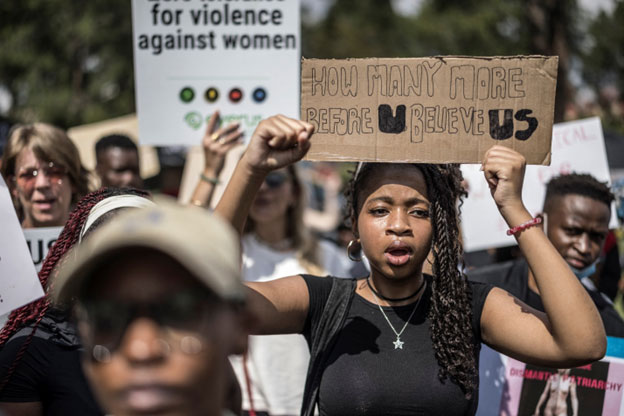
In Hungary, tens of thousands defied the Pride ban in Budapest, risking prosecution to assert their right to be visible in public space. In South Africa, sustained civil society pressure, including over a million signatures demanding action, compelled the government to declare gender-based violence and femicide a national disaster. In St Lucia, the Eastern Caribbean Supreme Court struck down colonial-era laws criminalising same-sex relations. Courts in Malawi and Nigeria recognised the right to safe abortion for sexual violence survivors. The UK finally repealed a Victorian-era law that had continued to criminalise abortion in England and Wales. Denmark and Norway improved access to abortion services. Marriage equality came into force in both Liechtenstein and Thailand. At least three European Union member states — the Czech Republic, France and Poland — adopted consent-based definitions of rape.
Even in the most difficult of circumstances, under Afghanistan’s system of gender apartheid, women are maintaining underground schools, keeping solidarity networks alive and documenting abuses, setting their sights on future justice processes.
While the list of advances is impressive, some of the most important contemporary victories are invisible: stalled bills, softened provisions, laws not passed because civil society refused to stand aside. An attempt to repeal The Gambia’s ban on female genital mutilation was blocked. Kenya’s anti-LGBTQI+ Family Protection Bill remains stalled. In Latvia, when conservative forces moved in October 2025 to withdraw from the Istanbul Convention on violence against women, large-scale protests and a civil society petition won what could be a crucial delay. These defensive successes rarely make headlines, but they result from sustained, unglamorous advocacy and coalition work. Without them, the most extreme proposals would advance much further and faster.
Rising to the challenge
Recognition of rights is never permanent. It’s won through sustained struggle and can be reversed through organised opposition from those who perceive other people’s rights as a threat to their privilege. Backlash isn’t a historical anomaly but a predictable counter-mobilisation, and civil society has met it as such, by organising, mobilising, litigating and refusing to concede ground.
This is precisely what CIVICUS’s 2026 State of Civil Society Report, set for release on 12 March, sets out to document. The report examines the state of the world and civil society action throughout 2025 and early 2026 – including a dedicated chapter on women’s and LGBTQI+ people’s rights – and reveals strong patterns of resistance. Across regions and political contexts, it shows how civil society understands the scale of the attack and is responding in every possible way.
As this International Women’s Day will once again make clear, the backlash is organised and strong. But so is the resistance.
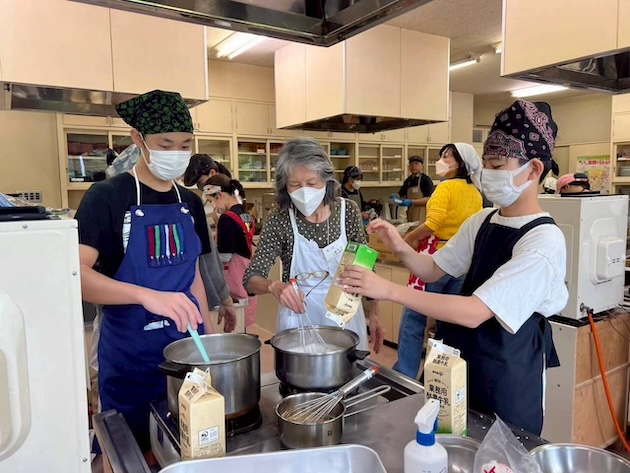
Cooking food to distribute free to children. The meals are made with food that is close to its expiry date. Workshop with Karuizawa Food Bank. Credit: Ippei Takemura
MIYAGI PREFECTURE, Japan, Mar 6 2026 (IPS) – I recently came across a statistic that stopped me in my tracks.
At the same time, the number of children who do not attend school is rising every year. In 2023, Japan’s Ministry of Education reported that more than 340,000 elementary and junior high school students were chronically absent—a record high. These two realities are not separate problems. They are deeply connected.
Truancy is often misunderstood as a lack of motivation or discipline. In reality, it is rooted in complex emotional and psychological struggles that cannot be reduced to a single cause. Rather than treating truancy itself as the problem, society must ask a deeper question: Are we creating environments where young people feel safe, accepted, and understood?
I know this struggle firsthand. I began missing school just three days after entering junior high. My family had lived overseas for many years due to my parents’ work, and returning to Japan left me emotionally exhausted. I found comfort in playing online games with close friends I had made abroad, but while I was holding on to those connections, I missed the chance to build new ones at my new school. Before I realized it, I was caught in a cycle of frequent absences that lasted nearly three years.
What helped me break that cycle was not a dramatic intervention but a small and unexpected turning point. I joined a monthly, off-campus workshop focused on the Sustainable Development Goals (SDGs). To my surprise, students from my school were also participating. Because we shared a genuine interest in global issues, conversation came naturally as we worked together on projects. Eventually, we began spending time together outside the workshop. For the first time in a long while, I started looking forward to going to school again.
That experience taught me a powerful lesson: shared interests and common ground are the foundation of human connection.
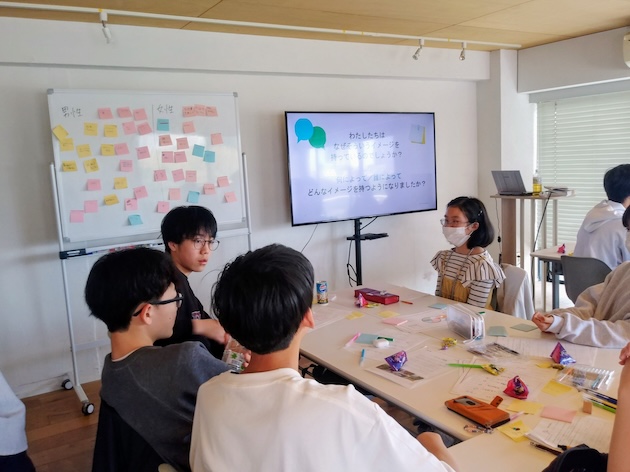
Learn about the Internet of Things (IoT) using a toy. ‘Let’s upcycle’ workshop with the One Smile Foundation. Credit: Ippei Takemura
What’s the importance of gender in Japan? Workshop with Plan International, Japan. Credit: Ippei Takemura
Provide children with free meals made from food that is close to its expiry date. Workshop with Karuizawa Food Bank. Credit: Ippei Takemura
A place where someone feels safe and comfortable is different for everyone. Sociologist Ray Oldenburg describes this idea through the concept of a “Third Place”—a space that exists beyond home (the first place) and school or work (the second place). Third places allow people to relax, connect, and simply be themselves. Finding such a place was the catalyst that inspired me to want to create similar spaces for others.
Social connection is not optional for human beings. It is essential for mental and physical health, helping to reduce stress, strengthen cognitive function, and foster a sense of belonging. However, people connect at different speeds. Some are naturally outgoing, while others need time and distance before they feel ready to engage. A truly inclusive third place respects these differences.
Based on my experiences, I believe there are three key elements that make a third place successful. First, it must include both spaces for solitude and spaces for interaction, with a clear separation between the two. Some people need time to observe and feel comfortable before speaking. A quiet area allows them to exist without pressure and to join others when they are ready.
Second, there should be shared activities. When people gather around common interests—whether environmental issues, crafts, or sports—conversation becomes easier, and relationships develop more naturally.
Finally, many people struggle to take the first step socially. Having facilitators or mentors who can gently initiate activities or conversations can make a huge difference.
One place that embodies these principles is the Moriumius Summer Camp in Miyagi Prefecture, which I have attended since elementary school. In high school, I joined for the first time as a staff intern. The organizers intentionally build community by using shared work as a catalyst for connection.
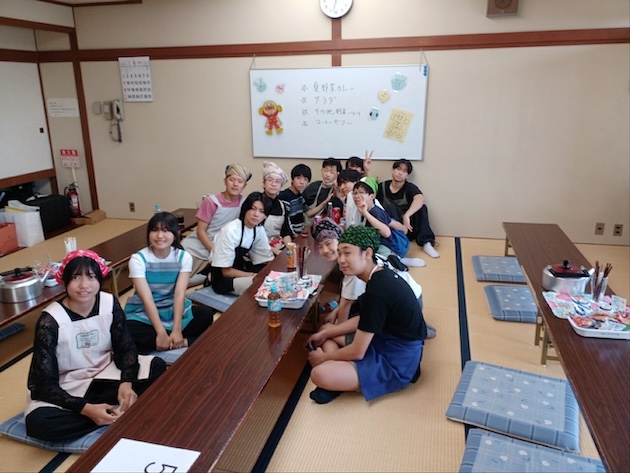
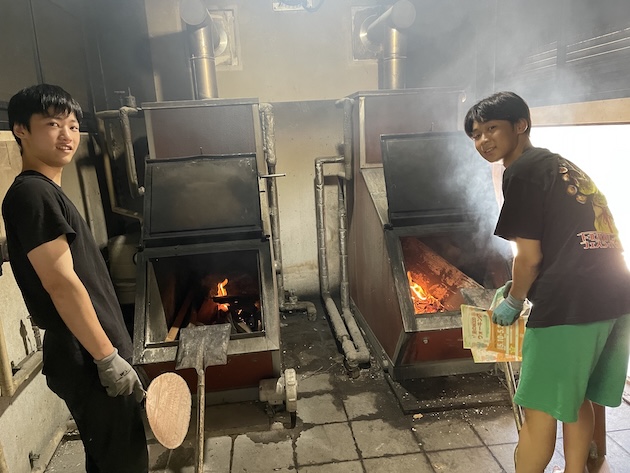
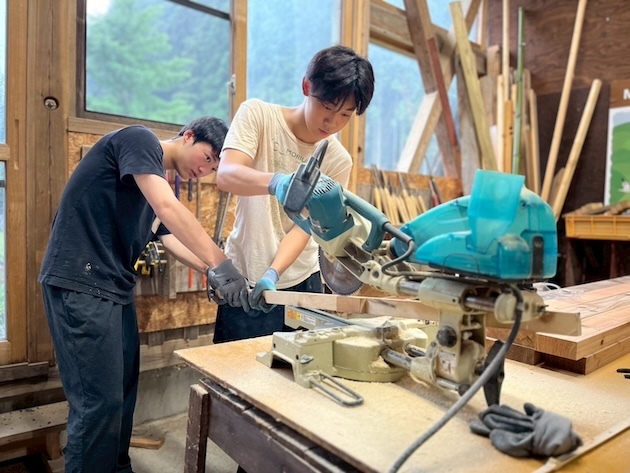
Campers collaborate on everyday tasks such as cooking (photo ①), preparing fish, starting fires (photo ②), and cleaning. These shared responsibilities create trust and a sense of equality. Beyond that, participants can deepen relationships through activities aligned with their interests, including crafts (photo ③), marine sports, gardening, and farming. During one workshop, I befriended an elementary school student who was making a bamboo fishing rod and shaping slate into a knife. We connected naturally through our shared love of creating things. Because everyone at the camp already enjoys outdoor life, friendships form more easily—and shared hobbies strengthen them even further.
Campers help with cooking. Credit: Ippei Takemura
Campers can collaborate on starting fires and cleaning. Credit: Ippei Takemura
Participants can deepen relationships through activities aligned with their interests, including crafts. Credit: Ippei Takemura
A place can be more than just an escape. It can be the first step toward healing, renewed confidence, and hope. When young people find a space where they feel safe enough to be themselves, they often rediscover the courage to reconnect—with others, with learning, and with their own sense of possibility.
This is why I want to continue supporting the creation of spaces that can become “someone’s own place”—places where young people feel seen, valued, and free to grow at their own pace. Sometimes, finding the right space is all it takes for someone to realize that they belong.
Yet this need for belonging is not unique to one school or one country. Around the world, young people are facing increasing isolation, academic pressure, and mental health challenges. Rising youth suicide rates and growing school disengagement reflect a global crisis. When young people are left without spaces where they feel safe, heard, and supported, the consequences extend far beyond classrooms and households—they shape the future of entire societies.
Creating and protecting “third places,” therefore, is not merely a personal or local effort; it is a global responsibility. Governments, schools, communities, and international organizations must work together to invest in inclusive environments where young people can connect through shared interests, express themselves without fear, and rebuild a sense of belonging. Doing so directly supports the Sustainable Development Goals, particularly SDG 3 (Good Health and Well-Being) and SDG 4 (Quality Education), by addressing mental health, social inclusion, and equitable access to supportive learning spaces.
Every young person deserves a place where they feel safe enough to take their first step forward. By listening to youth voices and turning commitment into action, we can move from awareness to impact—and from isolation to hope. The future depends not only on how we educate young people but also on whether we give them places where they truly belong.
Credit: Office of the High Commissioner for Human Rights (OHCHR)
NEW YORK, Mar 6 2026 (IPS) – In recent months, the language surrounding the escalating confrontation between the United States, Israel, and Iran has taken on a tone that should trouble anyone concerned with global peace.
Across television studios, online sermons, and political commentary, some American preachers and commentators have begun describing the conflict not merely as geopolitics or national security, but as a “holy war.”
Reporting in outlets such as The Guardian, along with coverage in other international media, has noted the growing number of Christian nationalist and Evangelical voices framing the Middle Eastern conflict in explicitly theological terms.
Certain Evangelical preachers in the United States have long interpreted tensions involving Israel through apocalyptic or biblical narratives. In these interpretations, the confrontation with Iran is sometimes presented as part of a divinely ordained struggle between good and evil.
In sermons broadcast online and amplified through social media, the war is described as a moment in which believers must stand with Israel in a battle perceived as spiritually consequential – even leading to ‘the rapture’.
The rhetoric is not limited to pulpits. Some former military figures and commentators have echoed similar themes, invoking civilizational language that portrays the confrontation with Iran as part of a broader clash between Judeo-Christian civilization and an Islamic adversary.
When such language enters strategic discourse, it transforms political conflict into something far more dangerous: a war imbued with sacred meaning.
History shows that once wars are framed as sacred struggles, compromise becomes nearly impossible. Political conflicts can, at least in theory, be negotiated. Holy wars, by contrast, are perceived as battles for divine truth. In that framing, negotiation is betrayal.
This phenomenon is not unique to the current Middle Eastern crisis. Religious legitimization of war has surfaced repeatedly in contemporary conflicts. At the outbreak of Russia’s full-scale invasion of Ukraine in 2022, for example, the head of the Russian Orthodox Church, Patriarch Kirill, framed the war in spiritual terms.
In sermons and public statements, he suggested the conflict represented a metaphysical struggle over the moral future of the Russian world. The language of spiritual warfare, cultural purification, and civilizational defence became intertwined with political justification for military action.
Such rhetoric matters. When religious authority sanctifies violence, it grants moral legitimacy to warfare and discourages dissent among believers. Faith communities that might otherwise advocate peace can become mobilized behind nationalistic or militaristic agendas.
We are therefore witnessing something deeply unsettling: the return of explicitly religious language to modern warfare. For decades after the Second World War, global diplomacy attempted—imperfectly but deliberately—to frame conflicts primarily in political and legal terms.
International institutions, treaties, and multilateral frameworks were designed to prevent precisely the kind of civilizational framing that once fueled centuries of bloodshed.
Yet the present moment suggests that these restraints are weakening. Wars are again being narrated as existential struggles between belief systems. Political leaders, clergy, and media personalities increasingly draw upon religious symbolism to rally support.
The danger is not simply rhetorical. When wars are sacralized, they risk becoming limitless conflicts, unconstrained by borders or diplomacy.
The Collapse of Multilateralism and the Silence of Faith Institutions
For years, I have written and spoken about the uneasy relationship between religion, global governance, and peacebuilding. In articles as well as in interviews and public lectures, I have repeatedly warned that governments and intergovernmental entities have failed to develop a coherent framework for engaging religions constructively in international affairs.
Faith-based organizations today are everywhere. They participate in humanitarian work, development programs, diplomacy initiatives, and interfaith dialogues. International institutions increasingly acknowledge the importance of religious actors in peacebuilding and development. Conferences, seminars, department programmes, global initiatives on “religion and …” or “faith and …” are not only commonplace, but proliferating.
Yet despite this apparent proliferation of engagement, the deeper structural problem remains unresolved: religious actors themselves remain profoundly fragmented, as are the political protagonists dealing with them.
Rather than forming robust alliances capable of confronting violence carried out in the name of religion, many faith organizations continue to operate within narrow institutional or theological boundaries. Interfaith initiatives exist, but they often remain symbolic—highly visible yet limited in their capacity to challenge political power or mobilize believers at scale.
I have argued that religious organizations too often underestimate their responsibility in shaping public narratives around conflict, and doing so together. When religion is invoked to legitimize violence, silence from religious leaders becomes complicity.
At the same time, the broader international system that might once have moderated such dynamics is itself under strain. The erosion of multilateralism has been one of the defining features of the past decade. International institutions that once served as mediators of global crises increasingly appear weakened or sidelined.
The United Nations Security Council remains gridlocked. International law is invoked selectively – if at all. Great-power competition has returned with renewed intensity. In such an environment, appeals to universal norms carry less weight.
Alongside this institutional weakening has come a worrying rise in authoritarianism worldwide. Governments across regions have adopted increasingly illiberal practices—restricting civil liberties, marginalizing minorities, and suppressing dissent. In many cases, religion is instrumentalized to reinforce nationalist narratives or legitimize political authority.
This combination—the decline of multilateral governance and the rise of politicized religion—creates a volatile global environment. Without strong international frameworks to mediate disputes, imperialist narratives and actions gain traction – as in Trump’s and Netanyahu’s war against Iran. Religion, ethnicity, and culture become tools through which political conflicts are interpreted and mobilized.
Faith-based organizations, despite their potential influence, have struggled to counter this trend effectively. Some remain focused on humanitarian services rather than confronting the ideological narratives that legitimize violence. Most hesitate to challenge political authorities with whom they maintain close relationships, and seek financial and/or political backing.
As a result, the global religious landscape today is marked by a paradox: religion is increasingly present in global discourse, yet its potential as a force for peace remains under-realized.
Islamophobia and the Seeds of a Wider Religious Conflict
Perhaps the most troubling dimension of the present moment is the resurgence of Islamophobia as a powerful political force in international discourse.
For more than two decades following the attacks of September 11, 2001, narratives portraying Islam as inherently linked to extremism became deeply embedded in political rhetoric and media representation across many Western societies.
Despite sustained efforts by scholars, religious leaders, and civil society actors to challenge these narratives, they continue to shape public perceptions.
In the context of the current confrontation with Iran, such narratives risk reinforcing the perception that the conflict is not merely geopolitical but civilizational. When Iran is framed not simply as a state actor but as a representative of a threatening Islamic force, the conflict becomes symbolically larger than any single nation.
The danger is clear: political wars are becoming interpreted as religious wars.
If such framing takes hold, the implications extend far beyond the Middle East. Conflicts that are perceived as religious struggles can mobilize believers across borders. They can radicalize communities, fuel sectarian polarization, and undermine the fragile coexistence of diverse religious populations.
History provides sobering examples. The European wars of religion in the sixteenth and seventeenth centuries devastated entire regions, entangling political power struggles with theological disputes. Once religious identity became intertwined with warfare, violence spread across kingdoms and empires.
Today’s globalized world is even more interconnected. Diaspora communities, digital media, and transnational networks allow narratives of conflict to circulate instantly across continents. A war perceived as targeting Islam could ignite tensions in communities thousands of miles away from the battlefield.
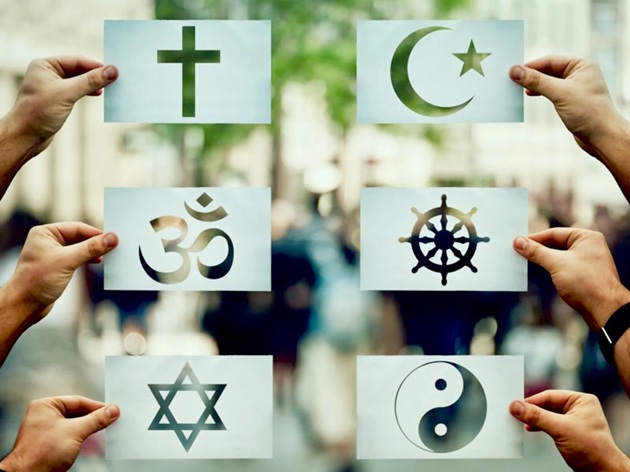
Similarly, religious nationalism in multiple regions—whether Christian, Jewish, Hindu, Buddhist, or Muslim—has been gaining strength in recent years. When one religiously framed conflict emerges, it can reinforce others. Narratives of civilizational struggle feed upon each other.
As the confrontation between the United States, Israel, and Iran becomes widely interpreted through a religious lens, the consequences may be profound. Christian–Muslim tensions, already strained in many contexts, could escalate dramatically. Such conflicts would not respect national borders. They would unfold within societies, across communities, and through global networks of believers.
Ironically, this escalation occurs at a time when religious leaders frequently emphasize the peace-promoting teachings of their traditions. Interfaith initiatives celebrate dialogue, coexistence, and shared values. Religious texts across traditions contain powerful injunctions toward compassion, justice, and reconciliation.
Yet these ideals remain fragile when confronted with political realities.
If religious institutions fail to challenge narratives that sanctify violence, they risk becoming spectators to a new era of religious conflict. Worse still, they may be drawn into it.
Are “Religions” Truly for Peace?
We may therefore be standing at the threshold of a profoundly dangerous historical moment.
Religious language is once again being used to justify war. Political conflicts are increasingly framed as civilizational struggles. Multilateral institutions that once mediated global disputes appear weakened. And faith communities—despite their moral authority—have yet to mount a unified challenge to the narratives that sacralize violence.
None of this means that religion inevitably leads to war. On the contrary, religious traditions contain some of humanity’s most powerful ethical teachings about peace, justice, and compassion. Faith communities have played vital roles in reconciliation processes, humanitarian action, and social movements for justice.
But these possibilities are not automatic. They depend on conscious choices by religious leaders, institutions, and believers.
If religious actors allow their traditions to be mobilized in support of political violence, then religion will become part of the problem rather than the solution.
The question confronting us today is therefore both urgent and uncomfortable.
At a moment when wars are increasingly described as sacred struggles, when geopolitical conflicts are interpreted through religious narratives, and when Islamophobia and other forms of religious prejudice continue to spread, we must ask ourselves: How are religions truly forces for peace?
Prof. Azza Karam, PhD. is President, Lead Integrity