Q&A: Achieving “Togetherness”

Active Citizens, Civil Society, Conferences, Featured, Headlines, TerraViva United Nations

Civil Society

This article is part of a series on the current state of civil society organisations (CSOs), which was the focus of International Civil Society Week (ICSW), sponsored by CIVICUS, and which took place in Belgrade, April 8-12.
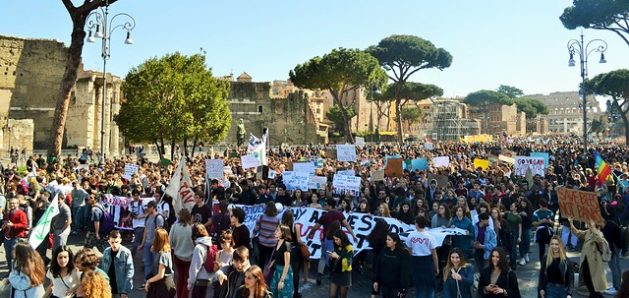
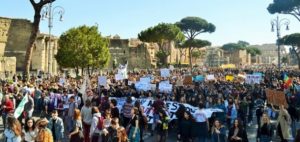
Thousands of youth gather in Rome on Friday, Mar. 15, to join the climate strike, a global movement that aims to make governments and institutions aware of taking serious steps to implement the Paris Agreements and save the planet. Together First, one of the partners of ICSW, is among the groups urging for a more inclusive, collaborative movement to work towards solutions for all. Credit: Maged Srour/IPS

UNITED NATIONS, Apr 16 2019 (IPS) – Increasingly facing restrictions and assault, civil society from around the world have come together to celebrate and promote people power.


Organised by CIVICUS, International Civil Society Week (ICSW) brought together civil society organisations and activists to discuss the threats and challenges that they face in a world where arbitrary detention, censorship, and exclusion have sadly become the norm.

Together First, one of the partners of ICSW, is among the groups urging for a more inclusive, collaborative movement to work towards solutions for all.

IPS spoke to Giovanna Marques Kuele, non-resident research fellow at Igarapé Institute (Brazil) and a member of Together First’s informal steering group, about the importance of civil society and working together.
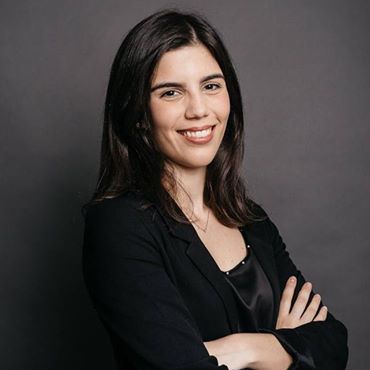
Giovanna Marques Kuele, non-resident research fellow at Igarapé Institute (Brazil) and a member of Together First’s informal steering group speaks to IPS about the importance of civil society and working together.

Inter Press Service (IPS): How important is the protection and inclusion of civil society and human rights defenders to you and the global system as a whole?

Giovanna Marques Kuele (GMK): The protection and inclusion of civil society and human rights defenders are essential. While young people are raising their voices to demand inclusion for change, human rights defenders are under attack across the globe, including in my home country Brazil.

During the Civil Society Summit—which took place on the first day of ICSW—Together First endorsed the “The Belgrade Call to Action,” which calls on United Nations member states to take concrete urgent action against the shrinking space for civil society and the increasing reprisals against human rights defenders. Together First relies on the protection of civic space because we—civil society together—are the voices and agents of change that can push for the actions we sorely need to avert existential risks such as climate change.

For us, multilateralism is about more than states. It is about people and organisations working together to achieve a common goal. We at Together First believe that we can no longer rely on the turgid rate of progress by world leaders. Instead, we need to raise our voices and say: we can and must do better. And so we are building a movement that is truly global and meaningfully inclusive. During the ICSW, as a small first step, I met with youngsters who work at grassroots organisations to make sure we find ways to echo their voices, as decisions and actions taken in distance places, like city capitals and New York, can affect their daily lives.

IPS: What are the biggest challenges faced by civil society and human rights defenders today?

GMK: Like many of our colleagues at the ICSW meeting, Together First believes that multilateralism is under threat at a time when we need it more than ever. Global risks such as climate change and weapons proliferation need a collective response. These risks can be grouped into three sets: the ones great powers have not wanted to address (e.g. climate change), the risks insufficiently understood by politicians (e.g. new technologies), and the risks considered too difficult (e.g. the glaring deficit in cyber governance). These risks need collective action. But many governments are overwhelmed. Some are turning inwards, becoming more fiercely nationalist. As a result, the UN—already overstretched and underfunded—is now facing further cuts and struggling to deliver in this difficult environment.

IPS: As a multi-stakeholder group, how does Together First work with and mobilise civil society?

GMK: Together First seeks to build a global people’s movement for a people-centred multilateralism. Together, we want to identify and call for transformative next steps – the most important changes we can make now to address global risks. We also want to raise our level of ambition. The challenges we face are vast and complex; we must demand more than the current glacial pace of change.

Ultimately, we know that if we want to build the effective global governance system we so badly need, we cannot rely on world leaders alone. We must open up the conversation so that, in turn, we can make the system itself transparent and inclusive, where stakeholders play a meaningful role in the decisions and actions that affect their lives.

IPS: What role can the UN play to better promote and protect civil society?

GMK: Together First believes that by harnessing progressive power of civil society and by deploying an innovative and thorough methodology, we can work together to identify feasible and actionable steps to make global governance more effective – and put them into practice.

One of these steps must involve a greater role at the UN for civil society, who are key actors in the policy space and on the ground. What I heard from many people at ICSW is that organisations–as much as they work to achieve SDGs at country level, for instance–do not feel connected to the UN Headquarters, where decisions are ultimately taken. A concrete suggestion is to establish an Envoy for Civil Society—carefully chosen to make sure she or he is able to understand and transmit grassroots concerns to the upper levels.

IPS: As International Civil Society Week comes to a close, what message would you want civil society groups and human rights defenders to take home?

GMK: At ICSW, Together First, with our partners UN2020, made a public call for civil society to share their perspectives and need so we can demand that they are on the table for the UN’s 75th Anniversary in 2020.

Moving forward, it’s essential that our voices are heard at key meetings in the lead up to 2020. On April 23, I will be speaking at an event on building trust in multilateralism organised by the President of the General Assembly and IPI. Please send me your questions and comments via #MultilateralismMatters @TogetherFirst and I will be sure to raise them.

As the theme of this year suggested, ICSW is a testament to the existence of the ‘Power of Togetherness’ – the reality that people and organisations around the world are working together to unlock the potential of collective action. I think the energy of this event showed that we can believe that together it is possible to promote meaningful and inclusive change.
 

Global Governance and Information

Civil Society, Civilisations Find Alliances, Climate Change, Development & Aid, Education, Environment, Featured, Global, Global Governance, Headlines, Human Rights, Natural Resources, Peace, Poverty & SDGs, TerraViva United Nations

Opinion

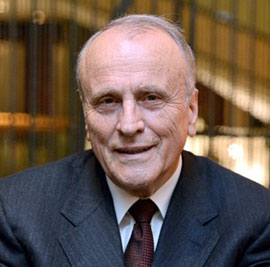
Ambassador Walther Lichem* of Austria is President Inter Press Service (IPS).

VIENNA, Apr 16 2019 (IPS) – The past seventy years since the end of the second world war have been marked by profound changes in our international system. Relations between states have become more horizontally structured interactions with a rising significance of the common good articulated and pursued by newly-created international programmes and organisations.


Ambassador Walther Lichem

The international agenda increasingly consists of items addressing internationally and globally-shared challenges of dependencies and interdependencies.

The traditional security and peace focus has been broadened into areas of concern which require contributions and activities not only by states but by international organisations and programmes who jointly with non-state actors such as academic institutions and associations, civil society organisations, the private sector including those who joined the Global Compact, have contributed to a new pattern of leadership in the processes of defining our global goals and in the implementation of the related programmes of action.

Another characterizing element in our Global Agenda related-approach is the inter-sectoral interdependence reflected in the international community’s agenda marked by “AND” – “climate change and international security”, “human rights and societal cohesion” etc.

These agenda—and interrelated-ness—require, however, also institutional integration cutting across the institutional development marked by sectoral segregation. There is a rising need for each agenda sector to be fully up-to-date regarding the entire pattern of global challenges and the related plans of action, using this level of information for the development of institutional integration.

There is also a rising need for information flows between governmental/ intergovernmental and non-governmental organizations (NGOs).

The new global agenda benefits from the work and conclusions of academic institutions and programmes, a relationship which regrettably has not yet been fully recognized by the international system.

Many of our important global agenda items based their policy approach on research and academic discourse – e.g. the issue of environmental protection, the concept of sustainability, the process of climate change, the societal development needs and human rights etc.

Another dimension of the pluralisation of global governance affectedness and responsibility is the role of each and every citizen on the globe to know and understand these challenges and assume a rising responsibility in addressing them.

Certain agenda areas, such as environmental protection, the sustainable development and use of our natural resource systems, human rights and human security have given the citizen an almost central role in the achievement of the declared objectives.

Today, every citizen can contribute to the recognition of the dignity of the other and the related human rights. The impact of citizen-focused human rights programmes is visible in human rights cities in all regions of the world. The citizen creating conditions of societal cohesion also essentially contributes to peace and security.

Private sector decisions can make important contributions to both the natural resources related and societal cohesion-related challenges. Academic institutions must adjust their programmes of research and of university education to the global agenda-related challenges.

The cultural sector provides important inputs into the development of values and related behavioural patterns related to the challenges of pluri-identity societies and the integration of otherness.

All these new patterns of responsibility and contributions to achievements for our Global Agenda, however, do require qualified information. It must be recognized that complex academic or policy-process related studies and reports are not accessible to the general citizenship including those in positions of responsibility at local and national levels.

Even governmental institutions and the international diplomatic community cannot internalize all the documents which are to serve as a basis for multilateral negotiations.

The development of this new participatory system of global governance with intergovernmental institutions and processes, national governments and local authorities has led to the recognition of an urgent need for qualified patterns of information which translate challenges, achievements and failures to the political responsibilities at local, national and also international levels, to governmental, inter-governmental and non-governmental institutions who have increasingly shaped our Global Agenda and articulated the rising need for societal understanding and information.

Media are the classical providers of such information combining data with assessments and the vision of our common future. Yet, as analysis of the current situation underlines, there is an urgent need to strengthen qualified information systems which would provide not only governmental, intergovernmental and non-governmental institutions and the citizens but also the media with pertinent and needed information.

There is no way into a future of shared global responsibility without a qualified and also ethically committed system of information related to our processes of global change.

There is a need to recognize that such highly pertinent information related to our common future requires recognition and support from the global society as a contribution to our shared global public space.

This implies that support is to be provided from governmental, intergovernmental and non-governmental institutions. A respective policy discourse with participation from these institutions is to be envisaged in order to prevent the decay or elimination of qualified programmes like Inter Press Service.

*Walther Lichem, retired Austrian Ambassador with studies in law and oriental archaeology (Univ. of Graz, Austria) and political science (Univ. of North Carolina, Chapel Hill; Institute for Advanced Studies, Vienna) started his professional career in 1966 at the United Nations Secretariat in New York in the field of international water resources with development cooperation missions to Ethiopia (1971), Argentina (1971-74) and to the Senegal River Development Organisation (1980). He was also Rapporteur on international river basins at the International Conference on Water Law (Caracas, 1976) and at the IVth World Water Conference (Buenos Aires, 1982).
Ambassador Lichem undertook major assignments in the UN system at the Human Rights Summit in Vienna in 1992 and as Ambassador to Chile and to Canada, as a member of the UN Committee on the Peaceful Uses of Outer Space and as an adviser to the 16 countries sharing the Guinea Current in West and Central Africa on the creation of a regional organisation.


Civil Society Under Attack in Name of Counterterrorism

Active Citizens, Civil Society, Conferences, Development & Aid, Editors’ Choice, Featured, Global, Global Governance, Headlines, Human Rights, IPS UN: Inside the Glasshouse, Peace, Population, Regional Categories, TerraViva United Nations

Civil Society

This article is part of a series on the current state of civil society organisations (CSOs), which was the focus of International Civil Society Week (ICSW), sponsored by CIVICUS, and which took place in Belgrade, April 8-12.

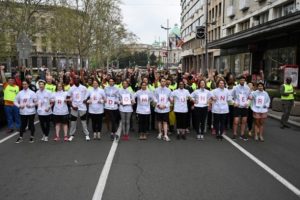
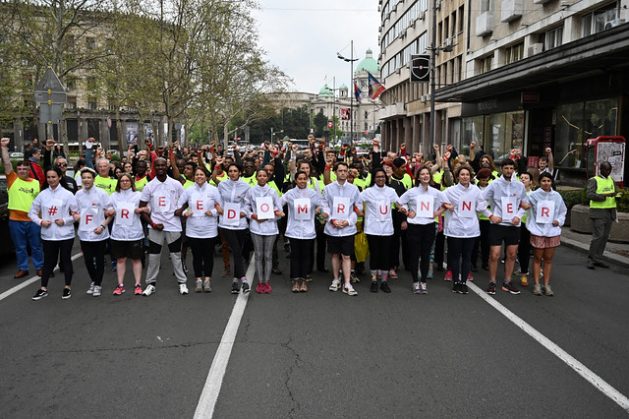
More than 200 civil society leaders and human rights activists from some 100 countries took to the streets of Belgrade, Serbia in solidarity with those whose basic freedoms are at risk. They participated in the International Civil Society Week (ICSW), sponsored by CIVICUS, which took place in Belgrade, April 8-12. Courtesy: CIVICUS

UNITED NATIONS, Apr 15 2019 (IPS) – Counterterrorism measures are not only affecting extremist groups, but are also impacting a crucial sector for peace and security in the world: civil society.


Civil society has long played a crucial role in society, providing life-saving assistance and upholding human rights for all.

However, counterterrorism measures, which are meant to protect civilians, are directly, and often intentionally, undermining such critical work.

“Civil society is under increased assault in the name of countering terrorism,” Human Rights Watch’s senior counterterrorism researcher Letta Tayler told IPS, pointing to a number of United Nations Security Council resolutions as among the culprits.

“Nearly two decades after the September 11 attacks, we are seeing a very clear pattern of overly broad counterterrorism resolutions. We are seeing a clear pattern of violations on the ground that are being carried out in the name of complying with binding Security Council counterterrorism resolutions,” she added.

Just two weeks after September 11, 2001, the UN Security Council unanimously adopted Resolution 1373 which called states to adopt and implement measures to prevent and combat terrorism.

Since then, more than 140 countries have adopted counterterrorism laws.

The newly approved Resolution 2462, passed at the end of March, requires member states to criminalise financial assistance to terrorist individuals or groups “for any purpose” even if the aid is indirect and provided “in the absence of a link to a specific terrorist act.”

While the resolution does include some language on human rights protections, Tayler noted that it is not sufficient.

“It is not sufficiently spelled out to make very clear to member states what they can and cannot do that might violate human rights on the ground,” she said.

Blurred Lines

Among the major issues concerning these resolutions is that there is no universal, legal definition of terrorism, allowing states to craft their own, usually broad, definitions. This has put civil society organisations and human rights defenders (HRDs) alike at risk of detention and left vulnerable populations without essential life-saving assistance.

“I think it is irresponsible of the Security Council to pass binding resolutions that leave up to States to craft their own definitions of terrorism…that’s how you end up with counterterrorism laws that criminalise peaceful protest or criticising the state,” Tayler said.

Oxfam’s Humanitarian Policy Lead Paul Scott echoed similar sentiments to IPS, stating: “The Security Council, by being overly broad, is just giving [governments] the tools to restrict civil society.”

According to Front Line Defenders, an Irish-based human rights organisation, 58 percent of its cases in 2018 saw HRDs charged under national security legislation.

Special Rapporteur on the promotion and protection of human rights while countering terrorism Fionnuala Ní Aoláin found that 67 percent of her mandate’s communications regarding civil society were related to the use of counter-terrorism, and noted that country’s counterterrorism laws are being used as a “shortcut to targeting democratic protest and dissent.”

In April 2018, thousands of people took to the streets in Nicaragua to protest controversial reforms to the country’s social security system.

According to the Office of the UN High Commissioner for Human Rights, over 300 people have been killed, more than 2,000 injured, and 2,000 arrested—some of whom were reportedly subject to torture and sexual violence when detained.

Many of those arrested will also be tried as terrorists due to a new law that expanded the definition of terrorism to include a range of crimes such as damage to public and private property.

At least 300 people, including human rights defenders, face charges of terrorism.

The Central American country said that the law was passed to comply with the Financial Action Task Force (FATF), an intergovernmental body that works alongside the Security Council to combat terrorist financing.

A Civil Society Facing Uncivility

Tayler also pointed to the lack of consequences for States that pass counterterrorism laws that do not abide by their obligations under international law.

In Resolution 2462, member states are told to comply with international humanitarian law when cracking down on terrorist financing but does not require countries to consider the effect of such measures on humanitarian activities such as providing food and medical care.

“In the zeal to be as tough looking as they can possibly can, governments have overlooked very very easy ways to protect those of us who are providing life-saving aid,” Paul told IPS.

The lack of protections for civil society and its impacts was most visible during the 2011 famine in Somalia.

In an effort to restrict “material support” to terrorist groups, countries such as the United States enacted counterterrorism legislation which blocked aid into areas controlled by Al-Shabab.

This not only impeded local and international organisations from doing their job, but one report noted that the constraints contributed to the deaths of over 250,000 people in the East African nation.

The problem has only gotten worse since then, Paul noted.

“The measures imposed by governments are unnecessarily broad and they prevent us from working in areas that are controlled by designated terrorist entities. What they have essentially done is criminalise humanitarian assistance,” he said.

Tunisia has used its terrorism financing laws to shut down a number of civil society organisations.

According to the Euro-Mediterranean Human Rights Monitor, approximately 200 organisations were dissolved and almost 950 others were delivered notices, referring them to courts on charges of “financial irregularities” or “receiving foreign funds to support terrorism” despite the lack of substantive evidence.

Many of the dissolved organisations provided aid and relief for orphans and the disabled.

All Eyes on Deck

Tayler highlighted the importance of the UN and civil society to monitor how counterterrorism resolutions such as Resolution 2462 are used on the ground.

“While we would love to see amendments to this resolution, pragmatically the next best step is for all eyes—the eyes of civil society, the UN, regional organisations—to focus on just how states implement this resolution to make sure that overly broad language is not used by states to become a tool of repression,” she said.

“The UN and leaders of countries around the world should use International Civil Society Week as an opportunity to take stock of the risk that this trend has posed on both to life-saving aid organisations and human rights defenders and to reverse this dangerous trend,” Tayler added.

Paul pointed to the need to educate both the public and policymakers on counterterrorism and its spillover effects as well as the importance of civil society in the global system.

“Civil society is a key part of effective governance. We don’t get effective public services, we don’t get peace, we don’t get to move forward with the anti-poverty agenda if civil society actors aren’t strong and empowered,” he said.

“If governments aren’t careful about protecting our right to stand up for marginalised and vulnerable populations, everyone will hurt. Not just those populations. It will have an effect broadly on our societies,” Paul added.


Hard Battle Ahead for Independent Arab Media

Civil Society, Crime & Justice, Democracy, Featured, Global, Headlines, Human Rights, Press Freedom, TerraViva United Nations

Opinion

This article is part of a series on the current state of civil society organisations (CSOs), the focus of International Civil Society Week (ICSW), sponsored by CIVICUS, which concluded in Belgrade, April 12

 
Mouna Ben Garga is an Innovation Officer with CIVICUS, a global alliance of civil society organisations.

TUNIS, Apr 12 2019 (IPS) – Sometimes a peak into the future reminds us just how stuck we are in the past and present.

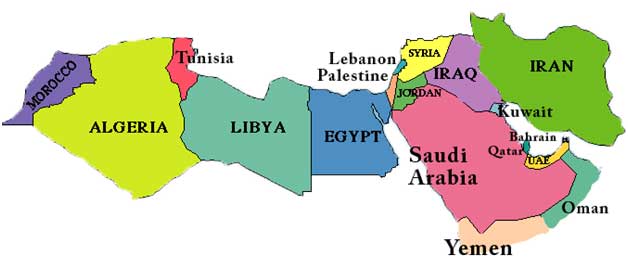
It was the talk of the Middle East’s largest annual media industry gathering: a robot journalist – the region’s first – that wowed some 3,000 industry leaders and practitioners at the Arab Media Forum (AMF) in Dubai recently.


In an address titled “Future News Anchors”, the robot, known as A20-50, waxed lyrical about robots that would report ‘tirelessly’ all day, every day and be programmed to do any task.

At a conference organised around the theme, “Arab Media: From Now to The Future”, it was ironic that journalism produced by programmed automatons was held up as a glimpse of what the future held for media in the Arab world.

Ironic because, considering the state of journalism in the Middle East, it doesn’t sound as much like the future as the region’s present and past.

Looking at news output in this polarized landscape, it often seems that journalists (and their organisations) are like robots, programmed to produce and promote certain political agendas ‘tirelessly’, all day, every day.

From Egypt to Kuwait, most news outlets support specific positions, usually those espoused by the companies or organisations that own or control them – often either toeing the official line or supporting rival agendas or political opposition.

Following the 2013 coup in Egypt and the civil wars in Syria, Yemen and Libya over the past decade, the pro-government media used the fear of instability and war to silence citizens and twist the facts.

For instance, the Egyptian mainstream media convinced its audience that the 2013 massacre of more than 900 people in Cairo was the only way to fight against terrorism.

In the context of the Middle Eastern media coverage of the killing of the Saudi journalist Khashoggi, both Al-Jazeera and Al-Arabiya television channels took up positions in front of the Saudi Consulate in Istanbul and resumed the fierce row between Qatar and Saudi Arabia, from there.

The truth was lost in this fierce political conflict and the Arab viewer had to cross-check the presented facts with other international reporting. This implicit bias and lack of balance polarized Arab public opinion and pushed news consumers to social media in search of trusted factual information, crushing the credibility in traditional media.
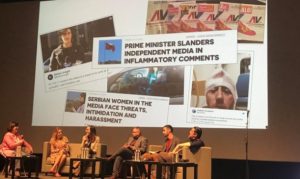
And when they aren’t busy working to manipulate bias in news coverage, Arab authorities are old hands at plain old media repression. Not surprisingly, nations in the Middle East and North Africa again find themselves at the bottom of Reporters Without Borders’ World Press Freedom Index of 2018.

Across the region, journalists and media organisations are under attack for their reporting – from intimidation to arrests, detention, prosecution and the shuttering of outlets. Four Arab countries – Egypt, Saudi Arabia, Bahrain and Syria – top the list of the world’s worst jailers of journalists ,according to the 2018 press freedom report by the Committee to Protect Journalists (CPJ).

Egypt jailed the most number of journalists on “false news” charges – 19, amid heightened global rhetoric about so-called fake news; The murder of exiled Saudi journalist Jamal Khashoggi by Saudi agents in the country’s Instanbul consulate illustrated the extreme lengths the Gulf kingdom’s leaders would go to stop published criticism.

And in Syria, 13 journalists were killed in 2017, and more than 40 journalists and citizen-journalists are currently detained, kidnapped or have disappeared.

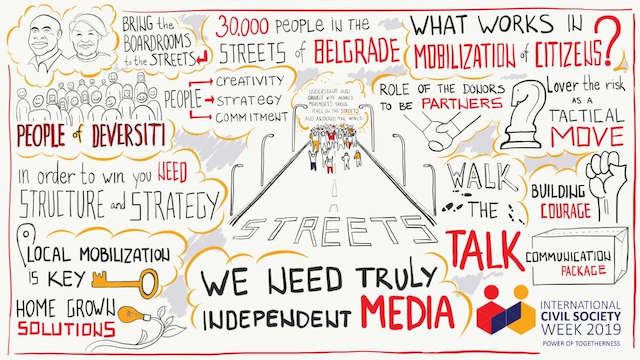
In this complex context of divisions, repression and lack of public trust, the future of trustworthy Arab media is in the hands of alternative media, journalists’ unity and active citizens.

Since the Arab spring, independent journalism platforms such as Daraj, Nawaat in Tunisia, and Beirut-based Raseef22 have emerged, offering alternative narratives that counter state propaganda and mainstream media self-censorship.

But the challenges for these organisations are their limited reach – many mainstream news consumers consider them elitist and targeting “intellectual” users – and their financial sustainability.

The key here is inclusivity. One of the most successful news outlets is AJ+ Arabic, a project that grew out of Al Jazeera’s Incubation and Innovation Group, focusing exclusively on social platforms targeting millennials.

The other major challenge – financial survival – calls for new, sustainable journalism business models developed around new forms of storytelling and original content production supported by creative funding approaches including crowdfunding and data sales or services, for example.

Empowering citizen journalism is another possible solution to producing independent media in the Arab world. Indeed, citizen journalists, young bloggers, and active tweeps are not governed by the same relationship between the state and media professionals and are authentic voices and channels to the Arab street – they speak its language and represent its concerns and challenges.

Alternative media leaders need to build the citizen capacity beyond data collection and reporting to include online security, storytelling and counter-narratives. Increasing the transfer of these savoir-faire to citizens would amplify more voices to tackle the polarization effect through facts.

But of course, there is a place in the future of quality Arab media for professional journalism. Professional bodies have a role to play in fight for press freedom in the region.

Local unions have to wage numerous battles for their own independence through advocating for better legislation that affords greater protection to reporters and that prohibits prosecutions for reporting.

They have to promote the development of more journalistic organisations and more actively resist government attempts to contain and control the media by positioning themselves as defenders of free, independent media, creating strong alliances with alternative media, citizens journalists and social media influencers.

They need to be inclusive to promote a positive narrative about the role of the media in citizens’ lives and bridge the social gap between journalists and the general public to increase support for stronger independent media.

As a major regional proxy war rages on in the region, dominating headlines and geopolitical agendas, the battle for a future independent Arab media that is trusted and trustworthy, is one that seeks to do away with robotic journalists and organisations programmed only to serve the interests of the powerful.


No Story Worth Dying For?

Active Citizens, Civil Society, Conferences, Editors’ Choice, Featured, Headlines, TerraViva United Nations

Civil Society

This article is part of a series on the current state of civil society organisations (CSOs), which will be the focus of International Civil Society Week (ICSW), sponsored by CIVICUS, and scheduled to take place in Belgrade, April 8-12.

Infringements of press freedom and the targeting of journalists is one of the topics being discussed at the International Civil Society Week (ICSW 2019) – an annual gathering of civil society leaders, activists and engaged citizens taking place in the Serbian capital Apr. 8-12. Courtesy: CIVICUS

BELGRADE, Apr 11 2019 (IPS) – “Stay safe. There’s no story worth dying for.”
That’s the message to journalists from Nada Josimovic, programme coordinator of Amsterdam-based media rights organisation Free Press Unlimited.


Most journalists would agree with her. But beyond the threat of physical harm, women reporters and journalists of colour run another risk: being harassed online, with the spouting of sexist and racist venom.

This, of course, happens to rights defenders as well, all over the world. But in the case of women, the harassment is “sexualised … sometimes with threats of rape,” said Josimovic.

“How does one protect oneself?” she asked, during a panel discussion on press freedom at International Civil Society Week (ICSW 2019) – an annual gathering of civil society leaders, activists and engaged citizens taking place in the Serbian capital Apr. 8-12.

Co-hosted by the Johannesburg-based global civil society alliance CIVICUS, the meeting is focusing on a range of issues that include infringements of press freedom and the targeting of journalists.

As the event took place, news surrounding the deaths of media workers continued. On Apr. 11, the Director-General of the United Nations Educational, Scientific and Cultural Organisation (UNESCO), Audrey Azoulay, issued a statement condemning the killing of a sports reporter in the north-western Mexican town of Salvador Alvarado on Mar. 24.

“I condemn the killing of Omar Iván Camacho Mascareño,” stated Azoulay. “I trust the investigation underway will enable the authorities to bring the perpetrator of this crime to justice.”

Mascareño, of local radio broadcaster Chavez Radiocast, was found dead with signs of severe head trauma and injuries indicating that he had been beaten to death, according to media reports.
UNESCO issues its “condemnations” on a regular basis, given the frequency of attacks.

The UN agency has the mandate to promote the safety of journalists and does so “through global awareness-raising, capacity building and a range of actions, notably the UN Plan of Action on the Safety of Journalists and the Issue of Impunity”, according to the organisation.

This includes a module on Combatting Online Abuse: When Journalists and Their Sources are Targeted, but Josimovic and others stress that enough isn’t being done to end the specific harassment of women journalists.

“I think that media outlets don’t have good support systems for this kind of attacks,” she told IPS. “The legal aspect is also complicated.”

Social media companies, for instance, will not reveal the address of the perpetrators when the targeted individual complains, she said. Additionally, there is sometimes a lack of solidarity from editors and colleagues who have never experienced the harassment.

“Because it’s not happening in the real world, people kind of minimise the effect,” she added. “But women in general face more harassment on-line. In every sector, it’s there.”

Anyone who has doubts about this has only to look at some of the reports via the International Women’s Media Foundation, she said.

Rights activists say that broad coalitions were needed to promote the protection of rights and that journalists and human rights advocates need to work together. Courtesy: CIVICUS

Because of the similarity in methods used to attack rights defenders globally, press freedom groups and civil society organisations should increase ways of working together, said some delegates at the ICSW meeting.

Vukasin Petrovic, senior director for programme strategy at Washington DC-based rights monitoring organisation Freedom House, said that broad coalitions were needed to promote the protection of rights.

“Journalists and human rights advocates are the centrepiece of any strategy,” he told IPS. “The protection of freedom of expression and freedom of assembly are in the interests of both.”

Responding to a question about required journalistic “distance” and impartiality, he acknowledged that sometimes the relationship between the media and civil society can become too close.

“We do need transparency and accountability on all sides,” he said. “But building coalitions can make advocacy more powerful.”

For Dragan Sekulovski, executive director of the Association of Journalists of Macedonia – a country that’s “a champion when it comes to wiretapping” – part of the defence of media needs to come from the sector itself.

That includes promoting quality journalism and “leaving this to the audience to judge”, he said. In this way, public opinion may swing in favour of the media, helping to deter attacks and harassment.

“Quality” journalism requires resources, however, and as various media groups point out, the sector has been ravaged over the past years by job losses, low pay, copyright abuses and other ills.

This is compounded by declining public trust – because of a range of factors, including smear campaigns, accusations of purveying “fake news”, journalists’ own behaviour, and, of course, calling media “the enemy of the people” as American President Donald Trump has done.

According to the Committee to Protect Journalists, many of Trump’s tweets so far as president has “insulted or criticised journalists and outlets, or condemned and denigrated the news media as a whole”.

It has thus become an uphill battle to get some sections of the public to see the importance of journalists’ work, and to engage actively in protecting media freedom, said activists at the ICSW meeting.

“Media organisations need to engage with citizens to make them understand why (citizens) need them,” said Josimovic.

Whether this would stop the attacks and harassment, especially of women journalists, is anyone’s guess. The issue will no doubt be raised again during discussions May 1-3, when the “main celebration” of UNESCO’s World Press Freedom Day takes place in Addis Ababa, Ethiopia.


Attacks on Media in the Balkans Sound Alarm Bells for Democracy

Armed Conflicts, Civil Society, Development & Aid, Europe, Featured, Headlines, Human Rights, Population, Press Freedom, TerraViva United Nations

Opinion

This article is part of a series on the current state of civil society organisations (CSOs), which is the focus of International Civil Society Week (ICSW), sponsored by CIVICUS, and scheduled to conclude in Belgrade, April 12.

 
Susan Wilding is the head of the Geneva office at CIVICUS, a global alliance of civil society organisations.

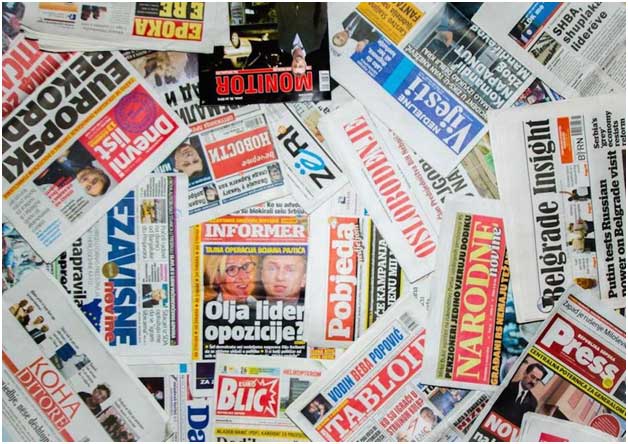
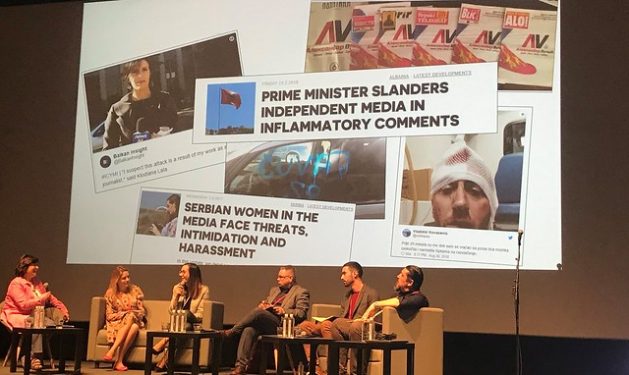
GENEVA, Apr 11 2019 (IPS) – Anti-government protesters invading Serbia’s state-owned television station, demanding that their voices be heard. Journalism bodies writing to the Albanian prime minister over plans to censor online media outlets. A Belgrade corruption-busting reporter forced to flee his house that had been torched; a Montenegrin investigative journalist shot in the leg outside her home.


These are just some of the violations emerging from the western Balkans as a clampdown on media freedom – and civil liberties – undermines Serbia’s and Montenegro’s bids to join the European Union.

It’s little wonder that Serbia tumbled 10 spots to rank 76th on the 2018 Reporters without Borders Press Freedom Index, which states bluntly: “Serbia has become a country where it is unsafe to be a journalist.” Its neighbours fare little better: Albania is in 75th place, Kosovo is ranked 78th and Montenegro is a dismal 103rd.

Smear campaigns against courageous journalists; impunity for those assaulting media players; collusion between politicians and brown-envelope reporters; high levels of concentration of media ownership in a few hands; threats of cripplingly expensive litigation; the chilling effect of self-censorship on reportage. The list of media abuses in the Balkans goes on and on.

Belgrade, Serbia is playing host to International Civil Society Week, running thro Friday April 12, bringing together over 900 delegates to debate solutions to some of the world’s most pressing challenges. Some of the questions on the agenda will be: What more can we, as civil society, do to ease this stranglehold on free expression? How can we raise our voices to protect individual and media liberties?

Such restrictions on the media are incompatible with participatory democracy, which depends on three fundamental human rights – freedom of peaceful assembly, freedom of association and freedom of expression – which are also protected under international law. Any government that claims to have free and fair elections, and claims to be a democracy, cannot deny its citizens access to information and the right to be heard.

According to findings by the CIVICUS Monitor, an online platform that tracks threats to civil society in 196 countries, states are generally using two types of tactics to restrict civic freedoms, and the crack down on media freedoms is no exception.

The first is legal: imposing or enforcing laws that restrict democratic freedoms and criminalise free speech. For example, this includes bringing trumped-up judicial charges against journalists or media houses, thereby diverting energy and resources from watchdog journalism.

The second type comes in the form of extrajudicial means and are even more contemptible: including intimidating the media into submission through carefully coordinated smear campaigns and public vilification, and sometimes through physical intimidation and outright repression.

While such states may make an elaborate show of using (or abusing) the laws of the land to rein in the media, such censorship is clearly a perverse parody of democracy – an expression of a growing trend in which the ‘rule by law’ replaces the rule of law.

Sometimes these attacks on media are coming from “strongmen” leaders with the ambition of concentrating power and eliminating any checks and balances. In other instances, we see these kinds of restrictions imposed by governments that feel threatened and see media clampdowns as another way to hold onto power.

A weakened state or leaders who came to power through dubious means or with a small majority are likely to mute the civic space to cling to power. It may therefore, not be surprising that it’s happening in the Balkans, given the area’s fraught political history.

When popular dissent swells against unpopular policies and actions, a vulnerable state’s first target is the media, because of their potential role in unseating power. It is also something we see as a classic copy-and-paste tactic: questionable leaders see their regional neighbours getting away with it, with few if any repercussions, and follow suit.

Even the online space – the ultimate democratic arena of the 21st century, where the gladiatorial thrust and parry of views is essential to robust debate – is not being spared in this battle to seize ideological control of the marketplace of ideas.

Some countries have already shown that it’s entirely possible to shut down or control social media platforms, denying citizens their fundamental right to participate in debate and in policymaking.

The reasons that States give for silencing media vary but often include similar statements such as journalists are writing “defamatory” articles or disseminating “fake news”. Often, they maintain, the reportage is “unpatriotic”, “goes against our culture or values” or “does not advance our nationalist agenda”.

With the restrictions on media freedoms increasing in the Balkans, we should be highlighting the situation and sharing tried and tested strategies for pushing back and opening the space for a free and independent media.

We should be concerned that the world so easily shifted its attention away from the region after the terrible conflict that claimed so many lives 20 years ago. Why did we not linger a while to monitor the aftermath? Do we turn a blind eye to human rights abuses, as is the case in China and elsewhere, as long as there is peace, development and economic prosperity?