Are We Fighting a Losing Battle in the War Against Drugs?

Civil Society, Crime & Justice, Featured, Global, Global Governance, Headlines, Human Rights, IPS UN: Inside the Glasshouse, Peace, Poverty & SDGs, TerraViva United Nations
UNITED NATIONS, Jul 3 2019 (IPS) – How effective is the global war on drugs?

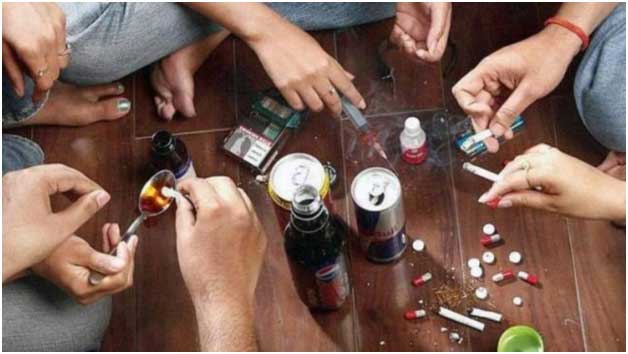
The latest statistics released by the UN Office on Drugs and Crime (UNODC) are staggering: 35 million people across the globe currently have a substance use disorder, and as of 2017, 585,000 people have died worldwide as a result of drug use.


According to a recently-released UNODC report, the lack of proficient drug treatment and facilities for those that need it is impacting mortality rates at alarming levels.

Hence, it stands to reason that treatment and prevention are immensely falling short of the mark on a global scale.

Prisons are also no exception to these shortcomings. In fact, the Report unmasked that those incarcerated for drugs are more likely to continue being exposed to drugs.

The Report also highlighted that out of the 149 countries that were surveyed, about 1 in 3 people reported that they consumed drugs in prison at least once while incarcerated, and 1 in 5 people who are currently incarcerated reported that they have used drugs within the past month.

“In terms of data, we did some data collection, always trying to get as much as possible, in terms of socio-economic characteristics, we would have this type of data, I imagine, and this is also something that will run throughout the new report, and is being discussed now.” Chloé Carpentier, Chief of the Drug Research Section told IPS.

The issue between drugs and human rights is on Secretary General António Guterres’ radar as well.

“Together, we must honour the unanimous commitments made to reduce drug abuse, illicit trafficking and the harm that drugs cause, and to ensure that our approach promotes equality, human rights, sustainable development, and greater peace and security.” Secretary General António Guterres stated on the International Day Against Drug Use and Illicit Trafficking.
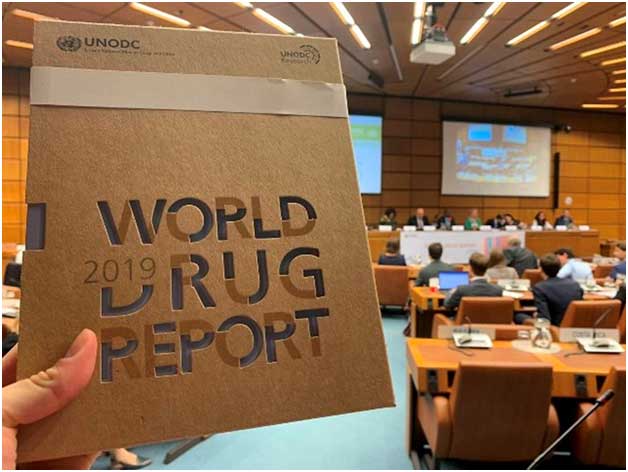
“We will make sure that no one with a drug problem is left behind” Dr. Miwa Kato assured, during the official launch of the Report on June 26.

Dr. Kato continued to push this message throughout her speech and cited that “Health and justice need to work hand in hand.”

Beyond the UN, this is a topic of interest for the academia world as well, since young people are heavily susceptible to a substance use disorder.

“It is important that we say people— not user or addicts, that language itself is stigmatizing.” Dr. Danielle Ompad, Associate Professor, College of Global Public Health and Deputy Director, Center for Drug Use and HIV Research at New York University (NYU) told IPS.

Dr. Ompad highlighted the importance of person-first language, citing that “It is important how we refer to people, and view them as humans, and not just the behavior (the substance use).

In terms of the World Drug Report, she noted that “The war on drugs, if you look at it, hasn’t really been an effective war”, and elaborated that the focus should not be supply- side intervention, because in the long run, drugs are going to be produced and sold no matter what, which leads to mass incarceration, which doesn’t benefit any party.

It is also important to recognize that “not everyone needs treatment, and those that do should absolutely have access to it. But just because you use marijuana does not mean you are an addict”.

She went on to suggest a harm- reduction approach. The harm-reduction approach blends a plethora of strategies from safer use to managed use to abstinence- it meets the need of the person.

www.HarmReduction.org

Meanwhile, tracing back to the issue of treatment, the Report affirmed that over 80% of the world’s population lack access to adequate treatment with only 1 out of 7 people with a substance use disorder receiving treatment each year.

The Report showcased that women cited a strong sense of fear that kept them from seeking the help that they needed for a variety of reasons that ranged from possible legal issues to the lack of childcare while in treatment.

Another issue is several countries, particularly in Asia, is the death penalty for any person found guilty of a drug ‘offense.’

Last month, Sri Lanka’s President, Maithripala Sirisena signed death warrants for four convicts- thus pushing the notion that those who have a substance use disorder are ‘dirty’ and should be disposed of.

Similarly, in a 2014 study conducted by Johns Hopkins Bloomberg School of Public Health, it was shown that having a substance use disorder was viewed more negatively than mental illness. Ironically, however, the two are all but intertwined.

This is also evidenced by the Report- about half of the world’s population that develop a mental disorder will also experience a substance use disorder in their lifetime.

However, it is to be noted, that despite all of the above, the Report only cited the “lack of effective treatment interventions based on scientific evidence and in line with human rights obligations.” but made no further elaborations on the what’s and how’s and was only discussed briefly at the official Report launch.

That said, the issue of ensuring those that do have a substance use disorder are provided for while figuring out more beneficial and healthier initiatives to reduce drug rates across the globe are currently being discussed among the United Nations (UN) and United Nations Office on Drugs and Crime (UNODC).

Dr. Ompad said for better or worse, licit, and illicit drug use is part of our world.

“Focus a little bit more on harm reduction,” Dr. Ompad stated, and above all “We need to stop the war on the people who use drugs,” she declared.
 

Indigenous Rights Approach a Solution to Climate Change Crisis

Biodiversity, Civil Society, Climate Change, Conferences, Development & Aid, Environment, Featured, Global, Headlines, Human Rights, Indigenous Rights, Sustainability, TerraViva United Nations

Indigenous Rights

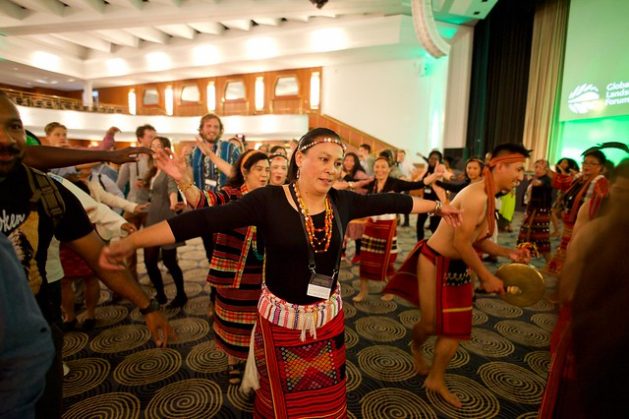
The Global Landscapes Forum (GLF) was held in Bonn, Germany and focused on how to give land rights the visibility needed to showcase that a rights approach, particularly when it comes to indigenous people, is a solution to the climate change crisis. Courtesy: Pilar Valbuena/GLF

Jun 29 2019 (IPS) – The Global Landscapes Forum (GLF) was held in Bonn, Germany to rally behind a new approach to achieving a future that is more inclusive and sustainable than the present – through the establishment of secure and proper rights for all.


On Jun. 22 and 23, experts, political leaders, NGOs and indigenous peoples and communities gathered to deliberate on a methodology that emphasises rights for indigenous peoples and local communities in the management and perseveration of landscapes. The forum took place alongside the  United Nations Framework Convention on Climate Change Bonn Climate Change Conference.

The forum focused giving land rights the visibility needed to showcase that a rights approach is a solution to the climate change crisis, and to develop a ‘gold standard’ for rights.

Indigenous peoples, local communities, women and youth, are believed to be the world’s most important environmental stewards but they are also among the most threatened and criminalised groups with little access to rights.

“We’re defending the world, for every single one of us,” said Geovaldis Gonzalez Jimenez, an indigenous peasant leader from Montes de María, Colombia.

But industries such as fossil fuels, large-scale agriculture, mining and others are not only endangering landscapes but also the lives of the people therein.

Already this year, said Gonzalez, his region witnessed 135 murders, adding that the day before the start of the GLF a local leader was killed in front of a 9-year-old boy.

According to the United Nations, the land belonging to the 350 million indigenous peoples across the globe is one of the most powerful shields against climate change as it holds 80 percent of the world’s biodiversity and sequesters nearly 300 billion metric tons of carbon

It is for this reason that amid the urgency to meet Sustainable Development Goals (SDGs) under pressure from the climate threat, dialogues about the global future have begun to wake up to the fact that indigenous peoples’ relationships with the natural world are not only crucial to preserve for their own sakes, but for everyone’s.

The drafting of the document of rights was led by Indigenous Peoples Major Group (IPMG) for Sustainable Development and the Rights and Resources Initiative in the months leading up to the GLF.

Wider discussions and workshops over the two days served as a consultation on the draft (which is expected to be finalised by the end of the year) as a concrete guide for organisations, institutions, governments and the private sector on how to apply different principles of rights. This includes the rights to free, prior and informed consent; gender equality; respect to cultural heritage; and education.

U.N. Special Rapporteur on the Rights of Indigenous Peoples Vicky Tauli-Corpuz said lands managed by indigenous peoples with secure rights have lower deforestation rates, higher biodiversity levels and higher carbon storage than lands in government-protected areas.

But Diel Mochire Mwenge, who leads the Initiative Programme for the Development of the Pygme in the Democratic Republic of Congo (DRC), one of the largest indigenous forest communities in Central Africa, said he has witnessed more than one million people being evicted from the national parkland where they have long lived. He explained that they had not been given benefits from the ecotourism industries brought in to replace them and were left struggling to find new income sources.

“Our identity is being threatened, and we need to avoid being completely eradicated,” said Mwenge.

In Jharkhand, India, activist Gladson Dungdung, whose parents were murdered in 1990 for attending a court case over a local land dispute, said an amendment to India’s Forest Rights Act currently being reviewed by the Supreme Court could see 7.5 million indigenous peoples evicted from their native forest landscapes. The act can impact a further 90 million people who depend on these forests’ resources for their survival, he said.

The amendment, Dungdung said, would also give absolute power to the national forest guard; if a guard were to see someone using the forest for hunting or timber collection, they could legally shoot the person on-sight.

“Indigenous peoples are right on the frontline of the very real and dangerous fight for the world’s forests,” said actor and indigenous rights activist Alec Baldwin in a video address.

“Granted that indigenous peoples are the superheroes of the environmental movement,” Jennifer Morris, president of Conservation International wondered why they are not heard until they become victims. “Why do we not hear about these leaders until they’ve become martyrs for this cause?”

The examples of intimidation, criminalisation, eviction and hardship shared throughout the first day clearly showcased what indigenous peoples and local communities go through to preserve the forests or ‘lungs of the earth’.

The rights approach, according to conveners of the GLF, aims to strengthen respect, recognition and protection of the rights of indigenous peoples and local communities as stewards and bearers of solutions to landscape restoration, conservation, and sustainable use. It also aims to end persecution of land and environment defenders; build partnerships to enhance engagement and support for rights-based approaches to sustainable landscapes across scales and sectors; and, scale up efforts to legally recognise and secure collective land and resource rights across landscapes.

“By implementing a gold standard, we can both uphold and protect human rights and develop conservation, restoration and sustainable development initiatives that embrace the key role Indigenous peoples and local communities are already playing to protect our planet,” said Joan Carling, co-convener of IPMG.

IPMG recognises that indigenous and local communities are bearers of rights and solutions to common challenges.

“This will enable the partnership that we need to pave the way for a more sustainable, equitable and just future,” added Carling.

And the Center for International Forestry Research (CIFOR) Director General, Robert Nasi, said when rights of local communities and indigenous peoples are recognised, there are significant benefits for the fight against climate change and environmental degradation.

“Whoever controls the rights over these landscapes has a very important part to play in fighting climate change,” he said.

In the climate and development arenas, the most current alarm being sounded is for rights–securing the land rights and freedoms of indigenous peoples, local communities and the marginalised members therein.

How can these custodians of a quarter of the world’s terrestrial surface be expected to care for their traditional lands if the lands don’t, in fact, belong to them? Or, worse, if they’re criminalised and endangered for doing so?

The basic principles of a ‘gold standard’ already exist, such as free, prior and informed consent, according to Alain Frechette of the Rights and Resources Initiative (RRI). What has been lacking, he said, is the application of principles that could be boosted by high-level statements that could “spur a race to the top”.


A Roadmap for Children as Victims, not Terrorists

Armed Conflicts, Civil Society, Featured, Global, Global Governance, Globalisation, Headlines, Human Rights, IPS UN: Inside the Glasshouse, Peace, TerraViva United Nations

UNITED NATIONS, Jun 26 2019 (IPS) – The feeling in the air at a recent meeting of the United Nations Office on Drugs and Crime (UNODC) was one of compassion and benevolence.

The focus was on children as Foreign Terrorist Fighters (FTFs), a subject that everyone at the panel discussion argued is delicate and politically sensitive.


Alexandra Martins, the Crime Prevention and Criminal Justice Officer at the UNODC, pointed out that “”Nobody is a lost cause, and there is always a possibility to rehabilitate and reintegrate children from these groups.”

Two of her words were repeated by almost every speaker: “rehabilitate and reintegrate”.

The meeting was meant to discuss the release of the UNODC Handbook on Children Recruited and Exploited by Terrorist and Violent Extremist Groups.

The roadmap’s main goal is to provide UN’s 193 Member States with guidance on how to treat children associated with terrorist and violent extremist groups. It argues for an approach to rehabilitate those associated with or accused of being FTFs, and to reintegrate them back into their communities.

Though many of the children accused have taken part in terrorism, the UNODC advocates for a change in the way Member States handle the children.

Speaking during the release of the handbook, Dr. Jehangir Khan, Director at the UN Office of Counter-Terrorism/Counter Terrorism Centre (UN OCT/CCT), said “children must be seen first and foremost as victims.”

The roadmap was released alongside 4 technical assistance tools: UNODC Handbook on Children Recruited and Exploited by Terrorist and Violent Extremist Groups: The Role of the Justice System (2018); the UNODC Training Manual on Prevention of Child Recruitment by Terrorist and Violent Extremist Groups (May 2019); the UNODC Training Manual on Rehabilitation and Reintegration of Child Victims of Recruitment by Terrorist and Violent Extremist Groups (to be released in July 2019); the UNODC Training Manual on Justice for Children in the Context of Counter-Terrorism (May 2019).

The documents are based on three years of technical assistance work conducted by the UNODC to Member States that have found children as FTFs.
One country already advocating its support for the Roadmap is Lebanon. Until 2013, children accused of being or associated with terrorist fighters were kept in adult prisons and tried as such.

“It is in prison that I learned the meaning of life” one of the boys, aged 19, remarked in a video played by the representative from Lebanon stated.

A step in the direction of treating children as victims came in 2013, when they were moved to a juvenile prison.

Lebanon’s Head of the Prison Administration at the Ministry of Justice of Lebanon, Judge Raja AbiNader, said: “By showing them the same respect we showed the rest of the children, things started to change.”

Martins told IPS that there are many such countries, like Lebanon, whose children and communities have already benefited from the guidance offered in the Roadmap.

“As a result of the protocol, children deprived of liberty for association with Boko Haram were released and transferred to child protection authorities to begin a process of reintegration in their communities,” she said.

Martins stated that more than 30 countries have received guidance on child FTFs from the UNODC’s, from 6 different regions (West Africa, East Africa, Middle East and North Africa, South Asia, Southeast Asia and Central Asia).

Despite the Roadmap offering guidance, at the panel discussion, Martins clarified that “there is no one size fits all approach” on handling children.

There have been different approaches offered on handling the children in general, and specifically when dealing with different genders.

There will be a second event during the United Nations General Assembly (UNGA) in September that Martins hopes will “promote the guidance further.”

Gender and the Roadmap

But there appears to be some disagreement still on the treatment of boys and girls during the rehabilitation and reintegration processes.

Under international law (Havana Rule 87.d., Bangkok Rules), boys and girls must be held in separate detention facilities. But the Roadmap encourages them to still engage together, to foster development.

The Roadmap also advocates for targeted approaches on the treatment of girls.

Martins told IPS that girls are “considerably more vulnerable to both physical and sexual abuse and require special attention in this regard.”

She noted that “girls deprived of liberty are exposed to other forms of sexual violence such as threats of rape, touching, ‘virginity testing’, being stripped naked, invasive body searches, insults and humiliations of a sexual nature.”

Given these sensitive issues, and the fact that girls are different physiologically and often psychologically from boys at certain development stages, the Roadmap advocates for an awareness of gender and for specific targeted approaches.

“A section in the manual alludes that girl victims of recruitment and exploitation by terrorist and violent extremist groups require specific approaches to reintegration, because of their increased exposure to violence at multiple levels and from different actors,” Martins said.

But it is not clear yet that this section on gender differences has been implemented.

While Martins says the Roadmap takes seriously the different approaches for girls and boys, Judge AbiNader told IPS that in Lebanon “Very honestly, we’re not working specifically with girls concerning rehabilitation.”

As of June 7th, Lebanon has 10 boys and 2 girls in prison for being associated with or accused of being FTFs.

When asked why there were not specific programs that tackle children of divergent genders differently, he argued that they girls “should be treated the same” during rehabilitation.

“And it hasn’t been discussed because the number [of girls in prison for accusations of being FTFs] is so low,” he added.

Despite the low numbers of accused girls in detention facilities, Martins believes that targeted women’s health education should be provided, and that “Access to age- and gender-specific programmes and services, such as counselling for sexual abuse or violence, has to be given to girls.”

Though the UNODC has advocated a change in outlook on children involved with terrorist organizations, the Roadmap’s release is just the beginning of that change being implemented.


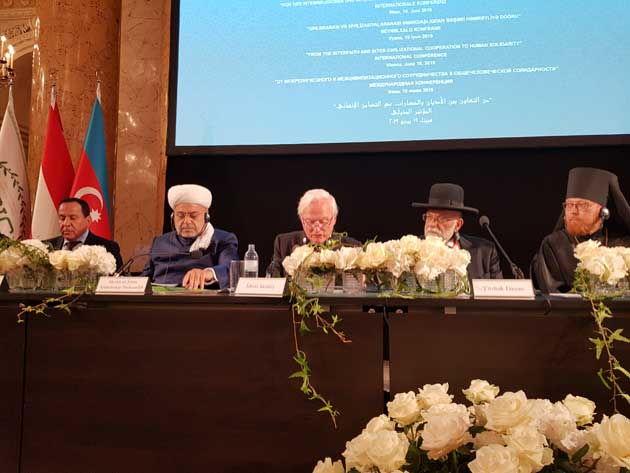
International conference in Vienna: Successful societies are those that manage diversity and stimulate empathy towards the Other

Conferences, Human Rights, Religion

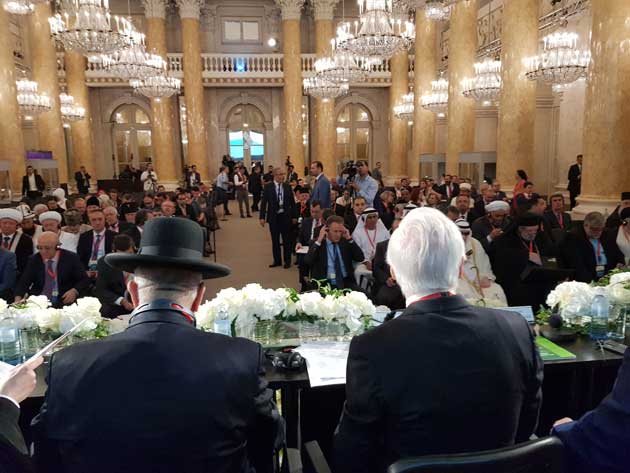
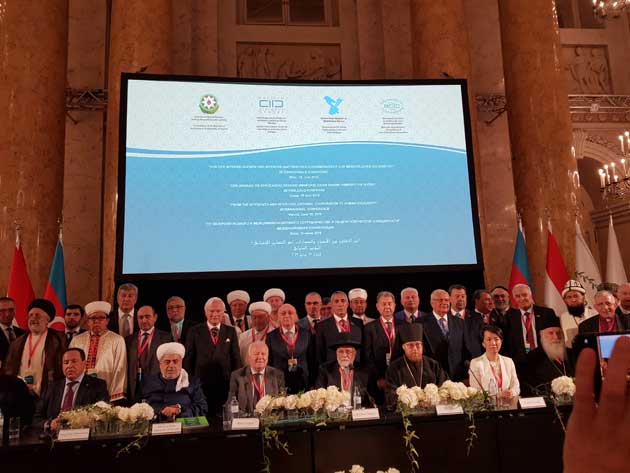
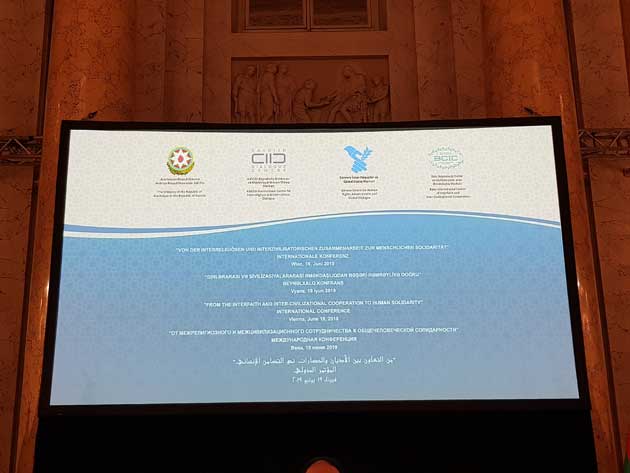
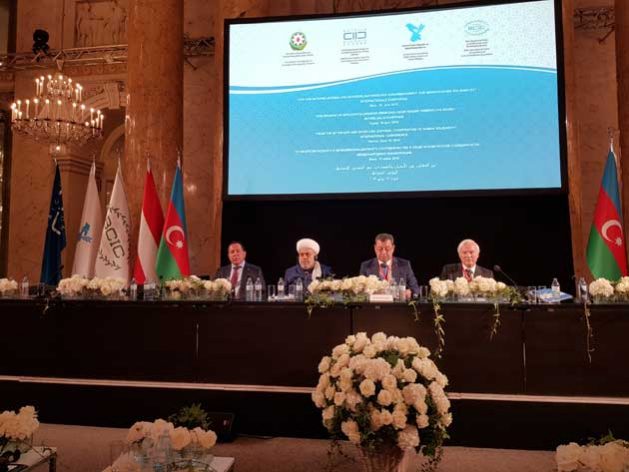
VIENNA, Jun 21 2019 – Societies must work together to build more tolerance, solidarity and peace within and between nations, said the Executive Director of the Geneva Centre for Human Rights Advancement and Global Dialogue, Ambassador Idriss Jazairy, during the 19 June international conference on “From Interfaith, Inter-Civilizational Cooperation to Human Solidarity.” He emphasized that all such societies are built on shared aspirations and not shared ethnicity.


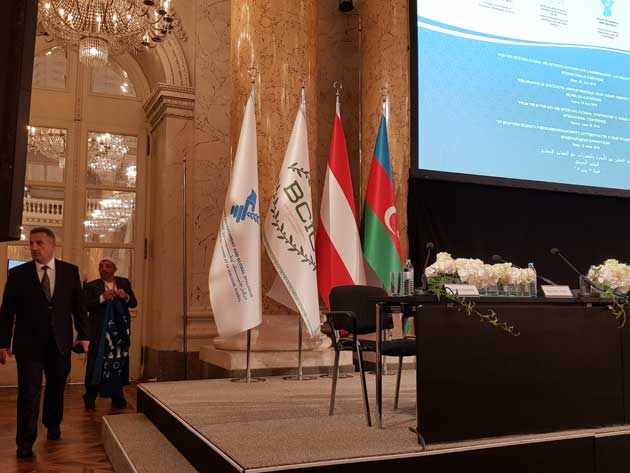
This Geneva Centre was one of the organizers of this major event together with the Baku International Centre for Interreligious and Inter-Civilizational Cooperation and the KAICIID Interreligious and Intercultural Dialogue Centre.

It gathered over 200 high-level experts from 30 countries and 10 international organizations. A special message of greeting was extended to the co-organizers of the conference and the participants by the President of the Republic of Azerbaijan HE llham Aliyev during the inaugural ceremony.

As the moderator of the opening and the first plenary sessions, Ambassador Jazairy stated that although the Berlin Wall was demolished in 1989, new physical and virtual walls were being erected which were breaking up societies and multilateralism.

It is one of the greatest paradoxes of the contemporary world that major world faiths and creeds that all preach human fraternity are being perverted to justify hatred and exclusion. The threat to peoples is not diversity, but poverty. Terrorism has no religion, denomination or nationality. It is a social cancer that affects the whole world,” he said.

To overcome this situation, Ambassador Jazairy highlighted the importance of promoting awareness of both the commonality of values and the specificities of practices of diverse faiths as expressions of enrichment through pluralism. He emphasized that all faiths supported God-given dignity to human beings and the duty of all to uphold it in particular for women and girls and vulnerable groups. Likewise, he recalled that all such faiths equally advocate the love of one’s neighbor.

The Executive Director of the Geneva Centre praised the outcome of the 25 June 2018 World Conference on religions and equal citizenship rights, the World Tolerance Summit organized in November 2018 in Dubai, the historical meeting of 4 February 2019 between the Pope and the Grand Imam of Al Azhar held in Abu Dhabi, and the Fifth World Forum on Intercultural Dialogue held in-May 2019 in Azerbaijan.

In his concluding remarks, the Geneva Centre’s Executive Director underlined that the promotion of equal citizenship rights is the silver-bullet to promote successful societies that manage diversity and stimulate empathy towards the other.

Ambassador Jazairy added: ‘Ethnicity, religious or political affiliations do not convey more rights on some groups than on others. As the US Congress affirmed already in 1782 ‘E pluribus unum.’ This diversity needs to become again the subject of cultural celebration and lay the foundation for social cohesion and the promotion of inclusive societies. There can be no sustainable pursuit of happiness in islands of prosperity surrounded by oceans of poverty.”

The Executive Director of the Geneva Centre concluded his statement by appealing to countries from the Global North and the Global South to jointly promote empathy between different cultures and civilizations and to “speak up together so that the conference message comes out loud and clear and is picked up by politicians who can make it become a reality.”

In the concluding session of the conference, the co-organizers endorsed an outcome declaration welcoming, inter alia, the adoption of the 25 June 2018 World Conference 10-Point Outcome Declaration on “Moving Towards Greater Spiritual Convergence Worldwide in Support of Equal Citizenship Rights” which was sponsored by the Geneva Centre and its partners last year.

The co-organizers likewise adopted a joint message to the President of Azerbaijan HE Ilham Aliyev and to the President of Austria HE Alexander Van der Bellen appealing to both countries to address obstacles to sustainable peace and development, promote inter-civilizational dialogue and to make this conference format replicable at regular intervals in the future.


UN Says Kyrgyz Journalist Should be Freed

Asia-Pacific, Civil Society, Democracy, Global, Global Governance, Headlines, Human Rights, Press Freedom, TerraViva United Nations

Opinion

Gulnoza Said* is Program Coordinator, Committee to Protect Journalists (CPJ), Europe and Central Asia

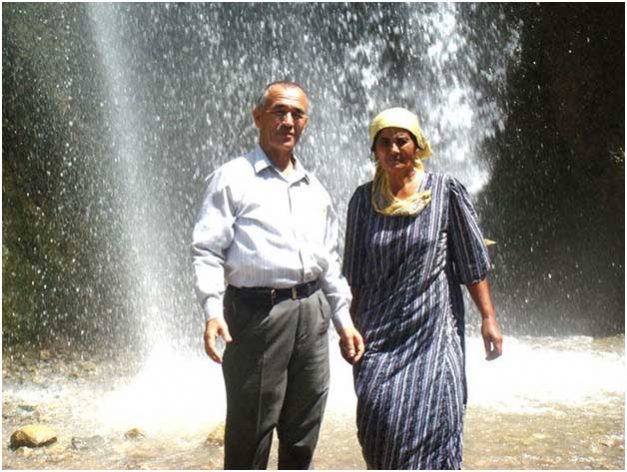
Kyrgyzstan journalist Azimjon Askarov and his wife, Khadicha, pictured during a family vacation in Arslanbob in the summer of 2009. ‘This was Azimjon’s last summer of freedom,’ Khadicha told CPJ. (Askarov family)

NEW YORK, Jun 10 2019 (IPS) – On a recent morning in Bazar-Korgon, southern Kyrgyzstan, Khadicha Askarova was giving hasty instructions to her daughter about what needed to be packed.


They were about to set off: first for the capital Bishkek, some 600km from where they live, and then another 70km to a prison colony where her husband, Azimjon Askarov, was transferred in March.

But Askarov, a 68-year-old independent journalist and rights activist, shouldn’t be in jail at all. The U.N. Human Rights Committee ruled in 2016 that Askarov was subject to torture and mistreatment from the moment of his detention on June 15, 2010 to his speedy trial and subsequent imprisonment, and that he should be released immediately.

CPJ’s research into his case found that the original trial was marred by irregularities and allegations of torture, mistreatment and harassment of defendants, including Askarov, and their witnesses. But Kyrgyz authorities defied the U.N. resolution and in 2017, amid international outcry, upheld his life sentence.

Conditions in the new prison are harsh. In letters home, the journalist wrote that he had run ins with the guards and that prison officials punish detainees after visiting days. His health is also deteriorating and he has limited access to medication, the journalist’s wife, Askarova, said.

“What breaks my heart is to see how much he aged since being imprisoned. He used to be a man full of energy and vigor. Now, he is old, sickly, skinny, and there’s no way out of this situation for him,” she said, fighting back the tears when we spoke via a video messaging app earlier this month.

The couple, who have been married for over 40 years, now have limited contact: just six family visits and two phone calls a year. As Askarov wrote in a recent letter to his wife, “They like keeping us under a tight lid here. Communication with the outside world is banned.”

The letter, which his wife shared with CPJ, also gave a glimpse of the harsh prison conditions: “After family visits, inmates are punished by being forced to eat raw onions and carrots for several days.”

“On regular days, they give us pea soup that contains nothing but watery peas. On public holidays, we get what the prison administration calls plov [pilaf] but it is not more than 150g of rice cooked with some carrots, per person.”

Since Askarov’s transfer to a prison outside Bishkek in March, he wrote that he has had three “incidents” with prison guards. The journalist did not specify the nature of incidents, but wrote that guards were known for their mistreatment of and conflicts with inmates.

“There are few good ones among them”, he added, almost as if he was preventing possible punishment should the content of the letter became known to the guards.

One of the incidents was connected to the journalist’s poor health. He has the heart condition tachycardia, hypotension, and gets dizzy and nauseated if he stands for too long.

Under prison rules, if a guard enters a cell, the inmate must stand. “That’s the rule. Twice a day, guards enter cells. An inmate has to cite his full name and an article of the criminal code he was convicted of violating. But Azimjon was not able to stand straight for too long. His knees bend, he had to sit down. That was the ‘incident’,” the journalist’s wife, Askarova, told me.

Soon after the transfer, Askarov complained about his health to prison administration, and said that low blood pressure and a cold was diagnosed. “But they did not have any medication to give me,” he wrote.

Askarova told CPJ that doctors at the prison ask families to bring medication. “They rely on us for something that they ought to provide,” she said.

She added that the few visits they are allowed are emotional, and the travel hard and costly. She makes sure that one visit falls on her husband’s birthday, May 17. This year, the couple’s daughter and their three grandchildren also visited on his birthday, their first visit to a new jail.

‘I’m afraid they will forget how he looks’ Askarov’s wife says

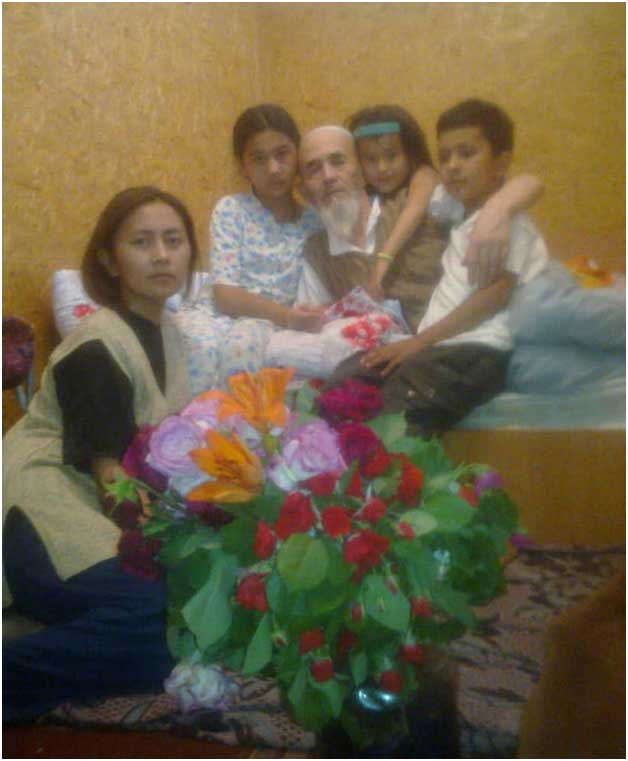
Azimjon Askarov, pictured with his daughter Navruza and grandchildren, during a May 2018 visit in Bishek prison. The journalist was moved to a new prison in 2019 that bans families from taking photographs during visits. (Askarova family)

“The new prison is much farther from Bishkek. After a nearly 14-hour drive to Bishkek, we took another taxi to the prison, but then had to walk about seven kilometers in the heat and dust. It was especially hard for the little ones, although they were excited to see their grandfather. They are still little, and I am afraid they can forget how he looks like, how he sounds,” Askarova said.

Adding to that concern is a rule at the prison banning families from taking photographs during visits. “Now, I have to look at old pictures of Azimjon. They deprived me even of the photos of my husband,” she said.

Askarova said she would move to Bishkek to be closer to the prison, but she cannot sell the house that her husband has owned for decades. The authorities seized the journalist’s property after he was charged in 2010.

In 2015, the journalist’s lawyer successfully appealed against the seizure, but before Askarova had overcome a legal quagmire of changing the ownership, authorities placed a new lien on the house in February. She said she has started another appeal process.

Askarova said that before they visit each year on his birthday, the couple’s daughter Navruza, who lives in Uzbekistan, usually comes to Bazar-Korgon to help pack personal items, food, medicine and books. But it is Askarova who picks flowers from her garden and buys bouquets at a florist for her husband.

“He is an artist, you know. He loves flowers. I get the most beautiful ones for him. Many kinds, sometimes several bouquets,” she said.

Azimjon and Khadicha met at art college in the Uzbek capital Tashkent in 1974. They have been married for 42 years and raised four children, who live in Uzbekistan. He used to work as an artist. But every time he heard a neighbor complain of injustice, he felt the urge to help, Askarova said.

In the late 1990s, he started documenting the cases, mediating between his community members and law enforcement, and researching legal books. He eventually became a go-to person in Bazar-Korgon if the rights of a member of his community had been violated.

He was known for taking up the cases on police brutality. It was this reputation that led many people to come to him for help when violence against ethnic Uzbeks erupted in June 2010, she said.

In prison, Askarov started to paint again. In 2014, international and local activists organized an exhibition of Askarov’s work to raise awareness of his case. In 2018, he wrote a book, “I am happy,” which includes a dedication to his late mother, “who lost me, her son, during her and my life, and left this world, shocked by the greatest injustice.” Copies of the book are still available online.

During his imprisonment, Askarov studied English and is able to read the many cards sent to him from around the world, his wife said. She added that he has been studying Japanese from the books and dictionaries she brought him, and that he has become interested in herbal medicine because conventional medication was not available in prison.

Askarov has also kept a diary since 2010. “He writes down everything. I keep reading them in between prison visits. One word that he uses most frequently is freedom. When he sees rain through the cell window, he writes ‘I wish I was free to feel rain drops on my skin. When he sees snow, he writes ‘I wish I was free to be outside and enjoy the snow now’. Freedom is his main wish and goal. He lives for it,” Askarova said.

* Gulnoza Said is a journalist and communications professional with over 15 years of experience in New York, Prague, Bratislava, and Tashkent. She has covered issues including politics, media, religion, and human rights with a focus on Central Asia, Russia, and Turkey.


A Call for Concrete Changes to Achieve a More Gender Equal World

Civil Society, Development & Aid, Editors’ Choice, Featured, Gender, Global, Global Governance, Headlines, Human Rights, IPS UN: Inside the Glasshouse, TerraViva United Nations

Princess Sarah Zeid is a member of UNHCR’s Advisory Group on Gender, Forced Displacement, and Protection, a Special Advisor to the World Food Programme on Maternal and Child Health and Nutrition, and Chair of the Newborn Health in Humanitarian Settings Initiative.

AMMAN, May 29 2019 (IPS) – On the eve of the Women Deliver conference in Vancouver June 3-6, Princess Sarah Zeid of Jordan interviewed Dr. Olfat Mahmoud, a Palestinian refugee and women’s rights advocate.


Princess Sarah spoke with Dr. Olfat about what the humanitarian system would look like if organizations like hers could help shape it, and the messages she hopes to bring to Women Deliver.

Excerpts from the interview:

Princess Sarah: Tell me a little about yourself. What drew you to your work and why does it matter?

Dr. Olfat: I was born a Palestinian refugee, so witnessed injustice all my life. Yet what defines me is not that I grew up in a refugee camp in Lebanon, or that I spent most of my life in a war zone, but that I am a nurse and advocate in my community.

Even amid crisis, my parents were open-minded and encouraged me to be independent, so that is exactly what I set out to do. I studied and practiced nursing during the Lebanese civil war, and through that work witnessed the overlooked hardships faced by refugee women and children.

As a medical practitioner, I saw how essential services for girls and women of all ages – such as psychosocial support and sexual and reproductive health care– were chronically overlooked. And as an advocate in my community, I found that supporting women empowered me as well.

I established the Palestinian Women’s Humanitarian Organization (PWHO) to fill these gaps and fulfill the needs of refugee girls and women so they can lead better futures. Not a single international organization stepped up to do this important work – so I knew that change had to come from those of us within the community.

Princess Sarah: What are the main challenges girls and women face in your community? What makes women-focused civil society organizations (CSOs) like yours most well-equipped to respond to these challenges?

Dr. Olfat: For girls and women, life in refugee settings require superhuman strength. We are particularly vulnerable when it comes to access to essential health services, information, and education, and disproportionately suffer from gender-based violence.

Women-focused civil society organizations are most well-equipped to respond to these challenges because women are the best experts on our lives. Our lived experiences make us better advocates for ourselves and for others in similar situations.
For example, the PWHO women’s centers – staffed by refugee women themselves– have gained unparalleled trust from the community, and become a second home for many.

With that trust, we can more easily identify what women want and need – like access to non-discriminatory health services, psychosocial support, rights-based education, and leadership skills – and design programs that are tailored for them. We can also negotiate with local leaders to push for a more supportive environment for women’s rights – a key ingredient to driving lasting change in conservative contexts.

UNHCR Patron, HRH Sarah Zeid of Jordan, meets with a women’s group at Doro refugee camp in South Sudan. Credit: UNHCR/Jan Møller Hansen

Princess Sarah: What could the international community – including donors, decision-makers, and practitioners – do more or less of to maximize sustainable positive impact for the populations you serve?

Dr. Olfat: The international community wields a lot of power – especially the power of money and the power of influence. To drive real change in my community, international actors must use those powers more efficiently.

First, there is a critical need to fill funding gaps for programs that are specifically designed for refugee girls and women. With more girls and women displaced today than ever before in global history, their needs are rising – yet funding for them is decreasing.

We need smarter investments in programs that enable refugee girls and women to lead better futures, including through education and quality vocational and life skills training, as well as access to sexual and reproductive health care.

Yet money alone is not enough. The international community must also use their influence to challenge national and regional political barriers that hold us back.

This includes respecting and upholding international agreements, including UN resolutions, which support and protect refugees. It also means addressing legal restrictions that keep refugee women from working, obtaining formal education, and exercising other basic human rights in their host countries.

Princess Sarah: Currently only 3% of humanitarian aid goes to local and national organizations – and even less to those focused on girls and women. What types of concrete investments does your organization need to extend your impact and plan for the future?

Dr. Olfat: Right now, the needs we see are greater than the resources we have. To meet those needs, we don’t just need more funding – but more of the right kinds of funding.

Too often, grants and funding opportunities for women-focused CSOs are designed without consulting us on the types of investments we know girls and women in our communities need the most.

Other times, we aren’t able to access grants because of unrealistic reporting requirements that are either unsuitable or unmanageable for a small grassroots organization like ours.

For example, many grants for vocational programs in Lebanon require organizations to report success by the number of jobs their beneficiaries gain as a result – which isn’t possible in a context where refugees aren’t legally allowed to work. To support women-focused CSOs and the communities they serve, we must be more meaningfully engaged in setting investment agendas at the start.

We also need access to more flexible and sustainable funding opportunities, including core funding. It’s impossible to plan for the future when we rely on six- to twelve- month grants. We’re committed to supporting refugee girls and women in our community for as long as we’re needed – but require the right resources to fulfill that goal.

Princess Sarah: You have also been advocating for the international community to more meaningfully engage women-focused CSOs in humanitarian decision-making. In your view, what concrete steps can the international community take to put more power and influence in the hands of women-focused CSOs like yours, and why should this be an urgent priority?

Dr. Olfat: Women-focused CSOs must be heard in humanitarian policy meetings to ensure decisions reflect realities on the ground. This requires inviting us to important discussions held in New York and Geneva, but it also means making sure we can get there through travel and logistics support. And when we are there, it means carving out spaces for us to safely and honestly share the solutions we need with the assurance that we will be heard.

The alternative – excluding refugee women from decisions that affect their work and lives – isn’t acceptable and isn’t working. When we are engaged, we make humanitarian policy and practice stronger and more effective.

Princess Sarah: What do you hope to achieve at the Women Deliver Conference in Vancouver, Canada? What advocacy asks do you hope to bring forward at this meeting?

I hope to raise awareness to the needs of Palestinian refugee girls and women in Lebanon, to ensure that they are not forgotten. And I want to highlight solutions women-focused CSOs like PWHO need – money, influence, and power – to push for the change I’ve wanted to see all my life.

At the same time, I hope to learn from other advocates around the world, and build networks so we can collectively push for a humanitarian system that puts girls and women at the center. Solidarity is our strength and our power – and we need to be stronger together to achieve a better world for all of us.