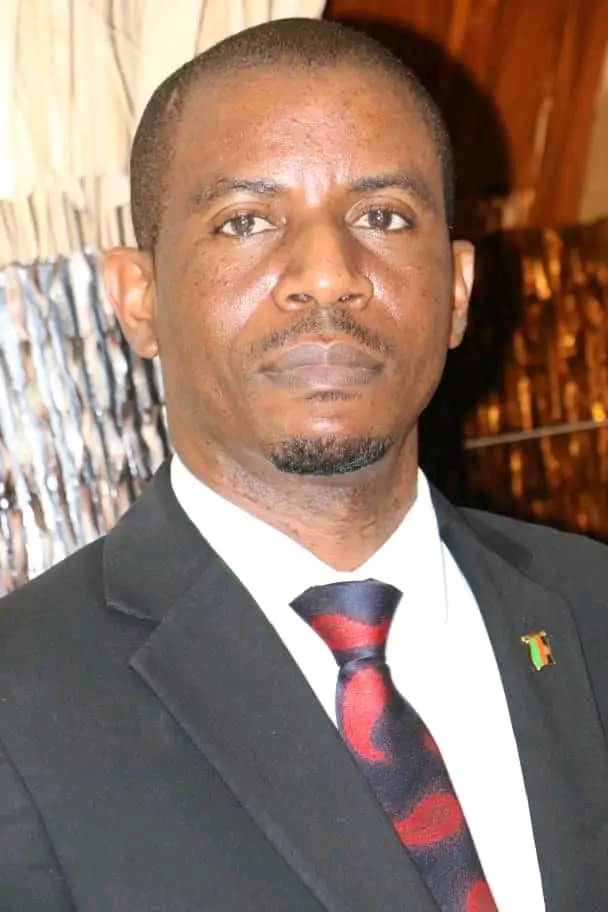
LILONGWE-(MaraviPost)-Civil society leader Benedicto Kondowe has dismissed as fake the circulating WhatsApp screenshots alleging that he received MK80 million from the Malawi Congress Party (MCP) to discredit President Professor Arthur Peter Mutharika and his administration.
The allegations, which spread widely on social media on Wednesday morning under the banner “#Exposed! Truth Finally Out!”, claim that Kondowe, who chairs the National Advocacy Platform (NAP) and the Civil Society Education Initiative Forum (CSEIF), had been secretly working with MCP strategists to undermine the DPP-led government.
According to the viral posts, the funds were allegedly delivered through Information Minister Moses Kunkuyu, with Kondowe accused of planning to “hit the Mutharika administration hard” by writing negative reports to the United Nations.
In his response, Kondowe described the screenshots as “malicious fabrications meant to damage my reputation and mislead the public.”
He clarified that the posts circulating online were doctored and that he has never received any money from the ruling party.
He further clarified that the UN briefing mentioned in the posts did occur, but in October, and that it was not related to President Mutharika’s leadership or linked to politician Kamlepo Kalua, as alleged in the circulating messages.
“The combination of two unrelated issues is a clear distortion. The intention is to confuse the public and discredit genuine civil society work,” Kondowe said in a brief statement on Wednesday morning.
Kondowe, a prominent human rights advocate, added that he remains committed to defending good governance and accountability without partisan influence.
Meanwhile, the MCP has not officially commented on the alleged MK80 million payment, while government spokespersons have described the matter as “a test of integrity for civil society leadership.”
Share this:
Like this:
LikeLoading…
Discover more from The Maravi Post
Subscribe to get the latest posts sent to your email.
The fossil fuel industry has polluted our art, and now it’s polluting our information. So, we clearly say: stop the lies. —Brazilian political scientist Rayana Burgos
Climate misinformation experts Rayana Burgos (right) and Pierre Cannet (left) at COP30. Credit: Tanka Dhakal/IPS
BELÉM, Brazil, Nov 12 2025 (IPS) – Concerned scientists at the UN climate conference in Belém are appealing for collective action to combat climate change-related misinformation and disinformation.
The Union of Concerned Scientists (UCS) sounded the alarm over the widespread dissemination of climate disinformation across multiple fronts, including social media and traditional media platforms, warning that it impacts public health, undermines democracy, and weakens the effectiveness of climate policies.
“Disinformation is everywhere. It’s sophisticated. It’s evolving rapidly,” said J. Timmons Roberts, Professor of Environmental Studies and Sociology at Brown University. “Structural power deploys disinformation to preserve the status quo. The fossil fuel industry spends about 10 times as much as the environmental and renewable energy sectors combined.”
Experts at the Union of Concerned Scientists (UCS) climate information integrity press conference at COP30. Credit: Tanka Dhakal/IPS
Roberts, the Executive Director of the Climate Social Science Network, emphasized the need to understand the tactics, key actors, and the flow of power, money, and information to tackle climate disinformation.
“There’s a series of tactics that offer effective solutions to this disinformation—for example, appealing to conservative identities, to the identities of the people you’re speaking to, and using debunking and pre-bunking strategies,” he said. “You have to have the right messengers.”
In an open letter, a global coalition of scientists, civil society groups, Indigenous Peoples, and faith leaders called on policymakers to take immediate action to combat climate misinformation and uphold information integrity. They emphasized that both the UN and the World Economic Forum have identified climate change and disinformation as among the greatest threats to humanity.
“Governments need to see this [climate disinformation] as a kind of public safety issue,” said Ben Backwell, CEO of the Global Wind Energy Council. “This is not freedom of speech. This is the control of libraries and communications by very confident people.”
He stressed the importance of democratizing media and increasing independent journalism to counter a media ecosystem dominated by a wealthy few.
At a press conference on Tuesday—designated as the official thematic day on information integrity—experts warned that climate misinformation causes real-time harm and that major platforms, including Meta, X, and TikTok, are actively spreading misinformation, disinformation, or false information.
“Disinformation and misinformation are their business model,” said Pierre Cannet, Global Head of Public Affairs and Policy at ClientEarth. “This is why we are calling on countries to join this effort for information integrity—not just at the conference, but also back home—and to enforce laws that address misinformation and disinformation.”
Experts emphasized that collaboration across all levels of society is essential to overcoming coordinated misinformation campaigns, which are often driven by profit motives, particularly from the fossil fuel industry.
Rayana Burgos, a Brazilian political scientist at the Network of Terreiro Communities for the Environment, stated that without truth, there can be no climate justice or final action.
“The fossil fuel industry has polluted our art, and now it’s polluting our information. So, we clearly say: stop the lies, stop the delay,” she added. “We need to act together. Access to information is a human right.”
This feature is published with the support of Open Society Foundations.
A new report, ‘Indigenous Territories and Local Communities on the Frontlines,’ calls for secure land rights, free and informed consent, direct financing to communities, protection of life, and recognition of traditional knowledge.
Brazil’s Minister of Indigenous Peoples, Sonia Guajajara, attends a meeting during the UN Climate Change Conference COP 30. Credit: Hermes Caruzo/COP30
SRINAGAR, India & BELÉM, Brazil, Nov 8 2025 (IPS) – A report by the Global Alliance of Territorial Communities (GATC) and Earth Insight paints a stark picture of how extractive industries, deforestation, and climate change are converging to endanger the world’s last intact tropical forests and the Indigenous Peoples who protect them.
The report, ‘Indigenous Territories and Local Communities on the Frontlines,’ combines geospatial analysis and community data to show that nearly one billion hectares of forests are under Indigenous stewardship, yet face growing industrial threats that could upend global climate and biodiversity goals.
Despite representing less than five percent of the world’s population, Indigenous Peoples and local communities (IPs and LCs) safeguard more than half of all remaining intact forests and 43 percent of global biodiversity hotspots.
These territories store vast amounts of carbon, regulate ecosystems, and preserve cultures and languages that have sustained humanity’s relationship with nature for millennia. But the report warns that governments and corporations are undermining this stewardship through unrestrained extraction of resources in the name of economic growth or even “green transition.”
One of the main report authors, Florencia Librizzi, who is also a Deputy Director at Earth Insight, told IPS that the perspectives and stories from each region are grounded in the lived realities of Indigenous Peoples and local communities and come directly from the organizations from each of the regions that the report focuses on in Mesoamerica, Amazonia, the Congo Basin, and Indonesia.
Across four critical regions—the Amazon, Congo Basin, Indonesia, and Mesoamerica—extractive industries overlap with millions of hectares of ancestral land. In the Amazon, oil and gas blocks cover 31 million hectares of Indigenous territories, while mining concessions sprawl across another 9.8 million.
In the Congo Basin, 38 percent of community forests are under oil and gas threat, endangering peatlands that store immense quantities of carbon. Indonesia’s Indigenous territories face 18 percent overlap with timber concessions, while in Mesoamerica, 19 million hectares—17 percent of Indigenous land—are claimed for mining, alongside rampant narcotrafficking and colonization.
These intrusions have turned Indigenous territories into sacrifice zones. From nickel extraction in Indonesia to oil drilling in Ecuador and illegal logging in the Democratic Republic of Congo, corporate incursions threaten lives, livelihoods, and ecosystems. Between 2012 and 2024, 1,692 environmental defenders were killed or disappeared across GATC countries, with 208 deaths linked to extractive industries and 131 to logging. The report calls this violence “the paradox of protection”—the act of defending nature now puts those defenders at deadly risk.
Yet the report also documents extraordinary resilience. In Guatemala’s Maya Biosphere Reserve, Indigenous forest communities have achieved near-zero deforestation—only 1.5 percent forest loss between 2014 and 2024, compared to 11 percent in adjacent areas. In Colombia, Indigenous Territorial Entities maintain over 99 percent of their forests intact.
The O’Hongana Manyawa of Indonesia continue to defend their lands against nickel mining, while the Guna people of Panama manage autonomous governance systems that integrate culture, tourism, and ecology.
In the Congo, the 2022 “Pygmy Law” has begun recognizing community rights to forest governance, a historic step toward justice.
The report’s findings were released ahead of the 30th UN Climate Conference (COP30), emphasizing the urgency of aligning international climate and biodiversity frameworks with Indigenous rights.
The 2025 Brazzaville Declaration, adopted at the First Global Congress of Indigenous Peoples and Local Communities from the Forest Basins, provides a roadmap for such alignment.
Signed by leaders from 24 countries representing 35 million people, it calls for five key commitments: secure land rights, free and informed consent, direct financing to communities, protection of life, and recognition of traditional knowledge.
These “Five Demands” are the cornerstone of what the GATC calls a shift “from extraction to regeneration.”
They demand an end to the violence and criminalization of Indigenous leaders and insist that global climate finance reach local hands.
The report notes that, despite the 2021 COP26 pledge of 1.7 billion dollars for forest protection, only 7.6 percent of that money reached Indigenous communities directly.
“Without financing that strengthens territorial governance, all global commitments will remain symbolic,” said the GATC in a joint statement.
Reacting to the announcement of the The Tropical Forest Forever Facility (TFFF) announced on the first day of the COP Leaders’ Summit and touted as a “new and innovative financing mechanism” that would see forest countries paid every single year in perpetuity for keeping forests standing, Juan Carlos Jintiach, Executive Secretary of the Global Alliance of Territorial Communities (GATC) said, “Even if the TFFF does not reach all its fundraising goals, the message it conveys is already powerful: climate and forest finance cannot happen without us Indigenous Peoples and local leadership at its core.
“This COP offers a crucial opportunity to amplify that message, especially as it takes place in the heart of the Amazon. We hope the focus remains on the communities who live there, those of us who have protected the forests for generations. What we need most from this COP is political will to guarantee our rights, to be recognized as partners rather than beneficiaries, to ensure transparency and justice in climate finance, and to channel resources directly to those defending the land, despite growing risks and violence.”
Deforestation in Acre State, Brazil. Credit: Victor Moriyama / Climate Visuals
Jintiach, who is also the report’s author, told IPS the Global Alliance has proposed establishing clear mechanisms to ensure that climate finance reaches Indigenous Peoples’ and local communities’ initiatives directly, not through layers of external actors.
“That’s why we have established our Shandia Platform, a global Indigenous-led mechanism designed to channel direct, predictable, and effective climate finance to our territories. Through the Shandia Funds Network, we ensure that funding is managed according to our priorities, governance systems, and traditional knowledge. The platform also includes a transparent system to track and monitor funding flows, with a specific indicator for direct finance to Indigenous Peoples and local communities,” he said.
The report also warns that global conservation goals such as the “30×30” biodiversity target—protecting 30 percent of Earth’s land and sea by 2030—cannot succeed without Indigenous participation. Policies under the Kunming-Montreal Global Biodiversity Framework and the Paris Agreement must, it says, embed Indigenous governance and knowledge at their core. Otherwise, climate strategies risk reinforcing historical injustices by excluding those who have sustained these ecosystems for centuries.
Jintiach said that based on his experience at GATC, Indigenous Peoples’ and local communities’-led conservation models are not only vital but also deeply effective.
“In our territories, it is our peoples and communities who are conserving both nature and culture, protecting the forests, waters, and biodiversity that sustain all of us,” he said.
He added, “Multiple studies confirm what we already know from experience: Indigenous and local community lands have lower rates of deforestation and higher biodiversity than those managed under state or private models. Our success is rooted in ancestral knowledge, collective governance, and a deep spiritual connection to the land, principles that ensure true, lasting conservation.”
According to Jintiach, the GATC 5 demands and the Brazzaville Declaration are critical global reference points and we are encouraged by the level of interest and engagement displayed by political leaders in the lead-up to COP 30.
Map highlighting extractive threats faced by Indigenous Peoples and Local Communities across the Amazon basin. Credit: GATC
“We are hopeful that these principles will be uplifted and championed at COP 30, the UN Permanent Forum on Indigenous Issues, CBD COP 17 and on the long road ahead,” he said.
When asked about the rising violence against environmental defenders, Jintiach said that the Brazzaville Declaration calls for a global convention to protect Environmental Human Rights Defenders, including Indigenous Peoples and local community leaders.
According to him, the governments must urgently tackle the corruption and impunity fueling threats and violence while supporting collective protection and preventing rollback of rights.
“This also means upholding and strengthening the Escazú Agreement and UNDRIP, and ensuring long-term protection through Indigenous Peoples and local communities-led governance, secure land tenure, and accountability for human rights violations.”
Earth Insight’s Executive Director Tyson Miller described the collaboration as a call to action rather than another policy document. “Without urgent recognition of territorial rights, respect for consent, and protection of ecosystems, global climate and biodiversity goals cannot be achieved,” he said. “This report is both a warning and an invitation—to act with courage and stand in solidarity.”
The case studies highlight how Indigenous governance models already offer proven solutions to the climate crisis. In the Brazilian Amazon, Indigenous organizations have proposed a self-determined Nationally Determined Contribution (NDC) to reduce emissions through territorial protection. Their slogan, “Demarcation is Mitigation,” underlines how securing Indigenous land rights directly supports the Paris Agreement’s goals. Similarly, in Central Africa, communities have pioneered decolonized conservation approaches that integrate Indigenous leadership into national park management, reversing exclusionary models imposed since colonial times.
In Mesoamerica, the Muskitia region—known as “Little Amazon”—illustrates both crisis and hope. It faces deforestation from drug trafficking and illegal logging, yet community-based reforestation and forest monitoring are restoring ecosystems and livelihoods. Women and youth play leading roles in governance, showing how inclusive leadership strengthens resilience.
The report’s conclusion is unequivocal: where Indigenous rights are recognized, ecosystems thrive; where they are ignored, destruction follows. It argues that the fight for land is inseparable from the fight against climate change. Indigenous territories are not just sources of raw materials; they are “living systems of governance, culture, and biodiversity” essential to humanity’s survival.
The Brazzaville Declaration urges governments to ratify international human rights conventions, end deforestation by 2030, and integrate Indigenous territories into national biodiversity and climate plans. It also calls for a global convention to protect environmental human rights defenders, whose safety is central to planetary stability.
For GATC’s leaders, the message is deeply personal. “Our traditional knowledge is the language of Mother Earth,” said Joseph Itongwa, GATC Co-Chair from the Congo Basin. “We cannot protect the planet if our territories, our identity, and our livelihoods remain under threat.”
This feature is published with the support of Open Society Foundations.
LILONGWE-(MaraviPost)-The Centre for Democracy and Economic Development Initiatives (CDEDI) has renewed its call for a comprehensive review of all mining-related agreements and licences linked to Portland Cement Malawi Limited, citing alleged injustices, irregularities and possible corruption in the company’s operations at Chinkhumbe Hill in Balaka District.
Addressing the news conference on Thursday, November 6, 2025 in the capital Lilongwe Executive CDEDI Executive Director Sylvester Namiwa applauded President Peter Mutharika for the decision to ban the export of raw minerals, but stressed that the move should be followed by a review of all Minerals Development Agreements (MDAs) signed under previous administrations.
According to CDEDI, many of these agreements were questionable and not aligned with the best interests of Malawians.
The organisation claims the former administration was known for entering deals with “conmen and dubious investors,” resulting in communities suffering serious injustices.
The Chinese owned Portland Cement Malawi Limited, which bought shares in LaFarge Cement Company, is currently mining limestone at Chinkhumbe Hill in Senior Chief Nsamala’s area.
CDEDI says it began investigating the company after receiving complaints of unfair compensation, intimidation and lack of transparency from affected villagers.
A stakeholders’ meeting held on January 21, 2025 revealed that land compensation was not only meagre but had also been unlawfully reduced by 30 percent, allegedly due to the Ministry of Lands using Blantyre valuation rates instead of Balaka’s.
Balaka District Commissioner Tamanya Harawa later apologised for the misconduct.
Following demonstrations, Portland refunded the deducted 30 percent and added a 10 percent increase for the second phase.
CDEDI, however, noted that the Ministry of Lands, the Malawi Local Government Association and the Mining and Minerals Regulatory Authority initially defended the unfair compensation.
CDEDI further claims to have uncovered fraudulent compensation payments, including MK16 million allegedly paid to individuals who were not affected by the project, facilitated by Group Village Head Mchenga, who was later arrested by citizens for his role in the scheme.
Meanwhile, Village Head Ng’onga is said to have reported receiving death threats linked to the compensation controversy.
The organisation expressed concern that senior officials at Balaka District Council and some bureaucrats at Capital Hill appeared to shield Portland from accountability, prompting CDEDI to use the Access to Information (ATI) Act to demand documents.
Requests submitted to the Mining and Minerals Regulatory Authority on January 23, 2025 remain unanswered 10 months later.
CDEDI further alleges that Portland Cement is operating without conducting a mandatory Environmental and Social Impact Assessment (ESIA) as required under the Environmental Management Act of 2017.
Balaka District Council reportedly approved the company’s project after Portland submitted an outdated Environmental Impact Assessment report belonging to LaFarge and conducted in 2011. No committee member objected to the anomaly.
The organisation has since urged the newly-appointed Minister of Natural Resources, Energy and Mining, Jean Mathanga, to urgently visit the affected villages and ensure justice is served.
Share this:
Like this:
LikeLoading…
Discover more from The Maravi Post
Subscribe to get the latest posts sent to your email.
Titan II ICBM – decommissioned nuclear missile – at the Titan Missile Museum, Green Valley, Sahuarita, Arizona. Credit: Stephen Cobb/Unsplash
UNITED NATIONS, Nov 6 2025 (IPS) – In recent days, nuclear state leaders have flouted the regulations and norms around nuclear non-proliferation and are flirting more openly with nuclear might in the name of projecting strength.
In the last week, the United States and the Russian Federation have made public shows of their nuclear messaging. On the 27th of October, President Vladimir Putin revealed a new nuclear-powered missile capable of staying airborne far longer than conventional missiles and even evading missile defense systems. Some experts have suggested that this is meant to reinforce Russia’s nuclear might, which Putin has leaned on since the start of the Ukraine invasion in February 2022.
More recently, on 29 October, President Donald Trump announced via social media that he wanted to resume nuclear testing for the first time in thirty years. In his post he wrote, “Because of other countries testing programs, I have instructed the Department of War to start testing our Nuclear Weapons on an equal basis.”
As he made this announcement just before his meeting with President Xi Jinping, some experts have considered that China’s expanding nuclear arsenal has prompted some calls in Washington D.C. to quickly modernize the U.S.’s own nuclear forces. Nuclear testing by major powers like China, Russia or the U.S. has not been conducted in decades. Yet analyses have warned that such an act would only further complicate relations between this triad.
All these developments should not come as a surprise. Even as countries have been aware of the dangers of nuclear weapons since 1945, this has not completely stopped them from expanding their forces. As of June 2025, there are over 12,400 nuclear warheads in the world in only a small percentage of countries. The U.S. and Russia account for 90 percent of those warheads, both possessing more than 5,000 nuclear warheads. According to the Stockholm International Peace Research Institute (SIPRI), nearly all nine of the nuclear states moved to modernize their existing nuclear arsenals and acquire new missiles in 2024.
Increasing geopolitical tensions have increased feelings of uncertainty and instability, which seems to have led countries to prioritize national security. The nuclear-armed states have made moves to expand the capabilities of their arsenals. SIPRI estimates that China now owns 600 nuclear warheads. Both the United Kingdom and France have ongoing programs to develop strategic weapons, including missiles and submarines. North Korea continues to expand its military nuclear program, accelerating the production of fissile material to make more nuclear warheads.
Concerns about nuclear testing have been reflected in headlines. Credit: IPS
The threat of nuclear weapons seemed to loom over major events this year, even as their efficacy as a deterrent was thrown into question. As India and Pakistan engaged in aerial battles and strategic strikes in May, the conflict demonstrated to the world how close two nuclear powers could come to war.
Meanwhile, in the context of the ongoing war in Ukraine and the perceived threat from Russia, European nations, including France and the U.K., are moving to prioritize investments in defense, including deterrence. Germany, Denmark and Lithuania are among some of the countries that have also expressed interest in hosting nuclear weapons for the nuclear states.
William Potter, Director of the James Martin Center for Nonproliferation Studies, expressed concern over the dangers posed by nuclear weapons due to miscalculations and misperceptions at a time when “there is a total lack of trust, respect, and empathy among the nuclear weapons possessors.”
“The more nuclear weapons, the greater the risk of their inadvertent use, but even more dangerous is the absence of a political climate in which serious arms control and disarmament measures can be pursued,” Potter told IPS.
The safeguards for nuclear arms control are also being challenged. The NEW-Start treaty, the last remaining arms control treaty between the U.S. and Russia, is set to expire in February 2026, though both countries have consideredvoluntarily maintaining the limits on deployed strategic nuclear weapons for one year. Yet in this past week, that promise has been undercut by both parties.
At the same time, there are the continuous calls for nonproliferation and disarmament. Advocates from all over have raised awareness on the impacts of radiation on communities, on public safety and on the environment. The United Nations has platformed and rallied these advocates and has raised the alarm for disarmament since its official beginning on 24 October, 1945.
Amidst this, there is the fear of a new nuclear arms race. During the high-level meeting on the elimination of nuclear weapons in September this year, the UN’s Chef de Cabinet Courtenay Rattray, who delivered remarks on behalf of Secretary-General António Guterres, said that the world was “sleepwalking” into this new arms race, now defined by new technologies and new domains for conflict such as cyberspace. Rattney warned that “the risks of escalation and miscalculation are multiplying.”
So if the nuclear states are modernizing their arsenals, how do modern technologies fit in? Artificial intelligence (AI) is the latest frontier that countries are navigating and investing significant resources in to achieve progress. Given that, national and global regulations on the safe governance of AI are still nascent as countries still work to agree on universal agreements for the frameworks for the ethical applications of AI.
As it becomes increasingly sophisticated and more accessible, member states have been investing resources into incorporating AI in the military domain. Given that it does not fit neatly into pre-existing deterrence frameworks, this has also raised concerns over AI’s possible “destabilizing effects,” according to Wilfred Wan, Director of the SIPRI Weapons of Mass Destruction Programme.
It has prompted stakeholders to engage in serious negotiations on AI governance in the military domain, including guardrails to reduce the risk of escalation, Wan told IPS. At the multilateral level, he cites the example of the Blueprint for Action that came out of the second summit on Responsible AI in the Military Domain (REAIM) in 2024. It is a non-binding agreement among 61 countries, including nuclear powers like the U.S., the U.K., France and Pakistan, that provides a framework for the responsibility that parties need to take in integrating AI, and recognizing gaps that policymakers must take into account. There is also the UN General Assembly Resolution 79/239 on “[AI] in the military domain and its implications for international peace and security.”
“This is certainly not a substitute for disarmament progress, but in the current strategic context, it can help rebuild some of the trust and confidence necessary for revitalizing those efforts,” Wan said.
Researchers from SIPRI have found there are no governance frameworks specifically for the nuclear-AI nexus compared to those for conventional military systems. “In the nuclear context, discussions have largely centered on retaining human control in nuclear decision-making. This is an essential principle but does not address other ways in which AI integration can affect the environment in which nuclear decisions are made, directly or indirectly,” Wan explained.
“Absent a framework that addresses these aspects, including through regulatory and technical measures, there remains the risk of accelerated integration of AI among nuclear-armed states in a manner that destabilizes the security environment, threatens strategic stability, and impacts the risk of nuclear use.”
When assessing the existing approaches to the governance of military AI, it shows common areas of concern, such as raising awareness through multi-stakeholder engagement and preserving the capacity for human intervention, along with applying safety and security measures to mitigate escalation risks.
At this time, nuclear disarmament and nonproliferation are critical and may even provide insight into negotiating the governance of AI in nuclear forces. The approaches to fostering multi-stakeholder dialogue that include policymakers, non-nuclear states, experts and the private sector could similarly apply to discussions around AI in nuclear forces. Though it should be noted that their limited knowledge of nuclear force structures may constrain meaningful contributions to the debate. Nevertheless, their participation must be facilitated if nuclear parties truly value human control in this factor.
Nuclear and non-nuclear states must recommit to the anti-nuclear agreements, including the Nuclear Non-Proliferation Treaty, the Treaty for the Prohibition of Nuclear Weapons, and the Comprehensive Nuclear Test Ban Treaty. Potter stressed the importance of disarmament and nonproliferation education, particularly to empower future generations to “pursue creative ways to reduce pressing nuclear dangers.”
The UN can employ its influence in advancing disarmament efforts through dialogue and awareness efforts from the General Assembly and the Office of Disarmament Affairs (UN-ODA). The UN has also confirmed it will convene an independent scientific panel to assess the effects of nuclear warfare and an Expert Group on Nuclear-Free War Zones.
“Nuclear disarmament is more important today than ever before, but it is not simply a question of securing lower numbers of nuclear weapons,” Potter said. “At a time when the “nuclear taboo” has been eroded and discussions about the use of nuclear weapons have been normalized, it is vital that policymakers act boldly in a fashion commensurate with the threat.”
IPS UN Bureau Report
Note: This article is brought to you by IPS Noram in collaboration with INPS Japan and Soka Gakkai International in consultative status with ECOSOC.
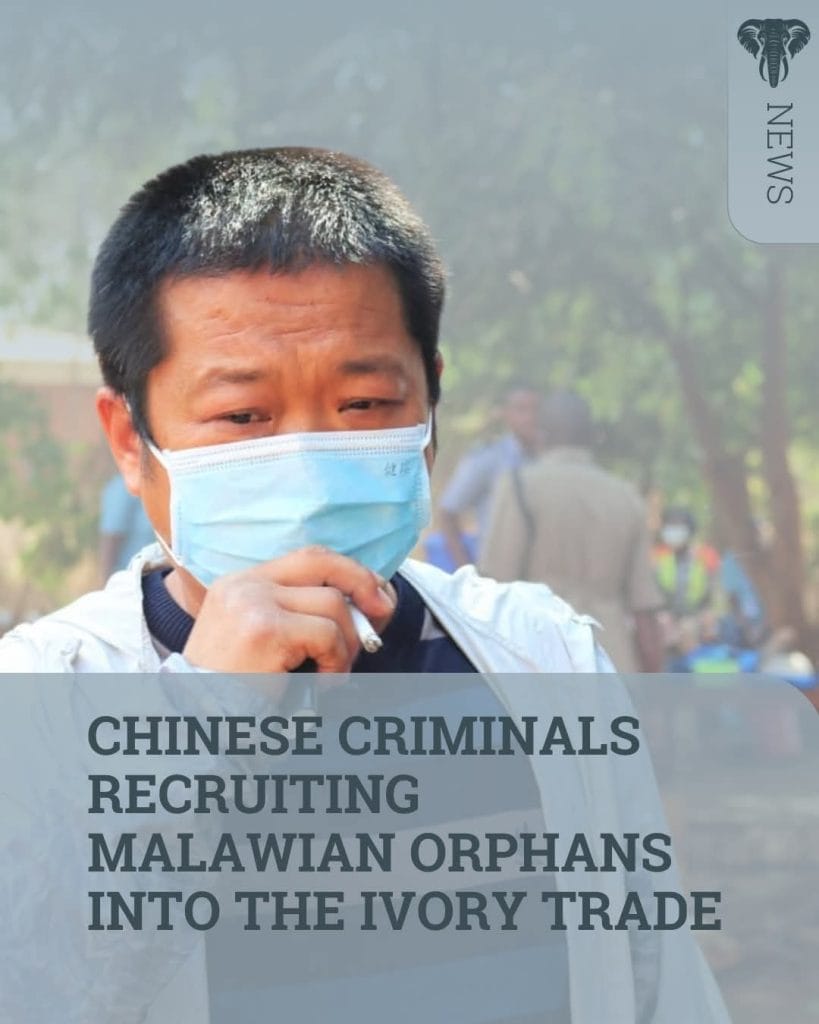
BLANTYRE-(MaraviPost)-An explosive investigation by The Economist has uncovered a disturbing web of wildlife trafficking allegedly orchestrated through the Taiwanese Buddhist-managed Amitofo Care Centre (ACC) in Blantyre, Malawi — a facility established to care for orphans and vulnerable children.
Instead, evidence suggests that some of these orphans have been systematically groomed and exploited by a network of Chinese wildlife criminals posing as business investors.
The revelations point to deep-seated corruption, institutional negligence, and a dangerous exploitation of Malawi’s most vulnerable youth.
Inside Amitofo Orphanage centre
From Orphanage to Wildlife Mule: Francis’s Story
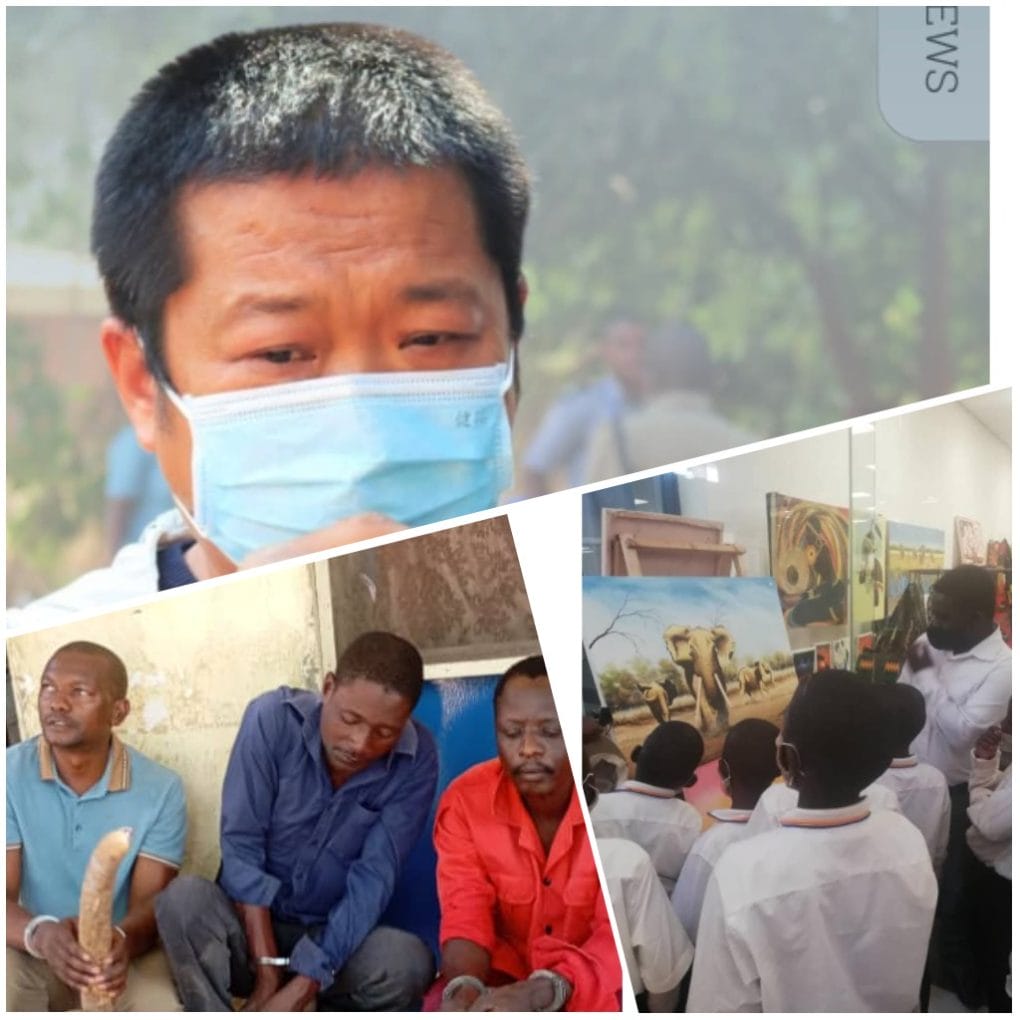
At the heart of The Economist investigation, titled “The School for Wildlife Traffickers”, lies the chilling account of a 19-year-old boy, identified as Francis, who says he was coerced by Amitofo’s Human Resources Manager, Branson Njunga, into participating in illegal ivory transactions.
Njunga — recently arrested in Chikwawa for possession of ivory and currently facing charges — allegedly acted as a conduit between Amitofo’s vulnerable youth and Chinese wildlife traffickers.
“He had heard about former students at Amitofo who had been recruited into the illegal wildlife trade,” writes journalist Rachel Nuwer. “He had also seen news stories about people caught with ivory serving years in prison.”
Fearing for his future, Francis abandoned his education and left the centre — a decision that may have saved his freedom.
Inside the Illicit Network: Njunga, Lin, and the Chinese Connection
Undercover investigators quoted in The Economist report reveal that Njunga openly admitted to working with Chinese associates in Lilongwe, sourcing ivory for them.
Njunga arrested in sky blue from from left
He even offered to supply 20 kilograms of ivory to an undercover journalist.
“It’s risky business, but where there is money, people take risks,” Njunga allegedly told the investigator.
His recent arrest alongside two others in possession of ivory only reinforces the allegations.
They are now facing charges for possessing specimens of protected species — an offence carrying severe custodial penalties under Malawi’s wildlife protection laws.
But Njunga’s role appears to be just one part of a much larger, well-coordinated network.
The Shadow of Yunhua Lin: Pardoned Kingpin Still Pulling Strings
The Economist investigation also revisits the case of Yunhua Lin, an international wildlife trafficker once convicted in Malawi.
Despite his 14-year sentence, Lin was controversially pardoned by President Lazarus Chakwera in July this year — while one of his Malawian “runners,” Aaron Dyson, remains behind bars serving a 15-year sentence for crimes he was reportedly coerced into committing.
Lin, who is now facing separate corruption charges, has been repeatedly denied bail by the courts, with judges citing him as a flight risk.
Yet, despite multiple failed applications, Lin has again filed for bail — raising questions about whether the judicial system is being manipulated to his advantage.
Human rights observers say Lin’s influence continues to extend deep into Malawi’s institutions.
Lin, Wildlife crime convict
“It is shocking how Chinese traffickers manipulate vulnerable Malawians — including orphans — into committing crimes on their behalf, only for the locals to rot in jail while the real masterminds use their illicit wealth to escape justice,” said a human rights and legal expert from Chancellor College, who spoke on condition of anonymity.
The investigation reveals that Lin maintained ties with the Lilongwe branch of Amitofo Care Centre, even purchasing part of land near the facility to reportedly store illegal wildlife products.
Former Amitofo student Aaron Dyson, once celebrated as a “model orphan” and Mandarin prodigy, was recruited into Lin’s network after returning from language training in Taiwan.
Dyson’s story underscores the tragic transformation from hopeful student to victim of transnational crime.
He allegedly handled ivory and rhino horn runs across Namibia, Botswana, Tanzania, Kenya, and Zimbabwe — operations believed to have been financed and directed by Lin.
Equally concerning is the state’s response.
Despite repeated arrests and court findings, Lin continues to exploit legal loopholes and influence networks to maintain his freedom.
His July presidential pardon remains one of the most controversial acts of executive clemency in recent memory.
Call for Urgent Government Action.
“The revelations demand immediate scrutiny from Malawi’s Ministry of Gender, Ministry of Homeland Security, Department of National Parks and Wildlife, and the Anti-Corruption Bureau,” calls Lilongwe based environmental activist asked for annonymity.
He stressed on the need for authorities to protect and rehabilitate victims of the trafficking network; Investigate the conditions surrounding Lin’s presidential pardon; and Strengthen oversight over foreign religious and charitable institutions operating in Malawi.
“Anything less would be a betrayal of the very children and communities the state is meant to protect.” he earned.
“If these findings are left unchecked, Malawi risks becoming a regional hub for wildlife trafficking — fuelled by poverty, foreign manipulation, and institutional indifference.
“It is now up to the authorities to act — not with statements, but with prose,” said a Chancellor college legal and human rights expert also opted for anonymity.
The Ministry of Gender and Ministry of Justice are yet to comment on the unfolding developments .
Share this:
Like this:
LikeLoading…
Discover more from The Maravi Post
Subscribe to get the latest posts sent to your email.