LILONGWE-(MaraviPost) –The Malawi Police Service (MPS) has confirmed the arrest and court appearance of six suspects linked to the violent attack on activist Sylvester Namiwa and the panga wielding assaults on civil servants earlier this year.
The six suspected Malawi Congress Party (MCP) regime thugs appeared before the Principal Resident Magistrate’s Court in Lilongwe on October 27, 2025, facing multiple charges including grievous harm, malicious damage, theft and robbery, according to a statement signed by Deputy Public Relations Officer Superintendent Alfred Chimthere.
“The six suspects have been arrested and appeared before court to answer various criminal charges related to the Namiwa incident and the hacking of civil servants by panga wielding thugs,” said Superintendent Chimthere.
The accused have been identified as Alfred Daila Kadula aged 43 of Batulen Village, T/A Chiseka in Lilongwe, Joseph Tilibe Gidien 50 years old of Sadya Village, T/A Mbwatalika in Lilongwe,Larneck Mandowa aged 42 of Yoyola Village, T/A Kapeni in Blantyre, Lester Hanleck Aaron Kanjunga 38 years old of Zidana Village, T/A Kwataine in Ntcheu, Howard Hamuza aged 27 of Dothi Village, T/A Mbwatalika in Lilongwe and Mavuto Njuchi 27 years of Ngozi Village, T/A Neno in Neno District.
The police stated that the suspects are connected to different incidents some involving the Salima robbery, while others relate to the Mbowe and Namiwa attacks. All six suspects have been remanded and are expected to reappear in court as the hearings continue.
Superintendent Chimthere reaffirmed the MPS’s commitment to justice and accountability.
“The Malawi Police Service remains committed to upholding the rule of law and ensuring that all criminal activities are thoroughly investigated and prosecuted,” he emphasized.
He further urged the public to remain calm and allow the legal process to take its course.
The attack on Namiwa, a well-known governance activist, sparked widespread public outrage and renewed calls for government action against politically motivated violence.
Police investigations are ongoing to uncover the full extent of the crimes and determine whether other individuals were involved in the coordinated attacks.
Share this:
Like this:
LikeLoading…
Discover more from The Maravi Post
Subscribe to get the latest posts sent to your email.
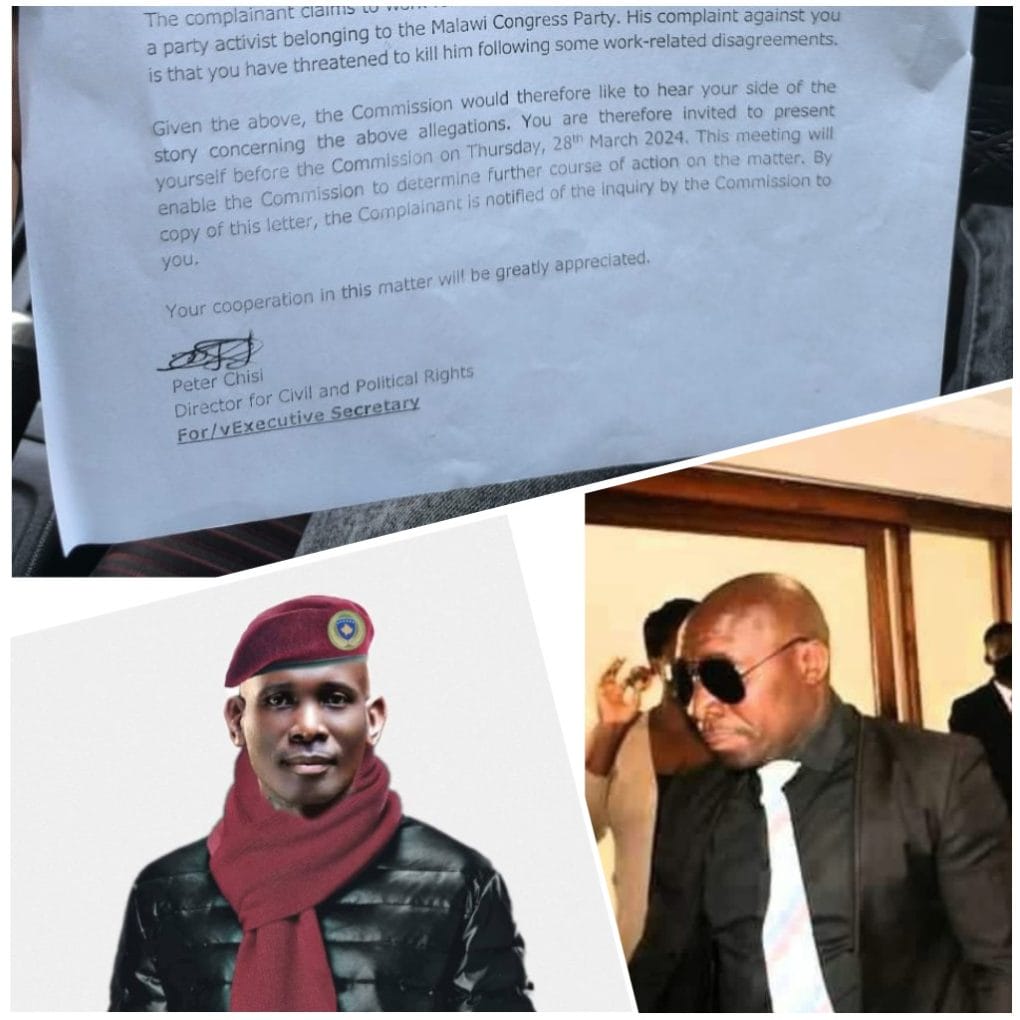
LILONGWE-(MaraviPost)-The suspected Malawi Congress Party (MCP) thug Dala Kadula is reportedly snubbed Malawi Human Rights Commission (MHRC) summons after the Commission received a life threening assault’ complaint from human rights activist Chimwemwe Mhango in March this year.
According to MHRC letter in our possession dated March 21, 2024, Kadula snubbed the commission summon till now when MCP is out of power.
The Maravi Post understands that the victim Mhango, the former Malawi Defence Force (MDF) officer was threatened with a gun after he participated concerned citizens denominations which Bon Kalindo held in Zomba last year.
Following Kadula threats to kill Mhango with a gun at a certain place in Lilongwe, the victim (Mhango) reported the matter to Kawale Police.
Despite Kawale Police issuing summons letter over the matter, Kadula also threatened the officers at that time as he was unattainable hence MHRC contact.
“The Human Rights Commissioni (hereinafter referred to as “the Commission) is in receipt of a complaint by Mr. Chimwemwe Mbeya Mhango (Ntchindi) (hereinafter referred to as the complainant) against yourself.
“The complainant claims that you and a party activist belonging to the Malawi Congress Party: His complaint against you is that you have threatened to kill himm following some work-related disagreements,” reads MHRC letter in part.
“Given the above, the Commission would theretore like to hear your side of the story concerning the above allegations. You are therefore advised to present before the Commis on Thursday 28 March 2024.
“Your cooperation in this matter will be greatly appreciated”, reads MHRC summon letter signed by its Director of Civil and Political Rights Peter Chisi.
This publication understands that Kadula also assaulted the commission messenger upon receiving the letter.
But the commission hinted that “it’s still pursuing the matter”.
When contacted on whether his complaint was sorted, Mhango says, “It’s over a year and some months after I lodged complaint to both Police and MHRC about Kadula threats to kill me.
“I’m still seeking justice from authorities on this matter as the Kadula is a threat to citizens and national security”.
Mhango adds, “Kadula was unattainable during MCP regime. No-one could bother seek support from security agencies despite assaulting others”.
This publication understanKadula is under police custody for being suspected of assaulting Democratic Progressive Party (DPP) members at Mbowe in Lilongwe.
Kadula is said to be leading panga-raiding thugs that kept on terrorising demonstrators against outside President Lazarus Chakwera and MCP leadership.
Kadula is also to have be MCP Secretary General Richard Chimwendo Banda’s errand boy.
With the arrest of Kadula while served with MHRC summon letter, it should be clear warning to youths who are usually used by political parties gurus to assault others.
With the change of leadership, Kadula is now subjected to justice on various assaults he committed under Chakwera-MCP leadership.
Share this:
Like this:
LikeLoading…
Discover more from The Maravi Post
Subscribe to get the latest posts sent to your email.
PRETORIA-(MaraviPost)-Two young cousins Tshiamo Moramaga (22) and Baleseng Moramaga (21) were found shot dead early Sunday morning, October 26, 2025, in Mamelodi East, Extension 17, Pretoria.
This publication understands that deceased bodies were discovered around 6:15 AM on Sompisi Street, both with gunshot wounds to the head.
They lived together in Mamelodi East and were known to often go out together for weekend grooves.
Shot dead
This publication also understands that on the night of the incident, they met a man who allegedly spent a large sum of money on them.
However, after the outing, the two reportedly changed their plans and did not go with him as initially agreed.
The man is believed to have followed them and later shot them near their home.
Late cousins
Neighbours reportedly heard one of the girls screaming, “Please leave me alone, you’ll make a mistake,” followed by gunshots.
Police have since launched an investigation into the matter.
Share this:
Like this:
LikeLoading…
Discover more from The Maravi Post
Subscribe to get the latest posts sent to your email.
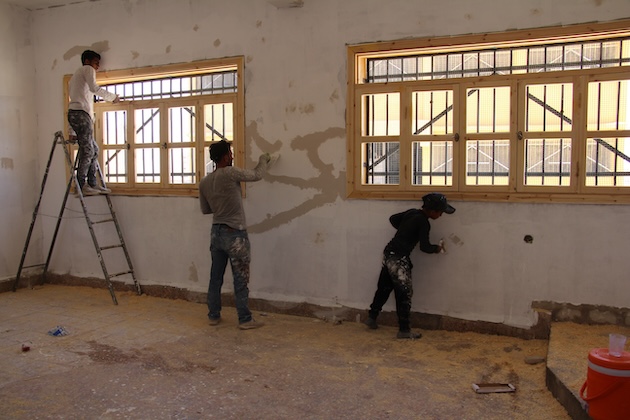
The community gets together to repair a school in the city of Saraqib, located south of Idlib, that was destroyed by bombing during the Assad regime. Credit: Sonia Al Ali/IPS
IDLIB, Syria, Oct 16 2025 (IPS) – The war has deprived thousands of Syrian children of their right to education, especially displaced children in makeshift camps. Amidst difficult economic conditions and the inability of many families to afford educational costs, the future of these children is under threat.
Adel Al-Abbas, a 13-year-old boy from Aleppo, northern Syria, was forced to quit his education after being displaced from his city and moving to a camp on the Syrian-Turkish border. He says, “I was chasing my dream like any other child, but my family’s poverty and the harsh circumstances stood in my way and destroyed all my dreams.”
Adel had hoped to become an engineer, but he left school and gave up on his goal. He replaced books and pens with work tools to help his impoverished family secure life’s necessities. He adds, “We are living in extremely difficult conditions today; we can’t even afford food. So, I have to find a job to survive and help my family, especially after my father was hit by shrapnel in the head, which caused him a permanent disability.”
Adel’s mother is saddened by her son’s situation, saying to IPS, “We need the income my son brings in after my husband got sick and became unable to provide for our family. In any case, work is better than an education that is now useless after he’s been out of school for so long and has fallen behind his peers.”
Reem Al-Diri, an 11-year-old, left school after her family was displaced from rural Damascus to the city of Idlib in northern Syria. Explaining why, she speaks with a clear sense of regret: “I loved school very much and was one of the top students in my class, but my family decided I had to stop my education to help my mom with the housework.”
The young girl confirms that she watches children on their way to school every morning, and she wishes she could go with them to complete her education and become a teacher in the future.
Reem’s mother, Umayya Al-Khalid, justifies her daughter’s absence from school, saying, “After we moved to a camp on the outskirts of Idlib, the schools became far from where we live. We also suffer from a lack of security and the widespread kidnapping of girls. So, I feared for my daughter and preferred for her to stay at home.”
Causes of school dropout
Akram Al-Hussein, a school principal in Idlib, northern Syria, speaks about the school dropout crisis in the country.
“School dropouts are one of the most serious challenges facing society. The absence of education leads to an unknown future for children and for the entire community.”
Al-Hussein emphasizes that relevant authorities and the international community must exert greater efforts to support education and ensure it does not remain a distant dream for children who face poverty and displacement.
He adds, “The reasons and motivations for children dropping out of school vary, ranging from conditions imposed by war—such as killings, displacement, and forced conscription-to child labor and poverty. Other factors include frequent displacement and the child’s inability to settle in one place during the school year, as well as a general lack of parental interest in education and their ignorance of the risks of depriving a child of schooling.”
In this context, the Syria Response Coordinators team, a specialized statistics group in Syria, noted in a statement that the number of out-of-school children in Syria has reached more than 2.5 million, with northwestern Syria alone accounting for over 318,000 out-of-school children, with more than 78,000 of them living in displacement camps. Of this group, 85 percent are engaged in various occupations, including dangerous ones.
In a report dated June 12, 2024, the team identified the key reasons behind the widening school dropout crisis.
A shortage of schools relative to the population density, a shift towards private education, difficult economic conditions, a lack of local government laws to prevent children from entering the labor market, displacement and forced migration, and a marginalized education sector with insufficient support from both local and international humanitarian organizations are seen as the causes.
The team’s report warned that if this trend continues, it will lead to the emergence of an uneducated, illiterate generation. This generation will be consumers rather than producers, and as a result, these uneducated children will become a burden on society.
Initiatives to Restore Destroyed Schools
The destruction of schools in Syria has significantly contributed to the school dropout crisis. Throughout the years of war, schools were not spared from destruction, looting, and vandalism, leaving millions of children without a place to learn or in buildings unfit for education. However, with the downfall of the Assad regime, several initiatives have been launched to restore these schools. This is seen as an urgent and immediate necessity for building a new Syria.
Samah Al-Dioub, a school principal in the northern Syrian city of Maarat al-Nu’man, says, “Syria’s schools suffered extensive damage from both the earthquake and the bombings. We have collected funds from the city’s residents and are now working on rehabilitating the school, but the need is still immense and the costs are very high, especially with residents returning to the city.” She explained that their current focus is on surveying schools and prioritizing which ones need renovation the most.
Engineer Mohammad Hannoun, director of school buildings at the Syrian Ministry of Education, states that approximately 7,400 schools across Syria were either partially or completely destroyed. They have restored 156 schools so far.
Hannoun adds, “We are working to rehabilitate schools in all Syrian regions, aiming to equip at least one school in every village or city to welcome returning students. The Ministry of Education, along with local and international organizations and civil society, are all contributing to these restoration efforts.”
Hannoun points out that the extensive damage to school buildings harms both teachers and students. It leads to a lack of basic educational resources, puts pressure on the few schools that are still functional, and causes a large number of students to drop out, which ultimately impacts the quality of the educational process.
As part of their contingency plans, Hannoun explains that the ministry, in collaboration with partner organizations, intends to activate schools with the available resources to accommodate children returning from camps and from asylum countries. This effort is particularly focused on affected areas that have experienced massive waves of displacement.
The United Nations Children’s Fund (UNICEF) said in 2025, 16.7 million people, including 7.5 million children, are in need of humanitarian support in the country, with 2.45 million children out of school, and 2 million children are at risk of malnutrition.
The phenomenon of school dropouts has become a crisis threatening Syria’s children, who have been forced by circumstances to work to earn a living for their families. Instead of being in a classroom to build their futures, children are struggling to survive in an environment left behind by conflict and displacement.
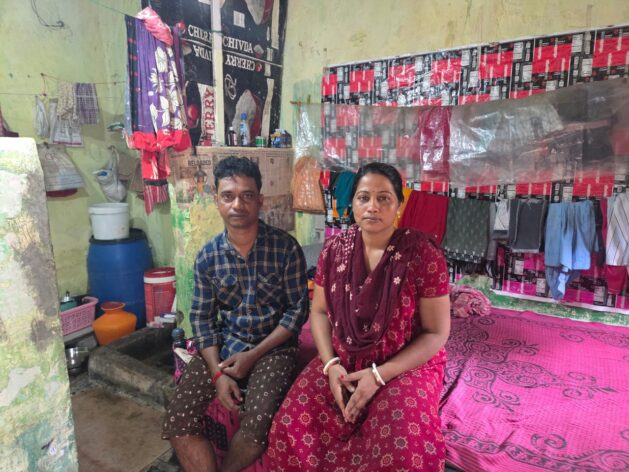
Bapi Mondal and his wife Shanti in Bangalore. Climate change has forced the couple from their traditional livelihoods in the Sundarbans. Credit: Diwash Gahatraj/IPS
BANGALORE & PAKHIRALAY, India, Oct 15 2025 (IPS) – Bapi Mondal’s morning routine in Bangalore is a world away from his ancestral village, Pakhiralay, in the Sundarbans, West Bengal. He wakes before dawn, navigates heavy traffic, and spends eight long hours molding plastic battery casings. It’s not the life his honey-gathering forefathers knew, but factors like extreme storms, rising seas, and deadly soil salinity forced the 40-year-old to abandon centuries of family tradition and travel miles away to work in a concrete suburban factory.
Bapi still remembers his traditional skills—walking through a mangrove forest to find a tree with a honeycomb, mending boats and fishing nets, and singing and acting in the traditional plays. His 19-year-old son, Subhodeep—working alongside in the factory—has lost the heritage.
Bapi’s home, the Sundarbans—the world’s largest mangrove forest—is on the frontlines of climate change, and local livelihoods are taking the hit. In this watery maze where land and sea meet, villagers who once relied on fishing, honey collection and farming are now grappling with rising tides, saltier water, and more frequent storms. For many, life is becoming a struggle to hold on to centuries-old ways.
Sea levels in the Sundarbans are rising nearly twice the global rate, flooding villages and forcing families out. Saltwater ruins rice fields and ponds, making farming and fishing harder. Mawalis, the honey gatherers, also struggle as climate change disrupts flowering and damages mangroves, reducing wild bee populations.
A fisherman in the Sundarbans. Credit: Diwash Gahatraj/IPS
The crisis doesn’t end with the water. Salinity, once held at bay by freshwater flows, is climbing year after year, disrupting both fishing and farming. Pollution, ill-managed embankments, and overexploitation of resources add to the challenge. As incomes shrink and lands disappear, thousands leave for nearby cities, hoping for work but often finding only life in urban slums.
City life is unforgiving for migrants like Mondal. He spends eight grueling hours on his feet, molding battery casings six days a week in harsh factory conditions. At the end of each day, he returns to a small one-room apartment. He shares this space with his wife Shanti and son, Subhodeep. The family struggles financially. Bapi earns ₹19,000 per month (about USD 215)—barely enough to get by. Despite the hardships, he says the work is still his choice.
“A hard choice, but a choice,” he explains.
Morning rush is hectic for the Mondal family. He points to the wall clock and asks his wife to pack lunch quickly. “All three of us work in different factories in the area,” Mondal says. “We all have to reach work by 8 am.”
Gopal Mondal and his family in the Sundarbans. Gopal still ventures into the forests to collect wild honey. Credit: Diwash Gahatraj/IPS
Shanti, Bapi’s wife, spends her days at a garment factory pressing clothes with a hot iron. She works eight-hour shifts with just one weekly break, earning ₹15,000 per month (about USD 169). Their 19-year-old son, Subhodeep, has also joined his father at the plastic factory. All three now work in Bommasandra, Bangalore’s industrial belt, pooling their wages to survive.
The migration has split their family apart.
“We have an 11-year-old daughter who lives with my in-laws in the Sundarbans,” Shanti explains. The cost of city life forced them to leave their youngest child behind. “It breaks my heart to be apart from my daughter, but we want her to have a good education and life—that’s why we sacrifice,” says Shanti. Her daughter attends school back in the village.
Her job gave her economic independence and a voice in family decisions, like building their new house. Bapi’s family, rooted in the village for centuries, were Mawalis, honey gatherers who knew the forest through knowledge passed down generations.
Still Rooted
Bapi’s father, Gopal Mondal, still ventures into the dangerous forests of Sunderbans. He risks tiger attacks and deadly cyclones to collect wild honey. But the forest that once fed families is now failing them.
Climate change has disrupted everything. Cyclones strike more often and with greater force. The natural flowering cycle has gone haywire. Fish populations in the waters have crashed.
“The honey harvest keeps shrinking and prices keep falling,” Gopal explains.
As Gopal tried to hold on to tradition, his son Bapi could no longer see a future in the same waters and forests.
“The forest no longer provides enough honey or fish,” Bapi shares. The rhythms his ancestors lived by for centuries suddenly made no sense. Faced with shrinking opportunities, Bapi tried other work back home. Besides going to the jungle for honey with his father during the season (April-May), he operated a van gaari—a battery-powered three-wheeler with a wooden platform for passengers. But even that barely paid enough to survive. “There was a time when I struggled to buy a saree for my wife,” he recalls. Migration was the only choice left.
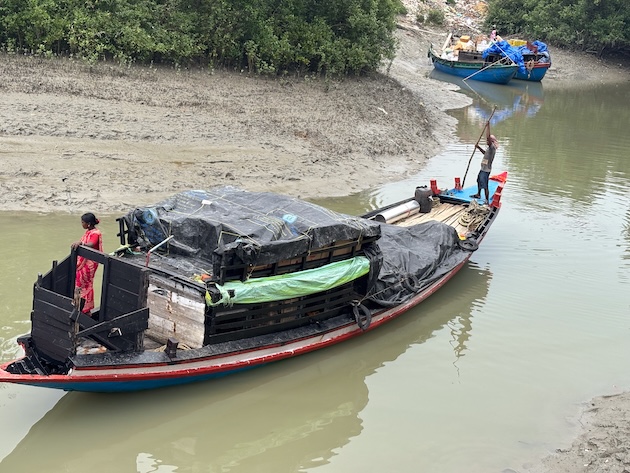
A boat ferries passengers in Sundarbans. Credit: Diwash Gahatraj/IPS
From Forests to Factories
Apart from forced migration, climate change erodes memory, identity, and ancestral knowledge. Leaving the Sundarbans has cost the family more than a homeland.
Bapi still carries traditional skills—navigating treacherous waters by boat and collecting honey deep in the forest.
“I know how to catch shrimp and crabs from the river and sea,” he says. “My father and uncles taught me these skills when I was young.”
His wife, Shanti, nods, adding that she was an expert crab and shrimp collector back in the Sundarbans. “I think I still have it in me,” she says with quiet pride.
But the chain of knowledge is breaking. “I could not pass on that wisdom to my son,” Bapi admits with regret.
Subhodeep represents this lost generation. He finished tenth grade and left his village to join his parents in Bangalore. He has not learned the skills that defined his family for generations. “I have never entered the forest to collect honey or fish back in the village,” Subhodeep explains. “My parents were against it.”
Bon bibi temple in Pakhiralay village. Along with losing traditional livelihoods, religion and cultural life are also in jeopardy. Credit: Diwash Gahatraj/IPS
The irony is stark. Bapi’s parents encouraged him to learn these ancestral skills. But when environmental collapse made these traditions dangerous and unprofitable, Bapi chose to shield his son from them.
For the Mondals, the forest has become too dangerous and unreliable.
“Going to collect honey or catch fish is very unpredictable now,” Bapi explains. Catch volumes have fallen, and tiger attacks have grown. Bapi’s family knows the risk; his grandfather was killed while gathering honey in the forest.
Years earlier, a tiger also attacked Gopal Mondal. He was luckier—he escaped alive but still carries scars on his hand.
These brutal realities shaped Bapi’s decision about his son’s future. “I don’t want my next generation to have such a risky occupation,” he says. The choice is clear. Families can either cling to dangerous traditions that no longer pay enough to survive or abandon their ancestral practices for safer work in distant cities.
Are there other reasons behind the changes in the Sundarbans?
“We can’t just blame climate change and ignore human activities making things worse,” says Professor Tuhin Ghosh of Jadavpur University’s School of Oceanographic Studies. Human activity and climate change create a deadly combination.
People cleared mangroves for farms and fish ponds and built embankments that blocked tidal flows. The result is salt contamination, poisoned soil and water, vanishing species, and a broken landscape.
Uninhabitable Home
About 4.5 million people live across the Sundarbans region in Bangladesh and India. A recent survey reveals the massive scale of climate migration: nearly 59% of households have at least one family member who has moved away for work.
Some studies report 60,000 people migrated from parts of the Sundarbans by 2018. But household surveys show much higher rates because they measure affected families, not just individuals.
These local figures reflect a much bigger crisis. Across Bangladesh, weather-related disasters displaced 7.1 million people in 2022 alone, showing how climate change drives mass movement.
On the Indian side in West Bengal, researchers document large seasonal and permanent migration flows to cities and other states. Families routinely send members to work elsewhere, though official counts are scarce.
Loss Beyond Dollars
Over the past two decades, the Sundarbans has been hit by cyclones made stronger by climate change. They uprooted thousands and caused millions in losses. But beyond disaster relief and migration, a quieter crisis unfolds: the erosion of centuries-old ecological wisdom, culture, and tradition.
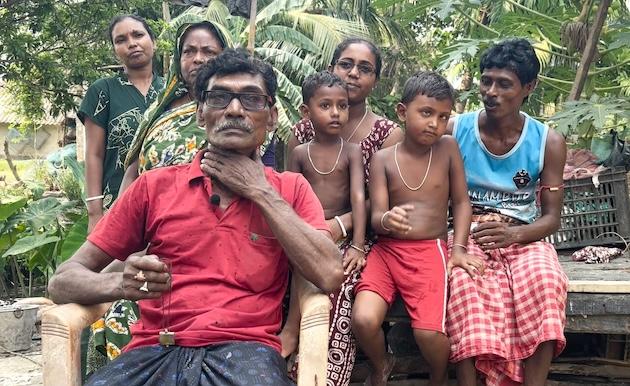
Gopal Mondal, in his early sixties, sits outside his modest home in Pakhiralay. When asked about protective equipment for his dangerous work collecting honey in the Sundarbans forest, he holds up a small amulet—a tabeej.
“This and my prayers to Bon Bibi are my protection,” says Mondal, who leads a team of honey collectors into the mangrove forests. “They shield us from storms and babu (tigers).”
The elderly collector recites mantras passed down through generations—teachings from his father or cousins, though he cannot recall exactly who taught him.
“The whole community worships Bon Bibi,” he explains simply
For Sundarbans communities like Mondal’s, Bon Bibi—the “Lady of the Forest”—is a guardian of the mangroves. For centuries, fishermen, honey collectors, and wood gatherers have sought her protection in tiger territory and cyclone-prone waters. Her worship is more than faith; it reflects the people’s bond with a dangerous yet life-sustaining environment, offering both comfort and identity where safety tools are scarce.
When asked about traditional knowledge slipping away from his family, Mondal’s weathered face shows a faint smile.
“Earlier, every fisherman’s family had someone —a son or grandson—who knew how to repair torn nets or mend boats,” he explains. “But in my family, things are slowly changing. My grandsons and sons live too far away, and their visits home are too short to learn these skills.”
The honey collector pauses, watching the distant mangroves. “The younger generation shows very little interest in our profession,” he adds quietly.
Climate migration expert M. Zakir Hossain Khan of Change Initiative, a Bangladesh-based think tank focused on solving critical global challenges, warns that climate-driven displacement from the Sundarbans is destroying centuries-old ways of life that depend entirely on deep knowledge of the forest and rivers.
Fishermen carry rare knowledge of tides, breeding cycles, and mangrove routes, passed down through years of practice. With youth leaving for city jobs, few inherit it. Honey gatherers know how to find hives, protect bees, and survive in tiger territory. As young people turn away, honey collection is fading from the Sundarbans.
A Vanishing Heritage
This generational shift reflects a broader transformation across the Sundarbans. Traditional skills that once defined coastal communities—net weaving, boat building, reading weather patterns, and forest navigation—are disappearing as young people migrate to cities primarily for employment and a few for education.
“Similarly, mangrove-based handicrafts and boat-making using leaves, bamboo, and mangrove wood to make mats, roofing materials, and small boats demand both ecological understanding and artisanal skill, which are now rarely passed down,” comments Khan from Change Initiative.
He adds that herbal medicine and spiritual rituals practiced by local healers using plants like sundari bark and hental are also at risk, as migration and urbanization erode the cultural setting that sustains them.
Culture at Crossroads
Ghosh, who has spent over 30 years working in the Sundarbans, points to a troubling pattern.
“Migration is killing our folk arts,” he says. “Bonbibi stories, jatra pala theater, fishermen’s songs—they’re all disappearing. The people who used to perform during festivals are getting old. And there’s no one to replace them.”
The Sundarbans face a cultural crisis. Traditional performances that once brought villages together during religious festivals now struggle to find performers. Young people who might have learned these arts from their elders are instead leaving for cities for a better life
Once central to life in the Sundarbans, folk traditions like Jatra Pala, Bonbibi tales, and fishermen’s songs now fade with their aging performers. With few young apprentices, a rich cultural heritage risks disappearing—leaving behind a region not just economically changed, but culturally empty.
Note: This story was produced with support from Internews’ Earth Journalism Network
The International Telecommunication Union (ITU) is a specialized agency of the United Nations. Credit: ITU/Rowan Farrell
Artificial intelligence holds vast potential but poses grave risks, if left unregulated, UN Secretary-General António Guterres told the Security Council on September 24.
ABUJA, Nigeria, Oct 14 2025 (IPS) – Recent research from Stanford’s Institute for Human-Centered AI warns that bias in artificial intelligence remains deeply rooted even in models designed to avoid it and can worsen as models grow. From bias in hiring of men over women for leadership roles, to misclassification of darker-skinned individuals as criminals, the stakes are high.
Yet it’s simply not attainable for annual dialogues and multilateral processes as recently provisioned for in Resolution A/RES/79/325 for the UN to keep up to pace with AI technological developments and the cost of this is high.
Hence for accountability purposes and to increase the cost of failure, why not give Tech Companies whose operations are now state-like, participatory roles at the UNGA?
When AI Gets It Wrong: 2024’s Most Telling Cases
In one of the most significant AI discrimination cases moving through the courts, the plaintiff alleges that Workday’s popular artificial intelligence (AI)-based applicant recommendation system violated federal antidiscrimination laws because it had a disparate impact on job applicants based on race, age, and disability.
Judge Rita F. Lin of the US District Court for the Northern District of California ruled in July 2024 that Workday could be an agent of the employers using its tools, which subjects it to liability under federal anti-discrimination laws. This landmark decision means that AI vendors, not just employers, can be held directly responsible for discriminatory outcomes.
In 2024, a University of Washington study investigated gender and racial bias in resume-screening AI tools. The researchers tested a large language model’s responses to identical resumes, varying only the names to suggest different racial and gender identities.
The financial impact is staggering.
A 2024 DataRobot survey of over 350 companies revealed: 62% lost revenue due to AI systems that made biased decisions, proving that discriminatory AI isn’t just a moral failure—it’s a business disaster. It’s too soon for an innovation to result in such losses.
Time is running out.
A 2024 Stanford analysis of vision-language models found that increasing training data from 400 million to 2 billion images made larger models up to 69% more likely to label Black and Latino men as criminals. In large language models, implicit bias testing showed consistent stereotypes: women were more often linked to humanities over STEM, men were favored for leadership roles, and negative terms were disproportionately associated with Black individuals.
The UN needs to take action now before these predictions turn into reality. And frankly, the UN cannot keep up with the pace of these developments.
What the UN Can—and Must—Do
To prevent AI discrimination, the UN must lead by example and work with governments, tech companies, and civil society to establish global guardrails for ethical AI.
Here’s what that could look like:
Working with Tech Companies: Technology companies have become the new states and should be treated as such. They should be invited to the UN table and granted participatory privileges that both ensure and enforce accountability.
This would help guarantee that the pace of technological development—and its impacts—is self-reported before UN-appointed Scientific Panels reconvene. As many experts have noted, the intervals between these annual convenings are already long enough for major innovations to slip past oversight.
Developing Clear Guidelines: The UN should push for global standards on ethical AI, building on UNESCO’s Recommendation and OHCHR’s findings. These should include rules for inclusive data collection, transparency, and human oversight.
Promoting Inclusive Participation: The people building and regulating AI must reflect the diversity of the world. The UN should set up a Global South AI Equity Fund to provide resources for local experts to review and assess tools such as LinkedIn’s NFC passport verification.
Working with Africa’s Smart Africa Alliance, the goal would be to create standards together that make sure AI is designed to benefit communities that have been hit hardest by biased systems. This means including voices from the Global South, women, people of color, and other underrepresented groups in AI policy conversations.
Requiring Human Rights Impact Assessments: Just like we assess the environmental impact of new projects, we should assess the human rights impact of new AI systems—before they are rolled out.
Holding Developers Accountable: When AI systems cause harm, there must be accountability. This includes legal remedies for those who are unfairly treated by AI. The UN should create an AI Accountability Tribunal within the Office of the High Commissioner for Human Rights to look into cases where AI systems cause discrimination.
This tribunal should have the authority to issue penalties, such as suspending UN partnerships with companies that violate these standards, including cases like Workday.
Support Digital Literacy and Rights Education: Policy makers and citizens need to understand how AI works and how it might impact their rights. The UN can help promote digital literacy globally so that people can push back against unfair systems.
Lastly, there has to be Mandates for intersectional or Multiple Discriminations Audits: AI systems should be required to go through intersectional audits that check for combined biases, such as those linked to race, disability, and gender. The UN should also provide funding to organizations to create open-source audit tools that can be used worldwide.
The Road Ahead
AI is not inherently good or bad. It is a tool, and like any tool, its impact depends on how we use it. If we are not careful, AI could lengthen problem-solving time, deepen existing inequalities, and create new forms of discrimination that are harder to detect and harder to fix.
But if we take action now—if we put human rights at the center of AI development—we can build systems that uplift, rather than exclude.
The UN General Assembly meetings may have concluded for this year, the era of ethical AI has not. The United Nations remains the organization with the credibility, the platform, and the moral duty to lead this charge. The future of AI—and the future of human dignity—may depend on it.
Chimdi Chukwukere is an advocate for digital justice. His work explores the intersection of technology, governance, Big Tech, sovereignty and social justice. He holds a Masters in Diplomacy and International Relations from Seton Hall University and has been published at Inter Press Service, Politics Today, International Policy Digest, and the Diplomatic Envoy.