Mahatma’s Non-Violence: Essence of Culture of Peace for New Humanity

Armed Conflicts, Civil Society, Crime & Justice, Democracy, Education, Featured, Gender, Global, Global Governance, Headlines, Human Rights, Inequity, IPS UN: Inside the Glasshouse, Peace, TerraViva United Nations, Women in Politics

Opinion

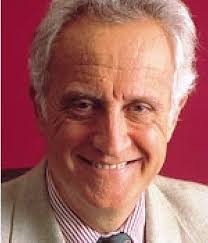
Ambassador Anwarul K. Chowdhury, former Under-Secretary-General and High Representative of the United Nations and Founder of The Global Movement for The Culture of Peace (GMCoP), was the keynote speaker at the observance of the International Day of Non-Violence on the 15th Mahatma Gandhi Day Celebration, organized virtually by the Gandhi International Institute for Peace (GIIP)
Credit: United Nations

HONOLULU, Hawaii, Oct 22 2020 (IPS) – I will begin by presenting to you excerpts from the message from UN Secretary-General António Guterres on the International Day of Non-Violence.


I quote: “In marking the birthday of Mahatma Gandhi, this International Day highlights the remarkable power of non-violence and peaceful protest. It is also a timely reminder to strive to uphold values that Gandhi lived by: the promotion of dignity; equal protection for all; and communities living together in peace.

On this year’s observance, we have a special duty: stop the fighting to focus on our common enemy: COVID-19. There is only one winner of conflict during a pandemic: the virus itself. As the pandemic took hold, I called for a global ceasefire. Now is the time to intensify our efforts. Let us be inspired by the spirit of Gandhi and the enduring principles of the UN Charter.” End of quote

At the outset, let me thank the Gandhi International Institute for Peace (GIIP) and its dynamic President Mr. Raj Kumar for organizing the observance of the International Day of Non-Violence and of the 15th Mahatma Gandhi Day Celebration by the Institute.

The theme of my keynote speech today is “Mahatma’s Non-Violence: Essence of The Culture of Peace for New Humanity”

The Mahatma affirmed that he was not a visionary but a practical idealist. He affirmed that “Non- violence is the law of our species, as violence is the law of the brute. The spirit lies dormant in the brute and he knows no law but that of physical might. The dignity of man requires obedience to a higher law – to the strength of the spirit.”

It is said that “he was the first in human history to extend the principle of non-violence from the individual to the social and political plane.” He entered politics for the purpose of experimenting with non-violence and establishing its validity.
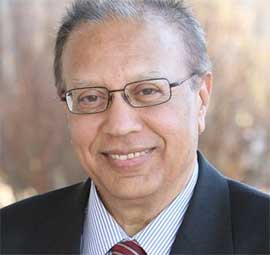
Ambassador Chowdhury

The Mahatma had said that “Nonviolence is the greatest and most active force in the world. One cannot be passively nonviolent … One person who can express ahimsa in life exercises a force superior to all the force of brutality.” I believe whole-heartedly that Mahatma Gandhi’s principle of nonviolence or Ahimsa has found true reflection in the life of a great son of the United States, Dr. Martin Luther King Jr.’s own struggle for equality and justice.

Dr. King considered his Nobel Peace Prize as “a profound recognition that nonviolence is the answer to the critical political and racial questions of our time – the need for man to overcome oppression without resorting to violence“. I reiterate this mainly to highlight the need for revisiting those words in view of what is happening in many parts of our world, including in this country.

As I have stated on many occasions, my life’s experience has taught me to value peace and non-violence as the essential components of our existence. Those unleash the positive forces of good that are so needed for human progress. Peace is integral to human existence — in everything we do, in everything we say and in every thought we have, there is a place for peace.

It is important to realize that the absence of peace takes away the opportunities that we need to prepare ourselves, to empower ourselves to face the challenges of our lives, individually and collectively. This intellectual and spiritual inspiration is implanted in me through the Mahatma’s life and his words.

The United Nations Charter emerged in 1945 out of the ashes of the Second World War. The UN Declaration and Programme of Action on Culture of Peace was born in 1999 in the aftermath of the Cold War. I was the chair of the nine-month-long negotiations from 1998 to 1999 that produced the Programme of Action on Culture of Peace.

For more than two decades, I have continued to devote considerable time, energy and effort to realizing the implementation of this landmark, norm-setting decision of the UN. For me, this has been a realization of my personal commitment to peace inspired by the Mahatma and my humble contribution to humanity.

My work took me to the farthest corners of the world and I have seen time and again how people – even the humblest and the weakest – have contributed to building the culture of peace in their personal lives, in their families, in their communities and in their countries – all these contributing to global peace one way or the other.

The focus of my work and advocacy has been on advancing the culture of peace which aims at making peace and non-violence a part of our own self, our own personality – a part of our existence as human beings. I believe this will empower ourselves to contribute more effectively to bring inner as well as outer peace.

In simple terms, the Culture of Peace as a concept means that every one of us needs to consciously make peace and nonviolence a part of our daily existence. We should know how to relate to one another without being aggressive, without being violent, without being disrespectful, without neglect, without prejudice.

We should not isolate peace as something separate or distant. More so, in today’s world so full of negativity, tension, poverty and suffering, the culture of peace should be seen as the essence of a new humanity, a new global civilization based on inner oneness and outer diversity.

In my keynote address on “Human Security – an Essential Element for Creating the Culture of Peace” at the Victoria University in Wellington, New Zealand, in August 2007, inspired by Mahatma’s eternal words “Be the change that you want to see in the world,” I underscored that “Peace is a prerequisite for human development.… We all must undertake efforts to inculcate the culture of peace in ourselves. We cannot expect the world to change if we do not start first and foremost with changing ourselves – at the individual levels.”

The objective of the culture of peace is the empowerment of people, as has been underscored by the global leader for peace and Buddhist philosopher Daisaku Ikeda. As we say “Peace does not mean just to stop wars, but also to stop oppression, injustice and neglect”. The culture of peace can be a powerful tool in promoting a global consciousness that serves the best interests of a just and sustainable peace.

I am encouraged that the 2030 Agenda for Sustainable Development adopted by the UN in 2015 includes, among others, the culture of peace and non-violence as well as global citizenship as essential components of today’s education.

This realization has now become more pertinent in the midst of the ever-increasing militarism and militarization that is destroying both our planet and our people. The Mahatma asserted that “One thing is certain. If the mad race for armaments continues, it is bound to result in a slaughter such as has never occurred in history. If there is a victor left, the very victory will be a living death for the nation that emerges victorious. There is no escape from the impending doom save through a bold and unconditional acceptance of the nonviolent method with all its glorious implications.”

Dr. King had advised us rightly, “… I suggest that the philosophy and strategy of nonviolence become immediately a subject for study and for serious experimentation in every field of human conflict, by no means excluding the relations between nations.”

The last decades of violence and human insecurity should lead to a growing realization in the world of education today that children should be educated in the art of peaceful, non-violent, non-aggressive living.

Never has it been more important for the next generation to learn about the world and understand and respect its diversity. I want to underscore one particular aspect in this context. In the culture of peace movement, we are focusing more attention on children because that contributes in a major way to the sustainable and long-lasting impact on our societies. As the Mahatma’s words highlight, “Real education consists in drawing the best out of yourself.”

An essential message that I have experienced from my work for the culture of peace is that we should never forget that when women – half of world’s seven plus billion people – are marginalized, there is no chance for our world to get sustainable peace in the real sense.

Women bring a new breadth, quality and balance of vision to a common effort of moving away from the cult of war towards the culture of peace. “Without peace, development cannot be realized, without development, peace is not achievable, but without women, neither peace nor development is possible.”

I believe the culture of peace is not a quick-fix. It is a movement, not a revolution.

Let us remember that the work for peace is a continuous process. Each one of us can make a difference in that process. The culture of peace cannot be imposed from outside; it must be realized from within.
  Source

The Plight of Domestic Workers in Brazil

Civil Society, Development & Aid, Economy & Trade, Featured, Gender, Global Governance, Headlines, Human Rights, IPS UN: Inside the Glasshouse, Labour, Latin America & the Caribbean, Population, Poverty & SDGs, TerraViva United Nations, Women & Economy

Opinion

Waldeli Melleiro is a project manager at the Brazil Office of Friedrich-Ebert-Stiftung (FES) and Christoph Heuser is the resident representative at the FES Brazil Office.

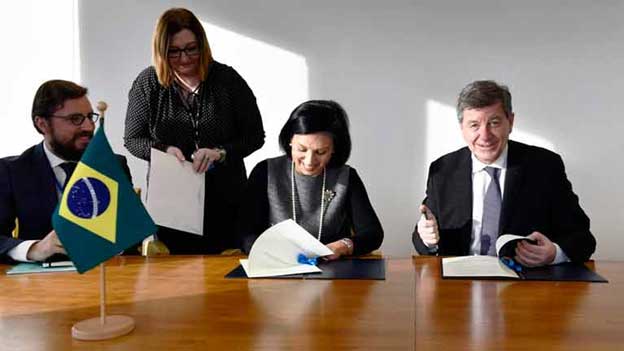
On 31 January 2018, the Government of Brazil deposited the formal instrument of ratification with the International Labour Office for ratification of the Convention on Decent Work for Domestic Workers, 2011 (No. 189) . Accordingly, Brazil became the twenty-fifth member State of the ILO and the fourteenth member State in the Americas region to ratify this Convention. It is estimated that there are about seven million domestic workers in Brazil, six million of them women, and more than in any other country in the world. Moreover, the majority of domestic workers are women, with indigenous peoples and persons of African descent being over-represented in the domestic work sector. But how has the Convention been implemented?. Credit: International Labour Organization (ILO), Geneva

SAO PAULO, Brazil, Oct 21 2020 (IPS) – The inclusivity of Brazilian society is put to the test as the coronavirus pandemic highlights a labour sector ripe with historical and structural inequality: domestic work.


The first death of COVID-19 in Rio de Janeiro was emblematic of the country’s inequities: a domestic worker who caught the new coronavirus from her employer. Much has since been written about the Brazilian government and its catastrophic inaction during the pandemic.

But the new normal also highlights a sector that has always been present in Brazil but with little public attention. A sector, in which the historical and structural inequality in Brazil is very much represented: domestic work.

With about 6 million female workers, domestic work is the second-largest occupation for women in Brazil. They are mostly black (about 65 per cent) and many are over 45 years old (46.5 per cent).

They start working sometimes as teenagers or even children, and because they lack access to most labour rights and social protection, even after 50 years or more of continuous work they still do not have the right to retirement and well-deserved rest.

They live far from their workplaces, often earn less than the legal minimum wage of around 200 USD per month, and are nonetheless often responsible (45 per cent of them) for the income of their families.

Among the poorest of these workers (less than 1,5 USD/day), 58.1 percent are heads of household, which gives an indication of the extreme poverty in which their families live.

The lack of labour protection

Domestic workers have long been fighting for recognition of the value of their work and for labour rights. The struggle in Brazil goes back to the 1930s, with the founding of the Professional Association of Domestic Employees of Santos.

In 1988 the new Constitution guaranteed paid leave and a 13th month of salary, among others. But domestic workers continued to have fewer rights than those in other professions.

Several further rights were only obtained in 2013 under the former administration of Dilma Rousseff, including the limiting of working hours to eight per day and 44 per week, the right to recognition of overtime, and paid retirement.

Despite these advances, many female workers are still excluded from many of those rights, which are guaranteed only to those who work at least three days a week in the same job. And even where the conditions are met, many employers persistently fail to respect workers’ rights, while monitoring compliance is difficult.

Those who work for the same employer for one or two days a week, known as day workers, remain completely unassisted by the law and social protection.

Furthermore, the degree of informality in domestic work is very high: In 2018, only 27 percent of women workers had a formal contract, if we are adding those paying individually even without having a formal contract, only 39 percent contributed to social security.

Thus, the vast majority of female domestic workers are not entitled to unemployment insurance, sickness benefit and retirement.

The new normal of work during and after the pandemic

Domestic work is one of the occupations most affected by the pandemic.

Many workers are in high-risk age groups; their working conditions expose them to more possibilities of contamination; they use public transportation over long distances; they care for elderly people or children with unavoidable physical proximity; and they often have to work without proper protective masks, gloves, or alcohol gel.

Or even worse: in order to keep their jobs and limit contamination, some stay for days and weeks on end in the homes where they work, away from their families.

As the pandemic took hold, the government allowed employers of domestic workers to suspend the contract for up to two months, with two months of secure employment after the suspension. It also allowed partial employment.

But this only helped the minority of domestic workers with such a contract. Most have precarious positions and many of those, especially day workers, have been dismissed and left without income and vulnerable.

The government also started paying 600 reals (around 109 USD) per month for those in need, for example informal workers, rising to 1,200 reals (218 USD) per month for some cases, for example single mothers. However, many women had difficulty in registering and accessing this aid.

Despite the pandemic, domestic workers are standing firm in the fight for labour rights. In March 2020 Fenatrad (National Federation of Domestic Workers) launched a campaign under the slogan “Take care of those who take care of you, leave your domestic worker at home, with paid wages.”

According to Luiza Batista, president of Fenatrad, there was good coverage in social networks, but in practice there was little adhesion by employers. Fenatrad has been carrying out an intense programme of denunciation and negotiation.

The group has also campaigned against a controversial measure by some state governments, for example Pará, to declare domestic work as an essential service during lockdown, forcing workers to continue working.

This measure was reversed after pressure from Fenatrad to specify what functions within domestic work are essential. The category was refined to include only nannies, careers for the elderly, and those caring for people with special needs and whose employers are keyworkers, e.g. in the health or security sectors.

Still the question remains: if domestic work is essential why it is not valued? It is fundamental work, but it is marginalized and carries the prejudices of a society in which social rights are not within reach for everyone.

The pandemic stresses the importance of domestic work and at the same time showed its precariousness as well as the inequality within the Brazilian society. It is time to reflect on the need for change in paid domestic work, aiming at a fair and inclusive society.

The new normal should recognize and value domestic work, including adequate labour rights as an important step on the long way to a more just society.

Source: Friedrich-Ebert-Stiftung (FES), Brazil

  Source

Amid COVID-19, What is the Health of Civic Freedoms?

Active Citizens, Civil Society, Democracy, Editors’ Choice, Featured, Global, Global Governance, Headlines, Human Rights, Inequity, IPS UN: Inside the Glasshouse, Population, Poverty & SDGs, TerraViva United Nations

Opinion

Marianna Belalba Barreto is the Civic Space Research Lead at CIVICUS: World Alliance for Citizen Participation & Aarti Narsee is a Civic Space Research Officer at CIVICUS: World Alliance for Citizen Participation

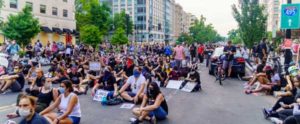
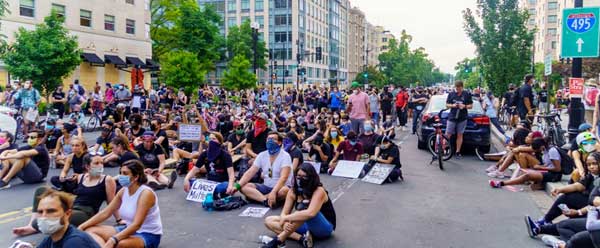
Black Lives Matter Protests, Washington DC, June 2020. Credit: Ted Eytan

JOHANNESBURG, South Africa, Oct 16 2020 (IPS) – More than half a year after the World Health Organization declared the COVID-19 outbreak a pandemic, governments are continuing to waste precious time and energy restricting human rights rather than focusing on fighting the virus.


Civic freedoms, including the freedom to associate, express views and peacefully assemble, are under threat, with states using broad and restrictive legislation to snuff out dissent.

But people are organising and mobilising to demand rights. In the face of restrictions, civil society continues to fight back, often taking to the streets to do so.

Even before the pandemic freedom of expression was under threat. In 2019, the CIVICUS Monitor reported that censorship was the most common violation during that year, occurring across 178 countries.

Now, under the guise of stopping the spread of what they characterise as ‘fake news’, many governments continue to target the media.

Free-flowing information and unrestricted speech are vital during a pandemic. People need to receive accurate and up-to-date information on the emergency, not least so they can protect themselves and their families.

As frontline workers, journalists have a crucial role to play in disseminating important information, often putting their own lives at risk. But during the pandemic they have faced harassment, arbitrary detention and censorship from governments determined to silence critical reporting about their response to COVID-19.

Often such attempts have been carried out under the guise of tackling so-called ‘fake news’ on the virus.

Even before the pandemic, Turkey was the number one jailer of journalists in the world, with about 165 journalists currently behind bars. The government’s crackdown on the media has continued, with journalists being jailed on charges of ‘causing people to panic and publishing reports on coronavirus outside the knowledge of authorities’.

Thousands of social media accounts have also been placed under surveillance for comments about COVID-19, with citizens being detained for ‘unfounded and provocative’ posts that cause worry among the public, incite them to fear, panic and target persons and institutions’.

People expect to be able to question their government’s handling of the crisis and hold it to account over the decisions made. But governments are resisting this. In Zimbabwe, investigative journalist Hopewell Chin’ono was detained and charged for his critical reporting on the government’s COVID-19 procurement.

The need for this was clear when Zimbabwe’s health minister was dismissed and arrested for alleged corruption in medical procurement. But while Chin’ono has been released on bail, the persecution against him continues, despite calls from local and international media watchdog bodies for all charges to be dropped.

Despite these restrictions, people have continued to mobilise and fight for their rights. The pandemic pushed activists to come up with new and innovative forms of protests. Health workers across the world staged socially distanced protests to highlight the challenges within the medical system which have been further exposed by the pandemic; around the world, people found innovative ways to get their voices across.

In Palestine, feminist organisations organised balcony protests against the surge of gender-based violence during the pandemic. Videos show people standing on their balconies, banging pots and pans and hanging banners to show solidarity.

In Singapore in April, young climate activists from the Fridays for Future global school strike movement held solo protests in order to sidestep the country’s restrictive laws on peaceful assembly.

In June in Brazil, human rights groups organised peaceful interventions to denounce the scale of the COVID-19 crisis; protesters in the capital Brasilia put up 1,000 crosses to pay tribute to COVID-19 victims on the lawn in front of key government buildings, calling out President Jair Bolsonaro for his denials of the pandemic’s gravity.

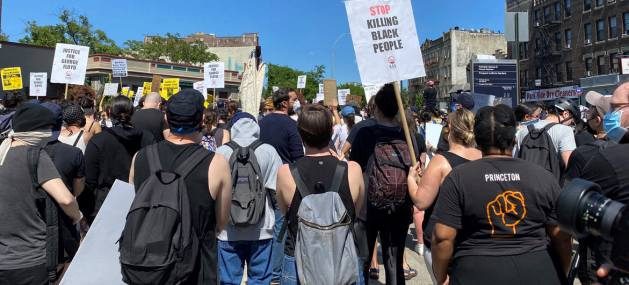
Protests against racial injustice have been staged in all corners of the globe, following the killing of George Floyd by the Minneapolis police on 25 May 2020. Floyd’s death sparked massive protests against police brutality in the USA, under the banner of Black Lives Matter.

As the movement expanded, people from different continents, in countries as diverse as Senegal, Sri Lanka and Sweden, chanted “No Justice, No Peace”, and held placards reading “racism is a virus” to show they had no choice but to protest amid a global pandemic.

But in some countries these protests were dispersed by police using excessive force, with the reasoning that protests would lead to a further spread of COVID-19.

CIVICUS continues to document civic space restrictions, and while many governments are taking advantage of the crisis to suppress criticism, civil society continues to resist, to fight back, and to make their voices heard.

As part of this, journalists are playing a vital role in fighting censorship and sharing information about the pandemic.

What is very clear is that civil society has and will continue to play a vital role in addressing the urgent needs of the people during this crisis. Without a healthy civic space and an enabling environment for activists, civil society and journalists, we will not be able to effectively tackle the spread of the virus and the prospect for rebuilding a more equal and just society will be limited.

This is why people will continue to organise, mobilise and protest.

  Source

Americans By Force

Civil Society, Democracy, Headlines, Human Rights, North America, TerraViva United Nations

Opinion

The explanation for black Americans endemic discrimination is the contrast between their implantation in the United States and the way the rest of the public settled in the “American dream.” Almost everyone came to this idea that is the United States of free will.

Protests have been taking place in cities across the United States. Credit: UN News/Shirin Yaseen

MIAMI, Sep 4 2020 (IPS) – Why, in the United States, where change is the most pronounced hallmark, do some aspects never change? Why do many bad habits resist giving way to novelties that prove to be the basis of the success of the most developed country on earth and still the leading power?  Why is the explanation for that leadership due to a few factors? Why does Trump profess a visceral opposition to immigration, knowing that it is the key to the country’s success? Because millions of his compatriots interpret the sinew of American DNA as a threat to their comparative social advantage.


Meanwhile, in this drama, blacks continue to bear the brunt of it all. The explanation for their endemic discrimination is the contrast between their implantation in the United States and the way the rest of the public settled in the “American dream.” Almost everyone came to this idea that is the United States of free will.

No one can say that their grandparents were forced to change residence. Although it can be argued that hunger, religious persecution, and the desire for economic improvement were important factors in driving emigration from Europe, Africa, or Asia, it is also true that voluntary americanization is the key to the success of the United States.

Joaquín Roy

This country is the most genuine example of national construction opposed to that based on ethnicity, religion, race. America is the most definite specimen of the nation of choice, based on personal conviction.

It is not by chance that theorists of nationalism call this alternative “liberal.” The “American dream” explains its survival. As long as millions of citizens of other continents answer Ernest Renan’s question with a negative vote every night in his imaginary “daily plebiscite”, and decide to opt for the residency trick, the United States will exist.

The day a majority of Americans vote negative for residency, the country would be deserted. There is nothing that unites Americans, except their desire to be. Their religion is summarized in the offer provided by the Declaration of Independence: life, liberty and the pursuit of happiness. He does not give them a guarantee, but a promise. And it is enough for them.

However, the absence of a residency obligation has two crucial exceptions: black and indigenous minorities. These two sectors contrast in their implementation in what for them is, more than a dream, an “American nightmare.”

Although it can be argued that hunger, religious persecution, and the desire for economic improvement were important factors in driving emigration from Europe, Africa, or Asia, it is also true that voluntary americanization is the key to the success of the United States.

The original owners of the immense territory, although their immemorial ancestors crossed the Straits of Alaska at the dawn of North America, have been reduced to their reservations, marginalized, eaten away by poverty and alcoholism. Even in the sporadic mythos in Hollywood movies, Sitting Bull and his imitators do not overcome the mystique of Buffalo Bill.

The blacks were unfortunately marked by the original sin of not having booked a ticket for the forced trip to the United States. Their implantation has been resisted from the beginning by themselves and by the descendants of the merchants who deposited them in America.

With their emancipation and its disastrous execution, the peculiarity of their residence became more apparent. When they were stripped of the benefits that they had given away to their owners for free, their value was lost in Wall Street.

The successive corrective measures of discrimination and segregation only made the division of society even more evident. Despite the actions of Martin Luther King, who paid for his daring with his life, legal advances supercharged racist resentment from a part of society that resisted reform. “Affirmative Action” and food stamps multiplied the opposition.

Simultaneously, the black community, which had ceased to call itself “colored,” to take a curious journey back to being classified as “African,” watched with amazement as other newcomers from other continents were climbing ranks.

Latin Americans began to outnumber blacks not only in economic resources, but in numbers. As a result of the new census parameters, while whites held 63%, Hispanics (15%) and Asians (10%) cornered blacks (13%).

Internally, the new “African-Americans” decided to opt for a peculiar nationalism: they defended themselves with their signs of “black is beautiful”, they enthroned their peculiar English inherited from their owners, and they monopolized some entertainment professions.

Some were more fortunate and co-opted the rosters of basketball teams. For their part, some managed to settle on the ladders of power as senators and congress people, thanks in part to the restructuring of electoral districts.

Then they even aimed, with the decisive support of white sectors, to opt for the incredible: the presidency of the United States. It was already too much and the opposition to this impudence did not forgive Obama or the rest of the community, and even less the Democrats and liberals.

The mirage of the election of the first black president bypassed the resistance of deep America and the withdrawal of the “silent majority” that Nixon tried to awaken. Now Trump has reinvented it.

It was forgotten that only about a third of the electorate voted for Obama, while another third chose the Republican candidates. Another third stayed home. Among those 60-70% of Americans who abstained from voting on the traditional electoral correction, crouched was the mostly white sector, both high-income and lower-middle-class that followed the sounds of the piper Trump.

Those who rejected the candidate Hillary Clinton believed, and still believe, that their faltering economies have been pierced by the rise of the historically vanquished. They now believe that their pristine suburbs, real or imagined, are threatened by the “socialist” hordes of predominantly Latino origin, and the “terrorists” who insist on protesting against what they consider dangerous interference by the security forces in daily life.

The only thing missing is that the statistical evidence of the black overpopulation of the prisons and the number of crime victims of the same origin is “enriched” with sad deaths of blacks at the hands of white policemen.

Joaquín Roy is Jean Monnet Professor and Director of the European Union Center at the University of Miami

  Source

It is Time for a Democratic Global Revolution

Civil Society, Climate Change, Democracy, Editors’ Choice, Featured, Global, Global Governance, Headlines, Human Rights, IPS UN: Inside the Glasshouse, TerraViva United Nations

Opinion

Daniel Jositsch is a Member of the Swiss Senate and President, Democracy Without Borders-Switzerland, and Andreas Bummel is Executive Director, Democracy Without Borders. Twitter: @democracywb

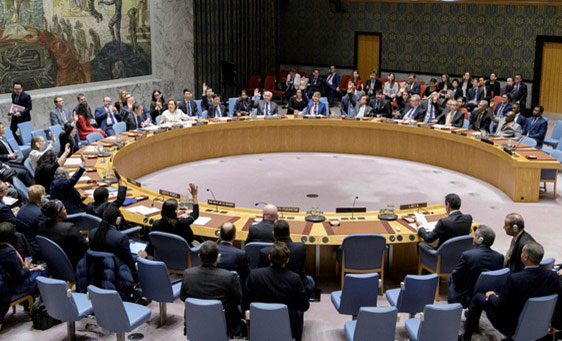
The UN’s Security Council, in particular, is suffering from a dysfunctional decision-making method that grants the five victors of the Second World War and official nuclear powers not only a permanent seat but also a veto right. Credit: United Nations

BERLIN / BERNE, Aug 28 2020 (IPS) – The people of the world need to seize the moment and bring about a democratic global revolution. It is time for a global parliament and real representation.

More than 21 million people got infected with the novel coronavirus and over 770,000 have died. Never before did the world witness similar collective lockdowns of social and economic activity that had to be enforced to contain the pandemic.


For many, the corona-related global crisis exacerbates a situation that was already critical before the outbreak of the virus.

The climate crisis is unfolding with record temperatures in Siberia, Greenland, the Antarctic and other places like the Middle East. The new climate apartheid is characterized by whether you can afford to shield yourself from such heat or not. Most cannot.

135 million people are facing crisis levels of hunger. There are currently more than 70 million displaced people who have fled war, persecution and conflict. It’s the worst humanitarian and refugee crisis in seventy years.

There is a global inequality crisis. Productivity gains and globalization disproportionately benefit the affluent. Financial assets in the trillions are hidden in offshore accounts from tax authorities. The world’s 26 richest billionaires own as much as the poorest 3.8 billion people on the planet.

While global surveys confirm that people across all world regions strongly believe in democracy, there is in fact a democratic retreat. Confidence in the actual performance of democratic governments is waning. Populist nationalism and authoritarianism has been advancing, aided and abetted by social media platforms and the internet. Major arms control treaties are crumbling, geopolitical tensions are rising and multilateralism is under attack.

Civil society and citizens across the world are fighting back, though. Pro-democracy movements are at an all-time high as widespread protests in dozens of countries now and in recent times demonstrate. Freedom and justice have lost no appeal. At the same time, millions of citizens joined climate protests around the world and called for quick and effective action in this critical field.

The present issues are symptoms of a crisis of global governance. There is a scale mismatch between a political world order that is based on 200 states and territories and issues that demand decisive global action.

As the UN celebrates its 75th anniversary this year, the organization continues to lose significance and impact. The UN is only as strong and effective as its member states allow it to be. The same applies to all intergovernmental organizations and forums, including the World Health Organization that had to launch an investigation into its handling of the Covid-19 pandemic.

The UN’s Security Council, in particular, is suffering from a dysfunctional decision-making method that grants the five victors of the Second World War and official nuclear powers not only a permanent seat but also a veto right.

If long-lasting solutions are to be achieved, this scale mismatch must be tackled. It is not enough to call on individual governments to change their policies. The way how the world is governed must be changed. What is needed is a new vision of a democratic world order that is based on shared sovereignty on global issues, a clear commitment to human rights, the principle of subsidiarity and complete disarmament.

When the UN was founded it was recognized that this should only be a beginning and that changes would be required. Article 109 of the Charter provides that a conference to review the Charter should be held by 1955. The UN’s member states did not deliver on that promise. Now is the time to hold them to account.

The world’s people need an actual say in global affairs that is not intermediated by national governments and their diplomats. The key ingredient of a new UN should be a democratically elected world parliament that complements intergovernmental bodies such as the UN General Assembly.

The creation of a new democratic world organization that has actual powers seems to be a gigantic project that raises numerous questions. How is a global democracy to be created while major states themselves are not democratically organised? Can decisions of a world parliament be enforced against the will of individual states? How is it possible that states will agree to the creation of a superior political unit?

These questions show the way forward: The people of the world themselves need to embrace and call for global democracy. Eventually, they are the sovereigns not only in their individual states but on the planet as a whole, too.

A global democratic revolution needs to push for a legitimate, inclusive and representative global body that will deal with these questions in a serious way. The creation of a UN Parliamentary Assembly could be an important stepping stone to launch a global constitutional process and a transformation of global governance.

This global democratic revolution will be peaceful because it is not about destroying structures or conquering territories, but about opening up a political level that is lying idle. Supranational integration cannot be imposed by force. It will happen because the people want it.

If existing movements in the fields of climate, environment, peace, disarmament, democracy, social justice and others join forces, the global democratic revolution will become very real.

This may sound visionary. But the big issues troubling this planet and its people will remain, and worsen, unless the root cause is addressed. A democratic global government is not a mind game in some ivory tower. It is the most important question on the agenda of humanity today.

  Source

Religion & the Pandemic: A Call Beyond the Here & Now

Civil Society, Featured, Global, Headlines, Health, Human Rights, Humanitarian Emergencies, Inequity, Religion, TerraViva United Nations

Opinion

Prof. Azza Karam is Secretary General, Religions for Peace International

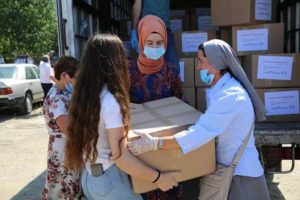
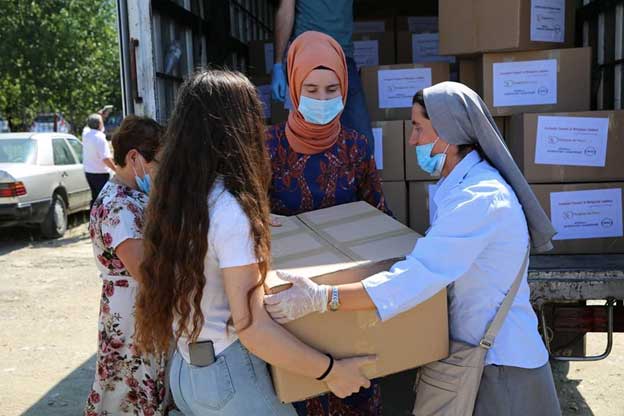
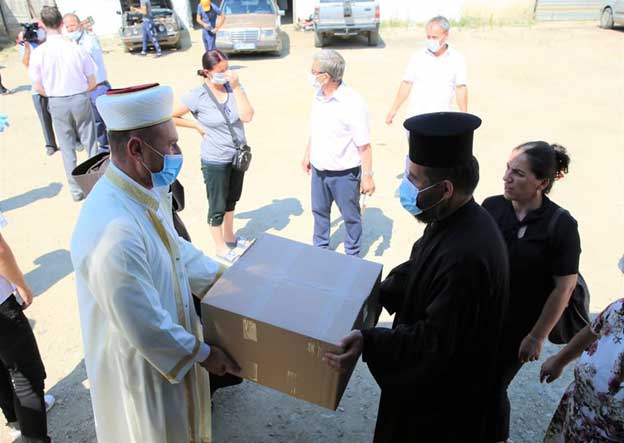
Religions for Peace Interreligious Council of Albania distributing Covid relief supplies from the Multi-religious Humanitarian Fund. Credit: Erzen Carja

NEW YORK, Aug 4 2020 (IPS) – — I have never been interested in religion or spirituality before, but I found myself tuning in to all sorts of on-line religion and spirituality related forums “in search of something.”


These are the words of a 30-something single young, middle class man (born into a Protestant-Catholic family background) in a European country.

The latter is known more for turning several churches into museums or shopping centers, prior to the Covid-19 pandemic. When people are afraid, lonely and alone – they tend to seek “something” beyond science.

A quarter of Americans say their faith has become stronger because of the pandemic, according to a Pew survey conducted during April 20-26, 2020, of 10,139 U.S. adults.

But this is to be contrasted with the experiences of those from an older generation (60+) in the southern hemisphere, like my own 85-year old Muslim father, who lives to pray. For him, the mosque has, over the last decade since my mother’s death, become both his spiritual hub and social club.

His cohort is differing ages of retirees, who, in spite of very different political perspectives in a Middle Eastern country reflecting the now normal of intense polarization, treasure their prayerful community spaces. This middle class (an endangered species to be sure) of retirees, share a sense of deep faith informing their social and political convictions.

For many of them, the lockdown was experienced primarily s an inability to go to the mosque, and thus as almost physically painful. None of them countenanced the idea of on-line prayers, that doesn’t make any sense, they maintained. Their sense of depression was almost palpable throughout the lockdown period, as was their joy at the reopening of some mosques.

The coronavirus presents barriers to caring for the sick and to performing certain death and burial rites which are core religious practices, and especially needed in a pandemic that has already claimed nearly hundreds of thousands of lives.

In Sri Lanka for example, public health measures for safe burial practices have already challenged traditional rites, wherein authorities mandated cremations for Covid-19-linked deaths, despite the fact that cremation is supposed to be forbidden in Islam.

Covid-19 also complicates Jewish and Muslim burial practices of washing and cloaking bodies before burial, given concerns about transmission. Innovative religious responses seeking to reconcile public health policies with traditional burial practices have been taking place.

In Israel, for example, bodies are wrapped in plastic before burial, and before that, ritual washing is completed while wearing full protective gear. Some Islamic scholars are providing exegesis and guidance on how the ritual of washing the body prior to burials, could be conducted safely whilst following Islamic principles.

Religions for Peace Interreligious Council of Albania distributing Covid relief supplies from the Multi-religious Humanitarian Fund. Credit: Erzen Carja

This echoes what occurred during the Ebola crisis in West Africa. In fact, while COVID-19 differs from HIV/AIDS, Malaria, Tuberculosis, and Ebola, there are nevertheless some important similarities.

In cases of dealing with diseases where transmission affects large numbers of people, and vaccines and medication remain relatively hard to find and/or provide to all affected, beyond the health inequities which are underscored during such times, there are critical lapses by national and international authorities in acknowledging and supporting the role of religious leaders.

In fact, during previous outbreaks of HIV/AIDS (around the world), and of Ebola in Central and West Africa, the strengths of religious communities were rarely incorporated into public policy – until national and international secular authorities lose the plot.

In Religions for Peace (the only multi religious organization representing all religious institutions and communities around the world with 90 national and 6 regional Inter-Religious Councils/IRCs), a founding mantra is that caring for the most vulnerable is deeply embedded in all faith traditions.

As a result, religious institutions, communities, and faith-inspired/based NGOs (or FBOs as they are often referred to), have historically served as the original providers of essential social services. In fact, FBOs are the first responders in most humanitarian emergencies. Their work includes providing spiritual sustenance for sure, but also hunger relief, heath care, and shelter.

This is not only a feature of the developing world. Samaritan’s Purse set up a health center at the height of the pandemic in Central Park – an icon of New York city. Caritas, at one point, was feeding 5,000 people a day, in Geneva, Switzerland.

For 50 years, Religions for Peace worked to equip its IRCs (through the respective religious institutions and services) to seek peace through advocating for human rights (including the rights of Indigenous Peoples, as well as women, religious minorities, the disabled, elderly, and youth), mediating conflicts, providing emergency humanitarian relief, and contributing to sustainable development efforts (including health, nutrition, sanitation, education and environmental sustainability).

The defining feature of Religions for Peace IRCs is multi-religious collaboration. The main principles of this collaboration are representativity and subsidiarity. In the case of the former, each IRC earns Religions for Peace affiliation by ensuring its governance represents each and all of the nations religious institutions, and communities. In return, each IRC is guaranteed its independence to determine its national/regional priorities, and its modus operandi.

Half a century of collaboration with several United Nations entities at different moments in time, provides a comparative context to enable an assessment of how the UN works with some religious actors.

At the very least, this historical time-line of partnership efforts on peace and security, sustainable development and human rights, provides a learning context. It is with that in mind that we can say that UN efforts in seeking partnerships with faith-based NGOs in facing the Covid-19 implications, are noticeably on the increase relative to pre-Covid dynamics.

Entities like UNHCR, UNICEF, UNAIDS, WHO, and even non-operational entities like the Secretary-General’s own office, as well as UN Office of Genocide Prevention and Responsibility to Protect, have, respectively, issued statements specifically calling on religious leaders and actors to uphold their unique influences (noted above), sought religious input on and in Covid Guidance documents, and (are) hosting multiple consultations to strengthen myriad joint responses.

Working with multiple stakeholders, Religions for Peace research is revealing that while some religious charities are struggling to find resources to continue their services for communities, other FBOs are able to raise more resources for pandemic relief, than anticipated.

This is particularly the case for Hindu, Muslim and Buddhist organisations in countries in Asia, but also Muslim and Christian charities in Africa and the Middle East.

Almost 90% of Religions for Peace IRCs reported a 100% increase in engagement (asks) of their advocacy and messaging efforts from/by national governments, particularly as of May and June 2020 – as compared to this time last year.

This is evidenced through national campaigns during religious occasions and holidays, as well as local awareness raising efforts by religious leaders in particular, as opposed to faith-based NGOs.

Out of the Covid response efforts tracked by 25 Religions for Peace IRCs in 4 regions, thanks to the Multi-Religious Humanitarian Fund administered by RfP, multi-religious efforts are, on average, much harder to encourage than efforts administered by Ecumenical or single religion organisations.

A rough estimate shows that out of the nearly 100 humanitarian assistance projects being tracked by RfP in 40 countries in parts of Africa and Asia, only 1 percent involve multi-religious efforts. Several IRCs have also reported finding it harder to even advocate for multi religious collaboration to provide pandemic assistance (food and medicine packages) in conflict impacted countries (i.e. more than it normally is to seek to mediate some of the conflicts and/or work with governments in mediation efforts).

While it is now almost a cliche to call for more partnerships with religious, or faith-based actors, this is simply not good enough. FBOs, like many NGOs fully immersed in relief efforts, are finding several (good) excuses not to work together.

Faced with a global pandemic, even the FBOs – ostensibly inspired by religious calls for serving all, including the most vulnerable – are less keen on collaborating across their multiple differences (institutional, theological, structural, financial and political), as they continue to serve millions.

Is it enough to serve all who need regardless of religious affiliation (the current bar against which religious NGOs are often measured by the UN and other international entities), or should a pandemic inspire more, and better collaboration among multi-religious partners?

One can but wonder what the relative lack of religious NGO collaboration may foretell for social coexistence after the pandemic, not to mention what this lack of collaboration spells for the legitimacy of the so-called prophetic voice many of them speak of.

  Source