Transgender people often entertain at weddings and other events, but they increasingly face violent acts, especially since part of an Act ensuring their rights was recently struck down. Credit: Ashfaq Yusufzai/IPS
By Ashfaq Yusufzai PESHAWAR, Jul 24 2023 (IPS)
“The problems transgender people face start from their homes as their parents, especially fathers and brothers, look them down upon and disrespect them,” says 20-year-old Pari Gul.
Gul, a resident of Charsadda district in Khyber Pakhtunkhwa (KP), left her house at 16 when her mother asked her to or face being killed by her father.
“I was born as a boy, and my name was Abdul Wahid, but when I came to Peshawar and joined a transgender group, I got a female name, Pari Gul. Since then, I have been going to weddings and other festive ceremonies to dance,” she says. “Dance is my passion.”
However, she has often been the brunt of discrimination and violence.
“During my five-year career, people have beaten me more than 20 times. Each time the perpetrators went unpunished,” she told IPS in an interview.
Trans people are often targeted in KP, one of Pakistan’s four provinces.
On March 28, a man shot dead a transgender person in Peshawar. It was the third incident targeting transgender persons in the province in less than a week. Despite the violence, violent attacks on transgender people aren’t considered a major crime.
Khushi Khan, a senior transgender person, says lack of protection is the main problem.
“People have developed a disdain for us. They consider us non-Muslims because we dance at marriages and other ceremonies,” she says.
“We had lodged at least a dozen complaints with police in the past three months when our colleagues were robbed of money, molested and raped but to no avail,” Khan, 30, says.
Last month, clerics in the Khyber district decided they wouldn’t offer funerals to transgender persons and asked people to boycott them.
Rafiq Shah, a social worker, says that people attack the houses of transgender, kill, injure and rob them, but the police remain silent “spectators”.
“We have been protesting against violence frequently, but the situation remains unchanged,” Shah said.
Qamar Naseem, head of Blue Veins, a national NGO working to promote and protect transgender people, isn’t happy over the treatment meted out to the group.
“Security is the main issue of transgender persons. About 84 transgender persons have been killed in Pakistan since 2015 while another 2,000 have faced violence, but no one has been punished so far,” Naseem says.
The lack of action by the police has emboldened the people.
“Health, transportation, livelihoods and employment issues have hit the transgender (community) hard. Most of the time, they remained confined to their homes, located inside the city,” he says.
There are no data regarding the number of transgender in the country because the government doesn’t take them seriously, he says.
In May 2023, the Federal Shariat Court (FSC) dealt a severe blow when it suspended the implementation rules of the Protection of Transgender Persons Protection of Rights Act.
Farzana Jan, president of TransAction Alliance, says that FSC’s declaration that individuals cannot alter their gender at their own discretion, asserting that specific clauses within the Transgender Persons (Protection of Rights) Act, 2018 contradict Islamic law, has disappointed us.
The FSC declared un-Islamic sections 3 and 7 and two sub-sections of Section 2 of the Transgender Persons (Protection of Rights) Act, 2018, five years after the law was passed, the FSC rolled back key provisions granting rights to Pakistan’s transgender community.
Some right-wing political parties had previously voiced concerns over the bill as a promoter of “homosexuality,” leading to “new social problems”.
The Transgender Persons (Protection of Rights) Act, 2018, is against the injunctions of Islam as laid down in the Holy Quran and Sunnah of the Holy Prophet (PBUH) and will cease to have any legal effect immediately, the verdict stated.
Amnesty International said the verdict was a blow to the rights of the already beleaguered group of transgender and gender-diverse people in Pakistan. It said some of the FSC’s observations were based on presumptive scenarios rather than empirical evidence. The denial of essential rights of transgender and gender-diverse persons should not be guided by assumptions rooted in prejudice, fear and discrimination, AI said.
“Any steps taken by the government of Pakistan to deny transgender and gender-diverse people the right to gender identity is in contravention of their obligations under international human rights law, namely the International Covenant on Civil and Political Rights (ICCPR) and the Convention on the Elimination of All Forms of Discrimination against Women (CEDAW) to which they are a state party,” it said.
The government should take immediate steps to stop the reversal of essential protections, without which transgender and gender-diverse people will be even more at risk of harassment, discrimination and violence, AI added.
On July 12, 2023, transgender representatives from all provinces held a press conference at Lahore Press Club, where they vehemently condemned the recent decision by the FSC against the Transgender Persons (Protection of Rights) Act, 2018.
Arzoo Bibi, who was at a press conference, said it was time to stand united for justice and equality.
“Militants don’t threaten us, but our biggest concern is the attitude of the society and police,” said Arzoo.
IPS UN Bureau Report
Activists, CSOs and faith-based leaders this week pondered how you get a seat at the table when they couldn’t even get access to the UN building.
By Abigail Van Neely NEW YORK , Jul 21 2023 (IPS)
How do you get a seat at the table when you can’t even access the building? This question loomed as activists, faith-based leaders, and NGO representatives gathered at the NY Ford Foundation. They discussed how to amplify the voice of civil society organizations at the UN Headquarters across the street.
“How to UNMute” was hosted on July 20, 2023, as a side event during the ongoing 2023 High-Level Political Forum (HLPF). The event kicked off the creation of a manual to break down barriers to civil society engagement as the first step towards turning ideas into action.
Maithili Pai, the UN advocate for the International Service for Human Rights, illustrated the divide between the UN’s verbal commitments and its actual practices. Sometimes, Pai said, civil society representatives could not enter UN meeting rooms or waited years for UN accreditation. According to Pai, some representatives even faced retaliation for trying to interact with UN bodies.
“We understand very well that civil society is under attack and that there are people pushing you back,” Costa Rica’s Ambassador to the UN, Maritza Chan, told the audience.
Chan stressed that meeting the UN’s 17 sustainable development goals (SDGs) required empowering civil society organizations that provide critical insight.
“We need civil society in the room at all times, providing advice, supporting states, and also calling us when we are not doing things right,” Chan said.
Recommendations for the manual on ‘unmuting’ civil society were developed at a recent workshop. They include better-resourced UN NGO support offices, increased financing for participation in UN events, and more supportive visa processes, especially for delegates from the global south who have been historically excluded. Advocates also called for more systematic flows of information, methods of participation, and pathways into the UN.
Arelys Bellorini, the senior UN representative from World Vision, said she has to go to friendly missions to facilitate youth access to the UN.
Nelya Rakhimova, a sustainable development specialist, said she was asked to pay $1,500 to be at the UN.
Carmen Capriles, an environmental policy expert at the United Nations Environment Program, said she could not attend meetings on climate change because they were closed.
The Ambassador to the UN from Denmark, Martin Bille Hermann, pushed these advocates to present specific action items. “You’re not giving me easy avenues to deliver,” Hermann said. “Develop a toolbox that would allow us to continue to live in an old house.”
“We cannot expect different results by doing the same things,” Chan added.
This is not the first time these issues have been raised.
On the 75th anniversary of the UN in 2020, the General Assembly committed to making the UN more inclusive to respond to common challenges. The following year, a set of steps to strengthen the meaningful participation of stakeholders across the UN was presented to the secretary general by a group of civil society organizations and the permanent missions of Denmark and Costa Rica. The recommendations were endorsed by 52 member states and 327 civil society organizations.
The 2021 letter focused on the use of technology to make UN meetings more accessible. It cited an evaluation survey that found 50 percent of participants during the virtual 2020 HLPF joined for the first time. Most of these new participants represented civil societies in developing countries.
One suggestion for bridging digital divides and incorporating a more diverse range of participants was to host hybrid events and offer internet connection at UN country-based offices. However, Rakhimova pointed out that some events still do not have hybrid options.
The 2021 letter also called for a civil society envoy to the UN and an official civil society day. Neither recommendation has been formally implemented yet.
Mandeep Tiwana, chief officer of CIVICUS, a global alliance of civil society organizations with a strong presence in the global south, addressed inequalities in who influences international decision-making. Tiwana expressed concern that wealthy members of the private sector can “come in through the backdoor.” Meanwhile, activists already facing restrictions on their work wait outside.
“The time to open the doors to the UN virtually, online, and in person has come,” Chan said.
IPS UN Bureau Report
ECW’s Yasmine Sherif and Graham Lang walk with UNHCR partners through Borota, where thousands of new refugees, most of them women, and children, have arrived after fleeing the conflict in Sudan. Credit: ECW
By Naureen Hossain UNITED NATIONS, Jul 20 2023 (IPS)
If you want lasting peace, the best investment you can make is in education, said Education Cannot Wait’s Executive Director Yasmine Sherif in an exclusive interview with IPS.
“(This will) make children and adolescents literate, learn critical thinking, address trauma and psycho-social challenges from being victims of a conflict or crisis, develop their potential, and become financially independent,” Sherif said, adding that these were critical skills to participate in good governance of their countries in the future.
She was speaking to IPS ahead of her participation in the ECOSOC High-Level Political Forum side event “Ensuring Education Continuity: The Roles of Education in Emergencies, Protracted Crises and Building Peace” at the UN Headquarters in New York.
Education is the answer to breaking the vicious circle of violence, conflict, and crisis – while this often is associated with war and conflict, the same applies to climate change.
“If the next generation that is today suffering from climate-induced disasters are not educated, do not understand or have an awareness of how to treat mother earth, and do not have the knowledge or skills to mitigate or prevent risks in the future, the negative impact of climate-induced disasters will only escalate.”
Unfortunately, conflicts and climate risks increasingly combine to multiply vulnerability, she said – and instead of declining, the number of children who need urgent support is increasing.
“Today, 224 million crisis-affected children do not receive a quality, continuous education. More than half of these children – 127 million – may have access to something that resembles a classroom, but they are not learning anything. They are not achieving the minimum proficiencies outlined in the Sustainable Development Goals (SDG4).”
Sherif stressed the crucial linkage between education and protection for children in crisis-affected countries and explained how protection is a core component of the holistic package of education ECW is supporting together with its partners.
“On the legal side, we advocate for the respect of the international humanitarian law, national human rights law, and the National Refugee Law, and for an end to impunity for those who violate these,” said Sherif. “We also call for additional countries to adopt the Safe Schools Declaration, and actively support its implementation at the national level.”
To prevent violence around and in schools, practical measures are included to ensure the children are safe.
“It’s important to ensure safe transport to and from the school. And that would, of course, bring a sense of safety to the parents, who may not be willing to send the girls to school because of that. You ensure the infrastructure of the school provides protection. You may need wards around the school so that nobody can walk into the school and abduct a girl.”
ECW funding also includes protections to prevent sexual and psychological violence.
“All the funding that we invest requires giving protection a priority. And that is essential wherever you operate or invest funding in a country of affected by armed conflict; you need to ensure protection is prioritized.”
Sherif said that in countries like Afghanistan, where the Taliban have banned girls from attending secondary school and upwards, ECW works with local partners to support non-formal education.
“There is a lot of work at the community level, with local authorities allowing ECW’s investments in civil society and UN agencies to continue to operate. So community-based schooling is pretty much (being) run now, where we are investing at the community level,” she said, and while it may not be ideal, it does work.
Likewise, non-formal learning centers have been set up in Cox’s Bazar, where the Rohingya refugees live after fleeing violence, discrimination, and persecution in Myanmar.
“Our aim is for every child to be able to access national education systems, but sometimes it is not possible politically or physically due to the dangers of the conflict. So we also support our partners to establish non-formal learning centers until another more sustainable solution can be found.”
During the Covid-19 pandemic, ECW’s partners were innovative in ensuring education continued – with remote learning programmes such as radio and TV-based education, where IT connections were available through phones and WhatsApp with learning kits and tools.
“Home-based, going from door-to-door, that was how it was done during COVID. There was some creativity and innovation. It is possible. It is not ideal, but it is possible.”
Sherif said ECW had developed a proven model to bring quality education to every child – even in the most challenging crisis-affected contexts of war and conflicts – but that the biggest hindrance is the financing.
“If we had the financing, we could reach the 224 million (children) immediately. So financing is the big hindrance today. While peace is the number one (solution), if peace is not possible, education cannot wait.”
“If financing for education is provided in crisis and climate disasters, ECW can reach 20 million children and adolescents in the coming four years. And that requires about another USD700 million for Education Cannot Wait between today and 2026. Just USD 700 million is a small amount when you consider the return on investment you get when you invest in human potential.”
Nelson Mandela, then Deputy President of the African National Congress of South Africa, raises his fist in the air while addressing the Special Committee Against Apartheid in the General Assembly Hall, June 22, 1990. Global alliance CIVICUS commemorated Mandela Day with a reminder that many rights defenders are jailed and intimidated. Credit: UN Photo/Pernaca Sudhakaran
By Joyce Chimbi NAIROBI , Jul 18 2023 (IPS)
As human rights increasingly deteriorate, rights defenders are being violently suppressed. Abducted, detained, tortured, and humiliated, many now live one day at a time. They have been told, in no uncertain times, that anything could happen. They are now asking the global community to stand as a witness.
“Like Nelson Mandela was, hundreds of human rights defenders around the world are in prison for their human rights activities. Just like him, they are unjustly treated, fictitious charges levelled against them and handed the most serious sentences that are often used against criminals. One of our priorities is to work with human rights defenders to advocate for their release,” says David Kode from CIVICUS, a global alliance of civil society with a presence in 188 countries around the world.
Inspired by the life story of the late iconic South African President Nelson Mandela, the Stand As My Witness Campaign was launched on Nelson Mandela Day in 2020 by CIVICUS, its members and partners.
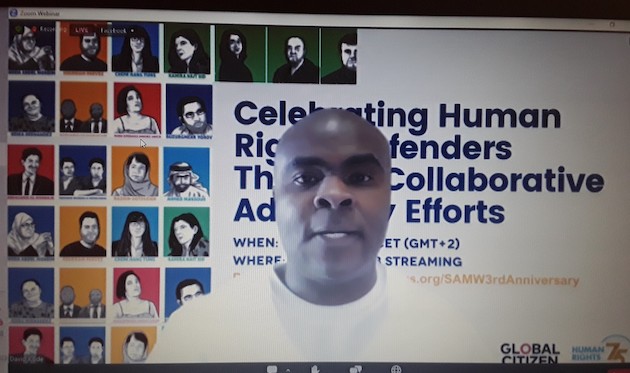
In commemoration of the third anniversary of the Stand As My Witness campaign, CIVICUS and its partners, including human rights defenders, hosted a public event titled, ‘Celebrating Human Rights Defenders through Collaborative Advocacy Efforts’, to celebrate the brave contributions of human rights defenders and raise awareness about those who are still in detention.
David Kobe said that CIVICUS had profiled at least 25 human rights defenders since the Stand As My Witness Campaign started three years ago. Credit: Joyce Chimbi/IPS
“Over the last three years, we have profiled more than 25 human rights defenders collectively because some human rights defenders are profiled as individuals and others, such as those in Burundi, are profiled as a group because they were arrested as a group. More than 18 human rights defenders have been released over the last three years. As we celebrate, we must recognize that the journey has just started, it is quite long, and the battle is far from over,” Kode said.
The event brought together families and colleagues of detained human rights defenders, previously detained human rights defenders, representatives from the Office of the High Commissioner for Human Rights (OHCHR) and other human rights mechanisms and civil society organisations.
Lysa John, the Secretary General of CIVICUS, spoke about how special Mandela Day is, for it is the one day of the year when the spirit of solidarity is celebrated in his memory. It is also a day to look back at what has been achieved and how much more could be achieved in solidarity.
She further addressed issues of civic space restrictions, closure of civic space and how these restrictions impact societies and individuals. John stressed that the event was held in the context of the 25th anniversary of the adoption of the UN Declaration on Human Rights Defenders and the 75th anniversary of the UNDHR or Human Rights 75 to promote their objectives.
“One-third of the population of the world live in contexts which are closed. Where attacks on people who speak out or exercise their civic freedoms are attacked or arrested without any accountability. More and more people in the world, in fact, the largest section of the world, estimated at 44 percent live in countries where civic space and civic freedoms are restricted. In this regard, civic society is more than ever reinventing itself, and there is increased support for them,” she said.
Birgit Kainz from OHCHR spoke about the importance of bringing to life the UN Declaration on Human Rights Defenders for its adoption was a consensus that human dignity is at the core of everything.
She spoke about the need to be deliberate in the defence of civic space as it enables people to shape their future and that of their children. Kainz said that protection and security are two sides of the same coin and urged participants to network and connect to improve civic space and to also play a complementary role. Further emphasizing the need to maintain data, especially about who is in detention and where in line with SDGs.
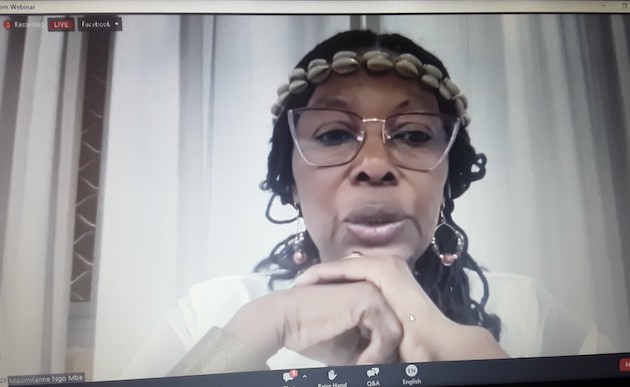
Maximilienne Ngo Mbe from Cameroon is one of the most prolific human rights defenders in Africa. She spoke about the need to create safe spaces for women rights defenders. Credit: Joyce Chimbi/IPS
Maximilienne Ngo Mbe spoke about the life and times of human rights defenders today. She is one of the most prolific human rights defenders in Africa and continues to receive a lot of restrictions for her fearless human rights activities that often have her fleeing from Cameroon to other countries for safety.
“We need a network for women rights defenders because of the special challenges they face as girls, wives, mothers and vulnerable people. Women are engaging less and less because of these challenges and the multiple roles they play in society,” she said.
The event was an opportunity for released human rights defenders such as Maria Esperanza Sanchez from Nicaragua to speak about resilience in the face of brutal regimes. She spoke about how armed men often came to her house to threaten and intimidate her. Of her arrest, humiliation and torture in 2020, being sentenced to 10 years in prison and her eventual release.
It was also an opportunity to speak on behalf of those who cannot. They include Khurram Parvez, a prolific human rights defender in India. At the time of his arrest for human rights activities, he was leading two critical organizations at the national and regional levels.
Parvez is being charged as a terrorist. His story aligns with that of Kenia Hernandez, a 32-year-old indigenous Amuzga woman, mother of two, lawyer and an advocate for human rights who is currently detained in a maximum-security prison in Mexico and has been sentenced to 21 years. Her story is illustrative of the high-risk female rights defenders and people from marginalized groups face.
Ruben Hasbun from Global Citizen spoke about how to effectively advocate for the release of human rights defenders, sharing lessons from Stand As My Witness campaigners. The event further opened up space to address the role of the private sector.
Christopher Davis from Body Shop, a brand that continues to be at the forefront of supporting human rights and rights defenders, fighting social and environmental injustice.
At the end of the session, participants were invited to sign a petition to have the United Arab Emirates immediately and unconditionally release all those detained solely for the exercise of their human rights and end all abuse and harassment of detained critics, human rights defenders, political opposition members, and their families.
Analysts are concerned about pre-election violence and intimidation ahead of next month’s Zimbabwean poll. Credit: Ignatius Banda/IPS
By Ignatius Banda BULAWAYO, Jul 13 2023 (IPS)
Zimbabwe holds general elections next month amid growing human rights and press freedom concerns in what analysts say could mar conditions for undisputed poll results.
Lawyers representing opposition political activists have not been spared assaults from police and suspected ruling Zimbabwe African National Union Patriotic Front (Zanu PF) party supporters as economic conditions worsen.
In January, Kudzayi Kadzere, a human rights lawyer, was beaten up by police and his arm broken after being dispatched to a local police station in the capital city, Harare, to represent arrested opposition political party supporters. The police accused him of being a “criminal nuisance.”
Early this month, the country’s security forces allegedly attacked Obey Shava, a human rights lawyer who has represented several opposition Citizens for Coalition for Change (CCC) officials and other human rights abuse victims. Unknown assailants broke his legs.
However, the country’s main political opposition led by Nelson Chamisa, the CCC, was quick to point fingers at ruling party activists and the country’s secret police for Shava’s attack. The CCC has routinely been tipped to win successive elections without success.
These incidents have been met with widespread condemnation on the eve of what is seen as crucial elections slated for 23 August, with the British parliament discussing and raising concerns early this month about what is seen as deteriorating human rights conditions in Zimbabwe ahead of the polls.
“What we are seeing in this election cycle is lawfare or the weaponisation of the law,” said Ringisai Chikohomero, a senior analyst at the Institute for Security Studies (ISS) in Pretoria, South Africa.
“This has led to a lot of prosecution and persecution, and what this has done is to create an atmosphere of fear that you can be locked up for a long time without actually going to trial,” Chikohomero told IPS.
These comments come when human rights organisations say almost a hundred political prisoners are incarcerated, with former opposition legislator Job Sikhala having spent more than a year behind bars and accused of obstruction of justice.
Amnesty International has condemned Sikhala’s long detention, with Flavia Mwangovya, Deputy Director for East and Southern Africa, Amnesty International saying in a May statement that “there is a worrying restriction of civic space underway in Zimbabwe with growing attempts to persecute anyone who dares to freely express themselves.”
While Mnangagwa has used the campaign trail and radio jingles to denounce violence and appeal for peaceful elections, human rights defenders have questioned the continuing human rights abuses despite its condemnation from the highest office in the land.
“The challenge about the pre-election conditions is that can it be proven that there have been systematic human rights violations,” said Piers Pogue, senior analyst at the International Crisis Group.
“Though international observers from the EU are coming, it is quite clear that six weeks before elections doesn’t constitute long-term observation,” Pogue told IPS.
However, analysts say there is a need for the country to move from continued disputed poll outcomes, and one of the recommendations is to have long-term observer teams from such groups as the African Union and the Southern African Development Community (SADC).
“Ideally, the AU and SADC should have deployed longer-term observer teams. We have seen in the past that only long-term missions manage to get to grips with election conditions. Differences between long and short-term observer missions expose the contradictions of how electoral conditions are assessed,” Pigou said.
Zimbabwe’s elections have for years hogged regional and international headlines after successive controversial victories by the founding Zanu (PF) party amid decades-old worsening economic conditions; with eleven presidential candidates in next month’s general election, the stage could be set for yet another contentious poll outcome.
Meanwhile, as election day approaches, the Zimbabwe Catholic Bishops Conference has added its voice to concerns about the pre-election conditions, appealing to voters to exercise their democratic right to vote.
“Do not be intimidated, coerced or manipulated to vote against your will. Please refuse to be used in violent attacks against your fellow brothers and sisters,” the Catholic bishops said on 9 July.
The clerics also appealed to the country’s security services, long accused of doing the ruling party’s bidding, to maintain law and order without taking sides.
“To members of the security sector, we appeal to you to work to maintain peace and justice and let all the perpetrators of political violence be held accountable,” the bishops said.
Experts encourage parents to vaccinate their children against typhoid to ensure that the child has access to clean drinking water. Credit: Zofeen Ebrahim/IPS
By Zofeen Ebrahim KARACHI, Jul 6 2023 (IPS)
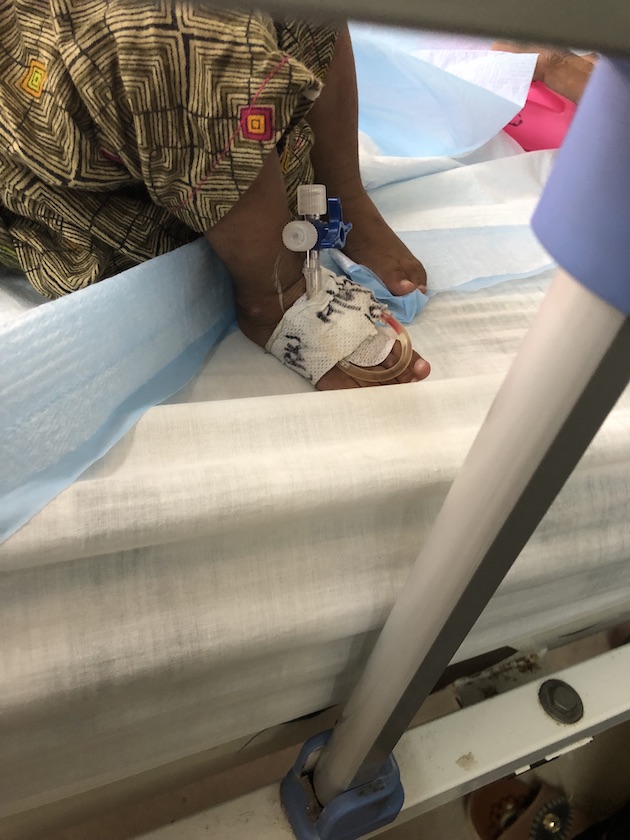
The first thing you notice about eight-month-old Manahil Zeeshan is how tiny she looks on the adult-size hospital bed at the government-run Sindh Institute of Child Health and Neonatology (SICHN) in Korangi, a neighbourhood in Karachi.
Her right foot is taped with a cannula, and she whimpers incessantly. “I have been in and out of the hospital for the last seven days,” said Uzma Mohammad, Zeeshan’s mom, with worry lines on her forehead. “High fever that refused to come down, severe cough for days and breathlessness,” were some of the symptoms Mohammad described. She was convinced someone had “put a spell” on her daughter.
The doctors, however, suspected she had typhoid.
Salmonella Typhi bacteria cause typhoid fever, and Salmonella Paratyphi bacteria cause paratyphoid fever. According to the US-based public health agency, Centers for Disease Control and Prevention, along with a fever that can be as high as 103 to 104°F (39 to 40°C), the sick person can have weakness, stomach pain, headache, diarrhoea or constipation, cough, and loss of appetite. Some people have a rash of flat, rose-coloured spots. Internal bleeding and death can occur but are rare. It affects between 11 and 20 million people each year, leading to 128,000 to 161,000 deaths, according to the World Health Organization (WHO). The highest fatality rates are reported in children under four years of age.
While Zeeshan’s blood culture report had yet to come to ascertain the cause of her sickness, she needed urgent medical care, said Dr Shabita Bai, who had admitted her.
“We could not wait for five days for the blood culture report as she was not doing well. And because she had already been given an antibiotic (a medicine used to kill bacteria) from outside, our chances of finding if the baby had typhoid for sure were slim, and we had to rely on the history,” justified Bai.
Decisions had to be made. Based on her condition, symptoms, and clinical diagnosis, the baby was given Ceftriaxone, an intravenous antibiotic, but she showed no improvement. The doctors then administered the stronger Meropeneme intravenously, a last-resort antibiotic.
Manahil Zeeshan’s foot has a drip in an effort to bring her temperature down and fight suspected typhoid. Credit: Zofeen Ebrahim/IPS
Battling the Superbug
But even if she had typhoid, the bacteria in her body had taken on the form of a superbug — the extensively drug-resistant (XDR) typhoid and the current antimicrobials had become ineffective, said paediatrician Dr Jamal Raza, the executive director of the SICHN.
According to a Lancet study published in 2022, multidrug-resistant (MDR) typhoid has been seen in Pakistan, while typhoid bacteria resistant to the widely-used antibiotic azithromycin have been found in Bangladesh, Nepal and India. “Our analysis revealed a declining trend of MDR typhoid in south Asia, except for Pakistan, where XDR S Typhi emerged in 2016 and rapidly replaced less-resistant strains,” stated the study, which researchers claim is the largest ever examination of the S.Typhi bacterium.
The reason why antibiotics are losing their punch against some types of bacteria, said Raza, was the “indiscriminate use of antibiotics” that health practitioners prescribe to provide immediate relief. Another big problem was self-medication by people. “I know people often use an old prescription by a doctor to get the same medicine if they feel they have the same symptoms, thinking they do not need to visit the doctor.”
But he pointed out viruses, which are also small germs like bacteria, are causing bacteria-like infections, like a cold or the flu.
“Taking an antibiotic for the latter does not treat the disease; it only leads to antibiotic resistance,” said Raza.
A study conducted by researchers from three medical institutions, namely, the Aga Khan University (AKU) in Karachi, the Armed Forces Institute of Pathology (AFIP) in Rawalpindi, and the Shaukat Khanum Memorial Cancer Hospital & Research Center (SKH) in Lahore in 2018, found indiscriminate use of antibiotics to be causing new drug-resistant “superbugs.”
It found a high prevalence of multidrug and fluoroquinolone resistance for both S.Typhi and S. Paratyphi strains of typhoid bacteria. From 20% in 1992, the resistance was found to have increased to around 50% in 2015. The stubborn bacteria were resistant to antibiotics like ampicillin, chloramphenicol (and co-trimoxazole), as well as fluoroquinolone (ciprofloxacin and/or ofloxacin).
“The situation is quite grim,” said Dr Mashal Khan, chairperson of the government-run paediatric medicine department at Karachi’s National Institute of Child Health, referring to the increase in the number of children developing resistance to typhoid drugs. His worry is not that the bacteria has spread; his concern is the bacteria has mutated and become resistant to the drug.
“We’re running out of new antibiotics to treat bacterial infections; Meropeneme is the last one, and a very expensive one too,” he said resignedly, adding: “Although the development of newer antibiotics is the need of the day, I must emphasise the rational use of the ones being used is more urgent.”
Developing new drugs is challenging, and antibiotics more so, as the science is tricky.
“Antibiotics are not the most lucrative drugs to develop for pharmaceuticals as their utility is limited in the future due to the bacteria developing the ability to resist them,” said Infectious Diseases specialist and epidemiologist Dr Faisal Mahmood at the Aga Khan University Hospital in Karachi. “A lot of money goes into developing new drugs, and since most of the funding is from the global north, they prefer to work on infections which concern them directly. Typhoid is unfortunately endemic in the low and middle-income countries in the South, which have poorer water quality and have warmer, more humid climates.”
And that is why the only sure-shot way of reducing the disease burden of typhoid is to vaccinate the children.
In 2019, Pakistan became the first country to get the World Health Organization (WHO)-recommended single-dose typhoid conjugate vaccine (TCV) injected intramuscularly, added to its routine immunisation (RI) regime. This is given to babies at nine months, alongside measles-rubella vaccinations, without impacting either vaccine.
“Childhood vaccination complemented with clean drinking water and improved hygiene practices is the much more cost-effective way of eradicating typhoid than pumping antibiotics in a child,” said Raza. Meropenem costs as much as Rs. 30,000 (USD 105) for a 10-day course, and if hospitalisation is included, it can go up to Rs 100,000 ($349), said the doctor. Being in a government hospital, Zeeshan is treated free of cost.
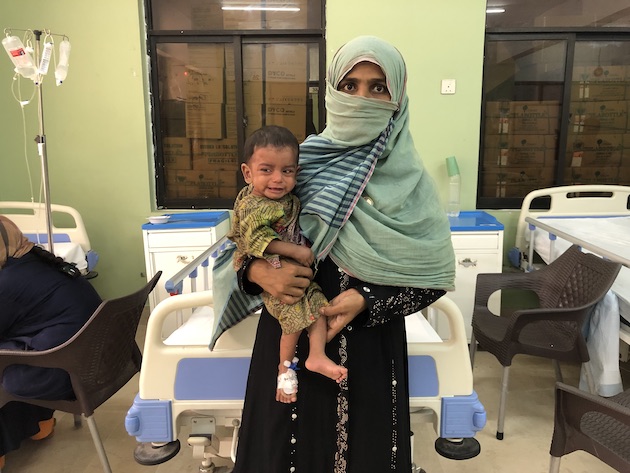
Eight-month-old Manahil Zeeshan is treated for typhoid at the government-run Sindh Institute of Child Health and Neonatology (SICHN) in Korangi, a neighbourhood in Karachi. Credit: Zofeen Ebrahim/IPS
Typhoid Vaccine Launch Hits a Snag as Covid-19 Surfaces
The 2019 TCV campaign was first launched in the two cities of Sindh – Karachi and Hyderabad (children up to 15 years of age were also given a shot), which reported the highest number of typhoid cases among children. There was a pause when Covid-19 hit the world. But by 2022, TCV had been launched across Pakistan, and 35.5 million children were vaccinated, after which it was added to the government-run Expanded Programme on Immunisation (EPI) programme.
“Many parents do not know that the TCV is a more effective vaccine but only available at government vaccination centres, and not at private clinics and hospitals as Gavi has only given it to the government of Pakistan,” said paediatrician Dr D.S. Akram.
“There is another typhoid vaccine available in the private sector (typhoid polysaccharide vaccine), but it can only be given to children over two years of age, and it needs boosters every three years. My advice to parents is to vaccinate their kids against typhoid bacteria at nine months,” she said.
But it is still a drop in the ocean, and the fight against typhoid and other childhood diseases continues. The WHO places Pakistan among the ten countries that account for almost two-thirds of the world’s unimmunised children.
When Covid-19 hit the country’s already crumbling health system, it also brought the country’s immunisation programme to a halt too. An estimated 1.5 million children across Pakistan missed out on basic vaccines from March to May 2020, according to Gavi.
For Pakistan, which already has low immunisation coverage (the percentage of fully immunised children aged 12-23 months is just 66%), it meant a further dip in coverage which led to an unprecedented rise in the number of zero-dose children (those that have not received any routine vaccine). Add to these were the almost 19,000 new births every day. But when the lockdown eased and vaccinators returned to work, there was less demand for vaccination, having been replaced by fear of the new virus.
While Pakistan has yet to reach the optimal immunisation coverage of 90%, during Covid-19, Pakistan’s EPI received plaudits internationally for taking both vaccine coverage and the number of zero-dose children close to pre-pandemic levels in 2021. “What Pakistan achieved needs to be celebrated. In fact, Pakistan and Chad are used as examples internationally of how to get it right in an emergency,” said Huma Khawar, an immunisation and child health advocate working closely with EPI.
“Despite a year’s delay due to Covid-19, which was unforeseen, I think it is the best thing that the government has done for its country’s children,” said Khawar. She credited the RI programme that bounced back to the pre-pandemic level in 2021.
Clean water, Good Hygiene Key to Preventing typhoid
While immunisation can protect children from getting infected, clean drinking water and improved hygiene practices can reduce the risk of catching the disease to a great extent.
“Vaccines provide immunity when there is exposure to the bacteria,” agreed Dr Jai Das, assistant director at the Institute for Global Health and Development at the Aga Khan University and one of the co-authors of the 2018 report on typhoid, but emphasised the need for improved water and sanitation, a situation that continues to remain dismal and compromised in Pakistan.
The same study not only found a strong correlation between water and sanitation but to literacy levels as well. In addition, it stressed improving the country’s food safety protocols and implementing regulations.
While Mohammad believes that her daughter is under a curse, one reason could be that the unpasteurised cow’s milk she gives her daughter may not be properly boiled at home. “I was unable to breastfeed her,” she said. Further, she confessed to diluting it with unboiled tap water to make it last longer.
Doctors say giving Pakistani babies a lease of life is simple and costs nothing. “Exclusive breastfeeding up to at least six months of age (right now it is only 43%), attaining 90% coverage of RI across Pakistan and improving water and sanitation quality,” according to Dr Akram.
Bacteria Don’t Respect Geographic Borders
The XDR typhoid bacteria propagating in Pakistan has crossed borders and reached as far as the UK, Canada and the US. Earlier this year, a team of Pakistani and US researchers published their findings in the American Journal of Tropical Medicine and Hygiene, stating that with numerous typhoid bacteria variants circulating in Pakistan have also been identified in Southeast Asia and Eastern and Southern Africa and have been introduced into the United Kingdom, Canada, and the United States by travellers.
The Lancet study said strains from South Asia had spread 200 times to other countries since 1990. When these superbugs grow and spread, they can cause infections that are hard to treat. Sometimes they can even spread the resistance to other bacteria they meet.
The future looks frightening. While the need for improving water and sanitation cannot be overemphasised, along with the need for vaccinating children, newer and stronger antibiotics need to be developed and fast as typhoid may surface in deadlier ways than now since very few antibiotics remain effective against the bacteria.
Note: This story was supported by the Sabin Vaccine Institute and Internews
Childhood vaccination, complemented with clean drinking water and improved hygiene practices, are the key to eradication of typhoid XDR, not indiscriminate use of antibiotics, say Pakistan health experts. Source