UN Ready for Breakaway Nations but the Pace Remains Slow

Africa, Armed Conflicts, Civil Society, Editors’ Choice, Featured, Global, Global Geopolitics, Headlines, Human Rights, IPS UN: Inside the Glasshouse, TerraViva United Nations

Armed Conflicts

South Sudan’s independence from the rest of Sudan was the result of a January 2011 referendum held under the terms of the 2005 Comprehensive Peace Agreement (CPA) that ended the decades-long civil war between the North and the South.
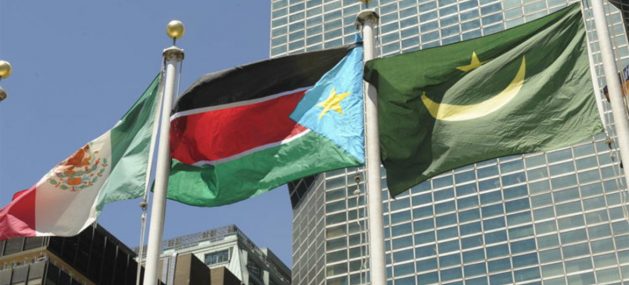
South Sudan’s national flag (centre) flies at UN Headquarters following its admission as the 193rd Member State. Credit: UN/E. Schneider

South Sudan’s national flag (centre) flies at UN Headquarters following its admission as the 193rd Member State. Credit: UN/E. Schneider

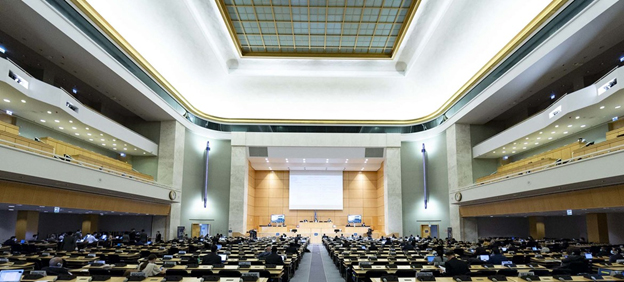
UNITED NATIONS, Jul 5 2021 (IPS) – When the United Nations renovated its building at a cost of over $2.1 billion, as part of a seven-year refurbishing project back in 2014, the seating in the cavernous General Assembly hall was increased from 193 to 204—primarily in anticipation of at least 11 new member states joining the world body sooner or later.


But the pace of new member states joining the UN, primarily from half a dozen breakaway regions dominated by separatist movements, has remained slow.

East Timor, described as the first new sovereign state of the 21st century, broke away from Indonesia and joined the UN in May 2002.

The UN played a significant role in supporting the democratic process in the country, now known as Timor-Leste. The UN Transitional Administration in East Timor (UNTAET) was deployed from 1992 to 2002 to administer the territory, exercise legislative and executive authority during the transition and support capacity-building for self-government.

Meanwhile, the Republic of South Sudan (population: 11.3 million), which seceded from Sudan, was the last of the 193 UN member states, joining the world body in July 2011.

But at least one potential member state— Kosovo– has been knocking at the door trying to seek admission rather unsuccessfully primarily because of opposition from one of the permanent members of the UN Security Council (UNSC).

The UN’s relatively new member states, beginning in the 1960s, included Singapore (1965), Bangladesh (1971) and six republics, including Bosnia and Herzegovina, Croatia, Macedonia, Montenegro, Serbia and Slovenia, resulting from the break-up of Yugoslavia in the 1990s.

Still, if political fantasies become realities, a lineup of new U.N. member states may include potential breakaway regions, including Kurdistan, Western Sahara, Chechnya, Abkhazia, Catalonia, Scotland and Palestine—not forgetting Tibet and Taiwan whose membership will be shot down by China, a veto-wielding permanent member of the UNSC.

But currently the most likely candidate is Tigray which is moving towards an independent state after nearly eight months of fighting against Ethiopian military forces, described as one of Africa’s most powerful, this time backed by Eritrea.

If it does happen, Ethiopia would have generated two breakaway states: first Eritrea which became independent of Ethiopia in 1993, and now Tigray, with a population of 7.1 million.

The Tigray Independence Party (TIP) has long campaigned for secession from Ethiopia which it described as an “empire”.

Debretsion Gebremichael, the leader of Tigray, was quoted by the New York Times as saying, “even if the conflict ends soon, Tigray’s future, as part of Ethiopia, is in doubt”.

In the Times report on July 4, Gebremichael said “The trust has broken completely. If they don’t want us, why should we stay?”. Still, he added, nothing has been decided because “It depends on the politics at the centre”.

Linda Thomas-Greenfield, US Ambassador to the UN, told reporters on July 2 the Security Council has held six closed-door meetings “and the situation in Tigray has not improved.”

She said the open meeting last week was the first opportunity to show that African lives matter as much as other lives around the world.

“But an open meeting is not enough,” she said, pointing out that “what we need to see is action on the ground.”

“We need to see a ceasefire that is permanent; that all of the parties agree to. We need to see the Eritrean troops return to their own border. We need to see unfettered access for humanitarian workers. “We need to see accountability for the atrocities that have been committed.”

“And at this moment I just want to express, again, our sympathy for the many losses of lives, including for MSF (Doctors Without Borders) staff who were killed recently,” she declared.

Meanwhile, the Brussels-based International Crisis Group (ICG) says the Tigray People’s Liberation Front is in control of most of the Tigray region, including major towns.

William Davison, ICG’s Senior Analyst, said the Front has achieved these gains “mainly through mass popular support and by capturing arms and supplies from adversaries.”

UN Secretary-General Antonio Guterres said last week he is deeply concerned with the present situation in Tigray.

“It is essential to have a real ceasefire paving the way for a dialogue able to bring a political solution to Tigray.” He said the presence of foreign troops is an aggravating factor of confrontation.

“At the same time, full humanitarian access, unrestricted humanitarian access must be guaranteed to the whole territory. The destruction of civilian infrastructure is totally unacceptable,” he declared. 
  Source

Flaws in Asia’s Pearl

Armed Conflicts, Asia-Pacific, Civil Society, Crime & Justice, Featured, Headlines, Health, Human Rights, Humanitarian Emergencies, TerraViva United Nations

Opinion

In March 2021, the UN Human Rights Council was given a mandate to collect and preserve information and evidence of crimes related to Sri Lanka’s 27-year long civil war that ended in 2009. Meanwhile, Western nations taking a cue from the Human Rights Council’s highly critical resolution on Sri Lanka appear to be tightening the noose. Credit: UN Photo / Violaine Martin. 43rd session of the Human Rights Council.

LONDON, Jul 5 2021 (IPS) – For well over a century Ceylon, now Sri Lanka, has been known to the world as the ‘Pearl of the Indian Ocean’ for its multifaceted attractions. That is until blurb writers ruined it all with hyperbolic epithets that obscured the country’s magnetic charms, which attracted visitors from around the globe.


But one particular epithet has lived up to its name. Called ‘a country like no other’, Sri Lanka is increasingly beginning to prove this true – though not for the reasons that originally prompted it.

Over the years, groups of professional politicians and those drawn to the sphere, not to serve the public but by thoughts of self-aggrandisement and avarice, have dragged this once prosperous country, with its many natural resources and strong democratic institutions, towards its nadir.

From being Asia’s first democracy, with universal franchise granted in 1931– even before independence from Britain in 1948– political commentators and increasingly the public now fear that the country is teetering on the brink of militarism, with retired and serving senior officers in key positions in the civil administration, and others appointed to virtually oversee Sri Lanka’s 25 administrative districts.

While there is both international and local disquiet over the deterioration of democratic values, of more immediate concern is the country’s dire economic state. The situation is so critical that less than two weeks ago, the respected Sunday Times wrote that President Gotabaya Rajapaksa’s government is ‘steps away from bankruptcy’.

At the same time, well-known economists were pressing alarm bells, warning about the possible breakdown of the banking system ‘causing a collapse of the economy’. The direct cause of the current crisis was the sudden hike in fuel prices in late June, which is bound to have a ripple effect on other commodities and services.

Bakers are already threatening to raise their prices, which could well have happened by the time this article appears.

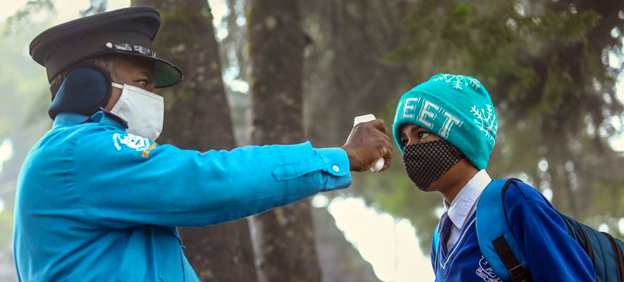
A thermometer gun is used to take a boy’s temperature in Sri Lanka. Credit: UNICEF/Chameera Laknath

With the prices of staples such as rice and vegetables unbearably high, the average consumer, already burdened by the steepening cost of living, is being pushed to the wall by a government that came to power some 20 months or so ago promising to reduce poverty and improve living standards.

Rising living costs are compounded by a still uncontrollable Covid pandemic. This has compelled the government to impose lockdowns and curb travel – restrictions which are haphazardly lifted and re-imposed, despite the best medical advice – as daily wage earners run out of cash to buy food for their families and meet other domestic needs.

Political commentators and increasingly the public fear that the country is on the brink of militarism

Last month, the Sri Lanka Medical Association urged President Gotabaya Rajapaksa to continue lockdown restrictions without interruption–”considering that over 2,000 Covid 19 cases and over 50 deaths are being reported daily” and also the detection of the highly dangerous Indian variant’.

At the time of writing, health authorities reported another 52 fatalities and put the daily count of positive cases at 2,098. But such statistics seems to matter little to politicians and their military and medical cohorts, tasked with combating the spreading pandemic but ignoring the accumulating data and the advice of specialist medical professionals.

Meanwhile, the vaccination of the population, according to a pre-determined programme, has been disrupted by politicians who have drawn up their own priority lists and even threatened doctors and health workers who refused to accept their dictates, raising law enforcement issues and public criticism.

Those with power and influence find backdoor means to gain access to vaccinations, at the expense of an increasingly frustrated and angry public, who stand in long queues for hours awaiting their turn.

While the overall Covid containment programme is reportedly in a mess, along with an economy going steadily downhill, another pearl turned up in the Indian Ocean close to Colombo port. The X-Press Pearl, a Singapore-registered container ship, was carrying noxious cargo, including a leaking nitric acid container. With Qatar and India refusing to admit the vessel for repairs, it turned up in Colombo

That poisonous pearl spewed nitric acid into the ocean and then self-immolated, burning for days before part of it went down on June 2. As a result of the incident, more than 150 marine animals, including 100 turtles, 15 dolphins, three whales and scores of birds and fish beached in various parts of the country, not to mention the kilometres of beach covered with plastic pollutants, leading a UN representative in Colombo to describe the episode as a ‘significant damage to the planet’.

Meanwhile, the original pearl of the Indian Ocean is struggling to keep its head above water. The Sunday Times’ economics columnist Dr Nimal Sanderatne, an agricultural economist, former central banker and academic, painted a bleak picture in his weekly column in late June: ‘The external finances of the country are in a perilous state. External reserves have fallen, the trade deficit is widening, the balance of payments deficit is increasing and there are foreign debt repayments of about US$4 billion during the rest of the year.’

His views about the parlous state of the economy were echoed by several other economists, including the spokesman of Sri Lanka’s main opposition party SJB, Dr Harsha de Silva, and Dr Anila Dias Bandaranaike, a former assistant governor of the Central Bank.

In a desperate bid to boost reserves, Sri Lanka went for a currency swap of US$200 million with Bangladesh, once a struggling new nation in South Asia. Prudent economic policies and management, and national interest, brought Bangladesh to its current flourishing status.

When the currency swap was announced, one Sri Lankan wag remarked that it would have made more sense if Sri Lanka had swapped its advisors for those from Bangladesh, and the swap should be permanent to protect the country’s self-respect

Only a country that has lost its political sense and perceptiveness, or has abandoned all concern for its struggling people, could seek government sanction to import nearly 300 vehicles costing Rs 3.7 billion for its 225 parliamentarians and unnamed others, in the midst of a severe foreign currency crisis, when begging and borrowing seem the only options.

What is even worse, Sri Lanka’s premier state bank was ordered to open letters of credit one month or so before cabinet approval had been sought. Whoever ordered this remains unknown to the public at the time of writing.

Critics of the government say it is fast losing its one-time popularity as ill-considered and sudden policy decisions are heaped on existing economic and health problems, such as the snap decision to ban chemical fertiliser and pesticides, so essential right now for agriculture and export crops such as tea.

Scant wonder the government is being assailed by even close associates of the Rajapaksa family. One such is the head of the Catholic Church, Malcolm Cardinal Ranjith, who, in a strongly critical statement recently said that ‘even nature seemed to be turning against the rulers’.

Meanwhile, western nations taking a cue from the UN Human Rights Council’s highly critical resolution on Sri Lanka last March appear to be tightening the noose.

At the end of June, the European Parliament moved a resolution, with almost 90 per cent voting for it, urging the EU authorities to consider suspending the Generalised System of Preference (GSP Plus) trade concessions to Sri Lanka, which would be a serious blow to exports.

Later the Core Group of Western nations that sponsored the UNHRC resolution issued a statement condemning Sri Lanka’s human rights situation and new changes to the Prevention of Terrorism Act.

Bleak times lie ahead.

Source: Asian Affairs Magazine

Neville de Silva is a veteran Sri Lankan journalist who held senior roles in Hong Kong at The Standard and worked in London for Gemini News Service. He has been a correspondent for foreign media including the New York Times and Le Monde. More recently he was Sri Lanka’s deputy high commissioner in London

  Source

The Doctor is in: Why Black Men are Desperately Needed in the Medical Field

Dr. Jason Denny, far left, is a senior staff surgeon and director at the Center for Living Donation at the Henry Ford Transplant Institute and chair of the Detroit Minority Organ Tissue Transplant Education Program (MOTTEP) Foundation. Dr. James J. Jeffries II, center, a senior staff internist with the Division of Hospital Medicine, primarily operates out of Henry Ford West Bloomfield. Dr. Anthony Stallion, far right, chief of Pediatric Surgery at Beaumont Children’s, specializes in pediatric general and thoracic surgery. 

Photos provided by Henry Ford, Henry Ford West Bloomfield, and Beaumont Children’s Hospital

“It’s hard to be what you can’t see.”  

Black American author Jason Reynolds shared his thoughts in this quote about growing up and becoming a writer during a time he didn’t have any role models that he could look to for his career profession. The writer overcame the challenge of not reading a book until he was 17 years old.   

In the last 40 years or so the needle hasn’t moved much when it comes to seeing more Black men in the medical field.   

The number of Black male doctors there are in America is extremely low: roughly 3 percent, according to nationwide statistics.  

The Michigan Chronicle interviewed three Black male doctors (ranging in career fields and experience in metro Detroit) to get their take on why these statistics are the way they are, what can be done and what might the future hold.  


Dr. Denny is In  

Dr. Jason Denny, 51, a senior staff surgeon and director at the Center for Living Donation at the Henry Ford Transplant Institute and chair of the Detroit Minority Organ Tissue Transplant Education Program (MOTTEP) Foundation spoke about his lengthy career in medicine.   

Denny, who grew up in New York, said that his brother is also a transplant surgeon, “which is a little weird.”  

“My brother is five years older than me, and I knew I wanted to go into transplant a little earlier than him. He obviously did it before me,” Denny said, adding that the history of Black surgeons in the country has racist roots.   

Denny quotes a 1987 book, “A Century of Black Surgeons: The U.S.A. Experience” by Claude H. Organ Jr. and how Black surgeons were initially not allowed to practice in the United States.  

Even in the modern times, Denny said that he followed Black medical pioneers decades earlier and saw how they overcame bias and more.  

“I met a lot of these guys, their stories [were filled with] a lot of adversity,” he said adding that they helped motivate him. “It was really inspiring to me and set me on a path. Once you know what legacy is and where you fit in it is a lot easier to pursue the dream.”  

Denny joined student organizations in school and Black medical student organizations around the country and he met other Black medical students who shared their stories.  

“You can see yourself in their shoes,” he said.  


Dr. Jeffries is In  

Dr. James J. Jeffries II, a senior staff internist with the Division of Hospital Medicine, primarily operates out of Henry Ford West Bloomfield. He also works with the residency program teaching the second-and third-year Internal Medicine residents about hospitalist level of care.   

Jeffries said that his interest in medicine started early in life when he was possibly an elementary school student.  

“I found that science was definitely one of the drivers that I always enjoyed,” Jeffries, 59, said of biology and chemistry classes, in particular.  

He added that the loss of his brother to acute lymphoblastic leukemia when he was a teenager was “one of the biggest inspirations” for him to pursue a career in medicine.  

“I had no one else in the family in medicine,” he said, adding that his father did obtain a nursing degree, but he had no exposure to physicians of color in his formative years. A portion of his adulthood was much of the same.  

Jeffries said that he was in his late 20’s when he met for the first time a Black physician in internal medicine who was one of two internists where he did his training at St. Joe’s in Ann Arbor.  

“I came to Henry Ford in 1991 and was hired by a gentleman who is from Malawi — that was my first [Black] mentor when I became a senior staff at Henry Ford.”  

He added that it “would be nice” to see great representation and have more Black men in the medical field.  

“I talk about this constantly … how we don’t see the numbers — we need to start at an early age … to get to hopefully 10 percent or more of the physician workforce,” he said adding that this starts early in elementary school and middle school. “Identifying those that have the talent and the potential for matriculating into healthcare careers, especially medicine.”  


Dr. Stallion is In  

Anthony Stallion, chief of Pediatric Surgery at Beaumont Children’s, specializes in pediatric general and thoracic surgery, and hails from St. Louis, Mo., originally. The 60-year-old’s medical career began locally after he graduated from college in Michigan and started his pediatric surgery training at Children’s Hospital.  

He was a general surgery resident in 1994 and completed pediatric surgery in 1996. Out of the 225 students graduating in his University of Michigan Medical School class in 1983, seven or eight were Black men.  

“That wasn’t a lot then,” he said, adding that the numbers have gotten more than likely worse now.  

Stallion said that the lack of Black men in this field boils down to “the lack of opportunity and the lack of chance to pursue careers.”  

He added that the issue is not a lack of interest but “how we treat our African American males from the very beginning.”  

He said it’s important to work with students, especially Black boys, and help cultivate their interest each step of the way.  

“When you talk about the percentage who go into medicine … the vast majority of the people of color who were going into medicine are women,” he said. “The males have been left behind in a sense …not getting support and the mentorship and so forth that is necessary.”  

Stallion said that having role models can be hard when they are not readily in front of Black boys.  

“You don’t know that is a possibility for you and it’s hard for your eyes to be opened to something that you don’t know even exists,” he said. 

Source

Stopping Marine Plastic Pollution: A Key IUCN Congress Goal

Civil Society, Climate Change, Conferences, Economy & Trade, Environment, Featured, Global, Headlines, Health, Natural Resources, Poverty & SDGs, Sustainability, TerraViva United Nations, Water & Sanitation

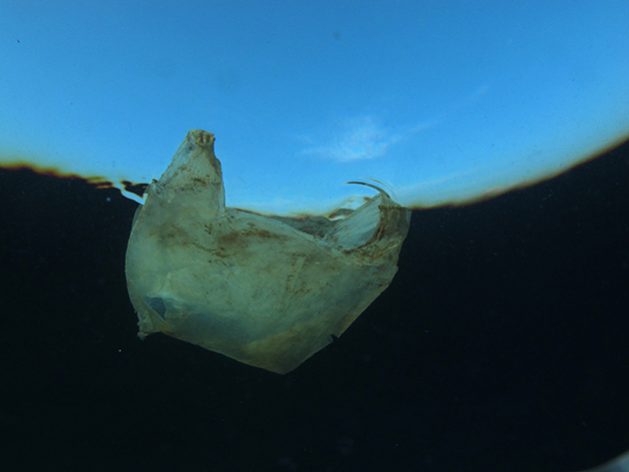
Plastic bags may remain intact for years in the marine environment. Plastic products certified to be industrially compostable are no solution for littering, as they do not degrade efficiently in the environment and continue to pose a threat to wildlife as they break down. Credit: Eleonora de Sabata / Clean Sea LIFE

St David’s, Wales, Jul 1 2021 (IPS) – Documented images of albatross chicks and marine turtles dying slow deaths from eating plastic bags and other waste are being seared into our consciences. And yet our mass pollution of Earth’s seas and oceans, fuelled by single-use plastics and throw-away consumerism, just gets worse.


Plastic debris is estimated to kill more than a million seabirds, 100,000 marine mammals and countless sea turtles every year. Plastics, with all their benefits and promises, have revolutionised societies and economies since their development in the 1950s, but now some 8 million tonnes end up in the oceans every year.

Waste plastic, making up to 80% of all marine debris from surface waters to deep-sea sediments, breaks down into micro-plastics which enter the digestive systems of sea and land animals and humans. Invisible plastic is in the water we drink, the salt we eat and the air we breathe. Experts are still working out the long-term impacts, such as cancer and impaired reproductive systems.

The fishing industry, nautical activities and aquaculture also leave a massive legacy in terms of ocean waste, poisoning and ensnaring sea life.

Hasna Moudud heads a small NGO in Bangladesh, working to protect coastal areas where vast rivers pour into the Indian Ocean, providing livelihoods and food for millions.

Her NGO, Coastal Area Resource Development and Management Association (Cardma), plants coastal trees, protects olive ridley sea turtles in a conservation hatchery in the Bay of Bengal, and helps women in cottage industries, using cane grass to make mats instead of plastic.

“Oceans are always neglected,” she tells IPS. “Small NGOs like myself take risks to save whatever we can of the fragile ecosystem that is left for our future generations.”

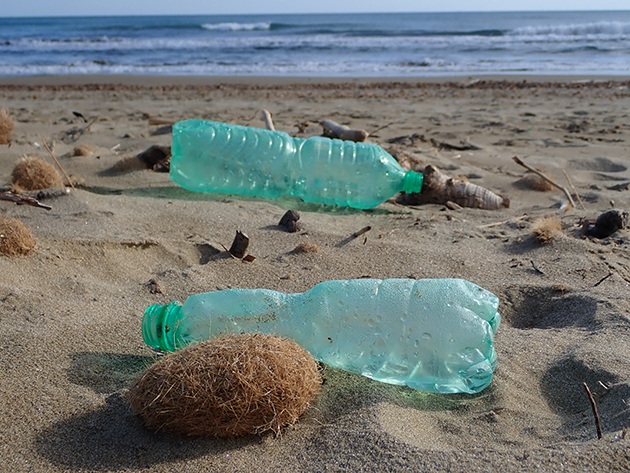
Plastic bottles and bottle caps are among the most frequent items found along Mediterranean shores. Credit: Eleonora de Sabata / Clean Sea LIFE

But to combine her NGO’s efforts with those of others, Moudud says she is “praying” to attend the IUCN World Conservation Congress 2020 in Marseille this September where government, civil society and indigenous peoples’ organisations from around the world will join discussions to set priorities and drive conservation and sustainable development action.

Meeting every four years – with this Congress delayed by the Covid pandemic – member organisations of the International Union for Conservation of Nature, vote on major issues to shape humanity’s response to the planet’s conservation crises. This particular Congress in Marseille is offering both in-person and virtual participation options, allowing those unable to make the trip to Marseille for the full Congress the opportunity to join discussions and provide their feedback.

Moudud’s NGO is a co-sponsor of Congress Motion 022: “Stopping the global plastic pollution crisis in marine environments by 2030.”

The broad resolution goes to the heart of the waste plastics issue. It notes that global production is due to increase by 40% over the next 15 years from current levels of around 300 million tonnes and that the world’s “predominant throwaway model” means that over 75% of the plastics ever produced to date are waste, “notably because the price of plastic on the market does not represent all of the costs of its lifecycle to nature or society”.

Recalling previous international efforts to set goals for ending marine plastic litter, the motion calls on the international community to reach a wide-ranging global agreement to combat marine plastic pollution. This would entail, among other measures, eliminating unnecessary plastic production, in particular single-use plastic waste; recycling and proper prevention of leakage into the environment; and public awareness campaigns.

Sunlight, salt and pounding waves grind marine litter down to plastic grains. Credit: Eleonora de Sabata / Clean Sea LIFE

Activists say previous international efforts to curb plastic pollution have been toothless. Moudud is among many who want mandatory and enforceable measures, accusing big business of what she calls “manipulative practices through sponsorship and malpractice without helping build the natural world”.

“No one is looking or holding the polluters responsible,” she says, calling for a toughening up of the resolution. “I am deeply involved in everything IUCN does to help save the natural world and sustainable living.”

Steve Trott, project manager for IUCN-member Watamu Marine Association which is tackling plastic pollution in their Marine Protected Area in Kenya, says Motion 022 clearly sets out the threats posed by plastic waste to marine and coastal environments, economies and human health and well-being.

“Watamu Marine Association and EcoWorld Recycling based on the Kenya coast embrace the IUCN call for action,” Trott told IPS.

Pushing circular economy initiatives, their NGO has created dynamic plastic value chains through partnerships between the hotels industry and local communities, sponsoring beach clean-ups and collecting plastic waste for recycling. This provides a second source of income for community waste collectors while local artists are also up-cycling plastic waste.

Reflecting one of the main themes of IUCN’s membership structure bringing together civil society and indigenous peoples and government authorities, Trott says Watamu is following a “win-win model which can be replicated and up-scaled, sending out an ‘Act Local, Think Global’ message to inspire others”. He hopes to attend the Congress in Marseille if all goes well.

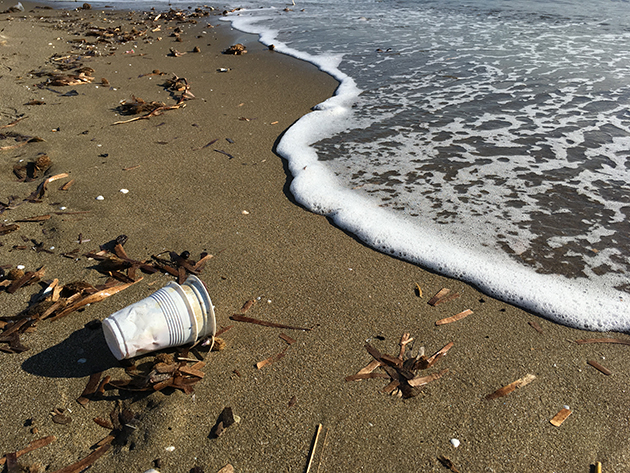
Single Use items are littering the world’s oceans. Credit: Eleonora de Sabata / Clean Sea LIFE

The Plastic Waste Makers index, a study by Australia’s Minderoo Foundation, identifies 20 companies producing more than half of all single-use plastic waste in the world. Some are state-owned and multinational corporations, whose plastic production is financed by major banks. The report notes that nearly 98% of single-use plastic is made from what is called virgin fossil fuels — plastic created without any recycled materials.

Single-use plastics explain why fossil fuel companies are ramping up their production as their two main markets of transport and electricity generation are being decarbonised. By 2050 plastic is expected to account for 5%-10% of global greenhouse gas emissions.

Humankind possesses unprecedented levels of knowledge but also the accompanying responsibility, knowing that oceans are in the poorest health since humans started exploiting them.

Single use plastics – and the estimated 130 million tonnes that are dumped each year around the world – have dominated studies and discussions on waste. Plastic bottles, food containers and wrappers, and single-use bags are the four most widespread items polluting the seas.

One element woven into similar narratives of how to tackle the world’s burning environmental issues – such as carbon emissions, species loss, and plastic waste – is the potential fix offered by technology. Motion 022 refers to the need for more investment in environmentally sound plastic waste collection, recycling and disposal systems as well as forms of recovery.

A study led by biologist Nikoleta Bellou at the Helmholtz-Zentrum Hereon institute focuses on inventive sea-cleaning solutions to date, including floating drones. But her paper suggests that it could take about a century to remove just 5% of plastics currently in the oceans using clean-up devices because plastic production and waste are accumulating so fast.

Activists welcome IUCN’s intervention on plastic waste pollution and the strong mandate a successful and unanimous motion can convey to governments and international institutions. But they also caution against taking too narrow an approach towards tackling marine pollution at the September 3-11 Congress.

Eleonora de Sabata, spokesperson for the Clean Sea Life project, co-funded by the European Union’s LIFE programme, told IPS that the narrative needs to shift away from single-use plastic to single-use everything. “Technology” has come up with so-called ‘bio’ plastics as a replacement for some plastics but only to create a whole suite of problems of their own.

“It’s the throwaway culture that creates problems, whether plastic or not. Green washing and sloppy leadership are filling our world of single use,” she argues. Washing our consciences by simply substituting single-use plastics with other single-use items, such as supposedly biodegradable bags and cutlery, are not the answer.