Cape Town Restaurants Serving Iftar For Ramadan 2026

As Cape Town’s Muslim community welcomes the holy month of Ramadan, the city’s halal restaurants open their doors for specially curated iftar experiences, from buffets to set menus and everything in between.

This year, Ramadan in South Africa is expected to begin on the evening of Tuesday, 18 February 2026, with the first day of fasting on Wednesday, 19 February. The holy month will last 29 or 30 days, ending on or around 18 March 2026. Eid al-Fitr, the celebration marking the end of Ramadan, will take place between 19 and 20 March 2026.

Iftar, or Boeka (the Cape Malay term commonly used in Cape Town), marks the time when Muslims are allowed to eat and drink after a long day of fasting from dawn until sunset.

If you are looking for halal restaurants to break your fast or experience this tradition, here are some options:

126 Cape Kitchen & Cafe, Hyatt Regency Cape Town
Cape Town Restaurants Serving Iftar For Ramadan 2026

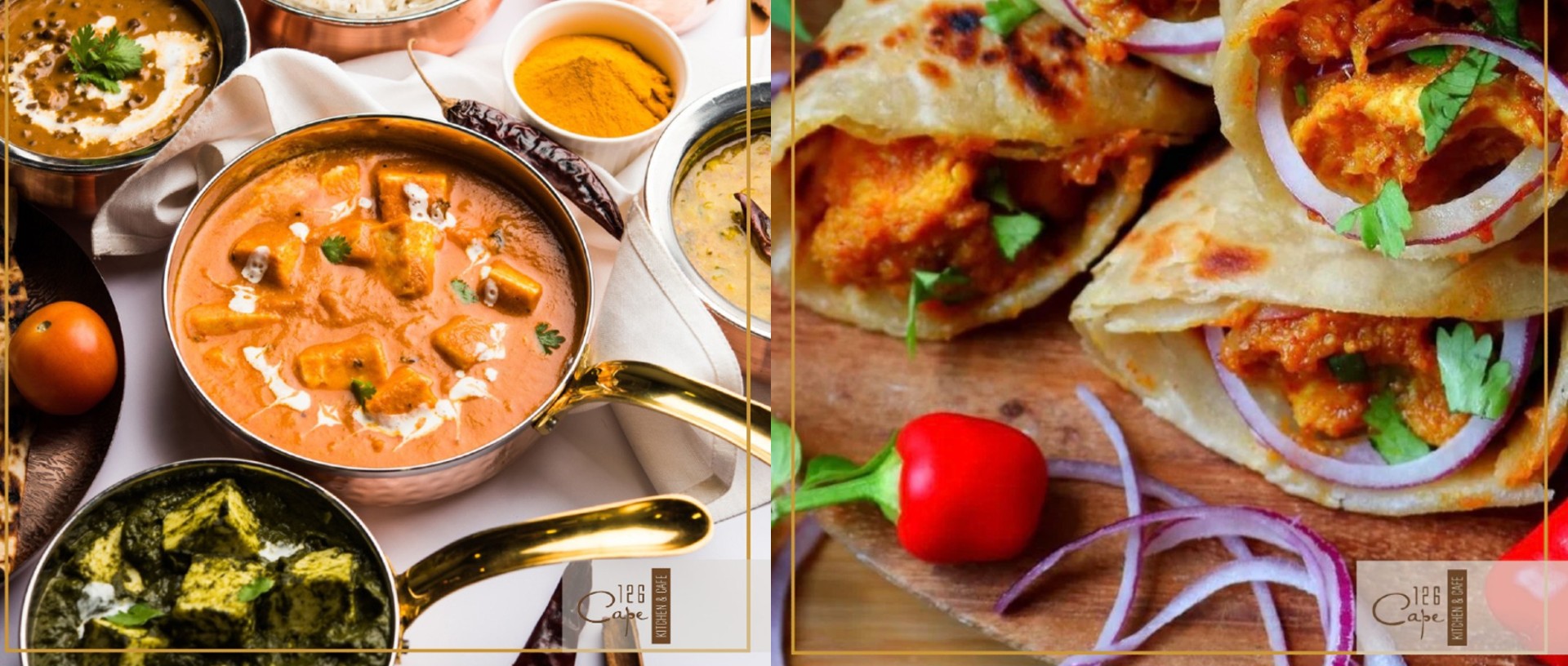
Located on the ground floor of the Hyatt Regency Cape Town, 126 Cape Kitchen & Cafe is inspired by the rich traditions of Bo-Kaap. The restaurant offers a fusion of Malay and Indian flavours. Enjoy their iftar buffet from 6-10pm, featuring traditional dhaltjies and samoosas, an array of salads and sides, and mains like bobotie, butter chicken, Penang lamb curry, and briyani.

Prayer facilities are available at the hotel.

Location: 126 Buitengracht St, Cape Town City Centre
Price: R350 for adults, kids under 12 pay half price. The à la carte menu will not be available.
Contact: Visit www.hyattrestaurants.com

Barakat at Time Out Market Cape Town

Barakat at Time Out Market will be offering complimentary water and dates to all guests to break their fast-during the month of Ramadan. The special includes butter chicken, served with a choice of samoosa and traditional Boeber for dessert.

Location: The Old Power Station, Dock Rd, Victoria & Alfred Waterfront
Price: R160 for the butter chicken, including a samoosa and boeber.
Contact: Visit www.instagram.com/barakat_tm

Cardamom Kitchen

If you’re on the go and want nourishing halal meals, Cardamom Kitchen has a selection of frozen meals, perfect for an easy iftar and suhoor. See the menu here

Location: 14 Sergeant St, Rondebosch East, Cape Town
Price: Various. Contact: 087 265 2262 or email info@cardamomkitchen.co.za

Bo-Kaap Deli, Bo-Kaap
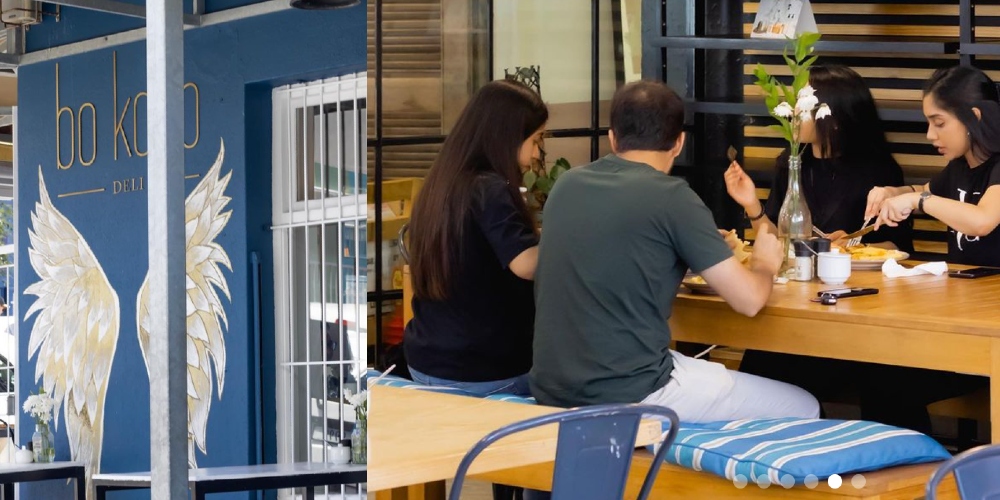
Bo-Kaap Deli will be hosting iftar every Friday and Saturday from 5:30 pm to 10 pm. Guests can order from the menu and enjoy complimentary savouries and soup. A dedicated prayer area is available inside the restaurant.

Location: 114 Church St, Bo-Kaap
Price: Various.
Contact: Call +27 76 346 6207

Nouveau Coffee and Grill, Century City

Nouveau Coffee and Grill’s buffet experience is perfect for gathering with family and friends. Expect a generous spread featuring your choice of soups, a fresh salad selection, grilled queen prawns, a South Indian butter chicken, a Durban-inspired masala breyani, the pasta of the day,

and a variety of desserts to end on a sweet note. There is a dedicated prayer area at the restaurants for guests to use.

Location: Shop 3, Century Village Centre, Century City
Price: R330 for guests over the age of 12, and R195 for children under 12. The à la carte menu will not be available.
Contact: Visit nouveau.co.za

Cova Cafe, Sea Point

Get your matcha and coffee fix after you break your fast at Cova Cafe. The cafe has introduced their Ramadan Seasonal late-night hours from Thursday to Saturday, from 9.30pm-11.30pm. Falooda and Karak Tea will also be available.

Location: Shop 2, 401 St Johns Rd, Cape Town
Price: Various.
Contact: Visit www.instagram.com/covacafe.sa

Aladdin, Cape Town City Centre
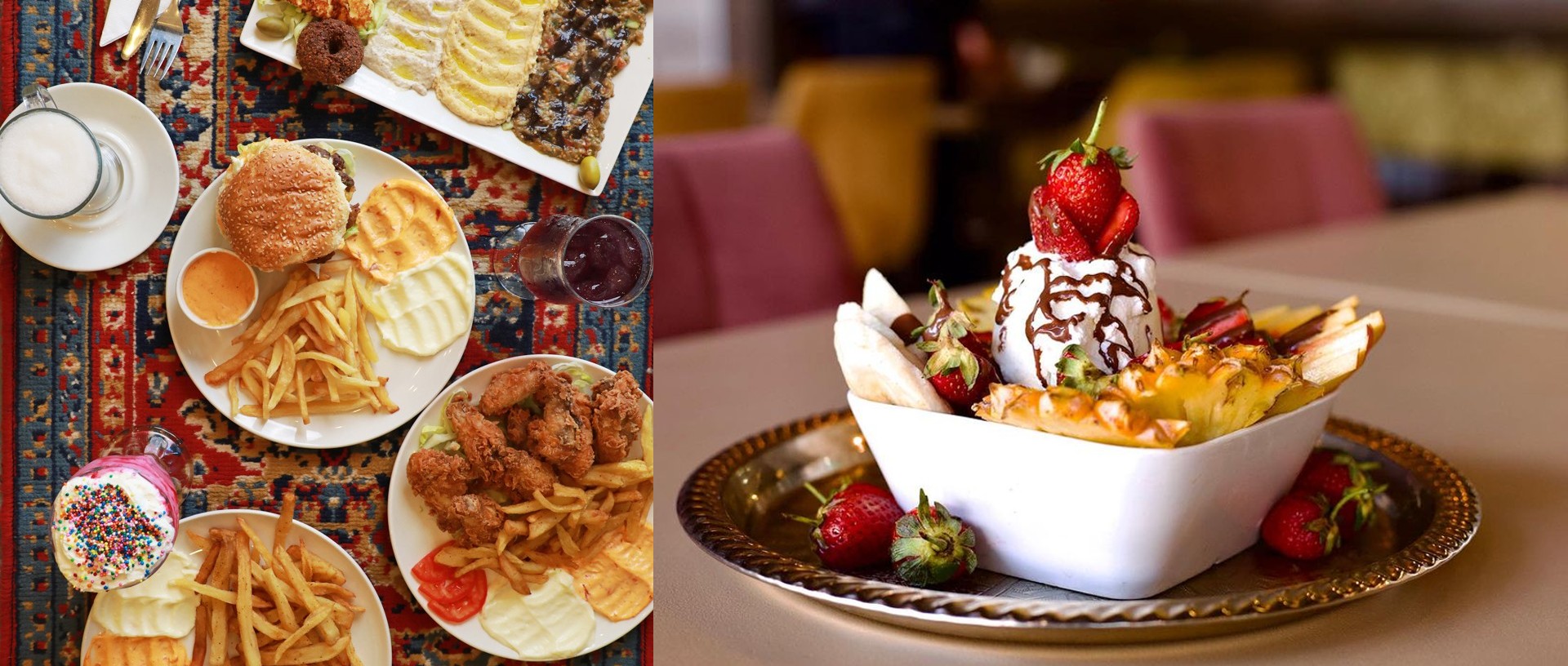
Indulge in a traditional Syrian meal at Aladdin during iftar. The curated set menu offers a choice of signature dishes, including chicken kofta, beef shish kebab and ribs, tender lamb shank served with rice or mashed potatoes, succulent lamb chops, and a variety of flavorful chicken specialties. Your meal begins with complimentary soup, fresh dates, and water. The Coowatool Islam Mosque is located across the road, making it convenient for guests to perform their evening prayers after their meal.

Location: 210 Loop St, Cape Town City Centre
Price: R210pp.
Contact: Call +27 63 065 7064

Alhambra Restaurant, Lansdowne

Indulge in a three-course dinner every Friday and Saturday during Ramadan at Alhambra. Start by choosing from a variety of delicious starters, then move on to hearty mains like creamy Alfredo pasta, tender sirloin, flavourful chicken and prawn dishes, juicy lamb chops, or a

generous seafood paella. Be sure to leave room for something sweet to round it all off. You’ll also be treated to a samoosa, a halfmoon, a koeksister, a date, and a refreshing falooda shot. The Masjid Al-Furqaan Mosque is within close vicinity. Booking is essential.

Location: 409 Imam Haron Rd, Lansdowne
Price: From R220pp. A kiddies’ menu will be available.
Contact: Call +27 21 697 1214 or visit: al-hambra.co.za/

On The Square at The Capetonian

On The Square at The Capetonian is going all out with a daily Ramadan Iftaar Buffet. Break your fast the traditional way with dates, followed by the chef’s soup of the day served with freshly baked breads and a cold buffet. When it’s time for mains, enjoy the chef’s curry of the day (beef or mutton) with basmati rice, flavourful Kabsa Mandi, grilled spicy chicken shiwaya, comforting roasts, pasta dishes, and fish. Finish off with decadent desserts, fresh fruit, and bottomless tea and coffee.

Location: Pier Place, Heerengracht St, Foreshore
Price: R275 per person for adults and half price for children under 12.
Website: capetonian.co.za/dining-on-the-square/

The post Cape Town Restaurants Serving Iftar For Ramadan 2026 appeared first on Cape Town Tourism.
The Maravi Post

The Veto May be the Weapon of Elimination in the Election of Next UN Chief

Civil Society, Featured, Global, Global Governance, Headlines, IPS UN: Inside the Glasshouse, TerraViva United Nations

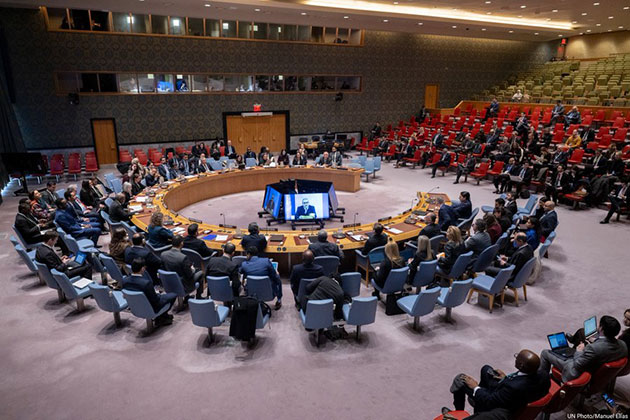
The Security Council armed with veto powers. Credit: UN Photo/Manuel Elías

UNITED NATIONS, Feb 17 2026 (IPS) – As the campaign for the next Secretary-General gathers momentum – at a relatively slow pace – there is widespread speculation that any candidate running for the post of UN chief will have to abide by the dictates of a politically hostile White House or face a veto in the Security Council.


So far, there are only two declared candidates: former Chilean President Michelle Bachelet and former Director-General of the International Atomic Energy Agency (IAEA) Rafael Grossi from Argentina—with more candidates expected to join the race.

The winning candidate, who will take office in January 2027, will be elected by the 15-member Security Council and subsequently ratified by the 193-member General Assembly (UNGA).

Annalena Baerbock, the president of UNGA, said the selection process is already underway, and the interactive dialogues with candidates have been scheduled for the week of 20 April, where they will present their “vision statements”.

Meanwhile, the US has publicly declared its opposition to some of the basic goals in the UN’s socio-economic agenda, including gender empowerment and policies relating to diversity, equity and inclusion (DEI), while dismissing climate change as “a hoax” and a “giant scam.”
The Trump administration has also downplayed human rights and adherence to international laws—two concepts ingrained in the UN system.

In an interview with the New York Times last January, President Trump said he does not “need international law” to guide his actions, arguing that only his own “morality” and “mind” will constrain his global powers.

So, what would be the fate of any candidate— male or female—who advocates these UN goals? Will there be a battle of the vetoes – as it happened in a bygone era?

Richard Gowan, Program Director, Global Issues and Institutions, International Crisis Group (ICG), who oversees ICG’s work on geopolitics, global trends in conflict and multilateralism, told IPS nobody knows how this race will end.

Obviously UN-watchers will be tracking the initial candidates’ vision statements and public appearances over the coming months, he pointed out.

“But diplomats in New York have a suspicion that the veto powers in the Security Council may suddenly announce support for a new candidate at the last minute to circumvent the entire public process. There is a strong sense that the U.S., China and Russia don’t want to be boxed in by the General Assembly.”

There is also a scenario, he said, where the veto powers cannot agree on a candidate, and the Council ends up grinding out discussions of a candidate right through to December.

“UN officials have even done some contingency planning for what happens if there is not an agreed candidate on 1 January 2027. It is possible that the Security Council might ask Guterres to hang on for a few months, although I don’t think either diplomats or Guterres want that outcome.”

There are definitely a few senior UN officials and ambassadors in New York who wonder if the Council could call on them at the very last minute, said Gowan.

Thomas G. Weiss, Presidential Professor Emeritus, Political Science, and Director Emeritus, Ralph Bunche Institute for International Studies at the CUNY Graduate Center, told IPS it is hard to imagine anyone running for UNSG who would not run into a veto from Washington in a candidacy necessarily addressing the values of cooperation (multilateralism of any shape) as well as honestly discussing such issues as climate, gender (male or female), nuclear proliferation, Palestine, and sovereignty—all “hoaxes” or “con jobs” according to DJT (President Trump) and his junta.

Both the 1996 and 1981 elections, he said, provide “models.”

“The Chinese vetoes probably are the most relevant precedent for Washington going to the mat indefinitely until an “acceptable” candidate emerges. Let’s hope that person is as competent as the compromise of 1996, Kofi Annan”, he declared.

In 1981, Salim Ahmed Salim of Tanzania, was backed by the Organization of African Unity, the Non-Aligned Movement and China. But his bid was blocked by a US veto.

In 1996, a second five-year term for Boutros Boutros-Ghali of Egypt was vetoed by the US – even though he received the support of 14 of 15 members in the Security Council.

In 1981, China cast a record 16 vetoes against Kurt Waldheim to prevent a third term, leading to his withdrawal and the selection of Javier Pérez de Cuéllar.

Meanwhile, there has been an intense campaign for a female UN chief, the first in the 81-year history of the UN. But the US has remained tight-lipped on the widely supported proposal.

The last 9 secretaries-general, all males, include:

António Guterres (Portugal), who took office in January 2017;
Ban Ki-moon (Republic of Korea), from January 2007 to December 2016;
Kofi A. Annan (Ghana), January 1997 to December 2006;
Boutros Boutros-Ghali (Egypt), January 1992 to December 1996;
Javier Pérez de Cuéllar (Peru), January 1982 to December 1991;
Kurt Waldheim (Austria), January 1972 to December 1981;
U Thant (Burma, now Myanmar), who served from November 1961, when he was appointed acting Secretary-General (he was formally appointed Secretary-General in November 1962), to December 1971;
Dag Hammarskjöld (Sweden), from April 1953 until his death in a plane crash in Africa in September 1961; and
Trygve Lie (Norway), who held office from February 1946 to his resignation in November 1952.

As for the U.S., said Gowan, “I don’t believe that Washington has settled on a candidate yet. But the Trump administration is definitely conscious that they have the power to reshape the political culture of the organization if they find someone who aligns with their views”.

He said U.S. diplomats have told other veto powers that they will hold back on various reform proposals and cuts until they have their own candidate as Secretary-General.

A lot of UN members assume that the U.S. won’t accept a female Secretary-General but I think that Washington could back a woman if she was a strong social conservative and willing to make large cuts to the UN system, he argued.

“Right now, there is not an obvious female candidate meeting those criteria, though. I think some candidates who could never align with the U.S. on things like development and diversity are already stepping out of the race.”

Meanwhile, there is a reason that Mia Mottley has gone from being the putative front runner to refocusing on domestic politics.

“I also think that all candidates recognize that they are going to have to talk a lot more about how they will advance the UN’s work on peace and security, which is a priority not only for the U.S. but a lot of member states.”

“That said, one senior UN diplomat recently told me that they cannot see Global South countries accepting another Western candidate after Guterres, regardless of gender. The non-Western members of the Security Council could create a blocking minority in the Security Council to keep candidates from U.S. allies out,” declared Gowan.

IPS UN Bureau Report

  Source

From Pledges to Proof: UN Biodiversity Meeting Begins First Global Review of Nature Action

Biodiversity, Climate Action, Conferences, Development & Aid, Editors’ Choice, Environment, Featured, Gender, Global, Headlines, Indigenous Rights, Natural Resources, Sustainable Development Goals, TerraViva United Nations

Biodiversity

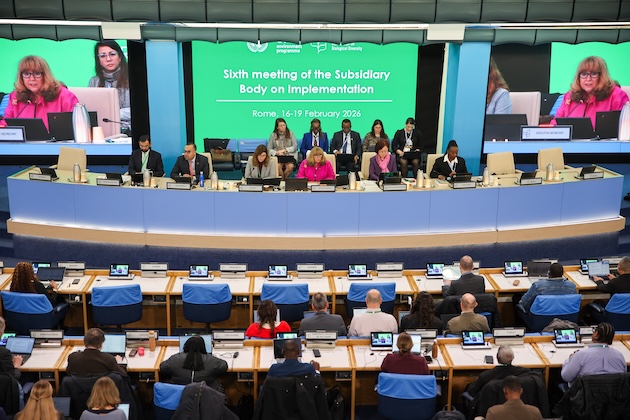
The 6th meeting of the Subsidiary Body of Implementation (SBI-6) is in progress in Rome. Credit: Mike Muzurakis | IISD/ENB

The 6th meeting of the Subsidiary Body of Implementation (SBI-6) is in progress in Rome. Credit: Mike Muzurakis | IISD/ENB |

ROME & DELHI, Feb 17 2026 (IPS) – Governments convened in Rome on Monday (February 16) for a critical round of UN biodiversity negotiations, launching the world’s first global review of how countries are acting to protect nature.


The sixth meeting of the Subsidiary Body on Implementation (SBI-6) of the Convention on Biological Diversity opened at the headquarters of the Food and Agriculture Organization (FAO), drawing government negotiators, technical experts and civil society observers from around the world. It will continue until February 19.

Although considered a technical gathering, the four-day session is expected to play a decisive role in shaping how progress under the Kunming–Montreal Global Biodiversity Framework will be assessed and whether political promises can be translated into measurable, on-the-ground action.

“This is a moment to move from commitments to delivery,” said Clarissa Souza Della Nina of Brazil, Chair of the Subsidiary Body on Implementation. “The task before us is to help countries accelerate action to halt and reverse biodiversity loss.”

Clarissa Souza Della Nina of Brazil, Chair of the Subsidiary Body on Implementation. Credit: Mike Muzurakis | IISD/ENB

Clarissa Souza Della Nina of Brazil, Chair of the Subsidiary Body on Implementation. Credit: Mike Muzurakis | IISD/ENB

A Global Stocktake for Nature

The Rome talks come two years after countries completed the first global stocktake under the Paris Agreement, which confirmed the world remains far off track on climate goals.

Now, a parallel exercise begins for biodiversity.

Under the CBD, governments will undertake the first global review of progress in implementing the Kunming–Montreal Global Biodiversity Framework (KMGBF), adopted in 2022. The framework includes 23 targets spanning conservation, finance, equity and economic transformation, with the overarching objective of halting and reversing biodiversity loss by 2030.

Biodiversity tracking is more complex than emissions accounting, but, according to CBD leadership, it is urgently needed.

“The time has come to make peace with nature… the implementation of the Kunming-Montreal Global Biodiversity Framework and the Paris Agreement in a synergistic fashion will make peace with nature within reach,” said Astrid Schomaker, Executive Secretary of the Convention on Biological Diversity.

Why Rome Matters

SBI-6 plays a central role in preparing for the upcoming global biodiversity review by examining implementation progress, highlighting gaps, and proposing ways to accelerate action. Negotiators will submit the outcomes directly to COP17 in Yerevan, Armenia, later this year.

“One year after COP16 concluded here in Rome, we must ensure these meetings deliver real progress. Submitting national reports on time is essential for a strong and credible global review in the race to 2030,” Schomaker said.

A major focus of SBI-6 is the Secretariat’s analysis of national biodiversity strategies and action plans submitted since 2022. But despite growing momentum, significant gaps persist. Many strategies still do not adequately integrate Indigenous Peoples, local communities, women, youth, or the private sector. Crucial targets relating to economic and social transformation — including sustainable consumption, equity and benefit sharing — remain underemphasised.

Inger Andersen, Executive Director of the United Nations Environment Programme (UNEP), underscored the stakes at the launch of the State of Finance for Nature 2026 report:

“Whether investments flow into nature’s destruction or into its protection will determine if we live in climate-vulnerable concrete jungles or in climate-resilient green cities,” she warned, stressing that financial and policy decisions made today will shape countries’ ability to meet biodiversity goals.

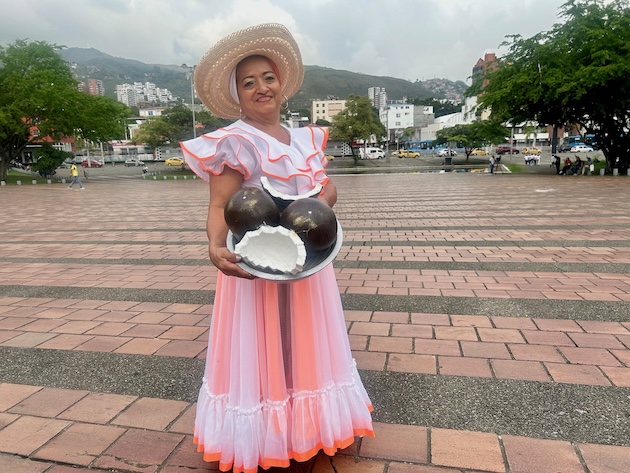
An indigenous woman and biodiversity defender from the Amazon is pictured holding a forest coconut. Women are asking for better implementation of article 23 of the KMGBF. Credit: Stella Paul/IPS

An indigenous woman and biodiversity defender from the Amazon is pictured holding a forest coconut. Women are asking for better implementation of article 23 of the KMGBF. Credit: Stella Paul/IPS

Gender, Finance and Capacity Challenges

Delegates are also reviewing progress under the CBD Gender Plan of Action (2023–2030). Early assessments show that only a quarter of countries involved women’s groups in shaping biodiversity strategies, and just 12 percent plan to do so in the future.

“Ensuring the full, effective and meaningful participation of women and other rights holders is fundamental to accountability, inclusivity and the effectiveness of biodiversity action, and to achieving the full ambition of the global framework,” the CBD Women’s Caucus stated in its official submission.

Finance remains another major point of discussion. While major funding decisions are expected later this year, Rome’s deliberations draw heavily on new research on biodiversity finance, sovereign debt, and the connections between climate and nature funding.

“If we want to mobilise the finance and resources that nature critically needs, business, finance and governments must confront the reality that persistent gaps in reliable data, incentives and institutional capacity are holding back meaningful action — and unless these barriers are addressed, many countries and sectors will continue to struggle to turn agreed goals into results,” said Matt Jones, Co-Chair of the IPBES Business and Biodiversity Assessment 2026.

Countdown to National Reports

The Rome meeting comes just weeks before countries must submit their Seventh National Reports under the CBD, due on 28 February 2026.

These national publications will serve as a principal source of information for the global biodiversity review, alongside national strategies and targets.

However, many countries remain unprepared to submit on time. On day one, Brazil, one of the most influential players in global biodiversity policy, stressed the need for flexibility.

“Ensuring the quality, consistency and internal validation of data and indicators requires additional time. In this context, Brazil suggests that SBI recommendations prioritise technical guidance, operational flexibility and targeted capacity-building support to enable high-quality reporting, rather than focusing solely on reinforcing deadlines,” the country’s delegate said.

A Test of Accountability

While SBI-6 is unlikely to produce headline-grabbing announcements, it will shape how global biodiversity action is evaluated over the next decade.

For Indigenous Peoples and local communities—who steward a significant share of the world’s remaining biodiversity—the meeting represents a critical test of whether rights, participation and lived realities will be meaningfully reflected in the global assessment process.

“This process must lead to accountability, not just documentation,” emphasised Pirawan Wongnithisathaporn, the Environment Program Officer at the Asia Indigenous Peoples Pact (AIPP), calling for tangible action rather than reporting alone.

SBI-6 will conclude on Thursday, February 19. Negotiations will continue at SBI-7 in August 2026 as governments move steadily toward the first global biodiversity review at COP17.

IPS UN Bureau Report


Chongqing’s daring design: The 6-storey gas station split by a hill

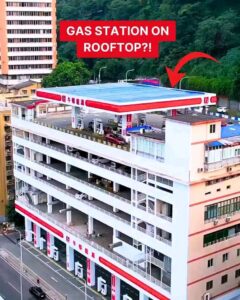
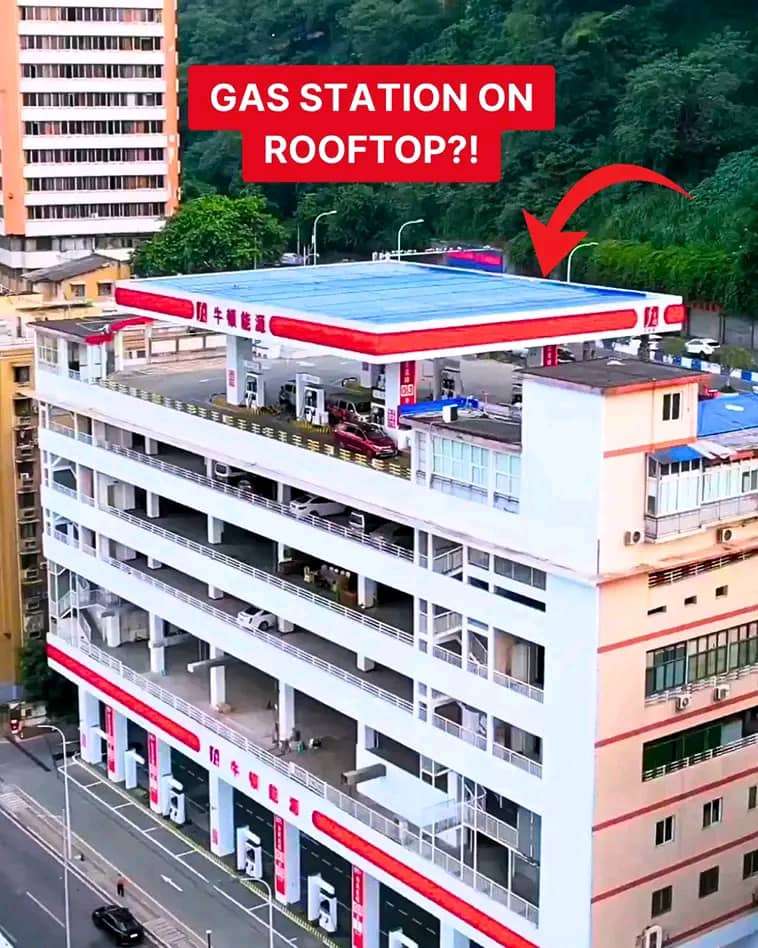
YUZHONG-(MaraviPost)-A striking architectural landmark in Chongqing’s Yuzhong District has captured global attention, featuring not one, but two gas stations positioned on different floors of the same building, showcasing the city’s innovative approach to urban design.

The building, situated in a steep, mountainous terrain, boasts two distinct gas stations: one conveniently located on the 1st floor, and another on the 6th floor (rooftop), defying traditional notions of urban planning and challenging perceptions of what is possible in construction.

The 1st-floor station is easily accessible via Changbin Road, at the base of the hill, while the 6th-floor rooftop station is level with Nanqu Road, higher up the slope, creating an intriguing “ground” illusion, where both stations are essentially at “street level” depending on the road you’re driving on.

The four floors between the two stations are utilized primarily as parking spaces, making the most of the building’s unique layout and maximizing the use of space in a densely populated urban area.

Interestingly, despite the stations appearing to be only a few stories apart, the driving distance between the lower entrance and the upper entrance is approximately 3 kilometers, due to the winding roads required to navigate the elevation change, highlighting the complexities of building in Chongqing’s challenging terrain.

This innovative structure is a testament to Chongqing’s reputation for “8D” or “magical” urban design, where architects and engineers push the boundaries of what is possible, creating functional spaces that are both practical and awe-inspiring.

The building has drawn comparisons to other incredible examples of Chongqing’s architecture, such as the train that runs through a residential building, solidifying the city’s reputation as a hub for innovative and daring design.

As a result, this gas station has become a must-see attraction for architecture enthusiasts and curious travelers alike, offering a glimpse into the city’s unique blend of functionality and creativity.

The Maravi Post

IRAN: ‘Sustainable Change Will Depend on Domestic Organisational Capacity, Not External Force’

Active Citizens, Civil Society, Crime & Justice, Economy & Trade, Featured, Headlines, Human Rights, Middle East & North Africa, Migration & Refugees, Press Freedom, TerraViva United Nations

Feb 16 2026 (IPS) –  
CIVICUS discusses the recent protests in Iran with Sohrab Razaghi, executive director of Volunteer Activists, a Netherlands-based diaspora organisation empowering Iranian civil society.


IRAN: ‘Sustainable Change Will Depend on Domestic Organisational Capacity, Not External Force’

Sohrab Razaghi

Protests triggered by economic grievances erupted across Iran on 28 December, quickly evolving into broader anti-regime protests. The crackdown that followed resulted in what may be the largest massacre in modern Iranian history.

What sparked the protests, and in what ways were they different from previous ones?

Rising prices and the collapse of the national currency initially sparked the protests, but these quickly expanded beyond economic grievances. At least in part, this is because the economy is no longer seen as a purely technical issue but as a measure of the state’s ability to govern. A central question among social groups now is whether the government can manage crises and provide sustainable solutions.

Anger has built up, reflecting broken promises and lost futures. Over the past three decades, four major protest waves – in 2009, 2017, 2019 and 2022 – were met with repression, denial or superficial reforms. This pattern has produced a strong sense of humiliation and political voicelessness.

But perhaps the most decisive factor in the latest wave of protests has been the role of Generation Z, a generation that did not experience the 1979 revolution or the war with Iraq and does not have the ideological attachments of earlier generations. The dividing line is not just age but also expectations, lifestyles and values. While previous generations used to hope for gradual reform within the system, now many young people see no viable future within the current framework. For them, the most rational responses to what they perceive as a structural dead end are disengagement, migration or radical protest.

Recent protests, particularly those of 8 and 9 January, also reflected shifts in protest dynamics, with higher levels of violence visible in both rhetoric and practice. This escalation likely reflects accumulated frustration and political deadlock, but doesn’t necessarily indicate that the state has weakened. Security forces so far appear cohesive and operationally effective, and there are no clear signs of fragmentation inside the coercive apparatus.

But the rise in violence is troubling for democratic forces and civil society. When violent tactics become prominent, organised civic initiatives are marginalised and security-driven narratives prevail, weakening sustained civic action.

Additionally, Israeli and US statements expressing support for protesters and threatening military action had contradictory and largely negative effects.

While such rhetoric initially generated hope among some protesters, the lack of follow-up produced disillusionment and scepticism. Most importantly, statements by foreign governments, including Israel and the USA, strengthened the regime’s narrative. They enabled the authorities to frame protests as the products of foreign interference and protesters as instruments of external powers, including claims of involvement by Mossad agents. This narrative was very useful to justify securitisation and repression.

How have civil society and the media documented human rights violations amid internet shutdowns?

During near-total internet blackouts, local and community-based groups played crucial roles. They recorded the time and location of incidents, collected testimonies from multiple sources and preserved legal, medical and visual documentation while observing basic digital security principles.

When limited internet access became available, information was shared securely with international partners and diaspora networks. These networks helped archive data, liaise with human rights organisations and media and reduce pressure on activists operating inside Iran. International human rights organisations then cross-checked and verified reports before incorporating them into official documentation. Because communication shutdowns, security risks and restricted access to evidence prevented full documentation, they typically presented casualty figures and details of repression conservatively. At the same time, fake news and baseless casualty figures are also prevalent in diaspora and international media reports. It is essential to interrogate such reporting to preserve the credibility of fact-checked, evidence-based reports.

Under severe restrictions, independent and evidence-based documentation has been essential to preserve truth, counter denial and lay the groundwork for future accountability.

What’s limiting sustained pressure for change?

Recent protests have not expanded into broader forms of social organisation. Participation by labour unions, local networks and professional associations has been limited, restricting the potential for sustained institutionalised pressure. Without stronger organisational structures, documentation of abuses won’t necessarily translate into coordinated civic action. Social media-based coordination and mobilisation are effective for the start and first phase of protests, but on-the-ground leadership, networks and organising capacity are instrumental for sustaining protests and increasing pressure for change.

At the discursive level, significant attention has focused on appeals for foreign pressure rather than on building internal coalitions among social groups. In some cases, rhetoric has centred on state collapse rather than democratic transition, a framework that risks instability and further social fragmentation. The use of profanity and violent language – both inside Iran and among the diaspora community – has also alienated families and moderate groups, narrowing rather than broadening support.

Ultimately, for protests to evolve into movements capable of exerting sustained pressure for change, what’s needed is inclusive organisation, coalition-building and a unifying narrative.

What should the international community do to strengthen Iranian civil society?

Sustainable change will depend on domestic organisational capacity, leadership and representation, not external force. So international leaders should avoid war rhetoric and avoid engaging in any form of military intervention. Historical experience suggests that even limited foreign military intervention is unlikely to weaken domestic repression. Instead, it may well increase regime cohesion, at least in the short term, intensify nationalist sentiment and raise the costs faced by civil society activists, who can be easily portrayed as collaborators and traitors.

When supporting Iranian civil society, international allies should prioritise independent, nonviolent civil society organisations rather than opposition groups advocating violence. Narratives of ‘collapse at any cost’ marginalise civic initiatives and undermine the prospects of democratisation.

Long-term investment in capacity strengthening is essential. This includes supporting civic organising skills, digital security, democratic advocacy, nonviolent action and secure communication tools. Over recent decades, resources and repertoires for change within civil society have been weakened. Sustained engagement is required to rebuild these capacities, with up-to-date resources, techniques and tools.

Monitoring, documentation and evidence-based reporting grounded in credible local sources are among the most effective forms of support. Accurate reporting strengthens prospects for accountability and limits the space for propaganda.

Ultimately, sustainable democratic change in Iran will depend on civil society acting independently, rooted in domestic capacities and supported by context-aware, non-interventionist international engagement.

CIVICUS interviews a wide range of civil society activists, experts and leaders to gather diverse perspectives on civil society action and current issues for publication on its CIVICUS Lens platform. The views expressed in interviews are the interviewees’ and do not necessarily reflect those of CIVICUS. Publication does not imply endorsement of interviewees or the organisations they represent.

GET IN TOUCH
Website
LinkedIn
Sohrab Razzaghi/LinkedIn

SEE ALSO
‘The unprecedented level of violence points to a deep crisis of legitimacy’ CIVICUS Lens | Interview with Feminists for Freedom 09.Feb.2026
‘When international attention decreases, state violence often intensifies’ CIVICUS Lens | Interview with Hengaw Organization for Human Rights 27.Jan.2026
Israel vs Iran: new war begins while Gaza suffering continues CIVICUS Lens 19.Jun.2025

  Source

Witchcraft and Killing in Rivers State: Nobody Can Hamper the Progress of Others Through Magical Means

By Leo Igwe

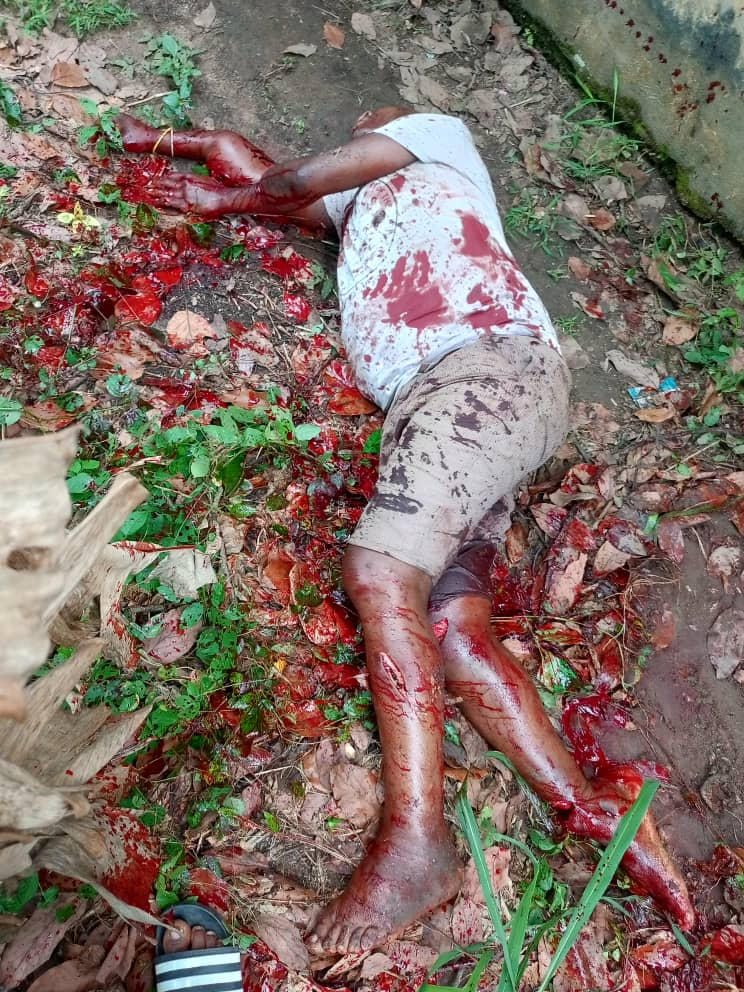
The Advocacy for Alleged Witches is saddened by the brutal murder of Chidiebere Isaiah by a relative, Nwalozie Chiwendu, following an accusation of witchcraft in Ofeh, Rivers State, in Southern Nigeria. The tragic news reached AfAW on February 15, 2026. AfAW contacted The Punch and Vanguard correspondents in Port Harcourt for the phone number of the youth president of the Ofeh community in Omuma Local Government Area. Through an advocate in the state, AfAW contacted a legal counsel from the community who confirmed the incident and has volunteered to facilitate any intervention. This legal counsel said he knew the victim and the suspected murderer very well. As reported, Chiwendu accused and murdered Isaiah for being responsible for his lack of progress. The legal counsel stated that Chiwendu dropped out of primary school. He never went to secondary school. “How did he expect to make significant progress and become rich if he was not educated?” He queried.

Chiwendu reportedly fled after the incident. The local police claimed that he was at large. As in previous cases in Rivers state, this matter will fizzle out after a while. The police stated that the investigation was ongoing, but that was all that would be heard about the case. There are no indications that the police are taking the case seriously, that they are tracking the suspect, or that they will bring him to justice soon. Witch persecution persists in the region due to impunity and lack of accountability, due to a failure of the police and the justice system. Last year, the police in Rivers state refused to prosecute pastors arrested for abusing children during exorcism and ritual cleansing in the state. All efforts and pressures on police authorities to bring these violators to justice came to nothing.

Meanwhile, advocates have been reacting and expressing their outrage following the horrific murder of Isaiah. One advocate stated, “See what ignorance has done: a tragedy for that community and the family. One brother is dead, and another brother is certainly going to be hanged for murder. Terrible!. Meanwhile, the pastors who preached this rubbish mentality into his ignorant head are walking about free, indoctrinating other ignorant people”. Another noted: “This is evil. So you claim to do something good by killing your brother because he is a witch, and you are running? You are not supposed to run away; rather, you should stay so we can tell you what a hero you are. Witchcraft does not exist. Say no to witch-hunts”. Furthermore, one advocate described the incident as: ” Absolutely tragic. No one should ever be killed over superstition or accusations of witchcraft. Education, awareness, and justice are the only answers. End the witch hunts now”.

Local sources informed AfAW that Isaiah had a wife and four children. His first child just finished secondary school. AfAW plans to visit the community and meet with family and community members to understand what happened and explore ways of supporting the family of the deceased during these difficult moments. Advocates will continue to pressure the police to bring the suspect to justice. Witchcraft accusations and jungle justice are against the law. The inability of the police to enforce the law drives these abuses.

In addition, AfAW will organize public awareness programs to reorient the minds of people in Rivers State. AfAW will educate the public to understand that nobody can harm, frustrate, or undermine the progress of others through magical or occult means.

That such a belief is superstitious and based on fear and ignorance!

Leo Igwe directs the Advocacy for Alleged Witches.

The Maravi Post