Delivering On the Promise of Health For All Must Include Gender Equality and SRHR

Civil Society, COVID-19, Development & Aid, Gender, Global, Headlines, Health, Human Rights, Humanitarian Emergencies, Inequity, Labour, Poverty & SDGs, TerraViva United Nations, Women’s Health
Opinion

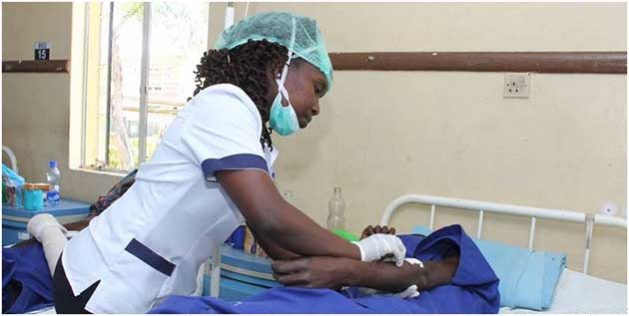
Health workers are at the frontlines in the fight against the new Corona Virus. Credit: John Njoroge

NEW YORK, Sep 29 2021 (IPS) – Gender-responsive universal health coverage (UHC) has the proven potential to transform the health and lives of billions of people, particularly girls and women, in all their intersecting identities. At tomorrow’s kick-off to the 2023 UN High-Level Meeting (HLM) on UHC, Member States and stakeholders will review progress made on the 2019 HLM’s commitments and set a roadmap to achieve UHC by 2030. We, as the co-convening organizations of the Alliance for Gender Equality and UHC, call on Member States to safeguard gender equality and sexual and reproductive health and rights (SRHR) as part of UHC implementation, especially in light of the gendered impacts of the COVID-19 pandemic.


To move forward, it is crucial to remember our cumulative past promises. In 2019, Member States adopted a Political Declaration that contained strong commitments to ensure universal access to SRHR, including family planning; mainstreaming a gender perspective across health systems; and increasing the meaningful representation, engagement, and empowerment of all women in the health workforce. Further, 58 countries put forward a joint statement that argued that investing in SRHR is affordable, cost-saving, and integral for UHC. These commitments were the result of the advocacy and hard work of civil society organizations, including members of the Alliance for Gender Equality and UHC, and set out a clear path on the steps needed to make gender-responsive UHC a reality.

However, following the 2019 HLM, the deadly and devastating COVID-19 pandemic drastically changed how individuals around the globe could access essential health services. Fundamental human rights, including hard-won gains made for UHC, SRHR, and gender equality, are now at risk as health and social services are strained and political attention is diverted. The protracted pandemic underscores how gender-responsive UHC is more important than ever.

We call on Member States to renew the commitments made in 2019 and affirm that delivering on the promise of health for all is only possible by way of gender-responsive UHC.

To truly deliver gender-responsive UHC, we offer the following five recommendations:

1. Design policies and programs with an intersectional lens that places SRHR and girls and women — in all their diversity — at the center of UHC design and implementation. To be effective, UHC must recognize and respond to the needs of women in all their intersecting identities, including by explicitly addressing the ways in which race, ethnicity, age, ability, migrant status, gender identity, sexual orientation, class, and caste multiply risk and impact health outcomes. What’s more, COVID-19 has deepened inequalities for marginalized populations, and special attention is needed, now more than ever, to deliver UHC for those pushed furthest behind.

2. Ensure UHC includes comprehensive SRH services, and provide access to SRH services for all individuals throughout the life course. These services must be free of stigma, discrimination, coercion, and violence, and they must be integrated, high quality, affordable, accessible, and acceptable. The World Health Organization (WHO) provides guidance in the UHC Compendium of interventions and supporting documents for what this can look like. The pandemic has given way to multiple interruptions to SRHR care. For example, an estimated 12 million women may have been unable to access family planning services due to the pandemic. COVID-19 response and recovery and UHC implementation must address these issues.

3. Prioritize, collect, and utilize disaggregated data, especially gender-disaggregated data. UHC policy and planning can only be gender-responsive when informed by data that are disaggregated by gender and other social characteristics. In the current pandemic, not all countries are reporting disaggregated data on infections and mortality from COVID-19 to the WHO, and most countries have not implemented a gendered policy response. In June 2021, only 50% of 199 countries reported data disaggregated by sex on COVID-19 infections and/or deaths in the previous month.1 The number of countries reporting sex-disaggregated statistics has also decreased over the course of the pandemic. Without this information, decision-makers are unable to base policies on evidence affirming how to address the health needs of all genders — a critical lesson for UHC.

4. Foster gender equality in the health and care workforce and catalyze women’s leadership. The approach to the health and care workforce in the pandemic has frequently not applied a gender lens, ignoring the fact that women are 70% of the global health workforce and powerful drivers of health services. Gender inequities in the health workforce were present long before the pandemic, with the majority of female health workers in lower-status, low-paid roles and sectors, often in insecure conditions and facing harassment on a regular basis. Moreover, although women have played a critical role in the pandemic response — from vaccine design to health service delivery — they have been marginalized in leadership on pandemic decision-making from parliamentary to community levels. In fact, 85% of national COVID-19 task forces have majority male membership. Urgent investment in safe, decent, and equal work for women health workers, as well as equal footing for women in leadership and decision-making roles, must be central to the delivery of UHC.

5. Back commitments to advancing SRHR, gender equality, and civil society engagement in UHC design and implementation with necessary funding and accountability. Now is the time to invest in health and the care economy, particularly in UHC. Governments everywhere are facing fiscal constraints from the pandemic. UHC is a critical part of investing in and building back resilient health and social systems to avoid catastrophic spending on future pandemics and global health emergencies. UHC must be designed intentionally, with appropriate accountability mechanisms, to reduce inequalities between and within countries — and especially gender inequality, which undermines social and economic rights and resilience.

We, along with our civil society partners in the Alliance for Gender Equality and UHC, stand ready to work hand-in-hand with governments, the UN, and all stakeholders to act on these recommendations on the road to the 2023 HLM on UHC. At this point in the COVID-19 pandemic, there is no time to waste in making the promise of health for all a reality, and this can only be achieved through gender-responsive UHC that centers gender equality and SRHR.

The authors are Ann Keeling of Women in Global Health, Divya Mathew of Women Deliver, Deepa Venkatachalam of Sama Resource Group for Women and Health, and Chantal Umuhoza of Spectra Rwanda. These four organizations are the co-conveners of the Alliance for Gender Equality and Universal Health Coverage.

1 Global Health 50/50 (globalhealth5050.org)

  Source

George Floyd killer Derek Chauvin appeals against 22 years conviction

Former Minneapolis police officer, Derek Chauvin, convicted of the murder of African-American man George Floyd in 2020 has decided to appeal against his conviction.


Chauvin was sentenced to over 22 years in jail after kneeling on Floyd’s neck for more than nine minutes in March 2020.

His death sparked mass protests against racism and police brutality in the US and all over the world.


He was found guilty of second-degree murder and other charges, was barred from owning firearms for life and also told to register as a predatory offender.

Derek Chauvin, a white man, says there were issues with the jury at the trial and that it should not have taken place in the US state of Minneapolis, citing bias against him.

According to court documents filed on Thursday, September 23, Chauvin alleges that the trial judge abused his discretion at several key points of the case, including denying a request to postpone or move the hearing from Minneapolis due to pre-trial publicity.

Chauvin also said he had no legal representative for the appeal process as the Minnesota police department’s “obligation to pay for my representation terminated upon my conviction and sentencing”,

Chauvin then asked the US Supreme Court to review an earlier decision to deny him a publicly-financed lawyer.

Chauvin, 45, was given 90 days from the date of his sentencing on 25 June to appeal against his conviction.

(Visited 9 times, 9 visits today)


Subscribe to our Youtube Channel :

Follow Us on Instagram Source

#George Floyd murder’s Derek Chauvin# appeals against conviction

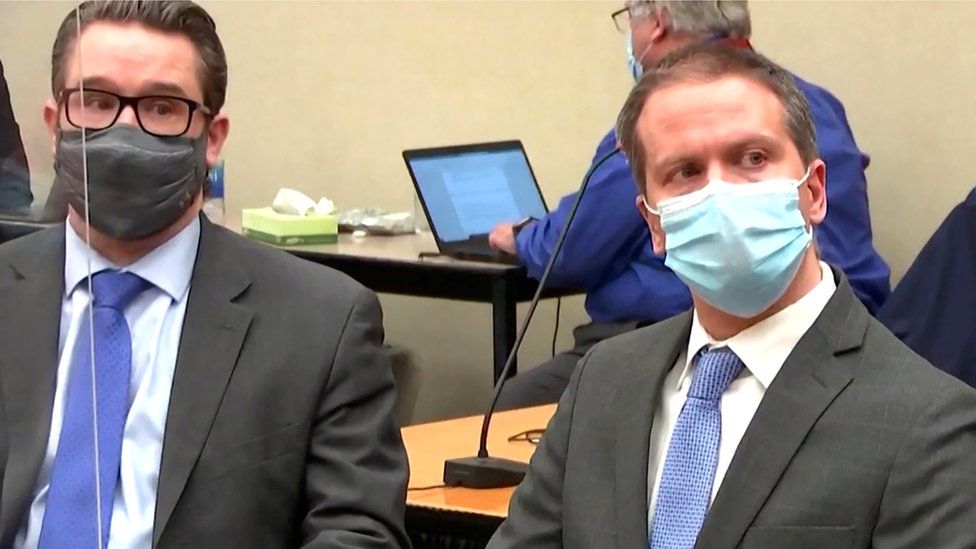
Former Minneapolis police officer Derek Chauvin with his defence lawyer Eric NelsonFormer Minneapolis police officer Derek Chauvin with his defence lawyer Eric Nelson
Derek Chauvin (R) listens to his sentencing in June alongside his defence lawyer Eric Nelson

MINNEAPOLIS-(MaraviPost)-The former Minneapolis police officer convicted of the murder of African-American man George Floyd in 2020 says he will appeal against his conviction.

Derek Chauvin, who is white, says there were issues with the jury at the trial and that it should not have taken place in Minneapolis, Minnesota.

Chauvin was sentenced to over 22 years in jail after kneeling on Mr Floyd’s neck for more than nine minutes.

The late Floyd death sparked mass protests against racism and police brutality in the US.

According to court documents filed on Thursday, September 23, 2021 Chauvin alleges that the trial judge abused his discretion at several key points of the case, including denying a request to postpone or move the hearing from Minneapolis due to pre-trial publicity.

BBC understands that the former officer said he had no legal representative for the appeal process as the Minnesota police department’s “obligation to pay for my representation terminated upon my conviction and sentencing”, the Associated Press news agency reports.

He has asked the Supreme Court to review an earlier decision to deny him a publicly-financed lawyer.

Chauvin aged 45 was given 90 days from the date of his sentencing on 25 June to appeal against his conviction.

He was found guilty of second-degree murder and other charges, was barred from owning firearms for life and also told to register as a predatory offender.

Source: BBC

NBS Bank Your Caring BankNBS Bank Your Caring Bank

Source

Scientific Panel’s Scoping Report Instructive for Global Food Systems Transformation

Biodiversity, Conferences, Environment, Featured, Food and Agriculture, Food Security and Nutrition, Food Sustainability, Global, Green Economy, Headlines

Biodiversity

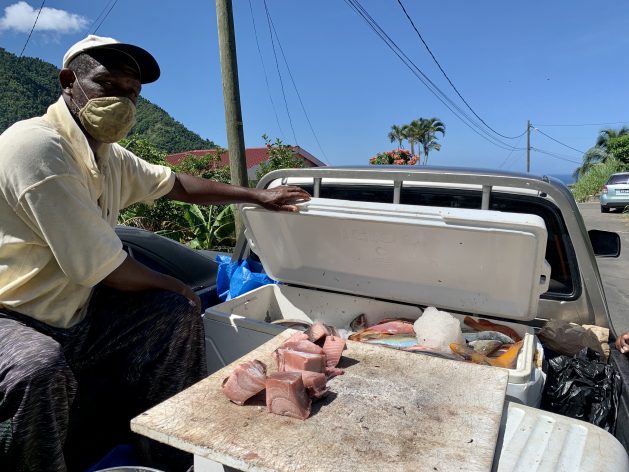
A fisherman displays his catch of the day in Dominica. Credit: Alison Kentish/IPS

DOMINICA, Sep 24 2021 (IPS) – On September 10th, on a sweltering summer afternoon, three fishers drove a van around the residential community of Castle Comfort in Dominica, blowing forcefully into their conch shells – the traditional call that there is fresh fish for sale in the area.


One of the men, Andrew Joseph, urged a customer to double her purchase of Yellowfin Tuna, stating that at five Eastern Caribbean dollars a pound (US$1.85), she was getting the deal of the summer. (In the lean season, that price can double).

“It’s good fish, it’s fresh, it’s cheap,” he told IPS, adding that, “People eat too much meat. This is what is good for the body and the brain.”

Little did he know that he was echoing the words of a scientist who is rallying the world, and the landmark United Nations Food Systems Summit (UNFSS) to put greater emphasis on the financial, nutritional and traditional benefits of aquatic foods.

“Foods coming from marine sources, inland sources, food from water, they are superfood, but this is being ignored in the global debate and at the country level, because we have had a focus on land production systems and we have to change that,” Shakuntala Haraksingh Thilsted, Global Lead for Nutrition and Public Health at World Fish told IPS.

The nutrition scientist is also the Vice-Chair of Action Track 4, Advancing Equitable Livelihoods, at the UNFSS.

As the landmark summit hopes to deliver urgent change in the way the world thinks about, produces and consumes food, issues like the linkages between aquatic systems and health are emerging.

So are other linkages a scoping report by the Intergovernmental Science-Policy Platform on Biodiversity and Ecosystem Services (IPBES) says the world cannot ignore. The report, approved in June, paves the way for a 3-year assessment of the interlinkages among biodiversity, water, food and health.

In the case of the UNFSS, it shows how food systems transformation can be achieved if tackled as one part of this network.

“It will assess the state of knowledge, including indigenous and local knowledge, on past, present, and possible future trends in these interlinkages, with a focus on biodiversity and nature’s contributions to people,” IPBES Executive Secretary Dr Anne Larigauderie told IPS.

“The IPBES nexus assessment will contribute to the development of a strengthened knowledge base for policymakers for the simultaneous implementation of the post-2020 global biodiversity framework, under the Convention on Biological Diversity, and the Paris Agreement adopted under the United Nations Framework Convention on Climate Change and the 2030 Agenda for Sustainable Development.”

Landscape Ecology Professor Ralf Seppelt was one of the scoping experts for the nexus assessment. He says the science is clear on how food systems impact biodiversity and why agroecology must be a pillar of efforts to transform food systems.

“Micronutrients are lacking a lot. Micronutrients are provided by fruits and vegetables, which need pollination. So, the nexus is really strong between agroecological principles and the nutritional value of what we are producing,” he told IPS.

“Wherever we have to increase production, we should do it on agroecological principles. We should consider what farmers say and do, their needs, their access to production goods such as fertilizers and seeds, and it’s equally important to change our diets. It’s not just reducing harvest losses and food waste, but also about moving away from energy-rich, meat-based diets and feeding ourselves in an environmentally friendly way,” he said.

Professor Seppelt is also hoping that the voices of small farmers and indigenous communities are amplified in the global food transformation conversation. “IPBES made an enormous effort to work with indigenous peoples and local communities and include indigenous and local knowledge in its reports. We organized workshops, to collect a diversity of views about nature and its contributions to people, or ecosystem services to make the assessment as relevant as possible to a range of users,” he said.

For Thilsted, any plan to revamp food systems must come with a commitment to weed out inequality. She says from access to inputs and production to consumption and waste, inequality remains a problem.

“This unequal distribution of who wins, who loses, who does well, who does not do too well, who profits and who does not is putting a strain on food and nutrition and it is limiting our progress towards a sustainable development future,” she told IPS.

“COVID-19 has shown the fragility of the system and it is further displacing the vulnerable, for example, women and children who are being more exposed to food and nutrition insecurity.”

The IPBES nexus assessment hopes to better inform policymakers on these key issues.

It is not the first assessment of interlinkages. Earlier this year IPBES and the Intergovernmental Panel on Climate Change (IPCC) launched a landmark workshop report that focused on tackling the climate and biodiversity crises as one.

Now, the current nexus assessment on interlinkages among biodiversity, water, food and health will explore options for sustainable approaches to water, climate change, adaptation and mitigation, food and health systems.

IPBES Executive Secretary Dr Anne Larigauderie says it also shows that there is hope for restoring the balance of nature.

“I would like people to remember and know that they are a part of nature, that the solutions for our common future are in nature; that nature can be conserved and restored to allow us, human beings, to simultaneously meet all our development goals. We can do this if we work together, act more based on equity, social and environmental justice, reflect on our values systems, and on our visions of what a good life actually is.”


Join the Global Day of Action: RISE for Afghan Women!

One Billion Rising is organizing events around the world on September 25th, 2021 to show support of Afghani women.

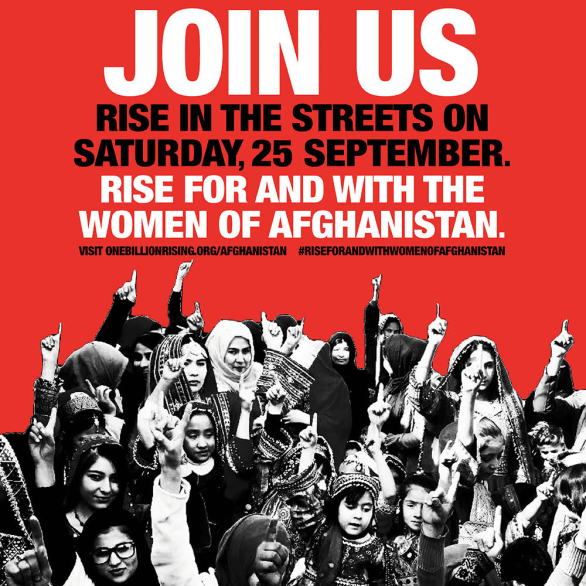
Rise For and With the Women of Afghanistan is taking place September 25th, 2021 across the globe. (Image Credit: One Billion Rising)

On Saturday, September 25, RISE FOR AND WITH THE WOMEN OF AFGHANISTAN will take to the streets in a day of action following an online day of solidarity on September 1, garnering participation from over 85 countries. During the global day of action, activists, women’s organizations, human rights groups, and high profile individuals will mount in person events  in cities, towns and areas across the globe.  Some events will take place online due to local Covid restrictions. 

Worldwide events  are being led by local Afghan activists and informed by activists on the ground in Afghanistan. Already activists are planning events in Mexico, Croatia, Eswatini, Congo, Nepal, India, Bangladesh, South Africa, Italy, UK, Philippines, Hong Kong, Indonesia, Jamaica, Guatemala, Thailand, Nigeria, Portugal, Taiwan, United Kingdom, Zambia, Austria, and the United States.

In New York City, a RISE FOR AND WITH THE WOMEN OF AFGHANISTAN rally and action will take place at Dag Hammarskjold Plaza, in sight and sound of the United Nations as the General Assembly meets. Testimonies from Afghan women on the ground and RAWA (Revolutionary Association of the Women of Afghanistan) will be read. It will be led by Afghan activists and artists Fatima Rahmati, Leeza Ahmady, Farah Arjang Vezvaee, Matin Maulawizada (co-founder Afghan Hands), Halema Wali (Afghans for a Better Tomorrow), poet Wazina Zondon – with women’s rights activists V (formerly Eve Ensler) (founder of V-Day/One Billion Rising), Zainab Salbi, Jodie Evans (co-founder of CODEPINK), Alyse Nelson (President/CEO of Vital Voices) and NYC Public Advocate Jumaane Williams, musicians Morley Shanti Kamen, Chris Bruce, Neel Murgai, Trina Basu, Arun Ramamurthi, Broadway stars Kathryn Gallagher (Jagged Little Pill), Anastacia McCleskey (Waitress), and Gerianne Perez (Waitress(list in formation*). Visit onebillionrising.org/risenewyork

In Los Angeles, Afghan youth and activists will meet on the Sunset Strip and march to West Hollywood Park for a program featuring  Hameeda Uloomi (Founder of Afg-aid), Madina Wardak (MSW/ACSW Outreach & Partnership Coordinator Afghan Women’s Mission), Ariana Delawari (Multimedia artist & activist), Arash Azizzada (Co-Founder Afghans For A Better Tomorrow), Sultana Parvanta, and Rina Amiri (Senior Fellow and Director of Afghanistan and Regional Policy Initiative at New York University’s Center for International Cooperation), Samia Karimi (Afghan dance artist & activist, ARTogether), with a special performance by Legendary Ustad Farida Mahwash & Voices of Afghanistan, with Aja Monet, Dylan McDermott, Sufe Bradshaw, Gideon Adlon, and additional speakers to be announced*. Testimonies from Afghan women on the ground and RAWA (Revolutionary Association of the Women of Afghanistan) will be read. Visit onebillionrising.org/riseLA

“We take our lead from our Afghan sisters – activists who have amplified the on-the-ground realities and needs for over twenty years, working tirelessly and creatively to support women and girls and their families amidst an endless, imperialist war. Women of the world and our allies stand with the women – and all vulnerable groups – of Afghanistan against imperialism, militarism, fundamentalism, and fascism. None of us are free until the women of Afghanistan are free. We stand with the women of Afghanistan who believe women have the right to education, to travel, to freedom of movement, to jobs, to security, just having freedom to be able to breathe and be. We cannot underestimate the power of our solidarity at this moment.”  – joint statement from RISE FOR AND WITH THE WOMEN OF AFGHANISTAN, Global Solidarity Campaign

Individuals and organizations signing on and spreading the word across their social media channels included RAWA (Revolutionary Association of the Women of Afghanistan), Jane Fonda, V (formerly Eve Ensler) Rosario Dawson, Angela Davis, Thandiwe Newton, Lisa Joy,Pat Mitchell, Kimberlé Crenshaw, Jennifer Buffett, Katherine McFate, Annie Lennox, Zainab Salbi, Emma Thompson, Nina Turner, Naomi Klein, Glenn Close, Connie Britton, Heather McGee, Shabnam Hashmi, Rev. Dr. Jacqui Lewis, Rosa Clemente, Bonnie Abaunza,  1 Billion Rising/V-Day, CODEPINK, Vital Voices, 350.org, Equality Now, FEMEN, SANGAT, African American Policy Forum, Gabriela, Jagori Rural, One Fair Wage, Women’s March Global, Revolutionary Love Project, Justice For Migrant WomenPlanned Parenthood – LAMiry’s List, Peace Over Violence, Alianza Nacional de Campesinas and many more.

In consultation with many of them, we created a list of demands and a call to action.  People and groups from all over the world have signed on in support with more signing on and planning actions on September 25.

What: Global Day of Action: Rise For And With The Women Of Afghanistan

When: Saturday, September 25, 2021  

JOIN the Global Day of Action on Saturday, September 25th. Organize in your community, or gather online. Women of the world and all our allies rise, roar and rage for and with the women in Afghanistan: a global solidarity action in your city, town, school. everywhere. RISE in the streets, stage creative political protests and artistic risings. Invite everyone; reach out to activists, students, artists, social justice groups, and more. 

Required: Face masks, social distancing. All events will be held outdoors.

Hashtags: #RiseForAndWithWomenofAfghanistan and #StandWithWomenofAfghanistan

PLAN or  FIND an event in your city/town/school

SIGN UP updates about 25 September events»

Access the social media toolkit here 

READ the One Billion Rising Solidarity Statement 

Here is a snapshot of what is happening around the world (list in formation): 

Austria: As the Austrian government refuses to take refugees, Austrian activists have taken to the streets to demand for refugees to be let in. On September 25, OBR Austria plans to hold an artistic intervention in public space with the performance of RED Silence by OBR Austria coordinator and artist Aiko Kazuko Kurosaki, an art installation by Petra Paul, more performance art, and speakers. 

Bangladesh: In Dhaka, there will be a protest rally in the square as well as 15 to 20 other simultaneous rallies happening across the country. On September 26, OBR Bangladesh is coordinating an online action with the South Asian Peace Network to discuss the 20th anniversary of 9/11, the war in Afghanistan, and talk about how imperialistic wars can happen in any country. 

Cambodia: The Cambodian Women Network, together with the OBR Cambodia youth, have drafted a statement addressed to their government for their action to respond to the treatment of the Taliban towards women and girls. OBR Youth will do a photo solidarity campaign on 9/25.

Cameroon: OBR Cameroon plans to organize a conference where Sharia law will be discussed, and Muslim dignitaries and scholars are invited, to inform the population on how the Taliban have used this law.

Croatia: OBR Croatia, and twenty other women’s groups including Women’s Network Croatia, are marching and RISING outside of the Croatian Ministry of Foreign Affairs.. The protest will have speeches, speakers, and banners created by women which read “You Cannot Kill Us” to center Afghan women and their struggles. 

Democratic Republic of Congo: City of Joy and other Congo activists are working on linking what they are seeing regarding the effects of the wars for resources, plundering minerals, and natural resources to what has happened in Afghanistan in addition to writing a statement to circulate to the UN in the DRC. For this campaign, their slogan will be “They Wanted to Bury Us But They Forgot They Were Seeds” 

Eswatini: In Eswatini, OBR activists are holding a memorial in solidarity connecting the current crisis in Eswatini to the current crisis in Afghanistan. 

Ghana: Activists will mount a photo campaign featuring activist and their messages of solidarity with the women of Afghanistan

Guatemala: In Guatemala, activists are rising with Fundación Sobrevivientes and for Latin America with Red Latinoamericana de Mujeres Afro Descendientes.

Hong Kong: OBR Hong Kong will be broadcasting pre-recorded videos of OBR solidarity dancing and solidarity messages and demands by domestic and migrant workers in Hong Kong, as well as local Hong Kong residents on the 25th of September.

India: Activists in India propose to stand outside on the streets in villages, towns, cities, in slums and in front of public places.  They also plan a signature campaign in India to demand justice for  the  women of Afghanistan and the women of the world and hope to reach out to nearly 500 locations in  the country. A poster competition is also being planned – reaching out to artists, as well as the possible creation of a song.  The campaign will also include children to stand with placards to demand a peaceful world for the children of Afghanistan.

Indonesia: Seruni activists are planning solidarity poster actions where Seruni is established, such as Riau and Sulawesi – which will lead into a national virtual action on September 25th. The day before is the National Peasant Day commemoration and rural women activists will be connecting solidarity with women of Afghanistan.

Italy: OBR Italy will be part of a big event at the Piazza del Popolo in Rome on the 25th, with more than 50 associations who are joining the event.

Jamaica: Activists in Jamaica are planning to do a collective meditation centering Afghan women’s empowerment and protection. 

Malawi: In Malawi, activists will do an action on September 25, and rise with the Rural Women’s Assembly to express their solidarity. 

Mexico: Activists in Mexico will be in the streets on 25 September and the plan is for a demonstration outside the UN in Mexico City, with activists holding signs with slogans from the campaign. 

Namibia: OBR Namibia plans an informational sharing and artistic creative session adolescent girls and young women as well as a silent protest featuring posters and images to demand that the Namibian government accepts refugees from Afghanistan.

Nigeria: Nigerian activists will host an online campaign in solidarity.

OBR Africa: In many parts of Africa, countries are facing strict lockdowns and cannot host public events. However, OBR Africa activists will host a RISING For and With the Women of Afghanistan in a regional online event involving 19 countries. Discussion to include women’s rights as the first to be suppressed in crisis situations, unpacking what activists mean when they say “Afghanistan is everywhere” and the importance of women’s global solidarity in crisis situations. Activists from across the region will issue photo and video messages of solidarity.

Philippines: A Solidarity Week will feature nation-wide solidarity and protest actions on each day from September 18 to 25 online and in person raising the shared concerns against the actions of the US military and its impact on the Afghan people.

Portugal: Activists in Portugal plan to connect the water crisis to the war in Afghanistan and the plundering of natural resources and minerals. 

Rwanda: Activists will have a graphics,,photo and video campaign illustrating what Rwandan women feel for the women of Afghanistan and what their solidarity means to bring back hope for women and girls in Afghanistan.

Serbia: Activists are planning actions in six different towns featuring artistic banners in solidarity for and with the women of Afghanistan. 

Taiwan: Activists will organize an online program to express solidarity with the women of Afghanistan.

Togo: Activists are organizing a photo and video campaign with Togolese youth to support the women of Afghanistan.

Thailand: OBR Thailand will be hosting an online event in solidarity with the women of Afghanistan.

United Kingdom: Voice of Domestic Workers will Rise With and for Women of Afghanistan at the Labour Conference in Brighton and will dance “Break The Chain”. Activists in the United Kingdom, in collaboration with the Women’s Center of Cornwall, are doing outside actions in Cornwall and Norwich. 

United States: In New York, mass rising at Dag Hammarskjold Plaza followed by a march to the UN. In Los Angeles, march and rally at Sunset Spectacular. In San Francisco, Code Pink action on September 21, Global Peace Day, to demand for a reduction of the Pentagon budget and an action on September 25. Additional actions being planned.

Zambia: OBR Zambia will hold meetings in communities in different areas to increase understanding and awareness of the situation in Afghanistan and the importance of global actions. Recordings of solidarity messages will also be made from the communities and shared.

Zimbabwe: OBR Zimbabwe is planning an Online Solidarity marathon. Solidarity messages will be posted in the form of written work and the creation of a short video.

Related:

Action for World Solidarity

As US and NATO Withdraw, WAW Fears Plummet in Women’s Justice

Check Out This Timely Support for Afghan Women from Big Foundations

Source

Nurturing a New Generation of Food Leaders

Biodiversity, Conferences, Environment, Featured, Food and Agriculture, Food Security and Nutrition, Food Sustainability, Global, Headlines, Health, Humanitarian Emergencies, Sustainability, TerraViva United Nations

Food Sustainability

An European Institute for Innovation and Sustainability (EIIS) programme focusses on production, distribution, and consumption issues of food systems. Credit: Joyce Chimbi/IPS

NAIROBI, KENYA, Sep 22 2021 (IPS) – Food security experts have raised an alarm that with as many as 811 million people the world over or 10 percent of the global population going hungry, the world is off-track to ending hunger and malnutrition.


More so, after a decade of steadily declining, the number of malnourished people grew by 161 million from 2019 to 2020 alone, a spike attributed to complex global challenges such as COVID-19, climate change and conflict, according to the United Nations.

Against this backdrop, the European Institute for Innovation and Sustainability (EIIS) launched a three-month, challenge-based and solutions-oriented food sustainability certificate course in May 2021 to actively help countries fix their food systems.

“Our aim is to provide a comprehensive base for a deeper understanding of the complex dynamics of food, giving course participants the tools and insights to perform better at work, shift careers, and become even more conscious and responsible consumers,” says Sveva Ciapparoni, the Food and Sustainability course coordinator.

With a special focus on G20 countries, as they are most representative of the world’s population and economy, the EIIS food sustainability programme uses the Food and Sustainability Index (FSI) to help learners understand the dynamics behind food systems and their inherent power to promote or derail the attainment of UN’s Sustainable Development Goals (SDGs).

Developed by the Economist Intelligence Unit with the Barilla Center for Food and Nutrition Foundation, the food index collects data from 67 countries worldwide to showcase best practices and highlight key areas for improvement towards the production and consumption of sufficient, sustainable and healthy food.

The EIIS programme breaks away from traditional food courses solely centred around gastronomy, culinary management and hospitality to focus on production, distribution and consumption issues at the very heart of the SDGs.

Marcela Villarreal, the Director of Partnerships and UN Collaboration Division at the Food and Agriculture Organization (FAO), indicates that the “course directly addresses several SDGs. These include fighting hunger (SDG 2), promoting the health of both people and planet (SDGs 3, 13, 15), and encouraging conscious and responsible consumption (SDG 12).”

“The food system approach adopted by the course through specific challenges is particularly conducive to understanding the SDG agenda and proposing solid and interconnected solutions,” Villarreal, also one of the foremost experts from the Food and Sustainability course’s faculty, says.

As such, participants, who were part of the May 2021 cohort of learners, had an opportunity to intersect the three critical pillars of any food system, including sustainable agriculture, nutritional challenges and food loss and waste, with the three areas where food experts say solutions to the broken food systems lie: innovation, education and policy.

Also unique to the course, the programme is taught through a Challenge Based Learning approach that “allows for the practical application of the concepts learned throughout the modules.

“How to feed 10 billion healthy foods, preserving the health of people and planet is the ambitious challenge tackled by the participants,” says Villarreal.

Participant Anant Saraf confirmed that being taken through online tuition combined with practical workshops enabled them to analyse food systems, understand the complexities of the food systems, and identify the most pressing problems facing specific food systems to provide solutions.

Importantly, Ciapparoni says that the course is an opportunity to interact with topics increasingly crucial to food production, distribution, and consumption in line with the SDGs and the UN’s first-ever food systems summit that kicks off on September 23, 2021.

Held within the UN General Assembly week in New York, the virtual UN Food Systems Summit will set the stage for global food systems transformation.

To do so, the UN will engage citizens from all over the world, including youth, researchers, food producers, indigenous people, civil society, and the private sector, in a discourse to transform how the world produces and consumes food.

As with the EIIS food sustainability course, the UN Food Systems Summit is a golden opportunity to empower people to understand and use the power of food systems to recover from COVID-19 and get back on track to end world hunger and malnutrition.

Ciapparoni indicates that course participants were aware that they would be contributing to the Summit.

The course challenge aligns with the UN Food Systems Summit agenda as it was developed in consultation with Martin Frick, deputy to the UN Secretary-General Special Envoy for the UN Food Systems Summit 2021, he added.

Therefore, at the heart of the EIIS course was an urgent need to build a generation of food leaders that can effectively transform food systems for food security, improved nutrition, and affordable healthy diets for all.

Towards this objective, Villarreal says that course participants were “divided into teams based on their backgrounds, diversity being the main criteria and that each team got assigned a G20 country to be analysed, with a specific focus on its food system.”

“After identifying the country’s key challenges, each team proposed possible solutions to improve their assigned country’s food system. The underlying idea is that, by proposing ways in which single countries can improve the sustainability of their food systems, participants will be able to suggest how to promote food sustainability globally – and thus address the course’s main challenge,” Villarreal adds.

Team South Africa, for instance, discussed the country’s rapid urbanisation and unfolding food production and security challenges in light of climate change and complex social, economic, and environmental challenges.

As for Saudi Arabia, the team concluded that the food system faces numerous challenges, as highlighted in the food and sustainability index of 2021 that ranked Saudi Arabia last compared to other G20 countries.

Saudi Arabia has the highest reliance on food imports among the G20 countries. The team aimed to identify how the country could overcome the food production challenges caused by its dry and hot climate.

Team India had the task of identifying how the country, ranked 13th among the world’s extremely water-stressed countries due to inefficient irrigation systems, groundwater depletion, and high production of water-consuming crops, can overcome these challenges.

With regard to the USA, the team analysed how the country, which has the highest food waste per capita globally, can address this problem.

Team Russia sought to fix the country’s faulty food production systems, processing, and transportation.

Team South Korea’s challenge was found in the globalisation of the country’s food system has increased consumption of highly processed foods leading to a food crisis.

Participants navigated through these challenges under the guidance of food and sustainability experts, including Villarreal. By providing solutions to fix broken food systems in specific countries, the EIIS course will have contributed towards practical solutions on how to feed 10 billion people by 2050 healthy food without harming the planet.