From Non-aligned to One Aligned

Civil Society, Development & Aid, Global, Global Geopolitics, Global Governance, Headlines, IPS UN: Inside the Glasshouse, TerraViva United Nations

Opinion

The implications of Colombo’s foreign policy shift under Sri Lanka President Gotabaya Rajapaksa, from a time-honoured adherence to non-alignment to a clear affiliation with Beijing. Former minister Dr Wijeyadasa Rajapakshe said Colombo Port City (above) might turn out to be a ‘colony’ of China.

LONDON, Jun 4 2021 (IPS) – June 4, 2021 marks 30 years since the killings of an undisclosed number of Chinese protestors at Beijing’s Tiananmen Square. For many years, the Chinese government and its ruling Chinese Communist Party (CCP), with characteristic understatement, called it the ‘June Fourth incident’.


It was the hardliners in the CCP who forced the ouster of its general secretary Hu Yaobang, a party moderate who had encouraged democratic reform, and eventually ordered the military crackdown on the protestors at Tiananmen – perhaps the blackest day in the history of post-revolutionary China.

Sri Lankans should recall the central role of the Chinese Communist Party in turning Tiananmen Square into a horrendous killing field that provoked an unprecedented outpouring of public grief and condemnation from neighbouring Hong Kong, in light of the apparent reverence that Sri Lanka’s President Gotabaya Rajapaksa appears to pay to the CCP’s style of governance.

And he has done so more than once, even telling China’s Defence Minister Wei Fenghe, during his visit to Colombo in April, that he hoped to ‘learn from the governance experience’ of the CCP in poverty alleviation and rural revitalisation.

While the CCP’s role in poverty alleviation might be conceded, the same cannot be said of corruption elimination. It was growing corruption among those in the Chinese government and Communist Party that triggered the massive student protest, which demanded an end to the burgeoning graft and lack of accountability by officialdom, and collectively called for democratic reform in China’s politically regimented society.

Critics say Sri Lanka’s foreign policy of neutrality and its ‘India First’ declaration are mere geopolitical window dressing.

While President Rajapaksa, who has been invited to China, might pick up a thing or two about the success of the CCP in alleviating poverty, there is little he could learn about ridding society of other malaise prevalent in China – a pity, as such knowledge might help to eliminate Sri Lanka’s own political viruses that are causing serious concern, not only in Sri Lankan society but also in the region.

From the early years of Sri Lanka’s independence from British rule, Ceylon (as it was then known) had followed a policy of peaceful co-existence, articulated earlier by India’s Prime Minister Jawaharlal Nehru as the five principles of ‘Panchaseela’, deriving from Buddhist Thought.

It was this Nehruvian Panchaseela that eventually formed the bedrock of the foreign policy of most newly independent states in Asia, Africa and Latin America, under the banner of non-alignment.

Under Prime Minister Sirimavo Bandaranaike, the world’s first woman prime minister, Ceylon was among founding members of the Non-Aligned Movement (NAM) when 25 countries met in Belgrade at NAM’s first summit in 1961

It was a foreign policy that most Ceylon/Sri Lanka governments were wedded to, except perhaps the pro-western United National Party (UNP) government under President Junius Richard Jayewardene, who cynically told me there were only two non-aligned countries in the world: the USA and the USSR.  

This was in 1979 and, ironically, he was then the Chairman of NAM having taken over the chairmanship from Sirimavo Bandaranaike who lost the 1977 general election having hosted the NAM summit in Colombo in 1976.

President Jayewardene was very much pro-American. Still, he went to Communist Cuba, an arch enemy of the US to pass on the baton to President Fidel Castro who was hosting the next NAM summit in Havana in 1979.

Then, with the advent of another Rajapaksa, Gotabaya, as president, Sri Lankan foreign policy was redefined. He said at his inauguration in November 2019 that it was now one of ‘neutrality’, dropping any reference to the long-standing policy of non-alignment.

Though never clearly defined, to Rajapaksa junior this meant staying aloof from Big Power conflicts. By that time, the Indian Ocean had perceptibly turned into a conflict zone as China’s push into this vital maritime international sea route led to counter responses from other major powers, namely the US, Japan, Australia and India.

Moreover, New Delhi saw the growing Chinese naval and economic presence in the region under China’s Belt and Road Initiative (BRI) and Maritime Silk Route as an intrusion into its sphere of influence, raising strategic security concerns.

So, there was a congruence of interest among other major powers and users of the Indian Ocean in challenging what was perceived as Beijing’s expansionism, that is, asserting its own presence in the region and the freedom of navigation for all.

Shortly after Narendra Modi became India’s prime minister in 2014, he made a dramatic shift in India’s own foreign policy, turning from a ‘Look East’ policy to an ‘Act East’ one. This implied a more conscious and determined involvement in South East Asia, particularly ASEAN.

If Modi enunciated a ‘Neighbourhood First’ doctrine, Gotabaya Rajapaksa claimed his to be ‘India First’, perhaps in an attempt to balance the elder Rajapaksa, Mahinda’s, pro-China predilections as president. It was during Mahinda’s nine years at the helm, from 2005, that bilateral relations were at their strongest, perhaps not without cause.

President Mahinda Rajapaksa, with brother Gotabaya as his defence secretary, was at war with the ruthless separatist Liberation Tigers of Eelam (LTTE), popularly known as the Tamil Tigers.

The only country at the time ready to help the Rajapaksas defeat the separatists, with substantial finance and arms aid, was China, which it did in May 2009.

Mahinda returned the favour by contracting China for some major infrastructure projects, including the new Hambantota port in the deep south some 15 nautical miles or so from vital international sea lanes. This port, which is now on a 99-year lease to China because Sri Lanka could not meet its loan repayments, has turned out to be a serious strategic concern to India and other major trading nations.

Last month another major Chinese project Colombo Port City (CPC), some 270 hectares of land reclaimed from the sea close to the capital’s principal port, came alive after the Supreme Court approved the Bill to set up the managing commission after the Court called for several changes to clauses that were inconsistent with the constitution.

The CPC, in which the Chinese development holds 43 per cent of the land (also for 99 years) is intended to be a huge investment and business centre for foreign investors. This made the US ambassador in Colombo, among others, reach for the panic button for fear that the CPC could be a source of money laundering and other ‘dirty’ money.

A former minister in the previous government and a member of the ruling party, Dr Wijeyadasa Rajapakshe, even warned that the Port City might well turn out to be a ‘colony’ of China, given the exclusion of Sri Lankan entrepreneurs from investing there, even if they had foreign currency to do so.

Critics of the Rajapaksa government’s policies – including the militarisation of the civil administration and the handling of the Covid-19 pandemic that is still surging in the country – say that Sri Lanka’s foreign policy of neutrality and its ‘India First’ declaration are nothing more than geopolitical window dressing.

They claim it is unsupported by fact and is meant to cover the government’s strong pro-China commitments. They also point to a media release by the Chinese Embassy in Colombo, following Defence Minister Wei Fenghe’s April visit, in which President Rajapaksa is quoted as telling the visiting minister that Sri Lanka ‘has prioritised developing relations with China and firmly supports China’s positions on issues concerning its core issues’.

If, by jettisoning non-alignment and embracing ‘neutrality’, Sri Lanka means it is following an equidistant foreign policy, it has not shown so by its actions. China obviously knows best. In its statement on the defence minister’s visit, the Chinese embassy says: ‘China appreciates Sri Lanka’s independent and non-aligned foreign policy.’

Scant wonder many are puzzled by the nomenclature.

Source: Asian Affairs

Neville de Silva is a veteran Sri Lankan journalist who held senior roles in Hong Kong at The Standard and worked in London for Gemini News Service. He has been a correspondent for foreign media including the New York Times and Le Monde. More recently he was Sri Lanka’s deputy high commissioner in London
  Source

People Power: Why Mobilisations Matter Even in a Pandemic

Active Citizens, Civil Society, Featured, Global, Global Governance, Headlines, Human Rights, Inequity, TerraViva United Nations

Opinion

Credit: CIVICUS, global civil society alliance

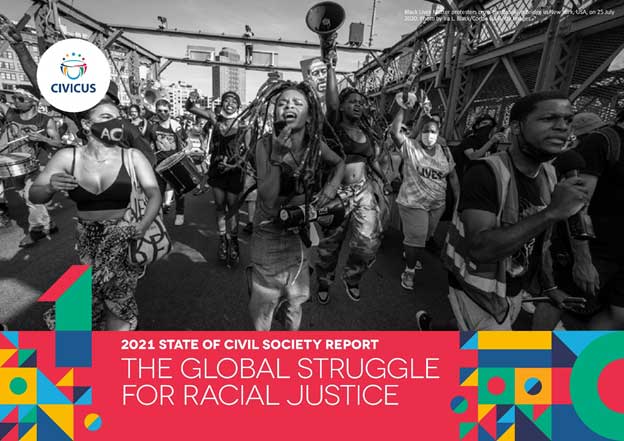
NEW YORK, May 26 2021 (IPS) – It has been one year since the police murder of George Floyd, an outrage that resonated around the world. The killing forced people to the streets, in the USA and on every inhabited continent, to demand respect for Black lives and Black rights, proving that protest was essential even during the pandemic.


The Black Lives Matter (BLM) demonstrations are the latest in a great global wave of protests that started with the Arab Spring 10 years ago and continue today, seen in the brave civil disobedience people are mounting against Myanmar’s military coup and the protests against Israeli violence in Palestine, with people taking to the streets around the world to show solidarity and demand an end to the killing.

Millions of people are protesting because they can see that protests lead to change – the trial of the officer responsible for George Floyd’s killing was an incredibly rare event that would likely not have happened without protest pressure – and because mass mobilisations often offer the only means of resistance to repressive governments.

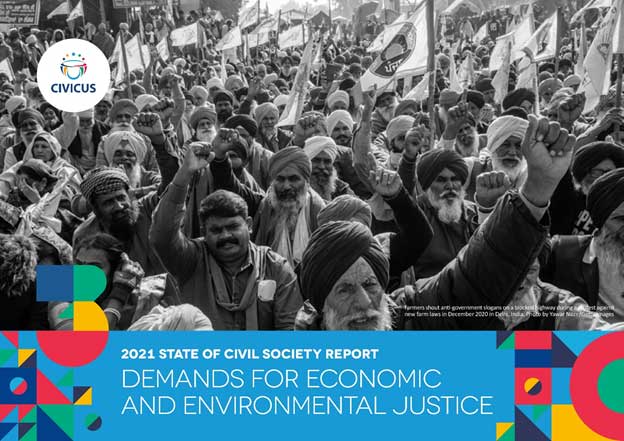
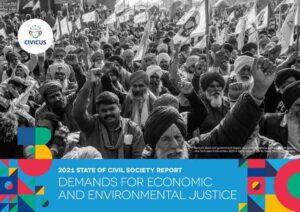
CIVICUS’s just-published 2021 State of Civil Society Report describes how decentralised movements for racial justice and gender equality are challenging exclusion and demanding a radical reckoning with systemic racism and patriarchy.

Threats posed by economic inequality and climate change are enabling people to connect across cultures, spurring mobilisations in many different countries. Today, not only in Myanmar and Palestine, but in Colombia, Lebanon and Thailand among many others, people are demanding economic opportunity, a real say in how they are governed, and an end to discrimination.

Much blood is being spilt in unwarranted violence against protesters by repressive security apparatuses acting on the behest of vested interests. Inarguably, the right to mobilise is being sharply contested because of its potential to redistribute power to the excluded.

Major political transformations in modern history have been catalysed through largely peaceful protests. Sustained mass mobilisations have resulted in significant rights victories including expansion of women’s right to vote, passing of essential civil rights laws, dismantling of military dictatorships, ending apartheid, and legalisation of same-sex marriage.

In the past year, despite the disruptions of COVID-19, populist demagogues have faced stiff resistance from people driven by a hunger for justice and democracy. In Brazil, thousands came out to the streets to protest against horrendous bungling by the Bolsonaro administration in its response to the COVID-19 pandemic which has resulted in a monumental loss of lives.

In India, thousands of farmers remain steadfastly defiant in camps outside Delhi to protest against hurriedly drawn-up laws designed to undermine their livelihoods and benefit big business supporters of Prime Minister Modi’s autocratic government.

In Russia, pro-democracy protests in several cities against the grand corruption of strongman President Putin have so alarmed him that he engineered the imprisonment of his most prominent political opponent. In Uganda, political opposition led protests have inspired people from all walks of life to stand up against President Museveni who’s been in power for 35 years.

In Belarus, protests by ordinary people displaying extraordinary courage helped bring international attention to an election stolen by Alexander Lukashenko, the first and only president the country has known since the present constitution was established in 1994.

Credit: CIVICUS

In the United States, the decentralised Black Lives Matter movement is spurring action on racial justice and the unprecedented prosecution of police officers engaged in racist acts of violence against Black people.

The movement not only helped dispatch a race-baiting disruptive president at the polls, it also had a deep impact beyond the United States by spotlighting racism in places as diverse as Colombia, the Netherlands, South Africa and the United Kingdom.

Notably, women-led movements are challenging gender stereotypes, exposing patterns of exclusion, and forging breakthroughs to lay the groundwork for fairer societies. Concerted street protests by women in Chile helped win a historic commitment to develop a new justice-oriented constitution by a gender-balanced constitutional assembly that will also include Indigenous people’s representation.

In Argentina, legislation to legalise abortion and protect women’s sexual and reproductive rights followed years of public mobilisations by the feminist movement.

Our research finds that, in country after country, young people are at the forefront of protest. Young people have taken ownership of climate change to make it a decisive issue of our time. The Fridays for Future movement which began with a picket in front of the Swedish parliament on school days now has supporters organising regular events to demand urgent political action on the climate crisis on all continents.

Present day movements are deriving strength by taking the shape of networks rather than pyramids, with multiple locally active leaders. Hong Kong’s ‘Water Revolution’ may have been repressed by China’s authoritarian might, but the metaphor of behaving like water – shapeless, mobile, adaptable – holds true for many contemporary movements.

Unsurprisingly, powerful people’s mobilisations are inviting sharp backlash. Protest leaders and organisers are often the first to be vilified through official propaganda and subjected to politically motivated prosecutions.

Many of the rights violations that CIVICUS has documented in recent years are in relation to suppression of protests. Persecution of dissenters, censorship and surveillance to stymie public mobilisations remains rife.

They are all part of a tussle between people joining together in numbers to demand transformative change, and forces determined to stop them. Yet, the principled courage of protesters who mobilise undeterred by repression continues to inspire.

Protests are about challenging and renegotiating power. To succeed they need solidarity and allies across the board. The responsibility to safeguard the right to peaceful assembly enshrined in the constitutions of most countries and in the international human rights framework rests with all of us. History shows us that when people come together as civil society great things are possible.

Mandeep Tiwana is Chief Programmes Officer at global civil society alliance CIVICUS.
The State of Civil Society Report 2021 can be found online here.

  Source

CORRECTED VERSION: Struggle for the Future of Food

Civil Society, Climate Change, Economy & Trade, Environment, Featured, Food & Agriculture, Food Security and Nutrition, Food Sustainability, Global, Global Governance, Natural Resources, TerraViva United Nations

Opinion

KUALA LUMPUR, Malaysia, May 10 2021 (IPS) – Producers and consumers seem helpless as food all over the world comes under fast growing corporate control. Such changes have also been worsening environmental collapse, social dislocation and the human condition.


Longer term perspective
The recent joint report – by the International Panel of Experts on Sustainable Food Systems (IPES-Food) and the ETC Action Group on Erosion, Technology and Concentration – is ominous, to say the least.

Jomo Kwame Sundaram

A Long Food Movement, principally authored by Pat Mooney with a team including IPES-Food Director Nick Jacobs, analyses how food systems are likely to evolve over the next quarter century with technological and other changes.

The report notes that ‘hi-tech’, data processing and asset management corporations have joined established agribusinesses in reshaping world food supply chains.

If current trends continue, the food system will be increasingly controlled by large transnational corporations (TNCs) at the expense of billions of farmers and consumers.

Big Ag weds Big Data
The Davos World Economic Forum’s (WEF) much touted ‘Fourth Industrial Revolution’ (IR4.0), promoting digitisation, is transforming food systems, accelerating concentration in corporate hands.

New apps enable better tracking across supply chains, while ‘precision farming’ now includes using drones to spray pesticides on targeted crops, reducing inputs and, potentially, farming costs. Agriculture is now second only to the military in drone use.

Digital giants are working with other TNCs to extend enabling ‘cloud computing’ infrastructure. Spreading as quickly as the infrastructure allows, new ‘digital ag’ technologies have been displacing farm labour.

Meanwhile, food data have become more commercially valuable, e.g., to meet consumer demand, Big Ag profits have also grown by creating ‘new needs’. Big data are already being used to manipulate consumer preferences.

With the pandemic, e-retail and food delivery services have grown even faster. Thus, e-commerce platforms have quickly become the world’s top retailers.

New ‘digital ag’ technologies are also undermining diverse, ecologically more appropriate food agriculture in favour of unsustainable monocropping. The threat is great as family farms still feed more than two-thirds of the world’s population.

IR4.0 not benign
Meanwhile, hi-tech and asset management firms have acquired significant shareholdings in food giants. Powerful conglomerates are integrating different business lines, increasing concentration while invoking competition and ‘creative disruption’.

The IPES-ETC study highlights new threats to farming and food security as IR4.0 proponents exert increasing influence. The report warns that giving Big Ag the ‘keys of the food system’ worsens food insecurity and other existential threats.

Powerful corporations will increase control of most world food supplies. Big Ag controlled supply chains will also be more vulnerable as great power rivalry and competition continue to displace multilateral cooperation.

There is no alternative?
But the report also presents a more optimistic vision for the next quarter century. In this alternative scenario, collaborative efforts, from the grassroots to the global level, empower social movements and civil society to resist.

New technologies are part of this vision, from small-scale drones for field monitoring to consumer apps for food safety and nutrient verification. But they would be cooperatively owned, open access and well regulated.

The report includes pragmatic strategies to cut three quarters of agriculture’s greenhouse gas emissions and shift US$4 trillion from Big Ag to agroecology and food sovereignty. These include “$720 billion in subsidies” and “$1.6 trillion in healthcare savings” due to malnutrition.

IPES-ETC also recommends taxing junk food, toxins, carbon emissions and TNC profits. It also urges criminal prosecution of those responsible for famine, malnutrition and environmental degradation.

Food security protocols are needed to supercede trade and intellectual property law, and not only for emergencies. But with food systems under growing stress, Big Ag solutions have proved attractive to worried policymakers who see no other way out.

Last chance to change course
Historically, natural resources were commonly or publicly shared. Water and land have long been sustainably used by farmers, fisherfolk and pastoralists. But market value has grown with ‘property rights’, especially with corporate acquisition.

Touted as the best means to achieve food security, corporate investments in recent decades have instead undermined remaining ‘traditional’ agrarian ecosystems.

Big Ag claims that the food, ecological and climate crises has to be addressed with its superior new technologies harnessing the finance, entrepreneurship and innovation only they can offer.

But in fact, they have failed, instead triggering more problems in their pursuit of profit. As the new food system and corporate trends consolidate, it will become increasingly difficult to change course. Very timely, A Long Food Movement is an urgent call to action for the long haul.

Food systems summit
According to Marchmont Communications, “writing on behalf of the UN Food Systems Summit secretariat”, the “Summit was originally announced on 16 October 2019 by UN Secretary-General António Guterres and was conceived following conversations with the joint leadership of the three Rome-based United Nations agencies…at the High-level Political Forum in July 2019”.

On 12 June 2019, ‘Inspiration Speaker’ David Nabarro announced to the annual EAT Stockholm conference that a World Food Systems Summit (WFSS) would be held in 2021. The following day, a Memorandum of Understanding (MOU) was signed between the World Economic Forum (WEF) and the Office of the UN Secretary-General.

It stirred up so much controversy that the MOU was later removed from the website of the WEF, hardly reputed for its modesty. Unsurprisingly, many believe that the WEF “pressed the Summit onto a reluctant UN Secretary-General”, and can be traced to its Food Systems Initiative.

Apparently, initial arrangements had bypassed the Rome-based UN food agencies, the Food and Agriculture Organization, the International Fund for Agricultural Development and the World Food Programme. Their heads were then consulted and brought on board in July 2019.

With so much at stake, representatives of food producers and consumers need to act urgently to prevent governments from allowing a UN sanctioned corporate takeover of global governance of food systems.

  Source

Struggle for the Future of Food

Civil Society, Climate Change, Economy & Trade, Environment, Featured, Food & Agriculture, Food Security and Nutrition, Food Sustainability, Global, Global Governance, Natural Resources, TerraViva United Nations

Opinion

KUALA LUMPUR, Malaysia, Apr 27 2021 (IPS) – Producers and consumers seem helpless as food all over the world comes under fast growing corporate control. Such changes have also been worsening environmental collapse, social dislocation and the human condition.

Longer term perspective
The recent joint report – by the International Panel of Experts on Sustainable Food Systems (IPES-Food) and the ETC Action Group on Erosion, Technology and Concentration – is ominous, to say the least.


Jomo Kwame Sundaram

A Long Food Movement, principally authored by Pat Mooney with a team including IPES-Food Director Nick Jacobs, analyses how food systems are likely to evolve over the next quarter century with technological and other changes.

The report notes that ‘hi-tech’, data processing and asset management corporations have joined established agribusinesses in reshaping world food supply chains.

If current trends continue, the food system will be increasingly controlled by large transnational corporations (TNCs) at the expense of billions of farmers and consumers.

Big Ag weds Big Data
The Davos World Economic Forum’s (WEF) much touted ‘Fourth Industrial Revolution’ (IR4.0), promoting digitisation, is transforming food systems, accelerating concentration in corporate hands.

New apps enable better tracking across supply chains, while ‘precision farming’ now includes using drones to spray pesticides on targeted crops, reducing inputs and, potentially, farming costs. Agriculture is now second only to the military in drone use.

Digital giants are working with other TNCs to extend enabling ‘cloud computing’ infrastructure. Spreading as quickly as the infrastructure allows, new ‘digital ag’ technologies have been displacing farm labour.

Meanwhile, food data have become more commercially valuable, e.g., to meet consumer demand, Big Ag profits have also grown by creating ‘new needs’. Big data are already being used to manipulate consumer preferences.

With the pandemic, e-retail and food delivery services have grown even faster. Thus, e-commerce platforms have quickly become the world’s top retailers.

New ‘digital ag’ technologies are also undermining diverse, ecologically more appropriate food agriculture in favour of unsustainable monocropping. The threat is great as family farms still feed more than two-thirds of the world’s population.

IR4.0 not benign
Meanwhile, hi-tech and asset management firms have acquired significant shareholdings in food giants. Powerful conglomerates are integrating different business lines, increasing concentration while invoking competition and ‘creative disruption’.

The IPES-ETC study highlights new threats to farming and food security as IR4.0 proponents exert increasing influence. The report warns that giving Big Ag the ‘keys of the food system’ worsens food insecurity and other existential threats.

Powerful corporations will increase control of most world food supplies. Big Ag controlled supply chains will also be more vulnerable as great power rivalry and competition continue to displace multilateral cooperation.

There is no alternative?
But the report also presents a more optimistic vision for the next quarter century. In this alternative scenario, collaborative efforts, from the grassroots to the global level, empower social movements and civil society to resist.

New technologies are part of this vision, from small-scale drones for field monitoring to consumer apps for food safety and nutrient verification. But they would be cooperatively owned, open access and well regulated.

The report includes pragmatic strategies to cut three quarters of agriculture’s greenhouse gas emissions and shift US$4 trillion from Big Ag to agroecology and food sovereignty. These include “$720 billion in subsidies” and “$1.6 trillion in healthcare savings” due to malnutrition.

IPES-ETC also recommends taxing junk food, toxins, carbon emissions and TNC profits. It also urges criminal prosecution of those responsible for famine, malnutrition and environmental degradation.

Food security protocols are needed to supercede trade and intellectual property law, and not only for emergencies. But with food systems under growing stress, Big Ag solutions have proved attractive to worried policymakers who see no other way out.

Last chance to change course
Historically, natural resources were commonly or publicly shared. Water and land have long been sustainably used by farmers, fisherfolk and pastoralists. But market value has grown with ‘property rights’, especially with corporate acquisition.

Touted as the best means to achieve food security, corporate investments in recent decades have instead undermined remaining ‘traditional’ agrarian ecosystems.

Big Ag claims that the food, ecological and climate crises has to be addressed with its superior new technologies harnessing the finance, entrepreneurship and innovation only they can offer.

But in fact, they have failed, instead triggering more problems in their pursuit of profit. As the new food system and corporate trends consolidate, it will become increasingly difficult to change course.

Proposed by the WEF, the UN Secretary-General’s Food Systems Summit later this year clearly seeks to promote corporate ‘solutions’. Very timely, A Long Food Movement is an urgent call to action for the long haul.

With so much at stake, representatives of food producers and consumers need to act urgently to prevent governments from allowing a UN sanctioned corporate takeover of global governance of food systems.

  Source

To Effectively Combat Climate Change, Listen and Act on Ideas from the Youth

Civil Society, Climate Change, Environment, Global, Headlines, TerraViva United Nations

Opinion

Climate change, while affecting all of us, will be felt by the youth, who do not have an alternative planet. Credit: Miriet Abrego/IPS.

URBANA, Illinois, Apr 26 2021 (IPS) – Recently, I participated in Kids Climate Summit 2021, a virtual event that gave younger students an opportunity to take a stance on climate change, express their concerns, and learn about global climate and the actions we all can take to mitigate climate change. 


Among the other panelists were an elected Member of U.S. Congress, Rep Sean Casten, who serves on several House Committees including House Select Committee on the Climate Crisis, and House Science, Space, and Technology, an astrophysicist, Jeffrey Bennett, and a 19 year old climate justice activist, Jamie Margolin.

Listening to young people take a stance on climate change and hearing their well-articulated and very alarming concerns about the changing climate re-inspired my commitment to do my best and to keep calling on everyone to take action to ensure our younger generation inherits a livable planet

Over a month ago, I also participated in another webinar -broadening our horizons-organized by an Eighth grader who is passionate about educating communities on the climate crisis. Through her webinars, Nyla hopes to “amplify voices, to educate and inspire change.”

Listening to young people take a stance on climate change and hearing their well-articulated and very alarming concerns about the changing climate re-inspired my commitment to do my best and to keep calling on everyone to take action to ensure our younger generation inherits a livable planet.

Around the world, young people continue to speak up while demanding for actions by elected officials, Governments, Corporations and researchers like myself and everyday citizens. For example, last month, on March 19, the Fridays for Future climate activism movement, led by Greta Thunberg, organized a strike in 68 countries to call out World powers “empty promises” to cut down greenhouse gas emissions.

Undoubtedly so, young people have a reason to be mad and to protest. Despite, countries setting goals, according to the United Nations Climate Change, recently published NDC Synthesis reportClimate Commitments are NOT on track to meet Paris Agreement Goals.

Governments, corporations and all stakeholders in climate change, must listen. Young voices ideas and demands must be acted upon.

To begin with, youth can be appointed as climate change youth envoys or in councils that can provide input to initiatives being rolled out to address climate change. The United Nations already has climate change youth envoys.

The White House under President Biden recently announced its environmental justice advisory 26 member’s council and among those appointed is an 18 year old, from New York, who has been engaged with climate crisis protests. He will have a seat at the table, helping give input to the American Government as it creates climate policies.  This should be the norm. As a matter of fact, all elected State Governors, Senators and corporations and other climate agencies that have advisory boards should include and appoint the youth. They deserve a seat at the table at all climate change.

Alternatively, governments and all stakeholders including corporations need to carve out spaces to bring youth and listen to their voices, ideas and demands. This is beginning to happen and it is commendable to see Presidents and Governments carving out spaces to include youth.

For example, recently the UK government, Italy and Singapore held a youth climate dialogue that was aimed at driving youth action and understanding their concerns on issues of sustainability and climate change. Moreover, the ideas brought forward need to be included in policy formulations. And if possible, youth should also be involved in disaster preparedness planning and response actions.

Importantly, institutions of higher learning and research centers where climate change research happens should do their best to ensure that the youth have recent information about the science and other developments in climate change.

Society at large would benefit from having youth that understand climate system and the initiatives governments are taking to mitigate it and know how to apply the most recent science in their engagement endeavors.

This calls for more scientists to not only do the research, but, communicate it in formats that are accessible. Doing so will ensure that young students and everyday citizens who want to be guided by science in taking climate action to have what they need.

It is encouraging to see professional societies where the scientists belong to actively rolling out science communication training workshops and events to ensure that scientists have numerous opportunities to learn how to communicate their science to the public.

Even better, scientific journals are beginning to cater for young students. For example, Frontiers for Young Minds is a journal publishing articles in format that are accessible to young students, because they are the ones who review the articles.

Climate change, while affecting all of us, will be felt by the youth, who do not have an alternative planet. Their voices must be heard, and their ideas incorporated in climate mitigation and adaptation policies. They must be involved at every level of taking action against climate change.

Dr. Esther Ngumbi is an Assistant Professor at the University of Illinois at Urbana Champaign, and a Senior Food Security Fellow with the Aspen Institute, New Voices.

  Source

Global Austerity Alert: Looming Budget Cuts in 2021-25 and Alternatives

Aid, Civil Society, Development & Aid, Economy & Trade, Financial Crisis, Global, Headlines, Health, Humanitarian Emergencies, Inequity, TerraViva United Nations

Opinion

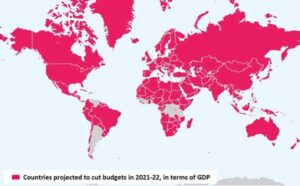
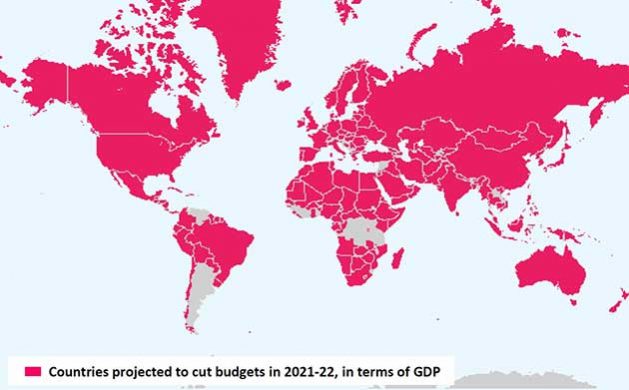
Map of countries with projected austerity cuts in 2021-2022, in terms of GDP, based on IMF fiscal projections. Credit: I. Ortiz and M. Cummins, 2021

NEW YORK and NAIROBI, Apr 15 2021 (IPS) – Last week Ministers of Finance met virtually at the Spring Meetings of the International Monetary Fund (IMF) and the World Bank to discuss policies to tackle the pandemic and socio-economic recovery.


But a global study just published by the Initiative for Policy Dialogue at Columbia University, international trade unions and civil society organizations, sounds an alert of an emerging austerity shock: Most governments are imposing budget cuts, precisely at a time when their citizens and economies are in greater need of public support.

Analysis of IMF fiscal projections shows that budget cuts are expected in 154 countries this year, and as many as 159 countries in 2022. This means that 6.6 billion people or 85% of the global population will be living under austerity conditions by next year, a trend likely to continue at least until 2025.

The high levels of expenditures needed to cope with the pandemic have left governments with growing fiscal deficit and debt. However, rather than exploring financing options to provide direly-needed support for socio-economic recovery, governments—advised by the IMF, the G20 and others—are opting for austerity.

The post-pandemic fiscal shock appears to be far more intense than the one that followed the global financial and economic crisis a decade ago. The average expenditure contraction in 2021 is estimated at 3.3% of GDP, which is nearly double the size of the previous crisis. More than 40 governments are forecasted to spend less than the (already low) pre-pandemic levels, with budgets 12% smaller on average in 2021-22 than those in 2018-19 before COVID-19, including countries with high developmental needs like Ecuador, Equatorial Guinea, Kiribati, Liberia, Libya, Republic of Congo, South Sudan, Yemen, Zambia and Zimbabwe.

The dangers of early and overly aggressive austerity are clear from the past decade of adjustment. From 2010 to 2019, billions of people were affected by reduced pensions and social security benefits; by lower subsidies, including for food, agricultural inputs and fuel; by wage bill cuts and caps, which hampered the delivery of public services like education, health, social work, water and public transport; by the rationalization and narrow-targeting of social protection programs so that only the poorest populations received smaller and smaller benefits, while most people were excluded; and by less employment security for workers, as labor regulations were dismantled. Many governments also introduced regressive taxes, like consumption taxes, which further lowered disposable household income. In many countries, public services were downsized or privatized, including health. Austerity proved to be a deadly policy. The weak state of public health systems—overburdened, underfunded and understaffed from a decade of austerity—aggravated health inequalities and made populations more vulnerable to COVID-19.

Today, it is imperative to watch out for austerity measures with negative social outcomes. After COVID-19’s devastating impacts, austerity will only cause more unnecessary suffering and hardship.

Austerity is bad policy. There are, in fact, alternatives even in the poorest countries. Instead of slashing spending, governments can and must explore financing options to increase public budgets.

First, governments can increase tax revenues on wealth, property, and corporate income, including on the financial sector that remains generally untaxed. For example, Bolivia, Mongolia and Zambia are financing universal pensions, child benefits and other schemes from mining and gas taxes; Brazil introduced a tax on financial transactions to expand social protection coverage.

Second, more than sixty governments have successfully restructured/reduced their debt obligations to free up resources for development. Third, addressing illicit financial flows such as tax evasion and money laundering is a huge opportunity to generate revenue. Fourth, governments can simply decide to reprioritize their spending, away from low social impact investments areas like defense and bank/corporate bailouts; for example, Costa Rica and Thailand redirected military expenditures to public health.

Fifth, another financing option is to use accumulated fiscal and foreign reserves in Central Banks. Sixth, attract greater transfers/development assistance or concessional loans. A seventh option is to adopt more accommodative macroeconomic frameworks. And eighth, governments can formalize workers in the informal economy with good contracts and wages, which increases the contribution pool and expands social protection coverage.

Expenditure and financing decisions that affect the lives of millions of people cannot be taken behind closed doors at the Ministry of Finance. All options should be carefully examined in an inclusive national social dialogue with representatives from trade unions, employers, civil society organizations and other relevant stakeholders.

#EndAusterity is a global campaign to stop austerity measures that have negative social impacts. Since 2020, more than 500 organizations and academics from 87 countries have called on the IMF and Ministries of Finance to immediately stop austerity, and instead prioritize policies that advance gender justice, reduce inequality, and put people and planet first.

Isabel Ortiz is Director of the Global Social Justice Program at Joseph Stiglitz’s Initiative for Policy Dialogue at Columbia University, former Director at the International Labour Organization (ILO) and UNICEF
Matthew Cummins is senior economist who has worked at UNDP, UNICEF and the World Bank.

  Source