COP30 Fails the Caribbean’s Most Vulnerable, Leaders Say: ‘Our Lived Reality Isn’t Reflected’

Climate Change Finance, Climate Change Justice, Conferences, COP30, Development & Aid, Editors’ Choice, Environment, Featured, Headlines, International Justice, Latin America & the Caribbean, Small Island Developing States, Sustainable Development Goals, TerraViva United Nations
COP30


Regional leaders say the outcome of the ‘mixed bag’ climate talks once again overlooks the real and mounting threats faced by Caribbean countries.
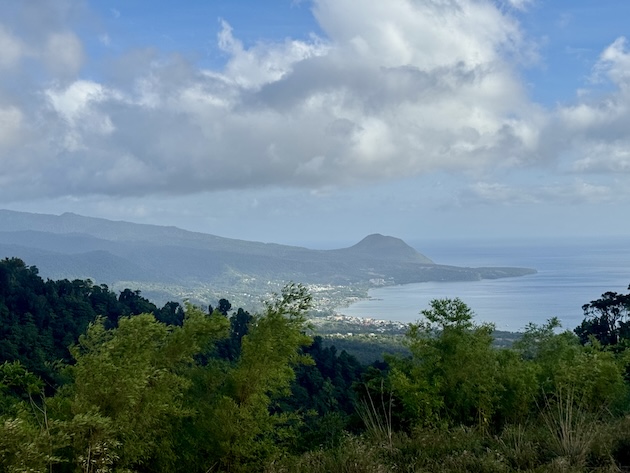
A coastal community in the Eastern Caribbean. Small island states say their extreme climate vulnerability is still not reflected in global finance decisions made at COP30. Credit: Alison Kentish/IPS

A coastal community in the Eastern Caribbean. Small island states say their extreme climate vulnerability is still not reflected in global finance decisions made at COP30. Credit: Alison Kentish/IPS

CASTRIES, St Lucia, Dec 1 2025 (IPS) – Caribbean small island states say this year’s UN climate conference has once again failed to deliver the urgency and ambition needed to tackle escalating climate devastation across the region. From slow-moving climate finance to frustrating political gridlock, leaders say COP30 did not reflect the realities that small islands are living through every day.


Jamaica is recovering from Hurricane Melissa, which left over 30 percent of the country’s GDP in losses and billions of dollars in damage. While the country has been able to respond rapidly thanks to a suite of innovative developmental finance tools, including a USD 150 million catastrophe bond, parametric insurance and a disaster savings fund, its Minister for Water, Environment and Climate Change, Matthew Samuda, warns that the vast majority of Caribbean islands do not have similar mechanisms.

Speaking at a press conference organized by Island Innovation and themed “Islands, the Climate Finance Gap, and COP30 Reflections,” Samuda said this is precisely why global negotiations must center the lived experiences of SIDS.

“I think I perhaps may be a little more disappointed than I am usually at the end of a COP because seeing what Jamaica is going through, seeing what Vietnam is going through, seeing extreme weather events pop up all around the world over the last 10 days, you would think that the urgency and the facts staring us in the face would have brought about greater ambition,” he said, adding that “unfortunately, the global geopolitical landscape didn’t allow for us to go much further.”

A Struggle Just to be Heard?

For many small islands and territories, simply participating meaningfully at COP30 was an uphill battle. The British Virgin Islands, like other Caribbean territories, had to rely on partners, including the Organisation of Eastern Caribbean States and the Caribbean Community Climate Change Centre for accreditation and access to the negotiations.

“We try to split up and cover as much as we can,” said Dr. Ronald Berkeley, Permanent Secretary in the Ministry of Environment, Natural Resources and Climate Change. “Our reliance on partners shows how limited our reach still is.”

Berkeley said that despite the Caribbean’s visible and worsening climate impacts, it remains difficult to get major emitters to understand the region’s urgency.

“For small islands, this is real. I’m not sure a lot of the big players believe us,” he said. “Until you live through being almost blown to smithereens by a Category Five hurricane, you will never understand.”

The BVI recently established its own climate trust fund, currently funded with about US$5.5 million, to address some financing shortfalls, but Berkeley emphasized that this cannot make up for reliable, large-scale climate funding.

Barriers to Pledges

Caribbean officials are echoing the same concern—that climate finance exists on paper but rarely reaches small, vulnerable nations at the speed or scale required.

“At COP there were positive commitments, about US$1.3 trillion annually by 2035 for climate action, the tripling of adaptation finance and operationalizing the Loss and Damage Fund,” said Dr. Mohammad Rafik Nagdee, Executive Director of the Caribbean Centre for Renewable Energy and Energy Efficiency (CCREEE).

“But the elephant in the room is the global finance gap,” he said. “Even where access exists, it’s not accessible at the speed the climate crisis demands. Processes are lengthy, requirements heavy and small governments simply don’t have the technical capacity.”

Nagdee said the region needs “greater predictability, simpler pathways and finance that is actually ready to disburse.”

Living Through it—Not Debating it

For Jamaica, which is emerging from one of the most devastating storms in its history, the mismatch between climate impacts and climate action is glaring.

“In the past four years, Jamaica has had its hottest day on record, its wettest day on record, its worst droughts, two tropical storms, a Category 4 hurricane and now what could be classified as a Category 6,” Samuda said. “That’s climate change in reality. That’s not an academic debate for us.”

Caribbean leaders widely described COP30 as a ‘mixed bag,’ with negotiations with incremental progress overshadowed by inadequate urgency.

“We cannot talk about building back better if the resources arrive slowly,” Nagdee said.

For small island states living on the frontlines of warming seas, rising temperatures and record-breaking storms, the message from COP30 is clear and becoming all-too familiar—that  climate change is accelerating and the price of delay is already being paid.

This feature is published with the support of Open Society Foundations.

IPS UN Bureau Report

 

Vanessa Hudgens Gives Birth To Second Child With Husband Cole Tucker

Huge congrats to Vanessa Hudgens and Cole Tucker — the “High School Musical” star just welcomed their second child! Vanessa announced the happy news in an IG post Saturday … sharing a pic where she’s lying in a hospital bed — her hand clasped…


Discover more from The Maravi Post

Subscribe to get the latest posts sent to your email.

The Maravi Post

Targeted Attack On National Guard, Trump Case Dismissed, Russia Awaits Peace Terms

<

p class=”readrate”>Two national guard members are in critical condition after being shot near the White House. President Trump says the suspect came to the U.S. from Afghanistan. He now calls for a re-examination of all Afghan nationals.

<

p class=”readrate”>There will also be no legal consequences for Trump’s attempts to overturn the 2020 election results. A federal judge dismissed the last outstanding election interference case against the president in Georgia.

<

p class=”readrate”>Also, U.S. special envoy Steve Witkoff is set to arrive in Moscow next week, where do things stand in the ongoing peace negotiations between Russia and Ukraine?

<

p class=”readrate”>Want more comprehensive analysis of the most important news of the day, plus a little fun? Subscribe to the Up First newsletter.

<

p class=”readrate”>Today’s episode of Up First was edited by Miguel Macias, Ben Swasey, Robbie Griffiths, HJ Mai and Alice Woelfle.

<

p class=”readrate”>

<

p class=”readrate”>It was produced by Ziad Buchh, Nia Dumas and Christopher Thomas.

<

p class=”readrate”>

<

p class=”readrate”>We get engineering support from Stacey Abbott. And our technical director is Carleigh Strange.

<

p class=”readrate”>

<

p class=”readrate”>Our deputy Executive Producer is Kelley Dickens.

Learn more about sponsor message choices: podcastchoices.com/adchoices

NPR Privacy Policy


Discover more from The Maravi Post

Subscribe to get the latest posts sent to your email.

The Maravi Post

Anna Kepner’s Mom Questions Why Daughter Was Sharing Room With Stepbrother

The mother of Anna Kepner — the 18-year-old who was murdered on a Carnival Cruise ship — is questioning the sleeping arrangements her daughter was placed in leading up to her tragic death. Heather Wright told Fox News she’s been villainized in…


Discover more from The Maravi Post

Subscribe to get the latest posts sent to your email.

The Maravi Post

From Access to Action — Carbon Markets Can Turn Developing Countries’ Ambitions into Realities

Biodiversity, Climate Action, Climate Change, Climate Change Finance, Climate Change Justice, Conferences, COP30, Economy & Trade, Environment, Global, Headlines, Sustainability, Sustainable Development Goals, TerraViva United Nations

Opinion

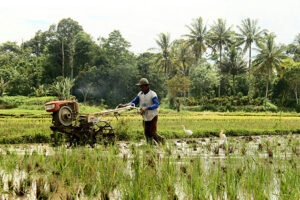
Local farmer ploughing a field in Indonesia. Credit: Unsplash

RIO DE JANEIRO, Brazil, Nov 26 2025 (IPS) – The UN climate talks at COP30 once again brought the critical issue of climate finance to the forefront of global discussions.

However, while much of the debate revolved around traditional forms of aid directed at developing countries most vulnerable to the impacts of climate change, a faster, more transformative approach lies in expanding access to carbon markets.


When emerging and developing economies (EMDEs) are equipped with the tools and knowledge needed to engage in these markets on their own terms, carbon finance can be generated and harnessed in ways that reflect their unique natural assets, governance, social contexts, and national priorities.

Achieving global climate and sustainable development goals depends on ensuring that those worst affected by climate change can fully participate in and benefit from this growing flow of finance.

EMDEs are on the frontlines of climate change — from rising sea levels threatening Pacific island nations to intensifying droughts and fires in the Amazon and Horn of Africa, and increasingly intense and frequent hurricanes in the Caribbean. These crises often hit hardest in regions that have contributed least to global emissions and in the most difficult position to react to them.

Yet, these same nations face a climate finance shortfall of $1.3 trillion per year. Carbon markets present an opportunity for these countries to bridge this gap by turning their natural advantages into climate finance assets.

Despite successful initiatives aimed at bolstering both high-integrity supply and demand for carbon credits, significant barriers to access persist, particularly for EMDEs. From fragmented policy landscapes to weak governance structures, limited institutional capacity, and low investor confidence, various obstacles prevent the vast potential of EMDEs to engage fully.

The Access Strategies Program — led by the Voluntary Carbon Markets Integrity Initiative — is a direct response to these challenges. It helps governments design and implement their own pathways into high-integrity carbon markets, enabling them to build the policies, institutional capacity, and investor confidence needed to meet their climate finance needs and transform their potential into progress.

Each country’s natural capital — from Brazil’s vast rainforest and agricultural landscapes, to the Caribbean’s blue carbon ecosystems, or Kenya’s grasslands and renewable energy potential — represents a unique competitive advantage, ready to be realised.

Simultaneously, no two countries share the same development goals or governance contexts. In some, carbon markets can drive forest conservation and biodiversity protection; while in others, they deliver the most impact by strengthening rural livelihoods or financing clean energy transitions.

The Access Strategies model recognises this uniqueness, tailoring its support to help countries use carbon finance in ways that align with their own specific economic and environmental strategies and goals.

For example, the Partnership for Agricultural Carbon (PAC) — developed with the Inter-American Institute for Cooperation on Agriculture (IICA) — is building capacity across Latin American and Caribbean agriculture ministries to participate in high-integrity carbon markets. It provides training, policy guidance, and decision-making tools that help governments and farmers identify viable carbon projects aligning with national agricultural and sustainability goals.

The collaboration has given small and medium producers a clearer route to investment, while positioning agriculture as a central player in regional climate strategies. Another example of the Access Strategies work is the recently launched Amazon Best Practices Guide, which will help Amazon state governments design and implement carbon market frameworks made specifically for their unique ecological and governance realities.

Moreover, in countries such as Kenya, Peru, and Benin, the Program has provided tailored support to develop policy and regulatory frameworks, strengthen institutional capacity, and attract responsible investment for high-priority climate mitigation projects — all in line with country-led goals.

These examples show what’s possible when governments have the tools and expertise to engage in high-integrity carbon markets on their own terms. More countries should seize this opportunity to tap into the growing flow of finance from carbon markets.

While carbon markets are not a silver bullet, they are one of the few scalable and self-sustaining tools available when grounded in integrity and tailored to each country’s needs.

Programs like Access Strategies do more than transfer technical knowledge — they build the enabling conditions for locally led action, drawing on countries’ unique ecological, social, and institutional insights to shape solutions that work in practice.

The focus of global climate action should not only be on new funding pledges, but on ensuring funding that is already available is effectively redirected for EMDEs countries to harness their own natural capital and promote social inclusion, while meeting their climate goals and reshaping their development pathway.

Building this kind of capacity is how we turn global ambition into lasting, locally owned progress, and moreover how carbon finance can become a true instrument of sustainable development.

Ana Carolina Avzaradel Szklo, Technical Director, Markets and Standards, Voluntary Carbon Markets Integrity Initiative (VCMI)

IPS UN Bureau


COP30: Broken Promises, New Hope — A Call to Turn Words into Action

Biodiversity, Climate Action, Climate Change, Climate Change Finance, Conferences, COP30, Economy & Trade, Energy, Environment, Featured, Global, Headlines, Indigenous Rights, TerraViva United Nations

Opinion

VICTORIA, Seychelles, Nov 25 2025 (IPS) – When the world gathered in Glasgow for COP26, the mantra was “building back better.” Two years later, in Sharm El Sheikh, COP27 promised “implementation.”

This year, in Belém, Brazil, COP30 arrived with a heavier burden: to finally bridge the chasm between lofty rhetoric and the urgent, measurable steps needed to keep 1.5 °C alive.


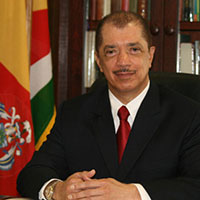
James Alix Michel

What Was Expected of COP30 were modest yet critical. After the disappointments of Copenhagen (2009) and the optimism sparked by Paris (2015), developing nations, small island states, Indigenous groups and a swelling youth movement demanded three things:

    1. Binding phase out timelines for coal, oil and gas.
    2. A fully funded Loss and Damage Facility to compensate vulnerable countries already suffering climate impacts.
    3. Scaled up adaptation finance—tripling the $120 billion a year pledge and ensuring it reaches the frontline communities that need it most.

However the negotiations evolved into a tug of war between ambition and inertia. Wealthier nations, still reeling from economic shocks, offered incremental increases in adaptation funding and a new Tropical Forests Forever Facility (TFFF) worth $125 billion, with 20 percent earmarked for Indigenous stewardship. The Global Implementation Accelerator—a two year bridge to align Nationally Determined Contributions (NDCs) with 1.5 °C—was launched, alongside a Just Transition Mechanism to share technology and financing.

However, the text on fossil fuel phase out remained voluntary; the Loss and Damage Fund was referenced but not capitalised; and the $120 billion adaptation pledge fell short of the $310 billion annual need.

But there were Voices That Could Not Be Ignored.

Developing Nations (the G77+China) reminded the plenary that climate justice is not a charity—it is a legal obligation under the UNFCCC. They demanded that historic emitters honor their “common but differentiated responsibilities.”

Island States(AOSIS) warned that sea level rise is no longer a future scenario; it is eroding coastlines and displacing entire cultures. Their plea: “1.5 °C is our survival, not a bargaining chip.”

Indigenous Peoples highlighted the destruction of Amazon and Boreal forests, urging that 30 percent of all climate finance flow directly to communities that protect 80 percent of biodiversity.

Youth — The Gen Z generation, marched outside the venue, chanting “We will not be diluted” demanding binding commitments and accountability mechanisms.

The Legacy of Copenhagen, Paris, and the Empty COPs –

I attended COP15 in Copenhagen (2009), where the “Danish draft” was rejected, and the summit collapsed amid accusations of exclusion. The disappointment lingered until Paris (2015), where the 1.5 °C aspiration was enshrined, sparking hope that multilateralism could still work. Since then, COPs have been a carousel of promises: the Green Climate Fund fell $20 billion short; the 2022 Glasgow Climate Pact promised “phasing out coal” but left loopholes. Each iteration has chipped away at trust.

COP30 was billed as the moment to reverse that trend.

And the result? Partial progress, but far from the transformational shift required.

Did We Achieve What We Hoped For?

In blunt terms: No. The pledges secured are insufficient to limit warming to 1.5 °C, and critical gaps—binding fossil fuel timelines, robust loss and damage funding, and true equity in finance—remain unfilled.

Yet, there are glimmers. The tripling of adaptation finance, the first concrete allocation for Indigenous led forest protection, and the creation of an Implementation Accelerator signal that the architecture for change exists. The challenge now is to fill it with real money and accountability.

Let us look at ‘What Must Happen Next’

    1. Full Capitalisation of Loss and Damage Fund
    – G20 nations must commit 0.1 % of GDP and disburse within 12 months.
    2. Binding Fossil Fuel Phase out – Coal, oil and gas with just transition financing for workers.
    3. Scale Adaptation Finance to $310 billion/yr
    – Re channel subsidies from fossil fuels to resilience projects.
    4. Direct Funding for Indigenous and Youth Initiatives
    – Allocate 30 % of climate finance to community led stewardship.
    5. Strengthen Accountability
    – Mandate annual NDC updates with independent verification and penalties for non compliance.

But for all this to become reality there must be a determined effort to achieve Future Actions.
We have watched promises fade after every COP, yet the physics of climate change remains unforgiving. The urgency is not new; the window to act is shrinking. But hope endures – in the solar panels lighting remote villages, in mangroves being restored to buffer storms, in the relentless energy of young activists demanding a livable planet.

Humanity has the knowledge, technology, and resources. What we need now is the collective political will to use them. Let COP30 be remembered not as another empty summit, but as the turning point where the world chose survival over complacency.

The future is not written; we write it with every decision we make today.

James Alix Michel, Former President Republic of Seychelles, Member Club de Madrid.

IPS UN Bureau