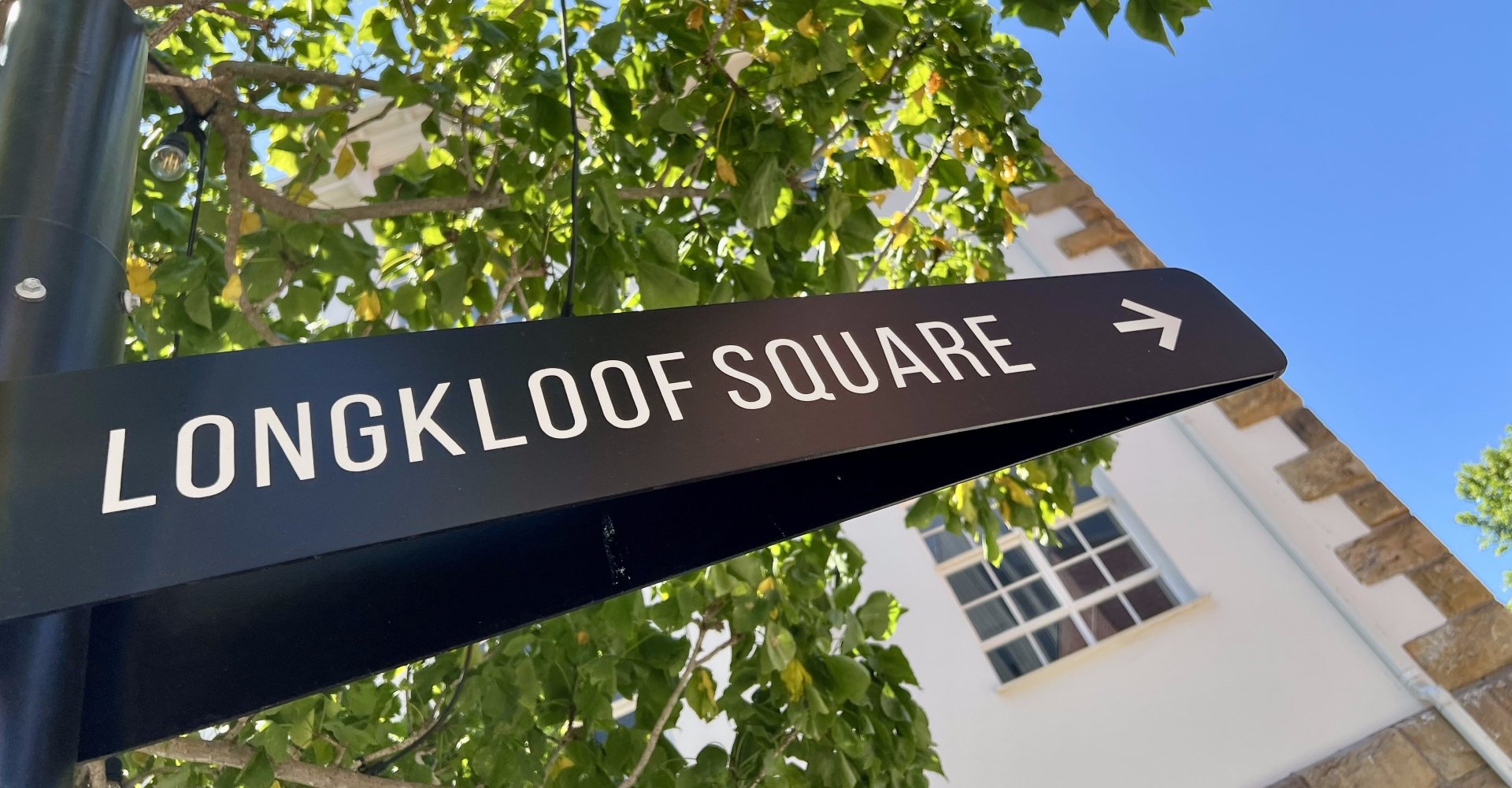
The Longkloof Precinct sits in the suburb of Gardens, just off Kloof Street in Cape Town’s City Bowl. Once historic buildings that originally served industrial and educational purposes, the area has been transformed into a dynamic mixed-use hub lined with trendy shops, restaurants, and a hotel.
Here’s everything you can enjoy in Longkloof on your next visit:
Things To Do
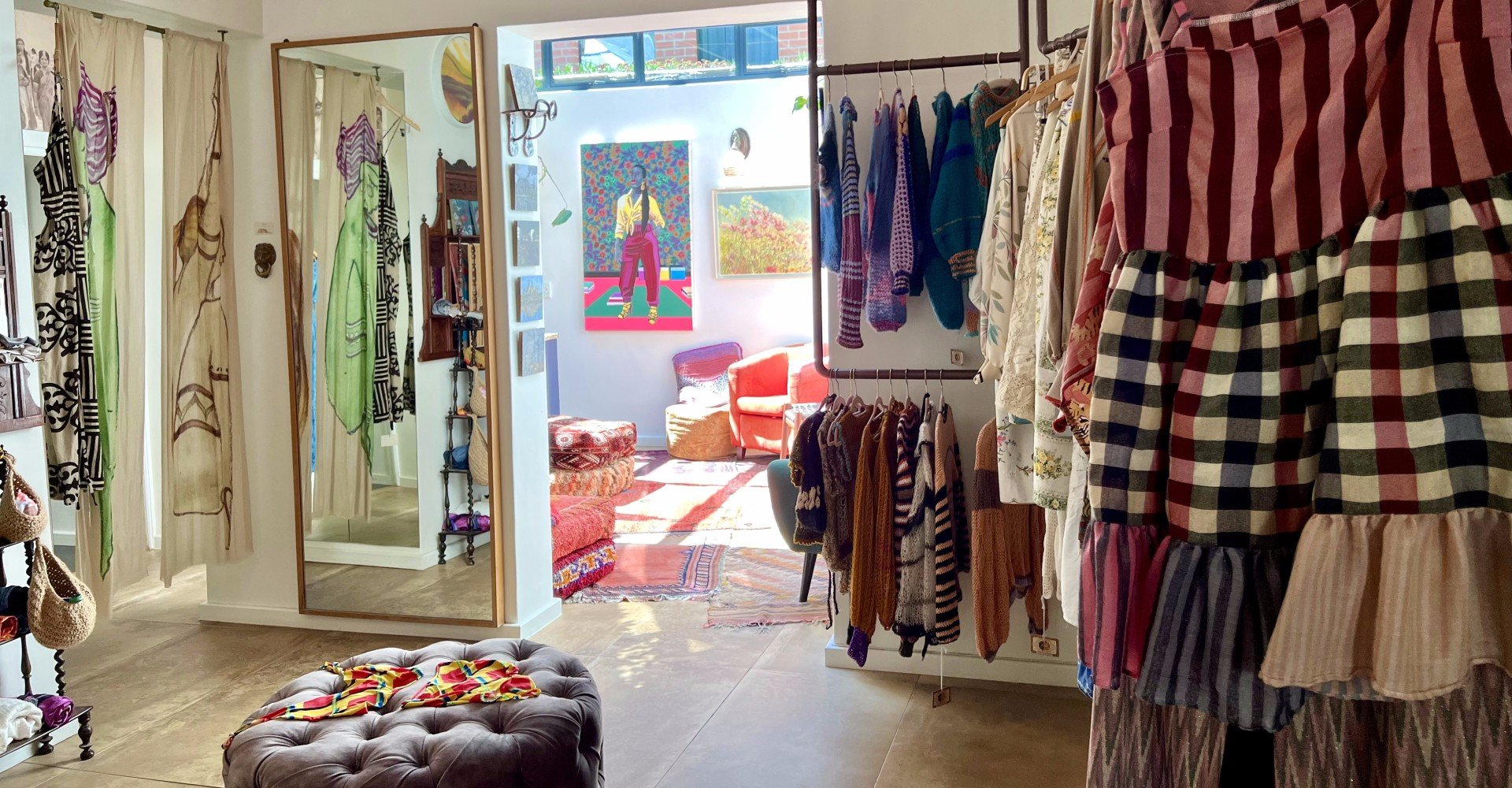
Shop At Rosey and Vittori
This South African fashion brand is redefining edgy sophistication. Founded by creative duo Isabella Rosa Bisogno and Steven Eddie Rosenbaum (whose grandmother’s surname, Vittori, inspires the brand’s name), the label began its journey a decade ago with a focus on menswear. At the Longkloof store, you will find statement dresses, tailored sets, pants, and jackets for men and women. And if you’re lucky, you might just catch a few coveted pieces on sale.
You can’t miss ShangriLa; its green building stands proudly on Park Road. Step inside, and you’ll discover a thoughtfully curated selection of clothing, art and décor pieces that reflect creativity and calm. Beyond retail, ShangriLa is a space to breathe, move, and recharge. Join one of their yoga or meditation sessions (see their website for details), then relax at the cozy café for a cup of tea.
Girlies who love sunnies, listen up! You will find the perfect pair at Ballo, a quaint little store with the season’s trendiest shades. There are fun, playful colours to match your mood.
Innovation City is an exclusive workspace that brings together a community of startups, scaleups, corporates, entrepreneurs, investors, and innovators. This members-only space (application forms are available on their website) aims to drive collaboration and business growth in the city. When you need a break, the on-site coffee shop is the perfect place to connect, recharge, or spark your next big idea.
Coffee shop by day, wine bar by night. Tucked just off Park Road, Vine and Dandy lets you enjoy the best of both worlds: freshly brewed coffee and award-winning wines. Vine and Dandy is pet-friendly, so bring your dogs along to relax on the pup sack beds while you catch up on work or hang out with your mates. Wine lovers, every Thursday, the restaurant hosts wine tastings from 5pm to 7pm, where you can sample a variety of wines and discover new favourites.
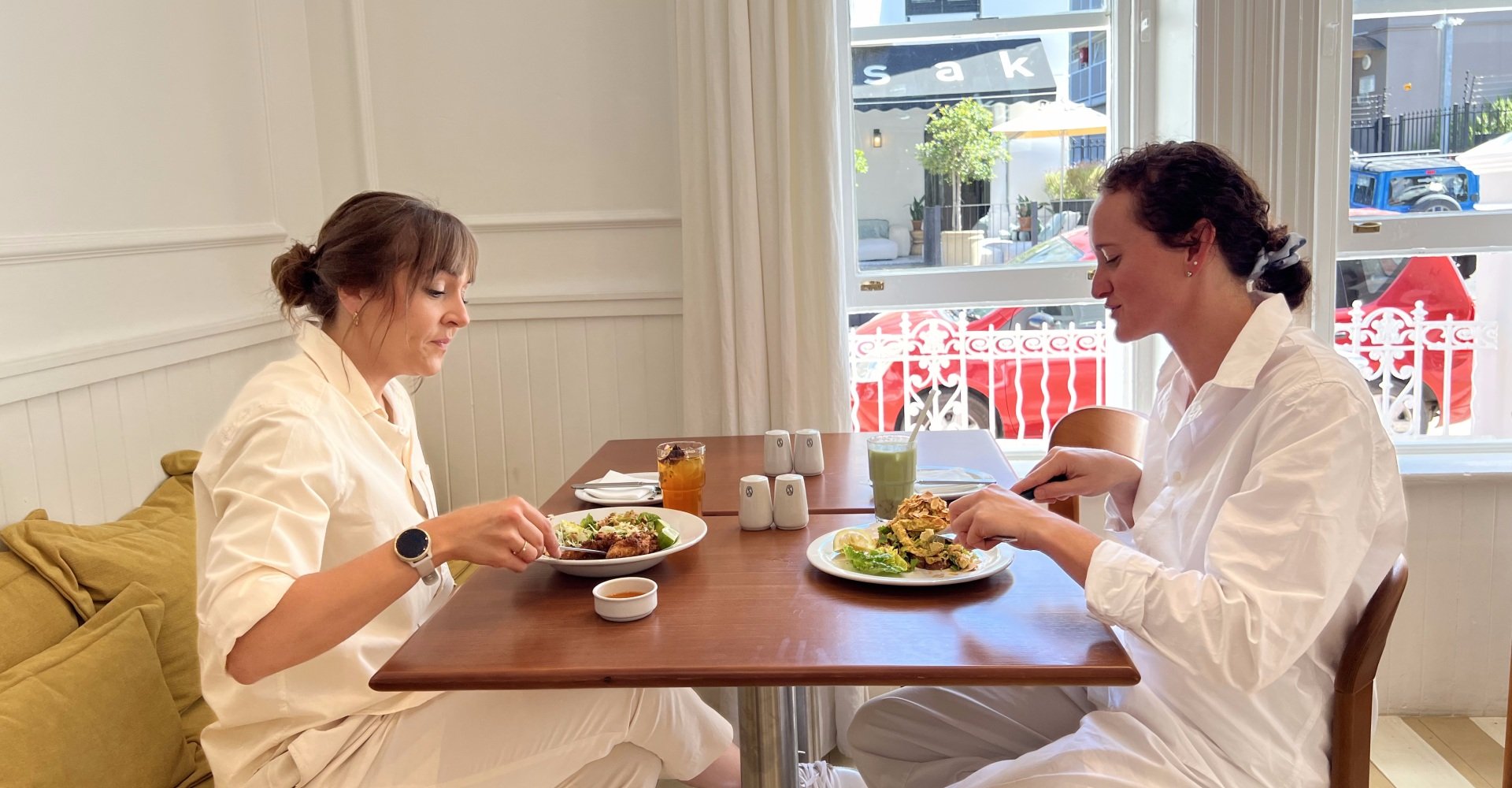
Cafe Sofi by tashas is the brainchild of Natasha and Savva Sideris, the founders of Tashas Group, as an ode to their mother, Sophia Electra. Every detail is animated by Sophia’s spirit. Her loves, from cakes, cats and polka dots, to orchids, leopard print, and the Pink Panther, echo through the interiors and daily specials. Her fascination with flavour comes to life on a menu of simple, soulful dishes, including honey butter croissants, rosti and beef ragu, tiramisu, and a steak roll. Café Sofi is open for breakfast, lunch and dinner daily.
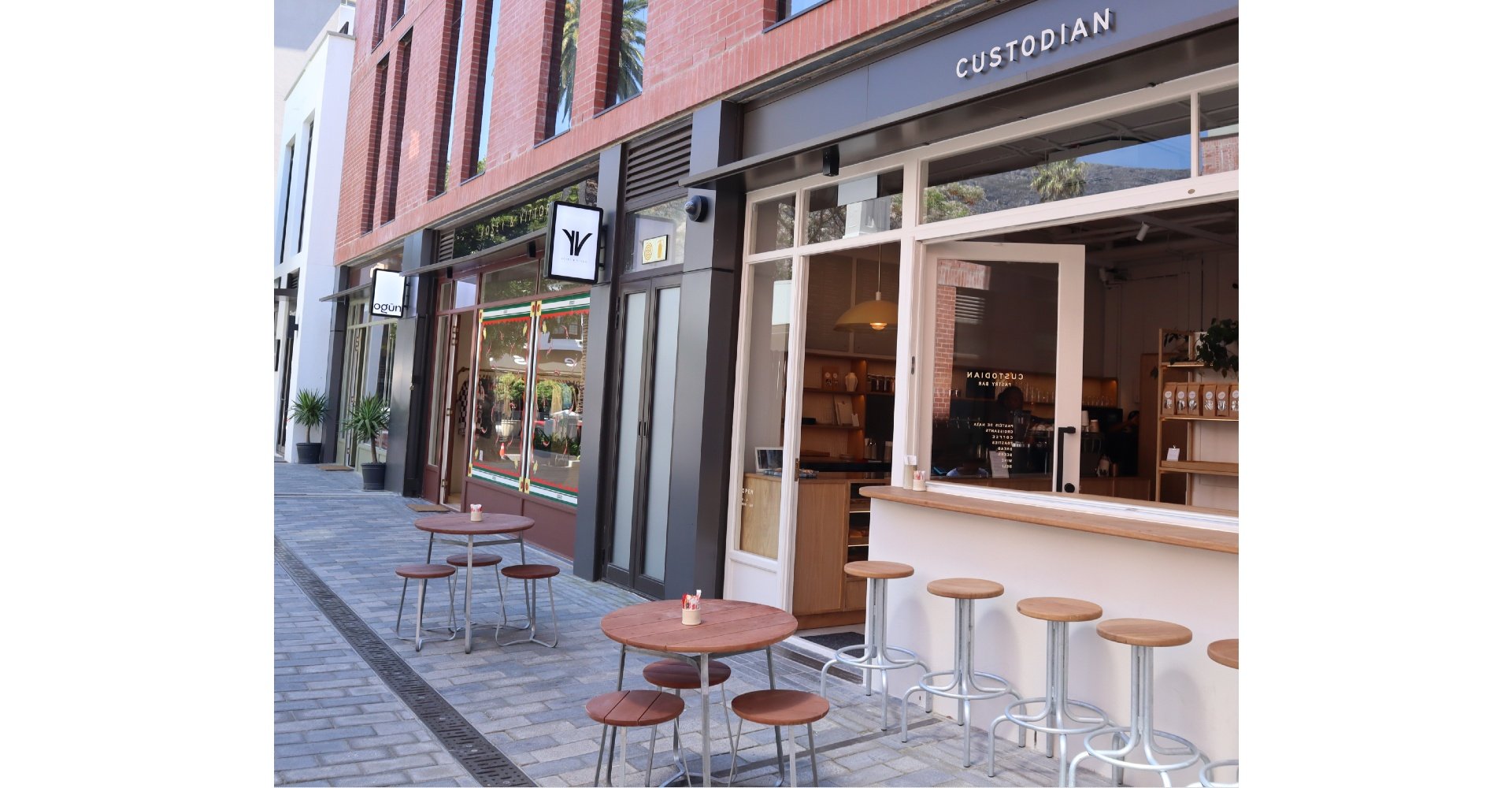
If you’re looking to enjoy delicious treats in a gorgeous setting, Custodian Pastry Bar, the latest edition from Hoghouse Brewing Company, is for you. Sip on freshly brewed coffee while indulging in baked pastries, rustic breads, and all-day toasties. There’s also a carefully curated selection of deli items and frozen goodies to take home and enjoy later.
From the culinary brilliance of Chef Bertus Basson comes Ongetem Restaurant & Bar at Canopy by Hilton Cape Town Longkloof. “Ongetem,” Afrikaans for “untamed,” perfectly embodies the restaurant’s spirit. The menu celebrates bold, flame-cooked dishes bursting with flavour, perfectly paired with equally inventive cocktails.
Canopy by Hilton Longkloof brings bold design, local flair, and laid-back vibes to one of the city’s most exciting neighbourhoods. Just steps from Kloof Street, expect warm welcomes, a sweet Cape Town treat in your room, and epic views of Table Mountain and Lion’s Head. Dine at Ongetem Restaurant & Bar, sweat it out at the 24-hour gym, or bar-hopping nearby -it’s the perfect base for exploring the city.
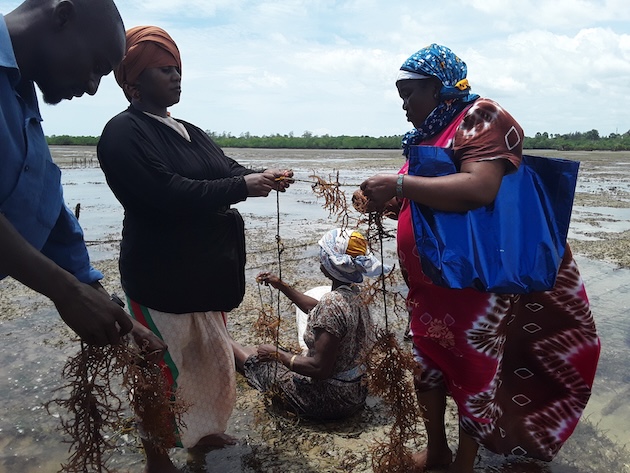
Scientists say replacing just 10 percent of global vegetable intake with seaweed-derived products could free up large portions of land. Credit: Joyce Chimbi/IPS
Current rates of land degradation pose a major environmental and socioeconomic threat, driving climate change, biodiversity loss, and social crises. Food production to feed more than 8 billion people is the dominant land use on Earth. Yet, this industrial-scale enterprise comes with a heavy environmental toll.
Preventing and reversing land degradation are key objectives of the United Nations Convention to Combat Desertification (UNCCD) and are also fundamental for the United Nations Framework Convention on Climate Change (UNFCCC) and the Convention on Biological Diversity (CBD).
These three conventions emerged from the 1992 Rio Earth Summit to address the interconnected crises of biodiversity loss, climate change and land degradation. A paper published today in Nature by 21 leading scientists argues that the targets of “these conventions can only be met by ‘bending the curve’ of land degradation and that transforming food systems is fundamental for doing so.”
Lead author Fernando T. Maestre of the King Abdullah University of Science and Technology (KAUST), Saudi Arabia, says the paper presents “a bold, integrated set of actions to tackle land degradation, biodiversity loss, and climate change together, as well as a clear pathway for implementing them by 2050.”
“By transforming food systems, restoring degraded land, harnessing the potential of sustainable seafood, and fostering cooperation across nations and sectors, we can ‘bend the curve’ and reverse land degradation while advancing towards goals of the UN Convention to Combat Desertification and other global agreements.”
Co-author Barron J. Orr, UNCCD’s Chief Scientist, says, “Once soils lose fertility, water tables deplete, and biodiversity is lost, restoring the land becomes exponentially more expensive. Ongoing rates of land degradation contribute to a cascade of mounting global challenges, including food and water insecurity, forced relocation and population migration, social unrest, and economic inequality.”
“Land degradation isn’t just a rural issue; it affects the food on all our plates, the air we breathe, and the stability of the world we live in. This isn’t about saving the environment; it’s about securing our shared future.”
The authors suggest an ambitious but achievable target of 50 percent land restoration for 2050—currently, 30 percent by 2030—with enormous co-benefits for climate, biodiversity and global health. Titled ‘Bending the curve of land degradation to achieve global environmental goals,’ the paper argues that it is imperative to ‘bend the curve’ of land degradation by halting land conversion while restoring half of degraded lands by 2050.
“Food systems have not yet been fully incorporated into intergovernmental agreements, nor do they receive sufficient focus in current strategies to address land degradation. Rapid, integrated reforms focused on global food systems, however, can move land health from crisis to recovery and secure a healthier, more stable planet for all,” reads parts of the paper.
Against this backdrop, the authors break new ground by quantifying the impact of reducing food waste by 75 percent by 2050 and maximizing sustainable ocean-based food production—measures that alone could spare an area larger than Africa. They say restoring 50 percent of degraded land through sustainable land management practices would correspond to the restoration of 3 Mkm² of cropland and 10 Mkm² of non-cropland, a total of 13 Mkm².
Stressing that land restoration must involve the people who live on and manage the land—especially Indigenous Peoples, smallholder farmers, women, and other vulnerable people and communities. Co-author Dolors Armenteras, Professor of Landscape Ecology at Universidad Nacional de Colombia, Bogotá, says land degradation is “a key factor in forced migration and conflict over resources.”
“Regions that rely heavily on agriculture for livelihoods, especially smallholder farmers, who feed much of the world, are particularly vulnerable. These pressures could destabilize entire regions and amplify global risks.”
To support these vulnerable segments of the population, the paper calls for interventions such as shifting agricultural subsidies from large-scale industrial farms toward sustainable smallholders, incentivizing good land stewardship among the world’s 608 million farms, and fostering their access to technology, secure land rights, and fair markets.
“Land is more than soil and space. It harbors biodiversity, cycles water, stores carbon, and regulates climate. It gives us food, sustains life, and holds deep roots of ancestry and knowledge. Today, over one-third of Earth’s land is used to grow food – feeding a global population of more than 8 billion people,” says Co-author Elisabeth Huber-Sannwald, Professor, the Instituto Potosino de Investigación Científica y Tecnológica, San Luis Potosí, Mexico.
“Yet today,” she continues, “Modern farming practices, deforestation, and overuse are degrading soil, polluting water, and destroying vital ecosystems. Food production alone drives nearly 20 percent of global emissions of greenhouse gases. We need to act. To secure a thriving future – and protect land – we must reimagine how we farm, how we live, and how we relate to nature – and to each other.”
With an estimated 56.5 Mkm² of agricultural land, cropland, and rangelands being used to produce food, and roughly 33 percent of all food produced being wasted, of which 14 percent is lost post-harvest at farms and 19 percent at the retail, food service and household stages, reducing food waste by 75 percent, therefore, could spare roughly 13.4 Mkm² of land.
The authors’ proposed remedies include policies to prevent overproduction and spoilage, banning food industry rules that reject “ugly” produce, encouraging food donations and discounted sales of near-expiry products, education campaigns to reduce household waste and supporting small farmers in developing countries to improve storage and transport.
Other proposed solutions include integrating land and marine food systems, as red meat produced in unsustainable ways consumes large amounts of land, water, and feed and emits significant greenhouse gases. Seafood and seaweed are sustainable, nutritious alternatives. Seaweed, for example, needs no freshwater and absorbs atmospheric carbon.
The authors recommend measures such as replacing 70 percent of unsustainably produced red meat with seafood, such as wild or farmed fish and mollusks. Replacing just 10 percent of global vegetable intake with seaweed-derived products could free up over 0.4 Mkm² of cropland.
They nonetheless note that these changes are especially relevant for wealthier countries with high meat consumption. In some poorer regions, animal products remain crucial for nutrition. The combination of food waste reduction, land restoration, and dietary shifts, therefore, would spare or restore roughly 43.8 Mkm² in 30 years (2020-2050).
The proposed measures combined would alsocontribute to emission reduction efforts by mitigating roughly 13.24 Gt of CO₂-equivalent per year through 2050 and help the world community achieve its commitments in several international agreements, including the three Rio Conventions and UN SDGs.
Overall, the authors call for the UN’s three Rio conventions—CBD, UNCCD and UNFCCC—to unite around shared land and food system goals and encourage the exchange of state-of-the-art knowledge, track progress and streamline science into more effective policies, all to accelerate action on the ground.
A step in the right direction, UNCCD’s 197 Parties, at their most recent Conference of Parties (COP16) in Riyadh, Saudi Arabia, have already adopted a decision on avoiding, reducing and reversing land and soil degradation of agricultural lands.
The Findings By Numbers
56%: Projected increase in food production needed by 2050 if we stay on our current path
34%: Portion of Earth’s ice-free land already used for food production, headed to 42% by 2050
21%: Share of global greenhouse gas emissions produced by food systems
80%: Proportion of deforestation driven by food production
70%: Amount of freshwater consumption that goes to agriculture
33%: Fraction of global food that currently goes to waste
USD 1 trillion: Estimated annual value of food lost or wasted globally
75%: Ambitious target for global food waste reduction by 2050
50%: Proposed portion of degraded land to be restored by 2050 using sustainable land management
USD 278 billion: Annual funding gap to achieve UNCCD land restoration goals
608 million: Number of farms on the planet
90%: Percentage of all farms under 2 hectares
35%: Share of the world’s food produced by small farms
6.5 billion tons: Potential biomass yield using 650 million hectares of ocean for seaweed farming
17.5 million km²: Estimated cropland area saved if humanity adopts the proposed Rio+ diet (less unsustainably produced red meat and more sustainably sourced seafood and seaweed-derived food products)
166 million: Number of people who could avoid micronutrient deficiencies with more aquatic foods in their diet