Biodiversity Credits: Solution or Empty Promise for Latin America?

Biodiversity, Civil Society, Climate Action, Climate Change, Climate Change Finance, Conservation, Development & Aid, Economy & Trade, Editors’ Choice, Environment, Green Economy, Headlines, Latin America & the Caribbean, Natural Resources, Regional Categories, Sustainable Development Goals, TerraViva United Nations

Climate Change Finance

In the Bosque de Niebla, located in the department of Antioquia in northwestern Colombia, biodiversity bonds have emerged to push for protection of the ecosystem from threats such as deforestation and rising temperatures. But these instruments are still very green in Latin America. CREDIT: Courtesy of Terraso - Unlike offsets for environmental damage due to infrastructure projects, biodiversity credits are an economic instrument that can be used to finance actions that result in measurable positive outcomes through the issuance and sale of biodiversity units

In the Bosque de Niebla, located in the department of Antioquia in northwestern Colombia, biodiversity bonds have emerged to push for protection of the ecosystem from threats such as deforestation and rising temperatures. But these instruments are still very green in Latin America. CREDIT: Courtesy of Terraso

MEXICO CITY, Aug 28 2023 (IPS) – Located in northwestern Colombia, the Bosque de Niebla is home to 154 species of plants, 120 bird species, 21 species of mammals, 16 water springs and five hectares of wetlands.


Forming part of the Cuchilla Jardín-Támesis Integrated Management District in the department of Antioquia, the ecosystem provides water and climate regulation to the entire northwestern region of the country.

“Not all ecosystem services are the same, it has to be a very judicious system. And there have to be local regulations, from green taxonomies (classification of activities) to regulations. Therein lies the dilemma of where the sector has to go.” — Lía González

For this reason, an innovative financing scheme, biodiversity bonds, seeks to strengthen the protection of this area for 30 years, in the face of threats such as deforestation, drought and rising temperatures due to the climate crisis.

Private Colombian investor Terraso and Spanish carbon offset seller ClimateTrade, a climate solutions company that utilizes blockchain technology to facilitate large-scale decarbonization efforts through innovation, created voluntary biodiversity bonds for the Bosque de Niebla in May 2022.

The aim is to care for 340 hectares registered as a habitat bank by the Ministry of Environment and Sustainable Development of Colombia, one of the 10 most biologically diverse countries in the world.

Habitat banks are areas where conservation initiatives are aggregated and ecosystem preservation, enhancement or restoration actions are implemented to generate quantifiable biodiversity gains.

Each biodiversity credit represents 10 square meters of threatened, conserved or restored land. Technical, financial and legal guarantees will sustain the project for at least 30 years. Each bond, worth 30 dollars, corresponds to 30 years of conservation and/or restoration.

But the scheme raises concerns about the commercialization of wildlife and the pursuit of profit over ecological benefits.

Patricia Balvanera, an academic at the Institute for Research on Ecosystems and Sustainability of the public National Autonomous University of Mexico, said the financial market approach does not address the full spectrum of environmental, cultural and social issues, which can cloud the vision of the integral importance of nature.

“Other non-integrated values have to do with social, ethical principles that have developed around nature. We have bought ourselves an image as a factory of resources at the service of people and we have discarded the role of nature and society through a relationship of care and reciprocity,” she told IPS from the northern Mexican city of San Luis Potosí.

The expert is co-author of the study “Diverse values of nature for sustainability”, published on Aug. 9, which addresses a more holistic view of care.

Unlike offsets for environmental damage due to infrastructure projects, biodiversity credits are an economic instrument that can be used to finance actions that result in measurable positive outcomes through the issuance and sale of biodiversity units.

The buyers of biodiversity bonds gain in reputational aspects, by promoting the restoration and protection of ecosystems, and obtain funds by reselling the bonds, as it is a voluntary market.

These are different from carbon credits, where companies and individuals can buy the reduced emissions credits in what is known as the voluntary carbon market, to offset their polluting emissions: each one represents the elimination of one metric ton of carbon from the atmosphere.

For the carbon dioxide equivalent trapped and stored in ecosystems such as forests, project owners can issue certificates for sale in national and international markets to national and international corporations and individuals who want to reduce their polluting emissions.
Mangroves, such as these in the municipality of Paraíso in the southeastern Mexican state of Tabasco, are candidates for biodiversity bonds because of the services they provide and the need to protect them, like other ecosystems. But these credits still need international standards, verification and monitoring guidelines, as well as tangible results. CREDIT: Emilio Godoy / IPS - Unlike offsets for environmental damage due to infrastructure projects, biodiversity credits are an economic instrument that can be used to finance actions that result in measurable positive outcomes through the issuance and sale of biodiversity units

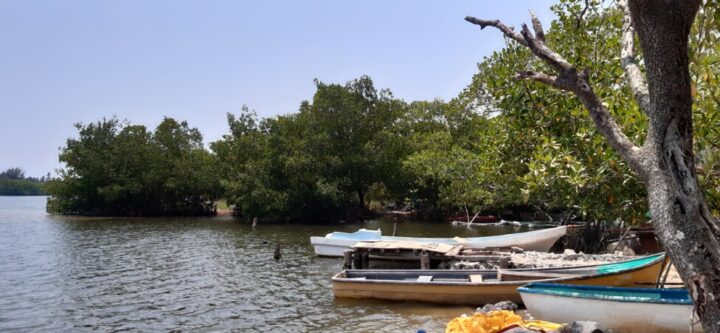
Mangroves, such as these in the municipality of Paraíso in the southeastern Mexican state of Tabasco, are candidates for biodiversity bonds because of the services they provide and the need to protect them, like other ecosystems. But these credits still need international standards, verification and monitoring guidelines, as well as tangible results. CREDIT: Emilio Godoy / IPS

On hold

In Honduras, a project similar to the Colombian one is advancing in Cusuco National Park, in the northwestern department of Cortés.

In the 22,200-hectare forest, decreed in 1987, the international alliance of environmental organizations rePlanet seeks the conservation of 1,883 hectares in 25 years in the face of threats such as deforestation and the risk to 24 species.

The project could issue bonds this year.

Lía González, director for Latin America of the Belgian social impact investment firm Incofin, said the instrument involves several challenges, such as monetization, assigning value to the blocks of land, the creation of standards for measurement, verification, monitoring and issuance, as well as the involvement of the communities.

“Not all ecosystem services are the same, it has to be a very judicious system. And there have to be local regulations, from green taxonomies (classification of activities) to regulations. Therein lies the dilemma of where the sector has to go,” she told IPS from Bogotá.

The executive stressed that the scheme should avoid the carbon credits model and learn from its mistakes, such as inaccurate calculation of carbon sequestration and violations of community rights.

In 2022, Incofin’s portfolio covered 111 clients in 14 Latin American countries for a total of 400 million dollars in segments such as sustainable agriculture and microfinance. In Colombia, it supported eight clients and totaled 44.3 million dollars.

The company focuses on medium-term investments, so that beneficiaries have an additional source of income within the area being protected or restored.

So far, so-called green bonds have fallen short in financing for the conservation of natural wealth and sustainable land use, according to a 2020 report by the Luxembourg Green Exchange and the Global Landscapes Forum, entitled: “How can Green Bonds catalyse investments in biodiversity and sustainable land-use projects?”

Colombia and Honduras are the countries that have moved forward with these instruments, because they have regulations and several financial instruments related to biodiversity, although bonds are still a rarity.

In this regard, the Organisation for Economic Co-operation and Development (OECD), which groups the world’s 38 most developed economies, noted in its 2021 report “Tracking Economic Instruments and Finance for Biodiversity” that, despite the progress made, the substantial potential depends on increasing the use and ambition of biodiversity-relevant economic instruments.

In its Sixth National Biodiversity Report 2020, Honduras recognized the need to improve the monetary and non-monetary valuation of environmental services.

Financing schemes are essential to the development of the United Nations Decade on Ecosystem Restoration 2021-2030, adopted by the U.N. General Assembly in 2019, which seeks to prevent, halt and reverse the degradation of terrestrial and marine ecosystems, to eradicate poverty, combat climate change and prevent the mass extinction of species.

Moving towards a take-off?

In order for it to be successful, the mechanism requires integrity of the projects and the inclusion of all stakeholders, according to the World Economic Forum, dedicated to multinational business lobbying.

The Colombian Bosque de Niebla initiative has already placed 62,063 credits and has 61,773 available.

The investor Terraso has seven other habitat banks in various areas of Colombia that could generate more bonds.

Balvanera warned of perverse incentives that could undermine protection.

“If we think about financial schemes, the link should not only be transactional. There must be involvement of different stakeholders who collectively identify the mechanism that promotes conservation, respects the vision of care and maintains the livelihoods of the inhabitants of these areas,” she said.

The academic argued that “this generates a circular system that connects forest protection, water care, food production and sustainable consumption.”

For her part, González was open to analyzing these investments.

“Water could be a viable focus for climate resilience and its impact on the region’s climate. We are interested in learning about monetization and that additional sources of income can benefit protection processes, so that it is complementary to what we do,” she said.

Last December, the 15th Conference of the Parties (COP15) to the Convention on Biological Diversity (CBD) adopted the Kunming-Montreal Global Biodiversity Framework, which includes cumulative biodiversity funding of at least 200 billion dollars by 2030 from public and private sources.

One of its goals is to encourage innovative schemes such as payment for environmental services, green bonds, offsets, biodiversity credits and benefit-sharing mechanisms that include environmental and social safeguards.

To meet these objectives, the 196 States Parties to the CBD created the Global Biodiversity Framework Fund, which is managed by the Global Environment Facility and whose governing council was approved in June in Brazil.

In addition, the agreement includes the complete or partial restoration of at least 30 percent of degraded terrestrial and marine ecosystems by 2030, as well as the reduction of the loss of areas of high biological importance to almost zero.

  Source

Forus Civil Society Network Urges that Respect for Human Rights, Climate Justice and Accountability should be at the core of the New Global Financing Pact

Indigenous activist protesting in Colombia. Credit: Sebastian Barros

By Marianne Buenaventura
PARIS, Jun 23 2023 (IPS)

As the Summit for a New Global Financing Pact unfolds in Paris on 22-23 June, Forus, a global network representing over 22,000 civil society organisations across Africa, Latin America, Asia, Europe and the Pacific, calls for the respect of human rights and for meaningful inclusion of civil society in shaping financial systems and structures.


The summit, co-hosted by India, could help find common ground on finance that drives progress at key events later in 2023 and in 2024 – the G20 summit in New Delhi, the COP28 climate talks in Dubai, and the Finance in Common summit with public development banks in Cartagena.

As part of the summit, Sarah Strack, Forus Director, is amplifying civil society’s voices at the high-level Finance in Common event in the presence of French President Emmanuel Macron and other leaders, to discuss and leverage the role of Public Development Banks in financing the SDGs, scaling up sustainable finance, and supporting inclusion. Forus has been engaging in the Finance in Common initiative since its inception in 2020 with the aim to ensure that a people-based approach to development is pursued.

“If we want to have a chance to tackle the most pressing challenges and the multiple crises of our time in a way that really puts first the interests and needs of people, then a shift of mindset and a new financial framework are absolutely necessary. It is essential that civil society plays a central role in shaping this new paradigm at every stage. Let us not forget the wealth of knowledge and leadership present at the local level. By actively engaging and collaborating with communities, we can genuinely measure our progress and honor the commitments we have made to those most in need,” says Sarah Strack.

Harsh Jaitli, CEO of the Voluntary Action Network India (VANI), is representing Forus as an official respondent in the Summit Roundtable “Power Our Planet: Act today. Save tomorrow”, co-hosted by Global Citizen and CISCO. The event seeks to rally for immediate action on economic, social, and climate justice, engaging both public and private sectors to catalyze renewable energy investment in climate-vulnerable countries to reduce energy poverty and accelerate the low-carbon transition.

Harsh Jaitli of VANI states that the New Global Financial Pact will require improved partnerships and the building of trust.

“Double standards have negatively impacted our collective capacity to deliver on effective development and climate related programmes. In some countries, multinational corporations respect human rights, fiscal and climate regulations, but in other countries decisions are made to violate them. Not only does this send the wrong message that some countries and populations are more important than others, but also jeopardizes our collective efforts to affect change. Multinational corporations should commit to respecting human rights, fiscal and climate regulations in all countries and in a consistent manner. When no strong regulations exist, this is the opportunity for multinationals to be proactive and to apply strong rules, which are coherent with their policies,”says Harsh Jaitli.

Julien Comlan Agbessi, Coordinator of the Regional Coalition of West Africa (REPAOC) emphasizes the importance of multi-stakeholder cooperation. Agbessi explains that cooperation between the private sector and the civil society organisations is possible, since the private sector could leverage hugely on the experience and outreach of civil society. “Many poverty alleviation programs and projects with significant funding implemented over the past decades have failed to deliver for communities. Transformative investments in low-income countries and climate impacted countries require putting the needs of people first,” says Julien Comlan Agbessi.

Lina Paola Lara Negrette, Coordinator of the Confederación Colombiana de ONG (Ccong), states that the New Global Financial Pact must incorporate stronger and more meaningful engagement with civil society.

“Civil society has an important role to play in ensuring the accountability and transparency of both government and private sector actors. Civil society can work closely with governments and the private sector to ensure the delivery of social and environmental needs in all investments, which includes respect of human rights”.

Olivier Bruyeron, President of the French platform of CSOs Coordination SUD, equally emphasizes the importance of partnerships with the public and private sector, “CSOs hold valuable knowledge and expertise on international solidarity needed to construct sustainable global solutions and to link them with local development” adds Olivier Bruyeron.

Marianne Buenaventura is project coordinator at Forus.

IPS UN Bureau


!function(d,s,id){var js,fjs=d.getElementsByTagName(s)[0],p=/^http:/.test(d.location)?’http’:’https’;if(!d.getElementById(id)){js=d.createElement(s);js.id=id;js.src=p+’://platform.twitter.com/widgets.js’;fjs.parentNode.insertBefore(js,fjs);}}(document, ‘script’, ‘twitter-wjs’);  

Source

Biodiversity Agreement Historic But Difficult to Implement

Biodiversity, Civil Society, Climate Action, Climate Change, Climate Change Finance, Conferences, Development & Aid, Editors’ Choice, Environment, Featured, Global, Global Governance, Headlines, IPS UN: Inside the Glasshouse, Latin America & the Caribbean, Regional Categories, Sustainable Development Goals

Biodiversity

Government delegations celebrate the close of the historic negotiation at COP15 of the New Global Framework on Biodiversity in the early hours of the morning on Monday Dec. 19, at the Palais des Congrès in Montreal, Canada. CREDIT: Mike Muzurakis/IISD

MONTREAL, Dec 19 2022 (IPS) – The pillar coral (Dendrogyra cylindrus), which takes its name from its shape, is found throughout the Caribbean Sea, but its population has declined by more than 80 percent since 1990. As a result, the International Union for Conservation of Nature (IUCN) has listed it as “critically endangered” due to the effects of the human-induced climate crisis.


Its fate now depends on the new Kunming-Montreal Global Framework on Biodiversity, which was agreed by the 15th Conference of the Parties (COP15) to the Convention on Biological Diversity (CBD) on Monday Dec. 19, at the end of the summit held since Dec. 7 at the Palais des Congrès in Montreal.

Now, the world’s countries must translate the results into national biodiversity strategies, to comply with the new accord. In this regard, David Ainsworth, spokesman for the CBD, in force since 1993 and based in Montreal, announced the creation of a global accelerator for the drafting of national plans, with the support of U.N. agencies.

COP15 of the Convention on Biological Diversity approved a new program to protect the world's natural heritage for the next 10 years during the summit held in the Canadian city of Montreal. The picture shows a statue of a polar bear, whose species is threatened by melting ice and habitat loss, on a street in Montreal. CREDIT: Emilio Godoy/IPS

COP15 of the Convention on Biological Diversity approved a new program to protect the world’s natural heritage for the next 10 years during the summit held in the Canadian city of Montreal. The picture shows a statue of a polar bear, whose species is threatened by melting ice and habitat loss, on a street in Montreal. CREDIT: Emilio Godoy/IPS

The menu of agreements

COP15, whose theme was “Ecological Civilization: Building a shared future for all life on earth”, approved four objectives on improving the status of biodiversity, reducing species extinction, fair and appropriate sharing of benefits from access to and use of genetic resources, and means of implementation of the agreement.

In addition, the plenary of the summit, which brought together some 15,000 people representing governments, non-governmental organizations, academia, international bodies and companies, agreed on 23 goals within the Global Framework, for the conservation and management of 30 percent of terrestrial areas and 30 percent of marine areas by 2030, in what is known in U.N. jargon as the 30×30.

This includes the complete or partial restoration of at least 30 percent of degraded terrestrial and marine ecosystems, as well as the reduction of the loss of areas of high biological importance to almost zero.

Likewise, the agreement reached by the 196 States Parties at COP15 includes the halving of food waste, the elimination or reform of at least 500 billion dollars a year in subsidies harmful to biodiversity, and at least 200 billion dollars in funding for biodiversity by 2030 from public and private sources.

It also endorsed increasing financial transfers from countries of the industrialized North to nations of the developing South by at least 20 billion dollars by 2025 and 30 billion dollars by 2030, and the voluntary publication by companies for monitoring, evaluation and disclosure of the impact of their activities on biodiversity.

The Global Environment Facility (GEF) will manage a new fund, whose operation will be defined by the countries over the next two years.

With regard to digital sequence information (DSI) on genetic resources, the Global Framework stipulates the establishment of a multilateral fund for benefit-sharing between providers and users of genetic resources and states that governments will define the final figure at COP16 in Turkey in 2024.

The Global Framework also contains gender and youth perspectives, two strong demands of the process that was initially scheduled to end in the city of Kunming, China, in 2020. But because that country was unable to host mass meetings due to its zero-tolerance policy towards COVID-19, a first virtual chapter was held there and another later in person, and the final one now took place in Montreal.

The states parties are required to report at least every five years on their national compliance with the Global Framework. The CBD will include national information submitted in February 2026 and June 2029 in its status and trend reports.

With some differences, civil society organizations and indigenous peoples gave a nod to the Global Framework, but issued warnings. Viviana Figueroa, representative of the International Indigenous Forum on Biodiversity, and Simone Lovera, policy director of the Global Forest Coalition, applauded the agreement in conversations with IPS, while pointing out its risks.

“It’s a good step forward, because it recognizes the role of indigenous peoples, the use of biodiversity and the role of traditional knowledge,” said Figueroa, an Omaguaca indigenous lawyer from Argentina whose organization brings together indigenous groups from around the world to present their positions at international environmental meetings.

“It has been a long process, to which native peoples have contributed and have made proposals. The most important aspects that we proposed have been recognized and we hope to work together with the countries,” she added.

But, she remarked, “the most important thing will be the implementation.”

Goal C and targets one, three, five, nine, 13, 21 and 22 of the Global Framework relate to respect for the rights of native and local communities.

Lovera, whose organization brings together NGOs and indigenous groups, said the accord “recognizes the rights of indigenous peoples and local communities, and of women. It also includes a recommendation to withdraw subsidies and reduce public and private investments in destructive activities, such as large-scale cattle ranching and oil palm monoculture.”

But indigenous and human rights organizations have questioned the 30×30 approach on the grounds that it undermines ancestral rights, blocks access to aboriginal territories, and requires consultation and unpressured, informed consent for protected areas prior to any decision on the future of those areas.

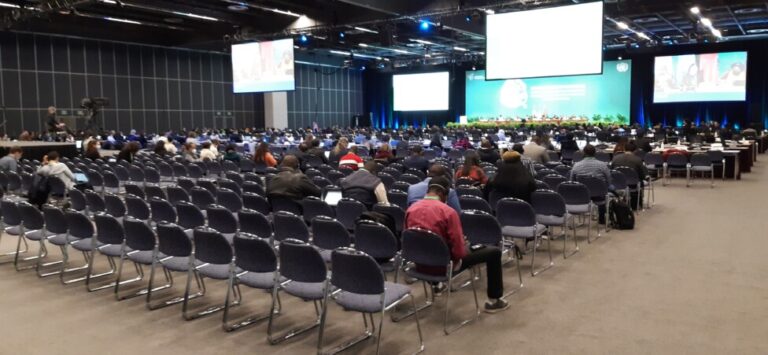
Discussions at the Convention on Biological Diversity summit intensified in the last few days of COP15 and ran late into the night, as in this session on health and biodiversity. But in the end, agreement was reached on a new Global Framework on Biodiversity, which will be binding on the 196 states parties. CREDIT: IISD/ENB

Discussions at the Convention on Biological Diversity summit intensified in the last few days of COP15 and ran late into the night, as in this session on health and biodiversity. But in the end, agreement was reached on a new Global Framework on Biodiversity, which will be binding on the 196 states parties. CREDIT: IISD/ENB

Major challenge

While the Global Framework has indicators and monitoring mechanisms and is legally binding, it has no actual teeth, and the precedent of the failed Aichi Targets casts a shadow over its future, especially with the world’s poor track record on international agreements.

The Aichi Biodiversity Targets, adopted in 2010 in that Japanese city during the CBD’s COP10 and which its 196 states parties failed to meet in 2020, included the creation of terrestrial and marine protected areas; the fight against pollution and invasive species; respect for indigenous knowledge; and the restoration of damaged ecosystems.

Several estimates put the amount needed to protect biological heritage at 700 billion dollars, which means there is still an enormous gap to be closed.

In more than 30 years, the GEF has disbursed over 22 billion dollars and helped transfer another 120 billion dollars to more than 5,000 regional and national projects. For the new period starting in 2023, the fund is counting on some five billion dollars in financing.

In addition, the Small Grants Program has supported around 27,000 community initiatives in developing countries.

“There is little public funding, more is needed,” Lovera said. “It’s sad that they say the private sector must fund biodiversity. In indigenous territories money is needed. They can do much more than governments with less money. Direct support can be more effective and they will meet the commitments.”

The activist also criticized the use of offsets, a mechanism whereby one area can be destroyed and another can be restored elsewhere – already used in countries such as Chile, Colombia and Mexico.

“This system allows us to destroy 70 percent of the planet while preserving the other 30 percent,” Lovera said. “It is madness. For indigenous peoples and local communities, it is very negative, because they lose their own biodiversity and the compensation is of no use to them, because it happens somewhere else.”

Figueroa said institutions that already manage funds could create direct mechanisms for indigenous peoples, as is the case with the Small Grants Program.

Of the 609 commitments that organizations, companies and individuals have already made voluntarily at COP15, 303 are aimed at the conservation and restoration of terrestrial ecosystems, 188 at alliances, and 159 at adaptation to climate change and reduction of polluting emissions.

The summit also coincided with the 10th Meeting of the Conference of the Parties to the Cartagena Protocol on Biosafety and the 4th Meeting of the Conference of the Parties to the Nagoya Protocol on Access to Genetic Resources and the Fair and Equitable Sharing of Benefits from their Utilization, both components of the CBD.

Images of the planet’s sixth mass extinction reflect the size of the challenge. More than a quarter of some 150,000 species on the IUCN Red List are threatened with extinction.

The “Living Planet Report 2022: Building a nature-positive society”, prepared by the WWF and the Institute of Zoology in London, shows that Latin America and the Caribbean has experienced the largest decline in monitored wildlife populations worldwide, with an average decline of 94 percent between 1970 and 2018.

With a decade to act, each passing day represents more biological wealth lost.

IPS produced this article with support from InternewsEarth Journalism Network.


Loss and Damage Fund Saves COP27 from the Abyss

Active Citizens, Civil Society, Climate Action, Climate Change, Climate Change Finance, Conferences, Editors’ Choice, Environment, Global, Global Governance, Headlines, IPS UN: Inside the Glasshouse, Latin America & the Caribbean, Regional Categories

Climate Action

Egyptian Foreign Minister Sameh Shoukry, chair of COP27, reads the nine-page Sharm El Sheikh Implementation Plan, the document that concluded the climate summit on Sunday Nov. 20, to an exhausted audience after tough and lengthy negotiations that finally reached an agreement to create a fund for loss and damage, a demand of the global South. CREDIT: Kiara Worth/UN

Egyptian Foreign Minister Sameh Shoukry, chair of COP27, reads the nine-page Sharm El Sheikh Implementation Plan, the document that concluded the climate summit on Sunday Nov. 20, to an exhausted audience after tough and lengthy negotiations that finally reached an agreement to create a fund for loss and damage, a demand of the global South. CREDIT: Kiara Worth/UN

SHARM EL SHEIKh , Nov 20 2022 (IPS) – They were on the brink of shipwreck and did not leave happy, but did feel satisfied that they got the best they could. The countries of the global South achieved something decisive at COP27: the creation of a special fund to address the damage and loss caused by climate change in the most vulnerable nations.


The fund, according to the Sharm El Sheikh Implementation Plan, the official document approved at dawn on Sunday Nov. 20 in this Egyptian city, should enable “rehabilitation, recovery and reconstruction” following extreme weather events in these vulnerable countries.

Decisions on who will provide the money, which countries will benefit and how it will be disbursed were left pending for a special committee to define. But the fund was approved despite the fact that the issue was not even on the official agenda of the summit negotiations, although it was at the center of the public debate before the conference itself.

“We are satisfied that the developed countries have accepted the need to create the Fund. Of course, there is much to discuss for implementation, but it was difficult to ask for more at this COP,” Ulises Lovera, Paraguay’s climate change director, told IPS, weary from a longer-than-expected negotiation, early Sunday morning at the Sharm El Sheikh airport.

“This COP has taken an important step towards justice. I welcome the decision to establish a loss and damage fund and to operationalize it in the coming period,” said U.N. Secretary-General António Guterres. He also described as an achievement that a “red line” was not crossed, that would take the rise in global temperature above the 1.5-degree limit.

More than 35,000 people from nearly 200 countries participated in the 27th Conference of the Parties (COP27) on Climate Change in Sharm El Sheikh, an Egyptian seaside resort on the Red Sea, where the critical dimension of global warming in the different regions of the world was on display, sometimes dramatically.

Practically everything that has to do with the future of the modes of production and life of humanity – starting with energy and food – was discussed at a mega-event that far exceeded the official delegations of the countries and the great leaders present, such as U.S. President Joe Biden and the Brazilian president-elect, Luiz Inácio Lula da Silva.

Hundreds of social organizations, international agencies and private sector stakeholders came here to showcase their work, seek funding, forge alliances, try to influence negotiations, defend their interests or simply be on a stage that seemed to provide a space for all kinds of initiatives and businesses.

At the gigantic Sharm El Sheikh International Convention Center there was also a global fair with non-stop activities from morning to night in the various pavilions, in stands with auditoriums of between 20 and 200 seats, where there was a flurried program of presentations, lectures and debates, not to mention the more or less crowded demonstrations of activists outside the venue.

In addition, government delegates negotiated on the crux of the summit: how to move forward with the implementation of the Paris Agreement, which at COP21 in 2015 set global climate change mitigation and adaptation targets.

United Nations Secretary-General António Guterres walks hurriedly through the Sharm El Sheikh Convention Center during the last intense hours of the COP27 negotiations, when there were moments when it seemed that there would be no agreement and the climate summit would end in failure. CREDIT: Daniel Gutman/IPS

United Nations Secretary-General António Guterres (3rd-R) walks hurriedly through the Sharm El Sheikh Convention Center during the last intense hours of the COP27 negotiations, when there were moments when it seemed that there would be no agreement and the climate summit would end in failure. CREDIT: Daniel Gutman/IPS

On the brink of failure

Once again, the nine-page Sharm El Sheikh Implementation Plan did not include in any of its pages a reference to the need to abandon fossil fuels, but only coal.

The document was the result of a negotiation that should have ended on Friday Nov. 18, but dragged on till Sunday, as usually happens at COPs. What was different on this occasion was a very tough discussion and threats of a walkout by some negotiators, including those of the European Union.

But in the end, the goal of limiting the temperature increase to 1.5 degrees Celsius, established in the Paris Agreement, was maintained, although several countries tried to make it more flexible up to 2.0 degrees, which would have been a setback with dramatic effects for the planet and humanity, according to experts and climate activists.

“Rapid, deep and sustained reductions in global greenhouse gas emissions (are) required – lowering global net greenhouse gas emissions by 43 percent by 2030 relative to the 2019 level – to limit global warming to 1.5°C target,” reads the text, although no mention is made of oil and gas, the fossil fuels most responsible for those emissions, in one of the usual COP compromises, since agreements are reached by consensus.

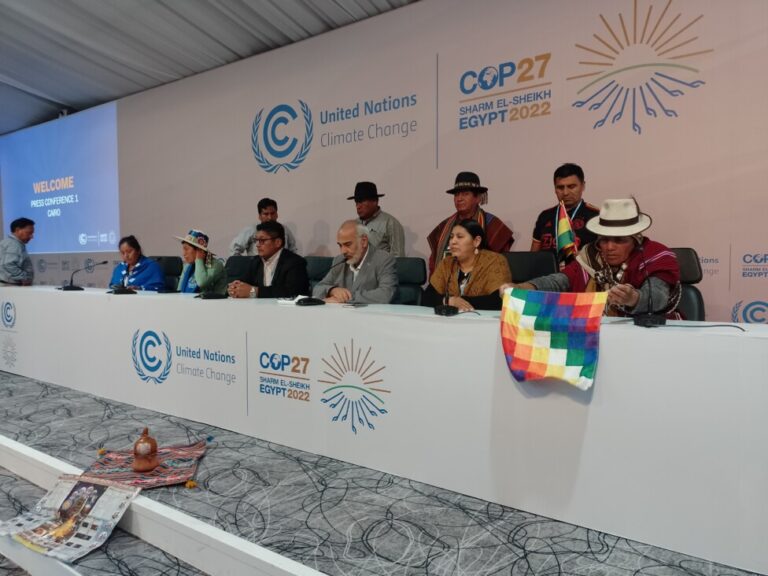
The Bolivian delegation in Sharm El Sheikh, which included officials as well as leaders of indigenous communities from the South American country, take part in a meeting with journalists at COP27 to demand more ambitious action. CREDIT: Daniel Gutman/IPS

The Bolivian delegation in Sharm El Sheikh, which included officials as well as leaders of indigenous communities from the South American country, take part in a meeting with journalists at COP27 to demand more ambitious action. CREDIT: Daniel Gutman/IPS

The priorities of the South

Developing countries, however, focused throughout the COP on the Loss and Damage Fund and other financing mechanisms to address the impacts of rising temperatures and mitigation actions.

“We need financing because we cannot deal with the environmental crisis alone. That is why we are asking that, in order to solve the problem they have caused, the rich nations take responsibility,” Diego Pacheco, head of the Bolivian delegation to Sharm El Sheikh, told IPS.

Environmental organizations, which showed their power in Egypt with the presence of thousands of activists, also lobbied throughout COP27 for greater commitments, including mitigation actions.

“This conference cannot be considered an implementation conference because there is no implementation without phasing out all fossil fuels,” the main cause of the climate crisis, said Zeina Khalil Hajj of the international environmental organization 350.org.

“Together for implementation” was precisely the slogan of COP27, calling for a shift from commitments to action.

“A text that does not stop fossil fuel expansion, that does not provide progress from the already weak Glasgow Pact (from COP26) makes a mockery of the millions of people living with the impacts of climate change,” said Khalil Hajj, head of global campaigning at 350.org.

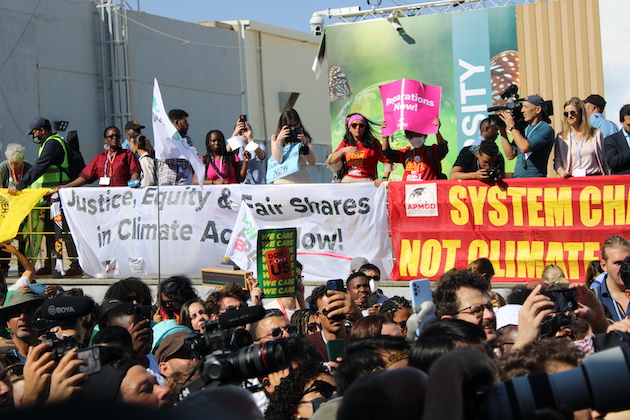
One of the demonstrations by climate activists at COP27 held in Egypt Nov. 6-20, demanding more ambitious climate action by governments, as well as greater justice and equity in tackling the climate crisis. CREDIT: Busani Bafana/IPS

One of the demonstrations by climate activists at COP27 held in Egypt Nov. 6-20, demanding more ambitious climate action by governments, as well as greater justice and equity in tackling the climate crisis. CREDIT: Busani Bafana/IPS

The crises that came together

Humanity – as recognized by the States Parties in the final document – is living through a dramatic time.

It faces a number of overlapping crises: food, energy, geopolitical, financial and economic, combined with more frequent natural disasters due to climate change. And developing nations are hit especially hard.

The demand for financing voiced by countries of the global South thus takes on greater relevance.

Cecilia Nicolini, Argentina’s climate change secretary, told IPS that it is the industrialized countries, because of their greater responsibility for climate change, that should finance developing countries, and lamented that “the problem is that the rules are made by the powerful.”

However, 80 percent of the money now being spent worldwide on climate change action is invested in the developed world, according to the Global Environment Facility (GEF), the world’s largest funder of climate action, which has contributed 121 billion dollars to 163 countries over the past 30 years, according to its own figures.

In this context, the issue of Loss and Damage goes one step further than adaptation to climate change, because it involves reparations for the specific impacts of climate change that have already occurred, such as destruction caused by droughts, floods or forest fires.

“Those who are bearing the burden of climate change are the most vulnerable households and communities. That is why the Loss and Damage Fund must be established without delay, with new funds coming from developed countries,” said Javier Canal Albán, Colombia’s vice minister of environmental land planning.

“It is a moral and climate justice imperative,” added Canal Albán, who spoke at a press conference on behalf of AILAC, a negotiating bloc that brings together several Latin American and Caribbean countries.

But the text of the outcome document itself acknowledges that there is a widening gap between what developing countries need and what they actually receive.

The financing needs of these countries for climate action until 2030 were estimated at 5.6 trillion dollars, but developed countries – as the document recognized – have not even fulfilled their commitment to provide 100 billion dollars per year, committed since 2009, at COP15 in Copenhagen, and ratified in 2015, at COP21 which adopted the Paris Agreement.

It was the absence of any reference to the need to accelerate the move away from oil and natural gas that frustrated several of the leaders at the COP. “We believe that if we don’t phase out fossil fuels there will be no Fund that can pay for the loss and damage caused by climate change,” Susana Muhamad, Colombia’s environment minister, who was at the two-week conference in Sharm El Sheikh held Nov. 6-20, told IPS.

“We have to put the victims first in order to make an orderly and just transition,” she said, expressing the sentiments of the governments and societies of the South at COP27.