Global Data Community’s Response to COVID-19

Civil Society, Democracy, Development & Aid, Economy & Trade, Editors’ Choice, Featured, Global, Global Governance, Globalisation, Headlines, Health, Human Rights, IPS UN: Inside the Glasshouse, Population, Poverty & SDGs, TerraViva United Nations

Opinion

Francesca Perucci is Chief, Development Data and Outreach Branch at the United Nations

Data Community’s Response to Covid-10. Credit: UNWDF Secretariat, UN Statistics Division

UNITED NATIONS, Oct 28 2020 (IPS) – The world is currently counting more than 42 million confirmed cases of the COVID-19 and over 1 million deaths since the start of the pandemic.1


The first quarter of 2020 saw a loss equivalent to 155 million full-time jobs in the global economy, a number that increased to 495 million jobs in the second quarter, with lower- and middle-income countries hardest hit.2

The pandemic is pushing an additional 71 to 100 million people into extreme poverty and, in only a brief period of time, has reversed years of progress on poverty, hunger, health care and education, disrupting efforts to realize the 2030 Agenda for Sustainable Development.3

While the virus has impacted everyone, it has affected the world’s poorest and most vulnerable people the most.

The pandemic has also demonstrated that timely, reliable and disaggregated data is a critical tool for governments to contain the pandemic and mitigate its impacts.

In addition, data on the social and economic impact have been essential to develop support programmes to reach those in need and start planning for a recovery that leads to a safer, more equal, inclusive and sustainable world for all.

Data and statistics are more urgently needed than ever before. While many countries are finding innovative ways to better data, statistical operations have been significantly disrupted by the pandemic.

According to a survey conducted in May 2020, 96 per cent of national statistical offices partially or fully stopped face-to-face data collection at the height of the pandemic.4
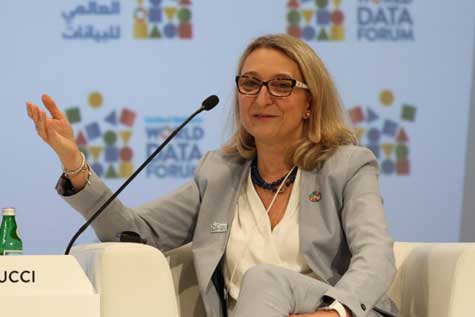
Francesca Perucci, UN Statistics Division. Credit: IISD/EBN | Kiara Worth

Approximately 150 censuses are expected to be conducted in 2020-2021 alone, a historical record. Yet, to address the urgent issues brought by the pandemic, some countries have diverted their census funding to national emergency funding.5

Seventy-seven out of 155 countries monitored for Covid-19 do not have adequate poverty data, although there have been clear improvements in the last decade.6

Behind these numbers there is a tremendous human cost. Despite an increasing awareness of the importance of data for evidence–based policymaking and development, data gaps remain significant in most countries, particularly in the ones with fewer resources.

In addition, the lack of sound disaggregated data for vulnerable groups, such as persons with disabilities, older persons, indigenous peoples, migrants and others, exacerbates their vulnerabilities by masking the extent of deprivation and disparities and making them invisible when designing policies and critical measures.

The 2030 Agenda, with the principle of “leaving no-one behind” at its heart, underlines the need for new approaches and tools to respond to an unprecedented demand for high quality, timely and disaggregated data.

The UN World Data Forum

The UN World Data Forum was established as a response to the increased data demands of the 2030 agenda and as a space for different data communities to come together and find the best data solutions leveraging new technology, innovation, private sector and civil society’s contributions and wider users’ engagement.

The first and second World Data Forums in Cape Town and Dubai resulted in the Cape Town Global Action Plan for Sustainable Development Data and the Dubai Declaration.

These two forums addressed the new approaches required to the production and use of data and statistics not only by official statistical systems, but across broader data ecosystems where players from academia, civil society and the private sector play an increasingly important role.

This year, the UN World Data Forum, initially to take place in Bern, Switzerland, was held on a virtual platform because of the pandemic.

The virtual event allowed for a very broad and inclusive participation, with over 10,000 participants from 180 countries to showcase their answers to the challenges posted by the COVID-19 crisis, share their latest experiences and innovations, and renew the call for intensified efforts and political commitments to meet the data demands of the COVID-19 crisis and for delivering on the sustainable development Goals (SDGs) while also addressing trust in data, privacy and governance.

The programme of the Forum included three high-level plenaries on leaving no one behind, on data use and on trust in data. Together and under one virtual roof, the forum launched the Global Data Community’s response to COVID 19 – Data for a changing world.

This is a call for increased support for data use during COVID-19, focusing on the immediate needs related to the pandemic and for increased political and financial support for data throughout the COVID 19 pandemic and beyond.

Showcased in 70 live-streamed, 30 pre-recorded sessions and 20 virtual exhibit spaces, many innovative solutions to the data challenges of the 2030 Agenda were proposed and partnerships were formed, including:

    • Lessons learned in using data to track and mitigate the impact of COVID-19, at the global, national and local level;
    • Better ways to communicate data and statistics;
    • Use of maps and spatial data to improve the lives of communities;
    • Lessons learned from the use of AI algorithms;
    • Challenges in balancing data use and data protection;
    • How to secure more funding for data.

The next World Data Forum is scheduled to take place from 3 to 6 October 2021 in Bern, Switzerland, hosted by the Federal Statistical Office and the United Nations.

What next?

The Covid-19 pandemic has sadly confirmed that without timely, trusted, disaggregated data there cannot be an adequate response to the many challenges of dealing with the crisis and ensuring a sustainable, inclusive and better future for all.

Clearly, the time is now to recognize that we need data for a changing world. The time is now to accelerate action on the implementation of the Cape Town Global Action Plan and the Dubai declaration to respond more effectively to the COVID-19 pandemic and to put us back on track towards the achievement of the SDGs and to build stronger and more agile and resilient statistical and data systems to respond to future disasters.

World leaders need to recognize that increased investments are more urgently needed than ever to address the data gap and to close the digital divide and data inequality across the world.

To ensure the political commitment and donor support necessary to prioritize data and statistics, it is critical that the data community is able to demonstrate the impact and value of data.

The UN World Data Forum will continue to strive towards these objectives. It will also remain the space for knowledge sharing and launching new initiatives and collaborations for the integration of new data sources into official statistical systems and for promoting users’ engagement and a better use of data for policy and decision-making.

1 WHO Coronavirus Disease (COVID-19) Dashboard
2 ILO Monitor: COVID-19 and the world of work. Sixth edition
3 United Nations, The Sustainable Development Goals, Report 2020
4 United Nations Statistics Division, COVID-19 widens gulf of global data inequality, while national statistical offices step up to meet new data demands, 5 June 2020. https://covid-19-response.unstatshub.org/statistical-programmes/covid19-nso-survey/
5 PARIS21 Partner Report on Support to Statistics 2020
6 The World Bank

  Source

The Plight of Domestic Workers in Brazil

Civil Society, Development & Aid, Economy & Trade, Featured, Gender, Global Governance, Headlines, Human Rights, IPS UN: Inside the Glasshouse, Labour, Latin America & the Caribbean, Population, Poverty & SDGs, TerraViva United Nations, Women & Economy

Opinion

Waldeli Melleiro is a project manager at the Brazil Office of Friedrich-Ebert-Stiftung (FES) and Christoph Heuser is the resident representative at the FES Brazil Office.

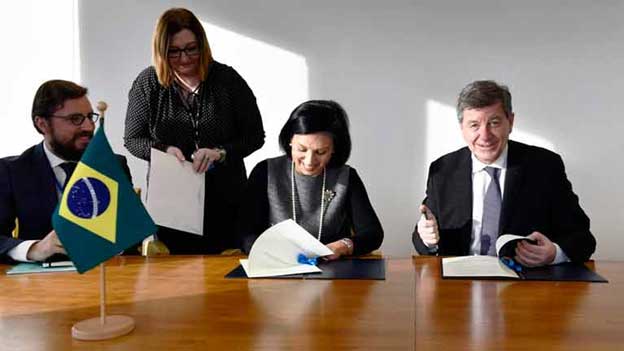
On 31 January 2018, the Government of Brazil deposited the formal instrument of ratification with the International Labour Office for ratification of the Convention on Decent Work for Domestic Workers, 2011 (No. 189) . Accordingly, Brazil became the twenty-fifth member State of the ILO and the fourteenth member State in the Americas region to ratify this Convention. It is estimated that there are about seven million domestic workers in Brazil, six million of them women, and more than in any other country in the world. Moreover, the majority of domestic workers are women, with indigenous peoples and persons of African descent being over-represented in the domestic work sector. But how has the Convention been implemented?. Credit: International Labour Organization (ILO), Geneva

SAO PAULO, Brazil, Oct 21 2020 (IPS) – The inclusivity of Brazilian society is put to the test as the coronavirus pandemic highlights a labour sector ripe with historical and structural inequality: domestic work.


The first death of COVID-19 in Rio de Janeiro was emblematic of the country’s inequities: a domestic worker who caught the new coronavirus from her employer. Much has since been written about the Brazilian government and its catastrophic inaction during the pandemic.

But the new normal also highlights a sector that has always been present in Brazil but with little public attention. A sector, in which the historical and structural inequality in Brazil is very much represented: domestic work.

With about 6 million female workers, domestic work is the second-largest occupation for women in Brazil. They are mostly black (about 65 per cent) and many are over 45 years old (46.5 per cent).

They start working sometimes as teenagers or even children, and because they lack access to most labour rights and social protection, even after 50 years or more of continuous work they still do not have the right to retirement and well-deserved rest.

They live far from their workplaces, often earn less than the legal minimum wage of around 200 USD per month, and are nonetheless often responsible (45 per cent of them) for the income of their families.

Among the poorest of these workers (less than 1,5 USD/day), 58.1 percent are heads of household, which gives an indication of the extreme poverty in which their families live.

The lack of labour protection

Domestic workers have long been fighting for recognition of the value of their work and for labour rights. The struggle in Brazil goes back to the 1930s, with the founding of the Professional Association of Domestic Employees of Santos.

In 1988 the new Constitution guaranteed paid leave and a 13th month of salary, among others. But domestic workers continued to have fewer rights than those in other professions.

Several further rights were only obtained in 2013 under the former administration of Dilma Rousseff, including the limiting of working hours to eight per day and 44 per week, the right to recognition of overtime, and paid retirement.

Despite these advances, many female workers are still excluded from many of those rights, which are guaranteed only to those who work at least three days a week in the same job. And even where the conditions are met, many employers persistently fail to respect workers’ rights, while monitoring compliance is difficult.

Those who work for the same employer for one or two days a week, known as day workers, remain completely unassisted by the law and social protection.

Furthermore, the degree of informality in domestic work is very high: In 2018, only 27 percent of women workers had a formal contract, if we are adding those paying individually even without having a formal contract, only 39 percent contributed to social security.

Thus, the vast majority of female domestic workers are not entitled to unemployment insurance, sickness benefit and retirement.

The new normal of work during and after the pandemic

Domestic work is one of the occupations most affected by the pandemic.

Many workers are in high-risk age groups; their working conditions expose them to more possibilities of contamination; they use public transportation over long distances; they care for elderly people or children with unavoidable physical proximity; and they often have to work without proper protective masks, gloves, or alcohol gel.

Or even worse: in order to keep their jobs and limit contamination, some stay for days and weeks on end in the homes where they work, away from their families.

As the pandemic took hold, the government allowed employers of domestic workers to suspend the contract for up to two months, with two months of secure employment after the suspension. It also allowed partial employment.

But this only helped the minority of domestic workers with such a contract. Most have precarious positions and many of those, especially day workers, have been dismissed and left without income and vulnerable.

The government also started paying 600 reals (around 109 USD) per month for those in need, for example informal workers, rising to 1,200 reals (218 USD) per month for some cases, for example single mothers. However, many women had difficulty in registering and accessing this aid.

Despite the pandemic, domestic workers are standing firm in the fight for labour rights. In March 2020 Fenatrad (National Federation of Domestic Workers) launched a campaign under the slogan “Take care of those who take care of you, leave your domestic worker at home, with paid wages.”

According to Luiza Batista, president of Fenatrad, there was good coverage in social networks, but in practice there was little adhesion by employers. Fenatrad has been carrying out an intense programme of denunciation and negotiation.

The group has also campaigned against a controversial measure by some state governments, for example Pará, to declare domestic work as an essential service during lockdown, forcing workers to continue working.

This measure was reversed after pressure from Fenatrad to specify what functions within domestic work are essential. The category was refined to include only nannies, careers for the elderly, and those caring for people with special needs and whose employers are keyworkers, e.g. in the health or security sectors.

Still the question remains: if domestic work is essential why it is not valued? It is fundamental work, but it is marginalized and carries the prejudices of a society in which social rights are not within reach for everyone.

The pandemic stresses the importance of domestic work and at the same time showed its precariousness as well as the inequality within the Brazilian society. It is time to reflect on the need for change in paid domestic work, aiming at a fair and inclusive society.

The new normal should recognize and value domestic work, including adequate labour rights as an important step on the long way to a more just society.

Source: Friedrich-Ebert-Stiftung (FES), Brazil

  Source

Energy Cooperatives Swim Against the Tide in Mexico

Civil Society, Development & Aid, Economy & Trade, Editors’ Choice, Energy, Environment, Featured, Green Economy, Headlines, Integration and Development Brazilian-style, Latin America & the Caribbean, Projects, Regional Categories, TerraViva United Nations

Energy

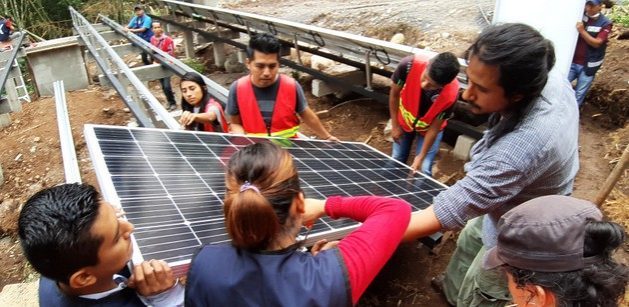
Onergia, one of the two energy cooperatives operating in Mexico today, installs photovoltaic systems, such as this one at the Tosepan Titataniske Union of Cooperatives in the municipality of Cuetzalan, in the southern state of Puebla. CREDIT: Courtesy of Onergia

Onergia, one of the two energy cooperatives operating in Mexico today, installs photovoltaic systems, such as this one at the Tosepan Titataniske Union of Cooperatives in the municipality of Cuetzalan, in the southern state of Puebla. CREDIT: Courtesy of Onergia

MEXICO CITY, Aug 31 2020 (IPS) – A Mexican solar energy cooperative, Onergia, seeks to promote decent employment, apply technological knowledge and promote alternatives that are less polluting than fossil fuels, in one of the alternative initiatives with which Mexico is seeking to move towards an energy transition.


“We organised ourselves in a cooperative for an energy transition that will rethink the forms of production, distribution and consumption to build a healthier and fairer world,” Onergia founding partner and project director Antonio Castillo told IPS. “In this sector, it has been more difficult; we have to invest in training and go against the logic of the market.”

The eight-member cooperative, created in 2017, has so far installed some 50 photovoltaic systems, mainly in the south-central state of Puebla.

“A public policy is needed that would allow us to move towards the transition. Getting people to adopt alternatives depends on public policy. It is fundamental for people to have the freedom to choose how to consume. It is our job to organise as consumers.” —
Antonio Castillo

Castillo explained by phone that the cooperative works with middle- and upper-class households that can finance the cost of the installation as well as with local communities keen on reducing their energy bill, offering more services and expanding access to energy.

In the case of local communities, the provision of solar energy is part of broader social projects in which the beneficiary organisations’ savings and loan cooperatives design the financial structure to carry out the work. A basic household system can cost more than 2,200 dollars and a larger one, over 22,000.

“The communities are motivated to adopt renewable energy as a strategy to defend the land against threats from mining or hydroelectric companies,” said Castillo. “They don’t need to be large-scale energy generators, because they already have the local supply covered. The objective is to provide the communities with alternatives.”

Onergia, a non-profit organisation, promotes distributed or decentralised generation.

In Mexico, energy cooperatives are a rarity. In fact, there are only two, due to legal, technical and financial barriers, even though the laws governing cooperatives recognise their potential role in energy among other diverse sectors. The other, Cooperativa LF del Centro, provides services in several states but is not a generator of electricity.

The Electricity Industry Law, in effect since 2014, allows the deployment of local projects smaller than one megawatt, but practically excludes them from the electricity auctions that the government had been organising since 2016 and that the administration of leftwing President Andrés Manuel López Obrador put a stop to after he took office in December 2018.

Since then, López Obrador has opted to fortify the state monopolies of the Federal Electricity Commission (CFE) and the Petróleos Mexicanos (Pemex) oil giant, which translates into favouring fossil fuels over renewable sources.

The National Electric System Development Programme 2018-2032 projects that fossil fuels will represent 67 percent of the energy mix in 2022; wind energy, 10 percent; hydroelectric, nine percent; solar, four percent; nuclear, three percent, and geothermal and bioenergy, four percent.

In 2032, the energy outlook will not vary much, as fossil fuels will account for 60 percent; wind, nuclear and geothermal energy will rise to 13, eight and three percent, respectively; hydroelectric power will drop to eight percent; while solar and bioenergy will remain the same.

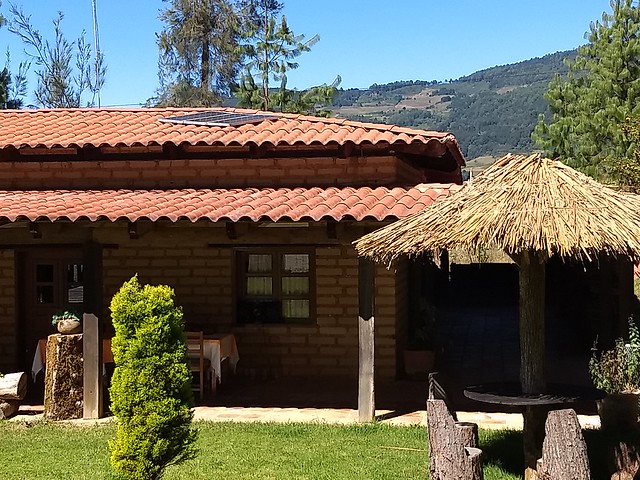
In Mexico, rural communities are guaranteeing their electricity supply by using clean sources, thus furthering the energy transition to micro and mini-scale generation. The photo shows the "Laatzi-Duu" ecotourism site (the name means "standing plain" in the Zapotec indigenous language) which is self-sufficient thanks to a solar panel installed on its roof, in the municipality of San Juan Evangelista Analco in the southern state of Oaxaca. CREDIT: Emilio Godoy/IPS

In Mexico, rural communities are guaranteeing their electricity supply by using clean sources, thus furthering the energy transition to micro and mini-scale generation. The photo shows the “Laatzi-Duu” ecotourism site (the name means “standing plain” in the Zapotec indigenous language) which is self-sufficient thanks to a solar panel installed on its roof, in the municipality of San Juan Evangelista Analco in the southern state of Oaxaca. CREDIT: Emilio Godoy/IPS

The government cancelled the call for long-term electric auctions that allowed private companies to build wind and solar plants and sell the energy to CFE. But these tenders privileged private Mexican and foreign capital and large-scale generation.

In a dialogue with IPS, independent researcher Carlos Tornel questioned the predominant energy design promoted by the 2013 reform that opened up the hydrocarbon and electricity markets to private capital, and the form of energy production based on passive consumers.

“We don’t have an effective legal framework to promote that kind of energy transition,” said the expert via WhatsApp from the northeast English city of Durham. “A free market model was pursued, which allowed the entry of megaprojects through auctions and allowed access to those who could offer a very low cost of generation, which could only be obtained on a large scale.”

With that strategy, he added, “small projects were left out. And the government did not put in place economic incentives to foment cooperative schemes.”

“We need a more active model focused on the collective good,” added Tornel, who is earning a PhD in Human Geography at Durham University in the UK.

Mexico, the second largest economy in Latin America with a population of 129 million, depends heavily on hydrocarbons and will continue to do so in the medium term if it does not accelerate the energy transition.

In the first quarter of 2019, gross generation totaled 80,225 gigawatt hours (Gwh), up from 78,167 in the same period last year. Gas-fired combined cycle plants (with two consecutive cycles, conventional turbine and steam) contributed 40,094, conventional thermoelectric 9,306, and coal-fired 6,265.

Hydroelectric power plants contributed 5,137 Gwh; wind fields 4,285; nuclear power plants 2,382; and solar stations 1,037.

The Energy Transition Law of 2015 stipulates that clean energy must meet 30 percent of demand by 2021 and 35 percent by 2024. By including hydropower and nuclear energy, the country will have no problem reaching these goals.

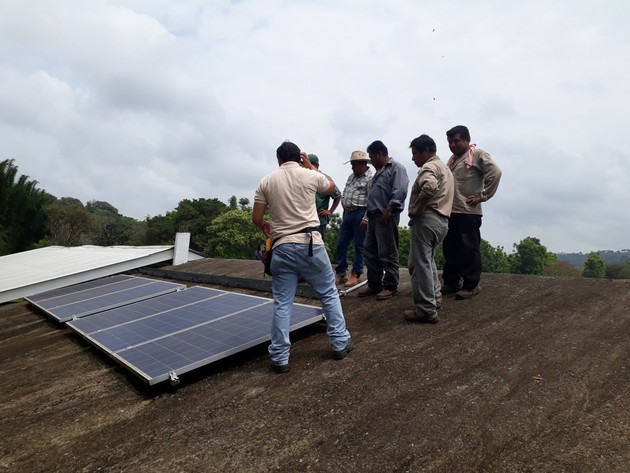
Residents of the small rural community of Amatlán, in the municipality of Zoquiapan in the state of Puebla, oversee the operation of photovoltaic panels installed by the Mexican cooperative Onergia. This type of cooperative can help rural communities in Mexico access clean energy, particularly solar power. CREDIT: Courtesy of Onergia

Residents of the small rural community of Amatlán, in the municipality of Zoquiapan in the state of Puebla, oversee the operation of photovoltaic panels installed by the Mexican cooperative Onergia. This type of cooperative can help rural communities in Mexico access clean energy, particularly solar power. CREDIT: Courtesy of Onergia

By early August, the government’s Energy Regulatory Commission (CRE) had granted 310 permits for solar generation, small-scale production and self-supply, totaling almost 22,000 Mw.

The 2017 report Renewable Energy Auctions and Participatory Citizen Projects, produced by the international non-governmental Renewable Energy Policy Network for the 21st Century (REN21), cites, with respect to Mexico, the obligation for investors to form self-sufficient companies, which complicates attempts to develop local ventures.

Onergia’s Castillo stressed the need for a clear and stable regulatory framework.

“A public policy is needed that would allow us to move towards the transition,” he said. “Getting people to adopt alternatives depends on public policy. It is fundamental for people to have the freedom to choose how to consume. It is our job to organise as consumers.”

Affected by the coronavirus pandemic, Onergia is reviewing the way it works and its financial needs to generate its own power supply. It also works with the Renewable Energies Institute of the National Autonomous University of Mexico in the design and installation of solar power systems.

In March, the government’s National Council for Science and Technology launched a strategic national programme on energy transition that will promote sustainable rural energy projects and community solar energy, to be implemented starting in 2021.

In addition, the energy ministry is set to announce the Special Energy Transition Programme 2019-2024.

But to protect the CFE, the CRE is blocking approval of the development of collective distributed generation schemes, which would allow citizens to sell surplus energy to other consumers, and the installation of storage systems in solar parks.

Tornel criticised the lack of real promotion of renewable sources.

“The Mexican government has been inconsistent in its handling of this issue,” he maintained. “They talk about guaranteeing energy security through hydrocarbons. There is no plan for an energy transition based on renewables or on supporting community projects. We have no indication that they support renewable, and that’s very worrying.”

The REN21 report recommends reserving a quota for participatory citizen projects and facilitating access to energy purchase agreements, which ensures the efficiency of tenders and the effectiveness of guaranteed tariffs for these undertakings.

In addition, it proposes the establishment of an authority for citizen projects, capacity building, promotion of community energy and specific national energy targets for these initiatives.

  Source

Semiarid Regions of Latin America Cooperate to Adapt to Climate

Civil Society, Combating Desertification and Drought, Development & Aid, Economy & Trade, Editors’ Choice, Environment, Featured, Food & Agriculture, Green Economy, Headlines, Integration and Development Brazilian-style, Latin America & the Caribbean, Projects, Regional Categories, South-South, TerraViva United Nations, Water & Sanitation

Combating Desertification and Drought

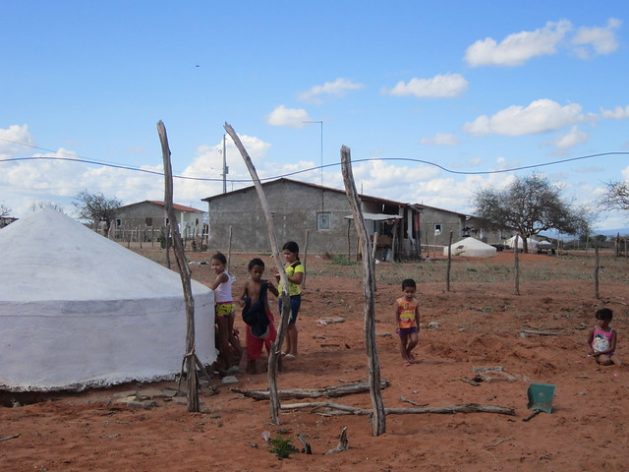
A rural settlement in the state of Pernambuco, in Brazil's semiarid ecoregion. Tanks that collect rainwater from rooftops for drinking water and household usage have changed life in this parched land, where 1.1 million 16,000-litre tanks have been installed so far. CREDIT: Mario Osava/IPS

A rural settlement in the state of Pernambuco, in Brazil’s semiarid ecoregion. Tanks that collect rainwater from rooftops for drinking water and household usage have changed life in this parched land, where 1.1 million 16,000-litre tanks have been installed so far. CREDIT: Mario Osava/IPS

RIO DE JANEIRO, Aug 27 2020 (IPS) – After centuries of poverty, marginalisation from national development policies and a lack of support for positive local practices and projects, the semiarid regions of Latin America are preparing to forge their own agricultural paths by sharing knowledge, in a new and unprecedented initiative.


In Brazil’s semiarid Northeast, the Gran Chaco Americano, which is shared by Argentina, Bolivia and Paraguay, and the Central American Dry Corridor (CADC), successful local practices will be identified, evaluated and documented to support the design of policies that promote climate change-resilient agriculture in the three ecoregions.

This is the objective of DAKI-Semiárido Vivo, an initiative financed by the United Nations International Fund for Agricultural Development (IFAD) and implemented by the Brazilian Semiarid Articulation (ASA), the Argentinean Foundation for Development in Justice and Peace (Fundapaz) and the National Development Foundation (Funde) of El Salvador.

DAKI stands for Dryland Adaptation Knowledge Initiative.

The project, launched on Aug. 18 in a special webinar where some of its creators were speakers, will last four years and involve 2,000 people, including public officials, rural extension agents, researchers and small farmers. Indirectly, 6,000 people will benefit from the training.

“The aim is to incorporate public officials from this field with the intention to influence the government’s actions,” said Antonio Barbosa, coordinator of DAKI-Semiárido Vivo and one of the leaders of the Brazilian organisation ASA.

The idea is to promote programmes that could benefit the three semiarid regions, which are home to at least 37 million people – more than the total populations of Chile, Ecuador and Peru combined.

The residents of semiarid regions, especially those who live in rural areas, face water scarcity aggravated by climate change, which affects their food security and quality of life.

Zulema Burneo, International Land Coalition coordinator for Latin America and the Caribbean and moderator of the webinar that launched the project, stressed that the initiative was aimed at “amplifying and strengthening” isolated efforts and a few longstanding collectives working on practices to improve life in semiarid areas.

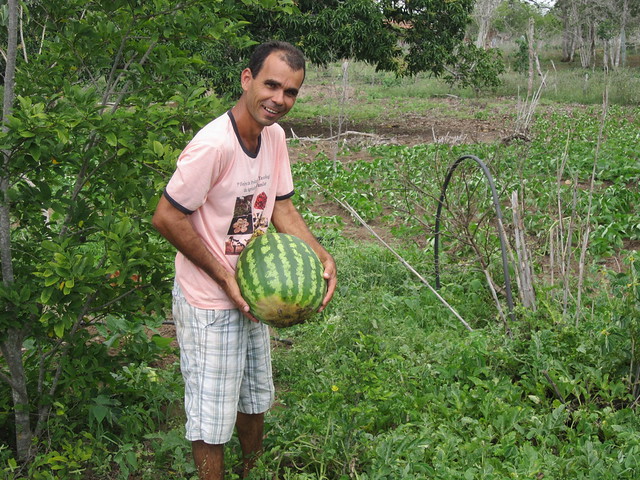
Abel Manto, an inventor of technologies that he uses on his small farm in the state of Bahia, in Brazil's semiarid ecoregion, holds up a watermelon while standing among the bean crop he is growing on top of an underground dam. The soil is on a waterproof plastic tarp that keeps near the surface the water that is retained by an underground dam. CREDIT: Mario Osava/IPS

Abel Manto, an inventor of technologies that he uses on his small farm in the state of Bahia, in Brazil’s semiarid ecoregion, holds up a watermelon while standing among the bean crop he is growing on top of an underground dam. The soil is on a waterproof plastic tarp that keeps near the surface the water that is retained by an underground dam. CREDIT: Mario Osava/IPS

The practices that represent the best knowledge of living in the drylands will be selected not so much for their technical aspects, but for the results achieved in terms of economic, ecological and social development, Barbosa explained to IPS in a telephone interview from the northeastern Brazilian city of Recife, where the headquarters of ASA are located.

After the process of systematisation of the best practices in each region is completed, harnessing traditional knowledge through exchanges between technicians and farmers, the next step will be “to build a methodology and the pedagogical content to be used in the training,” he said.

One result will be a platform for distance learning. The Federal Rural University of Pernambuco, also in Recife, will help with this.

Decentralised family or community water supply infrastructure, developed and disseminated by ASA, a network of 3,000 social organisations scattered throughout the Brazilian Northeast, is a key experience in this process.

In the 1.03 million square kilometres of drylands where 22 million Brazilians live, 38 percent in rural areas according to the 2010 census, 1.1 million rainwater harvesting tanks have been built so far for human consumption.

An estimated 350,000 more are needed to bring water to the entire rural population in the semiarid Northeast, said Barbosa.

But the most important aspect for agricultural development involves eight “technologies” for obtaining and storing water for crops and livestock. ASA, created in 1999, has helped install this infrastructure on 205,000 farms for this purpose and estimates that another 800 peasant families still need it.

There are farms that are too small to install the infrastructure, or that have other limitations, said Barbosa, who coordinates ASA’s One Land and Two Waters and native seed programmes.

The “calçadão” technique, where water runs down a sloping concrete terrace or even a road into a tank that has a capacity to hold 52,000 litres, is the most widely used system for irrigating vegetables.

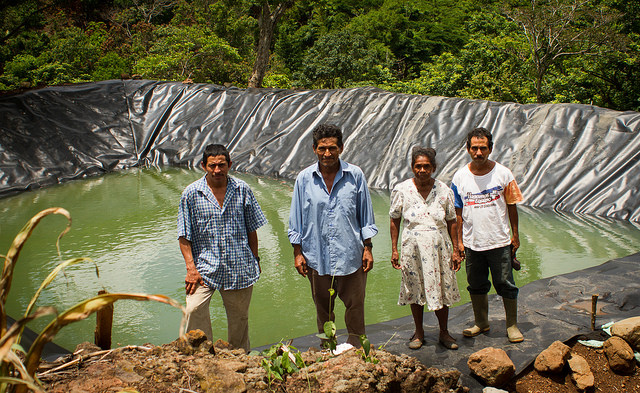
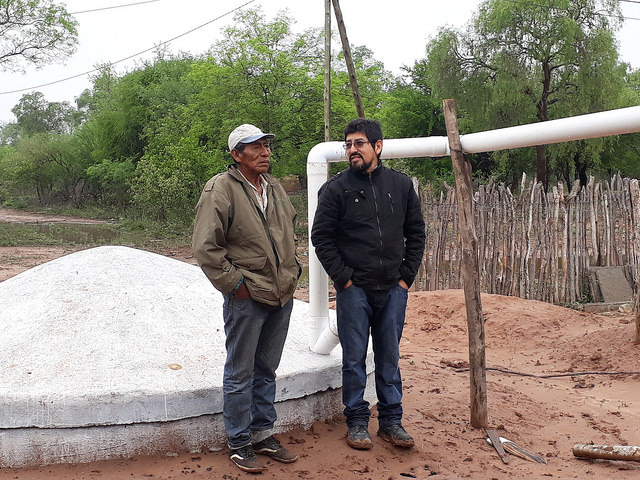
A group of peasant farmers from El Salvador stand in front of one of the two rainwater tanks built in their village, La Colmena, in the municipality of Candelaria de la Frontera. The pond is part of a climate change adaptation project in the Central American Dry Corridor. Central American farmers like these and others from Brazil's semiarid Northeast have exchanged experiences on solutions for living with lengthy droughts. CREDIT: Edgardo Ayala/IPS

A group of peasant farmers from El Salvador stand in front of one of the two rainwater tanks built in their village, La Colmena, in the municipality of Candelaria de la Frontera. The pond is part of a climate change adaptation project in the Central American Dry Corridor. Central American farmers like these and others from Brazil’s semiarid Northeast have exchanged experiences on solutions for living with lengthy droughts. CREDIT: Edgardo Ayala/IPS

And in Argentina’s Chaco region, 16,000-litre drinking water tanks are mushrooming.

But tanks for intensive and small farming irrigation are not suitable for the dry Chaco, where livestock is raised on large estates of hundreds of hectares, said Gabriel Seghezzo, executive director of Fundapaz, in an interview by phone with IPS from the city of Salta, capital of the province of the same name, one of those that make up Argentina’s Gran Chaco region.

“Here we need dams in the natural shallows and very deep wells; we have a serious water problem,” he said. “The groundwater is generally of poor quality, very salty or very deep.”

First, peasants and indigenous people face the problem of formalising ownership of their land, due to the lack of land titles. Then comes the challenge of access to water, both for household consumption and agricultural production.

“In some cases there is the possibility of diverting rivers. The Bermejo River overflows up to 60 km from its bed,” he said.

Currently there is an intense local drought, which seems to indicate a deterioration of the climate, urgently requiring adaptation and mitigation responses.

Reforestation and silvopastoral systems are good alternatives, in an area where deforestation is “the main conflict, due to the pressure of the advance of soy and corn monoculture and corporate cattle farming,” he said.

Mariano Barraza of the Wichí indigenous community (L) and Enzo Romero, a technician from the Fundapaz organisation, stand next to the tank built to store rainwater in an indigenous community in the province of Salta, in the Chaco ecoregion of northern Argentina, where there are six months of drought every year. CREDIT: Daniel Gutman/IPS

Mariano Barraza of the Wichí indigenous community (L) and Enzo Romero, a technician from the Fundapaz organisation, stand next to the tank built to store rainwater in an indigenous community in the province of Salta, in the Chaco ecoregion of northern Argentina, where there are six months of drought every year. CREDIT: Daniel Gutman/IPS

More forests would be beneficial for the water, reducing evaporation that is intense due to the heat and hot wind, he added.

Of the “technologies” developed in Brazil, one of the most useful for other semiarid regions is the “underground dam,” Claus Reiner, manager of IFAD programmes in Brazil, told IPS by phone from Brasilia.

The underground dam keeps the surrounding soil moist. It requires a certain amount of work to dig a long, deep trench along the drainage route of rainwater, where a plastic tarp is placed vertically, causing the water to pool during rainy periods. A location is chosen where the natural layer makes the dam impermeable from below.

This principle is important for the Central American Dry Corridor, where “the great challenge is how to infiltrate rainwater into the soil, in addition to collecting it for irrigation and human consumption,” said Ismael Merlos of El Salvador, founder of Funde and director of its Territorial Development Area.

The CADC, which cuts north to south through Guatemala, Honduras and El Salvador, is defined not as semiarid, but as a sub-humid region, because it rains slightly more there, although in an increasingly irregular manner.

Some solutions are not viable because “75 percent of the farming areas in the Corridor are sloping land, unprotected by organic material, which makes the water run off more quickly into the rivers,” Merlos told IPS by phone from San Salvador.

“In addition, the large irrigation systems that we’re familiar with are not accessible for the poor because of their high cost and the expensive energy for the extraction and pumping of water, from declining sources,” he said.

The most viable alternative, he added, is making better use of rainwater, by building tanks, or through techniques to retain moisture in the soil, such as reforestation and leaving straw and other harvest waste on the ground rather than burning it as peasant farmers continue to do.

“Harmful weather events, which four decades ago occurred one to three times a year, now happen 10 or more times a year, and their effects are more severe in the Dry Zone,” Merlos pointed out.

Funde is a Salvadoran centre for development research and policy formulation that together with Fundapaz, four Brazilian organisations forming part of the ASA network and seven other Latin American groups had been cooperating since 2013, when they created the Latin American Semiarid Platform.

The Platform paved the way for the DAKI-Semiárido Vivo which, using 78 percent of its two million dollar budget, opened up new horizons for synergy among Latin America’s semiarid ecoregions. To this end, said Burneo, it should create a virtuous alliance of “good practices and public policies.”

  Source

The Growing Global Movement to End Outdoor Advertising

Civil Society, Economy & Trade, Headlines

Civil Society

The movement to end outdoor advertising is loud in France, but it has roots further afield. In 2006, São Paulo became the first place in the world to ban outdoor advertising. Then mayor Gilberto Kassab described it as ‘visual pollution’. Within a year, 15,000 billboards were down, along with 300,000 large store signs, in south America’s largest megacity. Cities in India including New Delhi, Mumbai and Chennai have all restricted outdoor advertising

Credit: RAP

LONDON, Aug 11 2020 (IPS) – “With advertisements removed in Grenoble you can see the city’s beauty and the mountains beyond. Adverts create obstacles. Without them you can breathe,” explains Khaled Gaiji, national mobilisation coordinator of the French anti-advertising organisation Résistance à l’Agression Publicitaire (Resistance to Advertising Aggression, or RAP). “Advertising is like an iceberg: the largest impact is below the surface. Adverts colonise our imagination.”


In 2014 Grenoble’s then newly-appointed Green mayor Éric Piolle cancelled a contract for 326 outdoor advertisements, including 64 large billboards. Trees and community noticeboards replaced them – or nothing at all. The lost revenue was recouped by reducing allowances, including official vehicles. Despite Piolle’s attempts to make Grenoble Europe’s first ad-free city, bus and tram stops still have adverts, as the contract is controlled by the regional authority.

But that hasn’t stopped the ad-free fervour from spreading across France. There are 29 RAP groups across the country, up from five in 2016. They work autonomously with tactics including pressuring politicians like the mayor of Paris, Anne Hidalgo, who paused plans for new digital advertising boards on the city’s streets. To halt this RAP encouraged people to participate in a public consultation.

Ninety-five per cent of over 2000 participants were against the new digital ads. Their reasons speak to why people are resisting outdoor advertising the world over: their negative ecological impact, including the way they drive consumption, as well as the fact that they are invasive, obtrusive and omnipresent.

Outdoor adverts are not consensual: “I can avoid ads in magazines or online. But if I’m walking my baby to the park or if I just want some quiet time outside, I don’t want to be told to buy fast food, fast fashion or cars. However, I can’t avoid these ads on billboards.”

Nationally, RAP co-organised a petition, with other organisations, which collected 60,000 signatures that pressured then finance minister Emmanuel Macron, in 2016, to stop plans to spread advertisements across France’s small towns and villages. In Lyon, 150 activists from RAP protested in March 2018 and 2019 in support of global anti-advertising action, while in October 2019 200 activists marched there in solidarity with ‘Alex’, a RAP participant who went to court for his part in covering advertising spaces in posters. His case is adjourned until June 2020.

Gaiji, who is also president of Friends of the Earth France, says: “Grenoble stopping the advance of advertisements shows that we have a choice. It is like when people ask what has 50 years of environmental activism achieved? But imagine how bad thing would be if [we hadn’t done anything]. We say: ‘Action is life, silence is death’”.

The anti-advertising movement is loud in France, but it has roots further afield. In 2006, São Paulo became the first place in the world to ban outdoor advertising. Then mayor Gilberto Kassab described it as ‘visual pollution’. Within a year, 15,000 billboards were down, along with 300,000 large store signs, in south America’s largest megacity. Cities in India including New Delhi, Mumbai and Chennai have all restricted outdoor advertising. For ten days in 2015, Tehran replaced all advertising with art.

Britain’s anti-advertising clamour rises

The south-west English city of Bristol hosted the UK’s first national anti-advertising conference on 26 October 2019. Organised by Adblock Bristol, it attracted people from across the British Isles, including members of Adblock Cardiff, which was set up in Wales last year. Attendees from the UK’s second largest city of Birmingham set up their own group after the conference.

“Our big focus is challenging new planning applications for digital billboards, where the industry is expanding. Working with local communities we have stopped 18 new digital screens in Bristol and have successfully lobbied to have some old static billboards removed,” explains Nicola Round from Adblock Bristol.

Round explains that outdoor adverts are not consensual: “I can avoid ads in magazines or online. But if I’m walking my baby to the park or if I just want some quiet time outside, I don’t want to be told to buy fast food, fast fashion or cars. However, I can’t avoid these ads on billboards.”

The conference showcased other successes: lobbying against Bristol council’s plans to extend advertising into green spaces; working with local communities and art projects to showcase alternatives and covering adverts with paper for a day to let people express themselves.

One workshop explored how advertising drives sexism. “Advertising featuring sexualised images of perfect bodies not only encourages us to objectify and dehumanise the women pictured, it trains us to objectify all women,” Sophie Pritchard who co-ran the workshop explains. She is from TIGER (Teaching Individuals Gender Equality and Respect), a local grassroots co-operative working with young people.

“Advertising often presents women as submissive, as possessions to fulfil the needs of men, and men are shown as strong and dominant. These are the core beliefs underpinning domestic abuse,” Pritchard explains, citing numerous studies that have shown that way in which sexualised advertising drives body shaming, mental health problems and misogyny.

Selling unhappiness

The public relations industry stands accused of driving other prejudice. One advert in Thailand linking success with lighter skin was withdrawn after public backlash against racism. Similar public condemnation forced German cosmetic giant Nivea to stop a campaign selling skin lightening products in west Africa.

Overall, swathes of studies link advertising with selling unhappiness, making us want things we do not need. Fighting against this, different campaigns worldwide focus on limiting specific adverts. Singapore has banned unhealthy food and drinks promotion, including on billboards, going further than similar moves in Mexico, the United Kingdom and Canada. Paris in March 2017 followed Geneva and London to ban sexist and homophobic adverts. In 2005, World Health Organization rules banned all tobacco advertising for its 168 signatories; but investigative research by the Guardian shows that big tobacco still targets children in at least 23 countries of the Global South.

The climate emergency also amplifies another argument against advertising.

“Bristol was the first UK council to declare a climate emergency, so it makes no sense to then install new digital advert screens,” Round explains. “We know from planning applications that a double-sided digital bus advertisement uses the same annual energy as four households. So imagine the big ones, let alone the environmental impact of the over-consumption encouraged by these advertising boards.”

Adblock Bristol has mapped how advertisers target the city’s major roads, noting that areas with the most billboards suffer the highest air pollution. Anti-advert campaigners also want to raise broader questions about environmental justice: why should impoverished areas suffering the worst air pollution – largely due to traffic – host adverts for cars out of the price range of many local people? In the end, selling more cars to motorists stuck in traffic jams only worsens air quality and the climate disaster.

Reclaiming the public visual realm

The Bristol conference featured a ‘subvertising’ workshop – a term that refers to replacing or altering billboard images with art. Early subvertising campaigns started as early as 1973 in Australia, focusing on tobacco. More recently, carbon intense industries have been targeted, including adding cigarette-style warnings to car adverts.

“We set out to subvert the dominant narrative forced onto us by corporate advertising. It is important to reclaim the public visual realm – especially when we are being straight up lied to, as is the case with widely used greenwashing,” explains Michelle Tylicki, an artist who has collaborated with subvertisers.

Her work has included making a spoof film poster about the UK fracking firm Cuadrilla – in the style of the horror movie Godzilla. Fracking in the UK has now been suspended following years of pressure from campaigners.

Tylicki also made a poster series that was displayed during 2018’s climate negotiations in Poland. “[It was] to challenge the greenwashing and ‘business as usual’. At this summit it was decided that they will ignore the key 1.5 degrees IPCC report. This shouldn’t come as a surprise considering the ‘climate summit’ was sponsored by Polish coal companies.”

During the summit, the right to protest was severely restricted. One of her billboards (in Polish) read: “Belchatow power station emits more CO2 than is absorbed by all Polish forests. Poland, business as usual. High time for climate justice.”

She tells Equal Times: “Coal still provides 1/3 of electric power in the world. Current CO2 emissions cause 45,000 premature deaths in Poland each year. It is a beastly industry that will continue to walk over dead bodies for profit – unless we challenge it.”

The subvertising movement aims to end the monopoly corporations increasingly have over public space. It organises skill-shares so that more people can democratise their cities and towns.

One reported impact of removing billboards in São Paulo was that it revealed vistas of the impoverished areas that existed behind them. Anti-advertising projects around the world tend to focus on valuing these areas rather than dismissing them as mere ‘slums’. These projects also help us imagine how all cities could be without adverts.

In Mumbai, the NGO Chal Rang De (Let’s Go Paint) has painted houses made from corrugated iron in bright colours. Similarly, the council in Medellín, Columbia’s second city, has transformed severely impoverished neighbourhoods, suffering violence from the drugs trade, by daubing the walls with murals and providing amenities, services and hope. Likewise, in Ghanaian capital city of Accra, artist Mohammed Awudu is guiding young people to turn the informal settlement of Nima into an art city.

Round chaired the conference’s closing session on what should replace corporate advertisements. This, she says, should be up to the local communities. “In Bristol some say more art, like the Burg Arts Project, a rolling series of art by local artists and the local community. Primarily we would like to see advertising gone, perhaps to reveal beautiful buildings. Other communities might want to plant and rewild, or paint murals. There are many ways communities could take this.”

This story was originally published by Equal Times

  Source

Are We Going from San Francisco?

Armed Conflicts, Conferences, Democracy, Economy & Trade, Featured, Global, Headlines, Human Rights, Peace, TerraViva United Nations

Opinion

SYDNEY and KUALA LUMPUR, Jun 30 2020 (IPS) – Seventy-five years ago, on 26 June 1945, before the Japanese surrender ending the Second World War, fifty nations gathered at San Francisco’s Opera House to sign the United Nations (UN) Charter.


UN Charter
Nations pledged “to practice tolerance and live together in peace …, and to ensure … that armed force shall not be used, save in the common interest, and to employ international machinery for the promotion of the economic and social advancement of all peoples”.

Anis Chowdhury

They sought “to save succeeding generations from the scourge of war, … and to reaffirm faith in fundamental human rights, in the dignity and worth of the human person, in the equal rights of men and women and of nations large and small, and to … promote social progress and better standards of life in larger freedom”.

The Charter’s contents reflected some contradictions inherent in framing an international organization recognizing national sovereignty as its organizing principle, and various other compromises, often influenced by the convening host nation.

Although the conduct of Member States often falls short of the UN’s lofty goals, its Charter was nonetheless a monumental achievement, providing the foundation for a rules-based international order.

San Francisco Conference
Forty-six Allied countries, including the four sponsors – the United States, the United Kingdom, the Soviet Union and China – were originally invited to the San Francisco Conference.

The conference itself invited four other States – the Byelorussian and Ukrainian Soviet Socialist Republics, newly-liberated Denmark and Argentina. Poland did not send a representative as its new government was still uncertain.

Of the fifty participating states, only four were African and nine Asian. Latin American countries, independent since the mid-19th century, were present and active in deliberations.

The Conference was not only one of the most significant international gatherings in history, but perhaps the longest ever. The two month long Conference was attended by 3,500 people, including 850 delegates, their advisers, staff and the secretariat, plus more than 2,500 from the media and other observers.

Jomo Kwame Sundaram

The Conference opened on April 25, 1945 with great fanfare, despite the sudden death of its principal architect and presumed host, US President Franklin Delano Roosevelt, on 12 April. The task of carrying on fell to his Vice-President Harry Truman who had become President.

Truman often quoted English poet Alfred Lord Tennyson’s Locksley Hall, carried in his wallet, bewildering colleagues, senators and staffers who doubted his commitment to international peace. Tennyson foresaw that nations, realizing they could destroy one another, might agree to form “the Parliament of Man”, to resolve disputes peacefully.

Clashes and compromises
Many serious differences of opinion triggered crises, even at the preparatory stage. For example, the Soviet Union proposed that all 16 Soviet republics should have UN membership to balance the influence of US allies: the US countered by proposing membership for all its 50 states!

A compromise was struck, allowing membership for the Soviet republics of Belarus and Ukraine; the Soviet Union then withdrew its opposition to Argentina, which had supported the Axis powers.

The most important deliberations concerned the UN Security Council (UNSC), initially composed of five permanent members (US, UK, USSR, China, France) and six elected members. The P5’s right to veto provoked a long and heated debate.

Others feared that when one of the P5 threatens the peace, the UNSC would be ineffectual. But the P5 collectively insisted that as the main responsibility for maintaining world peace would fall most heavily on them, the veto provision was vital.

Australia proposed that no permanent member should be allowed to veto when involved in a Chapter VII dispute over threats to peace. The US delegation blocked this and a Soviet proposal allowing P5 vetoes on procedural matters, e.g., discussion of disputes in which it may be involved.

While US officials saw the UN General Assembly (UNGA) primarily as a ‘talk shop’, the USSR tried to limit it from discussing sensitive political matters. However, recognizing its importance for legitimacy, the compromise reached permits the UNGA to discuss any issues “within the scope of the Charter”.

Colonialism was not supposed to be discussed at the Conference to avoid alienating the European imperial powers, whom the US needed to isolate the Soviet Union. But the handful of Asian and African countries attending wanted countries still under the colonial yoke to attain freedom and independence as soon as possible.

Although not on the original Conference agenda, after much debate, Chapters XI, XII and XIII provided some norms for colonial administration and pathways for decolonization. Nonetheless, these ambiguous, at best, pronouncements greatly disappointed anti-colonialists around the world.

US hegemonic from outset
Despite some compromises inherent in framing such an agreement, the UN Charter favoured the US. It promised to protect freedom of action and national sovereignty, as desired by the US, but contained no open-ended commitment to preserve other countries’ territorial integrity, like the League of Nations Covenant’s Article 10.

Article 2(7) placated American sovereigntists and nationalists, declaring: “Nothing contained in the present Charter shall authorize the United Nations to intervene in matters essentially within the domestic jurisdiction of any state.”

The US and the UK also got what they wanted for existing and new regional and plurilateral arrangements, including defence and mutual assistance organizations.

Some US officials were concerned the UN might threaten the Monroe Doctrine privileging the US in the Western hemisphere, while limiting its ability to intervene elsewhere. Some clever drafting of Chapter VIII provided blanket endorsement to regional organizations, also seen as reflecting the principle of subsidiarity.

Article 51 enshrined the principle of “self-defense against armed attack, either individual or collective”. Although not fully appreciated in 1945, such provisions later helped legitimize various US and other post-colonial security pacts in Europe, Asia and the Americas against the Soviet Union during the Cold War.

Conference participants also considered a proposal for compulsory jurisdiction for a World Court, but the US Secretary of State recognized this would jeopardize Senate ratification. Delegates compromised, agreeing to let countries decide whether to accept the International Court of Justice (ICJ)’s jurisdiction.

Unsurprisingly, the US has had an uneasy relationship with the ICJ from the outset, never submitting to its authority, and reacting negatively to Court decisions seen as adverse to the US.

From Truman to Trump
Presiding at the closing ceremony, Truman cautioned that the success of the new world body would depend on collective self-restraint. “We all have to recognize – no matter how great our strength – that we must deny ourselves the license to do as we please. This is the price each nation will have to pay for world peace.”

Truman is probably turning in his grave watching Trump’s jingoist ‘America First’ policy undermine the UN and multilateralism. Are multilateralism and the UN now doomed as Trump belies Tennyson’s hope and leads the US to up-end the Roosevelt-Truman legacy?