Global Solidarity & Effective Cooperation in the Face of COVID-19

Aid, Civil Society, Development & Aid, Economy & Trade, Featured, Global, Headlines, Human Rights, Poverty & SDGs, TerraViva United Nations

Opinion

Charlotte Petri Gornitzka is Assistant Secretary-General and UNICEF Deputy Executive Director, Partnerships; Robert Piper is Assistant Secretary-General, Director of Development Coordination Office; and Ulrika Modéer is Assistant Administrator of UNDP & Director of Bureau of External Relations and Advocacy.
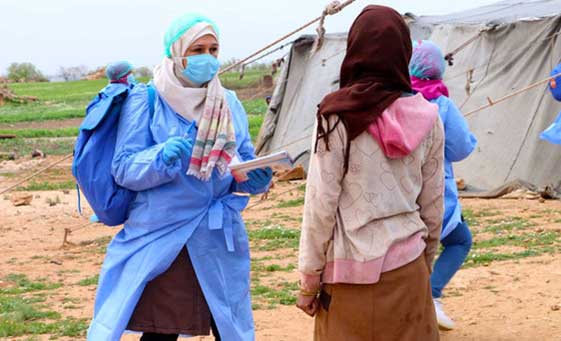
Coronavirus pandemic threatens crises-ravaged communities as UN appeals for global support. Credit: United Nations

UNITED NATIONS, Jun 9 2020 (IPS) – The COVID-19 pandemic upended almost every aspects of life as we know it. Even those countries that are supposed to have the means to manage the spread and mitigate the effects are struggling.


Besides the $5 trillion stimulus package that the G20 economies agreed to deal with the pandemic, individual countries are also devising various measures to shore up their health care systems, stabilize their economies, and assist affected workers and businesses.

Even before the full brunt of the coronavirus outbreak reached some of the poorest countries, the economic impacts are already being felt. With declining global demand for raw materials, breakdown of global supply chain, and mounting debt burden, the economic impact of the COVID-19 pandemic is estimated to exceed $220 billion.

The urgent shouldn’t crowd out the important

With greater uncertainty and fear of global recession looming large, governments are looking for resources needed to lessen the socio-economic pains of the crisis. In this process, official development assistance (ODA) won’t be spared and could come under increased scrutiny.

Decisions made now will have potentially devastating – or transformative – impact for years to come. Despite the economic and political pressure, we must protect ODA, which is needed more than ever.

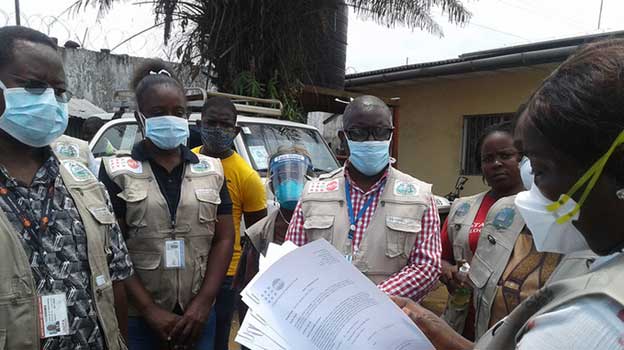
The spread of COVID-19, especially in places with weak governance and health infrastructures, is expected to be overwhelming if the international community does not act now.

For example, in Sub-Saharan Africa, many countries have the lowest number of physicians per capita in the world while some experience ongoing conflicts, making it difficult to fight the virus.
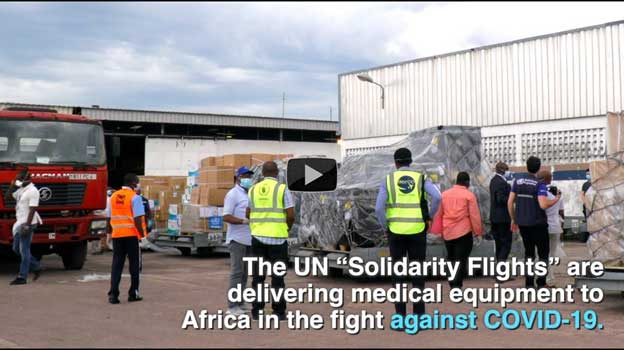
Credit: UNFPA

The collateral impact of COVID-19 on health, education and nutrition systems will be extremely damaging, and in many cases irreversible, for children and society at large. And when the world opens up again, the resilience of the weakest health systems will dictate how well we do against future threats.

The UN Secretary General argued that “this human crisis demands coordinated, decisive, inclusive and innovative policy action—and maximum financial and technical support for the poorest and most vulnerable people and countries.”

It is critical for the international community to fulfil the humanitarian appeal for COVID-19 response while protecting existing commitments to long-term development and other ‘silent’ emergencies.

Doing so will help protect the most vulnerable people from being exposed to the effects of COVID-19 and preserve hard-earned development gains in fighting global poverty and expanding basic services.

Left to their own devises, fragile nations may risk the breakdown of socio-political order, civil unrest and state collapse, further exacerbating the dire situation.

Flexible funding key to tackling COVID-19

COVID-19 is not only a humanitarian crisis, but also a development crisis. Development agencies are supporting countries to prepare for, respond to, and recover from the crisis.

The effectiveness of their response to certain degree depends on the flexibility afforded to them in funding and operational procedures.

To tackle this uniquely complex health and development crisis, the adequacy and flexibility of funding to development agencies are pivotal. Flexible “core” funding is already making a difference in the COVID-19 response to reach people in need faster, empower local actors, deploy essential supplies to the frontline, and protect the most vulnerable – children, refugees, women.

This enabled the affected communities to practice due diligence and self-driven discretion to immediately respond to threats of the pandemic, while waiting for the pledged assistance to arrive. For instance, in Nigeria, funding flexibility allowed UNICEF to come up with an innovative solution to fight misinformation around COVID-19 while UNDP was able to support the government double the ventilator capacity in the country.

Collaboration, not competition

The COVID-19 pandemic is a devastating crisis in history. But it also posits an opportunity to remind the global community why multilateralism is vital to securing the world’s peace, security, and prosperity.

We witness how the health crisis of today’s globalized world interlinks global economy, geopolitics, and social values. Our effective response to the public health crisis should be seen as key to resolving the ensuing economic, humanitarian, and development challenges.

Understanding this interlinked and complex reality of COVID-19, governments need to work together closely to take coordinated actions and share scientific information, resources and expertise.

It is this strong motion for collaboration that underpins the UN agencies commitment to reinforce the humanitarian-development nexus to jointly respond to the COVID-19 crisis, working closely through the UN Crisis team, humanitarian response plan, UN Response and Recovery Fund for COVID-19.

For example, in Guinea-Bissau, WHO, UNICEF, UNDP, and IOM joined hands to help build isolation facilities and triage space, and procure necessary equipment for COVID-19, both for the national hospital as well as for the re-modelling of the UN clinic.

With strong solidarity and effective cooperation, the international community will not only arrest COVID-19, but also use the emergency to build back better health systems and a more inclusive and sustainable economy.
  Source

Water, Climate, Conflict & Migration: Coping with 1 Billion People on the Move by 2050

Aid, Civil Society, Development & Aid, Economy & Trade, Featured, Global, Headlines, Human Rights, Labour, Migration & Refugees, Poverty & SDGs, TerraViva United Nations

Opinion

Nidhi Nagabhatla is Principal Researcher, Water Security at the UN University’s Institute for Water, Environment and Health, funded by the Government of Canada and hosted by McMaster University in Hamilton, Canada

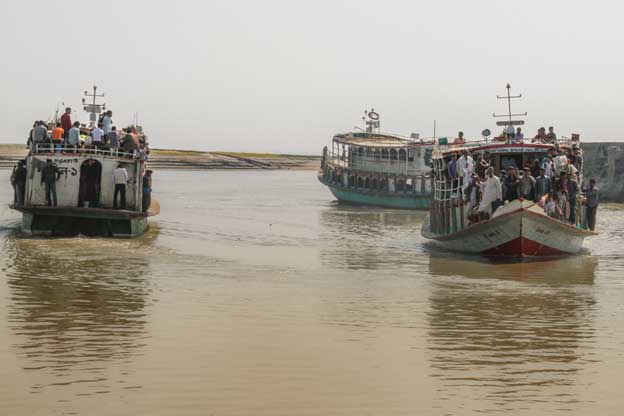
Padma River Basin, Bangladesh Credit: Nidhi Nagabhatla

HAMILTON, Canada, Jun 8 2020 (IPS) – Do migrants willingly choose to flee their homes, or is migration the only option available?

There is no clear, one-size-fits-all explanation for a decision to migrate — a choice that will be made today by many people worldwide, and by an ever-rising number in years to come because of a lack of access to water, climate disasters, a health crisis and other problems.


Data are scarce on the multiple causes, or “push factors,” limiting our understanding of migration. What we can say, though, is that context is everything.

UN University researchers and others far beyond have been looking for direct and indirect links between migration and the water crisis, which has different faces — unsafe water in many places, chronic flooding or drought in others.

The challenge is separating those push factors from the social, economic, and political conditions that contribute to the multi-dimensional realities of vulnerable migrant populations, all of them simply striving for dignity, safety, stability, and sustainably in their lives.

A new report, ‘Water and Migration: A Global Overview,’ (https://bit.ly/3gxDgE7) from UNU’s Institute for Water, Environment and Health, offers insights into water and migration interlinkages, and suggests how to tackle existing gaps and needs.

Its information can be understood easily by stakeholders and proposes ideas for better informed migration-related policymaking, including a three-dimensional framework applicable by scholars and planners at multiple scales and in various settings.

The Report also describes some discomforting patterns and trends, among them:

    • By 2050, a combination of water and climate-driven problems and conflicts will force 1 billion people to migrate, not by choice but as their only option;
    • Links to the climate change and water crises are becoming more evident in a dominant trend: rural-urban migration;
    • That said, there is a severe lack of quantitative information and understanding re. direct and indirect water and climate-related drivers of migration, limiting effective management options at local, national, regional, and global scales
    • Global agreements, institutions, and policies on migration are concerned mostly with response mechanisms. Needed is a balanced approach that addresses water, climate, and other environmental drivers of migration
    • Unregulated migration can lead to rapid, unplanned, and unsustainable settlements and urbanization, causing pressure on water demand and increasing the health risks and burdens for migrants as well as hosting states and communities
    • Migration should be formally recognized as an adaptation strategy for water and climate crises. While it is viewed as a ‘problem,’ in fact it forms part of a ‘solution’
    • Migration reflects the systemic inequalities and social justice issues pertaining to water rights and climate change adaptation. Lack of access to water, bad water quality, and a lack of support for those impacted by extreme water-related situations constitute barriers to a sustainable future for humankind.

Case studies in the report provide concrete examples of the migration consequences in water and climate troubled situations:

    • The shrinking of Lake Chad in Africa and the Aral Sea in Central Asia
    • The saga of Honduran refugees
    • The rapid urbanization of the Nile delta, and
    • The plight of island nations facing both rising seas and more frequent, more intense extreme weather events.

In addition, the added health burdens imposed on people and communities by water pollution and contamination create vicious cycles of poverty, inequality and forced mobility.

While the Sustainable Development Goals (SDGs) agenda does not include an explicit migration target, its mitigation should be considered in the context of SDGs that aim to strengthen capacities related to water, gender, climate, and institutions. These issues resonate even as the world deals with the COVID-19 pandemic.

Recent news stories have chronicled the plight of desperate migrant workers trapped in the COVID-19 crisis in India, and of displaced people in refugee camps where social distancing is unachievable, as is access to soap and water, the most basic preventive measure against the disease.

Add to that the stigma, discrimination, and xenophobia endured by migrants that continue to rise during the pandemic.

Even at this moment, with the world fixated on the pandemic crisis, we cannot afford to put migration’s long-term causes on the back burner.

While the cost of responses may cause concerns, the cost of no decisions will certainly surpass that. There may be no clear, simple solution but having up-to-date evidence and data will surely help.

On World Environment Day ( https://bit.ly/3dnKkks) last week (June 5), we were all encouraged to consider human interdependencies with nature.

Let us also acknowledge that water and climate-related disasters, ecological degradation and other environmental burdens causes economic, health and wellbeing disparities for migrants and populations living in vulnerable settings.

  Source

Crisis Hits Oil Industry and Energy Transition Alike

Civil Society, Climate Change, Conferences, Development & Aid, Economy & Trade, Editors’ Choice, Energy, Environment, Featured, Global Governance, Headlines, Integration and Development Brazilian-style, Latin America & the Caribbean, Projects, Regional Categories

Energy

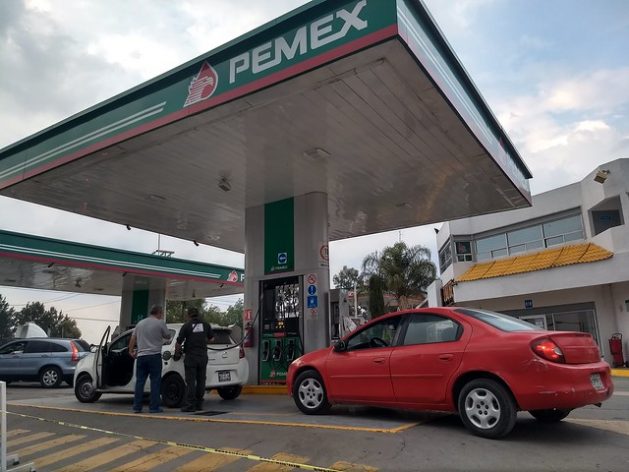
Mexico's state-run oil giant Pemex faces a difficult outlook due to the fall in international oil prices and the crisis resulting from the coronavirus pandemic, which threatens its production and finances, in a situation analysed during the 29th La Jolla Energy Conference, organised online by the Institute of the Americas. CREDIT: Emilio Godoy/IPS

Mexico’s state-run oil giant Pemex faces a difficult outlook due to the fall in international oil prices and the crisis resulting from the coronavirus pandemic, which threatens its production and finances, in a situation analysed during the 29th La Jolla Energy Conference, organised online by the Institute of the Americas. CREDIT: Emilio Godoy/IPS

MEXICO CITY, May 22 2020 (IPS) – While it attempts to cushion the effects of the coronavirus pandemic, the Latin American and Caribbean region also faces concerns about the future of the energy transition and state-owned oil companies.


These questions were discussed at the 29th La Jolla Energy Conference, organised by the Institute of the Americas. It was held online May 18-22, rather than bringing together more than 50 speakers at the institute’s headquarters in the coastal district of San Diego, in the U.S. state of California, in the midst of the COVID-19 pandemic.

Alfonso Blanco of Uruguay, executive secretary of the Latin American Energy Organisation (OLADE), said during a session on global trends and the regional energy industry that the changes seen during the pandemic will spread after the crisis and will be long-lasting.

“There will be structural transformations and we are convinced that most consumer behaviors will change after the pandemic. Demand will vary due to changes in the main areas of transportation and other energy areas. The effects on fossil fuel consumption will be strong and there will be a greater impact on renewable energies,” he said.

OLADE, a 27-member regional intergovernmental organisation for energy coordination, estimates that electricity demand has fallen by 29 percent in Bolivia compared to 2019, as a result of the severe acute respiratory syndrome coronavirus 2 (SARS-CoV-2), which causes COVID-19, and by 26 percent in Argentina, 22 percent in Brazil and 11 percent in Chile.

“There will be structural transformations and we are convinced that most consumer behaviors will change after the pandemic. Demand will vary due to changes in the main areas of transportation and other energy areas. The effects on fossil fuel consumption will be strong and there will be a greater impact on renewable energies.” — Alfonso Blanco

Likewise, final energy demand plummeted 14 percent in Brazil compared to 2019, 11 percent in both the Andean and Southern Cone regions, nine percent in Mexico, seven percent in Central America and five percent in the Caribbean.

As countries went into lockdown to curb the spread of COVID-19, electricity consumption by businesses and factories declined, due to the suspension of activities.

Leonardo Sempertegui, legal advisor to the Organisation of Petroleum Exporting Countries (OPEC), said the pandemic may be a wake-up call for countries lagging behind in the energy transition.

“This may be the new normal. The structure and governance of the energy architecture to cope with the next phase are changing dramatically. Energy poverty and the energy transition cannot be solved regardless of who controls a resource; these challenges cannot wait,” he said in the same session.

In Latin America, nations like Argentina, Bolivia, the Dominican Republic, Ecuador, Honduras and Uruguay have made progress in the energy transition since 2015, while Brazil has slid backwards and countries like Mexico are stuck in the same place, according to the World Economic Forum’s Energy Transition Index, released May 13.

As the region heads into the fourth month of the pandemic, countries are assessing their electricity markets, which have been shaken by the crisis.

Nations like Argentina, Chile, Colombia and Peru have resorted to long-term electricity auctions, which have generated low prices for renewables, while Mexico suspended such schemes in 2019.

In Argentina, as Andrés Chambouleyron, a non-resident fellow at the Institute of the Americas, explained, industrial consumption fell by 50 percent and electricity distributors have not been able to obtain sufficient revenues to cover fixed costs or electricity purchases.

The government has thus provided financing to Cammesa – the electricity wholesale market administration company – to pay the generators, since it is bound by contracts to buy the energy.

“There will be a permanent change in electricity consumption in Argentina. We have cheaper gas than before; the models say that you have to use more gas because it is cheaper than other sources. We won’t see much change in Argentina’s energy mix, and that could extend to all of Latin America,” said Chambouleyron, who warned of breach of and renegotiation of contracts for energy purchases.

Low oil prices threaten to slow down the energy transition in Latin America, although renewable energies already compete with the costs of fossil fuels, agreed experts at the 29th La Jolla Energy Conference, organised online by the Institute of the Americas. The photo shows solar panels on a house in Ajijic, in the western Mexican state of Jalisco. CREDIT: Emilio Godoy/IPS

Low oil prices threaten to slow down the energy transition in Latin America, although renewable energies already compete with the costs of fossil fuels, agreed experts at the 29th La Jolla Energy Conference, organised online by the Institute of the Americas. The photo shows solar panels on a house in Ajijic, in the western Mexican state of Jalisco. CREDIT: Emilio Godoy/IPS

While renewables are already competing in price with conventional sources, low oil and gas prices undermine their expansion, a predicament that alternative energy sources have been facing in recent years.

In addition, the rise in the cost of international credit and the fluctuations of the dollar against local currencies may make generation more expensive.

In another session on the outlook for state-owned oil companies, Marta Jara, former president of Uruguay’s public oil company ANCAP, said the current crisis could accelerate the transition, but called it a “major challenge”.

“The temptation is to be opportunistic and forget the roadmap of the energy transition. We must invest in sustainable energy systems, decarbonise transport. It is important to secure funding and create jobs. I hope the crisis opens the door to be more innovative,” she said.

Viable or not?

The plunge in fossil fuel prices is damaging the finances of the region’s oil producing countries, such as Argentina, Bolivia, Brazil, Colombia, Ecuador, Mexico, Peru and Venezuela, and state companies in the sector are facing problems with regard to planning and operations.

But it benefits net importers, like the countries of Central America or Chile, whose oil bills have shrunk, while for consumers in both oil producing and importing countries the cost of electricity could go down.

“The most competitive will be the countries with lower oil extraction costs. Some projects will not be economically viable. We will see greater economic problems than in 2019,” predicted Lisa Viscidi, director of the Energy, Climate Change and Extractive Industries Programme at the non-governmental Inter-American Dialogue, during a panel on the situation in several Caribbean nations.

The pandemic and a rise in Saudi production announced on Mar. 10 led to a collapse in oil prices and the consequent risk of bankruptcies in the industry. State-owned oil companies have fared better than others so far in the crisis.

In another session on the outlook for state-owned oil companies, John Padilla, managing director of the private consulting firm IPD Latin America, stated that “it will take time to get out of this situation, with effects for the region, and the need for great efficiency.

“Most nations have been exporters, efficiency will be the key. What has not been done is to cultivate domestic and regional markets, state enterprises are not going to play the same role as they always have,” he said.

Public companies such as Brazil’s Petrobras and Colombia’s Ecopetrol entered the crisis in a better position than Mexico’s Pemex, Venezuela’s PDVSA and Argentina’s YPF, according to experts.

“These are difficult times, even for the best prepared. We can hope that if the country and its company are in trouble, if governments need money, they can get more out of the companies,” said Francisco Monaldi, interim director of the Baker Institute for Public Policy’s Latin America Initiative at the private Rice University in the U.S. state of Texas.

In his view, “Mexico is in better fiscal conditions, it should not be a problem. But Pemex can drag Mexico down. If the government doesn’t change direction, it could become a serious problem,” he said as an example.

Although Pemex will increase its investment in 2020, the oil company reported losses of 20 billion dollars in the first quarter of this year. Due to the crisis, Petrobras limited its investment to 3.5 billion dollars and its daily production to 200,000 barrels, and postponed the sale of eight refineries.

For Lucas Aristizábal, a senior director in Fitch Ratings’ Latin American corporates group, some state-owned oil companies are viable and others are not.

“In 2021, the financial contribution of oil will be lower for governments. If they want the companies to play a key role, they will put more pressure on their financial structure. The current situation illustrates the economics of these corporations,” he said during the forum.

Pemex and YPF were already losing money per barrel in 2019, while Petrobras has more balanced production costs.

On the oil horizon, and in the midst of the COVID-19 crisis, Guyana has become the rising star, although there is still political uncertainty, as the result of the Mar. 2 presidential elections is still unclear.

“It’s hard to predict what will happen. There is a risk of U.S. sanctions that would not affect investment in the sector, but would pose a political risk to the country,” said Thomas Singh, in the Department of Economics at the public University of Guyana.

The country expects to extract 600,000 barrels per day by 2024 and take in revenues of five billion dollars, with reserves exceeding five billion barrels.

  Source

Mexico’s Development Banks Fuel the Fossil Energy Trade

Active Citizens, Civil Society, Development & Aid, Economy & Trade, Editors’ Choice, Energy, Environment, Featured, Headlines, Integration and Development Brazilian-style, Latin America & the Caribbean, Projects, Regional Categories

Energy

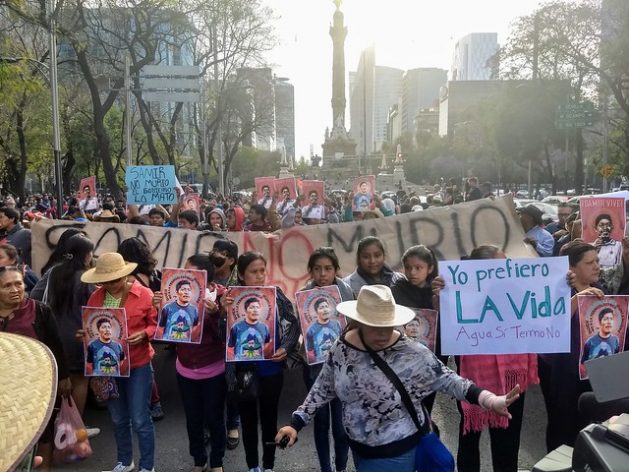
Demonstrators demand clarification of the murder of land rights activist Samir Flores and the shutdown of a thermoelectric plant in the state of Morelos, in central Mexico, in a February 2019 protest on Mexico City's emblematic Paseo Reforma. CREDIT: Emilio Godoy/IPS

Demonstrators demand clarification of the murder of land rights activist Samir Flores and the shutdown of a thermoelectric plant in the state of Morelos, in central Mexico, in a February 2019 protest on Mexico City’s emblematic Paseo Reforma. CREDIT: Emilio Godoy/IPS

MEXICO CITY, May 20 2020 (IPS) – Since 2012, Teresa Castellanos has fought the construction of a gas-fired power plant in Huexca, in the central Mexican state of Morelos, adjacent to the country’s capital.


“We don’t want the power plant to operate, because it will cause irreparable damage, polluting the water and air. This project was imposed on us; we have to defend the water and the land. This is not an industrial zone,” the activist, coordinator of the Huexca Resistance Committee, told IPS.

During the tests, the constant noise of the turbines also altered the life of this small community of just over 1,000 people, mostly farmers, near the Cuautla River, within the rural municipality of Yecapixtla.

“Development banks must have safeguards and principles for sustainable investment. National regulations are needed, which define climate finance and green finance, what principles govern them, what are the climate risks. The trend should be to increasingly finance green projects and less and less hydrocarbons.” — Liliana Estrada

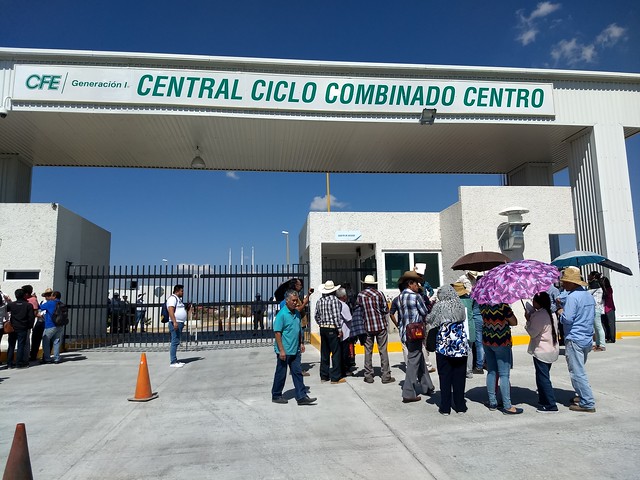
The Central Combined Cycle Plant, located in Huexca and with a capacity of 620 megawatts based on gas and steam, is part of the Morelos Integral Project (PIM), developed by the state Federal Electricity Commission (CFE). It also consists of an aqueduct and a gas pipeline that crosses the states of Morelos, Puebla and Tlaxcala.

The People’s Front in Defence of Land and Water of Morelos, Puebla and Tlaxcala and its ally, the Permanent Assembly of the People of Morelos, have managed to get several court orders that have blocked the operation of the plant, the 12-km aqueduct and the 171-km gas pipeline since 2015.

Castellanos, who has won an international and a national award for her activism, has been involved in the battle against the plant from the very start, which has earned her persecution and threats.

The opposition to the power plant by local communities that depend on planting corn, beans, squash and tomatoes and raising cattle and pigs, focuses on the lack of consultation, the threat to their agricultural activity, due to the extraction of water from the rivers, and the discharge of liquid waste.

In February 2019, a public consultation that did not meet international standards supported the completion of the project.

A few days earlier, activist Samir Flores had been murdered, a crime that remains unsolved – just one more instance of violence against environmentalists in Mexico. Despite Flores’ murder, the government of leftist President Andrés Manuel López Obrador went ahead with the referendum and upheld the result.

Public funds have fuelled the conflict, as the state-owned National Bank of Public Works and Services (Banobras) lent some 55 million dollars for the pipeline.

As in the case of other projects, development banks have become a financial pillar for the oil industry in Latin America’s second-largest nation, population 130 million.

The National Bank of Foreign Trade (Bancomext), Banobras and Nacional Financiera (Nafin) have funneled millions of dollars into building pipelines and oil and gas facilities in recent years, even though the climate change crisis makes it necessary to abandon such investments.

They have also financed renewable energy projects, but in much smaller amounts than fossil fuels.

The construction and operation of the Central Combined Cycle Plant, of the state Federal Electricity Commission, financed with public funds, unleashed a conflict with residents of Huexca, a small community in the central Mexican state of Morelos, which has brought the operation of the thermoelectric plant to a halt. CREDIT: Emilio Godoy/IPS

The construction and operation of the Central Combined Cycle Plant, of the state Federal Electricity Commission, financed with public funds, unleashed a conflict with residents of Huexca, a small community in the central Mexican state of Morelos, which has brought the operation of the thermoelectric plant to a halt. CREDIT: Emilio Godoy/IPS

Energy reform pillar

The energy reform that then conservative president Enrique Peña Nieto (2012-2018) enacted in 2013 opened the sector to private capital, broke the monopoly of the state-owned Petroleos Mexicanos (Pemex) oil giant and CFE, and made Mexico an attractive market for international investment in the sector.

To support this transformation, the state development banks also opened their coffers.´

Since 2012, Banobras, which finances infrastructure and public works and services, has lent at least 721 million dollars for the construction of gas pipelines, 10.2 billion dollars for oil and gas projects, 251 million dollars for electrical cogeneration, from steam generated in hydrocarbon plants, and eight million dollars for the construction of a thermoelectric plant that will burn fuel oil in the northwestern state of Baja California Sur.

Bancomext, which provides financing to exporters, importers and nine strategic sectors, has delivered some 500,000 dollars to oil companies in the eastern state of Tamaulipas and another 446 million dollars in Mexico City. It has also provided 65.4 million dollars to gas initiatives in the northern state of Nuevo Leon and 626.7 million dollars in Mexico City.

In addition, it has contributed 1.5 billion dollars for the supply of gas through pipelines to the final consumer; 324 million dollars for the extraction of oil and gas; 216 million dollars for the construction of public works for oil and gas; 126 million dollars for the manufacture of products derived from oil and coal; nearly seven million dollars for oil refining; 0.65 million dollars for the commercialisation of fuels; 0.25 million dollars for the drilling and maintenance of hydrocarbon wells; as well as 0.25 million dollars for oil platform maintenance and services.

In February, Bancomext granted a loan of 7.1 million dollars to Grupo Diarqco, in what it presented as the first credit to a private Mexican company in the industry, to exploit an oil field in the southeastern state of Tabasco.

Nafin, which grants credits and guarantees to public and private projects, created in 2014 the Energy Impulse Programme for these initiatives, endowed with more than a billion dollars.

It also manages, along with the economy ministry, the Public Trust to Promote the Development of Energy Industry National Suppliers and Contractors, designed for the industrial promotion of local production chains and direct investment in the energy industry, which this year has a fund of some 41 million dollars.

Missing: social and environmental safeguards

As in the case of the Morelos Integral Project, the gas pipelines have been a source of conflict with local communities, arising from the lack of socio-environmental safeguards and standards to guarantee that a project and its financing will respect the human rights of potentially affected communities.

Nafin and Banobras lack such safeguards, while Bacomext has had an “Environmental and Social Risk Management System Guide” since 2017, with no evidence of whether and how it has been applied to energy projects financed since then.

Since 2003, three platforms of international standards have emerged, to which Mexico’s development banks have not adhered, on human rights; social and environmental assessments and impacts; the application of safeguards; stakeholder participation; complaint resolution; and transparency.

The planet needs 80 percent of the global hydrocarbon reserves to stay underground in order for the temperature increase to remain at 1.5 degrees Celsius, as set out in the Paris Agreement on climate change.

The treaty, signed by 196 countries and territories in 2015, will enter into force at year-end and is considered indispensable to avoid irreversible climate disasters and human catastrophes.

Liliana Estrada, a researcher with the Climate Finance Group of Latin America and the Caribbean, told IPS that most investment in energy still goes to fossil fuels.

“After the reform, they have to enter into strategic projects and follow the guidelines of the government; they cannot go against these strategic lines. The gas and gas pipelines became strategic,” with the boost to the megaprojects of the López Obrador administration, said the representative of this coalition of non-governmental organisations and academics.

These credits are part of the fossil fuel subsidies that Mexico has pledged, to several international bodies, to eliminate.

The Mexican energy industry has also attracted international private banks, which have lent 55.95 billion dollars to 12 corporations, according to “Banking on Climate Change: Fossil Fuel Finance Report 2020”, released in March by six international environmental organisations.

The CFE received some 5.4 billion dollars from 12 banks between 2016 and 2019, and Pemex received 48.3 billion dollars from 20 foreign banks.

Based on Huexca’s experience, Castellanos demanded that these investments be stopped.

“If it’s our company, as the government says, then we can close it down. We have to defend the space in which we live, because we only have one planet and it belongs to all of us, it belongs to every living being, and it is our obligation to contribute something to this planet, because we are only here for a short while, we are guests of the earth”, she said.

Estrada called for sustainable financing regulations and questioned the lack of government leadership in this regard.

“Development banks must have safeguards and principles for sustainable investment,” she said. “National regulations are needed, which define climate finance and green finance, what principles govern them, what are the climate risks. The trend should be to increasingly finance green projects and less and less hydrocarbons.”

  Source

Religion & its Discontents: Considerations Around COVID-19 & Africa

Civil Society, Economy & Trade, Featured, Global, Headlines, Health, Human Rights, Humanitarian Emergencies, Inequity, Religion, TerraViva United Nations

Opinion

Dr. Azza Karam is the Secretary General of Religions for Peace International and Professor of Religion and Development at the Vrije Universiteit (VU), Amsterdam; Dr. Mustafa Y. Ali is the Secretary General of the Global Network of Religions for Children (GNRC) based in Nairobi, Kenya.

Credit: United Nations

NEW YORK, May 8 2020 (IPS) – COVID-19 has spread to many nations around the world, and has been declared a pandemic by the World Health Organization. In the global south, the COVID-19 pandemic has stretched the available medical and health resources, triggered economic shocks, and caused social upheavals and insecurity in many countries and localities.


While the pandemic has caused huge numbers of infections and deaths in the global north, the consequences in the poorer nations in the global south is acute.

Serious challenges arising from responses from authorities to contain the pandemic ranging from hard to soft lockdowns, curfews, limitations in movements, and social distancing, are causing strains in communities.

From fragile economies to ill- equipped health facilities and underfunded health programs, to the almost non-existent social security measures that would ordinarily cushion large segments of pupations from falling further into poverty, the impact on many communities in the global south will be grave.

While COVID-19 has not had a devastating impact on Africa as it has elsewhere, according to official statistics, we fear that this may change.

On the health side, health experts are already warning that the pandemic could yet exact a much heavier death toll in the region if it overwhelms local health services – as has happened in the United States and United Kingdom.

There are also concerns that the relatively weak health systems and patchy testing may be enabling COVID-19 to spread through Sub-Saharan Africa, without a means of registering any of this data.

The official figures to date locate much of the pandemic’s regional burden in places like South Africa, which has reported nearly 5,000 confirmed cases of COVID-19 and recently deployed hundreds of Cuban doctors to help fight its impact, and more than 1,800 confirmed cases in Cameroon, which has launched nationwide testing in April.

Two countries in the region, Lesotho and Comoros, have yet to officially report any cases, let alone Covid related deaths. According to a director of the African Center for Disease Control, the collapse of global cooperation has marginalised Africa in the diagnostics market, and its lack of hospitals combined with a high prevalence of HIV, tuberculosis, malaria and malnutrition could lead to relatively high COVID-19 mortality rates.

Food security is another major issue. Speaking of concerns in Nigeria, Sister Agatha Chikelue, Executive Director of the Cardinal Onaiyekan Foundation and Coordinator of Religious for Peace’s interfaith Women’s Network, noted that people are afraid of dying of “Hovid” – the hunger caused as a result of loss of livelihoods from the lockdown.

Religious leaders join COVID-19 fight in Africa. Credit: United Nations

Small wonder, therefore, that Nigeria is one of the countries already struggling to consider reopening some of their businesses, in spite of dire warnings.

According to a UN report, Africa is home to more than half of the 135 million who suffer acutely from food insecurity, which means there are serious concerns about famines and the potential for a significant death toll.

In other words, we are speaking of very real fears that the Covid crises may cause famine in combination with the drought, which will have dire consequences on the conflict-affected countries in the continent.

John Letzing, Digital Editor of Strategic Intelligence at the World Economic Forum, lists some of the dynamics facing the continent as reported on by a number of different sources. Notably,

Some Africans may be suffering indirectly from the impact of COVID-19 while
abroad – in early April, images and video emerged of Africans in Guangzhou,
China, being subjected to passport seizures and arbitrary quarantine,
according to this report. (The Diplomat). Africa has undergone an incredible
journey to make routine immunization possible, though immunization
coverage in sub-Saharan Africa has stalled at 72%. Now, COVID-19 presents
a further threat to progress, according to this analysis. (New African)

Despite the heralding of the coronavirus, there are those who argue that Africa’s governments did little to prepare themselves, their systems, or their people. Other commentators note that many countries have made plans to ease coronavirus-related measures.

There is some speculation that lessons learned from incidents like the 2014 Ebola outbreak will contribute to some countries’ capacities to weather the storm.

The fact is, that one of the key containment measures—social distancing—will be impossible in the crowded markets, high-density informal settlements and dwellings shared by more than one family. Another oft repeated advise is that of frequent handwashing in clean water. But what happens when clean water to drink, is in very short supply for many households across the sub-Saharan African continent?

Moreover, it is inconceivable that governments will, on their own, be able to meet the needs of all their citizens in this COVID pandemic. Many were already struggling to do so even before the pandemic struck.

Besides offering spiritual guidance and support, which is increasingly needed in times of fear and uncertainty, faith communities and organizations in Africa as elsewhere, have, over the years, supplemented governments’ efforts to provide education, health, nutritional and other developmental needs to their communities.

They also have been in the forefront of peacebuilding initiatives, and in advocating for rights-based approaches to development, protection of, and ending violence against children and minorities.

With the COVID-19 pandemic ravaging communities and creating fear and despondency, faith-based and faith-inspired organizations are already providing and augmenting critical services in health care provision – including but not limited to palliative care – and as part of the supply chains (for food, medicines, spiritual relief) reaching the heart of communities.

Religious organisations are also key to disseminating accurate news about the impacts and effects of the pandemic, rendering more critical their services as communicators and advisers on behavioral changes needed to keep communities safe.

Those of us engaged in working with religious actors speak of 84% of the world’s people claiming an affiliation to a faith tradition. This applies to all the world, and the sub-Saharan African subcontinent is no stranger to religiosity and belief as normal in everyday lives.

In times of fear, most believers will turn to faith, and this means that religious institutions, religious leaders and religious NGOs are playing a key role including psycho-social healing of COVID-19 traumas.

The fact is, however, that not all faith actors play the same role. And even when most play a positive role in helping communities and governments to cope, this does not mean all do. We know that some faith leaders are adamant that congregating for religious worship is a means of healing, because “God will spare us”.

These messages are hardly helpful when science and life and death experience indicate that social distancing is not only advisable, but downright necessary.

While the UN Secretary General’s call for a global ceasefire to all conflicts has been echoed by many religious leaders around the world, the question remains whether actors involved in extremist groups using religion as their raison d’etre will contemplate heeding such calls.

In fact, COVID-19 lockdowns may even be opportunities to ramp up violence, as government security services are otherwise engaged. This begs two important questions we have yet to find answers for:

To what extent will those religious institutions involved in providing for the daily spiritual, psycho-social, humanitarian care for their communities, and already overwhelmed in reconfiguring the very nature of religious worship, find the wherewithal to engage with the ‘radical fringes’ in African contexts already deeply divided by conflicts?

And what impact will COVID-19 have on the very same armed groups still insistent on playing out their conflicts? Already, some of those who still carry weapons, are working to serve some of their community needs – providing food, water and even money to households having to do without.

And as they serve their communities’ needs, the extremist groups have also ramped up attacks. In March and April, armed attacks in sub-Saharan Africa increased by 37 %, adding significant strain on the already overstrained resources, currently re-directed to COVID-related emergencies.

Sheikh Ibrahim Lethome, Secretary General of the Center for Sustainable Conflict Resolution, and Convener for the GNRC (Global Network of Religions for Children) Horn of Africa Working Group on religious-based extremism, is not surprised that the extremist groups have fully seized the confusion and despondency that COVID-19 has thrust into already fragile communities.

These stretch from the Sahel in West Africa, the Horn of Africa to Southern Africa’s Cabo Delgado in Mozambique

Will COVID-19 offer an opportunity for a different trajectory for some of those groups? As these groups continue to plant bombs, kill and maim, what will become of armed insurgency in the name of religion, when COVID-19 hits hard in Africa?

  Source

COVID-19 & Human Health Risks Linked to Wildlife Trade Practices

Civil Society, Economy & Trade, Featured, Global, Headlines, Health, Humanitarian Emergencies, TerraViva United Nations

Opinion

Steven Broad is Executive Director, TRAFFIC, the Wildlife Trade Monitoring Network

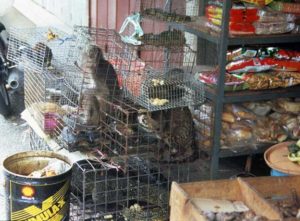
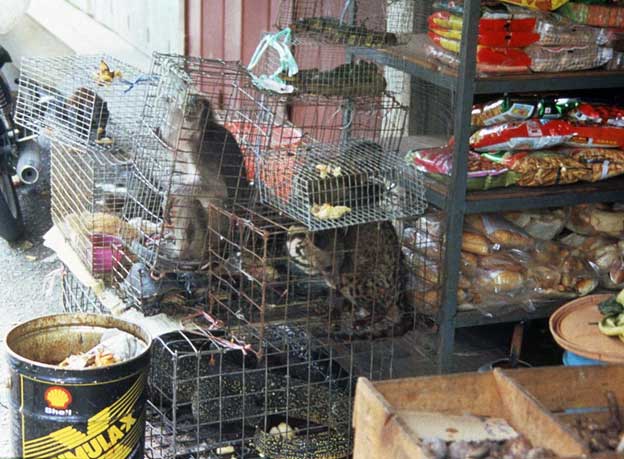
An animal market in Indonesia. Credit: TRAFFIC

CAMBRIDGE, UK, May 7 2020 (IPS) – At the time of writing, the COVID-19 pandemic is raging worldwide, causing human mortality and socio-economic disruption on a massive scale and it appears highly likely that profound impacts will continue for many years to come.


Although the precise origins of the disease remain unproven, there are strong indications of a wild animal source and a direct link to wildlife trade in China.

Even if evidence points elsewhere in future, the magnitude of the current outbreak places under an intense spotlight concerns raised by zoonotic disease experts over many decades about human health risks linked to wild animal trade in the increasingly inter-connected global economy.

As calls for new health-focused restrictions on wildlife trade have increased in volume in response to the current pandemic, some countries have taken immediate action. Building on immediate emergency restrictions placed on wildlife markets in January 2020, China is implementing a long-term prohibition on trade and consumption of wild animals for food as a public health protection measure.

Viet Nam is also considering new health-focused market restrictions and Gabon has introduced new species-specific trade restrictions. Looking ahead, there is a critical need to improve understanding of what sort of interventions might make the biggest difference in reducing risks of zoonotic disease emergence.

However, it is also important to work out how such actions might best complement, rather than conflict with, the range of existing conservation-focused wildlife trade regulation and management measures that are already struggling to contain over-exploitation of nature by people.

Zoonotic disease risks have not been wholly ignored before now. Many countries have live animal quarantine requirements and other rules governing the cross-border movement of meat, fish and other animal products.

Similarly, production, trade and use of live animals and products are subject to animal and human health regulations within domestic markets of most countries. However, such measures are typically designed primarily to address trade and consumption of domesticated species, the volume and value of which vastly exceed wild animal business.

As a result, the provisions of such regulations are seldom tailored to the specific dynamics and risks of the trade in wild animals.

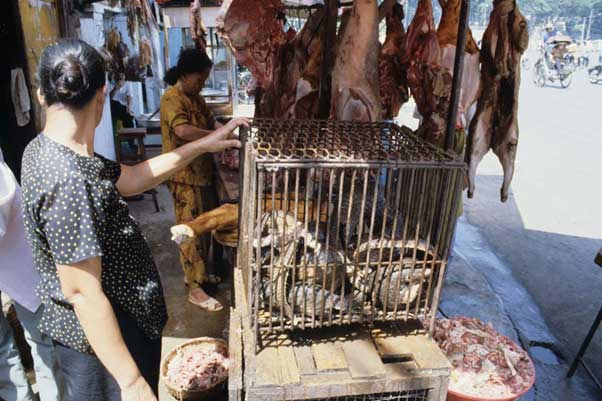
Design of new interventions should be based on evidence-based assessment of disease-related vulnerabilities in current wild animal trade chains. Based on study of past cases, experts point to heightened risks of zoonotic disease spillover in places where large numbers of stressed live animals of different species (wild or domesticated) and people are in close proximity, such as transport hubs, holding facilities and markets.

However, there remains considerable uncertainty about differentiation of risk levels between different wild animal species (or species groups) and about the likelihood of transmission from different wild animal parts and products.

Credit: TRAFFIC

There is a wide range of options for future intervention based on assessment of such risks. Prohibitions on trade and consumption of certain species or products could be warranted. This would likely require new or modified national legislation in many countries, as most current restrictions are explicitly justified by conservation threat levels and jurisdiction is often limited to import/export controls only.

Such measures would of course face the same challenges that undermine existing wildlife trade laws: enforcement is inconsistent, often under-resourced, undermined by criminality and corruption, and given insufficient priority by governments. Risky trade may simply continue through illicit markets.

It is possible that the greatest benefit might come from changes in management practices for holding, trade and processing wild animals in trade. These might include regulatory or voluntary private sector measures aimed to improve animal husbandry, increase separation between species in trade, enhance sanitation at holding facilities and improve personal protection for workers.

These measures may again require modification of existing animal and human health legislation, but there is considerable practical experience from the domesticated animal sector that could be applied to this challenge.

Despite the clear imperative for action provided by the tragic impacts of the COVID-19 pandemic, it will be critical to ensure that remedial restrictions on wildlife commerce are tailored to achieve specific risk reduction goals and designed to take into account potential negative impacts on social equity, livelihoods, and indirect conservation impacts.

Such measures also need to be set in the context of other zoonotic disease pathways and risk factors that need careful attention, such as land-use change, domestic livestock management practices and other human/wildlife interactions.

It is also vital that amidst the urgent need to reduce zoonotic disease threats from wildlife trade, the ongoing drive to address over-exploitation threats to wildlife does not lose momentum. It is of course possible that new health-focused restrictions on wild animal trade and increased scrutiny of wildlife commerce more generally owing to its likely connection with the pandemic may reinforce conservation-focused action.

However, trade in what may be identified as higher risk sectors, such as that of live wild mammals and birds, makes up a small proportion of the global wildlife trade. The greatest over-exploitation threats are faced by marine species and the biggest wildlife trade flows are of timber and other wild plant products.

There is additional cause for concern that socio-economic impacts of the COVID-19 pandemic may be driving new trends in wildlife trade patterns that need careful attention. Past disease outbreaks linked to wild meat trade have led to increased demands for marine fish and there is already evidence of greater attention to wild plant-based medicinal treatments and tonics.

Although some illegal wildlife trade flows may now be suppressed by transport interruptions and retail market closures, there is every likelihood that criminal syndicates will move fast to rebuild illicit businesses and exploit diversion of government enforcement resources to other priorities.

A new focus on human health risks linked to wildlife trade practices is certainly warranted as a component of wider thought and action on the relationship between people and nature as the COVID-19 epidemic persists.

The response should be targeted, appropriate to the task and its design grounded in experience gained from past wildlife trade interventions. In the same way that human and environmental health are intimately connected, it is essential that new health-focused wildlife trade interventions are considered in concert with those already focused on conservation gain.

The “super-year for biodiversity” may have been delayed, but the imperative for conservation action remains.

An abridged version of the article appeared in the April issue of the TRAFFIC Bulletin, available for download at: https://www.traffic.org/site/assets/files/12779/bulletin-32_1-final-web.pdf

  Source