NEW YORK, Jul 22 2019 (IPS) – We see many challenges that affect children around the world. Child marriage, corporal punishment, voting ages, air pollution, teachers going on strike…
It’s been great to speak and have world leaders at the UN listen when we talk about these issues. It’s been clear that leaders are open to hearing from children and learning what kids have to say.
But even then, it doesn’t always seem like leaders are ready to move from talking to action. It’s weird that there are all these urgent issues to tackle, but leaders aren’t acting right away.
When we talked with [Special Representative of the Secretary-General on Violence against Children] Najat Maalla M’jid, she said she’s going to try and change this. She will push the United Nations to work to end violence against children. She also offered to listen to children’s ideas, recommendations, and solutions.
Governments must make changes to end violence and stop child marriage. And it’s really important for governments to listen to children’s voices and stop underestimating our abilities. Children can offer ideas too, and its children who are the next generation.
Last week, we learned that every country is connected together, and issues that affect one country often affect others as well. Even though countries have different languages, cultures, and ways of learning, many problems that affect children are the same.
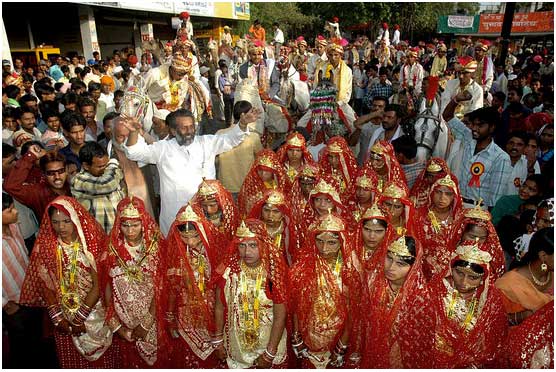
Child marriage and sexual abuse affect children all over the world. Child marriage is a horrific form of violence. It violates girls’ rights and negatively affects their ability to access education and health.
In Lesotho and many other countries, girls are forced to marry due to poverty, property grabbing, sexual abuse, premarital pregnancies and neglect. The laws that protect children are not effectively implemented and enforced.
We also need to stop thinking that punishing kids by hitting them is an acceptable discipline method. Just like child marriage, we need to realise that psychological abuse and corporal punishment of students is a problem in many countries, and maybe by working all together it will be easier to stop it.
Often governments have put some good laws in place, but they don’t always work because people don’t know about them. Adults need to be told about the new laws, otherwise they’re going to keep breaking them and the violence is only going to continue.
Children and teachers, for instance, need to know that there are rules about how children can be treated in schools. Sometimes the laws don’t match up, and so old marriage laws need to be updated so they don’t have lower ages than child protection laws.
When children get involved, they can help. For example, many children are born and live their life without having a birth certificate. Many countries make it hard for them to access their basic rights or go to school without a birth certificate.
In one village in Indonesia, many children were rejected when they wanted to register at school because they did not have a birth certificate. Thankfully, the child parliament was able to work with the village government to get a birth certificate for all children.
They arranged a “mass birth certificate” campaign and finally, 100% of the children in the village have birth certificates.
Children can help create the necessary changes in communities, but we need to be informed in order to do so. Child parliaments and youth groups can help raise community awareness about child protection laws and give us a space to share about our experiences.
Before sessions, not many girls knew that child marriage is against the law. After our meetings, children are more aware and have a better understanding of violence.
Every child has a right to participate. We hope our examples show how the voices of children are important and can help. If the government wants the world free from violence, involve us.
The main target of ending violence against children is a child. Therefore, the voices of children should be heard. If violence against children is stopped, we will have a better life, and we need this now, not in the future.
*As a general rule, World Vision doesn’t share the last names of children under 18.
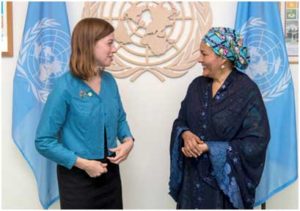
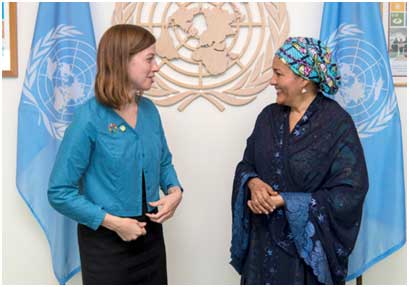
Deputy Secretary-General Amina Mohammed (right) meets with Li Andersson, Minister of Education of Finland.
18 July 2019. Credit: United Nations, New York
UNITED NATIONS, Jul 22 2019 (IPS) – Finland has garnered attention for its top-notch education, and the newly appointed Minister of Education for Finland is planning to continue with the success of her country’s education system through various and innovative approaches.
“In education, Finland has the lead according to many international comparisons,” Li Andersson, the newly appointed Minister of Education for Finland, said at a briefing at the Finnish consulate in New York on July 19.
Most recently, she pointed out, the London-based Economist ranked Finland as number one in delivering future-oriented skills through education.
“Thereby, Finland is best equipped to adapt education system to deliver skills for problem-solving and collaboration, as well as foster creativity, civic-awareness and participation,” she added.
The briefing was hosted by the Consulate General of Finland, with a guest speaker from Columbia University.
Andersson said investment in education is key to all of the successes “we have seen in Finnish society, so it is key for social cohesion, it is key for equality, and it is key for building economic progress and for economic growth.”
“The Finnish education system is one of the top performing education systems in the world,” she declared
Finland has been ranked as one of the happiest and successful countries in the world, and most recently having been ranked as the number one country for higher education by The Economist.
And in terms of data, in results released by the Programme for International Students Assessment (PISA), a test taken by pupils across the globe, Finland scored 550 points higher than any of their counterparts, including Sweden, Norway and the US, among others.
When asked whether the size of small schools that are abundant in Finland have anything to do with Finland’s success, Dr. Samuel Abrams, Director of the National Center for the Study of Privatization in Education at the Teachers College, Columbia University, told IPS: “I would not focus on the size of schools. That is not, as I said, a Finnish innovation”.
He said there has been a robust movement for small schools in the United States for a long time with many fine examples of excellent small public schools across the country.
“I merely brought up small schools as a part of the recipe for excellent schooling in Finland that may be threatened by financial pressure, generated in part by pension obligations”.
Because the pension obligations in an aging country like Finland are substantial, he said, budget cuts must be found. “Some of those budget cuts mean merging schools to achieve economies of scale.”
However, in terms of what other countries, such as the United States should learn from Finland, he had this to say: “We should follow Finland in testing only small samples of students rather than testing all students”.
“Our approach forces teachers to teach to the test. As we test all students in reading and math in grades 3-8, we generate undue stress for students, teachers, and parents alike”.
Moreover, he pointed out, “in focusing on reading and math, we crowd out time for history, science, music, art, crafts, and physical education. And students need those subjects as well as plenty of play for a well-rounded education.”
“Second, we should follow Finland in preparing teachers with high-quality master’s programs in pedagogical theory and practice.
Third, we should follow Finland in paying teachers well and giving them significant autonomy,” he added.
“Finally, we should follow Finland in funding our schools fairly. That means more money per student at schools in disadvantaged neighborhoods, not less. We base funding on property taxes, which means wealthy districts have significantly more money to spend per pupil than poor districts”.
None of this is rocket science. But that does not make it easy.
“We must follow in Finland’s path in altering the way we think about children and their future. This requires, one, thinking about child development through the eyes of the child, which means a well-rounded curriculum; two, reconceiving our social contract to ensure a high-quality education for all children; and three, esteeming teachers as pillars of the community.” Dr. Abrams concluded.
With that said, the education system in Finland has much room for improvement. “We see growing disparities in the learning results.” Andersson said, in terms of learning results.
“There is a difference between boys and girls and also some growing regional differences, and also a stronger difference where the pupils home background will affect the learning results more than before.”
“Inequality hampers growth and otherwise,” she added.
To combat these worrisome findings, Andersson and the Finnish government have set three main priorities to be tackled in the coming years.
“The first of these priorities is raising the educational level of the whole population.” Andersson said.
“We are also seeing a tendency where we are seeing the growing level of education has actually stopped.” She went on to cite that the generation of the 1970’s, and in Finland it is the current generation that has the highest level of education.
“The second priority of the government is reducing inequality gaps in education referring to what I said about earlier about the worrisome trends, and the third priority is focusing on continuous education…. learning should be something that we do all the time, and we should have the possibility to engage in all the time, no matter whether if we are working or outside working life or studying.”
For raising the level of education, Andersson plans on ensuring that all students have a degree on the upper secondary level and plans on raising the amounts of adults on the third educational level (post-secondary education) to 50% by 2030.
In order to implement this, Andersson intends on devising a Road Map, and a document that will reach Parliament.
She also highlighted the importance of addressing the equality gaps and strengthening the whole Finnish education system, from early childhood education to primary school.
She also intends on raising the compulsory education age to 18 years old. “16% of the overt generations in Finland are without a degree on the secondary level.” She noted.
“We know that the employment rate of people with only primary education backgrounds is around 40% at the moment, and that has been going down all the time.”
She cited the changing labor market, and how that calls for a change in the education system.
In terms of closing education gaps, Andersson cited a significant focus on early childhood development, as that is key.
Such actions to help assist this goal is to reduce group sizes for children over 3 years old and ensuring that every child has the right to at least 40 hours a week to early childhood education and care “no matter if their parents are working or unemployed.”
Andersson is also piloting a two- year preschool to see how it will affect participation rates in early childhood care, as well as to observe the effects it will have on learning results in primary education.
Furthermore, Andersson plans on providing support for maternity and childhood clinics.
For continuing education and the future of work, Andersson is unsure, as the labor market is drastically changing but noted that “It is clear that the knowledge requirement will grow.”
“Education is the best tool we have, and we should think of it as an investment not an expenditure.” She concluded.
She added that students should “just focus on things you’re motivated about, not too get too stressed, I think it is a shame there is a lot of pressure on the students now, with their stress with finances etc.”
But she offered encouragement and stated that students should “not think too much about what government is saying about how fast you should study and finally, “use the possibilities you have at the university”
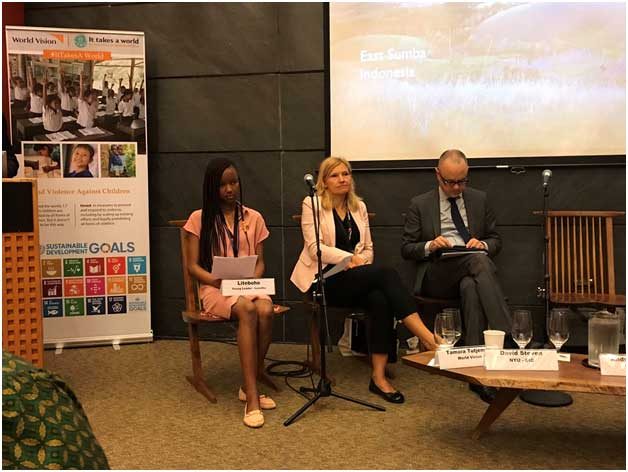
Tamara Tutnjevic Gorman is Policy Manager – Ending Violence against Children, World Vision
World Vision believes that it takes each and every one of us to end violence against children.
NEW YORK, Jul 16 2019 (IPS) – Despite what you might have heard, things are getting better, every year. We are making amazing progress on fighting diseases, reducing the preventable deaths of children, and investing huge amounts to advance medicine and knowledge and to create better living conditions.
However, this progress is too slow for some of the world’s most vulnerable children; those who have yet to experience the progress of the past 20 years. It’s hard to believe, but governments still allow violence against children to continue.
Approximately 1.7 billion children still experience some form of violence every year. To understand the reasons why, World Vision has investigated the commitments by 20 governments to address violence against children and has found that, while there has been tremendous progress in prohibiting violence, there are still too many gaps in legislation.
Cracks in laws, data, coordination, accountability and funding are becoming big gaps that ruin children’s lives and futures.
As a global community, we made exciting promises to end violence against all children 30 years ago when we adopted the United Nations Convention on the Rights of the Child. In those 30 years, we’ve developed laws and policies, come to better understanding about the complexity of violence and its forms, discovered and agreed to evidence-based solutions, and created a movement that has shone a spotlight on the issue.
We renewed our commitment to ending violence against children by committing to the Sustainable Development Goals four years ago. Yet, the inconsistent stats we have and self-reported data show that violence against children is not reducing at the pace necessary to meet the important target of ending all forms of violence against children.
This means today’s children, and their children, will live with violence’s life-long consequences – pushing them to life at the margins of society: severe health problems, difficulties acquiring an education and a decent job, and relationship issues. The lack of decisive action to end violence against children is simply not good enough.
Where legal bans exist, they do not yet cover all forms of violence. Ambitious declarations about National Plans of Action are not followed by the resources necessary to implement them. Fragmented initiatives are not enough to support victims, or more importantly, to ensure prevention.
There is some reporting on progress, but far too little new data to report on. And out of all the children experiencing violence, far too few have been consulted on the policies that affect their lives.
World Vision believes that it takes each and every one of us to end violence against children. A critical step in the right direction is for governments to make all forms of violence illegal and to put in place a comprehensive set of national laws and policies that provide for strong prevention and response measures.
The lack of commitment to zero tolerance is perhaps the most worrying. Government policies often turn a blind eye to socially or traditionally acceptable corporal punishment in schools, beating at home, child marriage and more.
Millions of children are unnecessarily drawn into a cycle of violence because of the failure to prevent it. When a child survives such violence and doesn’t get justice or appropriate support, the message they receive from authorities is that violence is permitted, or even condoned by those in power. This sends a powerful message that as society we have agreed to accept certain levels of violence.
Moreover, when families or communities experience crisis due to conflicts or natural disasters, the boundaries of what violence is considered acceptable tend to stretch. This makes it difficult to stop. Before we know it, violence can become a way of life. As a global community, we all must do more to plug the gaps that persist.
As governments at the High-Level Political Forum (July 16-19) present on progress so far and work on plans for the future, it is important that they address the seven cracks that have been identified in current efforts to end violence against children. This means they must commit to:
1. Prohibiting all forms of violence against children in all settings. 2. Investing in prevention programs and reporting mechanisms. 3. Being a global champion for the prevention of violence against children. 4. Increasing funding and transparency in budgets allocated to interventions to end violence against children. 5. Prioritising and investing in regular data collection. 6. Mandating, resourcing and planning for child consultations in policy development, reviews, monitoring and reporting. 7. Increasing government delivery of community education and awareness campaigns.
The 193 UN Member States have incredibly diverse energy, expertise and resources. We are calling for each and every one of them to join us and become champions for ending violence against children. It takes political leadership, and the time to drive action is now
To read the full report Small Cracks, Big Gaps: How governments allow violence against children to persist click here.
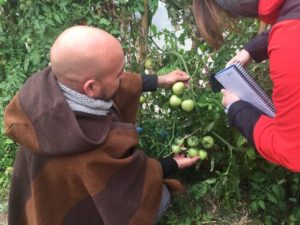
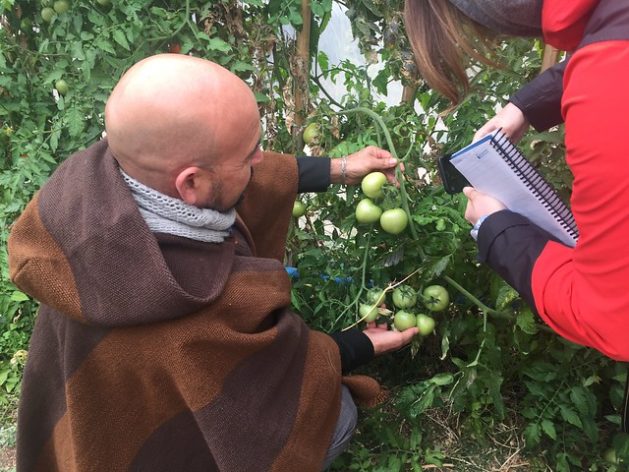
The principal of the Samo Alto rural school, Omar Santander, shows organic tomatoes in the greenhouse built by teachers, students and their families, who raise the crops irrigated with rainwater or recycled water in Coquimbo, a region of northern Chile where rainfall is scarce. Credit: Orlando Milesi/IPS
OVALLE, Chile, Jul 4 2019 (IPS) – Children from the neighboring municipalities of Ovalle and Río Hurtado in northern Chile are harvesting rain and recycling greywater in their schools to irrigate fruit trees and vegetable gardens, in an initiative aimed at combating the shortage of water in this semi-arid region.
And other youngsters who are completing their education at a local polytechnic high school built a filter that will optimise the reuse and harvesting of water.
“The care of water has to start with the children,” Alejandra Rodríguez, who has a son who attends the school in Samo Alto, a rural village on the slopes of the Andes Mountains in Río Hurtado, a small municipality of about 4,000 inhabitants in the Coquimbo region, told IPS.
“My son brought me a tomato he harvested, to use the seeds. For them, the harvest is the prize. He planted his garden next to the house and it was very exciting,” said Maritza Vega, a teacher at the school, which has 77 students ranging in age from four to 15.
The principal of the school, Omar Santander, told IPS during a tour of rural schools in the area involved in the project that “the Hurtado River (which gives the municipality its name) was traditionally generous, but today it only has enough water for us to alternate the crops that are irrigated, every few days. People fight over watering rights.”
The Samo Alto school collects rainwater and recycles water after different uses. “The water is then sent to a double filter,” he explained, pointing out that they have a pond that holds 5,000 liters.
The monthly water bill is much lower, but Santander believes that the most important thing “is the awareness it has generated in the children.”
“There used to be water here, and the adults’ habits come from back then. The students help raise awareness in their families. We want the environmental dimension to be a tool for life,” he said.
For Admalén Flores, a 13-year-old student, “the tomatoes you harvest are tastier and better,” while Alexandra Honores, also 13, said “my grandfather now reuses water.”
El Guindo primary school, located 10 kilometers from the city of Ovalle, the municipal seat, in a town known as a hotspot for drug sales, performed poorly in tests until three years ago.
At that time, the principal, Patricio Bórquez, and the science teacher, Gisela Jaime, launched a process of greywater recovery. They also planted trees and native species of plants to adapt to the dry environment of the municipality of 111,000 inhabitants, located about 400 kilometers north of Santiago.
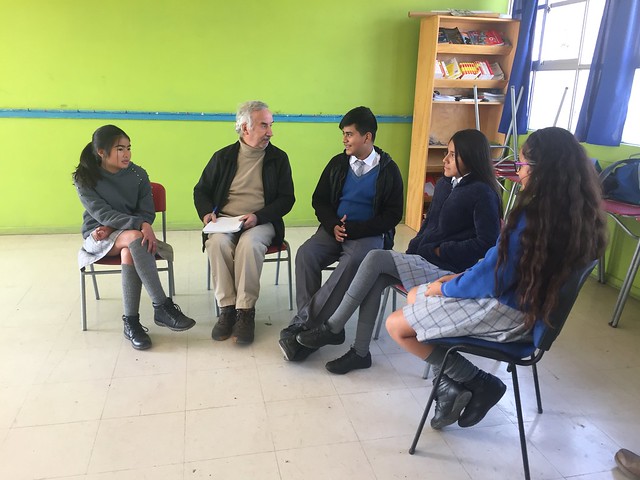
Four students, ages 13 and 14, talk to IPS about how the water reuse project has made them aware of the importance of taking care of water in the semi-arid territory where they live, in a classroom at the rural school of El Guindo, in the municipality of Ovalle, Chile. Credit: Orlando Milesi/IPS
“The project was born because there was no vegetation,” said the teacher. Today they recover 8,000 litres of water a month. “Teaching care for the environment provides a life skill,” said Bórquez.
“Our school had the stigma of being in a place rife with drug addiction. Today in Ovalle we are known as the school with the most programs. We placed third in science,” she said.
Jaime described the experience as “gratifying” because it has offered “tools to grow and create awareness among children and the entire community about the importance of caring for water and other resources.”
Geographer Nicolás Schneider, founder of the “Un Alto en el Desierto” Foundation, told IPS that his non-governmental organisation estimates that one million litres of greywater have been recovered after eight years of work with rural schools in Ovalle.
In this arid municipality with variable rainfall, “only 37.6 mm of rainwater fell in 2018 – well below the normal average for the 1981-2010 period of 105.9 mm,” Catalina Cortés, an expert with Chile’s meteorology institute, told IPS from Santiago.
Schneider describes the water situation as critical in the Coquimbo region, which is on the southern border of the Atacama Desert and where 90 percent of the territory is eroded and degraded.
“Due to climate change, it is raining less and less and when it does, the rainfall is very concentrated. Both the lack of rain and the concentration of rainfall cause serious damage to the local population,” she said.
Innovative recycling filter
With guidance from their teachers, students at the Ovalle polytechnic high school built a filtration system devised by Eduardo Leiva, a professor of chemistry and pharmacy at the Catholic University. The filter seeks to raise the technical standard with which greywater is purified.
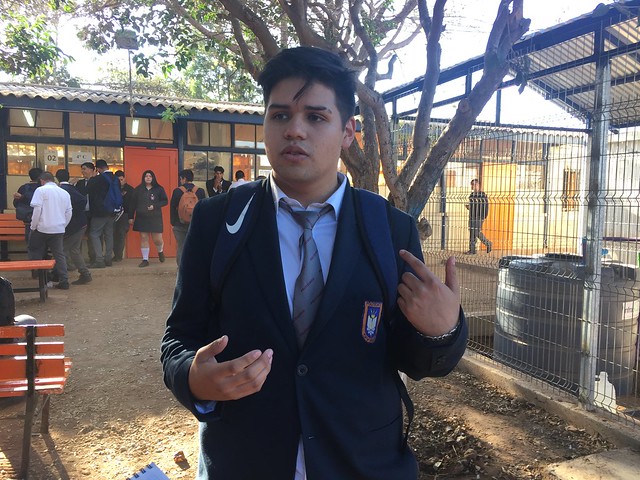
Duan Urqueta, 17, a fourth-year electronics student at the Ovalle polytechnic high school, describes the award-winning greywater filter he helped to build. Initially, units will be installed in eight rural schools in this municipality in northern Chile. Credit: Orlando Milesi/IPS
The prototype recycles the greywater from the bathrooms used by the 1,200 students at the polytechnic high school. This water is used to irrigate three areas with 48 different species of trees. Similar filters will be installed in eight rural schools in Ovalle.
The quality of the recovered water will improve due to the filter built thanks to a project by the Innovation Fund for Competitiveness of the regional government of Coquimbo, with the participation of the Catholic University, the “Un Alto en el Desierto” Foundation, and the Ovalle polytechnic high school.
The prototype was built by 18 students and eight teachers of mechanics, industrial assembly, electronics, electricity and technical drawing, and includes two 1,000-litre ponds.
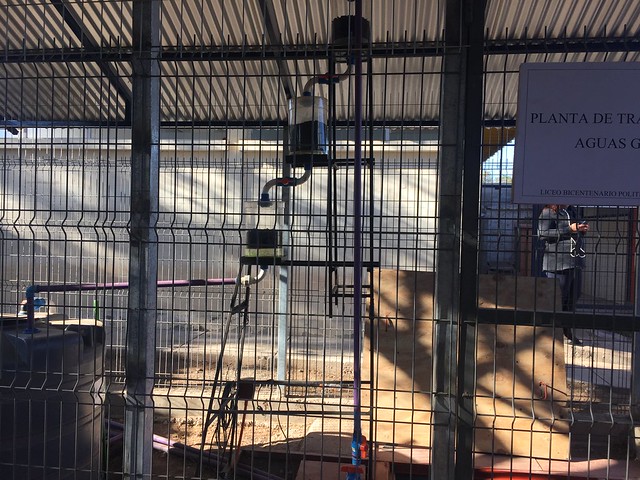
The primary pond holds water piped from the bathroom sinks by gravity which is then pumped to a filter consisting of three columns measuring 0.35 meters high and 0.40 meters in diameter.
“The filter material in each column…can be activated charcoal, sand or gravel,” said Hernán Toro, the head teacher of industrial assembly.
Toro told IPS that “the prototype has a column with zeolite and two columns of activated charcoal. The columns are mounted on a metal structure 2.60 meters high.”
View of the water cleaning filter designed at the Ovalle polytechnic high school and built by a group of teachers and students with funding from the government of the region of Coquimbo, in northern Chile. Each unit costs 2,170 dollars and it will promote water recycling in the schools in the semi-arid municipality. Credit: Orlando Milesi/IPS
The water is pumped from the pond to the filter’s highest column, passes through the filter material and by gravity runs sequentially through the other columns. Finally, the water is piped into the secondary pond and by means of another electric pump it reaches the irrigation system.
Duan Urqueta, a 17-year-old electronics student, told IPS that they took soil and water samples in seven towns in Ovalle and “we used the worst water to test the filter that is made here at the high school with recyclable materials.”
In 2018, “we won first place with the filter at the Science Fair in La Serena, the capital of the region of Coquimbo,” he said proudly.
Pablo Cortés, a 17-year-old student of industrial assembly, said the project “changed me as a person.”
Toro said the experience “has been enriching and has had a strong social impact. We are sowing the seeds of ecological awareness in the students.”
“It’s a programme that offers learning, service, and assistance to the community. Everyone learns. We have seen people moved to the point of tears in their local communities,” the teacher said.
Now they are going to include solar panels in the project, which will cut energy costs, while they already have an automation system to discharge water, which legally can only be stored for a short time.
Eight schools, including the ones in Samo Alto and El Guindo, are waiting for the new filters, which cost 2,170 dollars per unit.
Schneider believes, however, that at the macro level “water recycling is insufficient” to combat the lack of water in this semi-arid zone. And he goes further, saying “there is an absence of instruments for territorial planning or management of watersheds.”
“Under the current water regulatory framework, the export agribusiness, mainly of fruit, has taken over the valleys, concentrating water use…and the government turns a blind eye,” he complained.
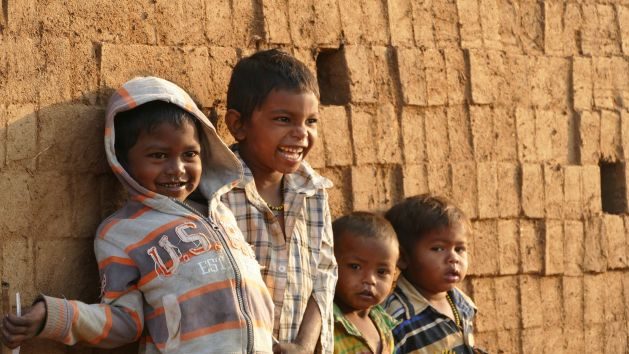
When we say that children aren’t learning, what we mean is that they are not fitting into our assessment of their learning outcomes | Picture courtesy: Nilesh Nimkar
THANE, MAHARASHTRA, India, Jun 6 2019 (IPS) – When we look at learning outcomes for children, we only look at standardised tests, ignoring any indigenous knowledge, language, or problem solving strategies they might have.
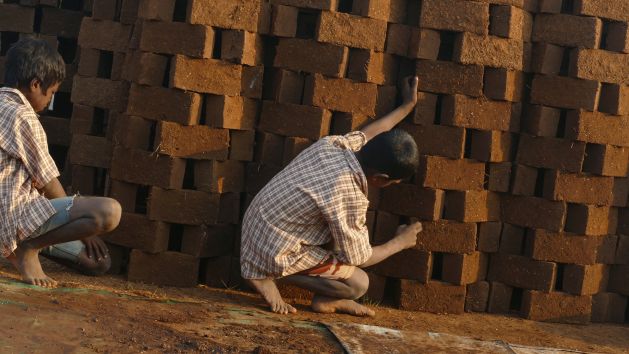
The brick kilns of Sonale were bustling with activity—children running around, indigenous technology being used, and lots of mathematics being done. I recently went there after a teacher from the nearby primary school approached our nonprofit, Quest, because the children living there were simply not learning. The concern was, if they didn’t even know their multiplication tables, how would they cope in classes V, VI, and VII?
So I went to see for myself. I asked these children, “To make the mortar for the bricks, how many pits have been dug?
“On one side 11; another side 12”
They also told me they would put three containers of raw material in each pit. So I asked them how many containers they would need in total, and after running off to count them, they came back with the right answers. They could also explain how they arrived at those numbers. What I found was that they were counting in threes. Not the way one recites the tables in the schools, but visualising it in their mind.
Clearly, these children knew how to multiply. That they failed to memorise their tables was beside the point. They had understood the concept and had demonstrated a strong meta-cognitive ability when they explained how they arrived at the answer
Clearly, these children knew how to multiply. That they failed to memorise their tables was beside the point. They had understood the concept and had demonstrated a strong meta-cognitive ability when they explained how they arrived at the answer. In my further conversations, I was amazed to see the kinds of calculations the children at the brick kilns did. For instance, 13 multiplied by 11 was done mentally because they were able to understand it within their own context (that of the brick kiln).
Standardised testing disadvantages marginalised children
This example illustrates one of the biggest challenges of our schools today—standardised assessment—which further disadvantages marginalised children. These children have a different type of cultural capital that schools and tests hardly recognise.
Western research in the field of math pedagogy points to the importance of children’s indigenous knowledge and strategies in solving problems and considers them to be the starting point for sound understanding of elementary mathematics. But what are those indigenous strategies in the Indian context? We still don’t know much about them. And our lack of knowledge results in us asking these children to run an unfair race.
Today, when we say that children from marginalised communities aren’t learning, what we mean is that they are not fitting into our assessment of their learning outcomes. By completely ignoring their indigenous knowledge, language, and problem-solving strategies, we have so far continued to focus on what they don’t know, and never paid attention to what they do know.
The process tells us more than just the outcomes
I do not deny the necessity of having some common indicators to understand the status of education in a given cluster, block, district, or state. But setting and chasing these indicators mindlessly could be dangerous.
Take for example, an encounter I had at an SSC exam centre in a rural school a few years ago. While I was visiting, I saw that the teachers were openly giving students answers to questions while they wrote their exams. When I asked why this was happening, a teacher said to me, “These children are weak from the beginning. It is almost impossible that they pass the exam on their own. If they fail, it will affect the result of our school and this would create a lot of trouble for us.”
This encounter is a classic example of what will happen if we neglect the process of learning and just focus on the numerical indicators of success. Our belief tends to be that if we can control learning outcomes, the quality of education will improve. But children can rote learn, or use unfair ways to pass their exams—we have no system that can check it at scale. What’s more, we are forgetting to track whether or not these children truly understand what they’ve been taught.
Ever since the ASER and other such reports have been published, we’ve been talking about how poor the learning outcomes are. But what have we really done to change things? We have been experimenting with examinations more than the actual process of learning, finding newer and newer ways to test the learning outcomes. But, if a pipe is choked, no matter what bowl you put under the opening, no water will drip into it. Similarly, no matter what exams, standard tests, and evaluation tool we use, only a little will change if we fail to address the core issues related to the process of learning.
“What I found was that they were counting in threes. Not the way one recites the tables in the schools, but visualising it in their mind” | Picture courtesy: Nilesh Nimkar
What needs to be done
1. Strengthen the process, invest in teachers
One of the positive outcomes of the Right to Education (RTE) Act is that it improved enrolment rates. But we know that it’s not enough to get children into schools. We need to alter our schools to meet children’s needs. If we want to set the process of education right, we have to strengthen its most impacting factor, the teacher.
Teacher education and ongoing teacher professional development are areas where we haven’t paid much attention. Instead of offering our teachers quick fixes to the challenges they face, we need to begin working with, and for our teachers.
One example of how to do this could be through a technology based distant mentoring system for teachers working across geographies. Quest, the nonprofit I run, has a system like this on a much smaller scale—here, teachers send audio recordings of their classroom activity to mentors (experienced teachers, teacher-educators, or researchers in the field of pedagogy), who then provide them with ongoing feedback to help them fine-tune their skills. This type of support system needs to be created on a larger scale.
2. Change the way we test
We need to alter the tools and parameters we use to assess success. We had a chance to do this when the idea of continuous comprehensive evaluations was introduced. However, the teachers and education community at large could not free themselves from the idea of examinations, and we lost a golden opportunity to bring our focus on to the process.
In a country as diverse as India, the assessment framework could be common for all. But the actual tests should be local and culturally appropriate. For example, I have seen assessment tests that show a picture of a well-maintained French garden or a city park, expecting a rural child to talk about it. In this situation it is obvious that the child will show poor oral expression.
Or yet another example is that of asking children to write words only from the ‘standard’ language—when in reality, Marathi spoken in different parts of Maharashtra is not the same. But normally the assessments are not sensitive to this regional variation, which means that children with a home language that is different than the standard variant of Marathi will always perform poorly.
The question we must ask ourselves is, do we want to make the education system more inclusive, or do we want to use it as a sieve to weed out the ‘weaker’ children? We need to design an overarching framework and build a bank of regionally, culturally appropriate testing items. Unless we do this our focus will always remain on what children don’t know.
Nilesh Nimkar has over 20 years’ experience in the field of early childhood education, elementary education, teacher education and curriculum development. He has initiated several innovative programs for teachers and children, specially in the rural and tribal areas. He has received the Maharashtra Foundation Award for ‘Outstanding social work in the field of education’.
NEW DELHI, May 6 2019 (IPS) – Communities are treated as passive recipients, giving them no say in the functioning of their schools. Here’s why this needs to change.
During our work with people living around the Ranthambhor National Park on issues of conservation, livelihoods, and eco-development, a constant question we were asked was how long we thought we could continue helping them. And then, an accompanying question — would their children never be in a position to help themselves? To advocate for and implement the change they wanted to see?
People had been led to believe that sending children to school was a precondition for a better future. Despite this, what they kept seeing was that the education system accessible to them was not equipping their children with the skills and abilities that they required to negotiate better futures for themselves.
Poor solutions for poor people
Working in Sawai Madhopur made us painfully aware of the community’s past experiences with education. Over time they had experienced the Shiksha Karmi Programme (which trained daughters-in-law to run schools), and the Rajiv Gandhi Pathshalas (which trained a young person who had passed Class 10, to run schools), not counting their countless experiences with government schools in the larger villages, most of which were sub-optimal.
When we look at the pitfalls of the government schooling system — be it teacher absenteeism, quality of textbooks, a lack of adequate infrastructure, constrained budgets and human resources — and the plans or schemes that have been created to address them, we realise that most of them could be categorised as ‘poor solutions for poor people’.
People often believe that the problems in the education space have more to do with curricula or pedagogy, or with the capacity of teachers. We disagree. The main issue is that today, communities are missing from the school ecosystem.
The current school system has made communities passive recipients of whatever the government tosses at them, giving them no say in the functioning of the school. It does not work with the community to help them actively engage with the process.
People don’t understand the gap between their aspirations and reality
The idea that any kind of education should lead to a job (preferably a government one) is prevalent amongst the communities we work with. However, what is less clear is how exactly that will happen, and what the probability is of it happening at all.
People had begun to realise that their education system was leaving children under prepared – they may have completed class 10 or 12, but their capacities and skill sets were far lower than they should have been – making it impossible for them to find the job they dreamed of, or continue on an educational path that would get them there.
What’s worse, by dedicating most of their time and resources to school, these children were sometimes unable to take up their traditional occupations – be it in agriculture or livestock rearing – making them incapable of earning a substantial income.
In such a situation, with huge gaps between their reality and aspirations, young people often found themselves helpless. There was scarcely anyone in the village who could have told them what needed to be done to become a doctor, engineer, bureaucrat, lawyer, entrepreneur – or what it entailed.
Despite this, children would go through their schools and come to urban centres looking for opportunities – be it that elusive government job or being a professional. It was only upon reaching the cities that they would realise how under-prepared they were, and as a result end up taking whatever work they could get–as waiters, drivers, cleaners, helpers, construction workers and similar positions in the informal sector.
It is no surprise then, that when it came to education, people in the community were losing faith in government schools.
Communities are the main stakeholder in their education
People often believe that the problems in the education space have more to do with curricula or pedagogy, or with the capacity of teachers. We disagree. The main issue is that today, communities are missing from the school ecosystem.
The community is the biggest stakeholder in the education space, and they need to be treated as such. People need to have a real idea of what they can expect from the system, and they need the system to be accountable to them. This has never happened.
So while there is plenty of work being done to train teachers, help principals, build the skills of School Management Committees (SMCs), design curriculum and change pedagogy, there is not enough being done with parents and community members. Even though parents make up the bulk of the SMC, they tend to be involved only in issues related to infrastructure or for instance, looking at teacher attendance or organising events – essentially any activity that is easy to monitor and does not demand engagement in processes.
It is time that we understood that education is about creating the right ecosystem for learning to happen, and that a village and its community are part of that process. When families have a better understanding of learning processes, they will also ensure that the home environment provides the right encouragement. When community members are able to offer their knowledge—as farmers, mechanics or officers in government—to students, they are teaching children about different possibilities in their future. It is only through involvement of the community that people will learn to ask the right questions, to seek accountability from the system. SMCs, being a subset of the community, offer a channel to do this. And if the community is aware, the SMCs will also function well.
For change to occur, communities must be more aware, and in charge of their education.
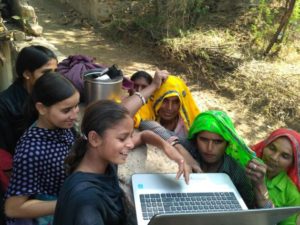
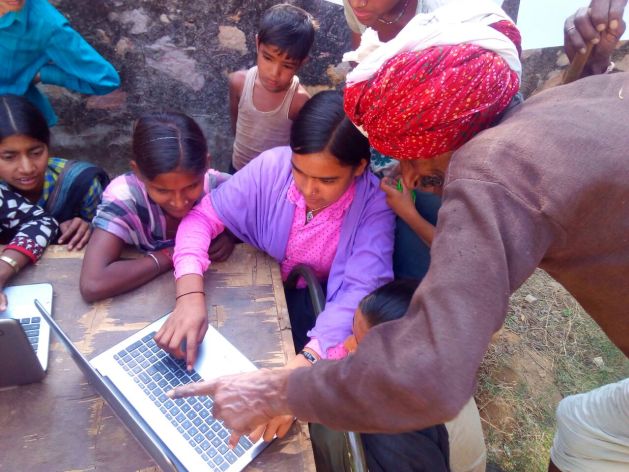
Photo Courtesy: Sachin Sachdeva
Working with communities to improve the education system
Having said that, we have to keep in mind that today, most communities, having been passive recipients of education thus far, are unprepared to challenge the system. It is therefore essential that we work to change this.
Based on our work at Gramin Shiksha Kendra (GSK) – an organisation which works with communities to enhance the quality of education in government schools – over the last 14 years, here are some suggestions on how this can be done:
1. Give them positions of seniority/power
Include members of the local community in your organisation board and involve them in the decision making. For example, at GSK we have people from the community on our board – some of them are parents who missed the opportunities of a quality education for their children, and two of them have never been to school but bring in their insights, wisdom and understanding of the local context.
These community members have guided and helped the organisation evolve its strategies, brought concerns and aspirations of the people to the board, and cautioned us against taking decisions that might not have the right impact.
2. Change your metrics of success
For example, we have kept the strength and management capacities of the school management committees as our apex indicator of success/failure, rather than only focussing on learning outcomes. We believe that when the schools and government-appointed school teachers become accountable to the SMC, and the SMC is in a position to guide and manage, the initiative will have succeeded.
3. Involve them in the work being done
Members from the community are invited to teach in the schools as guest teachers. Their experiences add to the curriculum of the school and are adapted for the schools. To be a teacher is still a valued profession, which gives parents a sense of importance and respect in the area.
Additionally, in an attempt to create a community-led ecosystem for education, we have an annual education festival called Kilol in our villages. The village community takes responsibility to organise Kilol’s and GSK shares, through exhibits and processes, our ways of teaching science, language, math, as well as the importance of components like pottery, sport and carpentry. The festival gives everyone in the community an opportunity to celebrate learning and understand what happens in school.
4. Give the initiative that is for them, to them
Our latest attempt is in handing over one of the schools that GSK set up back to the community to manage. That is when the school will become truly community-owned and community-managed.
We made this possible by, over the last 14 years, giving different members from the community a chance to be a part of the SMC. This has resulted in over 35 members in the community who have at one point or another been members of the SMC.
Because of their experience, the SMCs will soon be able to take over the management of the school and run it. GSK plans to facilitate this process and will help the SMC and the community evolve a future course of action – whether that leads to a science education initiative in the area, a comprehensive school, or an outreach programme.
This is important, as it defines our education initiative in the area. We don’t intend running the schools for ever, we want the community to take over. This will be our biggest success and we will continue providing them the technical support – or any other support that they may require. Most importantly, by giving the school back to the community, we are giving power back to the people – which is where it should be.
Sachin Sachdeva is a Co-Founder of Gramin Shiksha Kendra, www.graminshiksha.org.in , an organisation which works with communities to enhance the quality of education in government schools. Sachin has worked with development initiatives over the past 25 years and has been working with communities to help them look at their futures from a position of strength. GSK works with over 70 schools around the Ranthambhor National Park and along with the community runs three schools, one of which has been set up in a rehabilitated village. He is currently Director of the Paul Hamlyn Foundation’s India programme.