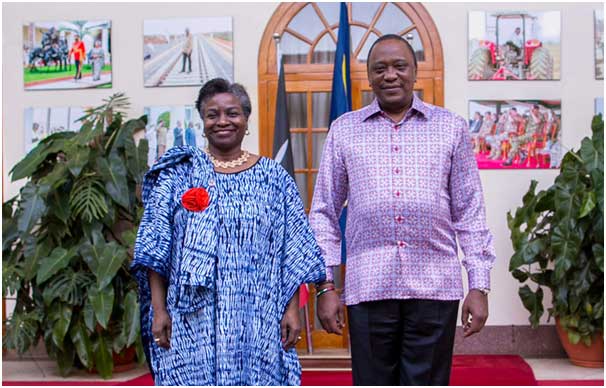
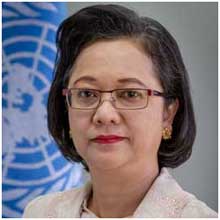
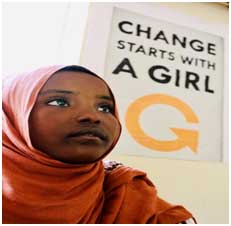
Kenyan President Uhuru Kenyatta hailed the strong partnership between his government and UNFPA during a meeting with UNFPA’s Executive Director, Dr. Natalia Kanem in March 2019, which will jointly convene the ICPD 25 from 12 to 14 November 2019 along with the Government of Denmark. Credit: PSCU
NAIROBI, Kenya, Nov 8 2019 (IPS) – As we count down the remaining days to the opening of the Nairobi Summit or the International Conference for Population and Development(ICPD), I am confounded by how much humanity has managed to simultaneously empower more women than at any other time in history, while at the same time failing to see that ‘women’s issues’ are actually ‘everyone’s issues’.
That countdown evokes memories of my own grandmother, who followed a common trend in India at the time, dropping out of school to get married and give birth to her first child at age 11. In many parts of the world, girls have over the years faced unthinkable obstacles while trying just to get an education, often jeopardizing their personal safety and risking being ostracized by their families and communities.
It wasn’t until a mere 25 years ago at the ICPD in Cairo that the world agreed that population and economic development issues must go hand in hand, and that women must be at the heart of our efforts for development.
Back then, governments, donors, civil society, and other partners made commitments to reduce infant and child mortality, reduce maternal mortality, ensure universal education, and increase access to sexual and reproductive health and rights, amongst many others. These commitments were a massive step forward for the rights of women and girls.
At the Conference in Nairobi, we all have an opportunity to repeat the message that women’s empowerment will move at snail-pace unless we bolster reproductive health and rights across the world. This is no longer a fleeting concern, but a 21st century socio-economic reality.
We can choose to take a range of actions, such as empowering women and girls by providing access to good health, education and job training. Or we can choose paths such as domestic abuse, female genital mutilation and child marriages, which, according to a 2016 Africa Human Development Report by UNDP, costs sub-Saharan Africa $95 billion per year on average due to gender inequality and lack of women’s empowerment.
Fortunately, the world has made real progress in the fight to take the right path. There is no lack of women trailblazers in all aspects of human endeavour. It has taken courage to make those choices, with current milestones being the result of decades of often frustrating work by unheralded people, politics and agencies.
Leaders like the indefatigable Dr. Natalia Kanem the Executive Director of UNFPA and her predecessors, supported especially by the Nordic countries, are pushing the global change of paradigm to ensure we demolish the silo of “women’s issues” and begin to see the linkages between reproductive rights and human prosperity.
Numerous studies have shown the multi-generation impact of the formative years of women. A woman’s reproductive years directly overlap with her time in school and the workforce, she must be able to prevent unintended pregnancy in order to complete her education, maintain employment, and achieve economic security.
Denial of reproductive health information and services places a women at risk of an unintended pregnancy, which in turn is one of the most likely routes for upending the financial security of a woman and her family.
A lot has been achieved since the years of my grandmother, when girls were expected to be demure and remain in the background. In many places the current teenage girl believes that every door is open to them; they can rise to any heights.
Yet in a lot of other countries, girls are up against a system that seems rigged against them for the long-term. These are countries where greater leadership and the right policies are sorely missing; where women and girls are robbed of the education they deserve and the jobs they need to lift themselves and their families out of poverty; where they are victims of sexual and physical abuse in their own homes or sold into child marriage.
As the UN Resident Coordinator to Kenya, I am privileged to serve in a country, which is hosting this very important conference. It has shown leadership to advance the cause of women’s right-from criminalizing female genital mutilation to stepping up the fight to end child marriage and pushing hard on improving reproductive, maternal and child health.
When the ICPD opens in Nairobi on 12 November 2019, I wonder how my grandmother’s life might have been different if she had been able to learn how to read and write and achieve her full human potential, but also appealing to all Governments to work towards giving half the world population the final and absolute control over their own bodies.
Stefanos Xenarios is a Professor at Nazarbaev University, Kazakhstan and co-editor-in-chief of the Central Asian Journal of Water Research; Iskandar Abdullaev is Deputy Director, CAREC Institute, China and Vladimir Smakhtin is Director, UN University Institute for Water, Environment and Health, Canada and series editor of the Routledge publishers’ Earthscan Series on Major River Basins of the World, in which the Aral Sea Basin Book is the latest addition.
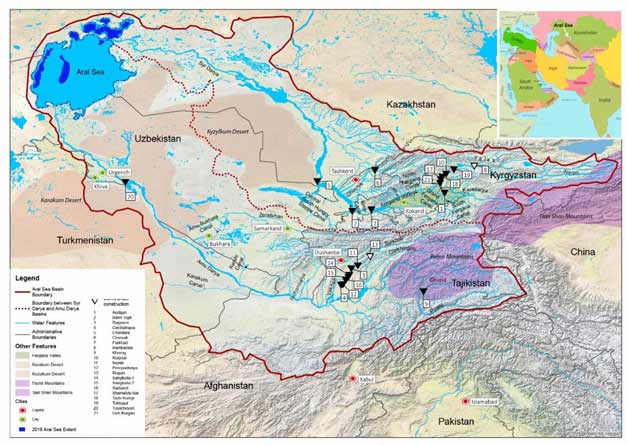
The Aral Sea Basin, defined in red, straddles six countries in Central Asia. See detailed map in full at http://bit.ly/2BQPpRm. Credit: UNU-INWEH
NUR-SULTAN CITY, Kazakhstan, Nov 7 2019 (IPS) – The water resources in Central Asia’s Aral Sea Basin support the lives and livelihoods of about 70 million people — a population greater than Thailand, France, or South Africa.
And unless well-funded and coordinated joint efforts are stepped up, with competition replaced by cooperation, ongoing over-withdrawals compounded by climate change will cause dangerous water shortages in this huge, highly complex watershed spanning six nations: Afghanistan, Kazakhstan, Kyrgyzstan, Tajikistan, Turkmenistan, and Uzbekistan.
That’s the key message of a new book co-authored by 57 regional and international experts from 14 countries and the United Nations, who spent years examining a suite of challenges in the Aral Sea Basin.
The new book assembles the views of nearly all major regional and international experts on the great challenges faced in the Aral Sea Basin. They include three co-authors from the UN University’s Institute for Water, Environment and Health, in Hamilton, Canada.
And almost half of the authors are based in Central Asia, creating a unique blend of regional and international voices and expertise on these critical issues.
The Basin’s two major rivers, the Amu Darya and Syr Darya, discharge now only about 10% of what flowed into the Aral Sea until the 1960s, shrinking the sea by more than 80 percent — “one of the world’s most severe and emblematic environmental disasters.”
Freshwater is key to food, energy, environmental security and social stability among the six Aral Basin countries. And given the countries’ prospective economic and population growth, reliance on water resources will increase, compelling cooperation in sharing benefits and reducing costs.
Intensive, wasteful irrigated farming when the nations were part of the Soviet Union was the main cause of the Aral Sea drying up and irrigation continues to consume about 90 percent of the total water withdrawal in the Basin, with agriculture contributing from 10 to 45 percent of GDP, and 20 to 50 percent of rural employment.
Most irrigation, hydropower and other water-related infrastructural systems and facilities are in transition, a blend today of past and present. Unfortunately, the existing observational meteorological and hydrological networks in the Basin, which declined in the 1990s when the Soviet period ended, are insufficient to support informed water management, and regional water data sharing is suboptimal.
Degradation of land and water are among the major hindrances to sustainable development in the region, with land degradation alone estimated to cost about US$3 billion of losses in ecosystem services annually.
There has been uneven progress across the countries on the Sustainable Development Goals (SDGs), and particularly Goal 6 (Clean Water and Sanitation), with contrasting progress also between urban and rural populations within each nation, most particularly Afghanistan.
The new book suggests a number of interventions and initiatives to end and reverse deterioration of the Aral Basin. For example, if existing large hydropower projects were managed in a collaborative manner, they can bring all countries multiple benefits, including improved reliability of supply and availability of water for agriculture, domestic use and electricity generation.
Monitoring of snow and glaciers in high altitude mountain areas, as well as permafrost, is essential for sound estimates of water availability and water-related hazards. Such systems need to be re-installed.
Also needed: institutions for decentralized management of natural resources, such as water user associations to promote cooperative, sustainable, intra-regional management between upstream and downstream countries and integrated rural development approaches.
Existing regional frameworks must either be reformed or replaced by new mechanisms of cooperation in order to successfully translate political will into highly effective, integrated regional water management.
Reforming the water sector, however, goes well beyond new policies and initiatives, updating the legislative framework, and building new institutions. A key challenge is to achieve continuous, strong, high-level political engagement throughout the Basin countries, the active participation of stakeholders, and technical and financial support.
The Aral Basin’s many water-related issues must be addressed jointly by all involved states within the concept that water, energy, and food issues represent a critical, interlinked nexus of needs.
Major geopolitical and economic development interests are placing increasing pressure on countries of the Basin to end resource competition and find a way to closer cooperation and effective pursuit of their shared interests.
Farhana Haque Rahman is Senior Vice President of IPS Inter Press Service; a journalist and communications expert, she is a former senior official of the United Nations Food and Agriculture Organization and the International Fund for Agricultural Development.
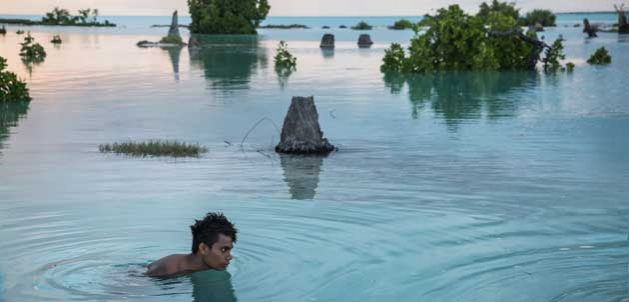
The Pacific island is one of the countries worst affected by sea-level rise. Credit: UNICEF
ROME, Oct 31 2019 (IPS) – Barely a week passes without alarming news of the most recent scientific research into the global climate crisis compounding a growing sense of urgency, particularly the impact on small island states from rising sea levels and extreme weather.
Latest findings suggest that several hundred million more people than previously thought are at risk of coastal flooding due to climate change. Climate Central, a non-profit research and news organisation, found data used in past calculations overstated the elevation of many low-lying coastal communities.
And for the people of the Bahamas who had just endured Hurricane Dorian, the most intense tropical cyclone on record to hit their islands, it came as little surprise when the UN Intergovernmental Panel on Climate Change (IPCC) soon after released its landmark special report on the planet’s oceans and frozen regions, warning of “multiple climate-related hazards” for coastal regions.
“The ocean is warmer, more acidic and less productive,” the IPCC report stated.
The “Blue Pacific” concept sees the island states establishing themselves as “large ocean states” and guardians of the region rather than “small island states”
Oceans are absorbing heat twice as fast as just two decades ago, with hundreds of billions of tonnes of melting ice raising sea levels at an average rate of 3.6 millimetres a year, more than twice as fast as during the last century.
If greenhouse gas emissions “continue to increase strongly”, the IPCC report said, then levels could rise more than a metre by 2100.
Some island states in the Pacific face becoming uninhabitable. As UN Secretary-General Antonio Guterres noted while visiting Tuvalu, the sea level rise in some Pacific countries is four times greater than the world average, posing “an existential threat” to several island states.
Against this background the UN COP25 climate change summit scheduled to be held in Santiago in December had been dubbed the Blue COP, with expectations of a focus on the oceans and commitments of aid to poorer nations most at risk. So it comes as a serious blow that President Sebastian Pinera has just announced that Chile is calling off its hosting of COP25 because of mass anti-government protests rocking the country.
While the UN anxiously looks for an alternative venue (and Santiago had been the second choice after Brazil’s newly elected president, Jair Bolsonaro, pulled out of hosting it), the small island states of the Pacific will be making their voices heard as they seek to confirm themselves in the role of custodians of the world’s largest region.
It is an existential struggle but it is not a blame game however.
As Micronesia’s President David Panuelo declared last week in The Diplomat: “Rather than point fingers, we must all point the way toward solutions.”
“No single country created this problem, and certainly a small country like ours is bearing far greater responsibility for the solution than we ever contributed to the crisis in the first place. But we sit shoulder to shoulder in a coalition which has set a goal of growing economies while achieving 30 percent marine protection globally,” he wrote in a plea for action to save the oceans.
“Everyone must do more when garbage patches larger than entire countries float in the Pacific, and rising carbon dioxide levels increase ocean acidity and devastate coral reefs and marine life.”
The Pacific Community, the principal scientific and technical organisation in the region and founded as the SPC in 1947, counts 22 Pacific island countries and territories among its members who see themselves as the “tip of the spear” in terms of the impacts of climate change and their efforts to adapt.
SPC has recently established the Pacific Community Centre for Ocean Science (PCCOS) to provide the framework to “focus its scientific and technical assistance on providing solutions that will build, sustain, and drive blue economies in Pacific Island countries and territories” and support SDG 14 of conserving and sustainably using oceans and marine resources.
The SPC’s new and growing Pacific Data Hub is a public resource of data and publications on the Pacific across key sectors, from education and human rights to oceans and geoscience.
Such initiatives reflect how Pacific Island states have grown more assertive in their diplomacy, becoming more active in global multilateral forums and using their voices and votes for increased leverage rather than the old reliance on support from Australia and New Zealand.
The “Blue Pacific” concept sees the island states establishing themselves as “large ocean states” and guardians of the region rather than “small island states”. As stewards of the Pacific with their cultural identity shaped by the ocean, the Blue Pacific framework seeks to establish leadership on issues, with smart policies backed by scientific expertise and data.
As Micronesia’s president has reminded us, the climate crisis is neither abstract nor “tomorrow’s faraway challenge”. It is happening now and as the IPCC’s special report on the oceans and cryosphere warned in September the crisis is gathering speed, as seen in the recent acceleration of sea level rise.
In Antarctica the rate of ice loss tripled in the decade 2007-2016. May and August in 2019 were the warmest on record for the Arctic while this year saw the summer minimum extent of sea ice reaching a joint-second lowest in 40 years of satellite records.
As summarised by Carbon Brief, the IPCC warns that this accelerating ice loss, and the more rapid sea level rises it causes, will continue to gather pace over this century regardless of whether greenhouse gas emissions are reduced. The “likely” maximum rise of 1.1 metres by 2100 is some 10cm above the top-end estimate from its previous estimate, while a rise of 2 metres cannot be ruled out.
Such warnings were intended to provide input at COP25 for world leaders who face mounting calls to adopt more ambitious goals for carbon emission cuts. Those negotiations will not be happening in December in Santiago after all. An alternative must be found urgently.
Armida Salsiah Alisjahbana is Under-Secretary-General of the United Nations and Executive Secretary of the United Nations Economic and Social Commission for Asia and the Pacific (ESCAP).
BANGKOK, Thailand, Aug 28 2019 (IPS) – The past five years have been the hottest on record in Asia and the Pacific. Unprecedented heatwaves have swept across our region, cascading into slow onset disasters such as drought. Yet heat is only part of the picture. Tropical cyclones have struck new, unprepared parts of our region and devastatingly frequent floods have ensued. In Iran, these affected 10 million people this year and displaced 500,000 of which half were children. Bangladesh is experiencing its fourth wave of flooding in 2019. Last year, the state of Kerala in India faced the worst floods in a century.
Armida Salsiah Alisjahbana
This is the new climate reality in Asia and the Pacific. The scale of forecast economic losses for the region is sobering. Including slow-onset disasters, average annualised losses until 2030 are set to quadruple to about $675 billion compared to previous estimates. This represents 2.4 percent of the region’s GDP. Economic losses of such magnitude will undermine both economic growth and our region’s efforts to reduce poverty and inequality, keeping children out of schools and adults of work. Basic health services will be undermined, crops destroyed and food security jeopardised. If we do not act now, Asia-Pacific’s poorest communities will be among the worst affected.
Four areas of Asia and the Pacific are particularly impacted, hotspots which combine vulnerability to climate change, poverty and disaster risk. In transboundary river basins in South and South-East Asia such as the Ganges-Brahmaputra-Meghna river basin, floods alternate with prolonged droughts. In South-East Asia and East and North-East Asia earthquakes, tsunamis and landslides threaten poor populations in the Pacific Ring of Fire. Intensifying sand and dust storms are blighting East, Central and South-west Asia. Vulnerable populations in Pacific Small Islands Developing States are five times more at risk of disasters than a person in South and South-East Asia. Many countries’ sustainable development prospects are now directly dependent on their exposure to natural disasters and their ability to build resilience.
Yet this vicious cycle between poverty, inequalities and disasters is not inevitable. It can be broken if an integrated approach is taken to investing in social and disaster resilience policies. As disasters disproportionately affect the poor, building resilience must include investment in social protection as the most effective means of reducing poverty. Conditional cash transfer systems can be particularly effective as was shown in the aftermath of Typhoon Haiyan in the Philippines. Increasing pre-arranged risk finance and climate risk insurance is also crucial. While investments needed are significant, in most countries these are equivalent to less than half the costs forecast to result from natural disasters.
The use of technological innovations to protect the region from natural disasters must go hand in hand with these investments. Big data reveal patterns and associations between complex disaster risks and predict extreme weather and slow onset disasters to improve the readiness of our economies and our societies. In countries affected by typhoons, big data applications can make early warning systems stronger and can contribute to saving lives and reducing damage. China and India are leading the way in using technology to warn people of impending disasters, make their infrastructure more resilient and deliver targeted assistance to affected farmers and citizens.
Asia and the Pacific can learn from this best practice and multilateral cooperation is the way to give scale to our region’s disaster resilience effort. With this ambition in mind, representatives from countries across the region are meeting in Bangkok this week at the United Nations Economic and Social Commission for Asia and the Pacific (ESCAP) to explore regional responses to natural disasters. Their focus will include strengthening Asia-Pacific’s Disaster Resilience Network and capitalising on innovative technology applications for the benefit of the broader region. This is our opportunity to replicate successes, accelerate drought mitigation strategies and develop a regional sand and dust storm alert system. I hope the region can seize it to protect vulnerable communities from disaster risk in every corner of Asia and the Pacific.
NAIROBI, Kenya, Aug 8 2019 (IPS) – In 2019 a female scientist created an algorithm that gave the world the first ever images of a black hole. Working with a team of astronomers, physicists, mathematicians and engineers, a young woman led the development of a computer program that in her own words enabled them to “achieve something once thought impossible.”
Photo: Heshimi Kenya
During this same year, over 200 million women in developing countries will not have access to effective methods of contraception to delay or avoid pregnancy. Approximately 830 women a day will die during pregnancy or childbirth from preventable causes. And sexual and gender based violence including harmful practices like early marriage and female genital mutilation, will still plague millions of girls and young women. Girls and women denied basic human rights and robbed of their potential to achieve the impossible.
In 1994, the visionary Programme of Action was agreed to by 179 governments at the International Conference on Population and Development (ICPD) in Cairo, Egypt. The Programme of Action recognized that reproductive health and rights, as well as women’s empowerment and gender equality, are cornerstones of healthy robust societies that promote the well-being of populations and economic and social development of nations. Since ICPD, governments, civil society, youth networks have all worked towards decreasing maternal deaths, eliminating harmful practices and promoting gender equality.
The global community is now gearing up to mark 25 years since the historic ICPD through the Nairobi Summit on the International Conference on Population and Development, ICPD25 which will be held from 12-14 November 2019 under the theme “Accelerating the Promise”.
I am proud that my country Kenya, will be hosting this important Summit, which is aimed at mobilizing the political will, financial commitment and community support we need to fully realize the ICPD Programme of Action.
Indeed, by the time we leave Nairobi, we must ensure that everyone has agreed to play their part in reaching zero unmet need for family planning information and services, zero preventable maternal deaths, and zero sexual and gender-based violence and harmful practices against girls and women. Evidence shows that the benefits that would accrue from fulfilling the ICDP agenda would be far reaching in transforming lives and improving the wellbeing of families, communities, and nations.
Dr. Ida Odinga, EGH
In Kenya, significant progress in health care has been made with Universal Health Coverage(UHC) a top priority for the Government. Thanks to the leadership, passion and commitment of the First Lady of Kenya, Ms Margret Kenyatta through her Beyond Zero campaign there has been a significant drop in maternal and child mortality. We have to now go for zero deaths. Reproductive, maternal, neonatal, child and adolescent health is key to achieving UHC.
High rates of teenage pregnancy, take girls out of school and compromises their health. Young people face stark challenges in employment as 1,000,000 people enter a labor force that can only absorb 150,000 new entrants. Access to health services and information, school retention and quality education will help these young girls stay in school and lead healthy lives. These are among the issues that the Summit will address.
However, in order for the Nairobi Summit to be a game changer, we need to speak for those that can’t speak, speak for those who are not heard and to add our voices to those who continue to work for sexual and reproductive rights for all. We must reaffirm our commitments to the ICPD goals and Agenda 2030. We must absorb the lessons learned over the last 25 years and do better.
For Kenya, the Nairobi Summit provides a platform to showcase our Big Four Development Agenda aimed at accelerating socioeconomic transformation and economic growth by intensifying investments and programme actions on: affordable housing, food security, universal healthcare and manufacturing.
I am delighted that my country is partnering with UNFPA and the Government of Denmark to host the Nairobi Summit and reaffirm the global commitment to ICPD. This is a watershed moment as we are a mere 10 years away from our commitment to fulfill the SDGs.
I look forward to seeing all the participants in Nairobi and hope everyone will follow the proceedings of the Nairobi Summit and learn how we can all play a role in bringing about change and keeping the promise of ICPD. Ensuring that all women and girls can reach for the stars and achieve the impossible.
Dr. Ida Odinga, EGH is spouse of Rt Hon. (Eng.) Raila Odinga and a passionate campaigner of women’s rights.
ROME, Jul 23 2019 (IPS) – When all is said and done, it appears that Thomas Hobbes, the 17th century English philosopher who had a dire vision of man, was not totally wrong.
From the frivolous to the serious, in just a week we have had four items of news which would not happen in a normal world. An English porn beauty with 86,000 followers on social media has put bottles of the water she bathes in on sale at 30 pounds a bottle and has sold several thousand bottles.
Roberto Savio
A survey in Brazil found out that 7% of citizens believe that the earth is flat (40 percent of American schools teach that the world was created in a week, according to the Bible, so there cannot be ancient civilisations) Another survey, this time of members of the British Tory party, who seem likely to elect Boris Johnson as prime minister (not exactly a triumph of reason) are so in favour of a “hard” Brexit that they do not care if this means the exit of Scotland and the end of the United Kingdom. Finally, in order to win election, US president Donald Trump has made racism one of his banners and, in a country of immigrants, this has given him an increase of 5 points in opinion polls.
There are so many signs of barbarisation that they would fill a book… and, as Euripides famously wrote: Whom the gods would destroy, they first make mad.
It is not a popular task, but we have to look at the reality and observe that, in the most scientifically and technologically developed period of history, we are living in times of precipitous barbarisation.
Social inequality has become the basis for the new economy. People have now lowered their expectations and are prepared to work part-time in a precarious job, where young people (according to the International Labour Organisation) can hope for a retirement pension of 600 euro a month. This has been accepted by the political system. We even have a study from Spain according to which, in the present housing market, nearly 87% of people need 90% of their salary just to rent a house.
Today, for many, a salary means survival, not a dignified life. The new economy has developed the so-called gig economy: you work to distribute food, but you are a co-entrepreneur without any of the rights of an employee, for an amount that will never allow you to marry. Children have grown accustomed to look at phenomena such as poverty or war as natural. And now politics are not based on ideas but on how you can successfully exploit the guts of the people, waving banners against immigrants (when we are witnessing a rapid fall in the birth rate) and splintering countries between ”We” who represent the people and “You” enemy of the country. The United States is the best example, where Republicans consider Democrats enemies of the United States. And this brings us to a central question: have Trump, Italy’s Matteo Salvini, Brazil’s Jair Bolsonaro and company not been elected democratically? And they are the symptom or the cause of the “populocracy” which is replacing democracy?
It is not possible to offer a sociological or historical study here. Let us just use a bite: we have gone from the Gutenberg era into a new era – the Zuckerberg era.
Those who greeted the arrival of the Internet with enthusiasm also did so because it would democratise communication and therefore bring about greater participation. The hope was to see a world where horizontal communication would replace the vertical system of information which Gutenberg made possible. Information was, in fact, a support for states and business that used it to reach citizens, who had no recourse to feedback. With Internet, people could now speak directly throughout the world and the propaganda which accompanied its arrival was not considered relevant: it is not important to know, it is important to know where to find It. Well, we have all the statistics on how Internet has affected the general level of culture and dialogue.
The attention span of people has declined dramatically. The majority of Internet users do not stay on an item more than 15 seconds. In the last five years, book volumes have been shortened by 29 pages. Today, articles longer than 650 words are not accepted by columnists’ services. The last meeting of editors of international news agencies decided to lower the level of news from the level of 22 years to that of 17 years. In Europe, the percentage of people who buy at least one book a year now stands at 22% (in the United States it is now 10.5%). According to a recent study in Italy, only 40% of the population is able to read and understand a book. In the same country, 13% of libraries have closed in the last ten years. A very popular transmission in Spain was ”59 seconds” which saw a number of people debate round a table; at the 59th seconds their microphones would disappear. Today, the dream of a TV interviewer is that the person interviewed will give a shorter answer than the question. Newspapers are for people over forty. And there is a unanimous complaint about the level of students entering the university: not all are free from mistakes of orthography and syntax. And the list could continue practically ad infinitum.
The problem of barbarisation has major relevance for political participation. The Gutenberg generations were accustomed to dialogue and discussion. Today, 83% of Internet users (80% under the age of 21), do so only in the virtual world they carved out for themselves. People of Group A gather only with people of Group A. If they come across somebody from Group B, they insult each other. Politicians have been able to adjust rapidly to the system. The best example is Trump. All US newspapers together have a circulation of 60 million copies (ten million those of quality, both conservative and progressive). Trump has 60 million followers who take Trump’s tweets as information. The do not buy newspapers, and if they watch TV it is Fox, which is Trump’s amplifier. No wonder that over 80% of Trump’s voters would vote for him again. And the media, which have lost the ability to offer analysis and cover processes, not just events, take the easy path. Let us follow famous people and make the famous more famous. Analytical journalism is disappearing. In the United States it exists thanks to grants … in every European country, there are few quality papers left, and the largest circulation goes to tabloids which spare their readers the effort of thinking. The Daily Mirror in Britain and Bild in Germany are the best examples.
Internet has made everybody a communicator. This is a fantastic achievement. But in this increasing barbarisation, people also use the Internet for transmitting false information, stories based on fantasy, without any of the quality controls that the media world used to have. And artificial intelligence has been taking over, creating many false accounts, which now interfere in the electoral process, as was proven in the last US elections. We have to add to this that the algorithms used by the owners of the Internet aim to trap the attention of users in order to keep them as much as possible. This month, El Pais published a long study entitled “The toxic effects of YouTube”, where it shows how its algorithms push the viewer to items that are of fantasy, pseudoscientific and of great attraction.
This is due to the fact that the owners have become fabulously rich by transforming citizens into consumers. They find out our identity, and they sell it to companies for their marketing, and also for elections. Those owners have unprecedented wealth, never achieved in the real world: not only in that of production, but even in the world of finance, which has become a casino with no control. The entire world of production of services and goods, man-made, is now close to a trillion dollars a day; that same day, financial flows reach 40 trillion dollars. Jeff Bezos ‘s divorce gave his wife 38 billion dollars. That is equal to the annual average income of 20,000 dollars of 19 million people. No wonder that 80 individuals now possess the same wealth as 2.3 billion people (in 2008, they were 1,200 individuals).
According to historians, greed and fear are great engines of change in history. That was also true in the Gutenberg era. But now, they have triggered a combination of both in a short period of time. After the fall of the Berlin Wall, the doctrine of liberal globalisation arrived with such strength that Margaret Thatcher (who with Ronald Reagan ushered in the new vision of individual profits and elimination of social goods) famously talked of TINA: There Is No Alternative.
The entire political system, including Social Democrats, accepted riding a system of values based on greed and unfettered competition at individual level, at state level and at international level. It took twenty years to understand that the poor have become poorer, and the rich richer, and that states have lost much of their sovereignty to multinational corporations and the world of finance. It is worth noting that, in 2009, in order to save a corrupt and inefficient financial system, the world spent 12 trillion dollars (the United States alone, 4 trillion). Since that rescue, banks have paid the impressive amount of 800 billion dollars in penalties for illicit activities.
The financial crisis of 2009 has triggered a wave of fear. Let us not forget that until 2009, there were no sovereignist, populist, xenophobic parties anywhere, except for Le Pen in France. Soon old traps such as “in name of the nation” and “the defence of religion” were resurrected by politicians able to ride fear. A new scapegoat – immigrants – was found and populocrats are now undermining democracy everywhere.
Populocracy is the new wave. Former Italian prime minister Silvio Berlusconi ushered in a new language, and that language has now been updated by Salvini, Trump and so on. Twitter, Facebook and Instagram are the new medium and now the medium is the message. The old elite had not found a new language.
The Zuckerberg era is an era of greed and fear. Zuckerberg is now attempting to create a global currency, the Libra, to be used by his 2.3 billion users. Until now, states were the only entities able to emit money, a symbol of the nation. Zuckerberg’s currency is based entirely on the Internet and will have no control or regulations. In case of a default, we will have a world crisis without precedent. In the Gutenberg era, this was not possible.
But who has made able Jeff Bezos to give 38 billion dollars to a former wife? Who has elected Trump and Salvini and company, who speak on behalf of the nation and the people, and turn those who do not agree into enemies of the nation and the people, creating an unprecedented polarisation, accompanied by an orgy of revolt against science and knowledge, which have supported the elite, and must now be put aside for the good of people.
This process of barbarisation should not obscure an old proverb: every country has the government it deserves. It is called democracy. However, the traditional elite has no code of communication with the new era. The answer will come from citizen mobilization.
A young Swedish girl, Greta Thunberg, has done more with her stubbornness to raise awareness about impending climate change than the entire political system. Even Trump (albeit for electoral reasons) has now declared that climate change is important.
Today, there many “points of light“ appearing in the world. The elections in Istanbul are a good example, as are the mobilisation in Hong Kong, Sudan and Nicaragua, among many others. Let us hope we will reach a point where people will take the reins of the process and awake the world from the precipitous course of barbarisation. Even Thomas Hobbes concluded that humankind will always, soon or later, find the right path, and give itself good governance. He thought that an elite would always be able to lead the masses.
Well, elites are now the Greta Thunbergs of the world.
Publisher of OtherNews, Italian-Argentine Roberto Savio is an economist, journalist, communication expert, political commentator, activist for social and climate justice and advocate of an anti neoliberal global governance. Director for international relations of the European Center for Peace and Development.. He is co-founder of Inter Press Service (IPS) news agency and its President Emeritus.