LILONGWE-(MaraviPost)-The Centre for Democracy and Economic Development Initiatives (CDEDI) has renewed its call for a comprehensive review of all mining-related agreements and licences linked to Portland Cement Malawi Limited, citing alleged injustices, irregularities and possible corruption in the company’s operations at Chinkhumbe Hill in Balaka District.
Addressing the news conference on Thursday, November 6, 2025 in the capital Lilongwe Executive CDEDI Executive Director Sylvester Namiwa applauded President Peter Mutharika for the decision to ban the export of raw minerals, but stressed that the move should be followed by a review of all Minerals Development Agreements (MDAs) signed under previous administrations.
According to CDEDI, many of these agreements were questionable and not aligned with the best interests of Malawians.
The organisation claims the former administration was known for entering deals with “conmen and dubious investors,” resulting in communities suffering serious injustices.
The Chinese owned Portland Cement Malawi Limited, which bought shares in LaFarge Cement Company, is currently mining limestone at Chinkhumbe Hill in Senior Chief Nsamala’s area.
CDEDI says it began investigating the company after receiving complaints of unfair compensation, intimidation and lack of transparency from affected villagers.
A stakeholders’ meeting held on January 21, 2025 revealed that land compensation was not only meagre but had also been unlawfully reduced by 30 percent, allegedly due to the Ministry of Lands using Blantyre valuation rates instead of Balaka’s.
Balaka District Commissioner Tamanya Harawa later apologised for the misconduct.
Following demonstrations, Portland refunded the deducted 30 percent and added a 10 percent increase for the second phase.
CDEDI, however, noted that the Ministry of Lands, the Malawi Local Government Association and the Mining and Minerals Regulatory Authority initially defended the unfair compensation.
CDEDI further claims to have uncovered fraudulent compensation payments, including MK16 million allegedly paid to individuals who were not affected by the project, facilitated by Group Village Head Mchenga, who was later arrested by citizens for his role in the scheme.
Meanwhile, Village Head Ng’onga is said to have reported receiving death threats linked to the compensation controversy.
The organisation expressed concern that senior officials at Balaka District Council and some bureaucrats at Capital Hill appeared to shield Portland from accountability, prompting CDEDI to use the Access to Information (ATI) Act to demand documents.
Requests submitted to the Mining and Minerals Regulatory Authority on January 23, 2025 remain unanswered 10 months later.
CDEDI further alleges that Portland Cement is operating without conducting a mandatory Environmental and Social Impact Assessment (ESIA) as required under the Environmental Management Act of 2017.
Balaka District Council reportedly approved the company’s project after Portland submitted an outdated Environmental Impact Assessment report belonging to LaFarge and conducted in 2011. No committee member objected to the anomaly.
The organisation has since urged the newly-appointed Minister of Natural Resources, Energy and Mining, Jean Mathanga, to urgently visit the affected villages and ensure justice is served.
Share this:
Like this:
LikeLoading…
Discover more from The Maravi Post
Subscribe to get the latest posts sent to your email.
LILONGWE-(MaraviPost)-Youth and children are pushing for inclusion of their needs in the Malawi’s Nationally Determined Contributions (NDC) process towards climate change adaptation programme.
The children and young people drawn from Salima, Ntchisi and Lilongwe want authorities to address key priority areas in the midst of natural disasters including education, water and sanitation, health, protection and participation in decision making.
With support from NGO Coalition on Child Rights (NGO CCR) in collaboration with National Youth Network on Climate Change (NYNCC), this week children and young people presented the report to Environmental Affairs Departments (EAD) for action.
Gomani receiving the report from Phiri (in the middle from left to right)
Naomi Precious Phiri from Chinsapo Secondary School said, “It’s high time authorities could address our concerns amid effects of climate change including recent Cyclones Freddy that let’s many of us not attending classes.
“We want authorities to put mechanism that address challenges that come with natural disasters that lessons must not be disrupted”.
Phiri demands, “We need proper sanitation facilities, shelters that support us during disasters”.
Echoing the same, NGO-CCR National Coordinator Henry Machemba emphasized the need for authorities to address children and youths concerns.
Machemba the report presented to authorities must see support in the 3.0 Malawi’s NDC process as its going to be updated for action.
“Children, youths are raising important issues that needs authorities attention. We need a responsive leadership that put children, youth in the centre of program as the nation future lies in them.
“This is the reason we keep on supporting children, youth in raising their voices that authorities must address their concerns on times before further disasters strike”, assures Machemba.
In his response, Golivati Gomani EAD Principal Environmental Officer in the Ministry of Natural Resources, Climate Change, Energy and Mining observes that children and youths have valid concerns which authorities will swiftly address them.
Gomani hinted that youths will invited for a number of stakeholders meetings towards updating the NDC process for their concerns inclusion.
Share this:
Like this:
LikeLoading…
Discover more from The Maravi Post
Subscribe to get the latest posts sent to your email.
Mandeep Tiwana, Secretary General, CIVICUS Global Alliance. Credit: CIVICUS
BULAWAYO & BANGKOK, Oct 31 2025 (IPS) – From the streets of Bangkok to power corridors in Washington, the civil society space for dissent is fast shrinking. Authoritarian regimes are silencing opposition but indirectly fueling corruption and widening inequality, according to a leading global civil society alliance.
The warning is from Mandeep Tiwana, Secretary General of CIVICUS Global Alliance, who points to a troubling trend: civil society is increasingly considered a threat to those in power.
That is a sobering assessment from CIVICUS, which reports that a wave of repression by authoritarian regimes is directly fueling corruption and exploding inequality.
“The quality of democracy on hand around the world is very poor at the moment,” Tiwana tells IPS in an exclusive interview. “That is why civil society organizations are seen as a threat by authoritative leaders and the negative impact of attacking civil society means there is a rise in corruption, there is less inclusion, there is less transparency in public life and more inequality in society.”
His comments come ahead of the 16th International Civil Society Week (ICSW) from 1–5 November 2025 convened by CIVICUS and the Asia Democracy Network. The ICSW will bring together more than 1,300 delegates comprising activists, civil society groups, academics, and human rights advocates to empower citizen action and build powerful alliances. ICSW pays tribute to activists, movements, and civil society achieving significant progress, defending civic freedoms, and showing remarkable resilience despite the many challenges.
The ICSW takes place against a bleak backdrop. According to the CIVICUS Monitor, a research partnership between CIVICUS and over 20 organizations tracking civic freedoms, civil society is under attack in 116 of 198 countries and territories. The fundamental freedoms of expression, association, and peaceful assembly face significant deterrents worldwide.
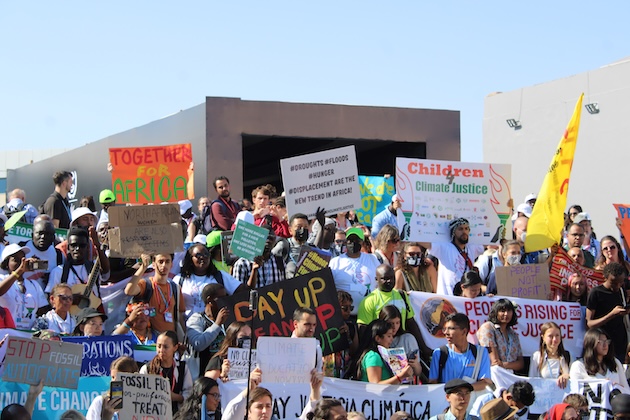
Protests at COP27 in Egypt. Mandeep Tiwana, Secretary General of CIVICUS Global Alliance, is hopeful that COP30, in Belém, Brazil, will be more inclusive. Credit: Busani Bafana/IPS
“It is becoming increasingly dangerous to be a civil society activist and to be the leader of a civil society organization,” Tiwana tells IPS. “Many organizations have been defunded because governments don’t like what they do to ensure transparency or because they speak out against some very powerful people. It is a challenging environment for civil society.”
Research by CIVICUS categorizes civic freedom in five dimensions: open, narrowed, obstructed, repressed, and closed. Alarmingly, over 70 percent of the world’s population now lives in countries rated in the two worst categories: ‘repressed’ and ‘closed.’
“This marks a regression in democratic values, rights, and accountability,” Tiwana noted, adding that even in the remaining 30% of nations, restrictions on civic freedoms remain.
Repression Tools in Tow
The ICSW, being held under the theme ‘Celebrating citizen action: reimagining democracy, rights, and inclusion for today’s world,’ convenes against this backdrop.
Multifaceted tools are used by governments to stifle dissent. Governments are introducing laws to block civil society organizations from receiving international funding while simultaneously restricting domestic resources. Besides, laws have also been enacted in some countries to restrict the independence of civil society organizations that scrutinize governments and promote transparency.
For civil society activists, the consequences are sobering.
“If you speak truth to power, uncover high-level corruption and try to seek transformative change in society, whether it’s on gender equality or inclusion of minorities you can be subjected to severe forms of persecution,” Tiwana explained. “This includes stigmatization, intimidation, imprisonment for long periods, physical attacks, and death.”
Multilateralism Tumbles, Unilateralism Rises
Tiwana said there is an increasing breakdown in multilateralism and respect for international laws from which civil society draws its rights.
This erosion of civic space is reflected in the breakdown of the international system. Tiwana identified a surge in unilateralism and a disregard for the international laws that have historically safeguarded the rights of civil society.
“If you look at what’s happening around the world, whether with regard to conflicts in Palestine, in the Congo, in Sudan, in Myanmar, in Ukraine, in Cameroon, and elsewhere, governments are not respecting international norms,” he observed, remarking that authoritarian regimes were abusing the sovereignty of other countries, ignoring the Geneva conventions, and legalizing attacks on civilians, torturing and persecuting civilians.
This collapse of multilateralism has enabled a form of transactional diplomacy, where narrowly defined national interests trump human rights. Powerful states now collude to manipulate public policy, enhancing their wealth and power. When civil society attempts to expose these corrupt relationships, it becomes a target.
“They are colluding to game public policy to suit their interests and to enhance their wealth. The offshoot of this is that civil society is attacked when it tries to expose these corrupt relationships,” said Tiwana, expressing concern about the rise in state capture by oligarchs who now own vast swathes of the media and technology landscapes.
Citing countries like China and Rwanda, which, while they have different ways of functioning, Tiwana said both are powerful authoritarian states engaging in transactional diplomacy and are opposed to the civil society’s power to hold them to account.
The election of Donald Trump as US President in 2025 has shattered the foundation of the US as a democracy, Tiwana noted. The country no longer supports democratic values internationally and is at home with attacks on the media and defunding of civil society.
The action by the US has negative impacts, as some leaders around the world are taking their cue from Trump in muzzling civil society and media freedoms, he said, pointing to how the US has created common cause with authoritarian governments in El Salvador, Israel, Argentina, and Hungary.
The fight Goes On
Despite facing repression and threats, civil society continues to resist authoritarian regimes. From massive street protests against corruption in Nepal, and Guatemala to pro-democracy movements that have removed governments in Bangladesh and Madagascar,
“People need to have courage to stand up for what they believe and to speak out when their neighbors are persecuted,” Tiwana told IPS. “People still need to continue to speak the truth and come out in the streets in peaceful protest against the injustice that is happening. They should not lose hope.”
On the curtailing of civil society participation in climate change negotiations, Tiwana said the upcoming COP30 in Brazil offered hope. The host government believes in democratic values and including civil society at the table.
“Past COPs have been held in petro states—Azerbaijan, the United Arab Emirates and Egypt—which are all authoritarian states where civil society has been attacked, crushed, and persecuted,” he said. “We are hopeful that there will be greater inclusion of voices and the commitments that will be made to reduce emissions will be ambitious but the question is really going to be after the COP and if those commitments will be from governments that really don’t care about civil society demands or about the well-being of their people.”
Young people, Tiwana said, have shown the way. Movements like Fridays for Future and the Black Lives Matter have demonstrated the power of solidarity and unified action.
But, given the massive protests, has this resistance led to change of a similar scale?
“Unfortunately, we are seeing a rise in military dictatorships around the world,” Tiwana admitted, attributing this to a fraying appetite by the international community to uphold human rights and democratic values.
“Conflict, environmental degradation, extreme wealth accumulation, and high-level corruption are interlinked because it’s people who want to possess more than they need.”
Tiwana illustrated what he means by global priorities.
“We have USD 2.7 trillion in military spending year-on-year nowadays, whereas 700 million people go to bed hungry every night.”
“As civil society, we are trying to expose these corrupt relationships that exist. So the fight for equality, the struggle to create better, more peaceful, more just societies—something CIVICUS supports very much—are some of the conversations that we will be looking to have at the International Civil Society Week.”
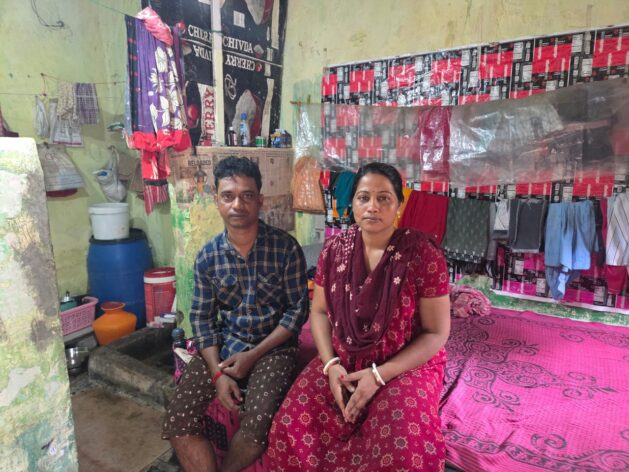
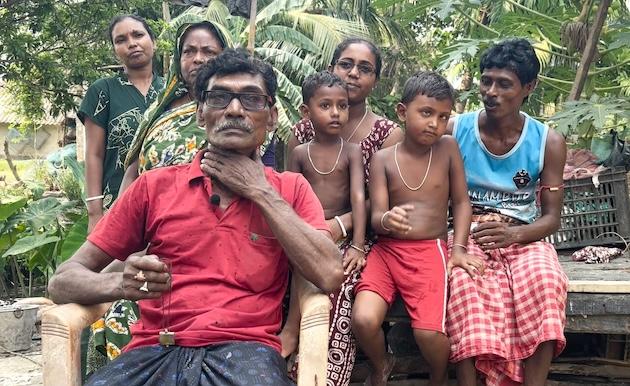
Bapi Mondal and his wife Shanti in Bangalore. Climate change has forced the couple from their traditional livelihoods in the Sundarbans. Credit: Diwash Gahatraj/IPS
BANGALORE & PAKHIRALAY, India, Oct 15 2025 (IPS) – Bapi Mondal’s morning routine in Bangalore is a world away from his ancestral village, Pakhiralay, in the Sundarbans, West Bengal. He wakes before dawn, navigates heavy traffic, and spends eight long hours molding plastic battery casings. It’s not the life his honey-gathering forefathers knew, but factors like extreme storms, rising seas, and deadly soil salinity forced the 40-year-old to abandon centuries of family tradition and travel miles away to work in a concrete suburban factory.
Bapi still remembers his traditional skills—walking through a mangrove forest to find a tree with a honeycomb, mending boats and fishing nets, and singing and acting in the traditional plays. His 19-year-old son, Subhodeep—working alongside in the factory—has lost the heritage.
Bapi’s home, the Sundarbans—the world’s largest mangrove forest—is on the frontlines of climate change, and local livelihoods are taking the hit. In this watery maze where land and sea meet, villagers who once relied on fishing, honey collection and farming are now grappling with rising tides, saltier water, and more frequent storms. For many, life is becoming a struggle to hold on to centuries-old ways.
Sea levels in the Sundarbans are rising nearly twice the global rate, flooding villages and forcing families out. Saltwater ruins rice fields and ponds, making farming and fishing harder. Mawalis, the honey gatherers, also struggle as climate change disrupts flowering and damages mangroves, reducing wild bee populations.
A fisherman in the Sundarbans. Credit: Diwash Gahatraj/IPS
The crisis doesn’t end with the water. Salinity, once held at bay by freshwater flows, is climbing year after year, disrupting both fishing and farming. Pollution, ill-managed embankments, and overexploitation of resources add to the challenge. As incomes shrink and lands disappear, thousands leave for nearby cities, hoping for work but often finding only life in urban slums.
City life is unforgiving for migrants like Mondal. He spends eight grueling hours on his feet, molding battery casings six days a week in harsh factory conditions. At the end of each day, he returns to a small one-room apartment. He shares this space with his wife Shanti and son, Subhodeep. The family struggles financially. Bapi earns ₹19,000 per month (about USD 215)—barely enough to get by. Despite the hardships, he says the work is still his choice.
“A hard choice, but a choice,” he explains.
Morning rush is hectic for the Mondal family. He points to the wall clock and asks his wife to pack lunch quickly. “All three of us work in different factories in the area,” Mondal says. “We all have to reach work by 8 am.”
Gopal Mondal and his family in the Sundarbans. Gopal still ventures into the forests to collect wild honey. Credit: Diwash Gahatraj/IPS
Shanti, Bapi’s wife, spends her days at a garment factory pressing clothes with a hot iron. She works eight-hour shifts with just one weekly break, earning ₹15,000 per month (about USD 169). Their 19-year-old son, Subhodeep, has also joined his father at the plastic factory. All three now work in Bommasandra, Bangalore’s industrial belt, pooling their wages to survive.
The migration has split their family apart.
“We have an 11-year-old daughter who lives with my in-laws in the Sundarbans,” Shanti explains. The cost of city life forced them to leave their youngest child behind. “It breaks my heart to be apart from my daughter, but we want her to have a good education and life—that’s why we sacrifice,” says Shanti. Her daughter attends school back in the village.
Her job gave her economic independence and a voice in family decisions, like building their new house. Bapi’s family, rooted in the village for centuries, were Mawalis, honey gatherers who knew the forest through knowledge passed down generations.
Still Rooted
Bapi’s father, Gopal Mondal, still ventures into the dangerous forests of Sunderbans. He risks tiger attacks and deadly cyclones to collect wild honey. But the forest that once fed families is now failing them.
Climate change has disrupted everything. Cyclones strike more often and with greater force. The natural flowering cycle has gone haywire. Fish populations in the waters have crashed.
“The honey harvest keeps shrinking and prices keep falling,” Gopal explains.
As Gopal tried to hold on to tradition, his son Bapi could no longer see a future in the same waters and forests.
“The forest no longer provides enough honey or fish,” Bapi shares. The rhythms his ancestors lived by for centuries suddenly made no sense. Faced with shrinking opportunities, Bapi tried other work back home. Besides going to the jungle for honey with his father during the season (April-May), he operated a van gaari—a battery-powered three-wheeler with a wooden platform for passengers. But even that barely paid enough to survive. “There was a time when I struggled to buy a saree for my wife,” he recalls. Migration was the only choice left.
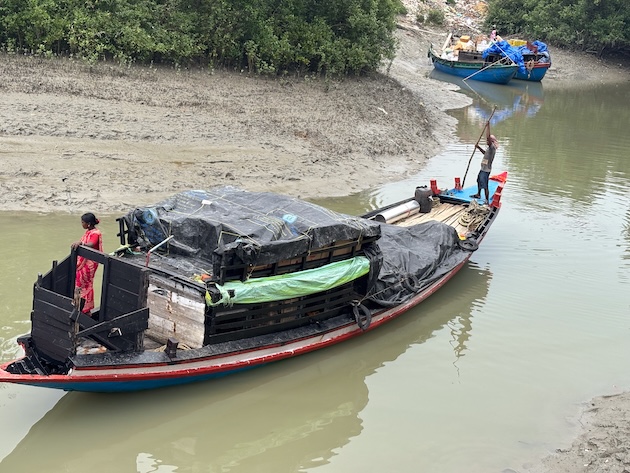
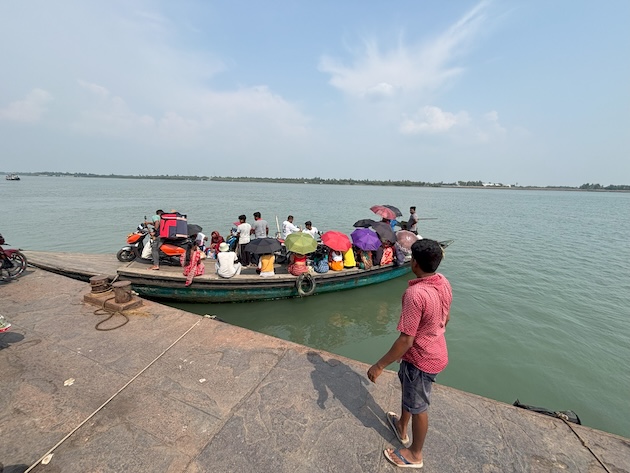
A boat ferries passengers in Sundarbans. Credit: Diwash Gahatraj/IPS
From Forests to Factories
Apart from forced migration, climate change erodes memory, identity, and ancestral knowledge. Leaving the Sundarbans has cost the family more than a homeland.
Bapi still carries traditional skills—navigating treacherous waters by boat and collecting honey deep in the forest.
“I know how to catch shrimp and crabs from the river and sea,” he says. “My father and uncles taught me these skills when I was young.”
His wife, Shanti, nods, adding that she was an expert crab and shrimp collector back in the Sundarbans. “I think I still have it in me,” she says with quiet pride.
But the chain of knowledge is breaking. “I could not pass on that wisdom to my son,” Bapi admits with regret.
Subhodeep represents this lost generation. He finished tenth grade and left his village to join his parents in Bangalore. He has not learned the skills that defined his family for generations. “I have never entered the forest to collect honey or fish back in the village,” Subhodeep explains. “My parents were against it.”
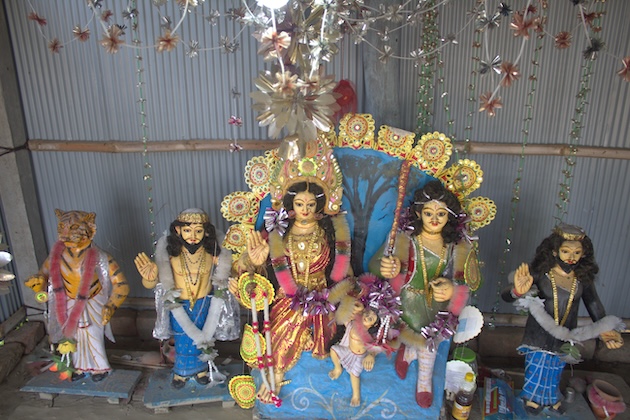
Bon bibi temple in Pakhiralay village. Along with losing traditional livelihoods, religion and cultural life are also in jeopardy. Credit: Diwash Gahatraj/IPS
The irony is stark. Bapi’s parents encouraged him to learn these ancestral skills. But when environmental collapse made these traditions dangerous and unprofitable, Bapi chose to shield his son from them.
For the Mondals, the forest has become too dangerous and unreliable.
“Going to collect honey or catch fish is very unpredictable now,” Bapi explains. Catch volumes have fallen, and tiger attacks have grown. Bapi’s family knows the risk; his grandfather was killed while gathering honey in the forest.
Years earlier, a tiger also attacked Gopal Mondal. He was luckier—he escaped alive but still carries scars on his hand.
These brutal realities shaped Bapi’s decision about his son’s future. “I don’t want my next generation to have such a risky occupation,” he says. The choice is clear. Families can either cling to dangerous traditions that no longer pay enough to survive or abandon their ancestral practices for safer work in distant cities.
Are there other reasons behind the changes in the Sundarbans?
“We can’t just blame climate change and ignore human activities making things worse,” says Professor Tuhin Ghosh of Jadavpur University’s School of Oceanographic Studies. Human activity and climate change create a deadly combination.
People cleared mangroves for farms and fish ponds and built embankments that blocked tidal flows. The result is salt contamination, poisoned soil and water, vanishing species, and a broken landscape.
Uninhabitable Home
About 4.5 million people live across the Sundarbans region in Bangladesh and India. A recent survey reveals the massive scale of climate migration: nearly 59% of households have at least one family member who has moved away for work.
Some studies report 60,000 people migrated from parts of the Sundarbans by 2018. But household surveys show much higher rates because they measure affected families, not just individuals.
These local figures reflect a much bigger crisis. Across Bangladesh, weather-related disasters displaced 7.1 million people in 2022 alone, showing how climate change drives mass movement.
On the Indian side in West Bengal, researchers document large seasonal and permanent migration flows to cities and other states. Families routinely send members to work elsewhere, though official counts are scarce.
Loss Beyond Dollars
Over the past two decades, the Sundarbans has been hit by cyclones made stronger by climate change. They uprooted thousands and caused millions in losses. But beyond disaster relief and migration, a quieter crisis unfolds: the erosion of centuries-old ecological wisdom, culture, and tradition.
Gopal Mondal, in his early sixties, sits outside his modest home in Pakhiralay. When asked about protective equipment for his dangerous work collecting honey in the Sundarbans forest, he holds up a small amulet—a tabeej.
“This and my prayers to Bon Bibi are my protection,” says Mondal, who leads a team of honey collectors into the mangrove forests. “They shield us from storms and babu (tigers).”
The elderly collector recites mantras passed down through generations—teachings from his father or cousins, though he cannot recall exactly who taught him.
“The whole community worships Bon Bibi,” he explains simply
For Sundarbans communities like Mondal’s, Bon Bibi—the “Lady of the Forest”—is a guardian of the mangroves. For centuries, fishermen, honey collectors, and wood gatherers have sought her protection in tiger territory and cyclone-prone waters. Her worship is more than faith; it reflects the people’s bond with a dangerous yet life-sustaining environment, offering both comfort and identity where safety tools are scarce.
When asked about traditional knowledge slipping away from his family, Mondal’s weathered face shows a faint smile.
“Earlier, every fisherman’s family had someone —a son or grandson—who knew how to repair torn nets or mend boats,” he explains. “But in my family, things are slowly changing. My grandsons and sons live too far away, and their visits home are too short to learn these skills.”
The honey collector pauses, watching the distant mangroves. “The younger generation shows very little interest in our profession,” he adds quietly.
Climate migration expert M. Zakir Hossain Khan of Change Initiative, a Bangladesh-based think tank focused on solving critical global challenges, warns that climate-driven displacement from the Sundarbans is destroying centuries-old ways of life that depend entirely on deep knowledge of the forest and rivers.
Fishermen carry rare knowledge of tides, breeding cycles, and mangrove routes, passed down through years of practice. With youth leaving for city jobs, few inherit it. Honey gatherers know how to find hives, protect bees, and survive in tiger territory. As young people turn away, honey collection is fading from the Sundarbans.
A Vanishing Heritage
This generational shift reflects a broader transformation across the Sundarbans. Traditional skills that once defined coastal communities—net weaving, boat building, reading weather patterns, and forest navigation—are disappearing as young people migrate to cities primarily for employment and a few for education.
“Similarly, mangrove-based handicrafts and boat-making using leaves, bamboo, and mangrove wood to make mats, roofing materials, and small boats demand both ecological understanding and artisanal skill, which are now rarely passed down,” comments Khan from Change Initiative.
He adds that herbal medicine and spiritual rituals practiced by local healers using plants like sundari bark and hental are also at risk, as migration and urbanization erode the cultural setting that sustains them.
Culture at Crossroads
Ghosh, who has spent over 30 years working in the Sundarbans, points to a troubling pattern.
“Migration is killing our folk arts,” he says. “Bonbibi stories, jatra pala theater, fishermen’s songs—they’re all disappearing. The people who used to perform during festivals are getting old. And there’s no one to replace them.”
The Sundarbans face a cultural crisis. Traditional performances that once brought villages together during religious festivals now struggle to find performers. Young people who might have learned these arts from their elders are instead leaving for cities for a better life
Once central to life in the Sundarbans, folk traditions like Jatra Pala, Bonbibi tales, and fishermen’s songs now fade with their aging performers. With few young apprentices, a rich cultural heritage risks disappearing—leaving behind a region not just economically changed, but culturally empty.
Note: This story was produced with support from Internews’ Earth Journalism Network
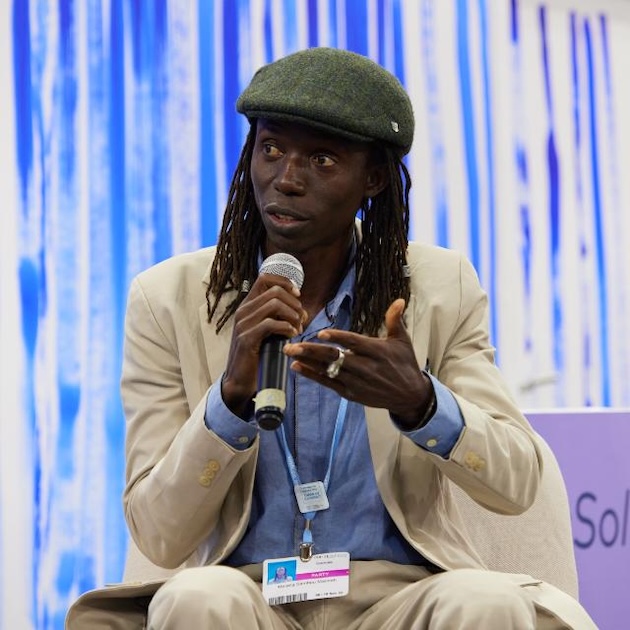
COP30 negotiator Malang Sambou Manneh believes the method of countering growth in fossil fuel development lies in technology. Showcasing alternatives that work provides the opportunity for the global South to take the lead and present best practices in renewables.
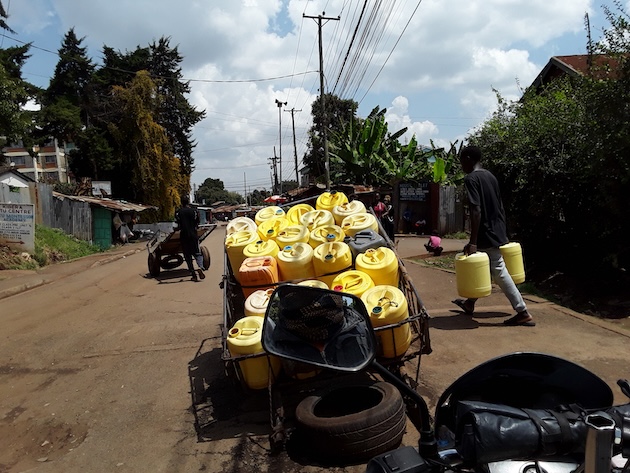
Climate change is a significant contributor to water insecurity in Africa. Water stress and hazards, like withering droughts, are hitting African communities, economies, and ecosystems hard. Credit: Joyce Chimbi/IPS
NAIROBI, Oct 14 2025 (IPS) – The Gambia’s lead negotiator on mitigation believes that COP30 presents a unique opportunity to rebalance global climate leadership.
“This COP cannot be shrouded in vagueness. Too much is now at stake,” Malang Sambou Manneh says in an interview with IPS ahead of the climate negotiations. He identified a wide range of issues that are expected to define COP30 climate talks.
The global community will shortly descend on the Amazon rainforest, the world’s largest intact forest, home to more than 24 million people in Brazil alone, including hundreds of thousands of Indigenous Peoples. Here, delegates will come face-to-face with the realities of climate change and see what is at stake.
Malang Sambou Manneh.
COP30, the UN’s annual climate conference, or the Conference of Parties, will take place from November 10-21, 2025 in the Amazonian city of Belém, Brazil and promises to be people-centered and inclusive. But with fragmented and fragile geopolitics, negotiations for the best climate deal will not be easy.
Sambou, a lead climate negotiator who has attended all COPs, says a unified global South is up to the task.
He particularly stressed the need for an unwavering “focus on mitigation or actions to reduce or prevent greenhouse gas emissions.” Stating that the Mitigation Work Programme is critical, as it is a process established by the United Nations Framework Convention on Climate Change (UNFCCC) at COP26 to urgently scale up the ambition and implementation of efforts to mitigate climate change globally.
Sambou spoke about how COP30 differs from previous conferences, expectations from the global South, fossils fuels and climate financing, stressing that “as it was in Azerbaijan for COP29, Belem will be a ‘finance COP’ because climate financing is still the major hurdle. Negotiations will be tough, but I foresee a better outcome this time round.”
The Baku to Belém Roadmap to 1.3T is expected to be released soon, outlining a framework by the COP 29 and COP 30 Presidencies for scaling climate finance for developing countries to at least USD 1.3 trillion annually by 2035.
Unlike previous conferences, COP30 focuses on closing the ambition gap identified by the Global Stocktake, a periodic review that enables countries and other stakeholders, such as the private sector, to take inventory to assess the world’s collective progress in meeting its climate goals.
The first stocktake was completed at COP28 in 2023, revealing that current efforts are insufficient and the world is not on track to meet the Paris Agreement. But while the Paris Agreement, a legally binding international treaty on climate change, set off on a high singular note when it entered into force in November 2016, that unity is today far from guaranteed.
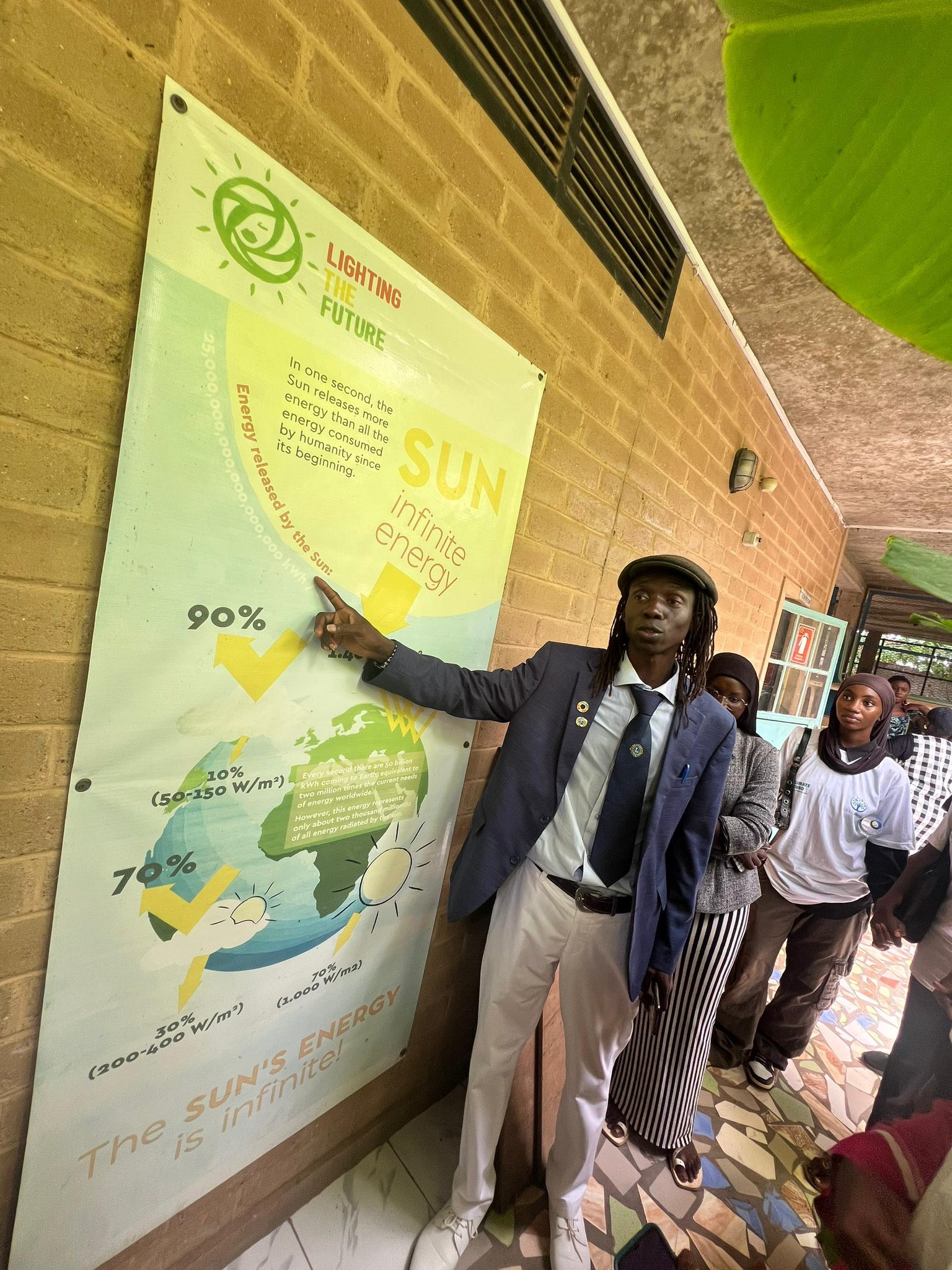
Malang Sambou Manneh with She-Climate Fellows. Credit: Clean Earth Gambia/Facebook
Unlocking high-impact and sustainable climate action opportunities amidst geopolitical turbulence was always going to be difficult. Not only did President Donald Trump pull the United States out of the Paris Agreement, but he is now reenergized against climate programs and robustly in support of fossil fuels—and there are those who are listening to his message.
Sambou says while this stance “could impact the transition from fossil fuels to clean energy, many more countries are in favor of renewable energy than against.”
“But energy issues are complex because fossil fuels have been a way of life for centuries, and developed countries leveraged fossil fuels to accelerate development. And then, developing countries also started discovering their oil and gas, but they are not to touch it to accelerate their own development and must instead shift to renewables. It is a complex situation.”
Ilham Aliyev, the President of Azerbaijan, famously described oil as a “gift from God” at COP29 to defend his country’s reliance on fossil fuels despite climate change concerns. This statement highlights the complexity of the situation, especially since it came only a year after the landmark COP28 hard-won UAE Consensus included the first explicit reference to “transitioning away from all fossil fuels in energy systems” in a COP agreement.
As a negotiator, Sambou says he is very much alive to these dynamics but advises that the global community “will not successfully counter fossil fuels by saying they are bad and harmful; we should do so through technology. By showcasing alternatives that work. This is an opportunity for the global South to take the lead and present best practices in renewables.”
And it seems there is evidence for his optimism. A recent report shows the uptake of renewables overtaking coal generation for the first time on record in the first half of 2025 and solar and wind outpacing the growth in demand.
This time around, the global south has its work cut out, as it will be expected to step up and provide much-needed leadership as Western leaders retreat to address pressing problems at home, defined by escalating economic crises, immigration issues, conflict, and social unrest.
It is in the developing world’s leadership that Sambou sees the opportunities—especially as scientific evidence mounts on the impacts of the climate crisis.
The World Meteorological Organization projects a continuation of record-high global temperatures, increasing climate risks and potentially marking the first five-year period, 2025-2029.
Sambou says all is not lost in light of the new and ambitious national climate action plans or the Nationally Determined Contributions.
This past September marked the deadline for a new set of these contributions, which will guide the COP30 talks. Every five years, the signatory governments to the Paris Agreement are requested to submit new national climate plans detailing more ambitious greenhouse gas emission reduction and adaptation goals.
“Ambition has never been a problem; it is the lack of implementation that remains a most pressing issue. Action plans cannot be implemented without financing. This is why the ongoing political fragmentation is concerning, for if there was ever a time to stand unified, it is now. The survival of humanity depends on it,” he emphasizes.
“Rather than just setting new goals in Belém, this time around, we are better off pushing for a few scalable solutions, commitments that we can firmly hold ourselves accountable to, than 200 pages of outcomes that will never properly translate into climate action.”
Despite many competing challenges and a step forward, two steps backwards here and there, from the heart of the Amazon rainforest, COP30’s emphasis on the critical role of tropical forests and nature-based solutions is expected to significantly drive action for environmental and economic growth.
Note: This interview is published with the support of Open Society Foundations.
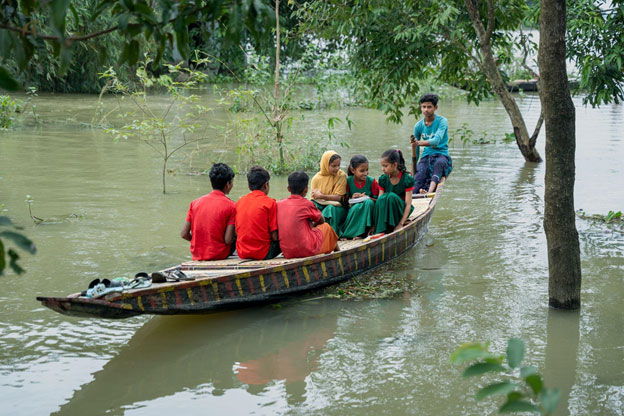
Children in Bangladesh riding a boat through a flooded river to attend school. Bangladesh is one of the most climate-sensitive regions in the world. Credit: UNICEF/Suman Paul Himu
UNITED NATIONS, Oct 8 2025 (IPS) – In recent years, international climate financing has declined sharply, leaving billions of people in developing nations increasingly vulnerable to natural disasters and unable to adapt effectively. With major cuts in foreign aid, these communities are expected to face the brunt of the climate crisis, while wealthier nations continue to reap economic benefits.
This comes ahead of the 30th United Nations (UN) Climate Change Conference (COP30), in which world leaders, diplomats, and civil society groups will converge in Belém, Brazil, from November 10–21, to discuss strategies to strengthen global cooperation, advance inclusive and sustainable development, and accelerate efforts to address the climate crisis. The United Nations Environment Programme (UNEP) states that there will be a major focus on allocating public funds for mitigation and adaptation efforts in developing countries, aiming to mobilize at least USD 300 billion annually by 2035 for developing countries and a yearly USD 1.3 trillion over the same period.
In the report, CARE and Oxfam found that developing countries are paying disproportionately high disbursements to wealthy nations in exchange for comparatively modest climate finance loans—spending about seven dollars for every five dollars they receive in return. This, compounded with “the most vicious foreign aid cuts since the 1960s”, shows a nearly 9 percent drop in climate funding in 2024, which is projected to drop by a further 9-17 percent in 2025.
“Rich countries are failing on climate finance and they have nothing like a plan to live up to their commitments to increase support. In fact, many wealthy countries are gutting aid, leaving the poorest to pay the price, sometimes with their lives” said John Norbo, Senior Climate Advisor at CARE Denmark. “COP30 must deliver justice, not another round of empty promises.”
As of 2022, developed nations reported pledging approximately USD 116 billion in climate funding for developing countries. However, the actual amount delivered is less than one-third of the pledged total — estimated at only USD 28–35 billion. Nearly 70 percent of this funding came in the form of loans, often issued at standard rates of interest without concessions. As a result, wealthy nations are driving developing countries deeper into debt, despite these nations contributing the least to the climate crisis and lacking the resources to manage its impacts.
It is estimated that developing countries are indebted by approximately USD 3.3 trillion. In 2022, developing countries received roughly USD 62 billion in climate loans, which is projected to produce over USD 88 billion for wealthy countries, yielding a 42 percent profit for creditors. The countries issuing the highest concessional loans in climate financing were France, Japan, Italy, Spain, and Germany.
“Rich countries are treating the climate crisis as a business opportunity, not a moral obligation,” said Oxfam’s Climate Policy Lead, Nafkote Dabi. “They are lending money to the very people they have historically harmed, trapping vulnerable nations in a cycle of debt. This is a form of crisis profiteering.”
Despite wealthy nations issuing high loans to developing countries, Least Developed Countries (LDCs) received only 19.5 percent of the total public climate funding over 2021-2022, while Small Island Developing States (SIDs) received roughly 2.9 percent. Only 33 percent of this funding went toward climate adaptation, a “critically underfunded” measure according to Oxfam, as the majority of creditors favor investing in mitigation efforts that deliver faster financial returns. Additionally, only 3 percent of this funding went to gender equality efforts, despite women and girls being disproportionately impacted by the climate crisis.
The report also underscores the dire impacts of the misallocation of climate financing and funding cuts, as vulnerable communities in particularly climate-sensitive environments find themselves with far fewer resources to adapt to natural disasters.
In 2024, communities in the Horn of Africa were ravaged by brutal cycles of droughts and flooding, which displaced millions of civilians and pushed tens of millions into food insecurity. In Rio Grande do Sul, Brazil, massive floods caused over 180 civilian deaths, displaced 600,000 people, and the resulting damage led to billions of dollars in losses. According to figures from UNICEF, around 35 million children in Bangladesh experienced school disruptions in 2024 due to heatwaves, cyclones, and floods, posing serious risks to their long-term development. The United Nations Environment Programme (UNEP) warns that global temperatures are on course to rise to a “catastrophic” 3°C by the end of the century, with extreme weather events expected to intensify further.
Ahead of the COP30 conference, Oxfam has urged wealthy nations to honor their climate finance commitments, including the delivery of the full USD 600 billion pledged for the 2020–2025 period, aligning with the UN’s target of mobilizing USD 300 billion annually. The organization also called for a substantial increase in global funding for climate adaptation and loss management, alongside the implementation of higher taxes on the wealthiest individuals and fossil fuel companies—which could generate an estimated USD 400 billion per year. Additionally, Oxfam emphasized the need for developed countries to stop deepening the debt of climate-vulnerable nations by expanding the share of grants and highly concessional financing instead of standard loans.