
Keith Urban Performs at NYE Bash in Nashville Amid Nicole Kidman Divorce

Keith Urban undoubtedly had a difficult year, but he went out on a high note on New Year’s Eve.

The country singer, 58, performed upbeat renditions of his song “Straight Line” and New Radicals’ “You Get What You Give” during New Year’s Eve Live: Nashville’s Big Bash on Wednesday, December 31. Urban sported a black shirt and dark jeans while he crooned lyrics from “Straight Line” such as, “I ain’t buyin’ this life’s gotta be such a mother / ‘Cause we kinda got it all when we got each other / You and me used to be like a year-round summer / Let’s go back / Oh, hit the gas.”

The live New Year’s Eve special — which aired on CBS and Paramount+ — was hosted by comedian Bert Kreischer and country music star Hardy and featured additional performances by Jason Aldean, Lainey Wilson, Bailey Zimmerman, Brooks and Dunn, Dwight Yoakam and more.

Urban’s New Year’s Eve outing comes three months after his split from estranged wife Nicole Kidman made headlines in September. One day after the news broke, she filed for divorce, citing “irreconcilable differences” as the reason for their separation. The pair were married for nearly 20 years and share daughters Sunday Rose, 17, and Faith, 15.

All the Clues Nicole Kidman and Keith Urban Were Heading Toward a Split

“They had been quietly separated for a while now but needed time to figure out if they were going to actually divorce,” a source exclusively told Us Weekly in October. “She had faith they could work it out.”

According to the insider, Urban was the one who pulled the plug on his marriage to Kidman, 58.

“This wasn’t Nicole’s decision, and she is devastated,” the source continued. “Her trust was lost, and it was too far gone. Nicole had been trying to get them to work on their marriage and did not want this to get out to the public. She didn’t tell many friends what was really going on with them and was holding this in for months.”

While Urban and Kidman once appeared to be the ideal A-list couple, they were actually spending “a lot of time apart due to work commitments” and living “separate lives” behind the scenes.

“Nicole and Keith were not on the same page,” the insider told Us. “Rumors around town have been circling that they were living apart, were focused on their own projects and that Keith had moved on. They are moving in two different directions, and their worlds are not overlapping as much as they once did. The distance between them had grown more obvious recently.”

Inside Nicole Kidman and Keith Urban’s Divorce: Custody, Reason for Split

Later in October, a source revealed that Kidman was in a “good headspace” amid her divorce from Urban, but “the hardest part” of the situation was “navigating the dynamic with their daughters.”

“The last thing Nicole wanted was a broken family,” the insider told Us, adding that Kidman “raised her daughters to be strong and is leading by example for them.”

As a new single mom, Kidman planned to “focus on creating new traditions with her daughters and keeping their home life as steady and loving as possible.”

Urban, for his part, “has moved on and has been open with Nicole about where he stands,” a source told Us in October, noting that their divorce was a “long time coming.”

Per the insider, “The two had grown apart quietly over time, and by the end, the decision to separate was more about acceptance than surprise.”


Discover more from The Maravi Post

Subscribe to get the latest posts sent to your email.

The Maravi Post

Andy Cohen, Anderson Cooper Detail Ryan Seacrest Texts on New Year’s Eve

Andy Cohen and Anderson Cooper closed out 2025 and welcomed 2026 with their annual CNN’s New Year’s Eve Live special.

The Bravo star, 57, and the journalist, 58, cohosted the broadcast from New York City’s Times Square for the ninth consecutive year on Wednesday, December 31.

“Bottoms up: This is tequila!” Cohen declared before doing a shot with Cooper to open the show. Afterward, the cohosts spoke about 2025 highlights, including a trip to Disneyland with their kids and watching Cher perform during an event for Saturday Night Live‘s 50th anniversary.

“Cher called me a couple weeks ago,” Cooper said, to which Cohen replied, “Did she ask for me?”

CNN’s ‘New Year’s Eve Live’: Most Controversial Moments Through the Years

Cooper jokingly recalled Cher saying of Cohen, “How’s that troublemaker?”

The cohosts also mentioned Ryan Seacrest, who hosts Dick Clark’s New Year’s Rockin’ Eve on ABC.

“Did Ryan call you … or text you today?” Cooper asked Cohen, who responded, “He texted me, like, yesterday or the day before.”

Cooper said that Seacrest had texted him that morning. In past years, he noted, Seacrest had sent him gifts.

Anderson Cooper Loses It Over Ralph Fiennes’ Take on Demure, Mindful Meme

“Like, a photo of himself?” Cohen asked.

“No,” Cooper said, adding that Seacrest had previously sent him tequila.

The longtime pals also discussed the hit hockey romance series Heated Rivalry, with Cohen telling Cooper, “Of the two of us, you’re Ilya and I’m Shane.”

“What?!” Cooper replied.

Andy Cohen and Anderson Cooper Return to Ripping Shots on CNN NYE Special

In addition to Cohen and Cooper’s signature banter, CNN’s New Year’s Eve Live featured performances by Robyn, Shakira, Brandy and Monica, Bryan Adams, Florence + The Machine, Raye, Brandi Carlile, Aloe Blacc, Patti LaBelle and Michelle Williams and special appearances by Stephen Colbert, Amy Sedaris, Rebecca Romijn and Jerry O’Connell, B.J. Novak, Leanne Morgan and Sarah Sherman.

Since Cohen joined the broadcast as Cooper’s cohost in 2017, the CNN New Year’s Eve special has consistently made headlines, perhaps most notoriously when the network banned the duo from drinking after Cohen shaded then-New York City mayor Bill de Blasio and Seacrest during the 2021-2022 show.

“Watching Mayor de Blasio do his victory lap dance after four years of the crappiest term as the mayor of New York — the only thing that Democrats and Republicans can agree on is what a horrible mayor he has been,” Cohen said at the time. “So sayonara, sucka. 2022! It’s a new year because guess what? I have a feeling I’m gonna be standing right here next year, and you know who I’m not going to be looking at dancing as the city comes apart? You!”

Cohen was similarly critical of the Seacrest-hosted Dick Clark’s New Year’s Rockin’ Eve.

Anderson Cooper Loses It Over Ralph Fiennes’ Take on Demure, Mindful Meme

“If you look behind me, you’ll see Ryan Seacrest’s group of losers performing. … I’m sorry but if you’re watching ABC, you’re watching nothing,” he quipped. “We were doused with confetti from fake Journey on ABC. If it’s not Steve Perry, it doesn’t count! You get it? It’s not Journey! It’s propaganda! It’s propaganda! It’s not Journey! It’s not Journey! No, that was not Journey. Steve Perry is Journey.”

Cohen later apologized to Seacrest, 51, and the two made amends. Cohen and Cooper were still banned from drinking during the 2022-2023 broadcast, but their tequila shots tradition returned the following year.

Prior to the 2025-2026 show, Cooper and Cohen reflected on their favorite memories from their years of cohosting the New Year’s Eve special.

“We can’t talk about New Year’s Eve without talking about your many, many occasions of being in a puddle of giggles,” Cohen told Cooper in a CNN video earlier this month. “I say to people my job is to make you laugh on New Year’s because people love to hear you laugh. And I think God bless you for the work you do all year long. You’re keeping ‘em honest right here on CNN, and this is your time and all of our time to let loose and enjoy.”


Discover more from The Maravi Post

Subscribe to get the latest posts sent to your email.

The Maravi Post

‘Zambia Has Environmental Laws and Standards on Paper – the Problem Is Their Implementation’

Active Citizens, Africa, Civil Society, Crime & Justice, Energy, Environment, Featured, Food and Agriculture, Headlines, Health, TerraViva United Nations

Dec 29 2025 (IPS) –  
CIVICUS discusses environmental accountability in Zambia with Christian-Geraud Neema, Africa editor at the China Global South Project, an independent journalism initiative that covers and follows China’s activities in global south countries.


Zambia has environmental laws and standards on paper – the problem is their implementation’

Christian-Geraud Neema

A group of 176 Zambian farmers has filed a US$80 billion lawsuit against a Chinese state-owned mining company over a major toxic spill. In February, the collapse of a dam that was supposed to control mining waste released 50 million litres of toxic wastewater into the Kafue River system, killing fish, destroying crops and contaminating water sources for thousands of people. The compensation demand highlights broader questions about mining governance, environmental oversight and corporate accountability.

What’s this lawsuit about, and why are farmers seeking US$80 billion?

The farmers are suing Sino-Metals Leach Zambia, a subsidiary of the Chinese state-owned China Nonferrous Metal Mining Group, because on 18 February, the company’s tailings dam collapsed, releasing an estimated 50 million litres of acidic, toxic wastewater and up to 1.5 million tonnes of waste material into the Kafue River. This led to water pollution affecting communities in Chambishi and Kitwe, far beyond the immediate mining area.

The lawsuit reflects real harm and frustration. From the farmers’ perspective, the company is clearly responsible. Their livelihoods have been destroyed, their land contaminated and their future made uncertain. In that context, seeking accountability through the courts is a rational response.

That said, the US$80 billion figure is likely exaggerated. It shows the absence of credible damage assessments rather than a precise calculation. When no one provides clear data on losses, communities respond by anchoring their claims in worst-case scenarios.

This case also highlights a broader accountability gap. Mining companies should be held responsible, but governments must also be questioned. These projects are approved, inspected and regulated by state authorities. If a dam was unsafe, why was it authorised? Why was oversight insufficient?

It should be noted that Zambia’s legal framework allows communities to bring such cases domestically, which is a significant step forward compared to earlier cases where affected communities had to sue foreign companies in courts abroad.

What caused the toxic spill?

There is no single, uncontested explanation. There were clear structural weaknesses in the tailings dam. Reports from civil society and media suggest the dam was not built to the required standards under Zambian regulations. But the company argues the dam complied with existing standards and that it was encroachment by surrounding communities that weakened the structure over time.

These two narratives are not mutually exclusive. Even if community interactions with the site occurred, the primary responsibility still lies with the company. Mining operations take place in complex social environments, and companies are expected to anticipate these realities and design infrastructure that is robust enough to withstand them. Ultimately, this incident reflects governance and regulatory failures. It was not an isolated accident.

What were the consequences of the spill?

The impacts have been severe and multidimensional. The spill polluted large sections of the Kafue River, reportedly extending over 100 kilometres. It killed large numbers of fish, contaminated riverbeds and disrupted ecosystems. Agriculturally, farmers using river water for irrigation saw their crops destroyed or rendered unsafe. Livestock and soil quality were also affected. Acidic and toxic substances entered water sources used daily for cooking, drinking and washing, and communities were exposed to serious health risks.

What makes the situation particularly troubling is the lack of reliable and independent data. There has been no transparent and comprehensive assessment released by the government, the company or an independent body. This absence has left communities uncertain about long-term environmental damage and health effects, and fuelled emotionally charged debates instead of evidence-based responses.

Was the disaster preventable?

Absolutely. At a technical level, stronger infrastructure, better-quality materials and stricter adherence to safety standards could have significantly reduced the risk. At an operational level, companies know mining sites are rarely isolated, and community proximity, informal access and social dynamics must be factored in when designing and securing tailings dams.

But prevention also depends heavily on governance. Mining companies are profit-driven entities, and in weak governance environments, the temptation to cut costs is high. This is not unique to Chinese firms. The main difference in how companies operate is not their origin but their context: the same companies often operate very differently in countries with weak or strong regulatory oversight. Where rules are enforced, behaviour improves; where oversight is weak, shortcuts become the norm.

The key issue here is enforcement. Zambia has good environmental laws and standards on paper. The problem is their implementation.

Could this case set a precedent?

This case has the potential to strengthen existing accountability mechanisms rather than create a new precedent. Zambia has seen similar cases before, including lawsuits involving western mining companies. What is different now is the increased legal space for communities to act locally.

If successful, the case could reinforce civil society advocacy for responsible mining, greater transparency and stronger enforcement of environmental regulations. It could also raise awareness among communities living near mining sites about their rights and the risks they face.

GET IN TOUCH
Website
Facebook
TikTok
Twitter
YouTube
Christian-Geraud Neema/LinkedIn

SEE ALSO
South Africa: ‘Environmental rights are enforceable and communities have the right to be consulted and taken seriously’ CIVICUS Lens | Interview with The Green Connection 12.Dec.2025
DRC: ‘International demand for coltan is linked to violence in the DRC’ CIVICUS Lens | Interview with Claude Iguma 09.Jul.2025
Ghana: ‘We demand an immediate ban on illegal mining and strict enforcement of environmental laws’ CIVICUS Lens | Interview with Jeremiah Sam 29.Oct.2024

  Source

A Grim Year for Democracy and Civic Freedoms – but in Gen Z There Is Hope

Active Citizens, Armed Conflicts, Civil Society, Climate Change, Crime & Justice, Democracy, Economy & Trade, Environment, Featured, Gender, Global, Headlines, Human Rights, Inequality, LGBTQ, TerraViva United Nations

Opinion

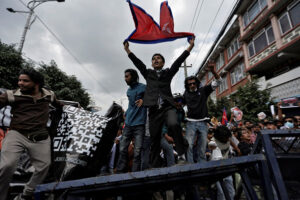
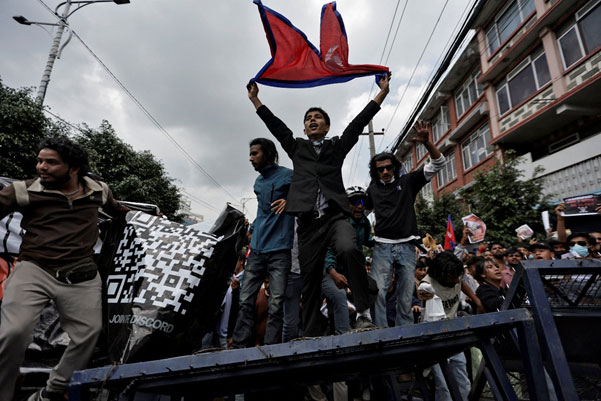
People take part in an anti-corruption protest in Kathmandu, Nepal on 8 September 2025. Credit: Navesh Chitrakar/Reuters via Gallo Images

NEW YORK, Dec 24 2025 (IPS) – 2025 has been a terrible year for democracy. Just over 7 per cent of the world’s population now live in places where the rights to organise, protest and speak out are generally respected, according to the CIVICUS Monitor, a civil society research partnership that measures civic freedoms around the world. This is a sharp drop from over 14 per cent this time last year.


Civic freedoms underpin healthy democracies, and the consequences of this stifling of civil society are apparent. At the end of the first quarter of the 21st century, the world is experiencing 19th century levels of economic inequality. The wealth of the richest 1 per cent is surging while some 8 per cent of the world’s population – over 670 million people – suffer from chronic hunger. Weapons-producing firms, closely intertwined with political elites, are reaping windfall profits as death and destruction rains down in Gaza, Myanmar, Sudan, Ukraine and many other places. It should surprise no one that the political leaders fomenting these conflicts are also squashing civic freedoms to avert questions about their motivations.

From Lima to Los Angeles, Belgrade to Dar es Salaam and Jenin to Jakarta, far too many people are being denied the agency to shape the decisions that impact their lives. Yet these places have also been the site of significant protests against governments this year. Even as authoritarianism appears to be on the march, people are continuing to pour onto the streets to insist on their freedoms. As we speak people in Sofia in Bulgaria are demonstrating in large numbers against endemic corruption which recently forced the government to resign.

History shows that mass demonstrations can lead to major advances. In the 20th century, people’s mobilisations helped achieve women’s right to vote, liberation of colonised peoples and adoption of civil rights legislation to address race-based discrimination. In the 21st century, advances have been made in marriage equality and other LGBTQI+ rights, and in highlighting the climate crisis and economic inequality through protests. But in 2025, the right to protest, precisely because it can be effective, is under assault by authoritarian leaders. Around the world, the detention of protesters is the number one recorded violation of civic freedoms, closely followed by arbitrary detentions of journalists and human rights defenders who expose corruption and rights violations.

This backsliding is now happening in major established democracies. This year, the CIVICUS Monitor downgraded Argentina, France, Germany, Italy and the USA to an ‘obstructed’ civic space rating, meaning the authorities impose significant constraints on the full enjoyment of fundamental rights. This regression is being driven by anti-rights nationalist and populist forces determined to degrade constitutional checks and balances and advance ballot box majoritarianism that denies minorities a fair say in economic, political and social life.

The push to degrade democracy by anti-rights forces now coming to fruition has been many years in the making. It accelerated this year with the return of Donald Trump. His administration immediately withdrew support to international democracy support programmes and instead built links to politicians responsible for crushing civic freedoms and committing grotesque human rights violations. Trump has laid out of the red carpet to El-Salvador’s Nayib Bukele, Hungary’s Victor Orbán, Israel’s Benjamin Netanyahu, Russia’s Vladimir Putin and Saudi Arabia’s Mohammed bin Salman, ushering in a new era of values-free might-is-right diplomacy that threatens to undermine decades of painstaking progress achieved by civil society.

The fallout is clear. Many wealthy democratic governments that traditionally fund civil society activities have significantly reduced their contributions. At the same time, they have linked their remaining support for civil society to narrowly defined strategic military and economic interests. In doing so, they have played directly into the hands of powerful authoritarian states such as China, Egypt, Iran, Nicaragua and Venezuela that seek to discredit domestic calls for accountability. Countries including Ecuador and Zimbabwe have introduced laws to limit the ability of civil society organisations to receive international funding.

All these developments are negatively impacting on civil society efforts for equality, peace and social justice. Yet the story of 2025 is also one of persistent resistance, and some successes. The courage demonstrated by Generation Z protesters has inspired people around the world. In Nepal, protests triggered by a social media ban led to the fall of the government, offering hope for a much-needed political reset. In Kenya, young protesters continued to take to the streets to demand political reform despite state violence. In Moldova, a cash-rich disinformation campaign run by a fugitive oligarch failed to sway the course of the national election away from human rights values. In the USA, the number of people joining the No-Kings protests just keeps on growing.

With over 90 per cent of the world’s population living with the institutional denial of full civic freedoms, anti-rights forces must be feeling pretty smug right now. But democratic dissent is brewing, particularly among Generation Z, denied political and economic opportunities but understanding that another world – one more equal, just, peaceful and environmentally sustainable – is possible. It’s far from game over yet, and even in difficult times, people will demand freedoms – and breakthroughs may be just around the corner.

Mandeep S Tiwana is Secretary General of CIVICUS, the global civil society alliance.

  Source

The Housemaid’s Paul Feig Thought Taylor Swift Would ‘Never’ Clear Her Song

Never in director Paul Feig’s wildest dreams did he think Taylor Swift would approve of her song being featured in The Housemaid.

Warning: This post contains spoilers for The Housemaid.

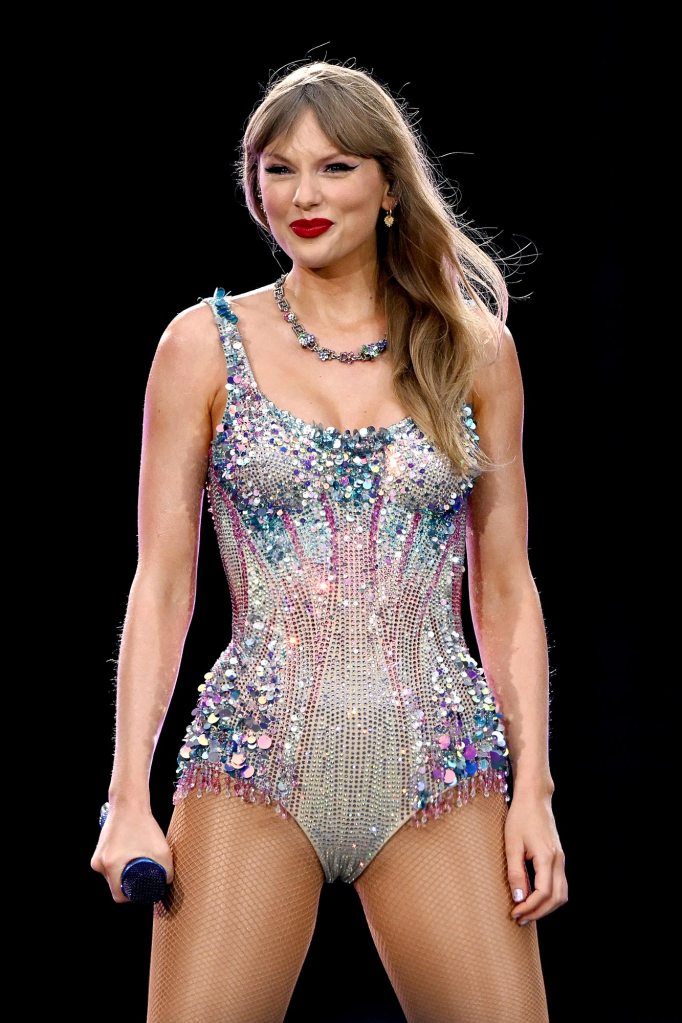
Feig told Deadline at the film’s red carpet premiere last week that he was convinced Swift, 36, was “never gonna clear” her “perfect” 2017 song “I Did Something Bad” from Reputation.

“Well, that’s the thing; you want to put a Taylor song in your movie, but she and her company have to approve it,” he explained.

The Housemaid Director Paul Feig on Having a Taylor Swift Song in the Movie GettyImages 2166936416
Taylor Swift. Kate Green/Getty Images

He continued, “So, we were tempting with it, and we were like, ‘It’s so perfect, but she’s never gonna clear this.’ Then we showed she and her people the movie, and she approved it. So, I guess she likes it. Thank you Taylor!”

The Housemaid is based on Freida McFadden’s 2022 novel of the same name, which spawned two more books and a novella. The story follows young housemaid Millie (Sydney Sweeney), who moves into Andrew Winchester (Brandon Sklenar) and Nina Winchester (Amanda Seyfried)’s home. Millie quickly discovers she was hired for more than just cleaning, but to help Nina plan an escape from her abusive husband.

Swift’s track was used as the end credits song after the film’s final scene, where Millie is interviewing for a position with a new family — and the new boss explains that she was recommended to her by Nina. The camera then shows a bruise on her wrist, suggesting Millie might be helping the new boss with a similar situation.

‘The Housemaid’ Ending Explained: Breaking Down the Shocking Twists

While no sequel has been officially announced, Sweeney, 28, and Seyfried, 40, have weighed in on whether they would be game.

“I think that we’ll just have to wait and see,” Sweeney told Entertainment Weekly in an interview published on Sunday, December 21. “I hope that the audience loves the movies just like we love the books, and we can continue to hopefully share that love within more of the films.”

Seyfried, meanwhile, said she’d “absolutely” want to do more films. “Listen, if it doesn’t do well, you can call it off, but if it does, well, it’s absolutely a franchise,” Seyfried told the outlet. “I didn’t sign on for anything but this one because my story ends, but they know that if they make another one, I’ll be a part of it, because I had so much fun with Paul.”

Amanda Seyfried Says Don’t Read ‘The Housemaid’ Until After Seeing the Movie

Feig, meanwhile, told The Hollywood Reporter at The Housemaid’s premiere that because the story is part of a series, “if people show up and see it, I would love to see what Millie does next.”

Before the movie was released, Seyfried shared that the film had “the support” of McFadden.

“We felt empowered because we had her blessing,” Seyfried said on an episode of the “Bookmarked” podcast earlier this month, sharing that Feig was also helpful. “You know, this movie is going to be special and surprising, even for the book lover. I almost feel like I need to read the book again.”

The Housemaid is in theaters now.


Discover more from The Maravi Post

Subscribe to get the latest posts sent to your email.

The Maravi Post

Myanmar’s Sham Election: Trump Legitimises Murderous Military Dictatorship

Active Citizens, Armed Conflicts, Asia-Pacific, Civil Society, Crime & Justice, Democracy, Featured, Headlines, Human Rights, Migration & Refugees, Press Freedom, TerraViva United Nations

Opinion

Credit: Issei Kato/Reuters via Gallo Images

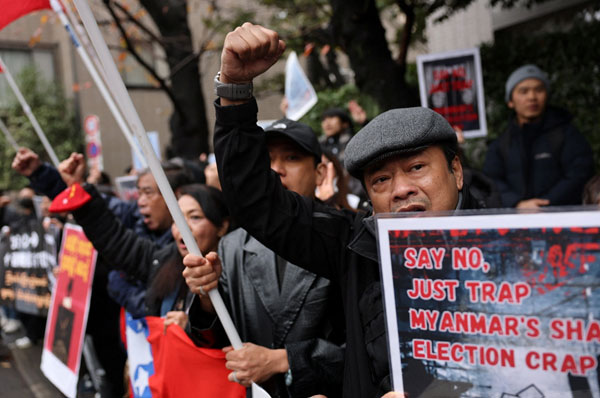
MONTEVIDEO, Uruguay, Dec 22 2025 (IPS) – Myanmar is heading for an election, beginning on 28 December, that’s ostensibly an exercise in democracy – but it has clearly been designed with the aim of conferring more legitimacy on its military junta.


Almost five years after its February 2021 coup, the regime continues to fight pro-democracy forces and ethnic armed organisations, barely controlling a fifth of Myanmar’s territory. The junta has acknowledged that voting won’t be possible in much of the country.

The upcoming election fails every test of democratic legitimacy. The main democratic parties — the National League for Democracy and the Shan Nationalities League for Democracy — are banned. What remains is the Union Solidarity and Development Party, the military’s puppet party, plus minor groups that won no seats in the democratic election held in 2020. Independent media outlets have been crushed, journalists are arrested and intimidated daily and internet access is heavily restricted. In areas that resist military rule, civilians face escalating violence and arbitrary detention.

This election is designed not to reflect the popular will but to entrench military power. It comes as the regime continues its systematic campaign of violence against civilians: weeks before the junta announced the vote, Myanmar’s air force bombed a school in Oe Htein Kwin village, killing two teachers and 22 children, the youngest only seven years old.

The Assistance Association for Political Prisoners has confirmed 6,231 civilians have been killed by the military since the coup, though true figures could be much higher. Nearly half of all civilian deaths are estimated to have been caused by airstrikes. These are not indiscriminate military operations where civilians are collateral damage; they are deliberate attacks where civilians are the targets. The majority of locations of airstrikes have been sites with protected status under international law: camps for displaced people, churches, clinics and schools, often with no presence of armed groups nearby.

The junta has some powerful international allies. China backs it with billions in aid and advanced weapons. Russia supplies the fighter jets that drop bombs on civilians. India quietly sells arms. The three have long provided diplomatic cover and shielded the junta from international accountability. Meanwhile, the Association of Southeast Asian Nations (ASEAN) continues pursuing its failed Five-Point Consensus agreed with the regime in April 2021, despite its systematic violation of every commitment. Regional powers have negotiated exclusively with the junta without input from the National Unity Government — the government in exile formed by democratically elected lawmakers — effectively treating the military regime as Myanmar’s legitimate rulers.

Now recent decisions by the Trump administration threaten to tip the balance decisively in favour of legitimising military rule. Trump has lifted sanctions, cut independent media funding and eliminated the protections formerly afforded to Myanmar’s refugees in the USA. Consistent with his transactional approach, he’s choosing access to rare earth minerals over democracy.

The concern now is that ASEAN member states may follow suit, using the sham election as justification to normalise relations with the military regime. Some have already started moving in this direction, with the junta leader invited to regional meetings.

Myanmar’s pro-democracy forces continue to resist despite the shifting international context. The People’s Defence Forces and ethnic armed groups maintain coordinated operations across most of the country. Civil society continues documenting violations, providing aid to displaced people and advocating for international action. They deserve better than to watch the world legitimise their oppressors.

The junta’s control on the ground remains tenuous, but its diplomatic position is strengthening. Whether this consolidation continues depends on how the world responds to the election. The international community must be clear that treating the election as legitimate would signal to authoritarians everywhere that democratic institutions can be overthrown with impunity, war crimes carry no real consequences and regimes that bomb schools and imprison elected leaders can secure international acceptance.

Inés M. Pousadela is CIVICUS Head of Research and Analysis, co-director and writer for CIVICUS Lens and co-author of the State of Civil Society Report. She is also a Professor of Comparative Politics at Universidad ORT Uruguay.

For interviews or more information, please contact research@civicus.org

  Source