World Summit of Nobel Peace Laureates Calls for Decisive Action, With No Time to Waste

Armed Conflicts, Civil Society, Featured, Global, Global Governance, Headlines, Human Rights, Peace, TerraViva United Nations
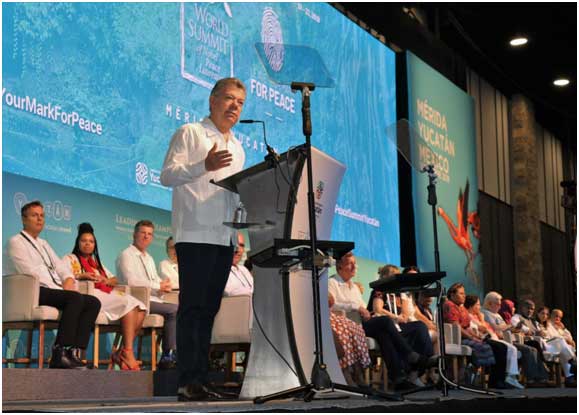
Nobel Peace Laureate and Former President of Colombia Juan Manuel Santos, opens the summit with other Laureates onstage (David Dickstein/Prose & Comms Inc.)

MERIDA, Mexico, Sep 23 2019 (IPS) – In a world of increasing fragility and declining resources, can the world foster peace? With a looming climate crisis, is war inevitable? Will nuclear war be the final result? Are women the ultimate peace builders? How do we train and engage youth to promote peace?


These are some of the questions posed during last week’s three-day World Summit of Nobel Peace Laureates in Merida, Mexico which brought together 1,200 youth and 30 Nobel Peace Laureates — individual and organizations — Juan Manuel Santos, Former President of Colombia; F.W. De Klerk, former President of South Africa; Lord David Trimble, Northern Ireland; and Lech Walesa, former President of Poland.

Women continue to claim a larger seat at the Nobel Peace table. In attendance were Rigoberta Menchu Tum for her work promoting the rights of indigenous peoples; Jody Williams, awarded for her work to eradicate landmines; Shirin Ebadi, for the struggle for women and children’s rights; Tawakkol Karman of Yemen; and Leymah Gbowee of Liberia.

A few key takeaways:
Former President of Colombia, Juan Manuel Santos, awarded a Nobel Peace Prize for work with FARC to negotiate peace and end a brutal civil war, noted positive developments at home, but said some segments are taking steps backwards.

However, he remained steadfast in his commitment to peace: “For each terrorist blinded by hate, there are millions of youth that wish to preserve it. We are not here to say everything is fine, but we are here to leave our mark for peace.”

Discussing the social and economic dimensions of peace, Nobel Laureate Jody Williams railed on the world’s grotesque amounts of income disparity, and called for a total restructuring of the world’s socioeconomic systems.

While many citizens move to massive cities — megalopolises — to access employment, education and health care, they end up encountering racism. “How do we move forward on the common good?” she asked, noting that in America alone, 57 percent of the US disposable budget is spent on the military and weapons, while only 6 percent goes to health and education.

Nobel Laureate Lord David Trimble of Northern Ireland expressed concern over several regions in the world where conflicts continue, such as the Mideast, where there are proxy wars, as well as Iran’s moves to become a hegemonic state.
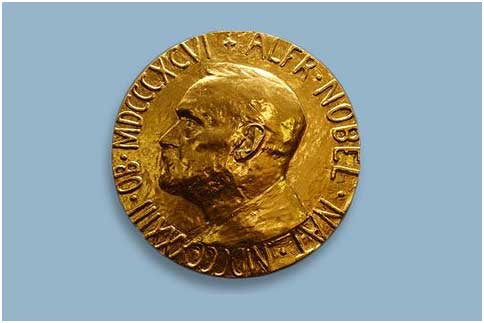
Photographic reproduction of the Nobel Peace Medal. Credit: UN Photo/John Isaac

There are dangers in the South China sea, and threats of a US-China trade war – all of it having a ripple effect, with a potential to greatly impact business and other activities.

Things are getting worse on the democracy front, according to Trimble. “It is not going as well as we would like,” he said, referring to the elections last week in Russia, where the state coerced and manufactured results, producing outcomes that were presented as democratic, but were far from it.

Highlighting the danger of technology controlled in the hands of a few mega corporations, Nobel Laureate Kailash Satyarti called for democratization of tech, and added that, the world has globalized everything, but that it needed to “globalize the compassion that exists in all of us.”

Bernice King, CEO of the King Center, and the youngest daughter of civil rights leader Martin Luther King, challenged all those who came to the summit. “ All of you have a passion to see positive change in our world. We all want peace but it has to be intentional on a daily basis,” she said. Her practical advice? Peace builders need to find an accountability partner to support them when frustrated or depressed.

King offered a message of hope: just like her father: “The only way our world is going to change, is that we have it in our hearts to be love, compassion, strength, nurturing and kindness,” she said, adding that Martin Luther King said that the children of darkness were much more determined than the children of light.

In a panel on nuclear disarmament, Jonathan Granoff, President of the Global Security Institute, and UN Representative of the Permanent Secretariat of the World Summits of Nobel Peace Laureates, posed the question: “Is it legal to annihilate the future?” Because with the power of today’s nuclear weapons, they are a quick end,” he said.

Humanity has come very close to another nuclear war but has been unbelievably lucky, according to Dr. Ira Helfand, co-chair of the Physician’s for Social Responsibility’s nuclear weapons abolition committee.

“Sooner or later our luck will run out. It is no longer a question of when there will be a nuclear war, not if there will be one,” he said, adding that youth today did not understand the enormity of the threat – greater in power and numbers. Put simply, today’s nuclear weapons can annihilate the planet in short order.

In a nod to youth’s achievements, Mohamad Al Jounde was awarded the Turner Social Change Prize, and local student Saskia Niño de Rivera was given the Leave Your Mark for Peace Award.

During closing ceremonies, delegates stated that human rights are non-negotiable. The final document, the Merida Declaration states that: “As long as basic freedoms are violated and gross corruption, violence, extreme poverty, inequality, racism, modern-day slavery and trafficking of persons, discrimination, and discrimination phobias exist, there can be no true peace. We proclaim that true peace is inseparable from the achievement of true justice.”

To learn more and watch archived panel discussions, please visit the Facebook group at World Summit of Nobel Peace Laureates. Also, The World Summit of Nobel Peace Laureates.
  Source

NYC Library Ditches Controversial Saudi Royal MBS’ Event

Active Citizens, Armed Conflicts, Civil Society, Crime & Justice, Editors’ Choice, Featured, Global Governance, Headlines, Human Rights, IPS UN: Inside the Glasshouse, Middle East & North Africa, North America, Peace, Press Freedom, Regional Categories, TerraViva United Nations

Human Rights

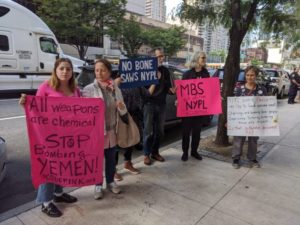
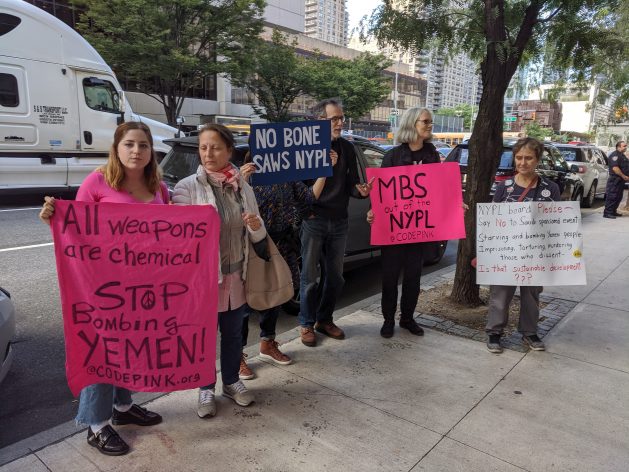
Protestors rallied outside a library building in Manhattan on Wednesday, carrying placards about Saudi Arabia’s war in Yemen and referencing the “bone saw” that was reportedly used to dismember Jamal Khashoggi, a prominent critic of Saudi prince Mohammad bin Salman. Credit: James Reinl/IPS

UNITED NATIONS, Sep 19 2019 (IPS) A New York library appeared to bow to pressure this week when it canceled an event that was being co-hosted by Saudi Arabia’s crown prince Mohammad bin Salman, who is accused of a range of human rights abuses.


On Wednesday, the New York Public Library (NYPL) said it was scrapping the so-called Misk-OSGEY Youth Forum, a workshop on Sept. 23 that was being co-hosted by bin Salman’s Misk Foundation and U.N. youth envoy Jayathma Wickramanayake. 

The event had been blasted by Human Rights Watch (HRW) and other campaign groups, who said it served to whitewash bin Salman’s reputation after the killing of Saudi journalist Jamal Khashoggi in October last year — reportedly on the crown prince’s orders. 

Evan Chesler, chairman of the NYPL board, said that dropping the workshop was the “appropriate thing to do” after weeks of protests and an online petition that had garnered more than 7,000 signatures.

In a statement, the library said it had cancelled the “space rental” amid “concerns about possible disruption to library operations as well as the safety of our patrons” amid “public concern around the event and one of its sponsors”. 

It remains unclear whether the Misk Foundation will seek an alternative venue for the workshop at short notice. A U.N. spokesman told IPS it was “up to Misk to provide information on whether the event will take place elsewhere or not”.

Saudi Arabia’s mission to the U.N. and the Misk Foundation declined to comment on the controversy.

Protestors rallied outside a library building in Manhattan on Wednesday, carrying placards about Saudi Arabia’s war in Yemen and referencing the “bone saw” that was reportedly used to dismember Khashoggi, a prominent critic of bin Salman. 

“This week’s protests show that the public will not keep quiet while the leadership of the NYPL, a treasured repository of civilisation, hires our library out to the butcherer of Khashoggi,” Matthew Zadrozny, president of the Committee to Save the New York Public Library, told IPS.

“The NYPL leadership must explain to the public it serves who signed the deal with bin Salman’s foundation and why.”

Kenneth Roth, director of HRW, blasted the “repression-whitewashing event” on Twitter and asked U.N. secretary-general Antonio Guterres to scrap the partnership between his youth envoy, Wickramanayake, and the crown prince’s charity. 

Suzanne Nossel, CEO of rights group PEN America, said the library had made the “right choice”, addiing bin Salman’s government had “orchestrated the murder and dismemberment of journalist Jamal Khashoggi”.

“Hosting this event just days before the anniversary of Jamal’s killing would have been particularly appalling not just for his family, friends, and colleagues, but also for those currently being persecuted in the kingdom.”

Nossel also noted that the library “is the crown jewel of the literary community in New York” and it stands for “free exchange of ideas and free expression, qualities that the crown prince has repeatedly disdained in both words and actions”.

The NYPL event was set to see some 300 budding young entrepreneurs learn about green themes, corporate responsibility and other parts of the U.N.’s Sustainable Development Goals (SDG) agenda.

Khashoggi, a U.S.-based journalist who frequently criticised the Saudi government, was killed and dismembered on Oct. 2 last year after visiting the Saudi consulate in Istanbul, where he collecting documents for his wedding.

The CIA assessed that bin Salman had ordered Khashoggi’s killing. U.N. expert Agnes Callamard has described the death as a “premeditated execution,” and called for bin Salman and other high-ranking Saudis to be investigated.

Officials in Riyadh, who initially said Khashoggi had left the premises unharmed, now say the journalist was killed by a rogue hit squad that did not involve bin Salman. Activists have since pushed for accountability over the killing.

  Source

Translating Ambition to Action: High Hopes for United Nations Action Week

Biodiversity, Climate Change, Combating Desertification and Drought, Conferences, Development & Aid, Environment, Featured, Global, Headlines, Health, Natural Resources, Poverty & SDGs, TerraViva United Nations

Opinion

Cameron Diver is Deputy Director-General, the Pacific Community (SPC)

New Caledonia, Sep 13 2019 (IPS) – In less than 10 days, countries from around the planet will come together in New York for the United Nations Secretary General’s Climate Action Summit. I look forward to representing the Pacific Community (SPC) at this important event, and throughout “Action Week” during the upcoming UN General Assembly.


Cameron Diver

The interconnections and synergies between major issues of global concern and the key role multilateralism and international cooperation can play in helping tackle these challenges are illustrated by the agenda of the week from 23 to 27 September. Underpinned by the Sustainable Development Goals, each of the high-level summits will focus on commitments to accelerate action across climate change, enhance efforts to secure healthy, peaceful and prosperous lives for all, mobilise sufficient financing to realise the 2030 Agenda and address the specific issues and vulnerabilities of small island developing states.

The week of summits kicks off with a focus on climate action. And this is, in my mind, highly appropriate. The multiplier effect of climate change undermines our efforts to achieve the sustainable development goals, it increases the challenges of biodiversity conservation and sustainable use, it intensifies competition and the potential for conflict around natural resources and it poses the single greatest existential threat to the lives and livelihoods of millions of people around the globe. From where I stand, the science on climate change is clear. To take only these examples, the IPCC Special Reports on the impacts of global warming of 1.5° above pre-industrial levels and climate change, desertification, land degradation, sustainable land management, food security and greenhouse gas fluxes in terrestrial ecosystems provide us with the most robust, high quality evidence base to understand the significant negative impact climate change is already having on our natural environment, on the wellbeing of people, ecosystems, flora and fauna and the massive and potentially irreversible consequences of inaction. As regards our ocean, the upcoming Special Report on the Ocean and Cryosphere in a Changing Climate is likely to confirm what the islands of the Blue Pacific continent, and others whose cultures, traditions and livelihoods are deeply attached to the ocean, have already sensed: the climate crisis is a real and present threat to ocean and coastal ecosystems and the human communities that depend on them.

The stakes are high, but where there is a threat there is also an opportunity. If we act now, there is still have time effectively to tackle the climate crisis! To put it simply: ambition without action is insufficient and simply not an option. SPC is committed to working with our Member States, international and regional partners to translate climate ambition into tangible climate action, for both mitigation and adaptation. The benefits could be huge, with the Global Commission on Adaptation estimating that investing $1.8 trillion in climate adaptation globally in just five areas from 2020 to 2030 could generate $7.1 trillion in total net benefits. We are also convinced that we must collectively harness the synergies between, for example, climate and the ocean, biodiversity, health, security, economic development, food systems, land use, gender and many other development areas to fully exploit the potential of the SDGs and ensure that future pathways to sustainable development are integrated, inclusive, nature-friendly, climate-informed and resilient. SPC is already implementing this approach with its Members and partners. One illustration is our EU funded PROTEGE project, whose intended outcomes include a transition to sustainable integrated agriculture and sound forestry resource management; sustainable fisheries and aquaculture management that is integrated in and adapted to island economies; sustainable integrated water resource management; and invasive alien species control, all against a backdrop of climate-change hazards that require ecosystem and biodiversity protection, resilience and restoration.

As was recently remarked to me at the Green Climate Fund Global Programming Conference in Korea: “we already know what we must do. We need to stop talking and start doing”. It is my sincere hope that “Action Week” in New York will indeed be a turning point for “doing”; a catalyst for firm, measurable commitments to tangible actions that match the level of ambition already expressed to address the climate crisis and the multiple development challenges that remain as we approach the final decade of the 2030 Agenda. If we do not translate ambition into action, we will fail ourselves, we will fail future generations and we will fail our planet. If, however, we take up the challenge and take sustained, coordinated and integrated action, we can win the battle against climate change, create new and innovative opportunities for development, deliver on the promise of the Global Goals and trace a positive pathway to new era of resilient and sustainable development. High hopes indeed…


Calls for Reform, Research and Reorganisation in Leprosy Healthcare

Active Citizens, Asia-Pacific, Civil Society, Conferences, Development & Aid, Featured, Global, Headlines, Health, Human Rights, Regional Categories, TerraViva United Nations

Human Rights

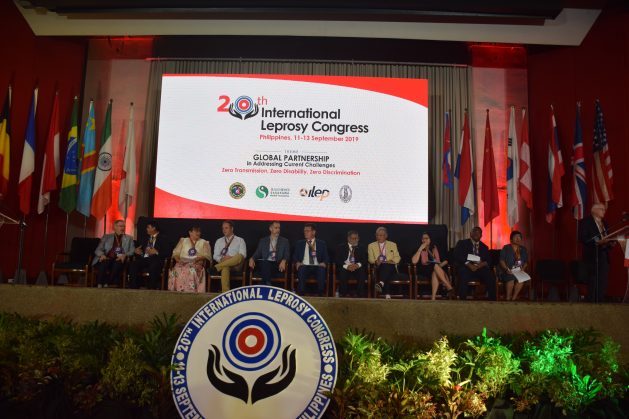
The 20th International Leprosy Congress (ILC) is being held Sept. 10 to 13 in Manila, Philippines. The conference is hosted every three years and was last held in China in 2016. Credit: Stella Paul/IPS

MANILA, Sep 12 2019 (IPS) – Rachna Kumari of Munger in Eastern India’s Bihar state is not yet 30. But she’s already been married at 18, abandoned by her husband after she was diagnosed with leprosy and become an award-winning advocate of the disease. She has traversed a long road. And this week she undertook another step in her journey to fly to Manila, Philippines, as a delegate at the 20th International Leprosy Congress (ILC).


The grassroots leader, who is employed by the International Leprosy Elimination Partnership (ILEP), has also previously traveled to Ethiopia and China to share stories about her life and her work.

Prior to attending the ILC yesterday Sept. 12, she participated in the Global Forum of People’s Organisations on Hansen’s Disease, an event co-organised by Japan’s  The Nippon Foundation (TNF) and Sasakawa Health Foundation (SHF). The global forum gave her valuable insights into the universal challenges of leprosy-affected and leprosy advocates such as stigma and lack of financial sustainability, Kumari said.

She said she also gained technical education and management skills, which she feels are crucial for success in advocacy.

She added that when she carries out her work in communities across Munger, she has no official identification to show many of the Hansen’s disease-affected persons she comes across, many of whom are weary of strangers as they continue to face discrimination and stigma.

This simple form of accreditation, Kumari said, played a huge role in advocacy against the disease.

“[In] my community, I have nothing to prove that I am an advocate, a knowledge builder. So, people doubt me, they don’t know if they [can] trust me. A simple document of identification can be a big step to build trust between a community worker and her community,” Kumari told IPS.

Maya Ranavare, who works as a treasurer in Association of People Affected by Leprosy (APAL), in western India’s Maharashtra state, says that partnerships among organisations must not remain in closed rooms but should instead result in collective action that reaches communities.

“There is a sense of competition among  people’s organisations. Instead, we must act collectively. Also, if it is a partnership, then there should not be duplicity. Tasks should be distributed evenly. If one organisation is doing mobilisation, other should work on technical education. This will increase everyone’s skill and ability,” Ranavare told IPS.

According to Dr Arturo Cunanan, the Chief Medical Officer of the Culion Sanitarium and General Hospital in the Philippines, there needs to be programmatic changes in the government public health system. Budgetary allocation, innovation, new research and sensitisation of healthcare workers are all needs of the hour.

“Leprosy elimination is now like a car that has run out of fuel. We need that fuel right now. The fuel is innovation. Take vaccination for example. Why is that even after centuries, we still don’t have a vaccination for universal application?

“Also, we need innovative, easier ways to diagnose leprosy. If you look at Tuberculosis, there are several ways to do a quick test and find out if a person has it. But for leprosy, we still have only clinical test. We need new tools, quicker ways and for all of that we need new investments in innovation, research,“ Cunanan told IPS.

The ILC started runs Sep 10 to 13. The congress will identify the priorities for a future course of action to end leprosy. Currently there are 200,000 new leprosy cases reported every year across the world, with 60 percent of those new cases originating in India.

According to the organisers, the congress will identify the priorities for the future course of action for achieving zero leprosy. The congress also emphasised the importance of partnerships and a new future partnership among the leprosy-affected people’s organisations has already started between HANDA – a Chinese NGO– and PERMATA, an NGO based in Indonesia.

HANDA, which has recently been recognised by the government of China for their skills in project management, finance management and organisational re-structuring, is set to share these crucial skills with PERMATA. 

“We will soon host a delegation from PERMATA in our Guanzhou office. They have a special interest in finance management and we are ready to share our expertise and experience in that area with them,” Sally Qi of HANDA told IPS.

SHF was instrumental in building this partnership and encouraged  both HANDA and PERMATA to start a dialogue on skill sharing, Qi added.


‘Conference Emphasises Need for Partnerships to Create a World Without Leprosy’

Active Citizens, Aid, Asia-Pacific, Civil Society, Conferences, Development & Aid, Editors’ Choice, Featured, Global, Headlines, Health, Human Rights, Regional Categories, TerraViva United Nations

Human Rights

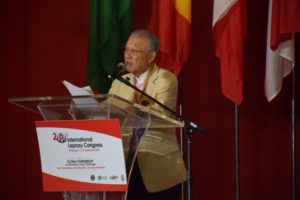
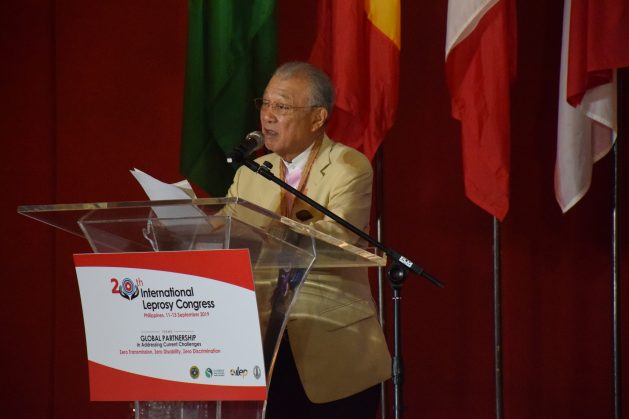
Yohei Sasakawa, chair of The Nippon Foundation and World Health Organisation (WHO) Goodwill Ambassador for Leprosy Elimination, delivered a keynote address at the 20th International Leprosy Congress (ILC). Credit: Stella Paul/IPS

MANILA, Sep 11 2019 (IPS) – Forty years ago, Yohei Sasakawa saw his father moved to tears after meeting and witnessing the suffering of people affected by leprosy – also known as Hansen’s disease. Not only did the patients have a physical illness, but they also suffered from social exclusion and discrimination. It made the young Sasakawa vow to work for the elimination of leprosy from the world – just as his father had been doing.


Decades later, after visiting 120 countries and having meetings with countless policy makers and state leaders, Sasakawa – now the World Health Organisation (WHO) Goodwill Ambassador  for Leprosy Elimination – is delivering on his promise.

At the first day of the 20th International Leprosy Congress (ILC), being held in Manila, Philippines, the chairperson ofThe Nippon Foundation (TNF) called for activists, scholars and those affected the globe over, to rally behind the goal of a world free of  stigma, discrimination and violation of human rights of those affected by leprosy. The ILC, which ends Sep 13, is supported by TNF sister organisation the Sasakawa Health Foundation (SHF).

Sharing his experiences, he recalled how he, TNF and SHF lobbied the United Nations to recognise the elimination of stigma against leprosy-affected people as a human rights issue.

Sasakawa reminded delegates that it was a tough journey against several odds as policy makers and diplomats  showed little interest in the human rights of leprosy-affected people. He told the congress how during a 2003 U.N. Human Rights Council meeting in Geneva, only five members attended the event to discuss stigma as a human rights violation in a room that could accommodate 50.

Not one to give up, Sasakawa kept pursuing the issue until finally in December 2010 the U.N. General Assembly unanimously adopted the resolution on elimination of discrimination against persons affected by leprosy and their family members and accompanying principle and guidelines was passed.

“I believe the elimination has been an important milestone in my journey,” Sasakawa said.

But despite the U.N. resolution and various local laws at country level worldwide abolishing policies like segregation and isolation of the leprosy-affected, society still stigmatises and discriminates against Hansen’s disease patients as well those who work within the field, like health care workers etc.

He said one example of this remains is the classification of leprosy as a neglected tropical disease.

“I would like to express my opposition to leprosy being considered as one of the neglected tropical diseases. Leprosy has never been neglected even for a moment by both persons affected and by people who have worked hard for their betterment. In my opinion, this medical terminology feels like it is looking down on the patients and also shows a lack of respect towards those are fighting against leprosy today. Leprosy is an ongoing issue.”

However, Sasakawa also acknowledged that in other areas — such as the partnerships and networking — there has been great progress. The Global Partnership for Zero Leprosy network was a significant step forward.

“The  collaboration will greatly enhance our work towards achieving ‘Zero Leprosy,’” he said, adding that the strengthening of these partnerships, especially with the governments, was crucial to reach the common goal of a leprosy-free world.

“Whenever I go abroad, I always meet with the national leaders of the countries. We cannot solve the issue of leprosy without their understanding and support. Without their support, we cannot secure the budget for activities to eliminate leprosy and the associated discrimination,” he reminded the congress.

Rachna Kumari, of International Federation of Anti-leprosy Associations or ILEP, who is based in Munger in Eastern India’s Bihar state, told IPS: “We cannot end stigma just by treating leprosy as a health issue.”

If only health workers are assigned to work on leprosy, they will work on medication. That is not enough to solve the problem we face. So, we need education. Government must include information on leprosy in school books. There must be billboards and large posters which can educate both patients and healthcare workers. Only with such a holistic approach we can win this,” Kumari said.

Earlier, delivering the keynote speech, the Philippine Secretary of Health Francisco Duque asserted that his government remains serious about respecting the rights of leprosy-affected people.

“The vision of our Universal healthcare for the Filipino people is deeply tied to the aspirations of the 2016-2020 global strategy for the leprosy and goal number 3 of the SDGs or the sustainable development goals. We remain committed to these goals and aspirations. We are committed to zero stigma, zero disability, zero transmission and  zero disease,” Duque told the congress.

Duque also stressed the importance of partnerships to achieve the goals yet unmet.

“We are only a  few months away form 2020 and our midterm strategy is only getting underway. We must work together. This year’s conference emphasises the need for partnerships to create a world without leprosy. And our success and your success may define the relations we have made and continue to make.

Acknowledging stigma as a “barrier for early detection and treatment“ of leprosy, Huong Thi Giang Tran, WHO’s Director for Disease Control in the Western Pacific also said that stigma limits the opportunity for life and leads to social and economic exclusion. She called for the addressing of stigma at the policy level.


Let’s Get Climate Action into Traction with Gender Equality

Civil Society, Climate Change, Featured, Global, Green Economy, Headlines, Peace, TerraViva United Nations, Women & Climate Change

Opinion

Ulrika Modéer is UNDP’s Assistant Administrator and Director of the Bureau of External Relations and Advocacy, and Anita Bhatia is UN Women’s Deputy Executive Director for Resource Management, Sustainability and Partnerships.

Credit: UN Women

UNITED NATIONS, Sep 11 2019 (IPS) – Climate change is already altering the face of our planet. Research shows that we need to put all our efforts over the coming decade to limit warming to 1.5°C and mitigate the catastrophic risks posed by increased droughts, floods, and extreme weather events.


But our actions will not be effective if they do not include measures to ensure social justice, equality and a gender perspective. So, how do we integrate gender equality in climate change actions?

The impact of climate change affects women and girls disproportionately due to existing gender inequalities. It also threatens to undermine socio-economic gains made over previous decades.

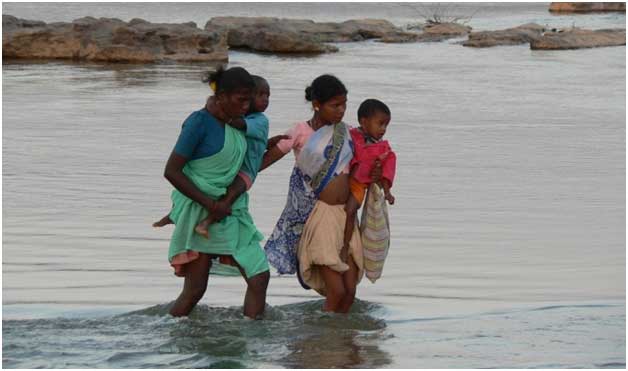
With limited or no access to land and other resources including finance, technology and information, women and girls suffer more in the aftermath of natural disasters and bear increased burdens in domestic and care work.

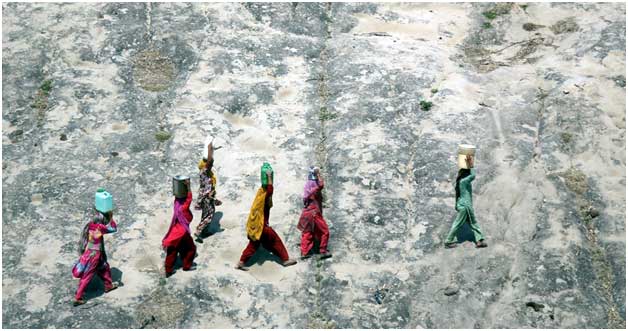
Women and girls have also seen their water collection time increased and firewood and fodder collection efforts thwarted in the face of droughts, floods and deforestation, occupying a significant portion of their time that could have been used for their education or leisure.

This is not only theory. For example, women and children accounted for more than 96 per cent of those impacted by the flash floods in Solomon Islands in 2014 and in Myanmar, women accounted for 61 percent of fatalities caused by Cyclone Nargis in 2008.

Women and girls also remain marginalized in decision-making spheres — from the community level to parliaments to international climate negotiations. Global climate finance for mitigation and adaptation programmes remain out of reach for women and girls because of their lack of knowledge and capacity to tap into these resources.

Despite these challenges, women and girls play a critical role in key climate related sectors and have developed adaptation and resilience-building strategies and mitigation techniques, such as driving the demand for renewable energy at the household and community levels for lighting, cooking and productive use solutions that the international community must now support.

Women are holders of traditional farming methods, first responders in crises situations, founders of cooperatives, entrepreneurs of green energy, scientists and inventors, and decision-makers with respect to the use of natural resources.

Women comprise an average of 43 percent of the agricultural work force in developing countries1 and manage 90% of all household water and fuel-wood needs in Africa. Some studies have shown that if women were afforded equal access to productive resources as men, their agricultural outputs would exceed men’s by 7 to 23 percent. It is therefore imperative to embrace and scale-up the initiatives of the 51 per cent of the world’s population.

In recent times, women and girls have used their knowledge and experience to lead in mitigation efforts. From developing apps to track and reduce the carbon emitted as a result of individual consumption, to reducing food by connecting neighbors, cafes, and local shops to share leftover and unsold food 2.

Young women scientists, like South-African teenager Kiara Nirghin, are making a difference in the fight against climate change. They are building on the legacies of women and girls such as Nobel Prize winner Wangari Maathai, who empowered communities to manage their natural resources in a sustainable way.

At the same time, UNDP and UN Women have been collaborating to advance gender equality and women’s leadership on climate change. For example, in Ecuador, the two UN agencies have teamed up with the government to support the inclusion of gender in the country’s climate action plans.

UNDP and UN Women have also collaborated globally to ensure that gender remains a key factor when world leaders make critical decisions on climate change.

If policies and projects take into account women’s particular roles, needs and contributions to climate action and support women’s empowerment, there will be a greater possibility to limit warming to 1.5°C in line with the 2030 Agenda for Sustainable Development. We must continue to engage women and women’s organizations, learning from their experiences on the ground to build the evidence for good practices and help replicate more inclusive climate actions.

The UN Secretary-General’s Climate Action Summit in New York on September 23, 2019 is a unique opportunity to elevate at the highest level the need for substantive participation of women and girls in efforts against climate change.

At the Summit, there will be several initiatives put forth to address climate change, including one focusing on gender equality. The initiative recognizes the differential impact of climate change on women and girls, and seeks support for their leadership as a way to make climate actions more effective.

It calls for the rights, differentiated needs and contributions of women and girls to be integrated into all actions, including those related to climate finance, energy, industry and infrastructure. It promotes support for women and girls in developing innovative tools and participating in mitigation and adaptation efforts and calls for accountability by tracking and reporting progress towards achieving these goals.

For climate action to get more traction and be effective, we need a critical mass of Governments and other stakeholders to sign on to the Climate Action Summit’s gender-specific initiative. The world cannot afford to keep limiting the potential of women and girls in shaping climate actions, as all evidence points towards the benefits of their involvement.

There is already interest by United Nations Member States, as shown in the increased integration of gender considerations in their national climate plans, but a broader movement is needed. We need multi-stakeholder partnerships and engage a critical mass of supporters – governments, UN entities, financial mechanisms, and civil society organizations to support the gender-specific initiative of the SG’s Climate Action Summit.

The time for gender-responsive climate action is now.

1 Food and Agriculture Organization of the United Nations (FAO), The State of Food and Agriculture: Closing the Gender Gap for Development (Rome: FAO, 2011a).
2 Olio, a food-sharing app was founded by women from Sweden, the UK and USA. For more info: https://unfccc.int/climate-action/momentum-for-change/women-for-results/women-leading-a-food-sharing-revolution; One Million Women was founded by a woman in Australia to get one million women to change their lifestyles to mitigate climate change. The group has an app that provides the tools to cut carbon pollution in home energy savings and clean energy options, minimising food waste, reducing over-consumption, investing and divesting (your money) wisely, sustainable fashion, low-impact travel, etc. For more info: https://www.1millionwomen.com.au/

  Source