International Women’s Day, 2023World Parliaments Could Take Another 80 Years to Achieve Gender Parity Among Legislators

Despite advances in gender representation in legislative bodies, the track record of women in the executive branches of government – as heads of state or heads of government — remains low.

By Thalif Deen
UNITED NATIONS, Mar 8 2023 (IPS)

For the first time in history, says a new report from the Inter-Parliamentary Union (IPU), not a single functioning parliament in the world is “male-only”.

Is the increasing number of women in parliaments a singular achievement for gender empowerment? Or is it the result of mandatory legislative quotas for women’s representation in world’s parliaments?


According to the latest IPU report, Women in Parliament 2022, women’s participation in parliament has never been as diverse and representative as it is in many countries today.

The findings are based on the 47 countries that held elections in 2022. In those elections, women took an average 25.8% of seats up for election or appointment. This represents a 2.3 percentage point increase compared to previous renewals in these chambers.

Brazil saw a record 4,829 women who identify as Black running for election (out of 26,778 candidates); in the US, a record number of women of colour (263) stood in the midterm elections; LGBTQI+ representation in Colombia tripled from two to six members of the Congress; and in France, 32 candidates from minority backgrounds were elected to the new National Assembly, an all-time high of 5.8% of the total.

The report said legislated quotas were again a decisive factor in the increases seen in women’s representation.

Thomas Fitzsimons, IPU’s Director of Communications told IPS there are many factors that explain the successes of the countries that have made progress.

For example, he pointed out, technological and operational transformations, largely due to the COVID-19 pandemic, have increased the potential for parliaments to become more gender-sensitive and family-friendly.

“The influence of gender issues on election outcomes, with increased awareness of discrimination and gender-based violence, as well as alliances with other social movements, also helped drive strong results for women in some of the parliamentary elections,” he noted.

“But if we had to choose one primary factor, it would be legislated quotas. Legislated quotas enshrined in the constitution and/or electoral laws require that a minimum number of candidates are women (or of the under-represented sex),” he said.

Chambers with legislated quotas or combined with voluntary party quotas produced a significantly higher share of women than those without in the 2022 elections (30.9% versus 21.2%).

“As for the future, we need to accelerate the momentum which is still too slow. At current rates of growth, it will take another 80 years before we reach parity,” Fitzsimons declared.

Antonia Kirkland Global Lead — Legal Equality and Access to Justice.at Equality Now, told IPS it is encouraging to see IPU’s data revealing that more women than ever are in political decision-making roles globally, and there has been an overall increase in the number of women in both government and parliamentary posts.

IPU’s data clearly demonstrates that quotas on women’s representation have had a positive, big impact. Countries applying quotas have enjoyed a 9.7% increase in women in parliaments in comparison to countries without, she said.

“However, it is lamentable that women are still so underrepresented at all levels of political decision-making, accounting for only 9.8% of Heads of Government and just over a quarter of MPs. It is also deeply concerning that gender parity in parliaments is at least 80 years away if we continue at the current pace.”

With the World Bank finding that only 14 countries have full legal equality between women and men, and UN Women gaging it will take another 286 years to eliminate gaps in legal protections, duty bearers must create a safe and empowering environment for women to engage in politics that fosters greater legal equality, said Kirkland.

She said more needs to be done to increase women’s political representation by understanding and removing obstacles that impede women’s participation in the public sphere and decision-making.

“To accelerate gender parity in parliaments, we need an end to sex-discriminatory laws in all areas of life which hold women back from engaging in politics in the first place.”

Political parties should highlight the importance and advantages of gender diversity, and implement initiatives that involve women in politics at all stages and within all branches of the political arena.

IPU’s report, she pointed out, shows that a shocking percentage of women in parliament are subjected to gender-based violence and sexual harassment in their own parliaments, on the streets, and in the digital world. Concerted efforts are required to tackle head-on gender-based violence and abuse targeting women politicians both online and offline.

Governments, parliamentarians, the private sector, and civil society need to seize every opportunity – such as the upcoming UN Global Digital Compact – to work together so that women are protected from online abuse. Perpetrates and those who facilitate or provide platforms for such abuse must be held accountable.

“Tackling this problem would result in less self-censorship by parliamentarians, greater interest from girls and young women to serve in government, and ultimately stronger democracies that are both more peaceful and gender-equal, declared Kirkland.

At the regional level, the report said, six countries now have gender parity (or a greater share of women than men) in their lower or single chamber as of 1 January 2023. New Zealand joined last year’s club of five consisting of Cuba, Mexico, Nicaragua, Rwanda and the United Arab Emirates (UAE), at the top of the IPU’s authoritative global ranking of women in parliament.

Other notable gains in women’s representation were recorded in Australia (the strongest outcome of the year with a record 56.6% of seats won by women in the Senate), Colombia, Equatorial Guinea, Malta and Slovenia.

High stakes elections in Angola, Kenya and Senegal all saw positive strides for women. Wide divides characterized results in Asia: record numbers of women were elected to the historically male-dominated Senate in Japan but in India, elections to the upper chamber led to women occupying only 15.1% of seats, well below the global and regional averages.

The Pacific saw the highest growth rate in women’s representation out of all the regions, gaining 1.7 percentage points to reach an overall average of 22.6% women in parliament. Every Pacific parliament now has at least one-woman legislator.

In the 15 European chambers that were renewed in 2022, there was little shift in women’s representation, stagnating at 31%.

In the Middle East and North Africa region, seven chambers were renewed in 2022. On average, women were elected to 16.3% of the seats in these chambers, the lowest regional percentage in the world for elections held in the year. Three countries were below 10%: Algeria (upper chamber: 4.3%), Kuwait (6.3%) and Lebanon (6.3%).

Bahrain is an outlier in the region with a record eight women elected to the lower chamber, including many first-time lawmakers. 73 women ran for election to the lower chamber (out of a total of 330 candidates) compared with the 41 women who ran in the last election in 2018. Ten women were also appointed to the 40-member upper chamber.

The IPU is the global organization of national parliaments. It was founded more than 133 years ago as the first multilateral political organization in the world, encouraging cooperation and dialogue between all nations. Today, the IPU comprises 178 national Member Parliaments and 14 regional parliamentary bodies. It promotes democracy and helps parliaments become stronger, younger, gender-balanced and more representative. It also defends the human rights of parliamentarians through a dedicated committee made up of MPs from around the world.

For more information about the IPU, contact Thomas Fitzsimons at e-mail: press@ipu.org or tf@ipu.org or tel: +41(0) 79 854 31 53

IPS UN Bureau Report


!function(d,s,id){var js,fjs=d.getElementsByTagName(s)[0],p=/^http:/.test(d.location)?’http’:’https’;if(!d.getElementById(id)){js=d.createElement(s);js.id=id;js.src=p+’://platform.twitter.com/widgets.js’;fjs.parentNode.insertBefore(js,fjs);}}(document, ‘script’, ‘twitter-wjs’);  

Excerpt:

This feature is part of a series to mark International Women’s Day, March 8. Source

Racist Political System Thwarts Candidacy of Mayan Woman in Guatemala

Thelma Cabrera and Jordán Rodas launch their candidacy for the presidency and vice presidency of Guatemala in December 2022, which has been vetoed by the courts, in a maneuver that has drawn criticism from human rights groups at home and abroad. CREDIT: Twitter

Thelma Cabrera and Jordán Rodas launch their candidacy for the presidency and vice presidency of Guatemala in December 2022, which has been vetoed by the courts, in a maneuver that has drawn criticism from human rights groups at home and abroad. CREDIT: Twitter

By Edgardo Ayala
SANTA CATARINA PALOPÓ, Guatemala, Mar 4 2023 (IPS)

Centuries of racism and exclusion suffered by indigenous peoples in Guatemala continue to weigh heavily, as demonstrated by the denial of the registration of a political party that is promoting the presidential candidacy of indigenous leader Thelma Cabrera in the upcoming general elections.


On Mar. 2, the Guatemalan Constitutional Court ruled against Cabrera’s party, the leftist Movement for the Liberation of the Peoples (MLP), which had appealed a Feb. 15 Supreme Court resolution that left them out of the Jun. 25 elections.“There is a racist system and structure, and we indigenous people have barely managed to start climbing the steps, but with great difficulty and zero opportunities.” — Silvia Menchú

Cabrera’s candidacy and that of her vice-presidential running-mate Jordán Rodas are now hanging by a thread, with their hopes depending on a few last resort legal challenges.

The deadline for the registration of candidates is Mar. 25.


A centuries-old racist system

Guatemala’s political and economic elites “are looking for ways to keep her (Cabrera) from registering; everyone has the right to participate, but they are blocking her,” Sonia Nimacachi, 31, a native of Santa Catarina Palopó, told IPS. The municipality, which has a Cachiquel Mayan indigenous majority, is in the southwestern Guatemalan department of Sololá.

“We would like a person with our roots and culture to become president, I think it would help our people,” added Nimacachi, standing by her street stall in the center of town.

Nimacachi, a Cachiquel Mayan woman, sells “granizadas” or snow cones: crushed ice sweetened with syrup of various flavors, perfect for hot days.

“There is a racist system and structure, and we indigenous people have barely managed to start climbing the steps, but with great difficulty and zero opportunities,” Silvia Menchú, director of the K’ak’a Na’oj (New Knowledge, in Cachiquel) Association for the Development of Women, told IPS.

The organization, based in Santa Catarina Palopó, carries out human rights programs focused on indigenous women.


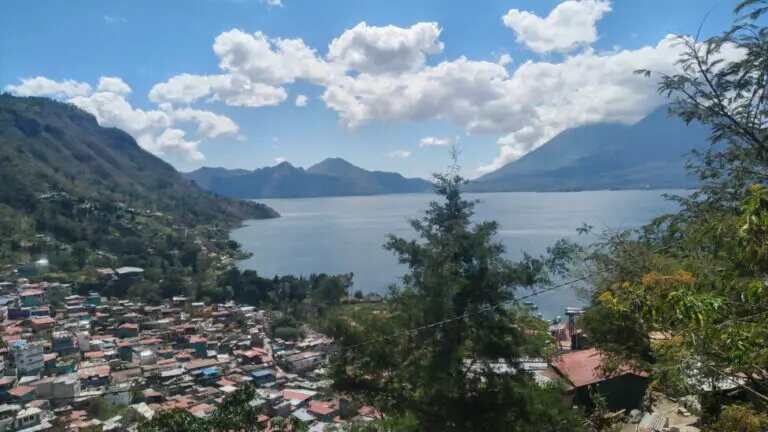
Santa Catarina Palopó, a picturesque Cachiquel Mayan town located on the shore of Lake Atitlán in the southwestern Guatemalan department of Sololá, is preparing for the upcoming general elections, where voters will choose a new president, vice president, 160 members of Congress, 20 members of the Central American Parliament, as well as 340 mayors. CREDIT: Edgardo Ayala/IPS

Santa Catarina Palopó, a picturesque Cachiquel Mayan town located on the shore of Lake Atitlán in the southwestern Guatemalan department of Sololá, is preparing for the upcoming general elections, where voters will choose a new president, vice president, 160 members of Congress, 20 members of the Central American Parliament, as well as 340 mayors. CREDIT: Edgardo Ayala/IPS


“Racism has prevailed, we are mistreated everywhere by the government and the authorities, we are seen as people with little capacity,” said Menchú, of the Maya Quiché ethnic group.

An alleged illegality attributed to Rodas, the vice-presidential candidate, was the cause for denying the MLP the right to register for the elections.

Analysts and social organizations perceive obscure maneuvering on the part of the powers-that-be, who cannot accept the idea that an indigenous woman is trying to break through the barriers of the country’s rigid, racist political system.

Cabrera is a 51-year-old Mayan Mam woman who is trying for a second time to run in the unequal fight for the presidency of this Central American country of 14.9 million inhabitants.

Of the total population, 43.7 percent identify as indigenous Mayan, Xinca, Garífuna and Afro-descendant peoples, according to the 2018 census.

In the 2019 elections Cabrera came in fourth place, winning 10 percent of the total votes cast.

In the Jun. 25 general elections voters will choose a new president for the period 2024-2028, as well as 160 members of Congress and 20 members of the Central American Parliament, and 340 mayors.

In Guatemala, the ancient Mayan culture was flourishing when the Spanish conquistadors arrived in the 16th century.

The descendants of that pre-Hispanic civilization still speak 24 different autochthonous languages, most of which are Mayan.

Years of exclusion and neglect of indigenous rural populations led Guatemala to a civil war that lasted 36 years (1960-1996) and left some 250,000 dead or disappeared.


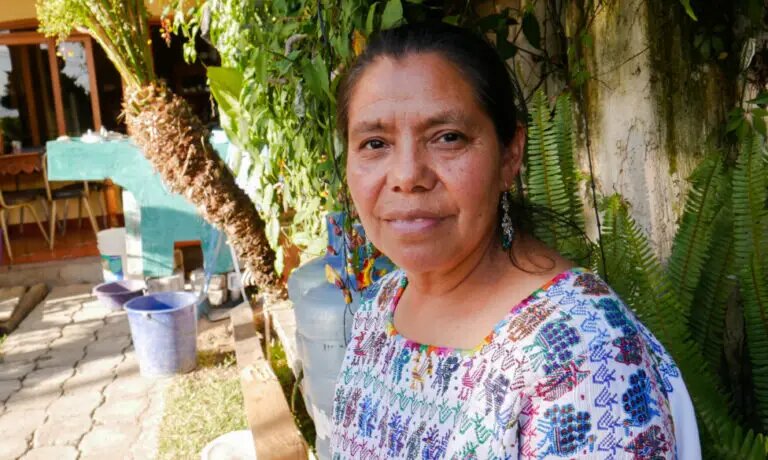
The presidential candidacy of Thelma Cabrera, of the Movement for the Liberation of the Peoples (MLP), must be allowed by the Guatemalan authorities, so that the indigenous population is represented in the Jun. 25 elections, says Silvia Menchú, director of the K’ak’a Na’oj (New Knowledge, in Cachiquel) Association for the Development of Women. CREDIT: Edgardo Ayala/IPS

The presidential candidacy of Thelma Cabrera, of the Movement for the Liberation of the Peoples (MLP), must be allowed by the Guatemalan authorities, so that the indigenous population is represented in the Jun. 25 elections, says Silvia Menchú, director of the K’ak’a Na’oj (New Knowledge, in Cachiquel) Association for the Development of Women. CREDIT: Edgardo Ayala/IPS


A blatant maneuver

The Supreme Electoral Tribunal’s (TSE) rejection of the MLP arose from a complaint against Rodas, who served between 2017 and 2022 as head of the Office for the Defense of Human Rights.

In that office, Rodas strongly questioned alleged acts of corruption by the current government of Alejandro Giammattei, who took office in January 2020.

The criminal complaint against the vice-presidential candidate was filed on Jan. 6 by the current head of the Office for the Defense of Human Rights, Alejandro Córdoba.

After Cabrera and Rodas attempted to register as candidates, Córdoba said he had “doubts” about some payments allegedly received by his predecessor in the Office for the Defense of Human Rights.

His “doubts” apparently had to do with some alleged illegality on the part of Rodas, but since Córdoba has not described it in detail, his statements have been nothing but a weak half-hearted accusation.

However, that was enough for the Supreme Electoral Tribunal to reject the MLP on Feb. 2, which triggered protests by rural and indigenous people, who blocked roads in at least 12 parts of the country.

According to Guatemalan law, all candidates for popularly elected positions must have a document that attests that they have no pending legal issues.

But analysts have pointed out that this document should only take into account actual legal rulings handed down by courts, and not “doubts” vaguely expressed by some government official.

By vetoing Rodas, the TSE automatically bars his presidential runningmate Cabrera, who may actually be the ultimate target of the maneuver, since she is the one who is trying, once again, to win the votes of the indigenous population.

On Feb. 15, the MLP runningmates filed a provisional injunction with the Supreme Court, so that it would take effect immediately and overrule the TSE’s decision, while the Supreme Court studied and resolved the matter in depth.

But the injunction was rejected, so the MLP appealed the next day to the Constitutional Court, asking it to review the case and order the Supreme Court to admit the provisional injunction, to allow the fight for the registration of Cabrera and Rodas to continue forward.

But the appeal was denied Thursday Mar. 2 by the Constitutional Court.

However, the Supreme Court has not yet issued a final ruling on the injunction, but only a provisional stance. This means that when it is finally issued, if it goes against the MLP, Cabrera and Rodas could once again turn to the Constitutional Court, in a last-ditch effort.

But it seems as if the die is already cast.

In a tweet on Thursday Mar. 2, Rodas wrote: “The constitutional justice system has denied my constitutional right to be elected and denies the population the right to choose freely. We await the Supreme Court ruling on the injunction and the position of the @IACHR (Inter-American Commission on Human Rights). Our fight continues.”


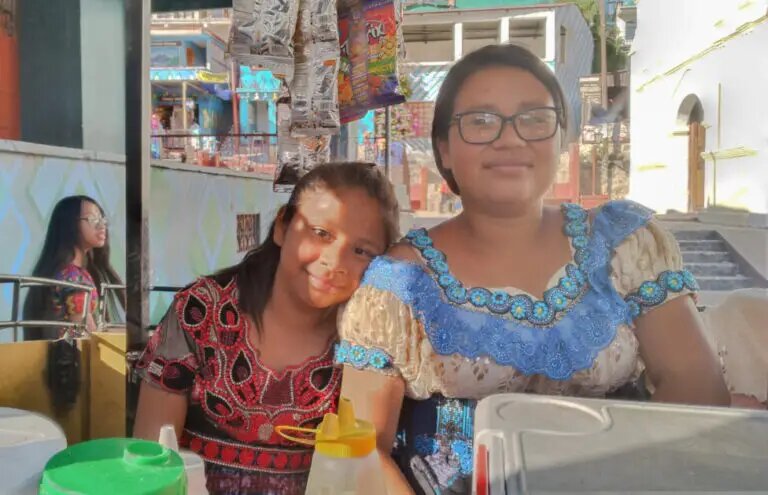
Guatemala's political and economic elites are determined to block the candidacy of indigenous leader Thelma Cabrera, says Sonia Nimacachi, a Cachiquel Mayan woman selling snowcones in Santa Catarina Palopó, in the country's southwest. She would vote for Cabrera again, if her candidacy is finally allowed. CREDIT: Edgardo Ayala/IPS

Guatemala’s political and economic elites are determined to block the candidacy of indigenous leader Thelma Cabrera, says Sonia Nimacachi, a Cachiquel Mayan woman selling snowcones in Santa Catarina Palopó, in the country’s southwest. She would vote for Cabrera again, if her candidacy is finally allowed. CREDIT: Edgardo Ayala/IPS


Cabrera’s second attempt

This is Cabrera’s second attempt to run for the presidency. Her first was in the 2019 elections, when she failed to fully capture the indigenous vote.

“I would dare to think that the majority of the indigenous population did not vote for her because of those instilled prejudices: that she is a woman and also indigenous, not a professional, are issues that have nothing to do with the dignity and the quality of a person,” argued Silvia Menchú.

She added that the right-wing parties have been allies of the country’s evangelical churches, through which they keep in submission segments of the indigenous population that end up supporting conservative parties, rather than a candidate who comes from their Mayan culture.

To illustrate, she said that in Santa Catarina Palopó, a town of 6,000 people, there is only one school to cover primary and middle-school education, “but there are about 15 evangelical churches.”

The TSE’s veto of the registration of Cabrera and Rodas puts the credibility of the elections at risk, Human Rights Watch (HRW) and the Washington Office on Latin America (WOLA) warned on Feb. 27.

In a joint statement, the two organizations said the electoral authority’s rejection of aspiring candidates “is based on dubious grounds, puts political rights at risk, and undermines the credibility of the electoral process.”

“The electoral process is taking place in the context of a decline in the rule of law, in which the institutions responsible for overseeing the elections have little independence or credibility,” they stated.

In addition to Cabrera and Rodas, the TSE also rejected the registration of right-wing candidate Roberto Arzú, because he allegedly began campaigning too early.

HRW and Wola added that “efforts to exclude or prosecute opposition candidates create unequal conditions that could prevent free and fair elections from taking place.”

Meanwhile, the TSE did endorse, on Feb. 4, the presidential candidacy of Zury Ríos, daughter of General Efraín Ríos Montt, who governed de facto between 1982 and 1983.

In 2013 the general was found guilty of genocide and crimes against humanity for the massacre of more than 1,400 indigenous Ixil people in the north of the country.

He was sentenced to 80 years in prison, but the Constitutional Court later revoked the ruling. Ríos Montt died in April 2018.

Article 186 of the Guatemalan constitution prohibits people involved in coups d’état, or their relatives, for running for president.

Meanwhile, snowcone vendor Sonia Nimacachi said in the central square of Santa Catarina Palopó that she still held out hope that Cabrera would be able to register as a candidate.

“If they let her participate, I would vote for her again,” she said, while serving a customer.

Source

Nicaragua: An Opportunity for Democratic Solidarity

By Inés M. Pousadela
MONTEVIDEO, Uruguay, Feb 22 2023 (IPS)

On 9 February, Nicaragua’s dictator, Daniel Ortega, unexpectedly ordered the release of 222 political prisoners, including several former presidential candidates, opposition party leaders, journalists, priests, diplomats, businesspeople and former government supporters branded as enemies for expressing mild public criticism.


Also released were several members and leaders of civil society organisations (CSOs) and social movements, including student activists and environmental, peasant and Indigenous rights defenders. Some had been arrested on trumped-up charges for taking part in mass protests in 2018 and stuck in prison for more than four years.

But the Ortega regime didn’t simply let them go – it put them on a charter flight to the USA and before their plane had even landed permanently stripped them of their Nicaraguan nationality and their civil and political rights. The government made clear it wasn’t recognising their innocence; it was only commuting their sentences.

The rise of a police state

Ever since being re-elected in a blatantly fraudulent election in November 2021, Ortega has sought to make up for his lack of democratic legitimacy by establishing a police state. The regime effectively outlawed all civil society and independent media, closing more than 3,000 CSOs and 55 media outlets. It subverted the judicial system to falsely accuse, convict and imprison hundreds of critics and intimidate everyone else into compliance.

Political prisoners have been treated with purposeful cruelty, as though they’re enemy hostages – kept in isolation, either in the dark or under permanent bright lighting, given insufficient food and refused medical care, subjected to constant interrogations, denied legal counsel and allowed only irregular visits by family members, if at all. Psychological torture has been a constant, and many have been also subjected to physical torture.

The release of some prisoners hasn’t signalled any improvement in conditions or move towards democracy, as made clear by the treatment experienced by one political prisoner, Catholic bishop Rolando Álvarez, who refused to board the plane to the USA.

In retaliation for his refusal to leave the country, his trial date was brought forward and held immediately, in the absence of any procedural safeguards. It predictably resulted in a 26-year sentence. Álvarez was immediately sent to prison, where he remains alongside dozens of others.

Stripped of citizenship

The constitutional amendment stripping the 222 released political prisoners of their citizenship states that ‘traitors to the homeland shall lose the status of Nicaraguan nationals’ – even though the constitution establishes that no national can be deprived of their nationality.

It was an illegal act on top of another illegal act. No one can be deported from their own country: what the regime called a deportation was a banishment, something against both domestic law and international human rights standards.

On 15 February, the regime doubled down: it stripped 94 more people of their nationality. Those newly declared stateless included prominent political dissidents, civil society activists, journalists and the writers Gioconda Belli and Sergio Ramírez, both of whom had held government positions in the 1980s. Most of the 94 were already living in exile. They were declared ‘fugitives from justice’.

Mixed reactions

By rendering 326 people stateless, the Nicaraguan dictatorship fuelled instant international solidarity. On 10 February, the Spanish government offered the 222 just-released prisoners Spanish citizenship – an offer many are bound to accept. On 17 February, more than 500 writers around the world rallied around Belli and Ramírez and denounced the closure of civic space in Nicaragua.

In Argentina, the Roundtable on Human Rights, Democracy and Society sent an open letter to President Alberto Fernández to request he offer Argentinian nationality to all Nicaraguans stripped of theirs.

But Argentina, alongside most of Latin America, has looked the other way. Its silence suggests that democratic consensus across the region is more fragile and superficial than might be hoped, with willingness to condemn rights violations depending on the ideological leanings of those who carry them out.

Currently all the region’s big democracies – Argentina, Brazil, Chile, Colombia and Mexico – have governments that define themselves as left-wing. But only one of their presidents, Chile’s Gabriel Boric, has consistently criticised Nicaragua’s authoritarian turn. In response to the latest developments he tweeted a personal message of solidarity with those affected, calling Ortega a dictator. The rest have either issued mild official statements or simply remained silent.

Now what?

The Nicaraguan government insisted that releasing the prisoners was its own decision. The fact it was accompanied by further violations of released prisoners’ rights was meant as a demonstration of power.

But the move looks like it was made in the expectation of receiving something in return. The Nicaraguan government has long demanded that US sanctions be lifted; at a time when one of its closest ideological allies, Russia, is unable to provide any significant support, Nicaragua needs the USA more than ever. But the US government has always said the release of political prisoners must be the first step towards negotiations.

Given this, the unilateral surrender of people it considers dangerous conspirators to the state it proclaims is its worst enemy doesn’t seem much like a show of force. And if it isn’t, then it’s a valuable advocacy opportunity. The international community must push for the restoration of civic space and the return of free, fair and competitive elections. The first step should be to support the hundreds who’ve been expelled from their own country, as the future builders of democracy in Nicaragua.

Inés M. Pousadela is CIVICUS Senior Research Specialist, co-director and writer for CIVICUS Lens and co-author of the State of Civil Society Report.


!function(d,s,id){var js,fjs=d.getElementsByTagName(s)[0],p=/^http:/.test(d.location)?’http’:’https’;if(!d.getElementById(id)){js=d.createElement(s);js.id=id;js.src=p+’://platform.twitter.com/widgets.js’;fjs.parentNode.insertBefore(js,fjs);}}(document, ‘script’, ‘twitter-wjs’);  

Source

Climate Crisis is a Child Crisis and Climate-Resilient Children, Teachers and Schools Must Become Top International Agenda

From climate change to child marriage, education is seen as the solution. ECW Director Yasmine Sherif protests early marriage with young delegates at the Education Cannot Wait Conference held in Geneva. Credit: ECW

From climate change to child marriage, education is seen as the solution. ECW Director Yasmine Sherif protests early marriage with young delegates at the Education Cannot Wait Conference held in Geneva. Credit: ECW

By Joyce Chimbi
GENEVA & NAIROBI, Feb 17 2023 (IPS)

From southern Ethiopia to northern Kenya and Somalia, the most severe drought in the last 40 years is unfolding. It is simply too hot to go to school on an empty stomach, and close to 3 million children are out of school, with an additional 4 million at risk of dropping out entirely across the Horn of Africa.


Further afield, months after unprecedented floods and landslides ravaged Pakistan, villages remain underwater, and millions of children still need lifesaving support. More recently, while children were sleeping, a most devastating earthquake intruded, and an estimated 2.5 million children in Syria and 4.6 million children in Turkey were affected.

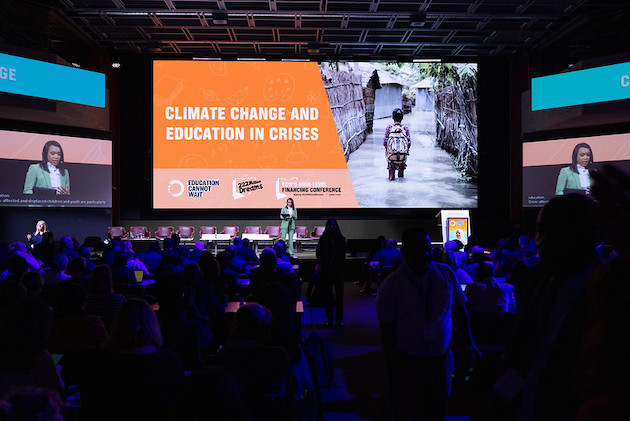
Today, child delegates from Nigeria and Colombia told the world that climate change is ruining their childhood and the world must act now, for 222 million dreams are at stake. They were speaking at the Education Cannot Wait High-Level Financing Conference held in Geneva.


Nafisa from Nigeria reminded delegates at the Education Cannot Wait High-Level Financing Conference held in Geneva that the climate emergency is a child’s rights issue. Credit: ECW

Nafisa from Nigeria reminded delegates at the Education Cannot Wait High-Level Financing Conference held in Geneva that the climate emergency is a child’s rights issue. Credit: ECW

“I am a girl champion with Save the Children and a member of the children’s parliament in Nigeria. Children are least responsible for the climate crisis, yet we bear the heaviest burden of its impact, now and in the future. Climate emergency is a child’s rights crisis, and suffering wears the face of a child,” said Nafisa.

In the spirit of listening to the most affected, most at risk, Pedro further spoke about Colombia’s vulnerability to climate change and the impact on children, and more so those in indigenous communities and those living with a disability, such as his 13-year-old cousin.

Pedro and Nafisa stressed that children must play a central role in responding to the climate crisis in every corner of the world. They said climate change affects education, and in turn, education has an important role.

This particular session was organized in partnership with the Geneva Global Hub for Education in Emergencies, Save the Children, and Plan International, in the backdrop of the first-ever High-Level Financing Conference organized in close collaboration with the Governments of Colombia, Germany, Niger, Norway, and South Sudan, ECW and Switzerland.

Birgitte Lange, CEO of Save the Children Norway, stressed that climate change is not only a threat to the future, “for the world’s 2.4 billion children, the climate crisis is a global emergency crisis today that is disrupting children and their education. Climate change contributes to, increases, and deepens the existing crisis of which children are carrying the burden.

“Last year, Save the Children held our biggest-ever dialogue, where we heard from at least 54,000 children in 41 countries around the world. They shared their thoughts on climate change and its consequences for them. Keeping children in school amidst a climate crisis is critical to the children’s well-being and their learning. Education plays a lifesaving role.”

Rana Tanveer Hussain, Federal Minister for Education and Professional Training in Pakistan, spoke of the severe impact of the floods on the country’s education system, “more than 34,000 public education institutions have been damaged or destroyed. At least 2.6 million students are affected. As many as 1 million children are at risk of dropping out of school altogether.

“During this crisis, ECW quickly came forward with great support, extending a grant of USD 5 million through the First Emergency Response Program in the floods-affected districts in September and October 2022, targeting 19,000 children thus far. In addition, ECW multiyear resilience program has also been leveraged to contribute to these great efforts. But the need is still great.”

Gregorius Yoris, a young leader representing Youth for Education in Emergencies in Indonesia, said despite children being at the forefront of the climate crisis, they have been furthest left behind in finding solutions to climate change.

Folly Bah Thibault, host and broadcast journalist, Al Jazeera and Founder and President, Elle Ira A L’Ecole Foundation Kesso Bah moderated the session on climate change in which child delegates told how children are being left furthest behind in the climate crisis. Credit: ECW

Folly Bah Thibault, broadcast journalist, Al Jazeera, and Founder and President, Elle Ira A L’Ecole Foundation Kesso Bah moderated the session on climate change in which child delegates told how children are being left furthest behind in the climate crisis. Credit: ECW

With one billion children, or nearly half of the world’s children living in countries at extremely high risk of climate change and environmental hazards, Dr Heike Kuhn, Head of Division, Education at the Federal Ministry for Economic Cooperation and Development in Germany, told participants it is time to raise climate resilient children.

“Weather-related disasters are growing, and young people are the most affected; we need three things in place: climate resilient schools, climate resilient teachers, and climate resilient students. We need climate-smart schools to stay safe when disaster strikes,” she explained.

“We must never forget about the teachers, for they must be agents of change, and teach children to use resources such as water and energy in a sustainable way. Children must also be taught how to behave during extreme weather changes such as earthquakes without leaving behind the most vulnerable children.”

As curtains fell on the landmark two-day conference, Yasmine Sherif, the Director of Education Cannot Wait, told participants, “The greatest feeling comes from the fact that all ECW’s stakeholders are here and we have raised these resources together, governments, civil society, UN agencies, private sector, Foundations.

“When I watched the panels and the engagements, I felt that everyone has that sense of ownership. Education Cannot Wait is yours. The success of this conference is a historic milestone for education in emergencies and protracted crises.”

In all, 17 donors announced pledges to ECW, including five contributions from new donors – a historic milestone for education in emergencies and protracted crises and ECW. Just over one month into the multilateral Fund’s new 2023-2026 Strategic Plan, these landmark commitments already amount to more than half of the USD 1.5 billion required to deliver on the Fund’s four-year Strategic Plan.

On the way forward, Sherif said ECW is already up and running, but with the additional USD 826 million, the Fund was getting a big leap forward toward the 20 million children and adolescents that will be supported with holistic child-centered education. This is in line with the new Strategic Plan, whose top priorities include localization, working with local organizations at grassroots levels, youths, and getting the children involved as well.

“We can no longer look at climate-induced disasters and education in silos. Conflict creates disruptions in education, so does climate-induced disasters and then the destiny of children and adolescents having to flee their home countries as refugees or forcefully displaced in-country,” she emphasized.

“Most of all, as we have seen in Afghanistan and across the globe, the right for every girl to access a quality education. And we are moving already, and that is where we are going from here. Thanks to the great contribution in the capital of humanitarian settings, we are bringing the development sector of education to those left furthest behind. Thank you, Switzerland, for hosting us.”

IPS UN Bureau Report


!function(d,s,id){var js,fjs=d.getElementsByTagName(s)[0],p=/^http:/.test(d.location)?’http’:’https’;if(!d.getElementById(id)){js=d.createElement(s);js.id=id;js.src=p+’://platform.twitter.com/widgets.js’;fjs.parentNode.insertBefore(js,fjs);}}(document, ‘script’, ‘twitter-wjs’);  


Venezuela: The End of Civil Society as We Know It?

Civil Society, Crime & Justice, Featured, Gender Violence, Headlines, Human Rights, Latin America & the Caribbean, TerraViva United Nations

Opinion

MONTEVIDEO, Uruguay, Feb 16 2023 (IPS) – In late January, the UN High Commissioner for Human Rights, Volker Türk, finished an official visit to Venezuela. He said he’d found a fragmented society in great need of bridging its divides and encouraged the government to take the lead in listening to civil society concerns and responding to victims of rights violations.


But Venezuelan civil society had hoped for more. Two days before his arrival, the National Assembly, Venezuela’s congress, had approved the first reading of a law aimed at further restricting and criminalising civil society work. International civil society urged the High Commissioner to call for the bill to be shelved. Many found the UN’s response disappointing.

Another turn of the screw

The bill imposes further restrictions on civil society organisations (CSOs). If it becomes law, CSOs will have to hand over lists of members, staff, assets and donors. They’ll be obliged to provide detailed data about their activities, funding sources and use of financial resources – the kind of information that has already been used to persecute and criminalise CSOs and activists. Similar legislation has been used in Nicaragua to shut down hundreds of CSOs and arrest opposition leaders, journalists and human rights defenders.

The law will ban CSOs from conducting ‘political activities’, an expression that lacks clear definition. It could easily be interpreted as prohibiting human rights work and scrutiny of the government. There’s every chance the law will be used against human rights organisations that cooperate with international human rights mechanisms. This would endanger civil society’s efforts to document the human rights situation, which produces vital inputs for the UN’s human rights system and the International Criminal Court, which has an ongoing case against Venezuela.

The law-making process has been shrouded in secrecy: the draft bill wasn’t made publicly available and wasn’t discussed at the National Assembly before being approved. The initiative was immediately denounced as a tool to control, restrict and potentially shut down CSOs and criminally prosecute their leaders and staff. If implemented, it could mean the end of civil society as we know it in Venezuela.

The UN and Venezuela

The previous High Commissioner, Michelle Bachelet, visited Venezuela in September 2019. She was criticised for taking a cautious approach. Moreover, most of the commitments in the agreement the government signed with her were never fulfilled.

Following that visit, the UN Human Rights Council established the Independent International Fact-Finding Mission on the Bolivarian Republic of Venezuela (FFMV), tasked with investigating alleged human rights violations. In September 2022, the FFMV issued a report detailing the involvement of Venezuela’s intelligence agencies in repressing dissent, including by committing human rights violations such as torture and sexual violence.

But intimidation only grew as Türk’s visit approached, with some protest leaders put under surveillance, followed and detained.

Venezuelan CSOs called for a more energetic approach, but Türk followed his predecessor’s footsteps. His visit was characterised by secrecy and brevity, particularly in terms of the time dedicated to engaging with civil society.

Bachelet’s agreement with the government had included the presence of a two-person UN team to monitor the human rights situation and provide assistance and advice. This has now been extended for two years, but the details haven’t been made public.

Civil society activists have continued to work closely with the UN field office and wouldn’t want to risk its presence in the country, so to some extent they understand Türk’s caution in dealing with the Venezuelan government. But they also view his visit as a missed opportunity.

Türk’s statement to the media at the end of his visit was very much focused on the political and economic crises and healing divisions in society, with human rights ‘challenges’ occupying third place on his list of major concerns.

Alerta Venezuela, a Colombia-based human rights group, recognised the references Türk made to ‘new issues’ – such as the need for Venezuela to sign the Escazú Agreement on environmental rights and decriminalise abortion – alongside ongoing human rights violations such as extrajudicial executions, arbitrary arrests and torture. But it criticised crucial omissions and the UN’s apparent willingness to take government data at face value.

On the anti-NGO bill, the High Commissioner said he’d asked the government to take into account his comments but didn’t provide any information about their content, so it isn’t clear whether he advocated for amendments to a law that can only remain deeply flawed or for it to be shelved – which is what civil society wanted him to do.

The Venezuelan government has all along paid only lip service to cooperation with the UN and hasn’t kept its promises. Repression is only going to intensify in the run-up to the presidential election scheduled for 2024. Any strategy that involves trusting the government and hoping it will change its position seems doomed to failure.

High-level human rights advocacy needed

More energetic criticism came from the independent and less politically constrained FFMV, which expressed ‘deep concerns’ about the potential implications of the draft NGO law for civic and democratic space.

That is the stance civil society would like the High Commissioner for Human Rights to have taken. They want the office holder to be a human rights champion standing independent of states and unafraid of causing a stir.

Türk is only five months into his four-year term. Civil society will keep doing its best to engage, in the hope that the UN High Commissioner for Human Rights can become the human rights advocate the world – and Venezuela – need.

Inés M. Pousadela is CIVICUS Senior Research Specialist, co-director and writer for CIVICUS Lens and co-author of the State of Civil Society Report.

  Source

Humanitarian Aid to Earthquake Victims Hindered by Politics– & Limited Access

Civil Society, Development & Aid, Editors’ Choice, Featured, Global, Headlines, Humanitarian Emergencies, TerraViva United Nations

Credit: World Health Organization (WHO)

UNITED NATIONS, Feb 13 2023 (IPS) – As the toll in last week’s earthquakes in Turkey and Syria exceeds a staggering 28,000 people dead and more than 78,000 injured–and counting– the United Nations is in an emergency-footing struggling to provide humanitarian aid, along with several international humanitarian organizations.


The devastated cities in both countries—by an earthquake described as one of the world’s top 10 deadliest in history at a magnitude of 7.8— are urgently in need of food, water, medicine, clothes and shelter—even as after-shocks have triggered the collapse of additional buildings with a new search for more survivors in a doomed scenario.

But the flow of aid is being hindered by several factors, including power politics, sanctions and limited border crossings in a 12-year long civil war in conflict-ridden Syria.

Asked about these limitations, UN Secretary-General Antonio Guterres told reporters last week: “This is the moment of unity, not to politicize or to divide, but it is obvious that we need massive support, and so I would be of course very happy if the Security Council could reach a consensus to allow for more crossings to be used, as we need also to increase our capacity to deliver on crossline operations into Idlib from Damascus.”

Over the years, Russia and China, two veto-wielding permanent members of the Security Council, have remained supportive of Syrian President Bashar al-Assad, while the remaining three permanent members, the US, UK and France, have been critical of Assad’s authoritarian regime accused of war crimes and use of chemical weapons.

But the humanitarian crisis in Syria is not likely to change the power politics in a divided Security Council.

Louis Charbonneau, United Nations Director at Human Rights Watch, told IPS: “We hope the UN Security Council moves quickly and Russia won’t block expansion of cross-border aid, as the secretary-general has requested.”

But Security Council approval, he pointed out, is not a legal prerequisite to conduct cross-border aid operations into Syria. Cooperation from de facto authorities on both sides of any border, in line with humanitarian law obligations, is.

“If the Security Council is deadlocked, and the UN determines it’s feasible and safe, the UN should push ahead to address the crisis and help victims,” he declared.

The White Helmets, a civil society organization which has been operating in opposition-held areas in Syria, was critical of the slow movement of aid.

“Had international rescue teams come into Syria in the first hours, or even the second day, there was a big hope that these people who were under the ruins could have been brought out alive”, Mohamed al—Shibli of the White helmets was quoted as saying.

At his press briefing, Guterres said: the first United Nations convoy crossed into northern Syria through the Bab al-Hawa crossing, and it included 6 trucks carrying shelter and other desperately needed relief supplies. “More help is on the way, but much more, much more is needed.”

But the New York Times ran a hard-hitting story February 10 under the headline: “UN Aid Trickles into Syria, but Residents say it is too Little, too Late”.

Still, the UN and its agencies have responded with all the means at their disposal, including assistance from the International Organization for Migration (IOM), the World Food Programme (WFP), the UN children’s agency UNICEF, the World Health Organization (WHO), the UN Population Fund (UNFPA), among others, and a task force led by the Emergency Relief Coordinator Martin Griffiths.

After his arrival in the Syrian capital February 12, United Nations Special Envoy for Syria
Geir O. Pedersen told reporters the earthquake was “one of the biggest humanitarian or natural disasters that we have seen recently”.

While expressing his condolences, he said: “And I think, you know, when we see the images, the heartbreaking images, we really feel the suffering. But we’re also seeing a lot of heroism, you see, you know, individuals, civilians, humanitarians trying to save lives, and it is this effort that we need to support.”

He assured that “the UN humanitarian family will do whatever they can to reach out to everyone that needs support. So, we are trying to mobilize whatever support there is. We are reaching out to countries, we are mobilizing funding, and we’re trying to tell everyone to put politics aside because this is a time to unite behind a common effort to support the Syrian people”.

Still, Pendersen said: “We need all the access we can have, crossline, cross-border and we need more resources. So, I’m in close touch with the UN humanitarian family, we’re working together to try to mobilize this support and that of course is my key message during this visit to Syria.

The issue of access was also raised by the US Ambassador to the UN Linda Thomas-Greenfield who said last week that she spoke with Presidents of InterAction and the International Rescue Committee, who both underscored the dire situation on the ground as humanitarian workers and first responders attempt to save lives while also facing personal tragedy.

She also spoke with representatives of Save the Children, CARE, and the White Helmets, who described the urgent need for shelter, clean water, and cash assistance, as well as increased access into Syria to allow local NGOs to deliver life-saving aid.

Ambassador Thomas-Greenfield voiced U.S. support for additional cross-border access points from Türkiye into northwest Syria to facilitate deliveries of earthquake-specific aid. She commended the search and rescue efforts by the White Helmets, which have saved thousands of people from collapsed buildings in northern Syria.

So far, the UN has released about $50 million from its emergency fund. But it is making a “Flash Appeal” for more funds from the international community.

Asked how much was needed, UN Spokesperson Stephane Dujarric said February 9: “We are trying to figure out how much. We’re still doing the needs assessment and I would also encourage – the public can also give through on the OCHA (Office for the Coordination of Humanitarian Affairs) website, the UN Foundation websites. There are ways for people, for the public to give to the appeal,” he said.

Meanwhile, the crisis in Turkey has also been tainted with domestic politics. The slow or belated response has been blamed on the Turkish government led by President Recep Tayyip Erdogan, up for re-election on May 14.

Kemal Kilicdaroglu, the leader of the opposition party and a potential presidential candidate, was quoted as saying: “It is the ruling party that has not prepared the country for an earthquake for 20 years”.

IPS UN Bureau Report

  Source