Why Empowering National Human Rights Institutions Helps on the Quest for Healthy Earth?

Asia-Pacific, Civil Society, Climate Change, Development & Aid, Education, Environment, Featured, Global, Headlines, Human Rights, Population

Claudia Ituarte-Lima, Stockholm University, Sweden and University of British Columbia, Canada

 
Claudia Ituarte-Lima is researcher on international environmental law at the Stockholm Resilience Centre, and affiliated senior researcher at the Raoul Wallenberg Institute of Human Rights and Humanitarian Law. She is currently a visiting researcher at the Institute for Resources, Environment and Sustainability, University of British Columbia. She holds a PhD from the University College London and a MPhil from the University of Cambridge.

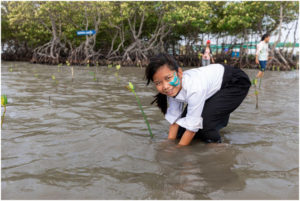
On March 2020, over 330 students, women champions, government officials, NGO members and community members from around Kampot and Kep gathered in an effort to plant 3,000 mangroves and conserve Cambodia’s coastline. The local activity took place as part of a larger mangrove planting and marine exhibition under Action Aid’s 100,000 Mangroves campaign, supported by the United Nations Development Programme (UNDP) under the project ‘Strengthening Climate Information and Early Warning Systems in Cambodia’. The campaign aims to plan 100,000 mangroves in eight community fisheries by May 2020, and raise awareness of the importance of marine ecosystems. Credit: ManuthButh/UNDP Cambodia

VANCOUVER, British Columbia, Canada, Mar 24 2020 (IPS) – We are living in a critical time. As we face existential environmental challenges from climate crises to the mass extinction of species, it is difficult sometimes to see solutions and new ideas. This is why we all need to celebrate and give visibility to creative and courageous efforts of people and organizations striving towards a healthy planet for all.


I write today about the key role played by National Human Rights Institutions (NHRIs) in the Global South in our collective fight against climate change. The time has come to empower NHRIs.

Their unique position mandated by law yet independent from the government can make an urgent needed bridge between legal and policy advances, and ground-up efforts such as youth and women movements, thereby contributing to the enjoyment of the right to a healthy environment.

I have recently had the chance of learning real-world success stories by brave NHRIs working in some of the most challenging contexts. While being a member of the facilitators’ team of a series of webinars* for technical staff and decision-makers working in NHRIs and prior face-to-face interaction with them, it became crystal clear that strengthening the skills and capacities of NHRIs can contribute positive outcomes for both human rights and the environment.

In Mongolia, for instance, the NHRI with the support of civil society organizations and environmental researchers has recently developed a draft law for safeguarding the rights of environmental defenders.

The NHRIs have also intervened in a variety of sectoral issues from pesticides and agriculture in Costa Rica, to mining in South Africa and the connections between coal mining and transportation in Mongolia. The Morocco NHRI has prompted other African NHRIs and civil society organizations to actively participate in international climate negotiations.

Business and human rights was a key issue raised by our NHRIs colleagues.
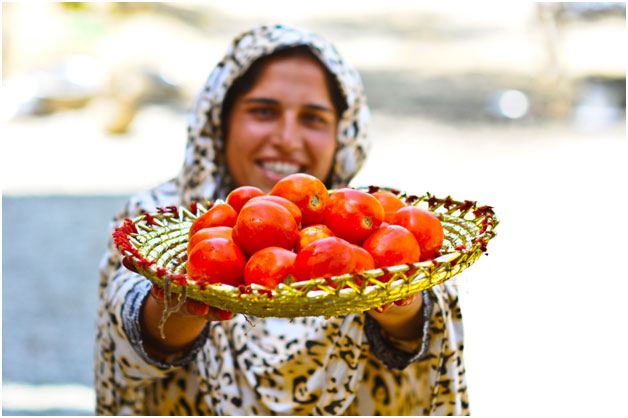
Nazia, 38, proudly shows off her home-grown tomatoes in Nadirabad village, Pakistan. She participated in kitchen gardening training offered under the joint UNDP-EU Refugee Affected and Host Areas (RAHA) Programme in Pakistan. Credit: UNDP Pakistan

The significant legal, institutional and financial obstacles that national duty bearers face to investigate transnational corporations and their responsibilities concerning their impacts to a safe climate has not proved insurmountable for NHRIs.

The Philippine’s NHRI has a mandate to promote human rights which, creatively interpreted, allowed it to investigate the climate change and human rights nexus beyond its national borders.

The systemic nature of climate change justified a national inquiry rather than a field visit. Because climate change is an existential issue not only to Filipino people but globally, the Philippines national inquiry on climate change turned into an inquiry with strong global dimensions.

It included public hearings in the Philippines, New York and London, virtual hearings and expert advice from the former UN Special Rapporteur on human rights and environment, academics from different parts of the world and the Asia-Pacific regional network of NHRIs.

A major comparative advantage presented by the NHRIs is their unique position in working hand in hand with right holders in addressing environmental – human rights gaps facing the most vulnerable populations.

Costa Rica NHRI has found, for instance, that women, girls, men and boys and elder living in coastal areas become especially vulnerable to climate change because their access to clean drinking water and fish become scarce.

The South African NHRI together with food sovereignty civil society organizations has developed a draft climate charter, to be presented to the parliament, with a more holistic approach to the current climate policy.

In recent years, the awareness of the linkages between human rights and climate change has greatly increased. The legal recognition of the right to a healthy environment in more than 150 countries, together with judicial decisions, and academic studies on the safe climate dimension of this right has grown rapidly. NHRIs can be instrumental in translating them into results and action, including under difficult circumstances.

Their role in advising duty bearers, working together with right-holders helps to understand and act upon systemic environmental challenges. Their synergies with environmental human rights defenders can also contribute to more effective investigation and advocacy, not least in the context of informal and unregulated business activities where it is especially difficult to collect data and hold businesses accountable.

Time has come for the international community to do more to support NHRIs in the Global South, a key player often overlooked in climate and biodiversity talks, debates and funding. Due to the intrinsic connections between human rights and environment, the NHRIs need to be further supported to perform their innovative roles in safeguarding life-support systems at various jurisdictional scales, including advocating for the global recognition of the right to a healthy environment by the United Nations.

* The series was organized by the Global Alliance for National Human Rights Institutions (GANHRI), UNDP, the UN Special Rapporteur on Human Rights and the Environment, the Swedish Environmental Protection Agency and UN Environment. A final report with key messages from the webinar series is available on the UNDP website.
  Source

UN Reaches 90:90 Gender Parity in Senior Leadership Transforming Organizational Culture

Civil Society, Editors’ Choice, Featured, Gender, Global, Global Governance, Headlines, Human Rights, IPS UN: Inside the Glasshouse, TerraViva United Nations, Women & Economy

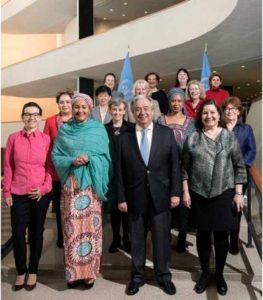
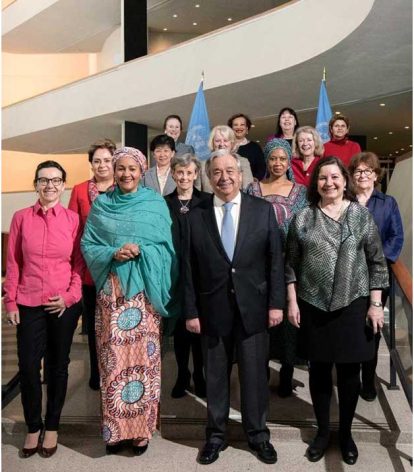
Secretary-General António Guterres poses with women who comprise part of the leadership team, including Deputy Secretary-General Amina Mohammed (centre left) and Chef de Cabinet Maria Luiza Ribeiro Viotti. Credit: United Nations

UNITED NATIONS, Mar 11 2020 (IPS) – The United Nations claims it has reached one of its primary goals relating to women’s rights in the world body: gender parity at senior levels of management and in the highest echelons of the Organization.


Leading the way, besides the UN Secretariat, is UN Women, ‘the United Nations Entity for Gender Equality and the Empowerment of Women’, created by the UN General Assembly back in July 2010.

Katja Pehrman, UN Women’s Senior Advisor on Gender Parity and the Focal Point for Women in the UN System, told IPS that 85% of UN Women at senior management (at D1 level or higher) are female.

“Achieving gender parity at the top level is indeed a major accomplishment and takes place for the first time in UN’s history,” she pointed out, as the UN commemorated International Women’s Day (IWD) on March 8.

Secretary-General, Antonio Guterres, “is truly leading by example, and this achievement comes at an opportune time as we are celebrating the twenty-fifth anniversary of the Beijing Declaration and Platform for Action, where the goal of equal representation of women and men was established”.

As the Secretary-General also has made clear, she pointed out, the parity agenda is not merely about numbers but also about transforming the organizational culture. Only that can guarantee sustainable results.

As part of its strong mandate, and through the network of 350 Gender Focal Points, UN-Women helps to guide the UN system on how to build a more inclusive and equal work environment in support of gender parity, she noted.

“This happens through the Enabling Environment Guidelines for the UN system which were published last year and include recommendations on standards of conduct, family-friendly policies, recruitments and flexible working arrangements,” she declared.

Florencia Soto Nino-Martinez, UN Associate Spokesperson, told IPS “We have full parity in (the ranks of) Under Secretaries-General (USGs) and Assistant Secretaries-General (ASGs) in the Secretariat and the Funds and Programmes – 90 men and 90 women”.

“This represents a first step for full gender parity in 2028 at all levels of the UN which remains our basic objectives,” she said.

In the UN hierarchy, the Secretary-General is the chief administrative officer (CAO), followed by the Deputy Secretary-General, Under-Secretaries-General (USGs), Assistant Secretaries-General (ASGs) and Directors (D-1 level and higher).

Guterres told delegates on March 9 that in January this year “we achieved gender parity – 90 women and 90 men – in the ranks of our full-time senior leadership, two years ahead of the target that I set at the start of my tenure, and we have a roadmap for parity at all levels in the coming years”.

Still, he complained that “women in parliaments are still outnumbered three-to-one by men, women still earn just 77 cents for every dollar earned by men, and unpaid care and domestic work remain stubbornly feminized the world over”.

In some areas, he said, progress towards gender equality has stalled or even gone into reverse.

“Some countries have rolled back laws that protect women from violence; others are reducing civic space; still others are pursuing economic and immigration policies that indirectly discriminate against women,” Guterres said.

Outlining some of the steps he plans to take in the future, the Secretary-General said: “I have reminded the entire senior leadership team about the special measures we have in place to advance parity throughout the system”.

If a male candidate is hired in an office or department that has not yet achieved gender parity, and where an equally competent female candidate had been identified, an explanation must be sent to my office detailing the reasoning for the decision prior to final selection being made, he declared.

Ian Richards, President of the 60,000-strong Coordinating Committee of International Staff Unions and Associations (CCISUA), told IPS the biggest problem remains the low representation of women in the field.

“Women certainly face greater challenges than men in certain field locations, particularly regarding access to relevant healthcare, and there is a lot the UN can do to improve the field working environment,” he said.

But the Secretary-General’s proposal– now before the General Assembly– to only fire men during downsizing exercises is not the way forward and is legally and ethically dubious, he added.

There needs to be a change in how the field is marketed.

“There are plenty of women in the field making successful careers at every grade yet the overall impression remains that the field is mainly for men.”

He said women in the field need to be held up as role models so that others follow. Human Resources needs to listen to their experiences and understand what the challenges are and how they can be overcome.

Aside from having better diversity on the frontline, said Richards, a key reason to have more women in the field is because those who rise to the top of the UN are more likely to have passed through the field on their way up.

Looking at it from another angle, a surefire way to get better gender equality in the field would be to make it compulsory for all staff who want to get to senior positions to take up at least one prior assignment in the field, with no opt-puts according to gender.

“But it wouldn’t be to the taste of everyone,” declared Richards.

The United Nations-wide Gender Parity Strategy, launched in September 2017, sets targets for equal representation of women and men, with specific commitments leadership and accountability; senior management; recruitment and retention; creating an enabling environment; and field operations.

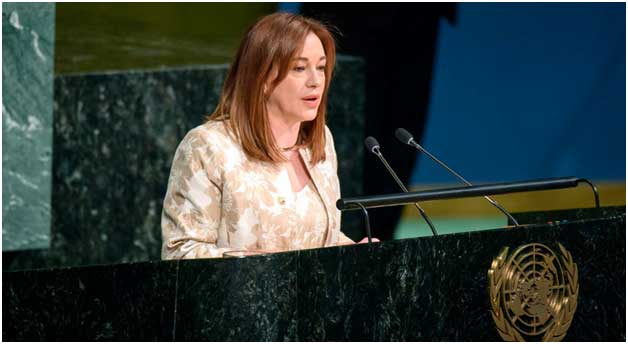
Maria Fernanda Espinosa of Ecuador, only the fourth female to be elected as President of the General Assembly in its 74-year history of overwhelmingly male Presidents. Credit: United Nations

While the UN secretariat and the UN’s affiliated agencies have made progress on gender parity and gender empowerment, the 193 member states have lagged far behind.

In its 74-year history, the General Assembly has elected only four women as presidents – Vijaya Lakshmi Pandit of India (1953), Angie Brooks of Liberia (1969), Sheikha Haya Rashed Al-Khalifa of Bahrain (2006) and Maria Fernanda Espinosa of Ecuador (2018)

And that’s four out of 74 Presidents, 70 of whom were men.

The 15-member Security Council’s track record is probably worse because it has continued to elect men as UN Secretaries-General, rubber-stamped by the General Assembly.

And that’s zero out of nine male UN chiefs (Trygve Lie of Norway, Dag Hammarskjold of Sweden, U. Thant of Burma (now Myanmar), Kurt Waldheim of Austria, Javier Perez de Cuellar of Peru, Boutros Boutros-Ghali of Egypt, Kofi Annan of Ghana, Ban Ki-moon of South Korea and, currently, Antonio Guterres of Portugal).

You can find more about the UN’s gender parity strategy at the UN here: https://reform.un.org/content/gender-parity-strategy

A few additional sources of information:

    • • UN Women produced the biennial Secretary-General’s Report on the Improvement in the Status of Women. Available:

https://www.unwomen.org/en/digital-library/publications/2019/07/improvement-in-the-status-of-women-in-the-united-nations-system-2019

    • • In 2019 UN Women produced the ‘Enabling environment guidelines for the United Nations system’ in support of the ‘Secretary-General’s system-wide strategy on gender parity’. Available:

https://www.unwomen.org/en/digital-library/publications/2019/02/supplementary-guidance-on-the-enabling-environment-guidelines-for-the-united-nations-system

    • • The recent UN resolution A/RES/74/128, ‘Follow-up to the Fourth World Conference on Women and full implementation of the Beijing Declaration and Platform for Action and the outcome of the twenty-third special session of the General Assembly’, reiterated the political commitment to gender parity, including recognizing the role of UN Women and calling on the UN system to use the Enabling Environment Guidelines (see especially para 30-23). Available:

https://undocs.org/en/A/RES/74/128

    • • The goal of the equitable distribution of positions between men and women at the UN Headquarters was enshrined in the Beijing Platform for Action (see especially 913c). Available:

https://www.unwomen.org/en/digital-library/publications/2015/01/beijing-declaration

The writer can be contacted at thalifdeen@aol.com

  Source

What’s Needed for Real Changes for Women in Lebanese Politics?

Civil Society, Gender, Headlines, Health, Human Rights, Inequity, Middle East & North Africa, TerraViva United Nations, Women in Politics

International Women’s Day, March 8 2020
 
The year 2020 began with a shock report, Mind the 100 Year Gap, from the World Economic Forum which projected that gender equity would take at least 100 years to realise. Women and girls play a crucial role in society. However, they bear the brunt of patriarchy, their needs often unmet by traditional humanitarian responses and their health and education needs not prioritised. In the run-up to International Women’s Day with its theme, “I am Generation Equality: Realising Women’s Rights” IPS is publishing a series of features, opinion and editorials from experts and affiliated journalists around the world on women.

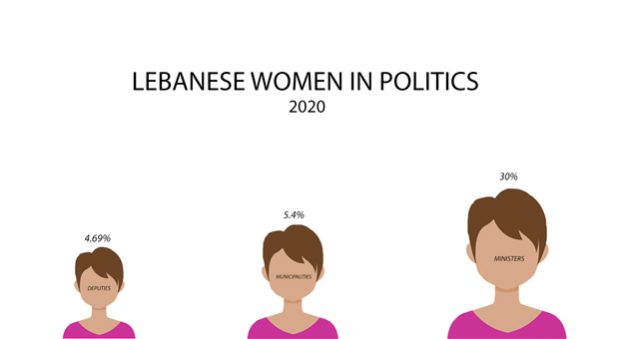
Lebanese women in politics. Credit: Eliane Eid

KESERWAN, Lebanon, Mar 2 2020 (IPS) – Women were at the forefront of Lebanon’s 2019 ‘October Revolution’. Beyond the iconic images of their participation, it seems that by women linking equity in politics to the broader issues of mismanagement of corruption paid off – although activists say there is a long road ahead.


In May 2018 saw the election of six Lebanese women to parliament from 86 female candidates. Following the October 2019 uprising, that started to change the equation within the political system and under the continued pressure of the civil society, a new cabinet was formed. It included six female ministers out of 20.

From a general perspective, this seems like a win for achieving gender equality, considering that 30% of the actual cabinet is female. Lebanon, a democratic republic in the Middle East, is deemed to have acknowledged the role of women and started to include them in the political field.

However, from a Lebanese perspective, questions arise whether this achievement is a veneer to please the streets and Western donors in a crumbling country?

Rouba El Helou-Sensenig, coordinator of the gender, communications and global mobility studies at the Faculty of Law and Political Science at Notre Dame University in Lebanon, is not convinced this change is enough.

“Even though the Lebanese government signed international agreements related to advancing women’s rights and their participation in political life, I believe that the Lebanese government is not serious about reaching gender equality,” she says.

“What has been achieved so far is the result of a combination of pressure from civil society and international bodies,” she added, citing a list of reasons why women’s rights within the country are flawed.
“Today, the Lebanese people, whether they are with or against gender equality, are aware that Lebanese women do not have the right to give their citizenship to their children; that the religious courts do not rule in favour of a mother most of the time.”

She says the Kafala system promotes more injustices in Lebanese society and “family friendly-policies should be drafted and implemented” as a matter of urgency.

El Helou-Sensenig explained to IPS that Lebanon still has a labour code with a long list of articles which prohibit women from working in certain fields. Gender-based violence and sexual harassment are still not appropriately criminalised.

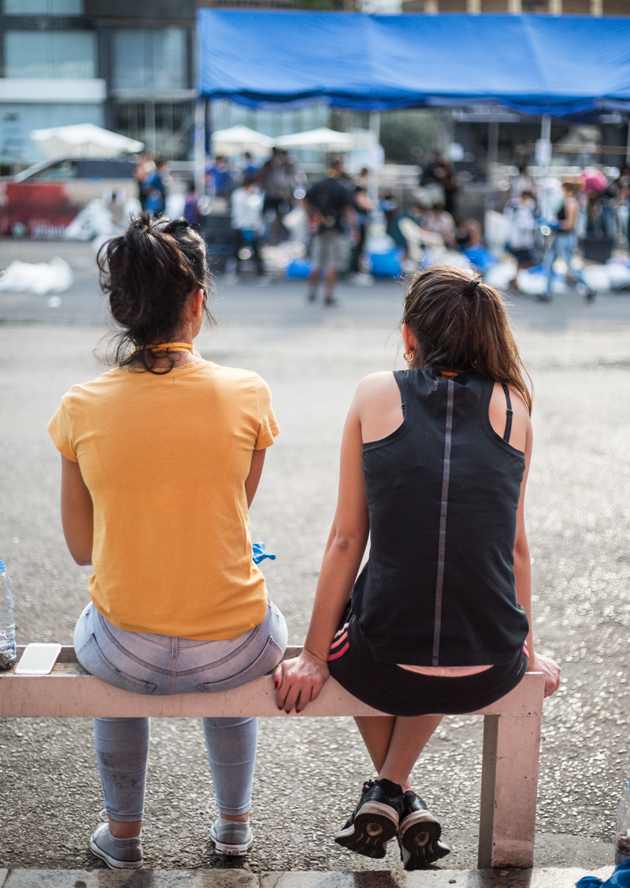
Two young women rest in the morning of a new day during the October 2019 Revolution, Lebanon. Credit: Blanche Eid

Historically, Lebanese women waited until 1953 to vote and run for elections – and their fundamental rights undermined until Lebanon signed the Convention on the Elimination of All Forms of Discrimination against Women (CEDAW) in 1997.

Most of the women in parliament have been elected based on their political affiliations or even traditional ones. Lebanese society has rarely seen any organic approach to promote female candidates in any election.

This year the World Economic Forum (WEF), in its 2020 report Mind the 100 Year Gap, noted that gender parity would not be attained for 99.5 years – meaning that none of the current generations will witness it. WEF’s even more sobering analysis puts the gap in the Middle East, and North Africa is 140 years. This is a challenge to NGOs and institutions fighting gender discrimination.

Once such a global advocate for gender equality and health and rights of girls and women, Women Deliver is working with five civil society organisations (CSOs) to breach the gender inequity gap in Lebanon. Its Humanitarian Advocates Program, along with the CSOs, is working toward meeting the needs of the women and children who make up 80% of the country’s more than 1 million registered refugees.

In the broader society equality will take time, but many countries still lack fundamental human rights, including Lebanon.

In February Notre Dame University held a seminar on women pursuing peace and justice and being politically active. During the seminar, Cedar Mansour, dean of the faculty of law and political science, explained that for Lebanon to make changes, women need to be more involved in policymaking and participation.

“In order to make a real difference, the change should start in the institutions. Equality should be paramount, inherited discrimination that is infesting our laws should be revolted against,” Mansour said.

By making laws and creating opportunities for women to become more involved, only then, Lebanon will have a chance to stay in the race.

Many factors stand in the way of achieving these goals, the seminar heard.

Lea Baroudi, the founding member and director of March, Lebanon, told IPS has personal experience of many of these challenges and what it takes to be successful.

“What made me continue is what I saw I was capable of doing. I had this belief that I can change. There are two struggles that affect us as women: the patriarchal attitude and the older generation mentality. The attitude of ‘you cannot do it’,” she said.

“But, to succeed, you have to fail many times, and that’s what kept me going”.

Baroudi explained that no matter what a woman will do, she will always be questioned and evaluated every step of the way. She always has to be number one in every field; otherwise, she is considered weak and powerless.

“As long as we cannot change the laws, we have a problem” she adds. Lebanon needs a shift in the understanding of gender equality and its implementation. Many factors play an essential role in shaping this culture, especially patriarchal power rooted in the Lebanese mindset.

In 2016, Lebanon created the first ministry of women’s affairs; this initiative was supposed to be a step forward to achieve political empowerment and gender equality. In the case of Lebanon, the minister of women’s affairs was a man. The idea of creating this ministry was to promote political empowerment, but a female figure in Lebanese politics is known to be more of a mediator than an action taker.

Four months have passed since the revolution started – women have taken a critical role in keeping this uprising safe and its agenda in the spotlight.

One of the current demands is to have an early election with more women involved.

Lebanon might witness a new era of female leaders, but the key issue is whether create a safe environment for Lebanese women by changing policies or they would fall in the trap of being the winning ticket for political parties.

  Source

UN Chief Should Lead by Example on Human Rights

Civil Society, Democracy, Featured, Global, Global Governance, Headlines, Human Rights, Press Freedom, TerraViva United Nations

Opinion

Louis Charbonneau is United Nations Director, Human Rights Watch

Credit: United Nations

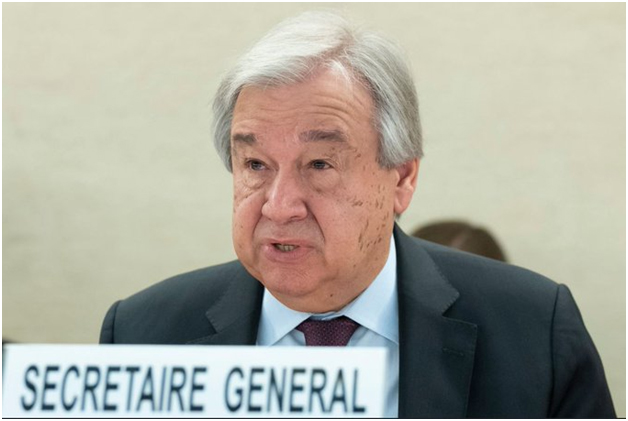
UNITED NATIONS, Feb 25 2020 (IPS) – United Nations Secretary-General Antonio Guterres has long needed to overhaul his approach to human rights. Hopefully his call to action announced in Geneva yesterday is the start of something new.


Guterres’ low-key approach to human rights may have been calculated to avoid conflicts with big powers like the United States, Russia, China, and Saudi Arabia. But human rights groups and former senior UN officials have criticized it for being ineffectual.

The secretary-general’s new initiative contains some excellent ideas. The link he makes between human rights and the impacts of climate change is crucial, and those who fight to protect the environment are increasingly at risk.

Forest defenders in Brazil and elsewhere are threatened, attacked, and killed by those who seek to benefit from the forests’ destruction. And Guterres is right to highlight the risks posed by new technologies, whether it involves government surveillance, artificial intelligence, or fully autonomous weapons, so-called “killer robots.”

The test for any initiative is the implementation. No one is suggesting the secretary-general do everything alone. But he needs to lead by example.

Louis Charbonneau

That means publicly calling out rights abusers and advocating for victims. Human rights violations aren’t like natural disasters.

They are frequently planned and executed by government officials or their agents – whether it’s the mass arbitrary detention of Uyghurs in China, Myanmar’s ethnic cleansing campaign against Rohingya Muslims, indiscriminate Russian-Syrian bombing of civilians in Idlib, or the forced separation of children from their parents at the US border.

It also means using the authority of the secretary-general’s office to launch investigations and fact-finding missions when appropriate. That includes launching an inquiry into China’s massive rights violations in Xinjiang, and pressing for an international accountability mechanism on Sri Lanka.

The secretary-general should order a follow-up inquiry into the murder of Washington Post columnist Jamal Khashoggi to help determine whether Saudi Arabia’s top leadership ordered his slaying. He should also publicly release the findings of his inquiry into attacks on hospitals and other protected facilities in Syria, likely carried out by the Russian-Syrian alliance.

None of this is to say Guterres should abandon “private diplomacy” with governments. But he should re-emphasize public diplomacy on human rights at the UN. Human rights advocacy shouldn’t be the sole responsibility of High Commissioner for Human Rights Michelle Bachelet and her office.

The secretary-general should be the UN’s leading voice on human rights, not only working in the background.

Secretary-General Guterres has issued a call to action on human rights. Now it’s up to him to act.

  Source

How Nigeria’s Police used Telecom Surveillance to Lure & Arrest Journalists

Africa, Civil Society, Democracy, Global Governance, Headlines, Human Rights, Press Freedom, TerraViva United Nations

Opinion

Jonathan Rozen* is Senior Africa Researcher at Committee to Protect Journalists (CPJ)

NEW YORK, Feb 19 2020 (IPS) – As reporters for Nigeria’s Premium Times newspaper, Samuel Ogundipe and Azeezat Adedigba told CPJ they spoke often over the phone. They had no idea that their regular conversations about work and their personal lives were creating a record of their friendship.


On August 9, 2018, Ogundipe published an article about a communication between Nigeria’s police chief and vice president. Days later, police investigating his source issued a written summons, CPJ reported at the time.

It was not addressed to Ogundipe and made no mention of his article or the charges he would later face of theft and possession of police documents. Instead, as Ogundipe recounted, police called Adedigba for questioning in connection with a slew of serious crimes, allegations that evaporated after police used her phone to summon her friend to the station.

Ogundipe’s experience is one of at least three cases since 2017 where police from across Nigeria used phone records to lure and then arrest journalists currently facing criminal charges for their work.

In each case, police used the records to identify people with a relationship to a targeted journalist, detained those people, and then forced them to facilitate the arrest.

The police methods reinforce the value of internet-based, encrypted communications at a time when authorities have also targeted journalists’ phones and computers to reveal their sources. Those prosecuted in all three cases are free on bail.

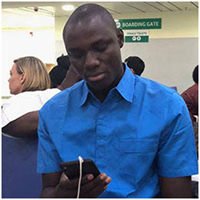
Nigerian journalist Samuel Ogundipe (Photo: Samuel Ogundipe)

“If the police called me and said we have something to ask you, I would go there…this is just their tactics,” Ogundipe said.

Ogundipe and Adedigba told CPJ that police made no secret of the way they had established their relationship, showing them each call records they claimed to have obtained from the pair’s cellphone network providers—Nigeria-based 9mobile, a subsidiary of the UAE-based Etisalat telecom company, and South Africa-based MTN, respectively.

“[Police have] been checking who I’ve been talking to…[in order to] see who was close enough to me to be used as bait,” Ogundipe added.

CPJ’s repeated calls in late 2019 and early 2020 to Nigerian police spokesperson Frank Mba rang unanswered.

The 2003 Nigerian Communications Act mandates that network service providers assist authorities in preventing crime and protecting national security. Regulations for enforcing it grant senior police officials the power to authorize requests to obtain “call data” from telecom companies without a judicial warrant, according to CPJ’s review.

That data includes where and when regular phone calls and SMS messages took place and between which numbers, according to documents reviewed by CPJ and interviews with three individuals with knowledge of police requests for call data in Nigeria. All three requested not to be named for fear of reprisal.

Nigeria has over 184 million active mobile phone lines, with roughly two million lines added every month to service its estimated 190 million people, according to 2019 data released by the national telecom regulator, the Nigerian Communications Commission (NCC). SIM card ownership for these lines is tracked under a 2011 regulation, which CPJ reviewed, mandating the collection of personal information, including fingerprints and photos, that police can access without a warrant as long as a senior-ranking officer gives written approval.

Other NCC regulations, released in October 2019 and reviewed by CPJ, detail police permissions to intercept communications under certain circumstances.

At the time of publishing, Ogundipe told CPJ his next court date had yet to be scheduled, but two journalists who were taken into custody at the end of 2019–Gidado Yushau and Alfred Olufemi–were preparing for their fifth hearing scheduled in Kwara State for March 4.

Similar to Ogundipe and Adedigba, police used call records to identify individuals that could be used to lead them to their targets, those affected told CPJ.

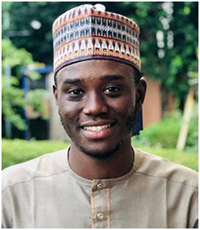
Nigerian journalist Gidado Yushau (Photo: Gidado Yushau)

Yushau, publisher of The News Digest website, and Olufemi, a freelance reporter, were charged in November 2019 with criminal conspiracy and criminal defamation in connection with a complaint over a May 2018 News Digest report Olufemi wrote about a factory owned by Sarah Alade, now special adviser to Nigeria’s president. Alade and other representatives of the factory did not answer calls or declined comment when CPJ reported on the case.

The first journalist police used to track down Yushau and Olufemi worked in another city for an unrelated news outlet. Wunmi Ashafa, a Lagos-based journalist with the News Agency of Nigeria (NAN), told CPJ that police tricked her into meeting, then made her summon her colleague, Yusuf Yunus, who in turn was used to facilitate the arrest of the Digest’s web developer, Adebowale Adekoya. The officers claimed to know they were connected from their call records.

Police were “tracking all the people that are calling me, that I’m talking to,” Yunus told CPJ in an interview. “The network provider has said that this line and this line have spoken at this particular hour,” he said police told him. Ashafa and Yunus said they were released after police detained Adekoya.

“I don’t know why they decided to do that,” Ashafa told CPJ, adding that she missed a meeting at her daughter’s school because police involved her. “They apologized to us, to myself and Yunus, that that was the only way they could get [Adekoya].”

Mistaken for the Digest’s publisher, Adekoya described being held for five nights, driven over 1,200 kilometers—including to Abuja and Kwara State—and threatened with detention if he did not lead the officers to Yushau and promise to help bring Olufemi into custody, before his release.

Nigerian journalist Alfred Olufemi. (Photo: Alfred Olufemi)

CPJ reached Peter Okasanmi, a spokesperson with the Kwara State police, by phone in January. He declined to comment on Yushau and Olufemi’s case because the trial was ongoing, but described how police regularly used telecommunications information to make arrests.

“We are able to track the culprits by use of technology through the SIM [cards] that were registered,” Okasanmi said. “Suspects, they are usually like kidnappers…we use all of those gadgets to track their locations and get them arrested…we have our own equipment we are using,” he added, without elaborating.

On November 4, CPJ contacted NCC spokesperson Henry Nkemadu by phone and upon his request sent questions regarding security agencies’ access to communications data, but received no response. Subsequent calls to Nkemadu and other NCC officials went unanswered.

Police used a similar tactic in 2017 to arrest Tega Oghenedoro, the Uyo city-based publisher of the Secret Reporters news website who writes under the pseudonym Fejiro Oliver, CPJ reported this month.

He faces cybercrime charges related to reports alleging corruption in a Lagos-based Nigerian bank and is due in court on May 28, CPJ reported.

Isaac Omomedia, an aide to the governor of Delta State, told CPJ in October 2019 that he did not know Oliver, but that they had a mutual acquaintance, Prince Kpokpogri, the publisher of Integrity Watchdog magazine.

In March 2017, Omomedia arrived at a hotel in Asaba, the Delta State capital where he lives, after receiving a call to collect a parcel from the DHL delivery company, he told CPJ.

Instead, he was met by six police officers who questioned him about Kpokpogri, someone they claimed to know he was in touch with by reviewing his call records. On their instructions, Omomedia said he invited Kpokpogri to a meeting.

Kpokpogri told CPJ that police arrested him upon arrival, drove him over 200 kilometers to Uyo, and told him, in turn, to summon Oliver. The officers had identified him because they had “bugged” both his and Oliver’s phone lines, he remembered them saying. Kpokpogri said police arrested Oliver when he arrived and drove them both over 350 kilometers to Benin City; Oliver was then flown to Lagos and Kpokpogri was released without charge.

Kenneth Ogbeifun, the Lagos-based investigating officer in Oliver’s case, requested emailed questions when contacted for comment by CPJ in January 2020. Follow-up emails and messages went unanswered.

CPJ also reached an officer who confirmed his name as Moses and that he was part of the team that arrested Oliver on behalf of Lagos police, but when asked about how Omomedia and Kpokpogri were used in the arrest, the line disconnected.

Those involved in Oliver’s arrest, and the chain leading to Yushau and Olufemi, told CPJ they relied on the Nigeria-based Globacom, also known as Glo, India-based Airtel, or MTN for their cell phone service.

“I will give you the number used to commit the crime and you have only 60 minutes to produce the details,” the Premium Times quoted Isa Pantami, Nigeria’s minister of communications and digital economy, as saying in late 2019. Operators that failed to produce data would be sanctioned, according to that report.

CPJ called the ministry of communications and digital economy in mid-January. Philomena Oshodin, a deputy director, said that she was not the relevant person to comment before the line went silent; follow up messages went unanswered.

Between November 2019 and January 2020, CPJ reached out to public relations departments at MTN, 9mobile, Airtel, and Glo, and emailed questions to representatives for each about security agencies’ access to telecom user data in Nigeria. None replied with answers by date of publication.

“You’re reporting as a journalist, which is not a crime…[but] you feel you’re being punished,” Ogundipe told CPJ, reflecting on his arrest and prosecution. “It’s very scary…it’s difficult to predict how far these guys will go.”

For information on digital safety, consult CPJ’s Digital Safety Kit.

*Jonathan Rozen is CPJ’s senior Africa researcher. Previously, he worked in South Africa, Mozambique, and Canada with the Institute for Security Studies, assessing Mozambican peace-building processes. Rozen was a U.N. correspondent for IPS News and has written for Al-Jazeera English and the International Peace Institute. He speaks English and French.

  Source

India’s Citizenship Law Triggered by Rising Right-Wing Ideology

Active Citizens, Asia-Pacific, Civil Society, Democracy, Editors’ Choice, Education, Featured, Fostering Global Citizenship, Global, Global Governance, Headlines, Human Rights, Inequity, IPS UN: Inside the Glasshouse, Population

Credit: Foreign Policy

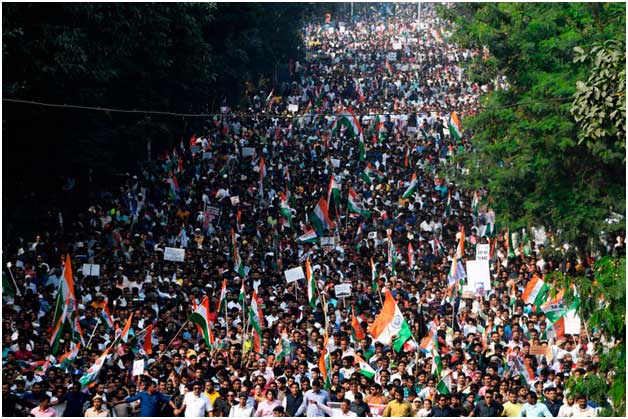
UNITED NATIONS, Jan 6 2020 (IPS) – “Fire bullets at the traitors of the country,” chanted mobs of Bharatiya Janata Party, or BJP, supporters wrapped in Indian flags in Delhi last week.


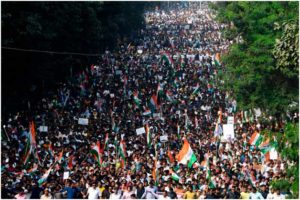
It’s been less than a month since protests emerged against the BJP’s Citizenship Amendment Act (CAA), a new law to redefine and restrict who is considered an Indian citizen. In a violent crackdown, 27 peaceful protesters have been killed and police have detained 1500 others. BJP vigilante mobs continue to threaten and beat people protesting this controversial bill.

The CAA became law on December 11th, 2019 to provide a path to citizenship for minorities that fled from Afghanistan, Bangladesh, and Pakistan prior to 2014, but its most controversial point is that it specifically excludes Muslims. Critics call it discriminatory and say it threatens the secular nature of India’s constitution by trying to establish a Hindu religious state, or a “Hindu Rashtra,” akin to other religious states like Saudi Arabia or Israel’s attempt for a Jewish nation state.

In addition to the CAA, the Indian government is also planning to implement a National Register of Citizens, also known as the NRC, across the whole nation by 2021. The most recent NRC was implemented by the Indian government in the state of Assam in 2015 forcing Indians to provide documented proof of their citizenship to be considered Indian citizens. The result was the disenfranchisement of 1.9 million mostly Muslim residents who now risk being sent to illegal detention camps as they do not have what the government considers sufficient documentation or “legacy documents” which must date back to the 1970s. People fear that its extension to the rest of the country will not only affect Muslims who are not safeguarded by the CAA, but also the poorest, unlettered parts of society.

According to Indian historian and executive-director of the Tricontinental Institute for Social Research, Vijay Prashad, the BJP has couched the CAA as a progressive refugee policy which is redundant given that India is already a signatory of the Global Compact for Migration as well as other international treaties on migration and refugees.

“Why not bring these treaties to be ratified by India, why bother to create your own bizarre thing if there’s already an international framework to say that we accept refugees and migration?” he asked rhetorically. “Well it’s because they’ve used the question of migration not for migration itself but to define what is an Indian citizen, which is a very chilling thing because now they are making the claim that Muslims are not citizens in India,” Prashad told IPS News.

Prashad says this is a core part of the BJP’s right-wing ideology. India’s home minister Amit Shah even referred to undocumented Muslim migrants coming from Bangladesh to India as “termites” and “infiltrators” and threatened to throw them into the Bay of Bengal.

India is currently the world’s largest democracy which historically has not used religion as a prerequisite for citizenship. According to Ramya Reddy, human rights lawyer from Georgetown University Law Center, the CAA puts India’s democracy at risk by violating Articles 14 and 21 of the Indian constitution, which deal with equality and liberty.

Protests

Daily protests have been met with extreme violence by the police who have fired stun grenades, smoke bombs, tear gas, and even used live ammunition to shoot and kill protestors. Police have attempted to stop protests by imposing Section 144 of the Penal Code, a draconian law from the British Raj historically used to crush freedom fighters by prohibiting the assembly of more than 4 people. The section of this law, however, is being applied selectively.

“When the radical Hindutva supporters gather, this is not considered an unlawful gathering according to the police because they’re pro-government. The police even escort them,” said Aatir Arshad a Bachelor’s student from Jamia Millia University who’s been involved in recent protests.

Jamia Millia Islamia University, a public college in New Delhi with a majority-Muslim student body, became the center of the protest movement in Delhi after police stormed the university campus, dragged out several students, beat them up and arrested them, including those who were not participating in the demonstrations.

“They rushed into the library, where students were not even protesting, they were just studying for their exams and the police beat them up,” Arshad told IPS News. “That moment was apocalyptic for Jamia Milia Islamia. They also harassed students and then claimed they did nothing.”

Arshad adds that police also entered the mosque on the university campus, beat up the Imam, as well as the guards of the university. Protests are still going on because of the events from that day.

Ahla Khan, an alumnus from Jamia Millia and resident of the Jamia Nagar area, explained to IPS News how on the first day of protests her and her sister were just walking to Jamia University when they got caught in the middle of a confrontation between police and protesters. They ran to the sidewalk and watched as police hit students with batons.

“I was watching a guy standing there, just looking at his phone doing nothing. The police ask him ‘where are you going’ and he doesn’t say anything. And just like that the police start beating him up,” says Khan.

She explains how the protesters have been highly organized and peaceful in Delhi. Many have volunteered to distribute tea in the biting cold weather, organized assemblies and facilitated plays and book readings. Chants and slogans have called for repealing the CAA as well as for Azaadi, or freedom. Police have been more restrained than in Uttar Pradesh (UP) where police violence has been lethal. The Chief Minister of UP called a meeting in late December threatening to seize property of those involved in protests “to compensate damage to public property.”

“In UP police and RSS goons have been barging into people’s houses, hitting them, beating people up, thrashing their entire houses, looting them, TVs and fridges broken,” said Khan.

The government has also made several attempts to prevent media outlets from covering police violence and has blocked the internet is several parts of India where there are massive protests. Internet shutdowns have become commonplace, with the shutdown in Kashmir being the longest ever in a democracy.

International Response

While many protesters are still languishing in jail, the United Nations has voiced concern over the CAA with Secretary-General Antonio Guterres’ spokesperson, Stephane Dujarric, calling for “restraint and urg[ing] full respect for the rights of freedom of opinion and expression and peaceful assembly.” UN Human Rights Commissioner Michelle Bachelet’s spokesperson stated that the law “would appear to undermine the commitment to equality before the law enshrined in India’s Constitution.”

Despite this, Reddy says that this doesn’t have any enforcement as domestic law always takes precedence over international law. Even though the UN has criticized the CAA, “[changes have] to happen domestically or with pressure,” she said. And right now, no other major international powers like the UK, the US, and Canada have come out against this because they’re strong allies [of India],” Reddy told IPS News.

In fact, on a recent visit to Washington, D.C. India’s External Affairs Minister Subrahmanyam Jaishankar cancelled a meeting with the House Foreign Affairs Committee after the other members of Congress refused to exclude Rep. Pramila Jayapal (D-Wash.), a critic of the CAA, NRC, and India’s actions in Kashmir.

South Asian students in the United States are expressing their dismay with the Indian government by launching a campaign demanding their House of Representatives “express their disapproval through targeted sanctions against Modi government officials until both laws are repealed.” So far, the letter has been signed by the Yale South Asian Society, Harvard College U.S.-India Initiative, Columbia University South Asian Organization, University of Pennsylvania South Asia Society Board, Cornell University South Asian Law Students Association, Brown University South Asian Students Association and Dartmouth University Muslim Students Association Al-Nur, and many other student groups.

Democratic Deficit

Implementing a nationwide National Register of Citizens will cause massive economic disruption, according to a recent report by the Wire. The article states that the NRC in the state of Assam alone, which makes up just 3% of the population, “took almost a decade, required the involvement of over 50,000 government employees and cost more than Rs. 1,200 crore,” or just over 168 million US dollars. While the Indian development dream is flailing with its ranking in hunger slipping annually and unemployment rising, the implications of implementing these exclusionary laws go beyond the marginalization of Muslims to also draining resources from some of the world’s poorest residents.

“This is not about a policy you can really implement,” said Prashad. “You can’t actually, practically expatriate 200 million Muslims.” Prashad also pointed out in his recent article that India’s Muslims form the eighth-largest country in the world.

The point, he adds, is that “this is a marker saying we are redefining citizenship and emboldening the hard-right and mobs on the street to make it clear to Muslims that they are not welcome here and that India is a Hindu country,” Prashad told IPS.

Despite the hard attempt by the government quell any resistance to the CAA, protests have been occurring daily with Muslims, Dalits, Buddhists, Christians, Sikhs, farmers, lawyers, workers, writers, and journalists joining together to prevent what could leave millions stateless in “the largest disenfranchisement in human history.”

When asking Aatir Ashad, who’s been protesting daily, about his experience he tells IPS News that whenever there’s a call for a protest, the police just close all of the metro stations so that no one can reach the protest site.

“Great democratic country we’re living in,” he says sarcastically, distressingly, as he prepares for another day of joining the protests.

  Source