USAID Offers Protection to Journalists & NGOs Facing Defamation Lawsuits

By Thalif Deen
UNITED NATIONS, May 12 2023 (IPS)

The world’s news media — both under authoritarian regimes and democratic governments– continue to come under relentless attacks and political harassment.


“Freedom of the press is the foundation of democracy and justice. It gives all of us the facts we need to shape opinions and speak truth to power. But in every corner of the world, freedom of the press is under attack,” UN Secretary-General Antonio Guterres said on World Press Freedom Day May 3.

Journalists and media workers, he said, are directly targeted on and offline as they carry out their vital work. They are routinely harassed, intimidated, detained and imprisoned.

At least 67 media workers were killed in 2022 — a 50 per cent increase over the previous year. Nearly three quarters of women journalists have experienced violence online, and one in four have been threatened physically, according to the UN.

But there is also an increase in non-physical attacks, including defamation lawsuits against media organizations challenging their legitimate right to free expression.

The Washington-based US Agency for International Development (USAID) last week launched Reporters Shield, a new membership program that protects journalists around the world– who report in the public interest– from defamation lawsuits and legal threats.

Established as a U.S.-based nonprofit organization by the Organized Crime and Corruption Reporting Project (OCCRP) and the Cyrus R. Vance Center for International Justice, Reporters Shield has been described as “a first-of-its-kind global program that defends investigative reporting around the world from legal threats meant to silence critical voices”.

USAID, which has a long history of fostering the growth of independent media across the world, plans to work with Congress to contribute up to $9 million in seed funding for this groundbreaking new program to support media outside the United States, according to a May 2 press release.

In a statement released last week, USAID said investigative journalists and civil society organizations reporting in the public interest are increasingly facing lawsuits that aim to harass and silence them by burdening them with the cost and time of a legal defense until they abandon their stories or go out of business entirely.

Reporters Shield will help to reduce these risks through training and pre-publication review, as well as funding legal representation to fight lawsuits and other legal actions meant to intimidate and financially burden reporters.

In order to keep the program sustainable, member organizations participating in Reporters Shield will pay reasonable annual fees that are based on a variation of factors, including location of the outlet and how many stories they produce a year.

“To be considered for membership in Reporters Shield, an organization must be legally registered and focus primarily in news, public interest, and/or investigative reporting; publish reporting in print and/or online; have non-profit status or transparent ownership; be independent from political, commercial, or other undue influence or interference; and have editorial independence and adhere to professional editorial standards”.

Reporters Shield is accepting applications worldwide and will be reviewing them in a phased approach, with some regions receiving benefits in the coming months, and others added later this year and in 2024.

Interested organizations can find more information and apply for membership by visiting reporters-shield.org.

The development of Reporters Shield has been supported by the generous pro bono legal support of the law firms of Proskauer, Primmer Piper Eggleston & Cramer PC, and Weil, Gotshal & Manges LLP.

www.usaid.gov/democracy/reporters-shield.

Mandeep S. Tiwana, Chief Programmes Officer at CIVICUS, a global alliance of civil society organizations (CSOs), told IPS “these are hard times for media freedoms due to disinformation and attacks on civic space spurred by deepening authoritarianism, denigration of democracy through populism and consolidation of wealth by oligarchs”.

Uncovering serious human rights violations and high-level corruption, he pointed out, is becoming increasingly dangerous and costly for investigative journalists and civil society activists.

When few companies are ready to sign the Anti- Strategic Lawsuits Against Public Participation (SLAPP) pledge and crafty politicians are busy undermining the independence of judiciaries, this initiative comes at a critical time,” he declared.

According to the Anti-SLAPP pledge by Global Citizen, an international education and advocacy organization, strategic lawsuits against public participation, or SLAPPs, are not a legitimate business strategy for companies.

“The private sector thrives in functioning democratic societies, where the right to freedom of expression is a respected bedrock principle and where everyone can express their views without fear of intimidation or reprisal”.

“Lawsuits and legal tactics meant to silence civil organizations and human rights defenders aren’t just bad for societies, they’re also damaging to companies. When companies stifle free expression, they limit their ability to manage risk related to their operations and global supply chains.”

As companies that are committed to operating in societies where people are able to exercise fundamental rights, said Global Citizen, “we pledge to: define Strategic lawsuits against public participation, or SLAPPs, as both lawsuits and legal tactics that are designed to silence critics and abridge citizens’ ability to exercise fundamental rights.”

— Refrain from engaging in SLAPPs against human rights and environmental defenders and civil society organizations that support affected rights-holders.

— Recognize the critical role that civil society organizations and human rights defenders play in creating a profitable enabling environment for the private sector.

— Encourage partners and suppliers within our value chain to refrain from engaging in SLAPPs to silence legitimate activism.

IPS UN Bureau Report


!function(d,s,id){var js,fjs=d.getElementsByTagName(s)[0],p=/^http:/.test(d.location)?’http’:’https’;if(!d.getElementById(id)){js=d.createElement(s);js.id=id;js.src=p+’://platform.twitter.com/widgets.js’;fjs.parentNode.insertBefore(js,fjs);}}(document, ‘script’, ‘twitter-wjs’);  

Source

Parliamentarians Ask G7 Hiroshima Summit to Support Human Security and Vulnerable Communities

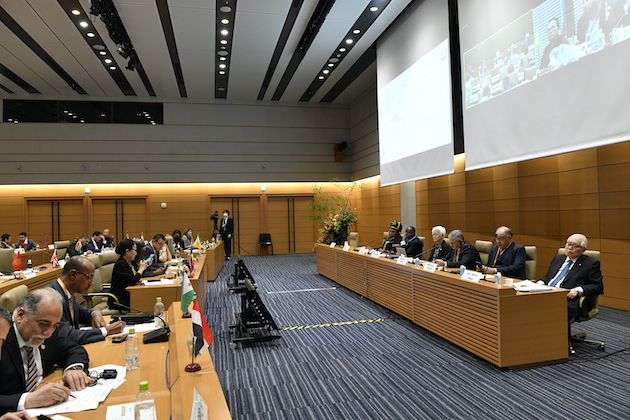
Parliamentarians attending the Global Conference of Parliamentarians on Population and Development Toward the 2023 G7 Hiroshima Summit. Credit: APDA

Parliamentarians attending the Global Conference of Parliamentarians on Population and Development Toward the 2023 G7 Hiroshima Summit. Credit: APDA

By Cecilia Russell
JOHANNESBURG, May 9 2023 (IPS)

Parliamentarians from more than 30 countries agreed to send a strong message to the G7 Hiroshima Summit in Japan later this year, focusing on human security and support of vulnerable communities, including women, girls, youth, aging people, migrants, and indigenous people, among others.


The wide-ranging declaration also called on governments to support active political and economic participation for women and girls, enhancing and implementing legislation that addresses gender-based violence (GBV) and eradicating harmful practices like child, early, and forced marriages. During discussions and in the declaration, a clear message emerged that budgetary requirements for Universal Health Care (UHC) should be prioritized and the exceptional work done by health workers during the pandemic be recognized.

In his keynote address, Japan’s Prime Minister Kishida Fumio reminded delegates that Covid-19 had exposed the “fragility of the global health architecture and underscored the need for UHC.”

Kishida said that the central vision of the G7 Hiroshima Summit was to emphasize the importance of addressing human security – through building global health architecture, including the “governance for prevention, preparedness, and response to public health crises, including finance. We believe it is important for the G7 to actively and constructively contribute to efforts to improve international governance, secure sustainable financing and strengthen international norms.”

Apart from contributing to resilient, equitable, and sustainable UHC, health innovation was needed to promote a “more effective global ecosystem to enable rapid research and development and equitable access to infectious disease crisis medicines … and to support aging society,” Kishida said.

Former Prime Minister of Japan Fukuda Yasuo, Chair of APDA, and Honorary Chair of JPFP said this conference and its declaration would follow in a tradition of delivering strong messages to the G7 that improving reproductive health was crucial to the development and the future of a planet which now had 8 million people living on it.

“International Community is becoming increasingly confrontational and divided, and there is the emergence of a national leader who is threatening the use of nuclear weapons. No nuclear weapons have been used in the nearly 80 years since Hiroshima and Nagasaki. We must work together to prevent the use of nuclear weapons, which can take many precious lives and people’s daily lives. In this instance, I would like you to search for the path toward appeasement and not division. We must keep all channels of dialogue open so as to ease tension,” Fukuda asked of the conference.

While calling on parliamentarians to work together to address challenges, Fukuda also expressed concern about the widening inequities caused by Covid-19 and climate change and noted: “This network of parliamentarians on population and development has been a vital resource for parliamentarians who share the same concern for not only their own countries but for the entire planet and future generations.”

Kamikawa Yoko, MP Japan, Chair of JPFP, said that with a world population of 8 billion, it was essential to “realize a society where no one is left behind … and Japan would share its experiences of being on the frontlines of an aging society with declining birth rates. “We are living in an aging society … and given these challenges in Japan, we will try to share with you our experience and lessons through our diplomacy while trying to deepen our discussions and exchanges to seek solutions.”

Japan’s Foreign Affairs Minister Hayashi Yoshimasa said it was essential for all to cooperate during the “Anthropocene era, when human activities have promised to have a major impact on the global environment, global issues that transcend national borders, such as climate change, and the spread of infectious diseases, including Covid-19 are becoming more and more prevalent.”

He reminded the delegates that at the center of Japan’s economic growth post World War II was mainly through health promotion and employment policies.

Delegates of the Global Conference of Parliamentarians on Population and Development Toward the 2023 G7 Hiroshima Summit agreed to send a strong message on human security to the Summit. Credit: APDA

Delegates of the Global Conference of Parliamentarians on Population and Development Toward the 2023 G7 Hiroshima Summit agreed to send a strong message on human security to the Summit. Credit: APDA

Director of the Division for Communications and Strategic Partnerships of UNFPA, Ian McFarlane, said it was not about the “numbers of people but the rights of the people that matter. It’s not about whether we are too many or too few, but whether women and girls can decide if, when, and how many children to have.”

A recent UNFPA report indicated that nearly half of the women across the globe could not exercise their rights and choices, their bodily autonomy, and expressed hope that policies in the future continue to focus on humanity and universal human rights.

Despite being close to the 30th anniversary of the International Conference on Population and Development (ICPD), the conference heard that much still needed to be done regarding women’s rights.

New Zealand MP and co-chair of AFPPD Standing Committee on Gender Equality and Women Empowerment, Angela Warren-Clark, reminded the audience that women still only held 26 percent of parliamentarian seats globally. While women make up 70 percent of the workforce in the health sector, only 25 percent have senior leadership positions.

“It is women in this pandemic who bore the increased burden of unpaid work at home as schools were closed, and it is girls and the poorest families who were taken out of school and forced into early marriages … We believe that if women had an equal say in decision-making during the pandemic, some of these mistakes would have been avoided.”

Baroness Elizabeth Barker, MP from the United Kingdom, told parliamentarians their role was to ensure that “no person on earth, from the head of G7 country to a poor person in a village, can say that they do not know what gender equality is. And they do not know what gender violence is.”

Barker suggested they use international standards, like the Istanbul Convention on Violence Against Women, to compare countries. “And you know that if your country doesn’t come out very well, they really don’t like it.”

She pointed to two successes in the UK, including stopping virginity testing and tackling the practice of forced marriages. She also warned the delegates that there was a right-wing campaign aimed at destroying human rights gained, and they chose different battlegrounds. The overturning of abortion rights in the United States in the Roe vs. Wade case was an example, as was the anti-LGBTQ legislation in Uganda.

Hassan Omar, MP from Djibouti, gave a host of achievements in his country, including ensuring that women occupy 25 percent roles in politics and the state administration and the growing literacy of women numbers in his country.

Risa Hontiveros, MP Philippines, painted a bleak picture of the impact of Covid in her country.

Hontiveros said GBV increased during Covid and extended to the digital space.

“The Internet has become a breeding ground for predators and cyber criminals to prey on children, especially young women, and girls. The online sexual abuse and exploitation of children … has become so prevalent in the Philippines that we have been tagged as the global hotspot.”

In a desperate attempt to provide for their families, even parents produced “exploitative material of their own children and sold them online to pedophiles abroad.”

To address these, she filed a gender-responsive and inclusive Emergency Management Act bill, which seeks to address the gender-differentiated needs of women and girls, because they were “disproportionately affected in times of emergencies.”

Former MP from Afghanistan Khadija Elham’s testimony united many in the conference and even resulted in proposals from the floor to include a condemnation of the Taliban’s women’s policies.

Elham said GBV had increased since the Taliban took over – women were forced to wear a burqa in public, they were not allowed to work, and those who wish to “learn science or (get an) education are forced to continue their studies and hidden places like basements.”

If their secret schools are exposed, they face torture and imprisonment. During the last two months, 260 people, including 50 women, were publicly whipped – a clear violation of their human rights. Women’s representation in political life has been banned, and women are no longer allowed to work in NGOs – and it has been “550 days since women could attend high schools and universities.”

She called on the international community, the United Nations, to pressure the Taliban to restore women’s work and education rights.

Nakayama Maho, Director of the Peacebuilding Program at the Sasakawa Peace Foundation, announced new research on factors contributing to men’s propensity to GBV. The research found that the higher a man’s educational attainment, the lower the level of violence. There were also lower levels of violence with “positive” masculinity – such as a man being employed, married, and capable of protecting his family. Men who experienced violence during times of conflict tended to support violence to instill discipline, or protect women and communities.

Dr Roopa Dhatt, Executive Director of Women in Global Health, summed up this critical session by saying, “Equal leadership for women in all fields is a game changer, particularly in politics and health.”

Japan’s Health, Labour and Welfare Minister, Kato Katsunobu, noted during his closing address that the G7 countries “share the recognition that investment in people is not an expense, but an investment… and as you invest in people you can create a virtuous cycle between workers well-being and social and economic activities.”

He said Japan had a lot to offer concerning aging populations.

“Japan has been promoting the establishment of a comprehensive community-based care system so that people can continue to live in their own way in their own neighborhood until the end of their lives and is in the position to provide knowledge to the G7 countries and other countries who will be facing (an aging population) in the future.”

Dr Alvaro Bermejo, Director-General of IPPF, commended the conference and said he was “thankful” that the conference declaration would tell G7 governments to set an example. “Marginalized and excluded populations are at the heart of human security and can only be achieved in solidarity, and that message from this conference is clear.”

Professor Takemi Keizo, MP Japan, Chair of AFPPD, summed up the proceeding by saying that parliamentarians as representatives of the electorate were vital to creating a “positive momentum in this global community and overcoming so many difficult issues.”

Takemi elaborated on some issues facing the world now, including climate change and military conflicts, but as parliamentarians, there was the opportunity to “build up the new basis of the global governance, which can be very beneficial.”

NOTE: Global Conference of Parliamentarians on Population and Development Toward the 2023 G7 Hiroshima Summit was organized by the Asian Population and Development Association (APDA), the Asian Forum of Parliamentarians on Population and Development (AFPPD), and the Japan Parliamentarians Federation for Population (JPFP).

It was supported by the Ministry of Foreign Affairs of Japan (MOFA), United Nations Population Fund (UNFPA), Japan Trust Fund (JTF), and Keidanren-Japan Business Federation in cooperation with the International Planned Parenthood Federation (IPPF).

IPS UN Bureau Report


!function(d,s,id){var js,fjs=d.getElementsByTagName(s)[0],p=/^http:/.test(d.location)?’http’:’https’;if(!d.getElementById(id)){js=d.createElement(s);js.id=id;js.src=p+’://platform.twitter.com/widgets.js’;fjs.parentNode.insertBefore(js,fjs);}}(document, ‘script’, ‘twitter-wjs’);  

The Privilege of Making a Choice

By Yasmine Sherif
NEW YORK, May 8 2023 (IPS)

A civilian student named Saber was caught in the crossfire in Khartoum. He had two choices: either flee and lose everything; or die. But within a moment his option to choose was violently denied: he died.


As a result of the brutal internal armed conflict in Sudan right now, UNHCR projects that 860,000 people will flee across the borders as refugees and returnees into the Central African Republic, Chad, Egypt, Ethiopia, Eritrea and South Sudan. About 50% will be children and adolescents below 18.

Will they arrive alive? They can’t choose. They can only hope.

Making it worse, none of the neighboring countries has the financial and structural capacity to manage such influx, and yet they too, have no choice.

Indeed, an enormous international response will be required to support the Refugee Response Plan developed by 134 partners, including UN agencies, national and international NGOs and civil society groups, and launched on 4 May 2023.

Fleeing children and adolescents will need immediate psycho-social support and mental health care to cope with the stress and trauma of the conflict and perilous escape. They will need school meals. They will need water and sanitation. They will need protection. In the deep despair of their young lives, they will need a sense of normalcy and hope for their future. They need it now and a rapid response to establishing education can meet these needs.

Or to paraphrase ECW’s new Global Champion, the world-renowned journalist, Folly Bah Thibault – who reaffirms the need for speed and quality: the humanitarian-development nexus in action – in her high-level interview in this month’s ECW Newsletter, “We need to deliver with humanitarian speed and development depth.”

The choice is ours.

ECW is now traveling to the region to support host-governments, UN and civil society colleagues who jointly produced the Refugee Response Plan and who are on the ground working day and night in difficult circumstances. ECW will provide support both through an initial First Emergency Response investment and through our global advocacy.

We all have a choice to act now. Our choice is not between losing everything or die. Our choice is between action or inaction. Between humanity and indifference.

Prior to the breakout of the internal armed conflict in Sudan, Samiya*, a 17-year-old refugee student, wrote in her recent Postcard From the Edge: “Education is our future dream. Education is one of the most important factors to progress in life. Through education, people can thrive in their lives; they can also develop their skills and improve their life quality.”

We can help make Samya’s dream come true at the hardest, darkest moment of her life. Samiya does not have that choice. Only, we have that choice. Let us recognize it for what it is: as a privilege or blessing of choosing responsibility and humanity.

Yasmine Sherif is Director of Education Cannot Wait.

IPS UN Bureau


!function(d,s,id){var js,fjs=d.getElementsByTagName(s)[0],p=/^http:/.test(d.location)?’http’:’https’;if(!d.getElementById(id)){js=d.createElement(s);js.id=id;js.src=p+’://platform.twitter.com/widgets.js’;fjs.parentNode.insertBefore(js,fjs);}}(document, ‘script’, ‘twitter-wjs’);  

Source

Statement on the G7 Hiroshima Summit, the Ukraine Crisis and “No First Use” of Nuclear Weapons

Dr. Daisaku Ikeda. Credit: Seikyo Shimbun

By Daisaku Ikeda
TOKYO, Japan, May 8 2023 (IPS)

The Ukraine crisis, which in addition to bringing devastation to the people of that country has had severe impacts on a global scale—even giving rise to the specter of nuclear weapons use—has entered its second year. Against this backdrop and amid urgent calls for its resolution, the G7 Summit of leading industrial nations will be held in Hiroshima, Japan, from May 19 to 21.


In February of this year, an emergency special session of the UN General Assembly was held, where a resolution calling for the early realization of peace in Ukraine was adopted. Among the operative paragraphs of the resolution was one that urged the “immediate cessation of the attacks on the critical infrastructure of Ukraine and any deliberate attacks on civilian objects, including those that are residences, schools and hospitals.”

With that as a first essential step, all concerned parties must come together to create a space for deliberations toward a complete cessation of hostilities. Here I would like to propose that, as negotiations advance through the cooperative efforts of the concerned countries, they be joined by representatives of civil society, such as the physicians and educators who work in schools and hospitals to protect and nurture people’s lives and futures, participating as observers.

In March, the leaders of Russia and China issued a joint statement following their summit meeting which reads in part: “The two sides call for stopping all moves that lead to tensions and the protraction of fighting to prevent the crisis from getting worse or even out of control.” This is aligned with the resolution adopted by the emergency special session of the UN General Assembly.

The G7 Hiroshima Summit should develop concrete plans for negotiations that will lead to a cessation of hostilities.

I also urge the G7 to commit at the Hiroshima Summit to taking the lead in discussions on pledges of No First Use of nuclear weapons. The current crisis is without parallel in the length of time that the threat of use and the fear of actual use of nuclear weapons have persisted without cease.

Since the bombings of Hiroshima and Nagasaki, the hibakusha of those cities, in coordination with the larger civil society movement, have stressed the inhumane nature of nuclear weapons; non-nuclear-weapon states have engaged in continuous diplomatic efforts; and the states possessing nuclear weapons have exercised self-restraint. As a result, the world has somehow managed to maintain a seventy-seven-year record of non-use of nuclear weapons.

If international public opinion and the taboo against the use of nuclear weapons were to fail to provide their braking function, nuclear deterrence policy will compel humankind to stand on a precipitous ledge, never knowing when it might give way.

Since the start of the Ukraine crisis, I have written two public statements. In both, I referenced the joint statement by the five nuclear-weapon states (United States, Russia, United Kingdom, France and China) made in January 2022, which reiterated the principle that “a nuclear war cannot be won and must never be fought,” and called for it to serve as the basis for reducing the risk of nuclear weapons use.

Also of important note is the declaration issued by the G20 group in Indonesia last November, which stated: “The use or threat of use of nuclear weapons is inadmissible.”

The G20 member countries include nuclear-weapon states as well as nuclear-dependent states. It is deeply significant that these countries have officially expressed their shared recognition that the use or threat of use of nuclear weapons is “inadmissible”—the animating spirit of the Treaty on the Prohibition of Nuclear Weapons (TPNW).

It is vital that this message be communicated powerfully to the world from Hiroshima.

As the G7 leaders revisit the actual consequences of a nuclear weapon detonation and the bitter lessons of the nuclear era, I urge that they initiate earnest deliberations on making pledges of No First Use so that their shared recognition of the inadmissible nature of nuclear weapons can find expression in changed policies.

If agreement could be reached on the principle of No First Use, which was at one point included in drafts of the final statement for last year’s NPT Review Conference, this would establish the basis on which states could together transform the challenging security environments in which they find themselves. I believe it is vital to make the shift to a “common security” paradigm.

Commitment to policies of No First Use is indeed a “prescription for hope.” It can serve as the axle connecting the twin wheels of the NPT and TPNW, speeding realization of a world free from nuclear weapons.

For our part, the SGI has continued to work with the world’s hibakusha, the International Campaign to Abolish Nuclear Weapons (ICAN)—which arose from its parent body IPPNW—and other organizations first for the adoption and now the universalization of the TPNW. As members of civil society, we are committed to promoting the prompt adoption of policies of No First Use of nuclear weapons, generating momentum to transform our age.

The author is Peace builder and Buddhist leader Daisaku Ikeda, who is President of the Soka Gakkai International (SGI). https://www.daisakuikeda.org/ Read full statement here full statement.

IPS UN Bureau


!function(d,s,id){var js,fjs=d.getElementsByTagName(s)[0],p=/^http:/.test(d.location)?’http’:’https’;if(!d.getElementById(id)){js=d.createElement(s);js.id=id;js.src=p+’://platform.twitter.com/widgets.js’;fjs.parentNode.insertBefore(js,fjs);}}(document, ‘script’, ‘twitter-wjs’);  
Source

Uzbekistan: A President for Life?

Credit: Victor Drachev/AFP via Getty Images

By Andrew Firmin
LONDON, May 5 2023 (IPS)

Where will you be in 2040? For Uzbekistan’s President Shavkat Mirziyoyev, the answer is: in the Kuksaroy Presidential Palace. That’s the chief consequence of the referendum held in the Central Asian country on 30 April.

With dissent tightly controlled in conditions of closed civic space, there was no prospect of genuine debate, a campaign against, or a no vote.


Repression betrays image of reform

Mirziyoyev took over the presidency in 2016 following the death of Islam Karimov, president for 26 years. Karimov ruled with an iron fist; Mirziyoyev has tried to position himself as a reformer by comparison.

The government rightly won international recognition when Uzbekistan was declared free of the systemic child labour and forced labour that once plagued its cotton industry. The move came after extensive international civil society campaigning, with global action compensating for the inability of domestic civil society to mobilise, given severe civic space restrictions.

While that systemic problem has been addressed, undoubtedly abuses of labour rights remain. And these are far from the only human rights violations. When one of the proposed constitutional changes announced last July sparked furious protests, the repression that followed belied Mirziyoyev’s reformist image.

Among the proposed changes was a plan to amend the status of Uzbekistan’s Karakalpakstan region. Formally, it’s an autonomous republic with the right to secede. The surprise announcement that this special status would end brought rare mass protests in the regional capital, Nukus. When local police refused to intervene, central government flew over riot police, inflaming tensions and resulting in violent clashes.

A state of emergency was imposed, tightly restricting the circulation of information. Because of this, details are scarce, but it seems some protesters started fires and tried to occupy government buildings, and riot police reportedly responded with live ammunition and an array of other forms of violence. Several people were killed and over 500 were reported to have been detained. Many received long jail sentences.

The government quickly dropped its intended change, but otherwise took a hard line, claiming the protesters were foreign-backed provocateurs trying to destabilise the country. But what happened was down to the absence of democracy. The government announced the proposed change with no consultation. All other channels for expressing dissent being blocked, the only way people could communicate their disapproval was to take to the streets.

Civic space still closed

It remains the reality that very little independent media is tolerated and journalists and bloggers experience harassment and intimidation. Vague and broad laws against the spreading of ‘false information’ and defamation give the state ample powers to block websites, a regular occurrence.

Virtually no independent civil society is allowed; most organisations that present themselves as part of civil society are government entities. Independent organisations struggle to register, particularly when they have a human rights focus. New regulations passed in June 2022 give the state oversight of activities supported by foreign donors, further restricting the space for human rights work.

It’s been a long time since Uzbekistan held any kind of recognisably democratic vote. The only presidential election with a genuine opposition candidate was held in 1991. Mirziyoyev certainly hasn’t risked a competitive election: when he last stood for office, to win his second term in 2021, he faced four pro-government candidates.

A flawed vote and a self-serving outcome

The referendum’s reported turnout and voting totals were at around the same levels as for the non-competitive presidential elections: official figures stated that 90-plus per cent endorsed the changes on a turnout of almost 85 per cent.

Given the state’s total control, voting figures are hard to trust. Even if the numbers are taken at face value, election observers from the Organization for Security and Co-operation in Europe pointed out that the referendum was held ‘in an environment that fell short of political pluralism and competition’. There was a lack of genuine debate, with very little opportunity for people to put any case against approving the changes.

State officials and resources were mobilised to encourage a yes vote and local celebrities were deployed in rallies and concerts. State media played its usual role as a presidential mouthpiece, promoting the referendum as an exercise in enhancing rights and freedoms. Anonymous journalists reported that censorship had increased ahead of the vote and they’d been ordered to cover the referendum positively.

Mirziyoyev is clearly the one who benefits. The key change is the extension of presidential terms from five to seven years. Mirziyoyev’s existing two five-year terms are wiped from the count, leaving him eligible to serve two more. Mirziyoyev has taken the same approach as authoritarian leaders the world over of reworking constitutions to stay in power. It’s hardly the act of a reformer.

The president remains all-powerful, appointing all government and security force officials. Meanwhile there’s some new language about rights and a welcome abolition of the death penalty – but no hint of changes that will allow movement towards free and fair elections, real opposition parties, independent human rights organisations and free media.

The constitution’s new language about rights will mean nothing if democratic reform doesn’t follow. But change of this kind was always possible under the old constitution – it’s always been lack of political will at the top standing in the way, and that hasn’t changed.

Democratic nations, seeking to build bridges in Central Asia to offer a counter to the region’s historical connections with Russia, may well welcome the superficial signs of reform. A UK-based public relations firm was hired to help persuade them. But they should urge the president to go much further, follow up with genuine reforms, and allow for real political competition when he inevitably stands for his third term.

Andrew Firmin is CIVICUS Editor-in-Chief, co-director and writer for CIVICUS Lens and co-author of the State of Civil Society Report.


!function(d,s,id){var js,fjs=d.getElementsByTagName(s)[0],p=/^http:/.test(d.location)?’http’:’https’;if(!d.getElementById(id)){js=d.createElement(s);js.id=id;js.src=p+’://platform.twitter.com/widgets.js’;fjs.parentNode.insertBefore(js,fjs);}}(document, ‘script’, ‘twitter-wjs’);  

Source

UN Plan of Action on Safety of Journalists

Credit: Shutterstock
 
On World Press Freedom Day 2023, UNESCO will organize a special anniversary event at UN headquarters in New York, marking the 30 years since the UN General Assembly’s decision proclaiming an international day for press freedom.

This anniversary edition of World Press Freedom Day will include a full day of activities at the UN Headquarters on 2nd May. Partners from the media, academia, and civil society are invited to organize events in New York and around the world centered on this year’s theme.

By Audrey Azoulay
PARIS, May 1 2023 (IPS)

Freedom of the press is the cornerstone of democratic society. Without a debate of ideas, without verified facts, without diversity of perspectives, democracy is a shadow of itself; and World Press Freedom Day was established to remind us of this.


For the international community, it is first and foremost a question of combating the impunity that still surrounds crimes of which journalists are victims, with nearly nine out of ten murders of journalists going unpunished.

This, for instance, is the objective of the United Nations Plan of Action on the Safety of Journalists and the issue of Impunity, which UNESCO has been leading for ten years. It is also about ensuring that independent media can continue to exist.

With the digital revolution, the information landscape and its modes of production and distribution have been radically disrupted, jeopardizing the viability of independent professional media.

To ensure that information remains a common good in the digital age, our Member States, through the Windhoek +30 Declaration of 2021, have undertaken to support independent journalism, ensure greater transparency of online platforms, and develop media and information literacy.

We will not be able to do this without the actors who now have significant control over access to information: the digital platforms. This is why UNESCO held the “Internet for Trust” conference in February, as an essential step towards the development of principles to regulate digital platforms.

This is a fundamental issue, because it involves both protecting freedom of expression and fighting disinformation and hate speech. Thirty years after the first World Press Freedom Day, we can see how far we have come and how far we still have to go.

So, let this Day be an opportunity to renew our commitment, within international organizations, to defending journalists and, through them, press freedom.

Footnote: As the UN Organization responsible for defending and promoting freedom of expression, media independence and pluralism, UNESCO leads the organization of World Press Freedom Day each year.

This year’s celebration will be particularly special: the international community will mark the 30th anniversary of the proclamation of the Day by the United Nations General Assembly.

It will serve as an occasion to take stock of the global gains for press freedom secured by UNESCO and its partners in the past decades, as well as underline the new risks faced in the digital age.

IPS UN Bureau


!function(d,s,id){var js,fjs=d.getElementsByTagName(s)[0],p=/^http:/.test(d.location)?’http’:’https’;if(!d.getElementById(id)){js=d.createElement(s);js.id=id;js.src=p+’://platform.twitter.com/widgets.js’;fjs.parentNode.insertBefore(js,fjs);}}(document, ‘script’, ‘twitter-wjs’);  

Excerpt:

Audrey Azoulay is Director-General of UNESCO Source