Extremists Harm Image of Islam and Pakistan

Civil Society, Featured, Global, Headlines, Human Rights, Inequity, Religion, TerraViva United Nations

Opinion

Family members of Priyantha Kumara, who died in the Sialkot mob attack, taking part in religious rites at his funeral.

COLOMBO, Si Lanka, Dec 13 2021 (IPS) – Every time, breaking news of a barbaric crime or terror act is reported from anywhere in the world, peace-loving Muslims the world over feel dejected and wish it had not been another tragedy that will make others glower at them with suspicion as though they too are complicit in the crime.


But often, what they dread is the case, for more than 90 percent of such inhumane and barbaric acts – like the Sialkot slaying of a Sri Lankan factory manager and the Easter Sunday massacres — are associated with Islamic extremism.

Last Friday’s lynching of factory Manager Priyantha Kumara Diyawadanage in Pakistan by an extremist mob will not be the last of such acts.

No amount of ‘We Are Sorry Sri Lanka’ placards, flowers and candles at makeshift memorials and political statements denouncing the crime can bring back his life that was cruelly brought to an end as a burnt offering on the altar of bigotry in an expression of savagery that has no place in civilized society.

However much Pakistanis who are humiliated by extremism dissociate themselves from the horrible act, however profound their apology is, however remorseful Pakistan Prime Minister Imran Khan, who decried the incident as Pakistan’s day of shame, is, the country will continue to be plagued by violent extremism unless and until extremism is rooted out by radical social reforms in line with the peaceful message of Islam.

The Priyantha Kumara lynching by a mob linked to an extremist outfit called Tehereek-e-Labbaik Pakistan, for tearing off a political poster that allegedly had some religious verses in Urdu warrants the immediate revocation of Pakistan’s blasphemy law or its amendment in keeping with the Islamic virtue of tolerance and magnanimity.

Research shows a higher prevalence of extremism in countries that have blasphemy laws than in countries that do not have such laws. Blasphemy laws are often misused to persecute the minorities or treat them as second-class citizens. Such laws are incompatible with the Islamic teaching which calls for protection of the minorities and non-interference in their worship.

If the Pakistan Government fails to make use of this heartrending incident as an opportunity to bring about radical reforms, it itself will be committing an act of blasphemy because its inaction allows the badly constructed law to distort and disgrace Islam.

Pakistan was carved out of the British Raj for the Muslims of the subcontinent. Its founder Muhammad Ali Jinnah promoted a theory of two nation two state, saying that the Muslims and Hindus were two different nations and belonged to two different civilizations and therefore needed to live in separate states.

The world’s first nation-state to be formed on the basis of religion, Pakistan, however, has never been a theocracy.

In a 2017 BBC interview, historian Ayesha Jalal pointed out that Jinnah envisaged Pakistan as a “homeland for India’s Muslims”, as opposed to an Islamic state. But she said that his theory had been used by Islamists “as an ideological device” to justify claims for Pakistan to be a theocratic state.

This is Pakistan’s existential crisis. While the extremists fight for the setting up of a theocracy, secular politicians skillfully make use of Islam and side with Islamists to swell their vote banks or to whip up nationalistic emotions against archrival India.

Perhaps, this was why Pakistan’s Defence Minister Pervez Khattak was seen belittling the gruesome murder of Priyantha Kumara, by calling it “youthful exuberance of Muslim youngsters” and “happens all the time”.

He reportedly added, “When the youth feel Islam has been attacked, they react to defend it.” This was while Premier Khan vowed to bring the murderous mob to justice and Pakistan police arrested more than 130 people.

If we play with fire, we get burnt. Pakistan has been burnt enough, yet it appears to have not learnt enough. Seven years ago this month, extremists carried out a gruesome school massacre in Peshawar. In this terror attack some 134 schoolchildren, aged between 8 and 18, and 16 staff members were brutally gunned down by the Pakistan Taliban. So why pamper the extremists?

In 2011, Pakistan’s Punjab Province Governor Salman Taseer was shot dead by a police guard over his opposition to the country’s blasphemy law that calls for death sentence to those who insult Islam or its holy personalities.

Taseer was also calling for the release of Asia Bibi, a Christian woman who was falsely accused by her neighbours of insulting the Prophet Muhammad. Taseer’s assassin was hailed as a hero by a large number of extremists who took to the street to celebrate the murder.

As a result of violent extremism, many non-Muslims find it difficult to accept the Muslims’ assertion that Islam is a religion of peace. What many do not understand is that there is little Islam in today’s world, although about 2 billion Muslims constitute one fourth of the world’s 8 billion population.

In Islam, jihad or holy war is not the norm, but a last resort exception to defend the oppressed. Vigilante justice has no place in Islam. The accused should be heard, Islam commands.

To whatever religion they belong, the problem with extremists is their ignorance of the teachings of the religion they are supposed to follow. As historian and comparative religions expert Karen Armstrong would say, “Terrorism has nothing to do with Muhammad, any more than the Crusades had anything to do with Jesus.”

Certainly, violence is not the answer to blasphemy. According to the Quran, the Prophet Muhammad was heaped the worst form of scorn. He was called a liar, a magician, a madman, and possessed. Garbage was thrown over his head and stone-throwing street urchins were set upon him.

Yet as commanded by God, he exercised beautiful patience — Sabran Jameelan — and when his companions sought permission to retaliate, he would teach them the virtues of patience and remind them that he was sent as a mercy to the whole world. He befriended his persecutors by practising the Quranic injunction which exhorts the Muslims to “repel that which is evil with that which is good (and virtuous)”.

Unfortunately, the verses on defensive wars the Prophet and the early Muslims were forced to fight were misinterpreted by latter day Muslim rulers and terrorists for political purposes. Glorification of violence in the name of Islam became the norm. Islam’s peaceful message was forgotten.

Also overlooked is the Quranic message against violence as explained in the story of angels who expressed their deep concern over bloodshed and mischief on earth when God wanted to create man. (Quran 2: 30.)

It appears that instead of Islam, some Muslims are following a violent creed and calling it Islam. The fake Islam is largely practised while the real Islam remains buried. The task before the Muslims is to search for the buried Islam, resurrect it and live it.

Ameen Izzadeen is the deputy editor of the Sunday Times, Sri Lanka. He also writes a weekly column for the Daily Mirror, Sri Lanka, on international politics and good governance issues; and is a visiting lecturer in journalism and international politics.

  Source

Homeless Camps, a Reflection of Growing Inequality in Chile

Active Citizens, Civil Society, Development & Aid, Editors’ Choice, Featured, Headlines, Human Rights, Latin America & the Caribbean, Population, Poverty & SDGs, Regional Categories

Development & Aid

On Cerro 18, above the affluent municipality of Lo Barnechea, in the coveted eastern sector of Santiago de Chile with a stunning view of the valley and the Andes Mountains, 300 families live in five camps or irregular settlements, many without water, electricity or sewage. CREDIT: Orlando Milesi/IPS

SANTIAGO, Dec 10 2021 (IPS) – Camps made up of thousands of tents and shacks have mushroomed in Chile due to the failure of housing policies and official subsidies for the sector, aggravated by the rise in poverty, the covid-19 pandemic and the massive influx of immigrants.


“Three years ago we were about to be evicted and when my children would head off to school they never knew if our little house would be there when they got home. One morning we were going to school and the carabineros (militarized police) were coming. Many times I had to go home early from work. It was chaotic, difficult and distressing,” Melanni Salas told IPS during a visit to the site.

Salas, 33, presides over Senda 23, one of the five camps that bring together 300 families who occupied public land in Cerro 18, in the municipality of Lo Barnechea, on the east side of Santiago. They have been building shacks with wood and other materials within their reach, which they are gradually trying to improve.

The threat of eviction ceased at the start of the covid pandemic, but the shadow still hangs over their heads because the municipality “built us a septic tank and gave us gifts for Christmas, but has said nothing about housing,” she said.

The community activist previously lived for 19 years as an “allegada”, the name given in Chile to people or families who share a house with relatives or friends, in overcrowded conditions. In 2016 she occupied the land where she and her husband Jorge built the precarious dwelling where she now lives with her three children aged 15, 13 and five years old.

“This used to be a garbage dump and now it is clean and there are houses,” said Salas. “Mine gets a little wet inside when it rains because it is made of wood and because of the strong wind. But I have drinking water, electricity and sewerage thanks to my mother-in-law who lives further up. The neighboring family has neither water nor sewage. They are a couple with three children and one of them, Colomba, was born a week ago.”

She explains that her neighbors “use the bathroom at their brother’s place who lives nearby, but during the pregnancy she went back to her mother’s house.”

In the camps people cook, wash, sleep and live together, observed by passers-by who have become accustomed to this new urban landscape. CREDIT: Orlando Milesi/IPS

In the camps people cook, wash, sleep and live together, observed by passers-by who have become accustomed to this new urban landscape. CREDIT: Orlando Milesi/IPS

Hundreds of homeless tents now line the main avenues of Santiago de Chile.

Explosive situation

“Every day more than 10 families come to live in an encampment in Chile,” says Fundación Techo Chile, a social organization dedicated to fighting against housing exclusion in the cities of this South American country.

The problem is also seen along the avenues and in the parks where hundreds of men and women set up tents to sleep, cook, wash and live together in full view of passers-by who have become accustomed to the scene.

In the last two years, the number of families living in 969 of these camps with almost no access to water, energy and sanitation services has increased to 81,643, a survey by the Fundación Techo Chile found.

In Chile, the term “campamentos” or camps has also come to refer to slums or shantytowns known traditionally as “callampas”, such as the one where Salas lives, which are built on occupied land and consist of houses made of light materials, although the neighborhoods are sometimes later improved and upgraded, but still lack basic services.

These slums are mainly in Santiago and Valparaíso, 120 kilometers north of the capital, in central Chile. But they are also found in the northern cities of Arica and Parinacota and the southern city of Araucanía.

They are home to 57,384 children under the age of 14 and some 25,000 immigrants, mostly Colombians, Venezuelans and Haitians. “Today, families live there who six months or two years ago were ‘allegados’ living in overcrowded, informal, precarious or abusive conditions. That is what is understood as a housing deficit,” Fundación Techo Chile’s executive director, Sebastián Bowen, told IPS.

“The 81,000 families living in camps are the most visible part of the problem, but the housing deficit, covering all the families who do not have access to decent housing, exceeds 600,000,” he said.

The State provides some 20,000 social housing solutions each year, a figure that is highly insufficient to meet the current need.

According to Bowen, “if we want to solve the problem of the camps, we must structurally change our housing policy to guarantee access to decent housing, especially for the most vulnerable families.”

This explosion coincided with the social protests that began in October 2019 and with the arrival of coronavirus in the country in March 2020.

According to the National Socioeconomic Characterization Survey (Casen), 10.8 percent of Chileans currently live in poverty, which means more than two million people, although social organizations say the real proportion is much higher.

Chile, with a population of 19 million people, is considered one of the most unequal countries in the world, as reflected by the fact that the 10 percent of households with the highest incomes earn 251.3 times more than the 10 percent with the lowest income.

View of some of the houses in Cerro 18, a shantytown where 300 families live, most of them without even the most basic services. In what used to be a garbage dump, on the hillside of one of the wealthy neighborhoods of the Chilean capital, they have built their houses using scrap wood and waste materials. CREDIT: Orlando Milesi/IPS

View of some of the houses in Cerro 18, a shantytown where 300 families live, most of them without even the most basic services. In what used to be a garbage dump, on the hillside of one of the wealthy neighborhoods of the Chilean capital, they have built their houses using scrap wood and waste materials. CREDIT: Orlando Milesi/IPS

The new constitution holds out hope

Benito Baranda, founder of the Fundación Techo, an organization that now operates in several Latin American countries, believes that the housing policy failed because it focuses on “market-based eradication, forming housing ghettos on land where people continue to live in a segregated manner.”

This policy is also based on a structure of subsidies “born during the dictatorship and which has remained in place because housing is not a right recognized in the constitution,” Baranda, now a member of the Constitutional Convention that is drafting a new constitution, which will finally replace the one inherited from the 1973-1990 military dictatorship of General Augusto Pinochet, told IPS.

“The decision of where people are going to live was handed over to the market. Not only the construction of housing. And the land began to run out and the available and cheap places were in the ghettos,” he explained.

Baranda criticized the policy of “eradication”, “which created ghettos and generated much greater harm for people,” referring to the forced expulsions of slumdwellers and their relocation to social housing built on the outskirts of the cities, a policy initiated during the Pinochet dictatorship and which crystallized social segregation in the capital.

According to Baranda, “in the last four governments there has been the least construction of housing for the poorest families.”

Baranda was elected to the constituent assembly in a special election in May and proposes “to generate a mechanism that will progressively reduce the waiting times for housing, which today can stretch out to 20 years.”

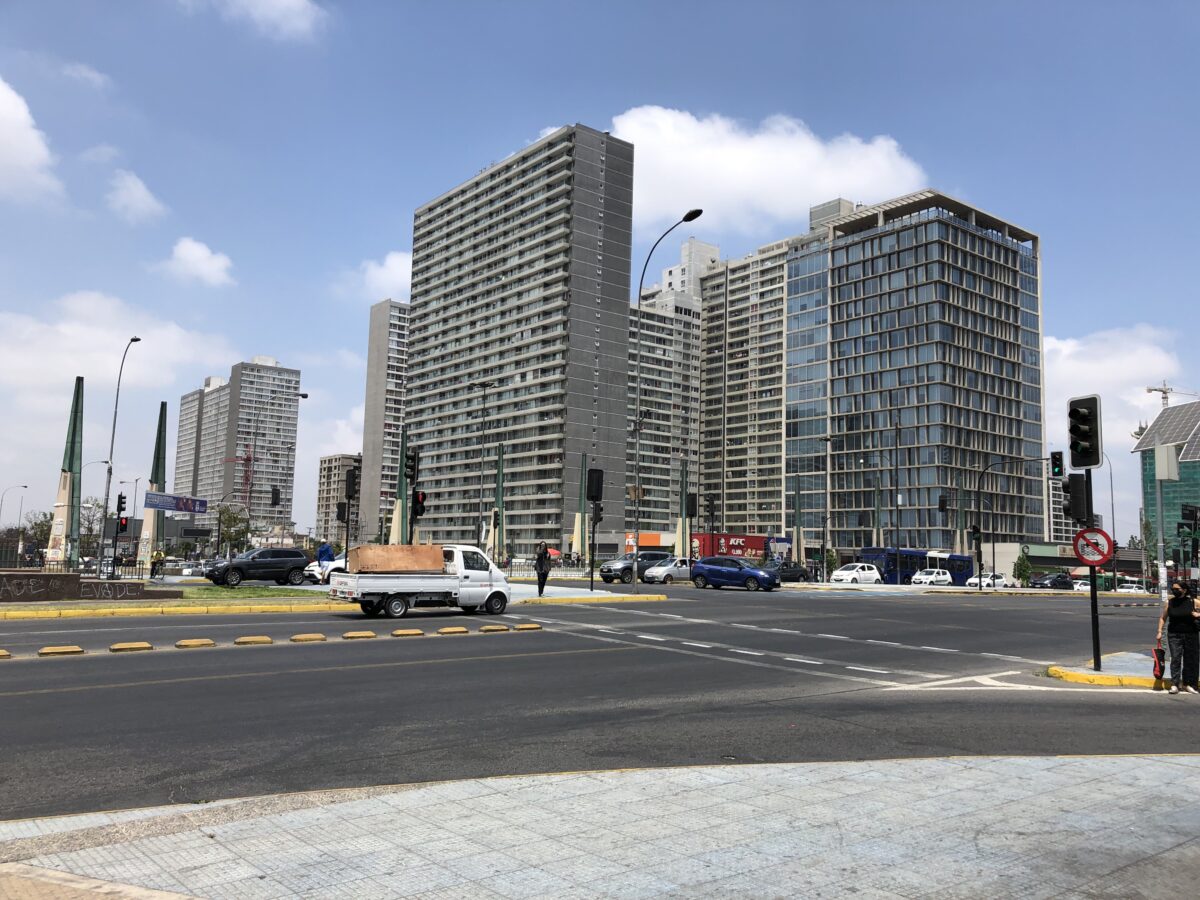
Twenty-story buildings, where each floor has 50 17-square-meter apartments, are called "vertical ghettos" and are inhabited mainly by immigrants. These ones are located in the Estación Central neighborhood, along Alameda Avenue that crosses Santiago de Chile. CREDIT: Orlando Milesi/IPS

Twenty-story buildings, where each floor has 50 17-square-meter apartments, are called “vertical ghettos” and are inhabited mainly by immigrants. These ones are located in the Estación Central neighborhood, along Alameda Avenue that crosses Santiago de Chile. CREDIT: Orlando Milesi/IPS

Privatization of social housing

Isabel Serra, an academic at the Diego Portales University Faculty of Architecture, believes that “the housing issue in Chile will be solved in some way through family networks…There is a lot of overcrowding here and small families are becoming the norm,” she told IPS.

According to Serra, the mushrooming of camps “clearly has to do with the influx of immigrants and this has grown especially in cities that are also functional or productive or extractivist hubs.”

She criticized the subsidy policy because these “are transferred to the private sector and what they do is drive up housing prices… and most of them are not used because they are not in line with the price of land and housing.”

“A highly financialized private market has made housing a tool for economic speculation…investors have decided to put their funds into the real estate market,” she said.

The problem has already reached the 155-member Constitutional Convention, which has been functioning since Jul. 4 and has a 12-month deadline to draft the new constitution, which must then be ratified in a plebiscite.

In September Melanni Salas and representatives of eight organizations met with Elisa Loncón, president of the Convention, to present her with the book “Constitution and Poverty”, which includes proposals to guarantee the right to housing.

“I hope they include this in the new constitution. The proposals were made by 25,000 excluded people…this document seeks to ensure that we are not left on the sidelines as always,” the community organizer explained.

A human right

Baranda said “in the constituent assembly we are working to get this enshrined as a right and to get the State to assume a leading role, not in the construction of housing itself, but in determining where people are going to live and creating the land bank that people have been demanding for so long.”

“We need the policies, by making land available and expropriating property that is not owned by the State, to create housing projects in places where there is social inclusion,” he stressed.

Serra agreed that “when the issue of housing is discussed in the constituent assembly, it will have to look at how the State buys and sells land.

“Housing is a basic human right and should be enshrined in the constitution, with all the parameters that are established for decent housing,” she argued.

Serra also called for “modernizing the instruments and the institutional framework dedicated to the provision of housing” because, she said, “currently the role of housing provision is clearly played by the market.”

She said it would require “a great deal of political will because land issues in general are political issues, very difficult to implement because there are many economic interests involved.”

Celia “Charito” Durán lives in the Mesana camp on Mariposas hill in the port city of Valparaíso, along with 165 other families, and counting.

The municipality delivers 3,000 liters of water per week to each house, using tanker trucks.

Durán said, however, that the priority is access “because if there is no road, we are cut off from everything: firefighters, water, ambulances.”

In Mesana there is no sewage system, only “cesspools, septic toilets and pipes through which people dump everything into the creek,” she told IPS by telephone.

On the hilltop the wind is very strong and every winter roofs are blown off and houses leak when it rains.

Durán, 56, has lived there since she was 37. She is confident that a solution to the social housing deficit will come out of the constituent assembly, after participating in meetings with Jaime Bassa, vice-president of the Constitutional Convention.

“We have the hope and expectation that the right to housing will be included. So, if tomorrow it is not fulfilled, you could go to the authorities with the right to protest about it,” she said.

“We want to be part of the city and not be segregated and forced to return to the camps,” Durán said.

  Source

No Vaccine for the Pandemic of Violence Against Women in Latin America

Active Citizens, Civil Society, Editors’ Choice, Featured, Gender, Gender Violence, Headlines, Human Rights, Indigenous Rights, Latin America & the Caribbean, Regional Categories

Gender Violence

This article is part of IPS coverage of the International Day for the Elimination of Violence against Women on Nov. 25, which kicks off 16 days of activism on the issue around the world.

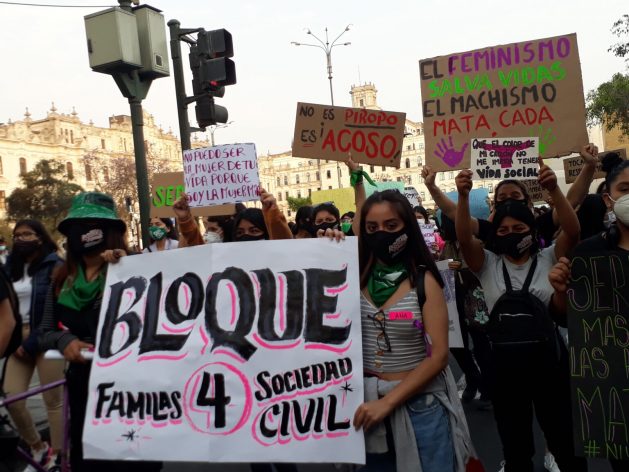
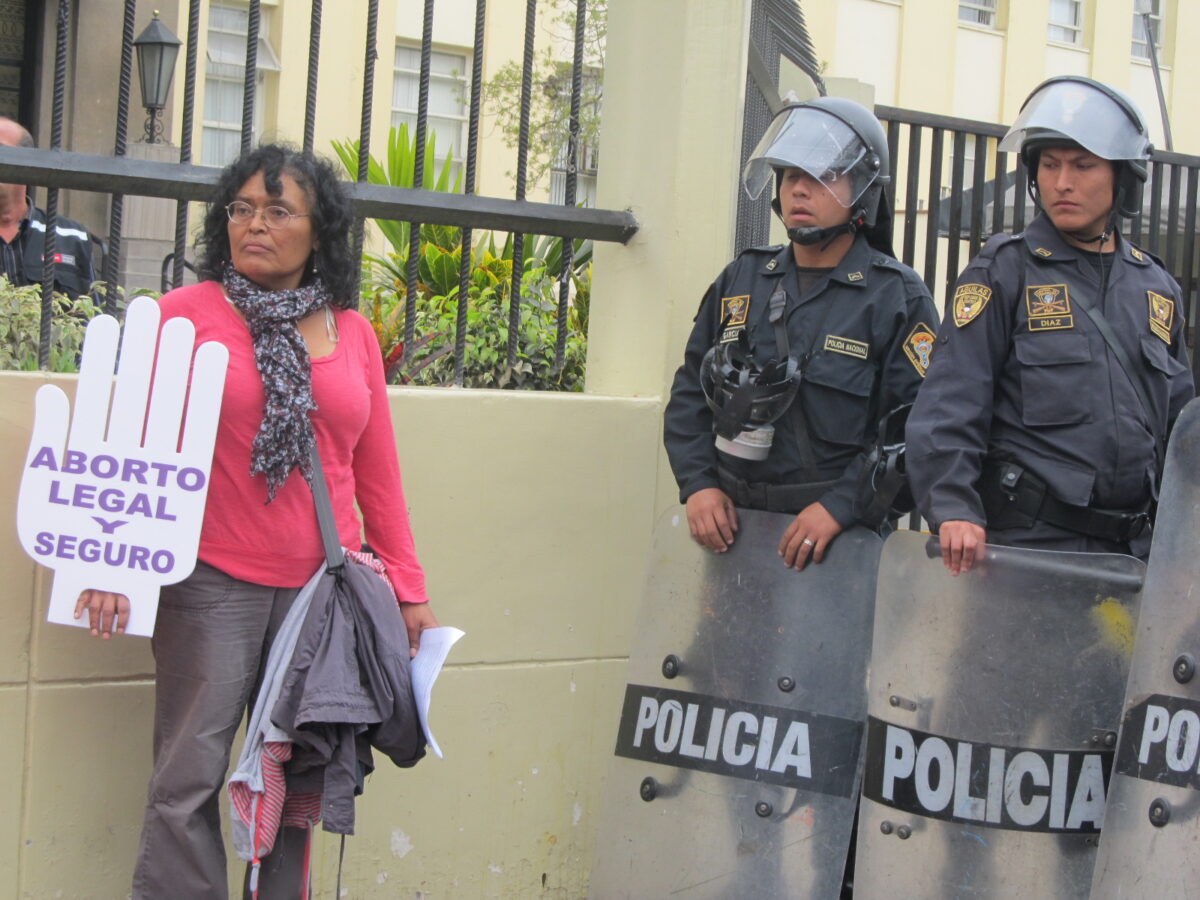
Despite restrictions due to covid, women from various feminist, youth and civil society groups gathered in the central Plaza San Martin in Lima and marched several blocks demanding justice and protesting impunity for violence against women, on Nov. 25, 2020. CREDIT: Mariela Jara/IPS

Despite restrictions due to covid, women from various feminist, youth and civil society groups gathered in the central Plaza San Martin in Lima and marched several blocks demanding justice and protesting impunity for violence against women, on Nov. 25, 2020. CREDIT: Mariela Jara/IPS

LIMA, Nov 24 2021 (IPS) – Despite significant legal advances in Latin American countries to address gender-based violence, it continues to be a serious challenge, especially in a context of social crisis aggravated by the covid-19 pandemic, which hits women especially hard.


“Existing laws and regulations have not stopped the violence, including femicide (gender-based murders). There is a kind of paralysis at the Latin American level, on the part of the State and society, where we don’t want to take much notice of what is happening, and women are blamed,” said María Pessina Itriago, a professor and researcher and the director of the Gender Observatory at UTE University in Quito.

Pessina, a Venezuelan who lives in the Ecuadorian capital and spoke to IPS by telephone from the university, said violence against women is ageold, and “we are still considered second-class citizens who are not recognized as social subjects.” And this dates way back – to the slaughter of “witches” in Europe in the Middle Ages, for example, she added.

“It hasn’t been easy to achieve my independence, have my own income and raise my children. I have suffered humiliation and slander, but I knew who I was and what I wanted: to live in peace and have a home without violence.” — Teresa Farfán

“The genocide of women is something that has not stopped and now in the context of the pandemic has become more serious. I believe that, in reality, the pandemic that we have experienced for many years is precisely this, that of gender violence,” she remarked.

Her reflection came ahead of the International Day for the Elimination of Violence against Women, which is celebrated on Thursday, Nov. 25 and kicks off 16 days of activism up until Dec. 10, World Human Rights Day.

The World Health Organization (WHO) and U.N. Women warned in March that globally one in three women suffers gender-based violence. And that the problem, far from diminishing, had grown during the covid pandemic and the restrictions and lockdowns put in place to curb it.

The study “Global and regional estimates of violence against women: prevalence and health effects of intimate partner violence and non-partner sexual violence”, which analyzed data from 2000 to 2018, is the most far-reaching produced by WHO on the topic.

The report, published in March of this year, stresses that violence against women is “pervasive and devastating” and affects one in three women with varying degrees of severity.

For Latin America and the Caribbean, the study puts the prevalence rate of violence among women aged 15 to 49 at 25 percent.

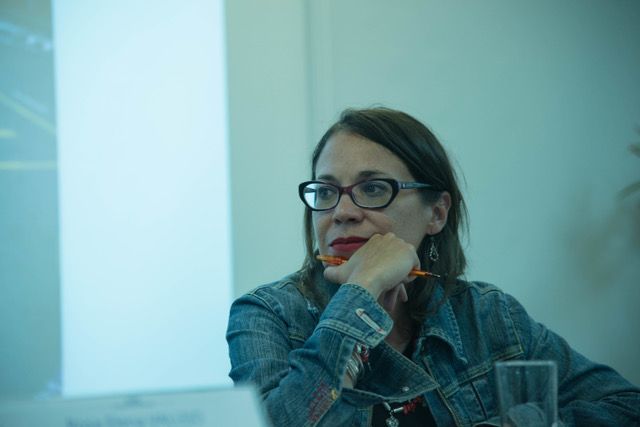
María Pessina Itriago is a professor, researcher and director of the Gender Observatory at UTE University in Quito. CREDIT: Courtesy of María Pessina

María Pessina Itriago is a professor, researcher and director of the Gender Observatory at UTE University in Quito. CREDIT: Courtesy of María Pessina

A regional epidemic during the global pandemic

With respect to femicides, the Gender Equality Observatory of the Economic Commission for Latin America and the Caribbean (ECLAC) reports that 4640 women died from this cause in 2019. The organization also called attention to the intensification of violence against girls and women during the pandemic.

The panorama is compounded by the gendered impacts of the pandemic on employment, which reduces women’s economic autonomy and makes them more vulnerable to violence.

According to the International Labor Organization (ILO), the region of the Americas experienced the largest reduction in female employment during covid, a situation that will not be reversed in 2021.

Peruvian sociologist Cecilia Olea, of the non-governmental Articulación Feminista Marcosur (AFM), which is made up of 17 organizations from 11 countries – nine South American nations, Mexico and the Dominican Republic – said there have been significant advances in the last 30 years in the fight against gender violence.

Among them, she cited the fact that States recognize their responsibility for the problem and no longer consider it a private matter.

She also pointed out that Latin America is the only region in the world with a specific human rights treaty on the issue: the Inter-American Convention on the Prevention, Punishment and Eradication of Violence against Women, known as the Convention of Belem do Para after the Brazilian city where it was approved in 1994, which established women’s right to live free of violence and set the framework for national laws to address this violation of women’s rights.

However, Olea said in an interview with IPS in Lima that the legal and regulatory framework has not been accompanied by political strategies to change the social imaginary of masculinity and femininity, which would provide incentives to modify the culture of inequality between men and women; on the contrary, she said, the violence forms part of a culture of impunity.

“Males feel free to oppress and governments are failing in their responsibility to guarantee comprehensive sex education throughout the educational system, in primary school and technical and higher education; this program exists by law but implementation is deficient due to lack of training for teachers and the opportunity to train people in new forms of masculinity is lost, for example,” she remarked.

Olea, a feminist activist and one of the founders of the AFM, said that not only do governments have a responsibility to prevent, address and eradicate gender violence, but there is also an urgent need to ensure health services; justice with due diligence, as the current delays revictimize and inhibit the use of regulatory instruments; and budgets to correct the current shortfall that prevents a better response to this social problem.

Peruvian sociologist Cecilia Olea, a member of the Articulación Feminista Marcosur (AFM), which brings together feminist networks from 11 Latin American countries, takes part in a demonstration outside the Peruvian Health Ministry in Lima, demanding reproductive rights. CREDIT: Mariela Jara/IPS

Peruvian sociologist Cecilia Olea, a member of the Articulación Feminista Marcosur (AFM), which brings together feminist networks from 11 Latin American countries, takes part in a demonstration outside the Peruvian Health Ministry in Lima, demanding reproductive rights. CREDIT: Mariela Jara/IPS

Cultural change in the new generations

Raised in a machista home, Pessina rebelled against gender norms from an early age and her constant questioning led her to come up with a new definition of how a good person should act.

“I believe that good people do not tolerate injustice or inequality of any kind, which is why I became a feminist about 15 years ago and I am very happy to be able to contribute a grain of sand with my students,” she said.

Pessina said the challenges to progress in the eradication of violence against women are to provide public policies with a budget to make them work; and to achieve an alliance between the State, civil society organizations and feminist movements to create a road map that incorporates excluded voices, such as those of indigenous women.

“The places where they can file reports are not near their towns, they have to go to other towns and when they get there they often cannot communicate in their own language because of the colonialist view that everything must be in Spanish, and there are no interpreters,” she complained.

Another part of the problem, she said, is that “the State itself blocks complaints and keeps these people marginalized, and they are not taken into account in the countries’ statistics on violence.”

The third challenge was to work with the media in Latin America because of their role in the construction of imaginaries, in order to generate the figure of the ombudsperson focused on gender to ensure that information is treated in a way that contributes to equality and does not reproduce discriminatory stereotypes.

Pessina said that what is needed is a cultural transformation driven by the new generations, in favor of gender equality.

“We see more young feminist women activists mobilizing to make it happen and they will make a turnaround; not now, but maybe in a decade we will be talking about other things. These new generations not only of women but of men, I think they are our hope for change,” she said.

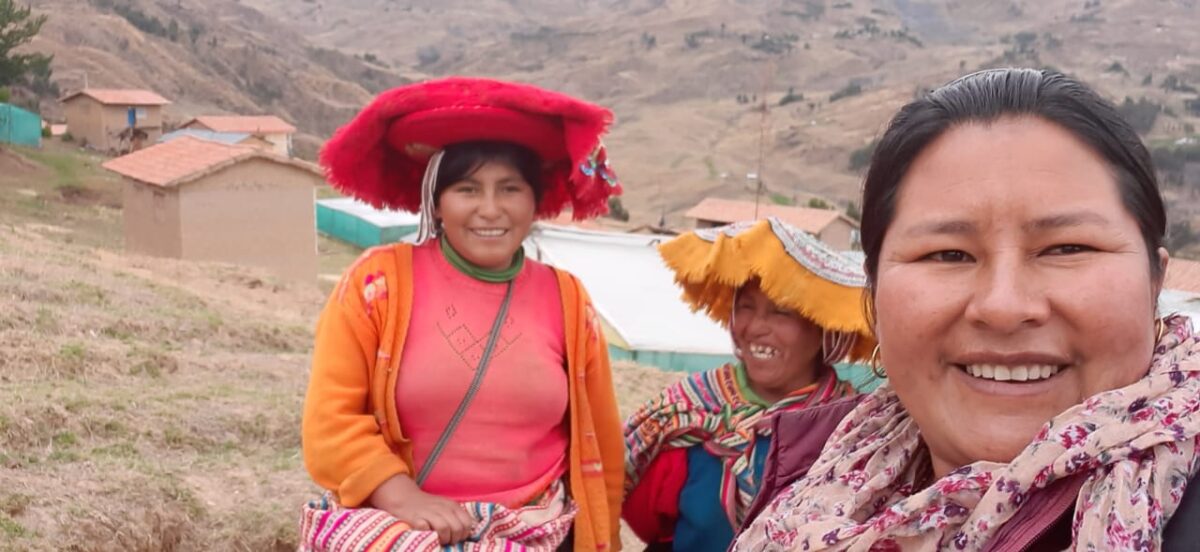
Quechua Indian woman Teresa Farfán, in the foreground, stands with two other rural women with whom she shares work and experiences in her Andes highlands community in Peru. She is convinced that telling her personal story of gender-based violence can help other women in this situation to see that it is possible to escape from abuse. CREDIT: Courtesy of Teresa Farfán

Quechua Indian woman Teresa Farfán, in the foreground, stands with two other rural women with whom she shares work and experiences in her Andes highlands community in Peru. She is convinced that telling her personal story of gender-based violence can help other women in this situation to see that it is possible to escape from abuse. CREDIT: Courtesy of Teresa Farfán

“I wanted a home without violence”

Teresa Farfán reflects the lives of many Latin American women who are victims of machista violence, but with a difference: she left behind the circle of gender violence that so often takes place in the home itself.

She is 35 years old and describes herself as a peasant farmer, a single mother and a survivor of an attempted femicide. She was born and lives in the town of Lucre, an hour and a half drive from the city of Cuzco, the capital of ancient Peru, in the center of the country.

Like most of the local population, she is dedicated to family farming.

Nine years ago she separated from the father of her children who, she says, did not let her move forward.

“He wanted me just to take care of the cows, but I wanted to learn, to get training, and that made him angry. He even beat me and it was horrible, and at the police station they ignored my complaint. He kicked me out of the house and thought that out of fear I would come back, but I took my children and left,” she told IPS during a day of sharing with women in her community.

At her moment of need she didn’t receive the support of her family, who urged her to return, “because a woman must do what her husband says.”

But she did have supportive friends who gave her a hand, both inside and outside her community, as part of a sisterhood of Quechua indigenous peasant women like her in the Peruvian highlands.

“It hasn’t been easy to achieve my independence, have my own income and raise my children. I have suffered humiliation and slander, but I knew who I was and what I wanted: to live in peace and have a home without violence,” she said. A wish that remains elusive for millions of Latin American women.

  Source

Social Movement Voices Fall on Deaf Ears of Governments at COP26

Active Citizens, Civil Society, Climate Action, Climate Change, Conferences, Editors’ Choice, Environment, Featured, Global, Global Governance, Headlines, Human Rights, Indigenous Rights, IPS UN: Inside the Glasshouse, Regional Categories

Climate Change

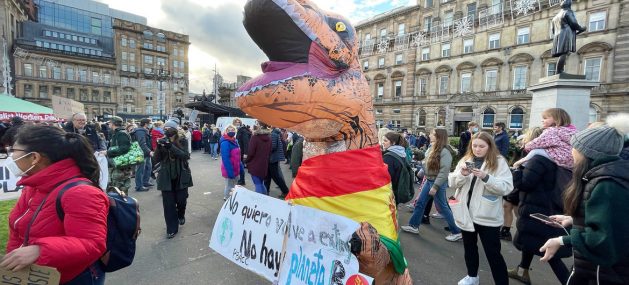
The climate summit COP26 was accompanied by protests by social movements, with demonstrators arriving in Glasgow from all over the world and expressing themselves in their own language or dressing up as dinosaurs to symbolize their criticism. But government delegates did not listen to their demands for ambitious and fair action to contain the global warming crisis. CREDIT: Laura Quiñones/UN

GLASGOW, Nov 11 2021 (IPS) – One element that runs through all social movement climate summits is their rejection of the official meeting of the United Nations Framework Convention on Climate Change (UNFCCC) and the low ambition of its outcomes – and the treaty’s 26th Conference of the Parties (COP26) was no exception.


The leaders of the UNFCCC “gladly welcome those who caused the crisis. COP26 has done nothing but pretend and greenwash,” Mitzi Jonelle Tan, a member of the non-governmental organization Youth Advocates for Climate Action from the Philippines, told IPS during a rally at the Glasgow Screening Room, a few blocks from the venue where the official meeting is being held until Friday, Nov. 12.

The COP26 Coalition, the alternative summit to the climate conference, has been a motley crew of organizations and movements whose common demand was a real effort to fight the climate crisis through concrete and fair measures and whose 200 events in this Scottish city included workshops, forums, artistic presentations and protests, which ended on Wednesday, Nov. 10.

Among the demands with which the alternative meeting in Glasgow lobbied the 196 Parties to the UNFCCC were the abandonment of fossil fuels, the rejection of cosmetic solutions to the climate emergency, the demand for a just transition to a lower carbon economy and the call for reparations and redistribution of funds to indigenous communities and the global South.

The movement also called for a gender perspective in policies, climate justice – that those primarily responsible (developed nations) take responsibility and pay for their role -, respect for the rights of indigenous peoples, and a halt to air pollution.

Due to logistical issues and the limitations imposed by the covid-19 pandemic, which postponed the official summit for a year, the parallel sessions of the social movements were held in this Scottish city in a hybrid format, combining face-to-face and virtual participation. Exhibitors and online participants struggled with the quality of their internet connections.

One of the most unanimous and loudest criticisms from non-governmental social and environmental organizations focused on the exclusion of civil society groups from Latin America, Africa and Asia, due to the UK host government’s decision to modify the admission criteria according to the level of contagion in each country and the extent of vaccination.

In addition, they complained about the strict hurdles imposed by the COP26 presidency, held by the United Kingdom, supported by Italy, to the presence of NGO observers at the official negotiating tables, which undermined the transparency of the Glasgow process, whose agreements are to be embodied in a final declaration, which is weakening every day and whose final text will be released on Nov. 12 or 13, if the negotiations stretch out.

The alternative movement also had a formal but unofficial space in the so-called COP26 Green Zone, located in the same area as the official negotiations, in the center of Glasgow.

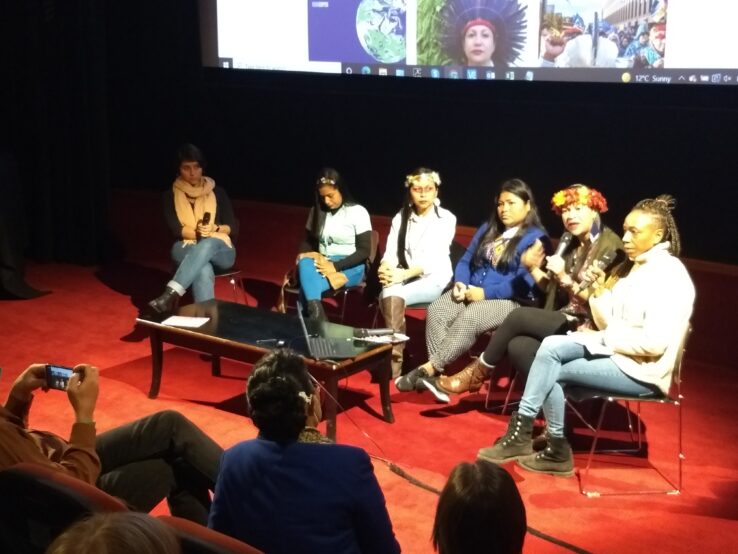
In the forums parallel to COP26 in Glasgow, indigenous women were major protagonists with their demands for respect for their rights and effective participation in the negotiations. In the picture, indigenous women delegates take part in a forum on women of the forest at the peoples' summit. CREDIT: Emilio Godoy/IPS

In the forums parallel to COP26 in Glasgow, indigenous women were major protagonists with their demands for respect for their rights and effective participation in the negotiations. In the picture, indigenous women delegates take part in a forum on women of the forest at the peoples’ summit. CREDIT: Emilio Godoy/IPS

In-depth solutions

One of their key proposals was for a Fossil Fuel Non-Proliferation Treaty aimed at moving towards the end of the era of coal, gas and oil, the consumption of which is primarily responsible for the growing planetary climate emergency.

The initiative, which imitates the name of the treaty against nuclear weapons, demands an immediate end to the expansion of fossil fuel production, a fair phase-out and a just energy transition.

Countries and corporations “continue to invest capital in the extraction of fossil fuels. We need to see efforts to phase them out, to stop the financing, subsidies and exploitation of fossil fuels,” Tzeporah Berman, the Canadian chair of the anti-fossil fuel initiative, told IPS.

The idea for the treaty emerged in 2015 from a call by leaders and NGOs from Pacific island states – whose very existence is threatened by the climate crisis – and it was formally launched in 2020.

So far it has received the support of some 750 organizations, 12 cities, more than 2,500 scientists, academics, parliamentarians from around the world, and religious leaders, indigenous movements and more than 100 Nobel Prize winners.

Climate policies are the focus of COP26 which has addressed carbon market rules, at least 100 billion dollars a year in climate finance, gaps between emission reduction targets and necessary reductions, strategies for carbon neutrality by 2050, adaptation plans, and the working platform on local communities and indigenous peoples.

The International Rights of Nature Tribunal tried the United Nations Framework Convention on Climate Change (UNFCCC), parallel to COP26. In the case, Philippine activist Mitzi Jonelle Tan testified to the lack of effective action against the climate emergency. CREDIT: Emilio Godoy/IPS

The International Rights of Nature Tribunal tried the United Nations Framework Convention on Climate Change (UNFCCC), parallel to COP26. In the case, Philippine activist Mitzi Jonelle Tan testified to the lack of effective action against the climate emergency. CREDIT: Emilio Godoy/IPS

Indigenous people and rights of nature tribunal in the spotlight

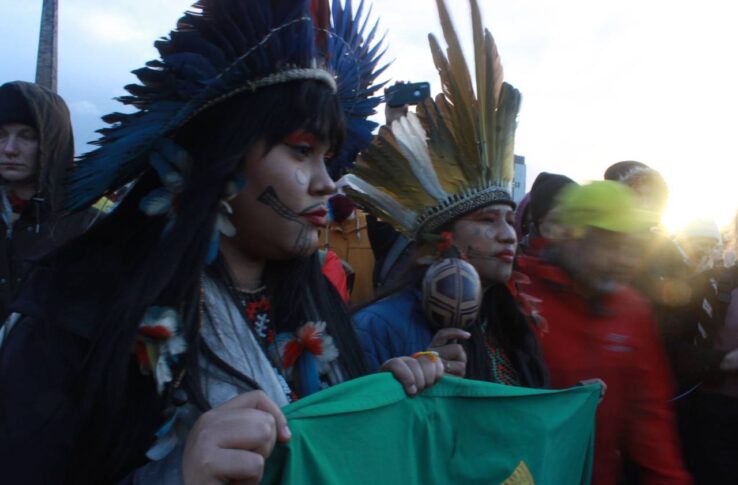
Indigenous people, especially from the Amazon jungle, have been key participants at the latest edition of the alternative summit, with at least 40 activists present in Glasgow to complain about harassment by the government of far-right Brazilian President Jair Bolsonaro and demand more protection for the rainforest, whose destruction can have dramatic effects on the environmental health of the planet.

“Our main demand is demarcation of our territories,” because this guarantees a number of rights, Cristiane Pankararu, a member of the Pankararu people and leader of Brazil’s non-governmental National Association of Indigenous Women Warriors (ANMIGA), told IPS.

Her organization belongs to the Association of Indigenous Peoples of Brazil, whose demands are demarcation, climate solutions based on indigenous peoples’ knowledge and practices, and investment in forest protection.

One of the most symbolic activities of the counter-summit was the Fifth International Rights of Nature Tribunal, which tried the cases of “False solutions to the climate change crisis” and “The Amazon, a threatened living entity”.

In the first verdict, the tribunal, which sat for the first time in 2014 and was composed this time of seven judges from six countries, found the UNFCCC at fault for failing to attack the roots of the climate emergency.

In the second ruling, the jury, composed of nine experts from seven countries, accused developed countries and China, as well as agricultural, mining and food corporations, of destroying the Amazon, the planet’s main rainforest ecosystem, which is threatened by these extractive activities.

Nick Dearden, director of Global Justice Now, listed three serious problems: the role of large corporations, the protection of corporate intellectual property, and the power of corporations to sue states that want to protect the environment, in international arbitration tribunals.

“It is a profound symptom of how the global economy protects the interests of large corporations, especially extractive ones, and that has not been addressed at the COP,” he told IPS.

A dialogue of the deaf has prevailed between the UNFCCC and civil society, as the official summit has ignored the demands of social movements.

“They have not listened to us. We are here to demand action. We don’t need another COP to solve the climate crisis, we need change,” Tan complained.

Despite the obstacles, “we will not stop participating actively. The women’s movement is unifying. It is a slow process, because people are not used to being led by women,” Pankararu said.

IPS produced this article with the support of Iniciativa Climática of Mexico and the European Climate Foundation.

  Source

Campaigners Petition UN to Investigate Racial and Gender Discriminations in Global COVID-19 Vaccine Roll-Out

Civil Society, Health, Human Rights

US, UK, Germany, Norway, and Switzerland in violation of international human rights law in “prolonging the pandemic” ahead of vital World Trade Organisation meeting

GENEVA, Nov 10 2021 – An international coalition of human rights law groups, public health experts, and civil society organisations is taking legal action against the US, UK, Germany, Norway, and Switzerland, on the grounds that these countries are in violation of international human rights law by failing to intervene on what has been an inequitable and racially discriminatory roll-out of the vaccine and other COVID healthcare technologies.


In an appeal to the UN Committee on the Elimination of Racial Discrimination (CERD), the coalition charges that by failing to lift intellectual property barriers on all COVID-19 medical technologies through a TRIPS waiver (or to effectively implement it through technology transfers), the US, UK, Germany, Norway, and Switzerland are in violation of the International Convention for the Elimination of All Forms of Racial Discrimination, a human rights convention ratified by nearly all countries in the world.

Because the rich countries currently making and hoarding vaccines are majority white, and the formerly colonized countries suffering due to vaccines being withheld are majority Black, indigenous, or other people of colour, the current inequitable vaccine rollout is a textbook example of structural racial discrimination.

The International Convention for the Elimination of All Forms of Racial Discrimination requires that countries take effective measures “to review governmental, national and local policies, and to amend, rescind or nullify any laws or regulations which have the effect of creating or perpetuating racial discrimination wherever it exists.” Countries have an obligation under the convention to “prevent, prohibit and eradicate” all practices of racial discrimination particularly “racial segregation and apartheid.”

Yet the US, UK, Germany, Norway, and Switzerland have opposed or willfully failed to take all available measures to increase global supply of and equitable access to vaccines and other COVID-19 medical technologies, a violation of their obligations under the human rights convention.

Globally, 73% of all COVID-19 vaccine doses have gone to just 10 countries. Rich countries have administered 61 times more doses per capita than poorer countries and delivered only 14% of the 1.8 billion doses promised to poor countries. Just 5.8% of Africans have been vaccinated. The top 10 high-income countries will have hoarded 870 million excess doses of vaccines by the end of 2021. Countries in the Global South stand to lose $2.3 trillion from now until 2025 if they can’t vaccinate 60% of their population by mid-2022.

The appeal asks the CERD Committee to compel the US, UK, Germany, Norway, and Switzerland to “respect, protect and fulfil their human rights obligations,” as well as to take several immediate actions, including:

    • Demand that the Respondent States immediately support, implement, and enforce a temporary waiver of the intellectual property barriers on COVID-19 vaccines, tests, and treatments currently imposed by the World Trade Organisation’s Trade-Related Intellectual Property Rights Agreement (TRIPS), as requested by India and South Africa in October 2020, and
    • Mandate technology and knowledge transfers from the relevant pharmaceutical corporations to the many manufacturers around the world standing by to ramp up production of these lifesaving medical technologies.
    The CERD meets from November 15 in a weeks-long session coinciding with the World Trade Organisation (WTO) ministerial meeting on November 30. The WTO ministerial is a key opportunity to resolve the year-long impasse on the proposal to break the corporate monopoly control of COVID-19 healthcare technologies by granting the TRIPS waiver.

Tian Johnson, Founder & Lead Strategist, African Alliance and member of the People’s Vaccine Alliance, said: “As a consequence of neocolonial economic and social policies in Africa, fragile health systems impact communities’ access to health services in much of the continent. Africa will become known as the continent of COVID-19 – not because of vaccine hesitancy but because of the inequity, greed, and inaction of pharmaceutical companies and political leaders of the North. Having to rely only on the continent’s own capacity and resources will not be enough to save African lives. Nor should it be. African lives matter, just as much as lives in Berlin, Washington, Tel Aviv, Geneva, London, Toronto or Brussels. COVID-19 is a global crisis that requires global action, whose response all countries should be able to share equally.”

Paula Litvachky, from the Center for Legal and Social Studies in Argentina, said: “Latin America has been extremely affected by the pandemic. It concentrates almost 25 percent of all COVID-19 deaths in a continent that is less than 10 percent of the world’s population. Although there is regional industrial capacity, many States have had problems accessing vaccines. Groups such as indigenous peoples, Afro descendants and racialized sectors are harder hit than others, both by the virus and by the dramatic social and economic crises it is provoking.”

Anele Yawa, General Secretary of the Treatment Action Campaign and a member of the People’s Vaccine Alliance, said: “Big Pharma has prioritized excessive profits over protecting people’s health for too long. Often they are aided and abetted by governments in the Global North through their inaction or opposition to a more just system. We have repeatedly seen this occur in many fights for access to affordable medicines, from the fight for HIV medicines in the early 2000s and more recently in our fight to Fix the Patent Laws to ensure more affordable medicines for cancer, TB, mental health and beyond. Yet again now with COVID-19, we are seeing Big Pharma greed being prioritized over people’s lives all over the world. Governments must fulfil their international obligations and help prioritize people over profits by ensuring vaccine equity for all, irrespective of where you were born, poverty, gender or immigration status.”

Joshua Castellino, Executive Director of Minority Rights Group International, said: “COVID-19 has hit people of colour, women, indigenous people, and other minority and discriminated groups harder in terms of infections, deaths, lack of access to healthcare, resultant poverty, and even violence and emotional trauma. The discrimination of the virus is being revisited by vaccine discrimination, as rich nations deliberately withhold and deny these same groups of people equitable access to it.”

Meena Jagannath, coordinator of the Global Network of Movement Lawyers at Movement Law Lab, said: “We have tabled an evidenced-based challenge to the UN, an institution meant to embody the spirit of multilateral cooperation. Our evidence points to specific actions by the named states in perpetuating structural divisions between the global north and the global south that are rooted in historical colonialism, all in the service of profit and the corporate capture of power. This contravenes their legal obligations under international covenants and agreements they’ve ratified. This is a test-of-our-times for the UN system to engage and correct. We are deadly serious in our resolve to seek justice and redress.”

Mandivavarira Mudarikwa, Attorney, Women’s Legal Centre, South Africa, a member of ESCR-Net – International Network for Economic, Social and Cultural Rights, said: “It is undeniable that women in their diversity, especially those of colour, have disproportionately been impacted by the COVID-19 pandemic, including in shouldering the greatest burden of healthcare and unpaid care work. The inequitable availability of access to health care, personal protective equipment and the distribution of vaccines, and other lifesaving treatments has laid bare the ongoing discrimination that women face in their daily lives. Critical, transformative action is needed immediately if we are to substantively effect change and bring about just and equal access to the right to health. We therefore support the submission of the CERD urgent action appeal aimed at addressing the gender and racial injustice that persists and hope that others will join in this collective action.”

The petition urges CERD to find that these countries must prioritise actions that will protect people’s lives instead of the corporate-controlled intellectual property of the vaccine. They should be supporting — rather than blocking — a proposal at the WTO to waive these intellectual property monopolies, so that more countries are able to make more and cheaper vaccines and other COVID healthcare technologies.

Germany, the UK, Norway and Switzerland have actively opposed moves to waive intellectual property barriers on all COVID-19 vaccine technologies at the WTO. The US has declared support but only for a narrow waiver on the vaccine alone, while failing to use other mechanisms at its disposal e.g. mandating technology transfers through use of the Defense Production Act.

The petition is also strengthened by a separate legal brief signed by jurists around the world which finds that these “blocking” states are also, by their actions, breaching a number of covenant and treaty obligations under international human rights law. The brief says these countries are violating both the International Covenant on Economic, Social and Cultural Rights and the International Covenant on Civil and Political Rights, along with a number of treaties they have signed as members of the WTO, including their legal obligations of international cooperation. A broad legal coalition is also advancing additional complaints in other forums, including a submission to the Committee on the Elimination of Discrimination Against Women (CEDAW) to surface the gender discrimination.

The petitioning groups include African Alliance, Center for Economic and Social Rights, Centro de Estudios Legales y Sociales, Minority Rights Group, Oxfam International and Treatment Action Campaign. The petition was coordinated by Global Network of Movement Lawyers (of Movement Law Lab) and ESCR-Net, and is supported by SECTION27 and other organizations within the People’s Vaccine Alliance.

  Source

Indigenous Peoples Want to Move Towards Clean Energy Sovereignty

Civil Society, Climate Action, Climate Change, Conferences, Development & Aid, Editors’ Choice, Energy, Environment, Featured, Global, Global Governance, Headlines, Human Rights, Indigenous Rights, IPS UN: Inside the Glasshouse, Regional Categories

Climate Change

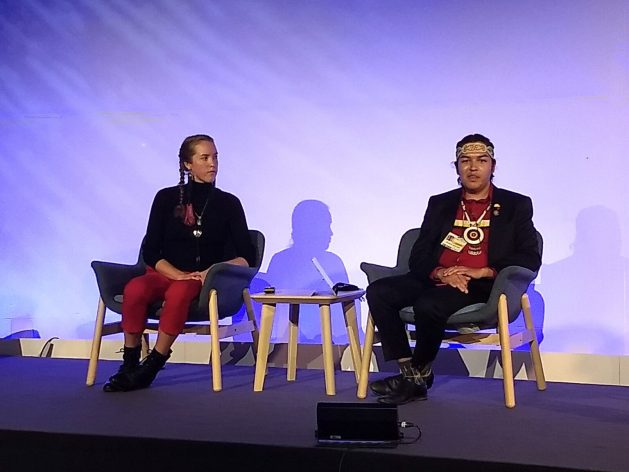
At an event in the so-called Green Zone, Canadian native leaders and the non-governmental Indigenous Clean Energy launched a global hub of social enterprises to pass on knowledge and advice during the Glasgow climate summit. In the picture, Mihskakwan James Harper (R) of the Cree indigenous community explains a mixed battery energy storage project built by a private firm and an indigenous company in the province of Ontario, Canada. CREDIT: Emilio Godoy/IPS

At an event in the so-called Green Zone, Canadian native leaders and the non-governmental Indigenous Clean Energy launched a global hub of social enterprises to pass on knowledge and advice during the Glasgow climate summit. In the picture, Mihskakwan James Harper (R) of the Cree indigenous community explains a mixed battery energy storage project built by a private firm and an indigenous company in the province of Ontario, Canada. CREDIT: Emilio Godoy/IPS

GLASGOW, Nov 9 2021 (IPS) – In the community of Bella Bella on Turtle Island in the western Canadian province of British Columbia, the indigenous Heiltsuk people capture heat from the air through devices in 40 percent of their homes, in a plan aimed at sustainable energy sovereignty.


“We use less energy, pay less, and that’s good for our health,” Leona Humchitt, a member of the Heiltsuk community, told IPS during a forum on indigenous micro-grids in the so-called Green Zone of the climate summit being hosted by Glasgow, Scotland since Oct. 31. “The project coincides with our view. We need to have a good relationship with nature.”

For native groups, these initiatives mean moving towards energy sovereignty to avoid dependence on projects that have no connection to local populations, combating energy poverty, paving the transition to cleaner sources and combating the exclusion they suffer in the renewable energies sector due to government policies and corporate decisions.

The modernisation process that began in the first quarter of 2021 lowered electricity rates from 2,880 dollars a year to about 1,200 dollars for each participating household.

In addition, the switch to heat pumps eliminates five tons of pollutant emissions per year and has reduced the community’s annual diesel consumption of 2,000 litres per household, which is usually supplied by a private hydroelectric plant.

Funded by the Canadian government and non-governmental organisations, the “Strategic Fuel Switching” project is part of the Heiltsuk Climate Action plan, which also includes measures such as biofuel and biomass from marine algae and carbon credits from marine ecosystems.

In 2017, more than 250 remote indigenous communities, out of 292 in Canada, relied on their own electricity microgeneration grids, dependent especially on diesel generators.

The venture in the Heiltsuk community, which is part of the three major Canadian native peoples, is included in a portfolio of indigenous transitional energy initiatives that have been incorporated into the non-governmental Indigenous Clean Energy (ICE) social enterprise in Canada.

A global hub for social entrepreneurship was one of the initiatives launched in the Green Zone, an open event held parallel to the 26th Conference of the Parties (COP26) to the United Nations Framework Convention on Climate Change (UNFCCC), whose annual session ends Nov. 12.

ICE has a list of 197 projects – 72 in bioenergy, 127 in energy efficiency, and 19 in other alternative sources – with more than one megawatt of installed capacity. These initiatives together represent 1.49 billion dollars in revenue over 10 years.

Mihskakwan James Harper, an indigenous man from the Cree people of Sturgeon Lake in the western Canadian province of Alberta, said it is not only about energy sovereignty, but also about community power to dispose of their own resources.

“We change our self-consumption and the communities benefit themselves from the energy, and the earth get benefits as well. Without us, we are not going to reach the climate goals. We show that indigenous peoples can bring innovations and solutions to the climate crisis,” Harper, who is development manager at the NR Stor energy company, told IPS.

NR Stor Inc. and the Six Nations of the Grand River Development Corporation in the Canadian province of Ontario are building the Oneida battery storage project – with a capacity of 250 MW and an investment of 400 million dollars – in the south of the province.

The facility, which will prevent some 4.1 million tons of pollutant emissions, the largest of its kind in Canada and one of the largest in the world, will provide clean and stable energy capacity by storing renewable energy off-peak for release when demand rises.

ICE estimates 4.3 billion dollars in investments are needed to underpin this energy efficiency that would create some 73,000 direct and indirect jobs and would cut carbon dioxide emissions by more than five million tons over 10 years.

Electric vehicles are still a pipe dream in many indigenous communities, due to their price and the lack of charging infrastructure. In the picture, an electric car is charged at a station in downtown Glasgow, near COP26. CREDIT: Emilio Godoy/IPS

Electric vehicles are still a pipe dream in many indigenous communities, due to their price and the lack of charging infrastructure. In the picture, an electric car is charged at a station in downtown Glasgow, near COP26. CREDIT: Emilio Godoy/IPS

Slow progress

The increase in clean sources plays a decisive role in achieving one of the 17 Sustainable Development Goals (SDGs) set out in 2015 by the international community in the 2030 Agenda, within the framework of the United Nations.

SDG 7 is aimed at affordable, modern energy for all.

But processes similar to Canada’s ICE are proceeding at a slow pace.

Two projects of the Right Energy Partnership with Indigenous Peoples (REP), launched in 2018 by the non-governmental Indigenous Peoples Major Group for Sustainable Development, are being implemented in El Salvador and Honduras.

In El Salvador, the project is “Access to photovoltaic energy for indigenous peoples”, carried out since 2020 in conjunction with the non-governmental National Salvadoran Indigenous Coordination Council (CCNIS).

It is financed with 150,000 dollars from the Global Environment Facility (GEF) Small Grants Programme to provide 24 solar power systems to three communities in the town of Guatajiagua, in the eastern department of Morazán.

In Honduras, the Lenca Indigenous Community Council and the Pro Construction Committee are installing a mini-hydroelectric plant to benefit two Lenca indigenous communities in the municipality of San Francisco de Opalaca, in the southwestern department of Intibucá.

The project “Hydroelectric power generation for environmental protection and socioeconomic development in the Lenca communities of Plan de Barrios and El Zapotillo”, launched in 2019, received 150,000 dollars in GEF funding.

Clean alternative sources face community distrust due to human rights violations committed by wind, solar and hydroelectric plant owners in countries such as Colombia, Honduras and Mexico, including land dispossession, contracts harmful to local communities and lack of free consultation and adequate information prior to project design.

Amazonian indigenous people participate in protests by social movements in Glasgow, in which they claimed that their voices were not adequately heard at COP26. CREDIT: Arturo Contreras/Pie de Página

Amazonian indigenous people participate in protests by social movements in Glasgow, in which they claimed that their voices were not adequately heard at COP26. CREDIT: Arturo Contreras/Pie de Página

The evolution of energy initiatives has been slow, due to funding barriers and the limitations imposed by the covid-19 pandemic.

“Our main interest is to enable access to affordable renewable energy and for indigenous peoples to participate in the projects,” Eileen Mairena-Cunningham, REP project coordinator, told IPS.

“These processes should be led by indigenous organisations. Of course we are interested in participating in the global networks,” added the Miskita indigenous woman from Nicaragua.

After the always difficult first step, indigenous communities want to accelerate progress towards these goals.

In Bella Bella, Canada, the hope is to progressively replace diesel with biofuel in vehicles and in the boats that are vital to the fishing community.

“We are not going to electrify transportation overnight,” Humchitt said. “But we see an opportunity in biodiesel. We have to go forward on this issue.”

Harper concurred with that vision. “Of course we want EVs, as they become accessible and satisfy our own needs. We want to get rid of diesel. The communities have to lead the process of the local transition,” he said.

Mairena-Cunningham stressed that indigenous peoples attach primary importance to participating in global networks.

“Existing projects leave us with lessons of what can be done in our territory,” said the activist. “There is a need for policies that facilitate indigenous participation and special safeguards for access to the land. Capacity building is also needed.”

Renewable energies can be added to ecological measures that indigenous peoples already use, such as forest protection and biodiversity and water conservation. But their local implementation requires more than just willingness.

IPS produced this article with the support of Iniciativa Climática of Mexico and the European Climate Foundation.