Debt Moratoria in the Next Pandemic: Be Prepared, and Be Fair

Aid, Civil Society, Featured, Global, Headlines, Human Rights, Humanitarian Emergencies, Poverty & SDGs, TerraViva United Nations
Opinion

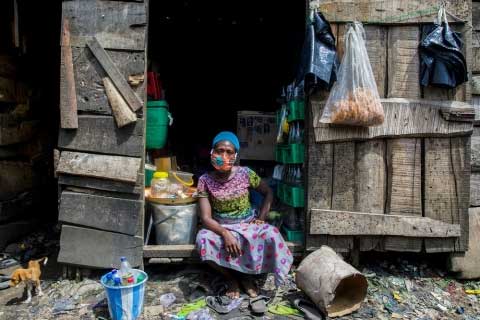
Credit: Temilade Adelaja via Communication for Development Ltd/CGAP, Washington DC

WASHINGTON DC, Mar 25 2021 (IPS) – Imagine it is 2025 and that, unfortunately, another pandemic is sweeping the world. Much like in the 2020 crisis, borrowers have seen their livelihoods upended and are struggling to repay loans.


One of the questions before policy makers amid this new crisis is whether to extend moratoria to distressed borrowers. In search of answers, they reflect on the world’s experience with the COVID-19 pandemic and whether moratoria were part of the solution. These policy makers conclude that they did some things right in 2020.

Just days into COVID-19 lockdowns, bank regulators in more than 115 countries granted special permission for financial services providers (FSPs) to extend moratoria to millions of borrowers, especially those with small business and consumer loans. These moratoria were the next best thing to cash in the wallet for borrowers who had lost their jobs or seen their business revenue plummet.

For lower-income countries, whose governments could ill afford welfare payments, moratoria became an important form of economic relief. And by relaxing provisioning on paused loans, these special moratoria also shored up FSPs’ balance sheets and prevented panic in financial systems.

Through the moratoria, the world’s economies put the shock-absorbing capacity of financial systems to good use.

But these policy makers also see that moratoria could have worked better in some respects. So, in 2025, as the world once again turns to moratoria, they are determined to learn the lessons of the past and make moratoria work even better. What do they do differently?

Fair burden sharing

As public health authorities shutter the economy to stop the new pandemic, advocates for lower-income people are already calling on policy makers to spread the economic burden among those better able to bear it.

Policy makers know that moratoria on small loans (as well as evictions and mortgages) will shift some economic pain from lower-income families and small businesses onto banks and landlords — at least, temporarily.

But they recall that, in 2020, FSPs shifted the pain back to small borrowers by allowing interest to accrue and compound during moratoria. Ultimately, borrowers paid to pause their loans – often dearly.

Back in 2020, policy makers debated whether to shift some of the long-term burden of accrued and compounding interest away from borrowers, but it was difficult for them to find a workable solution.

In India, after much debate in the Supreme Court over who should pay this additional interest, the government found a remedy when it agreed to pay banks the compounding portion of borrowers’ interest incurred during moratoria. Implicitly, this decision made moratoria part of the government’s overall pandemic response while affirming the right of the banks to charge fully for delayed payments.

Fortunately, in 2025, several governments have included special provisions in their catastrophe protocols that pledge government funding for a portion of the interest that small loans accrue during moratoria.

This pledge helps to ensure policies intended to help low-income people don’t end up harming them. It has the added benefit of providing banks with a small amount of liquidity during the moratoria period.

Moratoria will also be fairer this time around because policy makers have universally agreed that borrowers should have the right to choose whether to accept or reject a moratorium offer. This was not always the case in 2020.

In some countries, regulators — anxious to prevent panic — and FSPs — wishing to avoid tedious case-by-case administration — promulgated blanket moratoria, even before obtaining agreement from borrowers.

However, some borrowers preferred to keep paying to avoid extra interest charges. In response to push back from borrowers on unilateral moratoria, authorities in Peru affirmed consumers’ right to unwind unwanted moratoria. Today, following this example, regulators the world over require FSPs to notify borrowers of moratoria offers and present them with the option to refuse.

Policy makers have also anticipated the challenge of maintaining borrowers’ standing with credit bureaus. When borrowers accept moratoria during a national emergency, it should not hurt their creditworthiness.

In 2020, there was confusion over how banks should report restructured loans to credit bureaus, how credit bureaus were to incorporate these loans into credit scores, and how new lenders were to use the information.

In India, FSPs simply didn’t report many loans for several months. Eventually, those problems were sorted out. Now, in 2025, credit bureaus follow well-understood protocols for handling loans in moratoria during emergencies.

Preparedness

The emergency protocols that the world’s banking authorities and FSPs put in place after the COVID-19 pandemic also address operational continuity and communications.

Back in 2020, economic lockdowns prevented in-person interactions between lenders and borrowers and often led to breakdowns in communication. In Uganda, loan officers could not meet with customers in the field, and transport restrictions prevented adequate staffing of branches and even call centers. FSPs transacting mainly in cash were caught especially flat-footed.

Thankfully, this problem is behind us now. The pandemic accelerated FSPs’ digitization plans across the world, and record numbers of borrowers started using mobile technology. FSPs serving lower-income customers now routinely communicate and transact digitally.

They have also upgraded their internal systems to handle the irregular schedules of loans in moratoria. And the expansion of digital infrastructure during and after COVID-19 now allows staff to work from home.

Consumer protection

As financial regulators and supervisors prepare for the new moratoria in 2025, they are better equipped to mitigate some of the consumer risks that appeared in 2020. They now use market monitoring tools, such as suptech, consumer phone surveys and mystery shopping, to assess consumer risks in real time. They can quickly spot issues such as abusive collections practices.

Nevertheless, both financial authorities and FSPs have learned from the previous crisis that ensuring good communication and transparency will be challenging. Moratoria are unfamiliar concepts, and the math is complicated.

Learning from 2020, when poor communication led to misunderstandings, mistakes and abuse, regulators have already issued consumer protection rules to ensure the public fully understands moratoria offers and their consequences.

Additionally, communications now flow not just to customers, but also from them. Policy makers are widely using tools that give consumers a collective voice and reveal what they are experiencing.

Several regulators have put consultative bodies in place to have a regular dialogue with consumers, and consumer associations regularly convey issues to them. Such tools proved useful in 2020.

In Peru, for example, the consumer protection agency INDECOPI listened systematically to customers and alerted regulators and FSPs to emerging abuses so that they could respond quickly.

Agility

The COVID-19 pandemic lasted much longer than anyone foresaw, and unanticipated implementation challenges arose. If policy makers learned one thing, was is that you can never anticipate all the ways an emergency will unfold.

Accordingly, the countries that were best prepared for the next pandemic were those that had established channels for authorities and FSPs to work together to respond to evolving conditions.

Source: Consultative Group to Assist the Poor (CGAP) is a global partnership of more than 30 leading development organizations that works to advance the lives of poor people through financial inclusion.

*Elisabeth is the former managing director of the Center for Financial Inclusion at Accion. She is a visiting fellow at the Financial Access Initiative and a consultant at CGAP.

*Eric Duflos, Senior Financial Sector Specialist, leads CGAP’s work on consumer protection, from policy, industry and customer perspectives, ensuring that financial services have positive outcomes for customers.

  Source

The UN Food Systems Summit: How Not to Respond to the Urgency of Reform

Aid, Civil Society, Food & Agriculture, Food Security and Nutrition, Food Sustainability, Global, Headlines, Health, Human Rights, Humanitarian Emergencies, Poverty & SDGs, TerraViva United Nations

Opinion

At a critical juncture on the road to the UN Food Systems Summit, three UN rights experts warn that it will fail to be a ‘people’s summit’ unless it is urgently rethought.

NEW YORK, Mar 22 2021 (IPS) – Global food systems have been failing most people for a long time, and the COVID-19 pandemic has made a critical situation even worse. 265 million people are threatened by famine, up 50% on last year; 700 million suffer from chronic hunger; and 2 billion more from malnutrition, with obesity and associated diet-related diseases increasing in all world regions.


Michael Fakhri

Everyone agrees that we need urgent solutions and action. The convening of this year’s UN Food Systems Summit by Secretary General António Guterres was therefore welcome. However, as we move towards critical junctures on the road to the Summit, we remain deeply concerned that this ‘people’s summit’ will fail the people it claims to be serving.

After more than a year of deliberations, the Summit participants will meet this October in New York to present “principles to guide governments and other stakeholders looking to leverage their food systems” to support the Sustainable Development Goals. We will be told that the outcomes have been endorsed by the civil society groups who took part, with ‘solutions’ crowd-sourced from tens of thousands of people around the world. And if other solutions are not there, we will be told that this is because their proponents refused to come to the table.

But coming to the table to discuss ‘solutions’ is not as simple as it sounds. What if the table is already set, the seating plan non-negotiable, the menu highly limited? And what if the real conversation is actually happening at a different table?

These concerns are still as pressing today as they were on day one.

First, the Summit initially bypassed the bodies already doing the very hard work of governing global food systems. The UN Committee on World Food Security (CFS) already has the structure that the Summit organizers have been hastily reconstructing: a space for discussing the future of food systems, a comprehensive commitment to the right to food, mechanisms for involving civil society and the private sector on their own terms, and a panel of experts regularly providing cutting-edge reports. In other words, everyone is already at the table. The Summit has flagrantly – and perhaps deliberately – shifted governments’ attention away from the CFS.

Hilal Elver

Second, the Summit’s rules of engagement were determined by a small set of actors. The private sector, organizations serving the private sector (notably the World Economic Forum), scientists, and economists initiated the process. The table was set with their perspectives, knowledge, interests and biases. Investors and entrepreneurs working in partnership with scientists framed the agenda, and governments and civil society actors were invited to work within those parameters. Inevitably, that has meant a focus on what the small group saw as scalable, investment-friendly, ‘game-changing’ solutions – the bread and butter of Davos. Reading between the lines, this means AI-controlled farming systems, gene editing, and other high-tech solutions geared towards large-scale agriculture.

As a result, the ideas that should have been the starting point for a ‘people’s summit’ have effectively been shut out. For over a decade, farmers, fishers, pastoralists, and food workers have been demanding a food system transformation rooted in food sovereignty and agroecology. This vision is based on redesigning, re-diversifying, and re-localizing farming systems. It requires that economic assumptions be questioned, human rights be protected, and power be rebalanced.

Some concessions have been made on the road to the Summit. But these changes have been too late, or too cosmetic, to impact meaningfully the process. Only in November was the CFS added to the Summit’s Advisory Committee. And only this month was the FAO’s Right to Food office invited to participate (with a limited mandate). Presumably there will be further changes at the margins: human rights will be mentioned in general terms, agroecology will be included as one of many solutions.

Olivier De Schutter

But this will not be enough to make the Summit outcomes legitimate for those of us — inside and outside the process — who remain skeptical. Having all served as UN Special Rapporteur on the Right to Food, we have witnessed first-hand the importance of improving accountability and democracy in food systems, and the value of people’s local and traditional knowledge. It is deeply concerning that we had to spend a year persuading the convenors that human rights matter for this UN Secretary General’s Food Systems Summit. It is also highly problematic that issues of power, participation, and accountability (i.e. how and by whom will the outcomes be delivered) remain unresolved.

Those of us who came to the Summit table did so in the hope that we could fundamentally change the course. As the end-game approaches, we still hope that this is possible. But radical change is needed:

    ● The right to food must be central to all aspects of the Summit, with attention on holding those with power accountable;
    ● Agroecology should be recognized as a paradigm (if not the paradigm) for transforming food systems, alongside actionable recommendations to support agroecological transition;
    ● The CFS should be designated as the home of the Summit outcomes, and the place where it is discussed and implemented, using its inclusive participation mechanisms.

In other words, to make this a people’s summit, the table needs to be urgently re-set.

Michael Fakhri is the current UN Special Rapporteur on the Right to Food.
Hilal Elver served as the UN Special Rapporteur on the Right to Food from 2014-2020.
Olivier De Schutter served as the UN Special Rapporteur on the Right to Food from 2008-2014, and is the current UN Special Rapporteur on Extreme Poverty and Human Rights, and co-chair of IPES-Food.

  Source

International Women’s Day, 2021#MarchWithUs: 5 Activists on Dismantling “Gender Lies”

Civil Society, Crime & Justice, Economy & Trade, Education, Gender, Gender Violence, Global, Headlines, Health, Human Rights, Humanitarian Emergencies, Inequity, Labour, Poverty & SDGs, TerraViva United Nations

Opinion

The following opinion piece is part of series to mark the upcoming International Women’s Day, March 8.

Protest for women’s rights in Kathmandu, Nepal. Credit: Sanjog Manandhar

PARIS, Mar 5 2021 (IPS) – Today, despite centuries of activism and mobilisations, women and non-binary people continue to remain disadvantaged in almost every sphere – from “public life” to the “shadow pandemic” of gender-based violence.


In light of COVID-19, some struggles have been considered in theory, but most continue to be ignored in practice. How can we dismantle the “gender lies” perpetuating in the 21st century? How do we start taking into account the diverse experiences of women, without excluding black and indigenous voices on the basis of power and privilege?

Afghanistan, Nepal, Bolivia, Mexico and Uganda: five activists tell us how they transform the ways their communities think and act around gender.

Afghanistan: rap music to save child brides

Sonita Alizadeh, is a survivor of two attempts at forced marriage, and now a rapper and activist fighting for the liberation of women against forced marriage. Born in Herat, Afghanistan, under the Taliban regime, she grew up in Iran, as a refugee with her family. At 10 years old, she narrowly escaped a forced marriage. Her family again tried to sell her when she was sixteen, she escaped. Afghanistan has the 20th highest number of women married before the age of 18 in the world, with 28% of Afghan girls married off as minors, according to Girls Not Brides.

My mother was a child bride, and she did not meet her husband until their wedding day. By marrying me off at a young age, she was simply repeating the cycle. This tradition makes me want to raise awareness of this harmful issue with the help of millions of others around the world through my music,” says Sonita in an interview with Forus.

Witnessing her friends swiftly disappearing as they were forced to marry, Sonita wrote the song “Daughters for Sale”, which kick-started her work as a human rights activists and rapper.

Music touches people in a way words cannot – it is deeper and more emotional. People listen to music and young people pay attention to the lyrics. Music can be a powerful way to hear important messages. That is why I always rap about things that need to change in the world, or ideas that young people need to hear, to dream big.”

Today, Sonita uses her tracks and success to give young girls self-confidence. She sings to tell: “Hold this hope in your heads and your hearts. Hold this hope for the future. Never give up.”

Nepal: Fighting “period poverty”.

As 2020 drew to a close, protesters across South Asia took to the streets and to social media, calling on their governments to end the perpetuating cycle of widespread sexual violence against women and children.

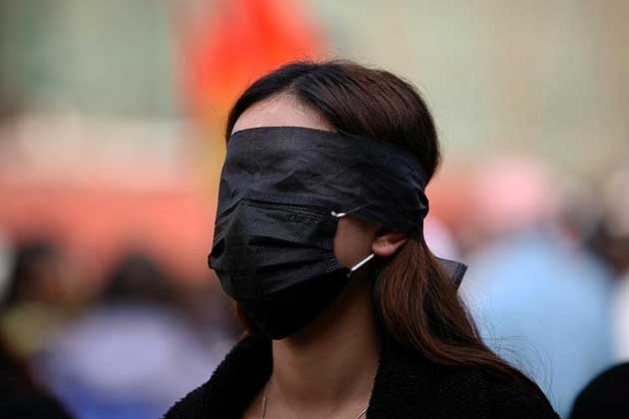
In Nepal, hundreds of activists returned to the streets after a 17-year-old girl was raped and strangled to death. Some protesters wore black over their eyes to symbolize public authorities closing their eyes to sexual violence. Activists say that although the country’s constitution guarantees equal rights to women, there is a clear disjunction between theory and practice.

“How do we make sure that there is no gap between law and social progress?” asks Jesselina Rana, a human rights lawyer, co-founder with engineer Shubhangi Rana of Pad2Go, a social enterprise focusing on menstrual health and the taboos surrounding it.

It is estimated that around 83 percent of menstruating individuals face some form of restriction or exclusion during their menstrual cycle in Nepal.

“From a very young age, menstruating individuals are made to believe that their menstrual cycle makes them impure, and it can only be talked about behind closed doors,” Jesselina explains.

With Pad2Go, Jesselina distributed over 80 sanitary napkin vending machines across Nepal. She collaborates with pad manufacturers, to provide pads at less than market rate in order to ensure affordability. She also organises discussions with both men and women to normalise conversations around menstruations.

“Nepal being a patriarchal society, men engagement is crucial to overcome social issues faced by women. Socially we need to get men into those spaces of conversation, at a young age, to make sure that everyone is part of the discussion to end the toxic cycle of gender discrimination.”

Protest in Mexico. Credit: Melanie Isahmar Torres Melo

Bolivia, Mexico: “Ni Una Menos”

Cradled in the “machismo culture”, Bolivia has one of the highest domestic violence rates against women in South America. The annual average of 110 femicides in the past 7 years persists, despite a 2013 law establishing measures to prevent and prosecute gender-based violence.

During the Covid-19 crisis, the economic consequences of the pandemic disproportionately affected Bolivian women. Government restrictions reduced access to food, aid programs did not adequately address the needs of communities, increasing their vulnerability and insecurity.

During the lockdown the slogan “Stay at Home” was widely promoted across Bolivia, yet for many women and girls victims of violence, that actually meant a very dangerous “Cállate en casa” (shut up at home), explains Iris Baptista from Red Unitas, a platform funded in 1976 that reunites 22 NGOs in Bolivia.

“Red Unitas created the campaign “SIN VIOLENCIA ES MEJOR” (Better Without Violence), to raise awareness of the fact that women are doing most of the work during the pandemic, to fulfil their role as mothers, wives and workers, yet they continue to face violence at home,” Iris explains.

But, violence against women and femicides are not just common in Bolivia—they are prevalent throughout the region. Global data is difficult to gather due to differences in reporting standards, however, the 2016 report, “A Gendered Analysis of Violent Deaths” founds that fourteen of the twenty-five countries with the highest femicide rates are Latin American.

Defined as “a pandemic within the pandemic”, gender-based violence has spiked since COVID-19 broke out. Writer Lynn Marie Stephen believes that laws and initiatives to protect women, “fail to indict the broader systems that perpetuate these problems, like social, racial, and economic inequalities, family relationships and social mores”.

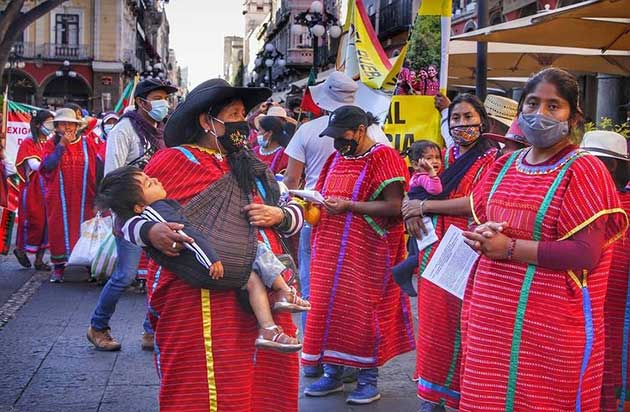
“It’s not that there was less violence against women in the past, it’s just that it wasn’t made as visible as it is today,” says Melanie Isahmar Torres Melo, a photojournalist covering women issues in Puebla, Mexico.

Every day, 10 women are killed in Mexico. The number of femicides has increased by 137% in the past five years and reached its highest monthly rates in 2020. Despite this number, only 5% of all crimes committed in Mexico are punished. This dichotomy between numbers is often the result of a “single crime” vision, rather than a sociological phenomenon, linked to the idea of patriarchy and sexism.

“Most perpetuators are never caught; this has triggered ‘social anger’ around the issue of feminicides in Mexico. There is no respect for victims, they are blamed for being killed. New movements are rising led by different collectives and civil society organisations. People are taking to the streets and shouting “Ni Una Menos” no woman should be killed,” says Mela.

Uganda – creating an enabling environment for civil society

I was arrested and shamed for leaked nudes”, model and activist Judith Heard explains. When nude pictures of her were published without her consent in 2018, she was widely criticized and was arrested under the Anti-Pornography Act. Her situation is far from unique, a survey conducted in 2016 found that 50% of Ugandan women aged between 15 and 49 has experienced violence by an intimate partner. As a result, in February 2019, Heard launched Day One Global, an advocacy organisation that seeks to curb sexual harassment and rape.

From Marion Kirabo who led a women’s protest against rising tuition fees, to Rosebell Kagumire, editor of the African Feminism digital platform opening “discussion and dialogue on feminist issues throughout the continent”, activists and “gender advocates” in Uganda, are creating innovative forms of “transnational feminism” both online and offline.

Yet, a recent report by Forus International, shows that only 1% of gender equality funding is going to women’s organizations worldwide, and that promoters of gender equality need increased protection. Even more worryingly, attacks on women organisations and civil society more generally, have been reinforced by the current COVID-19 crisis.

Overall, organizations that engage in monitoring the state’s conduct and advocate for human rights, anti-corruption, accountability, and democratic governance are experiencing growing obstacles. One of the most recent examples is the Uganda Communications Commission Guidelines for everyone posting content online, including bloggers and online news platforms, which aims to control people’s freedom of speech.

“While the Ugandan government welcomes the social services many civil society organizations provide, at the same time it feels threatened by the possibility of political mobilization and empowerment of the population that come with self-organized practices; needless to say, such threats to the government’s grip on power yield conflicts between the state and civil society actors,” according to the Uganda National NGO Forum, an umbrella organization with more than 650 member NGOs across the country.

#MarchWithUs

Despite the considerable progress, more than half of the world’s girls and women—as many as 2.1 billion people—live in countries that are not on track to reach key gender equality-related targets by 2030.

However, a new survey from Focus 2030 and Women Deliver, covering 17 countries on six continents—reveals that citizens are eager for sustained and strengthened political and financial investments to accelerate progress towards gender equality. In particular, the global public supports the need for women to play a role in all aspects of the COVID-19 pandemic response, with 82% of survey respondents on average saying they believe women should be involved in the response at all levels.

To build a recovery plan and a roadmap for the future, a gender lens must be applied. With the digital campaign #MarchWithUs, Forus is taking a full month to reflect on the voices of women and non-binary activists who are on the frontline of social change. It is time to act to turn “gender lies” into gender promises.

The authors are members of Forus Communication team.

  Source

International Women’s Day, 2021The World Not Only Needs Women Leaders – It Needs Feminist Leaders

Civil Society, Crime & Justice, Economy & Trade, Education, Featured, Gender, Gender Violence, Global, Headlines, Health, Human Rights, Humanitarian Emergencies, Inequity, Labour, TerraViva United Nations, Women & Economy, Women in Politics

Opinion

The following opinion piece is part of series to mark the upcoming International Women’s Day, March 8.

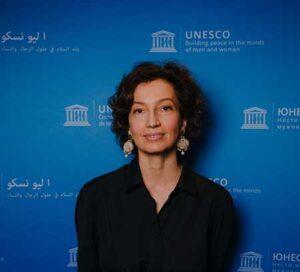
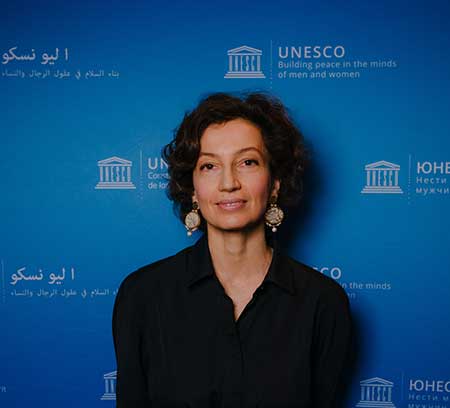
Audrey Azoulay, Director-General of UNESCO

PARIS and REYKJAVIK, Mar 5 2021 (IPS) – International Women’s Day pays tribute to the achievements of women worldwide and reminds us what still needs to be done for full gender equality. In 2021, we are taking stock of the many ways in which COVID-19 has disproportionately affected women and girls around the world.


The pandemic has created a new landscape. Although women have played a key role in responding to the crisis, gender inequalities have widened across the board. In education, 767 million women and girls were impacted by school closures. Eleven million may never return to class, joining the 132 million already out of school before the crisis struck. From the economic perspective, the recession is pushing 47 million more women and girls into poverty, destroying their economic independence and making them more vulnerable to gender-based discrimination and violence.

As we look at this landscape, we have to ask ourselves: if gender equality is our goal, what kind of leadership will the world need moving forward?

It is not enough to just count the number of women in the highest positions of power. No single person at the top of the pyramid can repair the damage being done to the progress that has been made in gender equality since the world adopted the Beijing Declaration on women’s rights 25 years ago.

What we need are leaders for gender equality – and we need them everywhere in our societal structures. Leaders of all ages, all gender identities and from all backgrounds. These leaders are not just agents of change, but designers of change. They lead through their example and engagement. They expose injustices and unequal opportunities. They know that gender inequalities stem from discrimination and exclusion and that it is only by lifting these barriers that real change can happen. This is feminist leadership.

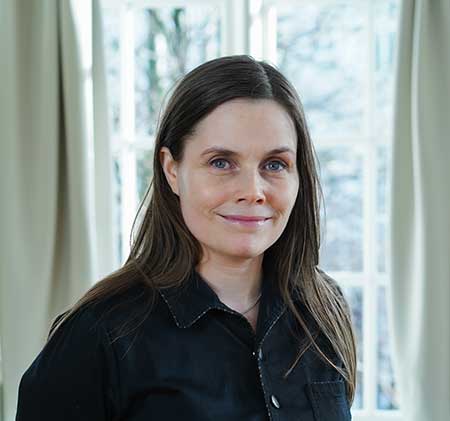
Katrín Jakobsdóttir, Prime Minister of Iceland

Feminist leaders tackle power structures. They name and deconstruct all forms of exclusion and marginalization. They empathize with the vulnerable and voiceless, and champion their causes. They open new doors and take risks, courageously blowing the whistle on hidden injustice, and unmasking structural barriers perpetuating inequalities. They are all around us. Be it the activist defending an indigenous community, the schoolgirl mobilizing her generation to save the climate, or the poet raising her voice to promote social justice.

Feminist leaders have the courage to create, report, educate, experiment. Think about Azata Soro, actress, film director and producer who broke her silence on sexual harassment and violence in the African film industry. Think about Maria Ressa, risking jail for her brave investigative journalism. Think about Yande Banda, a tireless advocate for girls’ education in Zambia and beyond. Think about Katalin Karikó, who overcame the many challenges faced by women in science and was instrumental in developing the Pfizer-BioNTech coronavirus vaccine. As stories like these become known, they challenge people’s intimate convictions of what is achievable and by whom. These women are, in all their diversity, feminist leaders.

However, feminist leadership is not the prerogative of women alone. Gender equality isn’t just a women’s fight, it’s a fight for social justice. Men also need to be involved in the construction of a fairer society. Many of them are showing the way. The Congolese gynecologist, Dr Denis Mukwege, won a Nobel Peace Prize for his advocacy to stop rape from being used as a ‘strategy of war’. And there are many others like him, all over the world.

On this International Women’s Day, we stand committed to building future generations of feminist leaders through education. We support women who dare to create and do what is necessary to prevent them from censorship and attacks. We call on the international community to ensure the safety of women journalists who address gender inequalities through their reporting. We also stand side by side with men who dare to care and reject toxic masculinities and behaviours and open up spaces for women to influence decision-making or participate in scientific discovery and innovation.

Let us support these feminist leaders, from all walks of life. Let us take action so that women can affirm their leadership and be powerful role models for generations to come. Because gender equality not only serves to advance the cause of women – a fairer society benefits us all.

Audrey Azoulay is Director-General of UNESCO and Katrín Jakobsdóttir is Prime Minister of Iceland.

  Source

International Women’s Day, 2021Gender Equality is The Roadmap We Need to Overcome Our Most Pressing Global Challenges

Civil Society, Climate Change, Development & Aid, Economy & Trade, Featured, Gender, Gender Violence, Global, Headlines, Health, Human Rights, Humanitarian Emergencies, Poverty & SDGs, Sustainability, TerraViva United Nations, Women & Climate Change

Opinion

The following opinion piece is part of series to mark the upcoming International Women’s Day March 8.

NEW YORK, Mar 4 2021 (IPS) – In 2020, progress on gender equality stalled or regressed in many countries in large part because of the far-reaching impacts of the COVID-19 pandemic. According to a recent analysis, by 2021, around 435 million girls and women will be living on less than $1.90 a day, including 47 million pushed into poverty as a result of the pandemic. Global lockdowns contributed to a surge of gender-based violence worldwide, and estimates show that sexual and reproductive health and rights (SRHR), the bedrock of gender equality, have been severely disrupted, resulting in an additional 49 million women at risk of experiencing an unmet need for modern contraception. Our most pressing global issues have seldom been so daunting, and fault lines in existing social, political, and economic systems have never been so deep.


Kathleen Sherwin

Fortunately, the evidence-based solutions we need to lay the groundwork for a future that delivers for all, including for girls, women, and underrepresented populations1 , are in plain sight. As a global community, by using gender equality as our shared North Star, we can set in motion actions that help us not only recover, but come out on the other side of our most pressing global challenges stronger. Achieving gender equality, with a focus on girls’ and women’s health and rights, must be central to the actions we take in response to COVID-19, and other deeply entrenched barriers to progress, such as climate change.

On this International Women’s Day, we’re calling on governments, the private sector, and civil society leaders to firmly position gender equality as our collective roadmap for coordinated action on COVID-19 and sustainable development. As essential first steps, together, we must prioritize collecting and using disaggregated data, securing the full and effective participation of girls and women in all aspects of decision-making, and investing more in gender equality. Sustainable progress toward a world that works for everyone depends on it.

Decision-makers must collect and use disaggregated data to set equitable action in motion.

Girls and women are too often invisible to decision-makers because data and knowledge about them is either incomplete or missing. To create policies that advance gender equality by addressing the disproportionate impacts of global challenges on girls, women, and underrepresented populations, we first need to invest in disaggregated data to get a full, intersectional picture of the uneven impacts of global issues.

In August 2020, in partnership with Focus 2030, we set out to do just that, conducting a first-of-its-kind multi-national survey — in 17 countries, representing half of the world’s population — to better understand the impacts of COVID-19 on girls and women, and global public opinion and expectations for policymaking on gender equality. We learned that girls and women are shouldering the worst of the pandemic’s impact: across 13 of 17 countries surveyed, women report experiencing greater emotional stress and mental health challenges than men, and taking on an even greater share of household tasks.

Girls and women must be fully and effectively engaged in charting our shared path forward.

Building a sustainable future for all requires the full participation — and potential — of girls and women in all aspects of our international and domestic response to global issues, and the realization of that potential depends on their health and rights. In fact, we now know that 82% of citizens globally believe women must be involved in all aspects of COVID-19 global health response and recovery efforts.

Crucially, we must engage today’s youth, who will ultimately bear the consequences of our action — or inaction — and who have the highest expectations for more government funding for gender equality. 75% of female respondents aged 18-24 expect their government to spend more on gender equality, and over 94% of young men and women are ready to take personal action to make sure that they do.

Gender equality is what citizens want, and it’s what the world needs to build a healthier future for all.

The resounding call for action on gender equality, matched by robust funding and accountability mechanisms, holds across countries surveyed for men and women, young and old alike. Over 80% of citizens globally want their government to invest more to promote gender equality, and are ready to act — from the way they vote, to the products they buy — to make sure that this happens. The resounding majority of citizens also believe that increasing access to SRHR is a top priority for immediate government action.

As governments, the private sector, and civil society leaders come together on International Women’s Day, and during upcoming global fora including the 65th session of the Commission on the Status of Women and the Generation Equality Forum to discuss how to transform words into action that improves the health of all people and the planet, ensuring that gender equality is our shared roadmap for responding to global challenges is crucial to sustainable progress now and in years to come. It’s what citizens want, and it’s what the world needs to build a healthier, more gender-equal future.

1 People of underrepresented sexual orientation, gender identity, and/or expressions, and sex characteristics (SOGIESC), and those who experience multiple and intersecting forms of discrimination and oppression.

The author is Interim President & CEO, Women Deliver

  Source

UN Peacebuilding Commission must Prioritise Protecting Youth Activists Facing Retaliation

Active Citizens, Civil Society, Featured, Global, Headlines, Human Rights, IPS UN: Inside the Glasshouse, TerraViva United Nations

Active Citizens

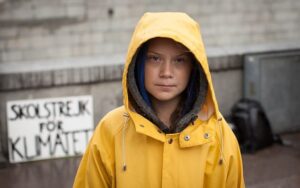
Swedish teen activist Greta Thunberg has faced massive backlash for supporting the Indian farmers’ protests. (File photo) Credit: Anders Hellberg/CC BY-SA 4.0

Swedish teen activist Greta Thunberg has faced massive backlash for supporting the Indian farmers’ protests. (File photo) Credit: Anders Hellberg/CC BY-SA 4.0

UNITED NATIONS, Feb 25 2021 (IPS) – The United Nations Peacebuilding Commission must prioritise the protection of youth activists who face retaliation from state and non-state actors, said UN Youth Envoy Jayathma Wickramanayake.


Wickramanayake was speaking at the Peacebuilding Commission high-level virtual meeting on Youth, Peace and Security, where she outlined numerous ways the commission can assist youth activists around the world — especially with their grassroots efforts.

“I hope you will consider including young people in your delegation to building commissions, consult young people in your own countries to input to your work and, most importantly, ensure the protection of young people who you decide to engage with as we have seen many incidents of retaliation against young activists by state and non-state actors for simply deciding to speak up and working with the UN,” Wickramanayake, from Sri Lanka, told the commisison.

Other speakers at the event included Mohamed Edrees, chair of the Peacebuilding Commission, Allwell O. Akhigbe of Building Blocks for Peace Foundation in Nigeria and Oscar Fernández-Taranco, UN Assistant Secretary-General for Peacebuilding Support.

Wickramanayake comments come when youth activists are facing attacks and harassment online and offline. Swedish teen activist Greta Thunberg has faced massive backlash for supporting the Indian farmers’ protests, while Indian youth activist Disha Ravi was arrested because of her activism in support of the protests.

Wickramanayake further highlighted the importance of acknowledging and promoting local grassroots organisations working in the field of youth peacebuilding.

“Young people around the world are building national coalitions, conducting baseline studies and monitoring efforts in support of youth-led peacebuilding,” she said.

She added that these organisations require “adequate, predictable and sustained” financing to thrive but this was yet to be explored.

“I would like to challenge this commission today to consider what the peacebuilding commission can do to encourage this critical support and resources at the local level where they are actually making a big difference,” she said.

Wickramanayake recommended that the commission should not only support a “substantial increase in the financial resources” for peace and security, but it should also make sure that the resources go directly to youth working on “homegrown building strategies”. 

Mia Franczesca D. Estipona, from the Generation Peace Youth Network in the Philippines, also shared the importance of involving youth who are directly affected by issues such as conflict.

“In creating facilities for youth projects and capacity building for support, we must make an effort to directly engage with youths in areas affected by conflict, understand their work and how it contributes back to the community,” Estipona said. “This is highly important especially for community-based youths who have programmes and projects but cannot be sustained due to lack of access to funding and support.” 

Both Estipona and Wickramanayake emphasised the importance of representation and being inclusive of marginalised youths or those whose stories are often left behind.

Wickramanayake highlighted the work of a colleague who promotes the voices of youth with disabilities and had reportedly briefed the Security Council on the situation in the Central African Republic by broadcasting the issue of youth, peace and security in sign language.

“[Their] organisation removes barriers limiting the participation of young people with disabilities in peacebuilding, actively mobilising the deaf community to act on Resolution 2250,” she said, referring to the UN Security Council Youth, Peace & Security thematic resolution that deals with the topic of youth from an international peace and security perspective.

Meanwhile, Estipona pointed out: “Many youth organisations have established strong programmes that truly represent and attend to youth who are in areas affected by conflict – their voices are most left behind.”

“We should pursue representation that truly represents and focuses on the collective efforts of youth as a community — and as a sector of society, not just as a different individual,” she said.

Other speakers at the event agreed with both Wickramanayake and Estipona.

Ambassador Rabab Fatima, the Permanent Representative of Bangladesh to the UN, said that it’s crucial to address the “distinct needs” of the youth as the world recovers from the coronavirus pandemic.

She highlighted the importance of access to education, sufficient funding, and including youth participation in peacebuilding as part of the “broader national policy framework”. 

Estipona said the engagement of the youth must be sustained in various stages of the process of peacebuilding: consultation, crafting, implementation and monitoring.

“Continuity of these efforts is still a challenge because they are constantly shifting priorities of stakeholders and leadership,” she said.

In offering recommendations on how to strengthen youth participation and involvement, Wickramanayake said there must be a periodic review of the efforts to increase engagement with young people.

“Accountability is key,” she said, “[we] want to hear your strategic plan. Also think beyond security and think about the intersection of peace, sustainable development, and human rights.” 

She also urged leaders to “walk the talk” – and prioritise the development of dedicated local, national and regional road maps and action plans.

  Source