Asylum Seekers: Offshore, Off Course

Civil Society, Europe, Featured, Headlines, Human Rights, IPS UN: Inside the Glasshouse, TerraViva United Nations

Opinion

Europe’s push to shift asylum procedures to third countries risks outsourcing not only refugees, but also its moral and political responsibility.

VIENNA, Austria, Dec 16 2025 (IPS) – The debate on reforming the European asylum system has gained significant momentum following the agreement reached by EU interior ministers last week. Alongside questions of solidarity and distribution, the possibility of establishing ‘return hubs’ outside the EU was at the heart of the meeting.


Outsourcing asylum procedures – or at least those concerning rejected asylum seekers – has long been a desire of many heads of state and government, and the European Commission now aims to make this possible by creating the necessary legal foundations, for example by scrapping the so-called connection criterion. In future, rejected asylum seekers would therefore no longer need to demonstrate a personal link to the third country to which they are transferred.

Previously, such links included earlier stays or family members living there. Yet the EU remains a long way from concrete implementation.

One reason is the high cost of such outsourcing projects. According to the UK’s National Audit Office, the British Rwanda deal cost the equivalent of more than €800 million, with limited effect: only four asylum seekers were relocated over two years.

Under Prime Minister Keir Starmer, the plan was shelved for good due to excessive costs and minimal benefit. And despite the heated migration debate in the United Kingdom, a revival appears unlikely. Denmark faced a similar situation with its own Rwanda plans, which the country put on hold in 2023 due to unfeasibility. And then there is the much-cited Italy–Albania agreement, whose original idea – conducting asylum procedures under Italian law on Albanian soil – was never implemented.

Practical implementation remains doubtful

What third countries gain from allowing such outsourcing on their territory is obvious: money, and even more importantly, political capital. Speaking on a panel at the ‘Time to Decide Europe’ conference organised by the Vienna-based ERSTE Foundation, Albania’s Prime Minister and Socialist Edi Rama stated openly that his small country of just under three million people must join any alliance willing to take it in.

This includes – and above all – the EU. For Albania, which is an EU candidate country, it therefore makes sense to appear accommodating to a not insignificant member state with which it is also historically closely connected, and to help solve its unpopular ‘migration question’, at least to the extent that refugees arriving in Italy do receive protection, but, in practice, ‘not in my backyard’.

So far, however, this principle has not been put into action due to objections raised by Italian courts. That is also why – and to put the costly asylum camps built in the Albanian towns of Shëngjin and Gjadër (construction and operations are believed to have already cost hundreds of millions of euros) to some use – the European Commission created the option of return hubs, which were formally adopted last week at the meeting of EU ministers.

Italy can therefore repurpose the facilities originally intended for asylum procedures as deportation centres for asylum seekers who were already on Italian territory and whose applications have been legally rejected. Here too, the number of cases remains limited, and it is unclear on what legal basis those transferred there could be held for extended periods to prevent them from re-entering the EU via Montenegro and Bosnia. De facto detention, however, would present yet another legal complication, even if the connection criterion and other EU-law barriers are removed.

Anyone striving for ‘fair burden-sharing’ would have to redistribute towards Europe, not away from it.

There is, therefore, still a long way to go before any concrete return hubs become reality. Not only because, in the usual trilogue process, the European Parliament must also give its approval — and some MEPs, including Birgit Sippel of the Socialists and Democrats group, have already announced their opposition.

But even if a parliamentary majority can be secured, the practical implementation remains doubtful: where are the trustworthy and willing third countries; how can infrastructure be built there; how can respect for human rights standards be monitored and enforced from Europe (which proves difficult even within an EU member state such as Hungary); and how should looming legal disputes be handled?

Among the countries mentioned so far are several that themselves regularly appear among the places of origin of refugees arriving in Europe. Alongside Rwanda, the East African state of Uganda is frequently cited; it already hosts the largest number of refugees from other parts of Africa, especially from Sudan, South Sudan, Burundi and the Democratic Republic of Congo. Like Rwanda, it lies directly next to regional conflict zones; the protection rate for Ugandan nationals in European host countries stands at around 60 per cent.

The country is considered authoritarian — and precisely for that reason, it has an interest in striking an outsourcing deal with EU member states, such as the one it has already concluded with the Netherlands. Such an agreement implicitly acknowledges and legitimises the Ugandan government.

The notorious EU–Turkey Statement of 2016 demonstrated how refugees accommodated in third countries can repeatedly be used as leverage in foreign policy disputes, for example when Prime Minister Erdoğan had them bussed to the Greek border to put pressure on the EU. EU strategists may euphemistically call this ‘migration diplomacy’, but for the layperson, it is simply blackmail.

The example of Uganda illustrates not only how Europe, through deals with third countries, outsources not just refugees but also bargaining power and control; it also reflects the fundamental imbalance in a one-sided debate on externalisation.

Already today, 71 per cent of all refugees find protection in developing and emerging countries, with 66 per cent hosted in neighbouring countries in the Global South or the Middle East and North Africa. Anyone striving for ‘fair burden-sharing’ would therefore have to redistribute towards Europe, not away from it.

Europe’s answer cannot, under any circumstances, be to emulate the Trump administration by resorting to ever-tougher asylum policies.

This leads to the fundamental questions that EU policymakers appear increasingly unwilling to ask, let alone answer: How does Europe want to position itself in future with regard to global refugee protection? How will people in need of protection from persecution – whose numbers are rising in an ever more unstable world – gain access to that protection?

How can the liberal post-war order be preserved, including and especially the Geneva Conventions, which were created in response to the lessons of the two World Wars and the Shoah? How should Europe position itself vis-à-vis an increasingly illiberal, in parts authoritarian United States, which now tends to view Europe more as an adversary than a partner?

A confident response to the new US national security strategy – which claims that migration threatens Europe with ‘civilisational erasure’ – must lie in emphasising Europe’s civilisational achievements since 1945. These include, above all, the prohibition of torture enshrined in Article 3 of the European Convention on Human Rights: it applies absolutely, and therefore also to asylum seekers who are obliged to leave and who may not be deported to countries where they risk inhuman treatment. This is precisely where the line between civilisation and barbarism lies.

Furthermore, a united Europe that wants to stand its ground against attacks from former allies must recognise societal diversity as one of its strengths, and acknowledge the indispensable contribution that migrants – from guest workers and refugees to highly skilled expats – have made to Europe’s reconstruction and prosperity.

Europe’s answer cannot, under any circumstances, be to emulate the Trump administration by resorting to ever-tougher asylum policies that effectively validate the American assessment.

For that would indeed amount to an obliteration — an obliteration of the founding idea of a united, open and liberal Europe which, let us not forget, received the Nobel Peace Prize in 2012 and stands for a rules-based order that has ensured decades of peace as well as economic prosperity. In short: for the very life that we are fortunate enough to enjoy day after day, in diversity, security and freedom.

Dr Judith Kohlenberger heads the FORM research institute at WU Vienna and is affiliated with the Austrian Institute for International Affairs, the Jacques Delors Centre Berlin and the Einstein Centre Digital Future. Her book Das Fluchtparadox (The Flight Paradox) was named Austrian Science Book of the Year in 2023 and nominated for the German Non-Fiction Prize. Her most recent publication is Migrationspanik (Migration Panic) (2025).

Source: International Politics and Society (IPS), Brussels, Belgium

IPS UN Bureau

  Source

Funding for Human Rights Organizations – including at the Grassroots Level – have Been Slashed Worldwide

Civil Society, Global, Global Governance, Headlines, Human Rights, International Justice, IPS UN: Inside the Glasshouse, TerraViva United Nations

Opinion

Volker Türk is UN High Commissioner for Human Rights

Human rights are positive, essential and attainable.

Human rights are positive, essential and attainable.

 
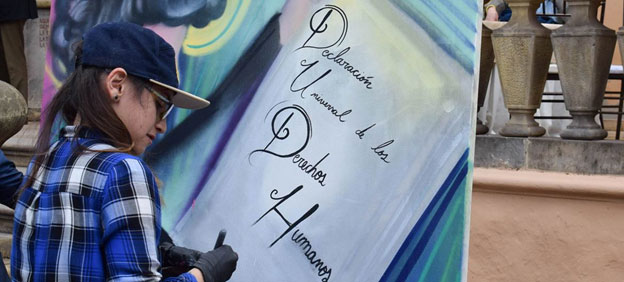
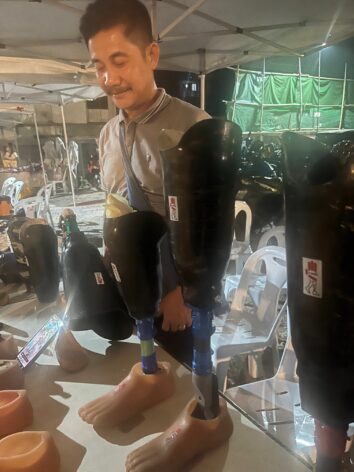
Photo: from left to right: UN/Harandane Dicko, © NurPhoto, © Betul Simsek, OHCHR Moldova
Credit: United Nations

GENEVA, Dec 11 2025 (IPS) – Human rights are underfunded, undermined and under attack. And yet. Powerful. Undeterred. Mobilizing.

This year no doubt has been a difficult one. And one full of dangerous contradictions. Funding for human rights has been slashed, while anti-rights movements are increasingly well-funded.


Profits for the arms industry are soaring, while funding for humanitarian aid and grassroots civil society plummets. Those defending rights and justice are attacked, sanctioned and hauled before courts, even as those ordering the commission of atrocity crimes continue to enjoy impunity.

Diversity, equity and inclusion policies that were adopted to address historical and structural injustices are being vilified as unjust. The prognosis would be incredibly dire if these were the only trends. But the pushback on human rights is facing pushback from a groundswell of human rights activism.

In Nepal, Serbia, Madagascar, Kenya, Bangladesh, Ecuador, Paraguay, the Philippines, Indonesia, Tanzania, Morocco, Peru and beyond, mostly young people have taken to the streets and to social media against inequalities, against corruption or repression, in favour of freedom of expression, and for their everyday essential rights.

People across the world have also been protesting against war and injustice, and demanding climate action, in places far from home, expressing solidarity and pressuring their governments to take action.

I urge governments around the world to harness the energy of these social movements into opportunities for broader transformational reforms rather than rushing to suppress them or label them as extremist threats to national security. They are, in fact, the exact opposite of threats to national security.

On the challenges I had set out earlier, here is some data:

Funding: Our resources have been slashed, along with funding for human rights organisations – including at the grassroots level – around the world. We are in survival mode.

My Office has had about USD 90 million less than we needed this year, which means around 300 jobs have been lost, and essential work has had to be cut, including on Colombia, the Democratic Republic of the Congo, Myanmar, Tunisia and other countries at a time when the needs are rising.

Special Rapporteur country visits and investigative missions by fact-finding bodies have also been reduced, sometimes drastically. Crucial dialogues with States on their compliance with UN human rights treaties have had to be postponed – last year there were 145 State party reviews, we are down to 103 this year.

We see that all this has extensive ripple effects on international and national efforts to protect human rights.

Meanwhile, anti-rights and anti-gender movements are increasingly coordinated and well-funded, operating across borders. According to the European Parliamentary Forum for Sexual and Reproductive Rights, for example, almost USD 1.2 billion was mobilized by anti-rights groups in Europe between 2019 and 2023.

There is significant money flowing into the anti-rights agenda from funders based in Europe, Russia and the United States of America. Such massive funding, coupled with media capture and disinformation strategies have made the anti-rights agenda a powerful cross-regional force.

Another distressing dataset is that from the Stockholm International Peace Research Institute (SIPRI). It says that arms and military services revenues for the 100 largest arms companies reached a record USD 679 billion in 2024. SIPRI has said demand was boosted by wars in Ukraine and Gaza, by global and regional geopolitical tensions, and ever-higher military expenditure.

There have been efforts this year to secure ceasefires and peace deals, which are certainly welcome. However, for peace to be sustainable, human rights must play a central role. There From prevention to negotiating to monitoring to accountability, recovery and peacebuilding.

And we need to do a reality check.

As we have seen in Gaza and in the eastern Democratic Republic of the Congo, agreements have yet to translate into effective protection of civilians on the ground.

Gaza remains a place of unimaginable suffering, loss and fear. While the bloodshed has reduced, it has not stopped. Attacks by Israel continue, including on individuals approaching the so-called “yellow line”, residential buildings, and IDP tents and shelters as well as other civilian objects.

Access to essential services and goods remain severely inadequate. In the West Bank, we are seeing unprecedent levels of attacks by Israeli forces and settlers against Palestinians, forcing them from their land. This is a time to intensify pressure and advocacy – not to sink into complacency – for Palestinians across the occupied territory.

Clashes between the DRC armed forces and the Rwandan-backed M23 armed group continue, alongside serious human rights violations and abuses. Civilians, again, are bearing the brunt. Overnight, you’ll have seen, there have been reports of thousands fleeing the densely populated South Kivu city of Uvira amid escalating clashes between the M23 and DRC armed forces, backed by Wazalendo militia.

This comes just days after the DRC and Rwanda reaffirmed their commitment to implement the June 2025 Washington Peace Agreement. Over the years, we have documented outrageous violations against civilians in Uvira, including rape and sexual and gender-based violence. The risk of a broader regional confrontation appears to be increasing.

In Sudan, the brutal conflict between the army and the Rapid Support Forces continues unabated. From Darfur and the Kordofans to Khartoum and Omdurman and beyond, no Sudanese civilian has been left untouched by the cruel and senseless violence. I am extremely that we might see a repeat of the atrocities committed in El Fasher in Kordofan.

In Ukraine, civilian harm has risen sharply. Civilian casualties so far this year are 24 per cent higher than the same period last year, largely due to Russia’s increased use of powerful long-range weapons in large numbers and its continuing efforts across broad front to capture further Ukrainian territory by armed force.

Large-scale attacks on Ukraine’s energy system have caused emergency outages and prolonged daily electricity cuts, disruptions to water and heating services in many areas. Urgent steps need to be taken to alleviate suffering, including the return of transferred children, the exchange of all prisoners of war, and the unconditional release of civilian detainees held by Russian authorities.

For any sustainable peace to be negotiated, it is important that confidence-building measures are taken, grounded in human rights, including steps to alleviate civilian suffering, promote accountability and preserve a basis for future dialogue. And, importantly, women need to be a part of this process.

It is imperative that peace deals and ceasefires are secured and implemented in good faith. And with full respect for international law, which can never be set aside for political convenience.

It is also critical to counter the demonization of and hatemongering rhetoric against migrants and refugees. In various countries, worryingly, we are seeing violent pushbacks, large-scale raids, arrest and returns without due process, criminalization of migrants and refugees and those who support them, as well as the outsourcing of responsibilities under international law.

I urge States to embark on an evidence-based policy debate on migration and refugee issues, anchored in international human rights and refugee law.

In the course of many electoral campaigns this year, we have also seen a pattern of democratic backsliding, restrictive civic space and electoral violence.

Myanmar’s upcoming military-imposed “election”, is accompanied by new waves of acute insecurity and violence, continued arrests and detentions of opponents, voter coercion, the use of extensive electronic surveillance tools and systemic discrimination. I fear this process will only further deepen insecurity, fear and polarization throughout the country.

There is, unfortunately, never a shortage of human rights challenges to face, issues to resolve, and values to defend. What is heartening is that there are so many of us, around the world, attached to the same universal human rights values – no matter the noise, the gaslighting, and the persistent injustices.

I am energized by the social movements – particularly those led by young people. They are writing the latest chapters in the time-honoured struggle for our collective humanity and dignity. Journalists, activists, and human rights defenders have been at the forefront of the global movement for freedom, equality and justice.

Such perseverance has achieved landmark victories for the rights of women, migrants, people discriminated against on the basis of descent, minorities, our environment, and so much more.

And we will continue to persevere.

IPS UN Bureau

  Source

A New UN Secretary-General Needs the Blessings of the US–or Get Vetoed

Civil Society, Featured, Global, Global Governance, Headlines, IPS UN: Inside the Glasshouse, TerraViva United Nations

The Security Council in session. Credit: UN Photo/Evan Schneider

UNITED NATIONS, Dec 11 2025 (IPS) – When there was widespread speculation that a UN Under-Secretary-General (USG), a product of two prestigious universities—Oxford and Cambridge—was planning to run for the post of Secretary-General back in the 1980s, I pointedly asked him to confirm or deny the rumor during an interview in the UN delegate’s lounge.


“I don’t think”, he declared, “anyone in his right mind will ever want that job”.

Fast forward to 2026.

As a financially stricken UN is looking for a new Secretary-General, who will take office beginning January 2027, the USG’s remark in a bygone era was a reflection of a disaster waiting to happen.

The current Secretary-General is facing a daunting task battling for the very survival of the UN, with a hostile White House forcing the world body to sharply reduce its staff, slash funding and relocate several UN agencies, moving them out of New York.

The bottom line: the incoming Secretary-General will inherit a virtually devastated United Nations.

Addressing the General Assembly last September, President Trump remarked, “What is the purpose of the United Nations? It’s not even coming close to living up to [its] potential.”

Dismissing the U.N. as an outdated, ineffective organization, he boasted, “I ended seven wars, dealt with the leaders of each and every one of these countries, and never a phone call from the United Nations offering to help in finalizing the deal.”

Whoever is elected, the new UN chief will have to faithfully abide by the ground rules of the Trump administration virtually abandoning what the UN stands for, including racial equality and gender empowerment (DEI)

“Diversity, equity and inclusion (DEI) policies that were adopted to address historical and structural injustices are being vilified as unjust,” says Volker Turk, UN High Commissioner for Human Rights.

In his 345-page book titled “Unvanquished: A US-UN Saga,” released in 1999, Boutros Boutros-Ghali, a former Secretary-General, points out that although he was accused by Washington of being “too independent” of the US, he eventually did everything in his power to please the Americans.

But when he ran for a second term, the US, which preaches the Western concept of majority rule, exercised its veto even though Boutros-Ghali received 14 of the 15 votes in the Security Council, including the votes of the other four permanent members of the Council, namely the UK, France, Russia and China.

In such circumstances, tradition would demand the dissenting US abstain on the vote and respect the wishes of the overwhelming majority in the Security Council. But the US did not.

Unlike most of his predecessors and successors, Boutros-Ghali refused to blindly play ball with the US despite the fact that he occasionally caved into US pressure at a time when Washington had gained a notoriety for trying to manipulate the world body to protect its own national interests.

Jesselina Rana, UN Advisor at CIVICUS’ UN Hub in New York and the steering committee of the 1 for 8 Billion campaign, told IPS when key international norms are being openly flouted by certain member states and the veto is used to undermine the very principles the UN was built on, will structural reforms alone be enough to restore trust in the institution?”

Can the UN80 process genuinely rebuild trust in multilateralism, she asked, when the process itself has been opaque and has lacked meaningful civil society participation?

“An accountable and transparent Secretary-General selection process requires stronger and more explicit support from member states.”

A process that is open and inclusive of civil society and grounded in feminist leadership will strengthen the UN’s ability to navigate today’s difficult geopolitical conditions and help rebuild trust in multilateralism, she argued.

After 80 years of male leadership, the next Secretary-General should be a woman with a proven record on gender equality, human rights, peace, sustainable development, and multilateralism, declared Rana.

Felix Dodds, Adjunct Professor at the Water Institute, University of North Carolina and Associate Fellow, the Tellus Institute, Boston, who has written extensively on the UN, told IPS the UN is experiencing challenging times, living through what are probably the most difficult times since the Cold War.

It may not be a bad idea to move some UN bodies. UNDP did a lot of that under Helen Clarke—being closer to the people you are working to help, maybe it is a cost-cutting issue, but it may also be something that should have been considered before.

“The new SG will need to be someone Trump allows, as he has a veto,” he pointed out.

“Of the candidates we looked at before, the only one that is realistic is Rebeca Grynspan from UNCTAD. She has shown herself to be a good bureaucrat and has led UNCTAD well, as she did for Costa Rica when she was the Deputy President, said Dodds, City of Bonn International Ambassador.

“We may be looking at a man again,” he said.

Clearly, the new secretary-general taking over in 2027 has a daunting task ahead. Whoever it is will have had to make concessions to the P5 on the size and reach of the UN. The present cuts may be just the first set to come down.

“A UN with a clearer mandate on what it will do may be a result. Stakeholders need to, of course, defend the UN as a critical body for multilateral affairs BUT they must at the same time be putting forward reforms that are simple and strengthen the area they are working on.”

There is no way we can get security reform through—it doesn’t mean it shouldn’t be proposed, but what is realistic in the areas being reformed is that stakeholders and governments can work together on it.

Ultimately, the driving force should be a more effective UN delivering on the ground. Do reform proposals do that? he asked.

“The organization has always worked in a world of political pressures. I agree the body should be a place for dialogue and protection of the most vulnerable. UN80 offers an opportunity for dialogue on realistic proposals. The question is, what are they in the different areas?” he said.

Dr. Stephen Zunes, Professor of Politics and International Studies at the University of San Francisco, where he serves as coordinator of the program in Middle Eastern Studies, told IPS following the Napoleonic Wars, the Council of Europe largely kept the peace until the Central Powers decided it no longer worked for them. The result was World War I.

The League of Nations then set up a framework to keep the peace until the Axis powers decided it no longer worked for them. The result of World War II, he said.

“We are now at a similar crossroads, where the United Nations system is being challenged by both Russia and the United States which–as demonstrated through the invasions of Iraq and Ukraine—no longer feel constrained by the prohibition against aggressive war.”

“The more recent U.S. assaults on the UN are particularly damaging, given the importance of U.S. financial contributions to the UN’s functioning and Washington’s ability in recent weeks to push through resolutions in the UN Security Council seemingly legitimizing illegal Israeli and Moroccan military occupations of their neighbors.”

UN members must be willing to risk the wrath of the Trump administration by standing up for the UN Charter and basic principles of international law. Nothing less than the future of the world body and international peace and security is at stake, declared Dr Zunes.

IPS UN Bureau Report

  Source

The Daunting Tasks Ahead for the New UN Secretary-General

Civil Society, Featured, Global, Global Governance, Headlines, IPS UN: Inside the Glasshouse, TerraViva United Nations

Opinion

The United Nations Headquarters as seen from First Avenue in New York City. Credit: UN News/Vibhu Mishra

KATHMANDU, Nepal, Dec 10 2025 (IPS) – The election of the next Secretary-General of the United Nations comes at a highly inopportune moment in 2026, when the UN is being bypassed, and multilateralism—with the UN at its core—is under increasing challenge from some of the world’s most powerful states and leaders.


The new Secretary-General, taking office in 2027, will inherit an unprecedented financial crisis and a pressing need for major institutional reorganization simply to keep the UN afloat. At first glance, this hardly seems like the right moment for a new SG to advance a bold vision—one capable of winning over powerful leaders who appear lukewarm toward strengthening genuine multilateralism and instead prefer a multipolar order where each can guard its own sphere of influence.

Yet history reminds us that some of the boldest ideas have emerged during periods of great upheaval—wars, revolutions, and global crises. It is therefore conceivable that a visionary new UN leader could break new ground, introduce innovative ideas, and help plant the seeds for a rejuvenated, rules-based world order.

Kul Gautam

While many of today’s most powerful leaders may be ambivalent about multilateralism, the world’s general public—especially the digitally savvy younger generation—has a strong sense of global interdependence.

They increasingly identify as global citizens, eager to thrive in a borderless world, and are more likely to embrace visionary proposals for UN reform that meet the realities of the 21st century.

A promising starting point would be the election of the first-ever female Secretary-General of the UN. Another essential reform would be restructuring the UN’s financing system to make it more broad-based and less dependent on the whims of a few wealthy, powerful states.

Some consolidation of the UN’s sprawling architecture—much of it underfunded—is already underway through the current SG’s UN80 Initiative. A new SG could accelerate this effort, earning the support of both critics and cynics.

Still, even a dynamic and visionary new SG will require the backing of Member States. At present, leaders of the most powerful states, particularly the veto-wielding P5, seem disinclined to empower the world’s top diplomat as a true global leader.

While many enlightened global citizens—especially Gen Z—hope for a bold, inspiring figure at the helm, the major powers may prefer a more compliant “Secretary” rather than a strong, strategic “General.”

With the rise of the Global South and groupings such as BRICS+ and the G20, the balance of power—especially soft power—is shifting away from the states that founded the UN 80 years ago.

One hopes this evolving landscape will help strengthen the UN and reinvigorate multilateralism, which remains the only viable way to confront such transcendental issues as climate change, war and peace, pandemics, widening inequalities, and the profound opportunities and risks of the AI revolution.

The world urgently needs a more effective UN to address these pressing global challenges—none of which any nation, however rich or powerful, can tackle alone. It is to be hoped that world leaders, attuned to their peoples’ aspirations, will choose a highly capable new Secretary-General and empower her to help build a more peaceful and prosperous world for present and future generations.

Kul Gautam is a former UN Assistant Secretary-General, Deputy Executive Director of UNICEF and author of Global Citizen from Gulmi: My Journey from the Hills of Nepal to the Halls of the United Nations.

IPS UN Bureau

  Source

UN Pact for the Future Requires Global Solidarity and Localized Solutions

Civil Society, Development & Aid, Featured, Global, Headlines, Humanitarian Emergencies, Sustainable Development Goals, TerraViva United Nations

IPS UN: Inside the Glasshouse

H.E. Abdulla Shahid (left), former President of the UN General Assembly, and Collen Kelapile (center), former UN ambassador to Botswana and former vice-president of the UN Economic and Social Council, speak as panelists at the launch event of ICO's flagship report. Credit: John Okyo Nyaku/UN

H.E. Abdulla Shahid (left), former President of the UN General Assembly, and Collen Kelapile (center), former UN ambassador to Botswana and former vice-president of the UN Economic and Social Council, speak as panelists at the launch event of ICO’s flagship report. Credit: John Okyo Nyaku/UN

UNITED NATIONS, Dec 9 2025 (IPS) – More than one year since its adoption, the UN Pact for the Future is held up as a critical framework for countries to address today’s issues through global cooperation. Its agenda for global governance and sustainable development is ambitious, and it is for this reason the Pact poses implementation challenges when it comes to the direct impact on local communities. It will require the joint efforts of governments, civil society and international organizations to achieve the goals laid out in the Pact.


The efforts of the International Communities Organisation (ICO), a UK-based international NGO, demonstrate what implementing the Pact would look like. Since 2016, ICO has worked to empower minority communities in conflict-affected areas through education and capacity-building opportunities. ICO focuses on directly supporting efforts to build up underrepresented groups’ involvement in community initiatives and diplomatic dialogue and address systemic, societal inequalities.

On December 3, ICO launched its flagship report, For Our Future: Best Practice for the Implementation of the UN Pact for the Future, at the UN Headquarters in New York, presenting a practical framework to support UN member states in advancing the objectives outlined in the Pact for the Future. Several Permanent Missions to the UN, including Bahrain, Guyana, Hungary, Kuwait, Samoa, Singapore, Tajikistan, Tonga, and Uganda, co-sponsored the event.

The UN Pact for the Future represents a shared set of global commitments to sustainable development, peace and security, and redefining global governance for member states. While its adoption marks a decisive moment of global consensus, there remains the challenge of translating the Pact’s guiding principles into meaningful action at the national and regional levels.  Through its ‘Best Practices’ blueprint, the ICO report distills their findings into an adaptable methodology designed to equip policymakers with the tools they need to implement the Pact’s goals effectively.

James Holmes, ICO founder and Secretary General, said, “The Pact reminds us that the strength of nations is measured not only by the power of their armies or the size of their economies, but also by the inclusiveness of their societies and the recognition of all who live within.” “How we treat minority peoples, those who are few in number, vulnerable, or historically marginal, is the true test of our progress and the true test of whether the fact for the future is being successful.”

H.E. Abdulla Shahid, ICO International Ambassador and former President of the 76th United Nations General Assembly, said it was crucial for the world to unite.

“The UN Pact for the Future calls for renewed unity in tackling humanity’s greatest challenges. This report demonstrates that lasting peace is built not only at negotiation tables but also through empowering communities themselves, ensuring that no group is left behind.”

“As UN Secretary-General António Guterres noted at the opening of the ‘Summit of the Future’ in September 2024, ‘21st-century challenges require 21st-century solutions: frameworks that are networked and inclusive and that draw on the expertise of all humanity.’

He added that the ICO’s report embodies this principle, showing how global aspirations can intersect with local action.

Prominent UN diplomats and civil society members were present at the launch event, demonstrating and remarking on their commitment to the Pact for the Future, and specifically to ICO’s work on the ground. Current and former high-ranking UN officials were also in attendance.

“One year after the adoption of the Pact, this discussion is timely,” said Themba Kalua, the UN Director, Pact for the Future Implementation Kalua remarked during the event. “While the world has grown more complex since the adoption of the Pact for the Future, the Pact continues to be central in realizing multilateralism, navigating the current geopolitical complexities and shaping our collective action on the global agenda.”

Kalua noted the efforts made by the UN system towards the Pact, including global panels on the governance of artificial intelligence (AI) and the political declarations that emerged from UN conferences on social development in Qatar and financing for development in Spain. He expressed that the Pact was a “strategic priority” for the UN and its Secretary-General, António Guterres.

“From our side in the UN system and the Secretariat, we are committed to doing our part in supporting the implementation of the Pact,” Kalua told IPS.

Presenting the report, ICO’s UN Programme Manager Mia Sawjani broke down its findings and recommendations. She emphasized that countries would need to empower and promote the agency of local actors. This includes building up their capacity and skills to enact positive change in their communities. Countries must recognize adaptability in assessing situations on the ground, particularly in conflict settings that transform institutions and structures.

“The implementation of the Pact can be tangibly realized for all, but particularly to serve marginalized communities. It’s a transformative opportunity and it is our collective responsibility to follow through,” said Sawjani.

After the event, Holmes was heartened by the outpouring of support for ICO’s work, noting that many more countries had agreed to partner with them for future projects. By maintaining their focus on working with minority communities, ICO can “play a major global role” in implementing the Pact for Future.

“I have a big vision, and I have a lot of ambition for ICO,” Holmes told IPS. “We already have a global team, and I see that growing, and I see us having a bigger and bigger role in helping to implement the Pact.”

The launch event of ICO's flagship report on the UN Pact for the Future at UNHQ in New York. The event was attended by high-ranking UN diplomats. Credit: John Okyo Nyaku/UN

The launch event of ICO’s flagship report on the UN Pact for the Future at UNHQ in New York. The event was attended by high-ranking UN diplomats. Credit: John Okyo Nyaku/UN

Local actors and stakeholders, namely governments, academia, the private sector and civil society, would play a key role in implementing the Pact’s agenda. Organizations like ICO could serve as a bridge to translate the issues to the national context.

“The more we are able to bridge communities, the more successful it will be for states to deal with Track I diplomacy,” Shahid said to IPS, referencing the formal channel of diplomacy between governments on international issues.

Implementing the Pact for the Future must also mean recognizing the specific needs and challenges that these countries face. Island states like Samoa and Tonga, for example, are uniquely impacted by climate change, energy, and the global financial structures that need to better serve developing countries.

“For us in the Pacific, progress is measured not by rhetoric, but by real improvements that are felt in our villages, outer islands and vulnerable communities,” said Viliami Va’inga Tōnē, the Permanent Representative of Tonga.

Accountability and transparency will also be crucial to ensure countries follow through on the promises of the Pact. This must be present at all levels. Participants at the event emphasized the need for monitoring mechanisms that would measure progress.

The timing of the report coincides with the ongoing reform negotiations under the UN80 Initiative introduced this year. Discussions around the Pact went hand in hand with recognizing the critical step toward reforming the UN system that will optimize its ability to live up to its founding principles and the Pact’s promises.

If the Pact represents ‘what’ the UN and member states need to achieve in the global agenda, then UN80 represents ‘how’ the UN can implement the agenda.

“The UN80 initiative is really part of the UN response to how it can deliver on the ground,” said Fatumanava-o-Upolu III Dr. Pa’olelei Luteru, the Permanent Representative of Samoa. He said to IPS, “When you look at all the individual actions that need to be taken, these are at the global level, the UN [level], regional level, and national level. They’re all important, because we can’t continue to work in silence. Everything is interconnected now. So we need to make those connections and work together, and you don’t want duplication.”

While New York hosts reform discussions around the UN and its mandates, the organization’s impact will ultimately be felt by local communities across the world.

Dr. Agnes Mary Chimbiri-Molande, Permanent Representative of Malawi, told IPS that the people who serve in multilateral systems like the UN need to “renew or even rebuild trust” with local communities. At a time when people are questioning the UN’s relevance, she said, these discussions must be held and all perspectives need to be respected.

“We need to hear the voices of the local people. Because here we are working for them. We are not working for ourselves,” Chimbiri-Molande said. “So in fact, to be hearing the voices of those peoples, it’s very, very important to inform our work here, whether we are making an impact or we are making differences in the lives of the people in the community.”

Shahid reiterated that the decisions made in the halls of UN Headquarters will affect local communities, adding that the UN’s success is also contingent on its partnerships with civil society and how important it is for civil society to recognize the UN’s relevance.

During his time as President of the General Assembly from 2021-2022, the world was in the midst of the COVID-19 pandemic. His ‘presidency of hope’ championed the progress made by the international system despite the challenges brought on by the pandemic. He also made efforts to promote inclusivity by opening the General Assembly to more participants, including civil society groups.

Shahid invited young diplomats from underrepresented member states to the President’s office to witness international diplomacy firsthand.

Even after his presidency ended, he told IPS, he wanted to continue to deliver on the ideals that defined his tenure.

“I thought that there’s no need to end the presidency of hope after one year. Let us keep delivering the message of hope through other platforms. And ICO provides me the platform, because it is a platform through which I can actually reach out to communities at [the] household level and inspire them not to give up. Keep working, keep aiming to change the status.”

IPS UN Bureau Report

  Source

UN Pact for the Future Requires Global Solidarity and Localized Solutions

Civil Society, Development & Aid, Featured, Global, Headlines, Humanitarian Emergencies, Sustainable Development Goals, TerraViva United Nations

IPS UN: Inside the Glasshouse

H.E. Abdulla Shahid (left), former President of the UN General Assembly, and Collen Kelapile (center), former UN ambassador to Botswana and former vice-president of the UN Economic and Social Council, speak as panelists at the launch event of ICO's flagship report. Credit: John Okyo Nyaku/UN

H.E. Abdulla Shahid (left), former President of the UN General Assembly, and Collen Kelapile (center), former UN ambassador to Botswana and former vice-president of the UN Economic and Social Council, speak as panelists at the launch event of ICO’s flagship report. Credit: John Okyo Nyaku/UN

UNITED NATIONS, Dec 9 2025 (IPS) – More than one year since its adoption, the UN Pact for the Future is held up as a critical framework for countries to address today’s issues through global cooperation. Its agenda for global governance and sustainable development is ambitious, and it is for this reason the Pact poses implementation challenges when it comes to the direct impact on local communities. It will require the joint efforts of governments, civil society and international organizations to achieve the goals laid out in the Pact.


The efforts of the International Communities Organisation (ICO), a UK-based international NGO, demonstrate what implementing the Pact would look like. Since 2016, ICO has worked to empower minority communities in conflict-affected areas through education and capacity-building opportunities. ICO focuses on directly supporting efforts to build up underrepresented groups’ involvement in community initiatives and diplomatic dialogue and address systemic, societal inequalities.

On December 3, ICO launched its flagship report, For Our Future: Best Practice for the Implementation of the UN Pact for the Future, at the UN Headquarters in New York, presenting a practical framework to support UN member states in advancing the objectives outlined in the Pact for the Future. Several Permanent Missions to the UN, including Bahrain, Guyana, Hungary, Kuwait, Samoa, Singapore, Tajikistan, Tonga, and Uganda, co-sponsored the event.

The UN Pact for the Future represents a shared set of global commitments to sustainable development, peace and security, and redefining global governance for member states. While its adoption marks a decisive moment of global consensus, there remains the challenge of translating the Pact’s guiding principles into meaningful action at the national and regional levels.  Through its ‘Best Practices’ blueprint, the ICO report distills their findings into an adaptable methodology designed to equip policymakers with the tools they need to implement the Pact’s goals effectively.

James Holmes, ICO founder and Secretary General, said, “The Pact reminds us that the strength of nations is measured not only by the power of their armies or the size of their economies, but also by the inclusiveness of their societies and the recognition of all who live within.” “How we treat minority peoples, those who are few in number, vulnerable, or historically marginal, is the true test of our progress and the true test of whether the fact for the future is being successful.”

H.E. Abdulla Shahid, ICO International Ambassador and former President of the 76th United Nations General Assembly, said it was crucial for the world to unite.

“The UN Pact for the Future calls for renewed unity in tackling humanity’s greatest challenges. This report demonstrates that lasting peace is built not only at negotiation tables but also through empowering communities themselves, ensuring that no group is left behind.”

“As UN Secretary-General António Guterres noted at the opening of the ‘Summit of the Future’ in September 2024, ‘21st-century challenges require 21st-century solutions: frameworks that are networked and inclusive and that draw on the expertise of all humanity.’

He added that the ICO’s report embodies this principle, showing how global aspirations can intersect with local action.

Prominent UN diplomats and civil society members were present at the launch event, demonstrating and remarking on their commitment to the Pact for the Future, and specifically to ICO’s work on the ground. Current and former high-ranking UN officials were also in attendance.

“One year after the adoption of the Pact, this discussion is timely,” said Themba Kalua, the UN Director, Pact for the Future Implementation Kalua remarked during the event. “While the world has grown more complex since the adoption of the Pact for the Future, the Pact continues to be central in realizing multilateralism, navigating the current geopolitical complexities and shaping our collective action on the global agenda.”

Kalua noted the efforts made by the UN system towards the Pact, including global panels on the governance of artificial intelligence (AI) and the political declarations that emerged from UN conferences on social development in Qatar and financing for development in Spain. He expressed that the Pact was a “strategic priority” for the UN and its Secretary-General, António Guterres.

“From our side in the UN system and the Secretariat, we are committed to doing our part in supporting the implementation of the Pact,” Kalua told IPS.

Presenting the report, ICO’s UN Programme Manager Mia Sawjani broke down its findings and recommendations. She emphasized that countries would need to empower and promote the agency of local actors. This includes building up their capacity and skills to enact positive change in their communities. Countries must recognize adaptability in assessing situations on the ground, particularly in conflict settings that transform institutions and structures.

“The implementation of the Pact can be tangibly realized for all, but particularly to serve marginalized communities. It’s a transformative opportunity and it is our collective responsibility to follow through,” said Sawjani.

After the event, Holmes was heartened by the outpouring of support for ICO’s work, noting that many more countries had agreed to partner with them for future projects. By maintaining their focus on working with minority communities, ICO can “play a major global role” in implementing the Pact for Future.

“I have a big vision, and I have a lot of ambition for ICO,” Holmes told IPS. “We already have a global team, and I see that growing, and I see us having a bigger and bigger role in helping to implement the Pact.”

The launch event of ICO's flagship report on the UN Pact for the Future at UNHQ in New York. The event was attended by high-ranking UN diplomats. Credit: John Okyo Nyaku/UN

The launch event of ICO’s flagship report on the UN Pact for the Future at UNHQ in New York. The event was attended by high-ranking UN diplomats. Credit: John Okyo Nyaku/UN

Local actors and stakeholders, namely governments, academia, the private sector and civil society, would play a key role in implementing the Pact’s agenda. Organizations like ICO could serve as a bridge to translate the issues to the national context.

“The more we are able to bridge communities, the more successful it will be for states to deal with Track I diplomacy,” Shahid said to IPS, referencing the formal channel of diplomacy between governments on international issues.

Implementing the Pact for the Future must also mean recognizing the specific needs and challenges that these countries face. Island states like Samoa and Tonga, for example, are uniquely impacted by climate change, energy, and the global financial structures that need to better serve developing countries.

“For us in the Pacific, progress is measured not by rhetoric, but by real improvements that are felt in our villages, outer islands and vulnerable communities,” said Viliami Va’inga Tōnē, the Permanent Representative of Tonga.

Accountability and transparency will also be crucial to ensure countries follow through on the promises of the Pact. This must be present at all levels. Participants at the event emphasized the need for monitoring mechanisms that would measure progress.

The timing of the report coincides with the ongoing reform negotiations under the UN80 Initiative introduced this year. Discussions around the Pact went hand in hand with recognizing the critical step toward reforming the UN system that will optimize its ability to live up to its founding principles and the Pact’s promises.

If the Pact represents ‘what’ the UN and member states need to achieve in the global agenda, then UN80 represents ‘how’ the UN can implement the agenda.

“The UN80 initiative is really part of the UN response to how it can deliver on the ground,” said Fatumanava-o-Upolu III Dr. Pa’olelei Luteru, the Permanent Representative of Samoa. He said to IPS, “When you look at all the individual actions that need to be taken, these are at the global level, the UN [level], regional level, and national level. They’re all important, because we can’t continue to work in silence. Everything is interconnected now. So we need to make those connections and work together, and you don’t want duplication.”

While New York hosts reform discussions around the UN and its mandates, the organization’s impact will ultimately be felt by local communities across the world.

Dr. Agnes Mary Chimbiri-Molande, Permanent Representative of Malawi, told IPS that the people who serve in multilateral systems like the UN need to “renew or even rebuild trust” with local communities. At a time when people are questioning the UN’s relevance, she said, these discussions must be held and all perspectives need to be respected.

“We need to hear the voices of the local people. Because here we are working for them. We are not working for ourselves,” Chimbiri-Molande said. “So in fact, to be hearing the voices of those peoples, it’s very, very important to inform our work here, whether we are making an impact or we are making differences in the lives of the people in the community.”

Shahid reiterated that the decisions made in the halls of UN Headquarters will affect local communities, adding that the UN’s success is also contingent on its partnerships with civil society and how important it is for civil society to recognize the UN’s relevance.

During his time as President of the General Assembly from 2021-2022, the world was in the midst of the COVID-19 pandemic. His ‘presidency of hope’ championed the progress made by the international system despite the challenges brought on by the pandemic. He also made efforts to promote inclusivity by opening the General Assembly to more participants, including civil society groups.

Shahid invited young diplomats from underrepresented member states to the President’s office to witness international diplomacy firsthand.

Even after his presidency ended, he told IPS, he wanted to continue to deliver on the ideals that defined his tenure.

“I thought that there’s no need to end the presidency of hope after one year. Let us keep delivering the message of hope through other platforms. And ICO provides me the platform, because it is a platform through which I can actually reach out to communities at [the] household level and inspire them not to give up. Keep working, keep aiming to change the status.”

IPS UN Bureau Report

  Source