Activists Call Out 11 Muslim Member States to Repeal Death Penalty for Blasphemy

Civil Society, Crime & Justice, Featured, Global, Headlines, Human Rights, IPS UN: Inside the Glasshouse, Religion, TerraViva United Nations

Opinion

Organization of Islamic Cooperation (OIC) headquartered in Jeddah, Saudi Arabia

LOS ANGELES / WASHINGTON DC, Oct 21 2022 (IPS) – Eleven out of 57 members of the Organization of Islamic Cooperation (OIC) still sanction the death penalty for blasphemy and apostasy, silencing their citizens and emboldening violence by non-state actors.


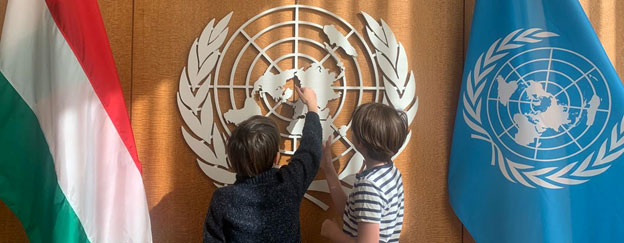
For the past 70 years, Article 18 of the United Nations Declaration of Human Rights has condemned capital punishment for religious offenses, a global standard shared during our recent visit to the UN headquarters in New York.

As a prelude to the UN General Assembly (UNGA) high-level meetings in mid-September, we led the International Religious Freedom (IRF) Roundtable Campaign to Eliminate Blasphemy and Apostasy Laws, urging UN members to stand in strong support during two paramount resolutions calling for an end to the death penalty and extrajudicial killings.

We urge the insertion of language codifying the death penalty never being imposed as a sanction for non-violent conduct such as blasphemy and apostasy. The effort produced an encouraging response by Nigerian third committee officials who renewed their commitment to freedom of religion or belief by supporting embedded language in both the moratorium on the death penalty and a resolution on renouncing the death penalty for extrajudicial killings.

In the days that followed our visit, the world has witnessed the outrage of human rights activists and concerned global citizens with the death of Masha Amini, an Iranian Muslim woman who was arrested and subsequently died in the custody of Iranian morality police for a violation of the Islamic Republic of Iran’s compulsory hijab mandate.

Brutal cases like these will only cease when government officials in Iran, and other egregious human rights violators, listen to the cries of their people and uphold globally recognized human rights declarations. These include statutes supporting international religious freedom or belief, and the repeal of apostasy and blasphemy laws.

When most countries around the world and the majority of Muslim nations are taking concrete steps to abolish capital punishment for perceived religious offenses such as blasphemy and apostasy, some refuse to modernize their legislation, thus branding themselves as the worst violators of internationally recognized basic human rights.

This staunch obsession with upholding persecutory laws and implementing the harshest of punishments, violates religious freedoms – the right to life and the right to freedom of religion or belief. This misinterpretation of scripture is an abuse of Islam, tarnishing the image of Muslims around the world and a disregard to Gods mercy, a belief that transcends faith orientation.

The multidisciplinary and multifaith delegation from the International Religious Freedom (IRF) Campaign urged UN members, including: Luxemburg, Canada, and Sri Lanka, to raise their voices loudly in favor of embedded international religious freedom language in two resolutions which will come up for a vote during the UNGA in November.

Penholders Australia and Costa Rica are calling for a moratorium on the death penalty which is only supported by the IRF Campaign with the addition of specific language ensuring the death penalty never be imposed for non-violent conduct such as apostasy or blasphemy.

Likewise, Finland, as penholder for the UNGA resolution on extrajudicial executions, is being asked by global advocates to add language on freedom of religion or belief, emphasizing the necessity for States to take effective measures to repeal laws currently allowing the death penalty for religious offences, such as criminalization of conversion and expression of religion or belief as a preventative measure.

Article 18 of the United Nations Declaration of Human Rights is clear – everyone has the right to freedom of religion or belief. Yet, 11 States today maintain the death penalty for apostasy and blasphemy. We raise the voices of the voiceless, such as Pakistani woman Aneeqa Ateeq who was sentenced to death for blasphemy in January 2022 after being manipulated into a religious debate online by a man who she romantically refused.

Also, an 83-year-old Somali man, Hassan Tohow Fidow, who was sentenced to death for blasphemy by an al-Shabaab militant court and subsequently horrifically executed by firing squad; and a 22-year-old Nigerian Islamic gospel singer Yahaya Sharif-Aminu who was sentenced to death for blasphemy because one of his songs allegedly praised an Imam higher than the Prophet.

As an outcome of our UN advocacy, we pray that the 11 Muslim member states—Afghanistan, Brunei, Iran, Maldives, Mauritania, Nigeria, Pakistan, Qatar, Saudi Arabia, Somalia, and Yemen– join in the common-sense repeal of the death penalty for blasphemy and apostasy as a great step toward becoming civilized nations.

The majority of OIC member nations who do not sanction the death penalty for religious offenses should be regarded as examples of modernity and humanity and their path to restore and uphold basic human rights should be replicated.

The Qur’an says, “There shall be no compulsion in religion; the right way has become distinct from the wrong way.” (Qur’an 2:256). Likewise, we read passages like 18:26:, “And say, ‘The truth is from your Lord. Whoever wills – let him believe. And whoever wills – let him disbelieve,” and “whoever among you renounces their own faith and dies a disbeliever, their deeds will become void in this life and in the Hereafter (Qur’an 2:217).”

The holy book, which serves as a moral compass for the laws in OIC member nations, upholds the right to freedom of religion or belief which has been recognized by the OIC majority.

As has been recently witnessed in Iran, when civil society activates around globally recognized human rights, the world takes note. The OIC asserts its purpose “to preserve and promote the foundational Islamic values of peace, compassion, tolerance, equality, justice and human dignity” and “to promote human rights and fundamental freedoms, good governance, rule of law, democracy, and accountability”.

To that end, with the passage of both critical UN resolutions, OIC members will face the controversial and politically sensitive task of calling out other OIC colleagues who continue to violate human rights by imposing the death sentence upon individuals for exercising their right to freedom of thought, conscience, and religion.

We assert that it is a societal problem as much as it is a reflection of the deficiency of democratic values and principles.

Embedding international religious freedom language in both resolutions calling for the repeal of the death penalty will be strengthened with the strong support of the 46 OIC nations and other human rights champion nations in the days ahead.

We are encouraged by Saudi Arabian scholar, Dr. Mohammad Al-Issa of the Muslim World Alliance, who travels the world sharing the unanimously approved Charter of Makkah – a document affirming differences among people and beliefs as part of God’s will and wisdom.

Our collective voice must be unwavering in its call and commitment to repeal the death penalty for blasphemy and apostasy as a primary step towards upholding theologies of love and compassion, building toward human flourishing.

Dr. Christine M. Sequenzia, MDiv is co-chair IRF Campaign to Eliminate Blasphemy and Apostasy Laws; Soraya M. Deen, Esq. is lawyer, community organizer, founder, Muslim Women Speakers, and co-chair International Religious Freedom (IRF) Women’s Working Group

IPS UN Bureau

  Source

Journalists, Under Threat, Need Safe Refuge Through Special Emergency Visas

Active Citizens, Civil Society, Democracy, Featured, Global, Headlines, Human Rights, IPS UN: Inside the Glasshouse, Press Freedom, TerraViva United Nations

Opinion

A video journalist covers a news event. Credit Unsplash/Jovaughn Stephens
 
Journalists and media workers are facing “increasing politicization” of their work and threats to their freedom to simply do their jobs, that are “growing by the day”, said UN Secretary-General Antonio Guterres, marking World Press Freedom Day, May 2022

NEW YORK, Oct 4 2022 (IPS) – “This woman sitting next to me, Maria Ressa, is a Nobel laureate and a convicted criminal,” said barrister Amal Clooney, who co-leads the international legal team representing Ressa. The founder of news website Rappler, Ressa has been targeted with a barrage of legal charges intended to stop her journalism in the Philippines.


During a conversation hosted by the Committee to Protect Journalists (CPJ) on the sidelines of the UN General Assembly high-level week, which concluded September 26, Clooney revealed that Ressa faces the possibility of imminent imprisonment in the Philippines.

“The only thing standing between her and a prison cell is one decision from the Philippines Supreme Court that could come as soon as in 21 days’ time,” said Clooney to an audience of news leaders, diplomats, and advocates.

She then appealed for prosecutors to drop the baseless charges and for newly elected President Ferdinand Marcos Jr. to issue a pardon. In May, CPJ wrote to Marcos requesting that he urgently take concrete steps to undo former President Rodrigo Duterte’s long campaign of intimidation and harassment of the press.

The conversation, led by CPJ President Jodie Ginsberg, also explored the broader misuse of laws increasingly deployed to silence the press across the world. Clooney and Ressa are both past recipients of CPJ’s Gwen Ifill Press Freedom award for their extraordinary and sustained achievement in the cause of press freedom.

UNGA week also served to gather legal experts, diplomats, and activists to discuss the plight of journalists forced to flee their homes and the responsibility of governments to provide safe refuge through special emergency visas.

During a high-level side-event hosted by the Czech Republic, CPJ’s Ginsberg joined Czech Foreign Minister Jan Lipavsky and deputy chairs of the High Level Panel of Legal Experts on Media Freedom to make the case for these visas.

CPJ has advocated for such visas in the past in line with recommendations by members of the Media Freedom Coalition, a group of 52 governments that support press freedom.

Ginsberg’s message: Governments must create special emergency visas for journalists to allow them to quickly evacuate and relocate to safety. The visas should be granted to individuals who are at risk due to their work keeping the public informed.

As Ginsberg noted, across the world, from Afghanistan to Nicaragua and Belarus to Myanmar, CPJ has worked on hundreds of cases of such journalists seeking safe refuge. There is no time to waste.

Journalists forced to flee often try to continue reporting in exile. Panelist Roman Anin, an exiled investigative journalist who runs news website iStories, shared his story of moving his newsroom out of Russia.

“When the war started, we had a choice between three options, either stay in Russia and stop our work, stay in Russia, continue our work and end up in jail, or relocate the newsroom,” he said. Anin said that in spite of the hardship of the relocation, his newsroom has been able to reach Russian audiences with stories on alleged war crimes committed in Ukraine.

Anin’s experience, and CPJ’s own work helping many other displaced journalists, demonstrate how critical it is for governments to prioritize emergency visas for swift relocation and safety. Refusing to do so not only impacts the lives of individual journalists, it is a blow to free expression and access to information globally.

In solidarity,

Gypsy Guillén Kaiser is CPJ Advocacy and Communications Director.

IPS UN Bureau

  Source

Multi-Faith Team Urges Repeal of Blasphemy Laws– in the Name of Religious Freedom

Civil Society, Crime & Justice, Featured, Global, Headlines, IPS UN: Inside the Glasshouse, TerraViva United Nations

Opinion

Independent UN human rights experts condemned the death sentence of a university lecturer charged with blasphemy in Pakistan, calling the ruling “a travesty of justice”. December 2019. Credit: UNICEF/Josh Estey

NEW YORK, Sep 12 2022 (IPS) – In nations lacking certain religious freedoms, the bold multi-faith membership of the International Religious Freedom Roundtable’s Campaign to Eliminate Apostasy and Blasphemy Laws, would be forbidden.


This archaic, and at times, violent fact is driving a biblical justice authority, an international activist and a team of culturally and religiously diverse advocates to raise their voices with member states, just before world leaders arrive for the high-level segment of the 77th UN General Assembly session which commences in New York City September 20.

The trip will highlight the twelve nations currently imposing the death penalty for apostasy and blasphemy charges, calling for its immediate repeal.

Freedom of religion or belief is universally regarded as fundamental human right and is protected by international covenants and national constitutions alike.

However, courts continue to mete out unjustifiably long prison sentences and even death sentences to individuals for non-violent, victimless conduct such as committing blasphemy or apostasy.

Recently, Nigerian humanist Mubarak Bala was sentenced to an unimaginable 24 years’ imprisonment for an allegedly blasphemous Facebook post he made expressing his disbelief in an afterlife.

Though the death penalty is not actually imposed upon a convicted individual in a vast majority of cases, the sentence itself relegates convicts to years and decades of prolonged imprisonment on death row, denial of medical care while in prison, withholding of legal counsel, and endless interrogation.

Pakistanis rally in support of Mumtaz Qadri who was convicted and executed for a blasphemy-motivated killing of a former governor, in Lahore, Pakistan, Feb. 2016. Credit: Voice of America

Previously, Asia Bibi, a Pakistani woman, languished on death row for eight years on charges of blasphemy simply for drinking water from a canteen while picking berries with a group of Muslim women.

After her release and acquittal in 2019, Asia was forced to flee her home country in fear of reprisal attacks by radical Islamists.

In 2014, a pregnant Sudanese woman Mariam Ibrahim – who was imprisoned on apostasy charges for her marriage to a Christian man, and as a woman born to a Muslim father – was forced to give birth to her second child while her legs remained shackled to the cell floor.

As a Christ follower, I am reminded of times when God revealed his heart for justice through stories like that of Esther, whom was strengthened to boldly intercede for an oppressed group of religious minorities.

The time is now for United Nations Member States to do the same, through their set own of convictions, in an effort to create communities of human flourishing and safety for those who are persecuted for freedom of religion or belief.

Speaking on Islam’s position on blasphemy, there is much evidence that Prophet Muhammad pardoned his worst critics. Blasphemy laws and inhumane punishments for blasphemy have no legitimacy in the Quran.

The Quran does not command Muslims to kill blasphemers.
Surah (verse) 4:140 of the Quran states – “If you hear people denying and ridiculing God’s revelation, do not sit with them unless they start to talk of other things…”

There is no reference to killing and or issuing fatwas.

Even where moratoriums on the death penalty exist, faith minorities and individuals who express views and perspectives deviating from those prescribed by the majority religion can be in tremendous danger.

Mauritania, which has upheld a moratorium on the death sentence since 1987, convicted blogger Mohamed Cheikh Ould Mkhaitir of apostasy and sentenced him to death as recently as 2014 for an article he wrote criticizing the use of Islam to justify the caste system in his country. Fortunately, Mkhaitir was released from prison in 2019.

In Pakistan, where the death sentence is often issued to perceived blasphemers – most often Christian and Ahmadi Muslim minorities – but not carried out– laws criminalizing apostasy and blasphemy embolden state and non-state actors alike to commit acts of violence against innocent civilians.

In July 2021, a police constable slashed and killed a man named Muhammad Waqas who had been previously acquitted of blasphemy charges; the perpetrator explicitly stated perceived blasphemy as the crimes’ impetus.

A few months later, in December 2021, a Sri Lankan national Priyantha Kumara was lynched by a mob and had his body burned by an angry mob in the Pakistani city of Sialkot.

Kumara was a garment factory manager who had been accused of committing blasphemy after removing an Islamic poster from the factory’s walls to prepare for a renovation project.

These non-state actors, fortified by lackluster laws, pose a serious obstacle to human rights, free speech and dignity, creating a system where sometimes even state supported religious leaders call for the death penalty and other inhumane punishments.

A more recent and equally horrific incident occurred in Sokoto Nigeria, when young Christian college student Deborah Samuel Yakubu was stoned to death and set on fire by her very own Muslim classmates.

Days prior, Yakubu had angered the perpetrators by questioning why her school course’s WhatsApp chat was being used to discuss contentious religious affairs rather than focusing on academic issues.

Currently, twelve nations that maintain the death penalty for apostasy, blasphemy, or both; these include Afghanistan, Brunei, Iran, Maldives, Mauritania, Nigeria, Pakistan, Qatar, Saudi Arabia, Somalia, United Arab Emirates, and Yemen. * [New Penal Code implemented in 2022 in UAE removes hudud punishments – including apostasy from the penal code]

Additionally, approximately 40% of UN Member States – some of them holding seats in the Human Rights Council – criminalize apostasy and blasphemy, despite their lack of the death sentence for such ‘crimes’.

However, it is not without criticism and attention by human rights and religious freedom activists and even representatives of the United Nations who have emphasized the inhumanity of apostasy and blasphemy laws and called for their repeal.

This includes the UN General Assembly, the UN Secretary-General, the UN High Commissioner for Human Rights, the Human Rights Council, and the Special Rapporteurs on freedom of religion or belief, and on extrajudicial killings, respectively.

Now, civil society is taking matters into its own hands.

Efforts to work toward the abolition of the death penalty for apostasy and blasphemy have been a bottom-up grassroots approach. Next week, a delegation of human rights and religious freedom advocates will travel to the United Nations to meet with representatives from the missions of numerous UN Member States, including Luxembourg, Canada, Nigeria, Sri Lanka, Niger, and Australia.

Their goal is to increase support among UN Member States for the insertion of language in the UNGA Resolution on Extrajudicial, summary or arbitrary executions stating that “the death penalty should never be imposed as a sanction for apostasy, blasphemy, or other perceived religious offense.

As a capstone to the multifaith, multicultural and multidisciplinary United Nations advocacy fly-in, the group will host an issue briefing pointing to the critical proposed resolution language, calling for the immediate repeal of the death penalty for apostasy and blasphemy charges.

The briefing, which is open to the press, will spotlight survivors in their own voice. The development of pluralistic resilient communities which uphold basic human rights and allow for human flourishing amongst inevitable interdependent globalized societies depend on the undaunted actions those in power.

We call upon all Member States to join us in this fight toward international religious freedom by supporting the IRF Campaign’s resolution language today.” More info here.

Dr. Christine M. Sequenzia, MDiv. is Co-Chair, International Religious Freedom Roundtable Campaign to Eliminate Blasphemy and Apostasy Laws

Soraya Marikar Deen, is a Lawyer, Community Organizer, International Activist; HumanRights & Gender Equity Advocate. She is also Co-chair Women’s Working Group @ Int. Religious Freedom Roundtable and Founder MuslimWomenSpeakers

IPS UN Bureau

  Source

Gender Equality & Women’s Rights Wiped out Under the Taliban

Armed Conflicts, Asia-Pacific, Civil Society, Featured, Gender, Gender Violence, Headlines, IPS UN: Inside the Glasshouse, Peace, TerraViva United Nations

Opinion

The writer is UN Under-Secretary-General and Executive Director of UN Women

Women receive food rations at a food distribution site in Herat, Afghanistan. Credit: UNICEF/Sayed Bidel

NEW YORK, Aug 15 2022 (IPS) – In the year that has passed since the Taliban’s takeover in Afghanistan we have seen daily and continuous deterioration in the situation of Afghan women and girls. This has spanned every aspect of their human rights, from living standards to social and political status.


It has been a year of increasing disrespect for their right to live free and equal lives, denying them opportunity to livelihoods, access to health care and education, and escape from situations of violence.

The Taliban’s meticulously constructed policies of inequality set Afghanistan apart. It is the only country in the world where girls are banned from going to high school. There are no women in the Taliban’s cabinet, no Ministry of Women’s Affairs, thereby effectively removing women’s right to political participation.

Women are, for the most part, also restricted from working outside the home, and are required to cover their faces in public and to have a male chaperone when they travel. Furthermore, they continue to be subjected to multiple forms of Gender Based Violence.

This deliberate slew of measures of discrimination against Afghanistan’s women and girls is also a terrible act of self-sabotage for a country experiencing huge challenges including from climate-related and natural disasters to exposure to global economic headwinds that leave some 25 million Afghan people in poverty and many hungry.

The exclusion of women from all aspects of life robs the people of Afghanistan of half their talent and energies. It prevents women from leading efforts to build resilient communities and shrinks Afghanistan’s ability to recover from crisis.

There is a clear lesson from humanity’s all too extensive experience of crisis. Without the full participation of women and girls in all aspects of public life there is little chance of achieving lasting peace, stability and economic development.

That is why we urge the de facto authorities to open schools for all girls, to remove constraints on women’s employment and their participation in the politics of their nation, and to revoke all decisions and policies that strip women of their rights. We call for ending all forms of violence against women and girls.

We urge the de facto authorities to ensure that women journalists, human rights defenders, and civil society actors enjoy freedom of expression, have access to information and can work freely and independently, without fear of reprisal or attack.

The international community’s support for women’s rights and its investment in women themselves are more important than ever: in services for women, in jobs and women-led businesses, and in women leaders and women’s organizations.

This includes not only support to the provision of humanitarian assistance but also continued and unceasing efforts at the political level to bring about change.

UN Women has remained in country throughout this crisis and will continue to do so. We are steadfast in our support to Afghan women and girls alongside our partners and donors.

We are scaling up the provision of life-saving services for women, by women, to meet overwhelming needs. We are supporting women-led businesses and employment opportunities across all sectors to help lift the country out of poverty.

We are also investing in women-led civil society organizations to support the rebuilding of the women’s movement. As everywhere in the world, civil society is a key driver of progress and accountability on women’s rights and gender equality.

Every day, we advocate for restoring, protecting, and promoting the full spectrum of women’s and girls’ rights. We are also creating spaces for Afghan women themselves to advocate for their right to live free and equal lives.

One year on, with women’s visibility so diminished and rights so severely impacted, it is vital to direct targeted, substantial, and systematic funding to address and reverse this situation and to facilitate women’s meaningful participation in all stakeholder engagement on Afghanistan, including in delegations that meet with Taliban officials.

Decades of progress on gender equality and women’s rights have been wiped out in mere months. We must continue to act together, united in our insistence on guarantees of respect for the full spectrum of women’s rights, including to education, work, and participation in public and political life.

We must continue to make a collective and continuous call on the Taliban leadership to fully comply with the binding obligations under international treaties to which Afghanistan is a party.

And we must continue to elevate the voices of Afghan women and girls who are fighting every day for their right to live free and equal lives. Their fight is our fight. What happens to women and girls in Afghanistan is our global responsibility.

IPS UN Bureau

  Source

The Politics of the Hangman’s Noose: Judge, Jury & Executioner

Civil Society, Crime & Justice, Featured, Global, Global Governance, Headlines, Human Rights, IPS UN: Inside the Glasshouse, TerraViva United Nations

Young people take part in a pro-democracy demonstration in Myanmar. Credit: Unsplash/Pyae Sone Htun

UNITED NATIONS, Aug 3 2022 (IPS) – A spike in state-sanctioned executions worldwide – including in Iran, Singapore, Saudi Arabia, and more recently Myanmar – has triggered strong condemnations from the United Nations and several civil rights and human rights organizations.


As Covid-19 restrictions that had previously delayed judicial processes were steadily lifted in many parts of the world, says Amnesty International (AI), judges last year handed down at least 2,052 death sentences in 56 countries—a close to 40% increase over 2020—with big spikes seen in several countries including Bangladesh (at least 181, from at least 113), India (144, from 77) and Pakistan (at least 129, from at least 49).

Other countries enforcing the death penalty, according to AI, include Egypt, Iraq, Somalia, South Sudan, Belarus, Japan, the United Arab Emirates, the Democratic Republic of Congo (DRC), China, North Korea, Viet Nam and Yemen.

In military regimes, such as Myanmar, the armed forces play a triple role: judge, jury and hangman.

Dr Simon Adams, President of the Center for Victims of Torture, the world’s biggest organization that works with torture survivors and advocates for an end to torture worldwide, told IPS the recent execution of four pro-democracy activists by Myanmar’s military junta represents a sickening return to the “politics of the hangman’s noose”.

Arbitrary detention and torture have also been committed on an industrial scale, he said.

The military regime has detained over 14,000 people and sentenced more than 100 to death since the (February 2021) coup. While many governments around the world have condemned the recent hangings, it is going to take more than words to end atrocities in Myanmar, he pointed out.

“People are crying out for targeted sanctions on the Generals, for an arms embargo, and for Myanmar’s torturers and executioners to be held accountable under international law”, said Dr Adams, who also helped initiate the case at the International Court of Justice (ICJ) in The Hague, where The Gambia is trying to hold Myanmar accountable for the genocide against the Rohingya.

The London-based Amnesty International (AI) said last May that 2021 “saw a worrying rise in executions and death sentences as some of the world’s most prolific executioners returned to business as usual and courts were unshackled from Covid-19 restrictions.”

Iran accounted for the biggest portion of this rise, executing at least 314 people (up from at least 246 in 2020), its highest execution total since 2017.

This was due in part to a marked increase in drug-related executions—a flagrant violation of international law which prohibits use of the death penalty for crimes other than those involving intentional killing, said AI.

Antony J. Blinken, US Secretary of State, said last week the United States condemns in the strongest terms the Burma military regime’s executions of pro-democracy activists and elected leaders Ko Jimmy, Phyo Zeya Thaw, Hla Myo Aung, and Aung Thura Zaw for the exercise of their fundamental freedoms.

“These reprehensible acts of violence further exemplify the regime’s complete disregard for human rights and the rule of law.’

Since the February 2021 coup, he pointed out, the regime has perpetuated violence against its own people, killing more than 2,100, displacing more than 700,000, and detaining thousands of innocent people, including members of civil society and journalists.

The regime’s sham trials and these executions are blatant attempts to extinguish democracy; these actions will never suppress the spirit of the brave people of Burma, (Myanmar), he added.

“The United States joins the people of Burma in their pursuit of freedom and democracy and calls on the regime to respect the democratic aspirations of the people who have shown they do not want to live one more day under the tyranny of military rule,” Blinken declared.

Condemning the execution of the four democracy activists by the military regime in Myanmar, UN High Commissioner for Human Rights Michelle Bachelet said last week: “I am dismayed that despite appeals from across the world, the military conducted these executions with no regard for human rights. This cruel and regressive step is an extension of the military’s ongoing repressive campaign against its own people.”

“These executions – the first in Myanmar in decades – are cruel violations of the rights to life, liberty and security of a person, and fair trial guarantees. For the military to widen its killing will only deepen its entanglement in the crisis it has itself created,” she warned.

The High Commissioner also called for the immediate release of all political prisoners and others arbitrarily detained, and urged the country to reinstate its de-facto moratorium on the use of the death penalty, as a step towards eventual abolition.

Meanwhile, in a statement released August 2, Liz Throssell, a Spokesperson for the UN Human Rights Office in Geneva said : “We deplore the hanging today of two men in Singapore and are deeply troubled by the planned execution of two others on 5 August.

The two, a Malaysian and a Singaporean, were hanged at Changi Prison this morning after they were convicted in May 2015 of drug trafficking and their appeals subsequently rejected.

Two other men, Abdul Rahim bin Shapiee and his co-accused Ong Seow Ping, are currently expected to be executed on Friday after Bin Shapiee’s family was notified of his fate on 29 July.

They were both convicted in 2018 of possession of drugs for the purpose of trafficking and their sentences upheld on appeal. In the past, co-accused persons have almost always been executed on the same day.

“We urge the Singapore authorities to halt all scheduled executions, including those of Abdul Rahim bin Shapiee and Ong Seow Ping. We also call on the Government of Singapore to end the use of mandatory death sentences for drug offences, commute all death sentences to a sentence of imprisonment and immediately put in place a moratorium on all executions, with a view to abolishing the death penalty”, the statement said.

“The death penalty is inconsistent with the right to life and the right to be free from torture or cruel, inhuman or degrading treatment or punishment and there is growing consensus for its universal abolition. More than 170 States have so far abolished or introduced a moratorium on the death penalty either in law or in practice,” she noted.

Agnes Callamard, AI Secretary-General, said that “China, North Korea and Viet Nam continued to shroud their use of the death penalty behind layers of secrecy, but, as ever, the little we saw is cause for great alarm.”

The known number of women executed also rose from nine to 14, while the Iranian authorities continued their abhorrent assault on children’s rights by executing three people who were under the age of 18 at the time of the crime, contrary to their obligations under international law.

Meanwhile, Saudi Arabia more than doubled its number of executions, a grim trend that continued in 2022 with the execution of 81 people in a single day in March, according to AI

As well as the rise in executions seen in Saudi Arabia (65, from 27 in 2020), significant increases on 2020 were seen in Somalia (at least 21, from at least 11) South Sudan (at least 9, from at least 2) and Yemen (at least 14, from at least 5). Belarus (at least 1), Japan (3) and UAE (at least 1) also carried out executions, having not done so in 2020.

Significant increases in death sentences compared to 2020 were recorded in the Democratic Republic of the Congo (at least 81, from at least 20), Egypt (at least 356, from at least 264), Iraq (at least 91, from at least 27), Myanmar (at least 86, from at least 1), Viet Nam (at least 119 from at least 54), and Yemen (at least 298, from at least 269), AI said.

In several countries in 2021, AI said, the death penalty was deployed as an instrument of state repression against minorities and protestors, with governments showing an utter disregard for safeguards and restrictions on the death penalty established under international human rights law and standards.

IPS UN Bureau Report

  Source

China’s Entry into the Muslim World

Civil Society, Democracy, Editors’ Choice, Featured, Global, Global Governance, Headlines, IPS UN: Inside the Glasshouse, Peace, Religion, TerraViva United Nations

Opinion

ISLAMABAD, Pakistan, Apr 7 2022 (IPS) – The retrenchment of American power in the Middle East and the larger Muslim world, coupled with the war in Ukraine, has provided a geopolitical breather for China. Beijing is effectively deploying this to make strategic inroads into the region, given this vacuum and focus on Europe.


The recent invitation to Chinese Foreign Minister Wang Yi to address the Organisation of Islamic Cooperation (OIC) conference in Islamabad is a ‘historic first,’ and a significant breakthrough for Chinese diplomacy. For the first time, the foreign minister of the Peoples Republic of China was invited to address the most representative platform of the 57-member body representing the 1.5 billion Muslims.

During his speech at the OIC conference in Islamabad on the 22nd March 2022, Foreign Minister Wang Yi talked about the “long standing relationship between China and the Muslim world” and reaffirmed that China would continue supporting Muslim countries in their quest for political independence and economic development.

Historically, China has always been etched in the Muslim consciousness as a country with a great civilisation based on knowledge, learning and development. For example, there is a famous saying of the Holy Prophet Mohammad (Peace Be Upon Him), 1,400 years ago, which urged Muslims to “seek knowledge, even if you have to go to China,” implying that although China was physically far away from Arabia, it was a land of learning.

Soon after the end of the Cold War in the 1990s, a professor of the prestigious American university Harvard, Prof. Samuel Huntington, talked of a ‘clash of civilisations’ in which he implied that Western civilization would be at odds with both the Islamic and the Confucian civilisations. Interestingly, he also talked of a united front of the Islamic and Confucian civilisations.

During his speech at the conference on Dialogue among Civilisations, held in Beijing in May 2019, Chinese President Xi Jinping mentioned the contribution of the Islamic civilisation to “enrich the Chinese civilisation” and also referred to the Holy Mosque in Makkah (Mecca) as well as the travels to China of the Muslim explorer, Ibn Batuta, who wrote favourably on China and the Chinese people.

China has a longstanding relationship with the Muslim world. After the Chinese revolution in 1949, Pakistan was the first country in the Muslim world to recognise the People’s Republic of China in May 1950. The first institutional interaction between China and the Muslim countries took place at the 1955 Afro-Asian Summit in Bandung, Indonesia.

It was hosted by the world’s largest Muslim country, Indonesia and Pakistan and China were among the countries attending this historic summit. China shares a border with 14 countries, five of which are members of the OIC and none of these have border disputes with China.

In January 1965, when the Palestine Liberation Organisation (PLO), was formed, China was among the first countries who recognised it. And in the 1960s and early 70s, China also provided material support and aid to various Muslim countries that were facing economic and political pressures, including Pakistan, Nigeria, Indonesia, South Yemen and Egypt.

As a permanent member of the United Nations Security Council, China also has been in the forefront of countries that have a proactive approach to the Muslim world. China, for example, presented a Middle East peace plan and it was unveiled during visits to China in May 2013 by the President of the Palestinian Authority, Mehmood Abbas, and the Prime Minister of Israel, Benjamin Netanyahu.

During his meeting with the two leaders, President Xi Jinping presented the 4-point peace plan that called for an independent Palestine State alongside Israel, based on the 1967 borders, with East Jerusalem as its capital. While recognising Israel’s right to exist in security, the Chinese peace plan also called for an end to building Jewish settlements in the occupied territories of Palestine, cessation of violence against civilians and termination of the Israel blockade of Gaza.

The peace plan also called for resolving the issue of Palestinian prisoners in Israeli jails and sought more humanitarian assistance for the Palestinians, while underlining that these are “necessary for the resumption of peace talks between Israel and Palestinian Authority.”

China also has been principled on the issue of Syria urging an end to both interference in Syrian affairs and an end to the Syrian civil war. In January 2022, China invited Syria to be part of the Belt & Road Initiative (BRI).

China today is the largest importer of crude oil in the world and almost 50% of that oil comes from the Muslim countries of the Middle East, especially Saudi Arabia, Iran and the UAE. Saudi Arabia has also invited President Xi Jinping to visit the Kingdom and there have been media reports that China and Saudi Arabia are engaged in discussions to have their oil trade done partially in Yuan or the RMB, the Chinese currency.

Defence cooperation between China and the Muslim world is also expanding and the Chinese advanced jetfighter J10C is now in use in countries like Pakistan and the UAE. In January 2022, China and Iran signed a comprehensive Strategic Accord which will run for 25 years, worth well over $400 billion dollars.

The centre piece of China’s relationship with the Muslim world today is the BRI. Interestingly, the BRI was launched in two phases by President Xi Jinping, with two important speeches in two different Muslim countries. In September 2013, during the speech in Astana, capital of Kazakhstan, President Xi Jinping announced the launch of the Silk Road Economic Belt.

During another speech in Jakarta, capital of Indonesia, in November 2013, President Xi Jinping announced the launch of the Maritime Silk Road, both pillars of the BRI. And during his speech at the OIC conference on the 22nd March, Foreign Minister Wang Yi said that “China is investing over 400 billion dollars in nearly 600 projects across the Muslim world under the BRI.”

He underlined that “China is ready to work with Islamic countries to promote a multi-polar world, democracy in international relations and diversity of human civilisation, and make unremitting efforts to build a community with a shared future for mankind”. On the issue of Palestine and Kashmir, Wang Yi said that “China shares the same aspirations as the OIC, seeking a comprehensive and just settlement of these disputes.”

Another example of close ties between China and the Muslim world was the February 2022 Beijing Winter Olympics, where a majority of Muslim countries like Pakistan, Egypt, Saudi Arabia, UAE and Qatar had a high level of representation, despite the boycott called by certain Western countries. Also, only last week, on the 30th March, China hosted an important conference, the Meeting of Foreign Ministers of Afghanistan’s Neighboring Countries, which was well attended.

China has also received support from Muslim countries on the issue of Xinjiang at the UN Human Rights Council. In fact, in July 2019, when a group of 22 nations led by the West sent a letter to the UN Human Rights Council criticising China on Xinjiang, not a single Muslim country was a signatory of that letter, while another group of 37 countries submitted a letter on the same issue defending Chinese policies.

These countries included all the six Gulf countries plus Pakistan, Algeria, Syria, Egypt, Eritrea, Nigeria, Somalia, and Sudan — all Muslim countries.

Given the changing geopolitical scenario, where there is a shift in the global balance of economic and political power, away from West and toward the East, followed by calls for a New Cold War, China’s thrust for cooperation and connectivity, given the common threat of the Coronavirus pandemic and the need for connectivity through BRI, has a broad resonance in the Muslim world.

The Muslim countries see their relations with China as a strategic bond to promote stability, security and economic development in the Muslim world and the BRI has become the principal vehicle in the promotion of such an approach.

In the coming years, China’s partnership with the Muslim world is likely to be strengthened, given the mutuality of interests and the convergence of worldviews in upholding a world order based on International Law, the UN Charter and the Five Principles of Peaceful Coexistence.

Ironically, thirty years after enunciating the Huntington thesis on the ‘clash of civilisations,’ which talked of the Islamic and Confucian Civilisations co-existence with each other but possible confrontation with Western Civilisation, recent developments may be pointers to a self-fulfilling prophecy!

Source: Wall Street International MagazineTop of Form/OTHER NEWS
https://wsimag.com/economy-and-politics/69117-chinas-entry-into-the-muslim-world

Chairman of the Senate Defence Committee Pakistani, Senator Mushahid Hussain was Bureau Chief in Islamabad of Inter Press Service (IPS) during 1987-1997 & later in 2014. He launched the first Public Hearings on Environment & Climate Change in the Pakistan Parliament. As Senator, he chairs the Senate Sub Committee on ‘Green and Clean Islamabad’ which has launched a campaign to ban plastic use in the Pakistani capital.

IPS UN Bureau

  Source