
Caribbean Leaders and Civil Society Prepare for Global Push on Fossil Fuel Phase-Out

Aid, Caribbean Climate Wire, Civil Society, Climate Action, Climate Change, Conferences, Development & Aid, Environment, Headlines, Humanitarian Emergencies, Latin America & the Caribbean, Small Island Developing States, Sustainable Development Goals, TerraViva United Nations
Climate Change

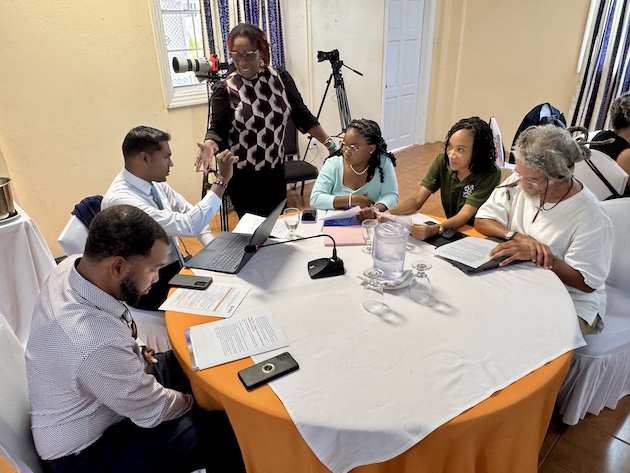
Civil society representatives in discussion during the first day of the Caribbean convening organised by the Fossil Fuel Treaty Initiative. Credit: Alison Kentish/IPS

Civil society representatives in discussion during the first day of the Caribbean convening organised by the Fossil Fuel Treaty Initiative. Credit: Alison Kentish/IPS

SAINT LUCIA, Mar 27 2026 (IPS) – As the world edges closer to breaching key climate thresholds, Caribbean policymakers, scientists and civil society leaders gathered in Saint Lucia this month to coordinate the region’s position ahead of a landmark global meeting on transitioning away from fossil fuels.


The two-day convening, held on 2–3 March, brought together civil society representatives and government officials under the umbrella of the Fossil Fuel Treaty Initiative to discuss the Caribbean’s priorities for the upcoming First International Conference on the Phase-Out of Fossil Fuels in Colombia.

The conference, scheduled for late April in Santa Marta and co-hosted by Colombia, The Netherlands, and Tuvalu, is expected to examine strategies for a unified global transition away from fossil fuels, including financing, governance, and legal structures.

For Caribbean nations reeling from climate impacts, the discussions are far from theoretical.

“Our exposure to climate impacts is acute,” said Dr James Fletcher, climate envoy for CARICOM, in opening remarks to the gathering. “The transition is both an existential necessity and a structural transformation challenge.”

Preparing the Region’s voice

The Saint Lucia meeting was structured across two days: the first dedicated to civil society organisations and the second to government technical officials.

Organisers said the goal was to ensure both groups enter the Santa Marta conference with clear priorities and a coordinated regional position.

The Caribbean has historically played an outsized role in global climate diplomacy. Small island states were instrumental in securing the 1.5°C temperature target within the landmark Paris Agreement, despite contributing only a fraction of global greenhouse gas emissions.

Yet that goal now appears increasingly fragile.

“We will overshoot 1.5 degrees Celsius — at least temporarily,” Fletcher told participants. “The question we now have to grapple with is for how long and by how much.”

Scientists warn that without deep cuts to greenhouse gas emissions, global warming could approach or exceed 2°C by the end of the century. For low-lying island states, that difference could mean the loss of ecosystems, infrastructure and territory.

A Push for Global Coordination

A key focus of the discussions was the proposal for a global fossil fuel treaty. It is an idea that is gaining traction among a coalition of countries and civil society organisations.

The treaty proposal seeks to create an international framework that would manage the decline of fossil fuel production in a coordinated and equitable way.

“The proposal came into the world because many civil society organisations realised that simply saying ‘end fossil fuels’ was not enough,” said Alex Rafalowicz, executive director of the Fossil Fuel Treaty Initiative.

“If we are truly going to address the question of fossil fuels, we have to move beyond rhetoric and get into the details,” he said. “Those details require coordination and cooperation between countries.”

Eighteen countries are currently participating in discussions on the idea, including several small island states such as Antigua and Barbuda, The Bahamas and Saint Kitts and Nevis.

The Science Behind the Urgency

Scientific evidence presented at the Saint Lucia meeting reinforced the sense of urgency.

Professor Tannecia Stephenson, a climate scientist at the University of the West Indies, warned that the world is already experiencing “widespread, unprecedented, rapid and intensified climate change”.

Unless there are “immediate, rapid and sustained large-scale reductions in greenhouse gas emissions”, she told the convening, the goal of limiting warming to 1.5°C will slip out of reach.

The Caribbean, she noted, faces a convergence of climate hazards, stronger hurricanes, rising sea levels and more severe droughts that threaten key sectors such as tourism, agriculture, and water security.

“How does a small island really prepare for a Category 5 storm of the strength and magnitude that we are now seeing?” she asked.

The answer, many participants argued, lies partly in addressing the root cause of climate change, that is, the continued expansion and use of fossil fuels.

Balancing Transition and Reality

Despite the urgency, the transition away from fossil fuels presents complex challenges for the Caribbean.

Many countries remain heavily dependent on imported oil and gas for electricity generation, transport and industry. Others rely on fossil-fuel-related revenues.

At the same time, the region faces chronic fiscal constraints and rising debt levels, often exacerbated by repeated climate disasters.

“Many of our countries are carrying high debt burdens,” Fletcher said. “Why? Because they continuously have to borrow money to recover from the last extreme weather event.”

This financial pressure complicates the transition to renewable energy and climate-resilient infrastructure.

To address this, discussions during the government officials’ session explored potential financing mechanisms linked to a fossil fuel treaty, including proposals for a climate-related debt resolution facility and international transition funds.

Advocates argue that such mechanisms could help ensure that poorer and more vulnerable countries are not left behind as the world shifts toward cleaner energy systems.

Civil Society Demands

The first day of the Saint Lucia convening focused on civil society perspectives, including community organisations and environmental groups from across the Caribbean.

Participants worked in groups to identify priorities and “red lines” for the region ahead of the Santa Marta meeting.

Among the themes raised were the need for stronger international commitments to phase out fossil fuel production, greater financial support for climate-vulnerable countries and protections for workers and communities affected by the energy transition.

Organisers also discussed plans for civil society mobilisation around the Santa Marta conference, including a people’s summit intended to amplify grassroots voices.

A Diplomatic Opening

While the Santa Marta conference is not formally part of the United Nations climate negotiations, many observers see it as an important diplomatic opportunity.

Fletcher described it as a “space outside the formal structure” of the United Nations Framework Convention on Climate Change to explore new governance options and political alignments.

Its significance was underscored when it was referenced during the closing plenary of the COP30 climate summit in Belém, Brazil.

For the Caribbean, preparing a coordinated position is essential, Fletcher said.

“Caribbean leadership is most effective when it is coordinated — when we move as a bloc,” he told participants.

Punching Above Their Weight

Small island states have long leveraged their moral authority in climate negotiations, drawing attention to the disproportionate impacts they face despite contributing little to global emissions.

Fletcher reminded the audience that Caribbean countries helped secure the 1.5°C target in the Paris Agreement and have been at the forefront of campaigns on climate justice, loss and damage financing and reform of the global financial system.

“We do not lead because we are powerful,” he said. “We lead because we are principled. We lead because we are credible.”

But leadership, he added, must be matched with strategy and unity.

As delegates left the Saint Lucia meeting, the message was clear: the Santa Marta conference could represent an important step toward building global momentum for a managed phase-out of fossil fuels.

For the Caribbean, however, the stakes could hardly be higher.

“The Caribbean has often been the moral compass of global climate diplomacy,” Fletcher said. “We must continue to lead strategically, coherently and decisively.”


Atoll Nation of Tuvalu Faces Climate Existential Crisis, Frustration With Slow Funding

Asia-Pacific, Biodiversity, Climate Change, Climate Change Finance, Climate Change Justice, Conferences, Development & Aid, Disaster Management, Editors’ Choice, Environment, Europe, Featured, Human Rights, Humanitarian Emergencies, Natural Resources, PACIFIC COMMUNITY, Pacific Community Climate Wire, Small Island Developing States, Sustainable Development Goals, TerraViva United Nations

Climate Change Finance

Water floods in, showing how nature and people are at risk. Trees can't grow because of salt, leaving no protection. This photo warns about climate change's effect on our islands and atolls. It's a clear sign we need to act to keep our world safe. Credit: Gitty Keziah Yee/Tuvalu

Water floods in, showing how nature and people are at risk. Trees can’t grow because of salt, leaving no protection. This photo warns about climate change’s effect on the islands and atolls. Credit: Gitty Keziah Yee/Tuvalu

NICE, Jun 12 2025 (IPS) – Prime Minister of Tuvalu, Feleti Teo, describes himself as an optimist—despite the existential crisis his atoll nation faces with climate change-induced sea level rise and frustration with existing international financial mechanisms to fund adaptation and mitigation.


The 3rd UN Ocean Conference was a success, he told a press conference today, June 12. At the beginning of the week, he ratified an agreement under the UN Convention on the Law of the Sea on the Conservation and Sustainable Use of Marine Biological Diversity of Areas beyond National Jurisdiction (BBNJ) and was also now party to the FAO’s international agreement to specifically target illegal, unreported, and unregulated (IUU) fishing—Agreement on Port State Measures (PSMA).

These agreements were crucial.

“The ocean is everything to us—a source of protein, income, and fisheries. It represents  40 percent of the domestic budget. It plays a vital role,” Teo said. But it is a double-edged sword because it also represents the greatest threat because of climate change-induced sea level rise, which for the atoll nation means that more than 50 percent of the country will be regularly inundated by tidal surges by 2050.

So, he needs to contemplate services for the needs of his people in a region where there is no scenario of moving to higher ground—because there isn’t any.

Tuvalu is “totally flat.”

Teo said USD 40-million had been spent on the country’s flagship Tuvalu Coastal Adaptation Project, known as TK of which phase one was completed.

But behind the small success was a clear sense of frustration.

“The coastal adaptation projects will continue into the future,” Teo said. “But it is a very expensive exercise.

Feleti Teo, Prime Minister, Tuvalu addresses the media at UNOC3. Credit: SPC

Feleti Teo, Prime Minister of Tuvalu, addresses the media at UNOC3. Credit: SPC

He made a quiet plea to development partners and financing mechanisms to be responsive.

“I’ve always urged or requested our development partners and our international financing mechanisms to be able to be more forthcoming in terms of providing the necessary climate financing that we need for us to be able to adapt and give us more time to continue to live in the land that we believe God has given us,” Teo said.

But he later admitted that the frustration with the Loss and Damage Fund and other climate financing mechanisms meant that applications could take as many as eight years to complete. This led to his Pacific partners establishing the Pacific Resilience Facility that would allow the Pacific to invest in small, grant-based but high-impact projects to make communities disaster-ready.

Teo said the UNOC3 had given them an opportunity to articulate their concerns, and he hoped that the states participating in the conference had listened to them.

“We don’t have that influence—except to continue to tell our story.”

The Pacific French Summit was a particular highlight and he believed that French President Emmanuel Macron had the region at heart.

IPS UN Bureau Report

  Source

‘We Will Not Go Quietly Into the Rising Sea,’ Tuvalu Tells International Court of Justice

Asia-Pacific, Civil Society, Climate Change, Climate Change Finance, Climate Change Justice, Development & Aid, Environment, Featured, Global, Headlines, Human Rights, Humanitarian Emergencies, International Justice, Natural Resources, PACIFIC COMMUNITY, Pacific Community Climate Wire, Small Island Developing States, Sustainable Development Goals, TerraViva United Nations, Trade & Investment

Climate Change Justice

Territorial integrity is not limited to physical land territory. It must be conceived as of a historical and cultural norm linked to the vitality, dignity and identity of the people holding the right to self-determination to ensure respect for territorial integrity goes beyond ensuring the maintenance of physical land boundaries—Professor Phillipa Webb

Water floods in, showing how nature and people are at risk. Trees can’t grow because of salt, leaving no protection. This photo warns about climate change’s effect on our islands and atolls. It’s a clear sign we need to act to keep our world safe. Credit: Gitty Keziah Yee/Tuvalu

THE HAGUE, Dec 13 2024 (IPS) – Rising sea level caused by greenhouse gas emission-fueled climate change is threatening existence in coastal communities and island nations. At the International Court of Justice (ICJ), on Thursday, December 12, 2024, small island states, including Tuvalu and a Pacific-based fisheries agency detailed their ongoing existential threats caused by the climate change-induced sea level rise and impacts on fishery-based livelihood.


Tuvalu, the Alliance of Small Island States (AOSIS) and the Pacific Islands Forum Fisheries Agency (FFA) both focused their oral presentations before the court on highlighting added and exacerbated struggles faced by people in the region through visual evidence and testimony of the frontline community.

At the request of Vanuatu, the UN General Assembly asked the ICJ to issue an advisory opinion on the obligations of UN member states in preventing climate change and ensuring the protection of the environment for present and future generations. While its advisory opinion will not be enforceable, the court will advise on the legal consequences for member states who have caused significant harm, particularly to small island developing states. So far, more than 100 countries and agencies have presented their case before the court.

On Thursday, island states stressed the disproportionate effects of climate change on small islands, urging the court to recognize the duty of cooperation, the stability of maritime zones, and the principle of continuity of statehood.

Climate Crisis Can not be Solved in Isolation—Tuvalu

Tuvalu, a small island nation in the South Pacific with over 11,000 people, emphasized its right to self-determination and territorial integrity at a time when it is facing an existential threat from climate change-induced sea level rise.

The low-lying island nation of Tuvalu is fighting for its existence; according to scientists, much of their land area, along with critical infrastructure, will be under water by 2050. Tuvalu urged the ICJ to issue a strong advisory opinion on states’ obligations to combat climate change and protect small island states.

Furthering the submission, Laingane Italeli Talia, Attorney General of Tuvalu, said climate change is the single greatest threat the country is facing. “It cannot be that in the face of such unprecedented and irreversible harm, international law is silent.

“Tuvalu, accordingly, asks the court to keep the unprecedented infringement on our people’s right to self-determination at the very center of his critical advisory opinion in order to help chart the pathway forward for our very survival.”

‘Annihilation Posed By Nuclear Weapons’ 

Professor Phillipa Webb, representing Tuvulu, used the analogy that the threat of disappearance faced by states like Tuvalu is like the potential annihilation posed by nuclear weapons.

“This extreme circumstance triggers all the tools that international law provides for respecting statehood, ensuring territorial integrity and protecting sovereignty over natural resources,” Webb said.

“Tuvalu’s constitution affirms that its statehood will remain in perpetuity, notwithstanding any loss to its physical territory. In the same way that the right to survival requires state continuity, the right also compels respect for territorial integrity, which encompasses a state’s permanent sovereignty over its natural resources,” Webb said, drawing on the drawing on the Montevideo Convention on the Rights and Duties of States.

“Respect for territorial integrity and territorial sovereignty is an essential foundation of international relations in the context of climate change. This obliges States to prevent and mitigate transboundary environmental harm. It requires that States facilitate adaptation to climate change impacts, and these measures should not be limited to the preservation and restoration of coasts and islands but also to protecting the rights of peoples to self-determination.”

The right to self-determination includes aspects other than physical land, and the court should take this into account.

“Territorial integrity, a corollary of the right to self-determination, is not limited to physical land territory. It must be conceived as a historical and cultural norm linked to the vitality, dignity and identity of the people holding the right to self-determination to ensure respect for territorial integrity goes beyond ensuring the maintenance of physical land boundaries. Like other concepts in international law, such as cultural heritage, biodiversity and intellectual property, it covers tangible and intangible assets.”

Quoting Tuvaluan climate activist Grace Malie, Webb told the court, “Tuvalu will not go quietly into the rising sea.”

Statehood Should be Ensured—AOSIS

AOSIS submitted its case on behalf of the 39 small island and low-lying coastal developing states and urged it to consider the existential threat posed by climate change-induced sea level rise and the possibility that some states may not even have dry land in the near future.

It emphasizes the importance of equity and self-determination in the context of climate change and the need for international law to support the continuity of statehood and sovereignty.

Fatumanava-o-Upolu III Dr. Pa’olelei Luteru, Chair of AOSIS and Permanent Representative of Samoa to the United Nations, focused on the impact of the climate crisis on states defined by the ocean’s limited resources and geographic vulnerability.

“Small island developing states rely heavily on coastal and marine resources as key drivers of our economies,” he said. “However, climate change is disrupting the fishery sector because of warming waters and an altered marine environment.”

The AOSIS asked the court to uphold the principle of continuity of statehood as established in international law, ensuring that statehood and sovereignty endure despite physical changes to land territory.

Luteru added, “In this era of unprecedented and relentless sea level rise, international law must evolve to meet the climate crisis and the disproportionate effect that it has on states.”

Focus on Sustainability of Tuna Fisheries—FFA

Rising sea level and ocean warming are not only threatening the existence of island nations but they are also hammering a major way of livelihood, fishing. Representing the fishing community at the ICJ, FFA highlighted the state of loss of fisheries, including tuna.

Tuna fisheries are crucial for the economic, social, and cultural development of Pacific Island communities, with 47 percent of households depending on fishing as a primary or secondary source of income.

FFA, an intergovernmental agency, focuses on sustainable use of offshore fisheries resources, particularly tuna, which are facing threats to climate change impacts.

“Damage to fisheries and loss of fish stocks will have a significant negative impact on the income, livelihoods, food security and economies of Pacific small island developing states, as well as social and cultural impacts,” Pio Manoa, Deputy Director General of FFA, said.

“Climate change is driving tuna further to the east and outside of members, exclusive economic zones into the high seas, threatening the loss of economic and food security of Pacific small and developing states.”

Studies show climate change-driven redistribution of commercial tuna species will cause an economic blow to the small island states of the Western and Central Pacific, ultimately threatening the sustainability of the world’s largest tuna fishery.

By 2050, under a high greenhouse gas emissions scenario, the total biomass of three tuna species in the waters of 10 of the Pacific small islands developing states members of the agency could decline by an average of 13 percent.

“The adverse consequences for the livelihood and well-being of coastal communities are profound, including their very security and survival impacts on marine resources, including offshore fisheries such as tuna,” Manoa said. “It is therefore incumbent upon the international community to take necessary action to deal with anthropogenic emissions of greenhouse gases and their consequences.”

IPS UN Bureau Report

  Source



