Asia-Pacific, Climate Action, Development & Aid, Education, Environment, Food and Agriculture, Headlines, Human Rights, Inequality, TerraViva United Nations, Youth, Youth Thought Leaders
In the third in our series by Youth Thought Leaders, the students write about the impact of human activity, including food waste, on the environment. They are positive that with incremental changes a sustainable and humane world is possible.

Atashi Kitchen in Karuizawa operates a children’s cafeteria (Kodomo-Shokudo), providing free or low-cost meals and distributing food to those in need.
– Have you ever seen a dried frog? We have, and it’s making us rethink our impact on the environment. Frogs are incredibly sensitive to dry conditions, and they are facing the threat of extinction due to global warming. Amphibians, like frogs, make up a significant portion of endangered species, with 41 percent vulnerable compared to only 25 percent for mammals like polar bears.
Frogs, as amphibians, require both land and water habitats, and their thin, specialized skin makes them highly susceptible to changes in humidity and temperature. Climate shifts can disrupt their breeding patterns, leading to population declines.
This sensitivity to heat and drought means that frogs can easily die on scorching days. What’s more, a decrease in the frog population can trigger a chain reaction in the ecosystem, affecting animals that rely on them for food, like owls, snakes, and raccoons.
Recognizing this, we’re reevaluating our lifestyles to reduce carbon emissions, a major contributor to global warming.
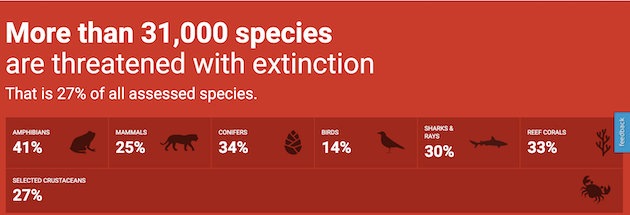
IUCN Red List
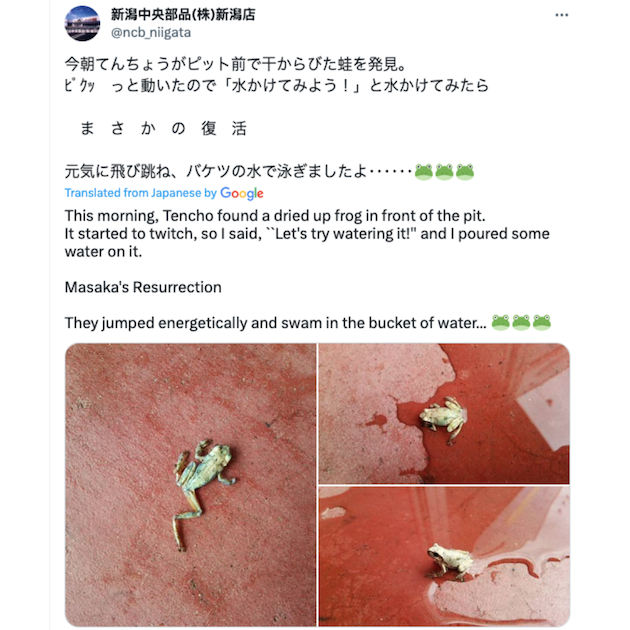
Frogs are sensitive, but with the right conditions, they can survive, as this X post shows.

These are pet frogs. One is colloquially known as a ‘crown horn frog,’ and the others ‘house mega frogs.’ Once, our crown horn frog faced a health issue. At first, we had it on a white electric mat, but we later discovered that an earthen floor was a better choice. Unfortunately, it turned out that the soil was contaminated and made the frog sick. This experience taught us that frogs are incredibly sensitive to changes in their environment.
Food Loss and Global Warming
Are you familiar with the term’ food loss?’ Discarding food that is still edible is not just about wasting food; it also contributes to the environmental issue of global warming. It is estimated that Japan discards approximately 5.22 million tons of food annually. To dispose of such a significant amount of food waste, incineration is necessary, which generates greenhouse gases and contributes to global warming. Another concern arises from the necessity of developing new final disposal sites for the ash produced from incineration, which often entails the destruction of sea and forest areas. This, in turn, exacerbates environmental issues.
Analyzing data from the World Resources Institute (WRI), an environmental non-profit, reveals that food loss contributes to about 8-10 percent of greenhouse gas emissions. Unfortunately, only one out of three people recognize its link to food loss. Similarly, Japan, although concerned about climate change, rarely sees articles connecting it to food loss.
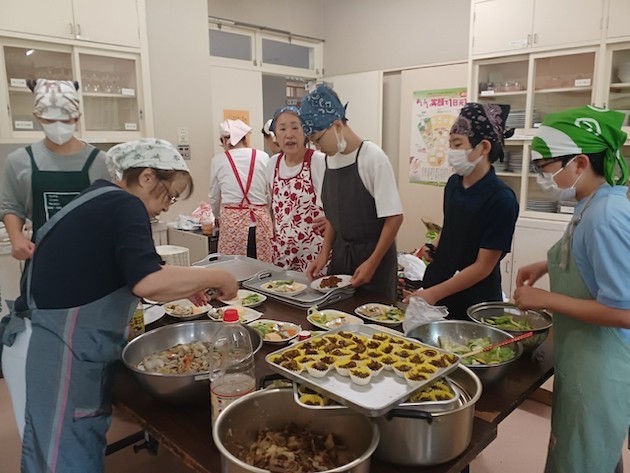
Volunteer students at the Atashi Kitchen in Karuizawa. The kitchen operates a children’s cafeteria offering free or low-cost meals to those in need.
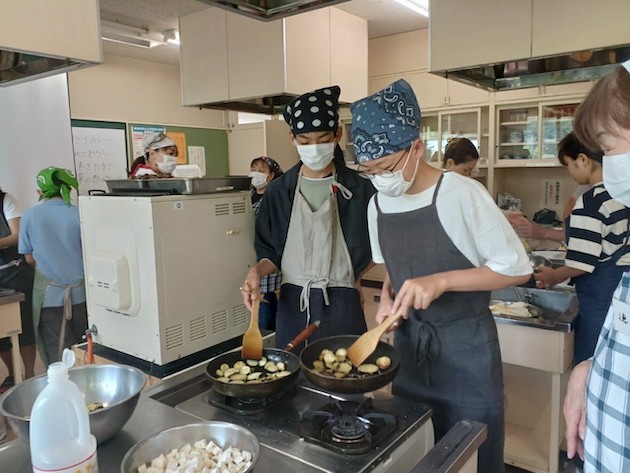
Student volunteers at the Atashi Kitchen in Karuizawa. Food loss contributes to global warming.
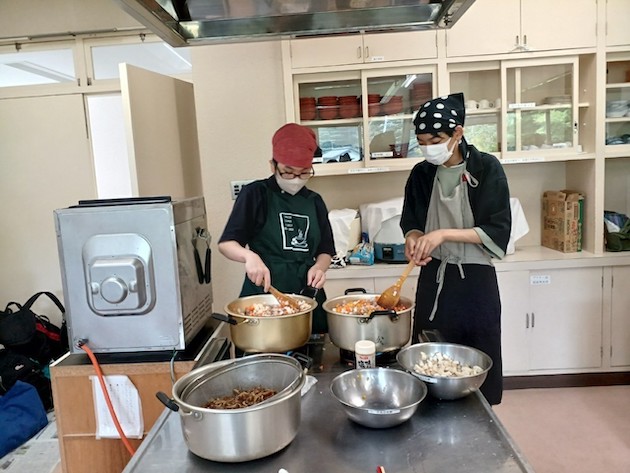
Students help prepare meals at the Atashi Kitchen in Karuizawa.
Driven by this realization, we decided to combat global warming by efficiently using surplus food, essentially functioning as food banks. Our search led us to Atashi Kitchen in Karuizawa, Japan, which operates a food bank as part of a children’s cafeteria (Kodomo-Shokudo), providing free or low-cost meals and distributing food to those in need.
On July 22, 2023, our group of eight Grade 8 students from Dalton Tokyo Gakuen Junior School volunteered at the children’s cafeteria. Witnessing the diverse array of food, from fresh vegetables donated by local farmers to meat from contributions and observing strangers sharing joyful conversations while enjoying their meals, we realized this place was about more than food; it was about sharing happiness.
The Ministry of the Environment reported that in 2020, Japan generated about 5.22 million tons of food loss, with businesses contributing 2.75 million tons and households 2.47 million tons. This data prompted us to search for environmentally conscious companies in Japan.
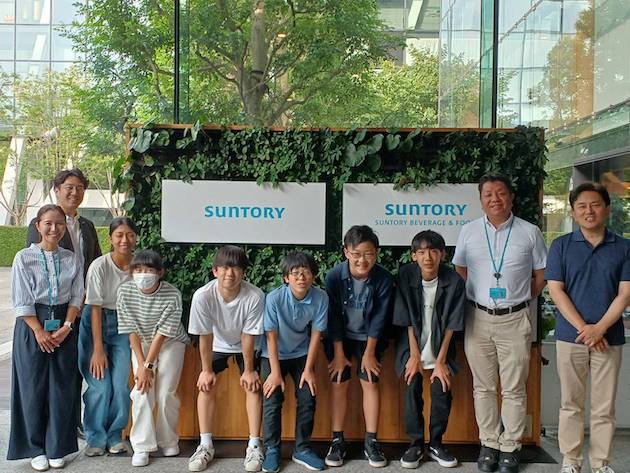
Group photo at the Suntory Odaiba Office
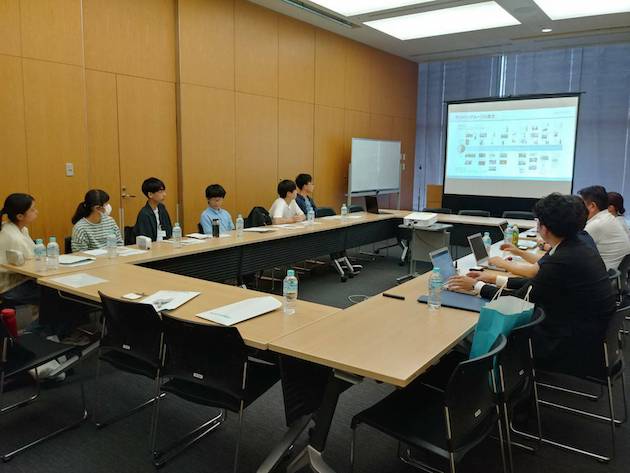
Hikari Kujime (Corporate Sustainability Department), Yusuke Sasaki (PR Department), Tomoyuki Ichida, and Tamon Koshino (General Manager, Corporate Sustainability Department) at Suntory Holdings are with the students learning about sustainability in business.
Suntory actively harnesses artificial intelligence (AI) to accurately predict sales, a practice that significantly reduces food waste. Additionally, at Meissen, their restaurant, Suntory, ingeniously repurposes leftover bread crusts as feed for pigs. What struck us most during our visit was Suntory’s wholehearted dedication to ecological sustainability, which aligned perfectly with our mission as teenage writers.
Beyond witnessing their sustainability practices, we seized the opportunity to engage in educational activities for elementary school students. These activities centered on the significance of water conservation, bird protection, and the crucial role played by mountain forests in ensuring clean water sources. This hands-on experience kindled our fervor for safeguarding water resources and passing on this invaluable knowledge to the next generation. It further solidified our unwavering commitment to environmental education and conservation efforts.
Food Safety and the Environment
Japan’s strong emphasis on safety and security, while commendable, inadvertently results in food loss. This has not only environmental implications but also economic repercussions for manufacturers. To address this issue, let’s consider the “one-third rule.” It dictates that the delivery deadline extends until one-third of the best-before date remains, and the sell-by date covers two-thirds of the best-before date. This rule aims to accommodate consumers who tend to be overly cautious about expiration dates. To combat food waste effectively, it’s essential to ensure consumers understand these dates, promote awareness of waste reduction, and shift the mindset away from avoiding products nearing their expiration date.
Maybe we can put it more straightforwardly: In Japan, food is often deemed expired much earlier compared to the United States or Europe. Here’s a comparison of delivery deadlines in these developed regions: In Japan, it’s one-third of the best-before date, while in the United States, it extends to one-half. European countries, like Belgium, allow up to two-thirds, and in the United Kingdom, it’s three-quarters. This clearly reflects Japan’s inclination to exercise greater caution concerning expiration dates.

Food expiry dates lead to food losses, too.
So, what does food loss mean to teenagers like us? For us, it signifies a mission to heighten awareness about the intricate interplay between food loss, global warming, the safeguarding of frogs and various other creatures, our deepened appreciation for the environment, and the responsible utilization of food resources.
In conclusion, our journey has taught us that small actions can lead to significant change. As teenagers, we often hear that we are the future, but we believe that we can make an impact in the present as well. The frogs drying up symbolize a larger issue – the delicate balance of our planet’s ecosystems. It’s a call to action, a reminder that our actions matter.
We, as young individuals, have a crucial role to play. By raising awareness about the interconnectedness of issues like food loss, global warming, and the protection of our fellow creatures, we can inspire change in our communities. We can choose to reduce waste, conserve resources, and make sustainable choices. We can advocate for policies that protect our environment. By embracing knowledge and taking action, we can be the driving force behind a healthier planet.
So, let’s continue this journey together, with the frogs as our inspiration. Let’s be the generation that not only stops the drying of our amphibian friends but also works towards a world where nature thrives and all creatures, including us, live harmoniously.
Remember, it all starts with awareness, and it’s our responsibility to pass on this knowledge to others. Together, we can create a more sustainable and compassionate world for all.
IPS UN Bureau Report
Note: Karuta Yamamoto and Seiji Takano were the team leaders
Edited by Hanna Yoon
IPS UN Bureau Report
IPS – UN Bureau, IPS UN Bureau Report, Youth Thought Leaders