Severe malaria can cause convulsions, extreme paleness, breathing difficulties

In this interview with Sade Oguntola, Professor Olugbenga Mokuolu, a consultant pediatrician and the Nigeria Malaria Technical Director, National Malaria Elimination Programme, talks about malaria and what is critical to ending its burden in Nigeria.

What is the prevalence of malaria in Nigeria?

Currently, Nigeria is said to have about 61 million cases. Prevalence is about 23% when a general check is made on children up to 10 years. Africa still faces a steep challenge with malaria because 90 percent of the 241 million cases and 95 percent deaths were from the continent. Nigeria is responsible for 27 percent of this caseload and about 31 percent of the global malaria deaths.

What innovation can be adopted to reduce the malaria burden and save lives?

Innovation has to do with new tools or new ways of using the same device. In this regard, innovation has to do with looking at existing tools for improvements or new tools. Retooling includes the use of new generation long-lasting insecticidal nets (LLINs) to combat the problems of insecticide resistance. On this note, Nigeria has been using the Piperonyl butoxide (PBO)-LLINs in the last two years for the net campaigns to address insecticide resistance issues.

Other tools include the use of indoor residual spray (IRS) to rapidly reduce the burden of malaria in very high burden areas and the introduction of seasonal malaria chemoprevention (SMC). In this intervention, children under five are given specific antimalarials in monthly cycles of 4 cycles in states or areas with high intensity of seasonal rainfall patterns.

In addition is retooling of existing drugs for curtailment of the emerging challenges of artemisinin resistance; need for new medications to improve the landscape for treatment; diagnostic tools like diagnostic panels with integrated multiple test kits possibly for a one-stop distinction of viral, bacterial or malaria infections.

Adoption and deploying of the malaria vaccine as a complementary strategy is also important as well as innovative funding mechanisms through public and private partnerships. Similarly is developing a business case and having an assured market for manufacturers of malaria commodities while leveraging that assured market for ensuring affordable prices of the commodities.

How close is Nigeria to achieving the 2030 targets of the WHO global malaria strategy?

Currently, we have made progress, but we are still off the trajectory for the 2030 targets. This was, however, as per the last conducted surveys in 2018. With some additional innovative interventions like the massive scale-up of SMC and the use of PBO nets, it is possible that the 2021 malaria indicator survey may offer new information about our current trajectory.

Malaria can also cause low blood sugar, kidney failure, or seizures. Are there other lesser-known symptoms of the mosquito-borne disease? How is malaria related to things like malaise, joint stiffness, muscle pain, anemia, and shortness of breath?

Malaria causes a progressive illness. When someone gets infected, the parasite multiplies. When these parasites burst the cells in the blood, they release a variety of substances that are responsible for the fever, joint pains, headaches, and all the feelings of being unwell (malaise). At this stage, we call it uncomplicated malaria. This is usually the stage we go for treatment with our primary care physician or other sources. If this is not treated effectively or in some category of persons, the disease progresses, and life-threatening complications set in. These comprise loss of consciousness, convulsions, extreme paleness, fast breathing or breathing difficulties, dark urine, and so on. At this level of illness, it is called severe malaria. The individual must be hospitalized for critical care.

Is it all mosquitoes that transmit malaria, and is it all bites of mosquitoes that lead to malaria disease?

Specifically, malaria is transmitted by the bite of the female anopheles mosquito. The interesting thing about this mosquito is that it does not make noise. It bites silently. It bites mostly at night.

How true is it that no single tool available today can solve the problem of malaria?

This is very true, but we need to understand the context of that answer. Malaria is the product of interactions between man, his environment and the mosquito which acts as a vector. By vector, we mean an intermediary that allows the parasite to develop without causing any harm to the host and thereby facilitates transmission. So, from first principles, the effective solution to malaria include – addressing the vector, killing them or preventing them having contact with man, destroying their natural habitats to ensure that mosquitoes do not survive, preventing the onset of illness in man, treating the illness when it occurs or preventing the ability to transmit the illness from one person to another.

From this simple illustration, we can appreciate that no single solution can address every dimension of the malaria programme. That is the critical lesson we have learnt in the fight against malaria and that is why we promote a package of interventions consisting of prevention, treatment, and avoiding continuous transmission.

What other diseases can you get from mosquitoes apart from malaria?

There are a number of other diseases. Some of these include Zika virus infection, yellow fever, West Nile fever, and Dengue fever. Some of these are transmitted by other types of mosquitoes as well.

Drug-resistant malaria is emerging in Africa. What is the situation in Nigeria and what can Nigeria do to get ready for this?

Currently, what have been identified are resistance markers in Uganda and Malawi. The situation is being monitored closely as this is for now referred to as partial resistance. As you rightly observed, the National Malaria Elimination Programme, under the leadership of Dr. Mrs. Perpetua Uhomoibhi, together with partners are responding to this development. There has been some technical consultation to review the situation. Currently, there is a study about the use of Tripple ACTs i.e. adding a third drug to existing ACTs to prevent resistance.

IN CASE YOU MISSED THESE FROM NIGERIAN TRIBUNE

In Africa, it is said that some malaria parasites are evading detection tests, causing an urgent threat to public health. Can you explain?

Malaria rapid diagnostic tests are of two types. There is a third type that is not in common use. Of the two in common use, there is one that is most widespread in use. This type of mRDT is based on detecting the presence of a certain substance on the wall of the parasite. This substance is called Histidine Rich Protein II (written as PfHRP-2). In a very small fraction of malaria parasites, this PfHRP-2 is missing. Hence in those cases, the test may be erroneously reported as negative (false negative). Space and technicality may not allow me to give a full description. However, please be informed that the rate of occurrence of this phenomenon is so low in Nigeria and in many countries that it has no impact on the reliability of the mRDT.

New research from Uganda and Mali suggests malaria exposure might lower the incidence of severe disease, hospitalisation and death for people exposed to SARS-CoV-2, the virus that causes COVID-19. What is your view on this?

It is probably true. The fact remains that COVID-19 was less frequent and less severe among African countries, particularly the lower income African countries. So, if we trace the COVID-19 trajectory in Africa, the incidence is much lower in countries endemic for malaria, most of which are lower and low-middle income countries, and some other characteristics. From that epidemiological point, we need to ask what is unique about these countries. This is compounded by the fact that African-Americans in America or the blacks in other countries are disproportionately affected by COVID-19. That will appear to rule out a genetic basis of this relative protection from COVID-19. The pattern of distribution is pointing strongly in the direction of environmental factors primarily modulating the disease and this may play some roles in the response of persons exposed to those environmental factors.

This is how science operates. Steps include a careful observation of the pattern of distribution of a disease, drawing up a hypothesis of the associations and exploring the hypothesis through some experiments (as in the studies you referred to). Thereafter, there will be a presentation to relevant authorities for peer review and now an adoption of the finding to inform other actions. I must say that while the stated study may be providing some evidence to support the malaria exposure theory, the claims will still be properly researched before definite statements will be made by the WHO.

How can Nigeria advance equity, build resilience and end malaria?

By equity, we are referring to every eligible person receiving antimalarial commodities or services according to their need irrespective of age, gender, location, or financial status. So, we need to maintain the current approach of universal distribution for some of the interventions, strengthen community systems to reach people in hard-to-reach areas, get products freely to the general masses, or ensure they are affordable.

On resilience, we need to increase budgetary allocation to malaria so that services are not interrupted. Contributions from partners can be used to address items distributed through mass campaigns; building and expanding capacities in other areas of malaria interventions such as entomology, molecular skills, putting in place robust surveillance systems. After that, we need protocols for responding to unforeseen major health problems such as pandemics and epidemics. These measures and the innovations indicated previously are critical elements toward ending malaria. This year’s catchphrase is ‘Every Effort Counts’. We must do all possible to engage everyone. Mobilise the community health workforce towards the quality of care; engage the private sector and promote public enlightenment.

Source

In Sri Lanka, Things Fall Apart

Asia-Pacific, Civil Society, Crime & Justice, Featured, Headlines, Human Rights, Humanitarian Emergencies, TerraViva United Nations

Opinion

The protestors’ main rallying slogan is ‘GotaGoHome’

LONDON, May 4 2022 (IPS) – When I ended last month’s column hoping that April would not prove to be hapless Sri Lanka’s ‘cruellest month’ (in the words TS Eliot), I hardly anticipated the current turn of events.


In April, the country was to celebrate several ethno-religious festivals. The biggest among them was the Sinhala and Tamil New Year, celebrated by Sri Lanka’s majority community and its main minority. It was also the Muslim month of Ramadan and Easter, commemorated by the Christians.

For over one-and-a-half years Sri Lanka had been grappling with a fast-failing economy. The dwindling of foreign reserves and the consequent shortages of food, medicines, fuel, gas and kerosene for cooking were more recently compounded by power cuts, at times as long as 12hoursper day, bringing manufacturing industries to a standstill and forcing businesses to close down early.

With the country struggling to avert bankruptcy and an unprecedented rise in inflation and spiralling commodity prices, many working-class families, daily wage earners and farmers were facing penury and starvation.

Against this dire background Sri Lanka’s 22 million people were anxiously preparing for the April festivities, wondering whether there would be anything to celebrate.

Then it happened.

On March 31 the residents of Mirihana, a middle- class town on the outskirts of Colombo, held a candle-light protest to highlight the daily power cuts that disrupted their family activities. The protest, initially by women, attracted passers-by and huge crowds from neighbourhood towns and residential areas as President Gotabaya Rajapaksa lived in Mirihana in his private residence.

Swelling crowds shouting slogans later clashed with police firing tear gas and water cannons to break up the demonstration, but many of the protestors held their ground till the next day.

The Mirihana protest has sparked the island-wide conflagration that now has the once all-powerful Rajapaksa family-run government teetering on the wall like Humpty Dumpty awaiting a splintering fall. It will remain an important landmark in this uprising, which some have called, rather erroneously, Sri Lanka’s ‘Arab Spring’.

Mirihana began the assault against the Rajapaksa fiefdom that once seemed impregnable. Gotabaya Rajapaksa is president. Brother Mahinda, who served two terms as president, is currently prime minister. Another brother, Basil, a dual citizen with US citizenship and a home in Los Angeles, was until last month finance minister, and the eldest brother Chamal holds the post ofirrigation minister and state minister of security. Mahinda’s eldest son Namal, whom his father sees as heir apparent, was sports and youth affairs minister, among other portfolios.

It appears that the prime minister suspects he is going to be sacrificed on the altar of expediency

Together, the family reportedly controlled 72 per cent of government resources, free to use as they deemed fit, even to farm off to their acolytes and business friends in the way of government contracts and import monopolies, even during the Covid pandemic.

Today, however, that fortress of power and privilege appears as exposed as France’s Maginot Line, set to crumble against a German Blitzkrieg.

All the Rajapaksas, except Prime Minister Mahinda, lost their positions last month when President Gotabaya suddenly dissolved the cabinet in a desperate attempt to quell the mounting outrage against him. It seemed a weak moral sidestep, for the protesters’ cry was not only against the president but against the entire Rajapaksa family, which they claimed had dipped their hands into the country’s assets for personal gain.

Mirihana lit the fuse for the enormous protest that flared up at Colombo’s beach-front Galle Face Green, right opposite the Presidential Secretariat from where political power radiated. It was this that breached the Rajapaksa citadel.

Economists urged the government seek IMF assistance

At the time of writing, this protest – which shows signs of unifying the country’s multiracial, multi-religious society and has drawn crowds of all ages and a wide cross-section of the Sri Lankan community, including the professional classes – has entered its 17thcontinuous day, with hundreds of protesters camped there day and night despite the heat and rain.

Yet it is no Arab Spring. It is an orderly, non-violent protest, mainly of youth of all shades, with an inventive genius to keep themselves and their cause alive.

Never in Sri Lanka’s 74 years of post-independence history has the country seen anything like this, even though anti-government protests are nothing new to the country, which has seen Leftist political parties and associated trade unions functioning even under British colonial rule.

The main rallying slogan is ‘GotaGoHome’, telling Gotabaya to return to his home – also in Los Angeles –though he relinquished his US citizenship to be eligible to contest the presidential election in November 2019.

Built round that slogan are a myriad other satirical comments in song, verse, caricatures, cartoons and videos, the creative work of the protesters deriding the Rajapaksas, some demanding they return the country’s supposedly stolen assets and otherwise accumulated wealth in tax havens.

Although the protesters are now demanding that the whole Rajapaksa family pack their bags and quit, the main target quite rightly is President Gotabaya. It was his military arrogance – having played a role in the defeat of the separatist Liberation Tigers of Tamil Eelam(LTTE) in 2009, under the leadership of his president brother Mahinda – and his ignorance of politics and governance, and over-reliance on incompetent advisers that started the economic rot.

With a group of retired and serving military men appointed to key civilian positions and a coterie of so-called intellectuals and businessmen as advisers, he plunged head-first into economic policy decisions.

Within a few days of assuming office, he had slashed VAT from 15 per cent to 8per cent and abolished some other taxes that cost the state a whopping 28 per cent in revenue. It led the Central Bank to print money feverishly to meet budgetary commitments, causing inflation.

Also disastrous was the overnight decision to ban chemical fertilisers that drove farmers to burn effigies of ministers and demonstrate on the streets, demanding restitution of their fertiliser needs or face food insecurity in the months ahead, forcing a once adamant president to retract.

While economists had foreseen the impending danger in depleting foreign reserves and international debt repayments this year, and hence urged the government seek IMF assistance, the president clung steadfastly to the advice of the Central Bank Governor and the Treasury Secretary, among others, who dismissed the idea for more than one year even ignoring cabinet support for IMF help.

In a belated gesture, President Gotabaya sacked the two officials immediately after replacing his cabinet with younger, untested MPs. He sent his new finance minister to Washington to plead with the IMF for immediate relief.

The president is hoping for political concessions he has agreed to – including returning to parliament and the prime minister powers that he usurped on coming to office through the 20thconstitutional amendment. He has now agreed to form an interim All Party government.

But one sees a growing rift in the once close-knit family. Names proposed by Prime Minister Mahinda for the new cabinet were ignored by his brother, causing the prime minister to boycott the swearing-in of the new ministers.

If the president opts for an interim government, it means he has decided to stay put but call for the prime minister’s resignation. It would appear that the prime minister suspects he is going to be sacrificed on the altar of expediency.

In an interview the other day, Prime Minister Mahinda Rajapaksa insisted that he will not resign and any reconstituted government must be under his leadership. In the meantime, he has been trying to whip up support against his ouster by canvassing MPs to muster the required 113 votes.

How the protesting public will react to all these political manipulations will depend on what is on offer. Right now, they are determined to continue until President Gotabaya surrenders, which seems unlikely.

Source: Asian Affairs, London

Neville de Silva is a veteran Sri Lankan journalist who held senior roles in Hong Kong at The Standard and worked in London for Gemini News Service. He has been a correspondent for foreign media including the New York Times and Le Monde. More recently he was Sri Lanka’s Deputy High Commissioner in London.

IPS UN Bureau

  Source

Chef Nyanyika Banda Debuts ‘The Official Wakanda Cookbook’ To Celebrate ‘Black Panther’

When Marvel dropped their film, Black Panther, in 2018, it was met by an immense celebration from the Black community that unsurprisingly caused the film to bank over a billion dollars in ticket sales. Black Panther became the top grossing superhero film ever, according to The Hollywood Reporter. 

The storyline of King T’Challa protecting his fictional kingdom, the technologically advanced society of Wakanda, from outsiders resonated with the comic book fanbase, many of whom tried to submit their passports to visit the exclusive African destination.

While the possibility of traveling to an imaginary Wakanda is not plausible, chef Nyanyika Banda created a cookbook to provide enthusiasts with a culinary trip to the mythical nation, Today reports.

 Banda, a Malawian American who earned Culinary Degree from Madison College in 2012, concocted 70 recipes to make up “The Official Wakanda Cookbook” and did so within three months, it is now available since April 12.

“I definitely felt a combination of pressure and pride,” said Banda to The Washington Post. She is also a freelance writer. “The lore of Black Panther and what Wakanda means now socially is so important, not just for Black Americans but to people of African descent around the world.”

Before signing on with Marvel to work on the project, Banda consumed various Black Panther comics and immersed herself in fan-created websites to gain a deeper understanding of the characters and the country of Wakanda rather than solely relying on the film.

Jennifer Simms, Banda’s editor at Insight Editions, the publisher of the Wakanda cookbook, didn’t want the recipes to represent a generic Africa, “We wanted to make sure we weren’t trying to represent Africa as having one food culture,” she says.

Both women worked closely with Marvel’s team to produce dishes that upheld the storytelling of the comic book. 

 “We would talk about whether or not they felt like it would be a part of Wakanda,” said Banda. “I wanted there to be integrity within the dish, but also have integrity in terms of storytelling.”

Through her research, Banda’s recipes reflected the folklore of Wakandan culture. For instance, Wakanda boasts a lake, so Banda considered creating fish dishes. According to the Marvel comics, Wakanda is situated in sub-Saharan Africa, where food items like cassava, mangoes, and meat from goats would be plentiful. Also taken from the film where tribal leader M’Baku barks at the CIA agent character and threatens to feed him to his children but quips that he’s a vegetarian, inspired Banda to develop dishes that included eggplants and herbs.

For the Dora Milaje, Wakanda’s all-female military warriors, Banda was motivated to invent a smoked mushroom jerky, “I imagined it would be something that would be fueling but that would carry well,” she says, The Washington Post reports.

Banda also designed a savory sweet and spicy oxtail with cassava dumplings, okra fritters, basbousa, a creamy cake, and a tamarind cola to wash down the Wakandan cuisine, according to Today. 

“I think that’s such a beautiful part of (Wakanda) being this fictional place,” she remarked. “Definitely, the impact that ‘Black Panther’ has socially right now for us, and this time and age was always something that I was like taking consideration to when thinking about the recipes.”

Source link

Source

Indigenous Women in Mexico Take United Stance Against Inequality

Civil Society, Cooperatives, Development & Aid, Economy & Trade, Editors’ Choice, Featured, Food and Agriculture, Gender, Headlines, Human Rights, Indigenous Rights, Latin America & the Caribbean, Poverty & SDGs, Regional Categories, TerraViva United Nations, Women & Climate Change, Women & Economy

Women & Economy

Every other Tuesday, a working group of Mayan women meets to review the organization and progress of their food saving and production project in Uayma, in the state of Yucatán in southeastern Mexico. CREDIT: Courtesy of the Ko'ox Tani Foundation

Every other Tuesday, a working group of Mayan women meets to review the organization and progress of their food saving and production project in Uayma, in the state of Yucatán in southeastern Mexico. CREDIT: Courtesy of the Ko’ox Tani Foundation

UAYMA, Mexico , Apr 26 2022 (IPS) – Every other Tuesday at 5:00 p.m. sharp, a group of 26 Mexican women meet for an hour to discuss the progress of their work and immediate tasks. Anyone who arrives late must pay a fine of about 25 cents on the dollar.


The collective has organized in the municipality of Uayma (which means “Not here” in the Mayan language) to learn agroecological practices, as well as how to save money and produce food for family consumption and the sale of surpluses.

“We have to be responsible. With savings we can do a little more,” María Petul, a married Mayan indigenous mother of two and a member of the group “Lool beh” (“Flower of the road” in Mayan), told IPS in this municipality of just over 4,000 inhabitants, 1,470 kilometers southeast of Mexico City in the state of Yucatán, on the Yucatán peninsula.

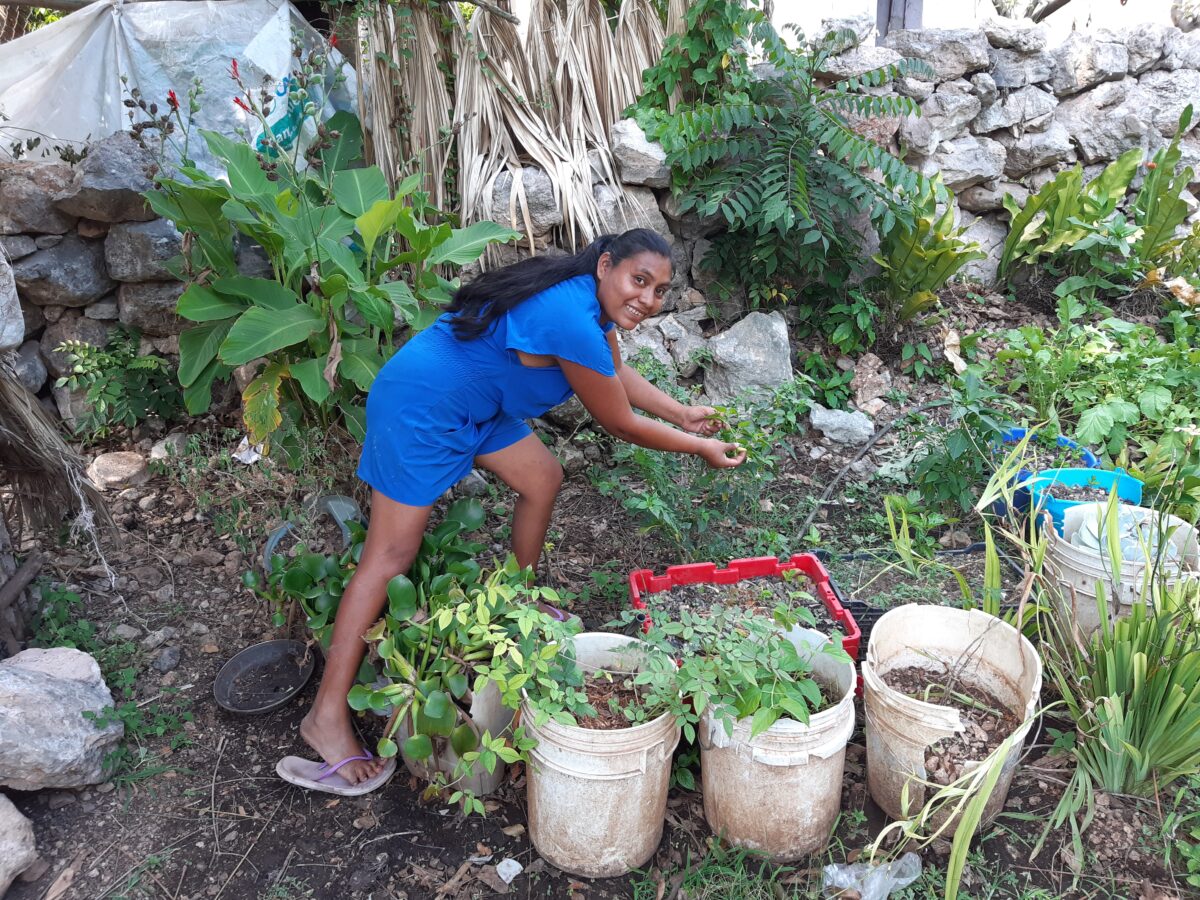
The home garden “gives me enough to eat and sell, it helps me out,” said Petul as she walked through her small garden where she grows habanero peppers (Capsicum chinense, traditional in the area), radishes and tomatoes, surrounded by a few trees, including a banana tree whose fruit will ripen in a few weeks and some chickens that roam around the earthen courtyard.

The face of Norma Tzuc, who is also married with two daughters, lights up with enthusiasm when she talks about the project. “I am very happy. We now have an income. It’s exciting to be able to help my family. Other groups already have experience and tell us about what they’ve been doing,” Tzuc told IPS.

The two women and the rest of their companions, whose mother tongue is Mayan, participate in the project “Women saving to address climate change”, run by the non-governmental Ko’ox Tani Foundation (“Let’s Go Ahead”, in Mayan), dedicated to community development and social inclusion, based in Merida, the state capital.

This phase of the project is endowed with some 100,000 dollars from the Commission for Environmental Cooperation (CEC), the non-binding environmental arm of the North American Free Trade Agreement (NAFTA), formed in 1994 by Canada, the United States and Mexico and replaced in 2020 by another trilateral agreement.

The initiative got off the ground in February and will last two years, with the aim of training some 250 people living in extreme poverty, mostly women, in six locations in the state of Yucatán.

The maximum savings for each woman in the group is about 12 dollars every two weeks and the minimum is 2.50 dollars, and they can withdraw the accumulated savings to invest in inputs or animals, or for emergencies, with the agreement of the group. Through the project, the women will receive seeds, agricultural inputs and poultry, so that they can install vegetable gardens and chicken coops on their land.

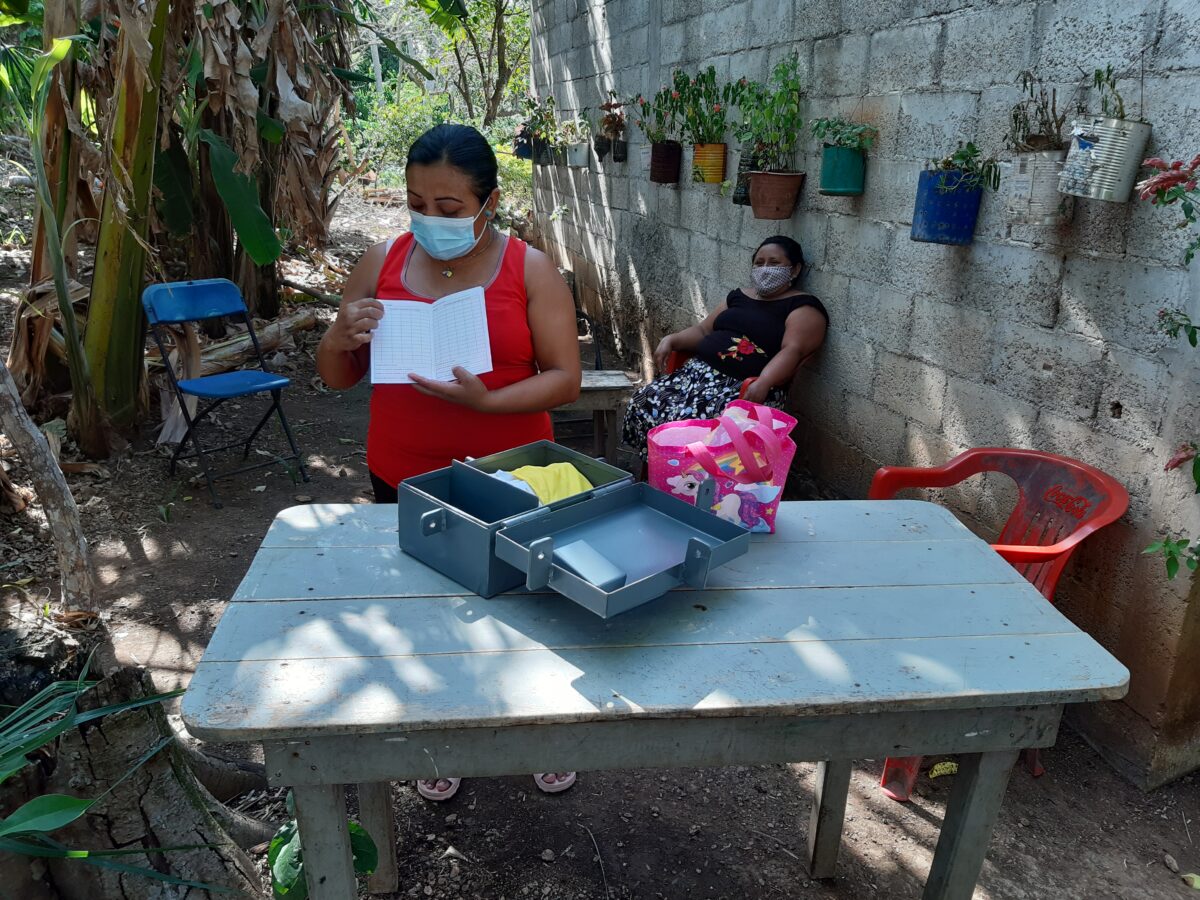
The women write down the quotas in a white notebook and deposit the savings in a gray box, kept in the house of the group’s president.

José Torre, project director of the Ko’ox Tani Foundation, explained that the main areas of entrepreneurship are: community development, food security, livelihoods and human development.

“What we have seen over time is that the savings meetings become a space for human development, in which they find support and solidarity from their peers, make friends and build trust,” he told IPS during a tour of the homes of some of the savings group participants in Uayma.

The basis for the new initiative in this locality is a similar program implemented between 2018 and 2021 in other Yucatecan municipalities, in which the organization worked with 1400 families.

María Petul, a Mayan indigenous woman, plants chili peppers, tomatoes, radishes and medicinal herbs in the vegetable garden in the courtyard of her home in Uayma, in the southeastern Mexican state of Yucatán. CREDIT: Emilio Godoy/IPS

María Petul, a Mayan indigenous woman, plants chili peppers, tomatoes, radishes and medicinal herbs in the vegetable garden in the courtyard of her home in Uayma, in the southeastern Mexican state of Yucatán. CREDIT: Emilio Godoy/IPS

Unequal oasis

Yucatan, a region home to 2.28 million people, suffers from a high degree of social backwardness, with 34 percent of the population living in moderate poverty, 33 percent suffering unmet needs, 5.5 percent experiencing income vulnerability and almost seven percent living in extreme poverty.

The COVID-19 pandemic that hit this Latin American country in February 2020 exacerbated these conditions in a state that depends on agriculture, tourism and services, similar to the other two states that make up the Yucatán Peninsula: Campeche and Quintana Roo.

Inequality is also a huge problem in the state, although the Gini Index dropped from 0.51 in 2014 to 0.45, according to a 2018 government report, based on data from 2016 (the latest year available). The Gini coefficient, where 1 indicates the maximum inequality and 0 the greatest equality, is used to calculate income inequality.

The situation of indigenous women is worse, as they face marginalization, discrimination, violence, land dispossession and lack of access to public services.

More than one million indigenous people live in the state.

Women participating in a project funded by the North American Commission for Environmental Cooperation record their savings in a white notebook and deposit them in a gray box. Mayan indigenous woman Norma Tzuc belongs to a group taking part in the initiative in Uayma, in the southeastern Mexican state of Yucatán. CREDIT: Emilio Godoy/IPS

Women participating in a project funded by the North American Commission for Environmental Cooperation record their savings in a white notebook and deposit them in a gray box. Mayan indigenous woman Norma Tzuc belongs to a group taking part in the initiative in Uayma, in the southeastern Mexican state of Yucatán. CREDIT: Emilio Godoy/IPS

Climate crisis, yet another vulnerability

Itza Castañeda, director of equity at the non-governmental World Resources Institute (WRI), highlights the persistence of structural inequalities in the peninsula that exacerbate the effects of the climate crisis.

“In the three states there is greater inequality between men and women. This stands in the way of women’s participation and decision-making. Furthermore, the existing evidence shows that there are groups in conditions of greater vulnerability to climate impacts,” she told IPS from the city of Tepoztlán, near Mexico City.

She added that “climate change accentuates existing inequalities, but a differentiated impact assessment is lacking.”

Official data indicate that there are almost 17 million indigenous people in Mexico, representing 13 percent of the total population, of which six million are women.

Of indigenous households, almost a quarter are headed by women, while 65 percent of indigenous girls and women aged 12 and over perform unpaid work compared to 35 percent of indigenous men – a sign of the inequality in the system of domestic and care work.

To add to their hardships, the Yucatan region is highly vulnerable to the effects of the climate crisis, such as droughts, devastating storms and rising sea levels. In June 2021, tropical storm Cristobal caused the flooding of Uayma, where three women’s groups are operating under the savings system.

For that reason, the project includes a risk management and hurricane early warning system.

The Mexican government is building a National Care System, but the involvement of indigenous women and the benefits for them are still unclear.

Petul looks excitedly at the crops planted on her land and dreams of a larger garden, with more plants and more chickens roaming around, and perhaps a pig to be fattened. She also thinks about the possibility of emulating women from previous groups who have set up small stores with their savings.

“They will lay eggs and we can eat them or sell them. With the savings we can also buy roosters, in the market chicks are expensive,” said Petul, brimming with hope, who in addition to taking care of her home and family sells vegetables.

Her neighbor Tzuc, who until now has been a homemaker, said that the women in her group have to take into account the effects of climate change. “It has been very hot, hotter than before, and there is drought. Fortunately, we have water, but we have to take care of it,” she said.

For his part, Torre underscored the results of the savings groups. The women “left extreme poverty behind. The pandemic hit hard, because there were families who had businesses and stopped selling. The organization gave them resilience,” he said.

In addition, a major achievement is that the households that have already completed the project continue to save, regularly attend meetings and have kept producing food.

  Source

Patrick Lyoya fled Congo to escape war. A traffic stop in Michigan cost him his life

It was about five years ago that Patrick Lyoya first stepped into Restoration Community Church, a small United Methodist congregation just outside Grand Rapids, Mich. He was a new face, but he had a familiar story.

Like most of the congregation, Lyoya belonged to a sprawling African diaspora in Grand Rapids who came to the United States seeking safety and a better life. In Lyoya’s case, his family arrived as refugees from the Democratic Republic of Congo in 2014. They had escaped war and fear of persecution, and after more than a decade in a refugee camp, they seemed to have finally found a haven in Michigan.

America meant opportunity for the family, so when Banza Mukalay, the pastor at Restoration Community Church and himself a refugee from Congo, met Lyoya, he could sense a promising life ahead.

“He was a very young [man] who had the future, he had something in it,” Mukalay said. “You [could] see him just trying to look for himself how he [could] be better in the future.”

That future came to a sudden and tragic end earlier this month when Lyoya was shot and killed by a Grand Rapids police officer after he was pulled over for allegedly driving with an unregistered license plate. Video of the April 4 traffic stop released by the Grand Rapids police showed a brief foot chase followed by a struggle over the white officer’s Taser. The video ends with the officer shooting Lyoya in the back of the head while he was facedown on the ground. Lyoya was 26.

The harrowing video of Lyoya’s final moments has spawned days of protest in Grand Rapids over the death of yet another Black man at the hands of law enforcement. Nearly two years after George Floyd’s murder sparked a nationwide reckoning over racial injustice and police misconduct, Lyoya’s case, for many, represents a measure of the steep challenges that persist.

Yet for those who knew Lyoya, he is not a symbol. They knew him as a son, a brother and a father — a person of faith whose life was inextricably shaped by war. They remember him as someone who was quiet and kind, someone who loved music and soccer, but someone who loved his two children above everything else.

He worked hard and brought others joy

Lyoya was born in Congo — the first of Peter and Dorcas Lyoya’s six children. In an interview with the Detroit Free Press last week, his parents remembered him as a kid who always brought them joy.

“He is the type of person that you will love to be around,” Dorcas Lyoya said, adding that he excelled at putting her “in a good mood to make me laugh.”

Lyoya was born at a moment when war was just beginning to split their nation — a conflict with roots in the genocide in neighboring Rwanda and which ultimately resulted in the deaths of hundreds of thousands of people. The war would end in 1997, but only one year later a new conflict would erupt. Known as the Great War of Africa, it would last until 2003 and cost an estimated 3.8 million lives by one count.

War took the family from their home, and for 11 years they lived in a refugee camp, according to Robert Womack, a member of the Kent County Board of Commissioners in Grand Rapids who has been helping organize a funeral service for Lyoya scheduled for Friday. They were living in Malawi when they won asylum to live in the U.S., arriving in 2014 as part of a wave of refugees settling in Michigan from Congo.

In Grand Rapids, Lyoya’s parents landed odd jobs to make ends meet. Dorcas worked in a laundromat; Peter worked in a nursing home.

Lyoya, who was just entering adulthood around the time of the family’s U.S. arrival, soon went to work too. He worked in a small manufacturing plant helping to make auto parts, his father told the Detroit Free Press. He also worked at a turkey farm, according to Womack, as well as at a vacuum cleaner and appliance store.

Ramazani Malisawa, 33, says he worked with Lyoya at the appliance store for about six months starting around 2018. Malisawa, who is also from Congo, says they would often eat lunch together and talk about their lives in Africa and how it was they arrived in the United States. But he says these talks would only happen around lunch, because when it came to work, Lyoya was intensely focused.

Dorcas Lyoya (right), the mother of Patrick Lyoya, cries at a news conference held last week in Grand Rapids to respond to the videos of her son's killing.

Bill Pugliano / Getty Images

/

Getty Images

Dorcas Lyoya (right), the mother of Patrick Lyoya, cries at a news conference held last week in Grand Rapids to respond to the videos of her son’s killing.

“When he is working, he was not talking,” Malisawa said. “He was just focused on the work. He was a good worker and worked hard.”

It’s not that he was in love with the job, Malisawa said, but that it was important for him to be able to one day afford to send his two young daughters to school. He said he remembered Lyoya once telling him: “My kids, they will know we had a father, and our father — he worked hard.”

Outside of work, Lyoya enjoyed soccer, music and dancing. Womack said Lyoya would even teach Congolese dance traditions in clubs around Grand Rapids, and he shared the story of one local club owner who once watched Lyoya giving lessons.

“They said basically it was just peaceful and a joy,” according to Womack. “And even though some of the Americans that worked there didn’t understand the language, they said the vibe was just priceless … the vibe of joy in watching Patrick and his friends laugh and smile and dance.”

Lyoya also found community through his faith. Mukalay, the pastor at Restoration Community Church, said Lyoya wasn’t like many of the young adults he meets at the church.

“Some young people, they just come and then one day, two days, one month and then they quit or they just drop out,” Mukalay said. “He was ready to continue with us for a long time. So that’s why I say he was a young [man] who had the decision to do something better in life.”

His death has devastated the refugee community

Community leaders like Womack and Mukalay said Lyoya’s death has been particularly painful for the city’s Congolese population — a community that came to the U.S. to escape violence and felt they had found safety after years of war. It’s a grief, they say, that has forever changed their view of America.

“The difference between the Congolese families and some of the African American families who’ve been affected by state violence is the fact that the Congolese families are hurt and shocked that this could happen in the United States of America,” said Womack. “When I deal with African American families, they are hurt and mad, but they’re never shocked.”

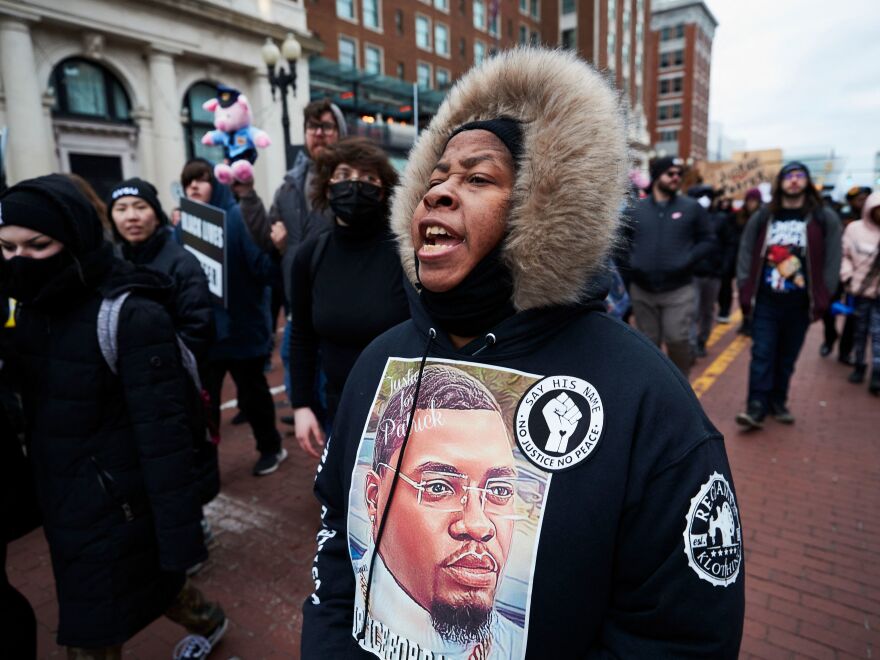
A woman wears a sweater with an image of Patrick Lyoya as protesters march for Lyoya in downtown Grand Rapids on Saturday.

Mustafa Hussain / AFP via Getty Images

/

AFP via Getty Images

A woman wears a sweater with an image of Patrick Lyoya as protesters march for Lyoya in downtown Grand Rapids on Saturday.

It’s a sentiment Lyoya’s mother shared with reporters during an April 14 news conference when the family called for criminal charges to be brought against the officer who killed her son. The shooting is under investigation by the Michigan State Police, but authorities have not released the name of the officer.

“I thought that we came to a safe land, a haven, a safe place,” she said, speaking through an interpreter. “And I start thinking now, I’m surprised and astonished to see that my friend — it is here that my son has been killed with bullets.”

“I was thinking it was my son who would bury me,” she said, “but I am the one burying my son.”

Copyright 2022 NPR. To see more, visit https://www.npr.org.

Source

Soulja Boy’s net worth, age, girlfriend, parents, real name, investments, movies

Soulja Boy is an American hip-hop artist, producer, and savvy entrepreneur. He joined the game in the mid-2000s and has grown to become one of the biggest rappers in the game. He rose to international fame following the release of his 2007 debut single, Crank That (Soulja Boy), which peaked at number 1 on the US Billboard Hot 100. Keep reading to learn more about Soulja Boy’s net worth, career and personal life.

PAY ATTENTION: Click “See First” under the “Following” tab to see Briefly News on your News Feed!

Top American hip-hop stars
DeAndre Cortez is a veteran rapper, record producer, and entrepreneur. Photo: @Greg Doherty
Source: Getty Images

Big Draco loved rapping from a young age and was lucky to have a father who supported his dreams. By the time he was 17, he had one of the biggest rap songs. He is also one of the first rappers to use social media platforms to promote his tracks.

Soulja Boy’s profile summary and bio

Read also

Who is Jake Webber? Age, girlfriend, merch, YouTube pranks, songs, worth

  • Real name: DeAndre Cortez Way
  • Other names: Big Draco
  • Date of birth: 28th July 1990
  • Age: 31 years in 2022
  • Birth sign: Leo
  • Place of birth: Chicago, Illinois
  • Nationality: American
  • Ethnicity: Afro-American
  • Soulja Boy’s height: 5 feet 8 inches (1.73 m)
  • Gender: Male
  • Sexuality: Straight
  • Relationship status: Dating
  • Girlfriend: Hairstylist Jackie
  • Parents: Tracy and Carlisa Way
  • Siblings: Three brothers; Tracy Jr, John, and Deion Jenkins
  • Education: South Panola High School
  • Profession: Hip-hop artist, actor, producer, businessman
  • Instruments: Vocals
  • Years active: 2004 to date
  • Record label: Virgin Music (since 2021)
  • Net worth: Approximately $30 million
  • Instagram: @souljaboy
  • Twitter: @souljaboy
  • YouTube: @Soulja Boy

PAY ATTENTION: Never miss breaking news – join Briefly News’ Telegram channel!

Soulja Boy’s net worth

Rich hip-hop stars
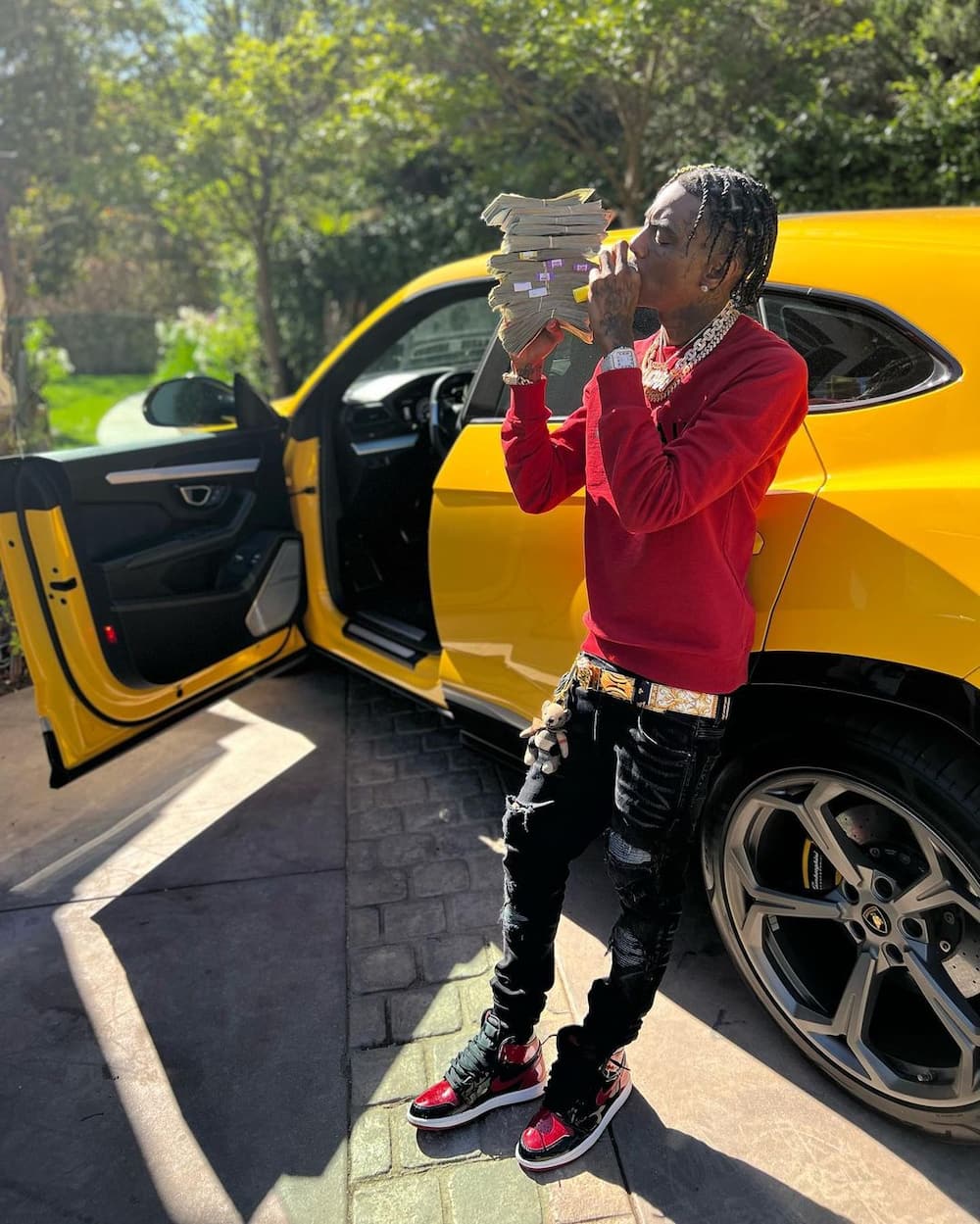
Big Draco has an estimated net worth of $30 million in 2022. Photo: @souljaboy
Source: Instagram

The rapper has an estimated net worth of $30 million in 2022. He earns from music, acting, and various entrepreneurial ventures. He owns several assets, including a mansion in Agoura Hills, California, and a collection of expensive cars.

Read also

G Herbo’s net worth, age, children, spouse, real name, profiles, songs

Soulja Boy’s music career

Draco had a passion for hip-hop since childhood. His dad had a recording studio in their family home, where he nurtured his son in various aspects of the art. He started uploading his songs on SoundClick in 2005 and later joined YouTube and other streaming platforms.

The rapper released his breakout track, Crank That (Soulja Boy), in March 2007. The song reached number one on the Billboard Hot 100 by September that year and remained on the chart for seven weeks. It even won him a Grammy nomination and became the first single of any hip-hop artist to sell more than three million digital copies.

Other top Soulja Boy songs include:

  • Soulja Boy’s Squid Game (2021)
  • She Make It Clap (2021)
  • Actavis (2015)
  • Turn My Swag On (2009)
  • Kiss Me Thru the Phone (2008)
  • Pretty Boy Swag (2010)
  • Blowing Me Kisses (2010)

Read also

David Portnoy’s net worth, age, relationship status, height, career, house, profiles

The hip-hop star released his first independent album, Unsigned & Still Major: Da Album Before da Album, in March 2007. Draco’s major studio debut album, Souljaboytellem.com, came out in October 2007. He followed it up with several other albums, Eps, and mixtapes, including;

  • Big Draco 1, 2, and 3 (2021 to 2022)
  • Young Drako (2018)
  • Loyalty (2015)
  • All Black EP (2013)
  • The DeAndre Way (2010)
  • iSouljaBoyTellem (2008)
  • King Soulja series

DeAndre founded his record label, Stack on Deck Entertainment (SODMG), in 2004. Several artists, including 24hrs and Lil 100, are signed to the Los Angeles-based label. Way is currently signed to Virgin Music since 2021.

American rapper
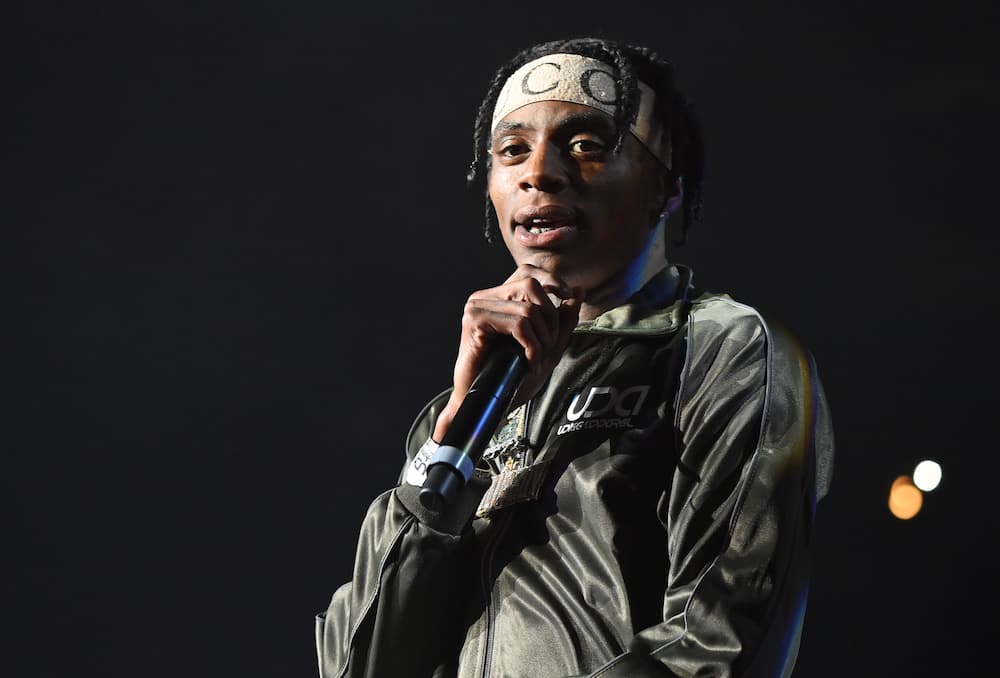
Big Draco made his debut in the rap industry in the mid-2000s. Photo: @Paras Griffin
Source: Getty Images

Soulja Boy’s movies and TV shows

The rapper has appeared in several movies and television shows, including;

  • Love & Hip Hop: Hollywood (2014 t0 2016) as himself
  • The Bachelorette (2013 in Season 9) as himself
  • Officer Down (2013) as Rudy
  • Soulja Boy: The Movie (2011) as himself

Read also

Pete Davidson’s net worth, age, girlfriend, education, tattoos, parents, profiles

Soulja Boy’s age and early life

Draco was born on 28th July 1990 in Chicago, Illinois, United States. His family relocated to Atlanta, Georgia, when he was six, and he later went to stay with his dad in Batesville, Mississippi, when he was 14. Soulja Boy’s parents are Tracy and Carlisa Way.

Way had a younger brother called Deion Jenkins, who met his sudden demise in March 2022 in a car crash. His other siblings include John Way and Tracy Lee Jenkins.

Soulja Boy memes

Draco’s influence goes beyond rap. In 2019, he claimed his comeback was the greatest of all time compared with rapper Drake and his reaction to people thinking otherwise inspired online memes.

What is Soulja Boy’s new name?

The artist’s initial stage name was Soulja Boy Tell’ Em, but he later decided to go with Soulja Boy. His other moniker is Big Draco. Soulja Boy’s real name is DeAndre Cortez Way.

Read also

Lil Baby’s net worth, age, real name, children, albums, associated acts, profiles

What was Soulja Boy’s biggest hit?

His greatest song is his 2007 debut single, Crank That (Soulja Boy). The track was number one on the U.S. Billboard Hot 100 and remained on the chart for seven weeks in September 2007. Rolling Stone magazine listed it at number 21 on the list of the 100 Best Songs of 2007.

Who is Soulja Boy in a relationship with?

American hip-hop artist
Rapper Draco is expecting a baby boy with his girlfriend Jackie (right). Photo: @hairdesignsla
Source: Instagram

The rapper is in a low-key relationship with the hairstylist and cosmetologist Jackie. He shocked fans in March 2022 when he uploaded a video on Soulja Boy’s Instagram revealing that they would soon be parents to a baby boy. The artist has been linked to several ladies in the past, including Keri Hilson, Diamond, Teyana Taylor, Lil Mama, Nia Riley, and adult model Rubi Rose.

Who was the 1st rapper on YouTube?

Draco often claims to be among the top game-changers in the hip-hop industry. YouTube was launched on 14th February 2005, and the rapper uploaded his first video in March 2006. He claims his video was the first rap to be uploaded on the streaming platform.

Read also

R Kelly net worth: age, children, wife, family, criminal charges, case, profiles

Soulja Boy has been in the hip-hop industry for over 15 years, and his impact on the game is still being felt. His savvy entrepreneurial skills have also placed him at the top and contributed to his growing net worth.

READ ALSO: Who is Stelle Ciccone? All you need to know about Madonna’s adopted daughter

Briefly.co.za published the biography of Stelle Ciccone, one of Madonna’s adopted twins from Malawi. Stelle and her twin sister Estere lost their mother when they were a few days old, and their father decided to take them to an orphanage because he did not have the means to care for them.

In 2017, when the Queen of Pop visited Malawi, their father agreed for her to adopt the twin girls. Madonna has two other kids that she adopted from Malawi, in addition to her two biological kids.

[embedded content]

Source: Briefly News

Source