Reclaiming Our Future

Armed Conflicts, Asia-Pacific, Civil Society, Climate Action, Climate Change, COVID-19, Education, Headlines, Inequality, Labour, Poverty & SDGs, TerraViva United Nations

Opinion

BANGKOK, Thailand, May 23 2022 (IPS) – The Asia-Pacific region is at a crossroads today – to further breakdown or breakthrough to a greener, better, safer future.

Since the Economic and Social Commission for Asia and the Pacific (ESCAP) was established in 1947, the region has made extraordinary progress, emerging as a pacesetter of global economic growth that has lifted millions out of poverty.


Yet, as ESCAP celebrates its 75th anniversary this year, we find ourselves facing our biggest shared test on the back of cascading and overlapping impacts from the COVID-19 pandemic, raging conflicts and the climate crisis.

Few have escaped the effects of the pandemic, with 85 million people pushed back into extreme poverty, millions more losing their jobs or livelihoods, and a generation of children and young people missing precious time for education and training.

As the pandemic surges and ebbs across countries, the world continues to face the grim implications of failing to keep the temperature increase below 1.5°C – and of continuing to degrade the natural environment. Throughout 2021 and 2022, countries across Asia and the Pacific were again battered by a relentless sequence of natural disasters, with climate change increasing their frequency and intensity.

More recently, the rapidly evolving crisis in Ukraine will have wide-ranging socioeconomic impacts, with higher prices for fuel and food increasing food insecurity and hunger across the region.

Rapid economic growth in Asia and the Pacific has come at a heavy price, and the convergence of these three crises have exposed the fault lines in a very short time. Unfortunately, those hardest hit are those with the fewest resources to endure the hardship. This disproportionate pressure on the poor and most vulnerable is deepening and widening inequalities in both income and opportunities.

The situation is critical. Many communities are close to tipping points beyond which it will be impossible to recover. But it is not too late.

The region is dynamic and adaptable.

In this richer yet riskier world, we need more crisis-prepared policies to protect our most vulnerable populations and shift the Asia-Pacific region back on course to achieve the Sustainable Development Goals as the target year of 2030 comes closer — our analysis shows that we are already 35 years behind and will only attain the Goals in 2065.

To do so, we must protect people and the planet, exploit digital opportunities, trade and invest together, raise financial resources and manage our debt.

The first task for governments must be to defend the most vulnerable groups – by strengthening health and universal social protection systems. At the same time, governments, civil society and the private sector should be acting to conserve our precious planet and mitigate and adapt to climate change while defending people from the devastation of natural disasters.

For many measures, governments can exploit technological innovations. Human activities are steadily becoming “digital by default.” To turn the digital divide into a digital dividend, governments should encourage more robust and extensive digital infrastructure and improve access along with the necessary education and training to enhance knowledge-intensive internet use.

Much of the investment for services will rely on sustainable economic growth, fueled by equitable international trade and foreign direct investment (FDI). The region is now the largest source and recipient of global FDI flows, which is especially important in a pandemic recovery environment of fiscal tightness.

While trade links have evolved into a complex noodle bowl of bilateral and regional agreements, there is ample scope to further lower trade and investment transaction costs through simplified procedures, digitalization and climate-smart strategies. Such changes are proving to be profitable business strategies. For example, full digital facilitation could cut average trade costs by more than 13 per cent.

Governments can create sufficient fiscal space to allow for greater investment in sustainable development. Additional financial resources can be raised through progressive tax reforms, innovative financing instruments and more effective debt management. Instruments such as green bonds or sustainability bonds, and arranging debt swaps for development, could have the highest impacts on inclusivity and sustainability.

Significant efforts need to be made to anticipate what lies ahead. In everything we do, we must listen to and work with both young and old, fostering intergenerational solidarity. And women must be at the centre of crisis-prepared policy action.

This week the Commission is expected to agree on a common agenda for sustainable development in Asia and the Pacific, pinning the aspirations of the region on moving forward together by learning from and working with each other.

In the past seven-and-a-half decades, ESCAP has been a vital source of know-how and support for the governments and peoples of Asia and the Pacific. We remain ready to serve in the implementation of this common agenda.

To quote United Nations Secretary-General Antonio Guterres, “the choices we make, or fail to make today, will shape our future. We will not have this chance again.”

Armida Salsiah Alisjahbana is the United Nations Under-Secretary-General and Executive Secretary of the Economic and Social Commission for Asia and the Pacific

IPS UN Bureau

  Source

Check Out 8 People With Most Unusual And Unique Skin Color (Photos)

1. Connie Chiu

Connie was born in Hong Kong, the fourth child of a Chinese family, and the only one of her siblings to be born with albinism. Connie and her family then relocated to Sweden, where she studied humanities and journalism as a child. She began modelling at the age of 24 and is now a well-known jazz vocalist who is frequently invited to large events and jazz clubs.

2. Nikia Phoenix

Nikia Phoenix, an American model, stands out with her dark skin, natural hair, and freckles all over her body. When Nikia was drinking a cup of coffee in a small cafe, a member of the Alternative Apparel company, which creates branded clothing, noticed her unique appearance. She has been the face of Coca-Cola and Target advertising campaigns since then.

3. Stephen Thompson

Stephen Thompson, an American, never imagined himself as a model. But fate brought him into contact with a photographer who was taken aback by Stephen’s unusual appearance. Thompson’s success story began with a few photographs that were published in a magazine. His photographs have become commonplace in fashion magazines, and he is in high demand for advertising campaigns by major firms. The gorgeous albino man became the face of the Givenchy fashion house in 2011.

4. Winnie Harlow

Tyra Banks was drawn to Winnie’s distinctive appearance (she has vitiligo). She discovered her Instagram account and encouraged her to compete in the 21st season of America’s Next Top Model, where she finished fifth. Winnie Harlow, along with Brazilian model Adriana Lima, is now the face of Desigual in Barcelona.

5. Ava Clarke

Ava Clarke is an African American who is albino. This girl ruled the fashion world with her blond hair, green-blue eyes, and pink lips. Photos of this beautiful woman have already been shown in fashion magazines like Vogue, Denim, and VIP.

According to medical reports, the young woman must have gone blind by now. But, thanks to her parents’ efforts, Ava is able to read, dance ballet, and even draw the attention of renowned photographers.

6. Khoudia Diop

She is a 19-year-old Senegalese woman who was discovered by a modelling agency while looking for a job. She has since taken the internet by storm with her breathtaking images, which have earned her over 235,000 Instagram followers. Khoudia encourages others to value their uniqueness: “If you’re lucky enough to be different, you never change!”

7. Anastasia Zhidkova

Nastya Zhidkova, known as the world’s most beautiful albino child, was born in Russia in 1996. This amazing young model has transformed Russia’s fashion and cosmetics industries. Nastya is also a skilled singer who frequently uploads her performances to YouTube.

8. Lola Chuil

Despite the fact that she only has 39 Instagram posts, this youngster has over 464,000 followers. Lola is a high school student in Los Angeles who speaks eight languages. Her beauty is unique, with a charcoal black complexion, exquisite lips, nose, and eyes that occasionally appear painted. Lola’s fans compare her to Naomi Campbell when she was younger and predict that she will become a top model.

(Visited 37 times, 37 visits today)

Source

It’s Time To Globalise Compassion, Says Nobel Laureate Kailash Satyarthi

Africa, Child Labour, Conferences, Editors’ Choice, Featured, Headlines, Human Rights, Humanitarian Emergencies, Inequity, Labour, Poverty & SDGs, TerraViva United Nations

Child Labour

“I have been talking to leaders of rich countries to address the problem of post-pandemic economic meltdown. We have to work for social protection for marginalised people in low-income countries and focus on children, education, health, and protection. That is not a big investment compared to what we are going to lose – a whole generation.” – Nobel Laureate Kailash Satyarthi

Nobel Laureate Kailash Satyarthi addresses the 5th Global Conference on the Elimination of Child Labour. Despite setbacks, he is optimistic that child labour can be abolished. Credit: Cecilia Russell/IPS

Nobel Laureate Kailash Satyarthi addresses the 5th Global Conference on the Elimination of Child Labour. Despite setbacks, he is optimistic that child labour can be abolished. Credit: Cecilia Russell/IPS

Durban, May 16 2022 (IPS) – A mere 35 billion US dollars per annum – equivalent to 10 days of military spending – would ensure all children in all countries benefit from social protection, Nobel Laureate Kailash Satyarthi told the 5th Global Conference on the Elimination of Child Labour.


He said this was a small price to pay considering the catastrophic consequences of the increase in child labour since 2016, after several years of decline in child labour numbers.

An estimated 160 000 million kids are child labourers, and unless there is a drastic reversal, another 9 million are expected to join their ranks.

Satyarthi was among a distinguished group of panellists on setting global priorities for eliminating child labour. The panel included International Labour Organisation(ILO) DG Guy Ryder, South African Employment and Labour Minister Thulas Nxesi, James Quincey, CEO of Coca Cola,  Alliance 8.7 chairperson Anousheh Karver and European Union Commissioner Jutta Urpilainen.

The panel discussed child labour in the context of decent work deficits and youth employment. It identified pressing global challenges and priorities for the international community.

Satyarthi said the 35 million US dollars was far from a big ask. Nor was the 22 billion US dollars needed to ensure education for all children. He said this was the equivalent of what people in the US spent on tobacco over six days.

Satyarthi said it was a travesty that the G7, the world’s wealthiest countries, had never debated child labour – something he intends to change.

The panellists attributed the increase in child labour to several factors, including lack of political will, lack of interest from rich countries and embedded cultural and economic factors.

Asked how he remained optimistic in light of the dismal picture of growing child labour rates. Satyarthi told IPS that having been in the trenches for 40 years, he had seen and been happy to see a decline in child labour until 2016 – when the problem began escalating again.

“I strongly believe in freedom of human beings. The world will slowly move towards a more compassionate society, sometimes faster, sometimes slower,” he said.

Satyarthi, together with organisations like the ILO, succeeded in putting the issue of child labour on the international agenda. Through his foundation in collaboration with other NGOs, he got the world to take note of this hidden scourge.

He is convinced that child labour will be eliminated despite the recent setbacks.

“I am hopeful because there was no ILO programme when I started 40 years ago. Child labour was not recognised as a problem, but slowly, it is being realised that it’s wrong and evil – even a crime. So, 40 years isn’t a big tenure in the history of human beings. This scourge has been there for centuries.”

Yet he recognises the need for urgency to roll back the escalation of child labour.

“The next ten years are even more important because now we have the means, we have power, technology, and we know the solution. The only thing we need is a strong political will but also social will,” Satyarthi said. “We have to speed it up and bring back the hope. Bring back the optimism. The issue is a priority, and that’s why we are calling on markets to globalise compassion. There are many things to divide us, but there’s one thing we all agree on: the well-being of our children.”

Satyarthi said to meet the SDG deadline of 2025, he and other Nobel laureates and world leaders are pushing hard to ensure that child labour starts declining again.

“We as a group of Nobel laureates and world leaders are working on two fronts. One is a fair share for children on budgetary allocations and policies,” he said.

The group engaged with governments to ensure that children received a fair share of the budget and resources.

Then they are pushing governments on social protection, which he believes in demystifying.

“We have seen in different countries, social protection – helping through school feeding schemes, employment programmes and conditional grant programmes to ensure that children can go to school, with proven success in bringing down child labour.”

The Nobel laureate knocked on the doors of the leaders of wealthy nations.

“I have been talking to leaders of rich countries to address the problem of post-pandemic economic meltdown. We have to work for social protection for marginalised people in low-income countries and focus on children, education, health, and protection. That is not a big investment compared to what we are going to lose – a whole generation.”

Satyarthi said he was heartened by the response to their efforts to motivate governments and the private sector to join the fight against child labour.

“I have been optimistic to say many of the governments and EU leaders are not only listening – they are talking about it. Yesterday only, I was so happy that President Cyril Ramaphosa spoke very explicitly on this issue, and almost everyone was talking about this issue. But it took several months, several years to get there.”

And Satyarthi is not going to stop soon. With the Laureates and Leaders For Children project, he and fellow laureates are determined the world sits up and finds the will to ensure every child can experience a childhood.

IPS UN Bureau Report

This is part of a series of stories published by IPS during the 5th Global Conference on the Elimination of Child Labour in Durban. 


One Hundred Years On, Argentine State Acknowledges Indigenous Massacre in Trial

Civil Society, Crime & Justice, Development & Aid, Editors’ Choice, Featured, Headlines, Human Rights, Indigenous Rights, Inequality, Latin America & the Caribbean, Population, Regional Categories

Indigenous Rights

During one of the hearings in Buenos Aires, the court trying a 1924 indigenous massacre in the Chaco heard the testimony of historian Nicolás Iñigo Carrera, from the University of Buenos Aires, who has been studying indigenous history in Argentina for decades. The expert witness described in detail the conditions in the Napalpí indigenous “reducción” or camp where the massacre took place. CREDIT: Daniel Gutman/IPS

During one of the hearings in Buenos Aires, the court trying a 1924 indigenous massacre in the Chaco heard the testimony of historian Nicolás Iñigo Carrera, from the University of Buenos Aires, who has been studying indigenous history in Argentina for decades. The expert witness described in detail the conditions in the Napalpí indigenous “reducción” or camp where the massacre took place. CREDIT: Daniel Gutman/IPS

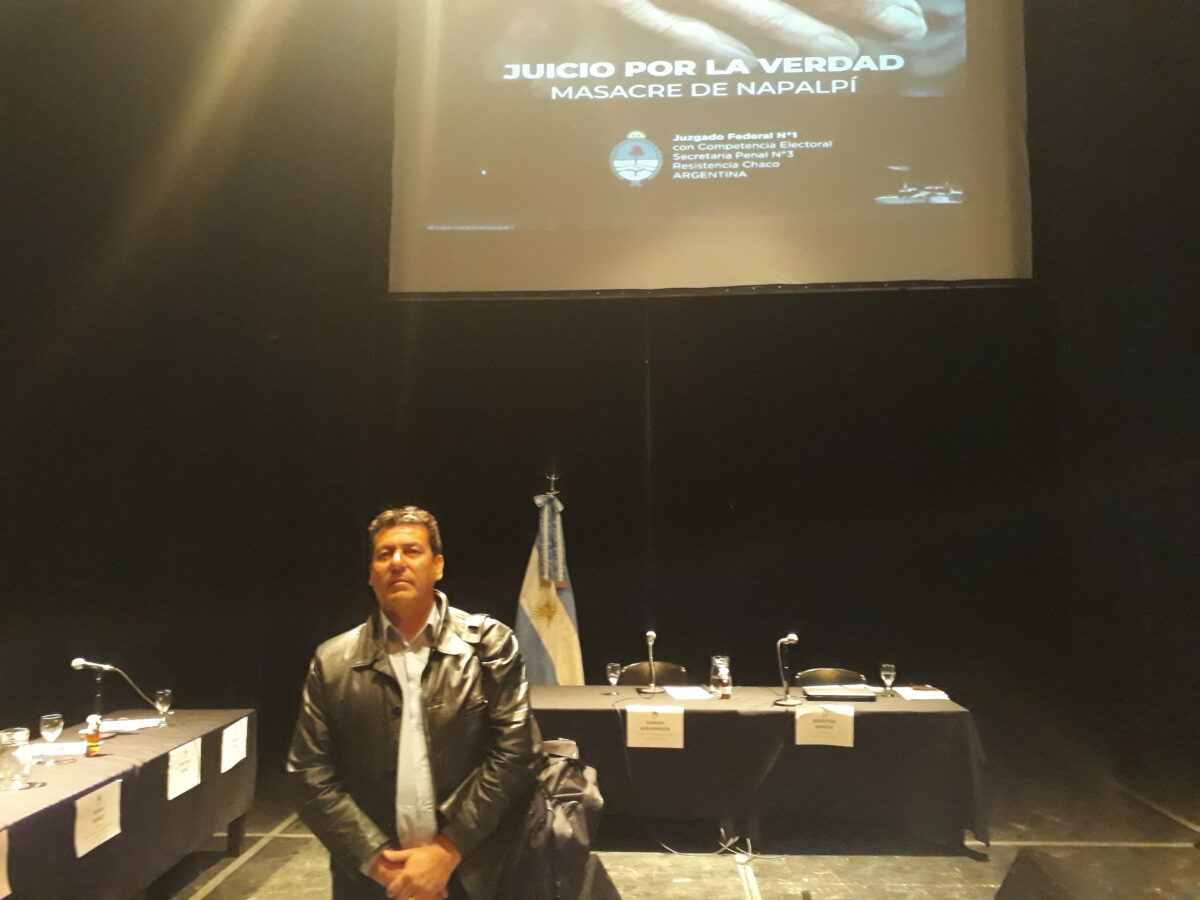
BUENOS AIRES, May 13 2022 (IPS) – It’s a strange trial, with no defendants. The purpose is not to hand down a conviction, but to bring visibility to an atrocious event that occurred almost a hundred years ago in northern Argentina and was concealed by the State for decades with singular success: the massacre by security forces of hundreds of indigenous people who were protesting labor mistreatment and discrimination.


“We are seeking to heal the wounds and vindicate the memory of the (indigenous) peoples,” explained federal judge Zunilda Niremperger, as she opened the first hearing in Buenos Aires on May 10 in the trial for the truth of the so-called Napalpí Massacre, in which an undetermined number of indigenous people were shot to death on the morning of Jul. 19, 1924.

The trial began on Apr. 19 in the northern province of Chaco, one of the country’s poorest, near the border with Paraguay. But it was moved momentarily to the capital, home to approximately one third of the 45 million inhabitants of this South American country, to give it greater visibility.

In a highly symbolic decision, the venue chosen in Buenos Aires was the Space for Memory and Human Rights, created in the former Navy School of Mechanics (ESMA), where the most notorious clandestine torture and extermination center operated during the 1976-1983 military dictatorship, which kidnapped and murdered as many as 30,000 people for political reasons.

“What we hope is that the sentence will bring out the truth about an event that needs to be understood so that racism and xenophobia do not take hold in Argentina. People need to know about all the blood that has flowed because of contempt for indigenous people.” — Duilio Ramírez

The hearings in Buenos Aires ended Thursday May 12, and the court will reconvene in Resistencia, the capital of Chaco, on May 19, when the prosecutor’s office and the plaintiffs are to present their arguments before the sentence is handed down at an unspecified date.

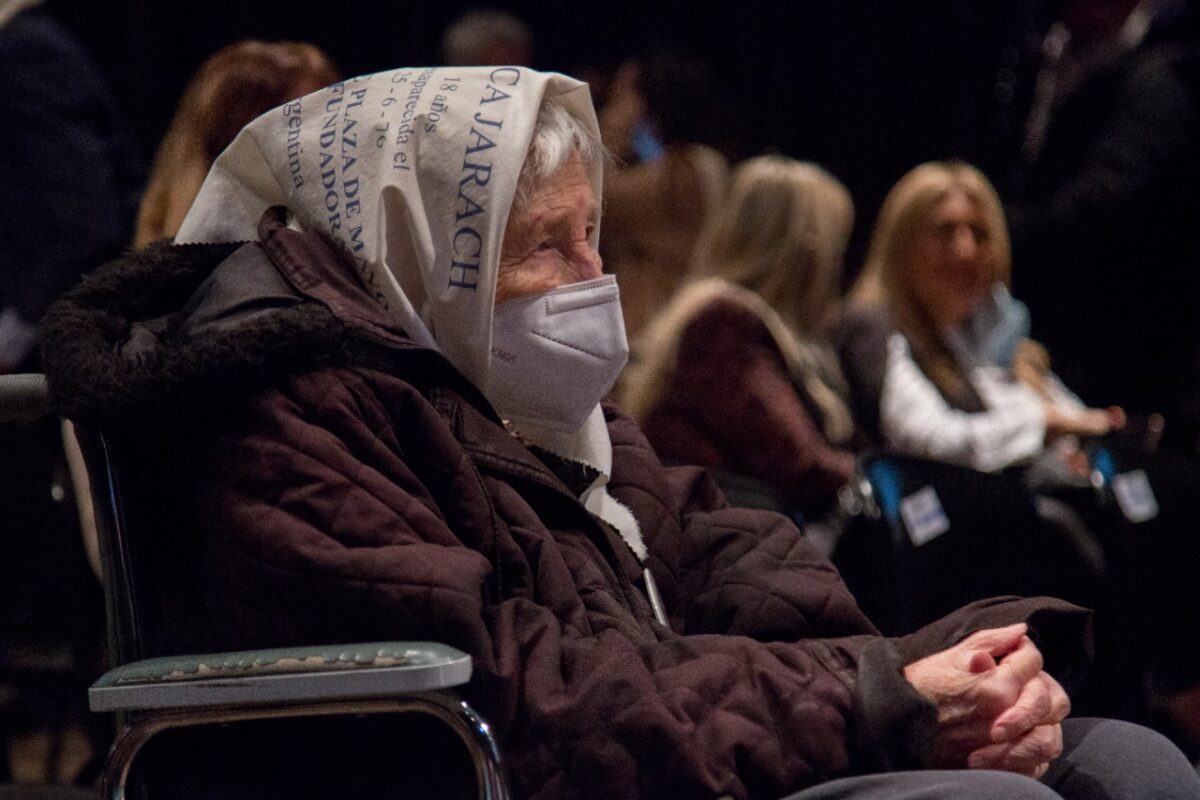
“This trial is aimed at bringing out the truth that we need, and that I come to support, in the place where they brought my daughter when they kidnapped her. This shows that genocides are repeated in history,” Vera Vigevani de Jarach, seated in the front row of the courtroom, her head covered by the white scarf that identifies the Mothers of Plaza de Mayo human rights group, told IPS.

Vera, 94, is Jewish and emigrated with her family to Argentina when she was 11 years old from Italy, due to the racial persecution unleashed by fascist leader Benito Mussolini in 1939. In 1976 her only daughter, Franca Jarach, then 18 years old, was forcibly disappeared.

“Truth trials” are not a novelty in Argentina. The term was used to refer to investigations of the crimes committed by the dictatorship, carried out after 1999, when amnesty laws passed after the conviction of the military regime’s top leaders blocked the prosecution of the rest of the perpetrators.

A petition filed by a member of the Mothers of Plaza de Mayo (made up of mothers of victims of forced disappearance) before the Inter-American Commission on Human Rights (IACHR) led later to an agreement with the Argentine State, which recognized the woman’s right to have the judiciary investigate the fate of her disappeared daughter, even though the amnesty laws made it impossible to punish those responsible.

Eventually, the amnesty laws were repealed, the trials resumed, and defendants were convicted and sent to prison.

Indigenous communities and human rights organizations held an Apr. 19, 2022 demonstration in Resistencia, capital of the Argentine province of Chaco, at the beginning of the trial for the truth about the Napalpí massacre. CREDIT: Chaco Secretariat of Human Rights and Gender

Indigenous communities and human rights organizations held an Apr. 19, 2022 demonstration in Resistencia, capital of the Argentine province of Chaco, at the beginning of the trial for the truth about the Napalpí massacre. CREDIT: Chaco Secretariat of Human Rights and Gender

Historic reparations

“My grandmother was a survivor of the massacre and I grew up listening to the stories of labor exploitation in Napalpí and about what happened that day. For us this trial is a historic reparation,” Miguel Iya Gómez, a bilingual multicultural teacher who today presides over the Chaco Aboriginal Institute, a provincial agency whose mission is to improve the living conditions of native communities, told IPS.

The trial is built on the basis of official documents and journalistic coverage of the time and the videotaped testimonies of survivors of the massacre and their descendants, and of researchers of indigenous history in the Chaco.

The Argentine province of Chaco forms part of the ecoregion from which it takes its name: a vast, hot, dry, sparsely forested plain that was largely unsettled during the Spanish Conquest. Only at the end of the 19th century did the modern Argentine State launch military campaigns to subdue the indigenous people in the Chaco and impose its authority there.

Once the Chaco was conquered, many indigenous families were forced to settle in camps called “reducciones”, where they had to carry out agricultural work.

“The ‘reducciones’ operated in the Chaco between 1911 and 1956 and were concentration camps for indigenous people, who were disciplined through work,” said sociologist Marcelo Musante, a member of the Network of Researchers on Genocide and Indigenous Policies in Argentina, which brings together academics from different disciplines, at the hearing.

“When indigenous people entered the ‘reducción’, they were given clothes and farming tools, and this generated a debt that put them under great pressure. And they were not allowed to make purchases outside the stores of the ‘reducción’,” he explained.

David García, a member of the Napalpí Foundation, created in 2006 to gather information about and bring visibility to the 1924 massacre, took part in the trial in Buenos Aires. His organization was one of the driving forces behind the historic trial in Argentina. CREDIT: Daniel Gutman/IPS

David García, a member of the Napalpí Foundation, created in 2006 to gather information about and bring visibility to the 1924 massacre, took part in the trial in Buenos Aires. His organization was one of the driving forces behind the historic trial in Argentina. CREDIT: Daniel Gutman/IPS

Invaded by cotton

Historian Nicolás Iñigo Carrera said it was common for indigenous people in the Chaco to go to work temporarily in sugar mills in the neighboring provinces of Salta and Jujuy, but the scenario changed in the 1920s, when the Argentine government introduced cotton in the Chaco, to tap into the textile industry’s growing global demand.

“Then the criollo (white) settlers, who often had no laborers, demanded the guaranteed availability of indigenous labor to harvest the cotton crop, and in 1924 the government prohibited indigenous people, who refused to work on the cotton plantations, from leaving the Chaco, declaring any who left subversives,” Carrera said.

Anthropologist Lena Dávila Da Rosa said the Jul. 19, 1924 protest involved between 800 and 1000 indigenous people from Napalpí, and some 130 police officers who opened fired on them, with the support of an airplane that dropped candy so the children would go out to look for it and thus reveal the location of the protesters they were tracking down.

“It’s impossible to know exactly how many indigenous people were killed, but there were several hundred victims,” Alejandro Jasinski, a researcher with the Truth and Justice Program of the Ministry of Justice and Human Rights, told IPS.

“The official report mentioned four people killed in confrontations among themselves, and there was a judicial investigation that was quickly closed. All that was left were the buried memories of the communities,” he added.

The memories were revived and made public in recent years thanks in large part to the efforts of Juan Chico, an indigenous writer and researcher from the Chaco who died of COVID-19 in 2021.

“Juan started collecting oral accounts almost 20 years ago,” David García, a translator and interpreter of the language of the Qom, one of the main indigenous nations of the Chaco, told IPS. “I worked alongside him to bring the indigenous genocide to light, and in 2006 we founded an NGO that today is the Napalpí Foundation. It was a long struggle to reach this trial.”

Vera Vigevani de Jarach, a member of the human rights group Mothers of Plaza de Mayo, attended the hearing in Buenos Aires for the Napalpí indigenous massacre, held in the most notorious clandestine detention and torture center used by the 1976-1983 military dictatorship in Argentina. CREDIT: National Secretariat of Human Rights

Vera Vigevani de Jarach, a member of the human rights group Mothers of Plaza de Mayo, attended the hearing in Buenos Aires for the Napalpí indigenous massacre, held in the most notorious clandestine detention and torture center used by the 1976-1983 military dictatorship in Argentina. CREDIT: National Secretariat of Human Rights

Indigenous people in the Chaco today

Of the population of Chaco province, 3.9 percent, or 41,304 people, identified as indigenous in the last national census conducted in Argentina in 2010, which is higher than the national average of 2.4 percent.

Census data reflects the harsh living conditions of indigenous people in the Chaco and the disadvantages they face in relation to the rest of the population. More than 80 percent live in deficient housing while more than 25 percent live in critically overcrowded conditions, with more than three people per room. In addition, more than half of the households cook with firewood or charcoal.

Today, the site of the Napalpí massacre is called Colonia Aborigen Chaco and is a 20,000-hectare plot of land owned by the indigenous community where, according to official data, some 1,300 indigenous people live, from the Qom and Moqoit communities, the most numerous native groups in the Chaco along with the Wichi.

In 2019, mass graves were found there by the Argentine Forensic Anthropology Team, a prestigious organization that emerged in 1984 to identify remains of victims of the military dictatorship and that has worked all over the world.

“What we hope is that the sentence will bring out the truth about an event that needs to be understood so that racism and xenophobia do not take hold in Argentina,” Duilio Ramírez, a lawyer with the Chaco government’s Human Rights Secretariat, which is acting as plaintiff, told IPS. “People need to know about all the blood that has flowed because of contempt for indigenous people.”

“We hope that with the ruling, the Argentine State will take responsibility for what happened and that this will translate into public policies of reparations for the indigenous communities,” he said.

  Source

Call to Freedom for Millions of Children Trapped in Child Labour as Global Conference to Comes to Africa

Child Labour, Conferences, Education, Featured, Global, Headlines, Humanitarian Emergencies, Labour, Poverty & SDGs, TerraViva United Nations

Labour

A child beneficiary holding a drawing portraying domestic violence, at the Centre for Youth Empowerment and Civic Education, Lilongwe, Malawi which partnered with the ILO/IPEC to support the national action plan aimed at combating child labour. Credit: Marcel Crozet/ILO

A child beneficiary holding a drawing portraying domestic violence, at the Centre for Youth Empowerment and Civic Education, Lilongwe, Malawi which partnered with the ILO/IPEC to support the national action plan aimed at combating child labour. Credit: Marcel Crozet/ILO

Nairobi, May 13 2022 (IPS) – Children washing clothes in rivers, begging on the streets, hawking, walking for kilometres in search of water and firewood, their tiny hands competing with older, experienced hands to pick coffee or tea, or as child soldiers are familiar sights in Africa and Asia.


Child rights experts at Kailash Satyarthi Children’s Foundation reiterate that tolerance and normalisation of working children, many of whom work in hazardous conditions and circumstances, and apathy has stalled progress towards the elimination of child labour.

Further warnings include more children in labour across the sub-Saharan Africa region than the rest of the world combined. The continent now falls far behind the collective commitment to end all forms of child labour by 2025.

The International Labour Organization estimates more than 160 million children are in child labour globally.

How to achieve the Sustainable Development Target 8.7 and the International Programme on the Elimination of Child Labour that focuses on its elimination by 2025 will be the subject of the 5th Global Conference on the Elimination of Child Labour to be held in Durban, South Africa, from May 15 to 20, 2022.

South Africa’s President Cyril Ramaphosa is expected to open the conference. He will share the stage with the Southern African Development Community (SADC) chairperson and President of the Republic of Malawi Lazarus McCarthy Chakwera, ILO Director-General Guy Ryder, and Argentina President Alberto Ángel Fernández Pérez (virtual).

“There are multiple drivers of child labour in Africa, and many of them are interconnected,” Minoru Ogasawara, Chief Technical Advisor for the Accelerating action for the elimination of child labour in supply chains in Africa (ACCEL Africa) at the International Labour Organization (ILO) tells IPS.

He speaks of the high prevalence of children working in agriculture, closely linked to poverty and family survival strategies.

Rapid population growth, Ogasawara says, has placed significant pressure on public budgets to maintain or increase the level of services required to fight child labour, such as education and social protection.

“Hence the call to substantially increase funding through official development assistance (ODA), national budgets and contributions from the private sector targeting child labour and its root causes,” he observes.

UNICEF says approximately 12 percent of children aged 5 to 14 years are involved in child labour – at the cost of their childhood, education, and future.

Of the 160 million child labourers worldwide, more than half are in sub-Saharan Africa, and 53 million are not in school – amounting to 28 % aged five to 11 and another 35 % aged 12 to 14, according to the most recent child labour global estimates by UNICEF and ILO.

Against this grim backdrop, keynote speakers Nobel Peace Laureates Kailash Satyarthi and Leymah Gbowee and former Prime Minister of Sweden Stefan Löfven will address the conference, which is expected to put into perspective how and why children still suffer some of the worst, most severe forms of child labour such as bonded labour, domestic servitude, child soldiers, drug trafficking and commercial sexual exploitation.

Satyarthi has been at the forefront of mobilising global support to this effect.

“I am working in collaboration with a number of other Nobel Laureates and world leaders. We are demanding the setting up of an international social protection mechanism. During the pandemic, we calculated that $53 billion annually could ensure social protection for all children in all low-income countries, as well as pregnant women too,” Satyarthi emphasises.

“Increased social protection, access to free quality education, health care, decent job opportunities for adults, and basic services together create an enabling environment that reduces household vulnerability to child labour,” Ogasawara stresses.

He points to an urgent need to introduce and or rapidly expand social security and other social protection measures suitable for the informal economy, such as cash transfers, school feeding, subsidies for direct education costs, and health care coverage.

The need for a school-to-work transition and to “target children from poor households, increase access to education while reducing the need to combine school with work among children below the minimum working age” should be highlighted.

In the absence of these social protection safety nets, the  International Labour Organization says it is estimated that an additional 9 million children are at risk of child labour by the end of this year and a possible further increase of 46 million child labourers.

In this context, the fifth global conference presents an opportunity to assess progress made towards achieving the goals of SDG Target 8.7, discuss good practices implemented by different actors around the world and identify gaps and urgent measures needed to accelerate the elimination of both child labour and forced labour.

The timing is crucial, says the ILO, as there are only three years left to achieve the goal of the elimination of all child labour by 2025 and only eight years towards the elimination of forced labour by 2030, as established by the Sustainable Development Goal (SDG) Target 8.7.

The conference will also see the active participation of young survivor-advocates from India and Africa. They will share their first-person accounts and lived experiences in sync with the core theme of the discussion.

The conference will also take place within the context of the COVID-19 pandemic, amid fears and concerns that ending child labour became less significant on the international agenda as the world coped with the impact of the pandemic. This could reverse the many gains accrued in the fight against child labour, forced labour and child trafficking.

This is the first of a series of stories which IPS will be publishing during the 5th Global Conference on the Elimination of Child Labour from May 15 to 20, 2022.

IPS UN Bureau Report


Cook like a Wakandan: Marvel-sanctioned cookbook puts fictional world in your hands

em { display: contents !important; } label em { display: none !important; } .photo { width: 100%; max-width: 50rem } a.fr-file { color: #0274b7 !important; }

The fictional worlds spun in many TV shows, movies and video games can feel as real and as meaningful to fans as places with actual ZIP codes. Think of Hogwarts, the magic-filled, honey-lit boarding school in the world of Harry Potter books and movies; the faraway galaxy of “Star Wars”; or even the lovably quirky small town of Stars Hollow in “Gilmore Girls.”

Wakanda, the wealthy, technologically advanced, mountain-ringed land of the “Black Panther” comics and blockbuster 2018 movie, though, occupies an even more rarefied role. It’s not just the setting for the action in a beloved franchise; it has become a symbol of African greatness, a mythical place that feels like an actual homeland to many people, and not just to comics geeks with posters of King T’Challa on their bedroom walls.

In April, the mythical country saw its culture expand with “The Official Wakanda Cookbook,” a collection of recipes sanctioned by “Black Panther” publisher Marvel.

“I definitely felt a combination of pressure and pride,” says Nyanyika Banda, the freelance writer and chef who created the cookbook. “The lore of Black Panther and what Wakanda means now socially is so important, not just for Black Americans but to people of African descent around the world.”

Banda, who has long been a student of the foodways of the African diaspora, developed both the 70-plus recipes and the story-within-the-story of the cookbook: It’s written from the perspective of a young woman who is plucked from her mother’s stall in the capital city’s marketplace to become the royal chef to King T’Challa, a woman who — like Banda — was influenced by the elder women in her family.

Aside from the challenges posed by satisfying an avid fan base and respecting a cultural touchstone, Banda faced another, more practical task. Often, a cookbook author writing about a region of the world is concerned about staying true to the dishes, the ingredients, the people and the history of the land. But what does it mean to be faithful to something that doesn’t actually exist?

THE RESEARCH

Banda, who prefers the pronouns they and them, says that before signing on to the

project, they had seen the movie but hadn’t read many of the comics. And so they delved in and also explored the deep well of fan-fueled websites, seeking to understand the characters and the landscape of Wakanda. Food doesn’t figure prominently in the comics or in the movie, so some creativity was in order.

Some ideas came more easily. Wakanda has a lake, Banda notes, so fish recipes would work. Produce and ingredients available in sub-Saharan Africa (where Wakanda is located, according to the comics), such as cassava, mangoes and goat (you can substitute lamb, Banda instructs), figure prominently. Vegetable dishes are also featured — in a recipe for eggplant and herbs, the narrator notes that “many Wakandans eat a predominantly vegetarian diet,” perhaps a reference to the moment depicted in the movie in which the tribal leader M’Baku threatens to feed a CIA agent to his children, before revealing the threat is just a joke. “I’m kidding,” he says. “We’re vegetarians.”

An important part of the kingdom’s story is that it is incredibly technically advanced, so Banda wanted a few recipes that incorporated gadgets, such as a sous vide machine or a dehydrator, to represent that.

One such dish, a smoked mushroom jerky, was inspired by the Dora Milaje, Wakanda’s elite team of female warriors. “I imagined it would be something that would be fueling but that would carry well,” Banda says.

THE STORYTELLING

Jennifer Simms, Banda’s editor at Insight Editions, the publisher of the Wakanda cookbooks as well as dozens of other pop-culture spinoff cookbooks, says that from the outset, she didn’t want to create a cookbook that was generically “African.” “We wanted to make sure we weren’t trying to represent Africa as having one food culture,” she says.

To create a cuisine that is fictional, yet feels specific, Banda drew not just on studies of African foodways, but on family recipes. One dish, braised kale with tomatoes, was cribbed directly from the last meal Banda cooked with their aunt, who, like Banda’s father, was born in Malawi. “We talked and laughed, and it was a special moment,” says Banda, whose aunt died in 2020. “I thought of her a lot while I was writing this.”

One of the trickier conditions imposed by the Black Panther narrative was that Wakanda, unlike many other African nations, was never colonized — according to its lore, it had long remained hidden from the rest of the world to protect itself, and the valuable metal it contained, from outsiders. And so Banda had to find storylines to explain Western influences.

Visits to Wakanda by Captain America explained a simple trout dish and an iced coffee laced with cocoa. Travels to New York by the narrator character, the fictional palace chef, explain a pasta dish. And the current king, T’Challa, was educated in America and Europe under an assumed name, and some dishes are described as being food he discovered while abroad.

Banda and Simms worked closely with the team at Marvel when developing the dishes and the stories around them. “We would talk about whether or not they felt like it would be a part of Wakanda,” Banda says. “I wanted there to be integrity within the dish, but also have integrity in terms of storytelling.”

Banda developed the recipes while staying with their 90-year-old grandmother in Amherst, Mass., during the pandemic. And all along, they considered how important the Black Panther story was to its most devoted admirers. “I was never not thinking about Black Panther fans, hoping they would see the time and thought that went into this,” Banda says.

POP-CULTURE COOKBOOKS

Black Panther fans aren’t the only cooks that publishing houses are thinking about these days. The Wakanda cookbook is part of a growing trend of pop-culture cookbooks, based on popular franchises with loyal fan bases. Insight Editions CEO Raoul Goff said he first saw the potential for the genre after the success of a 2016 “World of Warcraft” cookbook based on the popular online role-playing game.

Since then, the publisher has produced dozens of titles tied to games such as “The Elder Scrolls” and “Street Fighter,” plus movies and TV, including “Star Wars,” “Friends,” “Downton Abbey,” and forthcoming cookbooks on “Seinfeld” and “Emily in Paris.”

Goff sees these books as more than just the present you give your game-obsessed nephew or Crawley fangirl friend for Christmas. Cooking, he says, helps fans connect with the stories and characters they love in a way that no T-shirt could. “It’s another aspect of getting immersed in that world, whatever it is,” he says.

Are there any shows for which he couldn’t imagine a cookbook spinoff? Maybe “The Walking Dead,” this reporter suggests? Surely there’s nothing appetizing about struggling to stay alive after a zombie apocalypse.

He laughs. “We’ve done that one,” he says. “It was a cookbook and survival guide. Fans loved it.”

“OK, what about ‘Dexter?'” I challenge him, throwing out the name of the show whose serial-killer title character spends his evenings carving up human flesh.

There’s a pause, but Goff isn’t wiling to concede, entirely. “‘Dexter,'” he says, “would be a tough one.”

Cookbook author Nyanyika Banda’s Aunt Rose taught them to make this dish before she passed away. Banda included it in “Marvel’s Black Panther: The Official Wakanda Cookbook,” with a fictionalized account of how it came to be, noting that it could be eaten with “roasted fish and nsima (a white cornmeal patty) soaking up the vegetable stock with each bite.” Rice also is a suitable addition to the table.

  photo  Braised Kale and Tomatoes (For The Washington Post/Scott Suchman)  Braised Kale and Tomatoes

  • 2 tablespoons olive oil
  • 1 small yellow onion, halved and sliced
  • 5 cloves garlic, minced or grated
  • 2 vine-ripe tomatoes, diced
  • 1 teaspoon ground cumin
  • 1 tablespoon paprika
  • Fine salt
  • Freshly cracked black pepper
  • 8 cups curly kale, stemmed and chopped
  • 1 cup low-salt vegetable broth

In a large, heavy-bottomed pot or Dutch oven over medium heat, heat the oil until shimmering. Add the onion and garlic and cook, stirring, until the onions are translucent and the garlic is just starting to brown, about 4 minutes. Stir in the tomatoes, cumin and paprika, and lightly season with salt and pepper.

Add the kale a handful at a time, stirring occasionally and waiting for it to wilt before adding more. Once all of the kale has been added, pour in the broth.

Bring to a simmer, cover and heat for 15 minutes, adjusting the heat as needed to keep it at a simmer. Taste and add more salt and/or pepper, as needed.

Remove from the heat and serve family style or divide among the bowls.

Makes 4 servings.

Nutrition information: Each (¾ cup) serving contains approximately 163 calories, 6 g protein, 8 g fat, 22 g carbohydrate (6 g sugar), no cholesterol, 172 mg sodium and 7 g fiber.

Carbohydrate choices: 1 ½

Adapted from “Marvel’s Black Panther: The Official Wakanda Cookbook” by Nyanyika Banda (2022, Insight Editions)

Source