On Cerro 18, above the affluent municipality of Lo Barnechea, in the coveted eastern sector of Santiago de Chile with a stunning view of the valley and the Andes Mountains, 300 families live in five camps or irregular settlements, many without water, electricity or sewage. CREDIT: Orlando Milesi/IPS
SANTIAGO, Dec 10 2021 (IPS) – Camps made up of thousands of tents and shacks have mushroomed in Chile due to the failure of housing policies and official subsidies for the sector, aggravated by the rise in poverty, the covid-19 pandemic and the massive influx of immigrants.
“Three years ago we were about to be evicted and when my children would head off to school they never knew if our little house would be there when they got home. One morning we were going to school and the carabineros (militarized police) were coming. Many times I had to go home early from work. It was chaotic, difficult and distressing,” Melanni Salas told IPS during a visit to the site.
Salas, 33, presides over Senda 23, one of the five camps that bring together 300 families who occupied public land in Cerro 18, in the municipality of Lo Barnechea, on the east side of Santiago. They have been building shacks with wood and other materials within their reach, which they are gradually trying to improve.
The threat of eviction ceased at the start of the covid pandemic, but the shadow still hangs over their heads because the municipality “built us a septic tank and gave us gifts for Christmas, but has said nothing about housing,” she said.
The community activist previously lived for 19 years as an “allegada”, the name given in Chile to people or families who share a house with relatives or friends, in overcrowded conditions. In 2016 she occupied the land where she and her husband Jorge built the precarious dwelling where she now lives with her three children aged 15, 13 and five years old.
“This used to be a garbage dump and now it is clean and there are houses,” said Salas. “Mine gets a little wet inside when it rains because it is made of wood and because of the strong wind. But I have drinking water, electricity and sewerage thanks to my mother-in-law who lives further up. The neighboring family has neither water nor sewage. They are a couple with three children and one of them, Colomba, was born a week ago.”
She explains that her neighbors “use the bathroom at their brother’s place who lives nearby, but during the pregnancy she went back to her mother’s house.”
In the camps people cook, wash, sleep and live together, observed by passers-by who have become accustomed to this new urban landscape. CREDIT: Orlando Milesi/IPS
Hundreds of homeless tents now line the main avenues of Santiago de Chile.
Explosive situation
“Every day more than 10 families come to live in an encampment in Chile,” says Fundación Techo Chile, a social organization dedicated to fighting against housing exclusion in the cities of this South American country.
The problem is also seen along the avenues and in the parks where hundreds of men and women set up tents to sleep, cook, wash and live together in full view of passers-by who have become accustomed to the scene.
In the last two years, the number of families living in 969 of these camps with almost no access to water, energy and sanitation services has increased to 81,643, a survey by the Fundación Techo Chile found.
In Chile, the term “campamentos” or camps has also come to refer to slums or shantytowns known traditionally as “callampas”, such as the one where Salas lives, which are built on occupied land and consist of houses made of light materials, although the neighborhoods are sometimes later improved and upgraded, but still lack basic services.
These slums are mainly in Santiago and Valparaíso, 120 kilometers north of the capital, in central Chile. But they are also found in the northern cities of Arica and Parinacota and the southern city of Araucanía.
They are home to 57,384 children under the age of 14 and some 25,000 immigrants, mostly Colombians, Venezuelans and Haitians. “Today, families live there who six months or two years ago were ‘allegados’ living in overcrowded, informal, precarious or abusive conditions. That is what is understood as a housing deficit,” Fundación Techo Chile’s executive director, Sebastián Bowen, told IPS.
“The 81,000 families living in camps are the most visible part of the problem, but the housing deficit, covering all the families who do not have access to decent housing, exceeds 600,000,” he said.
The State provides some 20,000 social housing solutions each year, a figure that is highly insufficient to meet the current need.
According to Bowen, “if we want to solve the problem of the camps, we must structurally change our housing policy to guarantee access to decent housing, especially for the most vulnerable families.”
This explosion coincided with the social protests that began in October 2019 and with the arrival of coronavirus in the country in March 2020.
According to the National Socioeconomic Characterization Survey (Casen), 10.8 percent of Chileans currently live in poverty, which means more than two million people, although social organizations say the real proportion is much higher.
Chile, with a population of 19 million people, is considered one of the most unequal countries in the world, as reflected by the fact that the 10 percent of households with the highest incomes earn 251.3 times more than the 10 percent with the lowest income.
View of some of the houses in Cerro 18, a shantytown where 300 families live, most of them without even the most basic services. In what used to be a garbage dump, on the hillside of one of the wealthy neighborhoods of the Chilean capital, they have built their houses using scrap wood and waste materials. CREDIT: Orlando Milesi/IPS
The new constitution holds out hope
Benito Baranda, founder of the Fundación Techo, an organization that now operates in several Latin American countries, believes that the housing policy failed because it focuses on “market-based eradication, forming housing ghettos on land where people continue to live in a segregated manner.”
This policy is also based on a structure of subsidies “born during the dictatorship and which has remained in place because housing is not a right recognized in the constitution,” Baranda, now a member of the Constitutional Convention that is drafting a new constitution, which will finally replace the one inherited from the 1973-1990 military dictatorship of General Augusto Pinochet, told IPS.
“The decision of where people are going to live was handed over to the market. Not only the construction of housing. And the land began to run out and the available and cheap places were in the ghettos,” he explained.
Baranda criticized the policy of “eradication”, “which created ghettos and generated much greater harm for people,” referring to the forced expulsions of slumdwellers and their relocation to social housing built on the outskirts of the cities, a policy initiated during the Pinochet dictatorship and which crystallized social segregation in the capital.
According to Baranda, “in the last four governments there has been the least construction of housing for the poorest families.”
Baranda was elected to the constituent assembly in a special election in May and proposes “to generate a mechanism that will progressively reduce the waiting times for housing, which today can stretch out to 20 years.”
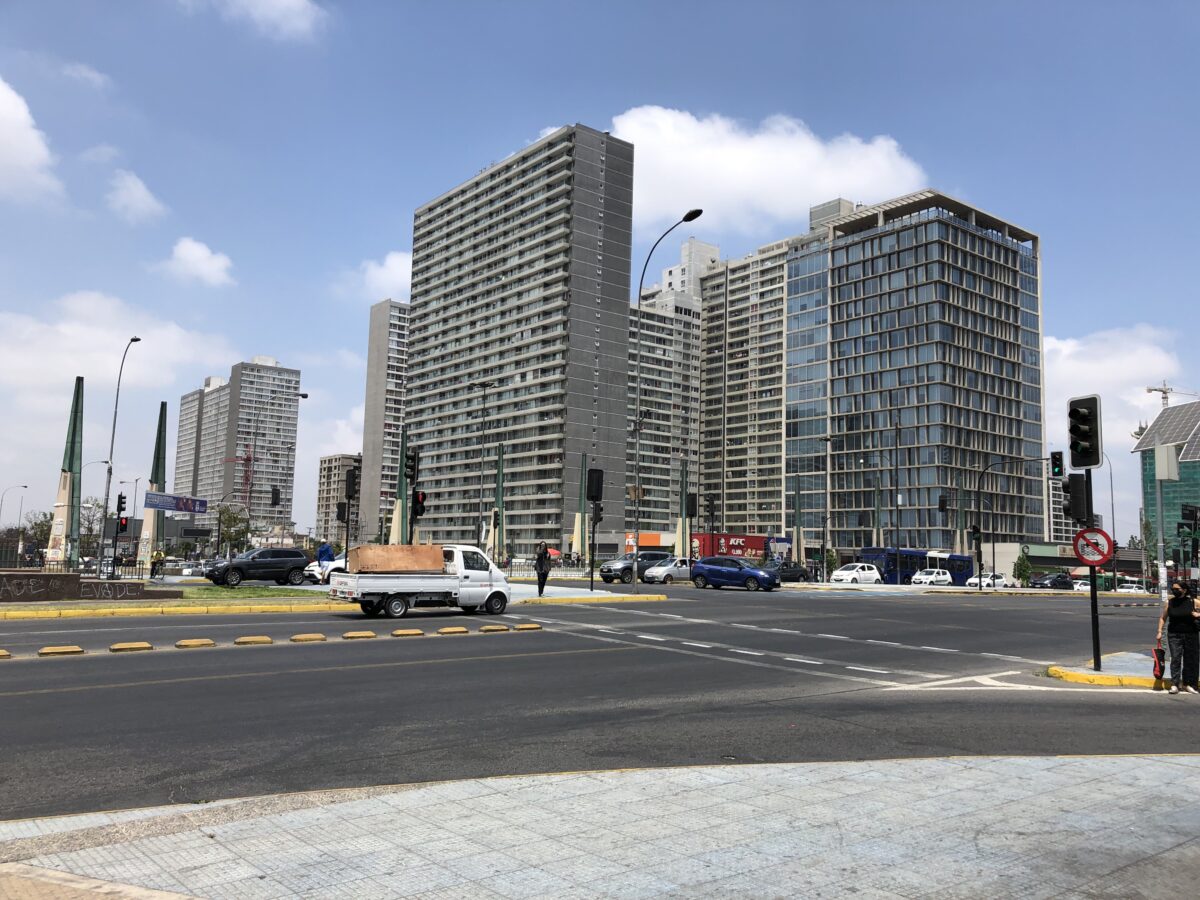
Twenty-story buildings, where each floor has 50 17-square-meter apartments, are called “vertical ghettos” and are inhabited mainly by immigrants. These ones are located in the Estación Central neighborhood, along Alameda Avenue that crosses Santiago de Chile. CREDIT: Orlando Milesi/IPS
Privatization of social housing
Isabel Serra, an academic at the Diego Portales University Faculty of Architecture, believes that “the housing issue in Chile will be solved in some way through family networks…There is a lot of overcrowding here and small families are becoming the norm,” she told IPS.
According to Serra, the mushrooming of camps “clearly has to do with the influx of immigrants and this has grown especially in cities that are also functional or productive or extractivist hubs.”
She criticized the subsidy policy because these “are transferred to the private sector and what they do is drive up housing prices… and most of them are not used because they are not in line with the price of land and housing.”
“A highly financialized private market has made housing a tool for economic speculation…investors have decided to put their funds into the real estate market,” she said.
The problem has already reached the 155-member Constitutional Convention, which has been functioning since Jul. 4 and has a 12-month deadline to draft the new constitution, which must then be ratified in a plebiscite.
In September Melanni Salas and representatives of eight organizations met with Elisa Loncón, president of the Convention, to present her with the book “Constitution and Poverty”, which includes proposals to guarantee the right to housing.
“I hope they include this in the new constitution. The proposals were made by 25,000 excluded people…this document seeks to ensure that we are not left on the sidelines as always,” the community organizer explained.
A human right
Baranda said “in the constituent assembly we are working to get this enshrined as a right and to get the State to assume a leading role, not in the construction of housing itself, but in determining where people are going to live and creating the land bank that people have been demanding for so long.”
“We need the policies, by making land available and expropriating property that is not owned by the State, to create housing projects in places where there is social inclusion,” he stressed.
Serra agreed that “when the issue of housing is discussed in the constituent assembly, it will have to look at how the State buys and sells land.
“Housing is a basic human right and should be enshrined in the constitution, with all the parameters that are established for decent housing,” she argued.
Serra also called for “modernizing the instruments and the institutional framework dedicated to the provision of housing” because, she said, “currently the role of housing provision is clearly played by the market.”
She said it would require “a great deal of political will because land issues in general are political issues, very difficult to implement because there are many economic interests involved.”
Celia “Charito” Durán lives in the Mesana camp on Mariposas hill in the port city of Valparaíso, along with 165 other families, and counting.
The municipality delivers 3,000 liters of water per week to each house, using tanker trucks.
Durán said, however, that the priority is access “because if there is no road, we are cut off from everything: firefighters, water, ambulances.”
In Mesana there is no sewage system, only “cesspools, septic toilets and pipes through which people dump everything into the creek,” she told IPS by telephone.
On the hilltop the wind is very strong and every winter roofs are blown off and houses leak when it rains.
Durán, 56, has lived there since she was 37. She is confident that a solution to the social housing deficit will come out of the constituent assembly, after participating in meetings with Jaime Bassa, vice-president of the Constitutional Convention.
“We have the hope and expectation that the right to housing will be included. So, if tomorrow it is not fulfilled, you could go to the authorities with the right to protest about it,” she said.
“We want to be part of the city and not be segregated and forced to return to the camps,” Durán said.
AUTUMN IN AMERICA The Georgia jury on the Black jogger Ahmaud Arbery’s death did not disappoint America when it delivered a guilty verdict for three white men. The jury proved that liberty and justice for all is possible in America in a red state as the nation agonizingly struggles to attain a more perfect union.
Joe Holland
NEW YORK: The 2022 NYS Gubernatorial race is using lots of print ink. Polls are taken or made up every week. According to latest, Kathy Hochul enjoys a commanding lead with 40%, followed by Letitia James at 17%, de Blasio 7% and Jumaane Williams, at 6.7%. Congressman Tom Suozzi, who represents Queens, and Long Island, just entered the race, as a moderate. According to Ballotpedia, African American entrepreneur Joe Holland joins the 2022 NYS Attorney General race. The Democrats AG lineup includes Eric Gonzalez, Brooklyn DA; Melinda Katz, Queens DA, and Fordham Law Professor Zephyr Teachout.
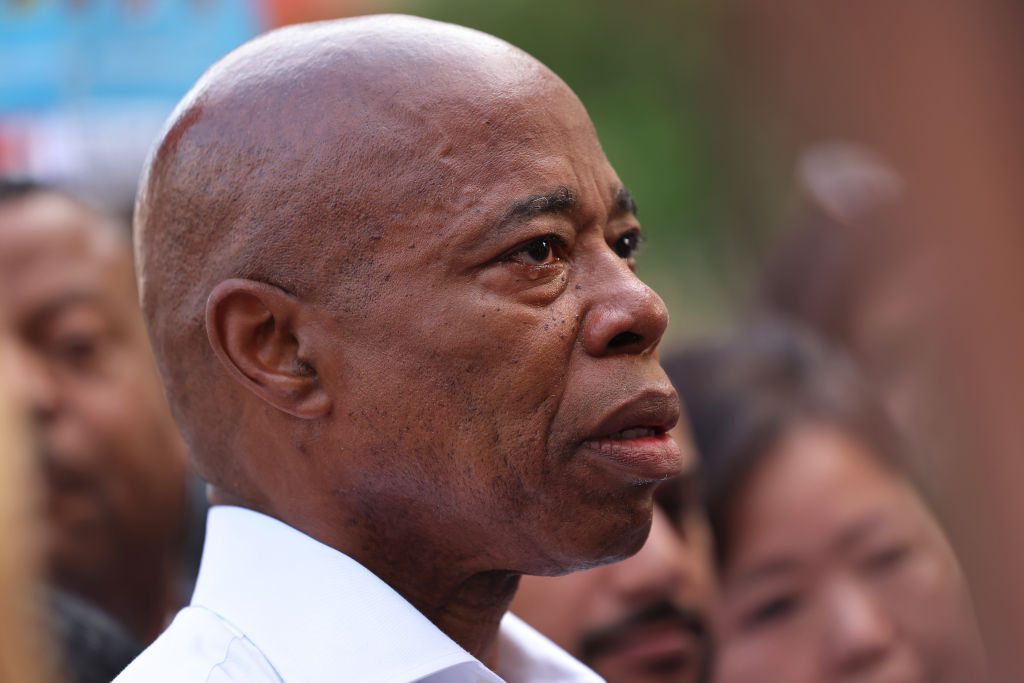
In NY last weekend, the Neo Fascist Proud Boys, dressed in black with faces covered by bandanas, marched without a permit, down the highway, to Rockville Center’s business district in Nassau County where they, distributed flyers and disrupted business. The trigger: the 11/02 GOP victories in Nassau and Suffolk Counties? Or their anger about the Georgia jury verdict regarding the in the Ahmaud Arbery case. NYC Mayor-elect Eric Adams planned to visit Europe this week. He cancelled and decided to visit Ghana instead. Good idea! While in the homeland, Adams should take a side trip to Benin and get the ancestral blessings for the tough road ahead for him as NYC Mayor, the second hardest job in America.
Richard Buery
Robin Hood Foundation CEO Richard Buery’s, NY Daily News opinion piece, HOW ERIC ADAMS CAN MAKE THE WORLD’S GREATEST CITY THE MOST POWER ENGINE OF OPPORTUNITY, should be required reading for urban policy makers nationwide. It is long on stats and solutions to address poverty, education, housing, and eviction prevention. Buery was NYC Deputy Mayor with oversight of the Pre-K program under Hizzoner de Blasio. TEXAS: It is no secret that Governor Greg Abbott must exit the state mansion in 2022. There is a crowded field of gubernatorial contenders on both sides of the aisle, including Texas native son, actor Matthew McConaughey, who recently pulled out of the race. Democrat Beto O’Rourke should be the Abbott successor. Republicans have won questionable races since 2000. Remember the 2018 Governor races in Georgia and Florida, when African American Democrats Tracey Abrams and Andrew Gillum, respectively, lost by small margins. COVID’s myriad variants surface willy-nilly, all the more reason for the vaccination. The latest variant, Omicron, was reported by a South African scientist. Consequently, South Africans and Africans from Namibia, Lesotho, Eswatini, Zimbabwe, Mozambique, Malawi, and Botswana are banned from traveling to the US and the United Kingdom, Paraguay, and Australia. The travel ban in premature. Omicron has been spotted in Hong Kong.
BUSINESS MATTERS A 1,500-foot skyscraper, which would be the highest in NYC and the highest in the Western Hemisphere, is in the planning stage. Its newsworthiness lies with the project’s principals, and African American Dream Team, real estate developer Don Peebles, developer; McKissick and McKissick, construction company; Exact Capital, a real estate development firm, investor; and David Adjaye, architect. The Affirmation Tower will house two hotels, the NAACP headquarters and commercial office rental space. Tower will be located in Manhattan’s Hudson Yards vicinity.
ARTS AND CULTURE THEATER: There is more Black theater for discerning theater aficionados. Previews begin December 6 for MJ THE MUSICAL, yes, as in Michael Jackson, with a book by Lynn Nottage, including more than 25 of the Man in the Mirror’s chart-topping hits. Michael Frost makes his Broadway debut in MJ title character. Visit MJthemusical.com Woodie King’s New Federal Theatre has two plays, GONG LUM’S LEGACY,” by Charles White and A MILES SOLO by Glenn Young, on its 2022 Spring schedule. Visit newfederaltheatre.com The play, THE SLAVE WHO LOVED CAVIAR by writer/poet professor Ishmael Reed satirizes the relationship between American pop culture icons cum fine artists Andy Warhol and Jean-Michel Basquiat, runs in a limited engagement from 12/23 to January 9, at the Theater for The New City, 155 First Avenue, Manhattan. Rome Neal, Director of Nuyorican Poets Café, serves as production coordinator. Call 212.254.1109
BOOKS NOTES: Actor Will Smith’s memoir, WILL, raced to the top of the nation’s best seller book lists. He is also getting media attention for his lead role in the biopix, KING RICHARD, about Richard Williams, the highly-driven dad/coach of world-renown tennis icons Serena and Venus Williams. The Washington Post’s 10 Best Books of 2021 list includes works by three African American women: “The Love Songs of W.E. DuBois” (fiction) by University of Oklahoma Professor Honorée Fannonne Jeffers; “Somebody’s Daughter, A Memoir,” by Ashley Ford and “All She Carried, The Journal of Ashley Sack, A Black Family Keepsake,” a nonfiction story about enslavement and separation by Harvard Professor Tiya Miles. Check out the new kid on the literary block, Digital Canopi, a platform for “Caribbean ebooks, e-textbooks and literary works, past, present and future’ which will launch as live streamed event on Friday, December 3 from 11 am @digitalcanopi.com. MUSIC: Billy Strayhorn is one of four composer/arranger deities who was inducted into the Great American Songbook Hall of Fame, Class of 2021. A Duke Ellington collaborator for almost three decades, Strayhorn’s TAKE THE A TRAIN is rated as one of the top 100 American songs of the 20th Century.
NEWMAKERS RIP: Fashion designer Virgil Abloh, 41, died of a rare form of cancer. Chicago born Abloh was the son of Ghanian immigrants. He earned degrees in engineering and architecture but learned to sew from his mother. In the fashion world, he was a Kanye West collaborator, before launching his Off-White line. In 2019, Louis Vuitton hired him as creative director of men’s wear, which was a first for a Black person with an upscale couturier. He set up a $1 million scholarship for young Black fashion industry leaders and was obsessed with influencing younger generations.
RIP: Malikah Shabazz, 56, the youngest of Malcolm X and Betty Shabazz’s six daughters was found dead by her daughter on November 22, in her Brooklyn, NY apartment. She died a few days after Manhattan D.A. Cy Vance exonerated two men for the wrongful conviction of killing her father. The Shabazz women want the Malcolm X death investigation to be re-opened. A Harlem-based media management consultant, Victoria is reachable at victoria.horsford@gmail.com
An includable leader knows that not everyone comes from the same space with the same privileges. They are aware of systemic barriers that dictate interactions between people of different genders, classes, or abilities, according to the author. Credit: United Nations
BENGALURU, India, Dec 2 2021 (IPS) – In her famous speech ‘The Danger of a Single Story’, Nigerian writer Chimamanda Ngozi Adichie warns us against a singular narrative of a person—a stereotype. This, Adichie asserts, is not because stereotypes are untrue, but because they are incomplete—“They make one story become the only story.” This is true in all walks of life, including in our interactions with people with disabilities at workplaces.
The consequence of the single story, according to Adichie, is that it robs people of dignity. “It makes our recognition of our equal humanity difficult. It emphasises how we are different rather than how we are similar.”
Take the example of my brother, Hari. He topped the MBA programme in Narsee Monjee Institute of Management Studies. He has a visual disability, and he managed his education with the help of audio cassettes, screen reader software, and the internet. But when it came to his placement, none of the employers wanted to hire him because of his ‘blindness’. He went through 70 interviews.
To go beyond the differences, leaders must focus on the commonalities between them and the person they are interacting with. To be an includable leader, one must do away with the us-versus-them narrative
The problem was not that the interviewers saw him as a person with vision impairment, but that they could see only one ‘story’ of him—his disability. It created fear and discomfort, and took precedence over any other stories that would have helped the interviewers see his personality, conduct the interview, and gauge his competence.
They focused so much on how he was different from them that they did not even try to look for similarities. Hari likes cricket, a sport with billions of admirers across the country, and this could have been a conversation starter for some of them. Or someone could have simply said, “Hey, I have never met a blind person. How do I interview you?”
EnAble India’s idea of includability—the ability to include—emerged from this and many other experiences I had with leaders, managers, and employees across organisations. I realised that awareness of differences is not the barrier to includability. It is the inability to create a common ground for dialogue, which requires strategic planning and building competency.
What is includability quotient?
Becoming an includable leader requires cultivating what we call an includability quotient (IncQ)—a competency framework for leaders on how to include diverse people in their organisation. A leader with a high IncQ is able to get the most out of their team, and is guided by three broad principles:
1. Internalising the landscape
An includable leader knows that not everyone comes from the same space with the same privileges. They are aware of systemic barriers that dictate interactions between people of different genders, classes, or abilities. They are also aware of how these barriers intersect, and actively plan strategies to overcome them.
For example, disability, lack of access to education, and poverty are often interlinked. To overcome this, we urged the leaders in a multinational corporation (MNC) we had worked with to hire persons with disabilities who had earned diplomas—for a position for which a degree was otherwise necessary.
The leader took the right decision to hire and provided a level playing field to overcome the inequities which come with the landscape. Their next step was to offer the employees a scholarship to pursue their degree later. Similarly, there are information technology (IT) companies that provide a loan for modified two-wheelers to people with disabilities for easy access to the workplace. In each example, the leader used their competency to distinguish a level playing field from an ‘excuse’.
2. Normalising the differences
To go beyond the differences, a leader must focus on the commonalities between them and the person they are interacting with. An includable leader does not function with an us-versus-them narrative. They actively try to facilitate conversations by using appropriate language and triggers.
However, like all conversations, this normalisation of differences is a two-way process. Employees with disabilities must be equipped with self-advocacy tools that help them to identify as more than their disability. The tools can include hobbies, adjectives, and aspirations that might spark an exchange.
For example, when a leader met Ajay*, a person with intellectual disability who is 38 years old and speaks in monosyllables, the leader didn’t know what to say. However, when Ajay presented them with a card where he described himself as a cricket lover and as Mr Dependable, the leader asked him about cricket. With this topic, Ajay gradually opened up and spoke a couple of sentences. The leader could see his personality, which may not have been possible if only the term ‘intellectual disability’ was ringing in his head.
In another instance, a manager had to familiarise his interns with domain-related video content in an American accent. To make it easier for the interns who might have found a non-Indian accent a barrier to understanding, the manager first introduced similar content in an Indian accent to them. This was a learner-centric approach that worked for people from different backgrounds.
3. Changing expectations
Every person is capable of growth. Our inadequacy as leaders and managers is that at times we fail to remember this. An includable leader uses appreciative inquiry (AI)—an evaluation mechanism that focuses on the strengths rather than the weaknesses of an employee. This is applicable to employees coming from all kinds of spaces—be it a person with or without disability. And it is done with the belief that what you focus on will grow.
Whenever a new employee joins the team, the leader figures out their strengths and gains an understanding of the systemic barriers they face. From here both of them can go on to co-create solutions. Once this is done, the boundaries need to be pushed by focusing on the employee’s strengths.
Take, for instance, the case of an MNC that hired a person with intellectual disability for an internship. In the initial days, the intern mostly interacted with their manager and a colleague who was assigned to them as a buddy. With time the intern was made to attend presentations, which interested them enough to want to present on their own.
The MNC’s strategy was to make the intern speak on any topic of their choice for five minutes to a small team. As a second step, the management provided the intern with the topic to speak on. And, finally, the intern was asked to make a formal presentation to a larger team.
The MNC’s process of gradually moving the metre helped the intern gain confidence to speak in front of people and accumulate technical knowledge from the interactions. This kind of intervention helps employees not only in their current job but also going forward in their career. Additionally, a leader skilled enough to design and implement such a process gathers the confidence to work with team members from various facets of society.
Lessons for nonprofits
These are not easy lessons to learn for even the most eager leaders and managers—not because they do not want to engage, but often because they do not have a language to communicate their guilt, worries, and discomfort when they encounter a person they see as different from themselves.
Finding that common language requires a leader and a colleague to first learn to self-include. This involves feeling comfortable about themselves by gaining awareness of their own space, which comes with its own difficulties. It includes being able to speak openly about their problems and concerns—be it personal or professional. It is only then that a workplace can become truly inclusive.
As facilitators working with organisations, our job is to make space for these conversations at various levels. This requires us to build a nuanced understanding of the various elements that form an organisation—only then can we come up with tools, methods, and strategies. Here are some of the lessons I have learnt over the years:
1. An includable workplace is more than the leader
While speaking with and educating leaders is an essential part of creating an inclusive workplace, the idea needs to travel across the organisation. The leadership has to play the role of an implementer in bringing changes at various levels. This includes individuals being comfortable with and understanding the needs of a colleague with disability, as well as people with disabilities being able to assert an identity that is more than their disability.
2. ‘Peacetime’ interactions go a long way
We have seen that people with disabilities and those without have more fruitful interactions when these are facilitated during ‘peacetime’—an informal, non-work setting. For instance, when a person without disability studies with a person with disability at school or when they work together as volunteers, there’s a chance that they might be able to build a sustainable bond that’s beyond notions of ability and disability. Peacetime creates an exposure opportunity where the knowing and acceptance happens in a non-threatening way.
3. Facilitators need to keep introspecting
Conversations around disabilities demand a space of vulnerability. This is true for participants across the intersections of people with disabilities, non-profit facilitators working with people with disabilities, and leaders. It is easy to form attachments, look out for each other, and become protective of each other. However, as facilitators, we must be wary of our actions that stem from these emotions.
Our well-intentioned protectiveness can stand in the way of a person being able to push their limits and prepare for the competitive world of employment. This is a clear deviation from our own idea of building together a more equitable world. Thus, we need to constantly evaluate our actions. Because that equitable world—in Adichie’s words, “a kind of a paradise”—will emerge not from our guilt or pity, but from our rejection of the singular narratives of individuals.
*Name changed to maintain confidentiality.
With contributions from Gayatri Gulvady.
Shanti Raghavan, the author of this article, is a social entrepreneur and the co-founder of EnAble India, which works towards providing economic independence to persons with disability
Mon, 11/29, 3 pm — P&P Live! Sarah Chayes: ON CORRUPTION IN AMERICA with Timothy Noah — Join P&P Live! to celebrate the paperback release of Sarah Chayes’s new book, On Corruption in America, with Timothy Noah — This event is in partnership with The New Republic — Sarah Chayes writes in On Corruption, that the United States is showing signs similar to some of the most corrupt countries in the world. Corruption, she argues, is an operating system of sophisticated networks in which government officials, key private-sector interests, and out-and-out criminals interweave. Their main objective: not to serve the public but to maximize returns for network members — Sarah Chayes has served as special assistant on corruption to Mike Mullen, former chairman of the Joint Chiefs of Staff, as well as having advised David McKiernan and Stanley McChrystal. She has been a reporter for National Public Radio from Paris, covering Europe and the Balkans. Chayes is the author ofThe Punishment of Virtue: Inside Afghanistan After the Taliban and Thieves of State: Why Corruption Threatens Global Security, winner of the 2016 Los Angeles Times Book Prize — Chayes will be in conversation with Timothy Noah, who began his journalism career at The New Republic and since May 2020 has written a weekly column for the magazine’s website. He has worked at numerous outlets including The Wall Street Journal, Slate, and Politico. Noah’s 2011 Slate series on income inequality won the Sidney Hillman Prize and became the 2012 book The Great Divergence: America’s Growing Inequality Crisis and What We Can Do About It: https://www.eventbrite.com/e/pp-live-sarah-chayes-on-corruption-in-america-with-timothy-noah-tickets-188586526377?aff=erellivmlt
Mon, 11/29, 6 pm — RESCHEDULED! Paul Auster discusses “Burning Boy” with Eric Lorberer — Booker Prize-shortlisted and New York Times bestselling author Paul Auster makes a most welcome return to our Reading Series, this time virtually, to discuss Burning Boy: The Life and Work of Stephen Crane (Henry Holt), his new biography of American literary icon and war reporter. He appears in conversation with Eric Lorberer. “Paul Auster’s all-in obsessive engagement with the 19th century Bad Boy of American literature, Stephen Crane, is brilliant and beautiful. Auster’s mastery of the historical context, his writerly, troubled, imaginative insights into Crane’s character and the analysis of the works, all superb. And the prose is beautiful — lucid and clear, and yet lyrical and personal. I was deeply moved by his portrayal of Crane’s relationships with Conrad and James and other writers of the time and Crane’s common law wife, Cora, and his judgmental, bourgeois older brother William. And his delicacy regarding Crane’s other relations with women. All of it. What a story! This is more than a novel, more than a biography, more than a book of critical analysis. This is a significant work of literature. And the most profound homage of one writer to another that I’ve ever read.” —Russell Banks, author of Cloudsplitter and The Sweet Hereafter.” — Paul Auster is the bestselling author of 4 3 2 1, Sunset Park, Invisible, The Book of Illusions, and the New York Trilogy, among many other works. In 2006 he was awarded the Prince of Asturias Prize for Literature. Among his other honors are the Prix Médicis étranger for Leviathan, the Independent Spirit Award for the screenplay of Smoke, and the Premio Napoli for Sunset Park. In 2012, he was the first recipient of the NYC Literary Honors in the category of fiction. He is a member of the American Academy of Arts and Letters and a Commandeur de l’Ordre des Arts et des Lettres — Eric Lorberer is the Executive Director of Rain Taxi, a nonprofit organization that publishes the nationally acclaimed quarterly Rain Taxi Review of Books and organizes the annual Twin Cities Book Festival: https://www.eventbrite.com/e/rescheduled-paul-auster-discusses-burning-boy-with-eric-lorberer-tickets-208197172347?aff=ebdssbonlinesearch
Mon, 11/29, 7 pm — Fireside Film Night – Gaza Fights for Freedom — In honour of the International Day of Solidarity with the Palestinian People, join us for an encore screening of this powerful documentary! — Free online screening: Gaza Fights for Freedom (2019, 1hr 24min) by Abby Martin REGISTER FOR GAZA FIGHTS FOR FREEDOM (The Zoom link to join the live event will be sent to you after registration.) “This collaboration shows you Gaza’s protest movement like you’ve never seen before. Filmed during the height of the Great March Of Return protests, it features exclusive footage of demonstrations where 200 unarmed civilians have been killed by Israeli snipers since March 30, 2018.” — 6:30pm – chat lobby opens — 7:00pm – Welcome; land acknowledgment followed by film screening and discussion — Fireside Film Night is a new free online series featuring important independent films, documentaries and lively discussions. On the fourth Friday of every month, we get together virtually for participatory, fun and thought-provoking evenings. Join us!: https://www.eventbrite.com/e/fireside-film-night-gaza-fights-for-freedom-tickets-215933722577?aff=ebdsoporgprofile
Tue, 11/30, 8 am — Is Neoliberalism Finished? — Join Haymarket Books and Spectre Journal for a discussion of Neoliberalism and the future of the global economy — After the failures of Keynesianism in the 1970s, the capitalist classes of the world turned to neoliberalism to discipline workers and restore profitability. In the wake of the Great Recession of 2008-10, capitalism has been mired in a long-term global slump and neoliberal policies have been unable to trigger a new boom. Is neoliberalism finished? Are states returning to Keynesianism? Will that work? Why is the world economy locked in a slump? — Join this webinar to hear answers to these and other questions from Prabhat Patnaik, Michael Roberts, and David McNally — Speakers: David McNally teaches history at the University of Houston. He is an editor of Spectre journal, and the author of seven books, including Blood and Money: War, Slavery, Finance and Empire (Haymarket Books 2020) — Michael Roberts is a British-based Marxist economist and author who worked as a professional economist in financial institutions for 40 years. He is author of several books: The Great Recession – a Marxist View (2009); The Long Depression (Haymarket 2016); World in Crisis joint ed (Haymarket 2018) and Marx 200 (2018) — Prabhat Patnaik is a well-known radical economist. He has written extensively on macroeconomics, development economics, and political economy. His books include Accumulation and Stability Under Capitalism and The Retreat to Unfreedom: https://www.eventbrite.com/e/is-neoliberalism-finished-tickets-214105163307?aff=ebdsoporgprofile
Tue, 11/30, 4 pm — Virtual Talk: “On Corruption in America” with Sarah Chayes — A major work that looks homeward to America, exploring the insidious, dangerous networks of corruption of our past, present, and future — Author Sarah Chayes thinks the United States resembles some of the most corrupt countries in the world. She says that corruption is an operating system of sophisticated networks in which government officials, key private-sector interests, and out-and-out criminals interweave. Their main objective: not to serve the public but to maximize returns for network members — Corruption isn’t new. It’s thrived within our borders for a very long time: from the titans of America’s Gilded Age (Andrew Carnegie, John D. Rockefeller, and J.P. Morgan) to the collapse of the stock market in 1929. There’s proof everywhere: The Great Depression; FDR’s New Deal; Joe Kennedy’s years of banking, bootlegging, machine politics, and pursuit of infinite wealth; and the deregulation of the Reagan Revolution. More recently, she points to Clinton’s policies of political favors and personal enrichment and Trump’s hydra-headed network of corruption which aimed to systematically undo the Constitution and our laws — In this unflinching exploration of corruption in America, Chayes reveals how corrupt systems are organized, how they enable bad actors to bend the rules so their crimes are covered legally, how they overtly determine the shape of our government, and how they affect all levels of society, especially when the corruption is overlooked and downplayed by the rich and well-educated. She also reveals what is at stake if we don’t stop it: https://www.eventbrite.com/e/virtual-talk-on-corruption-in-america-with-sarah-chayes-registration-169353217031?aff=erellivmlt
Tue, 11/30, 7 pm — Seth Klein – A Good War: Mobilizing Canada for the Climate Emergency — The Mir Centre for Peace presents… Seth Klein – A Good War: Mobilizing Canada for the Climate Emergency — Is what we are seeing and hearing from COP26 and in the federal government’s latest climate plans aligned with the emergency we face? Author and longtime climate activist Seth Klein has something to say about that — Drawing on lessons from our wartime experience, Klein offers an original and uniquely hopeful vision of a way through the climate crisis. Reminding us that we have come together before in common cause across class, race and gender, he shows us that it is possible to entirely retool our economy in the space of a few short years, and align our politics and economy with what the science says we must do to address the climate crisis. We can do this! Join us to learn how — Seth Klein is the Team Lead and Director of Strategy of the Climate Emergency Unit (a 5-year project of the David Suzuki Institute that Seth launched in early 2021). Prior to that, he served for 22 years (1996-2018) as the founding British Columbia Director of the Canadian Centre for Policy Alternatives, a public policy research institute committed to social, economic and environmental justice. He is the author of A Good War: Mobilizing Canada for the Climate Emergency (published in 2020) and writes a regular column for the National Observer: https://www.eventbrite.com/e/seth-klein-a-good-war-mobilizing-canada-for-the-climate-emergency-tickets-203233776697?aff=ebdssbonlinesearch&keep_tld=1
Wed, 12/1, 12:30 am — Scholars United for a Sustainable Amsterdam (SUSA) Conference — Please join us on 1 December for the SUSA conference: Radically interdisciplinary and bottom-up solutions for making Amsterdam donut-proof — About the conference: During 2021, Scholars United for a Sustainable Amsterdam (SUSA) brought together Amsterdam’s academics to help Amsterdam realise its ambition to align with the model of donut economics. Amsterdam’s citizens shared stories about obstacles standing in the way of more sustainable ways of living or doing business. During this conference, four interdisciplinary teams of academics will share their ideas and work with the audience to overcome key barriers to a sustainable city. The conference is in English — Conference Schedule (Amsterdam time — subtract 9 hours for Pacific time): 9:30 – 9.45 — Coffee & Registration 9:45 – 09:50 — Welcome by the organisers 09:50 – 10:00 –Introduction by André Nollkaemper, dean of the Amsterdam Law School 10:00 – 11.00 –Keynote address by Kate Raworth, author of Doughnut Economics 11.00 –11.15 –Coffee 11:15 – 11:45 –Roundtable 1: A Bottom-up City. Trust and collaboration in Amsterdam’s neighbourhoods 11.45 – 12.15 –Roundtable 2: Rethinking Garbage. A proposal for improving information and awareness about waste 12.15 – 13.15 –Lunch 13.15 – 13.45 –Roundtable 3: Measurability. An exploration of the potential of measurability for big system change 13.45 –14.15 –Roundtable 4: Flipping the Donut. Living in harmony with urban nature 14.15 –14:30 –Closing remarks by Philipp Pattberg, professor environmental policy analysis, VU 14.30 – 15.00 –Speed networking & discussion: https://www.eventbrite.com/e/scholars-united-for-a-sustainable-amsterdam-susa-conference-tickets-202970940547?aff=ebdssbonlinesearch&keep_tld=1
Wed, 12/1, 11 am — Reading Gramsci: Against War — The December 2021 Reading Gramsci meeting centres on a letter that Gramsci wrote in 1918, exploring the language and discourse of war — The December 2021 Reading Gramsci meeting centres on a letter that Gramsci wrote in 1918, exploring the language and discourse of war. Gramsci invites reflections on the temporary nature of words and the perseverance of meaning that they leave behind as language evolves over time. The Reading Gramsci Events focus on a different reading each month so anyone can join — Find a FREE copy of the letter via this link: https://drive.google.com/file/d/1JOEq4oT6gpApRgCXS-iznishRGkLomnu/view?usp=sharing The Eventbrite page is here: https://www.eventbrite.co.uk/e/reading-gramsci-against-war-tickets-217849683267?aff=ebdsoporgprofile
Wed, 12/1, 12 Noon — JFSL (Journal of Free Speech Law) Public Panels — UCLA’s Institute for Technology, Law & Policy and the University of Arizona’s TechLaw Program are pleased to host a set of virtual public panels — December 1, 2021 – 11:00 AM (PST) (Hosted by UCLA ITLP) – Panel with Jack Balkin, Mark Lemley, Daphne Keller, and Eugene Volokh; December 6, 2021 – 12:00 PM (PST) (Hosted by UCLA ITLP and UA TechLaw) – Panel with Nadine Strossen, Eugene Volokh, Ash Bhagwat, and Jane Bambauer: https://www.eventbrite.com/e/jfsl-public-panels-tickets-195546834847?aff=erelpanelorg
Wed, 12/1, 3 pm — Fight Club: The Great Debt Debate (Post-Game Q&A) — Economists Michael Hudson, Pavlina Tcherneva and Steve Keen enter the ring to answer your questions about money and debt! — Nika Dubrovsky, widow of the late David Graeber, has established “The Fight Club” to keep David’s unique way of challenging conventional wisdoms alive. Each “Fight” will pit leading advocates, thinkers and visionaries against each other — The inaugural fight was a debate between the renowned economists Thomas Piketty, author of “Capital in the Twenty-First Century”, and Michael Hudson, author of “And Forgive Them Their Debts”. You can watch it here: https://www.youtube.com/watch?v=GWT0uvBLDbo — Join us for a follow up Q & A session with Hudson, Pavlina Tcherneva and Steve Keen. They will discuss: what is money and what is debt? What are the most serious problems of today’s finance-capital economies? And what are the best remedies? Come with your questions! — Event sponsored by the Hannah Arendt Center for Politics and Humanities, the Economic Democracy Initiative, and the Museum of Care: https://www.eventbrite.com/e/fight-club-the-great-debt-debate-post-game-qa-tickets-211392088427?aff=ebdssbonlinesearch
Wed, 12/1, 4 pm — Virtual Screening: The War on Cuba — Join the virtual screening of The War on Cuba, followed by virtual conversation with the CMLK Center and journalist Liz Oliva in Havana — The documentary series shows the impact of U.S. sanctions and U.S. interventionism that the grassroots of the US, and all listeners, need to know about and denounce. The Blockade whose express intent is to cause hardship and incite violence- and whose impacts hit hardest along race, class, and gender- has been illegally imposed, with rejection from most of the world, for six decades. Then, the Trump administration tightened it, adding 243 more sanctions. These compounded the challenge caused by the COVID-19 pandemic, and the sudden evaporation of tourism dollars in the Caribbean. The economic hardship has resulted in scarcity in all areas from food, transportation, electricity, and vital medicines. People spend hours in long lines and live with uncertainty and growing inequality despite expansive public programmes, paid time off for COVID, salary raises, and subsidized foods through the libreta neighbourhood system. Daily life has been very hard for most Cubans — The second season of The War on Cuba uncovers the truth behind the mysterious health incidents known as the “Havana Syndrome,” examines the driving forces behind Cuba’s unprecedented July 11 protests and reveals the political interests that pushed Biden to flip-flop on Cuba policy — This will be an opportunity for grassroots organizations, students and community members to learn more about the effects of U.S sanctions on Cuban people. We will also hear about solidarity and what we can do to promote human-centered US economic and political policies towards Cuba — Organized by the Witness For Peace Solidarity Collective: https://www.eventbrite.com/e/virtual-screening-the-war-on-cuba-tickets-214317849457?aff=ebdssbonlinesearch
Thu, 12/2, 11 am — The Great American Novel Series: Go Tell It on the Mountain (James Baldwin) — What makes Go Tell It on the Mountain a great American novel? — James Baldwin’s semi-autobiographical novel follows the story of Jim Grimes in 1930’s Harlem as he navigates fraught relationships with his family and the church. What makes Go Tell It on the Mountain a great American novel? How does the novel engage with or mirror biblical imagery, and what role does biblical allusion play in the work? Who influenced Baldwin’s writings, and who did his writings influence? — Join the National Association of Scholars on December 2nd to find out! — This event will feature Douglas Field, Senior Lecturer in 20th Century American Literature at The University of Manchester; Doug Sikkema, Assistant Professor of Core Studies and English at Redeemer University; and Ralph Wood, University Professor of Theology and Literature at Baylor University: https://www.eventbrite.com/e/the-great-american-novel-series-go-tell-it-on-the-mountain-james-baldwin-tickets-158150108231?aff=ebdsoporgprofile
Thu, 12/2, 3:30 pm — James Lawson Institute: Civil Resistance & Nonviolent Movements — Immigration – 1950s to Now – What Has Changed, What Remains? — Please join us for the James Lawson Institute for the Research and Study of Nonviolent Movements at Vanderbilt University for our inaugural fall series. In this series, we will explore Movements in Nonviolence through research, conversations, and practices to prepare the next generation to engage in nonviolent approaches to social change — Immigration – 1950s to Now – What Has Changed, What Remains? — Join for a screening of the documentary “My name is Maria De Jesus” and a discussion on immigration rights and the struggle for just policies: https://www.eventbrite.com/e/james-lawson-institute-civil-resistance-nonviolent-movements-tickets-208063472447?aff=ebdsoporgprofile
Fri, 12/3, 3 am through 12/10 — Join David Graeber Tribute LSE Anthropology Friday Seminar Series — In Honour of David Graeber: Exploring the Fissures and Cracks — An LSE Anthropology Seminar series that strives to come to terms with our dear colleague and friend’s extraordinary intellectual generosity and optimism. In each session, two anthropologists will lead a critical discussion on one of David Graeber’s key gifts of writing, exploring the fissures and cracks, as David liked to, in order to grow our thoughts and actions. Chaired by Alpa Shah — 3 December 2021 Bureaucracy; Nayanika Mathur (Oxford Assoc Professor Anthropology) and Michael Herzfeld (Harvard Monrad Research Professor of the Social Sciences): 10 December 2021 Bullshit Jobs; Mao Mollona (Goldsmiths Senior Lecturer Anthropology) and Andrew Sanchez (Cambridge Associate Professor Anthropology): https://www.eventbrite.com/e/join-david-graeber-tribute-lse-anthropology-friday-seminar-series-tickets-164329216109?aff=ebdssbonlinesearch&keep_tld=1
Fri, 12/3, 11 am — ODDconvo: Creating Utopia — What worlds get to exist beyond our imagination? — Utopia literally means ‘nowhere.’ For some people, that may seem bleak. For us here at GariTalks, Nowhere is the space of infinite possibility — Creating Utopia, part of the ODDconvo (Oh Das Deep conversations) series, is a space to collectively channel the power of Imagination to generate new ideas about what this world around us could look like — “Imagination is the only weapon in the war against reality.” – Lewis Carroll — Once a month, on the 1st Friday, we gather and actively ask ourselves the questions: “What worlds get to exist beyond what we currently see and don’t see? What worlds are we longing to build?” — Come talk about the unexpected. Come share in the power of dreaming — GariTalks: Creating spaces for transformative healing experiences through intentional reflection, connective dialogue, and mindfull storytelling: https://www.eventbrite.com/e/oddconvo-creating-utopia-tickets-165484062285?aff=ebdssbonlinesearch
Fri, 12/3, 3 pm — “The Ants & The Grasshopper” Screening & Community Talk — Please join the University of California, Merced for a community discussion regarding the film, “The Ants & The Grasshopper” on Friday, 12/3 at 3 pm PST — About the Film: “Traveling from Malawi to California to the White House, Anita Chitaya sets out on a journey to persuade Americans that climate change is real.” — Directed by Zak Piper and Raj Patel — A link to screen the film will be emailed to those registered on 12/2. The film will be available to watch for the 48 hours before the community discussion on 12/3 at 3 pm PST — The event is free and open to the public: https://www.eventbrite.com/e/the-ants-the-grasshopper-screening-community-talk-tickets-215369705587?aff=ebdssbonlinesearch
Sun, 12/5, 11 am — WHAT’S LOVE GOT TO DO WITH IT?: A Conversation With Richard Gilman-Opal — Exploring seldom asked and deeply radical concepts at the cutting edge of creating a more humane world — In The Communism of Love, Richard Gilman-Opalsky makes the case that what is called “love” by the best thinkers, is in fact, the beating heart of communism—understood as a form of life, not as a form of government — Why is capitalist exchange value the enemy of love? Does the human aspiration to love embody a longing for communist relationality? In the ruins of the 20th Century’s revolutions, what is communism anyway? And in a world dominated by violence and hate can we find ways to create and build love? Why do these questions matter relative to human development and social justice? — Join Gilman-Opalsky and Dan Friedman for this open conversation—your questions and comments welcome—exploring seldom asked and deeply radical concepts at the cutting edge of creating a more humane world — PRESENTERS: Dan Friedman is a member of the faculty of the East Side Institute and Artistic Director Emeritus of the Castillo Theatre, which he helped to found in 1983. He is managing producer of the Institute’s podcast, “All Power to the Developing,” and co-chair, with Lois Holzman, of Performing the World Happening(s). He is a playwright and theatre director with a doctorate in theatre history from the University of Wisconsin. His latest book, Performance Activism: Precursors and Contemporary Pioneers, is the first book-length study of performance activism, to be published by Palgrave later this year — Richard Gilman-Opalsky is Professor of political theory and philosophy in the School of Politics and International Affairs at the University of Illinois at Springfield. He is the author of six books, including The Communism of Love, Specters of Revolt, Precarious Communism and Spectacular Capitalism. He is also co-editor of the book Against Capital in the Twenty-First Century and co-author of Riotous Epistemology. He has lectured widely throughout North America and Europe, including at Goldsmiths University of London, Loughboro University, University of Essex, at University of La Plata Argentina, and as visiting professor at Shaanxi Normal University in China: https://www.eventbrite.com/e/whats-love-got-to-do-with-it-a-conversation-with-richard-gilman-opal-registration-201900097627?aff=ebdssbonlinesearch
Mon, 12/6, 10 am — A Conversation between James Kelman and Noam Chomsky — Join us on Monday, December 6th for a conversation between James Kelman and Noam Chomsky — This event is the virtual book launch event for Between Thought and Expression Lies a Lifetime: Why Ideas Matter — Between Thought and Expression Lies a Lifetime: Why Ideas Matter is an impassioned, elucidating, and often humorous collaboration. Philosophical and intimate, it is a call to ponder, imagine, explore, and act — James Kelman is a Scottish novelist, short story writer, playwright, and essayist whose many literary awards include the Booker and James Tait Black prizes. He started writing at the age of twenty-two: ramblings, musings, sundry phantasmagoria, stories, whatever. In 1969 while working in London he met and married Marie Connors from South Wales. They settled in Glasgow, where he has lived as writer, father, and grandfather. Kelman has been a vocal supporter of the Kurdish people and campaigns regularly with Scottish Solidarity with Kurdistan — Noam Chomsky is a laureate professor at the University of Arizona and professor emeritus in the MIT Department of Linguistics and Philosophy. His work is widely credited with having revolutionized the field of modern linguistics and Chomsky is one of the foremost critics of U.S. foreign policy. He has published numerous groundbreaking books, articles, and essays on global politics, history, and linguistics. His recent books include Who Rules the World? and Hopes and Prospects: https://www.eventbrite.com/e/a-conversation-between-james-kelman-and-noam-chomsky-tickets-193148320827?aff=erellivmlt
Mon, 12/6, 2 pm — Ask Me Anything Featuring Leslie Davenport — Please join the University of California, Merced on Monday, 12/6 at 2 PM PST for an AMA (Ask Me Anything) with Leslie Davenport! — Biography: Leslie Davenport (she/her/hers) works as a climate psychology educator and consultant, integrating social science insights into relevant resources for organizations exploring the intersectionality of climate, economics, policy, and social justice. She helped shape the document, “Mental Health and Our Changing Climate: Impacts, Implications, and Guidance.” She is the author of four books including Emotional Resiliency in the Era of Climate Change and All the Feelings Under the Sun. She is an advisor for the non-profits Project InsideOut, Integrative Healers Action Network, and One Resilient Earth, and is on faculty with the California Institute of Integral Studies, Master’s program in Professional Psychology and Health. http://www.lesliedavenport.com — This virtual event is free and open to the public — Can’t attend, but have a question for Leslie? Email emeyer4 [at] ucmerced.edu the question: https://www.eventbrite.com/e/ask-me-anything-featuring-leslie-davenport-tickets-204207830117?aff=erelpanelorg
Mon, 12/6, 7 pm — Introduction to Drawdown Climate Solutions — This webinar will introduce the basic concepts of Drawdown, a solution-based approach to climate action — Climate Change can be reversed! Peer reviewed international research shows that it is possible to actually “drawdown” our greenhouse gases. These solutions to our climate crisis exist right now – we just need to implement them on an individual, community, national, and global level — Organized by Drawdown BC: https://www.eventbrite.com/e/introduction-to-drawdown-climate-solutions-tickets-172937489687?aff=ebdssbonlinesearch
Tue, 12/7, 10 am — Regenerative Futures — *Please note this is a Zoom webinar and places are limited. If you wish to join the event please register for a ticket* — The 2021 Bicentenary Medal Address Regenerative Futures: redesigning the human impact on earth — Dr Daniel Christian Wahl is awarded the 2021 RSA Bicentenary Medal in recognition of his outstanding contribution to regenerative design — In his Medal address, Dr Wahl will offer reflections on 20 years of research and professional practice exploring the role of design as a catalyst for the transition towards a future of diverse regenerative cultures everywhere — Speaker: Daniel Christian Wahl, educator and author of Designing Regenerative Cultures: https://www.eventbrite.co.uk/e/regenerative-futures-tickets-213574786937?aff=ebdsoporgprofile
Wed, 12/8. 11 am — GM ‘Designer Babies’: Breakthrough or Nightmare? — Three years after the world’s first genetically modified babies were created, what are the implications for society? — Dec 8th: Organised by Stop Designer Babies — In 2018, the Chinese scientists created the world’s first genetically modified (GM) babies. Despite the worldwide outrage, next March the science establishment are meeting in London to push the ‘genome editing’ agenda forward — Some scientists claim that genetic modification is needed to prevent genetic diseases, but is that really true? In a world still riven with disability, race and class oppression and other examples of eugenics, will allowing people to engineer their babies’ genes make social inequalities even worse? Will it turn children into just another designed and optimised commodity? — Join us at our free online event to discuss these issues and what we can do about them — Sigrid Graumann, feminist bioethicist and member of the German Ethics Council will make the case against GM babies — Angus Clarke, clinical geneticist from Cardiff University will explain why genetic modification is unnecessary — PLUS contributions from members of Stop Designer Babies (SDB) — For more information, or to be kept informed about SDB events, contact info at: stopdesignerbabies.org We are planning another event in February on the links between climate, GM food and GM babies: https://www.eventbrite.com/e/gm-designer-babies-breakthrough-or-nightmare-tickets-210931560977?aff=ebdssbonlinesearch&keep_tld=1
Wed, 12/8. 5 pm — A Top Thinker Discusses our Personal, National and Global Crises — Jared Mason Diamond is an American geographer, historian, ornithologist, and author best known for his popular science books The Third Chimpanzee (1991); Guns, Germs, and Steel (1997, awarded a Pulitzer Prize); Collapse (2005), The World Until Yesterday (2012), and Upheaval (2019). Originally trained in biochemistry and physiology, Diamond is known for drawing from a variety of fields, including anthropology, ecology, geography, and evolutionary biology. He is a professor of geography at UCLA. Diamond has been ranked ninth on a poll by Prospect and Foreign Policy of the world’s top 100 public intellectuals: https://www.eventbrite.com/e/a-top-thinker-discusses-our-personal-national-and-global-crises-tickets-205806020347?aff=ebdssbonlinesearch
Thu, 12/9, 9 am — BLACK LIBERATION & WORKER COOPERATIVES: Innovative Organizing — The COVID crisis further exposed the social, political and environmental inequities embedded in our society. However, the pandemic created opportunities for communities to organize and practice cooperative solutions to enhance capacity for fundamental system change. Join us to learn about the innovative work of Cooperation Jackson — Featuring: Kali Akuno Co-Founder & Co-Director – Cooperation Jackson — Rebecca Lurie Director, Community Worker Ownership Project, Faculty – CUNY School of Labor & Urban Studies: https://www.eventbrite.com/e/black-liberation-worker-cooperatives-innovative-organizing-tickets-215795579387?aff=ebdsoporgprofile
Thu, 12/9, 9 am — Algorithmic Desire and the Ideology of Twenty-First Century Capitalism — Much has been written about the more deleterious dimensions of social media websites, platforms, and apps, from Facebook, Twitter, and YouTube, to Instagram and Snapchat, dating apps like Tinder, and more recent apps like TikTok. We are all more than familiar with critiques of social media corporate and government surveillance, the commodification, expropriation and exploitation of user-provided data, the tailoring and curation of content, and of course recent dilemmas focused on fake news tying our use of social media to international cyberwarfare. Given all of these potential problems, why don’t we just give up and abandon our attachment to social media? How might we grapple with the exploitative and anti-democratic aspects of social media set against the kinds of enjoyment that it procures? — Despite some of these problems, Matthew Flisfeder argues that social media helps us to grasp the co-ordinates, not merely of our trouble with machines and new media, but with the larger totality of twenty-first century capitalism. Conceiving social media as a central metaphor for our historical present, Flisfeder proposes extending the concept to its fullest potentials. Instead of abandoning the concept, Flisfeder argues that the term social media helps us to render what is problematic about contemporary neoliberal capitalism, proposing that it is only by pursuing and failing to achieve a truly authentic social media as our goal that we are best positioned to understand the real contradictions of our time, as well as dominant forms of subjectivity, consciousness, and enjoyment — Biography: Matthew Flisfeder is an Associate Professor of Rhetoric and Communications at The University of Winnipeg (Canada). He is the author of Algorithmic Desire: Toward a New Structuralist Theory of Social Media (Northwestern UP 2021), Postmodern Theory and Blade Runner (Bloomsbury 2017), The Symbolic, The Sublime, and Slavoj Žižek’s Theory of Film (Palgrave Macmillan 2012), and co-editor of Žižek and Media Studies: A Reader (Palgrave Macmillan 2014): https://www.eventbrite.com/e/algorithmic-desire-and-the-ideology-of-twenty-first-century-capitalism-tickets-170528374960?aff=erellivmlt&keep_tld=1
Thu, 12/9, 10:30 am — Brazil’s 2022 election: Lula’s return Vs Bolsonaro’s anti-democratic agenda — Brazil elections 2022: Take a stand with the resistance against Bolsonaro’s anti-democratic crackdown – for Lula & Brazilian Democracy! — Brazil’s 2022 election: Lula’s return Vs Bolsonaro’s anti-democratic clampdown — With elections under a year away, Bolsonaro has been ramping up threats against democracy and the electoral system. The far-right President has openly said that he will claim fraud if he loses, and that “only god” can remove him from power — We must show the far-right in Brazil that the world is watching, and support the huge movements of resistance against Bolsonaro. If elections were held today, former President Lula da Silva would win in the first round — Show your international solidarity and support with: Richard Burgon MP – Brazil Solidarity Initiative Chair; Nathalia Urban – Journalist, Brasil Wire; Alex Main – Policy Analyst, Centre for Economic and Policy Research (US) — This election is crucial for the social, indigenous, environmental, quilombo, trade union, LGBT+, women’s, black and other groups fighting back against Bolsonaro’s reactionary and hate-filled agenda — Please show your solidarity and support. This event is hosted by the Brazil Solidarity Initiative: https://www.eventbrite.co.uk/e/brazils-2022-election-lulas-return-vs-bolsonaros-anti-democratic-agenda-tickets-195876551037?aff=erellivmlt
Thu, 12/9, 11 am — Dialogue III: Deep Ecology, Mindfulness & Climate Emergency — Can inner shifts in perspectives help us respond more skilfully to the climate and environmental crisis? — In this third Science & Wisdom LIVE dialogue, Dr. Vandana Shiva, Dr. Stephan Harding, and Dr. David Loy will discuss the urgent topic of the climate emergency and environmental crisis — As scientists and activists warn us about the potential dangers ahead, new paradigms are emerging to help us navigate the challenges of our times. Deep Ecology invites us to experience (and act from) a deep feeling of our interconnectedness with the natural world. Similarly, contemplative practices (such as mindfulness and meditation) can deepen our sense of oneness with the living universe around us — We will hear from scientists and contemplative practitioners about what it takes to be an activist and induce change, while still keeping a positive mind — Dr. Vandana Shiva earned a PhD. In Nuclear Physics at the University of Western Ontario and later studied science policy in Bangalore, where she explored interdisciplinary research in Science, Technology and Environmental policy — She emerged as an authority in the field of environmental impact and founded the Research Foundation for Science, Technology and Ecology, dedicated to opposing the use of patented, genetically-engineered seeds. In 1991, Dr Shiva founded Navdanya, a national movement to protect the diversity and integrity of living resources, especially native seeds, and to oppose what she calls the colonization of life itself under intellectual property and patent laws — Dr Shiva sees Biodiversity as intimately linked to Cultural Diversity and Knowledge Diversity, and recently launched a global movement called Diverse Women for Diversity. Among Vandana Shiva’s many honours is the Right Livelihood Award – also known as the Alternative Nobel Prize. She is the author of more than 300 papers in leading scientific and technical journals, and many books — Dr. David R. Loy is a Professor of Buddhist and Comparative Philosophy, a writer, and a teacher in the Sanbo Zen tradition of Japanese Buddhism. His books include Money Sex War Karma, A New Buddhist Path, and most recently Ecodharma: Buddhist Teachings for the Ecological Crisis. He is one of the founders of the new Rocky Mountain Ecodharma Retreat Center, near Boulder, Colorado — Dr. Stephan Harding’s doctorate at the University of Oxford was on the behavioural ecology of the muntjac deer — After teaching conservation biology at the National University of Costa Rica, he became a founder member of Schumacher College, and later was appointed as a founding chair holder of the Arne Naess Chair in Global Justice and the Environment at the University of Oslo — Stephan is the author of Animate Earth: Science, Intuition and Gaia, and his latest book, Gaia Alchemy, will be published in January 2022: https://www.eventbrite.com/e/dialogue-iii-deep-ecology-mindfulness-climate-emergency-tickets-184881534647?aff=ebdssbonlinesearch&keep_tld=1
Thu, 12/9, 5 pm — Zen and the Art of Saving the Planet – Book Club/Study — The Midwest Earth Holder Community will be facilitating a book club to study the new book by Thich Nhat Hanh, Zen and the Art of Saving the Planet. The book club will start on Thursday, December 9 and meet every other Thursday with the last meeting on Thursday, March 3 (seven meetings). All meetings will be on Zoom — Each meeting will be facilitated by a Midwest Earth Holder Community Group member. Meetings will have a short meditation, a Dharma sharing/talk by the facilitator about the book section being studied, a Dharma sharing/discussion in small groups, and a closing with Sharing the Merit — For information about the book, please go to: https://www.harpercollins.com/pages/zenandthepla The Eventbrite page is here: https://www.eventbrite.com/e/zen-and-the-art-of-saving-the-planet-book-clubstudy-tickets-210683689587?aff=ebdssbonlinesearch
Mon, 12/13, 10 am — Reading Group: for generations that are yet to be born — Join artist and Bluecoat Project Curator Katherine Ka Yi Liu 廖加怡 for a restorative online reading group — This group is a safe platform for collective reading and sharing. It holds space for care and encourages the practice of reading together as a form of survival, resistance and healing under our current post-lockdown but still in pandemic condition — In the first few sessions, the group will be focusing on exploring different chapters from All About Love: New Visions (Love Song to the Nation) (2000) by African-American scholar and activist bell hooks. Each chapter deconstructs and reframes our assumptions about “love” as a primarily romantic emotion and how love became a “cliché”, instead it reconnects us to love that is redemptive, and healing; an understanding of love that in Covid times we need more than ever — Join us regularly each month or drop in for one session. No need to complete the reading beforehand, there will be time to read each chapter at the beginning of the group and time for discussion after. Free, booking required — Schedule: Monday 13 December 21 – all about love, chapter 11, Loss: Loving into life and death Monday 10 January 22 – all about love, chapter 12, Healing: Redemptive Love Monday 14 February 22- all about love, chapter 8, Community: Loving Communion Monday 14 March 22 – all about love, chapter 4, Commitment: Let Love be Be Love in Me: https://www.eventbrite.com/e/reading-group-for-generations-that-are-yet-to-be-born-mon-13-dec-tickets-216853503667?aff=ebdssbonlinesearch&keep_tld=1
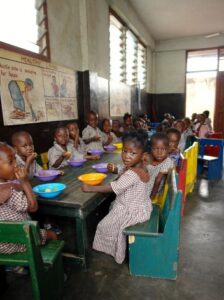
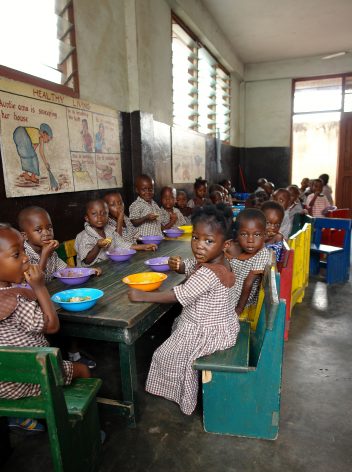
School meals have a host of benefits, including improving enrollments and preventing malnutrition. Now the School Meals Coalition plans to recruit local food producers to assist in the programme. Credit: Bill Wegener/Unsplash
United Nations, Nov 26 2021 (IPS) – Meals at schools not only give each child a nutritious meal but increase enrolments, among other benefits.
This emerged at a recent launch of the School Meals Coalition, a new initiative that aims to give every child a nutritious meal by 2030 through bolstering health and nutrition programmes. The coalition comprises over 60 countries and 55 partners dedicated to restoring, improving and up-scaling meal programs and food systems. Among their partners are UN agencies UNICEF, World Food Programme (WFP), UN Nutrition, Food and Agriculture Organization (FAO), and UNESCO.
In the briefing, the speakers identified School Meals Coalition’s primary goals to restore school meal programmes to the status before the COVID-19 pandemic and reach children in vulnerable areas who have not accessed these plans before. The member countries’ political leaders have come together to support this “important initiative”, according to the permanent representative of Finland to the United Nations, Jukka Salovaara.
“School meals are so much more than just a plate of food. It’s really an opportunity to transform communities, improve education, and food systems globally,” he said.
School meal programmes are a significant safety net for children and their communities. As one of the primary means for children to get healthy meals, they help combat poverty and malnutrition. Their impact on education is seen in increased engagement from students. They also serve as incentives for families to send their children, especially girls, to schools, thus supporting children’s rights to education, nutrition and well-being.
“We see documented jumps of 9 to 12 per cent in enrollment increases just because the meals are present,” WFP Director of School-Based Programmes Carmen Burbano said. “So, these are really important instruments to bring [children] to school.”
The programmes would also provide opportunities for sustainable development practices and transformations in food systems. One key strategy is to promote and maintain home-grown school meal programmes, recruiting local farmers and markets to provide food supplies. Investing in school meal programmes, especially through domestic spending, has proven to increase coverage. In low-income countries, the number of children receiving school meals increased by 36 percent when their governments increased the budgets for these programs.
A WFP study found that at the beginning of 2020, over 380 million children globally received meals through school meal programmes. The closure of schools due to the COVID-19 pandemic effectively disrupted those programmes, depriving 370 million children of what was effectively their main meal for the day. While there have been marked improvements since schools re-opened worldwide, with 238 million children accessing the school meals, there are still 150 million children that don’t have access.
The School Meals Coalition aims to close this gap through a system of collaboration between member countries and their partners. Among their initiatives will be a monitoring and accountability mechanism that is being developed by the WFP and its partners, which will be used to follow the coalition’s accomplishments, and a peer-to-peer information-sharing network, spearheaded by the German government, between members and partners that will use findings to influence their programme output.
Even before the pandemic, school meal programmes did not reach the most vulnerable children, 73 million, who could not access these programmes. Reaching children that have fallen through the cracks can be challenging, but it is significantly more difficult in countries affected by conflict or environmental disruptions.
At the signing, WFP Assistant Executive Director, Valerie Guarnieri said: “Simply put, sick children cannot attend school and hungry children cannot learn. It is essential we invest more in the health and nutrition of young learners, particularly girls.”
ECW Director, Yasmine Sherif said a feeding scheme made a massive difference in children’s lives.
“For many children and youth in crisis-affected countries, a meal at school may be the only food they eat all day and can be an important incentive for families to send and keep girls and boys in school. It is also essential for a young person to actually focus and learn,” she said.
The coalition plans to find ways to break the barriers to enable children to reach school or look for alternative learning pathways to reach children who could not physically attend school.
The factors that can prevent children from fully attending schools, such as poverty, complexity in family lives, or conflict, have only been exacerbated over the last nearly two years, thanks mainly to the COVID-19 pandemic. As more schools open worldwide, the restoration of school meal programmes is expected to provide much-needed support for children and their communities in turn.
“This is a very urgent and timely priority,” said Head of the Sustainable Development Unit of the Permanent Mission of France to the United Nations, Olivier Richard. “Because school meals are very important for the recovery of our societies from the impact of the COVID-19 pandemic.”
To learn more about the School Meal Coalitions, you can follow their page.