School Meals Coalition Hopes to Provide a Meal to Every Child

Aid, Civil Society, Development & Aid, Education, Featured, Food Security and Nutrition, Global, Headlines, Health, Humanitarian Emergencies, Inequity, Poverty & SDGs, TerraViva United Nations
Food Security and Nutrition

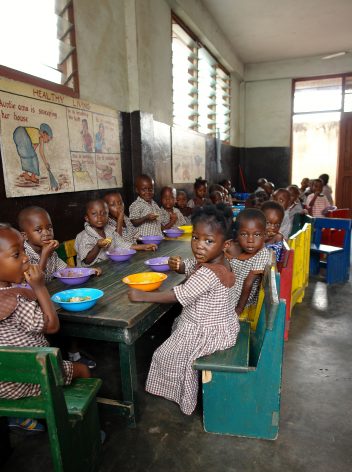
School meals have a host of benefits, including improving enrollments and preventing malnutrition. Now the School Meals Coalition plans to recruit local food producers to assist in the programme. Credit: Bill Wegener/Unsplash

United Nations, Nov 26 2021 (IPS) – Meals at schools not only give each child a nutritious meal but increase enrolments, among other benefits.


This emerged at a recent launch of the School Meals Coalition, a new initiative that aims to give every child a nutritious meal by 2030 through bolstering health and nutrition programmes. The coalition comprises over 60 countries and 55 partners dedicated to restoring, improving and up-scaling meal programs and food systems. Among their partners are UN agencies UNICEF, World Food Programme (WFP), UN Nutrition, Food and Agriculture Organization (FAO), and UNESCO.

In the briefing, the speakers identified School Meals Coalition’s primary goals to restore school meal programmes to the status before the COVID-19 pandemic and reach children in vulnerable areas who have not accessed these plans before. The member countries’ political leaders have come together to support this “important initiative”, according to the permanent representative of Finland to the United Nations, Jukka Salovaara.

“School meals are so much more than just a plate of food. It’s really an opportunity to transform communities, improve education, and food systems globally,” he said.

School meal programmes are a significant safety net for children and their communities. As one of the primary means for children to get healthy meals, they help combat poverty and malnutrition. Their impact on education is seen in increased engagement from students. They also serve as incentives for families to send their children, especially girls, to schools, thus supporting children’s rights to education, nutrition and well-being.

“We see documented jumps of 9 to 12 per cent in enrollment increases just because the meals are present,” WFP Director of School-Based Programmes Carmen Burbano said. “So, these are really important instruments to bring [children] to school.”

The programmes would also provide opportunities for sustainable development practices and transformations in food systems. One key strategy is to promote and maintain home-grown school meal programmes, recruiting local farmers and markets to provide food supplies. Investing in school meal programmes, especially through domestic spending, has proven to increase coverage. In low-income countries, the number of children receiving school meals increased by 36 percent when their governments increased the budgets for these programs.

A WFP study found that at the beginning of 2020, over 380 million children globally received meals through school meal programmes. The closure of schools due to the COVID-19 pandemic effectively disrupted those programmes, depriving 370 million children of what was effectively their main meal for the day. While there have been marked improvements since schools re-opened worldwide, with 238 million children accessing the school meals, there are still 150 million children that don’t have access.

The School Meals Coalition aims to close this gap through a system of collaboration between member countries and their partners. Among their initiatives will be a monitoring and accountability mechanism that is being developed by the WFP and its partners, which will be used to follow the coalition’s accomplishments, and a peer-to-peer information-sharing network, spearheaded by the German government, between members and partners that will use findings to influence their programme output.

Even before the pandemic, school meal programmes did not reach the most vulnerable children, 73 million, who could not access these programmes. Reaching children that have fallen through the cracks can be challenging, but it is significantly more difficult in countries affected by conflict or environmental disruptions.

Education Cannot Wait (ECW) and the World Food Programme (WFP) earlier signed a memorandum of understanding to feed children in protracted crises.

At the signing, WFP Assistant Executive Director, Valerie Guarnieri said: “Simply put, sick children cannot attend school and hungry children cannot learn. It is essential we invest more in the health and nutrition of young learners, particularly girls.”

ECW Director, Yasmine Sherif said a feeding scheme made a massive difference in children’s lives.

“For many children and youth in crisis-affected countries, a meal at school may be the only food they eat all day and can be an important incentive for families to send and keep girls and boys in school. It is also essential for a young person to actually focus and learn,” she said.

The coalition plans to find ways to break the barriers to enable children to reach school or look for alternative learning pathways to reach children who could not physically attend school.

The factors that can prevent children from fully attending schools, such as poverty, complexity in family lives, or conflict, have only been exacerbated over the last nearly two years, thanks mainly to the COVID-19 pandemic. As more schools open worldwide, the restoration of school meal programmes is expected to provide much-needed support for children and their communities in turn.

“This is a very urgent and timely priority,” said Head of the Sustainable Development Unit of the Permanent Mission of France to the United Nations, Olivier Richard. “Because school meals are very important for the recovery of our societies from the impact of the COVID-19 pandemic.”

To learn more about the School Meal Coalitions, you can follow their page.
  Source

No Vaccine for the Pandemic of Violence Against Women in Latin America

Active Citizens, Civil Society, Editors’ Choice, Featured, Gender, Gender Violence, Headlines, Human Rights, Indigenous Rights, Latin America & the Caribbean, Regional Categories

Gender Violence

This article is part of IPS coverage of the International Day for the Elimination of Violence against Women on Nov. 25, which kicks off 16 days of activism on the issue around the world.

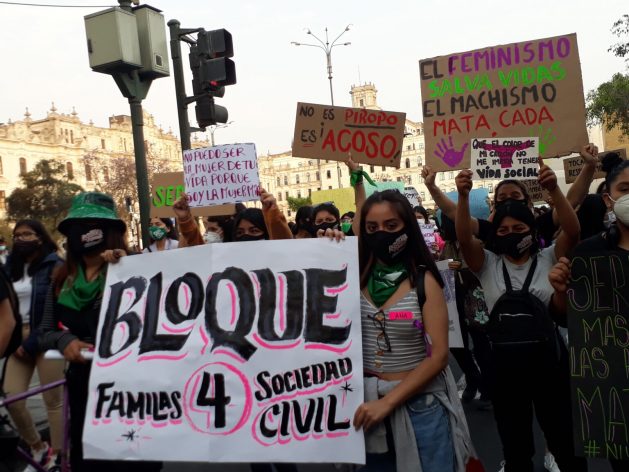
Despite restrictions due to covid, women from various feminist, youth and civil society groups gathered in the central Plaza San Martin in Lima and marched several blocks demanding justice and protesting impunity for violence against women, on Nov. 25, 2020. CREDIT: Mariela Jara/IPS

Despite restrictions due to covid, women from various feminist, youth and civil society groups gathered in the central Plaza San Martin in Lima and marched several blocks demanding justice and protesting impunity for violence against women, on Nov. 25, 2020. CREDIT: Mariela Jara/IPS

LIMA, Nov 24 2021 (IPS) – Despite significant legal advances in Latin American countries to address gender-based violence, it continues to be a serious challenge, especially in a context of social crisis aggravated by the covid-19 pandemic, which hits women especially hard.


“Existing laws and regulations have not stopped the violence, including femicide (gender-based murders). There is a kind of paralysis at the Latin American level, on the part of the State and society, where we don’t want to take much notice of what is happening, and women are blamed,” said María Pessina Itriago, a professor and researcher and the director of the Gender Observatory at UTE University in Quito.

Pessina, a Venezuelan who lives in the Ecuadorian capital and spoke to IPS by telephone from the university, said violence against women is ageold, and “we are still considered second-class citizens who are not recognized as social subjects.” And this dates way back – to the slaughter of “witches” in Europe in the Middle Ages, for example, she added.

“It hasn’t been easy to achieve my independence, have my own income and raise my children. I have suffered humiliation and slander, but I knew who I was and what I wanted: to live in peace and have a home without violence.” — Teresa Farfán

“The genocide of women is something that has not stopped and now in the context of the pandemic has become more serious. I believe that, in reality, the pandemic that we have experienced for many years is precisely this, that of gender violence,” she remarked.

Her reflection came ahead of the International Day for the Elimination of Violence against Women, which is celebrated on Thursday, Nov. 25 and kicks off 16 days of activism up until Dec. 10, World Human Rights Day.

The World Health Organization (WHO) and U.N. Women warned in March that globally one in three women suffers gender-based violence. And that the problem, far from diminishing, had grown during the covid pandemic and the restrictions and lockdowns put in place to curb it.

The study “Global and regional estimates of violence against women: prevalence and health effects of intimate partner violence and non-partner sexual violence”, which analyzed data from 2000 to 2018, is the most far-reaching produced by WHO on the topic.

The report, published in March of this year, stresses that violence against women is “pervasive and devastating” and affects one in three women with varying degrees of severity.

For Latin America and the Caribbean, the study puts the prevalence rate of violence among women aged 15 to 49 at 25 percent.

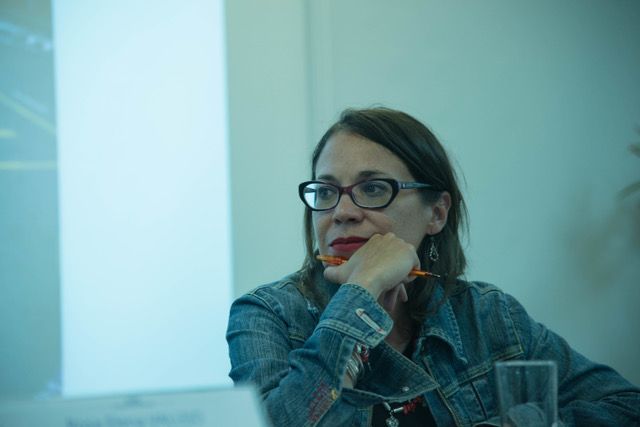
María Pessina Itriago is a professor, researcher and director of the Gender Observatory at UTE University in Quito. CREDIT: Courtesy of María Pessina

María Pessina Itriago is a professor, researcher and director of the Gender Observatory at UTE University in Quito. CREDIT: Courtesy of María Pessina

A regional epidemic during the global pandemic

With respect to femicides, the Gender Equality Observatory of the Economic Commission for Latin America and the Caribbean (ECLAC) reports that 4640 women died from this cause in 2019. The organization also called attention to the intensification of violence against girls and women during the pandemic.

The panorama is compounded by the gendered impacts of the pandemic on employment, which reduces women’s economic autonomy and makes them more vulnerable to violence.

According to the International Labor Organization (ILO), the region of the Americas experienced the largest reduction in female employment during covid, a situation that will not be reversed in 2021.

Peruvian sociologist Cecilia Olea, of the non-governmental Articulación Feminista Marcosur (AFM), which is made up of 17 organizations from 11 countries – nine South American nations, Mexico and the Dominican Republic – said there have been significant advances in the last 30 years in the fight against gender violence.

Among them, she cited the fact that States recognize their responsibility for the problem and no longer consider it a private matter.

She also pointed out that Latin America is the only region in the world with a specific human rights treaty on the issue: the Inter-American Convention on the Prevention, Punishment and Eradication of Violence against Women, known as the Convention of Belem do Para after the Brazilian city where it was approved in 1994, which established women’s right to live free of violence and set the framework for national laws to address this violation of women’s rights.

However, Olea said in an interview with IPS in Lima that the legal and regulatory framework has not been accompanied by political strategies to change the social imaginary of masculinity and femininity, which would provide incentives to modify the culture of inequality between men and women; on the contrary, she said, the violence forms part of a culture of impunity.

“Males feel free to oppress and governments are failing in their responsibility to guarantee comprehensive sex education throughout the educational system, in primary school and technical and higher education; this program exists by law but implementation is deficient due to lack of training for teachers and the opportunity to train people in new forms of masculinity is lost, for example,” she remarked.

Olea, a feminist activist and one of the founders of the AFM, said that not only do governments have a responsibility to prevent, address and eradicate gender violence, but there is also an urgent need to ensure health services; justice with due diligence, as the current delays revictimize and inhibit the use of regulatory instruments; and budgets to correct the current shortfall that prevents a better response to this social problem.

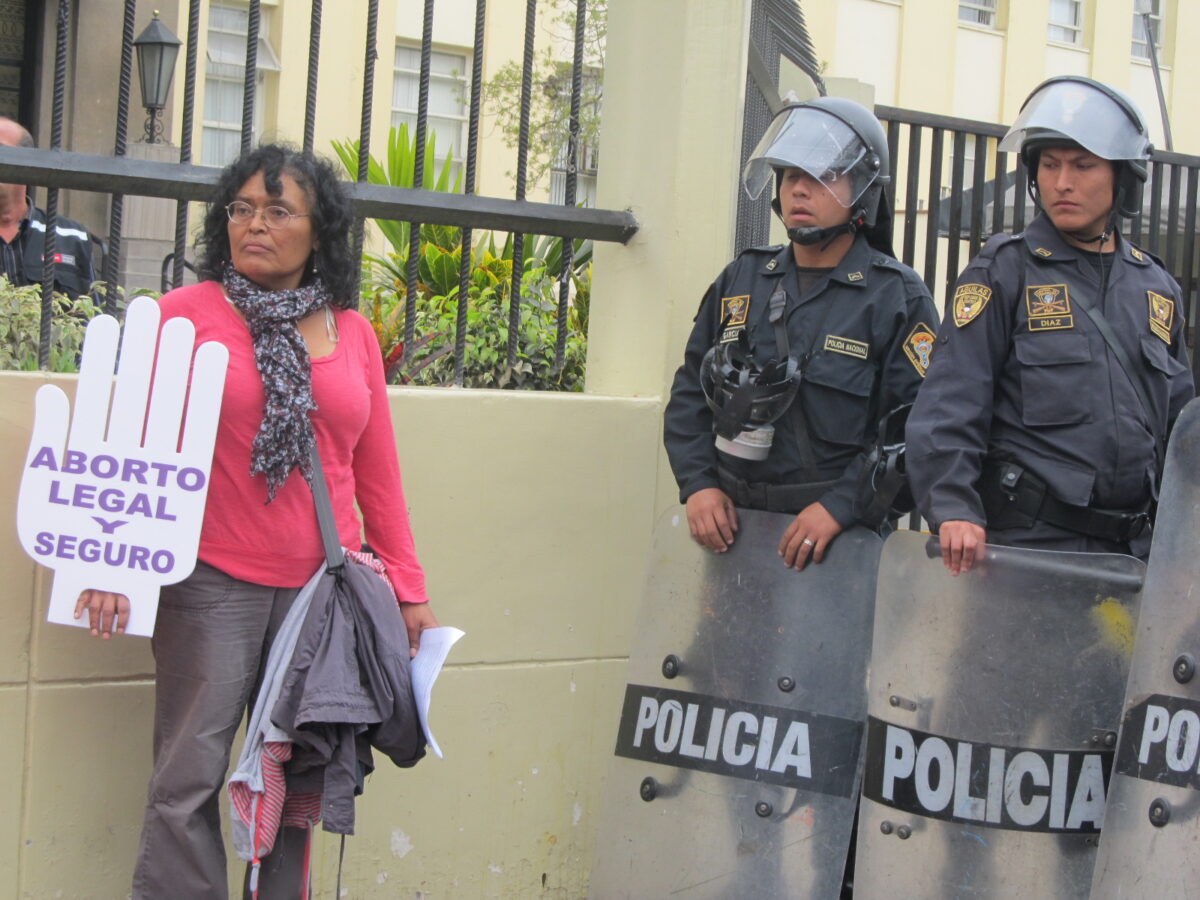
Peruvian sociologist Cecilia Olea, a member of the Articulación Feminista Marcosur (AFM), which brings together feminist networks from 11 Latin American countries, takes part in a demonstration outside the Peruvian Health Ministry in Lima, demanding reproductive rights. CREDIT: Mariela Jara/IPS

Peruvian sociologist Cecilia Olea, a member of the Articulación Feminista Marcosur (AFM), which brings together feminist networks from 11 Latin American countries, takes part in a demonstration outside the Peruvian Health Ministry in Lima, demanding reproductive rights. CREDIT: Mariela Jara/IPS

Cultural change in the new generations

Raised in a machista home, Pessina rebelled against gender norms from an early age and her constant questioning led her to come up with a new definition of how a good person should act.

“I believe that good people do not tolerate injustice or inequality of any kind, which is why I became a feminist about 15 years ago and I am very happy to be able to contribute a grain of sand with my students,” she said.

Pessina said the challenges to progress in the eradication of violence against women are to provide public policies with a budget to make them work; and to achieve an alliance between the State, civil society organizations and feminist movements to create a road map that incorporates excluded voices, such as those of indigenous women.

“The places where they can file reports are not near their towns, they have to go to other towns and when they get there they often cannot communicate in their own language because of the colonialist view that everything must be in Spanish, and there are no interpreters,” she complained.

Another part of the problem, she said, is that “the State itself blocks complaints and keeps these people marginalized, and they are not taken into account in the countries’ statistics on violence.”

The third challenge was to work with the media in Latin America because of their role in the construction of imaginaries, in order to generate the figure of the ombudsperson focused on gender to ensure that information is treated in a way that contributes to equality and does not reproduce discriminatory stereotypes.

Pessina said that what is needed is a cultural transformation driven by the new generations, in favor of gender equality.

“We see more young feminist women activists mobilizing to make it happen and they will make a turnaround; not now, but maybe in a decade we will be talking about other things. These new generations not only of women but of men, I think they are our hope for change,” she said.

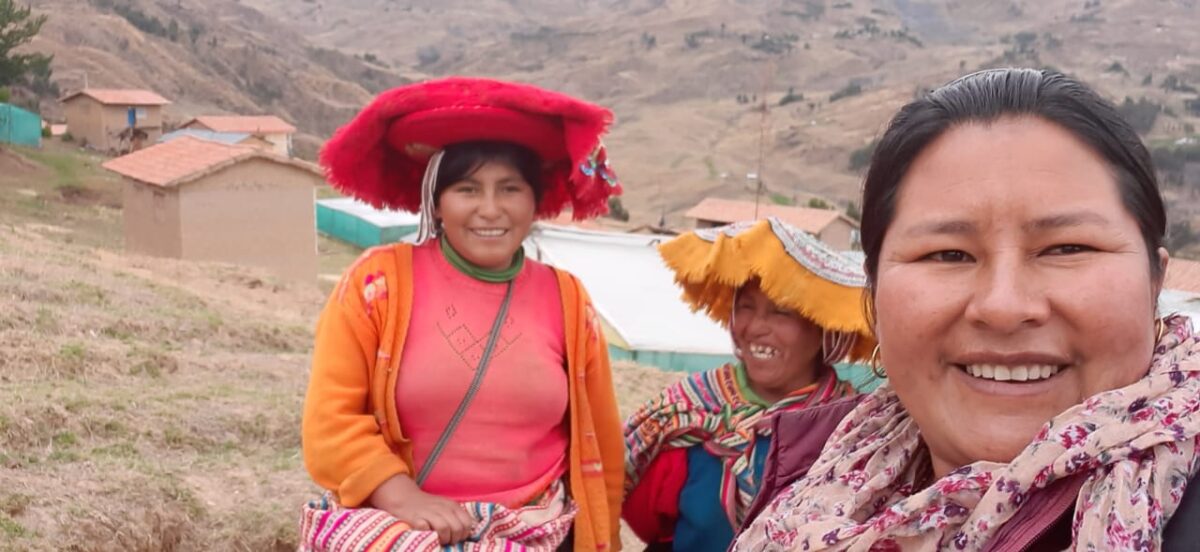
Quechua Indian woman Teresa Farfán, in the foreground, stands with two other rural women with whom she shares work and experiences in her Andes highlands community in Peru. She is convinced that telling her personal story of gender-based violence can help other women in this situation to see that it is possible to escape from abuse. CREDIT: Courtesy of Teresa Farfán

Quechua Indian woman Teresa Farfán, in the foreground, stands with two other rural women with whom she shares work and experiences in her Andes highlands community in Peru. She is convinced that telling her personal story of gender-based violence can help other women in this situation to see that it is possible to escape from abuse. CREDIT: Courtesy of Teresa Farfán

“I wanted a home without violence”

Teresa Farfán reflects the lives of many Latin American women who are victims of machista violence, but with a difference: she left behind the circle of gender violence that so often takes place in the home itself.

She is 35 years old and describes herself as a peasant farmer, a single mother and a survivor of an attempted femicide. She was born and lives in the town of Lucre, an hour and a half drive from the city of Cuzco, the capital of ancient Peru, in the center of the country.

Like most of the local population, she is dedicated to family farming.

Nine years ago she separated from the father of her children who, she says, did not let her move forward.

“He wanted me just to take care of the cows, but I wanted to learn, to get training, and that made him angry. He even beat me and it was horrible, and at the police station they ignored my complaint. He kicked me out of the house and thought that out of fear I would come back, but I took my children and left,” she told IPS during a day of sharing with women in her community.

At her moment of need she didn’t receive the support of her family, who urged her to return, “because a woman must do what her husband says.”

But she did have supportive friends who gave her a hand, both inside and outside her community, as part of a sisterhood of Quechua indigenous peasant women like her in the Peruvian highlands.

“It hasn’t been easy to achieve my independence, have my own income and raise my children. I have suffered humiliation and slander, but I knew who I was and what I wanted: to live in peace and have a home without violence,” she said. A wish that remains elusive for millions of Latin American women.

  Source

The Good, the Bad, the Ugly: What Went Wrong During India’s COVID-19 Response

Asia-Pacific, Civil Society, Headlines, Health

Opinion

During the pandemic, there was little support from the government when it came to making funding and resources available to the nonprofits that were working closely with communities. | Picture courtesy: Digital Empowerment Foundation

Nov 23 2021 (IPS) – From its devastating economic impact and the migrant crisis to the startling death toll, the COVID-19 pandemic in India unfurled one crisis after the other. The glaring gaps in our system, which had always been there, became even more prominent during the pandemic. There is one question at the back of everyone’s mind that still remains unanswered: What went wrong?


No entity can operate in isolation, be it the government, the private sector, or civil society. During times of crisis, the government must ensure that all cogs in the wheel continue to work effectively. Civil society—local communities and nonprofits—must enable delivery of public services up until the last mile. And, finally, the private sector needs to step up in terms of financial resources and leveraging of networks and influence.

Nonprofits in 13 states and union territories were able to provide meals to more people during the lockdown than the concerned state governments – Would a collaborative relationship between the government and the social sector have aided a better response to the COVID-19 crisis?

However, when the pandemic was at its peak in India, these three entities failed to come together and work collaboratively to cushion the devastating effects of COVID-19 on the people.

The missing link between the government and the social sector

According to our village-level digital entrepreneurs in the SoochnaPreneur programme at Digital Empowerment Foundation (DEF), the four essential systems that were massively hit by the pandemic were education, healthcare, finance, and citizen entitlements. When the pandemic was raging, our SoochnaPreneurs reported that all people wanted was food and rations, a device to access online education for their children, the ability to talk to a doctor or health worker to learn how to keep themselves safe, and to make some money to meet their daily needs from the confines of their homes. Ironically, given the stringent nature of the lockdowns, all this needed access to the internet.

However, across the country, lack of access to resources, high levels of digital illiteracy, and the deepening digital divide exacerbated by the pandemic acted as major roadblocks in India’s COVID-19 response. Even as the government announced relief packages—food grains and cash payments—the mechanisms of delivery to beneficiaries at the last mile were unclear.

For instance, common service centres (CSCs), which are supposed to work as access points that enable digital delivery of services such as banking and finance across rural India, were mostly non-functional. During the pandemic, the government claimed that people could use their local CSCs to access various digital services including telehealth and registration for vaccinations. However, like any other office, shop, or business centre, almost all CSCs had closed their operations due to the strict lockdown rules in various states.

With government services not always being available, the social sector stepped up. Whether it was making access to digital tools and digital literacy a priority or the distribution of essentials, nonprofits across the country filled in the gaps. According to one report, nonprofits in 13 states and union territories were able to provide meals to more people during the lockdown than the concerned state governments.

The question that arises is: Would a collaborative relationship between the government and the social sector have aided a better response to the COVID-19 crisis?

For instance, the distribution of food grains could have been made efficient from the get-go if, rather than having long queues of people waiting at shops, organisations with the digital know-how had been allowed to deliver ration at the doorsteps of people with a biometric machine in hand. This synchronisation and management of resources is something that should have been under the government’s purview, while a partnership with civil society organisations could have helped with execution and delivery. Considering that hundreds of thousands of nonprofits working at the grassroots were tasked as frontline workers, the government could have tapped into this already existing infrastructure and network.

The lack of trust between the social sector and the government didn’t help. During the pandemic, there was little support from the government when it came to making funding and resources available to the nonprofits that were working closely with communities. For instance, while local nonprofits worked as service providers during the pandemic, funds lying with local government bodies could have been diverted to their operations to successfully navigate the panic-like situation brought on by the first lockdown when everything came to a halt.

The Foreign Contribution (Regulation) Amendment Bill, 2020, also imposed difficult conditions on what could be considered eligible expenses for nonprofit organisations, thus creating more obstacles in raising and distributing crucial aid. Even as the prime minister called for nonprofits to step in, many organisations found their hands tied due to certain rules imposed in the middle of the pandemic.

Moreover, during the first lockdown, there was a diversion of CSR funds to PM Cares. At present, not only is there a lack of transparency on how these funds have been deployed, but this diversion of funds has also been a huge blow to nonprofits who have been struggling to look after their own employees and their organisations while providing relief to communities on the ground.

The private sector did not step up either

There was lack of communication and collaboration across business, and a piecemeal approach was adopted. Industry associations could have encouraged CEOs and company heads to interact with each other and solve issues on a larger scale. For instance, industry bodies such as the Confederation of Indian Industry (CII), Federation of Indian Chambers of Commerce & Industry (FICCI), and Associated Chambers of Commerce and Industry of India (ASSOCHAM) could have deployed their resources to help manage the mass migration of workers from industrial towns and urban centres more systematically and humanely.

In pre-pandemic times, CSR within corporates would ask nonprofits to work in areas where they have manufacturing facilities and offer localised support. Corporates could have extended this reasoning during the lockdown as well and enlisted the support of their nonprofit partners to help those workers and informal sector migrants who were homebound, while providing the nonprofits with the required monetary and infrastructure support.

There was also a reluctance from corporates to innovate in times of need. Since DEF works on digital integration to fight poverty, we reached out to many CSR funders to provide funds for buying smartphones, tablets, projectors, and other electronic devices to provide digital infrastructure in the villages. However, it took us more than a year to convince some of them to help us offer support to people with no digital access and empowerment through our Digital Daan initiative.

It is important to contextualise the social and economic support at the time of disaster and that can happen only if there is a relationship of trust between the stakeholders.

What the social sector could have done better

The onset of the pandemic brought with it uncertainty for most nonprofits. In addition to lack of funding and overstretched resources, many nonprofits had to take up the role of relief workers and divert efforts from their primary objectives, which would have been domestic violence, child protection, water and sanitation, and so on.

One important factor missing in this entire conversation was the inability of many nonprofits to adopt digital tools to improve operations, efficiency, and delivery of services. While webinars became a recurring feature in their calendars, thus creating a space for knowledge sharing, grassroots nonprofits were often not a part of these dialogues. Smaller nonprofits were also overwhelmed with work on the ground due to the needs of their communities coupled with inadequate support from either their funders or governments; hence, many of them had little time or resources to think or build their capacity to go digital.

The pandemic did however push several nonprofits to adopt digital tools for operations and delivery of services. Larger nonprofits with their own networks, adequate funding, and a strong digital presence were able to leverage digital platforms. However, many of the smaller nonprofits and those at the frontlines had to innovate to reach beneficiaries digitally.

Moreover, with the government aggressively pushing Digital India—from telehealth to online education and even the vaccine roll-out—it became imperative for organisations to incorporate digital and technological solutions in their everyday operations. Many nonprofits therefore had to work on building in-house digital capacity and infrastructure during the pandemic, while also serving their communities and raising funds.

In the case of mobilising money, digital platforms could have been a powerful tool for the sector, and they did help many nonprofits raise funds. However, this was not the case for the entire social sector.

According to the India Giving Report 2021 by the Charities Aid Foundation, individual donations were at an all-time high during the pandemic. Crowdfunding platforms such as GiveIndia provided people easy access to donate to various causes. However, this giving may not have been as diversified—the absence of reliable information online acted as a barrier for many givers while donating. Therefore, givers may have chosen to stick to organisations they trusted. And many local nonprofits with limited digital know-how had to rely on local giving or local resource mobilisation.

For example, our colleague Mohamed Arif, whom we lost in the second wave, was in charge of DEF’s digital centre at Nuh, Haryana. He was digitally savvy and active on social media and was thus able to raise approximately INR 25 lakh (in cash and food grains, and other essentials) through his personal Facebook profile and networks.

However, while the pandemic did push many nonprofits to incorporate technology-led solutions, I find that urgency dwindling again. Digital empowerment of the sector requires sustained efforts wherein organisations put aside certain funds every year for digitally upskilling their employees, maintaining digital collaterals, and modifying their approach to include technology in their everyday operations.

I see the pandemic as an inflection point in the future of nonprofits and civil society as a whole. Which organisations survive this period of transition will largely depend on how well they can adapt to these changing times. According to me, one of the key changes the sector will have to make to stay relevant is to become more digitally aligned.

Osama Manzar, the author of this article, is the founder and director of Digital Empowerment Foundation. He is a Senior Ashoka Fellow, a Chevening Scholar, and has served on several boards such as the Association for Affordable Internet, Association of Progressive Communications, World Summit Awards, and Down To Earth. He specialises in creating digital models for poverty alleviation and has travelled to more than 10,000 villages. Get in touch with him on Twitter: @osamamanzar

This story was originally published by India Development Review (IDR)

  Source

Climate Injustice at Glasgow Cop-Out

Civil Society, Climate Action, Climate Change, Development & Aid, Environment, Featured, Global, Headlines, Poverty & SDGs, TerraViva United Nations

Opinion

SYDNEY and KUALA LUMPUR, Nov 23 2021 (IPS) – The planet is already 1.1°C warmer than in pre-industrial times. July 2021 was the hottest month ever recorded in 142 years. Despite the pandemic slowdown, 2020 was the hottest year so far, ending the warmest decade (2011-2020) ever.

Betrayal in Glasgow
Summing up widespread views of the recently concluded Glasgow climate summit, former Irish President Mary Robinson observed, “People will see this as a historically shameful dereliction of duty,… nowhere near enough to avoid climate disaster”.


Anis Chowdhury

A hundred civil society groups lambasted the Glasgow outcome: “Instead of a multilateral agreement that puts forward a clear path to address the climate crisis, we are left with a document that takes us further down the path of climate injustice.”

Even if countries fulfil their Paris Agreement pledges, global warming is now expected to rise by 2.7°C from pre-industrial levels by century’s end. Authoritative projections suggest that if all COP26 long-term pledges and targets are met, the planet will still warm by 2.1℃ by 2100.

The United Nations Environment Programme suggests a strong chance of global warming disastrously rising over 1.5°C in the next two decades. Earlier policy targets – to halve global carbon emissions by 2030, and reach ‘net-zero’ emissions by 2050 – are now recognized as inadequate.

The Glasgow UN Framework Convention on Climate Change 26th Conference of Parties (COP26) was touted as the world’s ‘last best hope’ to save the planet. Many speeches cited disturbing trends, but national leaders most responsible for greenhouse gas (GHG) emissions offered little.

Thus, developing countries were betrayed yet again. Despite contributing less to accelerating global warming, they are suffering its worst consequences. They have been left to pay most bills for ‘losses and damages’, adaptation and mitigation.

Glasgow setbacks
Glasgow’s two biggest hopes were not realized: renewing targets for 2030 aligned with limiting warming to 1.5℃, and a clear strategy to mobilize the grossly inadequate US$100bn yearly – promised by rich country leaders before the Copenhagen COP in 2009 – to help finance developing countries’ efforts.

Jomo Kwame Sundaram

An exasperated African legislator dismissed the Glasgow Leaders’ Declaration on Forests and Land Use as an “empty pledge”, as “yet another example of Western disingenuousness … taking on the role of ‘white saviour’” while exploiting the African rain forest.

Meanwhile, far too many loopholes open to abuse remain, undermining efforts to reduce emissions. Further, no commitment to end fossil fuel subsidies globally – at US$11 million every minute, i.e., around US$6 trillion annually – was forthcoming.

No new oil and gas fields should be developed for the world to have a chance of getting to net-zero by 2050. Nevertheless, governments are still approving such projects, typically involving transnational corporate giants.

Various measures – e.g., ‘carbon capture and storage’ and ‘offsetting’ – have been touted as solutions. But carbon capture and storage technologies remain controversial, unproven at scale, expensive and rarely cost-competitive.

The Glasgow outcome did not include any commitment to fully phase out oil and gas. Meanwhile, the language on coal has been diluted to become virtually toothless: coal-powered plants will now be ‘phased down’, instead of ‘phased out’.

Offsets off track
Offset market advocates claim to reduce emissions or remove GHGs from the atmosphere by some to ‘off-set’ emissions by others. Thus, offsetting often means paying someone poor to cut GHG emissions or forcing them to pay someone else to do so. With more means, big business can more easily afford to ‘greenwash’.

Carbon offset markets have long overpromised, but underdelivered. As they typically exaggerate GHG emission reduction claims, offsetting is a poor substitute for actually cutting fossil fuel use. Meanwhile, disagreements over offset rules have long stalled international climate change negotiations.

Buying offsets allows GHG emitters “to keep polluting”, albeit for a fee. Highly GHG emitting activities by wealthier individuals, companies and nations can thus continue, after “transferring the burden of action and sacrifice to others” – typically to those in poorer nations – via the market.

For Tariq Fancy – who managed ‘sustainable investing’ at BlackRock, the world’s largest fund manager – the market for offsets is a “deadly distraction”, “leading the world into a dangerous mirage, … burning valuable time”.

Meanwhile, most established offset programmes – e.g., the United Nations’ REDD+ programme or the Kyoto Protocol’s Clean Development Mechanism – have clearly failed to meaningfully reduce GHG emissions.

More than 130 countries have committed to achieve net-zero by 2050. But net-zero targeting has actually allowed the world to continue kicking the can down the road, instead of acting decisively and urgently to verifiably cut GHG emissions.

Hence, it is seen as a cynical “scam”, “nothing more than an expensive cover-up for continued toxic emissions”. Trading non-verifiable offsets – supposedly to achieve net-zero – allows continuing GHG emissions with business almost as usual.

Loss and damage?
Vulnerable and poor nations have argued for decades that rich countries owe them compensation for irreversible damage from global warming. In fact, no UN climate conference has delivered any funding for losses and damages to countries affected.

Rich countries agreed to begin a ‘dialogue’ to discuss “arrangements for the funding of activities to avert, minimize and address loss and damage”. Representing developing nations, Guinea expressed “extreme disappointment” at this ruse to delay progress on financing recovery from and rebuilding after climate disasters.

Developed nations account for two-thirds of cumulative emissions compared to only 3% from Africa. Carbon emissions by the wealthiest 1% of the world’s population were more than twice those of the bottom half between 1990 and 2015!

Low-lying small island nations – from the Marshall Islands to Fiji and Antigua – fear losing much of their land to rising sea levels. But their longstanding call to create a ‘loss and damage’ fund was rejected yet again.

South Pacific island representatives have expressed disappointment at lack of funding for losses and damages, and the watered down language on coal. For them, COP26 was a ‘monumental failure’, leaving them in existential peril.

Although historical responsibility for GHG emissions lies primarily with the wealthy countries, especially the US and the European Union, once again, they have successfully evaded serious commitments to address such longstanding problems due to global warming.

Climate injustice
For the UN Secretary-General, “[o]ver the past 25 years, the richest 10% of the global population has been responsible for more than half of all carbon emissions, and the poorest 50% were responsible for just 7% of emissions”.

The World Bank estimates that, if left unchecked, climate change will condemn 132 million more people into poverty over the next decade, while displacing more than 216 million from their homes and land by 2050.

Meanwhile, poorer countries – who have contributed least to cumulative GHG emissions – continue to suffer most. To address climate injustice, rich countries – most responsible for GHG emissions and global warming – must do much more.

Their finance for developing countries ought to be much more ambitious than US$100bn yearly. Financing terms should be far more generous than currently. Also, funding should prioritize adaptation, especially for the poorest countries most at risk.

  Source

Mother of Summits: Sweet and Sour Diplomacy, but Nothing Cooked!

Conferences, Economy & Trade, Featured, Global, Global Geopolitics, Global Governance, Headlines, TerraViva United Nations

SINGAPORE, Nov 22 2021 (IPS) – It has been said that when Greek meets Greek, then comes the tug of war. The summit of the leaders of world’s two strongest powers, the United States and China, came face to face at long last. Albeit virtually. Still, this was undoubtedly the “mother of summits” this year. There were two telephone conversations earlier, but according to US officials this nearly four hours of summitry was far more “candid intense, and deeper interaction”. If there was one single take-away from this meeting, it was the establishment beyond all reasonable doubt of the incontrovertible fact that the US and China were indeed the two most influential global state actors. The decisions between the two, represented by their leaders, would profoundly impact the rest of humanity far into the future.


Dr. Iftekhar Ahmed Chowdhury

Given that in terms of deliverables, the consensus among all analysts was that nothing significant was expected, the event was important in that it put to rest the bickering between the subordinates that was pushing the world towards a precipice. It was about time the supreme political masters, Joe Biden of the US and Xi Jinping assumed the reins of control of the most important relationship of our times. Both sides were intellectually convinced that the stiffest possible competition between the two was on the cards. The challenge was to manage this in a way to prevent a conflict that would be catastrophic. This was one point on which, luckily, there was understanding on both sides.

There was not much on anything else. Prior to the meeting that Biden was focussed on writing the rules of the engagement of China “in a way that is favourable to our interests and our values and those of our allies and partners”. Unsurprisingly, Xi and the Chinese did not play ball. Both sides basically emphatically stated their positions on issues and showed nary an inclination to concede an inch to the other. In the end, as was expected, there were no breakthroughs. The irreconcilable positions remained in- tact, with a vague call by both sides for more cooperation.

A virtual meeting is bereft of the positive influences of informal chats, banquets, and the opportunity of developing personal camaraderie. Still, both leaders exuded friendly demeanours, and Xi called Biden “an old friend”. On Taiwan, the dialogue was tough. Xi reminded Biden of the US position on the Peoples ‘Republic being the sole legitimate government of China , reinforced by here communiques issued in 1972, 1979 and 1982. Following the talks the White House clarified that the “One China’ was also guided by the Taiwan Relations Act and the Six Assurances committing the US to opposing” unilateral efforts to change the status quo”. Xi made it clear that Taiwan for China was a “core issue”; it was a province of China, and any support to its independence was akin to playing with fire. “Whoever plays with fire will get hurt” was a message he strongly underscored.

There seemed a glimmer of hope on one front, though. In the past China has refused to be drawn into any nuclear arms control agreements given that its arsenal was far smaller than those of the US and Russia. But recent significant qualitative improvements of its capabilities have been worrying the US. At the meeting China showed willingness to talk on the subject. However, there is no possibility of agreements beyond the rim of the saucer because the Chinese will naturally demand steep cuts in US numbers which will be unacceptable to Washington. However, there could be forward movement through diplomatic engagements on matters such as Confidence Building Measures (CBMs), will the positivity that would entail.

There is a fundamental difference in the approach of China and the US to negotiations. The US believes in a kind of “a la carte” method of choosing areas where it believes there is scope for collaboration while competition, and even confrontation, continues others. The Chinese on the other hand reject this as “cherry picking” and see the agenda as a comprehensive package. What is the use of understanding on one subject, while differences on another cam lead to war? Unless this basic divergence is resolved, negotiations are unlikely to be able to yield any worthwhile results. Discussions will continue to be both sweet and sour, as the summit deliberations were, but nothing seriously palatable will get cooked!

Xi has in the meanwhile has consolidated his own power in China to a point that he may be set obtain a third term of office. More importantly, he is viewed as the navigator in the journey towards national rejuvenation leading to China becoming a modern fully developed nation by 2049 which will bring him yet closer to the status of the Great helmsman, Chairman Mao Zedong, himself. All these were the outcome of the Sixth plenum of the Chinese Communist Party which met last week and adopted a “historical resolution” that buttressed Xi’s power and position.

Incidentally, in the history of the party this was the third historical resolution. The first was adopted in 1945 under Mao four years prior to the revolutionary victory, and the second by the ‘reformist” Deng Xiaoping. While Mao was the one who restored a sense of pride among the Chinese people enabling them “to stand up” and Deng made them rich through his reforms, Xi, by the dint of this “thought” (which supersedes “theory” in Chinese political lexicon) gave them strength and shared prosperity. In an abstruse political milieu where the count of numbers means a great deal, a Xinhua communique on the meeting mentioned Xi’s name at least fourteen times, compared to seven of Mao and Five of Deng. That tells a lot.

Consequently, it is now all but certain that Xi will be elected to an unprecedented third term in office as party General Secretary at the 20th Party Congress next year. There is also some talk that he may assume the title of “Chairman” as well which will bring him at par with Mao. The plenum also elevated Xi Jinping Thought to 21st Century Marxism, completing the process of “Sinicization” of Marxist philosophy. Xi has been pragmatic in welding the conservatism of Mao, but shunning his repressive methods, with the reforms of Deng, correcting the “capitalist excesses”, and bringing China on a socialist path that would lead to a “modern society” with “shared prosperity “. Small wonder that many Chinese observers are beginning to see him as a “Philosopher King” in the mould of Plato in the West and Confucius in the East, a perfect mix for the cauldron of power and authority. An interesting footnote is that the Chinese Communist Party formally announced its third “historical resolution”, cementing Xi’s powers hours after the Summit, though it was leaked earlier, which pointed to a thought-through calibrated set of actions.

Nowhere the same degree, Joe Biden also seems to have achieved a modicum of success of his own despite powerful head winds. He has managed to create a sense of cohesion among America’s allies, though his path has had numerous pitfalls and bumps. Importantly he has managed to secure the passage into law of the massive legislation in terms of the US $1.2 trillion bill on a revamp of infrastructures, to “build back better”, a campaign pledge. This for him is no mean achievement, proving that persistence pays. But for him and his Democratic Party the future is not as rosy as that what appears to be for his Chinese counterpart. A Republican win in the Presidential race is a distinct possibility. That could lead to turmoil and backlash in US domestic politics, requiring the identification of a common foe to rally the nation. China is the obvious candidate. If, consequently, the “ultimate red line” for China, such as on the issue of Taiwan is crossed, a catastrophe could follow.

Surely the Chinese have made those calculations. From now to then, China and Xi will, while seeking to avoid an immediate conflict, be preparing to, in the words of the Global Times seen as a State media outlet, “to deal with the biggest storms in the world, the most powerful and comprehensive siege from the US and its allies”. Halfway down this decade it will be high- risk for one to wager too much in favour of peace!

Dr Iftekhar Ahmed Chowdhury is the Honorary Fellow at the Institute of South Asia Studies, NUS. He is a former Foreign Advisor (Foreign Minister) of Bangladesh and President & Distinguished Fellow of Cosmos Foundation. The views addressed in the article are his own. He can be reached at: isasiac @nus.edu.sg

This story was originally published by Dhaka Courier.


Citizen Leads Drive to Repatriate Temple Gods Looted from India – Podcast

Asia-Pacific, Civil Society, Headlines, Multimedia, Podcast, TerraViva United Nations

Arts

KATHMANDU, Nov 18 2021 (IPS) – The illicit trade in idols and other historical treasures looted from temples, archaeological digs and various sites globally has been estimated at $100 billion a year.


A more telling figure might be the nearly 18,000 villagers in India’s Tamil Nadu state who turned out to welcome home a god figure stolen from one of their temples. More revealing still is the image of a single villager who, seeing a stolen god displayed in a Singapore Museum, falls to the ground and starts to pray.

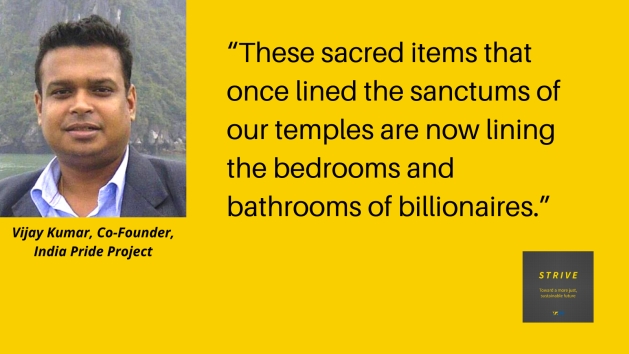
Vijay Kumar accompanied that villager to the museum, and has witnessed idols lovingly replaced to their ages-old spots in Tamil Nadu temples.

For 16 years he has been working to repatriate gods and goddesses looted from India over the years, and the challenges remain huge, he tells us in today’s episode. For example, in 2020, police seized 19,000 stolen artefacts in an international art trafficking crackdown. 101 suspects were arrested with treasures from around the world, including Colombian and Roman antiquities. One activist estimates that in France alone there are 116,000 African objects that should be returned.

But Vijay is encouraged by the successes of citizen-led movements like his own, which began with a blog, Poetry in Stone, then the launch of the group India Pride Project.

Success can be measured in the growing number of artefacts returned to India: 19, from 1970-2000; 0, from 2000-2013; but 300+ after 2013. That includes roughly 250 items valued at about $15 million, which were repatriated in October, among the treasures looted by disgraced art dealer Subhash Kapoor, the subject of Vijay’s book, The Idol Thief.

Today’s conversation is packed with information, including Vijay’s opinion that countries like India and Nepal, where idols are part of the living heritage and still prayed to daily, should be treated differently than countries whose artefacts are looted from buried remains. He also has advice for would-be activists — in the murky world of art repatriation, be very, very wary about accepting money from anyone.

  Source