As Biodiversity Loss Grows, Rome Talks Urge Nations to Step Up Action

Biodiversity, Climate Change, Conferences, Editors’ Choice, Environment, Europe, Featured, Global, Green Economy, Headlines, Natural Resources, Sustainable Development Goals, TerraViva United Nations

Biodiversity

A red panda โ€“ labelled โ€˜endangeredโ€™ by the IUCN โ€“ at an animal sanctuary in the Indian state of West Bengal. As biodiversity loss accelerates, UNCBD is asking countries to take greater action to protect it. Credit: Stella Paul/IPS

A red panda โ€“ labelled โ€˜endangeredโ€™ by the IUCN โ€“ at an animal sanctuary in the Indian state of West Bengal. As biodiversity loss accelerates, UNCBD is asking countries to take greater action to protect it. Credit: Stella Paul/IPS

ROME & NEW DELHI, Feb 23 2026 (IPS) – Governments meeting in Rome last week acknowledged that global efforts to protect nature are still not moving fast enough, even as biodiversity loss continues to affect ecosystems, livelihoods, and economies worldwide.


The warning came as the sixth meeting of the Subsidiary Body on Implementation (SBI-6) under the Convention on Biological Diversity (CBD) concluded after four days of negotiations focused on how countries are putting global biodiversity commitments into practice.

Held at the headquarters of the Food and Agriculture Organization of the United Nations (FAO), the meeting is the first major checkpoint in a year of intensive talks leading to the United Nations Biodiversity Conference (COP17) in October in Yerevan, Armenia. There, governments will carry out the first global review of progress under the Kunming-Montreal Global Biodiversity Framework.

From Promises to Practice

At the centre of discussions in Rome was the challenge of turning global promises into action on the ground. The Kunming-Montreal Global Biodiversity Framework (KMGBF), adopted in 2022, sets out 23 targets to be achieved by 2030, including protecting and restoring ecosystems, reducing pollution, cutting harmful subsidies, and ensuring fair sharing of benefits from genetic resources.

While most governments have formally endorsed the framework, SBI-6 revealed that implementation remains uneven. Negotiators worked through recommendations on biodiversity finance, national planning, gender equality, capacity-building, international cooperation, and access and benefit-sharing. Many of these were adopted without brackets, suggesting broad agreement.

โ€œThis has been a long week for all,โ€ said Clarissa Souza Della Nina, Chair of the meeting, as she closed the afternoon plenary and announced that delegates would meet again in the evening. She noted that turning global ambitions into real action on the ground requires strong systems and institutions, and that this is not an easy process.

โ€œThe conclusion of SBI-6 marks an important early milestone in a very demanding year,โ€ said Souza Della Nina, highlighting the efforts made by countries to work together and find common ground.

But behind the consensus language, discussions repeatedly returned to the same concern: global ambition is not yet being matched by national action.
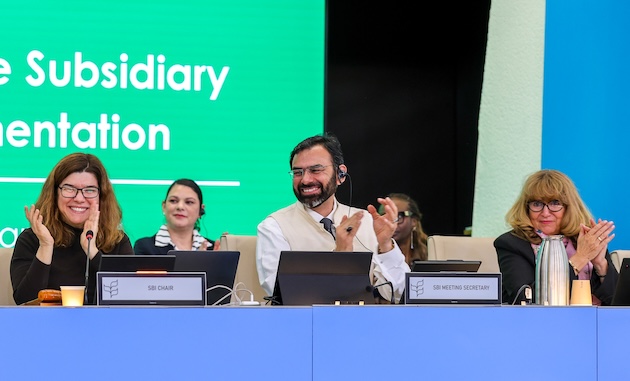
SBI 6 Chair Clarissa Souza Della Nina, Brazil; Asad Naqvi, SBI 6 Secretary; and CBD Executive Secretary Astrid Schomaker celebrating the first conference room paper being approved. Credit: IISD/ENB, Mike Muzurakis

SBI 6 Chair Clarissa Souza Della Nina, Brazil; Asad Naqvi, SBI 6 Secretary; and CBD Executive Secretary Astrid Schomaker celebrate the first conference room paper being approved. Credit: IISD/ENB, Mike Muzurakis

National Plans Show Mixed Progress

A key input to the Rome meeting was an analysis by the CBD Secretariat of national biodiversity strategies and targets submitted so far. These national plans are the main way countries translate the global framework into domestic policies.

The analysis covered 51 National Biodiversity Strategies and Action Plans (NBSAPs) and 130 sets of national targets. It found that while progress is being made, many plans fall short of the scale of change required.

About 75 percent of Parties have submitted national targets, but fewer have updated their full national strategies. Even among submitted plans, several global targets are only partially addressed. Social and economic aspects of biodiversity loss โ€” including links to livelihoods, equity, and development โ€” tend to receive less attention than conservation measures.

โ€œThese findings show clearly where we stand,โ€ said Astrid Schomaker, Executive Secretary of the CBD. โ€œThey also show that countries still have the opportunity to raise ambition and speed up action before the global review.โ€

The first global review of progress under the KMGBF will take place at COP17. A major source of information for that review will be the seventh National Reports, which countries are required to submit by 28 February 2026.

By the end of SBI-6, the European Union, Lesotho, Uganda, and Switzerland had submitted their reports. Several other countries said they were close to completion, while others cited difficulties related to limited staff, technical challenges, or delays in accessing funds.

Delegates stressed that timely reporting is essential, not only for transparency but also to ensure that the global review reflects the realities faced by countries at different levels of development.

Gender and Inclusion Lag Behind

Another issue that drew attention in Rome was the limited integration of gender equality into biodiversity action. Under the global framework, countries have committed to ensuring the full and meaningful participation of women and girls, including those from indigenous peoples and local communities.

Yet the Secretariatโ€™s analysis showed that only around 40 percent of national targets refer to gender-related issues, and only about 20 percent address womenโ€™s rights to land and natural resources. Even fewer countries reported involving womenโ€™s organisations in the preparation of national biodiversity plans.

For many participants, this gap was a reminder that biodiversity loss is not only an environmental issue but also a social one.

โ€œWithout addressing inequality, we will not succeed in protecting nature,โ€ said Gillian Guthrie, a delegate from Jamaica, during the discussions, urging governments still updating their plans to take a more inclusive approach.

Money and Capacity Remain Major Hurdles

Financing biodiversity action was another recurring theme. Although the most detailed negotiations on biodiversity finance are scheduled for later this year, talks in Rome were informed by new studies on funding needs, the relationship between debt and biodiversity spending, and opportunities to better align biodiversity and climate finance.

Developing countries repeatedly pointed to limited financial resources, lack of access to technology, and institutional constraints as barriers to implementation. These challenges were reflected in the meeting itself, where several delegations consisted of a single representative struggling to follow multiple negotiating tracks.

The CBD Secretariat thanked donor countries that contributed to a special trust fund to support participation and called on others to do the same. Without broader support, delegates warned, global biodiversity decision-making risks leaving some voices unheard.

A decisive year ahead

The recommendations adopted at SBI-6 will now be forwarded to COP17, where governments will assess whether collective action so far is enough to meet the biodiversity targets set for 2030.

For many participants, the Rome meeting served as both a progress report and a warning. While cooperation is improving and more countries are engaging with the global framework, biodiversity loss continues to affect food systems, health, and economic stability, particularly in the Global South.

As delegates left Rome, the message was clear: the coming months will be critical. Whether the world can move from commitments to meaningful action will be tested in Yerevan, Armenia โ€” and the stakes, many warned, could not be higher.

Below are some of the highlights of the 4-day meeting:

  • The sixth meeting of the Subsidiary Body (SBI-6) on Implementation under the Convention on Biological Diversity began the first global review of how countries are acting to protect nature.
  • An official analysis of national biodiversity plans showed progress but also revealed wide gaps between global goals and what many countries have committed to do at home.
  • Around three-quarters of countries have submitted national biodiversity targets, but far fewer have updated full national strategies or addressed social and economic aspects of biodiversity loss.
  • Gender equality and the participation of women, Indigenous Peoples, and local communities remain weak in many national plans, despite being central to the global biodiversity agreement.
  • Developing countries highlighted ongoing challenges linked to limited funding, lack of technical capacity, and difficulty accessing resources needed to implement biodiversity actions.
  • The outcomes from Rome will shape how global progress on biodiversity is measured and reviewed, setting the tone for accountability and action in the run-up to 2030.

IPS UN Bureau Report
 

From Pledges to Proof: UN Biodiversity Meeting Begins First Global Review of Nature Action

Biodiversity, Climate Action, Conferences, Development & Aid, Editors’ Choice, Environment, Featured, Gender, Global, Headlines, Indigenous Rights, Natural Resources, Sustainable Development Goals, TerraViva United Nations

Biodiversity

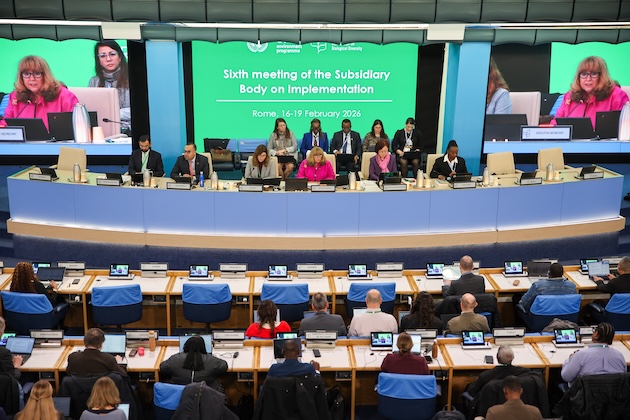
The 6th meeting of the Subsidiary Body of Implementation (SBI-6) is in progress in Rome. Credit: Mike Muzurakis | IISD/ENB

The 6th meeting of the Subsidiary Body of Implementation (SBI-6) is in progress in Rome. Credit: Mike Muzurakis | IISD/ENB |

ROME & DELHI, Feb 17 2026 (IPS) – Governments convened in Rome on Monday (February 16) for a critical round of UN biodiversity negotiations, launching the worldโ€™s first global review of how countries are acting to protect nature.


The sixth meeting of the Subsidiary Body on Implementation (SBI-6) of the Convention on Biological Diversity opened at the headquarters of the Food and Agriculture Organization (FAO), drawing government negotiators, technical experts and civil society observers from around the world. It will continue until February 19.

Although considered a technical gathering, the four-day session is expected to play a decisive role in shaping how progress under the Kunmingโ€“Montreal Global Biodiversity Framework will be assessed and whether political promises can be translated into measurable, on-the-ground action.

โ€œThis is a moment to move from commitments to delivery,โ€ said Clarissa Souza Della Nina of Brazil, Chair of the Subsidiary Body on Implementation. โ€œThe task before us is to help countries accelerate action to halt and reverse biodiversity loss.โ€

Clarissa Souza Della Nina of Brazil, Chair of the Subsidiary Body on Implementation. Credit: Mike Muzurakis | IISD/ENB

Clarissa Souza Della Nina of Brazil, Chair of the Subsidiary Body on Implementation. Credit: Mike Muzurakis | IISD/ENB

A Global Stocktake for Nature

The Rome talks come two years after countries completed the first global stocktake under the Paris Agreement, which confirmed the world remains far off track on climate goals.

Now, a parallel exercise begins for biodiversity.

Under the CBD, governments will undertake the first global review of progress in implementing the Kunmingโ€“Montreal Global Biodiversity Framework (KMGBF), adopted in 2022. The framework includes 23 targets spanning conservation, finance, equity and economic transformation, with the overarching objective of halting and reversing biodiversity loss by 2030.

Biodiversity tracking is more complex than emissions accounting, but, according to CBD leadership, it is urgently needed.

โ€œThe time has come to make peace with natureโ€ฆ the implementation of the Kunming-Montreal Global Biodiversity Framework and the Paris Agreement in a synergistic fashion will make peace with nature within reach,โ€ said Astrid Schomaker, Executive Secretary of the Convention on Biological Diversity.

Why Rome Matters

SBI-6 plays a central role in preparing for the upcoming global biodiversity review by examining implementation progress, highlighting gaps, and proposing ways to accelerate action. Negotiators will submit the outcomes directly to COP17 in Yerevan, Armenia, later this year.

โ€œOne year after COP16 concluded here in Rome, we must ensure these meetings deliver real progress. Submitting national reports on time is essential for a strong and credible global review in the race to 2030,โ€ Schomaker said.

A major focus of SBI-6 is the Secretariatโ€™s analysis of national biodiversity strategies and action plans submitted since 2022. But despite growing momentum, significant gaps persist. Many strategies still do not adequately integrate Indigenous Peoples, local communities, women, youth, or the private sector. Crucial targets relating to economic and social transformation โ€” including sustainable consumption, equity and benefit sharing โ€” remain underemphasised.

Inger Andersen, Executive Director of the United Nations Environment Programme (UNEP), underscored the stakes at the launch of the State of Finance for Nature 2026 report:

โ€œWhether investments flow into natureโ€™s destruction or into its protection will determine if we live in climate-vulnerable concrete jungles or in climate-resilient green cities,โ€ she warned, stressing that financial and policy decisions made today will shape countriesโ€™ ability to meet biodiversity goals.

An indigenous woman and biodiversity defender from the Amazon is pictured holding a forest coconut. Women are asking for better implementation of article 23 of the KMGBF. Credit: Stella Paul/IPS

An indigenous woman and biodiversity defender from the Amazon is pictured holding a forest coconut. Women are asking for better implementation of article 23 of the KMGBF. Credit: Stella Paul/IPS

Gender, Finance and Capacity Challenges

Delegates are also reviewing progress under the CBD Gender Plan of Action (2023โ€“2030). Early assessments show that only a quarter of countries involved womenโ€™s groups in shaping biodiversity strategies, and just 12 percent plan to do so in the future.

โ€œEnsuring the full, effective and meaningful participation of women and other rights holders is fundamental to accountability, inclusivity and the effectiveness of biodiversity action, and to achieving the full ambition of the global framework,โ€ the CBD Womenโ€™s Caucus stated in its official submission.

Finance remains another major point of discussion. While major funding decisions are expected later this year, Romeโ€™s deliberations draw heavily on new research on biodiversity finance, sovereign debt, and the connections between climate and nature funding.

โ€œIf we want to mobilise the finance and resources that nature critically needs, business, finance and governments must confront the reality that persistent gaps in reliable data, incentives and institutional capacity are holding back meaningful action โ€” and unless these barriers are addressed, many countries and sectors will continue to struggle to turn agreed goals into results,โ€ said Matt Jones, Co-Chair of the IPBES Business and Biodiversity Assessment 2026.

Countdown to National Reports

The Rome meeting comes just weeks before countries must submit their Seventh National Reports under the CBD, due on 28 February 2026.

These national publications will serve as a principal source of information for the global biodiversity review, alongside national strategies and targets.

However, many countries remain unprepared to submit on time. On day one, Brazil, one of the most influential players in global biodiversity policy, stressed the need for flexibility.

โ€œEnsuring the quality, consistency and internal validation of data and indicators requires additional time. In this context, Brazil suggests that SBI recommendations prioritise technical guidance, operational flexibility and targeted capacity-building support to enable high-quality reporting, rather than focusing solely on reinforcing deadlines,โ€ the countryโ€™s delegate said.

A Test of Accountability

While SBI-6 is unlikely to produce headline-grabbing announcements, it will shape how global biodiversity action is evaluated over the next decade.

For Indigenous Peoples and local communitiesโ€”who steward a significant share of the worldโ€™s remaining biodiversityโ€”the meeting represents a critical test of whether rights, participation and lived realities will be meaningfully reflected in the global assessment process.

โ€œThis process must lead to accountability, not just documentation,โ€ emphasised Pirawan Wongnithisathaporn, the Environment Program Officer at the Asia Indigenous Peoples Pact (AIPP), calling for tangible action rather than reporting alone.

SBI-6 will conclude on Thursday, February 19. Negotiations will continue at SBI-7 in August 2026 as governments move steadily toward the first global biodiversity review at COP17.

IPS UN Bureau Report


Support Science in Halting Global Biodiversity Crisisโ€”King Charles

Africa, Biodiversity, Conferences, Conservation, Development & Aid, Economy & Trade, Editors’ Choice, Environment, Europe, Featured, Global, Headlines, Natural Resources, Sustainable Development Goals, TerraViva United Nations, Trade & Investment

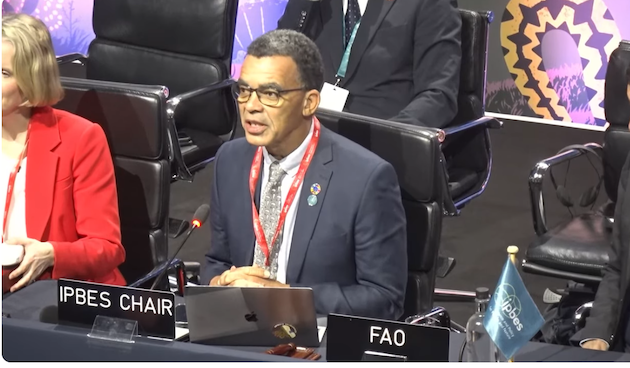
David Oburo, IPBES Chair. Credit: Busani Bafana/IPS

David Oburo, IPBES Chair. Credit: Busani Bafana/IPS

BULAWAYO, Feb 3 2026 (IPS) – British Monarch King Charles says science is the solution to protecting nature and halting global biodiversity loss, which is threatening humanityโ€™s survival.


In a message to the 12th session of the Plenary of the Intergovernmental Science-Policy Platform on Biodiversity and Ecosystem Services (IPBES), which opened in Manchester, United Kingdom, this week, King Charles said nature is an important part of humanity but is under serious threat, which science can help tackle.

โ€œWe are witnessing an unprecedented, triple crisis of biodiversity loss, climate change, and pollution at a pace that far outstrips the planetโ€™s ability to cope,โ€ said King Charles in a message delivered by Emma Reynolds, United Kingdom Secretary of State for Environment, Food and Rural Affairs.

Science is the Solution

โ€œThe best available science can help inform decisions and actions to steward nature and, most importantly, to restore it for future generations, โ€œ King Charles noted, pointing out that humanity has the knowledge to reverse the existential crisis and transition towards an economy that prospers in harmony with nature.

Delegates representing the more than 150 IPBES member governments, observers, Indigenous Peoples,  local communities and scientists are meeting for the  IPBESโ€™ 12th Session, expected to approve a landmark new IPBES Business & Biodiversity Assessment. The report,  a 3-year scientific assessment involving 80 expert authors from every region of the world, will become the accepted state of science on the impacts and dependencies of business on biodiversity and natureโ€™s contributions to people. It will provide decision-makers with evidence and options for action to measure and better manage business relationships with nature.

The King lauded IPBES for bringing together the worldโ€™s leading scientists, indigenous and local knowledge, citizen science and government to share valuable knowledge through the Business and Biodiversity Reportโ€”the first of its kind.

โ€œI pray with all my heart that it will help shape concrete action for years to come, including leveraging public and private finance to close by 2030 the annual global biodiversity gap of approximately USD 700 billion,โ€ said King Charles.

IPBES Chair, Dr. David Obura, highlighted that the approval of the IPBES Business and Biodiversity Assessment is important just days after the World Economic Forumโ€™s 2026 Global Risks Report again spotlighted biodiversity loss as the second most urgent long-term risk to business around the world.

โ€œIn transitioning and transforming, businesses should all experience the rewards of being sustainable and vibrant, benefiting small and large,โ€ Obura emphasized. โ€œThe Business Biodiversity assessment synthesizes the many tools and pathways available to do this and provides critical support for businesses across all countries to work with nature and people and not to work against either or both.โ€

Addressing the same delegates, Emma Reynolds,  UK Secretary of State for Environment, Food and Rural Affairs, highlighted the urgency of collective action, the critical role of science, and the opportunities for business in nature.

Reynolds noted there was momentum around the world as countries were restoring wetlands and forests, communities were reviving degraded landscapes and businesses were increasingly investing in nature after realizing that nature delivers real returns.

โ€œThe tide for nature is beginning to turn, but we cannot afford to slow down,โ€ said Reynolds. โ€œThe window to halt diversity loss by 2030 is narrowing. We need to build on that momentum, and we need to do it now.โ€

Multilateralism, a must for protecting nature

Paying tribute to IPBES for supporting scientific research, Reynolds emphasized that the rest of the world must step forward when others are stepping back from international cooperation. This is to demonstrate that protecting and restoring nature was not just an environmental necessity but essential for global security and the economy.

โ€œThe UKโ€™s commitment to multilateralism remains steadfast,โ€ she said. โ€œWe believe that by working together, sharing knowledge, aligning policies, and holding one another accountable, we can halt and reverse the diversity loss by 2030,.โ€œ

In January 2026, the United States withdrew its participation in IPBES, alongside 65  international organizations and bodies, including the International Union for Conservation of Nature (IUCN), the UN Framework Convention on Climate Change (UNFCCC) and the Paris Agreement.

The United States was a founding member of IPBES, and since its establishment in 2012, scientists, policymakers, and stakeholdersโ€”including Indigenous Peoples and local communitiesโ€”from the United States have been among the most engaged contributors to its work.

The approval of the Business and Biodiversity Assessment by IPBES government members this week will be multilateralism in action, she said, noting that the assessment would not be possible without the critical role of science.

Reynolds underscored the need to base sound policy on solid scientific evidence. Decisions made in negotiating rooms and capitals around the world must be guided by the best and most up-to-date science available. IPBES  exists to provide exactly that.

Noting that the business depends on nature for raw materials, clean water, a stable climate, and food, Reynolds said companies that recognize their dependency on nature are proving that nature-positive investment works.

โ€œBusiness as well as the government must act now to protect and restore natureโ€ฆ we have the science. We have the frameworksโ€ฆ What we need now is action.โ€

โ€œNature loss is now a systemic economic risk. Thatโ€™s precisely why the assessment on business impact and dependencies is both urgent and necessary,โ€ said  Inger Andersen, executive director of the United Nations Environment Programme (UNEP).

โ€œThe first-ever business and diversity assessment will deliver authoritative evidence on how businesses depend on nature, how they impact it, and what that means for risk, for resilience, and for long-term value creation.โ€

Business and Biodiversity are linked

Underscoring that biodiversity loss is linked to the wider planetary crisis, Astrid Schomaker, executive secretary of the Convention on Biological Diversity, paid tribute to IPBES as a provider of science as a public good.

โ€œIPBES has remained a  โ€˜beacon of knowledge at a time when science  and knowledge itself is under strain and when the voices of disinformation are sometimes louder than the facts,โ€ said Schomaker, noting that ahead of the first global stocktake of progress in the implementation of the Kunming-Montreal Global Biodiversity Framework (KMGBF), the science provided by IPBES would be invaluable.

โ€œThe Business and Biodiversity assessment constitutes a win for everyone. Clarifying that biodiversity loss isnโ€™t just an environmental issue; itโ€™s a serious threat to economic systems, livelihoods, business profitability, and societal resilience. Biodiversity simply underpins and provides the stability we all need.โ€

Target 15 of the KMGBF, focuses on business reducing negative impacts on biodiversity and global businesses need to assess and disclose biodiversity-related impacts.

IPBES executive secretary, Dr. Luthando Dziba, said IPBES was on track to deliver, in the coming years, crucial knowledge and inspiration to support the implementation of current goals and targets of the KMGBF, and to provide the scientific foundation needed by the many processes now shaping the global agenda beyond 2030.

IPS UN Bureau Report

 

World Living Beyond Its Means: Warns UNโ€™s Global Water Bankruptcy Report

Armed Conflicts, Climate Change, Combating Desertification and Drought, Conferences, Conservation, Editors’ Choice, Environment, Featured, Global, Headlines, Migration & Refugees, Natural Resources, Sustainable Development Goals, TerraViva United Nations

Water & Sanitation

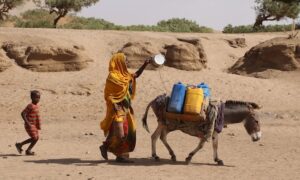
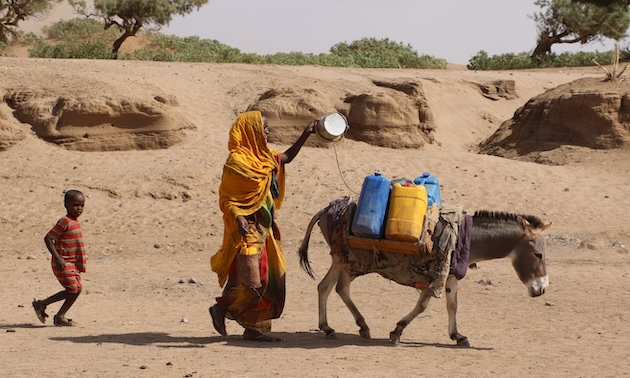
Collecting water in Ethiopia. A new report, โ€˜Global Water Bankruptcy: Living Beyond Our Hydrological Means in the Post Crisis Eraโ€™ warns that many of the earthโ€™s water resources have been pushed to a point of permanent failure. Credit: EU/ECHO/Anouk Delafortrie/IPS

Collecting water in Ethiopia. A new report, โ€˜Global Water Bankruptcy: Living Beyond Our Hydrological Means in the Post Crisis Eraโ€™ warns that many of the earthโ€™s water resources have been pushed to a point of permanent failure. Credit: EU/ECHO/Anouk Delafortrie/IPS

UNITED NATIONS & SRINAGAR, India, Jan 20 2026 (IPS) – The world has entered what United Nations researchers now describe as an era of Global Water Bankruptcy, a condition where humanity has irreversibly overspent the planetโ€™s water resources, leaving ecosystems, economies, and communities unable to recover to previous levels.


The new report, released by the United Nations University Institute for Water, Environment and Health, titled Global Water Bankruptcy: Living Beyond Our Hydrological Means in the Post-Crisis Era. The report argues that decades of overextraction, pollution, land degradation, and climate stress have pushed large parts of the global water system into a permanent state of failure.

โ€œThe world has entered the era of Global Water Bankruptcy,โ€ the report reads, adding that โ€œin many regions, human water systems are already in a post-crisis state of failure.โ€

According to the report, the language of โ€œwater crisisโ€ is no longer sufficient to explain what is happening. A crisis implies a shock followed by recovery. Water bankruptcy, by contrast, describes a condition where recovery is no longer realistically possible because natural water capital has been permanently damaged.

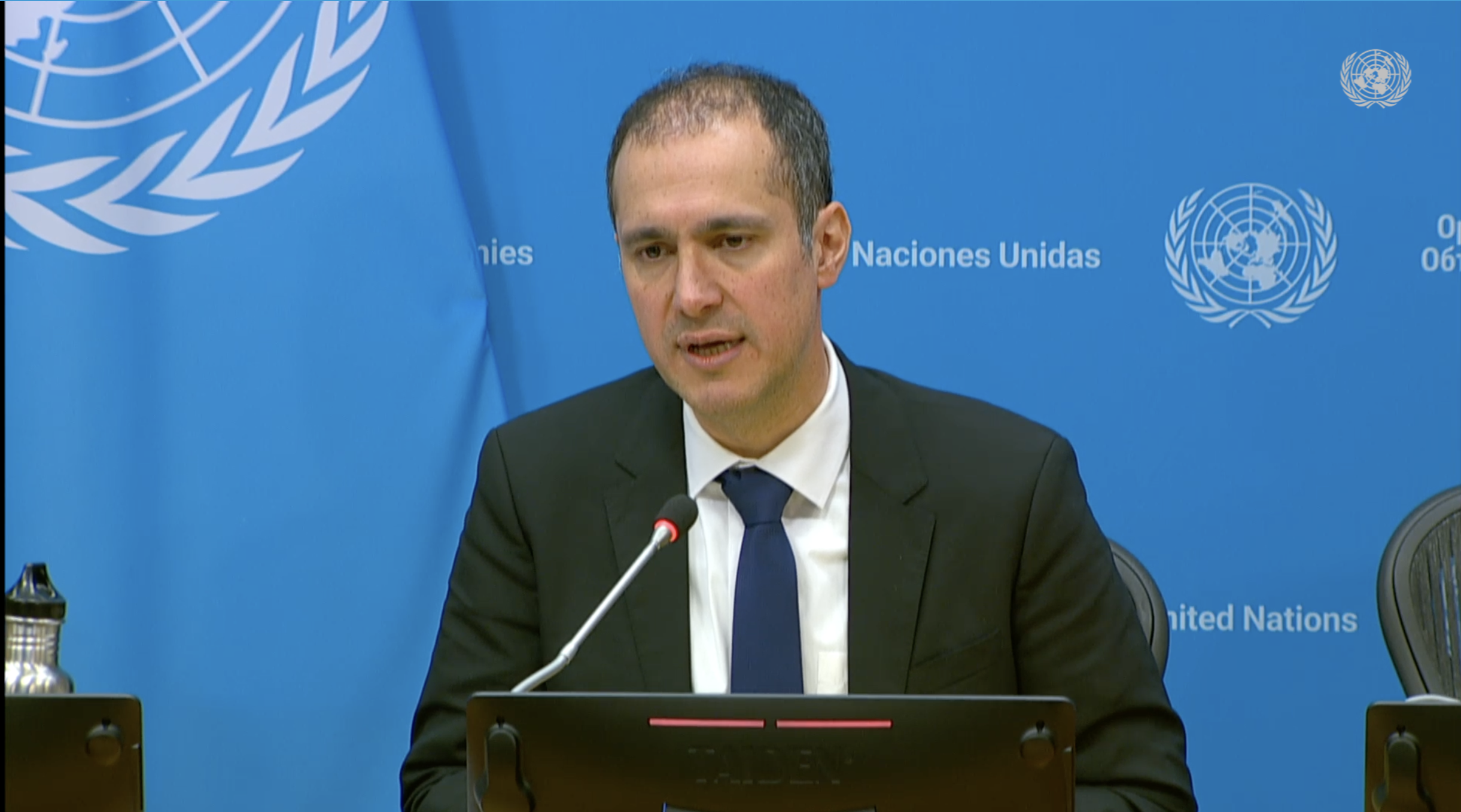
In an exclusive interview with Inter Press Service, former Deputy Head of Iranโ€™s Department of Environment  Prof. Kaveh Madani, who currently is the Director at United Nations University, Institute for Water, Environment and Health, said that declaring that the planet has entered the era of water bankruptcy must not be interpreted as universal water bankruptcy, as not all basins, aquifers, and systems are water bankrupt.

 Prof. Kaveh Madani, Director at the United Nations University, Institute for Water, Environment and Health, addresses the UN midday press briefing. Credit: IPS

Prof. Kaveh Madani, Director at the United Nations University, Institute for Water, Environment and Health, addresses the UN midday press briefing. Credit: IPS

โ€œBut we now have enough critical basins and aquifers in chronic decline and showing clear signs of irreversibility that the global risk landscape is already being reshaped. Scientifically, we know recovery is no longer realistic in many systems when we see persistent overshoot (using more than renewable supply) combined with clear markers of irreversibilityโ€”for example aquifer compaction and land subsidence that permanently reduce storage, wetland and lake loss, salinization and pollution that shrink usable water, and glacier retreat that removes a long-term seasonal buffer. When these signals persist over time, the old โ€œbounce backโ€ assumption stops being credible,โ€ Madani said.

According to the report, over decades, societies have drawn down the renewable flow of rivers and rainfall besides long-term reserves stored in aquifers, glaciers, wetlands, and soils. At the same time, pollution and salinization have reduced the share of water that is safe or economically usable.

โ€œOver decades, societies have withdrawn more water than climate and hydrology can reliably provide, drawing down not only the annual income of renewable flows but also the savings stored in aquifers, glaciers, soils, wetlands, and river ecosystems,โ€ the report says.

The scale of the problem, as per the report, is global. Nearly three-quarters of the worldโ€™s population now lives in countries classified as water insecure or critically water insecure.

Around 2.2 billion people still lack safely managed drinking water, while 3.5 billion lack safely managed sanitation. About 4 billion people, as per the report findings, experience severe water scarcity for at least one month every year.

Madani said, adding that water bankruptcy is best assessed basin by basin and aquifer by aquifer, not by country.

โ€œPlease note that, based on the water security definition used by the UN system, water insecurity and water bankruptcy are not equivalent. Water bankruptcy can drive water insecurity, but water insecurity can also stem from limited financial and institutional capacity to build and operate infrastructure for safe water supply and sanitation, even where physical water is available,โ€ he explained.

Madani added that the regions most consistently closest to irreversible decline cluster in the Middle East and North Africa, Central and South Asia, parts of northern China, the Mediterranean and southern Europe, the southwestern United States and northern Mexico (including the Colorado River system), parts of southern Africa, and parts of Australia.

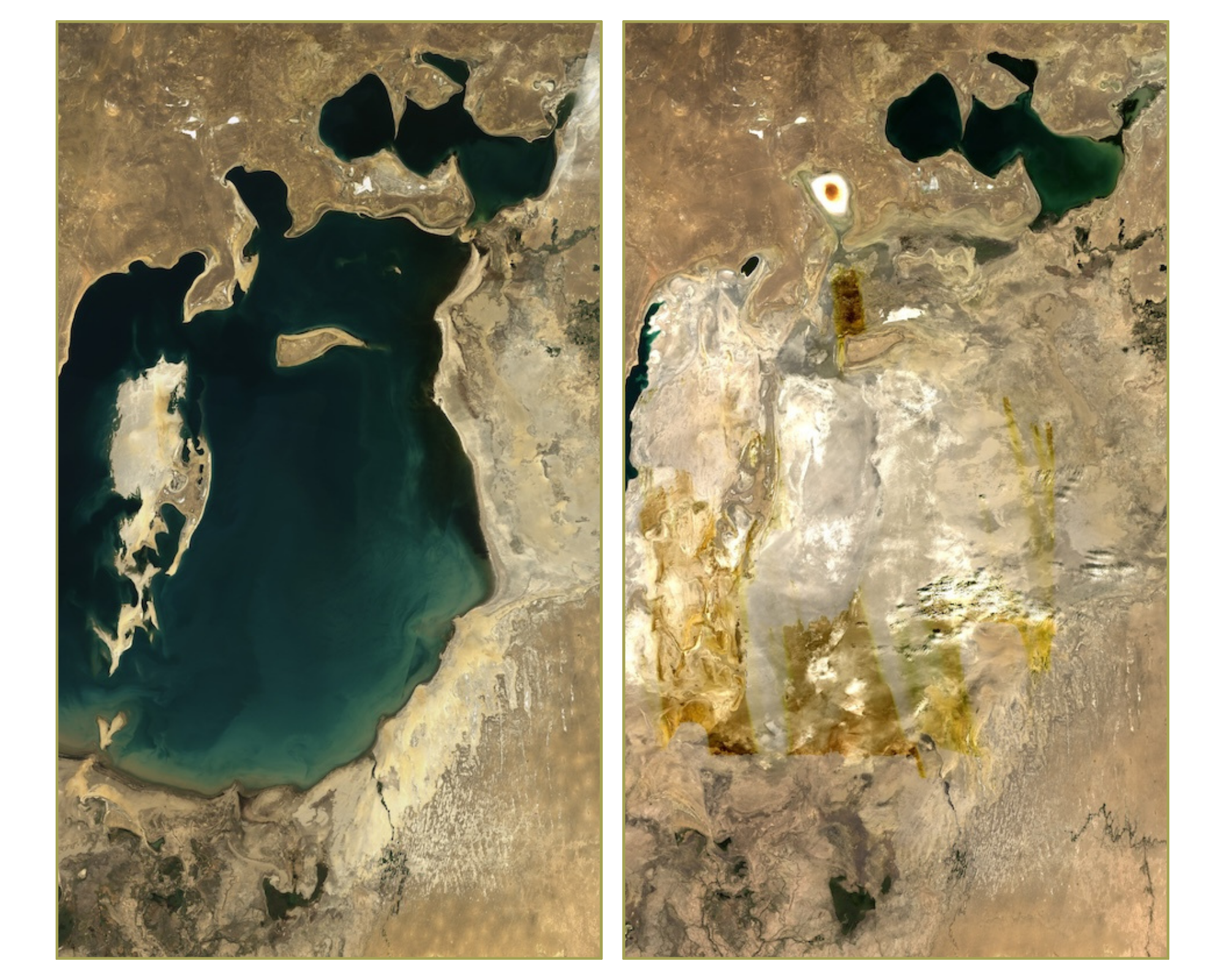
The Aral Sea, which lies between Kazakhstan and Uzbekistan shows dramatic water loss between 1989 and 2025. Credit: UNU-INWEH

The Aral Sea, which lies between Kazakhstan and Uzbekistan, shows dramatic water loss between 1989 and 2025. Credit: UNU-INWEH

Surface Water Systems Are Shrinking Rapidly

The report shows how more than half of the worldโ€™s large lakes have lost water since the early 1990s, affecting nearly one quarter of the global population that depends directly on them. Many major rivers now fail to reach the sea for parts of the year or fall below environmental flow needs.

Massive losses have occurred in wetlands, which serve as natural buffers against floods and droughts. Over the past five decades, the report claims that the world has lost roughly 410 million hectares of natural wetlands, almost the size of the European Union. The economic value of lost ecosystem services from these wetlands exceeds 5.1 trillion US dollars.

Groundwater depletion is one of the clearest signs of water bankruptcy. Groundwater, says the report, now supplies about 50 percent of global domestic water use and over 40 percent of irrigation water. Yet around 70 percent of the worldโ€™s major aquifers show long-term declining trends.

โ€œExcessive groundwater extraction has already contributed to significant land subsidence over more than 6 million square kilometers,โ€ the report says, warning that in some locations land is sinking by up to 25 centimeters per year, permanently reducing storage capacity and increasing flood risk.

In coastal areas, overpumping has allowed seawater to intrude into aquifers, rendering groundwater unusable for generations. In inland agricultural regions, falling water tables have triggered sinkholes, soil collapse, and the loss of fertile land.

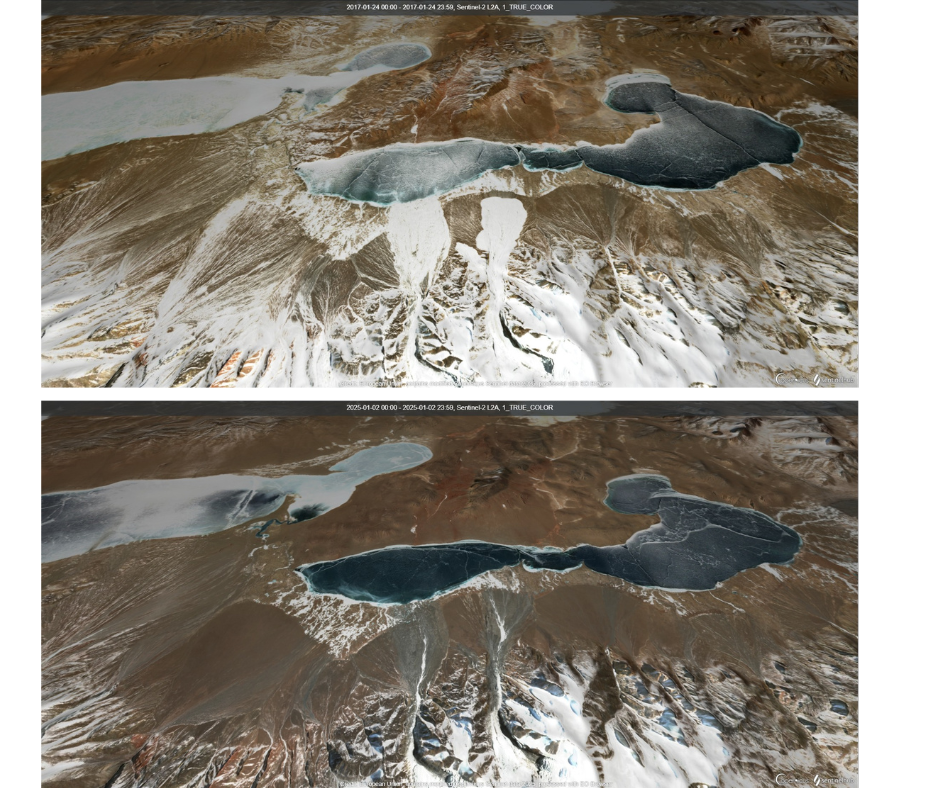
These satellite images show a dramatic impact of the Aru glacier collapses in western Tibet. First image was taken in 2017 and the second in 2025. Credit: UNU-INWEH

These satellite images show a dramatic impact of the Aru glacier collapses in western Tibet. First image was taken in 2017 and the second in 2025. Credit: UNU-INWEH

The cryosphere, glaciers and snowpacks that act as natural water storage systems are also being rapidly liquidated. The world has already lost more than 30 percent of its glacier mass since 1970. Several low- and mid-latitude mountain ranges could lose functional glaciers within decades.

โ€œThe liquidation of this frozen savings account interacts with groundwater depletion and surface water over-allocation to lock many basins into a permanent worsening water deficit state,โ€ says the report.

This loss, as per the report, threatens the long-term water security of hundreds of millions of people who depend on glacier- and snowmelt-fed rivers for drinking water, irrigation, and hydropower, particularly in Asia and the Andes.

Madani said the biggest failure was treating groundwater as an unlimited safety net instead of a strategic reserve.

He says that when surface water tightened, many systems defaulted to โ€œdrill deeperโ€ without enforceable caps.

โ€œAuthorities often recognize the consequences when it is already late, and meaningful action then faces major political barriers. For example, reducing groundwater use in farming can trigger unemployment, food insecurity, and even instability unless farmers are supported through short-term compensation and a longer-term transition to alternative livelihoods,โ€ he added.

According to Madani, that kind of transition cannot be implemented overnight.

โ€œSo, business as usual continues. The result is predictable: groundwater gets โ€œliquidatedโ€ to postpone hard choices, and by the time the damage is obvious, recovery is no longer realistic,โ€ he told IPS news.

Agriculture Lies at the Heart of the Crisis

According to the report, farming accounts for approximately 70 percent of global freshwater withdrawals. About 3 billion people and more than half of the worldโ€™s food production are located in regions where total water storage is already declining or unstable.

The report states that more than 170 million hectares of irrigated cropland are under high or very high water stress. Land and soil degradation are making matters worse by reducing the ability of soils to retain moisture. The degradation of more than half of the global agricultural land is now moderate or severe.

Drought, once considered a natural hazard, is increasingly driven by human activity. Overallocation, groundwater depletion, deforestation, land degradation, and climate change have turned drought into a chronic condition in many regions.

โ€œDrought-related damages, intensified by land degradation, groundwater depletion and climate change rather than rainfall deficits alone, already amount to about 307 billion US dollars per year worldwide,โ€ the report states.

Water quality degradation further shrinks the usable resource base. Pollution from untreated wastewater, agricultural runoff, industrial effluents, and salinization means that even where water volumes appear stable, much of that water is unsafe or too costly to treat.

The report adds that the planetary freshwater boundary has already been crossed. Both blue water, surface and groundwater, and green water, soil moisture, have been pushed beyond a safe operating space.

Current governance systems, the authors argue, are not fit for this reality. Many legal water rights and development promises far exceed degraded hydrological capacity. Existing global agendas, focused largely on drinking water access, sanitation, and incremental efficiency gains, are inadequate for managing irreversible loss.

โ€œWater bankruptcy must be recognized as a distinct post-crisis state, where accumulated damage and overshoot have undermined the systemโ€™s capacity to recover,โ€ the report says.

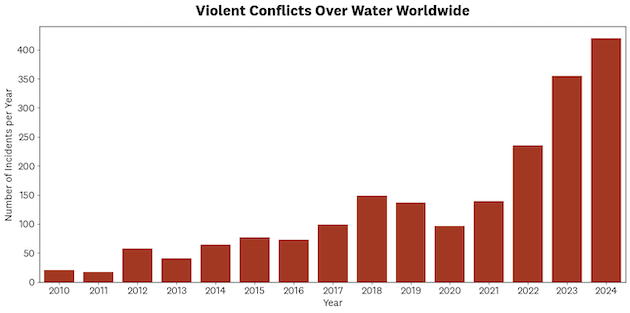
Water bankruptcy could result in an increase in conflicts. Credit: UNU-INWEH

Water bankruptcy could result in a further increase in conflicts. Credit: UNU-INWEH

It warns that the implications of water bankruptcy are dire.

UN Under-Secretary-General Tshilidzi Marwala, Rector of UNU explains,  โ€œWater bankruptcy is becoming a driver of fragility, displacement, and conflict. Managing it fairlyโ€”ensuring that vulnerable communities are protected and that unavoidable losses are shared equitablyโ€”is now central to maintaining peace, stability, and social cohesion.โ€

Policy Implications

Instead of crisis management aimed at restoring the past, the report actually pitches for bankruptcy management. That means acknowledging insolvency, accepting irreversibility, and restructuring water use, rights, and institutions to prevent further damage.

The authors lay stress on the fact that water bankruptcy is also a justice and security issue. The costs of overshoot fall disproportionately on small farmers, rural communities, women, Indigenous peoples, and downstream users, while benefits have often accrued to more powerful actors.

โ€œHow societies manage water bankruptcy will shape social cohesion, political stability, and peace,โ€ the report warns.

Furthermore, it urges governments and international institutions to use upcoming UN Water Conferences in 2026 and 2028 as milestones to reset the global water agenda, calling for water to be treated as an upstream sector central to climate action, biodiversity protection, food security, and peace.

โ€œThis is about a crisis that might arrive in the future. The world is already living beyond its hydrological means,โ€ reads the report.

When asked why the report frames water bankruptcy as a justice and security issue and how governments can implement painful demand reductions without triggering social unrest or conflict, Madani said the demand reduction becomes dangerous when it is treated as a technical exercise instead of a political economy reform. In many water-bankrupt regions, according to him, water is effectively a jobs policy: it keeps low-productivity farming and local economies afloat.

โ€œIf you cut water without an economic transition, you create unemployment, food insecurity, and unrest. So the practical pathway is to decouple livelihoods and growth from water consumption. In many economies, water and other natural resources are used to keep low-efficiency systems alive. In most places, it is possible to produce more strategic food with less water and less land, and with fewer farmersโ€”provided that farmers are supported through a transition and offered alternative livelihoods.โ€

According to Madani, governments should protect basic needs but target the big reductions where most water is used, especially agriculture and besides that, pair caps with a just transition package for farmersโ€”compensation, insurance, buy-down or retirement of water entitlements where relevant, and real income alternatives.

He further suggests that the governments should invest in diversification, including services, industry, value-added agri-processing, and urban jobs, so communities can earn a living without expanding water withdrawals.

โ€œIn short, you avoid conflict by making demand reduction part of a broader economic transition, not a standalone water policy.โ€

IPS UN Bureau Report


Excluding Food Systems From Climate Deal Is a Recipe for Disaster

Africa, Climate Change, Climate Change Justice, Conferences, COP30, Development & Aid, Editors’ Choice, Featured, Food and Agriculture, Food Systems, Global, Headlines, Latin America & the Caribbean, Population, Sustainable Development Goals, TerraViva United Nations | Analysis

Food Systems


Food solutions were on display everywhere around COP30โ€”from the 80 tonnes of local and agroecological meals served to concrete proposals for tackling hungerโ€”but none of this made it into the negotiating rooms or the final agreement. โ€”Elisabetta Recine, IPES-Food panel expert

Agriculture is both a challenge and a solution for climate change. Busani Bafana/IPS

Agriculture is both a challenge and a solution for climate change. Busani Bafana/IPS

BULAWAYO, Jan 9 2026 (IPS) – As they ate catered meals, COP30 negotiators had no appetite for fixing broken food systems, a major source of climate pollution, experts warn.


Food systems are the complete journey food takesโ€”from the farm to forkโ€”which means its growing, processing, distribution, trade and consumption and even the waste.

The International Panel of Experts on Sustainable Food Systems (IPES-Food) warns that the final COP30 agreement risks deepening climate and hunger crises.  It failed  to address global warming emissions from food systems and the escalating damages caused by fossil-fuel-dependent industrial agriculture.

Food appears only once in the negotiated text, as a narrow indicator on โ€˜climate resilient food productionโ€™ under the Global Goal on Adaptation, IPES-Food pointed out.

โ€œThere is no mention of food systems, no roadmap to tackle deforestation, and no recognition that industrial agriculture drives nearly 90 percent of forest loss worldwide,โ€ noted the think tank, emphasizing that negotiators also weakened language in the Mitigation Work Programme from addressing the โ€˜driversโ€™ of deforestation to vague โ€˜challenges.โ€™

IPES-Food argued that the omission of food systems in the COP30 agreement was in stark contrast to the summit itself, which was held in the heart of the Amazon. Thirty percent of all food served during COP30 came from agroecological family farmers and traditional communities, and concrete public policy proposals for a just transition of food systems were on full display, IPES-Food said.

By not supporting a transition to environmentally friendly and low-emission agriculture, the agreement has left the global food systemโ€”and the billions who depend on itโ€”highly vulnerable to the very climate shocks it helps cause, experts said.

โ€œFood solutions were on display everywhere around COP30โ€”from the 80 tonnes of local and agroecological meals served to concrete proposals for tackling hungerโ€”but none of this made it into the negotiating rooms or the final agreement,โ€ said Elisabetta Recine, IPES-Food panel expert and president of the Brazilian National Food and Nutrition Security Council (Consea), in a statement.

โ€œDespite all the talk, negotiators failed to act, and the lived realities of people most affected by hunger, poverty, and climate shocks went unheard.โ€

Big Oil and Big Ag, Bigger voice

More than 300 industrial agriculture lobbyists were registered as delegates to COP30. They  are blamed for influencing discussions and promoting false solutions to climate change.

โ€œCOP30 was supposed to be the Implementation COPโ€”where words turned into action,โ€ Danielle Nierenberg, an expert on sustainable agriculture and food issues and President of Food Tank, told IPS. โ€œBut once again, corporate interests won over people, nature, and the future of our food and agriculture systems as part of the solution to the climate crisis.โ€

Raj Patel, IPES-Food panel expert and professor at the University of Texas, argues that agribusiness lobbyists captured COP30 to influence outcomes favoring industrial agriculture and big oil interests.

โ€œFood systems are second only to oil and gas as a driver of the climate crisis, and unlike oil wells, they are also the first victim of the chaos they create, Patel noted.

Obstacles and Opportunities

Scientists have warned that carbon emissions, including those from agriculture, must be cut considerably if the world is to meet the goals of the Paris Agreement to limit global warming to 2ยฐC or less.

Even if fossil fuel emissions were eliminated immediately, emissions from the global food system alone would make it impossible to limit warming to 1.5ยฐC and difficult even to realize the 2ยฐC target, scientists have said.

Selorm Kugbega, a Research Fellow at the Stockholm Environment Institute, agrees that despite many promises made to tackle agriculture-linked emissions, COP30 turned out to be a damp squib for agrifood systems.

Initiatives such as RAIZ to restore 500 million hectares of degraded agricultural land by 2030 and TERRA to scale out climate solutions for smallholder farmers through blended finance, which were launched at COP30 omitted to highlight the effects of industrial food systems. Over 300 industrial agriculture lobbyists participated in discussions at COP30, leading to accusations of swaying the outcomes.

Analysts warn the final agreement at COP30 in Belรฉm, Brazil, risks deepening climate and hunger crises. Credit: Raimundo Pacco/COP30

Analysts warn the final agreement at COP30 in Belรฉm, Brazil, risks deepening climate and hunger crises. Credit: Raimundo Pacco/COP30

Kugbega observed that after several years of slow progress and momentum in integrating food systems in climate negotiations, COP30 should have been the opportunity to seal agricultureโ€™s centrality in future COPs. However, it ended with no clear agreements on grant-based public finance for adaptation in agriculture or redirection of public funds that subsidize industrial systems.

The climate negotiations demonstrated power inequality in climate negotiations with the implicit protection of industrial agriculture interests, which weakened the credibility of any global efforts at mitigating agriculture-based emissions, Kugbega observed, highlighting that smallholders bear a high burden of climate risks and have little adaptation financing.

Kugbega argued the most powerful countries, which are generally less dependent on agriculture, tend to prioritize sectors such as energy and transport in climate negotiations. However, many least developed countries, particularly in Africa, are highly dependent on agriculture for employment and economic stability and face urgent climate risks.

โ€œYet these countries often lack the political influence to elevate agriculture and food systems as central issues in COP negotiations,โ€ he said. โ€œCOP30 in Brazil presented a major opportunity to shift this imbalance, making the failure to position food systems at the center of the climate agenda particularly troubling.โ€

Frugal Financing for Food and Farmers

According to the Climate Policy Initiative (CPI) and the UNโ€™s Standing Committee on Finance, agriculture receives a small and insufficient share of total global climate finance.

Of the available approximate total global climate finance of USD 1.3 trillion per year on average, agriculture gets around USD 35 billion per year. This is a huge shortfall given that food systems are estimated to be responsible for roughly one-third of global greenhouse gas emissions and are one of the sectors most vulnerable to climate impacts, according to the CPI. Worse still, smallholder farmers, who produce up to 80 percent of food in developing countries, only receive 0.3 percentโ€”a striking imbalance, yet they feed the world and are more exposed to climate impacts.

Will COP31 Deliver?

While COP30 highlighted the need to tackle climate change impacts through the transformation of food systems, such as highlighted in the Belรฉm Declaration on Hunger, Poverty and Human-Centered Climate Action, it remains to be seen if COP31 will deliver a positive outcome on food systems.

Waiting for COP31 to save the world is surrendering because agribusiness lobbyists do not take holidays, argues IPES-Food panelโ€™s Raj Patel.

โ€œThe test is not whether diplomats can craft better language in Antalya, but whether farmersโ€™ movements, indigenous movements, and climate movements can generate enough political pressure to make governments fear inaction more than they fear confronting corporate power,โ€ he said.

COP31, to be  hosted by Turkey with Australia as negotiations president in 2026 , is expected to prioritize an action agenda centered on adaptation finance, fossil fuel phase-out, adaptation in Small Island Developing States, and oceans.

While this agenda aligns with broader climate justice goals, it means food systems risk becoming indirectly addressed rather than explicitly championed, Kugbega said.

Given the stalled negotiations on financing sustainable agriculture transitions and the postponement of the Sharm el-Sheikh Joint Work on Agriculture, Kugbega said COP31 will likely focus more on developing new roadmaps and agreements than on full-scale implementation.

COP32 could be a greater opportunity for the implementation of the work program under Ethiopiaโ€™s COP32 presidency, given the countryโ€™s direct exposure to climate risks in agriculture, he noted.

โ€œCOP31 will likely shape whether the world arrives at COP32 ready to implement and operationalize sustainable food systems or once again be forced to renegotiate what is already known.โ€

This feature is published with the support of Open Society Foundations.

IPS UN Bureau Report

 

Whatโ€™s On In Cape Town In January 2026

Cape Town welcomes 2026 on a high note โ€“ January is peak summer, and the city comes alive with an unbeatable mix of concerts, festivals, sport, culture and outdoor experiences. From iconic events like the Cape Town Minstrels Street Parade and the Kingโ€™s Plate to international music tours, open-air theatre and cricket at Newlands.

Cats, the Musical

๐Ÿ“…

2-11 January 2026 ๐Ÿ“ Artscape Theatre, Cape Town

Pieter Toerien and GWB Entertainment in association with Cape Town Opera by arrangement with The Really Useful Group presents CATS. Andrew Lloyd Webberโ€™s world-famous musical Cats brings iconic songs, choreography and theatrical magic to the Artscape stage. Tickets from R180 on Webtickets.

cats the musical

WAV Festival by AfroNation

๐Ÿ“…

2 January 2026 ๐Ÿ“ Green Point Track, Cape Town

A festival R&B lovers cannot miss! Amapianoโ€™s Kelvin Momo brings his deep, emotional sound to the festival, while Shekinahโ€™s golden voice is set to light up the stage. The lineup also includes Mariah the Scientist, Wale, Langa Mavuso, and Kujenga. Cape Town, get ready for a high-energy stadium showcase featuring the best in R&B. Find ticket information here.

Milk & Cookies Festival

๐Ÿ“…

3 January 2026 ๐Ÿ“ Kenilworth Racecourse, Cape Town

This multi-genre festival celebrates music, food, and community. From amapiano to R&B, house to hip-hop, Milk and Cookies blends global sounds with local culture for one unforgettable celebration. Vibrant stages, curated food vendors, immersive art installations, and the kind of energy that turns a crowd into a community โ€“ itโ€™s a gathering where culture, connection, and creativity meet. For tickets go to Howlerโ€™s website and for more information visit the official page here.


View this post on Instagram

A post shared by ๐Ÿฅ›

Milk + Cookies ๐Ÿช (@milkcookiesfest)

BLANCHE โ€“ a luxury daytime event

๐Ÿ“…

4 January 2026 ๐Ÿ“ The Terrace Rooftop, Salt River

Step into the New Year with Blanche; an All-white outdoor celebration, curated by AfroFuture and PVO. This signature experience blends live music, an unmatched atmosphere, and the most vibrant crowd. Presented by Martell, set against Cape Townโ€™s stunning backdrop. Click here for ticket information.

Freshlyground Reunion Concert

๐Ÿ“…

4, 11, 18 January 2026 ๐Ÿ“ Kirstenbosch National Botanical Garden

Freshlyground reunites for a special open-air concert at Kirstenbosch, delivering feel-good hits in one of Cape Townโ€™s most popular outdoor venues. Find more information and ticket information.

Cape Town Minstrels Street Parade

๐Ÿ“…

5 January 2026 ๐Ÿ“ Somerset Road & Fan Walk, Green Point

The iconic Cape Town Minstrel Carnival returns to the Mother City on 5 January 2026. The annual event fills the streets with colour, music and tradition, continuing into DHL Stadium for the Kaapse Klopse Choral Competition. Tap here for the latest event information.

St Tropez presents: Uncle Waffles โ€“ The ultimate day time escape

๐Ÿ“…

5 January 2026 ๐Ÿ“ Cabo Beach Club, Cape Town

Turn on the glitz and glamour at this epic Cabo Beach experience. Headlined by global sensation Uncle Waffles, expect nothing less than an unforgettable day of pulsating beats, high-energy performances, and pure sophistication. The event promises world-class local DJs spinning infectious sounds that keep the energy flowing from noon until sunset. Get your tickets now.

MI Cape Town vs Joburg Super Kings

๐Ÿ“…

6 January 2026 ๐Ÿ“ Newlands Cricket Grounds

Catch SA20 cricket action as MI Cape Town face the Joburg Super Kings at the historic Newlands Cricket Ground. For ticket info, email info@ticketpro.co.za or visit the website here.

Cape Town Jazzathon

๐Ÿ“…

9-11 January 2026 ๐Ÿ“ Amphitheatre, V&A Waterfront, Cape Town

Celebrating its 29th anniversary this year, the Cape Town Jazzathon is South Africaโ€™s longest-running music festival. Often referred to as โ€œThe Peopleโ€™s Festival,โ€ the event will feature performances daily, from 12.30pm to 8pm. Enjoy a rich variety of styles including Afro Jazz, Cape Jazz, Hip Hop, R&B, Reggae, Neo Soul, and Straight Ahead packed into three days of non-stop entertainmentโ€ฆ and its free!!! Learn more.

Lโ€™Ormarins Kingโ€™s Plate

๐Ÿ“…

10 January 2026 ๐Ÿ“ Hollywoodbets Kenilworth Racecourse

The Running of the 165th Kingโ€™s Plate โ€“ the Lโ€™Ormarins Kingโ€™s Plate is one of South Africaโ€™s most prestigious horse racing events, combining elite racing, high fashion and a vibrant atmosphere. The Kingโ€™s Plate is a totally blue and white affair where guests can enjoy some of the countryโ€™s best racing, wine, food, antique car displays and renowned after party in the peak of Cape Townโ€™s summer. Tickets start from R600. For more information visit here.

king's plate

Maynardville Open-Air Festival

๐Ÿ“…

From 13 January 2026 ๐Ÿ“ Maynardville Park, Wynberg

Cape Townโ€™s premier open-air theatre experience returns, featuring live performances in a magical forest setting. Opening on 13 January, the Shades of Blue Chamber Concert will feature music from composers influenced by the rhythms and harmonies of jazz. Next up is Jazz in the Park (14 to 15 Jan), a new two-day celebration featuring local jazz legends from Cape Townโ€™s rich jazz tradition. From 16 to 17 January, another crowd-favourite Cape Town Philharmonic Orchestra returns with a stirring classical programme. See the full festival programme.

Calum Scott โ€“ The Avenoir Tour

๐Ÿ“…

14 January 2026 ๐Ÿ“ Kirstenbosch National Botanical Garden

International singer-songwriter Calum Scott performs live at Kirstenbosch as part of his global Avenoir Tour. Gates open at 6pm. Concert starts 7pm. For more information, go to Big Concertโ€™s website.

Sheer City Festival

๐Ÿ“…

17-18 January 2026 ๐Ÿ“ Harrington Street Precinct

Sheer City is launching its inaugural two-day inner-city festival bringing together Cape Townโ€™s most influential underground nightlife crews with international acts like Horse Meat Disco, Tama Sumo & Lakuti, Make A Dance, Freudenthal, and more. Itโ€™s a multi-venue, walkable block party across Harrington Street and the City Bowl fringe, a celebration of Cape Townโ€™s creative pulse, queer culture, music, fashion, performance, and community. Expect six venues, over twenty artists, a full weekend immersion in the cityโ€™s next cultural moment.

Sheer Drop at Texas โ€“ 2pm to 10pm
Sheer Delight at The Electric โ€“ 5pm to 2am
Sheer Disco at Harringtons โ€“ 6pm to 4am
Sheer D.O.G at Zer021 Social โ€“ 8pm to 4am
Sheer Assembly at District โ€“ 8pm to 4am
Sheer Dive at Surfa Rosa โ€“ 9pm to 4am

Tickets available from Airdosh

sheer city festival

Sundaze at Durbanville Hills

๐Ÿ“…

25 January 2026 ๐Ÿ“ Durbanville Hills Winery

Long, lazy afternoons, cool beats and Cape Townโ€™s most iconic views. Summer at Durbanville Hills is super chilled, and with it, the popular cellarโ€™s much-loved Sundaze Summer Series. DJ Stefanos will be spinning tracks from 2pm to 6pm while you enjoy crisp wines, cocktails, craft beer, wine slushies, and a mouth-watering selection of eats from the Olive Grove Bistro. Set against panoramic vistas of Table Bay and Table Mountain, Sundaze is the perfect way to vibe with friends and family. Tickets cost R100pp and available via Webtickets.

Shxtsngigs: Daddyโ€™s Home โ€“ South Africa Tour

๐Ÿ“…

27 January 2026 ๐Ÿ“ Grand Arena, GrandWest, Cape Town

The viral podcast duo James and Fuhad bring their Daddyโ€™s Home live show to Cape Town, blending comedy, culture and crowd interaction. Whether youโ€™re a die-hard Cult Baby or just discovering the podcast thatโ€™s racked up millions of streams and laughs worldwide, this live experience is your chance to see the boys like never before โ€“ live, loud, and uncut. Tickets from R440 via Ticketmaster.

DHL Stormers vs Vodacom Blue Bulls

๐Ÿ“…

27 January 2026 ๐Ÿ“ DHL Stadium, Cape Town

Get ready for a major rugby showdown as the DHL Stormers face the Vodacom Blue Bulls in one of the seasonโ€™s most anticipated fixtures. Cape Town is set to bring the gees โ€“ get your tickets today on the Stormerโ€™s website.

green point stadium cape town

World Sports Betting Cape Town Met

๐Ÿ“…

31 January 2026 ๐Ÿ“ Hollywoodbets Kenilworth Racecourse

Prepare for the grand return of the World Sports Betting Cape Town Met, where the thrill of elite horse racing converges with a multisensory celebration unlike any other. The 2026 theme Symphony of Style combines fashion, music, and immersive moments. Book your tickets via Computicket.

MET

The post Whatโ€™s On In Cape Town In January 2026 appeared first on Cape Town Tourism.


Discover more from The Maravi Post

Subscribe to get the latest posts sent to your email.

The Maravi Post