Racism Hurts People and Democracy in Peru

Civil Society, Democracy, Editors’ Choice, Featured, Headlines, Human Rights, Indigenous Rights, TerraViva United Nations

Human Rights

A family from Sachac, a Quechua farming community in the Andes highlands region of Cuzco in southeastern Peru, where Quechua is still the predominant language and where ancestral customs are preserved. When members of these native families move to the cities, they face different forms of racism, despite the fact that 60 percent of the Peruvian population identifies as ‘mestizo’ or mixed-race and 25 percent as a member of an indigenous people. CREDIT: Mariela Jara/IPS

A family from Sachac, a Quechua farming community in the Andes highlands region of Cuzco in southeastern Peru, where Quechua is still the predominant language and where ancestral customs are preserved. When members of these native families move to the cities, they face different forms of racism, despite the fact that 60 percent of the Peruvian population identifies as ‘mestizo’ or mixed-race and 25 percent as a member of an indigenous people. CREDIT: Mariela Jara/IPS

LIMA, Sep 1 2022 (IPS) – Banning the use of the same bathroom, insults and calling people animals are just a few of the daily forms of racism experienced by people in Peru, a multicultural, multiethnic and multilingual country where various forms of discrimination are intertwined.


“In the houses where I have worked, they have always told me: ‘Teresa, this is the service bathroom, the one you have to use,’ as if they were disgusted that I might use their toilets,” Teresa Mestanza, 56, who has worked as a domestic in Lima since she was a teenager, told IPS.

She was born in a coastal town in the northern department of Lambayeque, where her parents moved from the impoverished neighboring region of Cajamarca, the homeland of current President Pedro Castillo, a rural teacher and trade unionist with indigenous features.

With Quechua indigenous roots, she considers herself to be “mestiza” or mixed-race and believes that her employers treat her differently, making her feel inferior because of the color of her skin.

Sixty percent of the population of this South American country of 33 million people describe themselves as “mestizo”, according to the 2017 National Census, the last one carried out in Peru.

For the first time, the census included questions on ethnic self-identification to provide official data on the indigenous and Afro-Peruvian population in order to develop public policies aimed at closing the inequality gap that affects their rights.

A study by the Economic Commission for Latin America and the Caribbean (ECLAC) ranks Peru as the country with the third largest indigenous population in the region, after Bolivia and Guatemala.
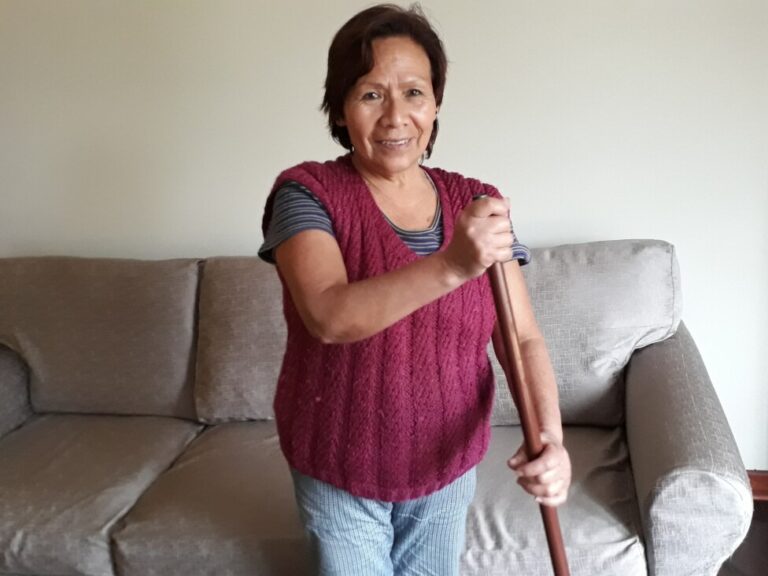
Teresa Mestanza has experienced discriminatory, if not outright humiliating, treatment because of the color of her skin, as a domestic worker in Lima since she arrived as a teenager from a Quechua community in northern coastal Peru. She defines herself as ‘mestiza’ or mixed-race and believes that this is the reason why some of her employers try to "make me feel less of a person." CREDIT: Mariela Jara/IPS

Teresa Mestanza has experienced discriminatory, if not outright humiliating, treatment because of the color of her skin, as a domestic worker in Lima since she arrived as a teenager from a Quechua community in northern coastal Peru. She defines herself as ‘mestiza’ or mixed-race and believes that this is the reason why some of her employers try to “make me feel less of a person.” CREDIT: Mariela Jara/IPS

Before the invasion by the Spaniards, several native peoples lived in what is now Peru, where the Tahuantinsuyo, the great Inca empire, emerged. At present, there are officially 55 different indigenous peoples, 51 from the Amazon rainforest region and four from the Andes highlands, which preserve their own languages, identities, customs and forms of social organization.

According to the census, a quarter of the population self-identified as indigenous: 22 percent Quechua, two percent Aymara and one percent Amazonian indigenous, while four percent self-identified as Afro-descendant or black.

During the Spanish colonial period, slaves were brought from Africa to do hard labor or work in domestic service. It was not until three decades after independence was declared that the country abolished slavery, in 1854.

Indigenous and Afro-Peruvian populations are historically discriminated against in Peru, in a country with traditionally highly segmented classes. Their needs and demands have not been met by the State despite legal frameworks that seek to guarantee equality and non-discrimination and specific rights for indigenous peoples.

This situation is reflected on a daily level in routine racism, a problem recognized by more than half of the population (52 percent) but assumed as such by only eight percent, according to a national survey conducted by the Ministry of Culture in 2018.
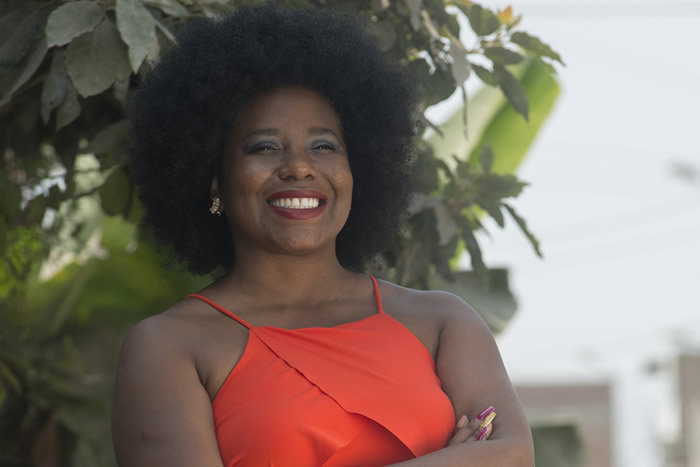
Sofia Carrillo is a journalist, activist and anti-racist feminist and Afro-Peruvian proud of her roots, who has faced racism since childhood and despite this made Forbes Peru's list of the most influential women in the country this year. CREDIT: Amnesty International

Sofia Carrillo is a journalist, activist and anti-racist feminist and Afro-Peruvian proud of her roots, who has faced racism since childhood and despite this made Forbes Peru’s list of the most influential women in the country this year. CREDIT: Amnesty International

“Racism is hushed up because it hurts less”

A journalist, activist, and radio and television host who was chosen by Forbes Peru magazine as one of the 50 most powerful women in the country this year, Sofia Carrillo is an Afro-Peruvian proud of her roots who has faced many obstacles and “no’s” since childhood.

“It was not seen as possible, for example, for me to be a studious girl because I was of African descent, and black people were not seen as intelligent. And that was represented on television and generated a great sense of rebellion in me,” she told IPS in Lima.

Faced with these messages she had only two options. “Either you believe it or you confront the situation and use it as a possibility to show that it is not true. I shouldn’t have to prove myself more than other people, but in a country as racist and as sexist as this one, that was the challenge I took on and what motivated me throughout all the stages of my life,” she said.

In her home racism was not a taboo subject, and was discussed. But this was not the case in the extended family of cousins and aunts and uncles “because it’s better not to be aware of the situation, so it hurts less; it’s a way to protect yourself,” Carrillo said.

“It is not uncommon for people of African descent to even say that they do not feel affected by racism or discrimination, because we have also been taught this in our families: that it will affect you if you identify it, but if you pretend it does not happen, then it is much easier to deal with,” she said.

Her experience as a black woman has included receiving insults since she was a child and sexual harassment in public spaces, in transportation, on the street, “to be looked at as a sexual object, to be dehumanized,” she said.

She has also had to deal with prejudices about her abilities in the workplace. And although she has never stopped raising her voice in protest, it has affected her.

“Now I can admit that it affected my mental health, it led to periods of deep depression. I did not understand why, what the reasons were, because you also try to hide it, you try to bury it deep inside. But I understood that one way to heal was to talk about my own experiences,” Carrillo said.
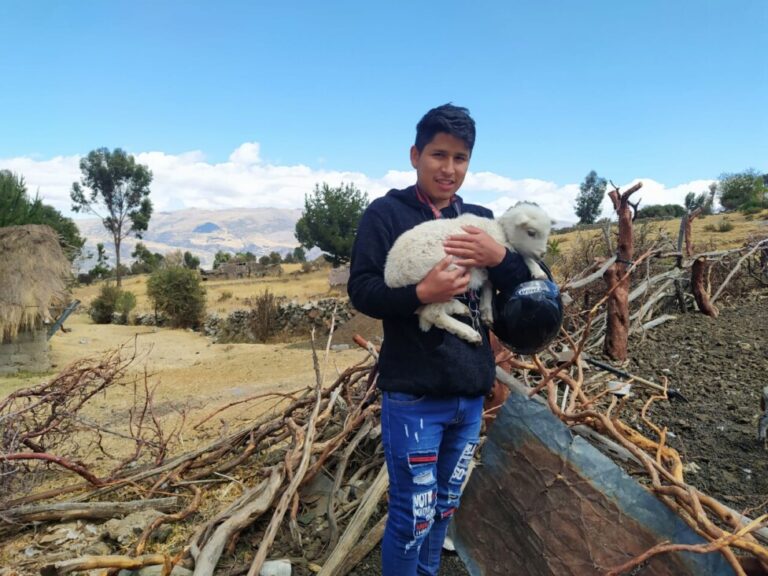
Enrique Anpay is 24 years old and finished his university studies in Lima last year, where he experienced episodes of racism that still hurt him to remember. In the picture he is seen carrying one of his grandmother's lambs in the Quechua farming community of Pomacocha, where he is from, in the central Andean region of Peru. CREDIT: Courtesy of Enrique Anpay

Enrique Anpay is 24 years old and finished his university studies in Lima last year, where he experienced episodes of racism that still hurt him to remember. In the picture he is seen carrying one of his grandmother’s lambs in the Quechua farming community of Pomacocha, where he is from, in the central Andean region of Peru. CREDIT: Courtesy of Enrique Anpay

Racism to the point of calling people animals

Enrique Anpay Laupa, 24, studied psychology at a university in Lima, thanks to the government scholarship program Beca 18, which helps high-achieving students living in poverty or extreme poverty.

Originally from the rural community of Pomacocha, made up of some 90 native Quechua families in the central Andes highlands region of Apurimac, he still finds it difficult to talk about the racism he endured during his time in Lima, until he graduated last year.

He spoke to IPS from the town of Andahuaylas, in Apurímac, where he now lives and practices as a psychologist. “In 2017 we were 200 scholarship holders entering the university, more than other years, and we noticed discomfort among the students from Lima,” he said.

“They said that since we arrived the bathrooms were dirtier, things were getting lost, like laptops…I was quite shocked, it was a question of skin color,” he said.

During a group project, a student from the capital even told him “shut up, llama” when he made a comment. (The llama is a domesticated South American camelid native to the Andes region of Peru.)

“I kept silent and no one else said anything either,” Anpay said. Although he preferred not to go into more details, the experience of what he went through kept him from encouraging his younger brother to apply for Beca 18 and to push him to study instead at the public university in Andahuaylas.
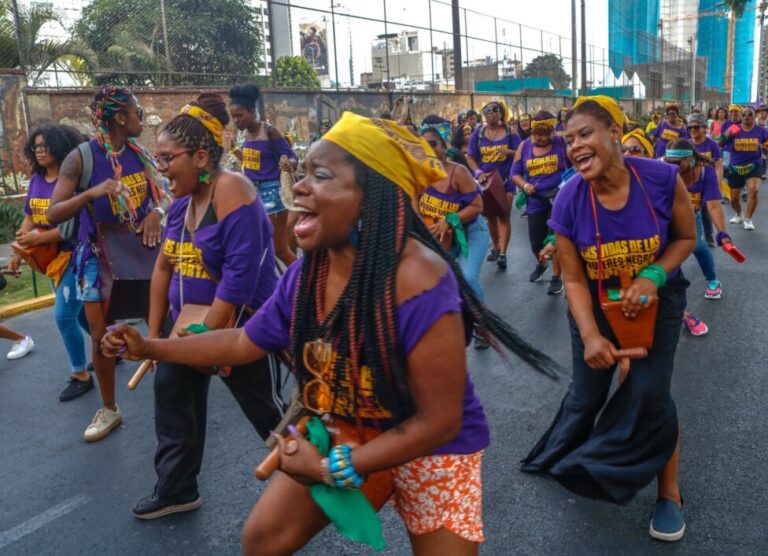
Afro-Peruvian women participate in a festive demonstration demanding respect for their rights, on the streets of Lima on International Women's Day, March 8, 2022. CREDIT: Courtesy of Lupita Sanchez

Afro-Peruvian women participate in a festive demonstration demanding respect for their rights, on the streets of Lima on International Women’s Day, March 8, 2022. CREDIT: Courtesy of Lupita Sanchez

Racism affects the whole country

Racism is felt as a personal experience but affects whole communities and the entire country.

Carrillo said: “We can see this in the levels of impoverishment: the last census, from 2017, indicates that 16 percent of people who self-identify as ‘white’ and ‘mestizo’ live in poverty as opposed to the Afro-Peruvian population, where poverty stands at around 30 percent, the Amazonian indigenous population (40 percent) and the Andean indigenous population (30 percent).”

A study by the National Institute of Statistics and Informatics on the evolution of poverty between 2010 and 2021 showed that it affected to the greatest extent the population who spoke a native mother tongue, i.e. indigenous people.

The percentage of this segment of the population living in poverty and extreme poverty was 32 percent – eight percentage points higher than the 24 percent recorded for the population whose mother tongue is Spanish.

Carrillo considered it essential to recognize the existence of institutional racism, to understand it as a public problem that affects individuals and peoples who have been historically discriminated against and excluded, who have the right to share all spaces and to fully realize themselves, based on the principles of equality and non-discrimination.

She criticized the authorities for thinking about racism only in terms of punitive actions instead of considering a comprehensive policy based on prevention to stop it from being reproduced and handed down from generation to generation, which would include an anti-racist education that values the contribution made by each of the different peoples in the construction of Peru.

  Source

Monster Monsoon: “Pakistan and Its People Are Paying the Costs of What They Are Not Responsible For.”

Aid, Asia-Pacific, Civil Society, Climate Action, Climate Change, Development & Aid, Economy & Trade, Environment, Headlines, Inequality, TerraViva United Nations

Opinion

Credit: Pakistan Development Alliance

ISLAMABAD, Pakistan, Sep 1 2022 (IPS) – Pakistan has been going through the worst time of its recent history due to unprecedented colossal monsoon rains and devastating floods. The current floods would have been expected less than once a century, but climate experts claim that what we are seeing today is just a trailer of what’s in store for us if we don’t pay heed to climate change. More than 112 districts are currently afffected and around 30 million people; their property and land are totally devastated. Across the country, where hundreds of thousands of cattle died due to the Lumpy Skin Disease, now more than 727,000 have perished due to floods and rains. The number is increasing rapidly.


We were in the countryside conducting a study on the rights of women farm workers, when the Monster monsoon hit the country. We had to cut our field mission short and we are now relatively “safe” here in Islamabad, busy organising emergency relief and rescue operations.

Pakistan and its people are paying the costs of what they are not responsible for. For the past 20 years, Pakistan has consistently ranked among the top 10 most vulnerable countries on the Climate Risk Index. We are facing such climate change aggression and devastation while contributing only 0.8% of greenhouse carbon emissions to global warming. We are squeezed, geographically situtated between titans China and India, who are the top two emitters of greenhouse gases. This impacts the glaciers of the Himalaya. In Pakistan, our 7253 glaciers – more glaciers than almost anywhere on Earth – are melting faster than ice-cream in the sun due to climate change. Since the whole country is situated in the downstream of the Hamalaya, heavy floods have become the norm. To this scenario, you need to add flawed developement interventions, absence of rule of law and the lack of policy priorities towards the management of “everyday” disasters. This results in risks being left undone instead of being treated as full-fledged national security emergencies.

Today, the horrific scale of the floods are not in doubt, but the catastrophe is still unfolding. Rehabilitation and reconstruction activities need to be initiated immediately. Pakistan is already facing food insecurity due to this manmade disaster. In the long run, this crisis will increase poverty, inequality and economic instability in the country if we – supported by the world at large – fail to respond quickly.

Being part of a civil society network I see with my own eyes how civil society is vehementally engaged in rescue, relief and emergency activities through local resources and philanthropic initiatives. The international community and INGOs have not yet initiated their field operations. Although the government has officially appealed for the support of the international community and has levereged restrictions, the intensive regulatory frameworks are still working against rights based NGOs.

I have a message for the international community. Please support flood affected communities as early as possible. Local civil society needs to be strengthened and financed as well, as they are on the frontlines, they are the first reaching affected communities. In the future, there needs to be serious investments on addressing the impacts of climate change, particularly in vulnerable countries such as Pakistan, where climate change adaptation mechanism and infrastructure support should be mainstreamed. Now they are at the periphery, and it shows.

IPS UN Bureau

  Source

Kofi Time: The Podcast

Armed Conflicts, Civil Society, Climate Change, Food and Agriculture, Health, Multimedia, Peace, Podcast

Aug 24 2022 –  

About the Podcast

Regarded as one of the modern world’s icons of diplomacy, what is Kofi Annan’s legacy today? What can we learn from him, and how can we prepare for tomorrow, based on his vision for a better world?

In this exclusive 10-part podcast, Ahmad Fawzi, one of Kofi Annan’s former spokespersons and communication Advisor, will examine how Kofi Annan tackled a specific crisis and its relevance to today’s world and challenges.

Kofi Annan’s call to bring all stakeholders around the table — including the private sector, local authorities, civil society organisations, academia, and scientists — resonates now more than ever with so many, who understand that governments alone cannot shape our future.


Join us on a journey of discovery as Ahmad Fawzi interviews some of Kofi Annan’s closest advisors and colleagues including Dr Peter Piot, Christiane Amanpour, Mark Malloch-Brown, Michael Møller and more.

Listen and follow us on Apple Podcasts, Spotify and SoundCloud

Brought to you by the Kofi Annan Foundation and the United Nations Information Service.


Kofi Time: The Official Trailer

Join us as we take a journey of discovery about Kofi Annan’s leadership style and what makes it so relevant and important today.


Multilateralism: Then & Now | Kofi Time with Lord Mark Malloch-Brown | Episode 1

In this episode, Lord Malloch Brown shares insights with podcast host Ahmad Fawzi on how Kofi Annan strengthened the United Nations through careful diplomacy and bold reforms, and how significant advances were made during his tenure as Secretary-General. He comments on the state of multilateralism today, as the organization is buffeted by the crisis in Ukraine and the paralysis of the Security Council.


Making Peace: Then & Now | Kofi Time with Christiane Amanpour | Episode 2

In this episode of Kofi Time, host Ahmad Fawzi interviews renowned journalist Christiane Amanpour. Together, they discuss a world in turmoil, and what would Kofi Annan – who did so much for peace – do today?

Christiane shares her thoughts on the ‘Kofi Annan way’, the difficult job mediators and peacebuilders face, and the courage they must show. With Ahmad, they deliberate whether there is a type of ‘calling’ for those who work in this field.


Health Crises: Then & Now | Kofi Time with Dr Peter Piot | Episode 3

In this episode of Kofi Time, our special guest is Dr Peter Piot. Dr Piot discusses how he and Kofi Annan worked together to reverse the HIV/AIDs tide that swept through Africa in the 1990s, through patient but bold diplomacy, innovative partnerships and an inclusive approach that brought to the table previously marginalized communities. Dr Piot and podcast host Ahmad Fawzi discuss whether this approach be replicated today as the world enters the third year of the COVID-19 pandemic and must prepare for future heath emergencies.


Fighting Hunger: Then & Now | Kofi Time with Catherine Bertini | Episode 4

In episode 4 of Kofi Time, our special guest is Catherine Bertini. Ms. Bertini discusses how she worked with Kofi Annan to fight hunger and malnutrition around the world. Not only is access to food far from universal, but it is also severely impacted by conflicts and climate change. As food prices increase and access becomes even more challenging, how can we replicate Kofi Annan’s approach to improving food systems to make sure no one gets lefts behind on the path to food security globally?


Leadership: Then & Now | Kofi Time with Michael Møller | Episode 5

In episode 5 of Kofi Time, host Ahmad Fawzi interviews diplomat Michael Møller on Kofi Annan’s special kind of leadership. A respected leader among his peers and the public, Kofi Annan served the people of the world with courage, vision and empathy. Embodying moral steadfastness and an acute political acumen, his leadership was one of a kind. What drove him, and how can we emulate his leadership style to face today’s global challenges?


Human Rights: Then & Now | Kofi Time with Zeid Raad Al Hussein | Episode 6

In episode 6 of Kofi Time, our special guest is Zeid Raad Al Hussein. Zeid discusses his friendship with Kofi Annan and how they worked together to protect human dignity and promote human rights. Through the creation of the Human Rights Council and International Criminal Court, Kofi Annan played a critical role in establishing the mechanisms that we have today to protect human rights and fight impunity. How can we uphold Kofi Annan’s legacy and ensure that respect for human rights is not just an abstract concept but a reality?


Podcast Host & Guests


Ahmad Fawzi Kofi

Time Podcast Host

Mr Fawzi is the former head of News and Media at the United Nations. He worked closely with Kofi Annan both during his time as Secretary-General and afterwards, on crises including Iraq and Syria. Before joining the United Nations, he worked for many years in broadcast journalism, as a news editor, reporter and regional news operations manager. From 1991 to 1992, he was the News Operations Manager for the Americas for Visnews — now Reuters Television. Also with Reuters Television, Mr Fawzi served as Regional News Manager for Eastern Europe, based in Prague, from 1989 to 1991 — a time of tumultuous political change in that region. Concurrently with his assignment in Prague, he coordinated coverage of the Gulf war, managing the war desk in Riyadh, as well as the production centre in Dahran, Saudi Arabia. In 1989, Mr Fawzi was Reuters Television Bureau Chief for the Middle East, based in Cairo. Prior to that, he worked in London as News and Assignments Editor for Reuters Television. Previously, he was Editor and Anchor for the nightly news on Egyptian Television.


Lord Mark Malloch-Brown

Episode 1 Guest

Mark Malloch‐Brown is the president of the Open Society Foundations. He has worked in various senior positions in government and international organizations for more than four decades to advance development, human rights and justice. He was UN Deputy Secretary‐General and chief of staff under Kofi Annan. He previously Co-Chaired the UN Foundation Board. Malloch-Brown has worked to advance human rights and justice through working in international affairs for more than four decades. He was UN deputy secretary‐general and chief of staff under Kofi Annan. Before this, he was administrator of the UNDP, where he led global development efforts. He covered Africa and Asia as minister of state in the United Kingdom’s Foreign Office. Other positions have included World Bank vice president, lead international partner in a political consulting firm, vice-chair of the World Economic Forum, and senior advisor at Eurasia Group. He began his career as a journalist at the Economist and as an international refugee worker. He was knighted for his contribution to international affairs and is currently on leave from the British House of Lords. Malloch-Brown is a Distinguished Practitioner at Oxford University’s Blavatnik School of Government, an adjunct fellow at Chatham House’s Queen Elizabeth Program, and has been a visiting distinguished fellow at the Yale Center for the Study of Globalization.


Christiane Amanpour

Episode 2 Guest

Christiane Amanpour is a renowned journalist, whose illustrious career has taken her from CNN where she was Chief international correspondent for many years, to ABC as a Global Affairs Anchor, PBS and back to CNN International for the global affairs interview program named after her. She has received countless prestigious awards, including four Peabody Awards, for her international reporting and her achievements in broadcast journalism. She served as a member of the board of directors of the Committee to Protect Journalists and a UNESCO Goodwill Ambassador for Freedom of Expression and Journalist Safety. She is also an honorary citizen of Sarajevo and was made a Commander of the British Empire in 2007 by Her Majesty Queen Elizabeth.


Dr Peter Piot

Episode 3 Guest

Dr Peter Piot co-discovered the Ebola virus in Zaire in 1976. He has led research on HIV/AIDS, sexually transmitted diseases, and women’s health, mostly in sub-Saharan Africa. Peter Piot was the founding Executive Director of UNAIDS and Under-Secretary-General of the United Nations from 1995 until 2008. Under his leadership, UNAIDS has become the chief advocate for worldwide action against AIDS. It has brought together ten organizations of the United Nations system around a common agenda on AIDS, spearheading UN reform Peter Piot was the Director of the Institute for Global Health at Imperial College; London and he held the 2009/2010 “Knowledge against poverty” Chair at the College de France in Paris. He is a Fellow of the Academy of Medical Sciences and was elected a foreign member of the National Academy of Medicine of the US National Academy of Sciences.


Catherine Bertini

Episode 4 Guest

An accomplished leader in food security, international organization reform and a powerful advocate for women and girls, Catherine Bertini has had a distinguished career improving the efficiency and operations of organizations serving poor and hungry people in the United States and around the world. She has highlighted and supported the roles of women and girls in influencing change. She was named the 2003 World Food Prize Laureate for her transformational leadership at the World Food Programme (WFP), which she led for ten years, and for the positive impact she had on the lives of women. While in the US government, she expanded the electronic benefit transfer options for food stamp beneficiaries, created the food package for breastfeeding mothers, presented the first effort to picture healthy diets, and expanded education and training opportunities for poor women. As a United Nations Under-Secretary-General, and at the head of the World Food Programme for ten years (1992 to 2002), she led UN humanitarian missions to the Horn of Africa and to Gaza, the West Bank, and Israel. During her time serving with WFP, Catherine Bertini was responsible for the leadership and management of emergency, refugee, and development food aid operations, reaching people in great need in over 100 countries, as well as advocacy campaigns to end hunger and to raise financial resources. With her World Food Prize, she created the Catherine Bertini Trust Fund for Girls’ Education to support programs to increase opportunities for girls and women to attend school. At the Maxwell School of Citizenship and Public Affairs at Syracuse University, where she is now professor emeritus, she taught graduate courses in humanitarian action, post-conflict reconstruction, girls’ education, UN management, food security, international organizations, and leadership. She served as a senior fellow at the Bill and Melinda Gates Foundation early in its new agricultural development program. Bertini is now the chair of the board of the Global Alliance for Improved Nutrition (GAIN). Concurrently, she is a Distinguished Fellow at the Chicago Council on Global Affairs. She has been named a Champion of the 2021 United Nations Food Systems Summit. She is a professor emeritus at Syracuse University.


Michael Møller

Episode 5 Guest

Mr Møller has over 40 years of experience as an international civil servant in the United Nations. He began his career in 1979 with the United Nations High Commissioner for Refugees and worked for the United Nations in different capacities in New York, Mexico, Iran, Haiti, Cyprus and Geneva. He worked very closely with Kofi Annan as Director for Political, Peacekeeping and Humanitarian Affairs in the Office of the Secretary-General between 2001 and 2006, while serving concurrently as Deputy Chef de Cabinet of the Secretary-General for the last two years of that period. Mr Møller also served as the Secretary-General’s Special Representative for Cyprus from 2006 to 2008 and was the Executive Director of the Kofi Annan Foundation from 2008 to 2011. From 2013 to 2019, Mr Møller served as Director-General of the United Nations Office at Geneva as well as Personal Representative of the United Nations Secretary-General to the Conference of Disarmament. He currently is Chairman of the Diplomacy Forum of Geneva Science and Diplomacy Anticipator. A Danish citizen, Mr Møller earned a Master’s degree in International Relations from Johns Hopkins University, and a Bachelor’s degree in International Relations from the University of Sussex, in the United Kingdom.


Zeid Raad Al Hussein

Episode 6 Guest

Zeid Ra’ad Al Hussein is IPI’s President and Chief Executive Officer. Previously, Zeid served as the UN’s High Commissioner for Human Rights from 2014 to 2018 after a long career as a Jordanian diplomat, including as his country’s Permanent Representative to the UN (2000-2007 & 2010-2014) and Ambassador to the United States (2007-2010). He served on the UN Security Council, was a configuration chair for the UN Peace-Building Commission, and began his career as a UN Peacekeeper in the former Yugoslavia. Zeid has also represented his country twice before the International Court of Justice, served as the President of the Assembly of State Parties to the Rome Statute of the International Criminal Court from 2002-2005, and in 2005, authored the first comprehensive strategy for the elimination of Sexual Exploitation and Abuse in UN Peacekeeping Operations while serving as an advisor to Secretary-General Kofi Annan. Zeid is also a member of The Elders, an independent group of global leaders working together for peace, justice and human rights, founded by Nelson Mandela. Zeid holds a PhD from Cambridge University and is currently a Professor of Practice at the University of Pennsylvania.


    Source

Gender Equality & Women’s Rights Wiped out Under the Taliban

Armed Conflicts, Asia-Pacific, Civil Society, Featured, Gender, Gender Violence, Headlines, IPS UN: Inside the Glasshouse, Peace, TerraViva United Nations

Opinion

The writer is UN Under-Secretary-General and Executive Director of UN Women

Women receive food rations at a food distribution site in Herat, Afghanistan. Credit: UNICEF/Sayed Bidel

NEW YORK, Aug 15 2022 (IPS) – In the year that has passed since the Taliban’s takeover in Afghanistan we have seen daily and continuous deterioration in the situation of Afghan women and girls. This has spanned every aspect of their human rights, from living standards to social and political status.


It has been a year of increasing disrespect for their right to live free and equal lives, denying them opportunity to livelihoods, access to health care and education, and escape from situations of violence.

The Taliban’s meticulously constructed policies of inequality set Afghanistan apart. It is the only country in the world where girls are banned from going to high school. There are no women in the Taliban’s cabinet, no Ministry of Women’s Affairs, thereby effectively removing women’s right to political participation.

Women are, for the most part, also restricted from working outside the home, and are required to cover their faces in public and to have a male chaperone when they travel. Furthermore, they continue to be subjected to multiple forms of Gender Based Violence.

This deliberate slew of measures of discrimination against Afghanistan’s women and girls is also a terrible act of self-sabotage for a country experiencing huge challenges including from climate-related and natural disasters to exposure to global economic headwinds that leave some 25 million Afghan people in poverty and many hungry.

The exclusion of women from all aspects of life robs the people of Afghanistan of half their talent and energies. It prevents women from leading efforts to build resilient communities and shrinks Afghanistan’s ability to recover from crisis.

There is a clear lesson from humanity’s all too extensive experience of crisis. Without the full participation of women and girls in all aspects of public life there is little chance of achieving lasting peace, stability and economic development.

That is why we urge the de facto authorities to open schools for all girls, to remove constraints on women’s employment and their participation in the politics of their nation, and to revoke all decisions and policies that strip women of their rights. We call for ending all forms of violence against women and girls.

We urge the de facto authorities to ensure that women journalists, human rights defenders, and civil society actors enjoy freedom of expression, have access to information and can work freely and independently, without fear of reprisal or attack.

The international community’s support for women’s rights and its investment in women themselves are more important than ever: in services for women, in jobs and women-led businesses, and in women leaders and women’s organizations.

This includes not only support to the provision of humanitarian assistance but also continued and unceasing efforts at the political level to bring about change.

UN Women has remained in country throughout this crisis and will continue to do so. We are steadfast in our support to Afghan women and girls alongside our partners and donors.

We are scaling up the provision of life-saving services for women, by women, to meet overwhelming needs. We are supporting women-led businesses and employment opportunities across all sectors to help lift the country out of poverty.

We are also investing in women-led civil society organizations to support the rebuilding of the women’s movement. As everywhere in the world, civil society is a key driver of progress and accountability on women’s rights and gender equality.

Every day, we advocate for restoring, protecting, and promoting the full spectrum of women’s and girls’ rights. We are also creating spaces for Afghan women themselves to advocate for their right to live free and equal lives.

One year on, with women’s visibility so diminished and rights so severely impacted, it is vital to direct targeted, substantial, and systematic funding to address and reverse this situation and to facilitate women’s meaningful participation in all stakeholder engagement on Afghanistan, including in delegations that meet with Taliban officials.

Decades of progress on gender equality and women’s rights have been wiped out in mere months. We must continue to act together, united in our insistence on guarantees of respect for the full spectrum of women’s rights, including to education, work, and participation in public and political life.

We must continue to make a collective and continuous call on the Taliban leadership to fully comply with the binding obligations under international treaties to which Afghanistan is a party.

And we must continue to elevate the voices of Afghan women and girls who are fighting every day for their right to live free and equal lives. Their fight is our fight. What happens to women and girls in Afghanistan is our global responsibility.

IPS UN Bureau

  Source

‘Aid Organizations Must Include the Youth Voice’ August 12, 2022—International Youth Day

Armed Conflicts, Civil Society, Education, Education Cannot Wait. Future of Education is here, Global, Headlines, Health, Humanitarian Emergencies, TerraViva United Nations, Youth Thought Leaders

Opinion

NEW YORK, Aug 12 2022 (IPS) – Today marks International Youth Day, a global celebration of the transformative power of young people. Introduced by the United Nations General Assembly in 1999, the event was inaugurated not only to observe the power of the youth voice, but to serve as a promise from those in power to activate the power of youth across the development sector.


Yasmine Sherif

Since then, the United Nations appointed a Youth Envoy, dedicated to the diffusion of the day’s promise, and many aid organizations have followed suit by including the voices of young people in social media campaigns, high-level events, and stakeholder forums.

In 2021, Education Cannot Wait (ECW), the United Nations global fund for education in emergencies and protracted crises, took a further, concrete step to democratically include youth in its governance structure and decision-making processes. Scores of youth-led NGOs applied to join a newly created youth constituency, and after only a few weeks, the sub-group had become one of the largest, most active, and most diverse constituencies within the fund.

On the Executive Committee and High-Level Steering Group of ECW, young people were represented for the first time alongside government ministers, heads of UN agencies and civil society organizations, and private sector leaders — a refreshing example of intergenerational collaboration at the highest levels of humanitarian aid.

Another significant step in the race for youth inclusion occurred when ECW partnered with Plan International to support a group of youth activists through the ‘Youth for Education in Emergencies Project,’ a campaign by youth panelists aiming to demonstrate the value of youth participation.

As ECW builds momentum towards its High-Level Financing Conference in February 2023 with the #222MillionDreams Campaign, we call on strategic partners to include the youth voice as we come together to mobilize funding resources for the 222 Million crisis-impacted children and adolescents worldwide that require urgent educational support.

Fortunately, there is no shortage of exceptional young people ready to lead the charge. The Global Student Forum, for example, has brought together more than one hundred national student unions, composed of millions of youth activists, and successfully lobbied governments around the world with its democratic force.

H.D. Wright

The success of Nobel Laureate Kailash Satyarthi’s 100 Million Campaign, a global, youth-led effort to end child exploitation, further illustrates the immense value of grassroots organizing. And at a local level, youth-led NGOs have brought change to their communities in ways equally substantial.

Aid organizations and professionals have changed the lives of countless young people around the world. By including them, aid organizations can tap into their extraordinary resilience and strength, and actually learn from them. Using their reach on social media, young people excel at spreading awareness and engagement around the world. Just as unknown singers become famous because of the young people who promote them, previously unknown issues have reached national prominence overnight and created substantive change.

With regard to fundraising, each young person is surrounded by a community, offering a network ready to lend a hand. In terms of policy, young people affected by crises can identify their needs with an ease unmatched by any humanitarian policy professional, for they are experts in their own lives, challenges and opportunities. Young people are intelligent and capable of shaping their own futures. They have an idealism and a courage that the world so desperately needs today. Their unflinching optimism, powerful energy, and uncompromising commitment to change will ensure that those futures are not only safe, but better than the present they inherited.

ECW can attest to the enlightening and inspiring vitality of young people. Since its creation, the youth constituency has worked energetically on behalf of this breakthrough global fund, providing valuable input and guidance on multi-year programs and first emergency responses in Bangladesh, Burkina Faso, Burundi, Haiti, Iraq and Mali. When schools shut down due to the pandemic, the youth constituency persisted, working together to inform aid programmes dispersed across crisis-affected countries.

The youth constituency even responded in real time to developing crises, including the earthquake in Haiti, the deteriorating crisis in Afghanistan, and most recently, the war in Ukraine. Their contributions played a role in meaningful projects: since its inception in 2016, ECW’s programs have reached over 5 million children and adolescents, providing them with quality support, including educational materials, school meals, mental health programs, and other basic necessities.

On this day, it is important to observe the power of young people, and the impactful work that aid organizations have conducted across the sector. Yet celebration and transformation must go hand in hand, ensuring that next year, when International Youth Day returns, we are one step closer to fulfilling its original promise to unleash the power of the youth.

Yasmine Sherif is the Director of Education Cannot Wait. H.D. Wright is Youth Representative at Education Cannot Wait

IPS UN Bureau

  Source

Colombia’s New President May Need U.S. Blessing to Realize his Domestic Agenda

Armed Conflicts, Civil Society, Development & Aid, Featured, Headlines, Human Rights, Latin America & the Caribbean, TerraViva United Nations

Opinion

The writer is a Geneva-based researcher for the Third World Network

A woman paints a mural for Peace and Reconciliation in Colombia. Credit: UNMVC/Jennifer Moreno

GENEVA, Aug 9 2022 (IPS) – For the first time in its contemporary history, Colombia has a left-wing government. The presidency of Gustavo Petro, who took the reins August 8, marks a significant break from the political status quo. He also represents a stiff test for U.S. influence in Latin America.


Colombia is Washington’s most enduring ally in the region, and in recent years their relationship has been built around combatting the nation’s drug cartels. But despite major efforts to curb supply, Colombia remains a top source of cocaine for the United States.

The United Nations Office on Drugs and Crime (UNODC) recently estimated that Colombia’s cocaine harvest hit a record high in 2020. On the back of new coca varieties (the base ingredient for cocaine) and better cultivation techniques, Colombia’s potential output reached 1,228 tonnes in 2020. This was triple the 2010 level and four times greater than in the early 1990s, when Pablo Escobar was at the height of his infamy.

Since launching its controversial ‘war on drugs’ in 1971, successive Republican and Democratic administrations have supplied more than $13 billion in military and economic aid to Colombia. To little avail.

According to a 2021 United States’ Drug Enforcement Agency report, over 90 percent of the cocaine seized in the U.S. originates from Colombia. The U.S. remains the biggest consumer market for Colombian cocaine.

Petro is among those who have denounced the U.S.’s counter-narcotics strategy as counterproductive. In particular, he’s taken aim at US-backed aerial fumigation campaigns to destroy coca fields.

He favours expanding crop substitution programs that provide credit, training and enhanced land rights to rural farmers. For Petro, tackling Colombia’s violent drug trade is bound up with the county’s historic land ownership inequality.

He has also been an ardent critic of Colombia’s free-trade agreement (FTA) with the U.S. for pushing farmers into coca production and for exacerbating Colombia’s over-reliance on fossil fuel and coffee exports.

At the same time, imports from America’s highly subsidized agricultural sector have displaced whole segments of Colombia’s agrarian economy, forcing thousands of farmers into coca production.

Petro’s election campaign called for “smart tariffs” to protect Colombia’s rural farmers from U.S. imports and, by extension, criminal activity. “The free trade agreement signed with the United States handed rural Colombia to the drug traffickers,” he told the Financial Times in May. What’s more, he noted that “agricultural production cannot be increased if we do not renegotiate the FTA.”

An ex-member of the M-19 guerrilla group, Colombia’s new president has vowed to tackle asymmetric trade relations in line with land reform and the drug trade. But he will likely face severe opposition from the armed forces, who themselves fought leftist guerrilla movements during Colombia’s 52-year civil conflict.

Further, the military have a longstanding role in the U.S.-led war on drugs. For his part, Petro has accused Colombia’s top brass of corruption and human rights abuses, even since the Government-Farc peace treaty of 2016.

Elsewhere, the President faces a divided congress and deep hostility from landowning elites. It will require skilful manoeuvring to unite a fractured country around his domestic policies. And even if Petro can generate sufficient national support around his policy aims, he would still need to convince the Biden administration to back-track on the U.S.’s ideological commitment to free trade.

So, what cards can Petro play?

His opening gambit is likely to be a financial argument. While cocaine overdoses claim far fewer lives than opioids, the fiscal costs associated with interceding cocaine into the U.S. are staggering.

Navy and Coast Guard seizures alone cost American taxpayers US$56 billion in 2020, to say nothing of land border expenditures. State funds are also used for cocaine-linked policing, incarcerations and medical treatment.

The current geopolitical landscape may also provide Petro with an unlikely Trump card. Given President Joe Biden’s condemnation of Russia’s invasion of Ukraine, he will be careful avoid pushing Colombia (which he has described as a security “linchpin”) into a closer embrace with Cuba and Venezuela, who are diplomatically aligned with the Kremlin.

To isolate Russia even further, Biden will likely soften America’s stance in renegotiating its FTA with Colombia.

Last month, senior representatives from the Biden administration met with Petro to discuss, among other things, the FTA. While the U.S. has taken tentative steps towards renegotiating the deal, Petro should be wary of a favourable result.

Over the past twenty-five years, an intricate web of government and military bureaucracy has been constructed around U.S.-Colombian counter-narcotics operations. It will be difficult to disentangle.

IPS UN Bureau

  Source