Water Is Worth More than Milk in Extrema, Brazil

Biodiversity, Civil Society, Development & Aid, Economy & Trade, Editors’ Choice, Environment, Featured, Food & Agriculture, Green Economy, Headlines, Integration and Development Brazilian-style, Latin America & the Caribbean, Projects, Regional Categories, TerraViva United Nations, Water & Sanitation
Water & Sanitation

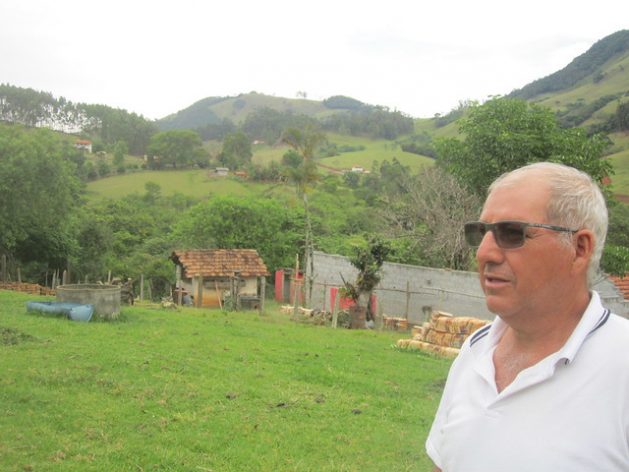
Elias Cardoso is proud of the restored forests on his 67-hectare farm, where he has protected and reforested a dozen springs as well as streams. "I was a guinea pig for the Water Conservator project, they called me crazy," when the mayor's office was not yet paying for it in Extrema, a municipality in southeastern Brazil. Credit: Mario Osava/IPS

Elias Cardoso is proud of the restored forests on his 67-hectare farm, where he has protected and reforested a dozen springs as well as streams. “I was a guinea pig for the Water Conservator project, they called me crazy,” when the mayor’s office was not yet paying for it in Extrema, a municipality in southeastern Brazil. Credit: Mario Osava/IPS

EXTREMA, Brazil, Nov 29 2019 (IPS) – “They called me crazy” for fencing in the area where the cows went to drink water, said Elias Cardoso, on his 67-hectare farm in Extrema, a municipality 110 km from São Paulo, Brazil’s largest metropolis.


“I realized the water was going to run out, with cattle trampling the spring. Then I fenced in the springs and streams,” said the 60-year-old rancher. “But I left gates to the livestock drinking areas.”

Cardoso was a pioneer, getting the jump on the Water Conservancy Project, launched by the local government in 2005 with the support of the international environmental organisation The Nature Conservancy and the Forest Institute of the southeastern state of Minas Gerais, where Extrema, population 36,000, is located at the southern tip.

The project follows the fundamentals of the National Water Agency‘s Water Producer Programme, which focuses on different ways to preserve water resources and improve their quality, such as measures to conserve soil, preventing sedimentation of rivers and lakes.

But at the core of the project is the Payments for Environmental Services (PES), which in the case of Extrema compensate rural landowners for land they no longer use for crops or livestock, to restore forests or protect with fences.

The “Water Conservator” (Conservador das Águas) began operating in 2007, with contracts offered by the PES to farmers who reforest and protect springs, riverbanks and hilltops, which are numerous in Extrema because it is located in the Sierra de Mantiqueira, a chain of mountains that extends for about 100,000 square km.

“Then everyone jumped on board,” Cardoso said, referring to the project in the Arroyo das Posses basin, where he lives and where the environmental and water initiative began and had the biggest impact.
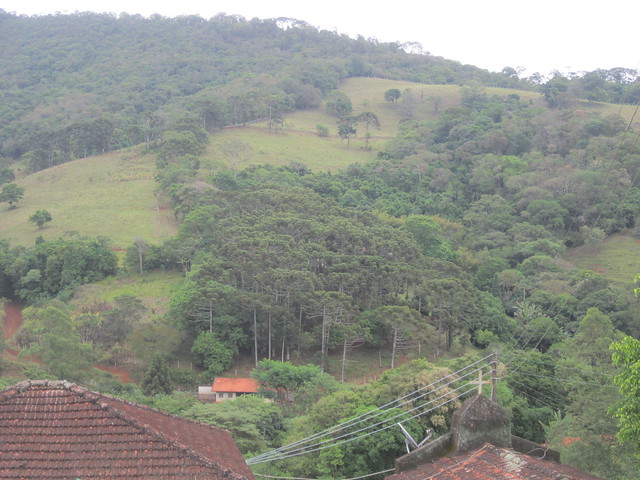
View of the new landscape in the hilly area around Extrema, after the reforestation of thousands of hectares in three basins in this municipality in southeastern Brazil, where the local government has fomented the process of recovery by paying landowners for environmental services. The priority is to restore the forests at the headwaters of the rivers and on hilltops and protect them with cattle fences. Credit: Mario Osava/IPS

View of the new landscape in the hilly area around Extrema, after the reforestation of thousands of hectares in three basins in this municipality in southeastern Brazil, where the local government has fomented the process of recovery by paying landowners for environmental services. The priority is to restore the forests at the headwaters of the rivers and on hilltops and protect them with cattle fences. Credit: Mario Osava/IPS

In the 14 years since it was launched, the project has only worked fully in three basins, where two million trees were planted and close to 500 springs were protected. It is now being extended to seven other watersheds.

“The goal is to reach 40 percent of forest cover with native species” in the municipality and “so far we already have 25 percent covered, and 10 percent is thanks to the Water Conservator,” said Paulo Henrique Pereira, promoter of the project as Environment Secretary in Extrema since 1995.

“Planting trees is easy, creating a forest is more complex,” the 50-year-old biologist told IPS, stressing that it’s not just about planting trees to “produce” and conserve water.

The project began with the prospecting of areas and the training of technicians, after the approval of a municipal PES statute, since there is no national law on remunerated environmental services.

“The bottleneck is that there is no skilled workforce” to reforest and implement water conservation measures, Pereira said.

The project now has its own nursery for the large-scale production of seedlings of native tree species, to avoid the past dependence on external acquisitions or donations, which drove up costs and made planning more complex.
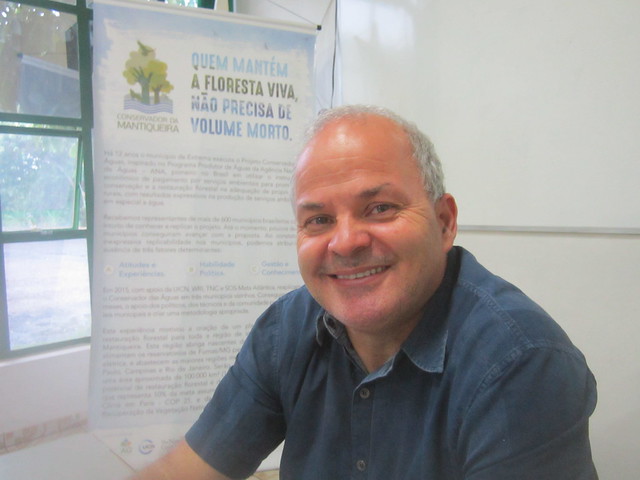
Since 2005 Paulo Henrique Pereira, Secretary of Environment in Extrema since 1995, has promoted the Water Conservator Project, which has won national and international awards for its success in recovering and preserving springs and streams, by paying for environmental services to rural landowners who reforest in this municipality in southeastern Brazil. "Planting trees is easy, creating a forest is more complex," he says. Credit: Mario Osava/IPS

Since 2005 Paulo Henrique Pereira, Secretary of Environment in Extrema since 1995, has promoted the Water Conservator Project, which has won national and international awards for its success in recovering and preserving springs and streams, by paying for environmental services to rural landowners who reforest in this municipality in southeastern Brazil. “Planting trees is easy, creating a forest is more complex,” he says. Credit: Mario Osava/IPS

The success of Extrema’s project, which has won dozens of national and international good practice awards, “is due to good management, which does not depend on the continuity of government,” said the biologist, although he admitted that it helped that he had been in the local Secretariat of the Environment for 24 years and that the mayors were of the same political orientation.

“It is a well-established project that is not likely to suffer setbacks,” he said.

The fact that the project offers both environmental and economic benefits helps keep it alive.

“My grandfather, who spent his life deforesting his property, initially rejected the project. It didn’t make sense to him to plant the same trees he had felled to make pasture for cattle,” said Aline Oliveira, a 19-year-old engineering student who is proud of the quality of life achieved in Extrema.

“When I was a girl, I didn’t accept the idea of protecting springs to preserve water either. I thought it was absurd to plant trees to increase water, because planting 200 or 300 trees would consume a lot of water. That was how I used to think, but then in practice I saw that springs survived in intact forest areas,” she said.

Later, when the PES arrived in the area, her grandfather gave in and more than 10 springs on the 112-hectare farm were reforested and protected. The payment is 100 municipal monetary units per hectare each year, currently equivalent to about 68 dollars.

Aline Oliveira studies engineering and lives on her family's farm in southeastern Brazil. She is proud of the way life has improved in Extrema, a process that began with the establishment of the Payments for Environmental Services system, which guarantees income to farmers and ranchers for reforesting watersheds. It is a secure income at a time of falling milk prices and in a town far from the dairy processing plants. Credit: Mario Osava/IPS

Aline Oliveira studies engineering and lives on her family’s farm in southeastern Brazil. She is proud of the way life has improved in Extrema, a process that began with the establishment of the Payments for Environmental Services system, which guarantees income to farmers and ranchers for reforesting watersheds. It is a secure income at a time of falling milk prices and in a town far from the dairy processing plants. Credit: Mario Osava/IPS

“The PES is a secure income, while milk prices have dropped, and everything has become more expensive than milk in the last 10 years. In addition, there were losses due to lack of transportation, since there is no major dairy processing plant within 50 km,” she told IPS.

Thanks to the municipal payments, “we were able to invest in cows with better genetics, buy a milking parlor and improve health care for the cattle, thus increasing productivity,” which compensated for the reduction in pastures, added the student, who works for the project.

The programme coincided with a major improvement in the economy and quality of life in Extrema. “I was born in Joanópolis, where there were better hospitals than in Extrema. But now it’s the other way around” and people from there come to Extrema, 20 km away, for heath care, Oliveira said.

This is also due to the industrialisation experienced by Extrema in recent decades, which becomes evident during a walk around the town, where many new industrial plants can be seen.

The water conservation project has also contributed to the water supply for a huge population in the surrounding area.

Arlindo Cortês, head of environmental management at Extrema's Secretariat of the Environment, stands in the nursery where seedlings are grown for reforestation in this municipality in southeastern Brazil. "Building reservoirs does not ensure water supply if the watershed is deforested, degraded, sedimented. There will be floods and water shortages because the rainwater doesn't infiltrate the soil," he explains. Credit: Mario Osava/IPS

Arlindo Cortês, head of environmental management at Extrema’s Secretariat of the Environment, stands in the nursery where seedlings are grown for reforestation in this municipality in southeastern Brazil. “Building reservoirs does not ensure water supply if the watershed is deforested, degraded, sedimented. There will be floods and water shortages because the rainwater doesn’t infiltrate the soil,” he explains. Credit: Mario Osava/IPS

The Jaguari River, which crosses Extrema, receives water from fortified streams and increases the capacity of the Jaguari reservoir, part of the Cantareira system, which supplies 7.5 million people in greater São Paulo, one-third of the total population of the metropolis.

“If the watersheds are deforested, degraded and sedimented, merely building reservoirs solves nothing,” said Arlindo Cortês, the head of environmental management at Extrema’s Secretariat of the Environment.

Extrema’s efforts have translated into local benefits, but contributed little to the water supply in São Paulo, partly because it is over 100 km away, said Marco Antonio Lopez Barros, superintendent of Water Production for the Metropolitan Region at the local Sanitation Company, Sabesp.

“No increase in the capacity of the Cantareira System has been identified since the 1970s,” he said in an interview with IPS.

“Thousands of similar initiatives will be necessary” to actually have an impact in São Paulo, because of the level of consumption by its 22 million inhabitants, he said, adding that improvements in basic sanitation in cities have greater effects.

São Paulo experienced a water crisis, with periods of rationing, after the 2014 drought in south-central Brazil, and faces new threats this year, as it has rained less than average.

Extrema also felt the shortage. “Since 2014 we have only had weak rains,” said Cardoso. The problem is the destruction of forests by the expansion of cattle ranching in the last three decades.

“The creek where I used to swim has lost 90 percent of its water. The recovery will take 50 years, the benefits will only be felt by our children,” he said.

  Source

Climate Change and Loss of Species: Our Greatest Challenges

Biodiversity, Civil Society, Climate Change, Environment, Featured, Global, Headlines, Health, Indigenous Rights, Sustainability, TerraViva United Nations

Opinion

Farhana Haque Rahman is Senior Vice President of IPS Inter Press Service; a journalist and communications expert, she is a former senior official of the United Nations Food and Agriculture Organization and the International Fund for Agricultural Development.

Nature is declining globally at rates unprecedented and the rate of species extinctions is accelerating. Credit: UN

ROME, Nov 19 2019 (IPS) – Mottled and reddish, the Lake Oku puddle frog has made its tragic debut on the Red List, a rapidly expanding roll call of threatened species. It was once abundant in the Kilum-Ijim rainforest of Cameroon but has not been seen since 2010 and is now listed as critically endangered and possibly extinct.


Researchers attribute its demise to a deadly fungal disease caused by the chytrid fungus. As noted by the International Union for the Conservation of Nature (IUCN), the skin fungus has devastated amphibian populations globally and holds the distinction of being the world’s most invasive killer, responsible for the decline of at least 500 amphibian species, including 90 presumed extinctions.

The IUCN’s Red List has expanded to cover more than 105,000 species of plants and animals, and its most recent update in July found that 27 percent of those assessed were at risk of extinction. No species on the list was deemed to have improved its status enough since 2018 to be placed in a lower threat category.

Human exploitation is often responsible, as with the now endangered red-capped mangabey monkey hunted for bushmeat while its forest habitat in West Africa is destroyed for agriculture; or the East African pancake tortoise critically endangered because of the global pet trade. Thousands of tree species now make the list too.

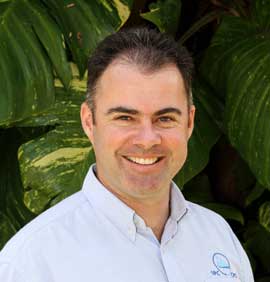
Farhana Haque Rahman

In its multi-faceted approach towards combating species loss, the IUCN has launched its First Line of Defence against Illegal Wildlife Trade program in eastern and southern Africa, engaging rural communities as key partners in tackling wildlife crime. But this is just a small part of a much wider challenge.

As Grethel Aguilar, IUCN acting director general, noted: “We must wake up to the fact that conserving nature’s diversity is in our interest, and is absolutely fundamental to achieving the Sustainable Development Goals. States, businesses and civil society must urgently act to halt the overexploitation of nature, and must respect and support local communities and Indigenous Peoples in strengthening sustainable livelihoods.”

Jane Smart, global director of the IUCN Biodiversity Conservation Group, said the Red List update confirms the findings of the recent IPBES Global Biodiversity Assessment: “Nature is declining globally at rates unprecedented in human history.”

More than one million animal and plant species are now threatened with extinction, many within decades, “unless action is taken to reduce the intensity of drivers of bio-diversity loss”, according to a landmark report by IPBES, the Intergovernmental Science-Policy Platform on Biodiversity and Ecosystem Services.

It bleakly warns that the global rate of species extinction is already at least tens to hundreds of times higher than it has averaged over the past 10 million years, and the rate will accelerate if action is not taken.

A summary was released in May and the full report is expected to be approved soon, assessing changes over the past 50 years and offering possible future scenarios.

Frightening statistics detail how 32 million hectares of primary or recovering forest were lost across much of the highly biodiverse tropics between 2010 and 2015 alone. Put in perspective that totals an area nearly the size of all Germany.

“Ecosystems, species, wild populations, local varieties and breeds of domesticated plants and animals are shrinking, deteriorating or vanishing. The essential, interconnected web of life on Earth is getting smaller and increasingly frayed,” said Professor Josef Settele, co-chair of the report. “This loss is a direct result of human activity and constitutes a direct threat to human well-being in all regions of the world.”

Crucially, for the first time on such a scale of evidence, the report’s more than 400 authors rank the five main drivers of this global disaster. In descending order they are listed as: (1) changes in land and sea use; (2) direct exploitation of organisms; (3) climate change; (4) pollution and (5) invasive alien species.

Clearly such challenges are interwoven and cannot be tackled in isolation. Some species are affected by all of these main drivers, or a deadly combination. Researchers into the fungal diseases wiping out amphibians like the Lake Oku puddle frog believe the most important factor in the spread of the pathogens is the global trade in wildlife. Some have also suggested that local changes in climate have also enabled the chytrid fungus to flourish in new habitats.

That governments are failing to address these warnings comes as little surprise, however.

“Despite 40 years of global climate negotiations, with few exceptions, we have generally conducted business as usual and have largely failed to address this predicament,” declared 11,258 scientists grouped under the Alliance of World Scientists in a recent report, warning that the climate crisis is accelerating faster than most of them had expected and could reach potential irreversible climate tipping points, making large areas of Earth uninhabitable.

The UN Climate Change Conference, COP25, is to be held in Madrid from 2-13 December amidst severe signs of leadership stress. Brazil was to have hosted the summit but President Jair Bolsonaro ruled that out on his election and in the first nine months under his government over 7,600 sq km of rainforest were felled. The baton was then passed to Chile which pulled out because of ant-government unrest. And then this month President Donald Trump formally launched the process to withdraw the US from the 2015 Paris Agreement.

COP25 has unfinished business from COP24, held in Poland’s coal-mining area of Katowice, namely negotiating the final elements of the Paris Agreement ‘rulebook’. Work must also start on future emissions targets ahead of the crunch 2020 conference next November in Glasgow, in the knowledge that commitments submitted by governments and current greenhouse gas emission trajectories fall far short of what is needed to achieve the long-term goals of the Paris Agreement.

“Loss of species and climate change are the two great challenges facing humanity this century,” warns Lee Hannah, senior scientist in climate change biology at Conservation International. “The results are clear, we must act now on both…”

  Source

Translating Ambition to Action: High Hopes for United Nations Action Week

Biodiversity, Climate Change, Combating Desertification and Drought, Conferences, Development & Aid, Environment, Featured, Global, Headlines, Health, Natural Resources, Poverty & SDGs, TerraViva United Nations

Opinion

Cameron Diver is Deputy Director-General, the Pacific Community (SPC)

New Caledonia, Sep 13 2019 (IPS) – In less than 10 days, countries from around the planet will come together in New York for the United Nations Secretary General’s Climate Action Summit. I look forward to representing the Pacific Community (SPC) at this important event, and throughout “Action Week” during the upcoming UN General Assembly.


Cameron Diver

The interconnections and synergies between major issues of global concern and the key role multilateralism and international cooperation can play in helping tackle these challenges are illustrated by the agenda of the week from 23 to 27 September. Underpinned by the Sustainable Development Goals, each of the high-level summits will focus on commitments to accelerate action across climate change, enhance efforts to secure healthy, peaceful and prosperous lives for all, mobilise sufficient financing to realise the 2030 Agenda and address the specific issues and vulnerabilities of small island developing states.

The week of summits kicks off with a focus on climate action. And this is, in my mind, highly appropriate. The multiplier effect of climate change undermines our efforts to achieve the sustainable development goals, it increases the challenges of biodiversity conservation and sustainable use, it intensifies competition and the potential for conflict around natural resources and it poses the single greatest existential threat to the lives and livelihoods of millions of people around the globe. From where I stand, the science on climate change is clear. To take only these examples, the IPCC Special Reports on the impacts of global warming of 1.5° above pre-industrial levels and climate change, desertification, land degradation, sustainable land management, food security and greenhouse gas fluxes in terrestrial ecosystems provide us with the most robust, high quality evidence base to understand the significant negative impact climate change is already having on our natural environment, on the wellbeing of people, ecosystems, flora and fauna and the massive and potentially irreversible consequences of inaction. As regards our ocean, the upcoming Special Report on the Ocean and Cryosphere in a Changing Climate is likely to confirm what the islands of the Blue Pacific continent, and others whose cultures, traditions and livelihoods are deeply attached to the ocean, have already sensed: the climate crisis is a real and present threat to ocean and coastal ecosystems and the human communities that depend on them.

The stakes are high, but where there is a threat there is also an opportunity. If we act now, there is still have time effectively to tackle the climate crisis! To put it simply: ambition without action is insufficient and simply not an option. SPC is committed to working with our Member States, international and regional partners to translate climate ambition into tangible climate action, for both mitigation and adaptation. The benefits could be huge, with the Global Commission on Adaptation estimating that investing $1.8 trillion in climate adaptation globally in just five areas from 2020 to 2030 could generate $7.1 trillion in total net benefits. We are also convinced that we must collectively harness the synergies between, for example, climate and the ocean, biodiversity, health, security, economic development, food systems, land use, gender and many other development areas to fully exploit the potential of the SDGs and ensure that future pathways to sustainable development are integrated, inclusive, nature-friendly, climate-informed and resilient. SPC is already implementing this approach with its Members and partners. One illustration is our EU funded PROTEGE project, whose intended outcomes include a transition to sustainable integrated agriculture and sound forestry resource management; sustainable fisheries and aquaculture management that is integrated in and adapted to island economies; sustainable integrated water resource management; and invasive alien species control, all against a backdrop of climate-change hazards that require ecosystem and biodiversity protection, resilience and restoration.

As was recently remarked to me at the Green Climate Fund Global Programming Conference in Korea: “we already know what we must do. We need to stop talking and start doing”. It is my sincere hope that “Action Week” in New York will indeed be a turning point for “doing”; a catalyst for firm, measurable commitments to tangible actions that match the level of ambition already expressed to address the climate crisis and the multiple development challenges that remain as we approach the final decade of the 2030 Agenda. If we do not translate ambition into action, we will fail ourselves, we will fail future generations and we will fail our planet. If, however, we take up the challenge and take sustained, coordinated and integrated action, we can win the battle against climate change, create new and innovative opportunities for development, deliver on the promise of the Global Goals and trace a positive pathway to new era of resilient and sustainable development. High hopes indeed…


India Promotes South-South Cooperation, but Key Questions Unaddressed

Biodiversity, Climate Change, Combating Desertification and Drought, Conferences, Development & Aid, Economy & Trade, Environment, Featured, Food & Agriculture

Opinion

Joydeep Gupta is the South Asia Director for the Third Pole.

Indian Prime Minister Narendra Modi advocated, “greater South-South cooperation in addressing climate change, biodiversity and land degradation.” Courtesy: GCIS

At his speech at the United Nations Convention to Combat Desertification (UNCCD) summit in Delhi, Prime Minister Narendra Modi emphasised South-South cooperation and technology solutions, but issues of land ownership dog the ongoing negotiations.

As the second week of the UNCCD Conference of Parties (COP) kicked off in Delhi, Indian Prime Minister Narendra Modi highlighted South-South cooperation and issues of land degradation.

Speaking at the opening ceremony of the high level segment, he said that it was increasingly accepted that climate change impacts were leading to a loss of land, plants and animal species, and that it was causing, “land degradation of various kinds (including) rise of sea levels, wave action, and erratic rainfall and storms”.

All of these issues have a significant impact on India, and other developing countries, and as such, the Prime Minister advocated, “greater South-South cooperation in addressing climate change, biodiversity and land degradation.”

He said India would act both internally and externally on this. Domestically, he said that India was increasing its commitment to restore 21 million hectares of land by 2030 to 26 million hectares, an increase of 5 million hectares. The co-benefit of this would be that it would help create a carbon sink for 2.5-3 billion tonnes of carbon through increased tree cover.

On external action, he said that India was, “happy to help other friendly countries cost-effective satellite and space technologies,” and that it would be creating a Centre for Excellence at the Indian Council for Forestry Research and Education in Dehradun to promote South-South cooperation, where other countries could access technology and training.

Hard questions

Nevertheless, this avoids some of the hard questions that have been dogging the UNCCD COP. Who owns the land? Who is responsible when the land is no longer able to support a livelihood, and a farmer is forced to migrate?

These are not questions anyone thought about when they launched the UNCCD 25 years ago. But since degradation of land due to a variety of reasons precedes desertification, these questions are increasingly worrying policymakers, especially from developing countries. At the ongoing New Delhi summit, the issues have come to the fore, and have divided governments along the lines of developed and developing nations, a process familiar to observers of UN climate negotiations.

Despite Narendra Modi’s speech at the high level segment, these issues remained unresolved, with bureaucrats awaiting instructions from the 100-odd ministers gathered at the Indian capital.

The NGOs who work on farming issues are clear that land degradation cannot be halted unless farmers around the world have guaranteed rights over the land on which they grow food for everyone. This may sound like a no-brainer, but estimates show that globally only around 12% of all farmers can claim legal rights over the land they till. To this, experts would like to add the land held in various forms of community ownership, sometimes by indigenous communities. But few countries have strong laws to protect such ownership.

In the first week of the New Delhi summit, developing country governments have wanted this issue of land tenure being discussed at the UNCCD forum, and developed countries – led by the US delegation – have opposed the inclusion. The industrialised countries say it is an issue of different laws in different countries, and discussing it in the UN is not going to help.

Land tenure

But, with land degradation being inextricably tied up with climate change and biodiversity, the urgency of the situation may force UNCCD to discuss land tenure in this and future meetings, and to come up with possible solutions.

The solutions are not always as straightforward as they may seem, warned UNCCD chief scientist Baron Orr in a conversation with thethirdpole.net. Think of what a farmer – especially a smallholder farmer – is likely to do if offered a high price for land. Most of them are likely to sell, as evidenced by the mushrooming malls, offices and homes all around the current summit venue, which was all farmland just about a decade ago. And what happens to our food supply if this replicated globally?

Land tenure is important to halt degradation because people naturally provide better protection to land they own. But it is not enough. A farmer faced with competitors using chemical fertilisers and pesticides is not going to move to organic farming just because that is better for the soil.

Most farmers cannot afford to do that. They need help, as was seen in India when the state of Sikkim pledged to do only organic farming. Sikkim is a relatively small state – replicating that kind of help on a global or even national scale may need far more money than is available for the purpose, as Orr pointed out.

Land tenure is also an area where women face discrimination in a big way. Data journalism site IndiaSpend reported that 73.2% of the country’s rural women workers are farmers, but have only 12.8% of India’s land holdings.

Migration: the hot potato

Farmers being forced to migrate because their farms can no longer support them due to land degradation and climate change is the hottest potato of them all. Developed countries are united in opposing this major “push” factor in migration, insisting that people migrate only due to “pull” factors such as better economic opportunities. Developing countries, especially those from the Sahel belt stretching from the western to the eastern coast of Africa, point to numerous instances where farmers are forced off land gone barren, and insist on this issue being discussed by UNCCD.

Former UNCCD chief Monique Barbut has said almost all Africans trying to move to Europe are doing so due to land degradation and drought. Without putting it in words that strong, current UNCCD chief Ibrahim Thiaw has backed the inclusion of migration in the conference agenda.

As host government and conference president, India may have to use all its diplomatic skills if this knot is to be untied during this summit – an especially tricky manoeuvre because India has consistently refused to accept that immigrants from Bangladesh are entering this country because their farms can no longer support them.

And it is not just migration across countries. At a meeting organised on the sidelines of the summit by local government organisation ICLEI, mayor after mayor got up to say farmers are coming into their cities in increasing numbers due to land degradation and climate change, but they have no budget to provide any housing, water, electricity, roads or any form of livelihood to these millions of immigrants.

Still, developed country delegations insist UNCCD is not the right forum to discuss migration. What all 196 governments and the European Union agree upon in the next day or two remains to be seen.

Human efforts

Prakash Javadekar, India’s Minister of Environment, Forests and Climate Change and the conference president, had said at the opening, “If human actions have created the problems of climate change, land degradation and biodiversity loss, it is the strong intent, technology and intellect that will make (the) difference. It is human efforts that will undo the damage and improve the habitats. We meet here now to ensure that this happens.” This foreshadowed what the Prime Minister said today.

He pointed out that 122 countries, among them Brazil, China, India, Nigeria, Russia and South Africa, which are among the largest and most populous nations on earth, “have agreed to make the Sustainable Development Goal of achieving land degradation neutrality a national target.”

Thiaw drew attention to the warnings sounded by recent scientific assessments and the growing public alarm at the frequency of weather-related disasters such as drought, forest fires, flash floods and soil loss. He urged delegates to be mindful of the opportunities for change that are opening up, and take action. The response of governments from developed countries will decide how useful the current summit will be.

The world is in trouble otherwise. The current pace of land transformation is putting a million species at risk of extinction. One in four hectares of this converted land is no longer usable due to unsustainable land management practices. These trends have put the well-being of 3.2 billion people around the world at risk. In tandem with climate change, this may force up to 700 million people to migrate by 2050.

This story was first published on thethirdpole.net and can be found here.


Indigenous Rights Approach a Solution to Climate Change Crisis

Biodiversity, Civil Society, Climate Change, Conferences, Development & Aid, Environment, Featured, Global, Headlines, Human Rights, Indigenous Rights, Sustainability, TerraViva United Nations

Indigenous Rights

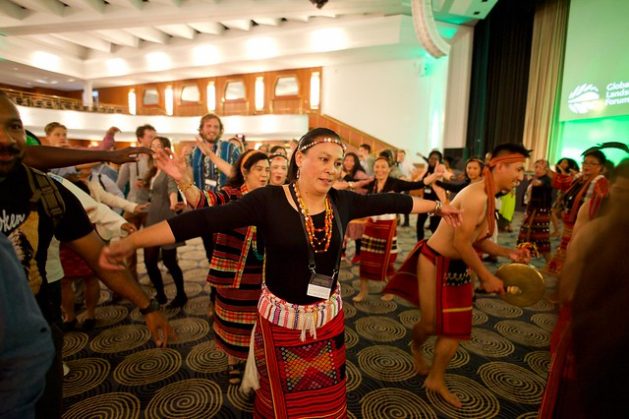
The Global Landscapes Forum (GLF) was held in Bonn, Germany and focused on how to give land rights the visibility needed to showcase that a rights approach, particularly when it comes to indigenous people, is a solution to the climate change crisis. Courtesy: Pilar Valbuena/GLF

Jun 29 2019 (IPS) – The Global Landscapes Forum (GLF) was held in Bonn, Germany to rally behind a new approach to achieving a future that is more inclusive and sustainable than the present – through the establishment of secure and proper rights for all.


On Jun. 22 and 23, experts, political leaders, NGOs and indigenous peoples and communities gathered to deliberate on a methodology that emphasises rights for indigenous peoples and local communities in the management and perseveration of landscapes. The forum took place alongside the  United Nations Framework Convention on Climate Change Bonn Climate Change Conference.

The forum focused giving land rights the visibility needed to showcase that a rights approach is a solution to the climate change crisis, and to develop a ‘gold standard’ for rights.

Indigenous peoples, local communities, women and youth, are believed to be the world’s most important environmental stewards but they are also among the most threatened and criminalised groups with little access to rights.

“We’re defending the world, for every single one of us,” said Geovaldis Gonzalez Jimenez, an indigenous peasant leader from Montes de María, Colombia.

But industries such as fossil fuels, large-scale agriculture, mining and others are not only endangering landscapes but also the lives of the people therein.

Already this year, said Gonzalez, his region witnessed 135 murders, adding that the day before the start of the GLF a local leader was killed in front of a 9-year-old boy.

According to the United Nations, the land belonging to the 350 million indigenous peoples across the globe is one of the most powerful shields against climate change as it holds 80 percent of the world’s biodiversity and sequesters nearly 300 billion metric tons of carbon

It is for this reason that amid the urgency to meet Sustainable Development Goals (SDGs) under pressure from the climate threat, dialogues about the global future have begun to wake up to the fact that indigenous peoples’ relationships with the natural world are not only crucial to preserve for their own sakes, but for everyone’s.

The drafting of the document of rights was led by Indigenous Peoples Major Group (IPMG) for Sustainable Development and the Rights and Resources Initiative in the months leading up to the GLF.

Wider discussions and workshops over the two days served as a consultation on the draft (which is expected to be finalised by the end of the year) as a concrete guide for organisations, institutions, governments and the private sector on how to apply different principles of rights. This includes the rights to free, prior and informed consent; gender equality; respect to cultural heritage; and education.

U.N. Special Rapporteur on the Rights of Indigenous Peoples Vicky Tauli-Corpuz said lands managed by indigenous peoples with secure rights have lower deforestation rates, higher biodiversity levels and higher carbon storage than lands in government-protected areas.

But Diel Mochire Mwenge, who leads the Initiative Programme for the Development of the Pygme in the Democratic Republic of Congo (DRC), one of the largest indigenous forest communities in Central Africa, said he has witnessed more than one million people being evicted from the national parkland where they have long lived. He explained that they had not been given benefits from the ecotourism industries brought in to replace them and were left struggling to find new income sources.

“Our identity is being threatened, and we need to avoid being completely eradicated,” said Mwenge.

In Jharkhand, India, activist Gladson Dungdung, whose parents were murdered in 1990 for attending a court case over a local land dispute, said an amendment to India’s Forest Rights Act currently being reviewed by the Supreme Court could see 7.5 million indigenous peoples evicted from their native forest landscapes. The act can impact a further 90 million people who depend on these forests’ resources for their survival, he said.

The amendment, Dungdung said, would also give absolute power to the national forest guard; if a guard were to see someone using the forest for hunting or timber collection, they could legally shoot the person on-sight.

“Indigenous peoples are right on the frontline of the very real and dangerous fight for the world’s forests,” said actor and indigenous rights activist Alec Baldwin in a video address.

“Granted that indigenous peoples are the superheroes of the environmental movement,” Jennifer Morris, president of Conservation International wondered why they are not heard until they become victims. “Why do we not hear about these leaders until they’ve become martyrs for this cause?”

The examples of intimidation, criminalisation, eviction and hardship shared throughout the first day clearly showcased what indigenous peoples and local communities go through to preserve the forests or ‘lungs of the earth’.

The rights approach, according to conveners of the GLF, aims to strengthen respect, recognition and protection of the rights of indigenous peoples and local communities as stewards and bearers of solutions to landscape restoration, conservation, and sustainable use. It also aims to end persecution of land and environment defenders; build partnerships to enhance engagement and support for rights-based approaches to sustainable landscapes across scales and sectors; and, scale up efforts to legally recognise and secure collective land and resource rights across landscapes.

“By implementing a gold standard, we can both uphold and protect human rights and develop conservation, restoration and sustainable development initiatives that embrace the key role Indigenous peoples and local communities are already playing to protect our planet,” said Joan Carling, co-convener of IPMG.

IPMG recognises that indigenous and local communities are bearers of rights and solutions to common challenges.

“This will enable the partnership that we need to pave the way for a more sustainable, equitable and just future,” added Carling.

And the Center for International Forestry Research (CIFOR) Director General, Robert Nasi, said when rights of local communities and indigenous peoples are recognised, there are significant benefits for the fight against climate change and environmental degradation.

“Whoever controls the rights over these landscapes has a very important part to play in fighting climate change,” he said.

In the climate and development arenas, the most current alarm being sounded is for rights–securing the land rights and freedoms of indigenous peoples, local communities and the marginalised members therein.

How can these custodians of a quarter of the world’s terrestrial surface be expected to care for their traditional lands if the lands don’t, in fact, belong to them? Or, worse, if they’re criminalised and endangered for doing so?

The basic principles of a ‘gold standard’ already exist, such as free, prior and informed consent, according to Alain Frechette of the Rights and Resources Initiative (RRI). What has been lacking, he said, is the application of principles that could be boosted by high-level statements that could “spur a race to the top”.


There’s No Continent, No Country Not Impacted by Land Degradation

Biodiversity, Climate Change, Combating Desertification and Drought, Conferences, Editors’ Choice, Featured, Global, Headlines, Regional Categories, Sustainability, TerraViva United Nations

Combating Desertification and Drought

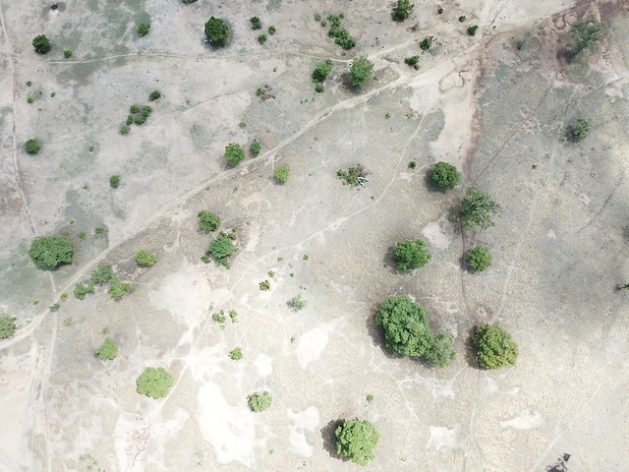
On all continents you have the issue of land degradation, and it requires governments, land users and all different communities in a country to be part of the solution. Credit: Albert Oppong-Ansah /IPS

ANKARA, Jun 17 2019 (IPS) – The coming decades will be crucial in shaping and implementing a transformative land agenda, according to a scientist at the United Nations Convention to Combat Desertification (UNCCD) framework for Land Degradation Neutrality (LDN).


UNCCD-Science Policy Interface co-chair Dr. Mariam Akhtar-Schuster, who spoke with IPS ahead of the start of activities to mark World Day to Combat Desertification (WDCD) on Monday, Jun. 17, said this was one of the key messages emerging for policy- and other decision-makers.

This comes after the dire warnings in recent publications on desertification, land degradation and drought of the Global Land OutlookIntergovernmental Science-Policy Platform on Biodiversity and Ecosystem Services (IPBES) Assessment Report on Land Degradation and Restoration, World Atlas of Desertification, and IPBES Global Assessment on Biodiversity and Ecosystem Services.

“The main message is: things are not improving. The issue of desertification is becoming clearer to different communities, but we now have to start implementing the knowledge that we already have to combat desertification,” Akhtar-Schuster told IPS.

“It’s not only technology that we have to implement, it is the policy level that has to develop a governance structure which supports sustainable land management practices.”

IPBES Science and Policy for People and Nature found that the biosphere and atmosphere, upon which humanity as a whole depends, have been deeply reconfigured by people.

The report shows that 75 percent of the land area is very significantly altered, 66 percent of the ocean area is experiencing increasing cumulative impacts, and 85 percent of the wetland area has been lost.

“There are of course areas which are harder hit; these are areas which are experiencing extreme drought which makes it even more difficult to sustainably use land resources,” Akhtar-Schuster said.

“On all continents you have the issue of land degradation, so there’s no continent, there’s no country which can just lean back and say this is not our issue. Everybody has to do something.”

Akhtar-Schuster said there is sufficient knowledge out there which already can support evidence-based implementation of technology so that at least land degradation does not continue.

While the information is available, Akhtar-Schuster said it requires governments, land users and all different communities in a country to be part of the solution.

“There is no top-down approach. You need the people on the ground, you need the people who generate knowledge and you need the policy makers to implement that knowledge. You need everybody,” the UNCCD-SPI co-chair said.

“Nobody in a community, in a social environment, can say this has nothing to do with me. We are all consumers of products which are generated from land. So, we in our daily lives – the way we eat, the way we dress ourselves – whatever we do has something to do with land, and we can take decisions which are more friendly to land than what we’re doing at the moment.”

UNCCD-Science Policy Interface co-chair Dr. Mariam Akhtar-Schuster says things are not improving and that the issue of desertification is becoming clearer to different communities. Credit: Desmond Brown/IPS

UNCCD Lead Scientist Dr. Barron Joseph Orr said it’s important to note that while the four major assessments were all done for different reasons, using different methodologies, they are all converging on very similar messages.

He said while in the past land degradation was seen as a problem in a place where there is overgrazing or poor management practices on agricultural lands, the reality is, that’s not influencing the change in land.

“What’s very different from the past is the rate of land transformation. The pace of that change is considerable, both in terms of conversion to farm land and conversion to built-up areas,” Orr told IPS.

“We’ve got a situation where 75 percent of the land surface of the earth has been transformed, and the demand for food is only going to go up between now and 2050 with the population growth expected to increase one to two billion people.”

That’s a significant jump. Our demand for energy that’s drawn from land, bio energy, or the need for land for solar and wind energy is only going to increase but these studies are making it clear that we are not optimising our use,” Orr added.

Like Akhtar-Schuster, Orr said it’s now public knowledge what tools are necessary to sustainably manage agricultural land, and to restore or rehabilitate land that has been degraded.

“We need better incentives for our farmers and ranchers to do the right thing on the landscape, we have to have stronger safeguards for tenures so that future generations can continue that stewardship of the land,” he added.

The international community adopted the Convention to Combat Desertification in Paris on Jun. 17, 1994.

On the occasion of the 25th anniversary of the Convention and the World Day to Combat Desertification in 2019 (#2019WDCD), UNCCD will look back and celebrate the 25 years of progress made by countries on sustainable land management.

At the same time, they will look at the broad picture of the next 25 years where they will achieve land degradation neutrality.

The anniversary campaign runs under the slogan “Let’s grow the future together,” with the global observance of WDCD and the 25th anniversary of the Convention on Jun. 17, hosted by the government of Turkey.