From Algorithms to Accountability: What Global AI Governance Should Look Like

Artificial Intelligence, Civil Society, Featured, Global, Global Governance, Headlines, Human Rights, International Justice, IPS UN: Inside the Glasshouse, TerraViva United Nations
Opinion

The International Telecommunication Union (ITU) is a specialized agency of the United Nations. Credit: ITU/Rowan Farrell

 
Artificial intelligence holds vast potential but poses grave risks, if left unregulated, UN Secretary-General António Guterres told the Security Council on September 24.

ABUJA, Nigeria, Oct 14 2025 (IPS) Recent research from Stanford’s Institute for Human-Centered AI warns that bias in artificial intelligence remains deeply rooted even in models designed to avoid it and can worsen as models grow. From bias in hiring of men over women for leadership roles, to misclassification of darker-skinned individuals as criminals, the stakes are high.


Yet it’s simply not attainable for annual dialogues and multilateral processes as recently provisioned for in Resolution A/RES/79/325 for the UN to keep up to pace with AI technological developments and the cost of this is high.

Hence for accountability purposes and to increase the cost of failure, why not give Tech Companies whose operations are now state-like, participatory roles at the UNGA?

When AI Gets It Wrong: 2024’s Most Telling Cases

In one of the most significant AI discrimination cases moving through the courts, the plaintiff alleges that Workday’s popular artificial intelligence (AI)-based applicant recommendation system violated federal antidiscrimination laws because it had a disparate impact on job applicants based on race, age, and disability.

Judge Rita F. Lin of the US District Court for the Northern District of California ruled in July 2024 that Workday could be an agent of the employers using its tools, which subjects it to liability under federal anti-discrimination laws. This landmark decision means that AI vendors, not just employers, can be held directly responsible for discriminatory outcomes.

In another case, the University of Washington researchers found significant racial, gender, and intersectional bias in how three state-of-the-art large language models ranked resumes. The models favored white-associated names over equally qualified candidates with names associated with other racial groups.

In 2024, a University of Washington study investigated gender and racial bias in resume-screening AI tools. The researchers tested a large language model’s responses to identical resumes, varying only the names to suggest different racial and gender identities.

The financial impact is staggering.

A 2024 DataRobot survey of over 350 companies revealed: 62% lost revenue due to AI systems that made biased decisions, proving that discriminatory AI isn’t just a moral failure—it’s a business disaster. It’s too soon for an innovation to result in such losses.

Time is running out.

A 2024 Stanford analysis of vision-language models found that increasing training data from 400 million to 2 billion images made larger models up to 69% more likely to label Black and Latino men as criminals. In large language models, implicit bias testing showed consistent stereotypes: women were more often linked to humanities over STEM, men were favored for leadership roles, and negative terms were disproportionately associated with Black individuals.

The UN needs to take action now before these predictions turn into reality. And frankly, the UN cannot keep up with the pace of these developments.

What the UN Can—and Must—Do

To prevent AI discrimination, the UN must lead by example and work with governments, tech companies, and civil society to establish global guardrails for ethical AI.

Here’s what that could look like:

Working with Tech Companies: Technology companies have become the new states and should be treated as such. They should be invited to the UN table and granted participatory privileges that both ensure and enforce accountability.

This would help guarantee that the pace of technological development—and its impacts—is self-reported before UN-appointed Scientific Panels reconvene. As many experts have noted, the intervals between these annual convenings are already long enough for major innovations to slip past oversight.

Developing Clear Guidelines: The UN should push for global standards on ethical AI, building on UNESCO’s Recommendation and OHCHR’s findings. These should include rules for inclusive data collection, transparency, and human oversight.

Promoting Inclusive Participation: The people building and regulating AI must reflect the diversity of the world. The UN should set up a Global South AI Equity Fund to provide resources for local experts to review and assess tools such as LinkedIn’s NFC passport verification.

Working with Africa’s Smart Africa Alliance, the goal would be to create standards together that make sure AI is designed to benefit communities that have been hit hardest by biased systems. This means including voices from the Global South, women, people of color, and other underrepresented groups in AI policy conversations.

Requiring Human Rights Impact Assessments: Just like we assess the environmental impact of new projects, we should assess the human rights impact of new AI systems—before they are rolled out.

Holding Developers Accountable: When AI systems cause harm, there must be accountability. This includes legal remedies for those who are unfairly treated by AI. The UN should create an AI Accountability Tribunal within the Office of the High Commissioner for Human Rights to look into cases where AI systems cause discrimination.

This tribunal should have the authority to issue penalties, such as suspending UN partnerships with companies that violate these standards, including cases like Workday.

Support Digital Literacy and Rights Education: Policy makers and citizens need to understand how AI works and how it might impact their rights. The UN can help promote digital literacy globally so that people can push back against unfair systems.

Lastly, there has to be Mandates for intersectional or Multiple Discriminations Audits: AI systems should be required to go through intersectional audits that check for combined biases, such as those linked to race, disability, and gender. The UN should also provide funding to organizations to create open-source audit tools that can be used worldwide.

The Road Ahead

AI is not inherently good or bad. It is a tool, and like any tool, its impact depends on how we use it. If we are not careful, AI could lengthen problem-solving time, deepen existing inequalities, and create new forms of discrimination that are harder to detect and harder to fix.

But if we take action now—if we put human rights at the center of AI development—we can build systems that uplift, rather than exclude.

The UN General Assembly meetings may have concluded for this year, the era of ethical AI has not. The United Nations remains the organization with the credibility, the platform, and the moral duty to lead this charge. The future of AI—and the future of human dignity—may depend on it.

Chimdi Chukwukere is an advocate for digital justice. His work explores the intersection of technology, governance, Big Tech, sovereignty and social justice. He holds a Masters in Diplomacy and International Relations from Seton Hall University and has been published at Inter Press Service, Politics Today, International Policy Digest, and the Diplomatic Envoy.

IPS UN Bureau
  Source

‘No Solution Will Work If the Institutions Responsible for Abuses Remain in Charge of Implementing It’

Active Citizens, Civil Society, Crime & Justice, Featured, Headlines, Human Rights, Latin America & the Caribbean, TerraViva United Nations

Oct 13 2025 (IPS) –  
CIVICUS discusses enforced disappearances in Mexico with a member of the International Network of Associations of Missing Persons.

The crisis of disappearances in Mexico has reached alarming proportions, with over 52,000 unidentified bodies in morgues and mass graves. On 1 July, the Mexican Congress approved controversial changes to the General Law on Disappearances, which promise to modernise the search process through a national biometric system, but which human rights organisations and victims’ groups claim could establish an unprecedented system of mass surveillance.


What are the main changes and how will they affect searches?

The changes seek to strengthen the mechanisms for searching for, locating and identifying missing persons. The main innovations include the creation of a National Investigation File Database and a Single Identity Platform that will integrate various databases. The revised law also provides for the strengthening of the Unique Population Registry Code (CURP) through the incorporation of biometric data such as iris scans, photographs and fingerprints.

The law obliges authorities and individuals to provide information useful for search processes and incorporates new institutions such as the National Guard and the Ministry of Security into the National Search System. It also increases the penalties for the crime of enforced disappearance.

The new system aims to ensure faster and more efficient searches through technology and inter-institutional coordination. It also provides for the use of satellite imagery and advanced identification technologies, under the coordination of the National Search System.

What risks are posed by the authorities’ access to biometric data?

There are serious concerns that the changes give security and justice institutions, including prosecutors’ offices, the National Guard and the National Intelligence Centre, immediate and unrestricted access to public and private databases, including those containing biometric information. The official argument is that this will speed up searches.

However, civil society warns that the Single Identity Platform and the biometric CURP could become instruments of mass surveillance. It is feared the authorities could misuse the information and, instead of helping to find missing persons, use it to help control the population, putting the rights to privacy and security at risk.

How have victims’ groups reacted?

Victims’ collectives have rejected the reform as opaque and rushed. They complain that, although round table discussions were organised, these were merely symbolic and their proposals were not taken into account.

The families of missing persons argue the changes focus on technological solutions that don’t address the underlying structural problems of corruption, cronyism, organised crime and impunity. But no technological solution will work as long as the institutions responsible for abuses and cover-ups remain in charge of implementing it.

This law runs the risk of repeating the mistakes of the 2017 General Law on Enforced Disappearances. That was an important step forward, as it criminalised the offence, created a national search system and sought to guarantee the participation of families in locating and identifying missing persons. Unfortunately, it was never properly implemented. There are fears this new law, in the absence of effective enforcement mechanisms, will only deepen frustration and perpetuate impunity.

What alternatives do victims’ groups propose?

Their demands go beyond legislative changes: they demand truth and justice through thorough investigations, the prosecution of those responsible in state institutions and organised crime groups and an effective search in the field, with the coordination and active participation of victims’ groups.

The collectives also stress the urgency of identifying the over 52,000 unnamed people in morgues and mass graves, and are calling for the creation of an Extraordinary Forensic Identification Mechanism. And they demand real protection for those searching for their relatives, who continue to face threats and attacks.

Above all, they demand an end to impunity through the dismantling of the networks of corruption and collusion between authorities and organised crime. As one local activist summed it up, at the end of the day, without a genuine National Plan for Missing Persons, none of this will work. Each state also needs its own plan. Otherwise, we will remain in the same situation: without results, without reports and without answers about our disappeared.

GET IN TOUCH
Website
Facebook

SEE ALSO
Mexico’s judicial elections consolidate ruling party power CIVICUS Lens 23.Jun.2025
The disappeared: Mexico’s industrial-scale human rights crisis CIVICUS Lens 22.Apr.2025
‘The discovery of the torture centre exposed the state’s complicity with organised crime’ CIVICUS Lens | Interview with Anna Karolina Chimiak 09.Apr.2025

  Source

Quo Vadis UN @80?

Civil Society, Democracy, Editors’ Choice, Global, Global Governance, Headlines, Human Rights, IPS UN: Inside the Glasshouse, TerraViva United Nations

Opinion

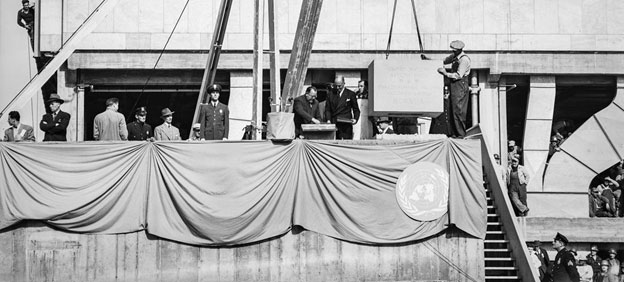
The corner-stone of the UN headquarters building was laid on UN Day at a special open-air General Assembly meeting held on 24 October 1949. Credit: UN Photo

KATHMANDU, Nepal, Oct 13 2025 (IPS) – The United Nations turned 80 this year. What should have been a moment of pride and celebration at the high-level session of the UN General Assembly in September 2025 turned instead into an occasion of bitter irony.


At the UN Headquarters in New York—fittingly located in the host country that once helped found and champion the organization—the loudest fireworks came not from commemoration but condemnation.

The President of the United States, boasting that he had “ended seven wars in seven months while the UN did nothing,” derided the very purpose of the institution. He dismissed climate change as a hoax, renounced the Sustainable Development Goals, and mocked multilateralism as an obsolete bureaucracy.

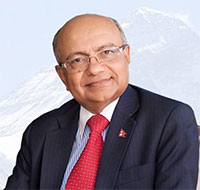
Kul Chandra Gautam

That outburst was shocking, but not surprising. The UN has long been an easy target for populist politicians. Yet even as it endures ridicule and neglect, the truth remains: if the UN did not exist, the world would have to create it again.

An Imperfect but Indispensable Institution

The UN’s failures are glaring and often heartbreaking. As the wars in Ukraine and Gaza rage on—each aided and abetted by two Permanent Members of its Security Council—the organization looks helpless, capable only of issuing pleas and providing meager humanitarian aid.

Its impotence is evident again in Haiti’s gang warfare, Myanmar’s and Sudan’s military atrocities, Afghanistan’s gender apartheid, and North Korea’s saber-rattling, just to name a few.

It is easy to blame “the UN,” but the real culprits are its Member States—especially the five veto-wielding powers of the Security Council, who too often place narrow national interests above global security. Many others strangle the UN with grand resolutions and lofty mandates but fail to fund them.

Hiding behind sovereignty, many governments oppress their citizens, foster corruption, and neglect their global commitments. Meanwhile, the richest nations, capable of lifting millions from poverty, pour trillions of dollars into their militaries.

Still, despite its flaws and frustrations, humanity cannot afford to abandon the United Nations. The challenges of our time— poverty, climate change, pandemics, terrorism, cybercrime, and mass displacement—are “problems without passports.” No nation, however powerful, can solve them alone. Only collective action through a multilateral system can address the interconnected crises that define the 21st century.

For smaller or poorer nations, the UN is an amplifier of voice and leverage. Acting together, they can negotiate more fairly with the powerful. For big and powerful nations, the UN provides legitimacy and a framework for cooperation that unilateral action can never achieve.

The UN, for all its imperfections, remains a mirror of our world: it reflects both our aspirations and our divisions. Its hypocrisy is our hypocrisy; its failures are our failures. Resolutions without resolve and promises without action are the true reasons for its ineffectiveness.

Yet amid the cynicism, it is worth recalling that the UN and its agencies have earned 14 Nobel Peace Prizes—more than any other institution in history. That is no small testament to its contributions to peacekeeping, humanitarian relief, human rights, and development.

But it cannot rest on past laurels. If the UN is to remain relevant, it must transform itself to meet the demands of a rapidly changing world.

Time for Tough Love and Real Reform

UN Secretary-General António Guterres has launched the UN@80 Initiative to sharpen the system’s impact and reaffirm its purpose. A recent system-wide Mandate Implementation Review uncovered a staggering reality: over 30% of mandates created since 1990 are still active, and 86% have no sunset clause. Many require the Secretariat and specialized agencies to carry them out “within existing resources”—an impossible task.

Hundreds of overlapping resolutions and reports clog the UN’s machinery, sustained by bureaucratic inertia and Member States’ appetite for endless paperwork. Too many meetings produce too little action.

Technology now offers a way out. Artificial intelligence can consolidate and streamline reporting, freeing up resources for real work. Likewise, the frequency of governing board meetings—three times a year for agencies like UNDP, UNICEF, UNFPA, UN Women, and WFP—could be reduced without sacrificing accountability.

Facing financial crisis, political hostility from major donors, and a proliferation of unfunded mandates, the UN has no choice but to rationalize its structure. Some agencies will have to merge or move their operations from costly headquarters in New York and Europe to lower-cost locations in Africa, Asia, and the Middle East.

UNICEF has already taken the lead with its “Future Focus Initiative,” with plans to cut headquarters budgets by 25% and relocate 70% of its staff to more affordable hubs such as Bangkok, Nairobi, or Istanbul. Such moves can reduce expenses, bring the organization closer to the field, and align it better with the realities of today’s world.

At the same time, the UN must take advantage of the tremendous growth in professional capacity within developing countries. Many of these nations now produce highly qualified experts who can serve effectively—and at lower cost—than expatriates from the Global North.

UNICEF pioneered this decades ago by hiring national professionals in its field offices. Expanding this practice system-wide would not only save money but also strengthen local ownership and credibility.

These are sensible, short-term measures. But they only scratch the surface. The real test of leadership lies in tackling the deep structural reforms that have eluded the UN for decades.

The Hard Reforms: Power, Accountability, and Money

1. Democratizing the UN

The UN’s mission is to promote peace, democracy, development and human rights—but its own structure remains profoundly undemocratic. The Security Council’s five permanent members hold veto power that can paralyze action even in the face of genocide or aggression.

That provision might have made sense in 1945, but it is indefensible in 2025. Yet changing it requires the consent of those same five powers. Only enlightened leadership in those countries and sustained public pressure globally can bring about reform.

Democratization must also extend to how the UN’s top leaders are chosen. The Secretary-General and heads of major agencies are still selected through opaque bargains among powerful nations. These posts are often “reserved” for certain nationalities rather than awarded on merit. The UN must move toward a transparent, merit-based system if it hopes to regain credibility.

2. Reviving the “Responsibility to Protect”

Too many regimes hide behind the shield of sovereignty to oppress their own people. The world leaders agreed at the UN Millennium Summit in 2005 that when a government fails to protect its citizens—or worse, becomes their tormentor—the international community has a Responsibility to Protect (R2P). The 2024 Pact for the Future reaffirmed that principle.

But R2P has rarely been applied because powerful nations invoke it selectively—protecting their allies and condemning their rivals. True leadership would mean upholding R2P universally, without double standards.

3. Rebalancing Priorities: Disarmament and Development

The UN was founded to prevent war. Yet worldwide military spending now exceeds $2.7 trillion a year—nearly $7.5 billion every day. NATO countries are expanding their defense budgets even as social spending shrinks and commitments to the poor are cut.

This is moral madness. Humanity needs fewer weapons and more investment in sustainable development. Redirecting even a fraction of global military spending toward the Sustainable Development Goals would do more to secure peace than all the bombs in the world.

4. Fixing the UN’s Finances

Money and power often speak louder than moral authority at the UN. The United States contributes about a quarter of the UN’s regular budget—and uses that leverage to exert disproportionate influence. Other large donors do the same.

In 1985, Swedish Prime Minister Olof Palme proposed a simple remedy: no single country should pay—or be allowed to pay—more than 10% of the UN’s budget. That would reduce dependence on any one donor while requiring modest increases from others. Ironically, Washington opposed it, fearing it might lose influence.

Reviving that proposal today could help depoliticize UN financing and make it more sustainable. The UN should also expand partnerships with private philanthropy, foundations, and innovative sources such as taxes on global financial transactions or the use of the global commons. Such mechanisms could liberate the organization from the recurring hostage drama of budget threats and withheld dues.

A Hopeful Horizon

History rarely moves in straight lines. Progress often comes two steps forward and one step back. Today, the post-World War II international order is fraying, and populist nationalism is resurgent. But in the long arc of human history, the movement toward global cooperation is irreversible.

We are slowly—but surely—evolving from primitive tribalism to modern nationalism and onward toward shared global solidarity. Multilateralism may be under siege, but it will rise again, reimagined and renewed, because our interdependence leaves no alternative.

I take hope from the energy and courage of Generation Z across the world—from Nepal and Bangladesh to Kenya, Indonesia, Morocco, and beyond. Young people are challenging corruption, inequality, and authoritarianism, and they see themselves increasingly as global citizens, connected through technology and united by shared aspirations rather than divided by borders or dogma.

If we can offer these young citizens opportunity and justice instead of inequality and despair, we will see the dawn of a more cooperative, humane, and equitable world. That, in turn, will breathe new life into the United Nations—still imperfect, still indispensable, and still humanity’s best hope for promoting peace and prosperity.

Kul Chandra Gautam, a former Deputy Executive Director of UNICEF and Assistant Secretary-General of the United Nations, is the author of ‘Global Citizen from Gulmi: My Journey from the Hills of Nepal to the Halls of United Nations’.

IPS UN Bureau

  Source

Abusive Governments Set to Win Seats in Human Rights Council

Civil Society, Global, Global Governance, Headlines, Health, Human Rights, International Justice, IPS UN: Inside the Glasshouse, TerraViva United Nations

Opinion

NEW YORK, Oct 10 2025 (IPS) – Egypt and Vietnam are on track to secure seats on the United Nations Human Rights Council despite being woefully unfit for membership. The UN General Assembly will elect members to the UN’s premier rights body in a noncompetitive vote on October 14, 2025.


These 2 countries are among 14 member states seeking three-year terms on the 47-nation Human Right Council starting in January 2026. Vietnam, currently a Council member, is seeking re-election.

“Noncompetitive UN votes permit abusive governments like Egypt and Vietnam to become Human Rights Council members, threatening to make a mockery of the Council,” said Louis Charbonneau, UN director at Human Rights Watch. “UN member states should stop handing Council seats on a silver platter to serial rights violators.”

Egypt, along with Angola, Mauritius, and South Africa are running for four African seats. India, Iraq, and Pakistan are joining Vietnam for the four Asian seats. For Latin America and the Caribbean, Chile, and Ecuador are unopposed for two seats.

In the Western group, Italy and the United Kingdom are running for two available seats, while Estonia and Slovenia are candidates for two seats for Central and Eastern Europe.

General Assembly Resolution 60/251, which created the Human Rights Council in 2006, urges states voting for members to “take into account the contribution of candidates to the promotion and protection of human rights.” Council members are required to “uphold the highest standards in the promotion and protection of human rights” at home and abroad and to “fully cooperate with the Council.”

Candidates only need a simple majority in the secret-ballot vote in the 193-nation General Assembly to secure a seat on the Human Rights Council. That makes it highly unlikely that any of the candidates will not be elected. Nevertheless, UN member states should not cast votes for abusive governments that are demonstrably unqualified for Council membership.

Egyptian President Abdel Fattah al-Sisi’s government has continued wholesale repression, systematically detaining and punishing peaceful critics and activists, and effectively criminalizing peaceful dissent. Government security forces have committed serious human rights abuses with near-absolute impunity. These include killing hundreds of largely peaceful protesters and widespread, systematic torture of detainees, which most likely amount to crimes against humanity.

The government also tries to prevent its own citizens from engaging with the Geneva-based Human Rights Council, and punishes those who engage with brutal reprisals. It ignores UN experts’ requests to visit the country.

The ruling Communist Party of Vietnam maintains a monopoly on political power and allows no challenge to its leadership. Basic rights are severely restricted, including freedoms of expression, peaceful assembly, association, and religion. Rights activists and bloggers face police intimidation, harassment, restricted movement, and arbitrary arrest and detention.

Mauritius and the UK, among the countries running. signed a treaty that recognizes Mauritius’ sovereignty over the Chagos islands but fails to address the ongoing crimes against humanity against Chagossians and their right of return to all the islands.

The UK forcibly displaced the Chagossian people between 1965 and 1973 to allow the US to build a military base. Mauritius and the UK should comply with their international rights obligations, including Chagossians’ right of return and should provide an effective remedy and reparations.

Angolan President João Lourenço has pledged to protect human rights, though Angolan security forces have used excessive force against political activists and peaceful protesters. South Africa has taken strong stances for accountability on Palestine and other issues. It should be similarly robust with rights violations by Russia and China.

The Bharatiya Janata Party government in India led by Prime Minister Narendra Modi has refused access to UN experts. Modi’s party leaders and supporters repeatedly vilify and attack Muslims and Christians with impunity, while the authorities often punish those who protest this campaign of Hindu majoritarianism.

Pakistan should cease the use of draconian counterterrorism and sedition laws to intimidate peaceful critics, and repeal its blasphemy laws. The government should prosecute those responsible for incitement and attacks on minorities and marginalized communities.

In 2024, Iraq passed a law criminalizing same-sex relations and transgender expression. Violence and discrimination against LGBT people are rampant, for which no one is held to account. Iraqi authorities have increasingly repressed activists and journalists.

In Ecuador, the government has attacked judicial independence and security forces have committed serious human rights violations since President Daniel Noboa declared an “internal armed conflict” in January 2024.

In Chile, President Gabriel Boric’s administration has played a leading role in speaking out on human rights violations around the world. Human rights challenges, including racism and abuses against migrants, remain a problem in the country, however.

In the UK, the authorities should end their crackdown on freedom of assembly. Many peaceful protesters in support of Palestinians or action on climate change have been arrested and some imprisoned after demonstrating.

Italy should stop criminalizing and obstructing sea rescues and enabling Libyan forces to intercept migrants and refugees and take them back to Libya, where they face arbitrary detention and grave abuses. Italy also failed to comply with a 2025 International Criminal Court arrest warrant by sending a wanted suspect back to Libya instead of to The Hague.

The Human Rights Council has played a crucial role in investigating abuses in Syria, Myanmar, North Korea, Russia, Ukraine, Israel/Palestine, and elsewhere. It recently established an investigation into serious crimes in Afghanistan by all parties—past and present —and extended its fact-finding mission for Sudan. Other countries and situations need scrutiny.

Council members should press for investigations of abuses by major powers, such as China’s crimes against humanity against Uyghurs and others in Xinjiang, and take up extrajudicial killings by the US of alleged narcotics traffickers on sea vessels.

For Council investigations to be credible, it needs financing. It is critical for countries to pay their assessed UN dues while boosting voluntary contributions. This will ensure that independent human rights investigations do not become casualties of the UN’s financial crisis resulting from the Trump administration halting virtually all payments to the UN and China and others paying late.

“The Human Rights Council has been able to save countless lives by carrying out numerous human rights investigations that deter governments and armed groups from committing abuses,” Charbonneau said. “All governments should recognize that it’s in their interests to promptly pay their UN dues so the rights Council can do its job.”

IPS UN Bureau

  Source

Civil Society on the Edge

Civil Society, Global, Global Governance, Headlines, Human Rights, International Justice, IPS UN: Inside the Glasshouse, Sustainable Development Goals, TerraViva United Nations

Opinion

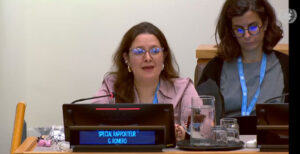
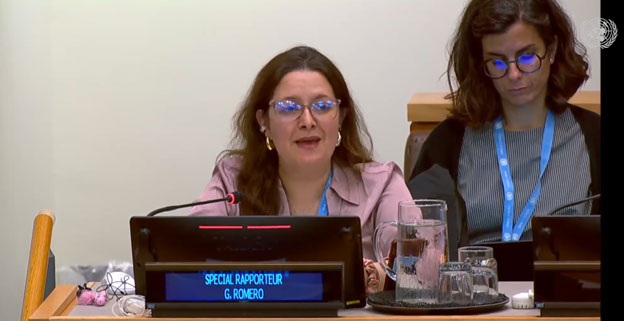
Gina Romero is UN Special Rapporteur for the rights to freedom of assembly and of association.

Credit: UN Web TV

BOGOTA, Colombia, Oct 9 2025 (IPS) – The collapse of aid architecture is one of the greatest dangers for civic space. This shift is not accidental but systemic, reflecting deliberate policy choices – not only by the US but accelerated by its decisions- that prioritize security agendas over human rights and solidarity.


Aid cuts, securitization, and geopolitical rivalries have led to the defunding of grassroots organizations, especially those led by women, LGBTQI groups, and marginalized communities. As a result, associations that once filled critical gaps are disappearing. These dynamics as existential because without resources, protections, and solidarity, civil society cannot survive—let alone flourish.

This is the center of my more recent report, that will be presented at the UN General Assembly on October 16th.

Civil society’s weakening has direct consequences for human rights protection and democratic participation. Without independent associations, accountability mechanisms collapse, and corruption flourishes. The report highlights that marginalized groups are disproportionately affected, as grassroots organizations are often their only safety net. The dismantling of solidarity also jeopardizes progress toward the Sustainable Development Goals (SDGs).

For example, women’s organizations that once advanced gender equality and access to reproductive health are closing. LGBTQI associations providing health services face funding cuts. Environmental defenders, crucial in climate justice, are left exposed.

Thus, the report warns that the rollback of aid and civic freedoms undermines not only democracy but also global commitments to equality and sustainability.

The report makes a call for urgent action to rebuild international solidarity and redesign the architecture of aid in ways that strengthen rather than weaken civic space. The vision is for a people-centered, rights-based, and sustainable system of cooperation. Key elements include:

Guaranteeing equitable access to resources: ensuring groups with high vulnerabilities, have direct and fair access to funding. Includes aid models that channels resources to local civil society, avoiding intermediaries, and simplified bureaucratic procedures.

Repealing restrictive laws and counter-terrorism measures: ending the misuse of security frameworks—such as counter-terrorism and anti-money laundering— and repealing laws that stigmatize NGOs as “foreign agents” or limit their ability to operate freely.

Ensuring meaningful participation of civil society: in multilateral decision-making, as equal partners shaping priorities, including global financing mechanisms and SDG implementation frameworks.

Aligning aid with human rights and civic space protection: Condition aid and credits on compliance with obligations to protect freedoms and rights and promote long-term, flexible funding instead of short-term project-based support.

Protecting digital freedoms and resisting securitization: Safeguarding the use of technologies, including spyware and facial recognition technologies, for association and assembly while preventing its misuse for surveillance and repression.

Reimagining solidarity: Shifting from a charity-based approach to one of global justice and shared responsibility; supporting civil society is not an act of benevolence but a legal and moral obligation under international human rights law.

IPS UN Bureau

  Source

Wealthy Nations Urged to Curb Climate Finance Debt For Developing Countries

Active Citizens, Civil Society, Climate Action, Climate Change, Climate Change Finance, Climate Change Justice, Conferences, Development & Aid, Economy & Trade, Environment, Gender, Global, Headlines, Sustainability, Sustainable Development Goals, TerraViva United Nations

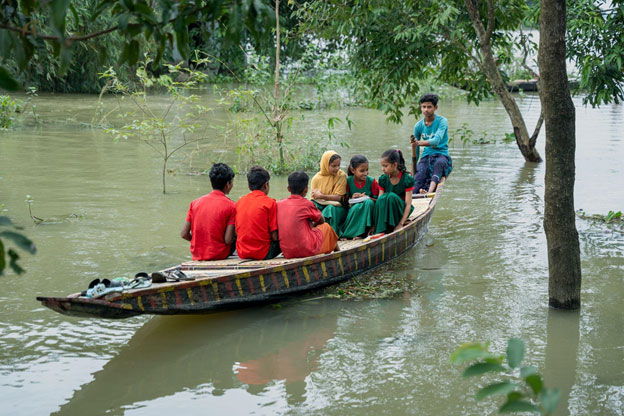
Children in Bangladesh riding a boat through a flooded river to attend school. Bangladesh is one of the most climate-sensitive regions in the world. Credit: UNICEF/Suman Paul Himu

UNITED NATIONS, Oct 8 2025 (IPS) – In recent years, international climate financing has declined sharply, leaving billions of people in developing nations increasingly vulnerable to natural disasters and unable to adapt effectively. With major cuts in foreign aid, these communities are expected to face the brunt of the climate crisis, while wealthier nations continue to reap economic benefits.


A new report from Oxfam and CARE Climate Justice Center, Climate Finance Shadow Report 2025: Analyzing Progress on Climate Finance Under the Paris Agreement, showcases the significant gaps in climate financing for developing countries in the Global South, and the far-reaching implications for climate resilience and global preparedness.

This comes ahead of the 30th United Nations (UN) Climate Change Conference (COP30), in which world leaders, diplomats, and civil society groups will converge in Belém, Brazil, from November 10–21, to discuss strategies to strengthen global cooperation, advance inclusive and sustainable development, and accelerate efforts to address the climate crisis. The United Nations Environment Programme (UNEP) states that there will be a major focus on allocating public funds for mitigation and adaptation efforts in developing countries, aiming to mobilize at least USD 300 billion annually by 2035 for developing countries and a yearly USD 1.3 trillion over the same period.

In the report, CARE and Oxfam found that developing countries are paying disproportionately high disbursements to wealthy nations in exchange for comparatively modest climate finance loans—spending about seven dollars for every five dollars they receive in return. This, compounded with “the most vicious foreign aid cuts since the 1960s”, shows a nearly 9 percent drop in climate funding in 2024, which is projected to drop by a further 9-17 percent in 2025.

“Rich countries are failing on climate finance and they have nothing like a plan to live up to their commitments to increase support. In fact, many wealthy countries are gutting aid, leaving the poorest to pay the price, sometimes with their lives” said John Norbo, Senior Climate Advisor at CARE Denmark. “COP30 must deliver justice, not another round of empty promises.”

As of 2022, developed nations reported pledging approximately USD 116 billion in climate funding for developing countries. However, the actual amount delivered is less than one-third of the pledged total — estimated at only USD 28–35 billion. Nearly 70 percent of this funding came in the form of loans, often issued at standard rates of interest without concessions. As a result, wealthy nations are driving developing countries deeper into debt, despite these nations contributing the least to the climate crisis and lacking the resources to manage its impacts.

It is estimated that developing countries are indebted by approximately USD 3.3 trillion. In 2022, developing countries received roughly USD 62 billion in climate loans, which is projected to produce over USD 88 billion for wealthy countries, yielding a 42 percent profit for creditors. The countries issuing the highest concessional loans in climate financing were France, Japan, Italy, Spain, and Germany.

“Rich countries are treating the climate crisis as a business opportunity, not a moral obligation,” said Oxfam’s Climate Policy Lead, Nafkote Dabi. “They are lending money to the very people they have historically harmed, trapping vulnerable nations in a cycle of debt. This is a form of crisis profiteering.”

Despite wealthy nations issuing high loans to developing countries, Least Developed Countries (LDCs) received only 19.5 percent of the total public climate funding over 2021-2022, while Small Island Developing States (SIDs) received roughly 2.9 percent. Only 33 percent of this funding went toward climate adaptation, a “critically underfunded” measure according to Oxfam, as the majority of creditors favor investing in mitigation efforts that deliver faster financial returns. Additionally, only 3 percent of this funding went to gender equality efforts, despite women and girls being disproportionately impacted by the climate crisis.

The report also underscores the dire impacts of the misallocation of climate financing and funding cuts, as vulnerable communities in particularly climate-sensitive environments find themselves with far fewer resources to adapt to natural disasters.

In 2024, communities in the Horn of Africa were ravaged by brutal cycles of droughts and flooding, which displaced millions of civilians and pushed tens of millions into food insecurity. In Rio Grande do Sul, Brazil, massive floods caused over 180 civilian deaths, displaced 600,000 people, and the resulting damage led to billions of dollars in losses. According to figures from UNICEF, around 35 million children in Bangladesh experienced school disruptions in 2024 due to heatwaves, cyclones, and floods, posing serious risks to their long-term development. The United Nations Environment Programme (UNEP) warns that global temperatures are on course to rise to a “catastrophic” 3°C by the end of the century, with extreme weather events expected to intensify further.

Ahead of the COP30 conference, Oxfam has urged wealthy nations to honor their climate finance commitments, including the delivery of the full USD 600 billion pledged for the 2020–2025 period, aligning with the UN’s target of mobilizing USD 300 billion annually. The organization also called for a substantial increase in global funding for climate adaptation and loss management, alongside the implementation of higher taxes on the wealthiest individuals and fossil fuel companies—which could generate an estimated USD 400 billion per year. Additionally, Oxfam emphasized the need for developed countries to stop deepening the debt of climate-vulnerable nations by expanding the share of grants and highly concessional financing instead of standard loans.

IPS UN Bureau Report