‘Low- and Middle-Income Countries Need Better Data, Not Just Better Tech’

Conferences, Development & Aid, Economy & Trade, Editors’ Choice, Featured, Headlines, Sustainable Development Goals, TerraViva United Nations
Conferences

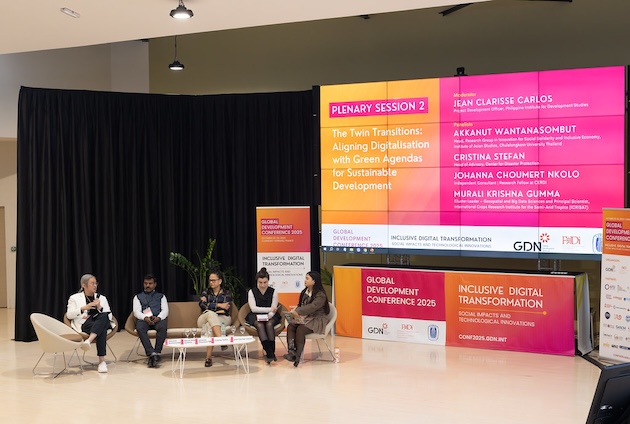
Johanna Choumert-Nkolo, third from right, speaking during a panel discussion at the Global Development Conference 2025 in Clermont-Ferrand, France. Credit: Athar Parvaiz/IPS

Johanna Choumert-Nkolo, third from right, speaking during a panel discussion at the Global Development Conference 2025 in Clermont-Ferrand, France. Credit: Athar Parvaiz/IPS

CLERMONT-FERRAND, France, Dec 4 2025 (IPS) – During the Global Development Conference 2025, development experts and researchers kept warning that low- and middle-income countries (LMICs) were being pushed into a wave of digital transformation without the basic statistical systems, institutional capacity, and local context needed to ensure that AI and digital tools truly benefited the poor.


Among the prominent voices shaping this conversation were Dr. Johannes Jütting, Executive Head of the PARIS21 Secretariat at the OECD, and development economist Johanna Choumert-Nkolo, who has over 15 years of research and evaluation experience. IPS interviewed both Jutting and Choumert-Nkolo following the conference, which concluded about five weeks ago, about the issues surrounding digitalization in LMICs.  Following is the summary of their responses.

How is Data the Weakest Link?

Much of the conversation around AI’s potential in the Global South centers on the promise of improved governance. But for Jutting, whose organization has been working on AI and data, there is a widening gap between the capacities of countries in the Global North and those in the Global South.

AI, he said, offers enormous potential. “For lower-income countries in particular, the production side is promising because AI can reduce the very high costs of traditional data collection. By combining geospatial data with machine learning, for instance, we can generate more granular and more timely data for policymaking, including identifying where poor populations live,” Jutting told IPS.

“But real challenges remain. Many low-income countries lack the fundamental conditions required to make use of AI. First, connectivity: without it, there is no practical AI application. Second, technical infrastructure such as data centers and reliable data transmission. Third, human capacity and skills, which require sustained investment. And fourth, governance and legal frameworks that must be updated to reflect new technologies,” he said.

There are also clear risks, particularly concerning confidentiality, privacy, and the fact that most large AI models are trained on data from the Global North, he told IPS and added that this creates potential biases and limits their usefulness for national statistical offices in the Global South.

Data collection processes, such as censuses and household surveys, are expensive, slow, and operationally difficult. According to him, many national statistical offices lack the workforce, training, and budget needed to maintain regular, reliable data production.

The challenge, he emphasized, is not simply technological.

“Digital transformation is not just a technology issue. It is a change management issue, a capacity development issue, a skills issue, and a political will issue.”

Dr. Johannes Jütting, second from right,speakingg during a panel discussion atthe Globall Development Conference 2025 in Clermont-Ferrand, France. Credit: Athar Parvaiz/IPS

Dr. Johannes Jütting, second from right, speaking during a panel discussion at the Global Development Conference 2025 in Clermont-Ferrand, France. Credit: Athar Parvaiz/IPS

Divide Within the Global South and Fiscal Constraints

While global debates often frame digital inequality as a problem between rich and poor nations, Jütting believes the more serious divide is emerging within the Global South itself. He argues that some LMICs are sprinting ahead while others fall further behind, a divergence he calls “one of the most worrying trends in development today.”

“What I see is a divide inside the Global South,” he said. “Countries like Rwanda, Kenya, the Philippines and Colombia are advanced—sometimes more advanced than OECD members. But others like Mali, Niger, and several small island states, are completely left behind.”

This divide is not only visible in connectivity and infrastructure but also in institutional readiness, technological skills and even access to basic demographic data. In some countries, he said, governments still lack reliable records of how many people are born each year or how many people live within their borders.

“How can we talk about fancy AI models when basic population data is missing?” he asked. “We have to start with the fundamentals.”

He also cautioned that development agencies may inadvertently widen this divide by focusing on “low-hanging fruits” that yield quick, measurable results, instead of supporting long-term system-building in fragile countries.

“There is donor fatigue, and funding is shrinking,” he said.

So, how do we move forward? First, Jutting said, every country needs a strong national strategy for the development of statistics (NSDS). This strategy must be fully aligned with national development plans, he said and added that only then can we ensure financing is efficient, coordinated, and aligned with country needs as well as international monitoring requirements, such as the SDGs or Africa’s Agenda 2063.

“Second, viable financing models will require greater domestic resource mobilization. Governments must be convinced to invest in their own data systems—and this requires demonstrating tangible impact.”

And third, he said, donors need to align their spending more effectively. “Our recent work on gender data financing shows a major disconnect: while gender equality funding is increasing, funding for gender data is not. This mismatch risks wasting money and undermining progress.”

He believes that there has to be a change on both fronts: national governments must allocate more domestic resources, and donors must invest in data in a more strategic, coherent, and results-oriented way.

Complexity of Measuring Digital Impacts

While Jütting focused on institutions and governance, Choumert-NKolo approached digitalization through the lens of climate resilience, human behaviour and evidence generation. Unlike many policy conversations that foreground tools and technologies, she emphasized the complexity of understanding real-world impacts.

“Digitalization is reshaping economies at a very fast pace,” she told IPS. “From a climate perspective, we need to understand what this means, both in terms of opportunities and risks.”

Her main concern is the long-term and layered nature of digital impacts. A digital tool deployed today may influence decisions in ways that take years to fully materialize.

“You never know how a tool will be used until people start making decisions with it,” she said. “Understanding behavioural change is complex, and attribution to one digital tool is extremely difficult.”

Despite these challenges, she emphasized that digital tools have significant potential to support climate adaptation. Farmers facing unpredictable weather patterns can benefit from climate information services delivered through mobile platforms. Communities vulnerable to storms or floods can receive alerts even through basic SMS networks. Such tools, she said, can save lives.

But she urged caution in assuming digital tools are universally accessible or understood.

“We must remember that not everyone can read or act on digital messages,” she said. “Literacy and accessibility gaps remain large in many countries.”

Her research experience in East Africa reinforced the importance of context. Mobile money, she said, became a major success story precisely because it solved local problems and fit local cultural and economic realities. But not every challenge requires a digital solution.

“Sometimes nature-based or low-cost solutions work better. The key is context. We must understand what problem we are trying to solve and whether digital tools are the right fit.”

She believes the way forward lies in identifying local needs, drawing from existing evidence and piloting new solutions where knowledge gaps remain. “There is a lot of hype around digitalization,” she said. “We need more comparative evidence on what works best in each setting.”

A Future That Must Be Shaped Carefully

One theme emerged with clarity from both experts: Digital transformation can support inclusive development, but only if countries invest in strengthening their statistical systems, building institutional capacity and grounding innovation in local realities.

“We need more and better data for better lives,” Jütting said. “But we must ensure the poorest countries are not left behind in this digital wave.”

Choumert-NKolo echoed that sentiment. “Digital tools offer huge opportunities,” she said. “But they must be rooted in context, evidence and local needs.”

For LMICs navigating the uncertainties of climate change, economic pressures and technological disruption, these warnings are timely. Digital transformation can be a powerful equalizer—or a new source of exclusion. The difference, experts said, will depend on whether governments and development partners prioritize the foundations that make digital inclusion truly possible.

  • “Travel (for reporting this story) to the Global Development Conference was supported by GlobalDev, the research communications platform of the Global Development Network (GDN). The 2026 Global Development Conference was organized in partnership with other members of the Pôle clermontois de développement international (PCDI)—Foundation for Studies and Research on International Development (FERDI) and Centre for International Development Studies and Research (CERDI). Reporting and research remain independent.”

IPS UN Bureau Report

 

COP30 Fails the Caribbean’s Most Vulnerable, Leaders Say: ‘Our Lived Reality Isn’t Reflected’

Climate Change Finance, Climate Change Justice, Conferences, COP30, Development & Aid, Editors’ Choice, Environment, Featured, Headlines, International Justice, Latin America & the Caribbean, Small Island Developing States, Sustainable Development Goals, TerraViva United Nations

COP30


Regional leaders say the outcome of the ‘mixed bag’ climate talks once again overlooks the real and mounting threats faced by Caribbean countries.

A coastal community in the Eastern Caribbean. Small island states say their extreme climate vulnerability is still not reflected in global finance decisions made at COP30. Credit: Alison Kentish/IPS

A coastal community in the Eastern Caribbean. Small island states say their extreme climate vulnerability is still not reflected in global finance decisions made at COP30. Credit: Alison Kentish/IPS

CASTRIES, St Lucia, Dec 1 2025 (IPS) – Caribbean small island states say this year’s UN climate conference has once again failed to deliver the urgency and ambition needed to tackle escalating climate devastation across the region. From slow-moving climate finance to frustrating political gridlock, leaders say COP30 did not reflect the realities that small islands are living through every day.


Jamaica is recovering from Hurricane Melissa, which left over 30 percent of the country’s GDP in losses and billions of dollars in damage. While the country has been able to respond rapidly thanks to a suite of innovative developmental finance tools, including a USD 150 million catastrophe bond, parametric insurance and a disaster savings fund, its Minister for Water, Environment and Climate Change, Matthew Samuda, warns that the vast majority of Caribbean islands do not have similar mechanisms.

Speaking at a press conference organized by Island Innovation and themed “Islands, the Climate Finance Gap, and COP30 Reflections,” Samuda said this is precisely why global negotiations must center the lived experiences of SIDS.

“I think I perhaps may be a little more disappointed than I am usually at the end of a COP because seeing what Jamaica is going through, seeing what Vietnam is going through, seeing extreme weather events pop up all around the world over the last 10 days, you would think that the urgency and the facts staring us in the face would have brought about greater ambition,” he said, adding that “unfortunately, the global geopolitical landscape didn’t allow for us to go much further.”

A Struggle Just to be Heard?

For many small islands and territories, simply participating meaningfully at COP30 was an uphill battle. The British Virgin Islands, like other Caribbean territories, had to rely on partners, including the Organisation of Eastern Caribbean States and the Caribbean Community Climate Change Centre for accreditation and access to the negotiations.

“We try to split up and cover as much as we can,” said Dr. Ronald Berkeley, Permanent Secretary in the Ministry of Environment, Natural Resources and Climate Change. “Our reliance on partners shows how limited our reach still is.”

Berkeley said that despite the Caribbean’s visible and worsening climate impacts, it remains difficult to get major emitters to understand the region’s urgency.

“For small islands, this is real. I’m not sure a lot of the big players believe us,” he said. “Until you live through being almost blown to smithereens by a Category Five hurricane, you will never understand.”

The BVI recently established its own climate trust fund, currently funded with about US$5.5 million, to address some financing shortfalls, but Berkeley emphasized that this cannot make up for reliable, large-scale climate funding.

Barriers to Pledges

Caribbean officials are echoing the same concern—that climate finance exists on paper but rarely reaches small, vulnerable nations at the speed or scale required.

“At COP there were positive commitments, about US$1.3 trillion annually by 2035 for climate action, the tripling of adaptation finance and operationalizing the Loss and Damage Fund,” said Dr. Mohammad Rafik Nagdee, Executive Director of the Caribbean Centre for Renewable Energy and Energy Efficiency (CCREEE).

“But the elephant in the room is the global finance gap,” he said. “Even where access exists, it’s not accessible at the speed the climate crisis demands. Processes are lengthy, requirements heavy and small governments simply don’t have the technical capacity.”

Nagdee said the region needs “greater predictability, simpler pathways and finance that is actually ready to disburse.”

Living Through it—Not Debating it

For Jamaica, which is emerging from one of the most devastating storms in its history, the mismatch between climate impacts and climate action is glaring.

“In the past four years, Jamaica has had its hottest day on record, its wettest day on record, its worst droughts, two tropical storms, a Category 4 hurricane and now what could be classified as a Category 6,” Samuda said. “That’s climate change in reality. That’s not an academic debate for us.”

Caribbean leaders widely described COP30 as a ‘mixed bag,’ with negotiations with incremental progress overshadowed by inadequate urgency.

“We cannot talk about building back better if the resources arrive slowly,” Nagdee said.

For small island states living on the frontlines of warming seas, rising temperatures and record-breaking storms, the message from COP30 is clear and becoming all-too familiar—that  climate change is accelerating and the price of delay is already being paid.

This feature is published with the support of Open Society Foundations.

IPS UN Bureau Report


Crop insurance payouts are good if properly managed

By Raphael Mweninguwe

The heat was intense. Animals were dying not because of diseases but because of lack of water for them to drink due to drought. Crops were drying in the fields not because they reached maturity stage but because of the heat. Farmers were hopeless and there was nothing they could do to save their livestock and crop from the drought.

And this was Salima, a district in the central region of Malawi where last growing season of 2024/2025 farmers saw their lives crumble.

“This is terrible,” said Sendeza Chapuleni, a Lead Farmer (LF), adding, “Our crops and livestock have been heavily affected and we do not know what we will do. Even with irrigation we will need water and with this drought, there is no irrigation.”

Standing in his maize field early March this year, Chapleni said he tried to apply organic manure in his farm so that rainwater do not all disappear when drought comes in.

“It did help a bit but the heat was unpresented,” he said.
What Chapleni experienced early this year is what hundreds of other farmers across the country did experience: the climate crisis.

To mitigate farmers against the impact of climate change a number of climate smart agricultural (CSA) activities have been tried are being implemented by some farmers. They include organic fertilizers application, mulching crops, pit planting, conservation agriculture, water storage and planting of nitrogen fixing plants on the farm.

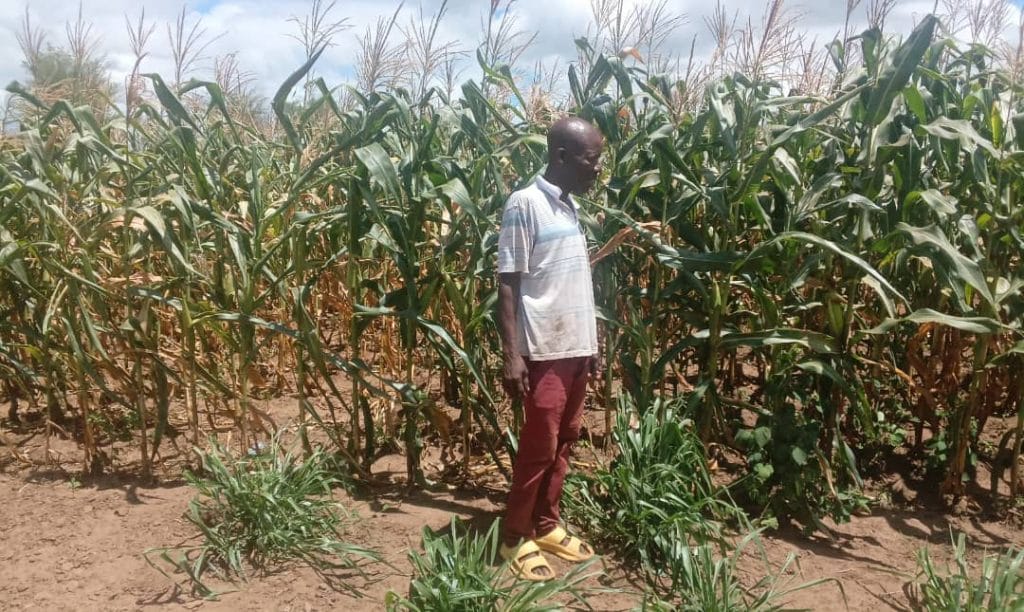
Chapuleni at his withered maize field

The adaptation of these CSA practices remain low, according to the World Bank. CSAs are also about intensive such as organic manure making.

But in 2005 a new approach in form of weather-index insurance (WII) for the farmers was piloted with funding from the World Bank and other development partners.

The aim was to cushion farmers against climate change impacts such as droughts and floods.

The project, according to Ephias Makaudze’s study, started on a high note with initial involvement of farmers who received financial support from locally based microfinance institutions.

A few years later the WII included maize and tobacco farmers who were insured for their crops. However, the WII implementation failed beyond the pilot phase and there were a number of reasons, Makaudze observed in his study.

Some of the reasons that made the project fail to achieve its results included low demand for WII, poor return on investment, premiums are too costly, lack of an effective and reliable index-based weather insurance, timely contracts and lack of high quality data weather station networks, and unavailability of an enabling legal and regulatory framework necessary for the expansion of the pilot programme.

But this is not the end of the story on insurance payouts. In 2024 Malawi experienced a drop in crop yields due to drought and floods in the northern region and southern region respectively.

As a result the United Nations World Food Programme (WFP), in partnership with the Ministry of Agriculture and the Adaptation Fund, spent MK 2.2 billion (US$1.3 million) in insurance payouts to over 36,000 farming households in Malawi, according to the UN agency.

These crop insurance payouts that were not indexed based aimed at supporting farmers whose crops suffered damage due to climate-induced shocks during the 2023/2024 growing season.

The former Minister of Agriculture, Sam Kawale, said farmers are on the frontline facing climate shocks. He said crop insurance payouts provide a risk transfer mechanism offering financial security through compensation for crop losses, thus ensuring that farmers recover and continue farming despite facing these adverse conditions.

WFP believes that the climate crisis is impacting many farmers who bear the brunt of its effects. It says the crop insurance payouts are not only critical in providing immediate relief, but they are also important steps towards building long-term climate resilience.

In July 2025 the Government of Malawi received an insurance payout from the African Risk Capacity (ARC) Group to the sum of US$3.4 million to protect itself against drought.

The funds was meant to scale up social protection measures through food distribution and cash transfers to over 311 000 beneficiaries.

It was also meant to support livelihood-enhancing options by providing drought-tolerant crops for replanting and inputs for winter cropping for farmers.

Malawi’s national disaster insurance is aimed at building the country’s resilience to climate change.

The primary goal is to protect the livelihoods of vulnerable populations, particularly smallholder farmers, and safeguard the nation’s overall development, according to the African Development Bank (AfDB)’s Africa Disaster Risk Financing Programme Multi-Donor Trust Fund.

Dr. Robert Kafakoma, an expert on climate change, said the crop insurance payout covers are very important and are of help to farmers as well as financial loan providers in the country.

Success of insurance payouts:
With a lot of money that government received this year in insurance payouts, Malawi should not have been grappling with hunger.

An estimated 5 million Malawians are currently starving and yet the country has been implementing these insurance payouts without any success to end the hunger crisis.

Some of the farmers are of the view that the insurance payouts are either poorly targeted or misused by those who are benefiting from them.

Geruazio Mumba, a LF in Salima whose crops were heavily affected by the drought said not all affected farmers benefits from the insurance programme.

“The problem is poor targeting. Some of the so called farmers who get financial support from government programmes do not have even a small piece of land on which to grow crops. Giving such people inputs such as seed and fertilizers is a waste because they do not have land to use and they end up selling the inputs,” said Mumba.

Wikinala Basikolo, another LF said insurances are good and they can really help the country mitigate the impacts of climate change but the problem is on programme implementation.

“When you look at the social cash transfers or those benefiting from subsidized farm inputs that are coming from insurance companies to government are the very same beneficiaries getting it year in, year out. And then you asked yourself why are the very same people benefiting? Are they the only ones impacted by climate change? Asked Basikolo.

Basikolo said food insecurity in Malawi cannot end because there is a lot of “corruption within the agriculture sector and most of those implementing these programmes are getting rich at the expense of the poor.”

Arnold Namanja, Public Relations Officer at the Ministry of Agriculture admits that insurance have nit make significant gains as expected.

“While progress in terms of numbers has been modest and the overall impact of insurance remains relatively small, the initiative has demonstrated potential. With improved outreach, stronger partnerships, and integration into broader resilience and food security strategies, there is significant room to expand coverage and deepen impact,” he said.

Way forward
While insurance payouts are necessary to protect farmers against climate crisis, more need to be done for it to make meaningful achievements. With the US$3.4 million insurance pay to government, this country would have averted the sufferings of millions of people currently starving.

A proper strategy is required to ensure success of the insurance payouts programmes.

“This can easily and effectively be done if weather-based crop insurance contracts are issued to farmers. The contracts need to be designed in such a way that they allow compensation of the affected farmers when rainfall during a crop growing cycle is not sufficient for farmers to grow and to optimise their yields,” said Robert.

He explained that the contracts would ensure that only the affected farmers are compensated.

“The proceeds from the insurance the government got is for everyone and it may be that the affected farmers may not necessarily be the one benefiting from the insurance,” he said.

But insurances may not be the only solutions to the problems created by droughts and floods. There are many means that can help the country mitigate the impacts of climate change, other than insurance covers.

“Most of these means are tested and are being implemented. What is required is the emphasis, promotion and political will to change the way things are done,” said Kafakoma.

He said these include community based disaster risk management initiatives; capacity building of the community in disaster risk management; food nutrition and security initiatives; sustainable catchment management and wetland management initiatives, pond aquaculture and water harvesting; and forest management related initiatives.

“As insurance is one piece of the puzzle and a financial buffer, but lasting food security requires combining it with preventive measures (CSA, irrigation, early warning), adaptive livelihoods, and policy reforms. Otherwise, payouts will remain emergency stopgaps while hunger continues to grow,” said Namanja.

The ADB’s Principal Country Economist, Albert Mafusire, said insurance payout claims provide direct financial support to smallholder farmers to help off-set losses resulting from weather-related challenges such as droughts and floods.

These initiatives are part of a broader resilience strategy aimed at building sustainable agricultural systems and supporting Malawi’s food security and if effectively implemented they could benefit smallholder farmers like Chapuleni who is still worried of another drought this growing season.


Discover more from The Maravi Post

Subscribe to get the latest posts sent to your email.

The Maravi Post

COP30: Broken Promises, New Hope — A Call to Turn Words into Action

Biodiversity, Climate Action, Climate Change, Climate Change Finance, Conferences, COP30, Economy & Trade, Energy, Environment, Featured, Global, Headlines, Indigenous Rights, TerraViva United Nations

Opinion

VICTORIA, Seychelles, Nov 25 2025 (IPS) – When the world gathered in Glasgow for COP26, the mantra was “building back better.” Two years later, in Sharm El Sheikh, COP27 promised “implementation.”

This year, in Belém, Brazil, COP30 arrived with a heavier burden: to finally bridge the chasm between lofty rhetoric and the urgent, measurable steps needed to keep 1.5 °C alive.


James Alix Michel

What Was Expected of COP30 were modest yet critical. After the disappointments of Copenhagen (2009) and the optimism sparked by Paris (2015), developing nations, small island states, Indigenous groups and a swelling youth movement demanded three things:

    1. Binding phase out timelines for coal, oil and gas.
    2. A fully funded Loss and Damage Facility to compensate vulnerable countries already suffering climate impacts.
    3. Scaled up adaptation finance—tripling the $120 billion a year pledge and ensuring it reaches the frontline communities that need it most.

However the negotiations evolved into a tug of war between ambition and inertia. Wealthier nations, still reeling from economic shocks, offered incremental increases in adaptation funding and a new Tropical Forests Forever Facility (TFFF) worth $125 billion, with 20 percent earmarked for Indigenous stewardship. The Global Implementation Accelerator—a two year bridge to align Nationally Determined Contributions (NDCs) with 1.5 °C—was launched, alongside a Just Transition Mechanism to share technology and financing.

However, the text on fossil fuel phase out remained voluntary; the Loss and Damage Fund was referenced but not capitalised; and the $120 billion adaptation pledge fell short of the $310 billion annual need.

But there were Voices That Could Not Be Ignored.

Developing Nations (the G77+China) reminded the plenary that climate justice is not a charity—it is a legal obligation under the UNFCCC. They demanded that historic emitters honor their “common but differentiated responsibilities.”

Island States(AOSIS) warned that sea level rise is no longer a future scenario; it is eroding coastlines and displacing entire cultures. Their plea: “1.5 °C is our survival, not a bargaining chip.”

Indigenous Peoples highlighted the destruction of Amazon and Boreal forests, urging that 30 percent of all climate finance flow directly to communities that protect 80 percent of biodiversity.

Youth — The Gen Z generation, marched outside the venue, chanting “We will not be diluted” demanding binding commitments and accountability mechanisms.

The Legacy of Copenhagen, Paris, and the Empty COPs –

I attended COP15 in Copenhagen (2009), where the “Danish draft” was rejected, and the summit collapsed amid accusations of exclusion. The disappointment lingered until Paris (2015), where the 1.5 °C aspiration was enshrined, sparking hope that multilateralism could still work. Since then, COPs have been a carousel of promises: the Green Climate Fund fell $20 billion short; the 2022 Glasgow Climate Pact promised “phasing out coal” but left loopholes. Each iteration has chipped away at trust.

COP30 was billed as the moment to reverse that trend.

And the result? Partial progress, but far from the transformational shift required.

Did We Achieve What We Hoped For?

In blunt terms: No. The pledges secured are insufficient to limit warming to 1.5 °C, and critical gaps—binding fossil fuel timelines, robust loss and damage funding, and true equity in finance—remain unfilled.

Yet, there are glimmers. The tripling of adaptation finance, the first concrete allocation for Indigenous led forest protection, and the creation of an Implementation Accelerator signal that the architecture for change exists. The challenge now is to fill it with real money and accountability.

Let us look at ‘What Must Happen Next’

    1. Full Capitalisation of Loss and Damage Fund
    – G20 nations must commit 0.1 % of GDP and disburse within 12 months.
    2. Binding Fossil Fuel Phase out – Coal, oil and gas with just transition financing for workers.
    3. Scale Adaptation Finance to $310 billion/yr
    – Re channel subsidies from fossil fuels to resilience projects.
    4. Direct Funding for Indigenous and Youth Initiatives
    – Allocate 30 % of climate finance to community led stewardship.
    5. Strengthen Accountability
    – Mandate annual NDC updates with independent verification and penalties for non compliance.

But for all this to become reality there must be a determined effort to achieve Future Actions.
We have watched promises fade after every COP, yet the physics of climate change remains unforgiving. The urgency is not new; the window to act is shrinking. But hope endures – in the solar panels lighting remote villages, in mangroves being restored to buffer storms, in the relentless energy of young activists demanding a livable planet.

Humanity has the knowledge, technology, and resources. What we need now is the collective political will to use them. Let COP30 be remembered not as another empty summit, but as the turning point where the world chose survival over complacency.

The future is not written; we write it with every decision we make today.

James Alix Michel, Former President Republic of Seychelles, Member Club de Madrid.

IPS UN Bureau


COP30 Was Diplomacy in Action as Cooperation Deepens—Says Climate Talks Observer

Active Citizens, Civil Society, Climate Change Finance, Climate Change Justice, COP30, Development & Aid, Editors’ Choice, Environment, Featured, Gender, Humanitarian Emergencies, Sustainable Development Goals, TerraViva United Nations, Women & Climate Change | Analysis

COP30


These processes are all about people. We should never lose our humanity in the process. There should not be a ‘COP of the people’ pitted against a ‘COP of negotiators.’ We need to approach COP jointly as a conference of the people, by the people, and for people. —Yamide Dagnet, NRDC’s Senior Vice President, International

Yamide Dagnet, Senior Vice President, International at the Natural Resources Defense Council. Credit: Joyce Chimbi/IPS

Yamide Dagnet, Senior Vice President, International at the Natural Resources Defense Council. Credit: Joyce Chimbi/IPS

BELÉM, Brazil, Nov 24 2025 (IPS) – As observers at the Conference of Parties closely monitored proceedings in Belém, many, such as Yamide Dagnet, approached the UN Climate Summit as an implementation COP. They are advocating for tangible signals to ignite crucial climate action before the climate crisis reaches irreversible levels.


For Dagnet, Senior Vice President International at the Natural Resources Defense Council (NRDC), it is an all hands-on deck situation where talks need to turn into action on the ground, which in turn must inform the acceleration expected from the negotiations.

“As COP focuses more on how we do things, we know the stakes will be more complex,” said Dagnet. “This is why the Paris Agreement set up improvement five-year-policy cycles, acknowledging that we might not get it right the first time, despite good intentions, and in view of possible unintended consequences and trade-offs.”

As a former negotiator now overseeing the international program at NRDC, an international nonprofit environmental organization that uses science, law, convening, and advocacy to mobilize a wide range of stakeholders to safeguard the Earth, Dagnet understands all too well how difficult the task ahead will be.

She points out that with increased geopolitical headwinds and development remaining front and center for countries around the globe, “we are not dealing just with a climate COP but a socio-economic COP.” To succeed, the multilateral process and climate action need to be designed in a way that is just, inclusive, and participatory.

Like many other observers, Dagnet believes that cooperation among nations and across regions is still moving in the right direction despite the United States’ withdrawal from the Paris Agreement.

“This COP was about diplomacy in action. Only one country has withdrawn from the Paris Agreement; the rest broadly remain on course. There are many issues that will make or break this conference, including the matter of scaling up finance for adaptation and for limiting loss and damage due to climate change. To manage these challenges, you need to measure, and to measure, you need to be guided by indicators, especially those that actually help us to move from just risk and vulnerability assessments to opportunity frameworks and value creation.”

But mobilization cannot be left to the government alone, she cautions.

“It requires support from multilateral and domestic financial institutions, as well as private capital investment. The private sector has for far too long seen climate finance for adaptation as an investment that brings no financial or economic returns. But the tide is changing. Insurance companies, asset managers, pension funds, commercial development, and small and medium companies realize it is an imperative to address adaptation. We need to amplify and demonstrate how there are a multitude of financial resources that could be saved through adaptation,” says Dagnet.

The need of the hour is to design investment as well as financial and insurance models that work for climate scenarios. Insurance business models are largely based on making money from what the company believes is unlikely to happen or happens rarely.  Such is not the case when it comes to climate disasters, which there are going to be a lot more of.

A COP at the mouth of the Amazon and the proximity to the world’s largest tropical forest is not only symbolic but also provides the context to find new ways to value nature and attract funding to make nature and the people who depend on it, more resilient

Addressing whether the intense activism and lobbying at COP30 translated to shaping negotiation outcomes, Dagnet reminds us that the lobbyists from the fossil fuel industry have felt threatened by the Paris Agreement and are worried about the inevitable journey towards greener economies, something that challenges their business model.

“Over the past 10 years, lobbyists have become very good at using these spaces to delay transition,” added Dagnet. Analysis reveals one in 25 of COP30 participants represent the fossil fuel industry, with over 1600 lobbyists given access.

Sonia Guajajara, Minister for Indigenous Peoples of Brazil attends the "Global March: The Answer is Us" during the 30th Conference of the Parties (COP30). Credit: Hermes Caruzo/COP30

Sonia Guajajara, Minister for Indigenous Peoples of Brazil attends the “Global March: The Answer is Us” during the 30th Conference of the Parties (COP30). Credit: Hermes Caruzo/COP30

Indigenous-led protests in Belem have consistently called for climate action and justice, as well as fossil fuel phase-outs and a halt to deforestation. Dagnet has frequent interactions with the Indigenous People, especially women, in Brazil. This includes Puyr Tembe, the first Indigenous woman to head a state secretariat in Pará; Joenia Wapichana, current president of the National Commission for the Defense of the Rights of Indigenous Peoples; Sonia Guajajara, who followed in Wapichana’s steps; and Indigenous leader Célia Xakriabá.

Dagnet stresses the importance of ensuring the protection of these environmental and human rights guardians. Add to that, she pushes for the need to amplify their stories, told in their own words with their voices. She believes that the world has a lot to learn from indigenous communities about living in harmony with nature and also about the increasing and complex threats they face that often cost them their lives.

Dagnet also highlights that climate talks and actions must be inclusive, and no one should be left behind, least of all women, local communities, and indigenous people, who want to be at the table rather than on the menu. “We need to engage with them in a meaningful way and move beyond tokenism,” she says.

NRDC has been integrating gender equity into its environmental initiatives, especially in India. Their multifaceted approach includes promoting women’s economic agency. Implemented through partnerships with organizations like Self-Employed Women’s Association (SEWA) in India, NRDC fosters women’s access to clean energy in rural communities, helping them replace diesel water pumps with solar-powered ones, enabling clean cooking through biogas plants, and providing access to clean transportation. “This has helped increase their household income, improve health, save time and money, and position them as clean-energy leaders in their communities,” says Dagnet.

More recently, NRDC has identified finance as the connecting thread to various complex issues driven by climate change. At COP30, NRDC launched the Fostering Investable National Planning and Implementation (FINI) for Adaptation and Resilience collaborative in partnership with the Atlantic Council’s Climate Resilience Center. FINI connects capital to climate solutions. It is a collaborative effort to unite 100 organizations, including governments, philanthropies, investors, civil society, and more, to develop pipelines of USD 1 trillion worth of investments by 2028 for adaptation and resilience projects that will support countries and communities on the frontlines of the climate crisis.

When all is said and done at COP, with the negotiations, diplomacy, lobbying, and activism, Dagnet says, “These processes are all about people. We should never lose our humanity in the process. There should not be a ‘COP of the people’ pitted against a ‘COP of negotiators.’ We need to approach COP jointly as a conference of the people, by the people, and for people.”

IPS UN Bureau Report

  Source

The UN General Assembly, Over Burdened with Repetitive Resolutions, Aims at Revitalization

Civil Society, Featured, Global, Global Governance, Headlines, International Justice, IPS UN: Inside the Glasshouse, TerraViva United Nations

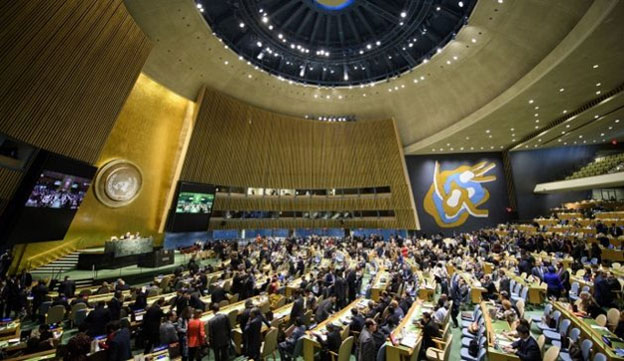
The UN General Assembly in session. Credit: UN Photo/Manuel Elias

UNITED NATIONS, Nov 21 2025 (IPS) – The 193-member General Assembly (GA), the UN’s highest policy-making body, has long been the repository for scores of long-winded outdated resolutions accumulated over several decades– and lying in cold storage.


As part of the proposed restructuring of the United Nations, which is facing a severe liquidity crisis, there is now a move to streamline and revitalize the General Assembly which has been mired in a bureaucratic backlog.

The President of the General Assembly (PGA), Annalena Baerbock, has called on each Main Committee to review its working methods and propose concrete measures to enhance efficiency, including:

• Merging similar agenda items to avoid repetition;
• Reducing the frequency, length and number of resolutions;
• Using biennial or triennial cycles where appropriate;
• Limiting explanations of vote to five minutes; and
• Simplifying adoption procedures — one gavel, one decision, all texts.

These recommendations, mostly spelled out in a recent resolution, would help re-shape the General Assembly to respond to global challenges with agility and coherence. But unless these reforms are implemented, they remain just words on paper, just another resolution.

“Business as usual will not suffice. We need fewer repetitive resolutions, shorter debates, and smarter scheduling. No more ‘resolutions for resolutions’ sake,” the PGA said.

“We cannot preach on Sunday that we need fewer resolutions, then proceed to submit one for consideration on Monday. And this is, unfortunately, taking place”, she warned.

Dr Palitha Kohona, a former Chief of the UN Treaty Section and one-time Permanent Representative of Sri Lanka to the United Nations, told IPS the UN is burdened under a heavy baggage of resolutions piled up over 80 years.

“Many are no longer relevant, others are superfluous, and some repetitive. Given its current perilous financial situation, it would be appropriate for each department and office to review rigorously the resolutions under their purview and identify those that could be terminated.”

This, he said, may be done through an omnibus resolution. Some might require delicate negotiations with member states which might claim ownership to resolutions that they had proposed. Sensitively, handled, this could deliver considerable financial and staffing dividends.

New resolutions, he pointed out, should be vetted carefully to avoid redundancies. UN staff could proactively assist in this process. Even where resolutions are to be implemented within existing resource allocations, there will be some cost involved, including time.

Where a proposed resolution could not be implemented due to resource constraints, it should be vetoed from the beginning, said Dr Kohona, who until recently, was Sri Lanka’s Ambassador to the People’s Republic of China.

Action officers should be located or moved to an office where a resolution is most likely to be implemented and it would be most effective. For example, the responsibility for implementing UNDP-related resolutions should be allocated to Nairobi, he proposed. Peacekeeping should also be moved to Nairobi as most peacekeeping now happens in Africa, he declared.

Baerbock said: “We have seen the Main Committees put forward resolutions for three-day conferences, with no budget attached, fully aware of the fiscal situation we are debating at the same moment. We have seen over 160 sides events during High-Level Week, despite the call for less, or the call by some, for no side events at all”.

“And we have seen, already, three or four high-level meetings submitted for consideration for the 81st High-Level Week (next year), with four for each of the 82nd and 83rd, despite the decision of this Assembly – so by all of us – to limit this to a maximum of three.”

“While we all want to protect the things we care about, each of us must make concessions in this time of reform”, she declared.

Dr. Purnima Mane, a former Deputy Executive Director (Programme) and UN Assistant-Secretary-General (ASG) at the UN Population Fund (UNFPA), told IPS the major ongoing effort to review the working methods of each of the Committees of the UN GA and enhance their efficiency is certainly laudable.

It is a golden opportunity to challenge some of the so-called ‘givens’ of the ways in which the GA functions and focus on what matters in a streamlined fashion.

The currently proposed solutions however are somewhat peripheral even if they indicate a desire for change. One of the major problems faced by the Committees is the range of issues taken on without clear prioritization including a lack of focus on neglected, key issues. And the absence of a sense of urgency, she pointed out

“The suggestions offered touch on enhancing efficiency of working but avoid tougher issues perhaps due to lack of time and sometimes will on the part of some members to take the risk of proposing solutions which might necessitate dismantling of well-entrenched methods of working”.

Another barrier, she said, might be concerns about potential difficulties that are likely to be experienced in getting agreement on these methods and more so the possibility of limited involvement by member states in their implementation.

“Perhaps starting small and identifying possibly achievable objectives for how the committees are run and managed might be a good beginning, but without the commitment of member States to the issues being prioritized and to implement the resolutions being proposed, all this change and effort is unlikely to achieve any benefits, including saving of resources”, she said.

Reducing agenda items and avoiding repetitive resolutions and endless debates are all a good start but it requires the will of the member states to implement these resolutions, once passed, she added.

And while the will to implement is understood as a given, in reality that is exactly where the problem sometimes lies. How to encourage and ensure implementation is really the true challenge, said Dr Mane, a former President and CEO of Pathfinder International.

Andreas Bummel, co-founder and Executive Director of Democracy Without Borders, told IPS ironically, the issue of revitalizing the General Assembly itself has become a ritualistic item.

“Tackling the number of annual resolutions and avoiding useless repetition year after year is a no-brainer. This should have been implemented long ago. But deeper changes are needed”.

For instance, he said, there needs to be continuity and institutional memory in the office of the President of the General Assembly. It should be a two-year tenure and receive proper funding.

Further, by creating a Parliamentary Assembly, the instrument of Citizens’ Initiative and Citizens’ Assemblies, the General Assembly can become a center of innovation and inclusion for the entire UN system. This should be on the agenda.

Use or not use at your discretion. The final two sentences are the most important as far as I am concerned, declared Bummel.

Meanwhile, revitalization is also being extended to the Office of the President of the General Assembly (OPGA).

The 80th session, Baerbock said, benefited from an early, seamless handover from the 79th — allowing us to hit the ground running. Yet the volume of work remains immense.

“Our High-Level Week featured over seven major meetings in just a few days;
The remainder of the session will see nearly twenty intergovernmental processes and multiple mandated High-Level Meetings; And the total number of resolutions has barely changed — many nearly identical to those of past sessions.”

But this is not sustainable, she said. And it’s contradicting the call from smaller missions that they cannot be in three meetings at the same time.

Transitions matter. Preparation matters. “We must ensure each presidency is set up for success”.

IPS UN Bureau Report

  Source