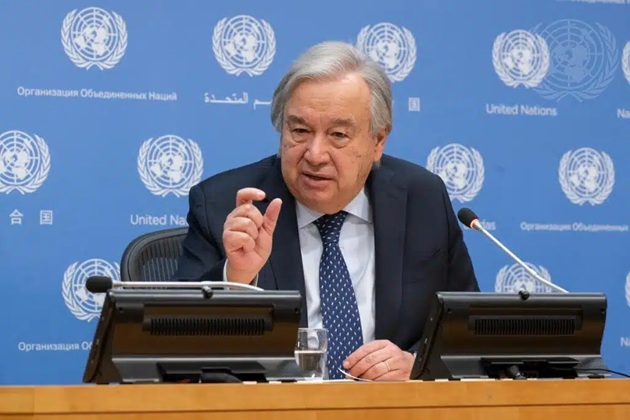
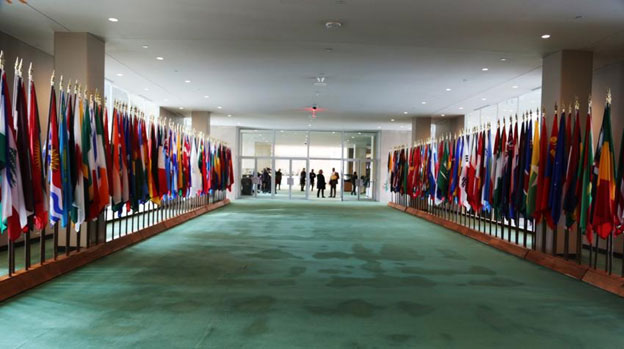
UN Secretary-General Antonio Guterres, “shocked by reports of violence and excessive use of force by Iranian authorities against protesters”, is urging restraint and immediate restoration of communications, as unrest enters its third week. 11 January 2026. Credit: United Nations
NEW YORK, Jan 15 2026 (IPS) – Unlike ever before, Iran’s Islamic regime is facing a revolt led by a generation that has lost its fear. Young and old, men and women, students and workers, are flooding the streets across the country.
Iran’s future may well hinge on whether its military chooses to act and save the country, driven by economic collapse, corruption, and decades of repression. Women and girls are at the forefront, protesting without headscarves, defying the clergy that once controlled every aspect of their lives. They don’t want reform; they are demanding freedom, economic relief, and the end of authoritarianism.
Shutting down the internet, arresting nearly 17,000 protesters, killing at least 3,000, including children, and Trump’s threat to use force to stop the Iranian regime have not prevented the mullahs from continuing their onslaught. The regime’s ruthless crackdown has been a calamitous wave of repression, taking thousands of lives in a brutal attempt to crush dissent. Yet even in the face of such peril, the public remains undeterred, determined to continue their fight.
Now, however, they need the support of the most powerful domestic—not foreign—power to come to their aid. The Iranian military is the most pivotal institution in the country, capable of catalyzing the downfall of the regime. The military is the key player, with significant internal influence and the capability to drive the necessary change from within, ultimately leading to regime change.
Every officer in the military should stop and think, how do I want to serve my country.
Do I want to continue to prop up a bunch of reactionaries, self-obsessed old men who have long since lost their relevance, wearing the false robe of piety to appear sanctimonious while subjugating the people to hardship and hopelessness?
Should I not support the younger generation who are yearning for a better life, for opportunity, for a future that gives meaning to their existence?
Should I not participate in sparking the revival of this magnificent nation from the doldrums of the past 47 years that have consumed it from within?
Should I continue to prepare for war against Israel, or extend a peaceful hand and invest in building my country with such immense natural and human riches and be in the forefront of all other modern democratic and progressive nations, and restore the glory of ancient Persia?
Do I truly want to continue to wear blinders and let my country be destroyed from within, or should I become part of a newly reborn nation and take personal pride in helping to revive it?
The answer to these questions should be clear to every officer. The military should establish a transitional government and pave the way for a legitimate, freely elected government, and restore the Iranian people’s dignity and their right to be free.
The idea that the Shah’s son, Reza Pahlavi, could return and restore a monarchy is just the opposite of what the Iranian people need. Instead of another form of corruption or an old kingdom, they deserve a democracy and genuine freedom.
In the final analysis, Iran’s destiny may rest on a single profound choice—whether its military steps forward to reshape the nation’s destiny.
Dr. Alon Ben-Meir is a retired professor of international relations, most recently at the Center for Global Affairs at NYU. He taught courses on international negotiation and Middle Eastern studies.
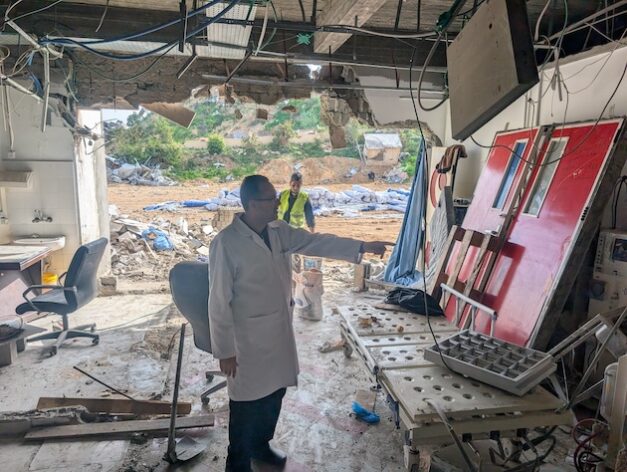
Cardiologist Dr. Marwan Sultan, then Director of the Indonesian Hospital in north Gaza, in February 2025 showing damage to hospital equipment following an Israeli attack on the facility a few months prior. In July 2025, Dr. Sultan was killed in an Israeli strike on the apartment where he was sheltering with his family. Credit: PHR/GHRC
BRATISLAVA, Jan 14 2026 (IPS) – Israel must lift all restrictions on medicine, food and aid coming into Gaza, rights groups have demanded, as two reports released today (Jan 14) document how maternal and reproductive healthcare have been all but destroyed in the country.
The reports from the two groups, which are independent organizations, provide both detailed clinical analysis of the collapse of Gaza’s health system and its medical consequences as well as firsthand testimonies from clinicians and pregnant and breastfeeding women in Gaza forced to live and care for their newborns in extreme conditions.
And the organizations say that with conditions improving only marginally for many women despite the current ceasefire, Israel must roll back restrictions placed on aid and immediately help ensure people in Gaza get access to the healthcare they need.
“Israel’s destruction of Gaza’s health infrastructure, combined with untreated malnutrition resulting from restrictions on food and medical supplies, including baby formula, has created an environment in which the fundamental biological processes of reproduction and survival have been systematically destroyed, resulting in known and foreseeable harm, pain, suffering, and death,” Sam Zarifi, Physicians for Human Rights (PHR) Executive Director, said.
“Israel must immediately allow food and essential medical material to enter Gaza with a proper medical plan for helping the besieged population,” he added.
Israeli military operations following Hamas’s attack on Israel on October 7, 2023, have left massive destruction across Gaza, including to healthcare facilities. According to UNICEF, 94 percent of hospitals have been damaged or destroyed.
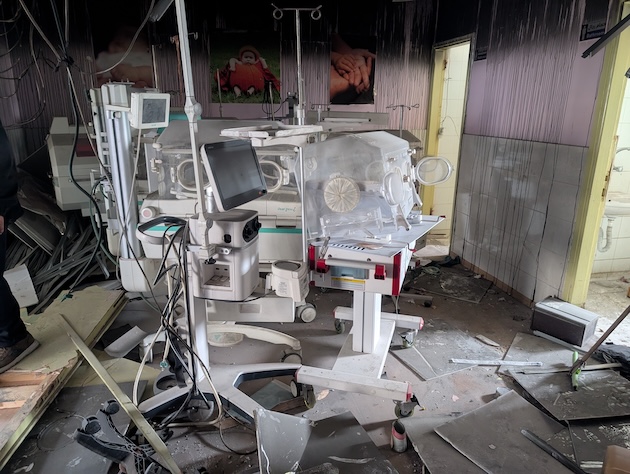
Destroyed incubators and equipment at the Kamal Adwan Hospital Neonatal Intensive Care Unit in north Gaza, following the targeting and raid of the facility by the Israeli forces in December 2024. Credit: PHR/GHRC
Maternal and reproductive healthcare has suffered. Before the war, Gaza had eight neonatal intensive care units with 178 incubators. Today, the number of incubators has dropped by 70 percent. In the north, there were 105 incubators across three NICUs, now there are barely any functional units remaining, UNICEF told IPS.
It says that the numbers of low birth weight babies have nearly tripled compared to pre-war levels and the number of first-day deaths of babies increased by 75 percent.
The PHR and PHR-I reports paint a similar picture.
The PHR report, which focuses on the period between January 2025 and October 2025 when a ceasefire was agreed, details how between May and June last year, the Palestinian Ministry of Health reported a 41 percent decrease in the birth rate in Gaza compared to the same time period in 2022; there was a significant increase in miscarriages that affected more than 2,600 women, and 220 pregnancy-related deaths that occurred before delivery.
The ministry also reported a sharp increase in premature births and low birth weight cases; over 1,460 babies were reported to be born prematurely, while more than 2,500 were admitted to neonatal intensive care. Newborn deaths also increased, with at least 21 babies reported to have died on their first day of life.
Meanwhile, the PHR-I report includes personal testimonies illustrating the severe problems pregnant women and women with newborns have faced in Gaza during the war, from lacking safe routes to care and being forced to give birth in unsanitary, dangerous conditions to battling hunger and severe food shortages as they try to breastfeed their children.
One woman, Samah Muhammad Abu Mustafa, a 30-year-old mother of two from Khuza’a, Khan Youni, described how when her contractions began in the middle of the night, because there were no vehicles and very few ambulances, which are reserved for shelling or other critical emergencies, she had to walk a long distance through rain. When she eventually reached the hospital, she said it was “horrifying.”
“I swear, one woman gave birth in the corridor, and her baby died. It was very crowded, and the doctors worked nonstop. I felt as though I could give birth at any moment. After giving birth to my eldest daughter, I was told I should not deliver naturally again because my pelvis was too narrow. Despite this, the doctors said I would have to deliver naturally because a cesarean section required anesthesia, and there was not enough available. I stood for three hours until it was finally my turn, without sitting even for a moment,” she said.
But despite the October 2025 ceasefire, massive problems remain with women’s access to and the provision of, maternal and reproductive healthcare in Gaza.
“Maternal health units in Gaza are largely non-functional and face critical shortages of essential medicines, consumables, and equipment,” Lama Bakri, project coordinator in the Occupied Territories Department at PHR-I, told IPS.
“Neonatal and diagnostic equipment remains scarce or blocked, including portable incubators for premature and low-birth-weight newborns. Although some aid has entered since the ceasefire, these gaps are not being addressed at the scale required, and meaningful improvement in the immediate future remains unlikely.”
Malnutrition also remains a serious problem.
“The ceasefire has allowed us to significantly scale up our nutrition response, but we are still treating pregnant and breastfeeding women for acute malnutrition in alarmingly high numbers,” Ricardo Pires, Communication Manager, Division of Global Communications & Advocacy at UNICEF, told IPS.
He said that between July and September 2025 about 38 percent of pregnant women screened were diagnosed with acute malnutrition.
“In October alone, we admitted 8,300 pregnant and breastfeeding women for treatment, about 270 a day, in a place where there was no discernible malnutrition among this group before October 2023,” he added.
UNICEF has documented almost 6,800 children admitted for acute malnutrition treatment in November 2025 compared to 4,700 cases in November 2024. So far, the number of admitted cases more than doubled in 2025 compared to 2024: almost 89,000 admissions of children to date in 2025, compared to 40,000 cases in 2024, and almost none before 2023.
“What we’re seeing is that no child meets minimum dietary diversity standards, and two-thirds of children are surviving on just two food groups or less. Around 90 percent of caregivers reported their children had been sick in the previous two weeks, which compounds the malnutrition crisis,” Pires said.
And there are fears for the longer-term demographic future of Gaza given the damage to maternal and reproductive healthcare.
“For Gaza’s demographic future, the implications are serious. Even with reconstruction, we will be dealing with a generation of children who were scarred before they took their first breath, children who may face lifelong health complications, developmental challenges, and the effects of stunting. The rebuilding must start now, but we should be clear-eyed: the damage to maternal and newborn health will echo for years, potentially decades,” said Pires.
But others say that with cooperation between international actors and the right political will, the situation need not remain so dire.
“To rehabilitate the population after everything that has happened is going to be a real issue, [but] now there is a Board of Peace, the needs of pregnant women and maternal and reproductive healthcare can be prioritized,” Zarifi told IPS.
“The capacity and the will exist among Gazans and Gazan healthcare workers to rebuild the healthcare system, including maternal and reproductive health services,” added Bakri. “The primary obstacle is not technical or professional but political: Israel’s control over Gaza’s borders and the restrictions on the entry of essential equipment, medical supplies, and reconstruction materials. With unrestricted access to what is needed to rehabilitate hospitals, rebuild destroyed units, and restock essential medicines, recovery is entirely feasible. Whether maternal and reproductive healthcare can return to pre-war levels depends on sustained international pressure to allow that access.”
Although some aid has entered since the ceasefire, these gaps are not being addressed at the scale required, and meaningful improvement in the immediate future remains unlikely.
However, while both NGOs like PHR and PHR-I and others, alongside international bodies like the UN, stress that any recovery and reconstruction in Gaza requires the ceasefire to hold and consolidate, repeated violations underline its fragility, and the effect that has on women.
Meanwhile, PHR and PHR-I point out that extreme weather and ongoing Israeli restrictions on medicine and food getting to Gaza to this day continue to severely affect pregnant women, new mothers, and babies. On top of this, Israel has also announced it will bar 37 international aid groups from working in Gaza, potentially compounding the problems.
Bakri said such measures were jeopardizing what small gains had been made since the ceasefire and “raise serious concerns about whether the situation can improve.”
“Even after the ceasefire, while bombardment has decreased, the reality these women face remains catastrophic – not only for their bodies and well-being but for the survival of the entire society,” said Bakri.
Zarifi added, “We are worried that the restrictions placed by Israel on some of the major actors in the humanitarian response will hamper access to assistance for those that need it. We have raised questions with the Israeli government as to why specific medicines are not allowed to be brought into Gaza and they say that they are not stopping them from being brought in but they can be brought in by commercial means. That is hard for people who can barely put any money together. These medicines should definitely be coming in through humanitarian channels.”
He also highlighted how important the issue of accountability is in ensuring any progress is made in rebuilding healthcare in Gaza and also limiting the probability of similar devastation in the future.
Both reports concluded that the harms caused by Israeli attacks are not isolated incidents but part of an ongoing pattern of systematic damage to the health of women and their children in Gaza, amounting to reproductive violence.
Israel has denied this and said that attacks on hospitals in Gaza have been because the medical facilities are being used by Hamas, and it has maintained that its forces adhere to international law.
While under international law healthcare facilities have special protection even in war, and attacks on them are prohibited, that protection is lost if they are deemed to fulfill criteria to be considered military objectives, such as housing militaries and arms.
However, any attack on them must still comply with the fundamental principles of distinction, proportionality and precautions in attack and failure to respect any of these principles constitutes a breach of international humanitarian law, according to the UN.
“These attacks are part of a deliberate policy designed to create a domino effect of suffering. From starvation and militarized aid distribution by the GHF, to lack of access to clean water, repeated displacement orders, living in shelters under continuous bombardment, and exposure to infections, disease, and harsh weather, the attacks on maternal and reproductive healthcare are another piece of this puzzle. Together, these conditions were created to systematically destroy the fabric of life in Gaza and reduce the population’s ability to survive,” said Bakri.
“The Israeli government has justified attacks on healthcare facilities by saying this was a problem caused by Hamas. We haven’t had an indication of this but it might be true. But in any case there has to be an investigation of these incidents and we hope the Israeli government will carry out such an investigation,” said Zarifi.
“But what is really alarming to us is that the norms prohibiting attacks on healthcare have been repeatedly violated, and there are also laws governing the protection of women and children that appear to have been violated. The only thing that makes these norms work is accountability. There has to be accountability for what happened, as it is the only way we can ensure that what has happened won’t happen in other conflicts. Impunity is watched by other actors around the world,” he added.
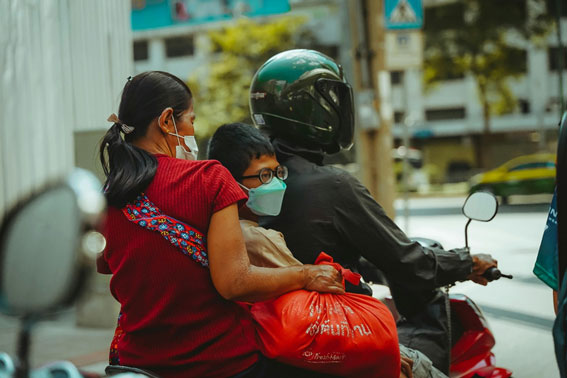
A mother and a son with mask were riding on a motorcycle in a street of Bangkok. The capital of Thailand experienced high level of PM2.5 particle pollution. Credit: Pexels/Maksim Romashkin
BANGKOK, Thailand, Jan 14 2026 (IPS) – Take a deep breath.
Did you know that in many countries in Asia and the Pacific, the air we breathe falls short of the safety standards for air quality set by the World Health Organization? While the start of a new year signals new beginnings, it also marks the continuation of the recurring air quality crisis across many countries in the region.
Oftentimes, when we think of air pollution, we associate it with car exhaust and factory chimneys belching black smoke. But air pollution is not just the cost of urban development – it is a multi-hazard crisis caused by wildfires, sand and dust storms, and volcanic eruptions that respect no borders. Access to clean air is a human right and countries who contribute the least to air pollution are often the most vulnerable.
Rising temperatures create a vicious cycle: rising heat leads to intensifying wildfires, releasing toxic smoke composed of carbon dioxide, carbon monoxide, and PM2.5 into the air we breathe. Furthermore, heat accelerates the breakdown of waste, generating even more pollutants.
Volcanic eruptions add sulfur dioxide and volcanic ash to the mix, and these pollutants can linger in the atmosphere for months. The result? Climate change exacerbates air pollution, which in turn aggravates the climate crisis — a feedback loop that puts both human health and ecosystems at risk and transforms local hazards into regional challenges.
Can a heavily polluted environment be restored? In principle, yes, but doing so requires transformative change and collective action in our economy and society. Improving urban mobility requires prioritizing efficient public transport, including low-emission vehicles, cleaner, greener alternatives such as walking, cycling, and ride-sharing.
Nature-based solutions, including green cooling corridors, can further improve air quality by lowering surface temperatures and providing buffers against desertification, land degradation, drought, and sand and dust storms.
However, not all sources of air pollution can be addressed through emission reductions alone. There are inherent limits to prevention at the source, particularly for air pollution caused by natural hazards. This requires a shift in focus from mitigation toward adaptation and preparedness.
Earth observation plays a critical role in monitoring, early warning, and informed decision-making. Advanced sensors aboard platforms such as Sentinel-5 Precursor and Geostationary Environment Monitoring Spectrometer (GEMS) detect key atmospheric pollutants including nitrogen dioxide (NO2), sulfur dioxide (SO2), tropospheric ozone, and carbon monoxide at unprecedented spatial and temporal scales.
The collaboration of ESCAP with regional partners for the Pan-Asia Partnership for Geospatial Air Pollution Information exemplifies how satellite data can be integrated with surface observations to create robust monitoring systems. These datasets enable tracking transboundary pollution events, from agricultural fire smoke to volcanic sulfur emissions to urban photochemical smog.
Satellites bridge the existing gaps from ground-based observations, providing authorities with the spatial coverage needed to understand and monitor air pollution and formulate effective policies.
The Clean Air for Sustainable ASEAN project recognizes that addressing the transboundary air pollution crisis requires strengthened monitoring and decision-making capacities enabled by technology-driven solutions. The application, Check Phoon (Thai: Phoon, meaning dust), or the PM2.5 Monitoring System, developed by the Geo-informatics Information and Space Technology Development Agency of Thailand, is an innovative platform that leverages space technology to support air quality monitoring and public health protection by providing real-time, high-resolution PM2.5 concentration data across Thailand.
The application is available in both web-based and mobile applications, and the system integrates satellite data, such as from Himawari, meteorological information, PM2.5 sources including hotspots (active fire detections), and ground-based validation from PM2.5 monitoring stations.
Building on the framework of SatGPT for flood hotspot mapping, an iteration of SatGPT for volcanic hazards has been proposed with potential to support the understanding and management of air pollution linked to volcanic activity. has been proposed with potential to support the understanding and management of air pollution linked to volcanic activity.
The Regional Action Programme on Air Pollution advances air quality management through science-based cooperation, sharing of best practices, and strengthened technical and financial support across ESCAP member States.
Complementing this effort, the Regional Space Applications Programme facilitates the sharing of Earth observation data and expertise that are critical for monitoring air pollution and assessing the impacts.
These initiatives contribute to accessible and actionable geospatial information that strengthens early warning systems, enabling authorities to forecast and quantify air quality with greater precision.
The transboundary nature of air pollution demands a stronger and more urgent call to action. While the Asia-Pacific region has demonstrated remarkable resilience in the face of cascading disasters, regional cooperation must accelerate to match the scale and pace of this evolving crisis.
Keran Wang is Chief of Space Applications Section, ESCAP; Sheryl Rose Reyes is Consultant, Space Applications Section, ESCAP; Taisei Ukita is former Intern, Space Applications Section, ESCAP.
The authors would like to thank Sangmin Nam, Director of the Environment and Development Division of ESCAP, for his contributions to this article.
LONDON, Jan 13 2026 (IPS) – The richest 1% have exhausted their annual carbon budget – the amount of CO2 that can be emitted while staying within 1.5 degrees of warming – only ten days into the year, according to new analysis from Oxfam. The richest 0.1% already used up their carbon limit on the 3rd January.
This day – named by Oxfam as ‘Pollutocrat Day’ – highlights how the super-rich are disproportionately responsible for driving the climate crisis.
The emissions of the richest 1% generated in one year alone will cause an estimated 1.3 million heat-related deaths by the end of the century. Decades of over consumption of emissions by the world’s super rich are also causing significant economic damage to low and lower-middle income countries, which could add up to $44 trillion by 2050.
To stay within the 1.5 degrees limit, the richest 1% would have to slash their emissions by 97% by 2030. Meanwhile, those who have done the least to cause the climate crisis – including communities in poorer and climate-vulnerable countries, Indigenous groups, women and girls – will be the worst impacted.
“Time and time again, the research shows that governments have a very clear and simple route to drastically slash carbon emissions and tackle inequality: by targeting the richest polluters.
By cracking down on the gross carbon recklessness of the super-rich, global leaders have an opportunity to put the world back on track for climate targets and unlock net benefits for people and the planet,” said Oxfam’s Climate Policy Lead Nafkote Dabi.
On top of their lifestyle emissions, the super-rich are also investing in the most polluting industries. Oxfam’s research finds that each billionaire carries, on average, an investment portfolio in companies that will produce 1.9 million tonnes of CO2 a year, further locking the world into climate breakdown.
The wealthiest individuals and corporations also hold disproportionate power and influence. The number of lobbyists from fossil fuel companies attending the recent COP summit in Brazil, for example, was more than any delegation apart from the host nation, with 1600 attendees.
“The immense power and wealth of super-rich individuals and corporations have also allowed them to wield unjust influence over policymaking and water down climate negotiations.” Dabi added.
Oxfam calls on governments to slash the emissions of the super-rich and make rich polluters pay through:
Increase taxes on income and wealth of the Super-rich and proactively support and engage on the negotiations for the UN Convention of International Tax Cooperation to deliver a fairer global architecture.
Excess profit taxes on fossil fuel corporations. A Rich Polluter Profits Tax on 585 oil, gas and coal companies could raise up to US $400 billion in its first year, equivalent to the cost of climate damages in the Global South.
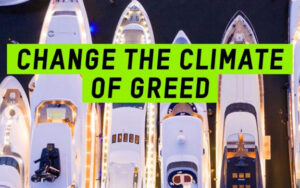
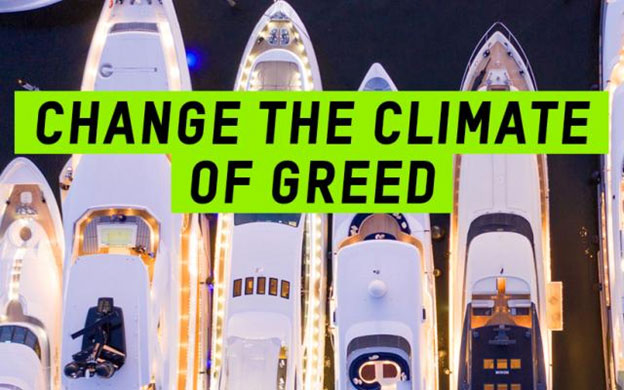
Ban or punitively tax carbon-intensive luxury items like super-yachts and private jets. The carbon footprint of a super-rich European, accumulated from nearly a week of using super yachts and private jets, matches the lifetime carbon footprint of someone in the world’s poorest 1 percent
Build an equal economic system that puts people and planet first by rejecting dominant neoliberal economics and moving towards an economy based on sustainability and equality.
UNITED NATIONS, Jan 13 2026 (IPS) – Judging by the mass US withdrawal from 66 UN entities, including UN conventions and international treaties, is it remotely possible that the unpredictable Trump administration may one day decide to pull out of the UN, and force the Secretariat out of New York– despite the 1947 UN-US headquarters agreement?
So, will the United Nations, which has come under heavy fire, be far behind?
That possibility is strengthened by the critical views of the UN both by President Trump and senior US officials.
Dr Stephen Zunes, Professor of Politics, University of San Francisco, who has written extensively on issues relating to the United Nations, told IPS even the U.S. presidents most hostile to the United Nations– like Ronald Reagan and George W. Bush– recognized the importance of the world body in terms of advancing U.S. interests, including understanding the importance of maintaining the UN system as a whole, even while violating certain legal principles in particular cases.
Similarly, he pointed out, the United States was willing to participate in various UN bodies in an effort to wield influence, even while disagreeing with some of their policies or even their overall mandates.
“The Trump administration, however, appears to be rejecting the post-WWII international legal system as a whole. His statements, particularly since the attack on Venezuela, appear to be a throwback to the 19th-century imperial prerogatives and a rejection of modern international law.”
“As a result, it is possible that Trump could indeed pull the United States out of the United Nations and force the UN out of New York”, declared Dr Zunes.
Addressing the General Assembly last September, Trump remarked, “What is the purpose of the United Nations? It’s not even coming close to living up to [its] potential.”
Dismissing the U.N. as an outdated, ineffective organization, he boasted, “I ended seven wars, dealt with the leaders of each and every one of these countries, and never a phone call from the United Nations offering to help in finalizing the deal.”
Martin S. Edwards, Associate Dean of Academic and Student Affairs, School of Diplomacy and International Relations at Seton Hall University, told IPS “this is dubious language about cutting inefficiency and fighting diversity wrapped up in red meat to feed President Trump’s base”.
It’s a ploy to use foreign affairs to distract voters for whom he has yet to deliver. The fact that the actual follow-up documents haven’t been received by the Secretary General tells you everything here. It fits a pattern of the President carving out maximalist positions and then getting very little in the end, he pointed out.
But it’s a bigger challenge, he said, on two fronts:
1. This is going to continue to REDUCE US influence at the UN rather than increase it. Stable foreign relations are based on credibility. The US continues to squander its reserves, and other countries will step into the vacuum.
2. This policy might have been a good social media post for voters, but makes little sense in practice. What the White House wants is a line-item veto over every single aspect of UN operations. But assessed contributions are not an ala carte menu, declared Edwards.
Mandeep S. Tiwana, Secretary General, CIVICUS, a global alliance of civil society organizations, told IPS retreat from international institutions by the Trump Administration is an attack on the legacy of President Franklin D. Roosevelt who gave the people of the United States the New Deal and envisioned a bold framework for the establishment of the UN to overcome the horrors of the Second World War.
“Many of the impacted international institutions were built through the blood, sweat and tears of Americans. Pulling out of these institutions is an affront to their sacrifices and reverses decades of multilateral cooperation on peace, human rights, climate change and sustainable development,” he said.
Meanwhile, the attacks on the UN have continued unabated.
In an interview with Breitbart News, U.S. Representative to the United Nations Ambassador Mike Waltz said, “A quarter of everything the UN does, the United States pays for”.
“Is there money being well spent? I’d say right now, no, because it’s being spent on all of these other woke projects, rather than what it was originally intended to do, what President Trump wants it to do, and what I want it to do, which is focus on peace.”
Historically, the United States has been the largest financial contributor, typically covering around 22% of the UN’s regular budget and up to 28% of the peacekeeping budget.
Still, ironically, the US is also the biggest defaulter. According to the UN’s Administrative and Budgetary Committee, member states currently owe $1.87 billion of the $3.5 billion in mandatory contributions for the current budget cycle.
The former US House Republican Conference Chair Elise Stefanik of New York, a one-time nominee for the post of US Ambassador to the UN, was quoted as saying, “In the UN, Americans see a corrupt, defunct, and paralyzed institution more beholden to bureaucracy, process, and diplomatic niceties than the founding principles of peace, security, and international cooperation laid out in its charter.”
Meanwhile, in a veiled attack on the UN, Secretary of State Marco Rubio said, “What we term the “international system” is now overrun with hundreds of opaque international organizations, many with overlapping mandates, duplicative actions, ineffective outputs, and poor financial and ethical governance.”
Even those that once performed useful functions, he pointed out, have increasingly become inefficient bureaucracies, platforms for politicized activism or instruments contrary to our nation’s best interests, he said.
“Not only do these institutions not deliver results, they obstruct action by those who wish to address these problems. The era of writing blank checks to international bureaucracies is over,” declared Rubio
Food solutions were on display everywhere around COP30—from the 80 tonnes of local and agroecological meals served to concrete proposals for tackling hunger—but none of this made it into the negotiating rooms or the final agreement. —Elisabetta Recine, IPES-Food panel expert
Agriculture is both a challenge and a solution for climate change. Busani Bafana/IPS
BULAWAYO, Jan 9 2026 (IPS) – As they ate catered meals, COP30 negotiators had no appetite for fixing broken food systems, a major source of climate pollution, experts warn.
Food systems are the complete journey food takes—from the farm to fork—which means its growing, processing, distribution, trade and consumption and even the waste.
The International Panel of Experts on Sustainable Food Systems (IPES-Food) warns that the final COP30 agreement risks deepening climate and hunger crises. It failed to address global warming emissions from food systems and the escalating damages caused by fossil-fuel-dependent industrial agriculture.
Food appears only once in the negotiated text, as a narrow indicator on ‘climate resilient food production’ under the Global Goal on Adaptation, IPES-Food pointed out.
“There is no mention of food systems, no roadmap to tackle deforestation, and no recognition that industrial agriculture drives nearly 90 percent of forest loss worldwide,” noted the think tank, emphasizing that negotiators also weakened language in the Mitigation Work Programme from addressing the ‘drivers’ of deforestation to vague ‘challenges.’
IPES-Food argued that the omission of food systems in the COP30 agreement was in stark contrast to the summit itself, which was held in the heart of the Amazon. Thirty percent of all food served during COP30 came from agroecological family farmers and traditional communities, and concrete public policy proposals for a just transition of food systems were on full display, IPES-Food said.
By not supporting a transition to environmentally friendly and low-emission agriculture, the agreement has left the global food system—and the billions who depend on it—highly vulnerable to the very climate shocks it helps cause, experts said.
“Food solutions were on display everywhere around COP30—from the 80 tonnes of local and agroecological meals served to concrete proposals for tackling hunger—but none of this made it into the negotiating rooms or the final agreement,” said Elisabetta Recine, IPES-Food panel expert and president of the Brazilian National Food and Nutrition Security Council (Consea), in a statement.
“Despite all the talk, negotiators failed to act, and the lived realities of people most affected by hunger, poverty, and climate shocks went unheard.”
Big Oil and Big Ag, Bigger voice
More than 300 industrial agriculture lobbyists were registered as delegates to COP30. They are blamed for influencing discussions and promoting false solutions to climate change.
“COP30 was supposed to be the Implementation COP—where words turned into action,” Danielle Nierenberg, an expert on sustainable agriculture and food issues and President of Food Tank, told IPS. “But once again, corporate interests won over people, nature, and the future of our food and agriculture systems as part of the solution to the climate crisis.”
Raj Patel, IPES-Food panel expert and professor at the University of Texas, argues that agribusiness lobbyists captured COP30 to influence outcomes favoring industrial agriculture and big oil interests.
“Food systems are second only to oil and gas as a driver of the climate crisis, and unlike oil wells, they are also the first victim of the chaos they create, Patel noted.
Obstacles and Opportunities
Scientists have warned that carbon emissions, including those from agriculture, must be cut considerably if the world is to meet the goals of the Paris Agreement to limit global warming to 2°C or less.
Even if fossil fuel emissions were eliminated immediately, emissions from the global food system alone would make it impossible to limit warming to 1.5°C and difficult even to realize the 2°C target, scientists have said.
Selorm Kugbega, a Research Fellow at the Stockholm Environment Institute, agrees that despite many promises made to tackle agriculture-linked emissions, COP30 turned out to be a damp squib for agrifood systems.
Initiatives such as RAIZ to restore 500 million hectares of degraded agricultural land by 2030 and TERRA to scale out climate solutions for smallholder farmers through blended finance, which were launched at COP30 omitted to highlight the effects of industrial food systems. Over 300 industrial agriculture lobbyists participated in discussions at COP30, leading to accusations of swaying the outcomes.
Analysts warn the final agreement at COP30 in Belém, Brazil, risks deepening climate and hunger crises. Credit: Raimundo Pacco/COP30
Kugbega observed that after several years of slow progress and momentum in integrating food systems in climate negotiations, COP30 should have been the opportunity to seal agriculture’s centrality in future COPs. However, it ended with no clear agreements on grant-based public finance for adaptation in agriculture or redirection of public funds that subsidize industrial systems.
The climate negotiations demonstrated power inequality in climate negotiations with the implicit protection of industrial agriculture interests, which weakened the credibility of any global efforts at mitigating agriculture-based emissions, Kugbega observed, highlighting that smallholders bear a high burden of climate risks and have little adaptation financing.
Kugbega argued the most powerful countries, which are generally less dependent on agriculture, tend to prioritize sectors such as energy and transport in climate negotiations. However, many least developed countries, particularly in Africa, are highly dependent on agriculture for employment and economic stability and face urgent climate risks.
“Yet these countries often lack the political influence to elevate agriculture and food systems as central issues in COP negotiations,” he said. “COP30 in Brazil presented a major opportunity to shift this imbalance, making the failure to position food systems at the center of the climate agenda particularly troubling.”
Frugal Financing for Food and Farmers
According to the Climate Policy Initiative (CPI) and the UN’s Standing Committee on Finance, agriculture receives a small and insufficient share of total global climate finance.
Of the available approximate total global climate finance of USD 1.3 trillion per year on average, agriculture gets around USD 35 billion per year. This is a huge shortfall given that food systems are estimated to be responsible for roughly one-third of global greenhouse gas emissions and are one of the sectors most vulnerable to climate impacts, according to the CPI. Worse still, smallholder farmers, who produce up to 80 percent of food in developing countries, only receive 0.3 percent—a striking imbalance, yet they feed the world and are more exposed to climate impacts.
Will COP31 Deliver?
While COP30 highlighted the need to tackle climate change impacts through the transformation of food systems, such as highlighted in the Belém Declaration on Hunger, Poverty and Human-Centered Climate Action, it remains to be seen if COP31 will deliver a positive outcome on food systems.
Waiting for COP31 to save the world is surrendering because agribusiness lobbyists do not take holidays, argues IPES-Food panel’s Raj Patel.
“The test is not whether diplomats can craft better language in Antalya, but whether farmers’ movements, indigenous movements, and climate movements can generate enough political pressure to make governments fear inaction more than they fear confronting corporate power,” he said.
COP31, to be hosted by Turkey with Australia as negotiations president in 2026 , is expected to prioritize an action agenda centered on adaptation finance, fossil fuel phase-out, adaptation in Small Island Developing States, and oceans.
While this agenda aligns with broader climate justice goals, it means food systems risk becoming indirectly addressed rather than explicitly championed, Kugbega said.
Given the stalled negotiations on financing sustainable agriculture transitions and the postponement of the Sharm el-Sheikh Joint Work on Agriculture, Kugbega said COP31 will likely focus more on developing new roadmaps and agreements than on full-scale implementation.
COP32 could be a greater opportunity for the implementation of the work program under Ethiopia’s COP32 presidency, given the country’s direct exposure to climate risks in agriculture, he noted.
“COP31 will likely shape whether the world arrives at COP32 ready to implement and operationalize sustainable food systems or once again be forced to renegotiate what is already known.”
This feature is published with the support of Open Society Foundations.