Impact of COVID-19 on Tourism in Small Island Developing States

Civil Society, Development & Aid, Economy & Trade, Featured, Global, Headlines, Health, Human Rights, Humanitarian Emergencies, Inequity, TerraViva United Nations

Opinion

Pamela Coke-Hamilton, Director, Division on International Trade and Commodities, UN Conference on Trade & Development (UNCTAD)
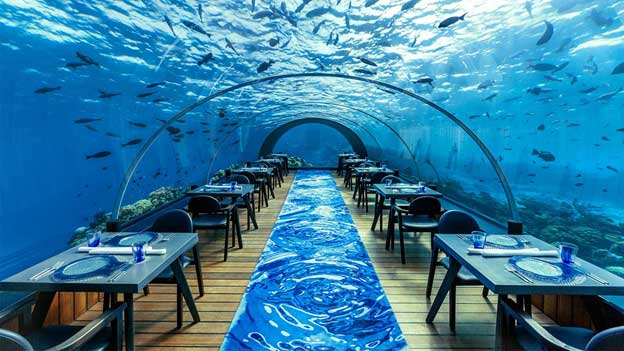
Small island developing states are most vulnerable to the impact of COVID-19 on tourism not only because they are highly dependent on tourism, but also because any shock of such magnitude is difficult to manage for small economies

An undersea restaurant in the Maldives, a Small Island Developing State (SIDS)

GENEVA, May 4 2020 (IPS) – The COVID-19 pandemic and the measures put in place to contain its diffusion are taking a heavy toll on the tourism sector. According to the United Nations World Tourism Organization (UNWTO), the COVID-19 pandemic will result in a contraction of the tourism sector by 20% to 30% in 2020.


This estimate is likely to be conservative for countries relying on foreign tourists, as the recent data on daily air traffic indicate a drop of almost 80% since January 2020.

While many economic sectors are expected to recover once restrictive measures are lifted, the pandemic will probably have a longer lasting effect on international tourism. This is largely due to reduced consumer confidence and the likelihood of longer restrictions on the international movement of people.

According to the World Travel and Tourism Council (WTTC), in previous viral epidemics the average recovery time for visitors to a destination was about 19 months.

Highly vulnerable countries

The sudden, deep and likely prolonged downturn in the travel and tourism sector has made countries that rely heavily on foreign tourism very concerned about their finances.

Among these, small island developing states (SIDS) are most vulnerable not only because they are highly dependent on tourism, but also because any shock of such magnitude is difficult to manage for small economies.
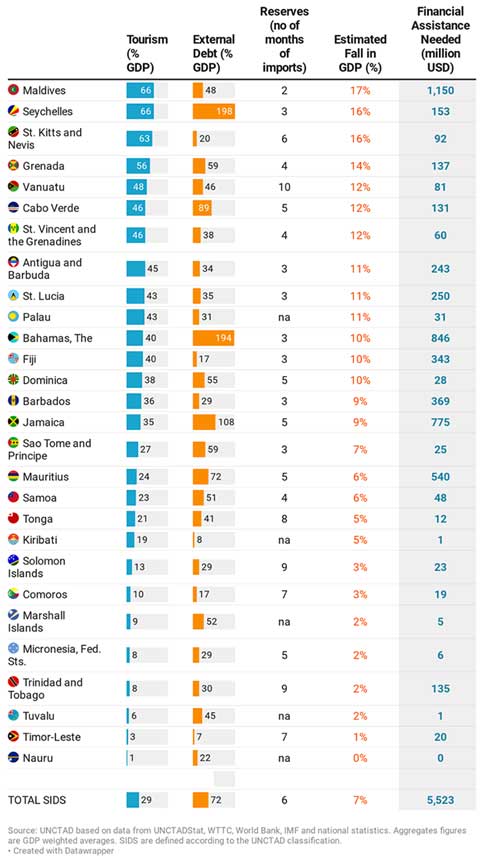
On average, the tourism sector accounts for almost 30% of the gross domestic product (GDP) of the SIDS, according to WTTC data. This share is over 50% for the Maldives, Seychelles, St. Kitts and Nevis and Grenada.

Overall, travel and tourism in the SIDS generates approximately $30 billion per year. A decline in tourism receipts by 25% will result in a $7.4 billion or 7.3% fall in GDP. The drop could be significantly greater in some of the SIDS, reaching 16% in the Maldives and Seychelles.

It is expected that for many SIDS, the COVID-19 pandemic will directly result in record amounts of revenue losses without the alternative sources of foreign exchange revenues necessary to service external debt and pay for imports.

Devastating economic consequences

In general, countries may be able to weather economic storms by relying on additional debt or using available foreign reserves.

However, access to global capital markets is increasingly tight, more so for small countries such as SIDS, which are often highly indebted and not well diversified.

The external debt of the SIDS as a group accounts for 72.4% of their GDP on average, reaching up to 200% in the Seychelles and the Bahamas.

Foreign reserves are also generally low, with many of the SIDS possessing only the reserves sufficient for a few months of imports. Given these statistics, it is evident that without international assistance, the economic consequences of the pandemic will be devastating for many of the SIDS.

Immediate financial needs

By considering the economic impact of reduced tourism revenues (assuming a 25% decline in tourism receipts and restoring the minimum level of import coverage (three months), it is possible to provide a rough estimate of each country’s immediate financial needs to offset the damage of the pandemic.

Currently, the SIDS would need about $5.5 billion to counteract the adverse effects of the pandemic on their economies.

The Maldives stands out with a need of $1.2 billion due to its reliance on tourism revenues, followed by the Bahamas and Jamaica.

Many of the SIDS, like Jamaica and the Bahamas, also face high external debt burdens which require complementary external debt suspension or relief programmes.

Table 1: Tourism, Debt and Foreign Currency Reserve Indicators
International response

While governments all over the world have announced fiscal measures totalling $8 trillion to combat the pandemic, the international community has also mobilized funds through international financial institutions to counteract the economic crisis in the most vulnerable countries.

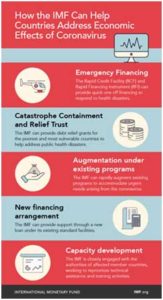
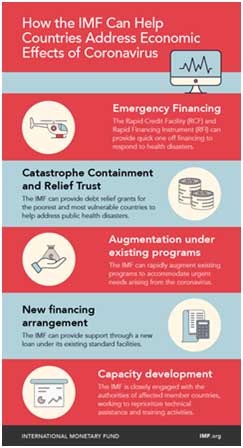
The International Monetary Fund (IMF) created a $50 billion fund through its rapid-disbursing emergency financing facilities for low-income and emerging market countries. It has earmarked $10 billion to serve its poorest members with a zero-interest rate. Regional banks have also created response facilities aimed at financially supporting their members.

What options are available for SIDS?

The IMF has just revamped the Catastrophe Containment and Relief Trust (CCRT) to offer short term debt reliefs to some of its members.

While some SIDS such as Comoros, São Tomé and Príncipe, and the Solomon Islands have already requested and obtained debt relief, there is room for more SIDS to take advantage of this option. While many of the SIDS are not among the poorest countries, they are vulnerable. This is further compounded by high levels of external debt many SIDS experience.

It is critical that SIDS have access to funding at zero interest rates and can suspend existing debt payments until they are financially ready to service their external debt obligations.

Ultimately, this can help blunt the impact of external shocks such as COVID-19 and equip them with the necessary financial resources to plan their next steps for their economic development.
  Source

A Global Crisis Like No Other Needs a Global Response Like No Other

Civil Society, Development & Aid, Featured, Global, Headlines, Health, Human Rights, Humanitarian Emergencies, Inequity, TerraViva United Nations

Opinion

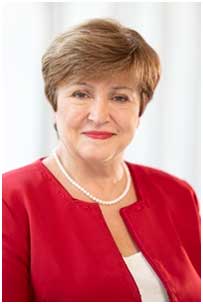
Kristalina Georgieva is the Managing Director of the International Monetary Fund (IMF)

WASHINGTON DC, Apr 22 2020 (IPS) – I have been saying for a while that this is a ‘crisis like no other.’ It is:

    • • More complex, with interlinked shocks to our health and our economies that have brought our way of life to an-almost complete stop;
    • • More uncertain, as we are learning only gradually how to treat the novel virus, make containment most effective, and restart our economies; and
    • Truly global. Pandemics don’t respect borders, neither do the economic shocks they cause.

Credit: IMF

The outlook is dire. We expect global economic activity to decline on a scale we have not seen since the Great Depression.

This year 170 countries will see income per capita go down – only months ago we were projecting 160 economies to register positive per capita income growth.

Actions taken

Exceptional times call for exceptional action. In many ways, there has been a ‘response like no other’ from the IMF’s membership.

Governments all over the world have taken unprecedented action to fight the pandemic—to save lives, to protect their societies and economies. Fiscal measures so far have amounted to about $8 trillion and central banks have undertaken massive (in some cases, unlimited) liquidity injections.

For our part, the IMF has $1 trillion lending capacity – 4 times more than at the outset of the Global Financial Crisis—at the service of its 189 member countries. Recognizing the characteristics of this crisis—global and fast-moving such that early action is far more valuable and impactful—we have sought to maximize our capacity to provide financial resources quickly, especially for low-income members.

In this regard, we have strengthened our arsenal and taken exceptional measures in just these two months.

These actions include:
Doubling the IMF’s emergency, rapid-disbursing capacity to meet expected demand of about $100 billion. 103 countries have approached us for emergency financing, and our Executive Board will have considered about half of these requests by the end of the month.
• Reforming our Catastrophe Containment and Relief Trust, to help 29 of our poorest and most vulnerable members—of which 23 are in Africa—through rapid debt service relief, and we are working with donors to increase our debt relief resources by $1.4 billion. Thanks to the generosity of the UK, Japan, Germany, the Netherlands, Singapore, and China, we are able to provide immediate relief to our poorest members.
• Aiming to triple our concessional funding via our Poverty Reduction and Growth Trust for the most vulnerable countries. We are seeking $17 billion in new loan resources and, in this respect, I am heartened by pledges from Japan, France, UK, Canada, and Australia promising commitments totaling $11.7 billion, taking us to about 70 percent of the resources needed towards this goal.
• Supporting a suspension of official bilateral debt repayments for the poorest countries through end 2020—a ground-breaking accord among G20 countries. This is worth about $12 billion to nations most in need. And calling for private sector creditors to participate on comparable terms—which could add a further $8 billion of relief.
• Establishing a new short-term liquidity line that can help countries strengthen economic stability and confidence.

Kristalina Georgieva

This is the package of actions that the International Monetary and Financial Committee endorsed last week at our virtual Spring Meetings.

It represents a powerful policy response. Above all, it enables the IMF to get immediate, ‘here and now’ support to countries and people in desperate need. Today.

Preventing a protracted recession

But there is much more to be done and now is the time to look ahead. To quote a great Canadian, Wayne Gretzky: “Skate to where the puck is going, not where it has been.”

We need to think hard about where this crisis is headed and how we can be ready to help our member countries, being mindful of both risks and opportunities. Just as we responded strongly in the initial phase of the crisis to avoid lasting scars for the global economy, we will be relentless in our efforts to avoid a painful, protracted recession.

I am particularly concerned about emerging markets and developing countries.

They have experienced the sharpest portfolio flow reversal on record, of about $100 billion. Those dependent on commodities have been further shocked by plummeting export prices. Tourism-dependent countries are experiencing a collapse of revenues, as are those relying on remittances for income support.

For emerging economies, the IMF can engage through our regular lending instruments, including those of a precautionary nature. This may require considerable resources if further market pressures arise.

To prevent them from spreading, we stand ready to deploy our full lending capacity and to mobilize all layers of the global financial safety net, including whether the use of SDRs could be more helpful.

For our poorest members, we need much more concessional financing. With the peak of the outbreak still ahead, many economies will require significant fiscal outlays to tackle the health crisis and minimize bankruptcies and job losses, while facing mounting external financing needs.

But more lending may not always be the best solution for every country. The crisis is adding to high debt burdens and many could find themselves on an unsustainable path.

We therefore need to contemplate new approaches, working closely with other international institutions, as well as the private sector, to help countries steer through this crisis and emerge more resilient.

And the IMF, like our member countries, may need to venture even further outside our comfort zone to consider whether exceptional measures might be needed in this exceptional crisis.

Preparing for recovery

To help lay the foundations for a strong recovery, our policy advice will need to adapt to evolving realities. We need to have a better understanding of the specific challenges, risks and tradeoffs facing every country as they gradually restart their economies.

Key questions include how long to maintain the extraordinary stimulus and unconventional policy measures, and how to unwind them; dealing with high unemployment and ‘lower-for-longer’ interest rates; preserving financial stability; and, where needed, facilitating sectoral adjustment and private sector debt workouts.

We also must not forget about long-standing challenges that require a collective response, such as reigniting trade as an engine for growth; sharing the benefits of fintech and digital transformation which have demonstrated their usefulness during this crisis; and combating climate change—where stimulus to reinforce the recovery could also be guided to advance a green and climate resilient economy.

Finally, in the new post-COVID-19 world, we simply cannot take social cohesion for granted. So, we must support countries’ efforts in calibrating their social policies to reduce inequality, protect vulnerable people, and promote access to opportunities for all.

This is a moment that tests our humanity. It must be met with solidarity.

There is much uncertainty about the shape of our future. But we can also embrace this crisis as an opportunity—to craft a different and better future together.

  Source

Coronavirus, New Threat for Mexican Migrant Workers in the U.S.

Civil Society, Development & Aid, Economy & Trade, Editors’ Choice, Featured, Food & Agriculture, Global Governance, Globalisation, Headlines, Human Rights, Labour, Latin America & the Caribbean, Migration & Refugees, North America, Regional Categories, TerraViva United Nations

Migration & Refugees

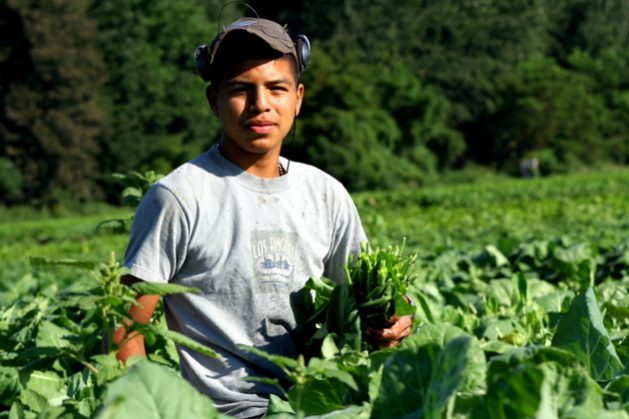
Considered essential to the U.S. economy, as Donald Trump himself now acknowledges, Mexico's seasonal farmworkers are exposed to the coronavirus pandemic as they work in U.S. fields, which exacerbates violations of their rights, such as wage theft, fraud, and other abuses. CREDIT: Courtesy of MHP Salud

Considered essential to the U.S. economy, as Donald Trump himself now acknowledges, Mexico’s seasonal farmworkers are exposed to the coronavirus pandemic as they work in U.S. fields, which exacerbates violations of their rights, such as wage theft, fraud, and other abuses. CREDIT: Courtesy of MHP Salud

MEXICO CITY, Apr 21 2020 (IPS) – As the high season for agricultural labour in the United States approaches, tens of thousands of migrant workers from Mexico are getting ready to head to the fields in their northern neighbour to carry out the work that ensures that food makes it to people’s tables.


But the SARS-CoV-2 (COVID-19) pandemic, of which the U.S. has become the world’s largest source of infection, threatens to worsen the already precarious conditions in which these workers plant, harvest, process and move fruits and vegetables in the U.S.

Exposed to illegal charges for visa, transport and accommodation costs, labour exploitation, lack of access to basic services and unhealthy housing, Mexican seasonal workers driven from their homes by poverty must also now brave the risk of contagion.

Evy Peña, director of communications and development at the non-governmental Centro de los Derechos del Migrante (Migrant Rights Centre – CDM), told IPS from the city of Monterrey that the COVID-19 pandemic is exacerbating violations of the rights of migrant workers.

“Temporary visa programmes are rife with abuse, from the moment workers are recruited in their communities. They suffer fraud, they are offered jobs that don’t even exist in the United States. It’s a perverse system in which recruiters and employers have all the control. There are systemic flaws that will become more evident now,” the activist said.

In 1943, the United States created H2 visas for unskilled foreign workers, and in the 1980s it established H-2A categories for farm workers and H-2B categories for other work, such as landscaping, construction and hotel staff.

In 2019, Washington, which had already declared them “essential” to the economy, granted 191,171 H-2A and 73,557 H-2B visas to Mexican workers, and by January and February of this year had issued 27, 058 and 6,238, respectively.

Two emergencies converge

Now, the two countries are negotiating to send thousands of farmworkers within or outside of the H2 programme, starting this month, to ensure this year’s harvest in the U.S. The Mexican government has polled experts to determine the viability of the plan, IPS learned.

The migrant workers would come from Michoacan, Oaxaca, Zacatecas and the border states. The plan would put leftist President Andres Manuel López Obrador in good standing with his right-wing counterpart, Donald Trump; generate employment for rural workers in the midst of an economic crisis; and boost remittances to rural areas.

For his part, Trump, forced by a greater need for rural workers in the face of the pandemic and under pressure from agriculture, abandoned his anti-immigrant policy and on Apr. 1 even issued a call for the arrival of Mexican migrant workers.

“We want them to come in,” he said. “They’ve been there for years and years, and I’ve given the commitment to the farmers: They’re going to continue to come.”

U.S. authorities can extend H-2A visas for up to one year and the maximum period of stay is three years. After that, the holder must remain outside U.S. territory for at least three months to qualify for re-entry with the same permit.

On Apr. 15, Washington announced temporary changes allowing workers to switch employers and to stay longer than three years.

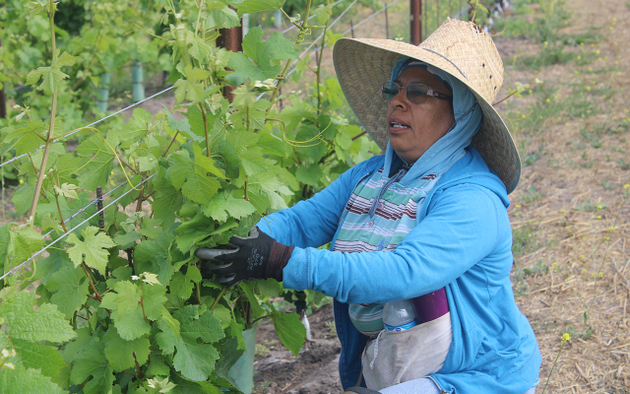
A Mexican migrant worker works at a vineyard in California, one of the U.S. states most dependent on seasonal labour from Mexico in agriculture, and which has now urged President Donald Trump to facilitate the arrival of guest workers from that country so crops are not lost. CREDIT: Kau Sirenio/En el Camino

A Mexican migrant worker works at a vineyard in California, one of the U.S. states most dependent on seasonal labour from Mexico in agriculture, and which has now urged President Donald Trump to facilitate the arrival of guest workers from that country so crops are not lost. CREDIT: Kau Sirenio/En el Camino

The most numerous jobs are in fruit harvesting, general agricultural work such as planting and harvesting, and on tobacco plantations, according to the U.S. Department of Labor.

Migrant workers traditionally come from Mexican agricultural and border states and their main destinations are agricultural areas where there is a temporary or permanent shortage of labourers.

Jeremy McLean, policy and advocacy manager for the New York-based non-governmental organisation Justice in Motion, expressed concern about the conditions in which migrants work.

The way the system works, “it’s not going to be easy to follow recommendations for social distancing. Hundreds of thousands of people are going to come and won’t be able to follow these recommendations, and they will put themselves at risk. It could spell another wave of infection and transmission,” he warned IPS.

“This population group has no health services and no medical insurance. If they fall ill in a remote area, what help can they get?” he said from New York.

On Mar. 26, the U.S. Embassy in Mexico reported that it would process without a personal interview the applications of those whose visas had expired in the previous two years or who had not received them in that time, under pressure from U.S. agribusiness.

Trapped with no way out

The migrant workers’ odyssey begins in Mexico, where they are recruited by individual contractors – workers or former workers of a U.S. employer, fellow workers, relatives or friends, in their hometowns – or by private U.S. agencies.

Although article 28 of Mexico’s Federal Labour Law, in force since 1970 and overhauled in 2019, regulates the provision of services by workers hired within Mexico for work abroad, it is not enforced.

It requires that contracts be registered with the labour authorities and that a bond be deposited to guarantee compliance. It also holds the foreign contractor responsible for the costs of transport, repatriation, food for the worker and immigration, as well as the payment of full wages, compensation for occupational hazards and access to adequate housing.

In addition, it states that Mexican workers are entitled to social security benefits for foreigners in the country where they are offering their services.

Although the Mexican government could enforce article 28 of the law in order to safeguard the rights of migrant workers who enter and leave the United States under the visa programme, it has failed to do so.

In its recent report “Ripe for Reform: Abuse of Agricultural Workers in the H-2A Visa Program”, the bi-national CDM organisation reveals that migrant workers experience wage theft, health and safety violations, discrimination, and harassment as part of a human trafficking system.

Recruitment without oversight

For Mayela Blanco, a researcher at the non-governmental Centre for Studies in International Cooperation and Public Management, the problem is the lack of monitoring or inspections of recruiters and agencies.

“In Mexico there are still many gaps in the mechanisms for monitoring and inspecting recruitment. There is still fraud,” she told IPS. “How often do they inspect? How do they guarantee that things are working the way they’re supposed to?”

There are 433 registered placement agencies in the country, distributed in different states, according to data from the National Employment Service. For the transfer of labour abroad, there are nine – a small number considering the tens of thousands of visas issued in 2019.

For its part, the U.S. Department of Labor reports 239 licenced recruiters in that nation working for a handful of U.S. companies.

Data obtained by IPS indicates that Mexico’s Ministry of Labour only conducted 91 inspections in nine states from 2009 to 2019 and imposed 12 fines for a total of around 153,000 dollars. Some states with high levels of migrant workers were never visited by inspectors.

Furthermore, the records of the federal labour board do not contain any reports of violations of article 28.

Mexico is a party to the Fee-Charging Employment Agencies Convention 96 of the International Labour Organisation (ILO), which it violates due to non-compliance with the rights of temporary workers.

Peña stressed that there is still a gap between the U.S. and Mexico in labour protection and said workers are being left behind because of that gap.

“Countries like Mexico see temporary visas as a solution to labour migration and allow the exploitation of their citizens. The H2 programme is about labour migration and governments forget that bilateral solutions are needed,” she said.

In response to the pandemic and its risks, 37 organisations called on the U.S. government on Mar. 25 for adequate housing with quarantine facilities, safe transportation, testing for workers before they arrive in the United States, physical distancing on farms and paid treatment for those infected with COVID-19.

Blanco emphasised the lack of justice and reparation mechanisms. “The more visas issued, the greater the need for oversight. Mexico is perceived as a country of return or transit of migrants, but it should be recognised as a place of origin of temporary workers. And that is why it must comply with international labour laws,” she said.

McLean raised the need for a new U.S. law to guarantee the rights of migrant workers, who are essential to the economy, as underscored by the demand reinforced by the impact of COVID-19.

“We pushed for a law to cover all temporary visa programmes so that there would be more information, to avoid fraud and wage theft. But it is very difficult to get a commitment to immigration dialogue in the United States today,” he said.

But the ordeal that migrant workers face will not end with their work in the U.S. fields, because in October they will have to return to their hometowns, which will be even more impoverished due to the consequences of the health crisis, and with COVID-19 in all likelihood still posing a threat.

  Source

Harness Youth to Change World’s Future

Biodiversity, Climate Change, Conferences, Development & Aid, Economy & Trade, Environment, Featured, Gender, Global, Green Economy, Headlines, Human Rights, Inequity, Natural Resources, TerraViva United Nations, Trade & Investment, Women & Climate Change

Women bear the brunt of climate change disasters. Credit: Women Deliver

NEW YORK, Mar 31 2020 (IPS) – Vanessa Nakate of Uganda may have been cropped out of a photograph taken at the World Economic Forum, but she along with Swedish activist Greta Thunberg have made the climate crisis centre stage.


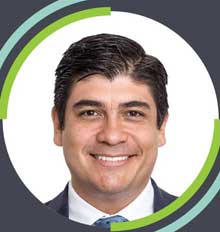
Women Deliver Young Leader Jyotir Nisha discusses with Costa Rican President Carlos Alvarado Quesada on how to harness young people to overcome gender inequality and address climate change in a recent wide-ranging interview.

Quesada says key strategies to designing policy to fight climate change require unconventional decision-making to address challenges like climate change, biodiversity loss, the fourth industrial revolution, and inequality.

“These are intertwined factors that can hinder development if unattended but, if tackled, they could potentially accelerate progress and wellbeing for all,” he says.

“And, of course, this is a task that young leaders are able to handle and produce the timely answers that are necessary.”

Bringing in her experience in the non-profit sector, Nisha says training girls and women in up-cycling plastic waste to produce handmade goods has assisted them to contribute to their family income and their empowerment in the community. The question is, how can this be broadened.

Quesada says women, in particular young women, are leading the way.

Costa Rican President Carlos Alvarado Quesada. Credit: Women Deliver

“From cooperative seed banks, to early warning networks, from solar engineers to women politicians carving a path of sustainable policymaking. They are at the forefront of forest conservation, sustainable use of resources, and community enhancement, and restoration of landscapes and forest ecosystems,” he says.

However, women’s roles are often underestimated, unrecognised, and unpaid.

“Women and girls with access to technology have already begun developing innovative tools to reduce emissions by targeting sustainable consumption and production practices, including food waste, community waste management, energy efficiency, and sustainable fashion.”

The solutions exist, but much more is needed.

“It takes a whole-of-society approach for collaboration and cooperation on a bigger and enhanced scale.”

The President suggests that the way investments are made could be fundamental to ensure a flow of finance to the communities, including women, and youth. This will, he believes, provide “a stable source of funding for businesses and services that contribute to the solution of social or environmental challenges.”

The impact of this will be partnerships between traditional sources of finance, like international cooperation and development banks, and new partners, like philanthropy, hedge funds, or pension funds.

“And what better than young people giving the thrust that all this requires?”

Nisha says she was pleased to see the massive mobilisation of young people at the inaugural Climate Action Summit last year. The summit had little good news for climate change with concerns raised that the accelerating rise in sea level, melting ice would have on socio-economic development, health, displacement, food security and ecosystems. However, beyond taking to the streets, they also need to hold decision-makers accountable.

“In the last months we have witnessed the irruption of massive mobilisations in different parts of the world, lead mostly by young people. This would seem surprising for a generation that has been accused several times of passivity, indifference, and individualism,” Quesada says. “I truly believe that, as long as these demands are channelled through democratic and pacifist means, they are extremely important to set a bar and a standard of responsibility for us, decision-makers — who are, by the way, more and more often, young people.”

He adds that world leaders owe them explanations of the decisions made.

“We must also have the wisdom to pay attention to these demands and take into account their opinions and proposals to reach agreements that have the legitimacy of consensus-building.”

However, Nisha notes, while campaigns like the Deliver for Good campaign is working across sectors reports at COP25, and the recent World Economic Forum (Davos), “climate change continues to threaten progress made toward gender equality across every measure of development.”

At WEF Global Gender Gap Report 2020 showed that it would take more than a lifetime, 99.5 years in 2019 for gender parity across health, education, work and politics to be achieved.

Quesada says the climate catastrophe “demands that policymakers and practitioners renew commitments to sustainable development — at the heart of which is, and must continue to be, advancing gender equality and women’s empowerment, and realising women’s rights as a pre-requisite for sustainable development.”

Costa Rica, he says, has been recognised internationally on two significant areas: the respect of human rights and environmental protection.

“The present Administration has taken these objectives a step further by paying particular attention to women’s rights, inclusion, and diversity, and including them as part of our core policy principles and our everyday practices,” he says. “We expect to increase women’s integration into productive processes and achieve women’s economic empowerment through specific policies linked to our long-term development strategy — the Decarbonization Plan — allowing the transformational changes our society needs.

However, the critical question, Nisha says, is: “What can world leaders and governments do today to ensure young people have a seat at the decision-making table?”

Quesada is confident that young people will be part of the solution.

“The challenges we are facing today are unprecedented precisely because previous generations did not have to face situations such as biodiversity loss, global warming, or the emergence of artificial intelligence and technology. Thus, we need new answers and solutions from Twenty-First Century people, and those should and will be put forward by the youth,” he says.

The importance of youth involvement was recently highlighted too at the meeting of African Leaders for Nutrition in Addis Ababa. African Development Bank (AfDB) President Akinwumi Adesina said Africa should invest in skills development for the youth so the continent’s entrepreneurs can leverage emerging technologies to transform Africa’s food system to generate new jobs. This is especially urgent as the population on the continent is expected to double to 2.5 billion people in 40 years putting pressure on governments to deliver more food and jobs in addition to better livelihoods.

In a recent interview with IPS International Institute for Tropical Agriculture (IITA) Director General, Nteranya Sanginga, explained that this change is neither easy or necessarily something all leadership has taken on board.

“Our legacy is starting a programme to change the mindset of the youth in agriculture. Unfortunately (with) our governments that is where you have to go and change mindsets completely. Most probably 90 per cent of our leaders consider agriculture as a social activity basically for them its (seen as a) pain, penury. They proclaim that agriculture is a priority in resolving our problems, but we are not investing in it. We need that mindset completely changed.”

Quesada is unequivocal that this attitude needs to change.

“My advice to world leaders is to have the humility to listen to the people and to allow more inclusive and participatory decision-making. And to the young people, I can only encourage them to own their future, and to act accordingly, with vision, courage, and determination.”


Coronavirus Worsens Yemen’s Long Tale of Woe

Armed Conflicts, Civil Society, Crime & Justice, Editors’ Choice, Featured, Global, Global Governance, Headlines, Human Rights, IPS UN: Inside the Glasshouse, Middle East & North Africa, Peace, TerraViva United Nations

Opinion

Abdul Mohammed is a humanitarian worker for Oxfam Yemen

Credit: United Nations

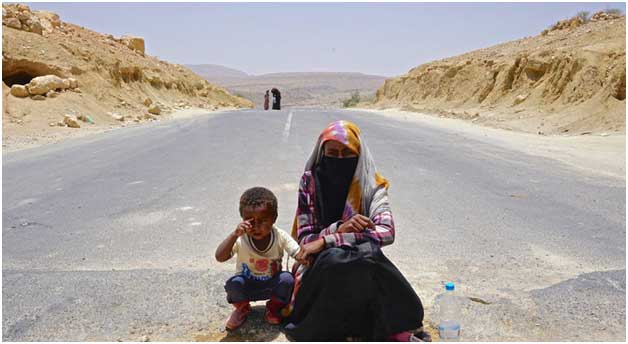
SANA’A, Yemen, Mar 26 2020 (IPS) – In every room in Yemen’s Al-Saba’een hospital, patients in critical condition waited on chairs, and still others laid on the bare ground. I saw women and girls sharing beds in pairs, and children laying close together being treated.


This is Sana’a, Yemen’s best-supplied and capital city, on what has become an ordinary day. Coronavirus hasn’t arrived in Yemen yet.

As I watch the destruction that the novel coronavirus is wreaking on wealthy and peaceful countries with developed health systems, I fear for Yemen. If cholera, diphtheria, and malnutrition can overwhelm our war-stricken health system, I can only imagine the devastation that this fast-spreading, uncurable virus could unleash.

The impact of COVID-19 would mirror the impact of the war to date: no one would be safe, but the most vulnerable would bear a disproportionate share of the burden.

Credit: UNOCHA

The world is now getting a glimpse of the reality we have faced in Yemen for the past five years since war here escalated: life-threatening illness, deepening economic pressure, fewer and worse options for parents and caregivers, and a dizzyingly constant change in routine.

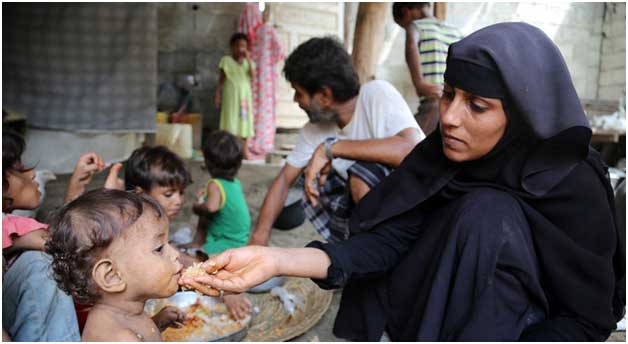
Millions now live in overcrowded shelters, without safe water, proper nutrition or proper health care. The basic steps others are taking to curtail the spread of COVID-19 are virtually impossible here. Should it take hold, the results would be unthinkable.

Public health crises don’t just threaten the well-being of the afflicted; their impacts ripple widely across families and societies. I think about Ahmed, a young man from Ibb, who lost his father to cholera, and then was suddenly thrust into the role of sole provider and caregiver for his entire family.

“I am not ready for this,” he shared in desperation. Feeling ill-equipped but required to take on extraordinary responsibilities – and with little time for grief or sentiment – is one that most Yemenis can identify with.

As we mark five years since a US-backed, Saudi-led coalition intervened and escalated the war in our country, we find ourselves defenseless against even basic maladies like diphtheria and cholera. These stone-age pathogens are held at bay in most societies by taking basic public health measures, drinking safe water, and eating nutritious food.

But parties to this on-going fighting since 2015 – have damaged or destroyed more than half of Yemen’s hospitals and other health facilities through bombing and shelling. The fighting has destroyed water and sanitation infrastructure in an already water-poor country, leaving more than two-thirds of the country with only unsafe water to drink.

As a result, Yemen now has the unenviable distinction of having experienced the world’s worst diphtheria outbreak in 30 years and the largest cholera outbreak ever recorded.

Even when it comes to critical patients who can be saved, this protracting war shown no mercy. Tens of thousands of Yemenis with life-threatening but manageable conditions have sought medical treatment abroad.

But the Saudi-led coalition, which has controlled Yemeni airspace on behalf of Yemen’s recognized government, has shut down commercial air traffic in and out of Sana’a. Only this year did the government and coalition consent to allow a long-promised medical air bridge to Cairo. 24 patients have been transported thus far. Tens of thousands have died waiting.

Credit: United Nations

Millions of Yemenis have already been forced from their homes, some of them multiple times to escape violence or pursue scarce opportunities for work. But even basic sanitation and health care in camps for displaced people are often unavailable.

Even with a massive aid response, as the conflict continues, we are fighting a rising tide. It goes without saying that in these cramped quarters, where social distancing is a fanciful notion and suppressed immunity the norm, a single infection would lead to countless deaths. The coronavirus epidemic would write new stories of suffering in Yemen’s already long tale of woe.

The conflict in Yemen must end before it claims any more lives. Yemen’s military and political leaders have shown too often these past five years that they are not willing to make even small compromises for the sake of their country and its people.

And the international community, so far, has failed to muster the resolve to demand the ceasefire and political settlement that can bring the life-saving peace that Yemen’s people demand.

With coronavirus knocking on Yemen’s door, we need humanitarian aid to restore our health systems, tackle the diseases currently ravaging our people, and prevent a new catastrophe. We cannot afford to wait for the next crisis to hits.

  Source

COVID-19 in the Time of Insecurity

Civil Society, Crime & Justice, Development & Aid, Economy & Trade, Education, Featured, Gender, Global, Headlines, Health, Human Rights, Humanitarian Emergencies, Inequity, TerraViva United Nations

Opinion

HRH Prince El Hassan bin Talal

AMMAN, Jordan, Mar 26 2020 (IPS) – Humankind has outlived multiple pandemics in the course of world history. The kingdoms and states of Central and Western Europe abolished the institution of serfdom once it had become clear that medieval rule in the aftermath of devastating pestilence would founder without ending the dependency and servitude that characterized the Dark Ages. The vulnerability of entire nations to the risk of total collapse in the absence of widespread access to the most basic healthcare in the Spanish Flu spurred governments to build the public health systems that have made the progress and development of the last hundred years possible. If the past is prologue, then continuity and survival command that we change.


We have more often than not banded together in the face of all kinds of threats. In all its ramifications, COVID-19 threatens to push our social, political and economic structures to the brink. Disease, recession and fright can rapidly overwhelm states and societies. Each coming day will bring increasing challenges that can only be met by caring for the sick, minimizing the impact of shutdowns on lives and livelihoods, securing the delivery of adequate water, food and energy supplies, and racing for a cure. Success – as in an asymmetric conflict – rests on resilience. To contain the socio-political and socio-economic fallout from the crisis, policymaking efforts should center on human dignity and welfare as the bedrock of national and international security.

The most vulnerable members of society in some parts of our world are those on the front lines of the crisis: the doctors, nurses, care-givers, pharmacists, sanitation workers, farmers, supermarket cashiers and truck drivers whose courage, sacrifice and dedication will see us through the next 12 to 18 months of expected lockdowns. In the absence of state support, what will happen to the hundreds of thousands of people who have already been laid off, while millions more face looming hardship as the numbers of layoffs grow? Some will continue to ignore the vulnerable and marginalized, those who have least access to humanitarian assistance, while others will continue to exploit them. The calls for social distancing have grown louder and more frequent over the last couple of days, and as we begin to separate from one other we must remember our humanitarian duty to each another.

Security, far from being individual, is collective and global. The current crisis calls for transcendent thinking between politicians on both sides of the aisle. Grey areas in politics in which zero-sum games and the perverse logic of mutually assured destruction proliferate will not protect and promote human dignity and welfare. Conservatives and reformers must now move beyond the tournaments and arm-twisting of politics. The logic of mutually assured survival cannot accept grey areas. If conflict resolution transcends political beliefs, nationality, ethnicity, gender, and religion, then human dignity and welfare is the benchmark of the humanitarian commitment to life.

Reliable brokers in the management of this crisis and other crises do exist as in the International Committee of the Red Cross and Médecins Sans Frontières. Corporate social responsibility requires developing a public platform of health facts so that people-to-people conversations and consultations can be promoted through civil society, the media and educational institutions. We cannot cherry-pick energy and climate change without talking about health or education and human dignity. Migrants and refugees must be an integral part of the national response for halting the spread of the novel coronavirus. The United Nations Economic and Social Commission for West Asia reports that 55 million people, in West Asia region, require some sort of humanitarian assistance and that the vulnerability of displaced women and girls is especially heightened in a pandemic. Post-conflict insecurity – whether in countries ravaged by war or across the urban centers and countrysides of advanced economies overwhelmed by disease – can only be addressed in the careful terrain mapping of humanitarian access. Yemen, Syria, Gaza and Libya are frighteningly vulnerable to the onslaught of epidemics – what will peace uncover there when the wars end?

Regional insecurity is heightened in the absence of cooperation, but the multilateral system is not at a loss in facing an existential crisis. European solidarity has been sharply damaged by the onset of widespread disease although China is performing through the swift and effective action that has come to the aid of the people and government of Italy. Multilateralism today can only be revisited with a focus on the interdisciplinary priorities of the twenty-first century that include addressing the need for a Law of Peace. We draw humanitarian concessions from the law of war in times of conflict, but have no recourse to legal instruments that can secure the dignity and welfare of all in times of peace.

The current crisis is as much a global health crisis as it is a crisis of the globalization that has come to undermine the foundations of modern society with its rampant inequality and rising injustice and which threatens the very survival of our species with climate change. The planet that we share with other organisms is fragile and prone to crises. A resolution to our predicament will take nothing short of extending the ethic of human solidarity beyond the contours of our immediate response to the outbreak of COVID-19. Real success lies not in the taming of a pathogen or in re-discovering the value of compassion, respect and generosity, but in institutionalizing these values in the days, weeks and months ahead.

  Source