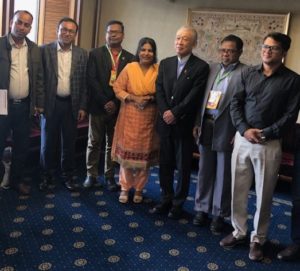
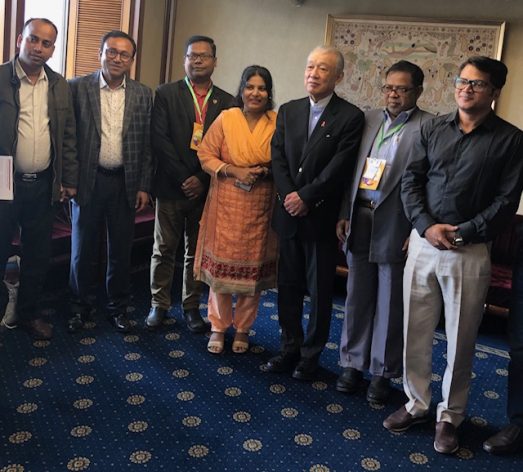
Mr Yohei Sasakawa, chairman of the Nippon Foundation and Sasakawa Health Foundation and WHO Goodwill ambassador. Credit : Crystal Orderson / IPS
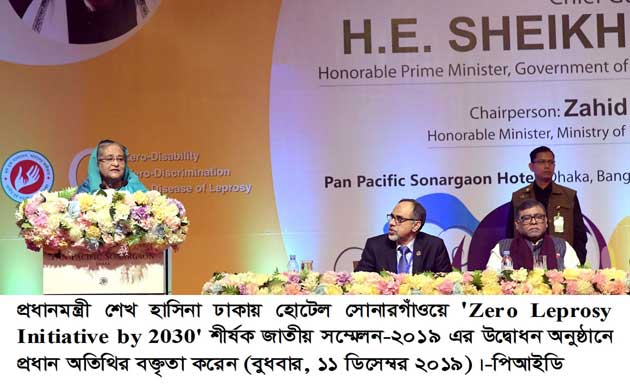
DHAKA, Bangladesh, Dec 11 2019 (IPS) – Leprosy is not a curse but should be detected and treated early, Bangladeshi Prime Minister, Sheikh Hasina, has told delegates at a gathering in her country’s capital to discuss the elimination of the disease.
“In the past, it was thought that leprosy was a curse. But it was not a curse at all. The disease is caused by bacteria (Mycobacterium Leprae). We should fight it through research,” Hasina said, adding that the discrimination against leprosy sufferers should end. She called upon all concerned to work together so that Bangladesh could be leprosy-free before 2030.
Prime Minister Hasina, who spoke in Bengali at the National Conference 2019 on Zero Leprosy Initiatives by 2030, also committed her government to proper treatment for leprosy sufferers.
To achieve these targets, the country’s National Leprosy Programme, in collaboration with the Nippon Foundation and Sasakawa Health Foundation in Japan, has worked tirelessly to convene the conference, bringing together hundreds of health workers, medical professionals and district officers to discuss the issue under the theme “Zero Leprosy Initiatives”.
Certain areas in Bangladesh are particularly leprosy-prone, including its northern region and the Chittagong Hill Tracts, Prime Minister Hasina said.
Sheikh Hasina, Prime Minister of Bangladesh.
“If we can give special focus to these areas, I do believe it would be quite possible to declare Bangladesh a leprosy-free country before 2030,” she added.
“Leprosy patients must be considered on humanitarian grounds. If we all take a little responsibility in this regard, they will get recovery from this disease … I think we can do so,” Prime Minister Hasina said.
Distribute drugs free of cost
The prime minister said many Bangladeshi pharmaceutical companies export medicines, and she called upon these companies to produce drugs for leprosy locally and distribute those among leprosy patients free of charge.
The prime minister also warned that no-one could fire leprosy patients from their jobs but rather should arrange treatment for them.
End stigma and discrimination
The Chairman of the Nippon Foundation and World Health Organization (WHO) Goodwill Ambassador for Leprosy Elimination, Yohei Sasakawa, says leprosy is not only a medical issue but also a social issue “because of the stigma and discrimination that the disease attracts”.
He said: “We have an effective cure for leprosy, and it is essential that every person with the disease has access to the cure and is diagnosed and treated in a timely fashion. With timely diagnosis and treatment, a patient can be cured without disability.
“This conference presents us with an opportunity to re-focus efforts on leprosy and aim at an ambitious target: zero leprosy by 2030,” Mr Sasakawa added.
The WHO Representative to Bangladesh, Dr Bardan Jung Rana, told delegates that leprosy has caused immense human suffering when those affected remained untreated.
“With the aim of a leprosy-free world, WHO is committed to providing technical and strategic guidance, strengthening country-level capacity and delivering interventions through appropriate technology at affordable costs,” said Dr Jung Rana.
Leprosy a treatable disease
Leprosy is a chronic infectious disease affecting mainly the skin, the peripheral nerves, the mucosa of the upper respiratory tract, and the eyes. Leprosy is curable and treatment has been available through the WHO free of charge to all patients worldwide since 1995.
The history of leprosy dates back centuries in Bangladesh. Different Christian missionary organizations used to provide leprosy services in various high endemic areas in the country. In 1965 the government sector implemented leprosy services through three public hospitals.
Eliminating leprosy in Bangladesh
Despite its efforts to eliminate leprosy as a public health threat, Bangladesh’s leprosy burden ranks fourth-highest in the world. Four thousand new cases are detected annually – an average of 11 to 12 cases per day over the last 10 years. Every year an estimated 3000 leprosy sufferers are affected by complications that require specialized treatment in hospital.
Although the the number of leprosy cases are declining, more than one-third of leprosy patients are facing the threat of permanent and progressive physical and social disability. The human suffering resulting from the physical deformities and related social problems are immense.
Activists and community workers in Bangladesh welcomed the government’s commitment to ensure proper treatment for leprosy sufferers.
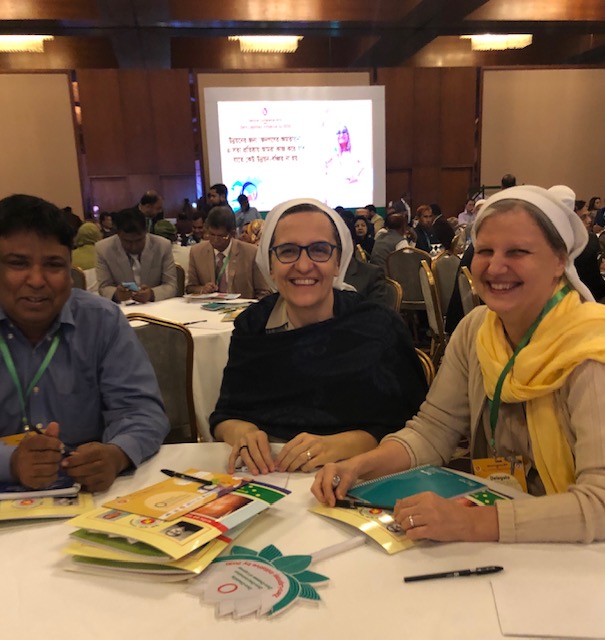
Delegates at National Conference 2019 Zero Leprosy Initiative by 2030, Dr Sr Roberta Pignone, PIME sisters (middle). Credit : Crystal Orderson / IPS
Stop pushing Leprosy in a corner
Dr Sr Roberta Pignone, Project Director of the Missionary Sisters of Mary Immaculate (with the Pontifical Institute for Foreign Missions (PIME) Sisters) in Khulna in the south of Bangladesh, told IPS: “It is good to listen to the prime minister and health officials and hear what they say they will do in the future to eliminate leprosy.” She added: “Leprosy is always pushed in a corner. It is good to hear that the government is aware of the disease. If the prime minister speaks to the nation, they will listen.”
The PIME Sisters have been working with leprosy since the mission opened its doors in 1986. “Sometimes leprosy is neglected and this conference shows that the government is committed to deal with leprosy,” says Dr Sr Pignone. “It is time to accept that leprosy is in the country and to deal with the situation.”
The Nippon Foundation and the Sasakawa Health Foundation of Japan organized a national conference on leprosy in Dhaka on December 11 under the theme “ZeRo leprosy initiative”.
Ignacio Saiz is Executive Director, The Center for Economic and Social Rights
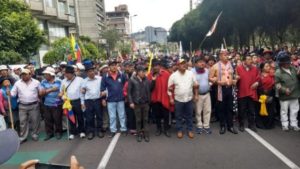
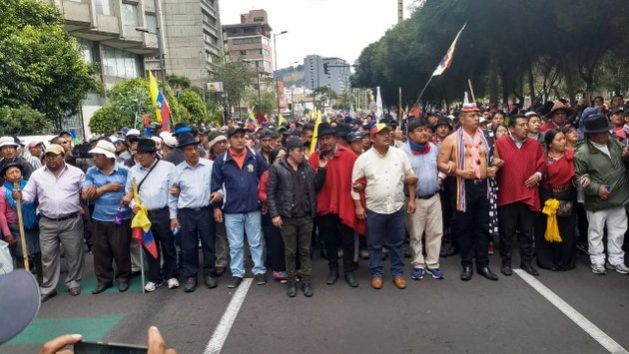
In Ecuador, indigenous-led protests compelled the government to reconsider an austerity package agreed with the International Monetary Fund (IMF) that included public sector wage cuts and fuel price hikes. Credit: Conaie.
NEW YORK, Dec 10 2019 (IPS) – Human rights advocates should be as concerned with the economic injustices giving rise to recent worldwide demonstrations as with the repressive responses to them.
In recent weeks, an extraordinary wave of mass protests has swept the globe. While their specific causes and contexts vary, many can be seen as part of a worldwide revolt against extreme inequality and the unjust economic and political systems driving it.
A common weave running through many of the protests is widespread indignation against austerity – the package of debt-reduction policies that scores of governments are now implementing.
In Ecuador, indigenous-led protests compelled the government to reconsider an austerity package agreed with the International Monetary Fund (IMF) that included public sector wage cuts and fuel price hikes.
Chile has seen million-strong protests against low wages, costly social services and the most extreme levels of economic inequality of any OECD country.
In Lebanon, a third of the population is estimated to have taken to the streets since the latest round of austerity; while Iraq has been rocked by mass protests against high unemployment, ailing public services and economic mismanagement.
These events follow large-scale demonstrations earlier this year against austerity in countries including Argentina, Honduras, Egypt, Sudan and Zimbabwe.
What has often begun as a spontaneous stand against fiscal injustice has burgeoned into a mass mobilization against the structural inequities underpinning it: political systems seen as corrupt, captured and unaccountable, and economic systems seen as generating inequality by privileging private profit over the public good
Many of the protests have been triggered by a specific fiscal measure–a tax on messaging apps in Lebanon or an increase in Santiago metro fares–perceived as emblematic of attempts by governing elites to foist the burden of national belt-tightening on ordinary working people and the already disadvantaged.
But what has often begun as a spontaneous stand against fiscal injustice has burgeoned into a mass mobilization against the structural inequities underpinning it: political systems seen as corrupt, captured and unaccountable, and economic systems seen as generating inequality by privileging private profit over the public good.
Demonstrations in Chile and Lebanon, for example, have continued far beyond the repeal of the offending measures or even the resignation of senior government figures, insisting on a more fundamental economic and political overhaul.
Another alarmingly common feature has been the repressive response of the authorities, who in most cases have addressed the protests as a threat to public security rather than a clamor for social justice.
From Quito to Cairo and from Santiago to Baghdad, security forces stand accused of excessive use of force, killings, ill-treatment and arbitrary arrest of demonstrators.
It is somewhat understandable, then, that where prominent international human rights actors have spoken up about these protests, it has largely been with respect to these abuses. The Office of the High Commissioner for Human Rights, for example, has sent a team to Chile to investigate breaches of international standards related to the use of force by security personnel.
Each of these organizations has, to different degrees, acknowledged that the protestors’ socio-economic grievances are also human rights concerns. But the economic and social rights dimensions of these crises have generally been relegated to the background and are yet to meaningfully inform their analysis and recommendations.
While the acute repression of civil and political rights in the wake of these protests clearly merits urgent scrutiny, the chronic denial of social and economic rights motivating them must also be addressed as a central human rights concern.
International human rights standards apply equally to governments’ use of fiscal policy as to their use of force. Where austerity policies result in widening gender or racial disparities, push people into poverty or lead to avoidable backsliding in access to health or housing, they also breach international legal obligations on economic, social and cultural rights.
To relegate these violations to the margins of human rights concerns serves only to perpetuate the lack of accountability that has brought millions out on the streets.
The mass mobilizations against extreme inequality, like those against the closely-related crisis of climate change, beg a holistic approach to the human rights claims underpinning them. They should also prompt human rights actors to rethink their traditional agnosticism with regard to economic systems, and adopt a more frontal critique of neoliberal economic orthodoxy.
The protests demand that we call out the ravages of neoliberalism as human rights deprivations, challenge the fallacies sustaining this ideology and envision rights-centered alternatives.
Recent developments have consolidated the normative and methodological foundations for such a critique. For example, earlier this year the UN Human Rights Council adopted Guiding Principles for Human Rights Impact Assessments for Economic Reform Policies, which set out the human rights standards that should anchor economic policymaking, including fiscal adjustment.
These are informed by the practical experience of civil society organizations such as CESR in assessing austerity and its human rights impacts in numerous countries, as well the work of progressive economists bringing a human rights lens to challenge dominant economic paradigms.
Such efforts have focused on fiscal policy as a critical entry point for addressing structural injustice, as reducing inequality and fulfilling human rights are simply not possible without a radical redistribution of resources, wealth and power.
Systemic approaches to economic and social rights accountability are also targeting the responsibilities of international financial institutions and corporate actors in maintaining the unjust economic status quo. CESR’s efforts have been aimed at the IMF, whose complicity in prescribing austerity has fanned the flames of crises in many of the countries where protests have erupted.
Of course, a truly “eco-systemic” human rights practice needs to go beyond normative elaboration and international policy reform. A challenge for those working internationally is to build stronger links between norm development, policy critique, context-specific advocacy and movement building, supporting the efforts of national human rights activists who are drawing attention to the structural and social rights dimensions of the crises.
There is a clear message emerging from the streets that human rights actors should get behind: there can be no democracy without economic and social justice. For this reason, any durable resolution to the current unrest must have economic and social rights accountability at its core.
One of the continuous protests staged at the Social Summit for Climate Action, meeting Dec. 7-13 parallel to the official 25th Conference of the Parties (COP25) on climate change. The Summit, hosted by the Complutense University of Madrid, is tackling issues such as the controversial trading of carbon credits, human rights in the climate struggle and opposition to the growing production of hydrocarbons. Credit: Emilio Godoy/IPS
MADRID, Dec 9 2019 (IPS) – As the COP25 deliberations enter the decisive final week, representatives of environmental and social organisations gathered in a parallel summit are pressing the governments to adopt stronger commitments in the face of a worsening climate emergency.
In the debates in the week-long Social Summit for Climate Action, which began Dec. 7 parallel to the Dec. 2-13 United Nations 25th Conference of the Parties (COP25) on climate change taking place in Madrid, skepticism has been expressed with respect to the results to come out of the official meeting.
“Nothing good is going to come out of it for Central America, only proposals that are going to make it more vulnerable. The damage is going to become more serious,” Carolina Amaya, representative of the Salvadoran Ecological Unit, told IPS, pointing out that the region is one of the most exposed to the climate crisis, facing persistent droughts, intense storms, rising sea levels and climate migrants.
The social summit is taking place at the public Complutense University, in the west of the Spanish capital, about 15 km from the IFEMA fairgrounds which are hosting COP25 after Chile pulled out on Oct. 30 from holding the event due to massive anti-government protests and social unrest.
The alternative activities, which also end on Friday Dec. 13, include a varied menu of issues, such as free trade and its socioenvironmental impacts, oil drilling in indigenous territories, the protection of forests, and opposition to trading reductions in greenhouse gas (GHG) emissions, which cause global warming.
They are also discussing the monetisation of environmental services, increased funding for the most vulnerable nations, climate justice and attacks against land rights activists.
The Madrid Social Summit is also holding sessions in Santiago de Chile, under the same slogan, “Beyond COP25: People for Climate”, although there are fewer representatives of organised civil society than at previous COPs because of the last minute change of venue.
Civil society groups are also organising activities at their green pavilion within the official COP25 compound of the United Nations Framework Convention on Climate Change (UNFCCC), where their participation is more formal and ceremonious.
The demands of civil society gained visibility thanks to the mass demonstration held in Madrid on Friday Dec. 6, with the participation of Swedish activist Greta Thunberg, the reluctant star of the official conference and social summit.
COP25 is the third consecutive COP held in Europe, this time under the motto “Time to act”.
The deliberations, which enter the crucial phase of the adoption of agreements Tuesday Dec. 10, are focusing on financing national climate policies, rules for emission reduction markets, and the preparation of the update of emissions reductions and funding of the Warsaw International Mechanism for Loss and Damage, designed to assist regions particularly affected by climate change.
COP25 is the climate summit that directly precedes the 2020 entrance into effect of the historic Paris Agreement on climate change, adopted in the French capital in 2015, which left key areas to be hashed out at the current conference, such as the controversial emissions market.
In their statement to the COP, the organisations criticise the economic model based on the extraction of natural resources and mass consumption, blaming it for the climate crisis, and complaining about the lack of results in the UNFCCC meetings.
“The scientific diagnosis is clear regarding the seriousness and urgency of the moment. Economic growth happens at the expense of the most vulnerable people,” says the statement, which defends climate justice “as the backbone of the social fights of our time” and “the broadest umbrella that exists to protect all the diversity of struggles for another possible world.”
At the social summit, the first “Latin American Climate Manifesto was presented on Monday Dec. 9, which lashes out at carbon credit trading, the role of corporations in climate change and the increase in production of hydrocarbons, while expressing support for the growth of agroecology, the defence of human rights and the demand for climate justice.
In addition, indigenous peoples are holding their own meeting, the “indigenous Minga“, with the message “Traditional knowledge at the service of humanity in the face of climate change.” They are demanding respect for their rights, participation in the negotiations and recognition of their role as guardians of ecosystems such as forests.
“We are here to raise our voices and offer our contribution to fight” against the climate emergency, Jozileia Kaingang, a chief of the Kaingang people and a representative of the non-governmental Articulation of the Indigenous Peoples of Brazil, told IPS.
Brazilian indigenous groups are in conflict with the government of far-right President Jair Bolsonaro because of its attempts to undermine their rights and encourage the commercial exploitation of their territories. In fact, the Brazilian government delegation does not include a single indigenous member – unprecedented in the recent history of the COPs.
Faced with this dispute and the critical situation of the Amazon jungle, Brazil’s indigenous people have sent representatives to Madrid to speak out and seek solidarity.
The murder of two leaders of the Guajajara people in northeastern Brazil on Saturday Dec. 7 shook the indigenous delegation. Two murders had already occurred in that native community in the last two months.
In 2017, the States Parties to the UNFCCC adopted at COP23 the Local Communities and Indigenous Peoples Platform for the exchange of experiences and best practices, thereby ensuring the participation of these groups in the negotiations of the convention.
The Platform’s facilitative working group, composed of delegates from seven States Parties and seven indigenous peoples, is currently developing its plan for the period 2020-2021.
Martín Vilela, a representative of the Bolivian Platform for Climate Change umbrella group of local organisations, questioned the effectiveness of the climate summits.
“The agreements are only paper. Emissions continue to rise and countries’ voluntary targets are insufficient. The countries have to be more ambitious if they really want to avoid major disasters,” he told IPS.
Social organizations fear that the Paris Agreement, when it replaces the Kyoto Protocol next year, will be stillborn, because countries are failing to keep their promises, even though scientists are warning that the goal of limiting global warming to 1.5 degrees Celsius is insufficient.
The Agreement sets mandatory emission reduction targets for industrialised countries and voluntary targets for developing countries in the South.
“The countries need to know that we’re monitoring them. We, the organisations, must prepare ourselves to demand better action,” said Amaya from El Salvador.
For her part, Brazil’s Kaingang argued that the climate struggle would only be effective if it includes indigenous peoples.
COP26 will be hosted by Glasgow, Scotland in November 2020, after pre-conference meetings in Germany and Italy.
This article was supported by the COP25 Latin American Journalistic Coverage Programme.
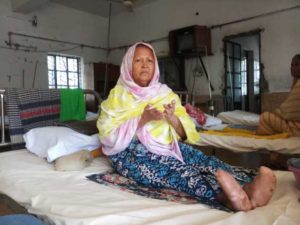
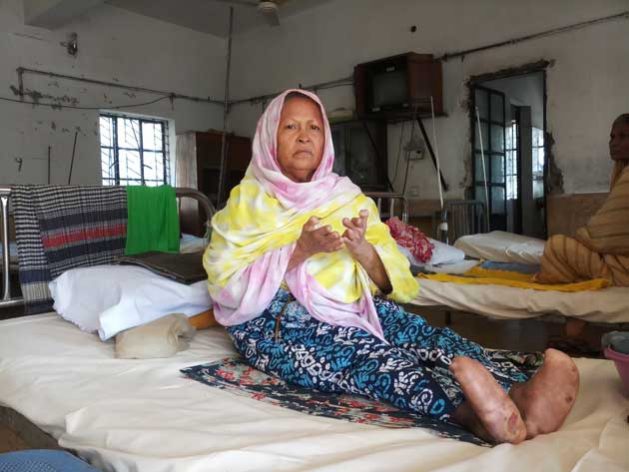
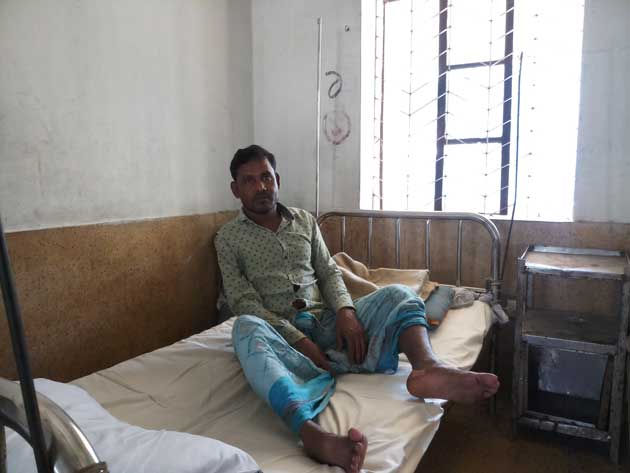
People living with Leprosy receiving care from the Institute of Leprosy Control and Hospital in Dhaka, Bangladesh. Credit: Rafiqul Islam / IPS
DHAKA, Bangladesh, Dec 9 2019 (IPS) – Despite having remarkable success in leprosy control in the last decades, the Bangladesh government is now moving forward with a vision to build a leprosy- free country.
“In 2017, the Bangladesh government revised the Bangladesh Leprosy Control Strategy for 2016-2020 – ‘Accelerating towards a leprosy-free Bangladesh’ – in line with the Global Leprosy Strategy 2016-2020,” programme manager of National Leprosy Programme Dr Md Shafiqul Islam told IPS.
Leprosy continues to be a stigmatized condition deeply embedded in society. Socially marginalized groups such as women and the urban poor are less likely to seek medical attention..
The Global Leprosy Strategy ensured increased commitment towards a further reduction of the burden of Hansen’s disease and prevention of lifelong disability for children affected by leprosy. This strategy focuses on universal health coverage bringing women, children and vulnerable people under the programme so that the sustainable development goal-3, which ensures a healthy life for all, can be achieved by 2030.
Shafiqul said the National Leprosy Programme of the government aims to reduce the leprosy burden further by leprosy elimination at the district level by 2020 as per the global strategy, with targets of zero grade 2 disability (G2D) among paediatric patients and reduction of new leprosy cases with G2D to less than one case per one million people.
To achieve the targets the National Leprosy Programme, in collaboration with partner NGOs, is arranging a national conference on leprosy in Dhaka on December 11 under the theme “ZeRo leprosy initiative”.
Bangladesh Prime Minister Sheikh Hasina is expected to speak at the inaugural session of the conference as the chief guest.
Leprosy in Bangladesh
Bangladesh is still a high burden leprosy country. The registered prevalence of leprosy was 0.7 percent, 0.27 percent and 0.2 percent in 2000, 2010 and 2016 respectively, and stood at 0.19 per 10,000 population in 2018, according to official data.
People living with Leprosy receiving care from the Institute of Leprosy Control and Hospital in Dhaka, Bangladesh. Credit: Rafiqul Islam / IPS
The grade 2 disability rate among the newly detected cases was 7.15 percent, 11.52 percent and 9.7 percent in 2000, 2010 and 2016 respectively, which reduced to 7.9 percent in 2018.
The rate of child patients among the newly detected cases was 15.3 percent in 2000, while it reduced to 5.9 percent in 2018.
The data reveals about 4,000 patients were detected per year in the country over the last few years, with this figure standing at 3,729 in 2018. Among the newly detected cases about 41 percent are MB patients.
Major challenges remain
Leprosy is a chronic infectious disease caused by bacteria (Mycobacterium Leprae). It mostly affects the skin, peripheral nerves and mucous membranes of the body. Delayed diagnosis of the disease leads to deformity mainly in the hands, feet and eyes. The bacteria not only destroys the peripheral nerve but also destroys social norms by leading to stigma, discrimination, divorce and isolation. It also affects the person physically, socially, mentally and economically.
The Leprosy programme is now facing several critical challenges after achieving its elimination target due to a gradual decrease in funding allocation for the programme, which has resulted in fewer activities, less training and losing experienced personnel. Ultimately, leprosy is losing its importance as an infectious disease.
Experts say the next major challenge is to sustain knowledge, skills and expertise in leprosy management, especially in less prevalent areas.
“Community education and awareness do not immediately dispel stigma. More evidence is needed for better understanding the causes of stigma and access to the effective intervention to decrease it,” Shafiqul said.
Finally, he said, additional challenges remained for prevention of visible disability and deformity in those who are already taking MDT, as well as community-based rehabilitation for the affected people.
“One of the challenges is to ensure quality care for the people affected by leprosy. There is no room to show our sympathy but it is their right to get quality health care. They also deserve our love, respect, dignity and support so that they can overcome life-struggling situations,” Dr David Pahan, Country Director of Lepra Bangladesh, said.
“We should continue our fight against leprosy bacteria. M. Leprae is a very clever bacteria with a long incubation period (remaining inactive especially in the nerves) before showing any symptoms. Our goal is to unite all our efforts to eradicate this disease and to see leprosy–free Bangladesh as soonest possible,” he added.
History of Leprosy in Bangladesh
The history of leprosy dates back centuries in Bangladesh. Different Christian missionary organizations used to provide leprosy services in various high endemic areas of the country. In 1965 leprosy services were implemented in the government sector through three public hospitals. Dapsone monotherapy was used to treat leprosy patients at that time. Multi-Drug Therapy (MDT) was recommended by the World Health Organization (WHO) for treating leprosy in 1982. The Bangladesh government expanded leprosy services to 120 high endemic upazilas by using MDT in 1985.
After the adaption of the WHO resolution to eliminate leprosy by 2000, the Bangladesh government revised the National Leprosy Elimination programme and expanded MDT services to all upazilas in a phase manner, covering the whole country by 1996. To achieve the time-bound target, the Bangladesh government had involved NGOs working in different endemic areas.
Fighting the stigma
Bangladesh achieved a national target of leprosy elimination as a public health problem (less than one case per 10,000 population) in 1998, two years ahead of the WHO target for leprosy elimination by 2000. At present eight NGOs, including Lepra Bangladesh and Damien Foundation Bangladesh, are working with the National Leprosy Programme with shared responsibilities to completely eradicate the Hansen disease in the country.
ROME, Nov 15 2019 (IPS) – This year the Worldwide Web is thirty years old. For the first time since 1435, a citizen from Brazil could exchange their views and information with another in Finland.
The Internet, the communications infrastructure for the Web is a little older. It was developed from the ARPANET, a US Defense Department project under the Advanced Research Projects Agency; the military designing it to decentralize communications in the case of a military attack.
That network enabled scientists to communicate over email in universities. Then in 1989 Tim Berners-Lee at CERN in Switzerland invented the Hyperlink and the Worldwide Web (the Web) rapidly moved from scientists automating information sharing between universities and research institutions to the first Websites now available to the general public.
In 2002 the first social media sites began as specialised websites. LinkedIn launched in 2003 then FaceBook in 2004, Twitter in 2006, Instagram in 2010 and so on…
Will the Internet become a tool for participation? How will this be done? These are questions that political institutions, if they really care for democracy, must address as soon as possible. The Zuckerberg era must make this choice now, in a few years time it will already be too late…
My generation regarded the arrival of the Web as a great prospect for democracy. We come from the Gutenberg era, an era that in 1435 changed the world. From manuscripts drafted by monks to be read by a few people in monasteries, the invention of reusable movable type meant that in just 20 years already eight million copies of printed books went all across Europe.
Among many other things it also meant the creation of information. People who heretofore had merely a scant horizon beyond their immediate surroundings, could suddenly access information about their country, and even the entire world. The first newspaper was printed in Strasbourg in 1605. From then until 1989, the world was filled with information.
Information had a very serious limit. It was a vertical structure. Just a few people sent news to a large number of recipients; there was little feedback. It wasn’t participatory, it required large startup investments, it was easily used by economic and political powers.
In the Third World, the media system was part of the State. In 1976, 88% of World news flows emanated from just three countries: the US, the UK and France. International news agencies based in these three countries included Associated Press (AP), United Press International (UPI), Reuters and Agence France Press (AFP).
The world’s media were dependent on their news services. Some alternative news agencies, like Inter Press Services, were able to put a dent in their monopoly. But what this Western media published, by and large was a biased window on the world.
Then came the Internet, and with it, came horizontal communication. Every receiver was also a sender. For the first time since 1435, media were no longer the only window on the world. Like-minded people could take part in social, cultural and economic interactions.
This change was evident in the United Nations Woman’s World Conference in Beijing, 1995. Women created networks prior to the conference, and came with a common plan of action. Governments were not so prepared, so the Declaration of Beijing was a turning point, one which was entirely unlike the bland declarations from the previous four World Conferences.
Another good example is the campaign to eliminate anti-personnel landmines, started by the Canadian activist Jody Williams in 1992. This soon blossomed into a large coalition of Non-Governmental Organizations from more than 100 countries.
Under mounting pressure Norway decided to introduce the issue to the UN, where the US, China, and other manufacturers of landmines like the USSR, tried to block the debate, declaring that they would vote against it.
Roberto Savio
The activists did not care, and 128 countries adopted the Mine Ban Treaty in 1997 with the US, China and the USSR voting against. A vast global movement was more powerful than the traditional role of the Security Council. The Internet had become the tool to create world coalitions.
Those are just two examples of how far the Internet could change the traditional system of Westphalian state sovereignty as defined at the Conference of Westphalia in 1648. The Internet spanned national frontiers to bring on a new era.
Let’s say, for the sake of symbolism, that the Internet brought us from the Gutenberg Era, to the Zuckerberg Era, to cite the inventor of Facebook and a leading instance of what went wrong with this medium.
The Internet came upon us with an unprecedented force. It took 38 years for the radio to reach 50 million people: television took 13 years; and the Web just four years. It had a billion users in 2005, two billion in 2011, and it now has three and a half billion users, three billion of those using social media.
So the two traditional pillars of power, the political system and the economic system, also had to learn how to use the Internet. The US provides a good example. All of American media (national and regional publications) involves printing 50 million copies daily.
Quality newspapers — both the conservative broadsheets like the Wall Street Journal, and progressive ones like the Washington Post or the New York Times — together print ten million copies a day. Trump has sixty three million followers on Twitter; they read Trump’s tweets but don’t buy newspapers.
The Web has had two unforeseen developments. One was the dramatic reinforcement of the consumer society. Today advertising budgets are ten times larger than budgets for education, and education only lasts a few years compared with a lifetime of advertisement.
With the development of social networks, people — now more consumers than citizens — have become objects for marketing goods and services, and recently also for political campaigns. All systems of information and communications extract our personal data, selling us on as consumers.
Now the TV can see us while we watch it. Smartphones have become microphones that listen in on our conversations. The notion of privacy is gone. If we could access our data, we would find out that we are followed every minute of the day, even into our bedrooms.
Secret algorithms form profiles of each and every one of us. Based on these profiles platforms provide us with the news, the products, and the people that these algorithms believe we will like, thus insulating us in our own bubbles.
Artificial intelligence learns from the data that it accumulates. China, with 1.35 billion people, will provide its researchers with more data than Europe and United States together. The Internet has given birth to a digital extractive economy, where the raw material is no longer minerals, but we humans.
The other development that went awry is that the digital extractive economy has created unprecedented wealth.
Amazon CEO Jeff Bezos was recently divorced from his wife. In the settlement she received 36 billion dollars yet Bezos remains among the 10 richest people in the world. This is just one story from an increasingly sad reality of social injustice, where 80 of the world’s richest persons hold the same wealth as nearly three billion poor people.
A new sector is evolving, the “surveillance capitalism” sector, where money is made not from the production of good and services, but from data extracted from people.
This new system exploits humans to give to the owners of this technology, a concentration of wealth, knowledge and power without precedent in history. The ability to develop facial recognition and other surveillance instruments no longer lies in the realms of science fiction.
The Chinese government has already given every citizen a digital number, where all their ‘good’ and ‘bad’ behaviours converge. If a citizen goes below a level, their children will not be allowed to go to a good school, and the citizen themselves, though they may still be able to travel by train, won’t have access to planes.
These technologies will soon be in use all over the planet. London town now has 627,000 surveillance cameras, one for every fourteen citizens; in Beijing it’s one for every seven. A study conducted by The Rand Corporation estimates that by 2050, Europe too would also have one camera for every seven citizens.
The interrelationship between democracy and the Internet is now creating a belated awareness in the political system. The European Parliament has just released a study, about the negative impact of the Internet. These impacts are:
Internet Addiction There is unanimity among doctors and sociologists that a new generation is coming, one which is very different from the previous one. Over 90% of those aged 15-24 uses the Internet, as against 11% for those over 55. Young people spend 21 hours per week on the PC, and 18 hours on a smart phone. This leaves little time for social and cultural interaction. 4.4% of European adolescents now show pathological Internet use “that affects their lives and health”. The American Academy of Psychology has officially included Internet Addiction as a new ailment. Magnetic resonance studies of those with Internet Addiction Disorder (IAD) show that they exhibit the same brain structure alterations as those who suffer from drug or alcohol addiction.
Harming cognitive development A particular warning is given about children under two years of age. More than 20 minutes a day of screen use reduces some of their neural development. People pushed to isolation tend to develop symptoms of distress, anger, loss of control, social withdrawal, familial conflicts, and an inability to act in real life. Internet users in tests were faster than non-users at finding data, but they were less able to retain data.
Information Overload The condition of having too much information hampers the ability to understand an issue, or to make effective decisions, an important issue for managers, consumers, and social media users. According to Microsoft, attention span for a title has gone from 12 seconds in 2000 down to 8 seconds in 2016. The attention span for reading has gone from 12 minutes to 8 minutes. Two new terms can be used: one, the ‘popping brain’, describes a brain less adept to adapt to a slower pace of real life and then there is ‘Neuroplasticity’; i.e. the ability to alter one’s behaviour after a new experience. Frequent immersion in virtual worlds can reduce neuroplasticity and also make it more difficult to adapt to the slower pace of real life. The need to compete in speed between social media channels is well known. For example Amazon estimates that one second of performance delay would cost 1.16 billion losses per year in sales.
Harmful effects in knowledge and belief The fact that social media deliberately tends to gather together users with similar views, tastes and habits, is fragmenting society in a negative way for democracy, resulting in closed systems that don’t allow for alternative viewpoints. Adolescents no longer discuss significant subjects. They go to their virtual world, and if they come across somebody from another group, they tend to insult each other. The Internet is full of fake news and misleading information, and users have great difficulty distinguishing accurate from inaccurate information. Echo chambers appear to be far more pervasive, and may unite those with more extreme and partisan political and ideological positions, therefore undermining possibilities for civil discourse and tolerance, supporting radicalization.
Harming public/private boundaries. The Internet blurs the distinction between the private and the public. Private life becomes public. This is especially negative for teenagers who lose the concept of privacy, for example by sending private photos across the Internet. One important observation is that teenagers now get their sexual education from pornography, where women are always an object to satisfy men’s sexual phantasies. This is in turn creating a lack of respect for women, and a new generation that risk, for new reasons, returning to a patriarchal society. Group violations of teenage girls are clearly a result of this trend.
Harming social relationships The Internet is clearly a powerful instrument to create new communities. However, when used negatively, it can also damage communities, because of the migration to Internet of many human activities such as shopping, commerce, socialising, leisure, professional activities and personal interaction. That migration creates impoverished communication, incivility and a lack of trust and commitment.
Harming democracy The Internet has been a powerful tool for participation, and therefore for democracy. However the study notes with concern that a growing number of activities are also harmful to democracy. These include: a) The incivility of many online political discourses, b) Political and ideological polarisation, uniquely possible using the Internet. c) Misinformation, and, in particular, fake news, d) Voter manipulations through profiling based on harvested social media information. We all know what happened in the US elections with Cambridge Analytica data, gathered by Facebook, and how thousands of false web users and bots now heavily interfere in elections.
We should add to this study some other considerations. The first is that finance now is now also run by algorithms. The algorithms do not only decide when to sell or buy shares, but now also decide where to invest.
The Exchange-Traded Funds (ETFs) last month reached 14,400 billion dollars in trades, more than that traded by humans. This trend will continue with the development of artificial intelligence and soon finance will become even more dehumanized. Even when Internet users invest themselves they too will be directed by machines and algorithms.
A second consideration is that young people read less and less. Reading a book is very different to scrolling a screen. We are experiencing a progressive reduction in levels of culture. It’s not uncommon to have university students that make grammar and spelling mistakes.
Let us remember that when the Internet was still new, its proponents told us: it is not important to know, rather it is important to know how to find. We are more and more dependent on search engines, learning less and less, and we are unable to connect that data in a personal holistic logical system.
There is clearly a need for regulation to reduce the negative aspects of the Internet and to reinforce positive values. The owners of social media platforms are now under increased scrutiny so they have taken the road of self-regulation.
Twitter, for instance, has decided that it cannot be used for political purposes. Zuckerberg is an exponent of market myths telling us that good news will automatically prevail over fake news. Except that platforms help users to read and find only what they like, to maintain our attention, providing us what is striking, unusual and provocative. This is not a free market.
The Zuckerberg era is clearly creating an entirely different generation, very different from the generations of the Gutenberg era. This raises many questions, from privacy to freedom of expression (now in private hands), from who will regulate, what to regulate and how.
A five year-old child is now very different from a Gutenberg five year-old. We are in a period of transition. The meaning of democracy is changing. International relations are moving away from the search for common values via multilateralism, to a tide of nationalist, xenophobic and selfish views of the world.
Terms like peace, cooperation, accountability, participation and transparency are becoming outdated. What is clear is that the present system is no longer sustainable. Policies disappear from debate, now referred to only as ‘politics’. Vision and paradigms are getting scarce.
Over and above all of this the threat of climate change is looming; yet last year toxic emissions from the five largest countries increased by 5%. Young people are largely absent from political institutions as is shown by the vote on Brexit where only 23% of the 18-25 age group participated.
At this very moment we have large demonstrations in thirteen countries all over the world. In those streets young people do participate, frequently demonstrating rage, frustration and violence. If we cannot bring back horizontal communication to the Internet and we do not free it from the commercial fracturing of young people, the future is hardly rosy.
Yet as the marches against Climate Change clearly demonstrate, if young people want to change the world, values and vision will return. It is evident that the Internet can be a very powerful tool. But who will redress these failings? Will the Internet become a tool for participation? How will this be done?
These are questions that political institutions, if they really care for democracy, must address as soon as possible. The Zuckerberg era must make this choice now, in a few years time it will already be too late…
Publisher of OtherNews, Italian-Argentine Roberto Savio is an economist, journalist, communication expert, political commentator, activist for social and climate justice and advocate of an anti neoliberal global governance. Director for international relations of the European Center for Peace and Development.. He is co-founder of Inter Press Service (IPS) news agency and its President Emeritus.
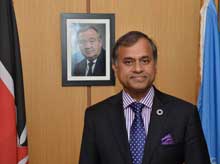
We need to empower young people to sustain our planet, and let peace and prosperity thrive says UN’s Resident Co-ordinator in Kenya, Siddharth Chatterjee speaks to IPS on reflections on the ICPD25 Summit.
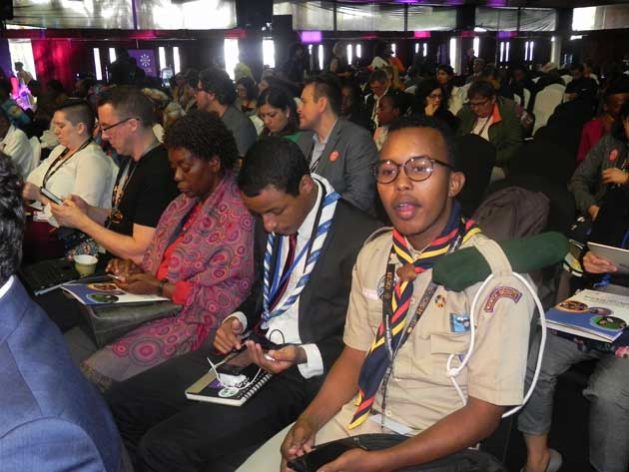
Young people at ICPD25 youth session. Credit: Mantoe Phakathi / IPS
NAIROBI, Kenya, Nov 15 2019 (IPS) – Q: At ICPD25 we heard that women and girls are still waiting for the unmet promises to be met? DO you think this time around there is a commitment to ensure that these promises are met?
The Nairobi Summit is about the Future of Humanity and Human Prosperity.
We all have an opportunity to repeat the message that women’s empowerment will move at snail-pace unless we bolster reproductive health and rights across the world. This is no longer a fleeting concern, but a 21st century socio-economic reality.
We can choose to take a range of actions, such as empowering women and girls by providing access to good health, education and job training. Or we can choose paths such as domestic abuse, female genital mutilation and child marriages, which, according to a 2016 Africa Human Development Report by UNDP, costs sub-Saharan Africa $95 billion per year on average due to gender inequality and lack of women’s empowerment.
Fortunately, the world has made real progress in the fight to take the right path. There is no lack of women trailblazers in all aspects of human endeavour. It has taken courage to make those choices, with current milestones being the result of decades of often frustrating work by unheralded people, politics and agencies.
Leaders like the indefatigable Dr. Natalia Kanem the Executive Director of UNFPA and her predecessors, are pushing the global change of paradigm to ensure we demolish the silo of “women’s issues” and begin to see the linkages between reproductive rights and human prosperity.
Siddharth Chatterjee
Numerous studies have shown the multi-generation impact of the formative years of women. A woman’s reproductive years directly overlap with her time in school and the workforce, she must be able to prevent unintended pregnancy in order to complete her education, maintain employment, and achieve economic security.
Denial of reproductive health information and services places a women at risk of an unintended pregnancy, which in turn is one of the most likely routes for upending the financial security of a woman and her family.
As the UN Resident Coordinator to Kenya, I am privileged to serve in a country, which has shown leadership to advance the cause of women’s right-from criminalizing female genital mutilation to stepping up the fight to end child marriage and pushing hard on improving reproductive, maternal and child health.
Q: At ICPD25 we heard that innovative partnerships are needed to ensure commitments to women and girls. 25 years on do you think this will happen? Can you site an example in Kenya or Africa on this?
Achieving the SDGs will be as much about the effectiveness of development cooperation as it will be about the scale and form that such co-operation takes. There is a lot of talk about partnership, but not enough practical, on-the-ground support to make partnerships effective in practice, especially not at scale.
Under the leadership of the Government of Kenya therefore, the UN System in Kenya in 2017 helped to spearhead the SDG Partnership Platform in collaboration with development partners, private sector, philanthropy, academia and civil society including faith-based stakeholders.
The Platform was formally launched by the Government of Kenya at the UN General Assembly in 2017 and has become a flagship initiative under Kenya’s new UN Development Assistance Framework 2018-2022 (UNDAF). As the entire UNDAF, the Platform is geared to contribute to the implementation of Kenya’s Big Four agenda in order to accelerate the attainment of the Country’s Vision2030.
In 2018, the Platform has received global recognition from UNDCO and the Dag Hammarskjold Foundation as a best practice to accelerate SDG financing. This clearly implies that we are on the right track, and as you can read in this report are developing a blueprint for how 21st Century SDG Partnerships can be forged and made impactful, but much more needs to be done.
Primary Healthcare (PHC) – in the SDG 3 cluster – has been the first SDG Partnership Platform window contributing to the attainment of the Universal Health Coverage as a key pillar of the Big Four agenda. We are living in a day and age where we have the expertise, technology and means to advance everyone’s health and wellbeing. It is our moral obligation to support Kenya in forging partnerships, find the right modalities to harness the potential out there and make it work for everyone, everywhere.
With leadership as from my co-chairs, Hon. Sicily Kariuki, Cabinet Secretary for Health in Kenya, and H.E Kuti, Chair of the Council of Governors Health Committee and Governor of Isiolo, and the strong political commitment, policy environment, and support of our partners we have in Kenya, I am convinced that Kenya can lead the way in attaining UHC in Africa, and accelerate the implementation of the ICPD25 agenda.
Q: Funding remains a crucial challenge- do you think there is a commitment to fund the initiatives?
Yes, there is a clear commitment to fund the ICPD Plan of Action.
I applaud partners whom have been doing so for long as the governments of Denmark, Netherlands, Sweden, Finland, Norway, and UK, and Foundations as the Bill and Melinda Gates Foundation.
But increasingly there is also the recognition that we cannot reach our ambitions through aid and grants.
At the global scale we need to let better regulation evolve for advancing greater equality and support to those furthest left behind.
Especially within middle-income-countries / emerging economies, our ICPD25 funding models need to be underpinned by shared-value approaches, and financed through domestic and blended financing.
I feel encouraged therefore by the Private Sector committing eight (8) billion fresh support to the acceleration of the ICPD Plan of Action.
Considering the trillions of dollars being transacted however by the private sector, this should be only the start and we should continue to advocate for bigger and better partnership between public and private sector targeting the communities furthest left behind to realize ICPD25.
Q: What do you think should be done to ensure young people’s participation?
Africa’s youth population is growing rapidly and is expected to reach over 830 million by 2050. Whether this spells promise or peril depends on how the continent manages its “youth bulge”.
Many of Africa’s young people remain trapped in poverty that is reflected in multiple dimensions, blighted by poor education, access to quality health care, malnutrition and lack of job opportunities.
For many young people–and especially girls– the lack of access to sexual and reproductive health services is depriving them of their rights and the ability to make decisions about their bodies and plan their families. This is adversely affecting their education and employment opportunities.
According to UNDP’s Africa Human Development Report for 2016, gender inequalities cost sub-Saharan Africa US$ 95 billion annually in lost revenue. Women’s empowerment and gender equality needs to be at the top of national development plans.
Between 10 and 12 million people join the African labour force each year, yet the continent creates only 3.7 million jobs annually. Without urgent and sustained action, the spectre of a migration crisis looms that no wall, navy or coastguard can hope to stop.
Africa’s population is expected to reach around 2.3 billion by 2050. The accompanying increase in its working age population creates a window of opportunity, which if properly harnessed, can translate into higher growth and yield a demographic dividend.
In the wake of the Second World War, the Marshall Plan helped to rebuild shattered European economies in the interests of growth and stability. We need a plan of similar ambition that places youth employment in Africa at the centre of development.
In the meantime, the aging demographic in many Western and Asian Tiger economies means increasing demand for skilled labour from regions with younger populations. It also means larger markets for economies seeking to benefit from the growth of a rapidly expanding African middle class.
Whether the future of Africa is promising or perilous will depend on how the continent and the international community moves from stated intent to urgent action and must give special priority to those SDGs that will give the continent a competitive edge through its youth.
The core SDGs of ending poverty, ensuring healthy lives and ensuring inclusive and equitable quality education all have particular resonance with the challenge of empowering youth and making them effective economic citizens.
Many young people in Africa are taking charge of their futures. There is a rising tide of entrepreneurship sweeping across Africa spanning technology, IT, innovation, small and medium enterprises.
They are creating jobs for themselves and their communities.
We need to empower young people to sustain our planet, and let peace and prosperity thrive.
Q: Lastly, we heard strong commitments from President Uhuru Kenyatta on the issue of FGM- do you think it will really happen by 2022?
President Uhuru Kenyatta needs to be lauded for his strong commitment to ending FGM.
Despite being internationally recognized as a human rights violation, some 200 million girls and women alive today have undergone FGM, and if current rates persist, an estimated 68 million more will be cut between 2015 and 2030.
We cannot accept this any longer and should step up for this cause.
Without leaders as H.E Kenyatta championing the fight to address cultural harmful practices as FGM – rapid strides will never be made.