Argentina: Civil Society’s Urgent Call to Protect Rights

Civil Society, Crime & Justice, Democracy, Economy & Trade, Environment, Headlines, Human Rights, Latin America & the Caribbean, TerraViva United Nations

Opinion

First Round of the elections in Argentina in 2023. Credit: Midia Ninja

BUENOS AIRES, Argentina, Jul 2 2024 (IPS) – Between the Mafia and the State, I prefer the Mafia. The mafia has codes, it keeps its promises, it doesn’t lie, it’s competitive. If a company pollutes a river, where is the damage? The sale of organs is a market like any other. Abortion should be considered “aggravated murder”.


These are just a couple of quotes from former TV pundit Javier Milei, now president of Argentina, as he makes anti-progressism his trademark, borrowying from the ready-made discourse of the globalalt-right. He claims that global warming is “another lie of socialism”.

In recent months, Argentina has witnessed a significant shift under his new administration that threatens to undermine the very fabric of its civil society and democratic governance.

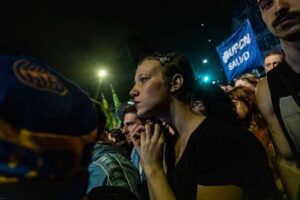
On June 12th, there was a violent crackdown on protesters outside the National Congress, involving the use of batons, tear gas, and rubber bullets. Several individuals were arrested arbitrarily and subsequently labeled as “terrorists” by the government, a move clearly intended to intimidate civil society and criminalize protest. These detainees have been transferred to federal prisons, where reports indicate continued abuse, including the use of pepper spray, physical violence, and denial of basic rights.

Last Friday, the government sent another controversial bill to Congress looking to lower the age of criminal responsibility from 16 to 13, even though minors commit less than 1% of serious crimes in Argentina. A proposal that was labelled by opposers as “pure smoke and mirrors.”

Since taking office, President Javier Milei’s administration has received significant international criticism, including from UN High Commissioner for Human Rights Volker Türk and the Inter-American Commission on Human Rights which has scheduled a hearing on July 11th to address the situation.

“A President proud to repress”, this is what various media across Argentina wrote as Milei went as far as accusing protesters of being “terrorists” and said police violence prevented a “coup d’état”.

These alarming development mark a stark contrast to the country’s long-standing commitment to democracy and human rights, a commitment that has been painstakingly nurtured since the end of its brutal military dictatorship in 1983.

Moreover, this change of administration has been accompanied by an abrupt “retreat” of the state from its historic role as guarantor of the rights of its citizens. This abdication by the State of its essential responsibilities adds even more concerns to the already alarming measures explicitly restricting civic space.

Javier Milei’s aggressive and theatrical style – from superhero costumes to wielding a chainsaw to illustrate his plans to cut down the size of the state – has led some to compare him to Donald Trump in the US or Jair Bolsonaro of Brazil. This shift, alongside the blurring of ideological lines between the Peronist and Together for Change coalitions, has implications for Argentina’s political landscape and on civic space.

Argentina’s civil society organizations, long the backbone of its democratic resilience and human rights advocacy, face unprecedented challenges.

Legislative proposals aimed at restricting their activities, coupled with limitations on freedom of expression and the right to protest, have sent shockwaves through the community. The administration’s policies include drastic public spending cuts, the closure of state institutions dedicated to women’s rights and access to justice, and a suspension of participation in international events related to the 2030 Agenda.

A recent protocol, announced by Security Minister Patricia Bullrich, involves identifying protesters through various means and then billing them for the costs incurred by deploying security forces to police the demonstrations. Human rights activists, opposition legislators, and organizations like the Centre of Legal Studies (CELS) argue that these measures effectively criminalize legitimate protests and violate constitutional rights. The government’s allies, such as legislator José Luis Espert, have responded with aggressive rhetoric: “Prison or bullet”.

Recently, a violent attack against a member of the organization H.I.J.O.S., known for its fight against impunity for the crimes of the last civil-military dictatorship and for the defense of human rights, has been denounced. This attack, characterized by its brutality and strong political message, reflects an alarming increase in violence against activists and civil society organizations. The attackers, by leaving the acronym VLLC (“Viva la libertad, carajo!”), associated with President Javier Milei, insinuate a disturbing link between government rhetoric and violent actions directed against “dissidents”.

These proposals, exacerbated by the country’s ongoing economic and social crises, pose new hurdles for civil society’s ability to operate and advocate for public interests.

Argentina’s history, marked by the dark years of dictatorship between 1976 and 1983, serves as a reminder of the cost of silence and inaction. The country’s journey to reclaim democracy and human rights was arduous, characterized by relentless efforts to acknowledge and compensate the victims of past repression. The current administration’s move to revise policies related to memory, truth, and human rights threatens to undo decades of progress, challenging the very essence of Argentina’s democratic sphere.

The international community, particularly organizations dedicated to the promotion of human rights and the preservation of historical memory, such as UNESCO, must heed this call to action.

The situation in Argentina requires a collective effort to support its civil society, advocate for the protection of civic space, and ensure that the lessons of the past are not forgotten.

This article was written by the Entidades no Gubernamentales para el Desarrollo (EENGD) – Red Encuentro, the national NGO platform of Argentina, in collaboration with the global civil society network Forus.

IPS UN Bureau

  Source

Special Report: Exposing Afghanistan’s Pervasive, Methodical System of Gender Oppression

Civil Society, Development & Aid, Editors’ Choice, Education, Featured, Gender, Headlines, Human Rights, Humanitarian Emergencies, Middle East & North Africa, Sustainable Development Goals, TerraViva United Nations

Education Cannot Wait. Future of Education is here

Richard Bennett during his oral statement at the Human Rights Council on June 18, 2024. Credit: Anne-Marie Colombet/Human Rights Council

Richard Bennett during his oral statement at the Human Rights Council on June 18, 2024. Credit: Anne-Marie Colombet/Human Rights Council

NAIROBI , Jul 1 2024 (IPS) – The UN Special Rapporteur’s annual report on human rights in Afghanistan lays bare the alarming phenomenon of an institutionalized system of discrimination, segregation, disrespect for human dignity and exclusion of women and girls.

In the new report, Richard Bennett, the UN’s Special Rapporteur, provides an intersectional analysis of the establishment and enforcement of this institutionalized system of unparalleled gender oppression. It paints a picture of a worsening situation for women and girls.


“The situation is that the de facto authorities, who control the country but are not yet recognized as a government, are not just failing to implement their obligations to human rights under the human rights treaties that they’ve signed. They are deliberately implementing policies and practices that flout those policies to create a society where women are permanently inferior to men,” says Bennett in an exclusive interview with IPS.

Education Cannot Wait’s #AfghanGirlsVoices global campaign highlights real-life testimonies of hope, courage and resilience by Afghan girls denied their right to education. Credit: ECW

Education Cannot Wait’s #AfghanGirlsVoices global campaign highlights real-life testimonies of hope, courage and resilience by Afghan girls denied their right to education. Credit: ECW

“Of course, there is sexism in every country, some worse than others, but this is very different from any other country.”

Bennett is referring to the distressing pattern of large-scale systematic violations and subjugation of women’s and girls’ fundamental rights that is unfolding, abetted by the Taliban’s discriminatory and misogynist policies and harsh enforcement methods such as gender apartheid and persecution.

“Only in Afghanistan has a government shut schools for girls above the age of 13, above the sixth grade, and does not allow women to go to universities. And this, combined with segregation, means that women are really suffering. For example, women can only get treatment from doctors who are women and the same applies to teaching. It is a very segregated society as a whole. Just today, a businesswoman told me that she could only do business with female customers. This is affecting not just the current situation and the current generation, but the future as well.”

The Special Rapporteur finds that the Taliban’s institutionalized system of discrimination is most visible through its relentless issuance and enforcement of edicts, decrees, declarations and orders that in and of themselves constitute severe deprivations of human rights and violations of international law.

Between June 2023 and March 2024, they issued an estimated 52 edicts. These include banning foreign non-governmental organizations from providing educational programmes, including community-based education. The Taliban banned women from participating in radio and television shows alongside male presenters.

In July 2023, female beauty salons were forced to close. In August 2023, women were prohibited from entering Band-e Amir National Park. In October 2023, women were excluded from holding directorships within non-governmental organizations. In February 2024, women on television were required to wear a black hijab, with their faces covered, leaving only their eyes visible.

“We are concerned about intergenerational issues, but also intersectional issues. There is discrimination against women and girls who are of an ethnic or religious or linguistic marginalized groups,  or persons with disabilities, or a woman heading a household. Travel requires accompaniment by a close male relative and some women do not have such a person available. All of this is extremely restrictive and will also affect future generations as it will lead to a lack of education and professions,” Bennett says.

The report finds that “women and girls are being maneuvered into increasingly narrow roles where the deep-rooted patriarchy, bolstered and legitimized by Taliban ideology, deems them to belong: as bearers and rearers of children, and as objects available for exploitation, including debt bondage, domestic servitude, sexual exploitation and other forms of unremunerated or poorly remunerated labor.”

The UN Special Rapporteur stresses that there was progress in Afghanistan before the return of the Taliban.

“It was not perfect, but for 20 years there was notable progress. As a result, there are very many professional women in Afghanistan, and women who head households as the main income earners—the main breadwinners for their families. The restrictions are having very serious negative effects.”

Richard Bennett, UN Special Rapporteur Afghanistan, advocates for the rights of every girl to education in Afghanistan. Credit: ECW

Richard Bennett, UN Special Rapporteur for Afghanistan, advocates for the rights of every girl to education in Afghanistan. Credit: ECW

Bennett is among the prominent supporters of the global #AfghanGirlsVoices campaign launched by Education Cannot Wait (ECW), the global fund for education in emergencies and protracted crises within the United Nations. Now in its second phase, the campaign aims to ensure unrestricted access to education for Afghan girls and young women.

After seizing power in 2021, the Taliban swiftly imposed a ban on secondary education for girls, subsequently expanding this restriction to encompass universities and, more recently, private learning centers. Young women have also been prevented from leaving Afghanistan to pursue tertiary education.

“There has never been universal education in Afghanistan, even in the 20 years preceding the return of the Taliban. However, the education system gradually improved, although not as much in remote or rural areas. Part of this was due to a lack of resources, as well as an ongoing internal conflict. So, it was insecure and difficult to maintain schools. But once the Taliban came back into power after August 2021, an education system built over two decades was quickly unraveling,” he says.

In addition to the school closures, he speaks of concerns about the quality of education from two perspectives. One is the alarm over an ongoing brain drain in Afghanistan since the Taliban took over. Many teachers and university lecturers have left the country.

The other concerns are changes to the curriculum and especially a notable increase in madrasa education. Madrasa education has always been a feature of life in Afghanistan. “But now there seems to be at least anecdotal information that the teaching is much more religious-based than a broad education. Girls can go to madrasas,” he says. 

On recommendations and urgent solutions moving forward, Bennett stresses that “no country should ban schools. We therefore continue to call for the reversal of this policy and the reopening of schools with a good quality education. My recommendations are what I call an all-tools approach, as only one approach or any one tool will not work.”

Overall, he says the report calls for justice and accountability, incorporating human rights and women’s voices in political processes and diplomatic engagement. Emphasizing that bolstering documentation of human rights abuses and violations is critical, as is reinforcing protection and solidarity for Afghan women, girls and human rights defenders.

Bennett has a direct message to the current rulers in Afghanistan, the Taliban, to reverse their policies and to comply with human rights. The second message is to the international community, urging them not to normalize or recognize Afghanistan’s unacceptable and worsening human rights situation.

Further stressing that the global community should strongly resist normalizing diplomatic relations or accepting the Taliban into the UN unless and until they meet concrete, measurable, verifiable benchmarks on human rights and the rights of women and girls.

IPS UN Bureau Report

  Source

IRAQ: ‘Tolerance for Abuses Against LGBTQI+ People Has Now Been Made Explicit Through Legislation’

Civil Society, Crime & Justice, Featured, Gender, Gender Identity, Gender Violence, Headlines, Human Rights, LGBTQ, Middle East & North Africa, Religion, TerraViva United Nations

Jul 1 2024 (IPS) –  
CIVICUS discusses the criminalisation of same-sex relations in Iraq with Sarah Sanbar, researcher at Human Rights Watch’s Middle East and North Africa division.


Sarah Sanbar

The Iraqi parliament recently passed a law criminalising LGBTQI+ people, punishing same-sex relations with between 10 and 15 years in prison and transgender identities with sentences of one to three years. The original proposal included even harsher penalties, but lawmakers introduced amendments in response to strong criticism. Supporters claim the law upholds deeply held religious values, while critics condemn it for institutionalising discrimination and enabling serious human rights abuses.

What led to recent legislative changes criminalising LGBTQI+ people?

On 27 April 2024, the Iraqi parliament passed an amendment to the country’s 1988 anti-prostitution law, effectively criminalising same-sex relations and transgender identities. The amendment states that same-sex relations are punishable with between 10 and 15 years in prison, and provides for one to three years’ imprisonment for those who undergo or perform gender-affirming medical procedures.

The law also punishes those who ‘imitate women’ with a seven-year prison sentence and a fine of between 10 and 15 million Iraqi dinars (approx. US$7,700 to US$11,500) and criminalises the ‘promotion of homosexuality’, a vague and undefined expression.

The passing of this law follows years of steadily increasing hostile rhetoric against LGBTQI+ people. Prominent politicians and media personalities have consistently spread harmful stereotypes, tropes and disinformation. They often claim homosexuality is a western import that goes against traditional Iraqi values.

This rhetoric has increasingly translated into government action. For example, on 8 August 2023, the Communications and Media Commission issued a directive ordering all media outlets to replace the term ‘homosexuality’ with ‘sexual deviance’ in all published and broadcast language. The directive also banned the use of the word ‘gender’, which shows how the crackdown on LGBTQI+ rights is intertwined with broader issues, and is also used to target and silence women’s rights organisations working on gender-based violence.

Sadly, as in many other countries, LGBTQI+ people in Iraq are being used as political pawns and scapegoats to distract from the government’s failure to provide for its people. Tensions are growing between the more conservative and religious groups in society and government and those that take a more secular approach to governance. The fact that conservatives have gained increasing support in successive elections allows laws like this to be passed. Such a law probably wouldn’t have been passed even a few years ago.

What’s the situation of LGBTQI+ people in Iraq, and how do you expect it to change?

The situation of LGBTQI+ people is extremely unsafe. Threats to their physical safety, including harassment, assault, arbitrary detention, kidnappings and killings, come from society at large – including family and community members as well as strangers – and from armed groups and state personnel. Human Rights Watch has documented cases of abductions, rape, torture and killings by armed groups. Impunity is widespread, and the government’s failure to hold perpetrators accountable sends the message that this violence is acceptable.

With the passage of the new law, the already dire situation is expected to worsen. Tolerance for abuses has now been made explicit through legislation. As a result, an increase in violence is to be expected, along with an increase in the number of LGBTQI+ Iraqis fleeing the country to seek safety elsewhere. Unfortunately, it is becoming even harder for LGBTQI+ Iraqis to ensure their physical safety in the country, let alone lead fulfilling lives, find love, make friends and build links with others in their community.

What are the challenges facing Iraqi LGBTQI+ rights organisations?

The space for LGBTQI+ organisations in Iraq has long been extremely limited. For example, in May 2023, a court in the Kurdistan Region ordered the closure of Rasan, one of the few groups willing to publicly advocate for LGBTQI+ rights in the region. The reason the court gave for its closure was its activities ‘in the field of homosexuality’, and one piece of evidence cited was its use of rainbow colours in its logo.

Organisations such as Rasan have previously been targeted under vaguely worded morality and public indecency laws that restrict freedom of expression. By criminalising the ‘promotion of homosexuality’, the new law makes the work of LGBTQI+ organisations even more dangerous. Any action in support of LGBTQI+ rights could be perceived as ‘promoting homosexuality’, which could lead to activities being banned or organisations being shut down. It will be almost impossible for LGBTQI+ rights organisations to operate openly.

In addition, all civil society organisations in Iraq must register with the Directorate of NGOs, a process that includes submitting bylaws, lists of activities and sources of funding. But now, it is essentially impossible for LGBTQI+ organisations to operate transparently, because they can’t openly state their intention to support LGBTQI+ people without risking closure or prosecution. This leaves two options: stop working, or operate clandestinely with the risk of arrest hanging over them.

Given the restrictive legal and social environment, many organisations operate from abroad. IraQueer, one of the most prominent LGBTQI+ advocacy groups, is based in Sweden.

But despite the challenges, LGBTQI+ organisations continue to advocate for LGBTQI+ rights, help people fleeing persecution and work with foreign governments to put pressure on Iraq to roll back discriminatory policies. And they have made significant achievements, facilitating the safe passage of people fleeing persecution and broadening coalitions to advocate for LGBTQI+ rights internationally. Their perseverance in the face of adversity is inspiring.

What international support do local LGBTQI+ groups need?

Global organisations should use their capacity to sound the alarm and advocate for the repeal of the new law and the reversal of other discriminatory measures, and for impunity for violence against LGBTQI+ people in Iraq to be addressed.

An effective strategy could be to focus on human rights violations. Equal protection from violence and equal access to justice are required under international law, including the International Covenant on Civil and Political Rights and the Arab Charter on Human Rights, both of which Iraq has signed. Advocacy for LGBTQI+ rights as human rights can put greater pressure on the Iraqi government to fulfil its obligations.

It’s also essential to provide resources and support to local organisations in Iraq and in host countries where LGBTQI+ Iraqis seek refuge, to ensure people have access to basic needs and community support, and can live full lives without fear.

Civic space in Iraq is rated ‘closed’ by the CIVICUS Monitor.

Get in touch with Human Rights Watch through its website, and follow @hrw and @SarahSanbar on Twitter.

  Source

UN Climate Talks: Setting Sail to Plunder the Ocean

Civil Society, Climate Action, Climate Change, Environment, Featured, Global, Headlines, Human Rights, Humanitarian Emergencies, Sustainable Development Goals, TerraViva United Nations

Opinion

The 60th session of the Subsidiary Bodies of the United Nations Framework Convention on Climate Change (SB 60, UNFCCC), took place in Bonn June 3-13, with the issue of climate finance high on the agenda. Credit: UN Climate Change Lucia Vasquez Tumi

BONN, Germany, Jun 28 2024 (IPS) – Despite the evident and increasing urgency of the climate crisis, the June intersessional meeting of the UNFCCC closed with little to show for two full weeks of negotiation.


With COP29 being cited as ‘the Finance COP’, much of the focus across various agenda items was on ever contested questions of who owes what to whom. Crucially, the meeting was supposed to advance negotiations on a New Collective Quantified Goal (NCQG) on climate finance for the post 2025 period, due to be agreed in Baku.

However, despite ‘quantified’ being in the very name of the goal, developed countries refused to be drawn on the critical matter of how much is owed and needed.

The 2020 goal of $100bn per year (stretched to 2025) remains unfilled, with the vast majority of what the Global North claims to have contributed in the form of loans, or money redirected from other overseas budgets.

Likewise, despite the long fought battle which secured a new loss and damage finance mechanism at COP27, that pot too remains as good as empty, with current pledges equating to less than 0.2% of the climate change related losses faced by Global South countries each year.

Climate finance is key. Intimately related to the core UNFCCC principles of equity and Common but Differentiated Responsibility (CBDR), it is central to unlocking the stalemate that has plagued negotiations since they began.

But instead of concrete finance commitments and delivery, carbon markets are increasingly being spun as climate finance, with some increasingly desperate nations on the frontlines of the climate crisis grasping wishfully at the idea that a 5% share of proceeds from markets under the Paris Agreement will plug the longstanding gap on adaptation funding, and others preparing to sell off their rich ecosystems as some form or other of carbon credits.

As the practical limitations, to say nothing of the social and environmental harms, of novel land based Carbon Dioxide Removal (CDR) schemes are increasingly exposed at a scale to impact the climate, Bioenergy Carbon Capture and Storage (BECCS), one of the most widely touted CDR technologies, would require twice the entire global land area currently under cultivation, oceans are being sized up as the next frontier for such exploitation.

Oceans cover over 70% of the Earth’s surface, and are already our greatest ally in the fight against climate change. Alarmingly, however, highly speculative and risky theories about engineering them at will to sequester and store ever more carbon are increasingly being incorporated into the climate policy landscape.

We see this in the opaque language that invites parties to scale up ‘ocean-based mitigation action’ that found its way into the Global Stocktake decision text last year in Dubai, and more clearly in the explicit inclusion of dangerous ocean CDR methods in the ongoing wrangling over Article 6 guidelines, which in various iterations identify ocean fertilisation, ocean alkalinity enhancement and algae cultivation / biomass sinking for potential inclusion.

And concerningly, we also saw it in this year’s Ocean and Climate Change Dialogue held in Bonn. Pitched as a “[recognition of] the need to strengthen the understanding of, and action on, ocean and climate change”, the Dialogue, now in its 4th year, saw a push for research and development of marine CDR under its theme on ‘Technology Needs for Ocean Climate Action, including Finance Links’.

The problem for those who would financialise and plunder the oceans under the guise of climate mitigation is that there are of course other UN Conventions of equal importance to the UNFCCC that have for good reason imposed restrictive regulations on these activities.

The Convention on Biological Diversity has had a de facto moratorium in place on all geoengineering since 2010, while the London Convention / London Protocol, which regulates pollution at sea, has made clear its intention to add potentially a further four categories of marine geoengineering to its 2008 prohibition on ocean fertilisation.

Crucially, a commercial factor is a key element under both regimes in restricting outdoor experiments – which of course is inherent in any ocean-based CDR envisaged under carbon markets, voluntary or otherwise.

The fact is, however, that none of the marine geoengineering approaches increasingly referred to as CDR do anything to tackle the root causes of climate change, and none have been able to demonstrate that they can effectively capture or store carbon with any permanence.

They are an extremely dangerous distraction from the real action we know is needed to rapidly bring down greenhouse gasses, starting with an urgent and just phase out of fossil fuels. Furthermore they are likely to cause great harm to the delicate equilibrium of the oceans – already severely stressed by over-exploitation, pollution and global heating – with potentially grave consequences for ocean biodiversity, food chains, fisheries, and even the oceans’ natural capacity to sequester carbon.

At least 40 open-water marine geoengineering experiments are currently underway or in planning, across a variety of theories and technologies, many of which have a clear commercial element and are likely in violation of international agreements. Some of these are already running into very practical challenges, such as the postponement of Planetary Technologies’ planned ocean alkalinity enhancement trial in Cornwall, where community resistance led to an independent assessment which exposed serious flaws in the plan, while biomass cultivation and sinking start-up Running Tide announced the closure of its fairly advanced operations only this last week, citing lack of demand for carbon credits from the voluntary market.

Ultimately however, as a broad spectrum of civil society organisations made clear in several interventions at the Ocean and Climate Dialogue, and in a statement endorsed by over 100 organisations as of last month, Paris Agreement carbon markets, which are so very clearly legitimising these highly speculative and risky approaches, cannot ignore international agreements restricting them and must uphold the precautionary principle.

As we head to COP29 in Baku and as IPCC kicks off its work on the 7th Assessment Cycle later this year, the voices of civil society across the globe, Indigenous Peoples, coastal communities and fisherfolk must be heard as they reiterate the risk of undermining the vital role oceans play in sustaining life on earth. It is unquestionably clear that our oceans cannot be for sale.

Mary Church is Geoengineering Campaign Manager, Center for International Environmental Law (CIEL) and member of Hands-Off Mother Earth! (HOME) Alliance.

IPS UN Bureau

  Source

Thailand’s LGBTQI+ Rights Breakthrough

Asia-Pacific, Civil Society, Featured, Gender, Headlines, Human Rights, LGBTQ, TerraViva United Nations

Opinion

Credit: Chanakarn Laosarakham/AFP via Getty Images

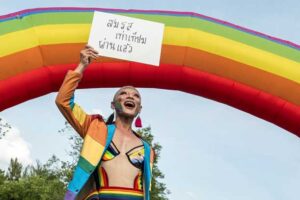
MONTEVIDEO, Uruguay, Jun 27 2024 (IPS) – At the height of 2024 Pride season, decades of civil society campaigning came to fruition in Thailand. With 130 votes for and only four against, on 18 June the Senate passed the Marriage Equality Bill. With a few strokes of the pen, the bill tweaked the language of the Civil and Commercial Code, replacing gendered references such as ‘man’ and ‘woman’ with gender-neutral ones such as ‘persons’ and ‘spouses’. It now goes for formal assent to King Maha Vajiralongkorn and will take effect 120 days after publication in the official bulletin.


This means equal marriage is now recognised in 37 countries. Recent progress has seen Estonia become the first post-Soviet state to join the ranks in 2023, and Greece the first majority-Orthodox Christian country to do so in early 2024. Thailand is the first country in Southeast Asia and the third in Asia, following Taiwan and Nepal, to recognise the right to marry and all associated rights for same-sex couples.

SAME-SEX MARRIAGE AROUND THE WORLD

The long road to equality

With its vibrant LGBTQI+ culture, Thailand has long been advertised as ‘an exceptional destination for gay travellers’. But things weren’t quite so good for local LGBTQI+ people, whose identities and relationships lacked legal recognition and associated rights.

Civil society worked to change that. Efforts to advance the rights of same-sex couples in Thailand date back at least as far as 2011.

The first shift came in 2012, when the government began to consider some kind of recognition for same-sex relations. In 2013 it drafted a civil partnership bill with bipartisan support, but progress stalled under the military government formed as a result of a 2014 coup.

The country remained under military rule until mid-2019, but rather than stopping, LGBTQI+ activism gained strength by connecting with the country’s youthful and outspoken movement for democracy. In 2017, a petition calling for the recognition of civil partnerships gathered over 60,000 signatures. The government responded by preparing a draft bill and holding public hearings where it received overwhelming public support. But by mid-2020, the bill – which activists criticised for not ensuring the same rights as marriage – died in parliament.

When youth-led protests for democratic change erupted in 2020, their demands included LGBTQI+ rights and led to the development of a new bill that was eventually introduced but failed to pass before parliament was dissolved ahead of a general election in May 2023.

LGBTQI+ activists also took to the courts, but received a setback. In 2021, in response to a petition filed by two LGBTQI+ people seeking to get married, the Constitutional Court ruled that the section of the Civil and Commercial Code that defined marriage as being between a man and a woman was constitutional. LGBTQI+ activists were particularly unhappy with the court’s sexist and demeaning language.

Cultural and political battles

Longstanding efforts to normalise the presence of LGBTQI+ people and shift conservative narratives produced high levels of acceptance and support for LGBTQI+ rights. Thailand ranks 44 out of 196 countries in Equaldex’s Equality Index, which rates countries according to their LGBTQI+-friendliness. But unlike most other countries, it places higher for public attitudes than for its laws.

This meant Thai LGBTQI+ activists were able to use the broadly favourable climate of opinion to pressure politicians. They turned LGBTQI+ rights into a bandwagon politicians wanted to join for political gain. As a result, some of the major parties competing in the 2023 election campaigned on pledges to push for marriage equality. This included the progressive Move Forward party, which won the most seats.

But military-appointed senators stopped Move Forward forming a government, and instead Pheu Thai Party, a populist party twice deposed in military coups, formed a coalition with military-aligned parties – not the outcome young democracy activists had hoped for. Still, the new prime minister, Srettha Thavisin, had also promised to send a bill to parliament.

He still took his time, and LGBTQI+ activists gave him the push he needed. By early September 2023, when the new government was sworn in, the Rainbow Coalition for Marriage Equality had collected over 362,000 signatures in support of marriage equality. Srettha sent the bill to parliament in November, and in December debate started on the government’s bill plus three other versions submitted by other parties and civil society.

The House of Representatives passed all four bills with an overwhelming majority, then formed a committee to merge them into one, and passed the combined bill with near unanimity. The Senate completed the process on 18 June.

What – and where – next

The Marriage Equality Bill recognises rights in relation to inheritance, adoption and healthcare decisions. But beyond these direct effects, activists expect it to have powerful indirect impacts, sending a message of acceptance and encouraging younger LGBTQI+ people to come out and lead full lives free of discrimination and violence.

Now marriage equality has been achieved, LGBTQI+ activism is turning to the next big issue – trans rights. Despite playing a prominent role in entertainment, transgender people in Thailand face steep barriers, particularly in employment. They have few legal protections against discrimination, and those that exist aren’t fully enforced. They’re unable to obtain legal documents that reflect their gender identity, and what few rights they have in this regard depend on bureaucratic discretion. To change this, LGBTQI+ activists will keep campaigning for a Gender Recognition Bill.

The significance of the change achieved in Thailand, and the further change that seems sure to come, extends far beyond the country’s borders. Most countries in the region don’t recognise same-sex marriage, and some, including Brunei, Malaysia and Myanmar, still severely criminalise same-sex relations.

Thai activists believe their success can both bring further change at home and set an example for other countries to follow. Given what they’ve achieved, they have every reason for hope.

Inés M. Pousadela is CIVICUS Senior Research Specialist, co-director and writer for CIVICUS Lens and co-author of the State of Civil Society Report.

  Source

Worse Than Genocide: Killing Truth

Armed Conflicts, Civil Society, Global Governance, Headlines, Human Rights, IPS UN: Inside the Glasshouse, Middle East & North Africa, TerraViva United Nations

Opinion

Destruction in northern Gaza. Credit: UNRWA

ATLANTA, Georgia, Jun 26 2024 (IPS) – There have been many genocides throughout history, but the first to be displayed on TV in all its sickening horror before the entire world is the Israeli genocide against the civilians of Gaza.


Truth is the first casualty of war, so it’s no surprise that the slick Israeli propaganda machine has managed to make Israel’s slaughter of 37,000 Palestinians in Gaza, including more than 15,000 children, acceptable to multitudes of Americans.

With the exception of the widespread campus protestors, most Americans are by now convinced that Gaza’s 2.3 million inhabitants are all fanatical Islamists who deserve to be killed like vermin. That’s not only a lie—it is a damnable lie.

There is an even bigger atrocity in this war, and a more unbearable one than killing children, if that is possible—and that’s when the truth is killed. When your good is labeled evil, it’s maddening.

Today the decency and moral outrage of millions of US youth is being slandered by ranting propagandists like MS-NBC’s Joe Scarborough, and of course the entire FOX News crew, labeling the campus protest movement anti-Semitic. The claim is false and must be exposed as another damnable lie.

It’s more than illogical, it’s silly, to say that anti-Zionism equals anti-Semitism. The vast majority of campus protesters are not anti-Semites and have no trouble separating the actions of extreme Zionist ideology as played out in Gaza from their classmates and friends who happen to be Jews.

“The naming of things is the rectification of things,” Confucius taught. Antisemitism is Antisemitism. Zionism is Zionism. The two are not the same. Otherwise, how could Senator Bernie Sanders, a Jew, attack the Netanyahu’s extreme Zionist government so strenuously, and how could so many of the student demonstrators who are against Zionist Israel’s Gaza campaign themselves be Jewish?

When Republican Congresswoman Elise Stephanic, a Jew, attacked George Soros, a celebrated progressive Jewish philanthropist on CNN recently for supporting the protesters, wasn’t she herself being an Anti-Semite?

Neither George W. Bush nor Joe Biden are Jews. They are Christians—but are certainly bigtime Zionists. Bush by leading America into the morass of the Iraq War primarily designed to protect Israel, and Biden in Gaza, by giving Israel all the money and bombs it needs to kill so many thousands of civilians.

“Don’t kill children, but here’s money and ammunition to do it with.” Nobody is fooled by that, still less university students who have had to display their critical thinking skills before they could even get into college.

Increasing numbers of Jewish organizations are rejecting Israel’s descent into doctrinaire Anti-Arab racial policies that echo Nazism’s extreme philosophy. They know that race-hatred is racism, but that doctrinaire racial superiority vs. inferiority is racial-ism, which is far worse.

The situation in Gaza is unbearable for a civilized world to witness. Painting an entire generation of idealistic American college youth with the slander that they are racists is unbearable. If anything is worse than Genocide, it is claiming that those who oppose it are the greater cause of evil.

James E. Jennings, PhD, is President of Conscience International and Executive Director of US Academics for Peace. He has delivered aid to Gaza hospitals over more than three decades, including during Israel’s bombing campaigns in 2009 and 2014.

IPS UN Bureau

  Source