“Governments are not motivated to fix migrants’ issues because the money they send home keeps their economies running” Credit: Shutterstock
KATHMANDU, Feb 19 2024 (IPS) – As involuntary migration rises around the world, partly in response to the impacts of climate change, justice for those leaving their homes and families to earn a living is largely missing, said activists meeting at the World Social Forum (WSF) in Kathmandu on Sunday.
In various sessions, participants from Europe, northern Africa and Latin America detailed governments squeezing doors shut on migrants trying to enter their countries. Disturbing stories from Asia focused on individuals falling victim to employers and traffickers as their governments looked the other way while profiting from migrants’ income remitted home.
The WSF ends in Nepal’s capital Kathmandu on Monday. During the annual event global activists gather to discuss issues ranging from education to debt relief, legalization of sex work, and poor farmers’ lack of control over their land and resources.
“One of the women we talked to told us that she had to sleep with six to seven men daily for six months. The saddest part is the employer’s wife regularly gave her a pill so she wouldn’t get pregnant,” said a researcher with the Bangladeshi organization OKUP. “Another worker was diagnosed with colon cancer: his employer sent him home without paying a single bit of his salary.”
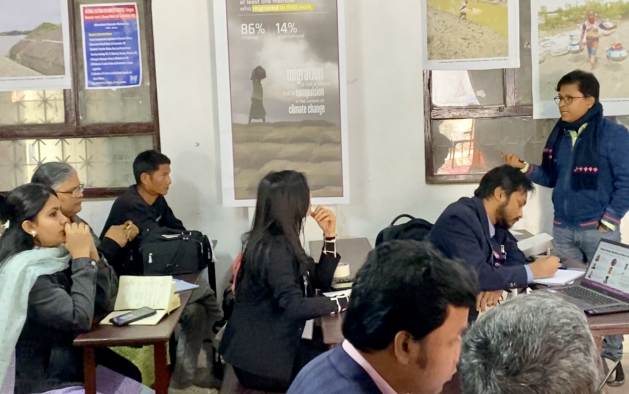
OKUP hosted the session, Climate Change, Migration and Modern Slavery, to share its report documenting the treatment given to migrant workers from coastal regions in Bangladesh who were forced to leave after the impacts of climate change destroyed their farms and other livelihoods.
Research found that 51% of households migrated after being hit by cyclones, floods, salt water intrusion in their fields, erratic rainfall and other climate disasters. “There is no sustainable adaptation opportunities for them. In most cases people receive assistance from the government after disasters, but there is no sustainable assistance. That’s why people rely on loans to rebuild their houses or restart their farming activities,” said OKUP Chairperson Shakirul Islam.
“Before they can repay the money they experience the next cycle of climate emergency,” he added, making them desperate to go earn money elsewhere in the country or abroad.
Eighty-six percent of those displaced migrate within the country; 14% internationally. En route 90% face excessive fees, 81% do not get a promised work permit and 78% have their salaries held back. “I strongly believe that the same situation is present in other countries in South Asia,” said Islam.
Shakirul Islam, Chairperson of the Bangladeshi organization OKUP, (standing far right) introduces the session Climate Change, Migration and Modern Slavery at the World Social Forum on Sunday, Feb. 18. Credit: Marty Logan/IPS
Malaysian activist Sumitha Shaanthinni Kishna cautioned the group to not blame climate change for the migrants’ problems. “The fear I have is governments using climate change to justify migration. They will say ‘that’s why we have to send our migrants out’. They have done this to justify migration due to poverty.
“The discussion has to be that climate change is real and how the government’s policies are contributing to climate change,” added Kishna, from the organization Our Journey, which provides legal support to migrants and refugees.
In another discussion in another classroom just minutes later and only metres away, activists from India were learning about a hotline created after COVID-19 to help migrant workers in distress. In less than one year, the Migrant Assistance and Information Network has responded to 800-plus calls, said its director, Dr Martin Puthussery.
The cases include 40 deaths (19 accidents, 15 accidents, 6 suicides), 20 instances of forced labour and 16 cases of legal aid or mediation, involving wage theft, delayed payments illegal confinements and imprisonments.
During the question-answer session a participant from northern Bihar state noted that migration is a must because “everything is closed down. Where do the people of Bihar go to earn their livelihood?”
“Can we ourselves create small industries?” she asked. “We can’t depend on the government.”
Governments are not motivated to fix migrants’ issues because the money they send home keeps their economies running, said Arie Kurniawaty from Solidaritas Perempuan in Indonesia at one of the day’s last sessions, Call for Migration Coordination within the WSF in Kathmandu.
“The basic problem is the perspectives of our governments, which think that migrant workers are a commodity… They will try to send many migrant workers abroad without considering if their situation will be good or bad,” added Kurniawaty.
Other speakers in the session, which covered France, Africa, Palestine and Latin America as well as Asia, noted rising numbers of migrants but increasing hostility to them, led by governments.
In Latin America, governments’ actions are linked to rising racism and xenophobia, said Patricia Gainza from the World Social Forum on Migrations. “This is nothing new but in this case we’ve had some very bad decisions by governments, like Peru, who invite people to come but later, for political reasons, pushed them out.”
In Europe, the New Pact on Migration and Asylum, of December 2023, “encourages informal and confidential agreements between European countries and migrant-sending countries that are not legally binding, so that the European Parliament will not have to ratify them,” said Glauber Sezerino of the Paris-based Centre de Recherche et d’Information pour le Développement. “The pact tries to encourage more and more of this kind of agreement, so you can expect more violation of human rights” of migrant workers, he added.
In North Africa, governments are increasingly dominating debate on migration policies, “leaving little room for civil society,” said Sami Adouani of FTDES Tunisia. In February 2023, a xenophobic speech by Tunisian President Kais Saied targeted migrants from sub-Saharan Africa. That triggered an exodus but also “exposed those remaining migrants to more institutional violence,” he added.
Dr MA Sayed conducts a practical class with his students at the
Moimuna Nursing Institute. Credit: Rafiqul Islam/IPS
THAKURGAON, Bangladesh, Feb 6 2024 (IPS) – After passing her secondary school certificate (SCC) in 2019, Sweety Akter went door-to-door to collect money to enroll in a college, but she wasn’t successful.
Born to an extremely poor family in Fultala village under Baliadangi upazila in Thakurgaon district, Akter saw her dream of studying fading as she was unable to enroll in a college because of a lack of funding, despite her good results at school.
“I went to many places but did not get the opportunity for admission. I did not have the financial support to study at a private college or an educational institute.”
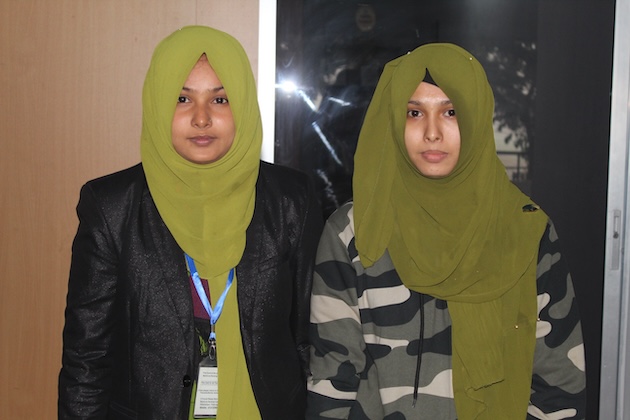
Two sisters, Sweety Akter (left) and Shikha Akter (right), are enrolled in Moimuna Nursing Institute. Sweety has already completed a nursing diploma with financial support from the institute, and Shikha is now a second-year student. Credit: Rafiqul Islam/IPS
Explaining her financial hardships, the 22-year-old Akter said her father is a gambler who had sold all the family’s assets to gamble, and he had even sold their lone homestead, where they are currently living.
“My father does not give me and my younger sister any money for education. My mother works as domestic help at the houses of people and is bearing the costs for our four-member family,” she said.
Sweety said that if she had not had the opportunity to enroll at MNI, it would have been impossible for her to pursue tertiary education, and she would have been forced to marry.
Overcoming all the odds and passing the nursing diploma, she is now pursuing an internship at Rangpur Medical College and Hospital (RMCH) with financial support from the institute, which paves the way for former students to get jobs at hospitals.
Shikha Akhter (19) enrolled in Moimuna Nursing Institute in Thakurgaon, northwest Bangladesh, to pursue a diploma in nursing science and midwifery with the encouragement of her sister, Sweety.
Shikha said she enrolled in the institute at a minimum fee, and now she is enjoying more facilities than other students as her elder sister also studied there.
“I am studying the nursing diploma and staying at the MNI’s hostel, which makes my life easy. I want to be a good nurse and serve people,” she added.
Joya Rani, a 20-year-old girl from poverty-stricken Kaliganj village under Deviganj upazila, also studied the nursing diploma with financial support from the institute.
“My father is physically challenged, so he cannot work. My mother is the only breadwinner for our family, and she supports the family by rearing cattle. That’s why she cannot give me any money (for study),” she told IPS.
Joya, who is currently doing an internship at RMCH, said she received a stipend of Taka 2,000 (USD 19) from the institute over the past two years, and if she had not received the stipend, it would not have been possible for her to continue studying.
Moimuna Nursing Institute, located 460 kilometers away from the capital Dhaka, is a non-profit approved by the Bangladesh Council of Nursing and Midwifery and offers a three-year diploma in nursing for about USD 1,500, which includes tuition fees, accommodation, uniforms, and books.
Thakurgaon is a poor district in Bangladesh, with a poverty rate of 36.7 percent against 18.7 percent at the national level. Of them, about 19.7 percent of people in the district live in extreme poverty, which prevents many from continuing their education, particularly the girls.
Since the start of its journey in 2019–20, the MNI has been providing financial support, including stipends and need-based scholarships, for students coming from underprivileged families.
MNI’s managing director, Dr. MA Sayed, said the institute authorities are providing a handful of scholarships, with three poor students receiving stipends in each batch so that they can continue their nursing education.
In distributing scholarships and stipends, a committee of the institute inspects the houses of their students. If the committee finds evidence of acute financial hardship, the MNI provides support.
Even after completing the nursing diploma, the institute’s support continues, and it facilitates sending the former students to public hospitals to do internships.
“During their internship, we are providing financial support for some selected poor students so that they can accomplish their goals,” Sayed said.
He said the MNI provides a residential facility for its students to ensure a smooth environment for education, resulting in a 100 percent pass rate, which makes it the first in Thakurgaon district.
“We also carry out career counseling for students to encourage them to consider a higher education in nursing,” he added.
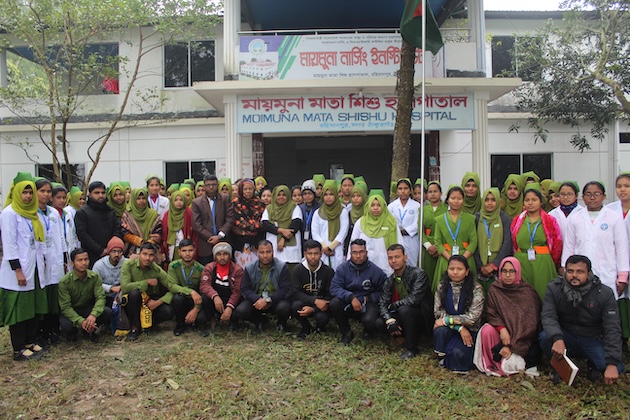
Teachers, students, and staff of Moimuna Nursing Institute pose for a photo in front of its main building on the campus. Credit: Rafiqul Islam/IPS
Nirmola Toppa, mother of Nila Kispotta, who recently completed a nursing diploma from the MNI, said after her daughter passed the SSC examination, she tried to marry her off because she could not afford to pay for her daughter’s educational expenses.
But a scholarship meant Nila could complete her diploma, and she is now getting a stipend of Taka 2,000 (USD19) per month from MNI to complete her six-month internship at RMCH.
Nirmala said Nila received Taka 6,000 (USD 57) to enroll in the internship too.
Founder of Moimuna Nursing Institute, Dr. Saifullah Syed, said in Thakurgaon, many rural underprivileged girls and those coming from minority and ethnic communities pass the entrance exam (SSC) to enroll in nursing institutes but do not enroll due to financial constraints.
Also, there are many who could qualify but do not take the entrance exam, thinking that they may not be able to afford the educational expenses to become nurses and midwives, he said.
“That’s why I founded Moimuna Nursing Institute to ensure that qualified poor rural girls, particularly those coming from minority and ethnic communities, get the opportunity to become nurses and midwives,” Syed told IPS.
He asserted that his institute has established an endowment fund under the control of a Board of Trustees, provides need-based scholarships, and arranges sponsors.
The MNI welcomes donations as it means more students may be assisted.
STOCKHOLM, Sweden, Feb 1 2024 (IPS) – Karl Marx’s Manifesto of the Communist Party begins with the now worn-out phrase: “A spectre is haunting Europe – the spectre of communism. All the powers of old Europe have entered into a holy alliance to exorcise this spectre”. Nowadays the word “communism” could easily be substituted by “migration”. All over Europe, politicians claim that Europe is being destroyed by migrants. In country after country, ghosts of yesterday are awakened. Parliaments include xenophobic politicians who might be considered as inheritors of demagogs who once dragged Europeans into hate and bloodbaths.
Populists have successfully convinced voters that the greatest threat to their nations is neither inequality, nor climate change, but immigration. Politicized storytellers have found that fear of “the other” can be a means to gain power. Nevertheless, such a fear does not concern any “other” – respected professionals who move to another country are usually not labelled as “migrants”, neither are wealthy businessmen who acquire new passports as easily as they move their money around the world.
To obtain some insights to the often all overshadowing phenomenon of international migration, Jan Lundius recently met with Dr Omar Hammoud Gallego, a fellow at the London School of Economics and Political Science.
Omar Hammoud Gallego
IPS: Your research deals with migration, as well as civil society’s connection with international organisations. How did this interest develop?
Hammoud Gallego: Like many of my colleagues and friends, I am the son of migrants. My parents came from different parts of the world and met, married and established themselves in a third country. However, this was not the main reason for me to focus on migration in my research. In 2015, while working for UNHCR in Colombia, where I was engaged in supporting internally displaced Colombians, I soon found out that there was a lack of serious, in-depth research about migration within Latin America. I began to read about regional migration and decided eventually to pursue a PhD on this topic.
IPS: Was it the specific situation in Colombia that made you shift your main interest from internal to regional migration?
Hammoud Gallego: Yes, over the last few years Colombia has received a huge influx of migrants and refugees from Venezuela (although they are recognised as refugees only in a handful of countries). A phenomenon that has not abided. More than 7,7 million migrants and refugees have left Venezuela as a result of political turmoil, socio-economic instability and an ongoing humanitarian crisis, roughly a quarter of the country’s population. While democratic backsliding in the country began with Hugo Chávez, the situation worsened considerably during the presidency of his successor since 2013, Nicolás Maduro. Most refugees, more than 6,5 million, are hosted in Latin American and Caribbean countries; close to three million in Colombia, one and a half million in Peru, and close to half a million in both Chile and Ecuador.
IPS: And the cause of this exodus is mainly political?
Hammoud Gallego: To a certain degree – yes. The Venezuelan government inept and corrupt handling of the economy and plummeting oil prices caused the output of PDVSA (the national oil company) to decrease substantially, leading to lower revenues for the government. As it happens with many countries with vast oil reserves, Venezuela developed into a rentier state, receiving most of its income through the export of oil. Since 2013, the country’s economy has suffered greatly. In 2018, the inflation was more than 63,000 percent compared with the previous year, while nearly 90 percent of the population lives in poverty. Furthermore, estimates by the UN and Human Rights Watch indicate that under Maduro’s administration close to 20,000 people have been subject to alleged extrajudicial killings.
IPS: Is the current situation in Venezuela still excruciating?
Hammoud Gallego: Yes, and the current geopolitical landscape seems to have favoured Maduro’s regime rather than debilitated him. The country is Russia’s most important trading and military ally in South America. Due to the energy crisis linked to Russia’s criminal invasion of Ukraine, the US government in October last year lifted sanctions on the Venezuelan oil and mining sector, which had been in place since early 2019. In spite of this influx of money and support, the situation continues to be severe and so far, few Venezuelans are returning to their country of origin. Many are instead making their way to the Darien Gap, through Panama and from there continue north until they reach the United States. Elections in Venezuela are scheduled for this year, but it is hard to know if Maduro will allow them to take place fairly and transparently.
IPS: How is UNHCR handling the Venezuelan refugee crisis?
Hammoud Gallego: The UNHCR is one of the few UN agencies which depends almost entirely on voluntary contributions. Every year UNHCR funding shifts depending on the outcome of its Global Appeal, the process in which it asks governments and some private donors to contribute to the support of refugees. In 2023, about 74 percent of these funds came from 10 donors only, with much of the funding earmarked for specific crises and only 15% of it consisted of multi-year funds. Commitments are constantly shifting and crises around the world compete for limited resources. For example, when a refugee crisis erupted due to war in Ukraine it meant that less funding was dedicated to Latin American countries hosting Venezuelan refugees, as well as UNHCR commitments in other parts of the world. However, there are many NGOs across the region that also make a concrete difference in the lives of many refugees. For instance, the NGO VeneActiva, which was founded and is led by Venezuelan migrant women and operates in Peru, is one of the best examples in the Latin American region of how civil society can step in and provide the support refugees need. Its digital platform contains key information that helps Venezuelan nationals to restart their lives in Peru. The NGO provides a variety of services, including psychological support and advice on how to regularise one’s migratory status.
IPS: You are currently living in the UK, a country where migration, like in other European nations, is high up on the political agenda. Can you provide us with some insights about how the migration issue is dealt with in the UK?
Hammoud Gallego: Over the last few years, the Conservative government in the UK has been facing a dilemma of its own making. The Brexit decision was supposed to lead to a decrease in immigration, and instead the opposite seems now to have been the case. Still, the lack of enough immigrants to fill in positions in the public sector, particularly in education, and health, and to take on seasonal work in agriculture and construction, has limited economic growth in the country. The health sector was exceptionally hard hit by both Covid and Brexit.
IPS: How is the governing political party affected by the migration issue?
Hammoud Gallego: Since 2010 the UK has had a Conservative-led government, with Conservative party leaders making migration a prime electoral issue. However, according to the latest polling data, it is estimated that 46 percent of voters would vote for the Labour Party in a general election, compared with 22 percent voting for the Conservative Party. Understandably, conservative politicians are worried about losing votes to the far right, and specifically to the Reform Party, and are trying to out-do the far-right by adopting absurd measures to deter the arrival of asylum seekers. One such scheme is the recent Rwanda asylum plan.
IPS: Could you elaborate on whether the Rwanda plan is a feasible project, or not, and why some Conservative politicians actually proposed such a solution for asylum seekers.
Hammoud Gallego: It is a proposal that foresees that some of the asylum seekers who arrive to the UK irregularly will be relocated to Rwanda for processing. Those successful in claiming asylum would remain in Rwanda. It is an absurd proposal based on two wrong assumptions. The first, is that most asylum seekers will know about the scheme. The reality is that the information most of them get, comes from unofficial sources, oftentimes from the smugglers that organise their journeys. Second, even if they knew about the scheme, it is unlikely that it will deter them. For most of them, the choice of a country depends on several factors: the language they speak, the network they have, etc… Also, on their way to the UK asylum seekers have often taken several risks, and suffered greatly, so the minimal risk of being sent to Rwanda will be seen as an acceptable risk for most of them. The reality is that what this plan will only push individuals not to apply for asylum once in the UK, and in many cases simply live in the country with an irregular status, akin to the reality of many Mexican and Central Americans in the US.
IPS: How do you view the future for asylum seekers and so called “economic” migrants?
Hammoud Gallego: It looks bad. I believe that climate change will exacerbate conflicts in many regions of the world, thus forcing people to move. Such challenge needs urgently to be dealt with, both internationally and locally, and it might already be too late. Investments in green energy are far too limited, viable resettlement programs are not in place, leaving asylum seekers no option but to embark on dangerous journeys. Also, one of the main myths surrounding economic migration is that as countries become wealthier, people will have less incentives to leave. The reality is that the poorest individuals in the Global South have always been the ones least likely to travel, as they lack the means to do that. The poor cannot afford to move. As countries become wealthier, the middle classes will seek to travel and migrate more.
IPS: What can be done for migrants who are already in place in Europe, and elsewhere?
Hammoud Gallego: Well thought-through integration policies forcefully implemented and sensible migration policies would be a good place to start. There are many examples of how integration can be conducted successfully. Nations like the UK are to a certain degree proof of this, with a prime minister of Indian origin, and the Mayor of London and First Minister of Scotland both sons of Pakistani immigrants. Considering sudden refugee crises, the way European countries responded to the Ukrainian crisis shows the way forward: let refugees move wherever best suits them, and you will avoid a humanitarian catastrophe. However, politics in Europe seems to be going in the opposite direction. In Germany, Sweden, Hungary, Italy, the Netherlands and many other European nations anti-migration and nationalistic forces are gaining strength, not the least among young people who mistrust ageing and unrepresentative traditional parties. If everyone who voted in the election had been aged under 35, Geert Wilders’ Dutch Party for Freedom (PVV) might have won even more votes. In last year’s French presidential runoff, Marine le Pen won 39 percent of votes from people aged 18-24 and 49 percent of those aged 25-34, le Pen’s deputy is the 28 years old Jordan Bardella. Giorgia Meloni’s ruling Brothers of Italy was the preferred party among people under 35 years of age. I assume that the likely win of Donald Trump in the next US elections will boost European anti-migration politics.
IPS: What can immediately be done to address the issue of migrants and asylum seekers already in Europe, and maybe elsewhere as well?
Hammoud Gallego: If governments across Europe were to pursue sensible and evidence-based migration policies instead of replicating far-right talking points, it would be a start. Principled opposition politicians could, instead of focusing exclusively on migration to attract votes, focus more on those aspects of migration policies that might be improved, without resorting to a xenophobic rhetoric that normalises a polarising political discourse. Integration and inclusion are key for people coming to Europe. Integration is both a right and a duty, meaning that every member of a society has to adapt to and respect fundamental human rights, including democracy, the rule of law, freedom of speech and religion, as well as the rights to equality and non-discrimination. Considering that migration has become a highly politicised issue it has been proposed that long-term immigrants ought to be given the right to vote, thus making their support more appealing to politicians and decision makers. A few countries, such as Chile and New Zealand, are allowing all residents to vote, hoping this would decrease polarisation and marginalisation, whether this will happen remains to be seen. Under all circumstances it would be desirable if we could live in a world where migrants were considered as fellow human beings, rather than as scapegoats for governments’ ineptitudes.
NEW DELHI, India, Dec 6 2023 (IPS) – We, a global coalition of over 50 civil society and human rights organizations from over 30 countries have co-developed the “Civil Society Manifesto for Ethical AI”, a groundbreaking initiative aiming to steer AI policies towards safeguarding rights and deconolonising AI discourse. We question, and we are not the only ones: whose voices, ideas and values matter in AI ?
“If Silicon Valley was a country it would probably be the richest in the world. So how genuinely committed is Big Tech and AI to funding and fostering human rights over profits? The barebones truth is that if democracy was profitable, human rights lawyers and defenders including techtivists from civil society organizations wouldn’t be sitting around multistakeholder engagement tables demanding accountability from Big Tech and AI. How invested are they in real social impact centred on rights despite glaring evidence to the contrary?,” asks Nina Sangma, of the Asia Indigenous Peoples Pact, a regional organization founded in 1992 by Indigenous Peoples’ movements with over 40 members across 14 countries in the Asia-Pacific region.
We are currently at a critical juncture where most countries lack a comprehensive AI policy or regulatory framework. The sudden reliance on AI and other digital technologies has introduced new – and often “invisible” – vulnerabilities, and we have just seen the tip of the iceberg, literally melting from the effects of climate change.
Some things we have already seen though: AI is still a product of historical data representing inequities and inequalities. A study analyzing 100+ AI-generated images using Midjourney’s diffusion models revealed consistent biases, including depicting older men for specialized jobs, binary gender representations, featuring urban settings regardless of location, and generating images predominantly reinforcing “ageism, sexism and classism”, with a bias toward a Western perspective.
Data sources continue to be “toxic”. AI tools learn from vast amounts of training data, often consisting of billions of inputs scraped from the internet. This data risks to perpetuate harmful stereotypes and often contains toxic content like pornography, misogyny, violence, and bigotry. Furthermore, researchers found bias in up to 38.6% of ‘facts’ used by AI.
Despite increased awareness, the discourse surrounding AI, like the technology itself, has predominantly been shaped by “Western, whiteness, and wealth”. The discrimination that we see today is the result of a cocktail of “things gone wrong” – ranging from discriminatory hiring practices based on gender and race, to the prevalence of algorithms biases.
“Biases are not a coincidence. Artificial intelligence is a machine that draws conclusions from data based on statistical models, therefore, the first thing it eliminates is variations. And in the social sphere that means not giving visibility to the margins,” declares Judith Membrives i Llorens, head of digital policies at Lafede.cat – Organitzacions per la Justícia Global.
“AI development isn’t the sole concern here. The real issue stems from keeping citizens in the dark, restricting civic freedoms and the prevalence of polarisation and prejudice on several dimensions of our societies. This results in unequal access, prevalent discrimination, and a lack of transparency in technological processes and beyond. Despite acknowledging the potential and power of these technologies, it is clear that many are still excluded and left at the margins due to systemic flaws. Without addressing this, the global development of AI and other emerging technologies won’t be inclusive. Failure to act now and to create spaces of discussion for new visions to emerge, will mean these technologies continue to reflect and exacerbate these disparities,” says Mavalow Christelle Kalhoule, civil society leader in Burkina Faso and across the Sahel region, and Chair of the global civil society network Forus.
The Civil Society Manifesto for Ethical AI asks, what are the potential pitfalls of using current AI systems to inform future decisions, particularly in terms of reinforcing prevailing disparities?
Today, as EU policymakers are expected to close a political agreement for the AI Act, we ask, do international standards for regulating machine learning include the voice of the people? With the Manifesto we explore, challenge, disrupt, and reimagine the underlying assumptions within this discourse but also to broaden the discussion to incorporate communities beyond the traditional “experts.” Nothing about us, without us.
“We want Artificial Intelligence, but created by and for everyone, not only for a few,” adds Judith Membrives i Llorens.
From the “Internet of Cows” to the impact of AI on workers’ rights and on civic space, developed by over 50 civil society organisations, the Manifesto includes 17 case studies on their experiences, visions and stories around AI. With each story, we want to weave a different path to build new visions on AI systems that expand rather than restrict freedoms worldwide.
“The current development of AI is by no means an inevitable path. It is shaped by Big Tech companies because we let them. It is time for the civil society to stand up for their data rights,” says Camilla Lohenoja, of SASK, the workers’ rights organisation of the trade unions of Finland.
“Focusing on ethical and transparent technology also means giving equal attention to the fairness and inclusivity of its design and decision-making processes. The integrity of AI is shaped as much by its development as by its application,” says Hanna Pishchyk of the youth group Digital Grassroots.
Ultimately, the Manifesto aims to trigger a global – and not just sectorial and Western-dominated dialogue – on AI development and application.
Civil society is here not just as a mere token in multistakeholder spaces, we bring forward what others often dismiss, and we actively participate worldwide in shaping a technological future that embraces inclusivity, accountability, and ethical advancements.
Bibbi Abruzzini, Forus and Nina Sangma, Asia Indigenous Peoples Pact (AIPP)
ACAPULCO, Mexico, Nov 2 2023 (IPS) – Acapulco is a paradise. A port of golden sunsets, toasted sand, and deep blue sea. Its dream beaches captivated the hearts of Elvis Presley and Elizabeth Taylor. US President John F. Kennedy chose its shores to spend his honeymoon with Jackie Kennedy. Its luxury hotels and the untamed sea made it the most famous tourist destination in Mexico.
Rosi Orozco
Today, Acapulco is devastated. A Category 5 hurricane—the deadliest possible rating—called “Otis” hit the beach on October 25 with incomparable force. No one anticipated it. Hours before it made landfall, it was just an inconvenient storm. Suddenly it became a deadly cyclone. Most of the hotels are destroyed, the sea swallowed people, houses were blown away, and dozens of people are dead.
In the last century, its beauty attracted the world’s most influential celebrities. Its tranquil mornings and lively nightlife attracted actresses, singers, politicians, aristocratic musicians, and families who wanted to spend their summers by the sea. I myself spent my youth at the family timeshare apartment in Acapulco, and it was there that I met my husband Alejandro, with whom I’ve been married for 40 years. My life is permanently connected to Acapulco.
Luxury businessmen, millionaire athletes, and Michelin-starred chefs arrived. Also drug dealers, money launderers, and men looking for girls and boys to rape in exchange for food or a few dollars for their parents who lived in the city’s poor areas.
Because there are two Acapulcos. They both share an airport and roads, so all roads lead to that pair of versions of the same city. There is a “diamond Acapulco” where the rich vacation with all the amenities at their disposal. And there is a “traditional Acapulco,” where the poor live who work for wealthy tourists.
The people who inhabit “diamond Acapulco” and “traditional Acapulco” do not usually cross paths. They live in the same city, but they are separated by golf courses and exclusive shopping malls. Only rich foreigners and wealthy nationals cross to the poor side when they feel a repugnant urge: to make their plans for child sex tourism a reality with girls and boys as young as 3 years old.
Acapulco is one of the most unequal tourist destinations in the world. In Mexico, it is the most unequal municipality of all: more than 60% of its 900,000 inhabitants live in extreme poverty, which means they do not know what they will eat today or tomorrow. They are the workers who serve plates of fresh seafood, who sweep marble floors, who fill the wine glasses of tourists.
For years, journalists and human rights organizations have told horrific stories that combine poverty, inequality, and sex tourism: a 6-year-old boy rented out to be photographed naked in exchange for milk and eggs; a 9-year-old girl sold to a Canadian tourist to be his wife for a month; homeless teenagers invited to sex parties on lavish yachts in exchange for food; parents and mothers waiting outside hotels for their children to be raped for a price paid in dollars per hour.
Those pedophiles and child molesters turned Acapulco into the country’s primary destination for child sexual tourism. They also led Mexico to the disgraceful second position in the production of child pornography, only surpassed by Thailand, according to data from the Mexican Chamber of Deputies and the United Nations Children’s Fund.
Today, Acapulco is a different place. Little remains of the port that enchanted singers Agustín Lara and Luis Miguel. There are thousands of poor families without homes, hundreds of workers who lost their jobs, and dozens of fishermen without boats to go out to sea to find sustenance. The destruction is so extensive that complete economic recovery is estimated to take decades, not years.
Under these conditions, childhood is at very high risk. Many families have lost so much that their bodies are the only currency they have left. And in the dirty business of forced prostitution, child bodies are the most sought after.
Amid this unprecedented crisis in Mexico, the Chamber of Deputies approved amendments to the general law against human trafficking. These changes aim to broaden the scope of the law enacted in 2012 and update it to address new technologies that traffickers and organized crime engaged in sexual exploitation can use. The wording has some issues that we are still analyzing, but it also includes positive aspects.
For example, it introduces new protections for individuals with injuries, intellectual disabilities, and Afro-Mexican towns and communities. The latter represent 6.5% of the total population in Guerrero and 4% of the residents in Acapulco, according to the National Population Council.
Civil society organizations are monitoring these changes and hope that the deputies will honor their commitment to protecting the victims.
Meanwhile, it is the responsibility of all, not just in Mexico, to help Acapulco back on its feet, a place that has given so much to both nationals and foreigners. It won’t be easy or quick, but every day we delay puts the vulnerable children at risk due to the magnitude of sexual tourism in that beautiful port.
After Hurricane Otis, Acapulco will be different. Its reconstruction is an opportunity to build a new city on the ruins of depravity, one with values and respect for human dignity. I long for the day to see it standing and for its coastline, beach, and air to remain a paradise, especially for children like me who grew up happily by the sea.
In the third in our series by Youth Thought Leaders, the students write about the impact of human activity, including food waste, on the environment. They are positive that with incremental changes a sustainable and humane world is possible.
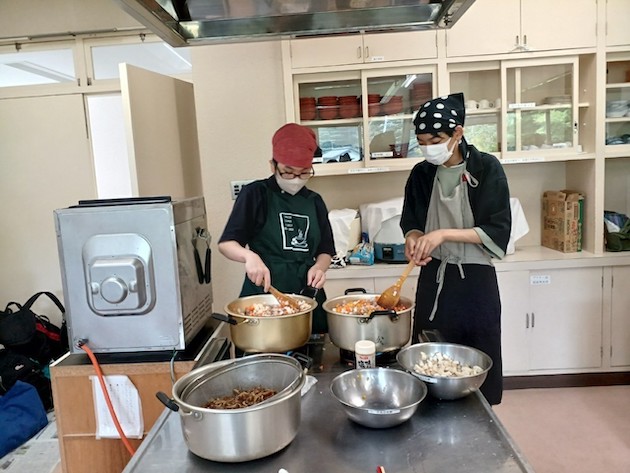
Atashi Kitchen in Karuizawa operates a children’s cafeteria (Kodomo-Shokudo), providing free or low-cost meals and distributing food to those in need.
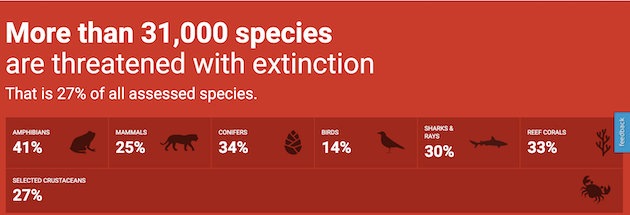
TOKYO, Oct 10 2023 (IPS) – Have you ever seen a dried frog? We have, and it’s making us rethink our impact on the environment. Frogs are incredibly sensitive to dry conditions, and they are facing the threat of extinction due to global warming. Amphibians, like frogs, make up a significant portion of endangered species, with 41 percent vulnerable compared to only 25 percent for mammals like polar bears.
Frogs, as amphibians, require both land and water habitats, and their thin, specialized skin makes them highly susceptible to changes in humidity and temperature. Climate shifts can disrupt their breeding patterns, leading to population declines.
This sensitivity to heat and drought means that frogs can easily die on scorching days. What’s more, a decrease in the frog population can trigger a chain reaction in the ecosystem, affecting animals that rely on them for food, like owls, snakes, and raccoons.
Recognizing this, we’re reevaluating our lifestyles to reduce carbon emissions, a major contributor to global warming.
IUCN Red List
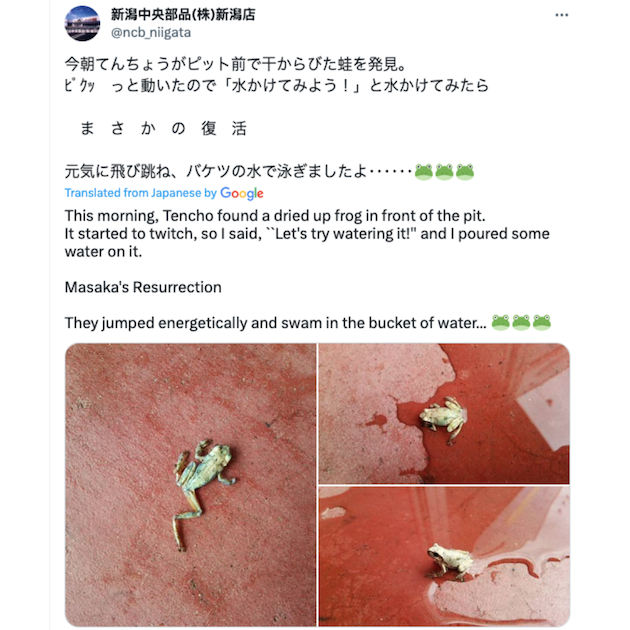
Frogs are sensitive, but with the right conditions, they can survive, as this X post shows.
These are pet frogs. One is colloquially known as a ‘crown horn frog,’ and the others ‘house mega frogs.’ Once, our crown horn frog faced a health issue. At first, we had it on a white electric mat, but we later discovered that an earthen floor was a better choice. Unfortunately, it turned out that the soil was contaminated and made the frog sick. This experience taught us that frogs are incredibly sensitive to changes in their environment.
Food Loss and Global Warming
Are you familiar with the term’ food loss?’ Discarding food that is still edible is not just about wasting food; it also contributes to the environmental issue of global warming. It is estimated that Japan discards approximately 5.22 million tons of food annually. To dispose of such a significant amount of food waste, incineration is necessary, which generates greenhouse gases and contributes to global warming. Another concern arises from the necessity of developing new final disposal sites for the ash produced from incineration, which often entails the destruction of sea and forest areas. This, in turn, exacerbates environmental issues.
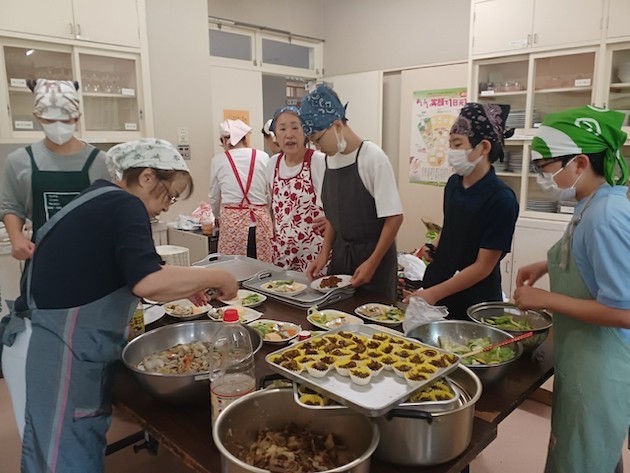
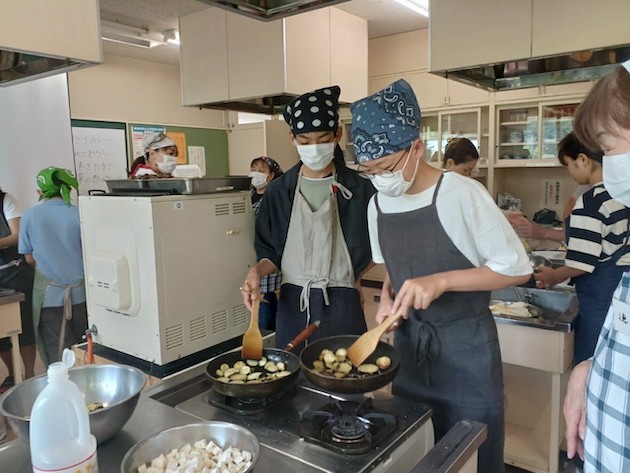
Volunteer students at the Atashi Kitchen in Karuizawa. The kitchen operates a children’s cafeteria offering free or low-cost meals to those in need.
Student volunteers at the Atashi Kitchen in Karuizawa. Food loss contributes to global warming.
Students help prepare meals at the Atashi Kitchen in Karuizawa.
Driven by this realization, we decided to combat global warming by efficiently using surplus food, essentially functioning as food banks. Our search led us to Atashi Kitchen in Karuizawa, Japan, which operates a food bank as part of a children’s cafeteria (Kodomo-Shokudo), providing free or low-cost meals and distributing food to those in need.
On July 22, 2023, our group of eight Grade 8 students from Dalton Tokyo Gakuen Junior School volunteered at the children’s cafeteria. Witnessing the diverse array of food, from fresh vegetables donated by local farmers to meat from contributions and observing strangers sharing joyful conversations while enjoying their meals, we realized this place was about more than food; it was about sharing happiness.
The Ministry of the Environment reported that in 2020, Japan generated about 5.22 million tons of food loss, with businesses contributing 2.75 million tons and households 2.47 million tons. This data prompted us to search for environmentally conscious companies in Japan.
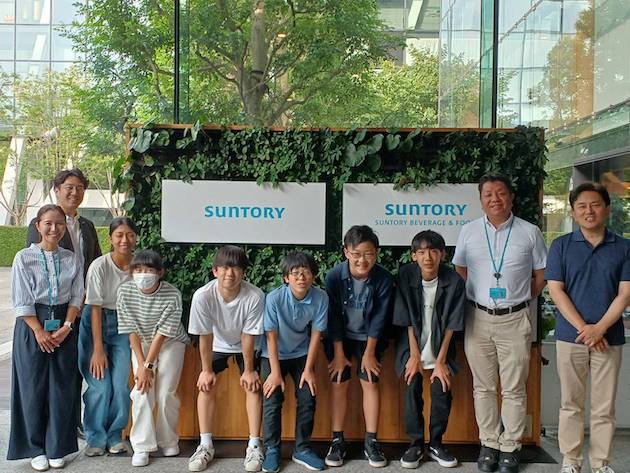
Group photo at the Suntory Odaiba Office
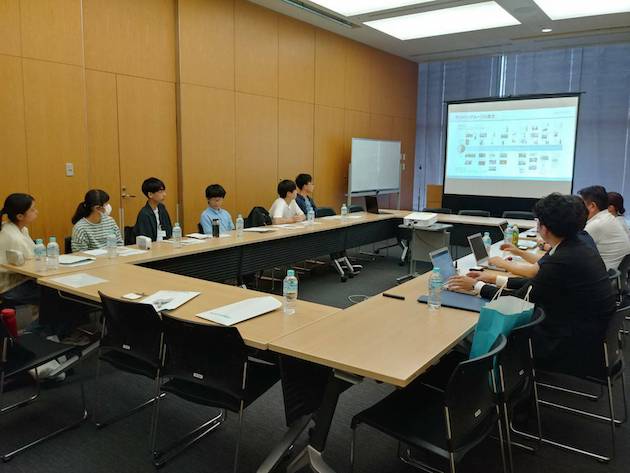
Hikari Kujime (Corporate Sustainability Department), Yusuke Sasaki (PR Department), Tomoyuki Ichida, and Tamon Koshino (General Manager, Corporate Sustainability Department) at Suntory Holdings are with the students learning about sustainability in business.
Suntory actively harnesses artificial intelligence (AI) to accurately predict sales, a practice that significantly reduces food waste. Additionally, at Meissen, their restaurant, Suntory, ingeniously repurposes leftover bread crusts as feed for pigs. What struck us most during our visit was Suntory’s wholehearted dedication to ecological sustainability, which aligned perfectly with our mission as teenage writers.
Japan’s strong emphasis on safety and security, while commendable, inadvertently results in food loss. This has not only environmental implications but also economic repercussions for manufacturers. To address this issue, let’s consider the “one-third rule.” It dictates that the delivery deadline extends until one-third of the best-before date remains, and the sell-by date covers two-thirds of the best-before date. This rule aims to accommodate consumers who tend to be overly cautious about expiration dates. To combat food waste effectively, it’s essential to ensure consumers understand these dates, promote awareness of waste reduction, and shift the mindset away from avoiding products nearing their expiration date.
Maybe we can put it more straightforwardly: In Japan, food is often deemed expired much earlier compared to the United States or Europe. Here’s a comparison of delivery deadlines in these developed regions: In Japan, it’s one-third of the best-before date, while in the United States, it extends to one-half. European countries, like Belgium, allow up to two-thirds, and in the United Kingdom, it’s three-quarters. This clearly reflects Japan’s inclination to exercise greater caution concerning expiration dates.
Food expiry dates lead to food losses, too.
So, what does food loss mean to teenagers like us? For us, it signifies a mission to heighten awareness about the intricate interplay between food loss, global warming, the safeguarding of frogs and various other creatures, our deepened appreciation for the environment, and the responsible utilization of food resources.
In conclusion, our journey has taught us that small actions can lead to significant change. As teenagers, we often hear that we are the future, but we believe that we can make an impact in the present as well. The frogs drying up symbolize a larger issue – the delicate balance of our planet’s ecosystems. It’s a call to action, a reminder that our actions matter.
We, as young individuals, have a crucial role to play. By raising awareness about the interconnectedness of issues like food loss, global warming, and the protection of our fellow creatures, we can inspire change in our communities. We can choose to reduce waste, conserve resources, and make sustainable choices. We can advocate for policies that protect our environment. By embracing knowledge and taking action, we can be the driving force behind a healthier planet.
So, let’s continue this journey together, with the frogs as our inspiration. Let’s be the generation that not only stops the drying of our amphibian friends but also works towards a world where nature thrives and all creatures, including us, live harmoniously.
Remember, it all starts with awareness, and it’s our responsibility to pass on this knowledge to others. Together, we can create a more sustainable and compassionate world for all.
IPS UN Bureau Report
Note:Karuta Yamamoto and Seiji Takano were the team leaders
Edited by Hanna Yoon
IPS UN Bureau Report
IPS – UN Bureau, IPS UN Bureau Report, Youth Thought Leaders