US Arms Suppliers in Gaza Killings Should be “Named, Shamed & Boycotted”

Armed Conflicts, Civil Society, Featured, Global Governance, Headlines, Human Rights, Middle East & North Africa, TerraViva United Nations

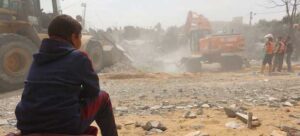
A child watches as bodies are recovered from under the rubble of a house in the Al-Nasr neighborhood, east of the city of Rafah, in the southern Gaza Strip. Credit: UN News/Ziad Taleb

UNITED NATIONS, Jul 3 2024 (IPS) – The US gun lobby justifies the unfettered American gun ownership in the US on a misguided premise: Guns don’t kill people, it’s bullets that kill people.

The accusations of genocide and war crimes in Gaza have been directed firstly, at Israel, for the killings of more than 37,700, mostly civilians, and over 86,000 injured, in retaliation for the 1,200 killed by Hamas last October, according to estimates from Gaza health officials, as cited by Cable News Network (CNN) last week.


And secondly, the blame is also squarely on the United States, the unrestrained supplier of arms, including the devastating 2,000-pound unguided bombs, to the Netanyahu government.

But a group of UN human rights experts is now blaming a third force: US arms manufacturers who are accused of implicitly killing people, along with financial institutions that fund most of these weapons suppliers.

“The transfer of weapons and ammunition to Israel may constitute serious violations of human rights and international humanitarian laws and risk State complicity in international crimes, possibly including genocide, the UN experts said last week, reiterating their demand to stop transfers immediately.”

In line with recent calls from the Human Rights Council, the UN experts are calling for halt to the sale, transfer and diversion of arms, munitions and other military equipment to Israel by US arms manufacturers – including BAE Systems, Boeing, Caterpillar, General Dynamics, Lockheed Martin, Northrop Grumman, Oshkosh, Rheinmetall AG, Rolls-Royce Power Systems, RTX, and ThyssenKrupp.

The experts say these defense contractors should also end transfers, even if they are executed under existing export licenses.

“These companies, by sending weapons, parts, components, and ammunition to Israeli forces, risk being complicit in serious violations of international human rights and international humanitarian laws,” the experts said.

This risk is heightened by the recent decision from the International Court of Justice (ICJ) ordering Israel to immediately halt its military offensive in Rafah, having recognised genocide as a plausible risk, as well as the request filed by the Prosecutor of the International Criminal Court (ICC) seeking arrest warrants for Israeli leaders on allegations of war crimes and crimes against humanity.

“In this context, continuing arms transfers to Israel may be seen as knowingly providing assistance for operations that contravene international human rights and international humanitarian laws and may result in profit from such assistance.”

Dr Ramzy Baroud, a journalist and Editor of The Palestine Chronicle, told IPS the UN experts’ statement is important, as it highlights the complex role of the US in supporting, sustaining, and benefiting from the Israeli genocide in Gaza.

“Quite often we call on, demand and implore the US to end its support of Israel, so that the genocide may come to an end. The experts, however, are reminding us that the US involvement is not confined to that of the White House, and direct or indirect US military and logistical support to Israel”, he pointed out.

Indeed, he said, US support is channeled through multiple players, those who manufacture, transport, assemble and maintain the weapons and munition — a multi-billion-dollar military machine that has harvested the lives of tens of thousands of Palestinians.

These companies must be named, shamed, boycotted and held accountable in every possible way. They must understand that there are legal repercussions to their action, as they are complicit in the Israeli crimes against the Palestinians, said Dr Baroud, a Non-resident Senior Research Fellow at the Center for Islam and Global Affairs (CIGA).

These companies are, as the experts said, ‘knowingly’ providing direct assistance to Israel in its genocidal war. They are fully aware of the extent of these crimes as articulated in the South African case against Israel at the ICJ, and the call for arrest warrants by the chief prosecutor of the ICC.

The next rational step is for these companies to be taken to task. They seem to have no moral threshold. Their quest for profits by far exceeds their concern that their weapons are killing thousands of children, women and civilians in Gaza, and throughout occupied Palestine. They must face justice as participants in the Israeli genocide in Gaza, declared Dr Baroud.

Norman Solomon, executive director, Institute for Public Accuracy, told IPS it’s difficult to draw any clear distinction between the U.S. government and the arms makers that sell to it.

“The two are so intertwined that differentiating between them is often a distinction without a difference. The revolving door for individuals, in both directions, places weapons executives in pivotal government positions and vice versa”.

The magnitude of the military profits, he pointed out, is overwhelming in the nation’s political economy and culture. The multibillion-dollar corporations that depend on selling weaponry to the government are directly participating in a routine process of literally making a killing on behalf of massive profit-taking.

To call these firms “defense contractors” is a misnomer, since what they sell has little to do with defense in any meaningful sense, he argued.

“The stepped-up weapons sales and gifts to Israel are continuations of a partnership between the U.S. government and arms suppliers with the purpose of aiding an ally and reaping still more massive profits. In tandem, the U.S. government and the companies are providing Israel with the means to continue mass murder of Palestinian civilians in Gaza. The core of the problem is lack of democracy and vastly excessive corporate power”.

In moral terms, the culpability is far-reaching. Yet, in a sinister way, he said, the military contractors are doing what capitalism provides for them to do — seek to maximize profits regardless of the consequences for human beings and the natural environment.

In contrast, within a democratic system, government is supposed to be responsive to the informed consent of the governed — conditions that certainly do not exist in the United States.

Meanwhile, in terms of international law and human decency, the U.S. government and its arms suppliers are guilty of horrendous crimes, which assist and compound those of Israel, declared Solomon, who is also national director, RootsAction.org and author of, “War Made Invisible: How America Hides the Human Toll of Its Military Machine”

A report from the Human Rights Council in mid-June details six emblematic attacks involving the suspected use of GBU-31 (2,0000 lbs), GBU-32 (1,000 lbs) and GBU-39 (250 lbs) bombs from 9 October to 2 December 2023 on residential buildings, a school, refugee camps and a market.

The UN Human Rights Office verified 218 deaths from these six attacks, and said information received indicated the number of fatalities could be much higher.

“The requirement to select means and methods of warfare that avoid or at the very least minimise to every extent civilian harm appears to have been consistently violated in Israel’s bombing campaign,” said High Commissioner for Human Rights Volker Türk.

The report says the series of Israeli strikes, exemplified by the six incidents, indicates that the IDF may have repeatedly violated fundamental principles of the laws of war. In this connection, it notes that unlawful targeting when committed as part of a widespread or systematic attack against a civilian population, in line with a State or organisational policy, may also implicate the commission of crimes against humanity.

Financial institutions investing in these arms companies are also called to account. Investors such as Alfried Krupp von Bohlen und Halbach-Stiftung, Amundi Asset Management, Bank of America, BlackRock, Capital Group, Causeway Capital Management, Citigroup, Fidelity Management & Research, INVESCO Ltd, JP Morgan Chase, Harris Associates, Morgan Stanley, Norges Bank Investment Management, Newport Group, Raven’swing Asset Management, State Farm Mutual Automobile Insurance, State Street Corporation, Union Investment Privatfonds, The Vanguard Group, Wellington and Wells Fargo & Company, are urged to take action.

Failure to prevent or mitigate their business relationships with these arms manufacturers transferring arms to Israel could move from being directly linked to human rights abuses to contributing to them, with repercussions for complicity in potential atrocity crimes, the experts said.

“Arms initiate, sustain, exacerbate, and prolong armed conflicts, as well as other forms of oppression, hence the availability of arms is an essential precondition for the commission of war crimes and violations of human rights, including by private armament companies,” said the experts.

The experts paid tribute to the sustained work of journalists who have been documenting and reporting on the devastating impact of these weapons systems on civilians in Gaza, and human rights defenders and lawyers, among other stakeholders, who are dedicated to holding States and companies accountable for the transfer of weapons to Israel.

IPS UN Bureau Report

  Source

Special Report: Exposing Afghanistan’s Pervasive, Methodical System of Gender Oppression

Civil Society, Development & Aid, Editors’ Choice, Education, Featured, Gender, Headlines, Human Rights, Humanitarian Emergencies, Middle East & North Africa, Sustainable Development Goals, TerraViva United Nations

Education Cannot Wait. Future of Education is here

Richard Bennett during his oral statement at the Human Rights Council on June 18, 2024. Credit: Anne-Marie Colombet/Human Rights Council

Richard Bennett during his oral statement at the Human Rights Council on June 18, 2024. Credit: Anne-Marie Colombet/Human Rights Council

NAIROBI , Jul 1 2024 (IPS) – The UN Special Rapporteur’s annual report on human rights in Afghanistan lays bare the alarming phenomenon of an institutionalized system of discrimination, segregation, disrespect for human dignity and exclusion of women and girls.

In the new report, Richard Bennett, the UN’s Special Rapporteur, provides an intersectional analysis of the establishment and enforcement of this institutionalized system of unparalleled gender oppression. It paints a picture of a worsening situation for women and girls.


“The situation is that the de facto authorities, who control the country but are not yet recognized as a government, are not just failing to implement their obligations to human rights under the human rights treaties that they’ve signed. They are deliberately implementing policies and practices that flout those policies to create a society where women are permanently inferior to men,” says Bennett in an exclusive interview with IPS.

Education Cannot Wait’s #AfghanGirlsVoices global campaign highlights real-life testimonies of hope, courage and resilience by Afghan girls denied their right to education. Credit: ECW

Education Cannot Wait’s #AfghanGirlsVoices global campaign highlights real-life testimonies of hope, courage and resilience by Afghan girls denied their right to education. Credit: ECW

“Of course, there is sexism in every country, some worse than others, but this is very different from any other country.”

Bennett is referring to the distressing pattern of large-scale systematic violations and subjugation of women’s and girls’ fundamental rights that is unfolding, abetted by the Taliban’s discriminatory and misogynist policies and harsh enforcement methods such as gender apartheid and persecution.

“Only in Afghanistan has a government shut schools for girls above the age of 13, above the sixth grade, and does not allow women to go to universities. And this, combined with segregation, means that women are really suffering. For example, women can only get treatment from doctors who are women and the same applies to teaching. It is a very segregated society as a whole. Just today, a businesswoman told me that she could only do business with female customers. This is affecting not just the current situation and the current generation, but the future as well.”

The Special Rapporteur finds that the Taliban’s institutionalized system of discrimination is most visible through its relentless issuance and enforcement of edicts, decrees, declarations and orders that in and of themselves constitute severe deprivations of human rights and violations of international law.

Between June 2023 and March 2024, they issued an estimated 52 edicts. These include banning foreign non-governmental organizations from providing educational programmes, including community-based education. The Taliban banned women from participating in radio and television shows alongside male presenters.

In July 2023, female beauty salons were forced to close. In August 2023, women were prohibited from entering Band-e Amir National Park. In October 2023, women were excluded from holding directorships within non-governmental organizations. In February 2024, women on television were required to wear a black hijab, with their faces covered, leaving only their eyes visible.

“We are concerned about intergenerational issues, but also intersectional issues. There is discrimination against women and girls who are of an ethnic or religious or linguistic marginalized groups,  or persons with disabilities, or a woman heading a household. Travel requires accompaniment by a close male relative and some women do not have such a person available. All of this is extremely restrictive and will also affect future generations as it will lead to a lack of education and professions,” Bennett says.

The report finds that “women and girls are being maneuvered into increasingly narrow roles where the deep-rooted patriarchy, bolstered and legitimized by Taliban ideology, deems them to belong: as bearers and rearers of children, and as objects available for exploitation, including debt bondage, domestic servitude, sexual exploitation and other forms of unremunerated or poorly remunerated labor.”

The UN Special Rapporteur stresses that there was progress in Afghanistan before the return of the Taliban.

“It was not perfect, but for 20 years there was notable progress. As a result, there are very many professional women in Afghanistan, and women who head households as the main income earners—the main breadwinners for their families. The restrictions are having very serious negative effects.”

Richard Bennett, UN Special Rapporteur Afghanistan, advocates for the rights of every girl to education in Afghanistan. Credit: ECW

Richard Bennett, UN Special Rapporteur for Afghanistan, advocates for the rights of every girl to education in Afghanistan. Credit: ECW

Bennett is among the prominent supporters of the global #AfghanGirlsVoices campaign launched by Education Cannot Wait (ECW), the global fund for education in emergencies and protracted crises within the United Nations. Now in its second phase, the campaign aims to ensure unrestricted access to education for Afghan girls and young women.

After seizing power in 2021, the Taliban swiftly imposed a ban on secondary education for girls, subsequently expanding this restriction to encompass universities and, more recently, private learning centers. Young women have also been prevented from leaving Afghanistan to pursue tertiary education.

“There has never been universal education in Afghanistan, even in the 20 years preceding the return of the Taliban. However, the education system gradually improved, although not as much in remote or rural areas. Part of this was due to a lack of resources, as well as an ongoing internal conflict. So, it was insecure and difficult to maintain schools. But once the Taliban came back into power after August 2021, an education system built over two decades was quickly unraveling,” he says.

In addition to the school closures, he speaks of concerns about the quality of education from two perspectives. One is the alarm over an ongoing brain drain in Afghanistan since the Taliban took over. Many teachers and university lecturers have left the country.

The other concerns are changes to the curriculum and especially a notable increase in madrasa education. Madrasa education has always been a feature of life in Afghanistan. “But now there seems to be at least anecdotal information that the teaching is much more religious-based than a broad education. Girls can go to madrasas,” he says. 

On recommendations and urgent solutions moving forward, Bennett stresses that “no country should ban schools. We therefore continue to call for the reversal of this policy and the reopening of schools with a good quality education. My recommendations are what I call an all-tools approach, as only one approach or any one tool will not work.”

Overall, he says the report calls for justice and accountability, incorporating human rights and women’s voices in political processes and diplomatic engagement. Emphasizing that bolstering documentation of human rights abuses and violations is critical, as is reinforcing protection and solidarity for Afghan women, girls and human rights defenders.

Bennett has a direct message to the current rulers in Afghanistan, the Taliban, to reverse their policies and to comply with human rights. The second message is to the international community, urging them not to normalize or recognize Afghanistan’s unacceptable and worsening human rights situation.

Further stressing that the global community should strongly resist normalizing diplomatic relations or accepting the Taliban into the UN unless and until they meet concrete, measurable, verifiable benchmarks on human rights and the rights of women and girls.

IPS UN Bureau Report

  Source

IRAQ: ‘Tolerance for Abuses Against LGBTQI+ People Has Now Been Made Explicit Through Legislation’

Civil Society, Crime & Justice, Featured, Gender, Gender Identity, Gender Violence, Headlines, Human Rights, LGBTQ, Middle East & North Africa, Religion, TerraViva United Nations

Jul 1 2024 (IPS) –  
CIVICUS discusses the criminalisation of same-sex relations in Iraq with Sarah Sanbar, researcher at Human Rights Watch’s Middle East and North Africa division.


Sarah Sanbar

The Iraqi parliament recently passed a law criminalising LGBTQI+ people, punishing same-sex relations with between 10 and 15 years in prison and transgender identities with sentences of one to three years. The original proposal included even harsher penalties, but lawmakers introduced amendments in response to strong criticism. Supporters claim the law upholds deeply held religious values, while critics condemn it for institutionalising discrimination and enabling serious human rights abuses.

What led to recent legislative changes criminalising LGBTQI+ people?

On 27 April 2024, the Iraqi parliament passed an amendment to the country’s 1988 anti-prostitution law, effectively criminalising same-sex relations and transgender identities. The amendment states that same-sex relations are punishable with between 10 and 15 years in prison, and provides for one to three years’ imprisonment for those who undergo or perform gender-affirming medical procedures.

The law also punishes those who ‘imitate women’ with a seven-year prison sentence and a fine of between 10 and 15 million Iraqi dinars (approx. US$7,700 to US$11,500) and criminalises the ‘promotion of homosexuality’, a vague and undefined expression.

The passing of this law follows years of steadily increasing hostile rhetoric against LGBTQI+ people. Prominent politicians and media personalities have consistently spread harmful stereotypes, tropes and disinformation. They often claim homosexuality is a western import that goes against traditional Iraqi values.

This rhetoric has increasingly translated into government action. For example, on 8 August 2023, the Communications and Media Commission issued a directive ordering all media outlets to replace the term ‘homosexuality’ with ‘sexual deviance’ in all published and broadcast language. The directive also banned the use of the word ‘gender’, which shows how the crackdown on LGBTQI+ rights is intertwined with broader issues, and is also used to target and silence women’s rights organisations working on gender-based violence.

Sadly, as in many other countries, LGBTQI+ people in Iraq are being used as political pawns and scapegoats to distract from the government’s failure to provide for its people. Tensions are growing between the more conservative and religious groups in society and government and those that take a more secular approach to governance. The fact that conservatives have gained increasing support in successive elections allows laws like this to be passed. Such a law probably wouldn’t have been passed even a few years ago.

What’s the situation of LGBTQI+ people in Iraq, and how do you expect it to change?

The situation of LGBTQI+ people is extremely unsafe. Threats to their physical safety, including harassment, assault, arbitrary detention, kidnappings and killings, come from society at large – including family and community members as well as strangers – and from armed groups and state personnel. Human Rights Watch has documented cases of abductions, rape, torture and killings by armed groups. Impunity is widespread, and the government’s failure to hold perpetrators accountable sends the message that this violence is acceptable.

With the passage of the new law, the already dire situation is expected to worsen. Tolerance for abuses has now been made explicit through legislation. As a result, an increase in violence is to be expected, along with an increase in the number of LGBTQI+ Iraqis fleeing the country to seek safety elsewhere. Unfortunately, it is becoming even harder for LGBTQI+ Iraqis to ensure their physical safety in the country, let alone lead fulfilling lives, find love, make friends and build links with others in their community.

What are the challenges facing Iraqi LGBTQI+ rights organisations?

The space for LGBTQI+ organisations in Iraq has long been extremely limited. For example, in May 2023, a court in the Kurdistan Region ordered the closure of Rasan, one of the few groups willing to publicly advocate for LGBTQI+ rights in the region. The reason the court gave for its closure was its activities ‘in the field of homosexuality’, and one piece of evidence cited was its use of rainbow colours in its logo.

Organisations such as Rasan have previously been targeted under vaguely worded morality and public indecency laws that restrict freedom of expression. By criminalising the ‘promotion of homosexuality’, the new law makes the work of LGBTQI+ organisations even more dangerous. Any action in support of LGBTQI+ rights could be perceived as ‘promoting homosexuality’, which could lead to activities being banned or organisations being shut down. It will be almost impossible for LGBTQI+ rights organisations to operate openly.

In addition, all civil society organisations in Iraq must register with the Directorate of NGOs, a process that includes submitting bylaws, lists of activities and sources of funding. But now, it is essentially impossible for LGBTQI+ organisations to operate transparently, because they can’t openly state their intention to support LGBTQI+ people without risking closure or prosecution. This leaves two options: stop working, or operate clandestinely with the risk of arrest hanging over them.

Given the restrictive legal and social environment, many organisations operate from abroad. IraQueer, one of the most prominent LGBTQI+ advocacy groups, is based in Sweden.

But despite the challenges, LGBTQI+ organisations continue to advocate for LGBTQI+ rights, help people fleeing persecution and work with foreign governments to put pressure on Iraq to roll back discriminatory policies. And they have made significant achievements, facilitating the safe passage of people fleeing persecution and broadening coalitions to advocate for LGBTQI+ rights internationally. Their perseverance in the face of adversity is inspiring.

What international support do local LGBTQI+ groups need?

Global organisations should use their capacity to sound the alarm and advocate for the repeal of the new law and the reversal of other discriminatory measures, and for impunity for violence against LGBTQI+ people in Iraq to be addressed.

An effective strategy could be to focus on human rights violations. Equal protection from violence and equal access to justice are required under international law, including the International Covenant on Civil and Political Rights and the Arab Charter on Human Rights, both of which Iraq has signed. Advocacy for LGBTQI+ rights as human rights can put greater pressure on the Iraqi government to fulfil its obligations.

It’s also essential to provide resources and support to local organisations in Iraq and in host countries where LGBTQI+ Iraqis seek refuge, to ensure people have access to basic needs and community support, and can live full lives without fear.

Civic space in Iraq is rated ‘closed’ by the CIVICUS Monitor.

Get in touch with Human Rights Watch through its website, and follow @hrw and @SarahSanbar on Twitter.

  Source

Worse Than Genocide: Killing Truth

Armed Conflicts, Civil Society, Global Governance, Headlines, Human Rights, IPS UN: Inside the Glasshouse, Middle East & North Africa, TerraViva United Nations

Opinion

Destruction in northern Gaza. Credit: UNRWA

ATLANTA, Georgia, Jun 26 2024 (IPS) – There have been many genocides throughout history, but the first to be displayed on TV in all its sickening horror before the entire world is the Israeli genocide against the civilians of Gaza.


Truth is the first casualty of war, so it’s no surprise that the slick Israeli propaganda machine has managed to make Israel’s slaughter of 37,000 Palestinians in Gaza, including more than 15,000 children, acceptable to multitudes of Americans.

With the exception of the widespread campus protestors, most Americans are by now convinced that Gaza’s 2.3 million inhabitants are all fanatical Islamists who deserve to be killed like vermin. That’s not only a lie—it is a damnable lie.

There is an even bigger atrocity in this war, and a more unbearable one than killing children, if that is possible—and that’s when the truth is killed. When your good is labeled evil, it’s maddening.

Today the decency and moral outrage of millions of US youth is being slandered by ranting propagandists like MS-NBC’s Joe Scarborough, and of course the entire FOX News crew, labeling the campus protest movement anti-Semitic. The claim is false and must be exposed as another damnable lie.

It’s more than illogical, it’s silly, to say that anti-Zionism equals anti-Semitism. The vast majority of campus protesters are not anti-Semites and have no trouble separating the actions of extreme Zionist ideology as played out in Gaza from their classmates and friends who happen to be Jews.

“The naming of things is the rectification of things,” Confucius taught. Antisemitism is Antisemitism. Zionism is Zionism. The two are not the same. Otherwise, how could Senator Bernie Sanders, a Jew, attack the Netanyahu’s extreme Zionist government so strenuously, and how could so many of the student demonstrators who are against Zionist Israel’s Gaza campaign themselves be Jewish?

When Republican Congresswoman Elise Stephanic, a Jew, attacked George Soros, a celebrated progressive Jewish philanthropist on CNN recently for supporting the protesters, wasn’t she herself being an Anti-Semite?

Neither George W. Bush nor Joe Biden are Jews. They are Christians—but are certainly bigtime Zionists. Bush by leading America into the morass of the Iraq War primarily designed to protect Israel, and Biden in Gaza, by giving Israel all the money and bombs it needs to kill so many thousands of civilians.

“Don’t kill children, but here’s money and ammunition to do it with.” Nobody is fooled by that, still less university students who have had to display their critical thinking skills before they could even get into college.

Increasing numbers of Jewish organizations are rejecting Israel’s descent into doctrinaire Anti-Arab racial policies that echo Nazism’s extreme philosophy. They know that race-hatred is racism, but that doctrinaire racial superiority vs. inferiority is racial-ism, which is far worse.

The situation in Gaza is unbearable for a civilized world to witness. Painting an entire generation of idealistic American college youth with the slander that they are racists is unbearable. If anything is worse than Genocide, it is claiming that those who oppose it are the greater cause of evil.

James E. Jennings, PhD, is President of Conscience International and Executive Director of US Academics for Peace. He has delivered aid to Gaza hospitals over more than three decades, including during Israel’s bombing campaigns in 2009 and 2014.

IPS UN Bureau

  Source

‘There can be No Special Status for Public Officials’

Armed Conflicts, Civil Society, Global Governance, Headlines, Human Rights, IPS UN: Inside the Glasshouse, Middle East & North Africa, TerraViva United Nations

Opinion

In an interview with Herta Däubler-Gmelin who served as Federal Minister of Justice from 1998 to 2002, and as a Member of the German Bundestag from 1972 to 2009.

BERLIN, Germany, May 28 2024 (IPS) – The chief prosecutor of the International Criminal Court (ICC), Karim Khan, last week requested arrest warrants for three Hamas leaders as well as for Israeli Prime Minister Benjamin Netanyahu and his Defence Minister Yoav Galant. They are accused of various war crimes and crimes against humanity. But what does this mean and where do things go from here?


This is a very significant first step towards being able to bring political and military leaders to court for the most serious crimes against humanity. For some time now, the office of the chief prosecutor of the International Criminal Court has also been conducting investigations in Israel and Gaza with the support of highly qualified external experts in international law.

Brenda J. Hollis, an exceptional US lawyer with extensive military experience, is leading the investigations at the chief prosecutor’s office. And, also in this case, she is just as qualified as in the investigation against Vladimir Putin, which led to an arrest warrant from the court.

The chief prosecutor has forwarded the results of his investigation to the competent judicial preliminary chamber of the International Criminal Court. This is staffed by judges who carefully examine all the evidence submitted and then assess it in full independence and in accordance with the applicable criminal law before deciding whether to issue an arrest warrant.

The procedure is therefore the same as the one used for the arrest warrant against the Russian president. But why is the International Criminal Court needed? Isn’t the Israeli judiciary responsible for a possible trial?

Of course, the jurisdiction of the International Criminal Court must be clarified. In this case, this includes whether – if the terrible allegations of crime are confirmed – the Israeli prime minister and his defence minister would also be charged before Israeli courts and convicted by them. This is not entirely out of the question, despite Netanyahu’s attempts to strengthen his political power by weakening the judiciary.

We all remember the huge demonstrations by courageous Israeli citizens against these plans. To this day, the ‘battle for the rule of law and the separation of powers’ in Israel is not yet over. All of this will have to be recognised and evaluated by the judges of the competent preliminary chamber.

The chief prosecutor’s request concerns the leadership of Hamas as well as the leadership of Israel. Does this not lead to an inappropriate equation between those who are members of an EU terror-listed organisation and elected representatives of a democratic government?

The claim of equivalence is an inaccurate, political accusation — and the International Criminal Court is not concerned with politics. It is verifiably about international law. Everyone – including government statements – should take this into account, unless they want to weaken the International Criminal Court.

The chief prosecutor has, of course, submitted different applications with various justifications relating to different facts and allegations of crimes. In these, there is no recognisable legal equivalence between the leaders of Hamas, in other words a highly organised non-state terrorist group, and the elected officials of Israel.

Some commentators evidently take the view that only terrorists can commit the most serious crimes against humanity, but not democratically elected officials. Unfortunately, numerous examples from the recent past show that this is not the case.

As Germany recognises the International Criminal Court, Netanyahu and Galant would theoretically have to be arrested upon entering the country if they were charged. How realistic do you think this is?

Anyone wanted by the International Criminal Court on the basis of an arrest warrant must be arrested if they enter a member state, because the Rome Statute clearly stipulates that arrest warrants must be executed by the member states. Of course, not every government that is pursuing its own political agenda likes this.

As we all know, the Chinese government’s criticism of the International Criminal Court’s arrest warrant against Putin and its demand for his immunity on the grounds that he is a public official were met with astonishment. However, there can be no special status for public officials.

The Rome Statute rules this out and we in Germany – as well as around two thirds of UN member states – should recognise and support the independent International Criminal Court with good reason.

As a constitutional democracy, we should also be wary of double standards. On the contrary, we should help to dispel the suspicions fuelled by political interests about the qualifications, integrity and independence of the International Criminal Court, the chief prosecutor and the judges.

The International Criminal Court has frequently demonstrated its high level of qualification and its necessity. It is infuriating that the US, Russia, but also China and India, among others, acknowledge the Court as a ‘court for others, but not for themselves’.

This weakens international law, on which we Germans particularly rely. As is well known, the International Criminal Court has already recognised its jurisdiction to prosecute crimes against humanity in Palestine and Gaza in 2021 following multiple resolutions and recommendations by the UN General Assembly.

The International Criminal Court is based on the Rome Statute of 1998, which was adopted during your time as minister of justice and against immense pressure from the US. What impact would a disregard of the proceedings by Germany and other signatory states have on the international legal system?

It is indeed a great disappointment, even a nuisance, that states such as the US are evading membership and downright fighting the International Criminal Court. Especially as very good US lawyers work in the office of the chief prosecutor.

I would like to repeat: strengthening international law and supporting the International Criminal Court go hand in hand. In Germany, we have not only ratified the Rome Statute, but have also created the German International Criminal Code, which today, in accordance with the Rome Statute, relieves the International Criminal Court in appropriate proceedings. We rely on international law and should continue to do so. And this support has to prove itself time and again.

The fight against the most serious crimes against humanity is more important today than ever before. It is also high time to assign the prohibition of aggressive war to the jurisdiction of the International Criminal Court in its entirety, even if ‘only’ the invaded state, but not the aggressor itself, is a member state of the International Criminal Court.

Source: International Politics and Society (IPS)-Journal published by the International Political Analysis Unit of the Friedrich-Ebert-Stiftung, Hiroshimastrasse 28, D-10785 Berlin

IPS UN Bureau

  Source

Abandoned Children Growing Problem in Northern Syria

Active Citizens, Aid, Armed Conflicts, Child Labour, Civil Society, Development & Aid, Education, Featured, Headlines, Human Rights, Human Trafficking, Humanitarian Emergencies, Middle East & North Africa, Population, Poverty & SDGs, Sustainable Development Goals, TerraViva United Nations, Youth

Humanitarian Emergencies

Children eating and drinking at the Children's House in Idlib. Abandoned children is a growing issue in the region. Credit: Sonia Al-Ali/IPS

Children eating and drinking at the Children’s House in Idlib. Abandoned children is a growing issue in the region. Credit: Sonia Al-Ali/IPS

IDLIB, Syria, Mar 27 2024 (IPS) – Wael Al-Hassan was returning from work in the Syrian city of Harim when he heard the sound of a baby crying.

He was returning from work on December 10, 2023. He stopped momentarily, turned on his mobile phone flashlight to investigate, and spotted a baby girl, around one month old, wrapped in a white blanket, lying by the roadside.


He felt saddened by the infant’s condition and said, “She was crying loudly, and I saw scratches on her face from cat or dog claws. I then carried her in my arms and took her home, where my wife breastfed her, changed her clothes, and took care of her.”

The phenomenon of abandoning newborns is increasing in northern Syria, where individuals leave their newborns in public parks or alongside roads, then leave the area. Passersby later find the infants, some of them dead from hunger or cold.

Al-Hassan said that the next morning, he handed the baby girl over to the police to search for her family and relatives.

Social Rejection

Social worker Abeer Al-Hamoud from the city of Idlib, located in northern Syria, attributes the primary reason for some families abandoning their children to the widespread poverty and high population density in the province. Additionally, there is fear of the security situation (the area is not in the control of the Syrian regime and is often under attack), the prevalence of divorces, and spouses abandoning their families after traveling abroad.

Al-Hamoud also points out another reason, which is the spread of the phenomenon of early marriage and marrying girls to foreign fighters who came from their countries to Syria to participate in combat. Under pressure from their families, wives often have to abandon their children after their husband’s death, sudden disappearance, or return to their homeland, especially when they are unable to care for them or provide for them financially. Moreover, these children have no proper documentation of parentage.

Furthermore, Al-Hamoud mentions another reason, which is some women are raped, leading them to abandon their newborns out of fear of punishment from their families or societal stigma.

Al-Hamoud warns that the number of abandoned children is increasing and says there is an urgent need to find solutions to protect them from exploitation, oppression, and societal discrimination they may face. She emphasizes that the solutions lie in returning displaced persons to their homes, improving living conditions for families, raising awareness among families about the importance of family planning, and launching campaigns to integrate these children into society.

Alternative Families

It’s preferable for members of the community to accept these children into their families, but they face difficulties in registering the births.

Thirty-nine-year-old Samaheer Al-Khalaf from the city of Sarmada in northern Idlib province, Syria, sponsored a newborn found abandoned at a park gate, and she welcomed him into her family.

She says, “After 11 years of marriage to my cousin, we were not blessed with children, so we decided to raise a child found in the city at the beginning of 2022.”

Al-Khalaf observes that the Islamic religion’s prohibition on “adoption” prevents her from registering the child under her name in the civil registry. Additionally, she cannot go to areas controlled by the Syrian regime to register him due to the presence of security barriers.

She says, “I fear for this child’s future because he will remain of unknown lineage. He will live deprived of his civil rights, such as education and healthcare, and he won’t be able to obtain official documents.”

Children’s House Provides Assistance

With the increasing numbers of children of unknown parentage, volunteers have opened a center to receive and care for the children abandoned by their families.

Younes Abu Amin, the director of Children’s House, says, “A child of unknown parentage is one who was found and whose father is unknown, or children whose parentage has not been proven and who have no provider.”

“The organization ‘Children’s House’ opened a center to care for children separated from their families and children of unknown parentage in the city of Sarmada, north of Idlib,” says Abu Amin. “The number of registered children in the center has reached 267, ranging in age from one day to 18 years. Some have been placed with foster families, while others currently reside in the center, receiving all their needs, including shelter, food, education, and healthcare.”

Upon arrival at the center, Abu Amin notes that the center registers each child in its records, transfers them to the shelter department, and makes efforts to locate their original family or relatives and send them to them or to find a foster family to provide them with a decent life.

Abu Amin explains that the center employs 20 staff members who provide children with care, psychological support, and education. They work to create a suitable environment for the children and support them psychologically to help with emotional support.

He emphasizes that the center survives on individual donations to cover its expenses – which are scarce. There is an urgent need for sufficient support, as the children require long-term care, especially newborns.

A young girl Marah (8) and her brother, Kamal (10), lost their father in the war. Their mother remarried, leaving them to live in a small tent with their grandfather, who forces them to beg and sell tissues, often leaving them without food for days.

Consequently, they decided to escape from home. Kamal says, “We used to sleep outdoors, overwhelmed by fear, cold, and hunger, until someone took us to the child center.”

Upon reaching the center, they returned to their studies, played with other children, and each other, just like children with families.

Kamal expresses his wish, “I hope to continue my education with my sister so we can rely on ourselves and escape from a life of injustice and deprivation.”

These children, innocent of any wrongdoing, are often left to fend for themselves, bearing the brunt of war-induced poverty, insecurity, homelessness, instability, and early marriage.

IPS UN Bureau Report

  Source



