The Most Appropriate Response to Falling Birthrates? Embrace Them

Civil Society, Featured, Global, Global Governance, Headlines, Health, IPS UN: Inside the Glasshouse, Population, Poverty & SDGs, TerraViva United Nations
Opinion

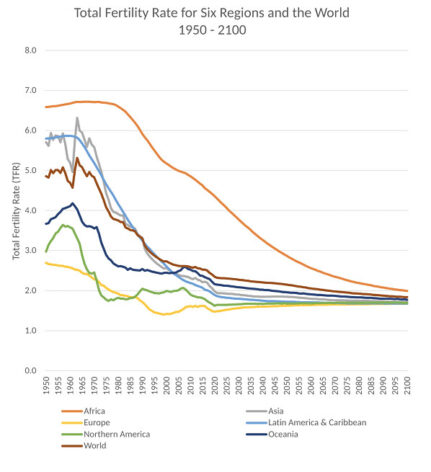
Total Fertility Rate (TFR) is the average number of children that would be born to a woman over her lifetime. Source: World Population Prospects 2022 report from the Population Division of the United Nations Department of Economic and Social Affairs

ST. PAUL, Minnesota, USA, Mar 12 2026 (IPS) – As birthrates continue to decline in many industrialized countries, anxious governments are running out of schemes to keep women procreating.


In the US, millionaires and billionaires are lining up to donate to Trump’s “baby bonus” savings accounts. Trump accounts give parents $1,000 for all babies born between now and 2028, plus whatever private donors add.

Late last year tech billionaires Michael and Susan Dell donated $6.25 billion to them. The accounts are part of Trump’s far-Right pronatalist agenda, and also part of the broader trend of governments using heavy-handed pronatalist policies, ranging from bribes to outright coercion, to convince women to have more babies and shore up the supply of future workers, taxpayers, and soldiers.

These interventions are notoriously ineffective. A recent Heritage Foundation report recommended using economic incentives to convince American women to have more babies, “with preferences for larger-than-average [families],” while shaming those who choose to have fewer or no children.
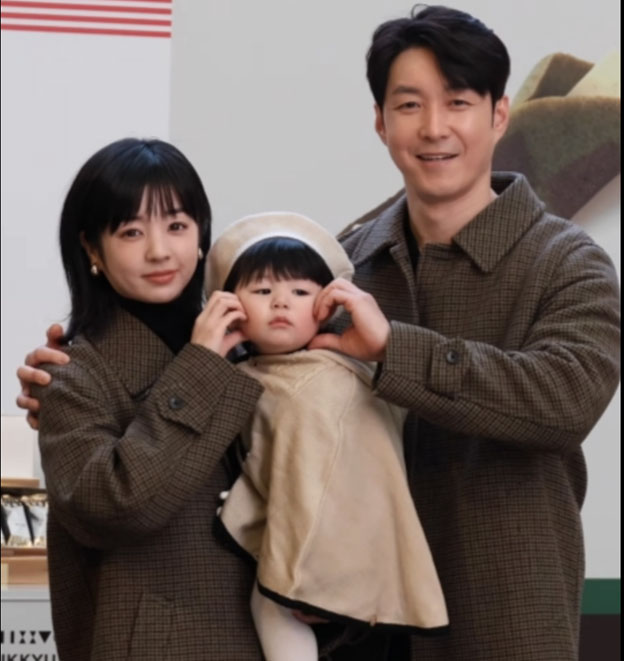
A family in South Korea, which has the lowest Total Fertility Rate in the world (0.8).

But it also admitted, “Other nations have tried to reverse declining birthrates through financially generous family policies, none has succeeded. Government spending alone does not ensure demographic success.”

Nor can such policies achieve what Heritage calls “success.” Trying to raise birthrates by incentivizing women to have babies not only undermines hard-won reproductive rights, it’s a waste of money.

Such spending is not a priority for U.S. taxpayers, as most Americans do not see falling birth rates as a crisis. Instead, they overwhelmingly want the government to address untenably high child care costs. But a one-time Trump account infusion makes no dent in high costs of raising children and other barriers to motherhood.

Just as recent cuts to SNAP and Medicaid disproportionately affect marginalized women and children, Trump accounts benefit least those who need help most. By the Administration’s own calculations, the accounts will benefit wealthy parents disproportionately.

This shouldn’t be surprising. Trump accounts and other pronatalist policies aren’t really about empowerment or saving families or supporting children. They are a bid to make more white Americans, part of a larger nativist program which includes cracking down on immigration from African and Muslim countries, detaining and deporting non-white people in huge numbers, and even abandoning former U.S. efforts to fight child exploitation and trafficking.

These policies overtly stoke panic about falling birthrates, and tacitly uphold the white supremacist “great replacement” conspiracy theory.

That makes support for pronatalism from some progressives especially disturbing. Even if their intent is not nativist, advocating policies that push women to have more children is anti-feminist and fundamentally at odds with reproductive agency.

And even when such policies intend to serve feminist goals–for example Finland’s generous parental leave and child and health care—they fail to raise birthrates. That’s because the biggest factor in childbearing decisions isn’t affordability; it’s empowerment.

Nobel prizewinning economic historian Claudia Goldin has shown high birthrates are no longer tied to economic prosperity, as women increasingly choose education and careers over traditional family roles. In fact, she found an inverse relationship between per capita income and fertility. “Wherever you get increased agency,” she said, “you get reduction in the birth rate.”

Another study across 136 countries confirms this: whenever women achieve reproductive agency, birthrates decline, whether the economy is growing or shrinking.

But hundreds of millions of women and girls are denied this agency. Over 640 million alive today were child brides (including in the US). Over 220 million have an unmet need for contraception. More than half of pregnancies are unintended—121 million annually. Cuts in USAID and other aid programs make the situation more dire.

Despite birthrates declining in many countries, global population is going up, projected to swell by 2 billion to 10.4 billion by the 2080s, with vast ecological and social consequences. Extreme climate events are expected to kill more than a billion people and displace up to 3 billion this century, most in countries where women and girls are disempowered and fertility rates remain high. Pronatalism will only make ecological and social crises worse.

We need new policy thinking that recognizes this and embraces the many advantages of declining fertility and less growth. As fertility rates fall, female labor participation will increase and gender pay gaps will narrow.

As median age rises, changing demographics could enable policy shifts that improve wages and conditions for workers and extend job opportunity to billions on the sidelines who want work but don’t have it.

There is no lack of good ideas, from economic models that center wellbeing and rethink growth to radical ecological democracy. Exploring them requires getting off the endless growth treadmill that enriches elites at the expense of the rest of us. We must stop treating women like reproductive vessels for making more people to serve the economy, and start reshaping our economies to serve more people and the planet.

Nandita Bajaj is executive director of the NGO Population Balance, senior lecturer at Antioch University, and producer and host of the podcasts OVERSHOOT and Beyond Pronatalism. Her research and advocacy work focuses on addressing the combined impacts of pronatalism and human expansionism on reproductive and ecological justice.

IPS UN Bureau

  Source

VENEZUELA: ‘An Economically Stable Authoritarian Model Could Become Entrenched’

Active Citizens, Civil Society, Crime & Justice, Democracy, Economy & Trade, Energy, Featured, Headlines, Human Rights, Latin America & the Caribbean, Migration & Refugees, TerraViva United Nations

Mar 11 2026 (IPS) –  
CIVICUS discusses the situation in Venezuela following US intervention and the ousting of President Nicolás Maduro with Verónica Zubillaga, a Venezuelan sociologist who specialises in urban violence, state repression and community responses to armed violence.


Verónica Zubillaga

In late January, the interim government led by Delcy Rodríguez announced an amnesty for political prisoners, coinciding with a rapprochement with the USA driven by oil interests. It is unclear whether this represents the beginning of a genuine opening or is an attempt by the government to gain international legitimacy without relinquishing power. In a country with millions of migrants and exiles, a historically fragmented opposition and a civil society that has faced brutal repression for years, it remains to be seen whether recent changes will create space for democracy or lead to the consolidation of economically stable authoritarianism.

Is the recently announced amnesty a real opening or a strategic manoeuvre?

We are at an unprecedented crossroads. Venezuela and its Chavista regime, under US tutelage and despite two decades of anti-imperialist rhetoric, are reconfiguring themselves in such a way that some opening could result. However, there is still a risk that an authoritarian model will be consolidated, with economic and humanitarian concessions, but without real democratisation.

The release of political prisoners — a constant demand in all negotiations with international support, and a low-cost form of early opening for the interim government that has taken over from Maduro — could function as a stepping stone towards democratisation. The restoration of civil, political and social rights will be a difficult and lengthy struggle in this context of such deprivation, in which our rights have been violated for so long.

In the first half of February, there were partial and gradual releases, but hundreds of people remained in detention. The enactment of the Amnesty Law on 19 February has accelerated the releases.

The announcement was presented as a political concession, not as a recognition of the extensive human rights violations committed by Maduro’s government. There has been no mention yet of initiating processes to seek the truth, hold those responsible accountable, provide reparations or dismantle the repressive apparatus, which are urgent.

We therefore need to react with caution. The release of people deprived of their liberty for political reasons is essential, but it cannot replace a broader agenda of justice, reparation and institutional transformation.

How has civil society worked to keep this issue at the centre of the debate?

The cause of political prisoners is cross-cutting. There are detained people of different ages, social classes and political backgrounds. In a society as polarised as ours, this is one of the few causes around which there is broad consensus.

After the results of the presidential election of 28 July 2024, which the opposition clearly won, were disregarded, it was mainly people from the working classes who took to the streets to protest. Many young people, including teenagers, were arrested and imprisoned. This situation significantly deepened the social dimension of the problem, highlighted the break between the ruling party and its traditional base and consolidated the brutally authoritarian nature and illegitimacy of Maduro’s government.

There is also an important gender dimension. While many young men are in prison, it is women – mothers, sisters and other relatives – who have organised committees, vigils and public actions demanding their release. Symbolically, the figure of the grieving mother demanding the release of her children is particularly powerful. It is a symbol that appeals to the Latin American imagination about women and their cries for democratisation, justice and reparation in the context of crumbling authoritarian regimes.

Recently, the demand for the release of political prisoners has also been raised by the student movement in its call for a rally at the Central University of Venezuela. After a year and a half of brutal repression following the 2024 election, which emptied the streets and created a climate of widespread fear, any public demonstration is a significant sign that could trigger a chain of progressive demands and the vindication of civil, political and social rights.

What has been the impact of the USA’s renewed interest in Venezuelan oil?

It is clear that the Trump administration is fixated on oil and investment opportunities and completely disregards democracy and human rights. The part of the opposition represented by María Corina Machado has been stunned by its exclusion from key decision-making despite its efforts to gain Donald Trump’s attention. This exclusion has altered the internal political balance.

Historically, there has been tension within the Venezuelan opposition between those who favour resorting to external pressure and those who prioritise internal negotiation strategies. Since 2014, two main strategies have coexisted: one that is more confrontational, demanding the immediate end of the government, and another favouring negotiation or elections. Civil society mirrors these same divisions. One of the difficulties of the Venezuelan process is this constant fragmentation and internal disagreements within the opposition. As the government has become more authoritarian, these divisions have prevented more powerful coordinated political action. It is important for the opposition to coordinate strategies and, instead of wearing itself down in these disagreements, coordinate efforts to move strategically between confrontation and negotiation.

Whenever the opposition has managed to coordinate, as in the 2015 legislative and 2024 presidential elections, it made significant gains. During the 2024 campaign led by Machado, the opposition achieved an unprecedented level of coordination, generating enormous collective hope, particularly with regard to the prospect of family reunification in a country with over eight million migrants. This situation affects people of all social classes and political ideologies. But in response, the government redoubled its repression and consolidated the dictatorship. This led to frustration, demobilisation and further fragmentation. The opposition lacked a long-term strategy to sustain its gains and withstand setbacks. This is still one of the biggest challenges today.

What should the international community do to contribute to real democratisation?

The international community, and Latin American states in particular, could have taken a firmer stance after the 2024 electoral fraud. Silence and a lukewarm approach weakened the defence of democracy. Now it should not repeat that mistake. Beyond Maduro’s profound delegitimisation, the US military operation in Venezuela is a sign of what could happen to any Latin American country under the US government’s new national security strategy.

With the USA as an imperial power primarily concerned with its geostrategic interests and oil resources, demands for democratisation may take a back seat. An authoritarian model that is economically stable but without real democratisation could become entrenched.

In this context, the USA’s prioritisation of energy interests is worrying. It is an unprecedented scenario in which external intervention and the permanence of the ruling party in power coexist. The situation is highly volatile, and this has only just begun. A period of instability and political violence could follow if the civil-military coalition in power breaks down, which may happen given the tradition of anti-imperialist discourse rooted in the armed forces during the two and a half decades of Chavista rule.

Ironically, the USA’s focus on energy interests could result in the defence of sovereignty becoming a new unifying cause for the Venezuelan opposition, potentially leading to basic agreements between the ruling party post-Maduro and the opposition to defend Venezuelan oil interests. What’s at stake is recovering politics as an exercise involving conflict and struggle, as well as recognition and exchange for democratic coexistence — something we have lost, particularly over the past decade.

CIVICUS interviews a wide range of civil society activists, experts and leaders to gather diverse perspectives on civil society action and current issues for publication on its CIVICUS Lens platform. The views expressed in interviews are the interviewees’ and do not necessarily reflect those of CIVICUS. Publication does not imply endorsement of interviewees or the organisations they represent

GET IN TOUCH
LinkedIn
Twitter

SEE ALSO
‘Although the repressive architecture remains intact, a small window of hope has opened’ CIVICUS Lens | Interview with Luz Mely Reyes 05.Feb.2026
Venezuela: democracy no closer CIVICUS Lens 29.Jan.2026
‘We are seeing an economic transition, but no democratic transition’ CIVICUS Lens | Interview with Guillermo Miguelena 26.Jan.2026

  Source

The Cost of Being Seen: Exposure versus Exploitation

Civil Society, Featured, Global, Global Governance, Headlines, IPS UN: Inside the Glasshouse, TerraViva United Nations, Youth

Opinion

The Cost of Being Seen: Exposure versus Exploitation

Credit: United Nations

NEW YORK, Mar 11 2026 (IPS) – I have often been asked a simple but important question: How can we make it sustainable if we are not being compensated for it?


That question sits at the heart of a conversation we do not address enough. Somewhere between exposure and exploitation lies a line we still have not learned to draw clearly. And perhaps that is exactly where the real conversation on “inclusion” begins.

The cost of being seen, is probably the heaviest cost youth have to bear in pursuit of carrying the passion and aspirations they strive for when trying to make an impact.

As conversations around the 2030 Agenda and the SDGs continue to grow, one question remains: how far have we really come in shaping perspectives, and not just numbers?

Too often, inclusion is measured by attendance, representation, and diversity metrics. But inclusion is not just about presence. It is about value. It is about whether people are acknowledged, respected, and taken seriously for their contribution. Inclusion does not live in the excel sheets we fill or the rooms we temporarily occupy during events.

It begins where age, gender, ethnicity, and job titles are not weighed before credibility is given. This matters even more for young people.

A single voice, a single appearance, or a single statement is often framed as an opportunity. And sometimes, it is. But when visibility becomes a substitute for fair compensation, authorship, decision-making power, or real support, exposure stops being empowered and starts becoming exploitative.

Exposure on its own is not empowerment. Visibility can open doors, but it cannot replace fair structures. Being seen is meaningful only when it is followed by trust, ownership, opportunity, and value.

Too often, young people are handed advice when what they really need is access. They are mentored, encouraged, and told to keep going, yet rarely sponsored in the spaces that shape outcomes. If we want inclusion to move beyond symbolism, we must build cultures where support does not end at guidance.

It must extend into advocacy. Because for many underrepresented voices, the issue is not a lack of talent or preparation. It is the absence of someone willing to open the right door and say, this person belongs here.

The goal is not to reject exposure. Exposure can be powerful. But it cannot be the only thing being offered. Real inclusion begins when participation is respected, contribution is valued, and visibility leads to something more lasting. Being seen may open the door, but being valued is what makes inclusion real.

Bisma Qamar is Pakistan’s Youth Representative to the UN & USA chapter under the Prime Minister’s Youth Programme (PMYP). Her work is centered towards learning and development and capability building initiatives, with a strong emphasis on creating inclusive and sustainable opportunities through “Bridging talent with opportunities” by upskilling individuals focusing on SDG 4 ( Education ) and SDG 5 ( Gender Equality )

https://www.un.org/youthaffairs/en/youth2030/about

IPS UN Bureau

  Source

International Women’s Day 2026: A Resistance Stronger than the Backlash

Active Citizens, Armed Conflicts, Civil Society, Crime & Justice, Featured, Gender, Gender Identity, Gender Violence, Global, Headlines, Human Rights, LGBTQ, TerraViva United Nations, Women’s Health

Opinion

International Women’s Day 2026: A Resistance Stronger than the Backlash

Credit: Marco Longari/AFP

MONTEVIDEO, Uruguay, Mar 9 2026 (IPS) – Consider what International Women’s Day looked like a few years ago, and what it looks like now: the same date, the same global moment of reflection, but a vastly changed global landscape. Gender rights are facing the most coordinated and wide-ranging attack in decades. Anti-rights forces are dismantling protections secured after generations of struggle, destroying infrastructure built to address gender-based violence and realise reproductive rights and rewriting legal frameworks to roll back rights, with a specific focus on excluding transgender people. This is the result of a deliberate, carefully crafted, handsomely funded and globally coordinated strategy.


Fortunately, resistance is proving harder to extinguish than those driving the backlash had expected. Another International Women’s Day of mobilisation is here to prove it.

A regressive template

While attacks have been building for years, the global landscape shifted quickly in January 2025, when a newly inaugurated Donald Trump signed executive orders imposing a rigid binary classification of sex across federal law, stripping non-discrimination protections for LGBTQI+ people in healthcare and housing, and banning diversity, equity and inclusion policies across the federal government. Because the USA had been the world’s largest bilateral donor, the simultaneous dismantling of USAID and expansion of the global gag rule — blocking US funding to organisations that provide abortions or advocate for abortion rights — had immediate effects on women and girls all over the world, with particularly deadly consequences in conflict zones, rural areas and the world’s poorest countries.

Elsewhere, regressive forces were already mobilising – and Trump’s example only emboldened them. Hungary banned Pride marches and authorised surveillance to enforce compliance. Slovakia and the UK redefined sex as exclusively biological, stripping legal recognition from non-binary and transgender people. Burkina Faso criminalised same-sex relations and their ‘promotion’. Trinidad and Tobago’s Court of Appeal reinstated colonial-era penalties for homosexuality of up to 25 years in prison. Kazakhstan introduced a Russian-style ban on positive LGBTQI+ representation in education, media and online platforms.

It’s striking how consistent the underlying logic is across different political and regional contexts: gender equality is framed as a dangerous ‘ideology’, feminism is demonised as a foreign imposition, LGBTQI+ visibility is portrayed as a threat to children. The similarities reflect a coordinated effort to manufacture cultural conflict to consolidate hierarchies, strengthen elite authority and deflect attention from economic and political failures.

The backlash has reached the international institutions that have long served feminist movements as key arenas for developing a common language, setting a shared agenda and coordinating action across borders. A milestone in anti-rights advances was observed at the United Nations Commission on the Status of Women’s 69th session last year, where a well-organised anti-rights bloc succeeded in stripping longstanding references to sexual and reproductive health and rights from the meeting’s Political Declaration.

What resistance looks like

Yet regression is not going uncontested: not in the streets, not in the courts and not even in the world’s most repressive settings.

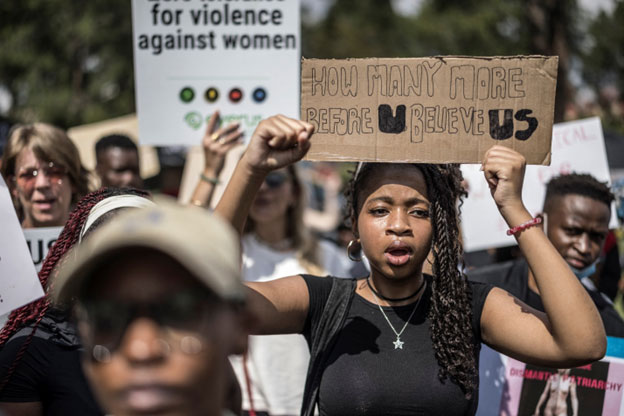
In Hungary, tens of thousands defied the Pride ban in Budapest, risking prosecution to assert their right to be visible in public space. In South Africa, sustained civil society pressure, including over a million signatures demanding action, compelled the government to declare gender-based violence and femicide a national disaster. In St Lucia, the Eastern Caribbean Supreme Court struck down colonial-era laws criminalising same-sex relations. Courts in Malawi and Nigeria recognised the right to safe abortion for sexual violence survivors. The UK finally repealed a Victorian-era law that had continued to criminalise abortion in England and Wales. Denmark and Norway improved access to abortion services. Marriage equality came into force in both Liechtenstein and Thailand. At least three European Union member states — the Czech Republic, France and Poland — adopted consent-based definitions of rape.

Even in the most difficult of circumstances, under Afghanistan’s system of gender apartheid, women are maintaining underground schools, keeping solidarity networks alive and documenting abuses, setting their sights on future justice processes.

While the list of advances is impressive, some of the most important contemporary victories are invisible: stalled bills, softened provisions, laws not passed because civil society refused to stand aside. An attempt to repeal The Gambia’s ban on female genital mutilation was blocked. Kenya’s anti-LGBTQI+ Family Protection Bill remains stalled. In Latvia, when conservative forces moved in October 2025 to withdraw from the Istanbul Convention on violence against women, large-scale protests and a civil society petition won what could be a crucial delay. These defensive successes rarely make headlines, but they result from sustained, unglamorous advocacy and coalition work. Without them, the most extreme proposals would advance much further and faster.

Rising to the challenge

Recognition of rights is never permanent. It’s won through sustained struggle and can be reversed through organised opposition from those who perceive other people’s rights as a threat to their privilege. Backlash isn’t a historical anomaly but a predictable counter-mobilisation, and civil society has met it as such, by organising, mobilising, litigating and refusing to concede ground.

This is precisely what CIVICUS’s 2026 State of Civil Society Report, set for release on 12 March, sets out to document. The report examines the state of the world and civil society action throughout 2025 and early 2026 – including a dedicated chapter on women’s and LGBTQI+ people’s rights – and reveals strong patterns of resistance. Across regions and political contexts, it shows how civil society understands the scale of the attack and is responding in every possible way.

As this International Women’s Day will once again make clear, the backlash is organised and strong. But so is the resistance.

Inés M. Pousadela is CIVICUS Head of Research and Analysis, co-director and writer for CIVICUS Lens and co-author of the State of Civil Society Report. She is also a Professor of Comparative Politics at Universidad ORT Uruguay.

For interviews or more information, please contact research@civicus.org

  Source

From Truancy to Belonging: Why Safe Spaces Matter for Youth Well-Being

Asia-Pacific, Education, Gender, Headlines, Sustainable Development Goals, TerraViva United Nations, Youth, Youth Thought Leaders

Opinion

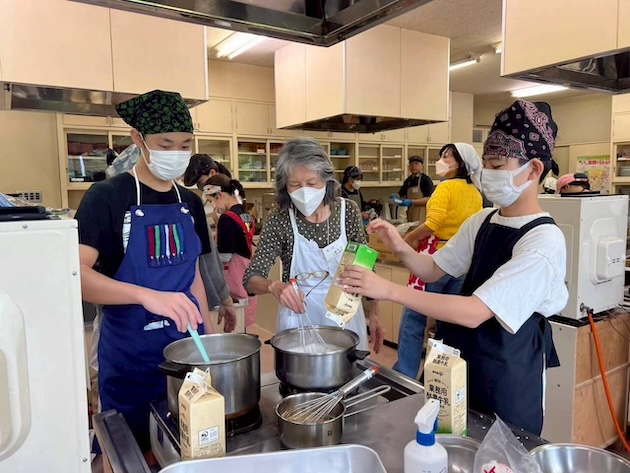
Cooking food to distribute free to children. The meals are made with food that is close to its expiry date. Workshop with Karuizawa Food Bank. Credit: Ippei Takemura

Cooking food to distribute free to children. The meals are made with food that is close to its expiry date. Workshop with Karuizawa Food Bank. Credit: Ippei Takemura

MIYAGI PREFECTURE, Japan, Mar 6 2026 (IPS) – I recently came across a statistic that stopped me in my tracks.


According to the World Health Organization (WHO), Japan has the highest suicide rate among the G7 countries. Even more alarming, suicide is the leading cause of death among people in their teens and twenties. Among elementary, junior high, and high school students, the most common factors linked to suicide are “school-related issues,” including academic pressure and difficulties with peer relationships.

At the same time, the number of children who do not attend school is rising every year. In 2023, Japan’s Ministry of Education reported that more than 340,000 elementary and junior high school students were chronically absent—a record high. These two realities are not separate problems. They are deeply connected.

Truancy is often misunderstood as a lack of motivation or discipline. In reality, it is rooted in complex emotional and psychological struggles that cannot be reduced to a single cause. Rather than treating truancy itself as the problem, society must ask a deeper question: Are we creating environments where young people feel safe, accepted, and understood?

I know this struggle firsthand. I began missing school just three days after entering junior high. My family had lived overseas for many years due to my parents’ work, and returning to Japan left me emotionally exhausted. I found comfort in playing online games with close friends I had made abroad, but while I was holding on to those connections, I missed the chance to build new ones at my new school. Before I realized it, I was caught in a cycle of frequent absences that lasted nearly three years.

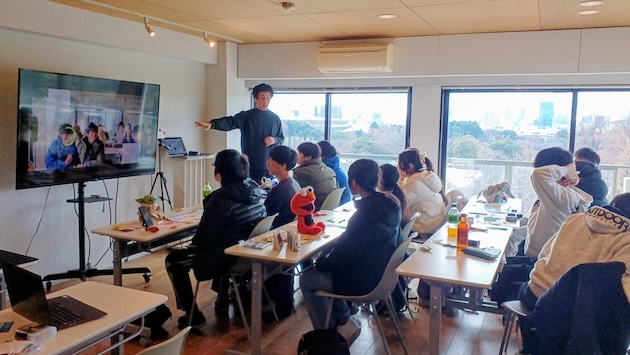
What helped me break that cycle was not a dramatic intervention but a small and unexpected turning point. I joined a monthly, off-campus workshop focused on the Sustainable Development Goals (SDGs). To my surprise, students from my school were also participating. Because we shared a genuine interest in global issues, conversation came naturally as we worked together on projects. Eventually, we began spending time together outside the workshop. For the first time in a long while, I started looking forward to going to school again.

That experience taught me a powerful lesson: shared interests and common ground are the foundation of human connection.

Learn IoT using your own toy; let's upcycle with a workshop with One Smile Foundation. Credit: Ippei Takemura

Learn about the Internet of Things (IoT) using a toy. ‘Let’s upcycle’ workshop with the One Smile Foundation. Credit: Ippei Takemura

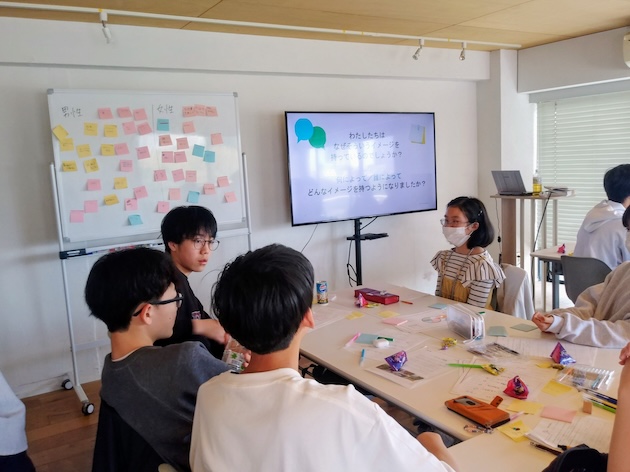
What’s the importance of gender in Japan? Workshop with Plan International, Japan. Credit: Ippei Takemura

What’s the importance of gender in Japan? Workshop with Plan International, Japan. Credit: Ippei Takemura

Provide children with free meals made with food that is close to its expiration date. Workshop with Karuizawa Food Bank. Credit: Ippei Takemura

Provide children with free meals made from food that is close to its expiry date. Workshop with Karuizawa Food Bank. Credit: Ippei Takemura

A place where someone feels safe and comfortable is different for everyone. Sociologist Ray Oldenburg describes this idea through the concept of a “Third Place”—a space that exists beyond home (the first place) and school or work (the second place). Third places allow people to relax, connect, and simply be themselves. Finding such a place was the catalyst that inspired me to want to create similar spaces for others.

Social connection is not optional for human beings. It is essential for mental and physical health, helping to reduce stress, strengthen cognitive function, and foster a sense of belonging. However, people connect at different speeds. Some are naturally outgoing, while others need time and distance before they feel ready to engage. A truly inclusive third place respects these differences.

Based on my experiences, I believe there are three key elements that make a third place successful. First, it must include both spaces for solitude and spaces for interaction, with a clear separation between the two. Some people need time to observe and feel comfortable before speaking. A quiet area allows them to exist without pressure and to join others when they are ready.

Second, there should be shared activities. When people gather around common interests—whether environmental issues, crafts, or sports—conversation becomes easier, and relationships develop more naturally.

Finally, many people struggle to take the first step socially. Having facilitators or mentors who can gently initiate activities or conversations can make a huge difference.

One place that embodies these principles is the Moriumius Summer Camp in Miyagi Prefecture, which I have attended since elementary school. In high school, I joined for the first time as a staff intern. The organizers intentionally build community by using shared work as a catalyst for connection.

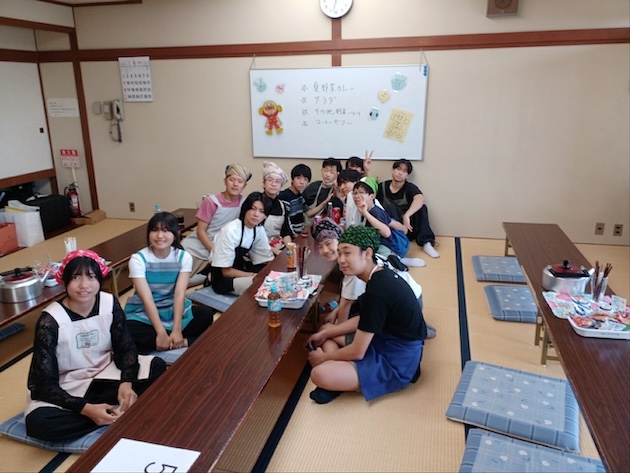
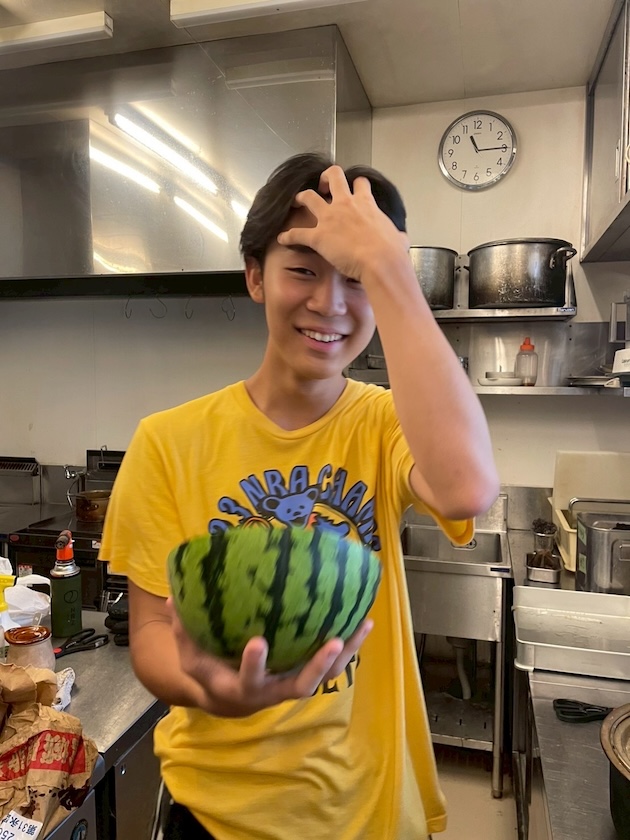
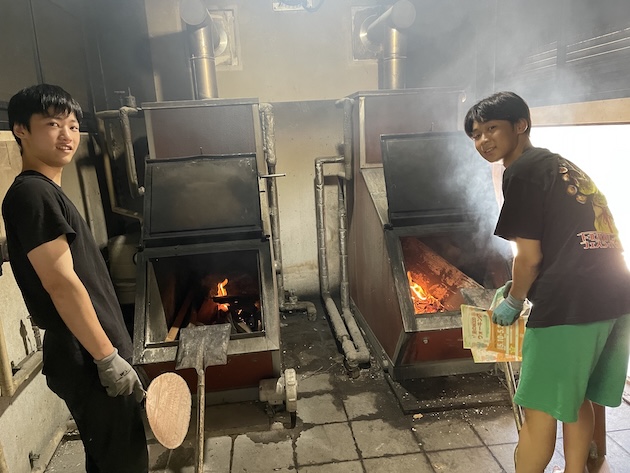
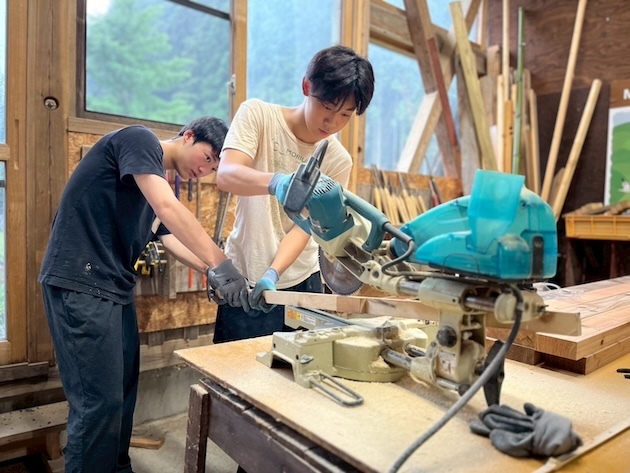
Campers collaborate on everyday tasks such as cooking (photo ①), preparing fish, starting fires (photo ②), and cleaning. These shared responsibilities create trust and a sense of equality. Beyond that, participants can deepen relationships through activities aligned with their interests, including crafts (photo ③), marine sports, gardening, and farming. During one workshop, I befriended an elementary school student who was making a bamboo fishing rod and shaping slate into a knife. We connected naturally through our shared love of creating things. Because everyone at the camp already enjoys outdoor life, friendships form more easily—and shared hobbies strengthen them even further.

Campers help with Cooking (Photo 1). Credit: Ippei Takemura

Campers help with cooking. Credit: Ippei Takemura

Campers can collaborate on starting fires and cleaning (photo②). Credit: Ippei Takemura

Campers can collaborate on starting fires and cleaning. Credit: Ippei Takemura

Participants can deepen relationships through activities aligned with their interests, including crafts (photo ②). Credit: Ippei Takemura

Participants can deepen relationships through activities aligned with their interests, including crafts. Credit: Ippei Takemura

A place can be more than just an escape. It can be the first step toward healing, renewed confidence, and hope. When young people find a space where they feel safe enough to be themselves, they often rediscover the courage to reconnect—with others, with learning, and with their own sense of possibility.

This is why I want to continue supporting the creation of spaces that can become “someone’s own place”—places where young people feel seen, valued, and free to grow at their own pace. Sometimes, finding the right space is all it takes for someone to realize that they belong.

Yet this need for belonging is not unique to one school or one country. Around the world, young people are facing increasing isolation, academic pressure, and mental health challenges. Rising youth suicide rates and growing school disengagement reflect a global crisis. When young people are left without spaces where they feel safe, heard, and supported, the consequences extend far beyond classrooms and households—they shape the future of entire societies.

Creating and protecting “third places,” therefore, is not merely a personal or local effort; it is a global responsibility. Governments, schools, communities, and international organizations must work together to invest in inclusive environments where young people can connect through shared interests, express themselves without fear, and rebuild a sense of belonging. Doing so directly supports the Sustainable Development Goals, particularly SDG 3 (Good Health and Well-Being) and SDG 4 (Quality Education), by addressing mental health, social inclusion, and equitable access to supportive learning spaces.

Every young person deserves a place where they feel safe enough to take their first step forward. By listening to youth voices and turning commitment into action, we can move from awareness to impact—and from isolation to hope. The future depends not only on how we educate young people but also on whether we give them places where they truly belong.

Edited by Dr Hanna Yoon

IPS UN Bureau Report

  Source

Heralding an Era of Religious Wars

Armed Conflicts, Civil Society, Democracy, Global, Headlines, International Justice, IPS UN: Inside the Glasshouse, TerraViva United Nations

Opinion

Heralding an Era of Religious Wars

Credit: Office of the High Commissioner for Human Rights (OHCHR)

NEW YORK, Mar 6 2026 (IPS) – In recent months, the language surrounding the escalating confrontation between the United States, Israel, and Iran has taken on a tone that should trouble anyone concerned with global peace.


Across television studios, online sermons, and political commentary, some American preachers and commentators have begun describing the conflict not merely as geopolitics or national security, but as a “holy war.”

Reporting in outlets such as The Guardian, along with coverage in other international media, has noted the growing number of Christian nationalist and Evangelical voices framing the Middle Eastern conflict in explicitly theological terms.

Certain Evangelical preachers in the United States have long interpreted tensions involving Israel through apocalyptic or biblical narratives. In these interpretations, the confrontation with Iran is sometimes presented as part of a divinely ordained struggle between good and evil.

In sermons broadcast online and amplified through social media, the war is described as a moment in which believers must stand with Israel in a battle perceived as spiritually consequential – even leading to ‘the rapture’.

The rhetoric is not limited to pulpits. Some former military figures and commentators have echoed similar themes, invoking civilizational language that portrays the confrontation with Iran as part of a broader clash between Judeo-Christian civilization and an Islamic adversary.

When such language enters strategic discourse, it transforms political conflict into something far more dangerous: a war imbued with sacred meaning.

History shows that once wars are framed as sacred struggles, compromise becomes nearly impossible. Political conflicts can, at least in theory, be negotiated. Holy wars, by contrast, are perceived as battles for divine truth. In that framing, negotiation is betrayal.

This phenomenon is not unique to the current Middle Eastern crisis. Religious legitimization of war has surfaced repeatedly in contemporary conflicts. At the outbreak of Russia’s full-scale invasion of Ukraine in 2022, for example, the head of the Russian Orthodox Church, Patriarch Kirill, framed the war in spiritual terms.

In sermons and public statements, he suggested the conflict represented a metaphysical struggle over the moral future of the Russian world. The language of spiritual warfare, cultural purification, and civilizational defence became intertwined with political justification for military action.

Such rhetoric matters. When religious authority sanctifies violence, it grants moral legitimacy to warfare and discourages dissent among believers. Faith communities that might otherwise advocate peace can become mobilized behind nationalistic or militaristic agendas.

We are therefore witnessing something deeply unsettling: the return of explicitly religious language to modern warfare. For decades after the Second World War, global diplomacy attempted—imperfectly but deliberately—to frame conflicts primarily in political and legal terms.

International institutions, treaties, and multilateral frameworks were designed to prevent precisely the kind of civilizational framing that once fueled centuries of bloodshed.

Yet the present moment suggests that these restraints are weakening. Wars are again being narrated as existential struggles between belief systems. Political leaders, clergy, and media personalities increasingly draw upon religious symbolism to rally support.

The danger is not simply rhetorical. When wars are sacralized, they risk becoming limitless conflicts, unconstrained by borders or diplomacy.

The Collapse of Multilateralism and the Silence of Faith Institutions

For years, I have written and spoken about the uneasy relationship between religion, global governance, and peacebuilding. In articles as well as in interviews and public lectures, I have repeatedly warned that governments and intergovernmental entities have failed to develop a coherent framework for engaging religions constructively in international affairs.

Faith-based organizations today are everywhere. They participate in humanitarian work, development programs, diplomacy initiatives, and interfaith dialogues. International institutions increasingly acknowledge the importance of religious actors in peacebuilding and development. Conferences, seminars, department programmes, global initiatives on “religion and …” or “faith and …” are not only commonplace, but proliferating.

Yet despite this apparent proliferation of engagement, the deeper structural problem remains unresolved: religious actors themselves remain profoundly fragmented, as are the political protagonists dealing with them.

Rather than forming robust alliances capable of confronting violence carried out in the name of religion, many faith organizations continue to operate within narrow institutional or theological boundaries. Interfaith initiatives exist, but they often remain symbolic—highly visible yet limited in their capacity to challenge political power or mobilize believers at scale.

I have argued that religious organizations too often underestimate their responsibility in shaping public narratives around conflict, and doing so together. When religion is invoked to legitimize violence, silence from religious leaders becomes complicity.

At the same time, the broader international system that might once have moderated such dynamics is itself under strain. The erosion of multilateralism has been one of the defining features of the past decade. International institutions that once served as mediators of global crises increasingly appear weakened or sidelined.

The United Nations Security Council remains gridlocked. International law is invoked selectively – if at all. Great-power competition has returned with renewed intensity. In such an environment, appeals to universal norms carry less weight.

Alongside this institutional weakening has come a worrying rise in authoritarianism worldwide. Governments across regions have adopted increasingly illiberal practices—restricting civil liberties, marginalizing minorities, and suppressing dissent. In many cases, religion is instrumentalized to reinforce nationalist narratives or legitimize political authority.

This combination—the decline of multilateral governance and the rise of politicized religion—creates a volatile global environment. Without strong international frameworks to mediate disputes, imperialist narratives and actions gain traction – as in Trump’s and Netanyahu’s war against Iran. Religion, ethnicity, and culture become tools through which political conflicts are interpreted and mobilized.

Faith-based organizations, despite their potential influence, have struggled to counter this trend effectively. Some remain focused on humanitarian services rather than confronting the ideological narratives that legitimize violence. Most hesitate to challenge political authorities with whom they maintain close relationships, and seek financial and/or political backing.

As a result, the global religious landscape today is marked by a paradox: religion is increasingly present in global discourse, yet its potential as a force for peace remains under-realized.

Islamophobia and the Seeds of a Wider Religious Conflict

Perhaps the most troubling dimension of the present moment is the resurgence of Islamophobia as a powerful political force in international discourse.

For more than two decades following the attacks of September 11, 2001, narratives portraying Islam as inherently linked to extremism became deeply embedded in political rhetoric and media representation across many Western societies.

Despite sustained efforts by scholars, religious leaders, and civil society actors to challenge these narratives, they continue to shape public perceptions.

In the context of the current confrontation with Iran, such narratives risk reinforcing the perception that the conflict is not merely geopolitical but civilizational. When Iran is framed not simply as a state actor but as a representative of a threatening Islamic force, the conflict becomes symbolically larger than any single nation.

The danger is clear: political wars are becoming interpreted as religious wars.

If such framing takes hold, the implications extend far beyond the Middle East. Conflicts that are perceived as religious struggles can mobilize believers across borders. They can radicalize communities, fuel sectarian polarization, and undermine the fragile coexistence of diverse religious populations.

History provides sobering examples. The European wars of religion in the sixteenth and seventeenth centuries devastated entire regions, entangling political power struggles with theological disputes. Once religious identity became intertwined with warfare, violence spread across kingdoms and empires.

Today’s globalized world is even more interconnected. Diaspora communities, digital media, and transnational networks allow narratives of conflict to circulate instantly across continents. A war perceived as targeting Islam could ignite tensions in communities thousands of miles away from the battlefield.

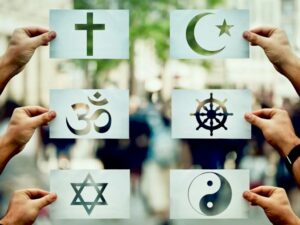
Similarly, religious nationalism in multiple regions—whether Christian, Jewish, Hindu, Buddhist, or Muslim—has been gaining strength in recent years. When one religiously framed conflict emerges, it can reinforce others. Narratives of civilizational struggle feed upon each other.

As the confrontation between the United States, Israel, and Iran becomes widely interpreted through a religious lens, the consequences may be profound. Christian–Muslim tensions, already strained in many contexts, could escalate dramatically. Such conflicts would not respect national borders. They would unfold within societies, across communities, and through global networks of believers.

Ironically, this escalation occurs at a time when religious leaders frequently emphasize the peace-promoting teachings of their traditions. Interfaith initiatives celebrate dialogue, coexistence, and shared values. Religious texts across traditions contain powerful injunctions toward compassion, justice, and reconciliation.

Yet these ideals remain fragile when confronted with political realities.

If religious institutions fail to challenge narratives that sanctify violence, they risk becoming spectators to a new era of religious conflict. Worse still, they may be drawn into it.

Are “Religions” Truly for Peace?

We may therefore be standing at the threshold of a profoundly dangerous historical moment.

Religious language is once again being used to justify war. Political conflicts are increasingly framed as civilizational struggles. Multilateral institutions that once mediated global disputes appear weakened. And faith communities—despite their moral authority—have yet to mount a unified challenge to the narratives that sacralize violence.

None of this means that religion inevitably leads to war. On the contrary, religious traditions contain some of humanity’s most powerful ethical teachings about peace, justice, and compassion. Faith communities have played vital roles in reconciliation processes, humanitarian action, and social movements for justice.

But these possibilities are not automatic. They depend on conscious choices by religious leaders, institutions, and believers.

If religious actors allow their traditions to be mobilized in support of political violence, then religion will become part of the problem rather than the solution.

The question confronting us today is therefore both urgent and uncomfortable.

At a moment when wars are increasingly described as sacred struggles, when geopolitical conflicts are interpreted through religious narratives, and when Islamophobia and other forms of religious prejudice continue to spread, we must ask ourselves: How are religions truly forces for peace?

Prof. Azza Karam, PhD. is President, Lead Integrity

IPS UN Bureau

  Source